1. Introduction
In modern livestock production, antibiotics have historically been incorporated into animal feeds to prevent disease, modulate intestinal microbiota, and enhance growth performance [
1]. However, their excessive use has contributed to the emergence of antibiotic resistance, posing risks to both animal and human health through the consumption of animal-derived foods [
2]. As a result, restrictions on antibiotic use in many countries have accelerated the search for effective nutritional strategies that can support animal health and productivity while reducing reliance on antimicrobials [
1,
2].
Many alternative feed additives to antibiotics have been investigated in swine production, including essential oils, organic acids, phytogenic products, probiotics, and prebiotics [
3]. These additives have been reported to improve animal health, growth performance, and intestinal function in pigs [
3,
4]. Among these alternatives, probiotics have gained increasing attention due to their ability to inhibit pathogenic bacteria in the gastrointestinal tract through the production of antimicrobial substances such as bacteriocins, organic acids, and short-chain fatty acids (SCFAs) [
4,
5,
6].
From a biological perspective, probiotics directly interact with the gut ecosystem and may contribute to improved nutrient utilization and intestinal barrier function. Probiotics are defined as live microorganisms that, when administered in adequate amounts, confer health benefits to the host [
2]. Common probiotic candidates, including strains of
Lactobacillus and
Bifidobacterium, are frequently derived from the gastrointestinal microbiota of humans and animals [
2]. These beneficial microbes may improve gut health by suppressing pathogenic bacteria such as
Escherichia coli and
Salmonella through mechanisms including competitive exclusion, reduction of intestinal pH, enhancement of mucosal barrier integrity, and the production of antimicrobial metabolites such as lactic acid and bacteriocins [
2]. Moreover, probiotics can directly colonize the gastrointestinal tract and modulate the gut microbial balance, thereby enhancing immune responses and improving intestinal function [
6]. Unlike other feed additives such as essential oils, organic acids, and phytogenic products, probiotics can interact with the host microbiota and provide sustained biological effects within the gastrointestinal ecosystem, which may ultimately contribute to improved growth performance in pigs [
6,
7]. Accordingly, several genera have been widely investigated as probiotics in pigs, including
Bacillus,
Lactobacillus,
Bifidobacterium,
Enterococcus,
Pediococcus, and
Streptococcus [
5].
Probiotic supplementation has been associated with multiple benefits across different stages of pig production. In piglets, probiotics may improve growth performance, reduce post-weaning diarrhea, enhance immune function, and promote a balanced gut microbial ecosystem [
8]. In fattening pigs, probiotics have also been linked to improvements in carcass traits and pork quality, including favorable postmortem pH, increased cooking yield, reduced drip loss, and enhanced intestinal morphology, such as increased villus height (VH) [
9,
10,
11]. Nevertheless, probiotic efficacy remains highly variable, largely depending on strain characteristics, formulation, and host–microbe interactions [
12]. Additionally, pre-slaughter stress such as loading, transportation, lairage, and handling can influence animal welfare, carcass traits and meat quality [
13].
Importantly, probiotic functionality is strongly influenced by the ecological origin and host adaptability of the strains. Host-specific probiotics, defined as microorganisms isolated from the same animal species in which they are applied, may exhibit enhanced survivability, colonization potential, and functional compatibility within the gastrointestinal tract compared with non-host-derived commercial strains [
14]. Likewise, locally isolated probiotics, obtained from animals raised under regional production conditions, may be better suited to local feeding systems, environmental factors, and microbial ecosystems, thereby improving safety and effectiveness in practical swine production settings. These considerations highlight the importance of identifying probiotic candidates that are not only biologically active but also host-adapted and regionally relevant.
In addition, multi-strain probiotic formulations have attracted increasing interest due to their greater microbial diversity and potential synergistic effects [
15]. Compared with single-strain products, multi-strain probiotics may provide broader functionality by combining complementary mechanisms, leading to improved gut health, suppression of pathogens, and enhanced growth and meat quality outcomes [
12,
15]. Previous studies have evaluated probiotic supplementation in pigs at different physiological stages and production systems. For example, one study demonstrated that supplementation with multi-strain probiotics containing
Lactobacillus acidophilus (1 × 10
8 CFU/kg feed) and
Lactobacillus plantarum (3 × 10
8 CFU/kg feed) in a 1:1 ratio resulted in greater improvements in growth performance, reduced diarrhea incidence, and enhanced intestinal health compared with single-strain supplementation (
Lactobacillus plantarum or
Lactobacillus acidophilus) in weaned pigs during a 21-day experimental period [
16]. In growing–finishing pigs, supplementation with 2 g/kg of a multi-strain probiotic consisting of
Lactobacillus plantarum CJLP243,
Lactobacillus fermentum LF21,
Lactobacillus salivarius E4101,
Leuconostoc paramesenteroides KJP421,
Bacillus subtilis CJMPB957, and
Bacillus licheniformis CJMPB283 at approximately 10
9–10
11 CFU per strain from 16 to 21 weeks of age over a 6-week experimental period has been reported to promote growth performance and improve intestinal health [
4]. In addition, supplementation with a multi-strain probiotic containing
Lactobacillus plantarum (≥1 × 10
8 CFU/mL) and
Saccharomyces cerevisiae (≥0.2 × 10
8 CFU/mL) at 200 mL/day per sow during the gestation and lactation periods until piglet weaning has been shown to improve carcass characteristics and meat quality in the offspring at 125 days of age [
17]. However, despite extensive research, continued identification of novel host-adapted probiotic strains and formulations remains essential, as probiotic effects are highly strain-dependent and context-specific.
Economically, probiotics are relatively easy to incorporate into feed formulations, can be used continuously without withdrawal periods, and have been widely adopted in commercial pig production as a sustainable alternative to antibiotics as a growth promoter.
Despite the increasing use of probiotics in swine nutrition, their efficacy remains inconsistent and highly strain dependent. Although the effects of probiotics in pigs have been widely studied, most research has focused on commercial or single-strain probiotics, and limited information is available regarding host-specific multi-strain probiotic formulations in finishing pigs. Furthermore, it remains unclear whether such formulations can effectively modulate gut microbial communities and translate these changes into improvements in growth performance, carcass traits, and meat quality, particularly considering potential sex-related physiological differences in fattening pigs. To address this gap, seven lactic acid bacterial strains were isolated from healthy Thai pigs based on the work of Saman et al. [
18] and supported by the Thailand Institute of Scientific and Technological Research (TISTR). These strains were selected for their probiotic potential, gastrointestinal adaptability, safety, tolerance to gastrointestinal conditions, and adhesion capacity, indicating their suitability as host-specific probiotic candidates. Therefore, the present study evaluated the effects of a host-specific, locally isolated multi-lactic acid bacterial (MLAB) probiotic supplement and sex on growth performance, carcass composition, meat quality, and gut microbiome profiles in fattening pigs. We hypothesized that supplementation with host-specific MLAB probiotics would beneficially modulate the gut microbiome and consequently improve growth performance, intestinal health, carcass composition, and meat quality, with potential differences in response between barrow and female pigs.
4. Discussion
This study aimed to evaluate the effects of a host-specific, locally isolated multi-lactic acid bacterial (MLAB) probiotic supplement and sex on growth performance, carcass composition, meat quality, and gut microbiome profiles in fattening pigs. The results contribute to a better understanding of the potential role of MLAB probiotics and sex differences in shaping productive performance and gut microbial ecology in fattening pigs.
Growth performance was unaffected by MLAB probiotic supplementation during both the growing and fattening phases. This is partially consistent with Duan et al. [
9], who reported that
Lactococcus lactis improved pig performance during the growing phase but not during the finishing phase. Previous studies suggest that mixed probiotics can enhance growth by supporting gut health, nutrient absorption, and immune function [
4,
9,
12]. Differences in response may result from variations in gut microbiota, age, diet, or probiotic strains [
15]. Moreover, the immature gut microbiome of younger pigs may be more responsive to probiotics, which could explain the reduced effect observed in later stages [
9].
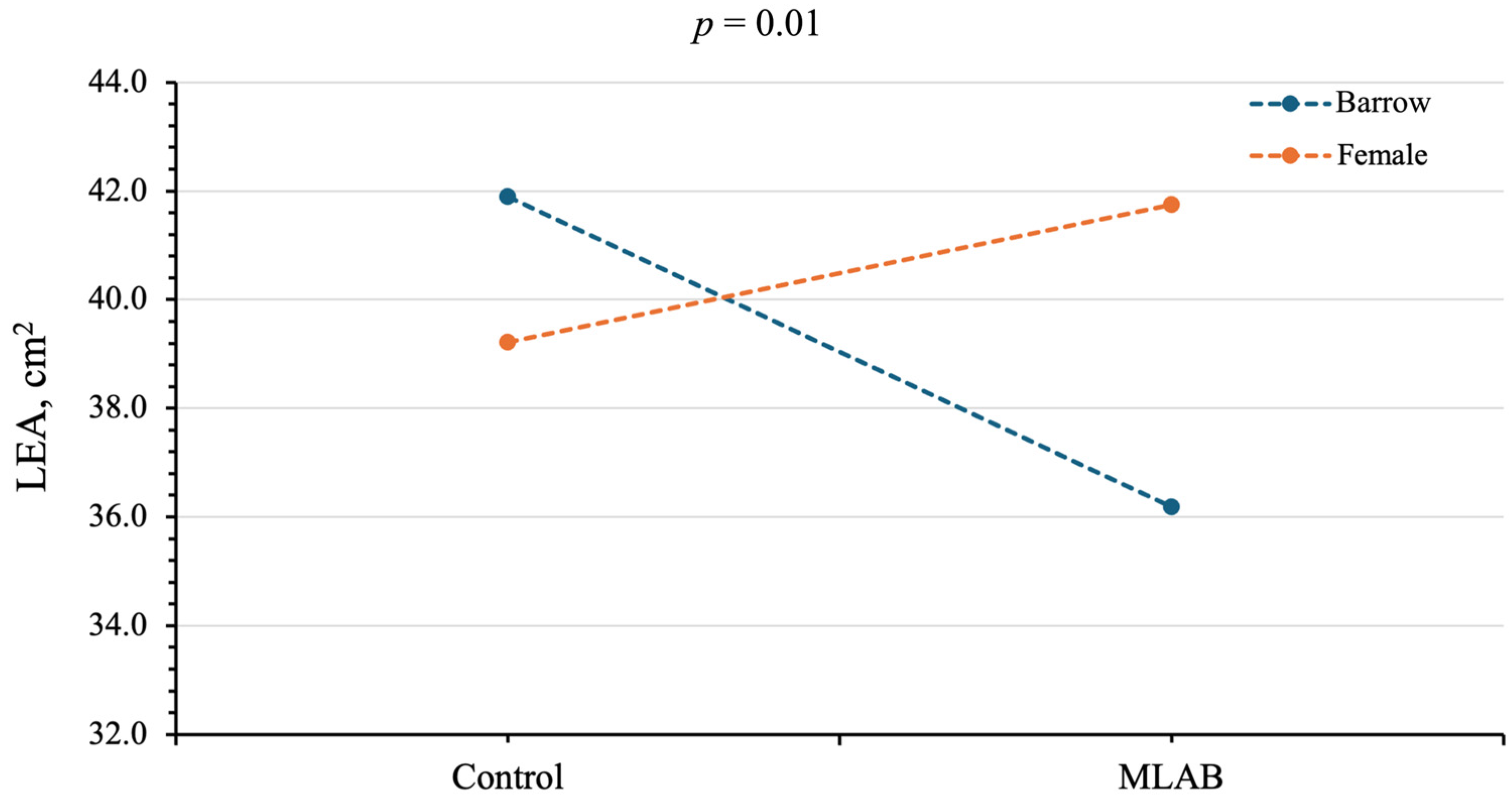
The interaction between treatment and sex significantly affected LEA (
p < 0.05). MLAB probiotic supplementation decreased LEA in barrow pigs but increased LEA in female pigs, while control group barrow and female pigs were not different. Previous studies have reported that gilts generally exhibit a larger LEA than barrows, reflecting their greater lean tissue deposition [
30]. Therefore, the observed interaction may indicate that barrow and female pigs respond differently to dietary supplementation in terms of muscle development, which may be associated with sex-related variations in protein deposition and muscle growth. MLAB-supplemented pigs had less bone but more skin and fat than controls (
p < 0.05). This finding is consistent with Zhu et al. [
17], who reported that the effects of probiotics on fat deposition vary with age, initially reducing but later increasing fat accumulation. Schumacher et al. [
31] suggested that fat accumulation tends to rise when muscle and bone growth decline, as excess dietary energy is redirected toward fat storage. A possible explanation is that probiotic supplementation may influence microbial fermentation in the gut, potentially altering the production of short-chain fatty acids (SCFAs) such as acetate, propionate, and butyrate [
32,
33]. Acetate has been suggested to serve as a substrate for lipogenesis and may therefore contribute to fat deposition in pigs [
34]. However, because SCFA concentrations were not determined in the present study, this mechanism remains hypothetical and requires further investigation. However, the magnitude of bone differences was relatively small. The bone percentage decreased by only 0.81%, while skin and fat increased by 1.34% in the MLAB group compared with the control group. From a practical perspective, such minor differences are unlikely to substantially influence carcass value or economic returns in commercial pork production, where overall carcass weight, lean yield, and meat quality traits are generally considered more important indicators of profitability.
Postmortem glycolysis lowers muscle pH by converting glycogen into lactic acid, which in turn affects WHC, color, and tenderness [
17]. WHC, the ability of meat to retain its intrinsic water, is a crucial determinant of meat quality [
35]. Similarly, pHu is an important quality indicator, reflecting the degree of postmortem glycogen depletion and strongly influencing meat attributes such as color, tenderness, water loss, and shelf life [
36]. This study found that female pigs had higher pH
45 compared with barrow pigs (
p < 0.05). Similarly, Xia et al. [
37] reported higher pH
45 values in female pigs than in males, suggesting that sex may influence glycogen metabolism and the rate of post-mortem glycolysis [
38]. Currently, studies examining the influence of sex on specific pork quality traits remain relatively limited. Therefore, further studies are needed to confirm these findings. In addition, MLAB probiotic supplementation increased pHu and reduced cooking loss at one day postmortem (
p < 0.05), whereas other meat quality traits were unaffected. However, the tendency toward lower WHC appears partly inconsistent with the increased pHu and reduced cooking loss. This discrepancy may be explained by differences in measurement principles: the press method estimates expressible water under mechanical pressure, whereas cooking loss reflects water loss during thermal processing. Because cooking loss is largely influenced by heat-induced protein denaturation, it may respond differently to dietary treatments than water retention measured under pressure. One possible explanation for the higher pHu and lower cooking loss observed in this study is that probiotic supplementation may influence postmortem glycolytic metabolism, although this mechanism was not directly examined. Previous studies have suggested that glycolytic enzymes such as β-enolase (ENO3) and pyruvate kinase (PKM2) regulate lactic acid production and the rate of pH decline during postmortem metabolism [
39]. However, because enzyme activity or gene expression was not determined in the present study, this interpretation should be considered speculative. Consistent with this hypothesis, Zhu et al. [
17] reported improved pH and cooking yield following supplementation with
Lactobacillus plantarum and
Saccharomyces cerevisiae, whereas
Lactobacillus reuteri did not produce similar effects [
10].
Another possible explanation for the improvement in specific meat quality traits, such as pHu and water retention, may be related to reduced physiological stress in probiotic-supplemented pigs. Blood cortisol and creatine kinase (CK) are commonly used indicators of stress in pigs [
40]; however, their relationships with pork quality traits are often inconsistent. Probiotic supplementation has been reported to reduce cortisol levels and improve immune function in weaning pigs, thereby supporting better health and growth [
41]. Shaw and Thaw [
42] reported that serum and muscle cortisol were negatively correlated with drip loss and positively correlated with ultimate pH (
p < 0.05). In contrast, Koomkrong et al. [
43] found that drip loss was primarily influenced by postmortem muscle pH decline, with higher white blood cell and monocyte counts observed in pigs with lower drip loss, suggesting a potential association between immune status and water-holding capacity, whereas cortisol was not significantly related to drip loss. Similar weak or inconsistent relationships between physiological stress markers and pork quality characteristics have been reported under commercial production conditions, indicating that cortisol and CK measured at slaughter may have limited predictive value for technological and sensory meat quality traits [
44,
45]. Therefore, pork quality outcomes are likely influenced by multiple interacting factors, including muscle metabolism, genetics, immune status, and pre-slaughter handling conditions.
Sarcomere length ranged from 2.50 to 2.53 μm, showing no significant differences between groups and remaining within the normal physiological range [
46]. Muscle fibers, which account for 70–90% of skeletal muscle mass, play a major role in pork quality by affecting texture, moisture retention, and sensory properties [
10]. Although smaller fiber diameters are generally associated with improved WHC and reduced drip loss, MLAB probiotic supplementation had no effect on this trait. This contrasts with Tian et al. [
10], who reported smaller myofibers in pigs supplemented with
Lactobacillus reuteri 1.
The nutritional composition of meat, including protein, fat, and moisture content, was evaluated using proximate analysis. Consistent with Chang et al. [
47], who found no significant changes following
Lactobacillus plantarum supplementation, our results showed no major differences between groups. However, pigs receiving the MLAB-supplemented diet tended to have slightly lower protein content. In this study, barrow pigs showed lower protein content in the LT muscle than female pigs (
p < 0.05). Previous studies have indicated that the effect of sex on pork proximate composition is generally small. For example, Lorenzo et al. [
48] and Żmijewski and Modzelewska-Kapituła [
49] reported that sex did not significantly affect the proximate composition of pork. Alves et al. [
50] also reported higher protein content in female pigs than in male pigs, although the difference was not statistically significant. The higher protein content observed in female pigs in the present study may be related to a higher lean-to-fat ratio in females, whereas barrows generally accumulate more fat, which may reduce the relative protein content in the muscle [
51].
After slaughter, nucleotide triphosphates such as adenosine triphosphate (ATP) and guanosine triphosphate (GTP) break down into flavor-related compounds like IMP and GMP. IMP enhances umami, hypoxanthine imparts bitterness, and inosine is tasteless [
52,
53]. Ribonucleotides, particularly adenosine monophosphate (AMP), IMP, and GMP, play a key role in enhancing umami and overall meat flavor perception [
53]. However, this study did not detect any significant variation in ribonucleotide content between treatments. Similarly, Chang et al. [
47] also found that ribonucleotide content remained unaffected by
Lactobacillus plantarum.
The fatty acid profiles (SFA, MUFA, and PUFA) were similar between groups and fell within the typical pork fat range of approximately 38% SFA, 50% MUFA, and 12% PUFA [
54]. However, the control showed significantly higher levels of eicosadienoic acid (C20:2) and numerically higher levels of eicosatrienoic acid (C20:3n3), which are associated with inflammation [
55]. This may reflect the anti-inflammatory effects of probiotics, which can influence fatty acid synthesis and metabolic pathways involved in inflammatory processes [
56]. Similarly, Tian et al. [
10] found that
Lactobacillus reuteri 1 supplementation reduced docosahexaenoic acid (C22:6) levels without significantly altering SFA, MUFA, or PUFA content. Grela et al. [
57] also reported no significant changes in SFA or MUFA, but observed a decrease in PUFA levels in pigs fed a probiotic mixture.
Pork flavor and nutritional quality are influenced by factors such as genetics, diet, age, and husbandry practices [
10,
58]. Meat contains essential nutrients, including proteins, carbohydrates, and lipids, with amino acids playing a key role in both muscle synthesis and flavor development [
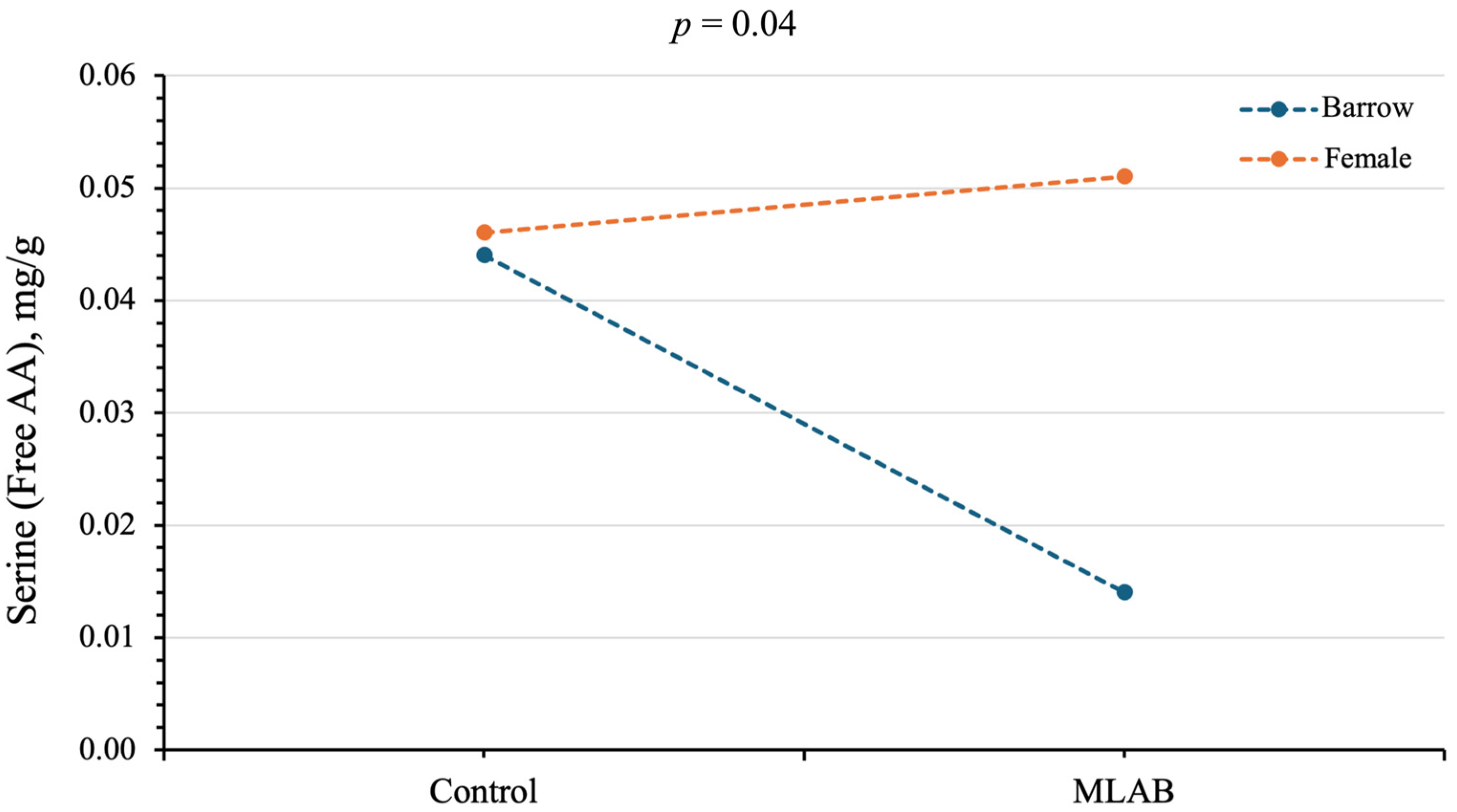
59]. Total amino acids reflect nutritional value, while free amino acids contribute directly to taste. Aspartic acid and glutamic acid enhance umami; threonine, serine, glycine, alanine, and proline impart sweetness; and histidine, threonine, lysine, valine, methionine, isoleucine, and tryptophan contribute bitterness [
59]. In this study, the interaction effect between treatment and sex was influential for serine free amino acids (
p < 0.05). MLAB probiotic supplementation decreased serine in barrow pigs, whereas serine increased in female pigs. Free amino acids contribute directly to meat flavor, and serine is involved in several metabolic processes, including growth, protein metabolism, and amino acid synthesis [
60]. Therefore, the higher serine concentration observed in female pigs may be associated with differences in muscle protein metabolism between sexes. Both sex and MLAB probiotic supplementation affected the serine content. Qin et al. [
61] reported that the concentrations of free amino acids glutamic acid and proline in the
longissimus muscle of gilts ranged from 12.11 to 13.63 and 12.80 to 13.19 µg/g, respectively. These findings suggest that the effect of MLAB probiotic supplementation on serine metabolism may differ between sexes. Further studies are needed to clarify the mechanisms by which MLAB influences serine metabolism, particularly in female pigs. In addition, sex effect showed that female pigs had higher levels of glutamic acid and umami-related amino acids, but lower levels of proline than barrow pigs (
p < 0.05). Glutamic acid is a key contributor to the umami taste and may partly explain the higher concentration of umami-related amino acids observed in female pigs [
62]. The dietary effect did not significantly affect either total or free amino acid content. In contrast, Chang et al. [
47] reported that
Lactobacillus plantarum reduced specific free amino acids, including serine, lysine, histidine, and arginine, leading to decreased bitterness, and Tian et al. [
10] observed reductions in isoleucine, leucine, methionine, and proline with
Lactobacillus reuteri 1, without affecting total amino acid levels. These results suggest that sex-related differences in muscle metabolism may contribute to the variation in certain free amino acids.
The small intestinal villi are essential for increasing surface area and enhancing nutrient absorption [
63]. Jejunal VH tended to be higher in the MLAB group (
p = 0.09). Joysowal et al. [
19] found that single-strain probiotics like
Lactobacillus acidophilus or
Pediococcus acidilactici FT28 improved jejunal morphology by increasing both VH and CD. Similarly, Kwak et al. [
4] reported that a multi-strain probiotic mixture increased VH and VH:CD ratio while reducing CD in pigs. These changes may result from enhanced feed intake driven by
Lactobacillus spp., which stimulate intestinal epithelial development [
17]. Improved intestinal structure supports better nutrient absorption and overall gut health, both vital for optimal pig growth and digestion [
19,
63]. In the present study, sex also influenced intestinal morphology, as female pigs showed a lower VH:CD ratio in the duodenum and jejunum and greater CD compared with barrow pigs. Feed intake is an important factor affecting intestinal structure, including VH, CD, and intestinal length [
64]. Previous studies have reported that male pigs generally exhibit higher body weight and feed intake than female pigs [
65], which may contribute to improved intestinal structure in males. In addition, an increase in VH, a reduction in CD, and, consequently, a higher VH:CD ratio are generally considered indicators of improved gut health [
66].
Gut microorganisms are essential for digestion and nutrient absorption, and microbial diversity is widely regarded as an important indicator of host health [
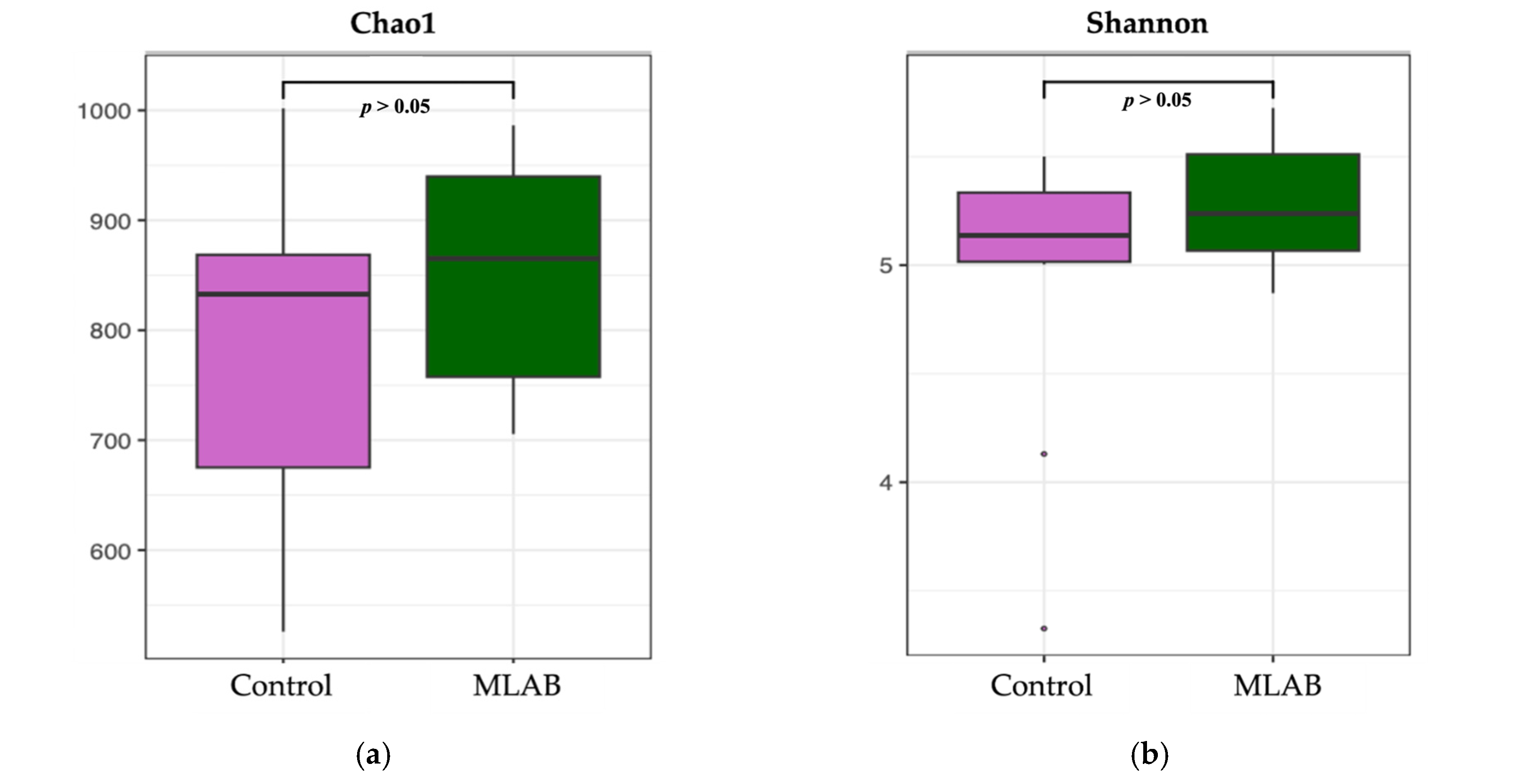
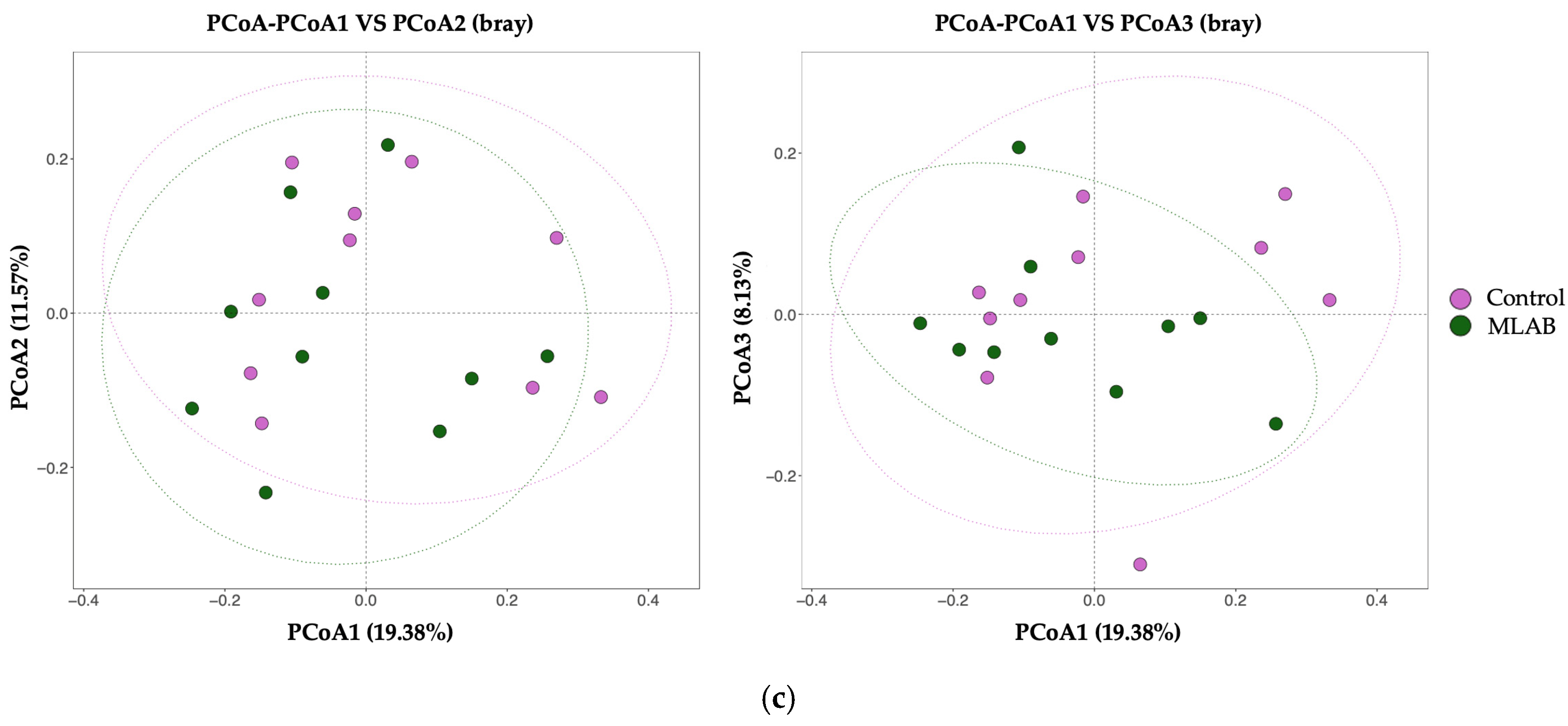
20]. In this study, alpha diversity was assessed using the Chao1 index for species richness and the Shannon index for microbial diversity [
63], with no significant differences observed between the MLAB and control groups. Li et al. [
20] similarly found that adding
Bacillus subtilis did not alter these parameters in growing pigs. These findings suggest that probiotics may influence specific microbial populations without altering overall diversity, particularly in animals with an established and resilient gut microbiota.
Gut microorganisms play a crucial role in digestion and nutrient absorption, with microbial diversity widely considered a key indicator of host health [
20]. In the present study, alpha diversity was evaluated using the Chao1 index to estimate species richness and the Shannon index to assess overall microbial diversity [
63]. No significant differences were observed between the MLAB and control groups. Consistent with these findings, Li et al. [
20] reported that supplementation with
Bacillus subtilis did not alter these diversity metrics in growing pigs. Collectively, these results suggest that probiotics may modulate specific microbial populations without substantially affecting overall gut diversity, particularly in animals with a well-established and resilient microbiota. These results may be consistent with the concept of host-adapted nutritional strategies, in which nutritional interventions tailored to the host can improve gut function in livestock [
67]. In this study, the MLAB probiotic strains were isolated from healthy Thai pigs, which may enhance their adaptation to the host gut environment.
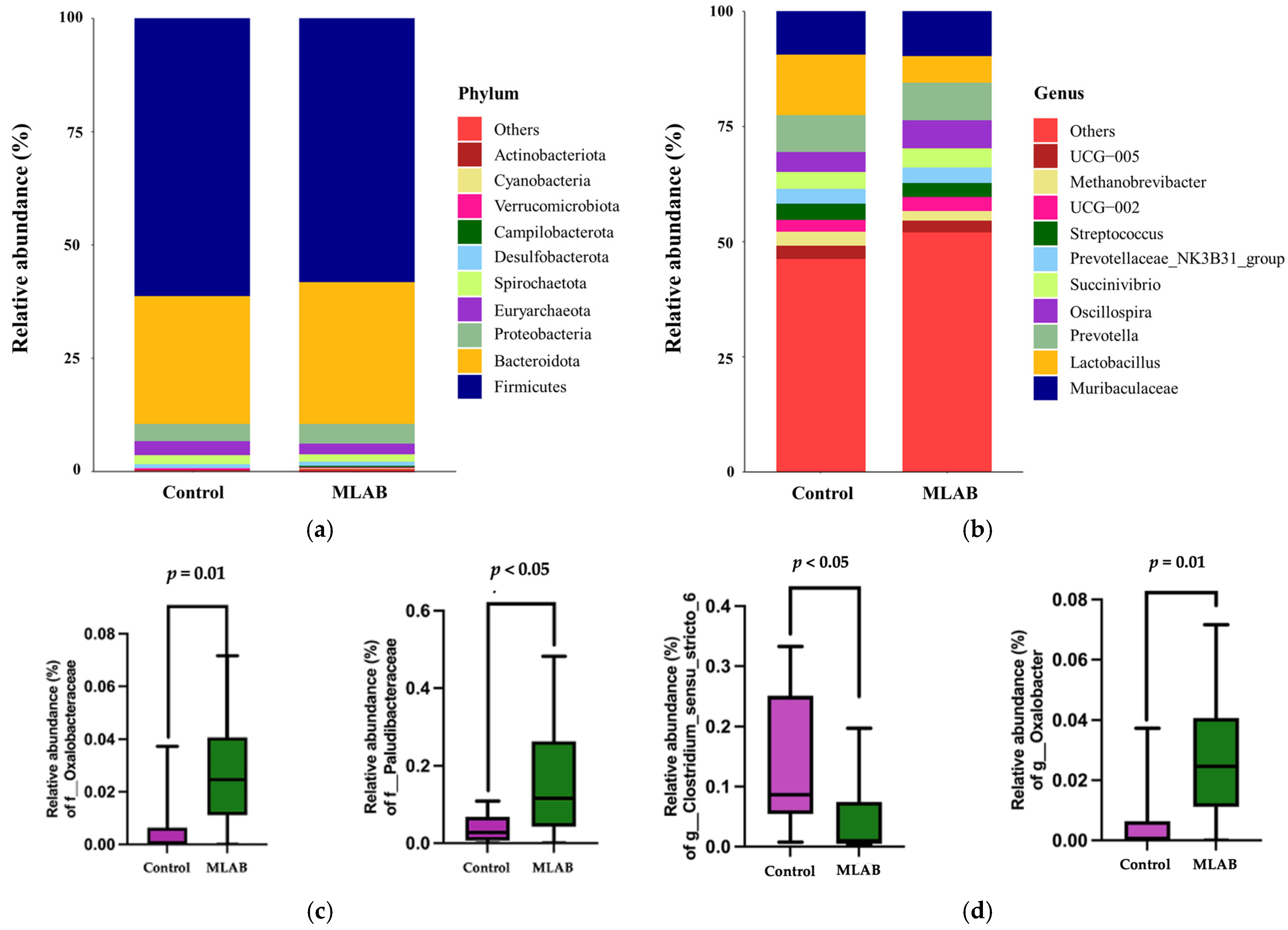
This study found higher abundances of
Oxalobacteraceae and
Paludibacteraceae in the MLAB group. Ma et al. [
68] reported that
Oxalobacteraceae is associated with bacterial diversity and consists primarily of beneficial bacteria.
Paludibacteraceae, a family within the phylum
Bacteroidota [
69], is commonly present in the gut of pigs and other animals. Although not as extensively studied as other microbial families, emerging evidence suggests that it plays a role in immune modulation [
70]. Specifically,
Paludibacteraceae may contribute to host immune regulation through its metabolic activity. SCFAs such as acetate and propionate, produced by members of this family, are recognized for their anti-inflammatory properties and for supporting intestinal barrier integrity [
71]. These SCFAs interact with host immune cells, modulating cytokine production and helping to maintain immune balance [
72]. At the genus level, the MLAB group showed lower levels of
Clostridium sensu stricto 6 and higher levels of
Oxalobacter.
Oxalobacter formigenes, a key member of this genus, is essential for gut health by breaking down oxalate, which can be toxic to animals when present in excess [
73,
74]. Unlike most gut bacteria,
Oxalobacter relies solely on oxalate as its energy source [
74]. The increased abundance of
Oxalobacter in the MLAB group suggests enhanced oxalate metabolism. Conversely, the reduced levels of potentially harmful
Clostridium sensu stricto 6 may reflect improved gut health.



 ,
,