Cryopreservation Strategies for Poultry Semen: A Comprehensive Review of Techniques and Applications
by
 , and
, and
Areej Arif
1 ,
,
Nousheen Zahoor
1,
Jianqiang Tang
1,
Meihui Tang
1,
Liyue Dong
1,
Sardar Zarq Khan
2 and
Guojun Dai
1,* 1
College of Animal Science and Technology, Yangzhou University, Yangzhou 225000, China
2
Riphah College of Veterinary Science, Riphah University, Lahore 05450, Pakistan
*
Author to whom correspondence should be addressed.
Vet. Sci. 2025, 12(2), 145; https://doi.org/10.3390/vetsci12020145
Submission received: 23 November 2024
/
Revised: 13 January 2025
/
Accepted: 5 February 2025
/
Published: 8 February 2025
Simple Summary
This review highlights the significance of poultry semen preservation for enhancing genetic diversity and breeding efficiency. It categorizes preservation techniques into short-term (using extenders) and long-term (freezing with cryoprotectants), addressing factors that impact semen quality, such as male age and handling stress. Effective semen collection methods and quality evaluation are essential for successful artificial insemination. Current research focuses on optimizing cryopreservation techniques to improve sperm viability and fertility, contributing to sustainable poultry farming practices.
Abstract
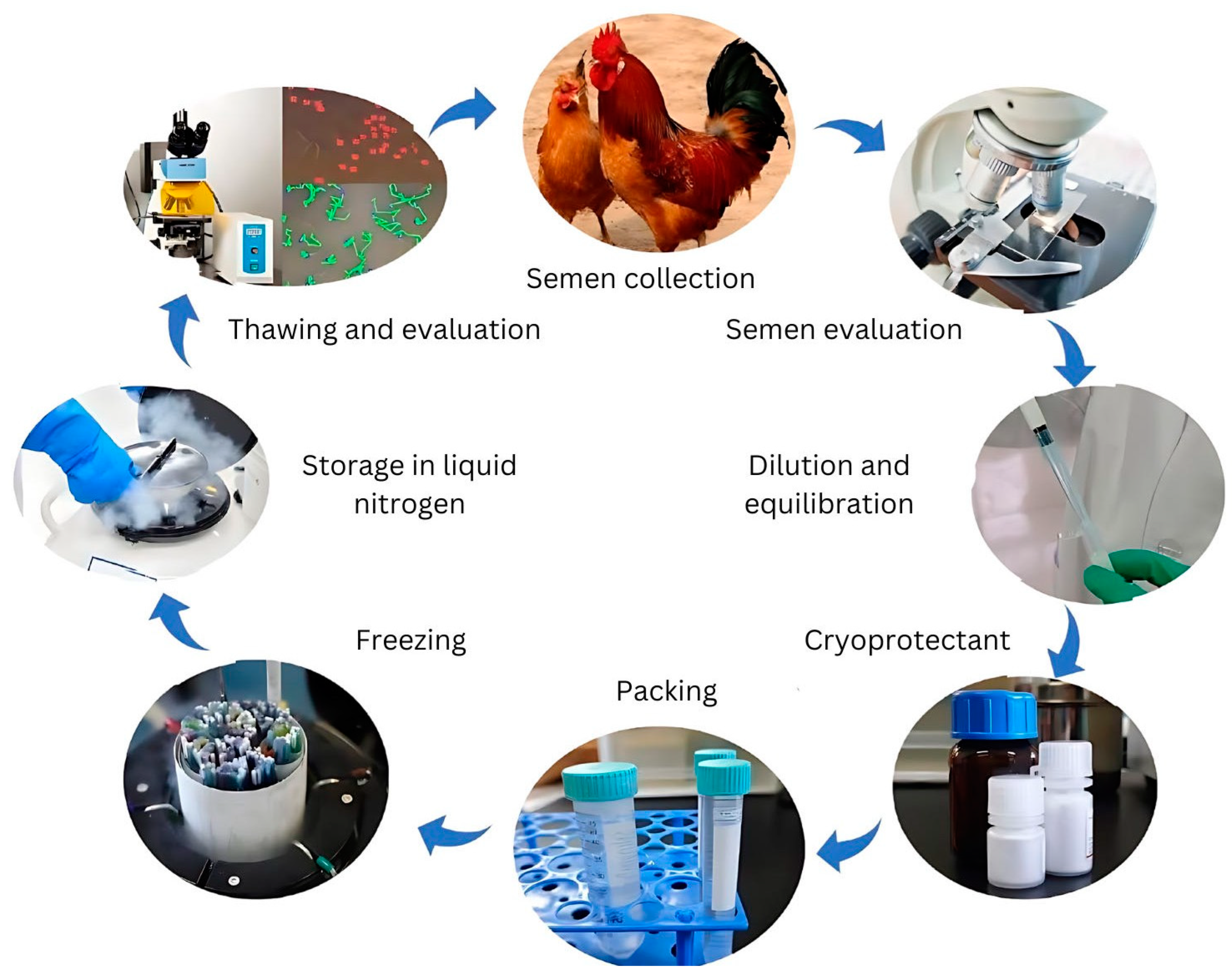
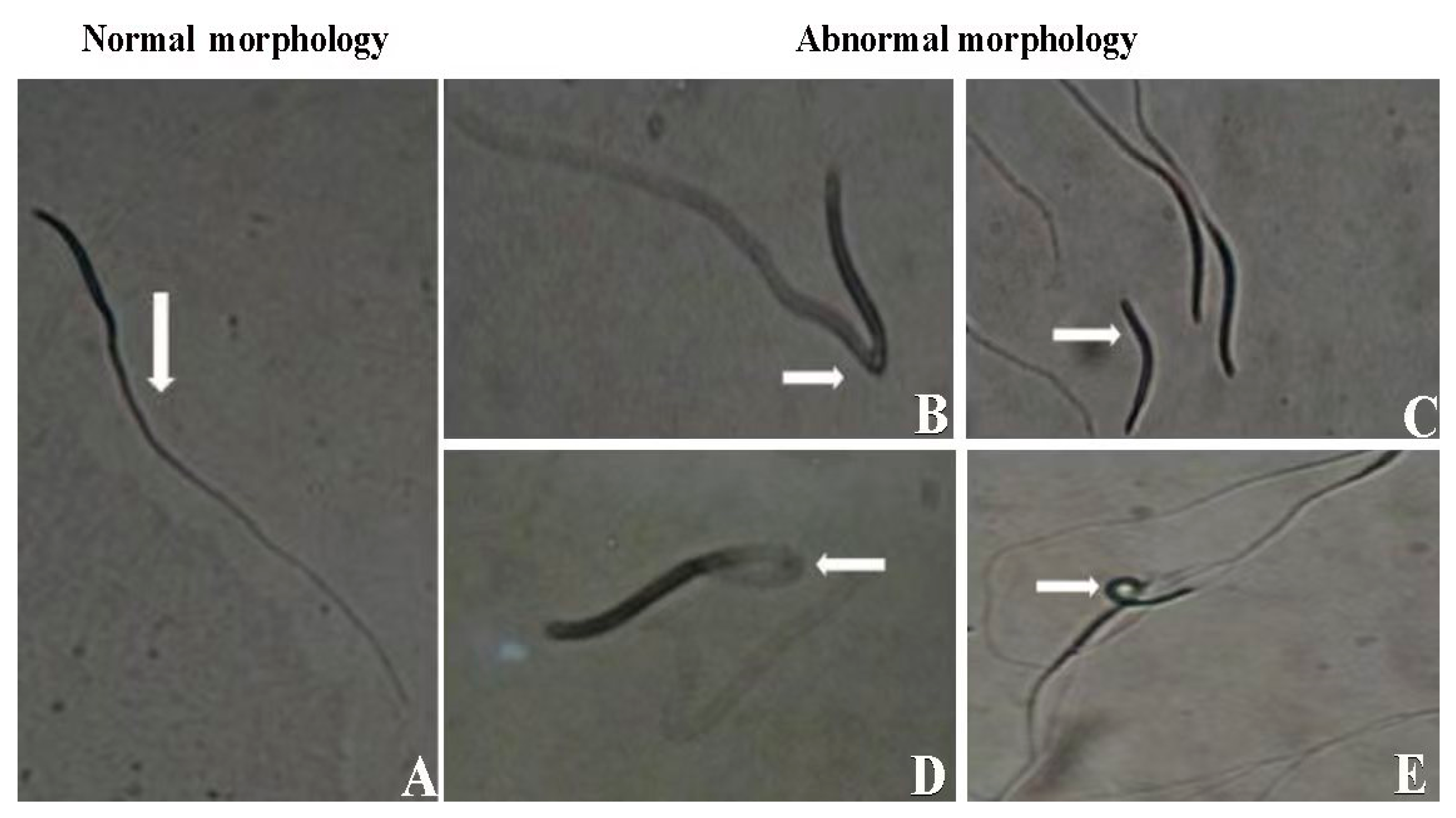
Poultry semen preservation is crucial for sustaining genetic diversity, improving production efficiency, and facilitating various breeding initiatives. This review underscores the importance and challenges associated with different preservation techniques. We investigate effective techniques for semen collection and evaluation, focusing on vital parameters such as volume, concentration, motility, and morphology. Preservation strategies are categorized into short-term approaches, such as dilution with extenders, and mid-to-long-term strategies, like freezing and the use of cryoprotectants. Additionally, we explore several factors affecting semen quality, including male age and genetics, seasonal impacts, and stress during handling. Assessing the quality of preserved semen is critical, particularly regarding post-thaw motility. The applications of these preservation techniques in artificial insemination, genetic enhancement, the conservation of endangered breeds, and biobanking are highlighted. This review identifies critical research opportunities, including the development of improved cryoprotectants, refining freezing protocols, comprehending the mechanisms of semen damage, and innovating novel preservation technologies. Addressing these challenges will enhance poultry semen preservation and contribute to sustainable poultry farming.
Keywords:
semen; cryopreservation; cryoprotectants; poultry; post-thaw; semen-preservation