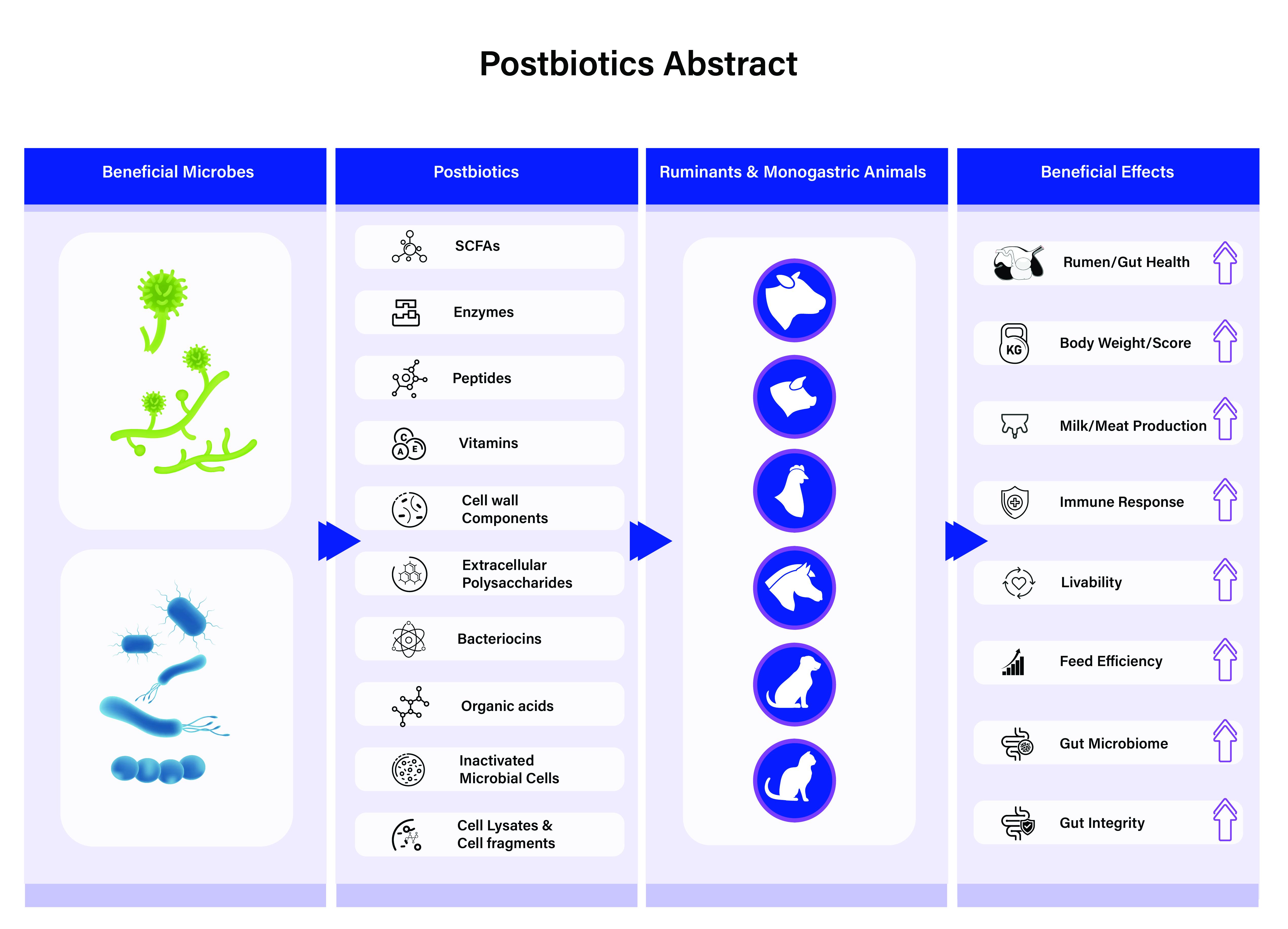

Postbiotics: Multifunctional Microbial Products Transforming Animal Health and Performance


Simple Summary
Abstract
1. Introduction
2. Prebiotics, Probiotics, and Postbiotics
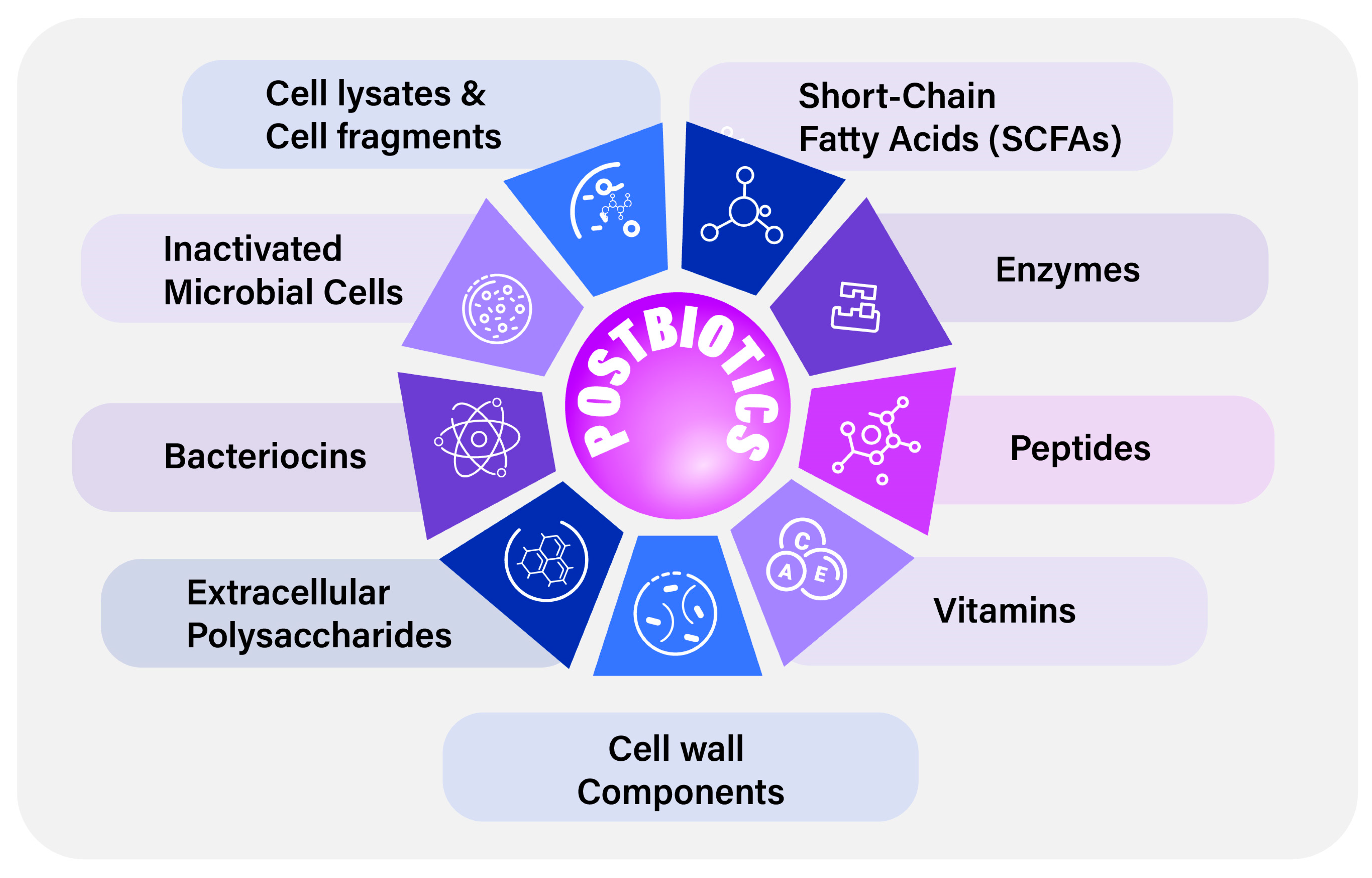
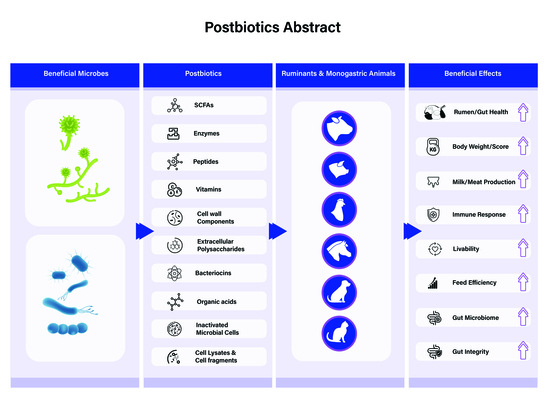
3. Components of Postbiotics
- Short-chain fatty acids (SCFAs)
- Enzymes
- Peptides
- Vitamins
- Cell wall components
- Extracellular polysaccharides
- Bacteriocins
- Inactivated microbial cells
- Cell fragments
- Cell lysates
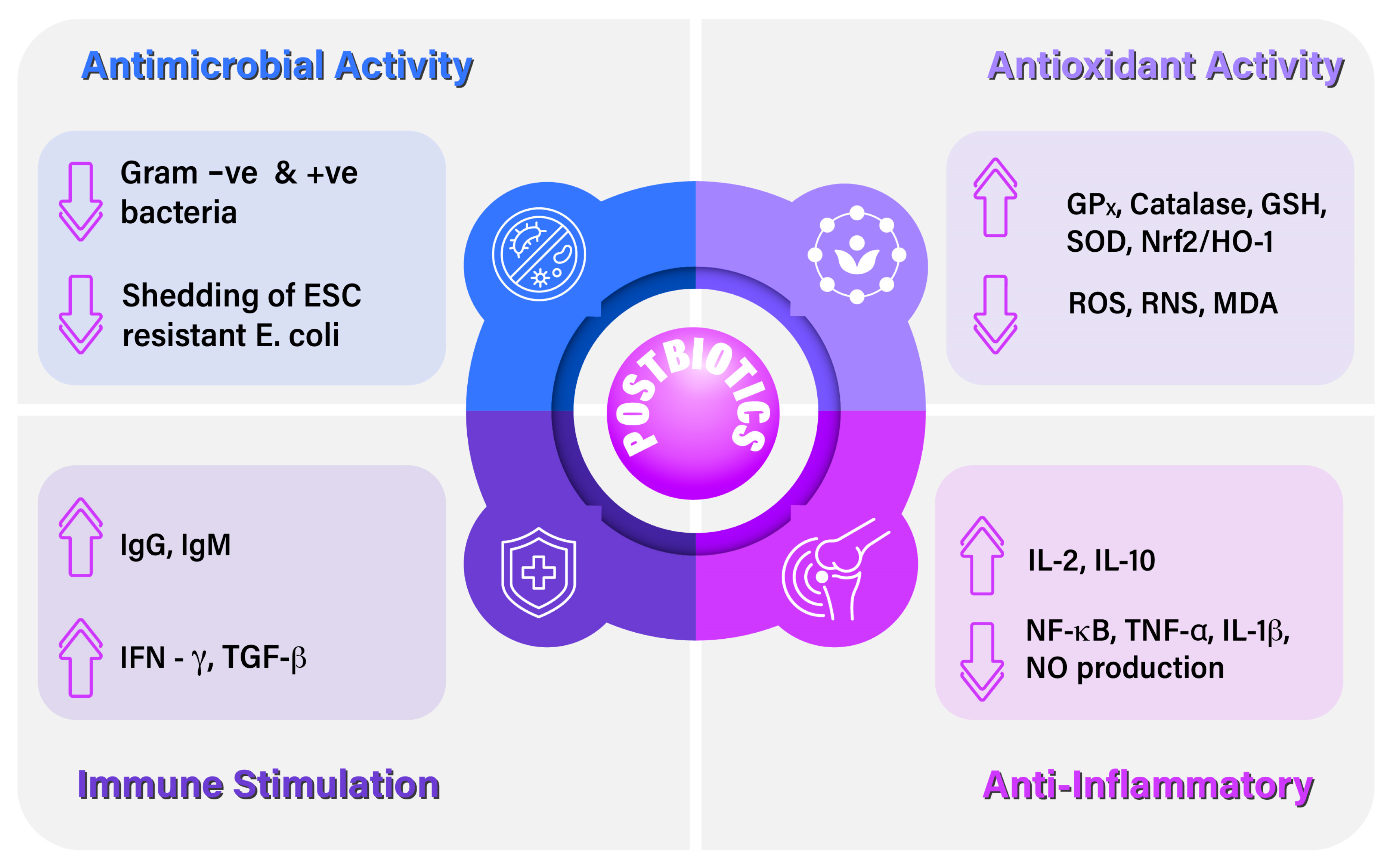
4. Physiological Effects of Postbiotics
4.1. Antioxidant Activity

| Antioxidant Effects | Model | Dose | Reference |
|---|---|---|---|
| Postbiotics of L. plantarum RG14 increase GPX in serum, upregulate hepatic GPX1, GPX4, and SOD | Post-weaning lambs | 0.9% (v/w) | [31] |
| Lactobacillus casei exhibits potent antioxidant activity | DPPH assay | 0.5 mL | [32] |
| L. acidophilus BLAC 258 and L. plantarum from yogurt increased antioxidant activity up to 48.81% | DPPH assay | ND | [33] |
| Postbiotics from Lactiplantibacillus plantarum O7S1 scavenge ROS and show antioxidant activity | DPPH and radical scavenging assays | 0.5 and 1.0 mL | [34] |
| Postbiotics from different lactobacillus induce antioxidant activity | DPPH assay | ND | [35] |
| Lacticaseibacillus casei CRL431 postbiotics reduce H2O2 levels, oxidative stress, and increase GPx and catalase activities | Rat | ND | [38] |
| Postbiotics from L. kunkeei upregulate antioxidant markers, Nrf2/HO-1, and quench ROS | HaCaT cells | 2.5%, 5%, and 10% | [40] |
| Lactobacillus paracasei postbiotic restored antioxidant enzymes GPX, GST, GR, and SOD and decreased MDA | Albino Wistar rat | 100 and 200 mg/kg | [42] |
| Postbiotics from Cetobacterium somerae and Lactococcus lactis improve T-AOC and SOD activities and decrease MDA level | Common carp (Cyprinus carpio) fish | 0.2 and 0.3 g/kg | [43] |
| EPS postbiotics enhance SOD, catalase, and GSH and reduced NO, MPO, and MDA levels | Rats | 200 mg/kg | [45] |
4.2. Anti-Inflammatory
| Anti-Inflammatory Effects | Model | Dose | Reference |
|---|---|---|---|
| Heat-killed L. argentoratensis dried postbiotics reduce IL-8 secretion | Caco2/RAW264.7 cells and mice | 500 μg/mL in vitro, 0.002–0.01% in mice | [47] |
| Inhibition of NO induced by LPS | RAW 264.7 macrophage cells | 0.5–4 mg/mL | [37] |
| Heat-killed S. boulardii postbiotics suppress TNF-α, IL-1β, and IL-6 | C57BL/6J mice | 200 μL | [49] |
| Postbiotics Cetobacterium somerae and Lactococcus lactis reduce expression of NF-κB, TNF-α, and IL-1β | High-fat diet-fed zebrafish model | 0.3 g/kg | [51] |
| Heat-killed Pediococcus pentosaceus PP18 postbiotics reduce intestinal inflammation by reducing TNF-α, IL-6, and IL-1β | High-fat diet zebrafish | 107 CFU/gm of heat-killed | [52] |
| Lysates of Lactiplantibacillus plantarum K8 postbiotics inhibit IL-1β, IL-6, and NF-κB expression | Obesity-induced high-fat diet-fed mice | 100 mg/kg | [53] |
| Postbiotics from S. boulardii reduce pro-inflammatory factors and increase anti-inflammatory factors | DSS-induced C67BL/6J colitis mouse | ND | [55] |
| EPSs from Lactobacillus plantarum R301 decrease NO production and pro-inflammatory cytokine Il-6 | RAW 264.7 cells | 20–1000 μg/mL | [44] |
| EPSs from L. plantarum block inflammation and TLR4 | LPS-induced RAW 264.7 cells | 50, 100, 200 μg/mL | [56] |
| HM0539 from Lactobacillus rhamnosus | LPS-stimulated RAW 264.7 | 25, 50, 100 ng/mL | [58] |
4.3. Antimicrobial
| Antimicrobial Effect | Model | Dose | Reference |
|---|---|---|---|
| Postbiotics from Lactiplantibacillus plantarum O7S1 inhibit Gram-positive and Gram-negative pathogens | Agar well diffusion assay | 1 mg/mL | [34] |
| Lactobacilli-derived postbiotics inhibit E. coli by 5.54 log Colony forming unit (CFU)/g | Meat samples | 100 mL/mg | [35] |
| Postbiotic-incorporated bacterial nanocellulose films reduce ~5 log cycles of L. monocytogenes count | Ground meat | 21.21% | [62] |
| Postbiotic-fortified yogurt decreases L. monocytogenes count by ~2 Log10 | Wistar rats | 1.0 g | [33] |
4.4. Immune Stimulation
| Immune Stimulation | Model | Dose | Reference |
|---|---|---|---|
| L. plantarum postbiotics increase IgA and IgM content and decrease TNF-α and IL-8 levels | 12-week-old mink | 0, 0.15%, 0.3%, and 0.45% | [65] |
| Extracellular vesicle postbiotics from Lactobacillus rhamnosus increase CD8+ T/CD4+ T cell ratio and MHC II+ DC cells | Mice | ND | [66] |
| Postbiotic EVs increase plasma IgG, IgA, and IgM and proportion of Tc, NK, and NKT cells in the spleen | Suckling rats | N/A | [67] |
| Postbiotics mixture of L. plantarum KM1, L. Plantarum KM2, and B. velezensis KMU01 activates NK cells in accordance with Th1/Th2 expression level | C57BL/6N mice | 400 μL | [68] |
| Postbiotics from Bacillus velezensis Kh2-2 lysates downregulate NF-κB and MAPK signaling, IL-2, and IFN-γ and increase IL-10 expression | RAW264.7 cell lines and mice. | 25–100 μg/mL, 106 CFU/Kg/day | [69] |
5. Health-Beneficial Effects of Postbiotics in Livestock
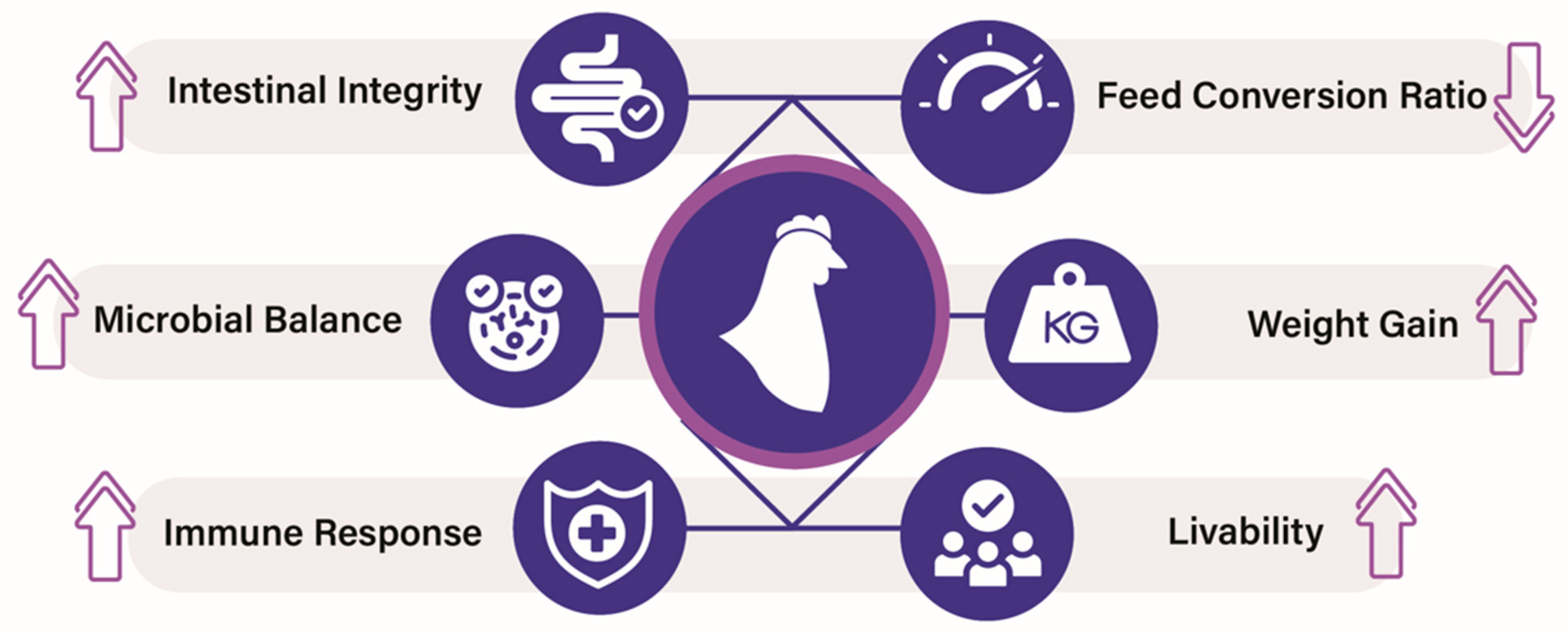
5.1. Postbiotics in Poultry
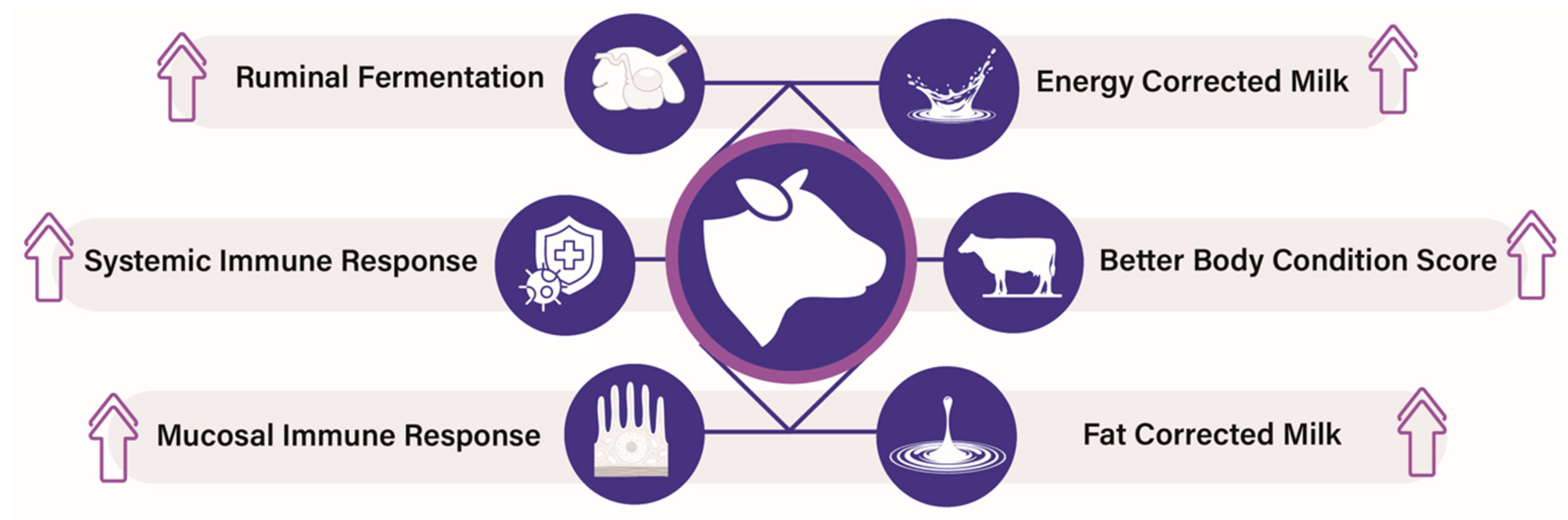
5.2. Postbiotics in Cattle
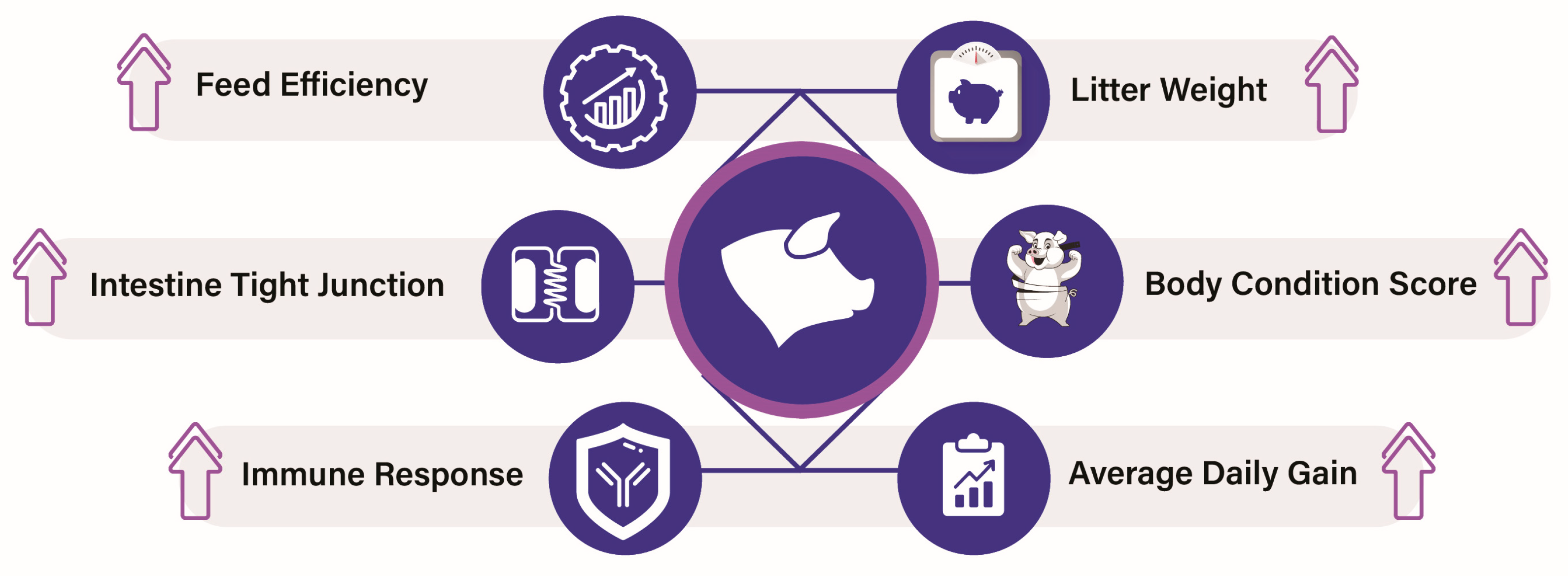
5.3. Postbiotics in Pigs
6. Health-Beneficial Effects of Postbiotics in Companion Animals
6.1. Postbiotics in Dogs
6.2. Postbiotics in Cats
6.3. Postbiotics in Horses
| Type of Postbiotics | Dose and Route | Effect | Reference |
|---|---|---|---|
| Dogs | |||
| Yeast-containing postbiotics | 1.1% in feed | Increased the CD4+:CD8+ T cell ratio and decreased total serum IgA concentrations | [113] |
| Postbiotics from Lactobacillus rhamnosus and Lactobacillus reuteri | 1 × 10⁶ tyndallized bacteria in lymphocyte-rich white blood cells from healthy dogs | Modulated the immune response and prevented of relapses of allergic diseases | [114] |
| SCFP postbiotics | 0.13% in diet | Improved innate immune cell activation during transport stress | [115] |
| Lactobacillus fermentation product | 4 mg/kg body weight | Stabilized stool quality and microbiota homeostasis and reduced oxidative damage in stress | [116] |
| Cats | |||
| SCFP postbiotics | 0.3% or 0.6% | Elevated digestibility of crude fiber and ash without interfering with feed consumption, fecal production, and fecal characteristics | [119] |
| Sodium butyrate postbiotic | 0.1% in diet | Decreased inflammatory TNF-α and IL-1β, increased antioxidant enzymes, and improved gut microbiota | [46] |
| Horses | |||
| SCFP postbiotics | 21 g/d in diet | Stabilized microbial profiles after stress challenge | [120] |
| SCFP postbiotics | 10 gm dry powder in diet for 28 days | Improved the early immune response to an initial vaccination | [122] |
7. Conclusions
Author Contributions
Funding
Institutional Review Board Statement
Informed Consent Statement
Data Availability Statement
Acknowledgments
Conflicts of Interest
References
- Barney, C. Urbanization in developing countries: Current trends, future projections, and key challenges for sustainability. Technol. Soc. 2006, 28, 18. [Google Scholar] [CrossRef]
- Revell, B. Meat and Milk Consumption 2050: The Potential for Demand-side Solutions to Greenhouse Gas Emissions Reduction. EuroChoices 2015, 14, 4–11. [Google Scholar] [CrossRef]
- Turk, J. Meeting projected food demands by 2050: Understanding and enhancing the role of grazing ruminants. J. Anim. Sci. 2016, 94, 53–62. [Google Scholar] [CrossRef]
- Kappes, A.; Tozooneyi, T.; Shakil, G.; Railey, A.F.; McIntyre, K.M.; Mayberry, D.E.; Rushton, J.; Pendell, D.L.; Marsh, T.L. Livestock health and disease economics: A scoping review of selected literature. Front. Vet. Sci. 2023, 10, 1168649. [Google Scholar] [CrossRef]
- Vlasova, A.N.; Saif, L.J. Bovine Immunology: Implications for Dairy Cattle. Front. Immunol. 2021, 12, 643206. [Google Scholar] [CrossRef]
- Underwood, W.J.; Blauwiekel, R.; Delano, M.L.; Gillesby, R.; Mischler, S.A.; Schoell, A. Chapter 15—Biology and Diseases of Ruminants (Sheep, Goats, and Cattle). In Laboratory Animal Medicine, 3rd ed.; Fox, J.G., Anderson, L.C., Otto, G.M., Pritchett-Corning, K.R., Whary, M.T., Eds.; Academic Press: Boston, MA, USA, 2015; pp. 623–694. [Google Scholar]
- Martin, M.J.; Thottathil, S.E.; Newman, T.B. Antibiotics Overuse in Animal Agriculture: A Call to Action for Health Care Providers. Am. J. Public Health 2015, 105, 2409–2410. [Google Scholar] [CrossRef]
- Gadde, U.; Kim, W.H.; Oh, S.T.; Lillehoj, H.S. Alternatives to antibiotics for maximizing growth performance and feed efficiency in poultry: A review. Anim. Health Res. Rev. 2017, 18, 26–45. [Google Scholar] [CrossRef]
- Shoveller, A.K.; Bosch, G.; Trevizan, L.; Wakshlag, J.J.; Columbus, D.A. Editorial: Nutrition and Management of Animals We Keep as Companions. Front. Vet. Sci. 2021, 8, 748776. [Google Scholar] [CrossRef]
- Gibson, G.R.; Roberfroid, M.B. Dietary modulation of the human colonic microbiota: Introducing the concept of prebiotics. J. Nutr. 1995, 125, 1401–1412. [Google Scholar] [CrossRef] [PubMed]
- Markowiak, P.; Śliżewska, K. Effects of Probiotics, Prebiotics, and Synbiotics on Human Health. Nutrients 2017, 9, 1021. [Google Scholar] [CrossRef] [PubMed]
- Doron, S.; Snydman, D.R. Risk and safety of probiotics. Clin. Infect. Dis. 2015, 60, S129–S134. [Google Scholar] [CrossRef]
- Sanders, M.E.; Akkermans, L.M.; Haller, D.; Hammerman, C.; Heimbach, J.; Hörmannsperger, G.; Huys, G.; Levy, D.D.; Lutgendorff, F.; Mack, D.; et al. Safety assessment of probiotics for human use. Gut Microbes 2010, 1, 164–185. [Google Scholar] [CrossRef]
- Liu, X.; Zhao, H.; Wong, A. Accounting for the health risk of probiotics. Heliyon 2024, 10, e27908. [Google Scholar] [CrossRef]
- Vahabnezhad, E.; Mochon, A.B.; Wozniak, L.J.; Ziring, D.A. Lactobacillus bacteremia associated with probiotic use in a pediatric patient with ulcerative colitis. J. Clin. Gastroenterol. 2013, 47, 437–439. [Google Scholar] [CrossRef]
- Salminen, S.; Collado, M.C.; Endo, A.; Hill, C.; Lebeer, S.; Quigley, E.M.M.; Sanders, M.E.; Shamir, R.; Swann, J.R.; Szajewska, H.; et al. The International Scientific Association of Probiotics and Prebiotics (ISAPP) consensus statement on the definition and scope of postbiotics. Nat. Rev. Gastroenterol. Hepatol. 2021, 18, 649–667. [Google Scholar] [CrossRef]
- Canfora, E.E.; Jocken, J.W.; Blaak, E.E. Short-chain fatty acids in control of body weight and insulin sensitivity. Nat. Rev. Endocrinol. 2015, 11, 577–591. [Google Scholar] [CrossRef] [PubMed]
- Wong, J.M.; de Souza, R.; Kendall, C.W.; Emam, A.; Jenkins, D.J. Colonic health: Fermentation and short chain fatty acids. J. Clin. Gastroenterol. 2006, 40, 235–243. [Google Scholar] [CrossRef] [PubMed]
- Nogal, A.; Valdes, A.M.; Menni, C. The role of short-chain fatty acids in the interplay between gut microbiota and diet in cardio-metabolic health. Gut Microbes 2021, 13, 1897212. [Google Scholar] [CrossRef] [PubMed]
- Gurung, N.; Ray, S.; Bose, S.; Rai, V. A broader view: Microbial enzymes and their relevance in industries, medicine, and beyond. Biomed. Res. Int. 2013, 2013, 329121. [Google Scholar] [CrossRef]
- Wijesekara, T.; Abeyrathne, E.; Ahn, D.U. Effect of Bioactive Peptides on Gut Microbiota and Their Relations to Human Health. Foods 2024, 13, 1853. [Google Scholar] [CrossRef]
- Thorakkattu, P.; Khanashyam, A.C.; Shah, K.; Babu, K.S.; Mundanat, A.S.; Deliephan, A.; Deokar, G.S.; Santivarangkna, C.; Nirmal, N.P. Postbiotics: Current Trends in Food and Pharmaceutical Industry. Foods 2022, 11, 3094. [Google Scholar] [CrossRef]
- Kim, K.W.; Kang, S.S.; Woo, S.J.; Park, O.J.; Ahn, K.B.; Song, K.D.; Lee, H.K.; Yun, C.H.; Han, S.H. Lipoteichoic Acid of Probiotic Lactobacillus plantarum Attenuates Poly I:C-Induced IL-8 Production in Porcine Intestinal Epithelial Cells. Front. Microbiol. 2017, 8, 1827. [Google Scholar] [CrossRef]
- Kaur, N.; Dey, P. Bacterial exopolysaccharides as emerging bioactive macromolecules: From fundamentals to applications. Res. Microbiol. 2023, 174, 104024. [Google Scholar] [CrossRef]
- Angelin, J.; Kavitha, M. Exopolysaccharides from probiotic bacteria and their health potential. Int. J. Biol. Macromol. 2020, 162, 853–865. [Google Scholar] [CrossRef]
- Deng, S.; Liu, S.; Li, X.; Liu, H.; Li, F.; Liu, K.; Zeng, H.; Zeng, X.; Xin, B. Thuricins: Novel Leaderless Bacteriocins with Potent Antimicrobial Activity Against Gram-Positive Foodborne Pathogens. J. Agric. Food Chem. 2022, 70, 9990–9999. [Google Scholar] [CrossRef]
- Li, J.; Chen, J.; Yang, G.; Tao, L. Sublancin protects against methicillin-resistant Staphylococcus aureus infection by the combined modulation of innate immune response and microbiota. Peptides 2021, 141, 170533. [Google Scholar] [CrossRef]
- Xie, Z.; Zhang, G.; Liu, R.; Wang, Y.; Tsapieva, A.N.; Zhang, L.; Han, J. Heat-Killed Lacticaseibacillus paracasei Repairs Lipopolysaccharide-Induced Intestinal Epithelial Barrier Damage via MLCK/MLC Pathway Activation. Nutrients 2023, 15, 1758. [Google Scholar] [CrossRef]
- Magrys, A.; Pawlik, M. Postbiotic Fractions of Probiotics Lactobacillus plantarum 299v and Lactobacillus rhamnosus GG Show Immune-Modulating Effects. Cells 2023, 12, 2538. [Google Scholar] [CrossRef] [PubMed]
- Ancuta, D.L.; Alexandru, D.M.; Muselin, F.; Cristina, R.T.; Coman, C. Assessment of the Effect on Periodontitis of Antibiotic Therapy and Bacterial Lysate Treatment. Int. J. Mol. Sci. 2024, 25, 5432. [Google Scholar] [CrossRef] [PubMed]
- Izuddin, W.I.; Humam, A.M.; Loh, T.C.; Foo, H.L.; Samsudin, A.A. Dietary Postbiotic Lactobacillus plantarum Improves Serum and Ruminal Antioxidant Activity and Upregulates Hepatic Antioxidant Enzymes and Ruminal Barrier Function in Post-Weaning Lambs. Antioxidants 2020, 9, 250. [Google Scholar] [CrossRef] [PubMed]
- Noori, S.M.A.; Behfar, A.; Saadat, A.; Ameri, A.; Atashi, S.; Siahpoosh, A. Antimicrobial and Antioxidant Properties of Natural Postbiotics Derived from Five Lactic Acid Bacteria. Jundishapur J. Nat. Pharm. Prod. 2022; in press. [Google Scholar] [CrossRef]
- Davarzani, S.; Sanjabi, M.R.; Mojgani, N.; Mirdamadi, S.; Soltani, M. Investigating the Antibacterial, Antioxidant, and Cholesterol-lowering Properties of Yogurt Fortified with Postbiotic of Lactobacillus acidophilus and Lactiplantibacillus plantarum in the Wistar Rat Model. J. Food Prot. 2024, 87, 100408. [Google Scholar] [CrossRef]
- Aliouche, N.; Sifour, M.; Ouled-Haddar, H. Exploring the antioxidant, antidiabetic, and antibacterial potential of postbiotic compounds derived from Lactiplantibacillus plantarum O7S1. Biotechnologia 2024, 105, 215–225. [Google Scholar] [CrossRef]
- Safura, J.; Naheed, M.; Setareh, H.; Mohammad Reza, S.; Solmaz, S.-N. Investigation of antimicrobial and antioxidant properties of postbiotics produced by lactobacillus rhamnosus and limosilactobacillus reuteri and their potential application in surface decontamination of red meat. Lwt 2024, 209, 116758. [Google Scholar] [CrossRef]
- Humam, A.M.; Loh, T.C.; Foo, H.L.; Izuddin, W.I.; Awad, E.A.; Idrus, Z.; Samsudin, A.A.; Mustapha, N.M. Dietary Supplementation of Postbiotics Mitigates Adverse Impacts of Heat Stress on Antioxidant Enzyme Activity, Total Antioxidant, Lipid Peroxidation, Physiological Stress Indicators, Lipid Profile and Meat Quality in Broilers. Animals 2020, 10, 982. [Google Scholar] [CrossRef]
- Tong, Y.; Guo, H.; Abbas, Z.; Zhang, J.; Wang, J.; Cheng, Q.; Peng, S.; Yang, T.; Bai, T.; Zhou, Y.; et al. Optimizing postbiotic production through solid-state fermentation with Bacillus amyloliquefaciens J and Lactiplantibacillus plantarum SN4 enhances antibacterial, antioxidant, and anti-inflammatory activities. Front. Microbiol. 2023, 14, 1229952. [Google Scholar] [CrossRef] [PubMed]
- Guerrero-Encinas, I.; Gonzalez-Gonzalez, J.N.; Santiago-Lopez, L.; Muhlia-Almazan, A.; Garcia, H.S.; Mazorra-Manzano, M.A.; Vallejo-Cordoba, B.; Gonzalez-Cordova, A.F.; Hernandez-Mendoza, A. Protective Effect of Lacticaseibacillus casei CRL 431 Postbiotics on Mitochondrial Function and Oxidative Status in Rats with Aflatoxin B(1)-Induced Oxidative Stress. Probiotics Antimicrob. Proteins 2021, 13, 1033–1043. [Google Scholar] [CrossRef] [PubMed]
- Papatsiros, V.G.; Eliopoulos, C.; Voulgarakis, N.; Arapoglou, D.; Riahi, I.; Sadurní, M.; Papakonstantinou, G.I. Effects of a Multi-Component Mycotoxin-Detoxifying Agent on Oxidative Stress, Health and Performance of Sows. Toxins 2023, 15, 580. [Google Scholar] [CrossRef] [PubMed]
- Lee, Y.-J.; Choi, J.-H.; Kang, K.-K.; Sung, S.-E.; Lee, S.; Sung, M.; Seo, M.-S.; Park, J.-H. Antioxidant and Antimelanogenic Activities of Lactobacillus kunkeei NCHBL-003 Isolated from Honeybees. Microorganisms 2024, 12, 188. [Google Scholar] [CrossRef]
- Yan, H.; Xing, Q.; Xiao, X.; Yu, B.; He, J.; Mao, X.; Yu, J.; Zheng, P.; Luo, Y.; Wu, A.; et al. Effect of Saccharomyces cerevisiae Postbiotics and Essential Oil on Growth Performance and Intestinal Health of Weanling Pigs During K88 ETEC Infection. J. Anim. Sci. 2024, 102, skae007. [Google Scholar] [CrossRef]
- Osman, A.; El-Gazzar, N.; Almanaa, T.N.; El-Hadary, A.; Sitohy, M. Lipolytic Postbiotic from Lactobacillus paracasei Manages Metabolic Syndrome in Albino Wistar Rats. Molecules 2021, 26, 472. [Google Scholar] [CrossRef]
- Yu, Z.; Hao, Q.; Liu, S.B.; Zhang, Q.S.; Chen, X.Y.; Li, S.H.; Ran, C.; Yang, Y.L.; Teame, T.; Zhang, Z.; et al. The positive effects of postbiotic (SWF concentration®) supplemented diet on skin mucus, liver, gut health, the structure and function of gut microbiota of common carp (Cyprinus carpio) fed with high-fat diet. Fish Shellfish Immunol. 2023, 135, 108681. [Google Scholar] [CrossRef] [PubMed]
- Wang, J.; Zhang, J.; Guo, H.; Cheng, Q.; Abbas, Z.; Tong, Y.; Yang, T.; Zhou, Y.; Zhang, H.; Wei, X.; et al. Optimization of Exopolysaccharide Produced by Lactobacillus plantarum R301 and Its Antioxidant and Anti-Inflammatory Activities. Foods 2023, 12, 2481. [Google Scholar] [CrossRef]
- Aliouche, N.; Sifour, M.; Kebsa, W.; Ouled-Haddar, H. Exploring the hepatoprotective potential of the probiotic Lactiplantibacillus plantarum E1K2R2 and its exopolysaccharide-postbiotic on ibuprofen-induced acute liver injury in rats. Naunyn Schmiedebergs Arch. Pharmacol. 2025, 398, 3079–3091. [Google Scholar] [CrossRef]
- Zhang, A.; Li, D.; Yu, T.; Zhang, M.; Cui, Y.; Wang, H.; Dong, T.; Wu, Y. Multi-Omics Approach to Evaluate Effects of Dietary Sodium Butyrate on Antioxidant Capacity, Immune Function and Intestinal Microbiota Composition in Adult Ragdoll Cats. Metabolites 2025, 15, 120. [Google Scholar] [CrossRef]
- Itoh, T.; Miyazono, D.; Sugata, H.; Mori, C.; Takahata, M. Anti-inflammatory effects of heat-killed Lactiplantibacillus argentoratensis BBLB001 on a gut inflammation co-culture cell model and dextran sulfate sodium-induced colitis mouse model. Int. Immunopharmacol. 2024, 143, 113408. [Google Scholar] [CrossRef]
- Feng, C.; Zhang, W.; Zhang, T.; He, Q.; Kwok, L.Y.; Tan, Y.; Zhang, H. Heat-Killed Bifidobacterium bifidum B1628 May Alleviate Dextran Sulfate Sodium-Induced Colitis in Mice, and the Anti-Inflammatory Effect Is Associated with Gut Microbiota Modulation. Nutrients 2022, 14, 5233. [Google Scholar] [CrossRef]
- Jin, Y.; Wu, J.; Huang, K.; Liang, Z. Heat-Killed Saccharomyces boulardii Alleviates Dextran Sulfate Sodium-Induced Ulcerative Colitis by Restoring the Intestinal Barrier, Reducing Inflammation, and Modulating the Gut Microbiota. Nutrients 2024, 16, 702. [Google Scholar] [CrossRef]
- Layus, B.I.; Gerez, C.L.; Rodriguez, A.V. Development of an ophthalmic formulation with a postbiotic of Lactiplantibacillus plantarum CRL 759. Benef. Microbes 2022, 13, 417–426. [Google Scholar] [CrossRef] [PubMed]
- Li, S.; Yang, H.; Jin, Y.; Hao, Q.; Liu, S.; Ding, Q.; Yao, Y.; Yang, Y.; Ran, C.; Wu, C.; et al. Dietary cultured supernatant mixture of Cetobacterium somerae and Lactococcus lactis improved liver and gut health, and gut microbiota homeostasis of zebrafish fed with high-fat diet. Fish Shellfish Immunol. 2023, 142, 109139. [Google Scholar] [CrossRef] [PubMed]
- Yu, Y.; Zhou, M.; Sadiq, F.A.; Hu, P.; Gao, F.; Wang, J.; Liu, A.; Liu, Y.; Wu, H.; Zhang, G. Comparison of the effects of three sourdough postbiotics on high-fat diet-induced intestinal damage. Food Funct. 2024, 15, 9053–9069. [Google Scholar] [CrossRef]
- Lim, J.J.; Jung, A.H.; Joo Suh, H.; Choi, H.S.; Kim, H. Lactiplantibacillus plantarum K8-based paraprobiotics prevents obesity and obesity-induced inflammatory responses in high fat diet-fed mice. Food Res. Int. 2022, 155, 111066. [Google Scholar] [CrossRef] [PubMed]
- Chen, Y.; Zhu, F.; Yu, G.; Peng, N.; Li, X.; Ge, M.; Yang, L.; Dong, W. Bifidobacterium bifidum postbiotics prevent Salmonella Pullorum infection in chickens by modulating pyroptosis and enhancing gut health. Poult. Sci. 2025, 104, 104968. [Google Scholar] [CrossRef]
- Xu, X.; Wu, J.; Jin, Y.; Huang, K.; Zhang, Y.; Liang, Z. Both Saccharomyces boulardii and Its Postbiotics Alleviate Dextran Sulfate Sodium-Induced Colitis in Mice, Association with Modulating Inflammation and Intestinal Microbiota. Nutrients 2023, 15, 1484. [Google Scholar] [CrossRef]
- Kwon, M.; Lee, J.; Park, S.; Kwon, O.H.; Seo, J.; Roh, S. Exopolysaccharide Isolated from Lactobacillus plantarum L-14 Has Anti-Inflammatory Effects via the Toll-Like Receptor 4 Pathway in LPS-Induced RAW 264.7 Cells. Int. J. Mol. Sci. 2020, 21, 9283. [Google Scholar] [CrossRef]
- Bobowska, A.; Granica, S.; Filipek, A.; Melzig, M.F.; Moeslinger, T.; Zentek, J.; Kruk, A.; Piwowarski, J.P. Comparative studies of urolithins and their phase II metabolites on macrophage and neutrophil functions. Eur. J. Nutr. 2021, 60, 1957–1972. [Google Scholar] [CrossRef]
- Li, Y.; Yang, S.; Lun, J.; Gao, J.; Gao, X.; Gong, Z.; Wan, Y.; He, X.; Cao, H. Inhibitory Effects of the Lactobacillus rhamnosus GG Effector Protein HM0539 on Inflammatory Response Through the TLR4/MyD88/NF-small ka, CyrillicB Axis. Front. Immunol. 2020, 11, 551449. [Google Scholar] [CrossRef] [PubMed]
- Chang, H.M.; Foo, H.L.; Loh, T.C.; Lim, E.T.C.; Abdul Mutalib, N.E. Comparative Studies of Inhibitory and Antioxidant Activities, and Organic Acids Compositions of Postbiotics Produced by Probiotic Lactiplantibacillus plantarum Strains Isolated From Malaysian Foods. Front. Vet. Sci. 2020, 7, 602280. [Google Scholar] [CrossRef]
- Isaac, S.L.; Abdul Malek, A.Z.; Hazif, N.S.; Roslan, F.S.; Mohd Hashim, A.; Song, A.A.; Abdul Rahim, R.; Wan Nur Ismah, W.A.K. Genome mining of Lactiplantibacillus plantarum PA21: Insights into its antimicrobial potential. BMC Genom. 2024, 25, 571. [Google Scholar] [CrossRef]
- Incili, G.K.; Karatepe, P.; Akgol, M.; Gungoren, A.; Koluman, A.; Ilhak, O.I.; Kanmaz, H.; Kaya, B.; Hayaloglu, A.A. Characterization of lactic acid bacteria postbiotics, evaluation in-vitro antibacterial effect, microbial and chemical quality on chicken drumsticks. Food Microbiol. 2022, 104, 104001. [Google Scholar] [CrossRef] [PubMed]
- Shafipour Yordshahi, A.; Moradi, M.; Tajik, H.; Molaei, R. Design and preparation of antimicrobial meat wrapping nanopaper with bacterial cellulose and postbiotics of lactic acid bacteria. Int. J. Food Microbiol. 2020, 321, 108561. [Google Scholar] [CrossRef]
- Laird, T.; Jordan, D.; Pluske, J.; Mansfield, J.; Wilkinson, S.; Cadogan, D.; Abraham, S.; O’Dea, M. Development of an In Vivo Extended-Spectrum Cephalosporin-Resistant Escherichia coli Model in Post-Weaned Pigs and Its Use in Assessment of Dietary Interventions. Animals 2023, 1, 959. [Google Scholar] [CrossRef]
- Zabolyova, N.; Laukova, A.; Pogany Simonova, M. Susceptibility to postbiotics—Enterocins of methicillin-resistant Staphylococcus aureus strains isolated from rabbits. Vet. Res. Commun. 2024, 48, 1449–1457. [Google Scholar] [CrossRef]
- Li, Y.; Zhen, S.; Cao, L.; Sun, F.; Wang, L. Effects of Lactobacillus plantarum Postbiotics on Growth Performance, Immune Status, and Intestinal Microflora of Growing Minks. Animals 2023, 13, 2958. [Google Scholar] [CrossRef]
- Lu, S.; Xu, J.; Zhao, Z.; Guo, Y.; Zhang, H.; Jurutka, P.W.; Huang, D.; Cao, C.; Cheng, S. Dietary Lactobacillus rhamnosus GG extracellular vesicles enhance antiprogrammed cell death 1 (anti-PD-1) immunotherapy efficacy against colorectal cancer. Food Funct. 2023, 14, 10314–10328. [Google Scholar] [CrossRef] [PubMed]
- Martinez-Ruiz, S.; Saez-Fuertes, L.; Casanova-Crespo, S.; Rodriguez-Lagunas, M.J.; Perez-Cano, F.J.; Badia, J.; Baldoma, L. Microbiota-Derived Extracellular Vesicles Promote Immunity and Intestinal Maturation in Suckling Rats. Nutrients 2023, 15, 4701. [Google Scholar] [CrossRef] [PubMed]
- Jung, Y.J.; Kim, H.S.; Jaygal, G.; Cho, H.R.; Lee, K.B.; Song, I.B.; Kim, J.H.; Kwak, M.S.; Han, K.H.; Bae, M.J.; et al. Postbiotics Enhance NK Cell Activation in Stress-Induced Mice through Gut Microbiome Regulation. J. Microbiol. Biotechnol. 2022, 32, 612–620. [Google Scholar] [CrossRef]
- Mi, X.J.; Tran, T.H.M.; Park, H.R.; Xu, X.Y.; Subramaniyam, S.; Choi, H.S.; Kim, J.; Koh, S.C.; Kim, Y.J. Immune-enhancing effects of postbiotic produced by Bacillus velezensis Kh2-2 isolated from Korea Foods. Food Res. Int. 2022, 152, 110911. [Google Scholar] [CrossRef]
- Humam, A.M.; Loh, T.C.; Foo, H.L.; Samsudin, A.A.; Mustapha, N.M.; Zulkifli, I.; Izuddin, W.I. Effects of Feeding Different Postbiotics Produced by Lactobacillus plantarum on Growth Performance, Carcass Yield, Intestinal Morphology, Gut Microbiota Composition, Immune Status, and Growth Gene Expression in Broilers under Heat Stress. Animals 2019, 9, 644. [Google Scholar] [CrossRef]
- Ballantyne, R.; Lee, J.W.; Wang, S.T.; Lin, J.S.; Tseng, D.Y.; Liao, Y.C.; Chang, H.T.; Lee, T.Y.; Liu, C.H. Dietary administration of a postbiotic, heat-killed Pediococcus pentosaceus PP4012 enhances growth performance, immune response and modulates intestinal microbiota of white shrimp, Penaeus vannamei. Fish Shellfish Immunol. 2023, 139, 108882. [Google Scholar] [CrossRef]
- Chaney, E.; Miller, E.A.; Firman, J.; Binnebose, A.; Kuttappan, V.; Johnson, T.J. Effects of a postbiotic, with and without a saponin-based product, on turkey performance. Poult. Sci. 2023, 102, 102607. [Google Scholar] [CrossRef] [PubMed]
- Monika, M.; Tyagi, J.S.; Sonale, N.; Biswas, A.; Murali, D.; Sky; Tiwari, A.K.; Rokade, J.J. Evaluating the efficacy of Lactobacillus acidophilus derived postbiotics on growth metrics, Health, and Gut Integrity in broiler chickens. Sci. Rep. 2024, 14, 24768. [Google Scholar] [CrossRef]
- Guan, L.; Hu, A.; Ma, S.; Liu, J.; Yao, X.; Ye, T.; Han, M.; Yang, C.; Zhang, R.; Xiao, X.; et al. Lactiplantibacillus plantarum postbiotic protects against Salmonella infection in broilers via modulating NLRP3 inflammasome and gut microbiota. Poult. Sci. 2024, 103, 103483. [Google Scholar] [CrossRef] [PubMed]
- Jansseune, S.C.G.; Lammers, A.; van Baal, J.; Blanc, F.; van der Laan, M.P.; Calenge, F.; Hendriks, W.H. Diet composition influences probiotic and postbiotic effects on broiler growth and physiology. Poult. Sci. 2024, 103, 103650. [Google Scholar] [CrossRef] [PubMed]
- Abd El-Ghany, W.A.; Abdel-Latif, M.A.; Hosny, F.; Alatfeehy, N.M.; Noreldin, A.E.; Quesnell, R.R.; Chapman, R.; Sakai, L.; Elbestawy, A.R. Comparative efficacy of postbiotic, probiotic, and antibiotic against necrotic enteritis in broiler chickens. Poult. Sci. 2022, 101, 101988. [Google Scholar] [CrossRef] [PubMed]
- Dong, B.; Calik, A.; Blue, C.E.C.; Dalloul, R.A. Impact of early postbiotic supplementation on broilers’ responses to subclinical necrotic enteritis. Poult. Sci. 2024, 103, 104420. [Google Scholar] [CrossRef]
- Alagbe, E.O.; Schulze, H.; Adeola, O. Growth performance, nutrient digestibility, intestinal morphology, cecal mucosal cytokines and serum antioxidant responses of broiler chickens to dietary enzymatically treated yeast and coccidia challenge. J. Anim. Sci. Biotechnol. 2023, 14, 57. [Google Scholar] [CrossRef]
- Fang, S.; Fan, X.; Xu, S.; Gao, S.; Wang, T.; Chen, Z.; Li, D. Effects of dietary supplementation of postbiotic derived from Bacillus subtilis ACCC 11025 on growth performance, meat yield, meat quality, excreta bacteria, and excreta ammonia emission of broiler chicks. Poult. Sci. 2024, 103, 103444. [Google Scholar] [CrossRef]
- Kudupoje, M.B.; Malathi, V.; Yiannikouris, A. Impact of a Natural Fusarial Multi-Mycotoxin Challenge on Broiler Chickens and Mitigation Properties Provided by a Yeast Cell Wall Extract and a Postbiotic Yeast Cell Wall-Based Blend. Toxins 2022, 14, 315. [Google Scholar] [CrossRef]
- Abd El-Ghany, W.A.; Fouad, H.; Quesnell, R.; Sakai, L. The effect of a postbiotic produced by stabilized non-viable Lactobacilli on the health, growth performance, immunity, and gut status of colisepticaemic broiler chickens. Trop. Anim. Health Prod. 2022, 54, 286. [Google Scholar] [CrossRef]
- Ribeiro, G.C.; Mogollon-Garcia, H.D.; Moraes, A.C.I.; Dias, G.S.; Viana, G.B.; Milbradt, E.L.; Andreatti-Filho, R.L.; Okamoto, A.S. Research Note: The effects of a Lactobacillus helveticus ATCC 15009-derived postbiotic mitigating Salmonella Gallinarum colonization in commercial layer chicks. Poult. Sci. 2023, 102, 103095. [Google Scholar] [CrossRef]
- Johnson, C.N.; Kogut, M.H.; Genovese, K.; He, H.; Kazemi, S.; Arsenault, R.J. Administration of a Postbiotic Causes Immunomodulatory Responses in Broiler Gut and Reduces Disease Pathogenesis Following Challenge. Microorganisms 2019, 7, 268. [Google Scholar] [CrossRef]
- Gingerich, E.; Frana, T.; Logue, C.M.; Smith, D.P.; Pavlidis, H.O.; Chaney, W.E. Effect of Feeding a Postbiotic Derived from Saccharomyces cerevisiae Fermentation as a Preharvest Food Safety Hurdle for Reducing Salmonella Enteritidis in the Ceca of Layer Pullets. J. Food Prot. 2021, 84, 275–280. [Google Scholar] [CrossRef]
- Vicente, F.; Campo-Celada, M.; Menendez-Miranda, M.; Garcia-Rodriguez, J.; Martinez-Fernandez, A. Effect of Postbiotic Supplementation on Nutrient Digestibility and Milk Yield during the Transition Period in Dairy Cows. Animals 2024, 14, 2359. [Google Scholar] [CrossRef]
- Rius, A.G.; Kaufman, J.D.; Li, M.M.; Hanigan, M.D.; Ipharraguerre, I.R. Physiological responses of Holstein calves to heat stress and dietary supplementation with a postbiotic from Aspergillus oryzae. Sci. Rep. 2022, 12, 1587. [Google Scholar] [CrossRef]
- Thomas, M.; Serrenho, R.C.; Puga, S.O.; Torres, J.M.; Puga, S.O.; Stangaferro, M. Effect of feeding a Saccharomyces cerevisiae fermentation product to Holstein cows exposed to high temperature and humidity conditions on milk production performance and efficiency-A pen-level trial. J. Dairy Sci. 2023, 106, 4650–4665. [Google Scholar] [CrossRef]
- Coleman, D.N.; Jiang, Q.; Lopes, M.G.; Ritt, L.; Liang, Y.; Aboragah, A.; Trevisi, E.; Yoon, I.; Loor, J.J. Feeding a Saccharomyces cerevisiae fermentation product before and during a feed restriction challenge on milk production, plasma biomarkers, and immune function in Holstein cows. J. Anim. Sci. 2023, 101, skad019. [Google Scholar] [CrossRef] [PubMed]
- Dai, D.; Kong, F.; Han, H.; Shi, W.; Song, H.; Yoon, I.; Wang, S.; Liu, X.; Lu, N.; Wang, W.; et al. Effects of postbiotic products from Saccharomyces cerevisiae fermentation on lactation performance, antioxidant capacity, and blood immunity in transition dairy cows. J. Dairy Sci. 2024, 107, 10584–10598. [Google Scholar] [CrossRef] [PubMed]
- Henige, M.; Anklam, K.; Aviles, M.; Buettner, J.; Henschel, S.; Yoon, I.; Wheeler, J.; Dawson, G.; McGill, J.; Dopfer, D. The Effect of Saccharomyces cerevisiae Fermentation Product Supplementation on Pro-Inflammatory Cytokines in Holstein Friesian Cattle Experimentally Inoculated with Digital Dermatitis. Animals 2024, 14, 3260. [Google Scholar] [CrossRef] [PubMed]
- Maina, T.W.; McDonald, P.O.; Rani Samuel, B.E.; Sardi, M.I.; Yoon, I.; Rogers, A.; McGill, J.L. Feeding Saccharomyces cerevisiae fermentation postbiotic products alters immune function and the lung transcriptome of preweaning calves with an experimental viral-bacterial coinfection. J. Dairy Sci. 2024, 107, 2253–2267. [Google Scholar] [CrossRef]
- Odunfa, O.A.; Dhungana, A.; Huang, Z.; Yoon, I.; Jiang, Y. Effects of a liquid and dry Saccharomyces cerevisiae fermentation product feeding program on ruminal fermentation, total tract digestibility, and plasma metabolome of Holstein steers receiving a grain-based diet. J. Anim. Sci. 2024, 102, skae223. [Google Scholar] [CrossRef]
- Abbasi, A.; Hashemi, M.; Pourjafar, H.; Hosseini, H. Malva neglecta seed polysaccharide mucilage coating enriched by the Lactobacillus brevis TD4 postbiotics: A promising strategy to promote the shelf life of fresh beef. Int. J. Biol. Macromol. 2024, 280, 135789. [Google Scholar] [CrossRef]
- Zheng, X.; Nie, W.; Xu, J.; Zhang, H.; Liang, X.; Chen, Z. Characterization of antifungal cyclic dipeptides of Lacticaseibacillus paracasei ZX1231 and active packaging film prepared with its cell-free supernatant and bacterial nanocellulose. Food Res. Int. 2022, 162, 112024. [Google Scholar] [CrossRef]
- Kim, S.W.; Duarte, M.E. Saccharomyces yeast postbiotics supplemented in feeds for sows and growing pigs for its impact on growth performance of offspring and growing pigs in commercial farm environments. Anim. Biosci. 2024, 37, 1463–1473. [Google Scholar] [CrossRef] [PubMed]
- Duarte, M.E.; Kim, S.W. Efficacy of Saccharomyces yeast postbiotics on cell turnover, immune responses, and oxidative stress in the jejunal mucosa of young pigs. Sci. Rep. 2024, 14, 19235. [Google Scholar] [CrossRef]
- Hung, P.H.S.; Thi Dung, H.; Thao, L.D.; Van Chao, N.; Thi Hoa, N.; Thi Hien, B.; Mondal, A.; Nsereko, V.; Phung, L.D. Effects of Saccharomyces cerevisiae fermentation-derived postbiotics supplementation in sows and piglets’ diet on intestinal morphology, and intestinal barrier function in weaned pigs in an intensive pig production system. Vet. Immunol. Immunopathol. 2025, 283, 110934. [Google Scholar] [CrossRef]
- Xu, S.; Jia, X.; Liu, Y.; Pan, X.; Chang, J.; Wei, W.; Lu, P.; Petry, D.; Che, L.; Jiang, X.; et al. Effects of yeast-derived postbiotic supplementation in late gestation and lactation diets on performance, milk quality, and immune function in lactating sows. J. Anim. Sci. 2023, 101, skad201. [Google Scholar] [CrossRef]
- Gormley, A.R.; Duarte, M.E.; Deng, Z.; Kim, S.W. Saccharomyces yeast postbiotics mitigate mucosal damages from F18(+) Escherichia coli challenges by positively balancing the mucosal microbiota in the jejunum of young pigs. Anim. Microbiome 2024, 6, 73. [Google Scholar] [CrossRef] [PubMed]
- Cherrington, T.; Jordan, D.; Pluske, J.; Mansfield, J.; Lugsomya, K.; Wilkinson, S.; Cadogan, D.; Abraham, S.; O’Dea, M. Lactobacillus and Saccharomyces fermentation products impact performance and the fecal microbiome in weanling pigs inoculated with enterotoxigenic Escherichia coli. J. Anim. Sci. 2025, 103, skae394. [Google Scholar] [CrossRef] [PubMed]
- Duarte, M.E.; Deng, Z.; Kim, S.W. Effects of dietary Lactobacillus postbiotics and bacitracin on the modulation of mucosa-associated microbiota and pattern recognition receptors affecting immunocompetence of jejunal mucosa in pigs challenged with enterotoxigenic F18(+) Escherichia coli. J. Anim. Sci. Biotechnol. 2024, 15, 139. [Google Scholar] [CrossRef]
- Zhang, Z.; Guo, Q.; Wang, J.; Tan, H.; Jin, X.; Fan, Y.; Liu, J.; Zhao, S.; Zheng, J.; Peng, N. Postbiotics from Pichia kudriavzevii promote intestinal health performance through regulation of Limosilactobacillus reuteri in weaned piglets. Food Funct. 2023, 14, 3463–3474. [Google Scholar] [CrossRef]
- Xu, X.; Duarte, M.E.; Kim, S.W. Postbiotic effects of Lactobacillus fermentate on intestinal health, mucosa-associated microbiota, and growth efficiency of nursery pigs challenged with F18+Escherichia coli. J. Anim. Sci. 2022, 100, skac210. [Google Scholar] [CrossRef]
- Sun, D.; Tong, W.; Han, S.; Wu, M.; Li, P.; Li, Y.; Liang, Y. Effects of Dietary Supplementation with Lactobacillus reuteri Postbiotics on Growth Performance, Intestinal Flora Structure and Plasma Metabolome of Weaned Piglets. Animals 2025, 15, 204. [Google Scholar] [CrossRef] [PubMed]
- Abrehame, S.; Hung, M.Y.; Chen, Y.Y.; Liu, Y.T.; Chen, Y.T.; Liu, F.C.; Lin, Y.C.; Chen, Y.P. Selection of Fermentation Supernatant from Probiotic Strains Exhibiting Intestinal Epithelial Barrier Protective Ability and Evaluation of Their Effects on Colitis Mouse and Weaned Piglet Models. Nutrients 2024, 16, 1138. [Google Scholar] [CrossRef] [PubMed]
- Maidana, L.G.; Gerez, J.; Hohmann, M.N.S.; Verri, W.A., Jr.; Bracarense, A. Lactobacillus plantarum metabolites reduce deoxynivalenol toxicity on jejunal explants of piglets. Toxicon 2021, 203, 12–21. [Google Scholar] [CrossRef] [PubMed]
- Papatsiros, V.G.; Papakonstantinou, G.I.; Voulgarakis, N.; Eliopoulos, C.; Marouda, C.; Meletis, E.; Valasi, I.; Kostoulas, P.; Arapoglou, D.; Riahi, I.; et al. Effects of a Curcumin/Silymarin/Yeast-Based Mycotoxin Detoxifier on Redox Status and Growth Performance of Weaned Piglets under Field Conditions. Toxins 2024, 16, 168. [Google Scholar] [CrossRef]
- Bravo, M.; Goncalves, P.; Garcia-Jimenez, W.; Montero, M.J.; Cerrato, R.; Fernandez-Llario, P.; Risco, D. Effect of Lactic Acid Bacteria-Derived Postbiotic Supplementation on Tuberculosis in Wild Boar Populations. Pathogens 2024, 13, 1078. [Google Scholar] [CrossRef]
- Wu, Y.; Hu, A.; Shu, X.; Huang, W.; Zhang, R.; Xu, Y.; Yang, C. Lactobacillus plantarum postbiotics trigger AMPK-dependent autophagy to suppress Salmonella intracellular infection and NLRP3 inflammasome activation. J. Cell. Physiol. 2023, 238, 1336–1353. [Google Scholar] [CrossRef]
- Duysburgh, C.; Nicolas, C.; Van den Broeck, M.; Lloret, F.; Monginoux, P.; Reme, C.; Marzorati, M. A specific blend of prebiotics and postbiotics improved the gut microbiome of dogs with soft stools in the in vitro Simulator of the Canine Intestinal Microbial Ecosystem. J. Anim. Sci. 2025, 103, skaf056. [Google Scholar] [CrossRef]
- Bela, B.; Coman, M.M.; Verdenelli, M.C.; Gramenzi, A.; Pignataro, G.; Fiorini, D.; Silvi, S. In Vitro Assessment of Postbiotic and Probiotic Commercial Dietary Supplements Recommended for Counteracting Intestinal Dysbiosis in Dogs. Vet. Sci. 2024, 11, 19. [Google Scholar] [CrossRef]
- Wambacq, W.A.; Apper, E.; Le Bourgot, C.; Barbe, F.; Lyu, Y.; Pelst, M.; Broeckx, B.J.G.; Devriendt, B.; Cox, E.; Hesta, M. A new combination of a prebiotic and postbiotic mitigates immunosenescence in vaccinated healthy senior dogs. Front. Vet. Sci. 2024, 11, 1392985. [Google Scholar] [CrossRef]
- Cauquil, M.; Olivry, T. Immunomodulating Effects of Heat-Killed Lactobacillus rhamnosus and Lactobacillus reuteri on Peripheral Blood Mononuclear Cells from Healthy Dogs. Vet. Sci. 2025, 12, 226. [Google Scholar] [CrossRef]
- Wilson, S.M.; Oba, P.M.; Applegate, C.C.; Koziol, S.A.; Panasevich, M.R.; Norton, S.A.; Swanson, K.S. Effects of a Saccharomyces cerevisiae fermentation product-supplemented diet on fecal characteristics, oxidative stress, and blood gene expression of adult dogs undergoing transport stress. J. Anim. Sci. 2023, 101, skac378. [Google Scholar] [CrossRef]
- Koziol, S.A.; Oba, P.M.; Soto-Diaz, K.; Steelman, A.J.; Suchodolski, J.S.; Eckhardt, E.R.M.; Swanson, K.S. Effects of a Lactobacillus fermentation product on the fecal characteristics, fecal microbial populations, immune function, and stress markers of adult dogs. J. Anim. Sci. 2023, 101, skad160. [Google Scholar] [CrossRef]
- Kayser, E.; He, F.; Nixon, S.; Howard-Varona, A.; Lamelas, A.; Martinez-Blanch, J.; Chenoll, E.; Davenport, G.M.; de Godoy, M.R.C. Effects of supplementation of live and heat-treated Bifidobacterium animalis subspecies lactis CECT 8145 on glycemic and insulinemic response, fecal microbiota, systemic biomarkers of inflammation, and white blood cell gene expression of adult dogs. J. Anim. Sci. 2024, 102, skae291. [Google Scholar] [CrossRef]
- de Souza Junior, S.M.; de Godoy, M.R.C. 203 The Effects of Daily Supplementation of Selected Probiotic and Postbiotic on the Microbiome of Adult Cats. J. Anim. Sci. 2023, 101, 109. [Google Scholar] [CrossRef]
- de Oliveira Matheus, L.F.; Risolia, L.W.; Ernandes, M.C.; de Souza, J.M.; Oba, P.M.; Vendramini, T.H.A.; Pedrinelli, V.; Henriquez, L.B.F.; de Oliveira Massoco, C.; Pontieri, C.F.F.; et al. Effects of Saccharomyces cerevisiae cell wall addition on feed digestibility, fecal fermentation and microbiota and immunological parameters in adult cats. BMC Vet. Res. 2021, 17, 351. [Google Scholar] [CrossRef]
- Ganda, E.; Chakrabarti, A.; Sardi, M.I.; Tench, M.; Kozlowicz, B.K.; Norton, S.A.; Warren, L.K.; Khafipour, E. Saccharomyces cerevisiae fermentation product improves robustness of equine gut microbiome upon stress. Front. Vet. Sci. 2023, 10, 1134092. [Google Scholar] [CrossRef] [PubMed]
- Lucassen, A.; Hankel, J.; Finkler-Schade, C.; Osbelt, L.; Strowig, T.; Visscher, C.; Schuberth, H.J. Feeding a Saccharomyces cerevisiae Fermentation Product (Olimond BB) Does Not Alter the Fecal Microbiota of Thoroughbred Racehorses. Animals 2022, 12, 1496. [Google Scholar] [CrossRef] [PubMed]
- Terpeluk, E.R.; Schafer, J.; Finkler-Schade, C.; Schuberth, H.J. Supplementation of Foals with a Saccharomyces cerevisiae Fermentation Product Alters the Early Response to Vaccination. Animals 2024, 14, 960. [Google Scholar] [CrossRef] [PubMed]
- Lucassen, A.; Finkler-Schade, C.; Schuberth, H.J. A Saccharomyces cerevisiae Fermentation Product (Olimond BB) Alters the Early Response after Influenza Vaccination in Racehorses. Animals 2021, 11, 2726. [Google Scholar] [CrossRef]
- Kraft, S.; Buchenauer, L.; Polte, T. Mold, Mycotoxins and a Dysregulated Immune System: A Combination of Concern? Int. J. Mol. Sci. 2021, 22, 12269. [Google Scholar] [CrossRef] [PubMed]
- Duguid, J.; Duggan, M.; Gough, J. The Toxicity of Irradiated Ergosterol. J. Pathol. Bacteriol. 1930, 33, 353–362. [Google Scholar] [CrossRef]


| Type of Postbiotics | Dose and Route | Effect | Reference |
|---|---|---|---|
| SCFP feed additive | 1.25 kg/mT with basal diet | Improves body weight and feed conversion ratios | [72] |
| Bifidobacterium bifidum postbiotics | Inactivated 1 × 10⁹ CFU/mL daily via oral gavage | Reduces S. pullorum pathogen-induced mortality from 66 to 8%; upregulates tight junction proteins in the intestine | [54] |
| Postbiotics derived from Lactobacillus acidophilus | 0.2%, 0.4%, and 0.6% with basal diet | Increases body weight, FCR, immune response, villus height and width, and crypt depth | [73] |
| L. plantarum postbiotics | 0.3% postbiotics | Increases plasma IgM level, hepatic GHR, and IGF-1 mRNA, less mortality; works as a growth promoter and anti-stress treatment | [85] |
| Lactiplantibacillus plantarum postbiotic | 0.8% postbiotics | Attenuates Salmonella enterica-induced intestinal mucosal damage; inhibits Caspase-1, IL-lβ, and IL-18 and NF-κB inflammatory pathway | [74] |
| Lactobacillus acidophilus species fermentation product | 1 kg/ton-starter, 500 gm/ton-grower, and finisher feed as dry form and 4 mL/L drinking water | Decreases severity of necrotic enteritis, improves FCR, and increases hemagglutination inhibition antibody titers | [76] |
| SCFP postbiotic | 1.6 mL product in 1 L of drinking water | Improves the average daily gain of chicks with a reduction in necrotic enteritis-induced lesion scores in the jejunum and ileum | [77] |
| Yeast postbiotics | 1 or 2 gm/kg yeast postbiotics with diet | Reduces IL-1β; increases tight junction gene and serum catalase | [78] |
| Postbiotic derived from Bacillus subtilis | Diet containing 0.015% postbiotic | Elevates serum albumin and total protein contents, reduces the abundance of Salmonella and ammonia emission in excreta, and enhances Lactobacillus bacteria presence | [79] |
| Postbiotics from Pediococcus acidilactici and Latilactobacillus sakei/Staphylococcus xylosus (1:1 mix) | 5% and 10% postbiotics in water | Decreases L. monocytogenes counts as well as total mesophilic aerobic bacteria counts in chicken drumsticks | [61] |
| Lactobacilli postbiotics | 1 kg/ton-starter, 0.5 kg/ton-finisher diet, 4 mL/L in drinking water | Enhances growth performance, boosts immune response, and reduces total intestinal coliform count | [81] |
| Postbiotics from E. acidilactici, L. reuteri, E. faecium, and L. acidophilus | 1 ounce/gallon of postbiotics in drinking water | Improves performance; reduces mortality in C. perfringens pathogen-challenged birds by improving innate immune response and reducing the pro-inflammatory responses | [83] |
| Type of Postbiotics | Dose and Route | Effect | Reference |
|---|---|---|---|
| Aspergillus oryzae postbiotic | 3.0 g/calf/day of postbiotic in milk | Improved energy-use efficiency, water absorption, and intestinal permeability in heat stress-mediated calves | [87] |
| SCFP postbiotic | 19 gm/day in diet | Lower DMI, greater feed efficiency, and energy-corrected milk when exposed to high temperature and humidity conditions | [88] |
| SCFP postbiotic | 19 gm/day for 9 week | Greater DMI and higher fat, ECM, and FCM yields and feed efficiency with postbiotics; reduces neutrophil oxidative stress | [89] |
| SCFP postbiotic | 1 gm/day in feed | Systemic and mucosal immune responses | [92] |
| Type of Postbiotics | Dose and Route | Effect | Reference |
|---|---|---|---|
| Saccharomyces yeast postbiotics | 175 gm/ton in diet | Reduced diarrhea after weaning and enhance immune responses | [97] |
| SCFP postbiotics | 2.0 kg/mT in diet | Reduced diarrhea incidence and improved intestinal integrity | [98] |
| Yeast-derived postbiotic | 1.25 or 2 gm/kg in diet | Decreased mortality and diarrhea index and increased IgG and IgM in piglets; increased MDA, lactose, and IgA content in lactating sows | [99] |
| SCFP postbiotics | 1.25 or 2 g/kg in diet | Enhanced antioxidative capacity; decreased systemic inflammation and diarrhea | [41] |
| Lactobacillus postbiotics from inactivated L. fermentum and L. delbrueckii | 2 kg/ton feed | Enhanced the immunocompetence of nursery pigs | [102] |
| Lactobacillus fermentate postbiotics | 2 kg/ton feed | Improved growth performance, enhanced intestinal health, and increased diversity and abundance of beneficial microbiota in pigs challenged with F18+E. coli | [104] |
| Lactobacillus reuteri postbiotics | 500 mg/kg in diet | Reduced the mortality rate and decreased oxidative stress | [105] |
| Lactobacillus plantarum postbiotics | 55 gm/Littre in water | Restored the deoxynivalenol-induced intestinal damage | [107] |
| Lactobacillus acidophilus fermentation product SCFP postbiotics | 2000 ppm in diet | Reduced the shedding of ESC-resistant E. coli | [63] |
Disclaimer/Publisher’s Note: The statements, opinions and data contained in all publications are solely those of the individual author(s) and contributor(s) and not of MDPI and/or the editor(s). MDPI and/or the editor(s) disclaim responsibility for any injury to people or property resulting from any ideas, methods, instructions or products referred to in the content. |
© 2025 by the authors. Licensee MDPI, Basel, Switzerland. This article is an open access article distributed under the terms and conditions of the Creative Commons Attribution (CC BY) license (https://creativecommons.org/licenses/by/4.0/).
Share and Cite
Prasad, S.; Patel, B.; Kumar, P.; Lall, R. Postbiotics: Multifunctional Microbial Products Transforming Animal Health and Performance. Vet. Sci. 2025, 12, 1191. https://doi.org/10.3390/vetsci12121191
Prasad S, Patel B, Kumar P, Lall R. Postbiotics: Multifunctional Microbial Products Transforming Animal Health and Performance. Veterinary Sciences. 2025; 12(12):1191. https://doi.org/10.3390/vetsci12121191
Chicago/Turabian StylePrasad, Sahdeo, Bhaumik Patel, Prafulla Kumar, and Rajiv Lall. 2025. "Postbiotics: Multifunctional Microbial Products Transforming Animal Health and Performance" Veterinary Sciences 12, no. 12: 1191. https://doi.org/10.3390/vetsci12121191
APA StylePrasad, S., Patel, B., Kumar, P., & Lall, R. (2025). Postbiotics: Multifunctional Microbial Products Transforming Animal Health and Performance. Veterinary Sciences, 12(12), 1191. https://doi.org/10.3390/vetsci12121191