Article

Predicting Academic Success of College Students Using Machine Learning Techniques

by
Jorge Humberto Guanin-Fajardo
1,
Javier Guaña-Moya
2,* and
Jorge Casillas
3
1
Facultad de Ciencias de la Ingeniería, Universidad Técnica Estatal de Quevedo, Quevedo 120508, Ecuador
2
Facultad de Ingeniería, Pontificia Universidad Católica del Ecuador, Quito 170525, Ecuador
3
Department of Computer Science and Artificial Intelligence, University of Granada, 18071 Granada, Spain
*
Author to whom correspondence should be addressed.
Submission received: 31 January 2024 / Revised: 13 April 2024 / Accepted: 15 April 2024 / Published: 22 April 2024

Abstract

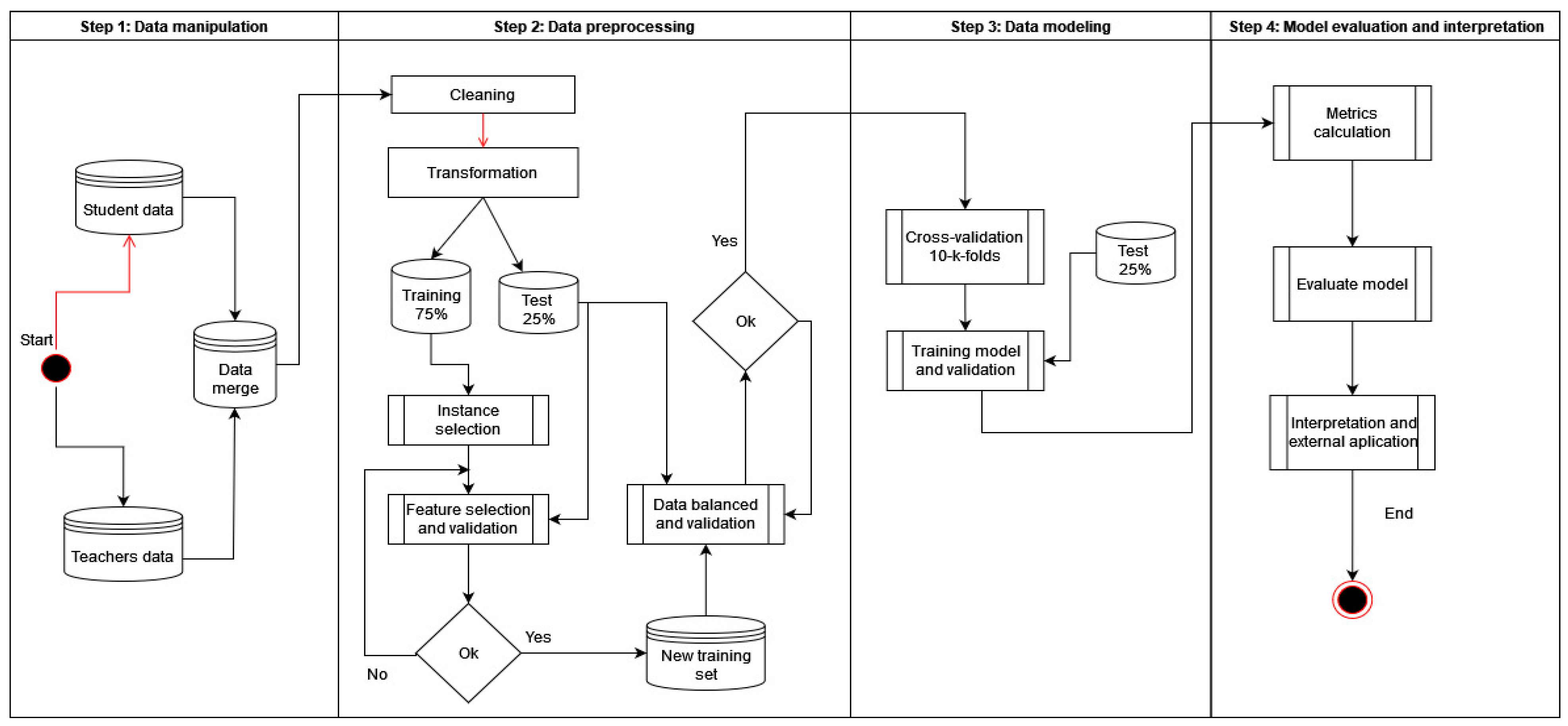
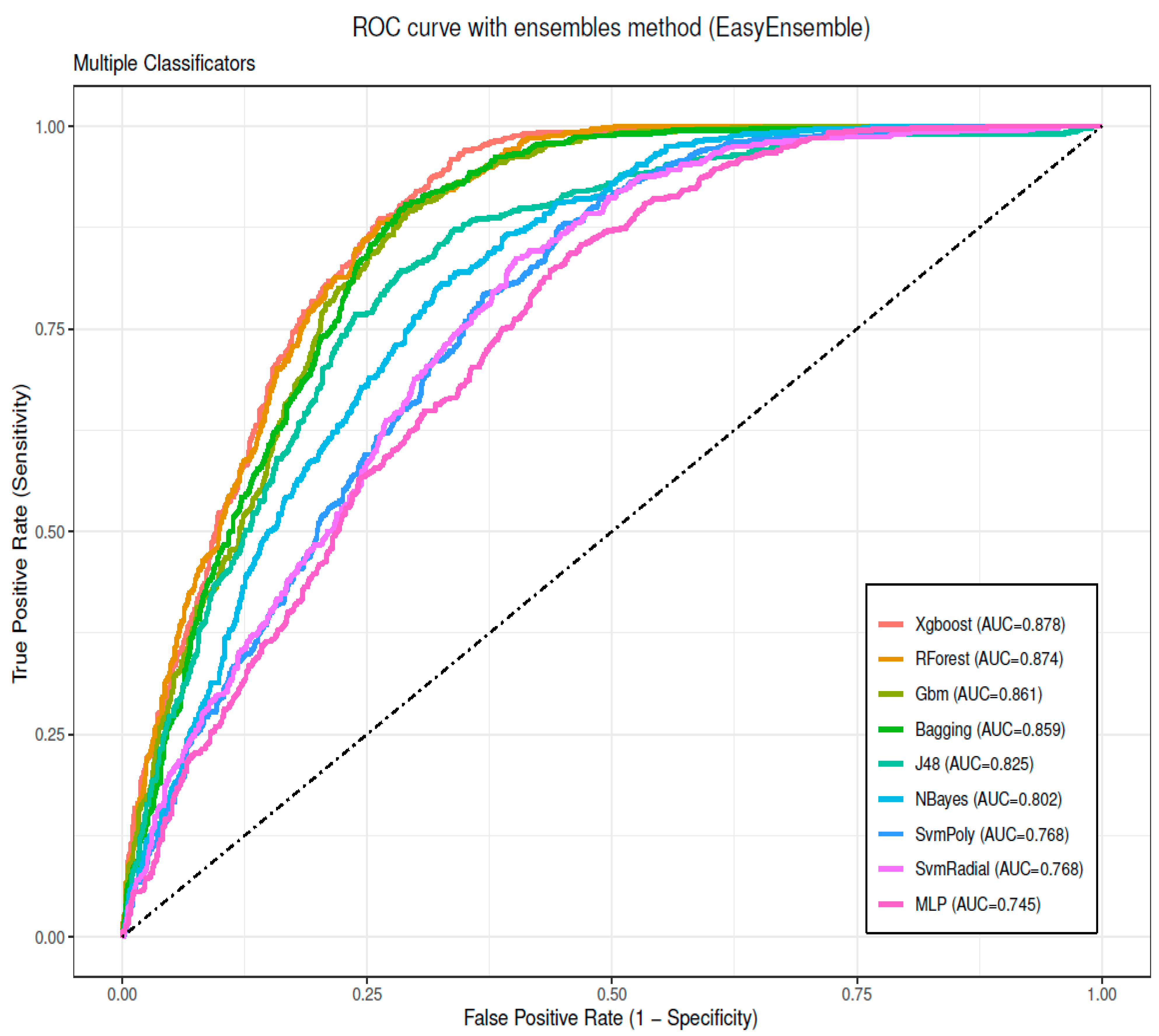
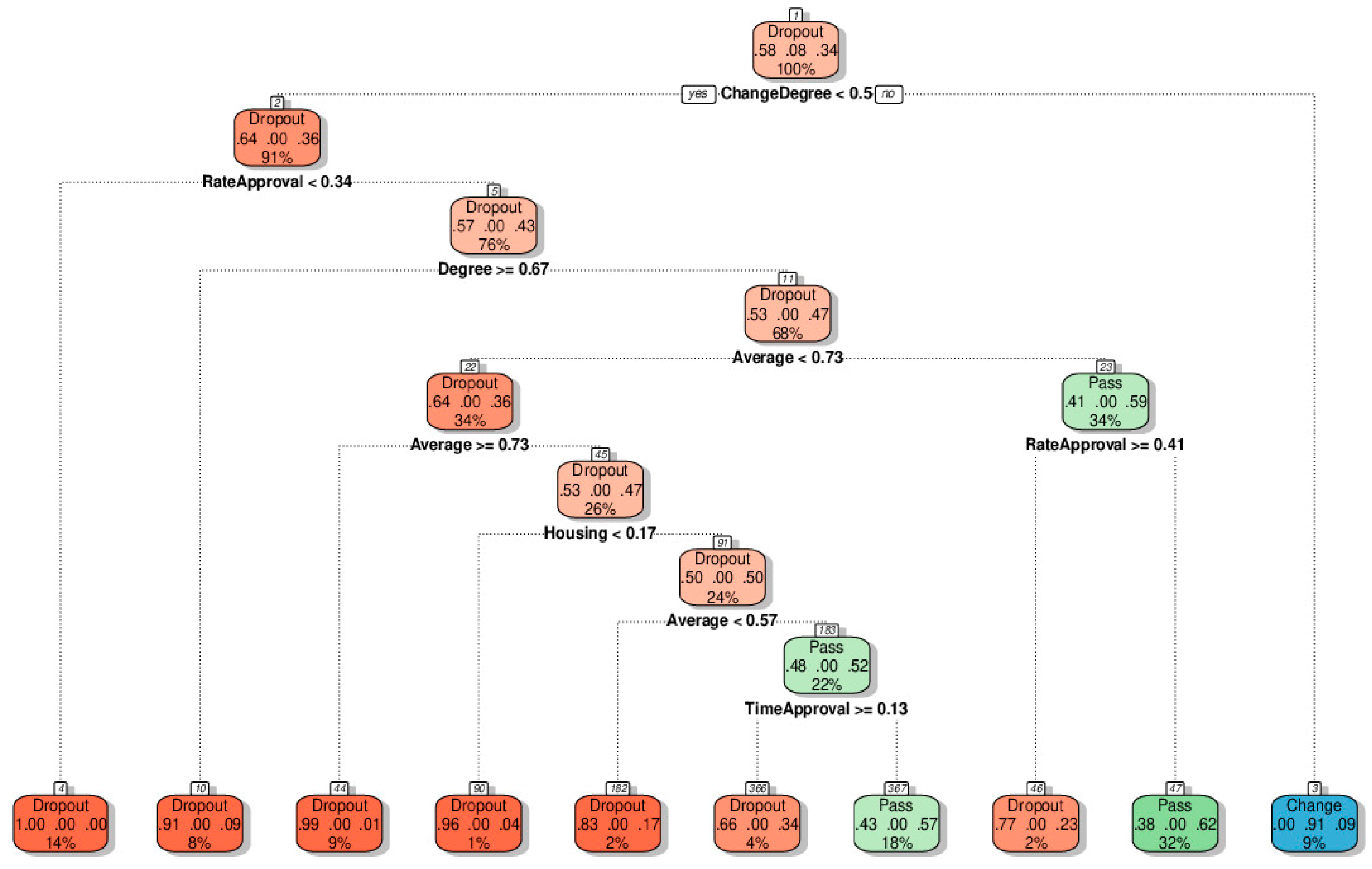
College context and academic performance are important determinants of academic success; using students’ prior experience with machine learning techniques to predict academic success before the end of the first year reinforces college self-efficacy. Dropout prediction is related to student retention and has been studied extensively in recent work; however, there is little literature on predicting academic success using educational machine learning. For this reason, CRISP-DM methodology was applied to extract relevant knowledge and features from the data. The dataset examined consists of 6690 records and 21 variables with academic and socioeconomic information. Preprocessing techniques and classification algorithms were analyzed. The area under the curve was used to measure the effectiveness of the algorithm; XGBoost had an AUC = 87.75% and correctly classified eight out of ten cases, while the decision tree improved interpretation with ten rules in seven out of ten cases. Recognizing the gaps in the study and that on-time completion of college consolidates college self-efficacy, creating intervention and support strategies to retain students is a priority for decision makers. Assessing the fairness and discrimination of the algorithms was the main limitation of this work. In the future, we intend to apply the extracted knowledge and learn about its influence of on university management.
Keywords: educational data mining; machine learning; educational analysis; higher education; academic success educational data mining; machine learning; educational analysis; higher education; academic success