Article

Agricultural Soil pH in Fiji

by
Diogenes L. Antille
1,2,*,
Xueyu Zhao
1,
Jack C. J. Vernon
1,
Timothy P. Stewart
3,
Maria Narayan
3,
James R. F. Barringer
4,
Thomas Caspari
4,
Peter Zund
5 and
Ben C. T. Macdonald
1
1
CSIRO Agriculture and Food, Canberra, ACT 2601, Australia
2
Engineering Department, Harper Adams University, Newport TF10 8NB, Shropshire, UK
3
Market Development Facility, Garden City, Grantham Road, Suva, Fiji
4
Bioeconomy Science Institute, Manaaki Whenua—Landcare Research Group, Lincoln 7608, New Zealand
5
CSIRO Agriculture and Food, Brisbane, QLD 4067, Australia
*
Author to whom correspondence should be addressed.
Data 2026, 11(4), 90; https://doi.org/10.3390/data11040090
Submission received: 23 February 2026 / Revised: 8 April 2026 / Accepted: 14 April 2026 / Published: 20 April 2026
(This article belongs to the Section Spatial Data Science for Environment and Earth)

Abstract

Agriculture in the Pacific is driven primarily by small-scale private farmers, many of whom do not have access to soil testing services or advice, nor the means to interpret analytical results into soil management and agronomic recommendations. Soil degradation through the process of acidification poses a significant risk to food and income security as it directly threatens crop productivity. The nutritional quality of food crops may also be affected through sub-optimal nutrient uptake by plants and nutrient imbalances. The dataset reported here provides a useful platform for the development of a decision-support tool (DST) that will assist Fiji farmers in understanding and managing soil pH and soil acidity. The DST will enable making informed decisions about liming to help correct soil pH. To support this development, historical soil pH data available from the Pacific Soils Portal were combined with updated analyses of agricultural soils from 17 locations in Viti Levu Island (Fiji) collected during a field campaign undertaken in August 2025. The soils were sampled at two depth intervals (0–15 and 15–30 cm) and analyzed for pH using a variety of methods. These methods included direct field measurements using a portable pH-meter as well as traditional laboratory determinations. Of the soils sampled, it was found that most soils exhibited pH levels below 7, which were observed for both depth intervals. Across all samples taken in 2025, it was found that 54.3% of them had soil pH < 5, 38.6% had soil pH between 5 and 6, and 7.1% had pH > 6 (based on soil pH1:5 soil-to-water method). Depending upon specific land uses, climate and cropping intensity, it was recommended that routine liming be built into soil fertility management programs to help farmers overcome soil acidity-related constraints to production. Liming frequency, timing of application and application rate will need to be determined for specific soil and cropping situations; however, it was suggested that soil pH was not changed by more than 1 unit each time lime was applied. Such an approach should reduce the risk of soil organic matter loss through accelerated mineralization, which would be challenging to restore in that environment if soils remained under continuous cropping. The analytical information contained in this article expanded and updated the datasets available in the Pacific Soils Portal. Furthermore, this work provided an opportunity to build analytical expertise in aspects of soil chemistry at local organizations to support academic and extension activities as well as the ongoing development of the Pacific Soils Portal.

1. Introduction

Fiji’s agriculture sector contributes approximately 9% to the country’s GDP, which is valued at FJ$764 million (FJ$1~US$0.45), and it is primarily driven by key crops such as sugarcane, roots and tubers, horticulture, and kava. This sector supports around 84,000 farmers who represent ~28% of the total workforce and cultivate ~195,000 ha of land across Fiji’s main islands of Viti Levu and Vanua Levu. The majority of soils used for cropping in Fiji are prone to acidification [1] through natural processes (e.g., leaching), and it may be accelerated by farming practices due to insufficient replenishment of cations (importantly, calcium and magnesium) removed with each harvest [2,3]. Soil acidity has, for long, been a significant constraint to crop production in Fiji [4,5], which makes it challenging for farmers to appropriately manage crop nutrition [6,7]. Lack of awareness of this problem and knowledge of how to address it [8] has led to increased reliance on the use of synthetic fertilizers to correct perceived soil fertility issues with limited success and at the expense of reduced productivity. This approach has further compounded the problem, as commonly used fertilizers such as urea and di-ammonium phosphate (which have an acidic reaction) are reported to exacerbate longer-term soil acidity [9]. By contrast, correction of soil pH to near-neutral values is known to improve availability and uptake of essential plant nutrients, thus reducing the need for applied fertilizer (equally, improving fertilizer-use efficiency).
A cost-effective and technically feasible alternative to fertilizer is to promote the use of cheaper agricultural lime to correct soil acidity, as the first step to manage soil fertility, after which application of inorganic fertilizers or organic amendments, or a combination of both sources, can be used to improve soil fertility [10,11]. Soil pH can be used as an indicator of soil acidity; however, the determination of total acidity of soil (that is, exchangeable acidity plus residual acidity) is needed for the estimation of the lime application rate. Total acidity can be determined by titration of a soil suspension in a salt solution to a reference pH using a strong base or the incremental addition of lime [12]. Previous studies in Fiji have shown that the financial return from soil application of lime is likely to be positive and that it depends on the extent of soil acidity, the crop’s susceptibility to low soil pH, and the lime application rate [13,14]. Maize, root, tuber, and vegetable crops, as well as sugarcane grown on acidic soils, are often responsive to upward adjustments in soil pH [15,16]. Generally, the use efficiency of applied nutrients increases when crops are grown in soils with near-neutral pH (crop response to fertilizer and its conversion to harvestable biomass improves as soil pH approaches neutrality) [17,18,19]. Therefore, the amount of fertilizer required for a target yield, and the associated fertilizer cost, may be proportionally reduced through correction of soil pH. Despite soil pH testing being relatively simple, the vast majority of farmers in Fiji do not routinely monitor it [20].
Previous work in Fiji has produced soil acidity maps (e.g., [21], Figures S1 and S2 in Supplementary Material File S1). These maps could be transformed into zoning to guide farmers as to whether lime application may be needed or justified, both from agronomic and economic perspectives. Lime application and technical advice may be promoted by government and private sector entities, such as input retailers and importers. However, the information available on soil pH may be outdated as systematic soil surveys in Fiji were conducted more than 30 years ago (e.g., [4,21]), and therefore, the data may not reflect the current state of soil acidity. Furthermore, some of the data used to produce soil pH maps are not readily available (with the exception of data that can be retrieved from the Pacific Soils Portal). Therefore, there is a need to verify existing datasets through physical measurement of soil properties (soil pH and total acidity of soil). A good agreement between previously published soil pH datasets (which demonstrated widespread soil acidity across agriculturally important regions of Fiji) and soil pH measurements (this work) will provide the confidence needed to develop a decision-support tool (DST). Ideally, farmers would obtain and know how to interpret soil test results, but soil testing services are not readily available, and farmers often lack the technical knowledge required to interpret and apply analytical results to aid decision-making on their farms.

1.1. Objectives and Scope

The objectives of this work were twofold: (1) to measure soil pH and soil acidity at 17 locations (36 sampling points) in Fiji to assess the current status of soils used for cropping, and (2) to use the data collected to support the development of a decision support tool (DST) that will provide farmers with a usable soil pH indication for their location, and agronomic recommendation for correction of soil pH and soil acidity. This work also provided the opportunity to train technical officers from the Fiji National University and the Fiji Ministry of Agriculture and Waterways in the measurement of soil pH and soil acidity. Such activity contributed to technical capacity building in the country, which is a key objective of the Australian Government in the Pacific region.

1.2. Terminology and Definitions

Soil acidity can be described in several forms:
(i)
Active acidity refers to the concentration of hydrogen ions (H+) present in the soil solution and is measured directly as soil pH. Active acidity represents only a small fraction of the total acidity. Soil pH is a measure of the hydrogen ion concentration in soil. The pH is measured over a range between 0 and 14, and agricultural soils often have pH values between 3.5 and 10 [22]. Soils can be classified according to their pH (in water) value as follows:
  • Alkaline: pH > 7.5,
  • Neutral: pH between 6.5 and 7.5,
  • Acidic: pH < 6.5,
  • Strongly acidic: pH ≤ 5.5.
(ii)
Exchangeable acidity includes hydrogen and aluminum ions that are weakly adsorbed on the soil’s cation exchange sites and can be displaced by neutral salt solutions (e.g., KCl or CaCl2). Beyond this, soils also contain reserve acidity, which is associated with strongly bound hydrogen and aluminum on clay colloid surfaces and organic matter structures; this reservoir can replenish active acidity over time. Together, exchangeable and reserve acidity contribute to the soil’s buffering capacity.
(iii)
Titratable actual acidity provides a more comprehensive measure by quantifying all forms of acidity that react with a neutralizing base, and it is usually determined by titrating with a standardized alkali solution. Because these acidity pools interact, even when active acidity is corrected (e.g., by liming), exchangeable and reserve sources may continue to release acidity, making it necessary to apply lime based on buffer pH or titration methods rather than just water pH alone. Understanding these different components of soil acidity is therefore essential for effective soil management and long-term crop productivity. Titratable actual acidity will be referred to as TAA.
Soil pH and soil acidity are key chemical properties that influence soil fertility, availability of soil nutrients for plant uptake, and therefore plant growth, microbial activity, and important biogeochemical processes that affect carbon and nutrient cycling. Soil pH directly affects the soil concentration of major nutrients and the forms of microelements available for plant uptake, and it can result in deficiencies or toxicities. Nitrogen is most available in slightly acidic to neutral soil (pH 6.0–7.5), while phosphorus availability is optimal between pH 6.5 and 7.5, and it decreases in very acidic or alkaline conditions. Potassium is generally available over a wide range of soil pH, but it is highest at or above a soil pH of 6. Despite this, soil pH may be kept below 7.0–7.5 to avoid co-limitation of other nutrients (e.g., P) induced by pH [23].

2. Materials and Methods

2.1. Historical Data and Selection of Sites Sampled in 2025

Pacific Islands have had a long history of soil surveys, mainly under New Zealand’s leadership (e.g., [24,25]). Recent work commissioned to Manaaki Whenua Landcare Research et al. [26] consolidated much of this soil information, which is now available from The Pacific Soil Portal (https://psp.landcareresearch.co.nz/, accessed 12 February 2026) and included Fiji (https://fiji-psp.landcareresearch.co.nz/, accessed 12 February 2026). The Portal is a project of the Pacific Soil Partnership [27], which is part of the Global Soil Partnership [28]. Manaaki Whenua Landcare Research (MWLR, renamed the New Zealand Bioeconomy Science Institute in 2025, https://www.bioeconomyscience.co.nz/, accessed 30 January 2026) has led the development of the Portal with technical and operational support from CSIRO (https://www.csiro.au/en/, accessed 30 January 2026) and funding from ACIAR (https://www.aciar.gov.au/, accessed 30 January 2026). Working in collaboration with MWLR, it was possible to undertake this work with legacy soil pH and soil acidity data for Fiji. The legacy data retrieved from the Portal were obtained using a variety of methods across soil mapping projects conducted in Fiji since the 1980s (Appendix A, Table A1).
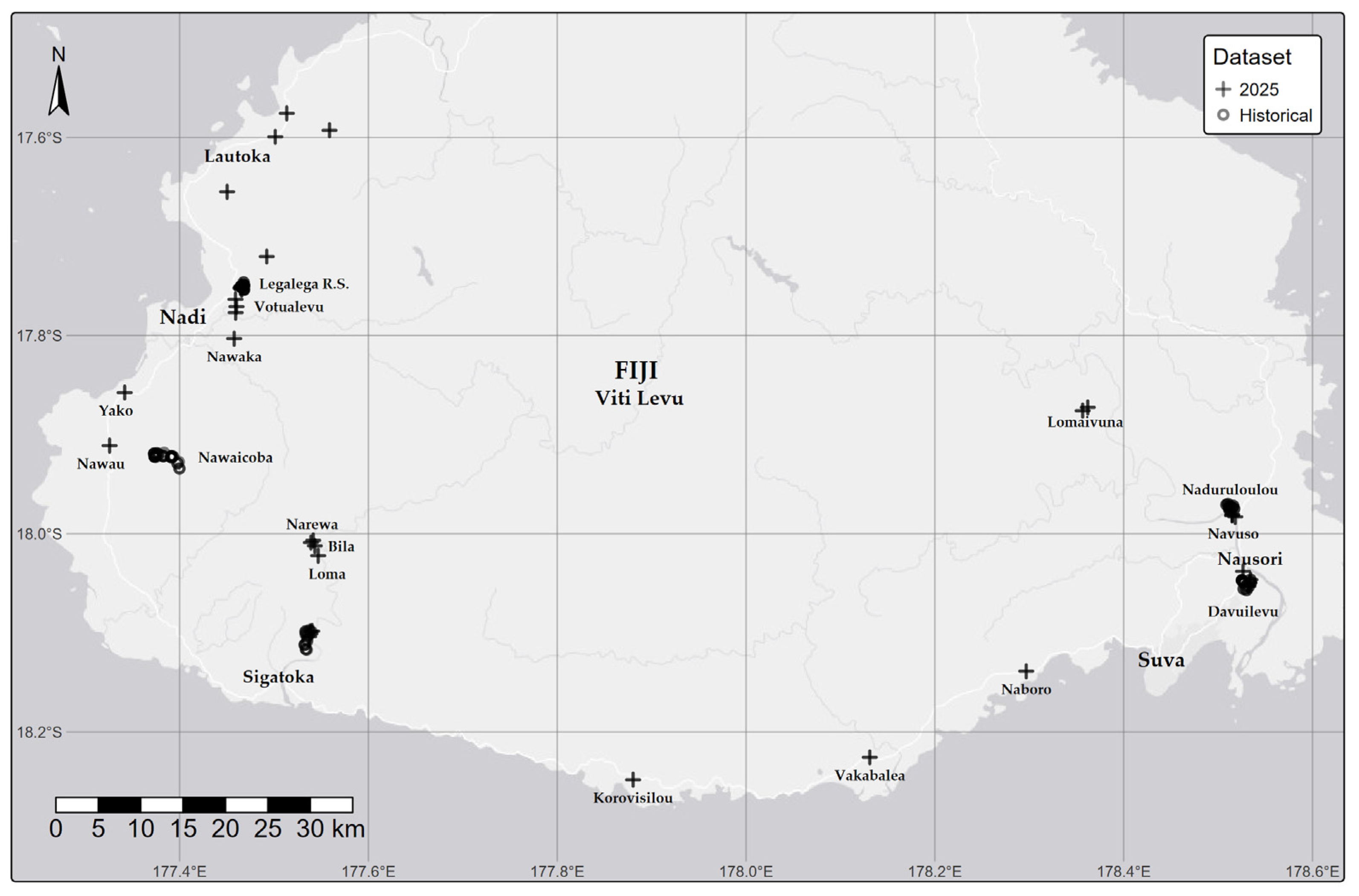
Sampling locations for this work were chosen based on available historical data, ease of access, and current land-use (cropping) and included both government-owned and private land. In the south of Viti Levu Island, sites were located on private farmland. The Legalega, Sigatoka, Lautoka, and Koronivia sites were located on private land or on agricultural research stations of the Fiji Ministry of Agriculture and Waterways and the Sugar Research Institute of Fiji. MWLR provided historical soil pH data in the Koronivia, Davuilevu, Legalega, Sigatoka, Naduruloulou, and Nawaicoba areas of Viti Levu. However, due to land-use changes, many of the historical sampling locations were inaccessible, which made re-sampling impractical or no longer relevant (e.g., conversion to forest or urban land-use). In some locations, it was not possible to gain permission for some historical sites within project timelines. To supplement, additional sampling locations were included around the historical sites, and Figure 1 shows both the locations sampled in August 2025 (“+” symbols) and available historical data (“o” symbols). The figure shows that historical data were clustered in specific areas at or near research stations and villages (e.g., Legalega Research Station, Nawaicoba, Sigatoka Research Station, Naduruloulou, and Koronivia Research Station near Davuilevu). Samples taken in 2025 from Nawaka, Yako, Nawau, Bila, Loma, Narewa, Korovisilou, Vakabalea, Naboro, Davuilevu, Navuso and Lomaivanu were collected on an ad hoc basis between historical sampling sites. Table 1 lists the actual sites sampled in August 2025.

2.2. Measurement of Soil pH

There are several methods available for measuring soil pH, and those commonly used in Pacific Island countries are listed in Table 2 (after Rayment and Lyons [29]). Of the historical sites provided by MWLR, the KRS, LRS, Naduruloulou, and Nawaicoba sites had soil pH measured using the 1:2.5 soil–water ratio method and included 92 samples taken at multiple depth intervals (from the soil surface down to a maximum depth of 75 cm). Other analytical methods (e.g., pH in NaF and KCl) were also used on historical samples (and data included in this article), but these methods were not common across sites, which therefore did not allow for comparisons with contemporary data. Hence, comparisons between historical and contemporary data were only possible for pH measured in a 1:2.5 soil–water ratio. For the samples collected in 2025 (this work), a total of seven different methods were used for determining soil pH and soil acidity, as described below. Soil samples were collected by hand augering at two depth intervals: 0–15 and 15–30 cm, respectively. Following collection, the soil samples were taken to Koronivia Research Station (Ministry of Agriculture and Waterways, Fiji Government), where they were dried at 40 °C and ground to pass 2 mm prior to measuring soil pH and soil acidity. The analyses were subsequently conducted at the Soil Science Laboratory at The Fiji National University at Koronivia Campus.

2.2.1. Soil pH in H2O 1:5 Ratio

Five grams of soil were mixed with 25 mL of deionized water, and the mixture was placed in a mechanical shaker for one hour. The soil was then left to settle for 20–30 min. The same soil–water mixture was used as the basis for the CaCl2 and KCl pH1:5 analyses, as described below. Soil pH was measured while stirring the mixture and holding the electrodes of a TPS Ranger pH sensor (City of Moreton Bay, Australia) in the suspension until the reading was steady.

2.2.2. Soil pH in H2O 1:2.5 Ratio

Ten grams of soil were mixed with 25 mL of deionized water, stirred vigorously and left to settle overnight (~12 h). Soil pH was measured by holding the electrodes of the TPS Ranger pH sensor in the upper supernatant without stirring.

2.2.3. Soil pH in CaCl2 1:5 Ratio

Following the determination of pH in H2O 1:5 ratio, 1.25 mL of 0.21 M CaCl2 solution was pipetted to the 1:5 soil suspension to obtain a 0.01 M CaCl2 solution. This mixture was then manually shaken to equilibrate the solution and allowed to settle for 20–30 min. Soil pH was measured by holding the electrodes of the TPS Ranger pH sensor in the upper supernatant without stirring, and the pH value was recorded once the reading was steady.

2.2.4. Soil pH in KCl 1:5 Ratio

Five grams of soil were mixed with 25 mL of 1 M KCl solution and the mixture was placed in a mechanical shaker for one hour. The soil solution was then left to settle for 20–30 min. Soil pH was measured by holding the electrodes of the TPS Ranger pH sensor in the suspension until the reading was steady.

2.2.5. Soil pH in KCl 1:5 Ratio Following Method 4A1 (Table 2)

Following the determination of pH in H2O 1:5 ratio, a weighed quantity of KCl was added to develop the soil suspension required to match 1 M KCl (e.g., 1.865 g/25 mL). The solution was then placed in a mechanical shaker for 1 h. The soil solution was then left to settle for 20–30 min. Soil pH was measured by holding the electrodes of a TPS Ranger pH sensor in the suspension until the reading was steady.

2.2.6. Field Measurement of Soil pH

In situ measurements of soil pH were performed with a low-cost portable instrument called ‘Soil Tester S1’ manufactured by RoHS (China). Values were compared with traditional laboratory methods for measuring soil pH to determine the suitability of this device for ‘quick assessments of soil pH in-field conditions.

2.3. Measurement of Soil Acidity

One gram of finely ground soil, made to pass through a 0.5 mm sieve, was mixed with 40 mL of 1 M KCl solution. A separate “control” tube without soil added and with 40 mL of 1 M KCl solution was kept to the side. All soil-KCl mixtures were placed in a mechanical shaker for four hours and left to settle overnight (~12 h). After that time, the soil-KCl mixtures were manually shaken to re-suspend the soil in solution, and the content transferred to a titration beaker with a small volume of deionized water. The pH of the solution was measured while stirring the suspension with the TPS Ranger pH-meter (calibrated using the control solution) to determine pH, which is referred to as the Australian Acid Sulphate Soil Standard (pHKCl-ASS). The pHKCl-ASS was used for NaOH usage to determine the titratable actual acidity (TAA). The TAA was determined by titrating the suspension to pH 6.5 with a standardized 0.05 NaOH solution and the titer volume (mL) was recorded. For soils whose pHKCl-ASS were greater than 6.5, TAA was recorded as 0. The calculations are shown below:
T A A = V 1 V 2 × C 1 × 1000 / M 1  
where
  • TAA = Titratable actual acidity (mol H+ Mg−1 soil),
  • V1 = Volume of NaOH titrant (mL),
  • V2 = Volume of the blank,
  • C1 = Concentration of NaOH (0.05 mol L−1),
  • M1 = Mass of soil sample (g), and
  • 1000 = Conversion to Mg (mega-grams).

2.4. Statistical Analyses

Statistical analyses for soil pH and soil acidity data used GenStat Release 22nd Edition [30] and involved ANOVA. The least significant differences (LSD) were used to compare means with a probability level of 5% (p < 0.05). Statistical analyses were graphically assessed by means of residual plots, and normalization of data was not required. A linear regression analysis was applied to examine the relationship between log10-converted TAA data and soil pHKCl-ASS. A nonlinear relationship between a theoretical lime (CaCO3) application rate (expressed in kg per ha of pure material) and the log10-converted total acidity of soil (TAA) was established. Analytical values were reported as the mean ± standard deviation (SD). The historical dataset included 4 locations and multiple depth intervals, but these were not consistent across locations. Hence, comparisons between locations were performed by clustering measured soil depths into two groups, namely: shallow (0–20 cm) and deep (below a depth of 20 cm). The 2025 dataset included 17 locations with 36 sampling points sampled at 2 depth intervals (0–15 and 15–30 cm).

3. Results and Discussion

3.1. Soil pH

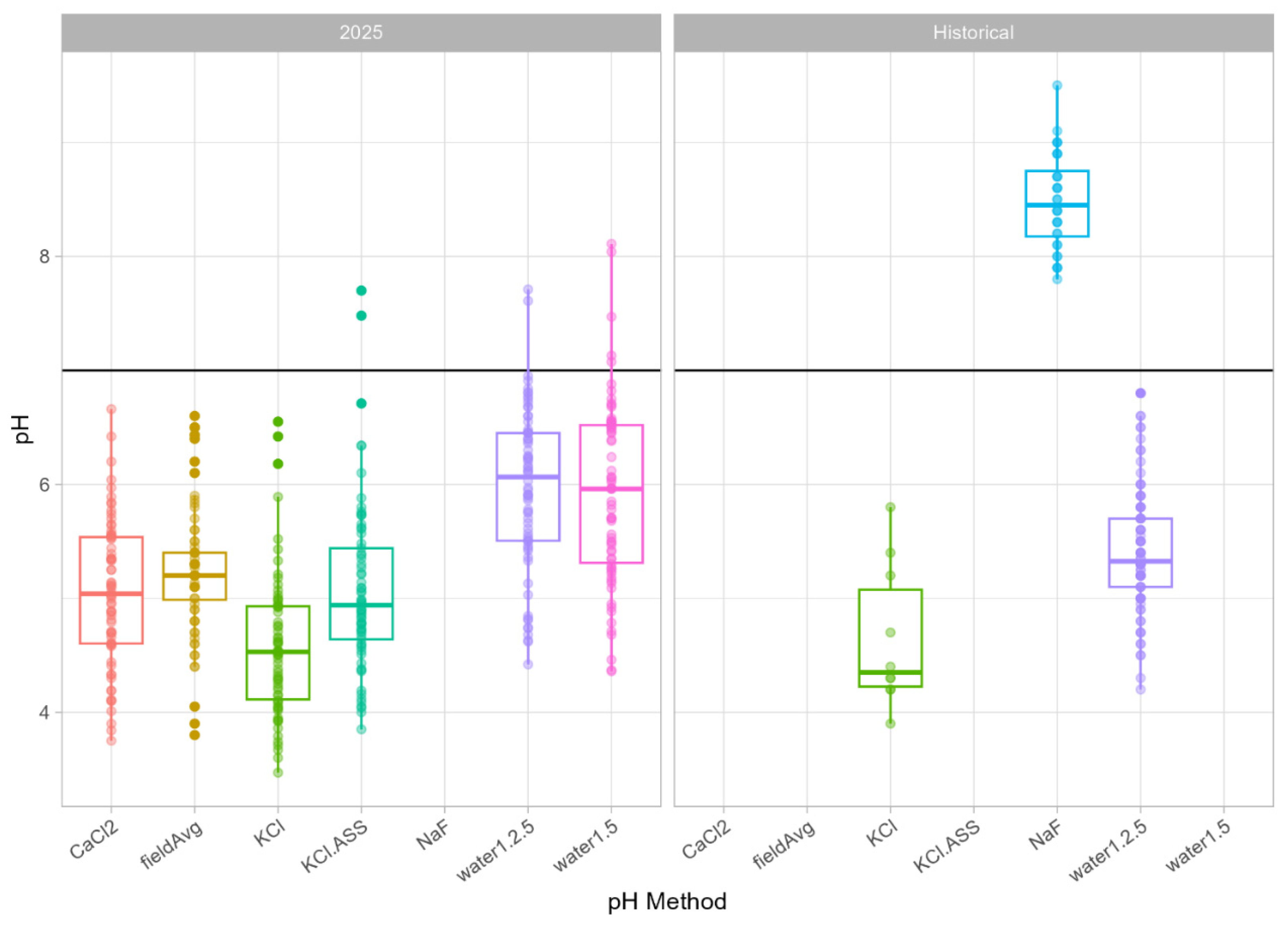
A comparison of soil pH values by analytical method, including both historical and current datasets, is shown in Figure 2 (the solid horizontal line denotes pH = 7). The historical data showed a grand mean soil pH1:2.5 of 5.417 ± 0.524 (across all locations and sampling depths available). There were significant differences in soil pH1:2.5 depending on the location (p < 0.001). Mean soil pH1:2.5 values for all locations were below 6 and they ranged between 5.16 and 5.93. There were no statistical differences in soil pH1:2.5 between the two soil depth interval groups (shallow at 0–20 cm, and deep > 20 cm) (p = 0.168). Mean soil pH1:2.5 values were 5.36 ± 0.424 (0–20 cm) and 5.48 ± 0.607 (below 20 cm).
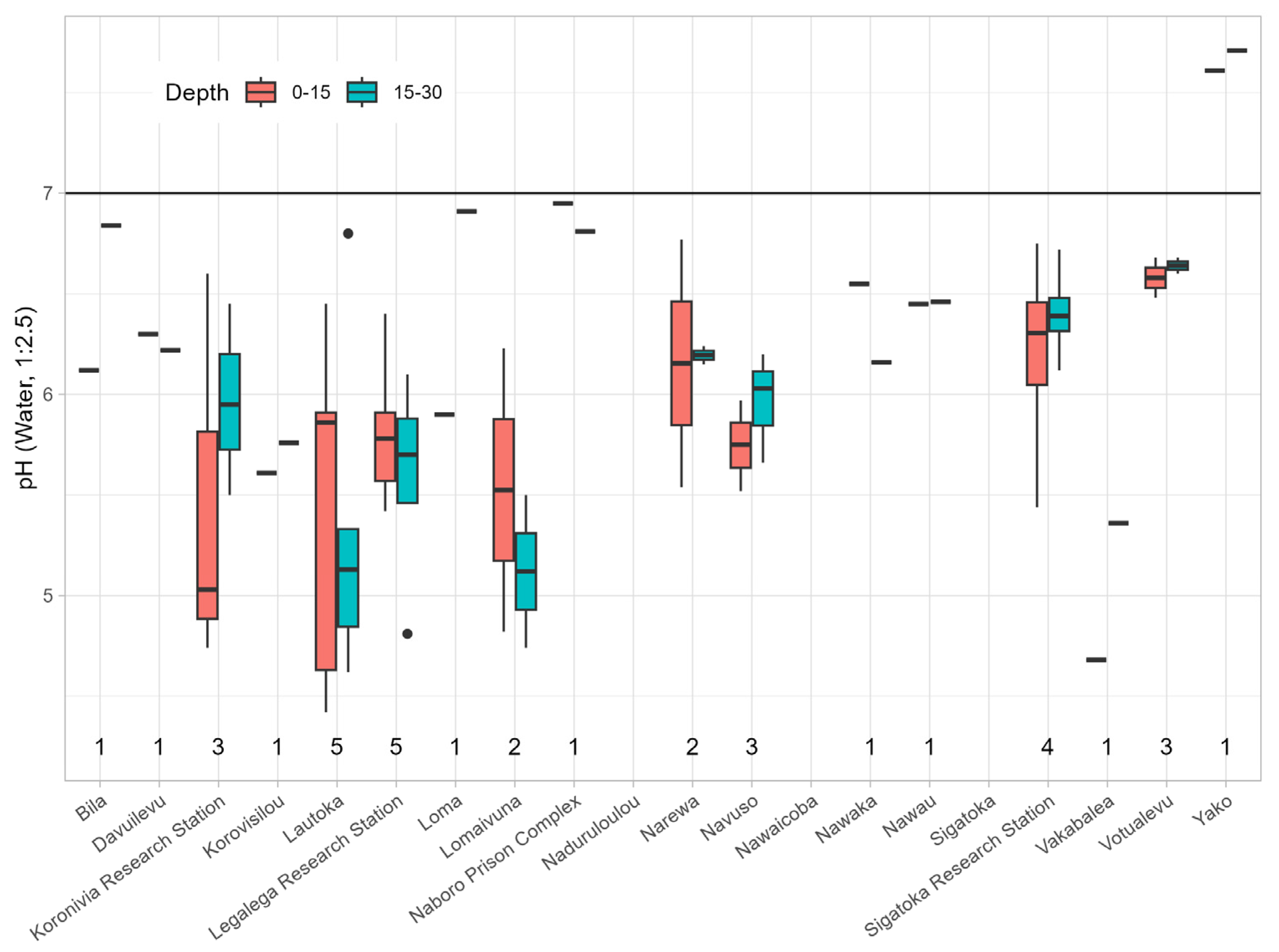
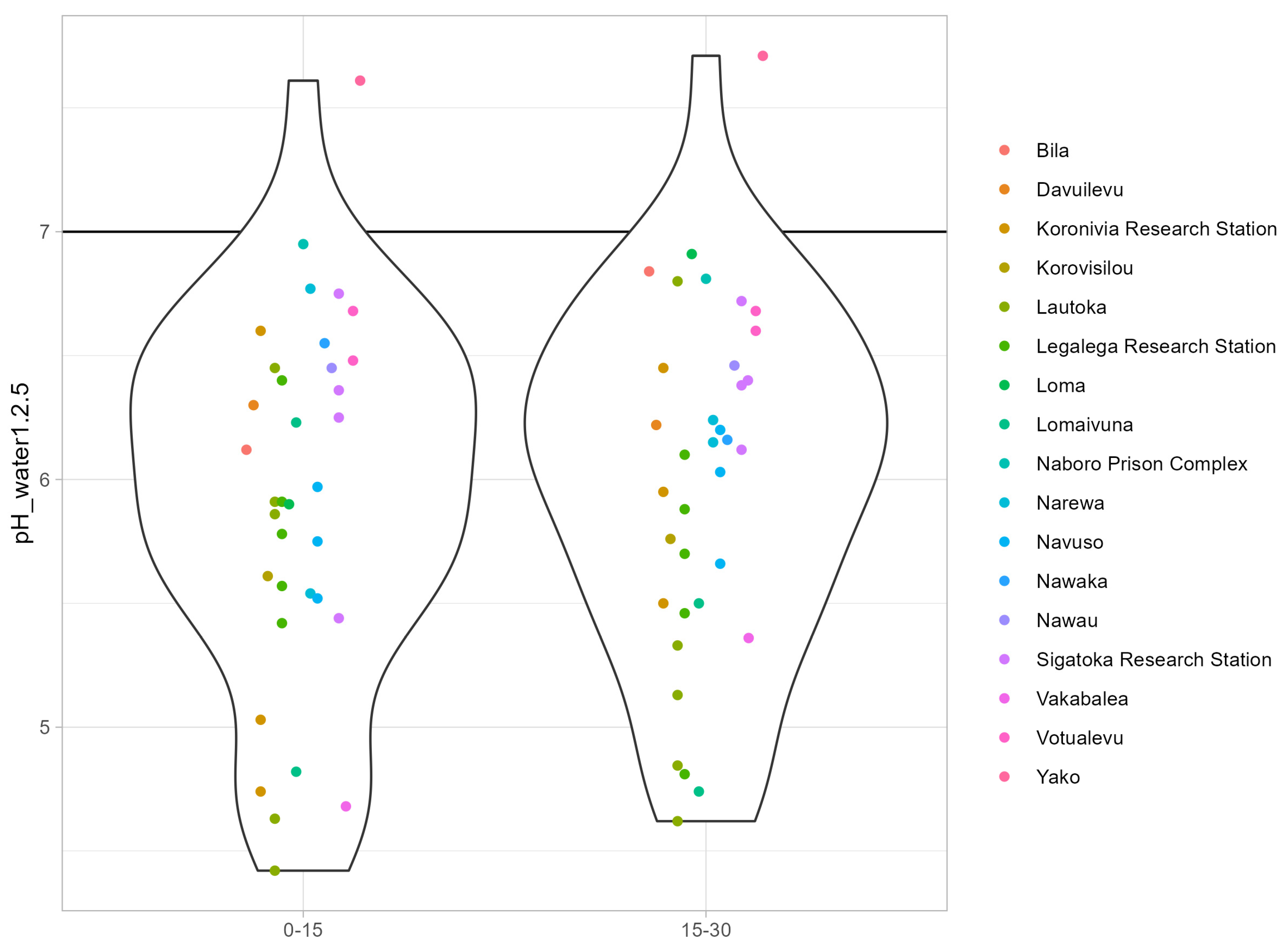
The samples collected in 2025 reported a grand mean soil pH (across locations, sampling depths and analytical methods) of 5.304 ± 0.842. As expected, there were significant differences in soil pH depending on the analytical method used (p < 0.001); the average soil pH by method increased in the order: KCl < CaCl2 < KCl-ASS < portable field pH-meter < Water (1:5) < Water (1:2.5). Overall, across all analytical methods, there were significant differences in soil pH depending on location (p < 0.001) and all locations reported average soil pH values below 7. Three locations reported average soil pH values between 6 and 7: Naboro (6.07 ± 1.004), Nawau (6.00 ± 0.769), and Yako (6.84 ± 1.071). Three locations reported average soil pH values below 5: Lautoka (4.92 ± 0.832), Lomaivuna (4.66 ± 0.570), and Vakabalea (4.56 ± 0.568). The remaining eleven locations sampled in 2025 reported average soil pH values between 5 and 6. Soil pH1:2.5 results from the samples collected in 2025 are summarized in Figure 3 and additional information is shown in Figure A1 (Appendix B). Overall, across all analytical methods, there were no statistical differences in soil pH between the two soil depth intervals (p = 0.639), which reported average soil pH values of 5.29 ± 0.830 (0–15 cm) and 5.32 ± 0.855 (15–30 cm).
A comparison between historical samples and samples taken in 2025 could only be performed with data derived from the analysis of soil pH1:2.5 (1:2.5 soil–water ratio). The grand mean soil pH1:2.5 (for both historical and 2025 data) was 5.56 ± 0.667, n = 164 (shallow depth: pH of 5.52 and deeper soil: pH of 5.61). There were statistical differences in soil pH1:2.5 between historical (5.42 ± 0.525) and 2025 (5.75 ± 0.728) data, p < 0.001 (LSD 5% level: 0.173). There were no statistical differences between sampling depths across both historical and contemporary samples (p = 0.295). The relatively higher soil pH1:2.5 values encountered on average in 2025 (5.75 vs. 5.42) were attributed to:
  • Inclusion of soils from Sigatoka in 2025 (not available in the historical dataset), which are irrigated and may be showing an effect of salinity (the water used for irrigation in this catchment is sourced from the Sigatoka River, which experiences sea water ingression during high tide). The average soil pH1:2.5 at the Sigatoka sites was 6.30 ± 0.409.
  • Inclusion of soil samples from a site in Yako (not available in the historical dataset), which reported an average soil pH1:2.5 of 7.66 ± 0.071.
  • Inclusion of these sites may explain marginally higher soil pH values in 2025; however, despite being significant, differences were small and of no practical consequence as soils sampled in 2025 were (on average) below a desirable soil pH range of ~6 (or slightly higher) and 7 [31,32].

3.2. Soil Acidity

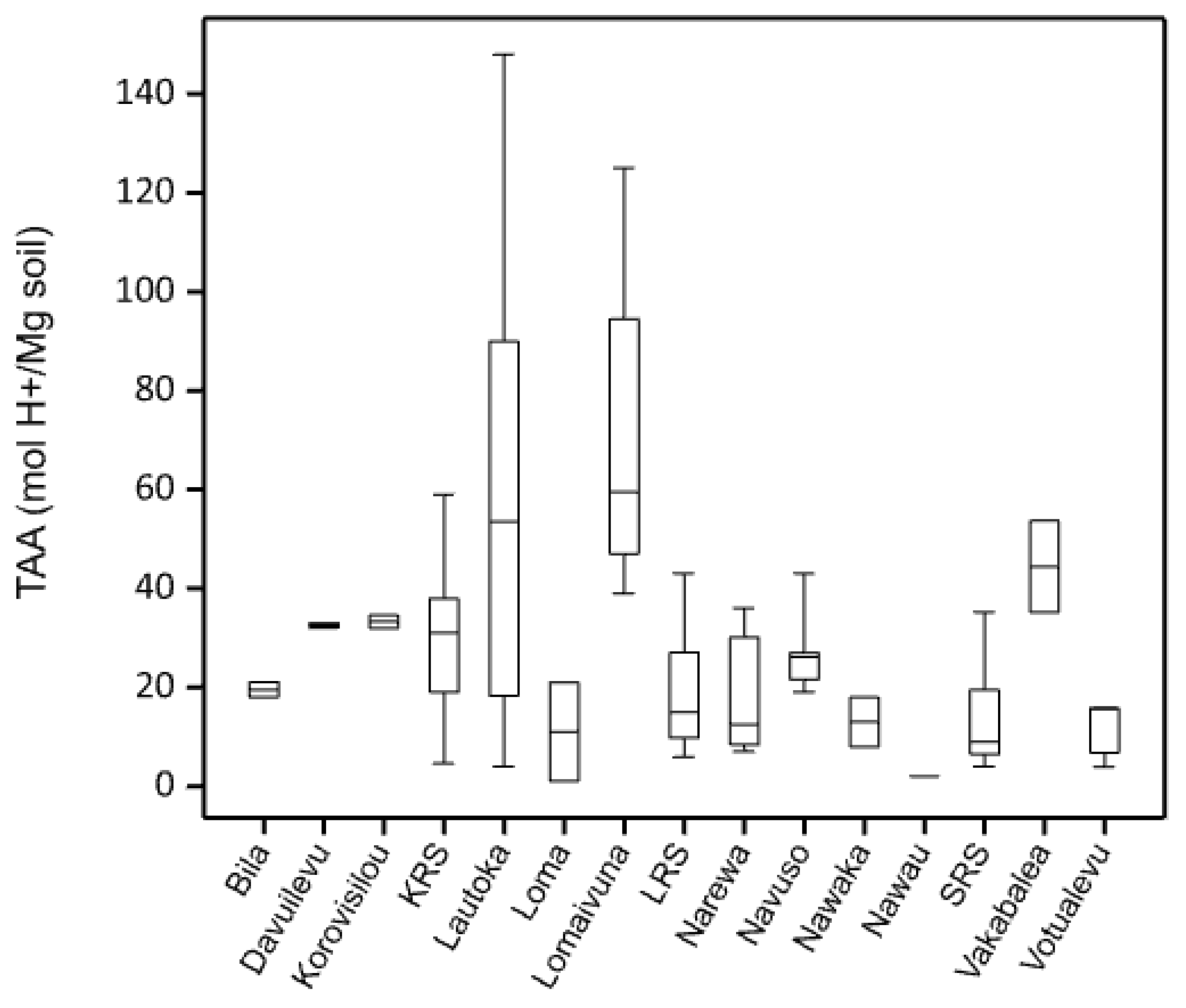
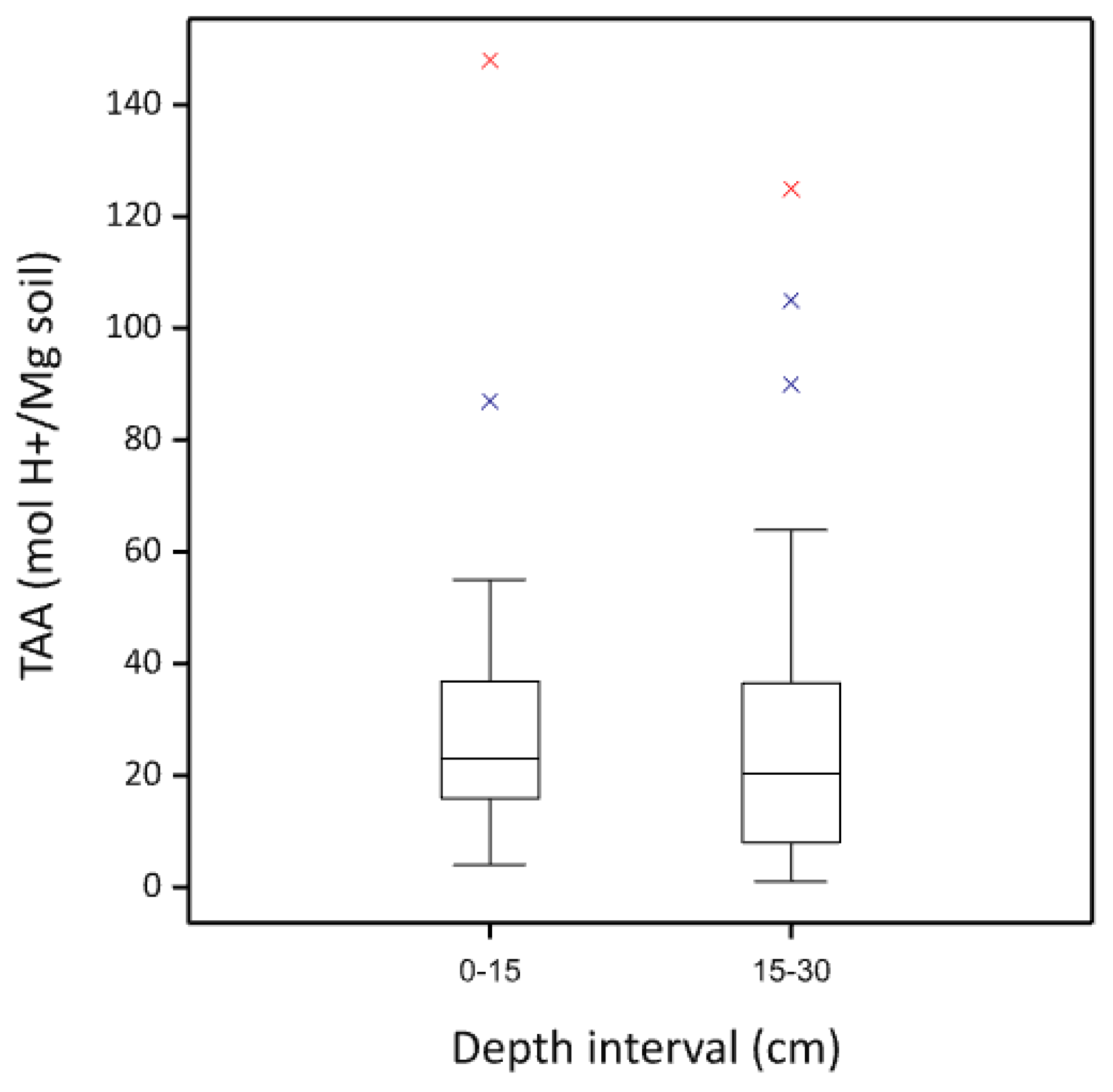
Total acidity (TAA) determined in soil samples collected in 2025 showed significant differences between locations (p = 0.021). Overall, differences between depth intervals were not significant (p = 0.556). The grand TAA mean (across all locations and depth intervals) was 30.40 ± 29.18 mol H+ Mg−1 soil, and individual TAA values ranged from ~1 at Loma to 148 mol H+ Mg−1 soil at Lautoka. Total acidity data are summarized in Figure 4 (by location) and Figure 5 (by depth interval).
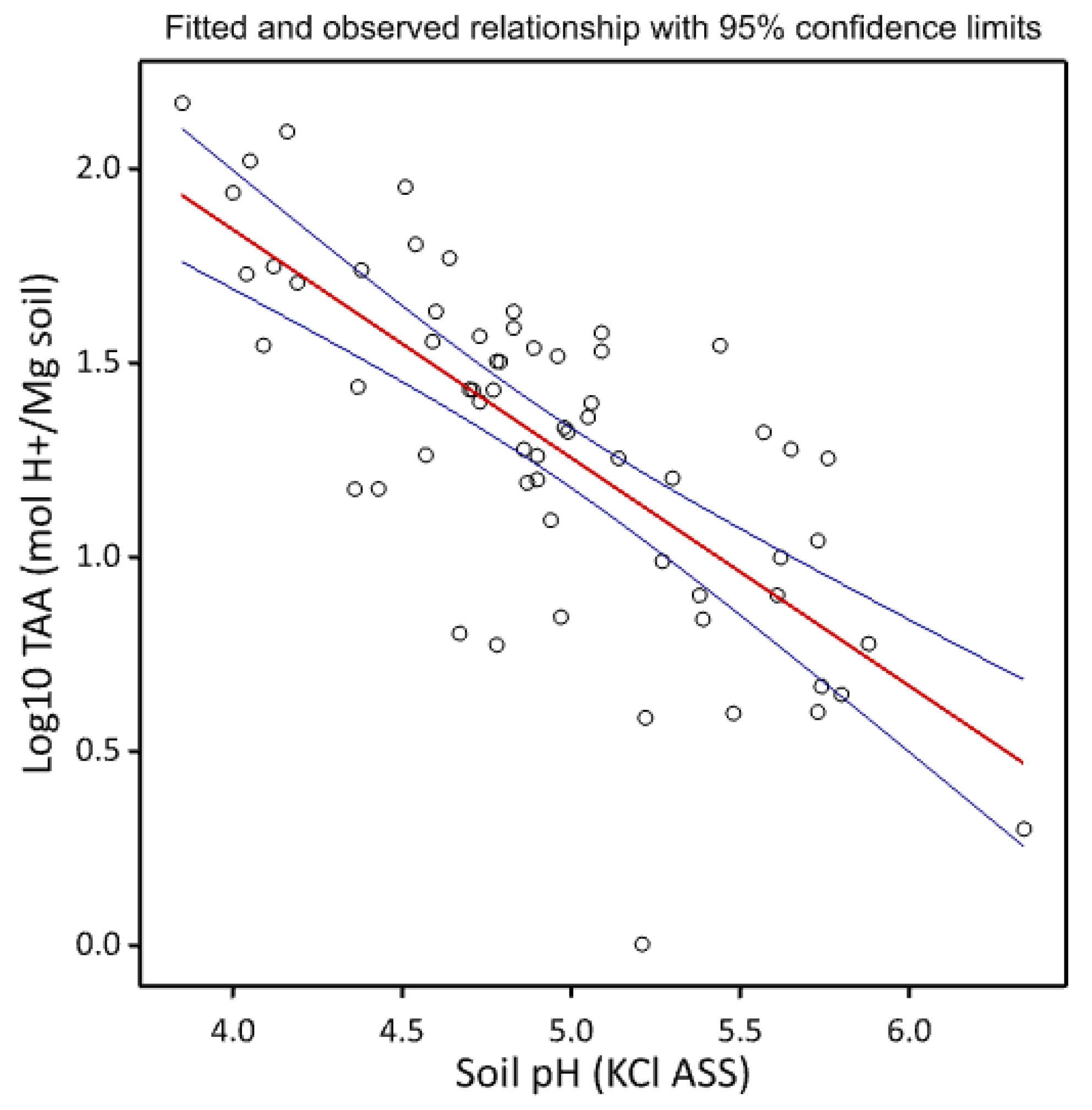
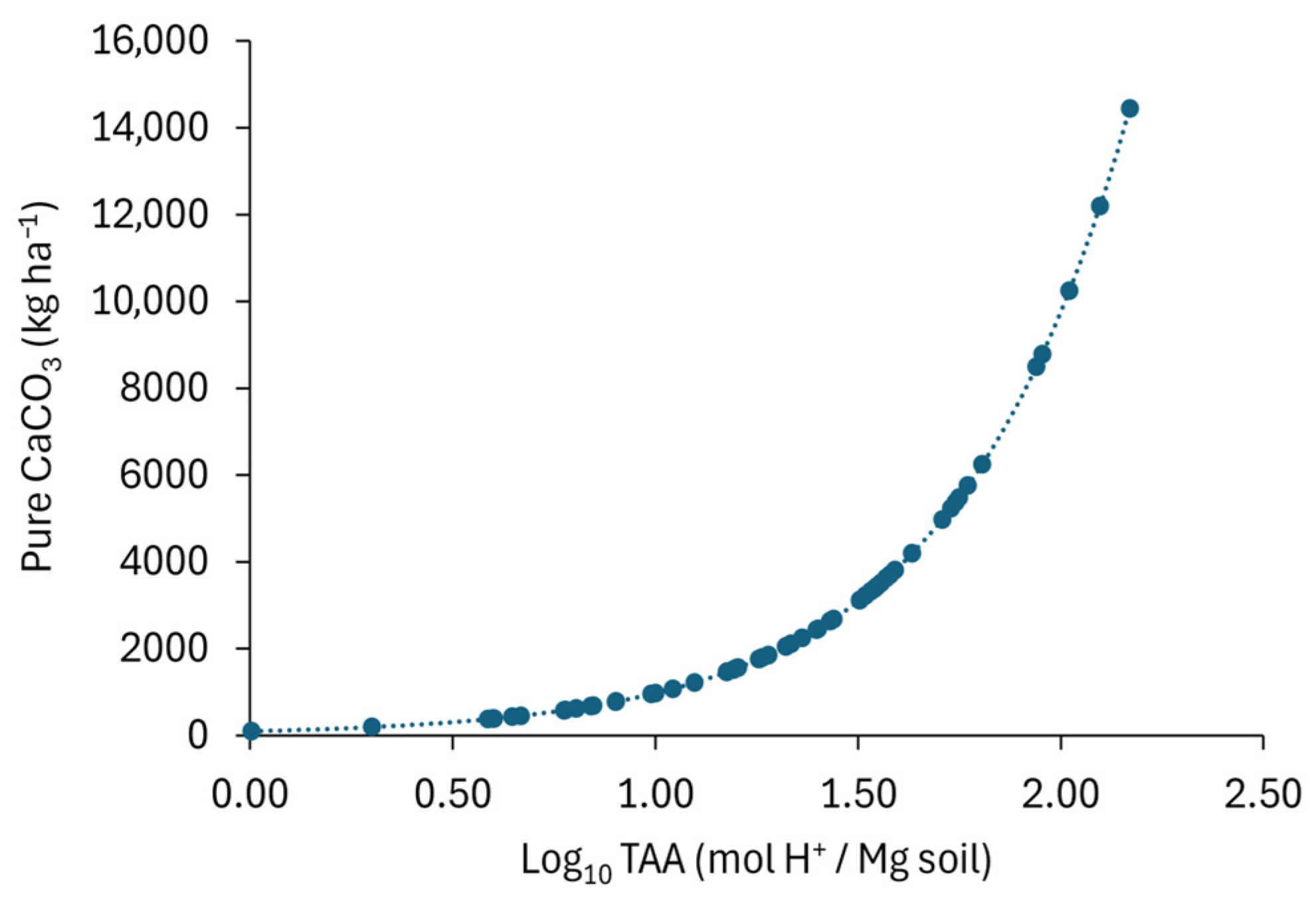
There was a linear relationship between the log10-converted total acidity and soil pHKCl-ASS, as shown in Figure 6. This relationship may be used to determine soil acidity if the value of pHKCl-ASS is known. Whilst this relationship was significant for the linear model fitted to the data, care should be exercised given that the number of datapoints (i.e., soil samples) available to develop the model was limited (n = 62) and the R2 obtained was low (~50%). However, it may still be used to provide ‘quick’ estimates of soil acidity based on soil pH. Similar relationships may be established using soil pH data derived from other analytical methods (e.g., pH1:2.5 soil–water ratio), which are available in this article (Appendix A, Table A2). Such relationships will allow for ‘quick’ estimations of soil acidity based on alternative soil pH data. A further relationship was established between the log10-converted total acidity and the lime application rate, expressed in kg of pure CaCO3 per ha (Figure 7). This relationship assumed that the soil bulk density was 1.30 Mg m−3 and that the soil depth interval to be corrected was 0–15 cm. Since agricultural lime does not have 100% purity, the theoretical rate derived from Figure 7’s equation needs to be corrected to an actual rate. This correction is done by dividing the theoretical rate by the purity of the material (e.g., if the theoretical rate was 1200 kg pure lime per ha, and the purity was 90%, then the actual rate would be 1200/0.9 = 1333 kg ha−1 of CaCO3). With these two relationships, it is possible to derive an approximate lime application rate. However, whenever possible, it is recommended that TAA be measured to ensure that the lime application rate can be more accurately determined. The rate and timing of lime application should be aligned with the overall farming system design and economic considerations. In practice, managing soil pH through liming is a long-term strategy, often implemented by applying smaller lime doses over several years to maintain optimal soil conditions and support sustained productivity.

4. Conclusions

Soil pH and soil acidity were measured in 2025 at 17 locations in Fiji to assess the usefulness and relevance of historical soil information (which dates back to the 1980s) required to develop a decision support tool (DST) that will assist farmers in managing soil acidity and other related agronomic constraints to production. Results showed that historical soil information is still relevant and therefore may be used with confidence to inform the development of the DST. Whilst differences between legacy soil pH data (5.42 ± 0.525) and data derived from samples collected in 2025 (5.75 ± 0.728) were significant (p < 0.001, LSD 5% level: 0.173), such differences were small, and potentially of any practical consequence. It was suggested that future work should consider site-specific sampling for analysis of soil pH to further verify historical data and determine the need for analysis of soil acidity, which will better inform liming decisions derived from the DST.
Based on the data collected as part of this work, and the historical soil information available on the Pacific Soils Portal, it was confirmed that soils used for cropping in Fiji are generally acidic and that crop productivity may be constrained by low pH. Therefore, soil liming should be incorporated into routine soil fertility management programs. ‘Quick’ estimates of liming rates may be derived from the relationships provided in Figure 6 and Figure 7. However, more accurate determination of liming rates and the frequency of lime application to soil will need to be decided based upon specific situations. This will require targeted and repeated soil analyses, and knowledge of soil type, crop rotation and expected yield (which will help to inform annual nutrient offtakes, including calcium [Ca2+] and magnesium [Mg2+]). Care should be exercised not to increase soil pH by more than one pH unit each time lime is applied to reduce the risk of soil organic matter loss (through rapid mineralization), which under the Fiji environmental and cropping conditions will be difficult to restore.
The soil assessment conducted as part of this work supports the development of the proposed DST. It is recommended that routine soil analyses conducted by The Fiji Ministry of Agriculture and Waterways (MOAW) and The Sugar Research Institute of Fiji (SRIF) record the GPS coordinates of the sampling locations such that analytical information can be used to further update the Fiji’s section of the Pacific Soils Portal, which will allow for improvements of the DST (such functionality may need to be built into the back-end of the DST). Implementation of this recommendation will require an agreement between landholders, service providers (Fiji MOAW, SRIF) and the Pacific Soils Portal holder. This work provided a valuable opportunity to upskill local technical officers (from Fiji National University, Fiji MOAW) in the measurement of soil pH and soil acidity by titration, thus contributing to the effort of ACIAR, DFAT and other international agencies to technical capacity building in the Pacific region.

Supplementary Materials

The following supporting information can be downloaded at https://www.mdpi.com/article/10.3390/data11040090/s1: Supplementary Material File S1, which contains Figure S1 (A map of soil acidity for Viti Levu Island, Fiji) and Figure S2 (A map of soil acidity for Vanua Levu Island, Fiji); Supplementary Material File S2, which contains a Microsoft Excel file with the historical soil pH dataset for Fiji and the dataset derived from the 2025 soil surveys.

Author Contributions

Conceptualization, D.L.A., T.P.S., B.C.T.M. and M.N.; methodology, D.L.A., J.C.J.V. and X.Z.; validation, D.L.A., X.Z. and J.C.J.V.; formal analysis, D.L.A., X.Z., J.C.J.V., J.R.F.B. and T.C.; investigation, D.L.A. and B.C.T.M.; resources, J.R.F.B. and T.C.; data curation, J.C.J.V., P.Z. and X.Z.; writing—original draft preparation, D.L.A. and P.Z.; writing—review and editing, D.L.A., T.P.S., M.N. and B.C.T.M.; supervision, D.L.A.; project administration: D.L.A.; funding acquisition, D.L.A. All authors have read and agreed to the published version of the manuscript.

Funding

This research received financial and operational support from the Australian Government funded Market Development Facility (MDF, https://marketdevelopmentfacility.org/; accessed 18 December 2025). The Pacific Soils Portal (https://psp.landcareresearch.co.nz/, accessed 20 February 2026) was developed in earlier work, which received financial support from the Australian Centre for International Agricultural Research (ACIAR, Australian Government, https://www.aciar.gov.au/ (accessed 1 February 2026) through ACIAR Project ID SMCN/2016/111.

Institutional Review Board Statement

Not applicable.

Informed Consent Statement

Not applicable.

Data Availability Statement

Analytical data collected as part of this work are available as Supplementary Materials. Please check the “Supplementary Materials” statement for further details.

Acknowledgments

The authors are grateful to Market Development Facility Staff for their valuable in-country assistance. Help received from Deeksha Krishna, colleagues and students from the Fiji National University, Rozleen Deo and Technical Staff from the Fiji Ministry of Agriculture and Waterways at Koronivia Research Station, and Renil Kumar, Sharneel Kumar and colleagues and Technical Staff from the Sugar Research Institute of Fiji at Lautoka is gratefully acknowledged. We would also like to acknowledge the farmers who gave us their time and permission to sample their fields. Technical assistance provided by the New Zealand Bioeconomy Science Institute is appreciated. Comments and suggestions provided on the drafts by internal CSIRO reviewers, and the Editor and Reviewers of this journal are appreciated.

Conflicts of Interest

The authors declare that T.P.S. and M.N. (MDF, https://marketdevelopmentfacility.org/; accessed 10 December 2025) reviewed the manuscript prior to this submission; however, they had no role associated with the interpretation of the data reported herein or the design of the study, the collection and analysis of data, or the decision to publish the results. The review of the manuscript by T.S. and M.N. was part of a standard CSIRO procedure prior to the submission of the manuscript.

Abbreviations

The following abbreviations are used in this manuscript:
ACIARAustralian Centre for International Agricultural Research, Australian Government
DFATDepartment of Foreign Affairs and Trade, Australian Government
DSTDecision Support Tool
FNUFiji National University, Koronivia, Fiji
MDFMarket Development Facility
MOAWFiji Ministry of Agriculture and Waterways, Fiji Government
SRIFSugar Research Institute of Fiji, Fiji Government

Appendix A. Historical Soil pH Data for Fiji

Table A1. Soil pH1:2.5 (soil–water ratio), pHKCl (potassium chloride), pHNaF (sodium fluoride). KRS: Koronivia Research Station, LRS: Legalega Research Station (Retrieved from https://fiji-psp.landcareresearch.co.nz/, accessed 8 September 2025). The sites listed in this table are at Agricultural Research Stations of the Fiji Ministry of Agriculture and Waterways (Fiji Government), which had detailed soil mapping, and the corresponding soil textural classes were drawn from actual descriptions of sampled profiles. Where no textural class or other soil profile information was available (sites marked with *), the soil texture provided is a representative profile texture of the soil series for the site. These may not exactly match the texture of the actual textural class of the sample, and therefore, site-specific particle size analysis may be needed. Detailed soil mapping and associated analytical data for some of the historical sites quoted in this report, and a description of the timeframe over which such data were collected, are available from Laffan [33], Laffan and Leslie [34], Leslie [35,36,37], Leslie [38], Leslie and Laffan [39], Rijkse [40], and Rijkse and McLeod [41].
Site IDSite, Soil TypeDepth Interval, cmLatitudeLongitudepH1:2.5pHKClpHNaF
KN8KRS, silt loam0–20−18.04906657178.53489355.7--
KN8KRS, silty clay loam20–33−18.04906657178.53489355.8--
KN9KRS, silty clay loam0–18−18.04963882178.53314995.4--
KN9KRS, clay loam17–37−18.04963882178.53314995.7--
KN5KRS, silty clay loam0–18−18.04638103178.53437835.6--
KN5KRS, silty clay loam16–28−18.04638103178.53437835.7--
KN11KRS, silty clay loam0–16−18.05364443178.53236855.1--
KN11KRS, silty clay loam16–28−18.05364443178.53236855.2--
KN30KRS, silt loam0–18−18.05278247178.52925615.4--
KN30KRS, silt loam18–41−18.05278247178.52925615.6--
KN22* KRS, clay loam0–9−18.04930519178.52710035.1-7.9
KN22* KRS, clay loam9–26−18.04930519178.52710035.0-8.4
KN23KRS, clay loam0–18−18.04911691178.52709325.3-8.1
KN23KRS, clay loam18–38−18.04911691178.52709325.3-8.5
KN24* KRS, silty clay loam0–10−18.04893131178.52706295.3-8.4
KN24* KRS, silty clay loam10–20−18.04893131178.52706295.4-8.6
KN20KRS, silty clay loam0–13−18.04688438178.52521055.5-8.2
KN20KRS, silty clay loam13–32−18.04688438178.52521056.0-8.3
KN19KRS, clay loam0–18−18.04704857178.52528545.6-8.3
KN19KRS, clay loam18–31−18.04704857178.52528545.9-8.6
KN18KRS, clay loam0–11−18.04715207178.52529795.2-8.4
KN18KRS, clay loam11–21−18.04715207178.52529795.3-8.7
KN17KRS, silty clay loam0–6−18.04729484178.52534795.5-8.0
KN17KRS, silty clay loam6–19−18.04729484178.52534795.2-8.2
KN14KRS, peaty loam0–20−18.05691006178.53016374.5--
KN14KRS, peat20–77−18.05691006178.53016374.3--
KN16KRS, silty clay loam0–14−18.05574903178.52698215.5--
KN16KRS, clay loam14–31−18.05574903178.52698215.7--
LL34LRS, gravelly sandy loam0–30−17.74958600177.4684306.6--
LL34LRS, gravelly sandy loam30–60−17.74958600177.4684305.6--
LL33* LRS, sandy clay loam0–22−17.74994300177.4683125.0--
LL33* LRS, sandy clay loam22–52−17.74994300177.4683125.3--
LL80LRS, clay0–18−17.74895600177.4681624.6--
LL80LRS, clay18–60−17.74895600177.4681624.5--
LL53* LRS, clay loam0–30−17.75403500177.468265.2--
LL53* LRS, clay loam30–48−17.75403500177.468265.0--
LL69LRS, fine sandy clay loam0–25−17.75365300177.4680185.0--
LL69LRS, clay loam25–75−17.75365300177.4680184.95--
LL74LRS, loamy sand0–25−17.74638800177.4678415.6--
LL74LRS, clay loam25–38−17.74638800177.4678415.5--
LL01LRS, sandy clay loam0–28−17.75148500177.4660695.34.78.7
LL01LRS, sandy clay loam28–54−17.75148500177.4660695.45.89.0
LL09* LRS, sandy clay loam0–27−17.75086600177.4651514.94.48.5
LL09* LRS, sandy clay loam27–67−17.75086600177.4651515.35.29.0
LL29LRS, sandy loam0–24−17.75115500177.4654485.24.28.7
LL29LRS, clay loam24–69−17.75115500177.4654485.45.49.1
LL65LRS, fine sandy loam-−17.75077700177.464444---
LL30LRS, loamy sand0–30−17.75053900177.4648115.04.28.6
LL30LRS, clay30–68−17.75053900177.4648114.73.99.5
Nd101Naduruloulou, sandy clay loam0–22−17.97569300178.5117616.0--
Nd101Naduruloulou, sandy clay loam22–52−17.97569300178.5117616.4--
Nd105Naduruloulou, clay loam0–11−17.97429800178.5117415.2--
Nd105Naduruloulou, clay11–30−17.97429800178.5117415.2--
Nd60Naduruloulou, clay0–8−17.97501500178.5170825.3--
Nd60Naduruloulou, silty loam8–25−17.97501500178.5170825.7--
Nd54Naduruloulou, silty clay loam0–19−17.97376400178.5153135.2--
Nd54Naduruloulou, silty clay loam19–53−17.97376400178.5153135.2--
Nd35Naduruloulou, clay0–20−17.97326700178.5115824.7--
Nd35Naduruloulou, silty clay loam20–30−17.97326700178.5115824.7--
Nd80Naduruloulou, silty clay loam0–13−17.97243400178.5117024.8--
Nd80Naduruloulou, clay loam13–22−17.97243400178.5117024.9--
Nd78Naduruloulou, clay loam0–15−17.97300400178.5123895.2--
Nd78Naduruloulou, clay loam15–53−17.97300400178.5123895.2--
Nd3Naduruloulou, clay0–11−17.97286800178.5132495.1--
Nd3Naduruloulou, silty clay loam11–29−17.97286800178.5132495.0--
Nd87Naduruloulou, silty clay loam0–21−17.97193400178.5160555.5--
Nd87Naduruloulou, clay21–57−17.97193400178.5160555.8--
Nd12Naduruloulou, fibric peat0–20−17.97083500178.508794.6--
Nd12Naduruloulou, fibric peat20–50−17.97083500178.508794.2--
Nd7Naduruloulou, fibric peat0–25−17.97007100178.5104574.8--
Nd7Naduruloulou, clay loam25–45−17.97007100178.5104575.2--
NW24Nawaicoba, clay loam0–18−17.91929000177.3728515.8--
NW24Nawaicoba, clay loam18–38−17.91929000177.3728516.1--
NW163Nawaicoba, clay loam0–22−17.92213300177.3735385.7--
NW163Nawaicoba, clay loam22–48−17.92213300177.3735385.8--
NW8Nawaicoba, silty loam0–10−17.92190100177.3826756.2--
NW8Nawaicoba, coarse sandy loam10–18−17.92190100177.3826756.5--
NW162Nawaicoba, clay loam0–9−17.91981200177.3776375.2--
NW162Nawaicoba, clay loam9–29−17.91981200177.3776375.1--
NW20Nawaicoba, clay loam0–12−17.91901900177.3758365.4--
NW20Nawaicoba, clay loam12–60−17.91901900177.3758365.3--
NW36Nawaicoba, silty clay loam0–10−17.92242700177.3734155.4--
NW36Nawaicoba, silty clay loam10–20−17.92242700177.3734155.4--
NW91Nawaicoba, clay loam0–20−17.92193100177.3912036.3-8.1
NW91Nawaicoba, clay loam20–45−17.92193100177.3912036.8-8.9
NW87Nawaicoba, clay loam0–14−17.92204600177.3911345.8-7.8
NW87Nawaicoba, clay loam14–39−17.92204600177.3911346.6-8.9
NW88Nawaicoba, silty clay loam0–17−17.92232100177.3910795.9-7.9
NW88Nawaicoba, silty clay loam17–44−17.92232100177.3910796.6-9.0
NW89* Nawaicoba, silty clay loam0–11−17.92264200177.3910465.94.38.0
NW89* Nawaicoba, silty clay loam11–31−17.92264200177.3910466.54.38.9
NW90Nawaicoba, silty clay loam0–9−17.92298400177.391095.9-7.9
NW90Nawaicoba, stony sandy loam9–31−17.92298400177.391096.3-8.3
Table A2. Logarithmic mean of soil pH and (standard deviation) by analytical method and Titratable Actual Acidity (TAA, expressed as mol H+ Mg−1 soil) of soil samples collected by CSIRO in 2025. A H2O1:2.5 (1:2.5 soil-to-water ratio; Section 2.2.2); B H2O1:5 (1:5 soil-to-water ratio; Section 2.2.1); C CaCl2 (1:5 soil-to-calcium chloride solution ratio; Section 2.2.3); D KCl (1:5 soil-to-potassium chloride solution ratio; Section 2.2.4); E NaF (soil-to-sodium fluoride solution ratio, historical method [42]); F KCl-ASS (potassium chloride on acid sulphate soils; Section 2.3); G Field (field measurement taken in situ using a handheld pH probe; Section 2.2.6). ‘N=’ is the number of observations. KRS: Koronivia Research Station, LRS: Legalega Research Station, SRS: Sigatoka Research Station. Soil textural classes are as defined in Table 1 (for samples collected in 2025) and Table A1 (Appendix A, for historical samples).
LocationDatasetn=A H2O 1:2.5B H2O 1:5C CaCl2D KClE NaFF KCl ASSG FieldTAA
Bila202526.345 (0.509)6.455 (0.007)5.532 (0.148)4.485 (0.021)-5.059 (0.106)5.369 (0.106)19.526 (2.159)
Davuilevu202526.258 (0.057)5.861 (0.127)4.791 (0.127)4.405 (0.134)-4.861 (0.127)4.080 (0.919)32.5 (0.707)
KRS202565.267 (0.754)5.590 (0.708)4.887 (0.449)4.371 (0.910)-4.983 (0.457)4.730 (0.313)30.455 (18.666)
Historical285.390
(0.374)
-------
Korovisilou202525.679 (0.106)5.811 (0.184)5.072 (0.078)4.327 (0.071)-4.837 (0.071)4.294 (0.601)33.288 (1.905)
Lautoka2025104.939 (0.822)4.845 (0.883)4.220 (0.675)3.898 (0.671)-4.278 (0.681)5.283 (0.368)59.786 (47.304)
LRS2025105.484 (0.432)5.138 (0.548)4.441 (0.494)4.227 (0.302)-4.619 (0.434)5.838 (0.475)17.915 (11.605)
Historical235.027 (0.359)--4.393 (0.673)8.797 (0.327)---
Loma202526.161 (0.714)6.855 (0.258)5.720 (0.028)4.837 (0.120)-5.354 (0.255)5.247 (0.071)11.005 (14.135)
Lomaivuna202545.033 (0.694)4.884 (0.380)4.203 (0.481)3.991 (0.232)-4.413 (0.282)4.765 (0.225)70.750 (37.615)
Naboro Prison Complex202526.874 (0.099)6.742 (0.417)6.139 (0.318)5.735 (0.467)-6.487 (0.262)4.082 (0.354)−2.000
(1.414)
NaduruloulouHistorical224.949 (0.493)-------
Narewa202545.965 (0.504)5.88 (0.519)5.062 (0.324)4.506 (0.292)-4.797 (0.211)5.373 (0.469)15.625 (13.825)
Navuso202565.795 (0.255)5.704 (0.187)5.027 (0.295)4.215 (0.232)-4.804
(0.100)
4.765 (0.320)27.133 (8.393)
NawaicobaHistorical375.685
(0.500)
--4.3
(0)
8.163 (0.497)---
Nawaka202526.313 (0.276)6.433 (0.064)5.535 (0.021)4.965 (0.021)-5.679 (0.106)5.147 (0.071)13
(7.071)
Nawau202526.455 (0.007)6.916 (0.559)5.977 (0.262)5.214 (0.255)-6.204 (0.170)4.955 (0.283)0 (2.828)
SRS202586.085 (0.409)6.069 (0.392)5.199 (0.347)4.851 (0.191)-5.406 (0.262)5.358 (0.181)13.632 (10.667)
Vakabalea202524.899 (0.481)5.186 (0.046)4.351 (0.297)3.788 (0.198)-4.064 (0.035)4.855 (0.283)44.426 (13.085)
Votualevu202566.602 (0.095)6.203 (0.313)5.161 (0.343)4.65 (0.150)-5.039 (0.237)5.307 (0.175)9.075 (7.770)
Yako202527.657 (0.071)8.074 (0.049)6.248 (0.438)6.105 (0.467)-7.576 (0.156)5.189 (0.141)−3.000
(0)

Appendix B. Soil pH Data Distribution for Samples Collected in 2025

Figure A1. Distribution of soil pH1:2.5 data from samples collected in 2025 by depth interval (0–15 and 15–30 cm) and location.
Data 11 00090 g0a1

References

  1. Curtin, D.; Naidu, R.; Syers, J.K. Chemical and mineralogical characteristics of some strongly weathered Fijian soils: Fertility implications. Geoderma 1991, 48, 363–372. [Google Scholar] [CrossRef]
  2. Susumu, G.; Sharma, A.; Halavatau, S.; Antille, D.L.; Webb, M.J.; Barringer, J.; Kelly, J.; Macdonald, B. Declining soil nutrient status can constrain agricultural productivity and food security in Pacific Island countries: A country-scale assessment. Pac. Sci. 2023, 76, 337–348. [Google Scholar] [CrossRef]
  3. Zaidi, N.H.; Igbal, M.R.; Devi, Y.; Sharma, A. Impact of poultry manure and agricultural lime on acidic soil of Fiji. J. Namib. Stud. 2023, 36, 728–737. [Google Scholar]
  4. Miyauchi, N.; Hayashi, M. Note on some acid sulphate soils in Fiji. Kogoshima Univ. Res. Cent. S. Pac. 1985, 5, 175–178. [Google Scholar]
  5. Bell, R.W. Nutrient deficiencies in four acid soils from southeast Viti Levu. Fiji Agric. J. 1988, 50, 7–13. [Google Scholar]
  6. Singh, I.R.; Sharma, A.C.; Goswami, S.N. Nutrient status and their availability in relation to properties of soils of Koronivia, Fiji. Fiji Agric. J. 2013, 53, 1–6. [Google Scholar]
  7. Meier, E.A.; Antille, D.L.; Mahimairaja, S. Priorities for narrowing the yield gap and increasing farming systems resilience in the Fiji sugar industry. Farming Syst. 2023, 1, 100048. [Google Scholar] [CrossRef]
  8. Antille, D.L.; Field, D.J.; Halavatau, S.M.; Iramu, E.T.; Macdonald, B.C.T.; Singh, K.; Webb, M.J. Regional soil priorities creating partnerships with Australia and New Zealand across the Pacific. Geoderma Reg. 2022, 29, e00517. [Google Scholar] [CrossRef]
  9. Howe, J.A.; McDonald, M.D.; Burke, J.; Robertson, I.; Coker, H.; Gentry, T.J.; Lewis, K.L. Influence of fertilizer and manure inputs on soil health: A review. Soil Secur. 2024, 16, 100155. [Google Scholar] [CrossRef]
  10. Antille, D.L.; Macdonald, B.C.T.; Uelese, A.; Webb, M.J.; Kelly, J.; Tauati, S.; Stockmann, U.; Palmer, J.; Barringer, J.R.F. Toward soil nutrient security for improved agronomic performance and increased resilience of taro production systems in Samoa. Soil Syst. 2023, 7, 21. [Google Scholar] [CrossRef]
  11. Steel, L.; Antille, D.L.; Gleadow, R.M. Optimising plant growth, biomass partitioning, and nitrogen use efficiency in taro (Colocasia esculenta (L.) Schott). Front. Plant Sci. 2026, 16, 1731490. [Google Scholar] [CrossRef] [PubMed]
  12. Thomas, G.W.; Hargrove, W.L. Chapter 1: The chemistry of soil acidity. In Soil Acidity and Liming, 2nd ed.; Adams, F., Ed.; Agronomy Monographs; American Society of Agronomy Inc.: Madison, WI, USA; Crop Science Society of America Inc.: Madison, WI, USA; Soil Science Society of America, Inc.: Madison, WI, USA, 1984; Volume 12, pp. 3–56. [Google Scholar] [CrossRef]
  13. FDB. Fiji Development Bank Seals Partnership with Standard Concrete Industries to Promote Ag Lime, 2014. Available online: https://www.fdb.com.fj/fdb-seals-partnership-with-standard-concrete-industries-to-promote-aglime/ (accessed on 24 October 2025).
  14. SRIF. Sugar Research Institute of Fiji Annual Report 2021. Parliamentary Paper No.: 157, 2023, pp. 146. Suva, Fiji: Parliament of Fiji. Available online: https://www.parliament.gov.fj/wp-content/uploads/2024/05/Sugar-Research-Institute-of-Fiji-Annual-Report-2021.pdf (accessed on 12 October 2025).
  15. Kamprath, E.J. Chapter 9: Crop response to lime on soils in the tropics. In Soil Acidity and Liming, 2nd ed.; Adams, F., Ed.; Agronomy Monographs; American Society of Agronomy Inc.: Madison, WI, USA; Crop Science Society of America Inc.: Madison, WI, USA; Soil Science Society of America, Inc.: Madison, WI, USA, 1984; Volume 12, pp. 349–368. [Google Scholar] [CrossRef]
  16. Sharma, A.C. Soil fertility and productivity decline resulting from twenty-two years of intensive taro cultivation in Taveuni, Fiji. Fiji Agric. J. 2020, 58, 50–58. [Google Scholar]
  17. Munns, D.N.; Hohenberg, J.S.; Righetti, T.L.; Lauter, D.J. Soil acidity tolerance of symbiotic and nitrogen-fertilized soybeans. Agron. J. 1981, 73, 407–410. [Google Scholar] [CrossRef]
  18. Antille, D.L.; Moody, P.W. Nitrogen use efficiency indicators for the Australian grains, cotton, sugar, dairy, and horticulture industries. Environ. Sustain. Indic. 2021, 10, 100099. [Google Scholar] [CrossRef]
  19. Nauluvula, P.; Webber, B.L.; Gleadow, R.M.; Aalbersberg, W.; Hargreaves, J.N.G.; Das, B.T.; Antille, D.L.; Crimp, S.J. Time series dataset of phenology, biomass, and chemical composition of cassava (Manihot esculenta Crantz) as affected by time of planting and variety interactions in field trials at Koronivia, Fiji. Data 2025, 10, 120. [Google Scholar] [CrossRef]
  20. Sharma, A.C. Effects of agricultural lime and organic matter on the productivity of the highly acidic Tokotoko soil series of Fiji. Fiji Agric. J. 2020, 58, 26–30. [Google Scholar]
  21. Leslie, D.M.; Seru, V.B. Fiji Soil Taxonomic Unit Description Handbook: Supplement to the National Soil Map; Manaaki Whenua Press: Lincoln, New Zealand, 1998; Volume 1–2, ISBN 0478093187. [Google Scholar]
  22. Mosley, L.M.; Rengasamy, P.; Fitzpatrick, R. Soil pH: Techniques, challenges and insights from a global dataset. Eur. J. Soil Sci. 2024, 75, e70021. [Google Scholar] [CrossRef]
  23. Brady, N.C.; Weil, R.R. The Nature and Properties of Soils, 12th ed.; Prentice Hall: Upper Saddle River, NJ, USA, 1999. [Google Scholar]
  24. Leslie, D.M. Record of Significant Soil and Land Resources Research in the Southwest Pacific; Manaaki Whenua Press: Lincoln, New Zealand, 2010; p. 62. [Google Scholar] [CrossRef]
  25. Leslie, D.M. History of Soil Research Conducted by the New Zealand Soil Bureau in Five Southwest Pacific Countries; SPC Suva Regional Office and Manaaki Whenua—Landcare Research Manaaki Whenua: Suva, Fiji, 2022. [Google Scholar] [CrossRef]
  26. Manaaki Whenua Landcare Research; ACIAR; CSIRO. The Pacific Soils Portal, 2020. Available online: https://doi.org/10.7931/xcmy-rf38 (accessed on 13 April 2026).
  27. FAO. Global Soil Partnership: Pacific Soil Partnership; Food and Agriculture Organisation of the United Nations: Rome, Italy, 2014; Available online: https://www.fao.org/global-soil-partnership/regional-partnerships/pacific/en/ (accessed on 5 October 2025).
  28. FAO. Global Soil Partnership; Food and Agriculture Organisation of the United Nations: Rome, Italy, 2012; Available online: https://www.fao.org/global-soil-partnership/about/why-the-partnership/en/ (accessed on 14 September 2025).
  29. Rayment, G.E.; Lyons, D.J. Soil Chemical Methods—Australasia; CSIRO Publishing: Melbourne, VIC, Australia, 2011. [Google Scholar]
  30. VSNI Ltd. GenStat® Reference Manual, 25th ed.; VSN International Ltd.: Hemel Hempstead, UK, 2025. [Google Scholar]
  31. Hazelton, P.; Murphy, B. Interpreting Soil Test Results: What Do All the Numbers Mean? CSIRO Publishing: Collingwood, VIC, Australia, 2007; p. 152. [Google Scholar]
  32. Kamprath, E. Soil acidity in well-drained soils of the tropics as a constraint to food production. In Priorities for Alleviating Soil-Related Constraints to Food Production in the Tropics; Brady, N.C., Metz, J.F., Eds.; International Rice Research Institute: Los Baños, Philippines, 1980; pp. 171–188. Available online: http://books.irri.org/9789712202247_content.pdf (accessed on 7 April 2026).
  33. Laffan, M.D. Soils of Legalega Agricultural Research Station, Viti Levu, Fiji; New Zealand Soil Survey Report; Department of Scientific and Industrial Research: Lower Hutt, New Zealand, 1988; Volume 77, p. 28. [CrossRef]
  34. Laffan, M.D.; Leslie, D.M. Soil Map of Legalega Agricultural Research Station, Viti Levu, Fiji. 1:1500; New Zealand Soil Bureau Maps Digital Library: Lincoln, New Zealand, 1984. Available online: https://doi.org/10.7931/6qf4-1j23 (accessed on 13 April 2026).
  35. Leslie, D.M. Soils of Koronivia Agricultural Research Station, Viti Levu, Fiji; New Zealand Soil Survey Report; Department of Scientific and Industrial Research: Lower Hutt, New Zealand, 1984; Volume 75, p. 46. [CrossRef]
  36. Leslie, D.M. Soil Map of Koronivia Agricultural Research Station, Viti Levu, Fiji. 1:3000; New Zealand Soil Bureau Maps Digital Library: Lincoln, New Zealand, 1984. Available online: https://doi.org/10.7931/js6h-jt79 (accessed on 13 April 2026).
  37. Leslie, D.M. Soils of Nawaicoba Agricultural Research Station, Viti Levu, Fiji; New Zealand Soil Survey Report; Department of Scientific and Industrial Research: Lower Hutt, New Zealand, 1984; Volume 78, p. 36. [CrossRef]
  38. Leslie, D.M. Chemical and Physical Properties of Fiji Soils: Analytical Data; Contract Report: LC3935; Manaaki Whenua—Landcare Research: Lincoln, New Zealand, 2021; p. 248. [CrossRef]
  39. Leslie, D.M.; Laffan, M.D. Soil Map of Nawaicoba Agricultural Research Station, Viti Levu, Fiji. 1:3000; New Zealand Soil Bureau Maps Digital Library: Lincoln, New Zealand, 1984. Available online: https://doi.org/10.7931/d9pa-4f26 (accessed on 13 April 2026).
  40. Rijkse, W.C. Soils of the Sigatoka Agricultural Research Station, Viti Levu, Fiji; New Zealand Soil Survey Report; Department of Scientific and Industrial Research: Lower Hutt, New Zealand, 1990; Volume 81, p. 58. [CrossRef]
  41. Rijkse, W.C.; McLeod, M. Soil Map of Sigatoka Agricultural Research Station, Viti Levu, Fiji. 1:6000; New Zealand Soil Bureau Maps Digital Library: Lincoln, New Zealand, 1989. Available online: https://doi.org/10.7931/e4gs-d720 (accessed on 13 April 2026).
  42. Gilkes, R.; Hughes, J. Sodium-fluoride pH of South-Western Australian soils as an indicator of P-sorption. Aust. J. Soil Res. 1994, 32, 755–766. [Google Scholar] [CrossRef]
Figure 1. Map of Viti Levu Island (Fiji) showing the locations where soil samples for pH analysis in 2025, as well as historical sample sites.
Data 11 00090 g001
Figure 2. Soil pH determined on samples collected in 2025 (left) compared with historical data (right), by analytical method. Soil pH methods are as described in Section 2.2. The box spans the interquartile range of values in the variate (Q3–Q1), with the middle line indicating the median (Q2). Whiskers extend to the most extreme data values.
Data 11 00090 g002
Figure 3. Soil pH 1:2.5 determined on samples collected in 2025 by soil depth interval (0–15 and 15–30 cm) and location. Locations are as described in Table 1. The box spans the interquartile range of values in the variate (Q3–Q1), with the middle line indicating the median (Q2). Whiskers extend to the most extreme data values.
Data 11 00090 g003
Figure 4. Titratable actual acidity (TAA) as determined on samples collected in 2025 by location. “TAA” denotes the total acidity of soil. The box spans the interquartile range of values in the variate (Q3–Q1), with the middle line indicating the median (Q2). Whiskers extend to the most extreme data values.
Data 11 00090 g004
Figure 5. Titratable actual acidity (TAA) as determined on samples collected in 2025 by depth interval. “TAA” denotes the total acidity of soil. The box spans the interquartile range of the values in the variate (Q3–Q1), with the middle line indicating the median (Q2). Whiskers extend to the most extreme data values within the inner ‘fences’, which are at a distance of 1.5 times the interquartile range beyond the quartiles (or the maximum value if that is smaller). Individual outliers are identified with a blue cross and ‘far’ outliers (beyond the outer ‘fences’) are at a distance of three times the interquartile range beyond the quartiles.
Data 11 00090 g005
Figure 6. Titratable actual acidity (TAA), expressed as log10 of mol H+ per Mg of soil, as a function of soil pH determined by the KCl-ASS method. Fitted model: Y = 4.193 0.5873 x , p < 0.001, SE: 0.303, R2: 0.52, n = 62. The two blue lines on either side of the fitted linear model (red line) show the 95% confidence interval. “TAA” denotes the total acidity of soil.
Data 11 00090 g006
Figure 7. Lime (CaCO3) rate expressed in kg per ha of pure material as a function of the log10-converted titratable actual acidity (TAA). Y = 97.588 e 2.3026 x , p < 0.05, R2: 1, n = 62. The number e is a mathematical constant, approximately equal to 2.71828. “TAA” denotes the total acidity of soil.
Data 11 00090 g007
Table 1. Sites sampled in August 2025, including nearest village, site ID and GPS coordinates. KRS: Koronivia Research Station, LRS: Legalega Research Station, SRS: Sigatoka Research Station. The research stations are part of the Fiji Ministry of Agriculture and Waterways (Fiji Government). Elevation is given in m (above-sea-level).
LocationSoil Textural ClassLatitudeLongitudeElevation
DavuilevuSilty clay loam/clay loam−18.0381178.526410.68
KorovisilouSandy clay loam−18.2480177.880430.12
KRSSilty clay loam−18.0464178.534320.60
KRSSilty clay loam/clay loam−18.0531178.532112.33
KRSSandy clay loam−18.0497178.533212.38
BilaClay loam/silt loam−18.0125177.543223.65
LomaivunaClay loam/clay−17.8727178.3620111.87
LomaivunaClay loam/clay−17.8760178.3565130.73
LomaClay loam/silt loam−18.0223177.546821.82
LRSSandy clay loam−17.7505177.465320.03
LRSSandy loam−17.7522177.464418.41
LRSHumic clay−17.7539177.465713.44
LRSSandy clay loam−17.7523177.465921.82
LRSSandy clay loam−17.7511177.465218.31
LautokaClay loam/gritty clay−17.5927177.558820.97
LautokaClay/gritty clay−17.5994177.501316.03
LautokaGritty clay loam/stony clay loam−17.6550177.450369.14
LautokaStony clay loam−17.7204177.492332.39
LautokaClay−17.5757177.51357.72
Naboro Prison ComplexSilt loam/silty clay loam−18.1388178.29688.74
NawauClay loam/clay−17.9113177.325852.81
NarewaClay loam/silt loam−18.0068177.541522.23
NarewaClay loam/silt loam−18.0090177.539022.88
NavusoSilty clay loam−17.9818178.514812.99
NavusoSilty clay loam−17.9809178.514910.39
NavusoSilty clay loam−17.9832178.51829.18
NawakaClay−17.8033177.457817.20
SRSClay loam/silt loam−18.1039177.537220.03
SRSClay loam/silt loam−18.0983177.540419.43
SRSClay loam/silt loam−18.1010177.538515.07
SRSClay/clay loam−18.0987177.538513.63
VakabaleaSilty clay loam−18.2255178.131011.85
VotualevuStony clay loam−17.7637177.459219.76
VotualevuClay−17.7709177.460319.49
VotualevuClay−17.7770177.459421.38
YakoStony clay loam−17.8577177.341815.73
NaduruloulouFibric peat/clay loam−17.9730178.512413.00
Table 2. Soil pH methods and suitability for use in laboratories in Pacific Island countries. The codes correspond with those listed in Rayment and Lyons [29].
CodeMethodNotesSuitability for Use in Pacific Countries
With the use of glass-calomel electrodes and a millivolt meter.
4A1pH1:5 soil:water suspension.Reliable and quick laboratory method, but results can be influenced by the presence of soluble salts.Yes
4A3pH1:2.5 soil:water suspension.Variant of 4A1.Comparison with historical data required.
4B1pH1:5 soil/0.01 M CaCl2 extract–direct (without stirring during measurement).Reliable and quick laboratory method. Results are largely unaffected by the presence of soluble salts.Yes, but 4B2 is recommended as it requires less soil.
4B2pH1:5 soil/0.01 M CaCl2 extract—following method 4A1 (without stirring during measurement).Yes, if the amount of soil available for the analysis is limited.
4C1pH1:5 soil/1 M KCl extract—direct (without stirring during measurement).Yes, when there is sufficient soil available for the analysis. More suitable when the number of samples is large as it requires shorter preparation time.
4C2pH1:5 soil/1 M KCl extract—following method 4A1 (without stirring during measurement).Yes, if the amount of soil available for the analysis is limited. More suitable when the number of samples is small as it requires longer preparation time.
Disclaimer/Publisher’s Note: The statements, opinions and data contained in all publications are solely those of the individual author(s) and contributor(s) and not of MDPI and/or the editor(s). MDPI and/or the editor(s) disclaim responsibility for any injury to people or property resulting from any ideas, methods, instructions or products referred to in the content.