Article

Enhancement of Aroma in Dealcoholized Gin by Orange and Raspberry Maceration: Chemical and Sensory Profile


by
Eva Sánchez-Palomo
1,2,*,
Álvaro Macia-Abraham
1,2,
María Osorio Alieses
1,2 and
Miguel Ángel González-Viñas
1,2
1
Faculty of Chemical Sciences and Technologies, Area of Food Science and Technology, University of Castilla-La Mancha, Avda Camilo José Cela 10, 13071 Ciudad Real, Spain
2
Regional Institute for Applied Scientific Research (IRICA), University of Castilla-La Mancha, Avda Camilo José Cela 10, 13071 Ciudad Real, Spain
*
Author to whom correspondence should be addressed.
Beverages 2026, 12(8), 89; https://doi.org/10.3390/beverages12080089

Submission received: 10 June 2026 / Revised: 24 July 2026 / Accepted: 29 July 2026 / Published: 1 August 2026
(This article belongs to the Section Wine, Spirits and Oenological Products)

Abstract

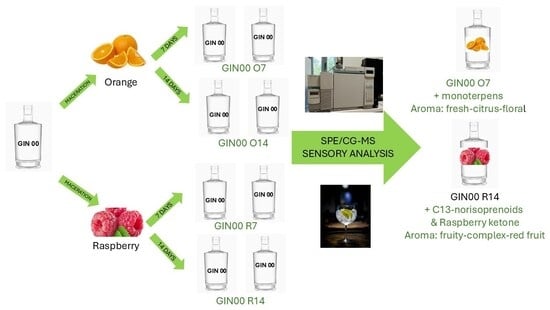
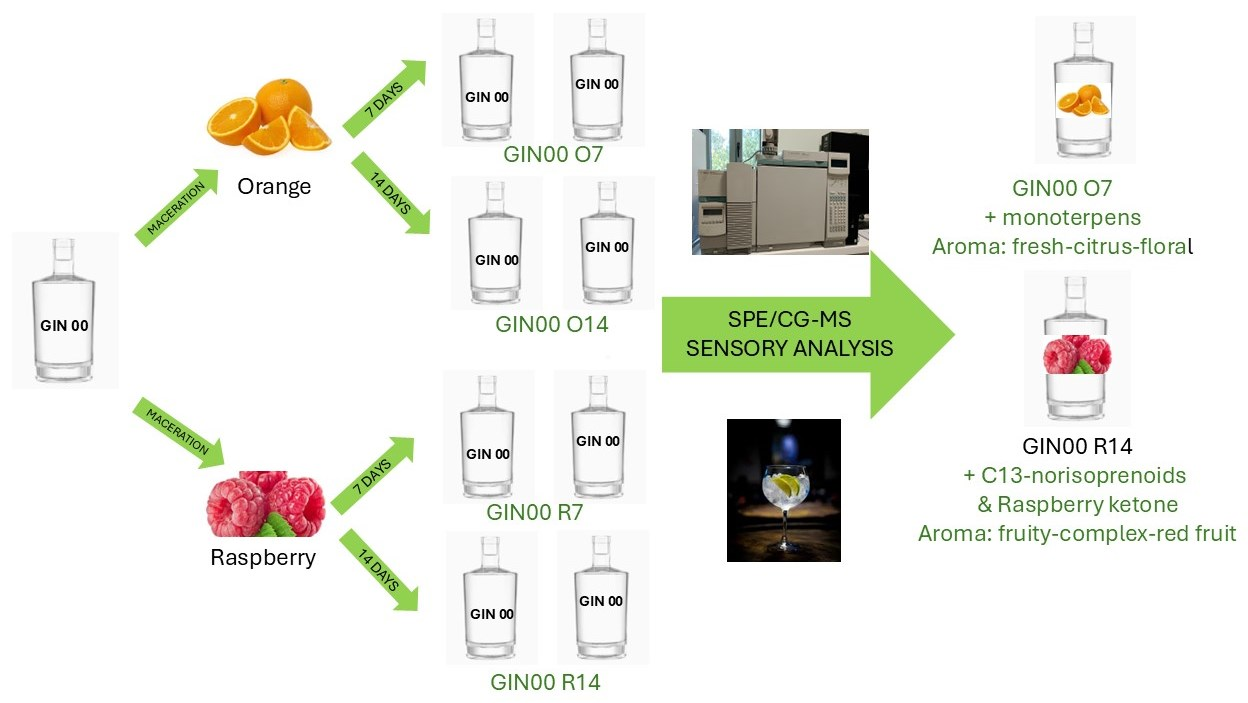
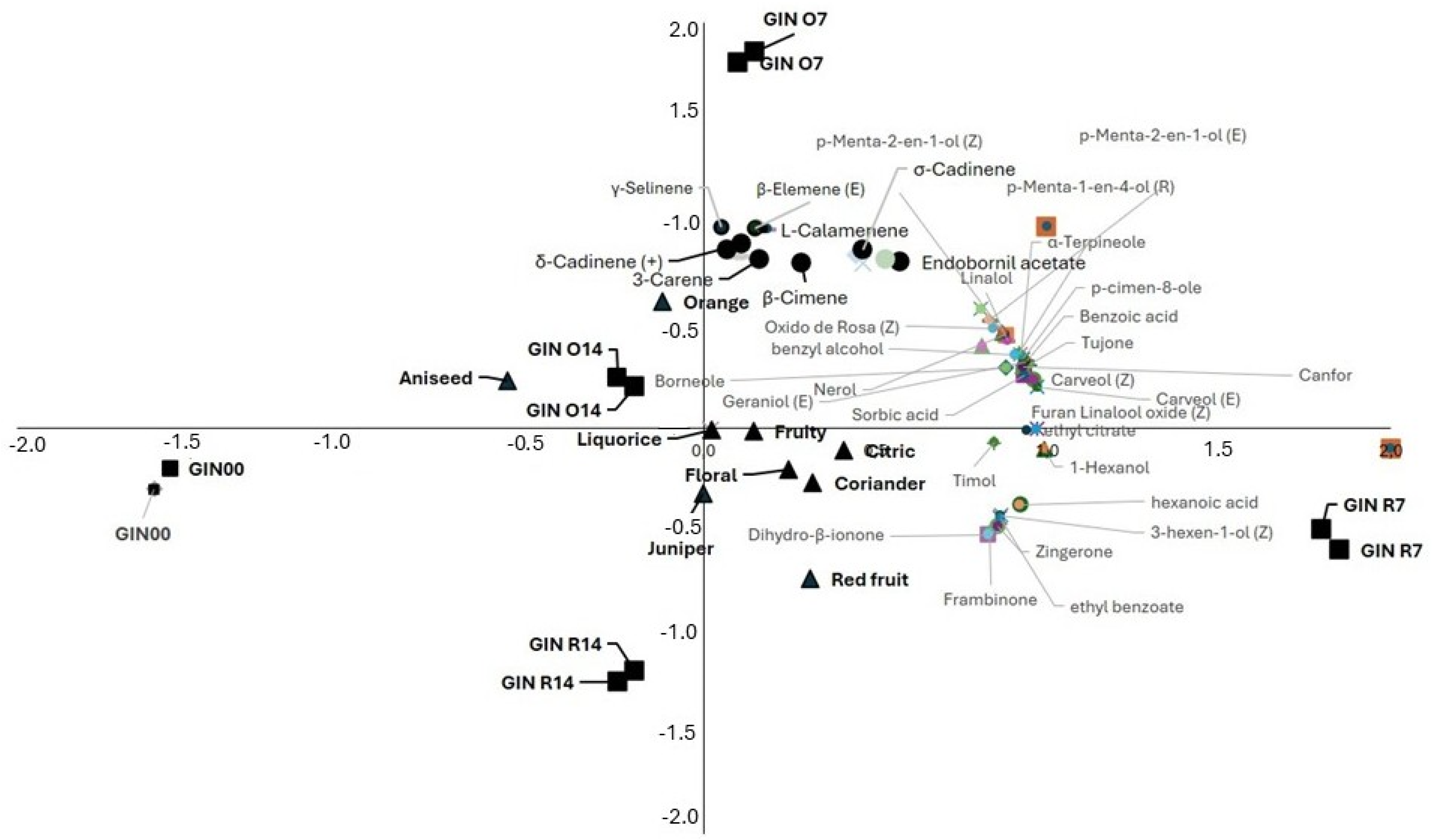
The development of alcohol-free spirits with attractive sensory properties remains a major challenge due to the absence of ethanol, which plays a key role in the extraction, stabilization, and perception of aroma compounds. In this study, the aromatic profile of dealcoholized gin (0.0% alcohol) was improved through post-production maceration with raspberry (Rubus idaeus L.) and orange (Citrus sinensis L.), evaluating the effect of fruit type and maceration time (7 and 14 days) on both volatile composition and sensory attributes. Volatile compounds were analyzed by GC–MS, while sensory characterization was performed using Quantitative Descriptive Analysis (QDA). Fruit type and maceration time significantly affected the volatile composition and specific fruit-related sensory descriptors, particularly orange and red fruit notes (p < 0.05), while traditional gin descriptors remained comparatively stable. Orange promoted citrus-related notes, particularly after short maceration times, whereas raspberry contributed to the development of red fruit sensory notes, which were more clearly perceived after 14 days. Maceration time influenced aroma development in a compound-dependent manner: shorter times favored the presence of highly volatile terpenes, while longer maceration modified the sensory balance and contributed to greater aroma integration, although some volatile compounds decreased over time. The study demonstrates that controlled maceration with orange and raspberry is an effective strategy for improving the aroma profile and sensory quality of dealcoholized gin (0.0% alcohol).
Keywords: dealcoholized gin (0.0% alcohol); fruit maceration; volatile compounds; sensory analysis; raspberry; orange dealcoholized gin (0.0% alcohol); fruit maceration; volatile compounds; sensory analysis; raspberry; orange
Graphical Abstract