1. Introduction
Plastic pollution represents one of the most critical environmental challenges of the 21st century, with single-use plastic packaging being a dominant source of global plastic waste [
1]. Beverage bottles made of polyethylene terephthalate (PET), together with their plastic caps—typically manufactured from high-density polyethylene (HDPE) or polypropylene (PP)—are frequently reported among the most common plastic items found in terrestrial and marine environments [
2,
3]. Their widespread use, short service life, and inadequate end-of-life management have led to their persistent accumulation in natural ecosystems. Caps are often found as separate waste because consumers, due to their small size and common habits, lose or discard them, resulting in their accumulation and dispersion in the environment [
1,
2,
3]. Consumers show willingness to change due to environmental concerns, so according to Bruchmann et al., consumers demonstrate willingness to switch from bottled water to tap water to cut plastic waste and emissions, as shown in studies where social comparison boosted intentions for reusable bottles [
4]. A one-year follow-up revealed participants reduced bottled water, juices, soft drinks, milk, and alcohol while increasing tap water and unsweetened coffee, improving beverage sustainability scores [
5]. Dutch consumers show partial openness to substituting cow milk with soy drinks, potentially lowering GHG, land, and biodiversity footprints by about 8%, though full adoption is limited. Reformulation of ultra-processed beverages and reduced consumption could yield 30–82% environmental savings across indicators like GHG and plastic use, aligning with consumer health and eco-targets [
6,
7]. Overall, these shifts reflect motivated but incomplete voluntary changes, often needing policy support for broader impact.
To address this problem, European Directive 2019/904 mandated the introduction of tethered caps on all single-use plastic beverage containers up to 3 L, with the aim of drastically reducing their presence as marine litter. This design change, commonly referred to as “tethered caps,” aims to reduce the likelihood of caps being discarded separately and to improve collection rates for recycling. To address this issue, the European Union introduced Directive (EU) 2019/904, which mandates that plastic caps and lids remain attached to beverage containers during use and disposal [
8]. The primary objective of this regulatory measure is to reduce the number of caps discarded separately from bottles, as detached caps are more likely to evade waste collection systems and enter the environment. While this approach is conceptually aligned with litter reduction strategies, its broader environmental implications remain insufficiently explored.
One potential concern associated with tethered caps is the increase in plastic material per unit of packaging. Tethered designs often require additional material, such as reinforced hinges or thicker polymer sections, to ensure durability during repeated opening and closing cycles. An increase in material intensity per bottle may result in higher overall plastic consumption, which could partially offset the environmental benefits gained from improved collection rates [
9]. From a material flow perspective, even small increases in plastic mass per bottle may lead to substantial increases in total plastic production when scaled to billions of units annually. In addition to material quantity, the generation of microplastics represents a growing area of concern. Recent studies have demonstrated that the mechanical action of opening and closing plastic bottle caps can generate microplastic particles through abrasion at the cap–neck interface [
10]. When caps are permanently attached, users may exert additional bending, twisting, or pulling forces on the cap, potentially increasing mechanical stress and particle release. Microplastics generated during use may enter the beverage itself or be released into the environment after disposal, contributing to both human exposure and environmental contamination [
11]. Microplastics derived from HDPE and PP, the primary polymers used in bottle caps, have been shown to persist in environmental compartments and to exert adverse biological effects. Experimental studies indicate that microplastics originating from consumer plastics can alter soil properties and negatively affect plant growth and physiological performance [
12]. These findings suggest that fragmentation of bottle caps—whether detached or tethered—can contribute to ecotoxicological impacts beyond visible litter. Finally, recycling considerations must also be addressed. Although tethered caps are intended to improve collection efficiency, the presence of mixed polymers within a single packaging unit remains a challenge for mechanical recycling systems. Differences in density and melting behavior between PET bottles and polyolefin caps complicate sorting and reprocessing, potentially affecting recyclate quality and processing efficiency [
13]. The introduction of more complex cap–bottle assemblies may therefore introduce additional technical and economic constraints within existing recycling infrastructures. Taken together, these factors indicate that while tethered caps may reduce visible litter, they may simultaneously contribute to increased plastic material usage, enhanced microplastic generation, and added complexity in recycling processes. A comprehensive assessment of tethered cap systems should therefore integrate material flow analysis, microplastic emissions, and life-cycle environmental impacts to ensure that regulatory interventions achieve genuine reductions in plastic pollution rather than shifting the burden across different environmental pathways.
The EU has adopted a comprehensive legislative framework to promote sustainable production and consumption patterns, most notably through the European Green Deal [
14] following the Circular Economy Action Plan [
15] and the Single-Use Plastics Directive Directive (EU) 2019/904 on the reduction in the impact of certain plastic products on the environment (known as SUP Directive) [
8]. The objectives of Directive are (a) to prevent and reduce the impact of certain plastic products on the environment, in particular the aquatic environment, and on human health; (b) to promote the transition to a circular economy with innovative and sustainable business models, products and materials; and (c) to contribute to the efficient functioning of the internal market. The SUP Directive specifically targets the ten most commonly found SUP items on European beaches, introducing measures ranging from consumption reduction to extended producer responsibility and product bans. Among its newest obligations is the requirement that beverage containers with plastic caps must have tethered lids by July 2024. This measure aims to ensure that caps remain attached to bottles during use and disposal, reducing litter and facilitating more efficient recycling. It is estimated that the single-use plastic products covered by the measures provided for in this Directive account for around 86% of the total number of single-use plastic products found on Union beaches.
Plastic caps and lids used for beverage containers are one of the single-use plastic items most frequently found on Union beaches. Therefore, beverage containers that are single-use plastic products should only be allowed to be placed on the market if they comply with specific product design requirements that significantly reduce the environmental loss of plastic caps and lids. In addition to that requirement, beverage containers that are single-use plastic products and serve as packaging are subject to the essential requirements regarding the composition and reusability, recovery and recyclability of packaging set out in Annex II to Directive 94/62/EC [
16] and in Annex II to Regulation (EU) 2025/40 [
17]. Single-use plastic beverage bottles are one of the items most frequently found in marine litter on Union beaches. The reason for this is ineffective separate collection systems in spite of extended producer responsibility schemes according to Directive 2008/98/EC [
18] and low consumer participation in these systems. The implementation of tethered caps serves as a tangible example of the EU’s broader commitment to circularity—designing products for reuse, recyclability, and minimized environmental impact. As these regulatory changes come into effect, public perception and consumer acceptance play a crucial role in their successful implementation.
Although tethered caps have been widely discussed from a regulatory and environmental perspective, empirical evidence on consumer acceptance before and after mandatory implementation remains scarce. Therefore, the objective of this study is to examine changes in consumer perception and acceptance of tethered caps on plastic beverage bottles by comparing survey data collected before and after the mandatory implementation of this packaging requirement in Croatia. Specifically, this study aims to assess perceived usability, overall acceptance, and perceived environmental benefits of tethered caps, as well as to identify key factors influencing consumer acceptance following regulatory implementation.
2. Materials and Methods
The research was conducted in Croatia during 2024 and 2025 via an online questionnaire. Participants were recruited from different regions of the country through social networks, email invitations, and online groups. Participation was voluntary and anonymous. Although the study aimed to include respondents from the general population, the sample should be considered a convenience sample due to the online distribution of the questionnaire. The results were processed in the SPSS v.17 program. An a priori power analysis was conducted using G*Power 3.1 to determine whether the sample size was sufficient to detect differences in attitudes between the two survey waves (2024 vs. 2025). The analysis was based on an independent samples
t-test (two-tailed), assuming a medium effect size (Cohen’s d = 0.5), a significance level of α = 0.05, and a desired statistical power of 0.80. Given these parameters, a minimum sample size of approximately 64 respondents per group was required. The obtained sample sizes (N = 112 in 2024 and N = 128 in 2025) exceeded this requirement. The study did not employ gender quotas, and participation was voluntary, which resulted in a higher proportion of female respondents. The results are based on a total sample size of 240 analyzed questionnaires, and the investigated consumers are presented in
Table 1.
2.1. Questionnaire Design and Data Collection
Data were collected using a structured online questionnaire administered in two consecutive years. The first round of data collection, in 2024, was aimed at assessing consumers’ awareness of the regulatory provision mandating the introduction of tethered caps, as well as their perceptions of it. The second round of data collection (during 2025) was focused on analyzing shifts in consumer attitudes over time to identify any significant differences in response patterns, thereby offering insights into the evolving public reception and legitimacy of the regulatory provision.
The same questionnaire structure was applied in both survey periods to ensure comparability of results over time, with minor modifications reflecting the different stages of implementation of the mandatory attachment of caps to plastic beverage bottles.
The questionnaire consisted of three main sections. The first section collected sociodemographic characteristics of the respondents, including age, gender, employment status, and place of residence. Place of residence was categorized as urban (city) or rural (village) to allow for the assessment of potential differences in attitudes based on living environment.
The second section focused on respondents’ general attitudes toward the environmental impacts of plastic packaging. This section included questions related to perceptions of plastic packaging as an environmental problem and concerns about its ecological effects. These questions were intended to provide a broader context for interpreting respondents’ opinions regarding specific plastic waste reduction measures.
The third section addressed respondents’ personal attitudes toward the mandatory attachment of caps to plastic bottles. In the first year of the survey, respondents were asked whether they were aware of the obligation to attach caps to plastic bottles, whether they believed that this measure would reduce plastic pollution, and to express their overall opinion on the introduction of tethered caps. In the second year, after respondents had gained direct experience with tethered caps in everyday use, the question regarding awareness of the obligation was omitted. However, questions assessing respondents’ attitudes toward tethered caps and their perception of the measure’s effectiveness in reducing plastic pollution were repeated to enable longitudinal comparison.
Attitudinal statements in the second and third sections were assessed using a 5-point Likert scale, ranging from 1 (“strongly disagree”) to 5 (“strongly agree”). The online questionnaire was anonymous, and participation was voluntary. No personally identifiable information was collected. Prior to participation, respondents were informed about the purpose of the study and the intended use of the collected data.
2.2. Statistical Analysis
Descriptive statistics were used to summarize respondents’ sociodemographic characteristics and overall response distributions. Categorical variables (gender, employment status, and place of residence) were presented as frequencies and percentages.
We analyzed 5-point Likert-scale responses as ordinal data from two independent groups surveyed before and after EU Single-Use Plastics Directive acceptance, alongside demographics (age, gender, place of residence, employment status). Demographic associations used chi-square tests or Spearman’s correlations [
19,
20]. This follows established non-parametric sequences in consumer attitude surveys, such as Boateng et al. [
21] for ordinal scale handling and Conover [
22] for post hoc testing. Descriptive statistics (medians, frequencies) summarized consumer attitudes toward tethered caps on plastic bottles. Kruskal–Wallis H tests assessed overall between-group differences for significant results (
p < 0.05), followed by post hoc pairwise Mann–Whitney U tests with Bonferroni correction (α = 0.05). The non-parametric statistical tests used are given in
Table A1.
3. Results and Discussion
Plastic pollution is a global problem, and bottles and tethered caps account for a significant proportion of waste that affects both urban and natural environments [
23]. Caps are often found as separate waste because consumers, due to their small size and common habits, remove and discard them after consumption, which facilitates their accumulation and dispersion in the environment [
24]. To address this problem, European Directive 2019/904 [
8] mandated the introduction of tethered caps on all single-use plastic beverage containers up to 3 L, with the aim of drastically reducing their presence as marine litter [
24,
25,
26]. In the context of consumer satisfaction, such design changes are aligned with growing expectations for sustainable and authentic products that guarantee safety and quality throughout the supply chain [
27]. Although tethered caps are primarily an environmental measure, they also prevent cap loss, thus ensuring the integrity of the packaging during use [
23,
24,
25,
26,
27].
The results are presented according to the objectives and show the (i) consumer attitudes toward plastic bottle caps before and after the introduction of mandatory tethered caps; (ii) changes in perceived usability and environmental benefits; and (iii) socio-demographic and behavioral factors associated with consumer acceptance.
The introduction of tethered caps on plastic beverage bottles, mandated by European Directive (EU) 2019/904 [
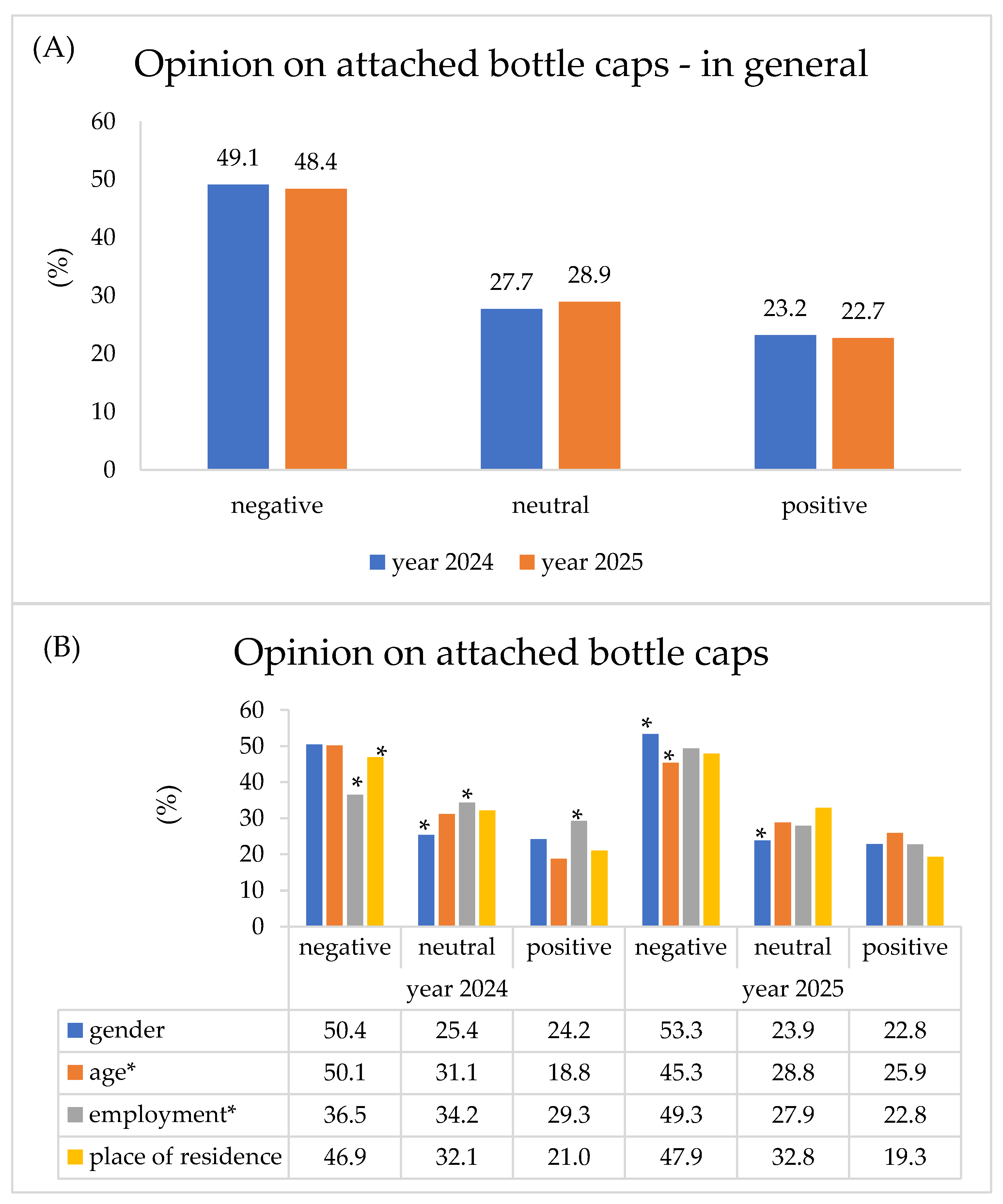
8], represents a structural packaging change aimed at reducing plastic litter, particularly cap loss. The present results provide insight into consumer attitudes before (2024) and after (2025) the legal obligation came into force, with a focus on acceptance, perceived usability, and environmental relevance. Overall consumer opinion towards tethered caps remained predominantly negative in both observed years (
Figure 1A). In 2024, nearly half of respondents expressed a negative attitude, and this share slightly increased in 2025, accompanied by a marginal decline in neutral and positive responses. These findings indicate that the mandatory introduction of tethered caps did not lead to immediate improvement in overall consumer acceptance. Similar trends have been reported for other environmentally driven packaging innovations, where regulatory compliance precedes consumer approval, particularly when functional changes affect everyday use. The German study [
28] found similar attitudes where the overall consumer satisfaction with tethered caps was notably low, receiving an average rating of only 3.8 out of 10. The German study highlighted several critical areas of dissatisfaction like: (i) lack of information and (ii) environmental skepticism. Participants felt poorly informed about the transition and were often “taken by surprise” by the new closures and they questioned the relevance of tethered caps in solving global plastic waste issues, viewing them as a “placebo measure” rather than a significant environmental solution [
28].
When stratified by socio-demographic characteristics (
Figure 1B,
Table A2), no significant differences in attitudes toward tethered caps were observed between female and male respondents (all
p > 0.05). In contrast, age emerged as an important differentiating factor. Several age groups showed statistically significant changes between 2024 and 2025.
A Kruskal–Wallis test showed a statistically significant difference among the six age groups for agreements with the statements “I won’t lose the cap and makes it easier to re-cap the bottle” (H(5) = 13.089, p = 0.023); “Using bottles with tethered caps is practical for everyday use” (H(5) = 13.746, p = 0.017) and “Tethered caps on bottles will significantly reduce the amount of plastic waste” (H(5) = 13.503, p = 0.019).
Post hoc pairwise comparisons were performed using Mann–Whitney U tests with Bonferroni correction (adjusted significance level p < 0.0033). Oldest age group (≥60) showed significantly different attitude compared with younger group aged 31–40 in the statements “I won’t lose the cap and makes it easier to re-cap the bottle” and “Using bottles with tethered caps is practical for everyday use”. While the disagreement with attitude of the oldest group and the one including participants aged 41–50 is manifested for the statement “Tethered caps on bottles will significantly reduce the amount of plastic waste” (all p < 0.003). No other pairwise differences reached statistical significance. The Kruskal–Wallis test showed a statistically significant difference among the four employment groups for the agreements with the statements “Using bottles with tethered caps is practical for everyday use” (H(3) = 10.310, p = 0.016) and the performed Mann–Whitney U tests with Bonferroni correction (adjusted significance level p < 0.0083) identified differences between the retired participants vs. employed and students (p values are 0.0008 (employed) and 0.003 (students), respectively).
Notably, younger respondents shift toward negative opinions in 2025, whereas younger age groups displayed more polarized or fluctuating attitudes. This pattern may reflect generational differences in environmental values, adaptability to regulatory changes, or tolerance for reduced convenience in favor of perceived societal benefits. Employment status further influenced consumer perception. Statistically significant changes were observed among students, unemployed respondents, and retirees, while employed participants showed relatively stable attitudes across both years. These differences may be linked to variations in consumption frequency, daily routines, and sensitivity to usability issues. Place of residence (urban vs. rural) did not significantly affect opinions, indicating that attitudes toward tethered caps are largely independent of living environment. The predominance of negative consumer attitudes toward tethered caps observed in this study is consistent with findings reported for other sustainability-driven packaging interventions. Previous research has shown that consumers often initially resist mandatory environmental design changes, particularly when such changes interfere with habitual use patterns or perceived convenience [
29,
30,
31]. In this context, tethered caps appear to be perceived less as an innovation and more as an imposed constraint, which may explain the limited improvement in overall acceptance between 2024 and 2025. Several studies emphasize that functional performance and ergonomics play a decisive role in consumer acceptance of sustainable packaging solutions [
31,
32]. The persistent concerns related to drinking comfort, handling, and opening or closing bottles identified in this study align with earlier findings indicating that even environmentally conscious consumers are reluctant to compromise on usability. This reinforces the notion that sustainability alone is insufficient to drive positive consumer evaluations unless accompanied by tangible functional benefits.
Similar trends have been observed in studies examining consumer responses to deposit-return schemes and lightweight packaging, where environmental awareness increased over time, even when satisfaction with user experience remained moderate [
33,
34]. This indicates that regulatory measures can successfully raise awareness and shape attitudes toward sustainability goals, albeit with a delayed or incomplete translation into behavioral acceptance.
Age-related differences identified in this study further support previous evidence that older consumers tend to exhibit stronger pro-environmental attitudes and greater acceptance of regulatory interventions [
35,
36]. The positive shift among respondents over 60 years of age suggests that perceived societal benefits may outweigh individual inconvenience in this group. In contrast, younger consumers, who are often more vocal about sustainability issues, may simultaneously hold higher expectations regarding product design and user experience, leading to more polarized attitudes.
The absence of significant differences by place of residence contrasts with some studies reporting greater environmental concern among urban populations [
36,
37]. This finding may indicate that awareness of plastic pollution and marine litter has become widespread across different living environments, likely due to extensive media coverage and EU-level communication strategies related to single-use plastics.
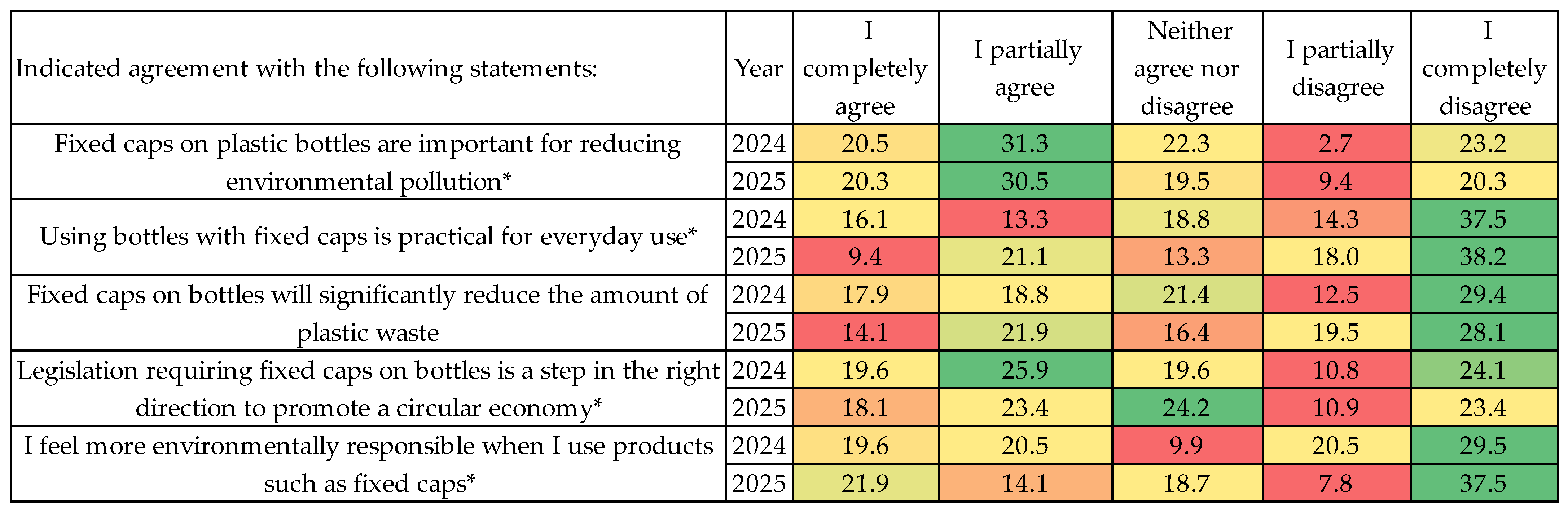
Perceptions of usability and environmental benefits reveal a clear ambivalence among consumers (
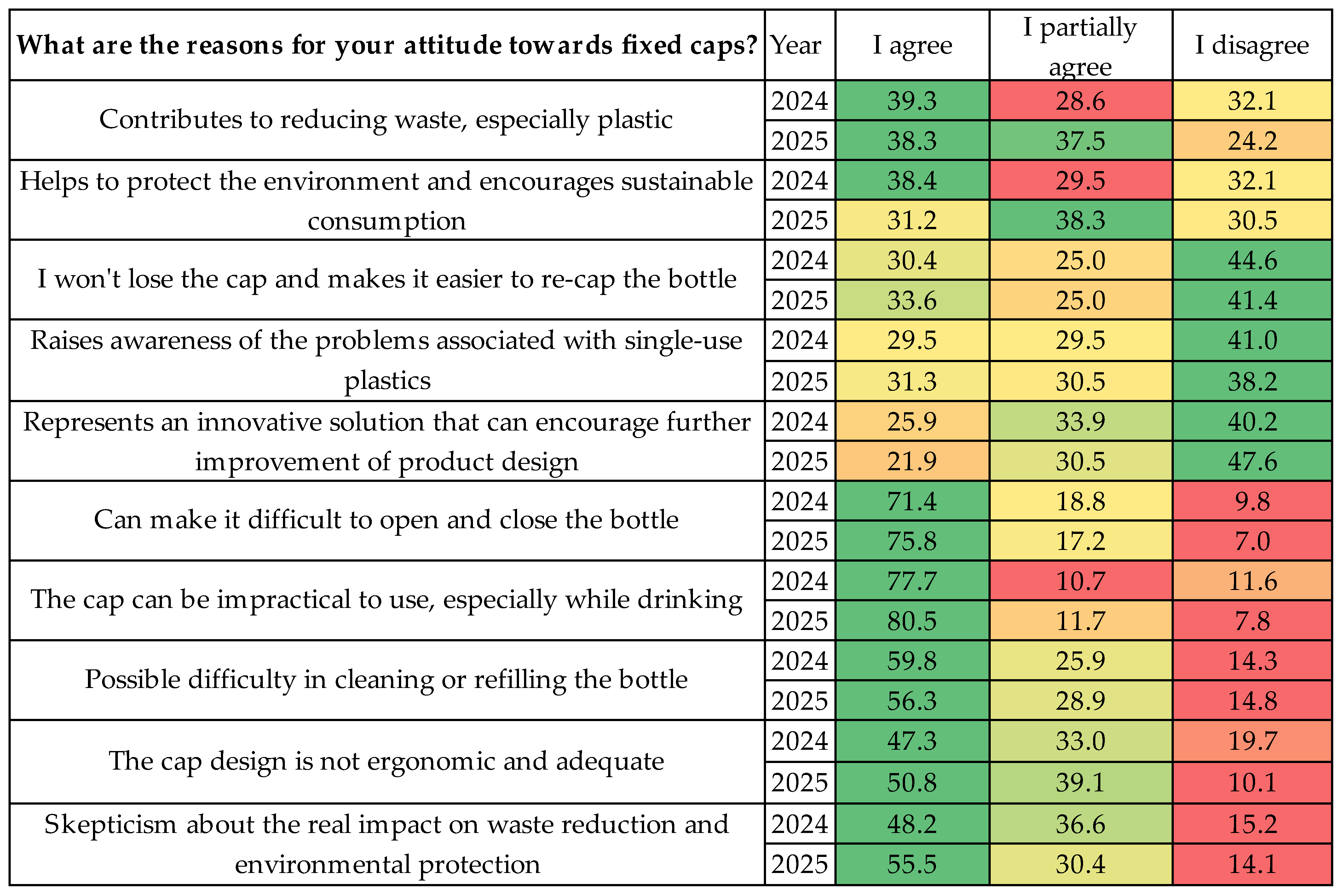
Figure 2). While a substantial proportion of respondents agreed that tethered caps contribute to reducing plastic waste and support environmental protection, fewer perceived them as practical for everyday use. Agreement with statements emphasizing the role of tethered caps in promoting a circular economy and reducing environmental pollution increased significantly in 2025 (
p < 0.05), suggesting a gradual internalization of the environmental rationale behind the legislation. However, this growing awareness did not translate into a comparable improvement in perceived convenience.
Changes in attitudes over time (
Figure 3) indicate a modest shift toward stronger opinions, with a reduction in neutral responses and clearer agreement or disagreement. Analysis of underlying reasons highlights that the most frequently cited advantages of tethered caps include prevention of cap loss, easier re-closing of bottles, increased awareness of single-use plastic issues, and perceived contributions to waste reduction and environmental protection. These positive aspects gained slight prominence in 2025, with several trends reaching statistical significance (p < 0.05). Conversely, negative perceptions remained strongly associated with ergonomic concerns and practicality. Respondents frequently reported that tethered caps are inconvenient during drinking, difficult to handle, or inadequately designed. Skepticism regarding the real environmental impact of tethered caps persisted, indicating that some consumers question whether the measure alone can substantially reduce plastic pollution. This tension between environmental intent and user experience underscores the importance of coupling regulatory measures with design optimization and clear communication of measurable environmental outcomes.
Importantly, skepticism regarding the actual environmental impact of tethered caps mirrors concerns raised in the literature about the effectiveness of single-design interventions in addressing complex waste management challenges [
38,
39]. While tethered caps demonstrably reduce cap loss, consumers may perceive the measure as symbolic unless accompanied by broader systemic changes, such as improved recycling infrastructure or reduced overall plastic use. This perception highlights the need for transparent communication of environmental outcomes supported by empirical data.
From an industry perspective, the results corroborate earlier calls for integrating consumer-centered design principles into sustainable packaging development [
40,
41,
42]. Innovations such as tethered caps should not be viewed solely as compliance solutions but as opportunities for iterative design improvements that enhance both environmental performance and user satisfaction. Eurobarometer data indicate that roughly two-thirds of EU citizens perceive environmental problems as affecting their daily lives and support waste reduction through recycling. However, Eurostat and EEA data show marked differences in recycling performance across Member States. These contextual factors may influence national responses to packaging regulations such as mandatory tethered caps and help interpret the observed perception patterns in the present study [
43].
Overall, the findings suggest that the effectiveness of tethered caps extends beyond their technical role in reducing plastic litter. Their long-term success depends on how well they are embedded into a broader narrative of sustainability that resonates with consumers’ daily practices, expectations, and values. Bridging the gap between environmental intent and user experience remains a critical challenge for the beverage sector. Taken together, the results suggest that tethered caps are primarily perceived as an environmentally motivated intervention rather than a user-centered packaging innovation. While environmental awareness and acceptance of the underlying policy objectives slightly increased after the legal obligation came into force, negative usability perceptions continue to dominate overall consumer attitudes. For policy makers, these research findings clearly underscore the necessity of enhanced communication, comprehensive stakeholder consultation, and rigorous ex ante impact assessments encompassing all beneficiaries before the implementation of new mandatory policy requirements. Finally, for the beverage industry, these findings highlight the need for further improvements in cap ergonomics and functionality, as well as targeted consumer education, to ensure that sustainability-driven packaging solutions achieve both environmental effectiveness and consumer acceptance.
The EU single-use plastic directive, which came into force in July 2024, primarily aimed at reducing loose caps, which were considered the main source of plastic waste found on beaches and in waterways. However, in a written question addressed to the European Commission in May 2025 [
44,
45] data from the Keep Sweden Tidy Foundation was cited, which reported that the number of plastic caps found per 100 m of beach had tripled from 46 in 2023 to 144 in 2024 [
46], but this is a source that is not scientifically confirmed.
Although a majority of Croatian respondents agreed that environmental protection is important, this did not uniformly translate into positive attitudes toward tethered caps. Among participants who expressed strong pro-environmental views, a substantial proportion still reported neutral or negative attitudes toward tethered cap bottles. In this group, frequently cited concerns included inconvenience during drinking, difficulty handling the cap, and perceived reduction in comfort (
p < 0.05). While previous research has highlighted the gap between environmental intentions and actual behavior [
28], our findings provide insight into the specific mechanisms underlying this discrepancy in the context of packaging innovations. Even among respondents who strongly supported environmental protection, negative perceptions of tethered caps were often linked to practical and usability concerns rather than disagreement with the environmental objective itself. This suggests that resistance to sustainable product designs may arise less from lack of environmental awareness and more from perceived interference with convenience and everyday habits. Addressing these functional concerns may therefore be essential for aligning pro-environmental attitudes with consumer acceptance. Widespread consumer dissatisfaction with the usability of various designs of lanyard stoppers, with complaints ranging from discomfort while drinking to difficulty opening and/or closing the stoppers, is stated as one potential reason for the increase in said pollution. And what is extremely worrying are estimates that suggest that changes in production could consume an additional thousand tons of plastic per year to create stronger and more durable binding mechanisms, which is a departure from the desired environmental benefits [
46].
5. Conclusions
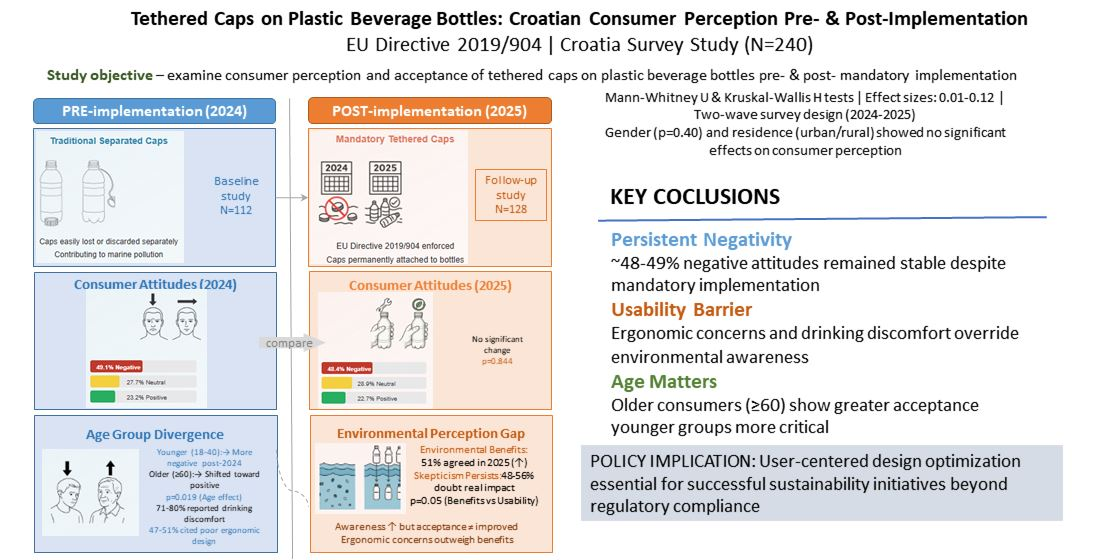
The findings indicate that within the regulatory context of the EU Single-Use Plastics Directive, consumer attitudes toward mandatory tethered caps remain predominantly negative, despite increased awareness of their intended environmental benefits. Although agreement with statements emphasizing environmental responsibility, waste reduction, and circular economy objectives increased following the implementation of the legal obligation, this cognitive acknowledgment did not translate into more favorable evaluations of everyday usability. Ergonomic constraints, discomfort during use, and skepticism regarding the actual contribution of tethered caps to reducing plastic pollution continue to represent significant barriers to broader acceptance.
Socio-demographic analysis suggests that age and employment status are associated with differences in acceptance, whereas gender and place of residence did not show statistically significant effects within this sample. Notably, older respondents demonstrated a shift toward more positive attitudes, indicating that perceived societal and environmental benefits may outweigh individual inconvenience in this group. These findings highlight the heterogeneous nature of consumer responses to sustainability-oriented packaging regulations and underscore the importance of considering demographic differences when assessing public acceptance of policy-driven design interventions.
At the same time, the results should be interpreted in light of several limitations. The sample size, while adequate for exploratory analysis, limits the generalizability of the findings to the broader population. Additionally, the lack of gender parity within the surveyed sample may have influenced the overall distribution of responses, even though no statistically significant gender-based differences were observed. Future research using larger, more demographically balanced samples and longitudinal approaches would help to confirm and extend the present findings.
The results of the study indicate that the implementation of environmental protection policies does not automatically result in widespread acceptance by the general public, especially when they simultaneously generate negative user experiences. Transparent communication of measurable environmental outcomes may help reduce skepticism and strengthen trust in such measures. Moreover, promoting sustainable packaging innovations requires not only fostering environmental awareness but also minimizing perceived inconvenience, as practical usability concerns may prevent even environmentally motivated consumers from supporting specific product changes. Bridging the gap between environmental intent and user experience through user-centered design and coordinated policy–industry efforts will be essential for the long-term success of tethered caps and similar sustainability-driven innovations in the beverage sector.