1. Introduction
Water kefir, also known as sugared kefir, is a traditional non-dairy fermented beverage characterized by a slightly effervescent nature, an acidic flavor, and low alcohol content. It is produced through the fermentation of a sucrose-based aqueous medium using kefir grains, water, and sugar [
1]. Water kefir grains—also referred to as “sugared kefir grains,” “Tibi” or “Tibico,” “Graines Vivantes,” and “Japanese water crystals”—are gelatinous aggregates composed of a polysaccharide matrix that harbors a complex and symbiotic consortium of lactic acid bacteria (LAB), acetic acid bacteria (AAB), yeasts, and, in some cases,
Bifidobacterium spp. [
2,
3].
The microbial composition of water kefir grains is highly dynamic and influenced by multiple factors, including geographical origin, duration of use, handling practices, propagation conditions, culture medium, and substrate composition [
4]. Sequence-based analyses performed by Marsh et al. demonstrated marked inter-sample variability among water kefir grains collected from different countries, highlighting the absence of a uniform microbial profile and underscoring the inherent heterogeneity of this fermentative ecosystem [
5].
Water kefir grains differ from milk kefir grains not only in their fermentation substrates and metabolic outputs, but also in their microbiological composition and physical structure. While water kefir grains typically exhibit a translucent or crystalline appearance with yellowish or grayish tones depending on the substrate used, milk kefir grains are opaque, whitish, and cauliflower-like in structure, largely independent of the type of milk employed [
6]. These structural and compositional differences reflect distinct fermentation environments and microbial interactions.
Although several hypotheses have been proposed regarding the origin of water kefir grains, their precise historical origin remains unclear. What is well established is that water kefir grains have traditionally been propagated and disseminated through household-to-household transfer, a practice that continues today due to the lack of large-scale commercial production systems [
5]. Consistent with this, reviews by Cufaoglu and Erdinc indicate that a standardized industrial process for water kefir grain production has not yet been developed, further contributing to variability in product composition and quality [
7].
Sucrose, commonly supplied as white or brown sugar, serves as the primary carbon source for water kefir fermentation. In addition, fruits—most notably figs and lemon—along with dried fruits or vegetables, are frequently incorporated to enhance sensory properties and to provide nitrogen, minerals, and micronutrients that support microbial growth and grain development [
5,
7,
8]. Upon completion of fermentation, the grains are typically separated from the liquid using a sterile sieve, washed, and reused in subsequent fermentation cycles, while the fermented beverage is stored at 4 °C prior to consumption [
7]. An alternative fermentation approach, known as back-slopping, involves the addition of a portion of the previously fermented liquid together with washed grains to a fresh substrate, promoting microbial continuity across batches [
7,
9].
Fermented foods and beverages have attracted increasing scientific and consumer interest due to their potential health-promoting properties. While the health benefits of milk kefir have been extensively investigated and supported by a growing body of experimental and clinical evidence, the functional effects of water kefir in humans remain insufficiently characterized. This limitation is largely attributable to the relatively small number of in vitro and in vivo studies in animal models, as well as the scarcity of controlled clinical trials. Nevertheless, water kefir represents an attractive alternative to dairy-based fermented products, as it is suitable for consumption by vegans, vegetarians, individuals with lactose intolerance, and those with milk protein allergies [
8,
9].
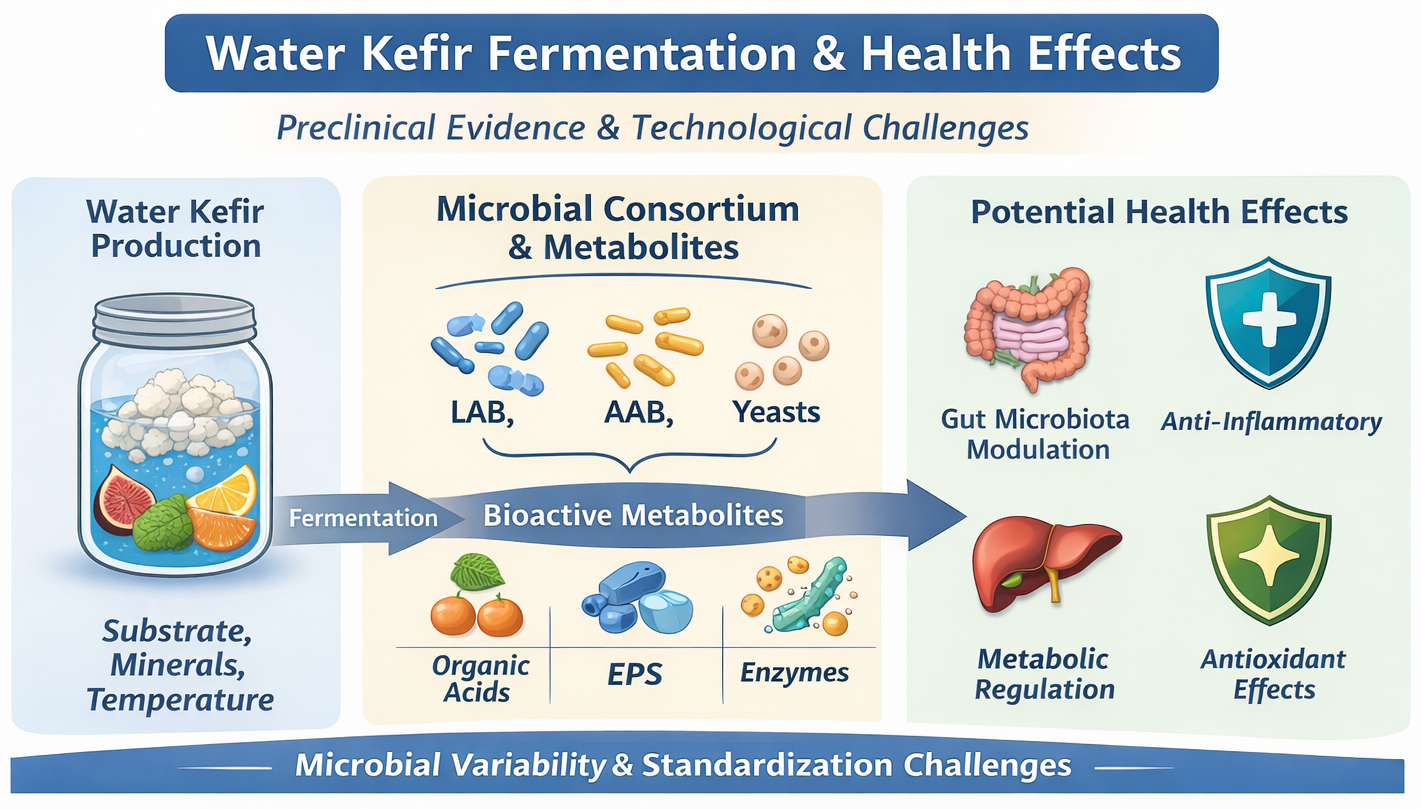
Experimental studies have suggested that water kefir may exert beneficial biological effects, which are commonly attributed to its diverse microbial community and the bioactive metabolites (postbiotics) produced during fermentation [
7]. In this context, the present review aims to critically analyze the available scientific evidence regarding the potential health benefits of water kefir, with particular emphasis on microbial composition, fermentation parameters, functional properties, and current limitations in translational and clinical research.
2. Starter Cultures and Fermentation Parameters of Water Kefir
2.1. Microbial Composition of Water Kefir Grains
Water kefir grains consist of a complex and dynamic microbial consortium embedded in a polysaccharide matrix, in which LAB, AAB, and yeasts coexist in a largely symbiotic relationship [
10,
11,
12]. Early culture-independent studies, together with more recent metagenomic and pan–multi-omics analyses, consistently identify LAB as the dominant bacterial group, primarily belonging to the
Lactobacillus sensu lato complex, including
Liquorilactobacillus, Lacticaseibacillus, Levilactobacillus, and
Lentilactobacillus species [
11,
12,
13,
14].
These bacteria are commonly accompanied by AAB such as
Acetobacter and
Gluconobacter, as well as a diverse yeast community including
Saccharomyces, Dekkera/Brettanomyces, Candida, Hanseniaspora, Pichia, and
Zygosaccharomyces [
1,
2,
5,
13,
15]. In addition, several studies have reported the recurrent presence of LAB genera such as
Leuconostoc and occasionally
Bifidobacterium, contributing to the overall microbial diversity and functional potential of the grains [
12,
16,
17,
18].
Comparative analyses indicate that, despite pronounced taxonomic variability among water kefir grains originating from different geographical regions, a relatively conserved functional potential is generally maintained, supporting the concept of a functional core microbiome capable of sustaining fermentation across diverse environmental and cultural contexts [
2,
13,
15]. This variability in microbial composition is closely linked to differences in geographical origin, water chemistry, substrate composition, and fermentation conditions [
5,
11,
19].
Pan–multi-omics approaches further emphasize the critical, and often underappreciated, role of yeasts in carbohydrate metabolism, ethanol production, redox balance, and metabolic cross-feeding interactions with bacterial populations, thereby contributing to ecosystem stability and resilience [
13,
19]. Overall, the microbial diversity within water kefir grains plays a key role in shaping fermentation complexity and directly influences the physicochemical, sensory, and functional properties of the final beverage [
2,
10].
In addition to traditional undefined microbial consortia (grains), several studies have explored the use of defined starter cultures derived from water kefir microbiota to improve reproducibility, safety, and technological control [
11,
16]. However, available evidence, largely derived from experimental studies, suggests that simplified microbial assemblages may not fully reproduce the metabolic complexity, functional redundancy, and ecological resilience characteristic of natural grains, underscoring the importance of microbial interactions in shaping water kefir fermentation [
2,
13,
19].
2.2. Fermentation Substrates and Conditions
Water kefir fermentation typically relies on sucrose as the primary carbon source, which is hydrolyzed and metabolized through coordinated bacterial and yeast activity [
10,
11,
12]. Variations in sugar type and concentration directly affect microbial growth kinetics, metabolite production, and grain biomass development [
10,
15]. Experimental studies demonstrate that alternative substrates, including fruit juices, honey, plant-derived extracts, and fruit by-products, can support kefir grain adaptation, although they frequently induce shifts in microbial composition and metabolic output [
17,
18,
20,
21,
22].
Mineral availability represents another critical determinant of fermentation performance. The presence of calcium, magnesium, and trace elements—either naturally occurring in water or supplied through fruits and plant materials—supports grain structural integrity, exopolysaccharide (EPS) synthesis, and microbial stability [
1,
10,
17,
23]. Comparative evaluations of different water sources further indicate that water chemistry modulates fermentation dynamics, microbial succession, and metabolite profiles, contributing to product variability [
1,
5].
Additional fermentation parameters, including temperature, fermentation time, inoculation ratio, and grain-to-substrate proportion, play a central role in shaping fermentation outcomes. Most studies report optimal fermentation under moderate temperature ranges, whereas prolonged fermentation periods are generally associated with increased accumulation of organic acids, ethanol, and EPS [
1,
10,
22]. Fermentation can be conducted under static conditions or mild agitation, which may influence microbial distribution, mass transfer, and the synthesis of metabolites such as α-glucan-type EPS (often referred to as kefiran-like polymers) and organic acids [
1].
Traditional back-slopping practices facilitate microbial continuity across successive batches but may also amplify batch-to-batch variability when environmental conditions and substrates are not tightly controlled, posing challenges for standardization and industrial scalability [
10,
11,
12].
2.3. Impact of Fermentation Parameters on Microbial and Metabolic Profiles
Variations in starter cultures and fermentation parameters exert a direct influence on both microbial structure and metabolic composition of water kefir. Multi-omics and metabolomic investigations consistently demonstrate that changes in substrate composition, mineral availability, and fermentation conditions alter metabolic fluxes, resulting in differential production of organic acids, ethanol, EPS, and other bioactive metabolites commonly described as postbiotics [
2,
13,
19].
Parameters such as inoculum size, substrate concentration, fermentation time, and agitation strongly influence microbial dominance patterns and metabolite production, including lactic acid, acetic acid, and ethanol [
1,
10,
22]. Increasing inoculation levels may accelerate nutrient depletion, thereby limiting microbial growth and reducing kefiran synthesis [
1].
Fermentation duration plays a critical role in shaping volatile compound profiles; excessive fermentation may lead to over-acidification, loss of aroma complexity, and reduced sensory quality [
1,
10]. Moreover, variations in microbial composition and fermentation dynamics have been associated with differences in the structure and functional properties of kefiran and other polysaccharides, which may influence downstream biological activity, including prebiotic and immunomodulatory effects [
17,
23].
Collectively, these findings highlight that water kefir should not be regarded as a standardized product, but rather as a complex fermentation ecosystem whose functional attributes are intrinsically linked to microbial composition and processing conditions. This inherent variability must be carefully considered when comparing experimental studies and extrapolating results toward health-related or industrial applications [
2,
10,
11,
12].
3. Materials and Methods
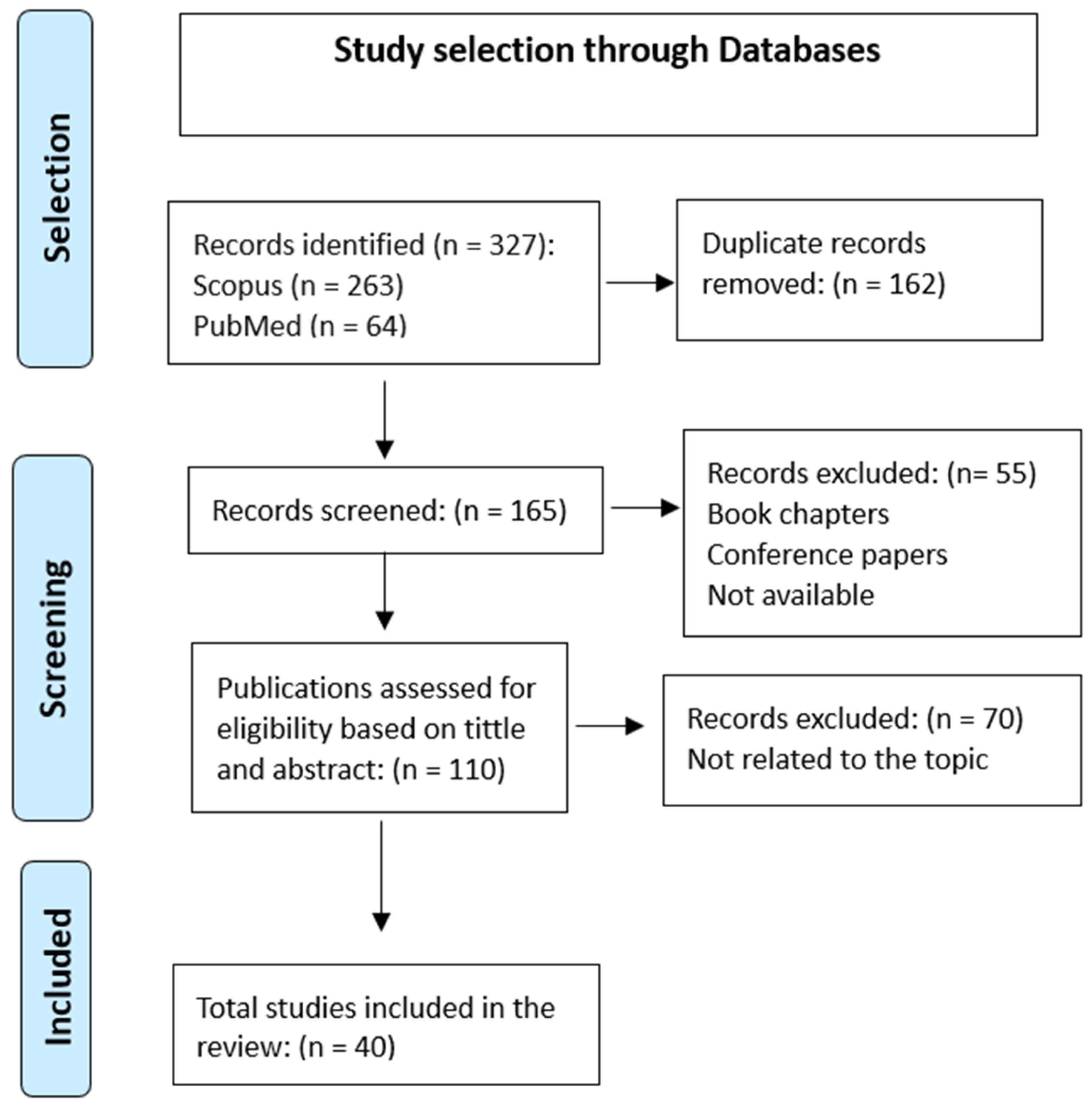
A literature search was conducted to investigate the health benefits of water kefir. For this purpose, the PubMed and Scopus databases were used. The search (
Table 1) employed the following search algorithms:
(“Water Kefir” AND “Health”), (“Water Kefir” AND “Cancer”), (“Water Kefir” AND “Effects”), (“Water Kefir” AND “Diabetes”), (“Water Kefir” AND “Gut Microbiota”), (“Water Kefir” AND “Benefits”), (“Water Kefir” AND “Liver”).
In addition, temporal filters (2014–2026) and language filters (English and Spanish) were applied, yielding 327 publications (
Figure 1). Duplicates were then removed, resulting in 165 articles, to which the following inclusion and exclusion criteria were applied (
Figure 1), leaving 110 articles:
Inclusion criteria:
Exclusion criteria:
Finally, after screening titles and abstracts, 40 articles were included in the literature review.
4. Results and Discussion
In recent years, water kefir has attracted growing scientific interest as a non-dairy fermented beverage suitable for a wide range of consumers, including individuals with dietary restrictions, food allergies, or intolerances. This increasing interest, together with its complex microbial ecosystem and the diversity of bioactive metabolites generated during fermentation, has prompted experimental research exploring its potential functional properties. This section critically discusses the main findings reported in the literature, organized according to antioxidant, anti-inflammatory, antibacterial, and detoxifying effects, as well as modulation of gut microbiota, therapeutic potential in chronic diseases, and probiotic-related characteristics.
4.1. Antioxidant and Anti-Inflammatory Properties
In vitro studies (
Table 2) have reported antioxidant and anti-inflammatory activities associated with water kefir and its derived components. For instance, pasteurized water kefir products were shown to enhance intestinal barrier integrity and modulate cytokine production, including increased expression of IL-10 and IL-1β, in human colonic fermentation models [
24]. In addition, EPS isolated from Thai water kefir microbiota strains exhibited marked antioxidant activity, with
Lacticaseibacillus casei WS13 demonstrating particularly high antioxidant capacity and antityrosinase activity largely attributed to
Acetobacter pasteurianus WS3 [
15].
At the molecular level, several studies have focused on the nuclear factor erythroid 2-related factor 2 (Nrf2), a transcription factor activated under conditions of oxidative stress and involved in the regulation of antioxidant and detoxification-related gene expression [
25]. In this context, extracellular enzymes produced by water kefir microorganisms were reported to exhibit high binding affinity for Nrf2. Enzymes such as DNase I, α-amylase, and lecithinase C showed strong and stable interactions, while β-amylase, cellulase, and neutral protease also demonstrated notable affinity. These interactions, mediated through hydrogen bonds, salt bridges, and non-covalent contacts, may facilitate Nrf2 activation and enhance cellular defense mechanisms. Given the central role of Nrf2 in redox balance and immune regulation, these findings suggest that microbial enzymes and metabolites (postbiotics) derived from water kefir could contribute to antioxidant responses and modulation of inflammatory pathways under experimental conditions [
25].
Consistent with in vitro observations, in vivo studies using animal models (
Table 3) have also reported antioxidant and anti-inflammatory effects associated with water kefir administration. In murine models of DSS-induced colitis, treatment with high doses of viable water kefir-derived microbiota (1 × 10
9 CFU) resulted in significant reductions in disease activity index, tissue inflammation, and the expression of pro-inflammatory cytokines, including IL-1β, IL-6, and TNF-α, as well as inflammatory mediators such as COX-2 and iNOS. These effects were accompanied by increased IL-10 levels and inhibition of the TLR4–MyD88–NF-κB signaling pathway, along with improvements in colon length, disease activity scores, and intestinal mucosal integrity, indicating a dose-dependent preventive effect [
26].
Similar anti-inflammatory outcomes have been reported in other experimental models. In female Wistar–Albino rats with induced irritable bowel syndrome, water kefir administration was associated with reduced systemic inflammation, as evidenced by lower TNF-α levels and decreased NF-κB expression [
27]. Likewise, in poly(I:C)-induced inflammation models, water kefir consumption led to reductions in pro-inflammatory cytokines such as TNF-α, IL-6, and IL-15, while promoting the production of regulatory cytokines and type I interferons [
28]. Comparable findings were observed in a pulmonary inflammation model followed by respiratory syncytial virus (RSV) infection, in which both water kefir and kefiran reduced leukocyte infiltration, neutrophil counts, and inflammatory cytokine levels [
29].
In addition to intestinal and respiratory models, water kefir has demonstrated antioxidant and anti-inflammatory effects in other experimental settings. In CCl
4-induced liver injury models, administration of water kefir at different doses resulted in reduced TNF-α expression, lower ALT and AST levels, and improved liver histopathology [
30]. Similarly, in an ethanol-induced gastric ulcer model, water kefir treatment protected the gastric mucosa and enhanced endogenous antioxidant defenses by increasing superoxide dismutase and catalase activities [
31].
Inflammation represents a physiological response to tissue injury or exogenous stimuli aimed at restoring homeostasis; however, when dysregulated or persistent, it may progress to a chronic state and contribute to the development of conditions such as cardiovascular disease, cancer, diabetes, and respiratory disorders. Oxidative stress and inflammation are closely interconnected, often reinforcing one another and promoting disease progression [
22]. In this context, dietary strategies that support redox balance and immune modulation are of particular interest. Experimental evidence suggests that water kefir, through its microbial constituents and fermentation-derived metabolites, may influence inflammatory and oxidative pathways under controlled conditions. These effects may result from a combined action of viable microorganisms and fermentation-derived postbiotics, rather than from a single bioactive component. Such multimodal effects are particularly relevant in chronic inflammatory settings, where oxidative stress and immune dysregulation perpetuate a self-amplifying pathological cycle.
Despite the generally consistent trends reported across experimental studies, substantial differences in microbial composition, fermentation conditions, dosage, and experimental design limit direct comparison of outcomes and complicate the extrapolation of results. Variability in starter cultures, metabolite profiles, and animal models represents a significant source of heterogeneity, underscoring the need for standardized protocols and well-controlled studies to more clearly define the antioxidant and anti-inflammatory potential of water kefir.
4.2. Antibacterial and Detoxifying Properties
Water kefir has been associated with antibacterial and detoxifying activities primarily based on experimental evidence derived from in vitro studies (
Table 4). Several investigations have demonstrated inhibitory effects against a range of enteric pathogens and toxin-producing microorganisms. In one comprehensive analysis, 158 microbial strains were identified in water kefir, of which at least 24 exhibited inhibitory activity against pathogenic bacteria including
Vibrio parahaemolyticus,
Bacillus cereus,
Salmonella enterica,
Clostridioides difficile,
Escherichia coli O157:H7,
Klebsiella pneumoniae, and
Staphylococcus aureus [
16]. These antimicrobial effects were largely attributed to the production of organic acids, hydrogen peroxide, and bacteriocin-like compounds. Similarly, strains of
Lactiplantibacillus plantarum and
Lentilactobacillus harbinensis isolated from water kefir demonstrated inhibitory activity against
Listeria monocytogenes and
Salmonella spp., supporting the antimicrobial potential of kefir-derived microorganisms under controlled conditions [
32]. The identification of multiple inhibitory mechanisms acting in parallel suggests that the antimicrobial activity of water kefir is multifactorial, which may reduce the likelihood of resistance development compared to single-compound antimicrobial strategies.
In addition to whole microbial consortia, specific kefir-derived components have been evaluated for antimicrobial and detoxifying properties. A dextran-type EPS, a fermentation-derived postbiotic, isolated from water kefir grains, exhibited in vitro antimicrobial activity against
Escherichia coli (MIC = 2500 µg/mL) and
Staphylococcus aureus (MIC = 5000 µg/mL), although its efficacy was lower than that reported for EPS derived from other kefir sources [
25]. Notably, EPS showed strong adhesion in ex vivo mucoadhesivity assays, suggesting its potential to form a protective barrier on the intestinal mucosa. Together with its reported biocompatibility, these properties indicate a possible detoxifying role in oral or gastrointestinal applications [
17]. The ability of EPS to adhere to mucosal surfaces supports a physical detoxification mechanism, whereby pathogenic microorganisms or toxins may be sequestered or prevented from interacting directly with the intestinal epithelium.
Water kefir has also been investigated for its capacity to reduce exposure to mycotoxins, particularly aflatoxin B1 (AFB1). Ouyang et al. [
33] demonstrated that water kefir grains were capable of removing up to 60% of AFB1 within 20 min through a stable adsorption mechanism. This effect was maintained across different food matrices, including milk and tea, and was supported by mutagenicity (Ames) assays showing a significant reduction in the genotoxic potential of AFB1 following kefir treatment. The rapid and matrix-independent adsorption of AFB1 highlights the robustness of this detoxification mechanism and suggests potential applicability in diverse food systems.
Despite these promising findings, the antibacterial and detoxifying effects of water kefir have been demonstrated almost exclusively under in vitro or controlled experimental conditions. Differences in microbial composition, metabolite profiles, toxin concentrations, and experimental protocols limit direct comparison across studies and preclude extrapolation to human health outcomes. Further in vivo studies and well-designed clinical investigations are required to clarify the relevance of these properties in real dietary contexts.
4.3. Effects on Gut Microbiota and Systemic Health
Experimental evidence suggests that water kefir may modulate gut microbiota composition and activity, as demonstrated in both in vitro (
Table 5) and in vivo studies (
Table 6). In an in vitro human colonic fermentation model, Calatayud et al. [
24] reported that water kefir, particularly in its pasteurized form, promoted the growth of members of the family
Bifidobacteriaceae while reducing the abundance of potentially unfavorable genera such as
Lachnoclostridium and
Eggerthella. These compositional changes were accompanied by increased production of short-chain fatty acids (SCFAs), including acetate, propionate, and butyrate, which are key metabolites involved in intestinal homeostasis. Functionally, the increased availability of SCFAs is particularly relevant, as these metabolites play central roles in epithelial barrier maintenance, immune regulation, and host energy metabolism, thereby linking microbiota compositional shifts with potential physiological benefits. Similarly, Tan et al. demonstrated that polysaccharides produced by
Liquorilactobacillus satsumensis selectively stimulated the growth of bifidobacteria and lactobacilli while enhancing SCFA production, suggesting a functional prebiotic effect [
23].
Complementary evidence has been obtained from studies evaluating isolated kefir-derived components. A dextran-type EPS isolated from water kefir grains was shown to be non-toxic to human intestinal epithelial cells (Caco-2 model) and exhibited mucoadhesive properties in vitro. Although direct modulation of gut microbiota was not assessed, these characteristics suggest that EPS may persist within the intestinal environment and potentially contribute to microbiota modulation through indirect prebiotic-like or postbiotic-associated mechanisms [
17]. The demonstrated mucoadhesive capacity further suggests prolonged intestinal residence time, which could facilitate sustained interactions with resident microbiota and host epithelial surfaces.
In vivo studies further support the modulatory effects of water kefir on gut microbiota composition. In animal models of ulcerative colitis and type 2 diabetes, increased microbial diversity and favorable shifts in taxonomic profiles were reported. Ye et al. observed increases in the phyla Firmicutes, Bacteroidetes, and Actinobacteria, accompanied by reductions in Proteobacteria and pathogenic genera such as
Escherichia spp. and
Shigella spp. [
26]. The reduction in Proteobacteria and enteropathogenic taxa is particularly relevant, as their overrepresentation is frequently associated with dysbiosis and inflammatory states. Likewise, Talib et al. demonstrated that administration of
Lacticaseibacillus paracasei isolated from water kefir restored microbial balance, increasing families such as
Muribaculaceae,
Lactobacillaceae, and
Bacteroidaceae, while reducing
Ruminococcaceae and members of the genus
Proteus. [
34].
Despite these generally consistent trends, substantial variability in experimental models, kefir formulations, microbial compositions, and analytical methodologies limits direct comparison across studies. Differences in dosage, duration of intervention, and host conditions further complicate the interpretation of microbiota-related outcomes, highlighting the need for standardized approaches to better define the impact of water kefir on gut and systemic health.
4.4. Probiotic Potential
Metagenomic and multi-omics studies have extensively characterized the microbial diversity of water kefir, confirming the presence of LAB, AAB, and yeasts that interact dynamically during fermentation [
35]. These analyses have provided evidence of functional stability within the fermentative ecosystem and have also suggested a favorable safety profile for many isolated strains, which generally lack virulence factors or clinically relevant antibiotic resistance genes [
16]. Such characteristics support the potential suitability of selected water kefir-derived microorganisms for probiotic applications. Importantly, several of these studies have emphasized not only the compositional complexity of the fermentative ecosystem but also the genetic and functional stability of the microbial consortia across fermentation cycles, reinforcing the reproducibility and robustness of water kefir as a probiotic matrix. Moreover, the consistent absence of virulence-associated genes across multiple isolates strengthens the rationale for their safe use in food and nutraceutical applications.
Numerous in vitro studies (
Table 7) have identified LAB and yeasts isolated from water kefir with promising probiotic-related traits, including
Lacticaseibacillus paracasei, Liquorilactobacillus hilgardii, Lactobacillus kefiri, Lactiplantibacillus plantarum, and
Lactobacillus helveticus [
16,
32,
36]. These strains demonstrated tolerance to simulated gastrointestinal conditions, such as low pH, bile salts, and digestive enzymes, suggesting their potential to survive intestinal transit under experimental conditions. Earlier studies further reported additional functionally relevant species, including
Lactobacillus mali and other LAB and yeast strains, highlighting the broad taxonomic diversity of water kefir. The ability of these microorganisms to withstand exposure to pepsin and pancreatin under low-pH conditions supports their prospective viability during gastrointestinal passage and their functional persistence within the human gut environment.
Comparative analyses have further indicated that water kefir may exhibit higher bacterial diversity than milk kefir, whereas milk kefir tends to display greater yeast and fungal diversity [
9]. Dominant species identified in water kefir include
Lactobacillus nagelii and
Dekkera bruxellensis. Literature reviewed by Papadopoulou et al. suggests that
L. nagelii may be involved in lipid metabolism, glucose regulation, and inflammatory modulation, while
D. bruxellensis has been associated with antioxidant and anti-inflammatory activities, as well as potential cosmetic applications [
22]. However, these effects are largely inferred from experimental or associative studies. In controlled experimental settings, diversity metrics such as Shannon and Simpson indices have consistently supported these observations, indicating a distinct microbial profile for water kefir compared to milk kefir. Furthermore, the strain-specific functional properties attributed to
L. nagelii and
D. bruxellensis suggest that these dominant microorganisms may contribute disproportionately to the metabolic and immunomodulatory effects reported for water kefir.
Recent metagenomic analyses have also identified microbial species and metagenome-assembled genomes (MAGs) unique to water kefir, including taxa related to
Acidisphaera rubrifaciens,
Acetobacter aceti, and
Rouxiella chamberiensis [
37]. These microorganisms may represent novel sources of bioactive compounds or unexplored probiotic functionalities. The identification of such uncommon or previously underreported taxa points to water kefir as a reservoir of novel microbial diversity, with potential for the discovery of new bioactive metabolites, bacteriocins, or functional traits that remain largely unexplored in conventional fermented foods.
In addition to live microorganisms, kefir-derived metabolites have been shown to exert beneficial effects on intestinal barrier function. These effects are consistent with postbiotic mechanisms, defined as bioactive compounds produced during fermentation that confer health benefits independently of live microorganisms. Exposure of intestinal cell models to pasteurized water kefir metabolites increased transepithelial electrical resistance (TEER), enhanced tight junction protein expression, and stimulated IL-10 production [
24]. Similarly, EPS derived from strains such as
Liquorilactobacillus satsumensis selectively promoted the growth of beneficial bacteria, supporting their classification as prebiotic compounds [
23]. These findings underscore the relevance of non-viable fermentation-derived components in mediating health effects, suggesting that both microbial cells and their metabolites contribute synergistically to the functional properties of water kefir.
Metagenomic analyses have further positioned water kefir among fermented foods with a high abundance of health-associated gene clusters (PHAGCs), particularly genes related to intestinal colonization, immune modulation, and stress tolerance [
37]. Notably, the predominance of colonization-related gene clusters suggests an enhanced capacity for microbial adherence to the intestinal mucosa, potentially facilitating prolonged persistence and increased functional efficacy of probiotic strains under gastrointestinal conditions. Genes associated with immune modulation and stress resistance further support the ability of these microorganisms to survive hostile environments such as gastric acidity and bile exposure.
Although these findings collectively support the probiotic potential of selected water kefir-derived strains, most of the evidence is based on in vitro assays and animal models. Controlled human clinical trials are still required to validate efficacy, establish appropriate dosages, and confirm long-term safety before probiotic claims or large-scale commercial applications can be substantiated. Nevertheless, the convergence of taxonomic, functional, genetic, and mechanistic evidence across independent studies consistently highlights water kefir as a promising biotechnological resource for the development of functional foods and complementary health strategies.
4.5. Therapeutic Potential in Chronic Diseases
The therapeutic potential of water kefir in chronic metabolic and inflammatory diseases has been primarily supported by experimental studies (
Table 8 and
Table 9). In vitro investigations have identified kefir-derived strains with metabolic regulatory properties. For example, Koh et al. isolated
Lactiplantibacillus mali capable of inhibiting α-glucosidase activity, suggesting a possible role in modulating postprandial glucose metabolism [
36]. Additional studies have attributed multiple bioactivities to
L. mali, including modulation of immune responses, enhancement of antioxidant capacity, activation of SIRT-1 and Nrf2 pathways, suppression of hepatic oxidative stress, and regulation of inflammatory cytokines [
22]. Beyond glucose regulation, earlier studies have reported that L. mali-derived bioactive components may promote Th1 cytokine production, stimulate regulatory T-cell (Treg)-associated cytokines, and exert broader immunomodulatory effects, highlighting the pleiotropic functional profile of this strain in metabolic and inflammatory contexts.
Nrf2 has been widely studied as a therapeutic target in chronic diseases such as diabetes, cancer, neurodegenerative disorders, and cardiovascular disease, due to its central role in redox balance and inflammation control. Certain extracellular enzymes produced by water kefir microorganisms have demonstrated high binding affinity for the Nrf2 active site, suggesting a potential modulatory effect on this pathway under experimental conditions [
25]. These findings indicate that water kefir-derived components may contribute, at least mechanistically, to strategies aimed at mitigating oxidative stress-related pathologies. Given the established role of Nrf2 dysregulation in the progression of metabolic and inflammatory diseases, these observations support the hypothesis that water kefir could function as a complementary dietary approach targeting redox-sensitive signaling pathways.
In vivo studies using animal models provide additional support for these observations. In streptozotocin-induced type 2 diabetic mice, administration of
Lacticaseibacillus paracasei isolated from water kefir normalized lipid profiles, reduced blood glucose levels, and improved insulin sensitivity, while also attenuating hepatic oxidative stress and modulating genes involved in lipid and carbohydrate metabolism [
34,
38]. Similarly, prolonged dietary interventions incorporating water kefir were associated with improved lipid profiles and reduced hepatic cholesterol accumulation, suggesting a preventive effect against dyslipidemia [
39]. In models of CCl
4-induced liver injury, water kefir administration partially reversed hepatic necrosis in a dose-dependent manner [
30]. The dose-dependent attenuation of hepatic damage observed in these models further supports a causal relationship between water kefir intake and hepatoprotective effects, although the underlying mechanisms appear to involve the combined action of antioxidant, anti-inflammatory, and metabolic regulatory processes.
Oxidative stress and inflammation are closely interconnected processes that play a central role in the progression of liver and metabolic diseases [
40]. Experimental evidence suggests that water kefir may influence these pathways through its antioxidant, anti-inflammatory, and microbiota-modulating properties. Given the synergistic interaction between oxidative stress and inflammatory signaling in hepatic injury, the multifactorial mode of action attributed to water kefir may be particularly relevant in complex chronic disease settings.
Nevertheless, the therapeutic potential of water kefir remains supported almost exclusively by preclinical evidence. The limited number of animal studies, variability in experimental designs, and absence of controlled human trials currently restrict definitive conclusions regarding its efficacy as a therapeutic or preventive agent in chronic diseases. Further translational and clinical research is therefore essential.
5. Conclusions and Future Perspectives
This literature review critically examined the current scientific evidence regarding the potential health-related properties of water kefir and its derived components. Experimental findings from in vitro assays and in vivo animal models suggest that water kefir may exert antioxidant, anti-inflammatory, antibacterial, detoxifying, and microbiota-modulating effects. Preclinical evidence also supports a potential role in experimental models of chronic conditions such as colitis, type 2 diabetes, and liver injury. Additionally, water kefir grains harbor a complex consortium of LAB, yeasts, and AAB exhibiting probiotic-related traits, including tolerance to gastrointestinal stress, immunomodulatory activity, and contributions to intestinal barrier integrity. These characteristics position water kefir as a promising matrix for the development of functional and bioactive fermented beverages.
However, translating these findings into reproducible and scalable fermented products requires addressing important technological and biological challenges associated with the production and use of water kefir grains. The microbial composition and metabolic output of water kefir are highly dependent on grain origin, fermentation substrates, mineral availability, environmental conditions, and successive back-slopping cycles. While this microbial diversity underpins the complexity and potential bioactivity of the beverage, it also generates significant variability in fermentation performance, sensory attributes, and functional properties. Such variability complicates standardization, comparability across studies, and industrial reproducibility.
Approaches to improving consistency include the optimization and standardization of fermentation parameters (e.g., sugar type and concentration, temperature, inoculum ratio, and fermentation time), as well as the characterization of minimal or defined microbial consortia capable of maintaining structural integrity of the grains and functional bioactivity. Advances in microbial ecology, omics-based profiling, and metabolomic analysis may facilitate a better understanding of grain stability, microbial interactions, and metabolite production dynamics. Furthermore, increasing attention should be directed toward fermentation-derived postbiotics—such as organic acids, EPS, and microbial enzymes—which may contribute substantially to bioactivity independently of viable cells and may offer advantages in terms of stability and regulatory acceptance.
Despite encouraging preclinical results, well-designed human clinical trials remain limited. Future research should prioritize randomized controlled studies using standardized water kefir formulations, clearly defined endpoints, realistic consumption patterns, and long-term safety assessments. Establishing dose–response relationships and validating mechanisms of action will be essential to substantiate health-related claims.
Finally, challenges related to industrial scalability, quality control, and regulatory frameworks must be addressed to support the transition from artisanal fermentation to evidence-based functional beverage production. The absence of harmonized production protocols and regulatory clarity regarding probiotic or health claims currently limits commercial development. Interdisciplinary efforts integrating microbiology, food technology, systems biology, and clinical research will be critical to overcoming these barriers. Strengthening these scientific and technological foundations will ultimately enable the rational development, safe use, and broader application of water kefir grains in functional food innovation and personalized nutrition strategies.