Review

Functional Aloe vera Drink Supplementation: Effect on Athlete Health

1
Department of Biological, Chemical and Pharmaceutical Sciences and Technologies, University of Palermo, 90133 Palermo, Italy
2
Department of Human Sciences and Promotion of the Quality of Life, San Raffaele University, 00166 Rome, Italy
3
Institute for Biomedical Research and Innovation, National Research Council (CNR), Via U. La Malfa 153, 90146 Palermo, Italy
4
Sport and Exercise Sciences Research Unit, Department of Psychological, Pedagogical and Human Movement Sciences, University of Palermo, 90100 Palermo, Italy
*
Author to whom correspondence should be addressed.
Beverages 2026, 12(2), 23; https://doi.org/10.3390/beverages12020023
Submission received: 13 December 2025 / Revised: 16 January 2026 / Accepted: 25 January 2026 / Published: 6 February 2026
(This article belongs to the Section Quality, Nutrition, and Chemistry of Beverages)

Highlights

  • The botanical characteristics, chemical composition, preparation procedures, and functions of Aloe vera in sports performance were reviewed using the current literature.
  • Aloe vera may boost athletic performance and recovery by providing nutrients and bioactives that reduce muscle fatigue and enhance tissue oxygenation.
  • Acemannan from Aloe vera assists in relieving exercise-induced gastrointestinal distress by supporting stable glycemic responses and promoting connective tissue integrity and cellular repair.

Abstract
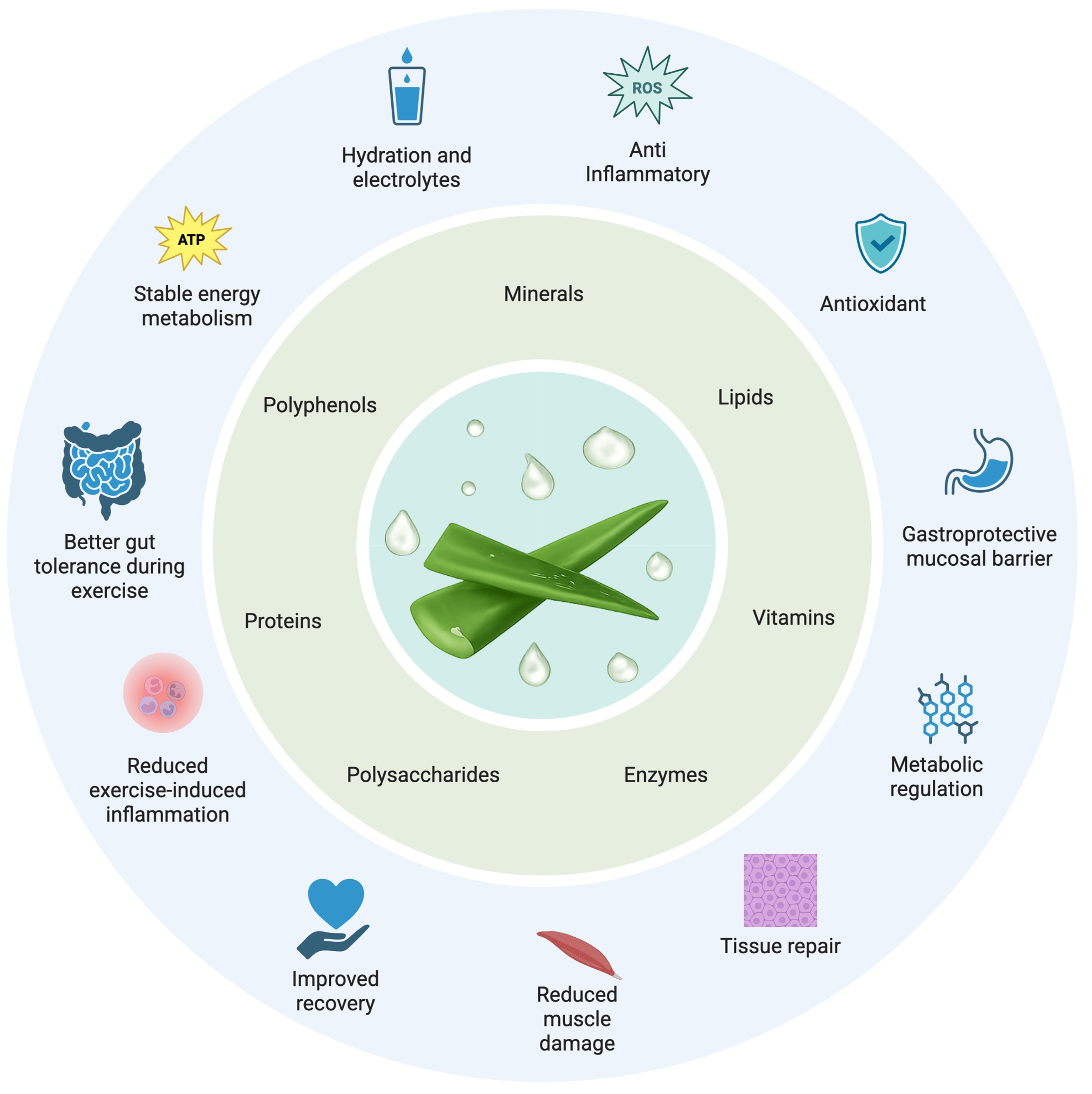
Aloe vera (Aloe barbadensis Miller) represents a rich natural source of water, minerals, polysaccharides, vitamins, phenolic compounds and bioactive molecules that exert multiple health-promoting effects relevant to athletic performance. Its high content of water and minerals (magnesium, calcium, potassium) supports hydration and electrolyte balance during physical activity. At the same time, polysaccharides, especially acemannan, contribute to tissue regeneration, muscle recovery, immune modulation and gastrointestinal protection. Antioxidant compounds reduce exercise-induced oxidative stress, potentially improving recovery and limiting inflammatory damage. Aloe vera-based beverages, including leaf juices and fermented formulations, offer a practical and palatable vehicle for delivering these bioactives. In addition to supporting gut integrity and reducing symptoms such as reflux and heartburn, Aloe vera supplementation may enhance nutrient absorption and modulate glucose metabolism, contributing to better metabolic stability during exercise. The increasing commercial interest in natural functional beverages highlights the relevance of Aloe vera as a nutraceutical candidate for athletes. This review explores the multiple benefits of Aloe leaf derivatives, bridging traditional medicine and evidence-based applications for metabolic health (gastrointestinal comfort, hydration, antioxidant defence and post-exercise recovery). However, further clinical studies are needed to fully define dosage, efficacy and mechanisms of action.

Graphical Abstract

1. Introduction

Many athletes have high levels of major inflammatory markers such as C-reactive protein (CRP), interleukin 6 (IL-6), and tumor necrosis factor-α (TNF-α) [1]. Moreover, a good percentage, even 70%, of athletes suffer from gastrointestinal symptoms. Often, there are different reasons behind them, such as neuropsychological factors, including anxiety, stress, or mechanical movement (impact on the ground, torso flexion), as well as reduced blood supply and consequently poor tissue oxygenation. Events such as nausea, vomiting, urge to defecate, and heartburn are therefore frequent [2]. Among all of them, reflux is a prevalent condition in runners, cyclists, and weightlifters due to intra-abdominal pressure [3]. Lifestyle changes, especially food, both in the timing and type of meal, may help to alleviate the symptoms [2]. Mitigating muscle damage and oxidative and nitrosative stress through targeted interventions, such as the use of antioxidants, may improve the post-exercise inflammatory response [1,4].
Aloe vera (Aloe barbadensis Miller) represents a rich natural source of water, minerals, polysaccharides, vitamins, phenolic compounds and bioactive molecules.
Recent studies have validated its therapeutic applications, confirming its effectiveness in reducing tiredness and muscle fatigue, in tissue oxygenation, thanks to minerals, vitamins, and antioxidants that support the immune system and electrolyte balance [4].
Increased demand for natural foods and beverages, particularly those with beneficial nutraceutical properties, has made the functional beverage market the fastest-growing sector [5,6]. According to recent data, the health drink world market is valued at roughly $1.69 billion and is projected to reach $2.95 billion by 2028, with an annual growth rate of 7.19% [7].
The Aloe vera food and beverage products market mainly covers North America, Europe, South America, Asia Pacific, the Middle East, and Africa. The Asia Pacific region currently dominates the Aloe vera market with a 38% share of the market revenue. The data reports that in 2020, Indonesia’s Aloe vera production was approximately 21.7 thousand tons [8].
This review is a critical assessment of existing knowledge on the use of Aloe leaf derivatives as supplements. The authors approached the topic from several perspectives: (i) botanical characteristics of Aloe vera and uses; (ii) chemical composition of Aloe leaves derivatives and their activities; (iii) procedure for preparing Aloe vera drinks; and (iv) Aloe functions in sports performance. To improve transparency and scientific rigour, we consulted PubMed, Scopus and Web of Science databases. The timeframe considered for the literature search was from 2015 onwards, with a specific focus on studies published in the field of sports science and exercise physiology.

2. Botanical Characteristics of Aloe vera and the Part of the Plant Used

Aloe vera or Aloe barbadensis Mill. belongs to the Xanthorrhoeaceae family with thick, tapered, green, lance-shaped, juicy, sharp, and edged leaves [9]. This family consists of 34 plant genera and approximately 3344 species [10]. Aloe vera grows in dry regions of Africa, Europe, Asia, and America. According to the International Rules of Botanical Nomenclature, Aloe vera is also known as Aloe chinensis Bak, Aloe elongate Murray, Aloe indica Royale, Aloe officinalis Forsk, Aloe perfoliata, Aloe rubescens DC, Aloe vera L. var. littoralis Konig ex Bak, Aloe vera (L.) var. chinensis Berger, or Aloe vulgaris Lam.
Native to the Mediterranean regions, Arabia, India, China, and East Africa, today Aloe vera also grows spontaneously in Sicily, Malta, Cyprus, and the Canary Islands, and can reach a height of between 60 and 100 cm.
The part of the plant used is the leaves, from which distinct products can be obtained through various processes: aloe gel (a mucilaginous substance extracted from the internal parenchyma), aloe juice (a thinner liquid), and whole-leaf juice (a product obtained by grinding the entire leaf, including the peel and gel) [6].
The other parts of the plant, such as the flowers, are considered a byproduct and often removed to encourage leaf growth; they are edible and sometimes used in smoothies.
Aloe vera gel or mucilage refers to the viscous, clear liquid within the parenchyma cells. It is removed from the ripe leaf (avoiding damaging the green, fibrous part of the leaf), is transparent and can be blended for a more homogeneous consistency [5,6].
Aloe vera juice or parenchyma tissue refers to the intact fleshy inner part of the leaf, including the cell walls and organelles [5,6].
Whole-leaf juice includes both the gel and the rind of the leaf. It undergoes a filtration process to remove aloin, a laxative compound found in the outer part. It contains a broader range of polysaccharides than the gel alone.
Both aloe vera gel and juice are composed almost entirely of water, with a percentage ranging from 98.5% to 99.5% [5,6]. The slight difference in water content reflects the structural composition of the leaf: the pulp contains approximately 98.5% water. The viscous, clear liquid within the parenchyma cells, often transformed into juice, is approximately 99.5% water [6].
The remaining 0.5–1% is composed of minerals, vitamins, polysaccharides, enzymes, phenolic compounds, and organic and amino acids.
The different products (juice, aloe gel and whole-leaf juice) are characterized by different chemical compositions that determine their different properties, and therefore, different indications and uses.

3. Chemical Composition of Aloe Leaves and Products

Aloe vera is a succulent plant renowned for its medicinal properties, containing numerous bioactive compounds. While the plant’s chemical composition varies significantly based on pedoclimatic conditions and collection methods, it is well-established that optimal levels of polysaccharides and flavonoids are reached after a three-year growth cycle [11]. The richness of Aloe lies in approximately 200 bioactive compounds, including flavonoids, terpenoids, fatty acids, and anthraquinones. Ninety-nine % of Aloe is made up of water [12].
Over the years, many of the medicinal effects of Aloe leaf extracts have been attributed to the polysaccharides found in the inner leaf parenchymatous tissue, such as acemannan. Recent scientific evidence suggests these benefits result from the synergistic action of numerous bioactive compounds found in the inner leaf. The parenchymatous tissue (pulp or gel) contains a diverse array of molecules that work in concert. These include: (i) polysaccharides, including acemannan and glucomannans, which primarily stimulate immune responses and enhance wound healing; (ii) enzymes, some of which reduce inflammation, while others aid in breaking down sugars and fats; (iii) vitamins and minerals; and (iv) phenolic compounds, including anthraquinones and flavonoids, that contribute antimicrobial and antioxidant properties [8]. The optimal time to harvest Aloe leaves is after three years of growth of the plant, because in this case it has the highest content of polysaccharides (6.55 g/kg) and flavonoids (4.70 g/kg) [13,14]. From an anatomical and phytochemical point of view, Aloe vera leaf is mainly made up of two fractions: latex and pulp. Latex, also known as aloe sap, has a yellowish colour and a bitter taste, and it represents approximately 20–30% of the fresh weight of the entire leaf. Young leaves have more latex than mature ones. Table 1 lists the primary constituents identified in Aloe vera leaves.

4. Aloe vera Uses

4.1. Food Uses

Aloe vera gel, which constitutes most of the leaf’s inner parenchyma, is composed of approximately 99% water, with the remaining 1% containing a rich array of bioactive compounds. Due to its documented anti-inflammatory, antioxidant, immunostimulant, anticancer, soothing, anti-ageing and anti-diabetic properties, it is being used as a functional ingredient in many foodstuffs and in fortified “ready to serve” beverages in the food industry [29].
Aloe vera gel has been widely promoted and used by patients for the treatment of a range of inflammatory digestive and skin diseases, including inflammatory bowel disease [30]. Aloe vera gel is used in the food industry, particularly in the formulation of yoghurt, functional drinks and various desserts, milk, ice cream and other confectionery products [6,8]. In many drinks, Aloe gel is often blended with lemon, mint, ginger, orange juice, mango juice, and pineapple juice or with papaya to prepare beverages with a tasty and refreshing flavour [6]. Recent studies have highlighted how Aloe gel improved the nutritional profile of grape juice, its oxidative stability, and its sensory properties [31]. Based on research, an additional ingredient that is often used is maltodextrin, widely used by athletes to improve performance [17,27].
Aloe gel is also a functional food due to its prebiotic effect; it is rich in fiber, and this makes it an excellent substrate for fermentation by bacteria. Therefore, a symbiotic drink (yoghurt) is obtained that uses Aloe vera as the main ingredient and lactic acid bacteria as probiotics, with notable benefits for human health [13].
The formulation of nanosystems with Aloe gel and guar gum demonstrated its potential as a fat substitute (50%) in baked goods, offering conditions of thermal stability, viscosity and cohesion, very useful in cakes. Furthermore, the incorporation of Aloe in guar gum mixtures in the cake extended shelf life due to their antimicrobial activities against S. aureus, E. coli and C. albicans [30].
Aloe vera juice was added to cow’s milk (5–20%. of fortification) in the preparation of yoghurt. The viscosity of the beverage was increased in response to the decrease in phase separation [6]. Aloe juice is also used in the preparation of jams. The sensorial characteristics of the fortified jam have been improved, in color, flavor and consistency [7].
Another portion of the Aloe leaves used is the peel, rich in antioxidants, which can be used to make an infusion. However, due to its bitter taste, unpleasant odour, and pale colour, resulting from saponin and aloin, mint leaves and cinnamon [6,8] are usually added to the infusion.
In the outermost layer of the Aloe leaf, within specialized tubules called pericycles, there is a latex that contains a series of bioactive compounds, particularly anthraquinones [8]. The prolonged or excessive intake of anthraquinones, including aloin and aloe-emodin, is linked to gastrointestinal disturbances from laxative use, as well as hepatotoxicity, nephrotoxicity, phototoxicity, and reproductive toxicity, which encompasses teratogenic effects during pregnancy. Due to the potential presence of these side effects, commercial production concentrates on extracting only the gel, ensuring that latex is not present in significant quantities [32].
The growing demand for Aloe vera for gel production has increased the production of by-products, including peels, flowers, and roots, which were previously considered agricultural waste. Incorporating Aloe and its by-products into food products enables the development of functional foods that provide health-promoting benefits beyond basic nutrition, appealing to both consumers and food manufacturers [25]. Aloe vera peel revealed a significant presence of polyphenolic compounds, with myricetin identified as the most abundant compound [8]. The recovery of valuable phenolic compounds using eco-friendly methods such as ultrasound-assisted extraction and deep eutectic solvents could be considered promising for the use of Aloe vera by-products, and the development of innovative and health-promoting food products like honey, yoghurt, cake, bread, among others [33].
Aloe vera has become a leading candidate for developing a biopolymer for sustainable food packaging due to its viscoelasticity, high water-holding capacity, and film-forming properties. When used in edible films or coatings, it effectively protects foods from dehydration, oxidation, and microbial contamination [34].
Plant age, species, cultivation conditions, harvesting period, as well as treatments used to extract the gel and pulp, are factors that influence the accumulation of active components and, consequently, the quality of the final products.

4.2. Aloe-Based Supplements

Aloe vera supplements are available in various forms. Pulp is the most traditional, often containing 99.8% leaf gel. Examples include cold-pressed products. Capsules and tablets offer a more convenient and concentrated form, containing dried Aloe vera extract.
Several brands offer supplements in capsule form. To obtain powdered Aloe gel, intact Aloe vera gel is first washed to remove traces of aloin; next, it is placed in a chamber with the desired relative humidity level. The flow of hot air then dries it. This material is then ground into a powder and packaged for the preparation of capsules and tablets [22].
To produce Aloe powder from fresh aloe juice, the spray drying technique is frequently used [35]. The effects of inlet air temperature and maltodextrin concentration on the physicochemical properties of aloe vera powder were studied. Optimal results indicated that an inlet air temperature of 156.9 °C and a maltodextrin concentration of 42% will produce powder with the best properties.
A wide variety of aloe-based dietary supplements using Aloe vera juice or gel, many of which are sold in liquid form for drinking, are commercially available.
The inner gel is generally considered best for oral use, while the whole leaf juices contain aloin, a natural laxative, and should be filtered or avoided for regular consumption. The concentration of Aloe juice is an important factor to consider. In Aloe-based drinkable supplements, the juice content is 99.75%, with less than 0.10% potassium sorbate and 0.15% citric acid added to preserve its freshness and quality. In many cases, the concentration of polysaccharides such as acemannan is indicated (usually no less than 600 mg/L) [4].
On 18 March 2021, the European Commission (EC) published a new Regulation (No. 2021/468) on the safe consumption of botanical species containing hydroxyanthracene derivatives (HAD), amending Annex III to Regulation (EC) No. 1925/2006.
Aloe leaf extracts containing HAD have been included in the list of prohibited substances (Annex III, Part A), together with the anthraquinones aloe-emodin, emodin, and danthron, due to potential serious genotoxic effects [18,26].
Within pharmacognosy, the inadequate quantification of active constituents in herbal medicines and dietary supplements represents a critical flaw, undermining both therapeutic reproducibility and safety. Since plant extracts consist of multiple secondary metabolites acting synergistically, the lack of standardization prevents an accurate assessment of how the extract matrix influences bioavailability. Consequently, this remains a significant concern for regulatory transparency and consumer protection.

5. Aloe vera Activities

5.1. Minerals

Minerals play a crucial role in maintaining proper metabolic pathways and overall physiological homeostasis [16]. Aloe vera contains a wide range of essential minerals, including calcium, magnesium, potassium, sodium, zinc, copper, selenium, and chromium, which contribute to multiple health-promoting functions [36].
Trace minerals such as zinc and selenium act as cofactors for antioxidant enzymes, protecting cells from oxidative stress and reducing the risk of cellular damage. Selenium, though its incorporation into selenoproteins, plays a key role in antioxidant defence, reproductive function and thyroid hormone metabolism, while protecting cells from reactive oxygen species-induced damage. Zinc contributes to antioxidant capacity by modulating superoxide dismutase (SOD) and shows anti-inflammatory and immune-stimulating properties [37]. Calcium plays a key role in osteoblast survival, proliferation and differentiation, acting as an important signalling mediator in bone regeneration pathways, including Wnt/β-catenin signalling. Adequate calcium intake has been associated with increased bone mineral density, particularly in children and postmenopausal women, although excessive supplementation may lead to adverse cardiovascular effects. On the other hand, magnesium is predominantly stored in bone tissue and contributes to skeletal health by regulating bone turnover and osteogenic signaling. In addition to its role in bone metabolism, magnesium supports neuromuscular function, energy metabolism and cardiovascular health, and contributes to modulation of inflammation and oxidative stress. Calcium and magnesium share intestinal absorption pathways, including passive paracellular diffusion and active transcellular transport via divalent cation channels such as TRPM6 and TRPM7, which are permeable to both Ca2+ and Mg2+. Excessive calcium intake may impair magnesium absorption [38,39]. Trace minerals such as zinc and selenium act as cofactors for antioxidant enzymes, protecting cells from oxidative stress and reducing the risk of cellular damage. Minerals like zinc and copper play pivotal roles in modulating immune responses, promoting the function of immune cells and enhancing the body’s ability to respond to infections [40].

5.2. Polysaccharides

Aloe vera polysaccharides exhibit a wide range of bioactive properties with significant implications for human health. At doses of 150–300 mg/kg, Aloe polysaccharides improve intestinal health by acting as prebiotics, enhancing the production of short-chain fatty acids (SCFAs) such as acetic, propionic, and butyric acids [41]. These metabolites support gut homeostasis by promoting the growth of beneficial microbiota, including Actinobacteria, Bacteroidetes, Cyanobacteria, Firmicutes, Akkermansia, Proteobacteria, and Verrucomicrobia, while reducing Parabacteroides, which are associated with ulcerative colitis [42]. These changes contribute to reduced colon inflammation and improved intestinal barrier function, effects that are enhanced when polysaccharides are administered in fermented form [7].
In addition to gut-modulating effects, Aloe polysaccharides exert antimicrobial properties. Aloe extracts and gels inhibit the growth of Methicillin-Resistant Staphylococcus Aureus (MRSA), Mycobacterium tuberculosis, Pseudomonas aeruginosa, Helicobacter pylori, Escherichia coli, Candida albicans, and oral pathogens including Actinobacillus actinomycetemcomitans, Clostridium spp., and Streptococcus mutans [12]. These compounds also demonstrate antifungal, antioxidant, and immunomodulatory activities, enhancing the body’s defence mechanisms [43].
Aloe polysaccharides exhibit antiviral activity against multiple viral pathogens. They interact directly with influenza virus particles (PR8, H1N1), preventing adsorption, reducing viral loads, lung damage, and mortality in infected mice [44].
The gel also inhibits herpes simplex virus-1, and its combined antiviral and immune-enhancing effects represent a key mechanism of antiviral defence, providing a theoretical basis for the development of Aloe vera-based therapies [12].
Beyond infectious diseases, Aloe polysaccharides show therapeutic potential in metabolic disorders. They protect pancreatic β-cells (HIT-T15) from apoptosis and endoplasmic reticulum stress induced by free fatty acids and reduce fasting blood glucose levels in diabetic db/db mice, highlighting a possible role in diabetes management [7].
Aloe-based drink can be used as an alternative functional food in people with metabolic syndrome [45]. Aloe-based drink administration with a dose of 165 g/day for 30 days has proven to reduce glycated albumin and insulin resistance. In a clinical study, type II diabetic patients (40–60 years) administered aloe capsules containing 300 mg of A. vera powder showed a significant reduction in glycated haemoglobin (HbA1c) levels, cholesterol levels and increased glycaemic control [46].
Furthermore, Aloe polysaccharides have demonstrated potential in autoimmune and inflammatory conditions, such as psoriasis. Polysaccharides modulate immune responses by influencing T cells and cytokines such as TNF-α, which play a central role in the pathogenesis of chronic skin inflammation [41].

5.2.1. Pectin

Pectin from the cell walls of Aloe vera shows specific characteristics that can be considered appealing for biomedical applications such as the great amount of rhamnose, at least two times higher than that in commercially available pectins, and the high content of galacturonic acid (approximately 90% of the whole molecule) with a low Degree of Esterification (DE < 50%). The high content of galacturonic acid and the low DE are involved in the gelling process [46,47,48].
Aloe pectin helps improve gastrointestinal disorders by reducing diarrhoea, constipation, cramps, and heartburn after 3 months, and significantly improves the quality of life, activity and physical energy and the study participants’ mood and sleep [49].

5.2.2. Acemannan

One of the most bioactive polysaccharides in Aloe vera, acemannan, exhibits potent immunomodulatory properties and a broad spectrum of health-promoting effects, including anticancer, antioxidant, osteogenic, neuroprotective, and gut health–supporting activities [41,42].
Acemannan has been shown to induce cell proliferation and enhance the expression of Vascular Endothelial Growth Factor (VEGF) and Collagen I [50]. Moreover, it demonstrates anti-inflammatory, antibacterial, antiviral, and anticancer effects in vivo, primarily through activation of the immune system, including stimulation of macrophages and dendritic cells and production of cytokines such as IL-1, IL-6, IL-12, TNF-α, and IFN-γ [11,16]. Although present in relatively small quantities, acemannan’s ability to stimulate macrophages is sufficient to account for its pronounced immunological activity [51].
The wound-healing effects of acemannan were partly mediated by cytokine release from activated macrophages and dendritic cells, which promotes fibroblast proliferation, while enhanced phagocytic activity of macrophages further supports tissue repair. The study of Kim et al. [52] demonstrated that acemannan activates DCs primarily via mannose receptors and additionally interacts with Toll-like receptors (TLRs). In gingival fibroblasts, acemannan induces IL-6 and IL-8 expression and promotes p50/DNA binding, partially through the TLR5/NF-κB signaling pathway, suggesting specific binding to the ectodomain of TLR5. Acemannan also interacts with TLR4, protecting mice from radiation-induced injury by stimulating macrophage-dependent hematopoiesis [18].
Other polysaccharides in Aloe vera, including glucomannan, arabinan, galactan, glucogalactomannan, and galactoglucoarabinomannan, similarly exhibit immunomodulatory effects. Oral administration of Aloe vera gel protects against lymphopenia and erythropenia through these polysaccharides, while in experimental colitis models, aloe polysaccharides alleviate inflammation by inhibiting the JAK2/STAT3 signalling pathway and reducing epithelial cell apoptosis in the colon.
Furthermore, acemannan mitigates oxidative damage induced by radiation by scavenging free radicals and activating macrophages. In breast cancer mouse models, oral administration of Aloe vera gel inhibits COX activity and prostaglandin E2 levels, further demonstrating its systemic anti-inflammatory effects [18].
At the gastrointestinal level, mucopolysaccharides in Aloe stimulate mucus production, protecting the stomach and duodenum from peptic digestion.
Acemannan accumulates in cell membranes, forming a barrier that limits intestinal toxin absorption [14]. In combination with fructan (10 g/L), acemannan promotes the growth of Bifidobacterium spp., and postprandial administration of Aloe juice containing acemannan (1 g) significantly reduces serum triglyceride and free fatty acid levels [7].

5.2.3. Glucomannan and Lignins

Glucomannan and lignins are key bioactive components of Aloe vera with notable therapeutic properties. In the context of wound healing, these compounds are particularly relevant for the athletic population, where skin injuries are common [53].
Sports-related trauma can range from superficial abrasions, bruises, and friction burns to deeper wounds, subcutaneous hematomas, nail trauma, and blisters [54]. These injuries may manifest erosions, lacerations, incisions, hematomas, or friction-induced burns and blisters [55]. Aloe gel polysaccharides, including glucomannan (AGP), have been shown to support tissue repair and maintain the integrity of the intestinal barrier. In experimental models, AGP protected mice from colitis, highlighting its ability to modulate inflammatory responses and reinforce epithelial function [32].

5.3. Anthraquinones

Aloe contains various anthraquinones and their glycosides. These compounds are often found in the sap of the fleshy leaves and are responsible for some of aloe’s medicinal properties [43,56].
Anthraquinones are anthracene derivatives of the quinone group. These compounds and their derivatives are largely concentrated in the yellow, bitter latex found in the outer layer of the aloe leaf, not the clear gel.
They are mostly known as components of strong or mild laxatives due to their effect on increasing the secretion of mucus and intestinal peristalsis [13].
Anthraquinones isolated from the latex of Aloe vera have shown wide antimicrobial activity, primarily responsible for the antibacterial activity of Aloe, with aloin as the predominant component. The presence of the glycosidic group further enhances antibacterial efficacy, suggesting a crucial role in the ability of aloin to penetrate cells and inhibit microbial growth [57].
This makes Aloe particularly useful in the treatment of peptic ulcers, thanks to its activity against Helicobacter pylori, a common bacterium that affects 50% of people worldwide [58]. In addition, being able to inhibit the growth of Mycobacterium tuberculosis H37Rv strains, Aloe vera helps fight tuberculosis. However, the effectiveness of Aloe vera against Enterococcus faecalis, a bacterium responsible for oral infections, requires further studies [15]. In addition, many anthraquinones have shown antiviral and/or virucidal effects on enveloped viruses [50].

5.3.1. Aloin

Aloin, an anthraquinone compound isolated from latex, right under the epidermis, has demonstrated significant pharmacological potential in the management of various conditions, including gastric cancer, ulcerative colitis, myocardial hypertrophy, and traumatic brain injury [59]. It possesses a wide range of pharmacological activities, including anti-tumor, anti-inflammatory, anti-osteoporotic, organ-protective, anti-viral, anti-microbial, anti-parasitic, and laxative effects [60].
Moreover, it regulates blood lipids and glucose levels and alleviates neuropathic pain, highlighting its potential for development into promising therapeutic agents and healthcare products [36]. In addition, aloin contributes to the maintenance and protection of the intestinal barrier [47] and has been extensively studied for its anti-inflammatory, anticancer, antibacterial, and antioxidant activities [47]. Furthermore, aloin and emodin exhibit notable analgesic, antibacterial, and antiviral properties [15].

5.3.2. Aloe-Emodin

Aloe emodin is found in the leaves and gel of Aloe vera and demonstrates anti-proliferative and anti-apoptotic effects across a range of tumor cell types [61]. Nonetheless, the limited bioavailability and its rapid degradation produced a problem in using it clinically. A nanoparticle formulation of aloe-emodin (NanoAE) was created to boost its therapeutic efficacy. Studies have revealed that NanoAE’s anticancer properties stem from its ability to manipulate key cellular pathways. By increasing the generation of reactive oxygen species and activating the MAPK pathway, while simultaneously inhibiting the PI3K/AKT pathways, NanoAE forces cancer cells to halt their division and undergo apoptosis [61]. Preclinical in vivo trials demonstrated that NanoAE successfully suppressed tumor growth with a low risk of toxicity, pointing to its promise as a therapy for refractory lung squamous cell cancers [45].
Aloe-emodin has demonstrated significant antibacterial activity against a range of pathogens. Aloe-emodin effectively targets Staphylococcus aureus, a common cause of bacteremia, endocarditis, and sepsis, by disrupting biofilms, and promoting cell death [62].
Aloe-emodin has demonstrated therapeutic potential against Helicobacter pylori, a significant pathogen implicated in the etiology of gastric ulcers and stomach cancer. Studies have shown that it effectively inhibits H. pylori proliferation and interferes with the outer membrane proteins required for biofilm development [63].
Aloe-emodin diglucoside shows significant promise for diabetes management by effectively inhibiting three key enzymes: α-amylase, α-glucosidase, and DPP-IV [64]. Molecular docking demonstrated that the compound achieves a superior binding score by forming numerous hydrogen bonds with both α-amylase and α-glucosidase, thereby regulating blood glucose [5]. This makes it a potential therapeutic agent for treating diabetes.

5.4. Vitamins

Aloe vera is a rich source of multiple essential vitamins and bioactive compounds, each contributing to human health through distinct mechanisms. Among the vitamins, vitamin A (beta-carotene) functions as a potent antioxidant, protecting cells and supporting skin health and visual function [36]. Vitamin C is crucial for collagen synthesis, immune system support, antioxidant defence, and iron absorption, while vitamin E, a fat-soluble antioxidant, further protects cells from oxidative damage and maintains skin integrity. Folic acid (vitamin B9) is essential for DNA synthesis and cell division, and choline plays a key role in liver function and neurotransmitter synthesis [65].
Vitamin B12 is particularly important for red blood cell production, proper nervous system function, and energy metabolism. It is one of the few vitamins found in plant sources like Aloe vera, making it especially valuable for vegetarians, vegans, and elderly individuals who often experience reduced digestive capacity [66].
A randomized crossover clinical trial investigated the effect of two Aloe vera preparations on the bioavailability of vitamins C and B12 in 15 healthy volunteers [31]. Participants received vitamin C (500 mg) and vitamin B12 (1 mg) in combination with either gel (AG), whole leaf bleached gel (AL), or water (placebo). Both Aloe vera formulations significantly increased plasma vitamin C and B12 levels compared to placebo. The gel (AG) enhanced vitamin C absorption for up to 24 h, while both AG and AL improved vitamin B12 absorption during the first two hours. Additionally, an increase in plasma antioxidant capacity (ORAC) was observed, particularly with AG, indicating enhanced defence against oxidative stress.
These results demonstrate that Aloe vera preparations are safe, well-tolerated, and capable of improving vitamin bioavailability, thereby enhancing their antioxidant and health-promoting effects. A. vera may therefore serve as a natural functional food to support immune function, protect cells from oxidative damage, and promote skin and nervous system health, with particular benefit for elderly individuals or those with reduced digestive capacity [16,31].

6. Procedure to Prepare Aloe vera Drinks

Aloe is a plant with multiple beneficial properties, but to make the most of its active ingredients, to guarantee quality and effectiveness, it is essential to know the procedures with which the various components are obtained: whether it is gel, peel, roots, leaves or even waste. Each part has different characteristics and requires specific attention.

6.1. Aloe Gel Preparation

Mature leaves (2–3 years old) are cut at the base. To remove the latex, the leaves are placed vertically for about 15 min. The yellow, bitter sap (containing aloin) is removed. The leaves are then washed, and the lateral spines removed. After cutting the leaves lengthwise, the pulp is removed. The extracted pulp is heated to 60–65 °C for 10 min and, meanwhile, is crushed with a blender. This temperature is useful for inactivating enzymes such as cellulase and pectinase. The entire contents are filtered, and to obtain a clear liquid and to eliminate traces of aloin and anthraquinones, the gel is treated with activated charcoal [22]. 0.2% citric acid per kg of pulp is added both to prevent browning and to achieve a pH level between 3.0 and 3.5. This is followed by a pasteurization process or UV treatment to preserve the gel. The disadvantage of Aloe vera drinks is their bitter taste. For this reason, Aloe vera gel is often combined with other fruits, which creates a better market impact. The mint, lemon, and sugar flavors give the drink a fresh taste [25,67]. Commercial aloe-based beverages contain aloe gel in concentrations ranging from approximately 30% to 99.8%, divided into two categories: flavored beverages containing other ingredients such as juices or flavorings, and unflavored beverages [68]. In flavored beverages, acemannan levels were found to be very low (<30 mg/100 g of fresh sample) and frequently in the deacetylated form, a condition that compromises its biological activity. This has been mainly attributed to industrial processing conditions, particularly thermal treatments, which promote deacetylation and structural degradation of acemannan. In addition, the acidic environment and complex matrix of flavored beverages may further exacerbate this effect. Alternative low-temperature or non-thermal processing technologies could therefore represent a suitable strategy to preserve the acetylated, biologically active form of acemannan [42]. In contrast, in unflavored beverages, although with significant variability (10–260 mg/100 g), acemannan is generally present in the acetylated form, thus maintaining its functional properties [5].

6.2. Aloe Juice

The Aloe vera juice used for yoghurt enrichment is obtained exclusively from the internal parenchymal gel of leaves. The mature leaves are selected, washed and cut to remove both the outer epidermis and the yellow latex, which contains anthraquinone derivatives such as aloin, a laxative and potentially irritating [12]. Only the internal gel, rich in polysaccharides (particularly acemannan), vitamins, minerals and phenolic compounds, is retained.
This is mechanically separated, homogenized and filtered to obtain a clear juice. Subsequent discoloration and purification steps (commonly using activated charcoal) ensure removal of residual anthraquinones and improve sensory quality. The purified juice is then subjected to thermal stabilization to prevent microbial deterioration while preserving bioactive compounds that contribute to its functional properties. To prepare the yogurt, the aloe juice is sterilized at 121 °C for 16 min and is added to the buffalo milk treated as follows: it has been pasteurized at 95 °C for 3 min and cooled to 42 °C and then added to the sterilized Aloe vera gel at 5% [12].
When added at a concentration of 5%, as in the yoghurt preparation described, it improves the viability of probiotic cultures, promotes a balanced microbial environment and improves texture and sensation on the palate, resulting in a functional and nutritionally enriched fermented beverage. The presence of 5% Aloe vera juice increases the survival of bacterial strains by maintaining 106 CFU/mL levels for 15 days with storage at 4 °C. Aloe vera juice also improves the texture of the yoghurt. The juice extracted from them is kept at lower temperatures to maintain the bioactivity of labile molecules [69].
When tea must be prepared, the rind of the leaf is often used. In this case, first the leaves are washed with running water and then they are immersed in 5% saline solution for 30 min to remove antinutrients. Once this is done, rinse again. It is therefore necessary to blanch the leaves at 70 °C for 5 min and then drying everything at 60 °C, for 16 h, until reaching a moisture content of less than 8%. According to various research, this allows you to make the most of antioxidant activities. As soon as they are dry, they are ground and, if requested, combined with mint, cinnamon, etc. [8].

6.3. Aloe vera Syrup

Aloe vera syrup is obtained from the internal gel of mature Aloe leaves, following an extraction process like that of juice, but with further concentration and sweetening phases. The syrup is produced from the gel, thus eliminating both the external epidermis and the latex. After washing and trimming, they are peeled, the spines are removed and the subsequently filtered gel is collected. Often, activated carbon treatment is applied to decolorize and remove trace anthraquinones. The clarified gel is then concentrated—usually by evaporation at low temperature in vacuo—to a high level of total soluble solids (for example, 60–70 °Brix). Optional sweetening and flavoring steps may follow, and the final syrup is stabilized (thermal pasteurization or alternative non-thermal methods) to ensure microbiological safety and shelf stability [70]. In this case, sugar, honey, or natural sweeteners may be added. The resulting syrup retains the functional polysaccharides (such as acemannan), vitamins, minerals and phenolic antioxidants of the gel and is therefore suitable as a functional food ingredient. Its application in beverages and dairy formulations takes advantage of its hydration, texture enhancement and microbial viability support properties. Its fate is often functional drinks and yoghurt drinks, food supplements, liquid cosmetic preparations or nutraceutical syrups [4,5].

7. Aloe Functions in Sport Performance

In recent years, the use of Aloe vera has moved beyond its traditional role in dermatology and wound care, emerging as a candidate nutraceutical with potentially relevant applications in sports performance support and recovery. Rich in polysaccharides, mucopolysaccharides, vitamins, antioxidants, and bioactive fibre, Aloe vera contains compounds capable of acting on several physiological systems that are repeatedly stressed during athletic activity.
The competitive athlete is exposed to cycles of high metabolic demand, mechanical load, inflammation, oxidative stress, gastrointestinal strain and immune suppression, especially during periods of intense training or competition. Each of these factors can impair performance, delay recovery, and increase the risk of injury or overtraining [71]. Nutritional strategies designed to maintain homeostasis across these domains have therefore become essential in modern sports science. Unlike classical ergogenic aids, which are designed to directly stimulate muscle protein synthesis or enhance performance in the short term, Aloe vera does not act as an anabolic agent. It, in fact, mitigates factors that impair performance adaptation, such as gastrointestinal dysfunction, inflammatory overload, connective tissue stress, and immune balance [41,72]. Within this context, Aloe vera represents a multifunctional botanical ingredient whose compounds may simultaneously influence energy metabolism, tissue repair dynamics, tendon integrity, immune balance, gastrointestinal tolerance, and inflammatory regulation.
Instead of acting on a single biochemical pathway, Aloe vera exerts a broad-spectrum supportive effect, making it particularly relevant for athletes engaging in endurance, strength, high-intensity intermittent, or contact sports [73]. In particular, Aloe-derived bioactives, such as acemannan, mucopolysaccharides, and pectin, may counteract the limitations imposed by sport-specific demands, offering a supplementary resource for maintaining performance and recovery. The acemannan, the primary polysaccharide in Aloe vera, whose physiological actions align closely with the metabolic and structural demands of high-performance sports, is particularly relevant as a bioactive compound for athletes [41].
The effects of Aloe vera and its bioactive components in the context of sport should be interpreted according to the level of evidence available, distinguishing findings derived from studies in athletic populations, evidence from general clinical or healthy adult cohorts, and mechanistic or preclinical research. In endurance athletes, such as marathon runners, cyclists and triathletes, modulation of carbohydrate utilization appears particularly relevant, as these individuals often struggle with rapid fluctuations in blood sugar, early fatigue and gastrointestinal distress caused by high-carbohydrate fueling strategies [74]. A more gradual glucose release has been associated with improved metabolic efficiency, glycogen sparing and delayed exhaustion during prolonged activity, with performance decline in endurance sports often linked to impaired gastrointestinal tolerance and dysregulated glucose availability rather than substrate depletion alone [75]. Strength and power athletes, including weightlifters and sprinters, are also exposed to high levels of oxidative stress and tissue micro-damage following intense training sessions, suggesting that antioxidant and pro-regenerative properties attributed to Aloe-derived compounds may support recovery, reduce soreness, and sustain training frequency [76,77]. Similarly, in contact sports such as rugby, football, and mixed martial arts, where tissue injury and transient immune suppression are recurrent challenges, mechanisms related to enhanced cell proliferation and wound healing may contribute to maintaining athlete availability across demanding competition schedules. Evidence from applied physiological studies further supports the use of pectin-alginate combined with carbohydrate-rich sports drinks to improve gastric comfort and carbohydrate tolerance during intense exercise, an important practical advantage for endurance athletes required to ingest large quantities of glucose to sustain output [78], even though intestinal barrier protection under heat stress may be comparable to carbohydrates alone [79]. In parallel, evidence from general clinical populations indicates that Aloe vera syrup (standardized to 5 mg polysaccharides per mL and administered at 10 mL/day) significantly reduces both the frequency and intensity of gastroesophageal reflux disease symptoms, with effects comparable to omeprazole and ranitidine [45,69]. Given the high prevalence of exercise-induced reflux and gastric discomfort in endurance and high-impact sports, their gastroprotective effects may be directly relevant to athletes exposed to repeated gastric stress [80]. At the mechanistic and preclinical level, acemannan is metabolized by gut microbiota into smaller oligosaccharides capable of reducing intestinal glucose absorption, thereby supporting a more stable glycaemic response during prolonged effort [47]. Beyond its metabolic relevance, acemannan contributes to liver fat regulation, immune modulation, and cellular repair, all of which are critical in sports characterized by chronic microtrauma and high inflammatory turnover [41].
Furthermore, mucopolysaccharides, collagen, and vitamin C, commonly associated with Aloe-based nutraceuticals, have been shown to support extracellular matrix integrity in tendons and ligaments [81], promote collagen synthesis and connective tissue remodelling [82], and exert anti-inflammatory effects through inhibition of lysosomal proteases and attenuation of cytokine-driven inflammatory cascades [82,83].

8. Conclusions

Aloe vera is an established medicinal plant with a broad spectrum of bioactive constituents that confer multiple physiological benefits. The gel is the most important part since it is particularly rich in polysaccharides (acemannan), vitamins (complex A, C, E and B), minerals (potassium, calcium, magnesium), phenolic compounds, amino acids and enzymes. These bioactives work synergistically, having a positive impact on human health and athletic performance. Polysaccharides contribute to cellular hydration, tissue repair and immunomodulatory activity, enhancing recovery after physical exertion. Vitamins and phenolic compounds provide powerful antioxidant and anti-inflammatory effects, mitigating oxidative stress and inflammation induced by high-intensity exercise. Minerals promote electrolyte homeostasis, neuromuscular function and metabolic efficiency, while bioactive peptides and amino acids promote muscle repair, gastrointestinal integrity and nutrient absorption. The incorporation of Aloe vera into functional beverages, fermented beverages, syrups and dietary supplements facilitates the efficient delivery of these bioactives in palatable and convenient formats. Despite substantial and preliminary in vivo evidence, rigorous clinical trials are still needed to standardize dosing and clarify some mechanisms.
Collectively, the bioactive compounds present in Aloe vera address multiple performance constraints commonly observed in competitive sport: glucose instability during endurance, tendon degeneration in explosive movement sports, inflammatory overload following contact or strength sessions, and gastrointestinal stress during high-carbohydrate fueling. Through these mechanisms, Aloe-based supplementation may contribute to more resilient recovery dynamics, improved tissue integrity, sustained metabolic output and enhanced training continuity—key determinants of long-term athletic improvement. However, Aloe vera represents a safe, versatile and scientifically promising natural intervention, with high potential both as a functional supplement and as a sport-specific drink, to support health, recovery and athletic performance.

Limitations and Strengths of Current Evidence on Aloe vera in Athletes

This review acknowledges some limitations. Although the health-promoting and biological effects of Aloe vera are supported by numerous in vitro and animal studies, the number of clinical trials conducted specifically in athletic populations is limited. Consequently, some conclusions are based on indirect evidence extrapolated from non-athletic or clinical cohorts. Furthermore, there is currently no consensus regarding the optimal dosage, formulation or duration of aloe vera supplementation for athletes. This is because commercially available products differ substantially in terms of polysaccharide content (e.g., acemannan concentration), processing techniques and bioactive compound preservation, all of which may affect efficacy and reproducibility. Furthermore, although several mechanisms of action have been proposed, including antioxidant, anti-inflammatory, immunomodulatory and gastroprotective effects, the precise molecular pathways through which aloe vera influences exercise physiology have not yet been fully elucidated, particularly in humans exposed to physical stress. Finally, as this is a narrative review, it may be subject to publication bias, whereby studies reporting positive outcomes are more likely to be published than those with neutral or negative findings. Nevertheless, this review is based on a solid foundation of existing preclinical and clinical research and provides a valuable starting point for future investigations in athletic populations.

Author Contributions

Conceptualization, A.B., P.P., S.D., V.D.S., A.D. and C.B.; methodology, P.P., S.D. and V.D.S.; investigation, P.P., S.D. and V.D.S.; data curation, A.B., P.P., S.D., V.D.S., A.D., and C.B.; writing—original draft preparation P.P., S.D., V.D.S., A.D. and C.B.; writing—review and editing, P.P., S.D. and V.D.S.; supervision V.D.S. All authors have read and agreed to the published version of the manuscript.

Funding

This research received no external funding.

Institutional Review Board Statement

Not applicable.

Informed Consent Statement

Not applicable.

Data Availability Statement

No new data was created or analyzed in this study.

Conflicts of Interest

The authors declare no conflict of interest.

References

  1. Waterman, J.J.; Kapur, R. Upper gastrointestinal issues in athletes. Curr. Sports Med. Rep. 2012, 11, 99–104. [Google Scholar] [CrossRef]
  2. Simons, S.M.; Kennedy, R.G. Gastrointestinal problems in runners. Curr. Sports Med. Rep. 2004, 3, 112–116. [Google Scholar] [CrossRef]
  3. Maan, A.A.; Nazir, A.; Khan, M.K.I.; Ahmad, T.; Zia, R.; Murid, M.; Abrar, M. The therapeutic properties and applications of Aloe vera: A review. J. Herb. Med. 2018, 12, 1–10. [Google Scholar] [CrossRef]
  4. Comas-Serra, F.; Estrada, P.; Minjares-Fuentes, R.; Femenia, A. Evaluation of acemannan in different commercial beverages containing Aloe vera (Aloe barbadensis Miller). Gels 2023, 9, 552. [Google Scholar] [CrossRef] [PubMed]
  5. Sangma, D.; Mishra, L.K. Quality attributes, phytochemical profile and storage stability studies of functional ready to serve (RTS) drink made from blend of Aloe vera, sweet lime, amla and ginger. J. Food Sci. Technol. 2017, 54, 761–769. [Google Scholar] [CrossRef] [PubMed]
  6. Mensah, E.O.; Adadi, P.; Kelvin, O.; Agyei, D.; Mozhdehi, F.J. Aloe vera and its byproducts as sources of valuable bioactive compounds: Extraction, biological activities, and applications in various food industries. PharmaNutrition 2025, 31, 47–57. [Google Scholar] [CrossRef]
  7. Sriharti, R.C.E.; Andriansyah, W.; Agustina, W.; Luthfiyanti, R.; Mayasti, N.K.I.; Purwandoko, P.B. Optimization of herbal tea drink formula based on Aloe vera rind (Aloe barbadensis Miller). Food Sci. Technol. 2022, 42, e69022. [Google Scholar] [CrossRef]
  8. Sánchez-Machado, D.I.; López-Cervantes, J.; Sendón, R.; Sanches-Silva, A. Aloe vera: Ancient knowledge with new frontiers. Trends Food Sci. Technol. 2017, 61, 94–102. [Google Scholar] [CrossRef]
  9. Martínez-Burgos, W.J.; Serra, J.L.; Marsiglia, R.M.F.; Montoya, P.; Sarmiento-Vásquez, Z.; Gallego-Cartagena, E. Aloe vera: From ancient knowledge to the patent and innovation landscape—A review. S. Afr. J. Bot. 2022, 47, 993–1006. [Google Scholar] [CrossRef]
  10. Niazi, M.K.; Awan, M.U.M.; Zaidi, S.Z.-U.H.; Shahid, Q.A.; Ahamed, T.; Ahmed, A.; Aslam, A.; Imran, S.; Hassan, F.; Ismail, M.A.; et al. Nutraceutical and medicinal uses of Aloe vera (Aloe barbadensis). J. Nutr. Food Sci. 2023, 4, 38–41. [Google Scholar] [CrossRef]
  11. Hamman, J.H. Composition and applications of Aloe vera leaf gel. Molecules 2008, 13, 1599–1616. [Google Scholar] [CrossRef]
  12. Hęś, M.; Dziedzic, K.; Górecka, D.; Jędrusek-Golińska, A.; Gujska, E. Aloe vera (L.) Webb.: Natural sources of antioxidants—A review. Plant Foods Hum. Nutr. 2019, 74, 255–265. [Google Scholar] [CrossRef]
  13. Tariq, M.R.; Ali, S.W.; Batool, Z.; Fatima, N.; Hassan, F.; Adil, F.; Khalid, M.; Mehmood, N.; Anees, M. Development of Aloe vera based functional drink. Int. J. Pharm. Integr. Health Sci. 2023, 4, 47–57. [Google Scholar] [CrossRef]
  14. Vogler, B.K.; Ernest, E. Aloe vera: A systematic review of its clinical. Br. J. Gen. Pract. 1999, 49, 823–828. [Google Scholar]
  15. Kim, T.J.; Seo, K.H.; Chon, J.W.; Youn, H.Y.; Song, K.Y.; Kim, B. Sensory qualities of non-dairy and dairy products fortified with Aloe oil: A preliminary study. J. Dairy Sci. 2022, 40, 66–75. [Google Scholar] [CrossRef]
  16. Sadiq, U.; Gill, H.; Chandrapala, J.; Shahid, F. Influence of spray drying on encapsulation efficiencies and structure of casein micelles loaded with anthraquinones extracted from Aloe vera plant. Appl. Sci. 2023, 13, 110. [Google Scholar] [CrossRef]
  17. Hartley, C.; Carr, A.; Bowe, S.J.; Bredie, W.L.P.; Keast, R.S.J. Maltodextrin-based carbohydrate oral rinsing and exercise performance: Systematic review and meta-analysis. Sports Med. 2022, 52, 1833–1862. [Google Scholar] [CrossRef] [PubMed]
  18. Kim, S.H.; Shim, K.S.; Song, Y.; Kim, K.; Park, C.S.; Lee, C.K. Pharmacological and therapeutic activities of Aloe vera and its major active constituent acemannan. Food Suppl. Biomater. Health 2023, 3, E8. [Google Scholar] [CrossRef]
  19. Ilham, N.N. Identification of flavonoids and phenolic compound in Aloe vera gel by HPLC. Tikrit J. Pure Sci. 2018, 23, 91–94. [Google Scholar] [CrossRef]
  20. Commission Regulation (EU) 2021/468 of 18 March 2021 Amending Annex III to Regulation (EC) No 1925/2006 of the European Parliament and of the Council as Regards Botanical Species Containing Hydroxyanthracene Derivatives. 2021. Available online: https://eur-lex.europa.eu/legal-content/EN/TXT/HTML/?uri=CELEX:32021R0468&from=ES (accessed on 12 December 2025).
  21. Vinson, J.A.; Al Kharrat, H.; Andreoli, L. Effect of Aloe vera preparations on the human bioavailability of vitamins C and E. Phytomedicine 2005, 12, 760–765. [Google Scholar] [CrossRef]
  22. Rao, C.T.R.; Srinivasa, P. Processing of Aloe vera leaf gel: A review. Am. J. Agric. Biol. Sci. 2008, 3, 502–510. [Google Scholar] [CrossRef]
  23. Talukdar, D.; Talukdar, P.; Luwang, A.D.; Sarma, K.; Deka, D.; Sharma, D.; Das, B. Phytochemical and nutrient composition of Aloe vera (Aloe barbadensis Miller) in an agro-climatic condition of Mizoram, India. Asian J. Dairy Food Res. 2023, 42, 1–8. [Google Scholar] [CrossRef]
  24. Aisya, R.W.; Nugroho, K.H.; Widyastiti, N.S.; Kusmiyati-Tjahjono Afifah, D.N. The effectiveness of Aloe-based drink in reducing glycated albumin and insulin resistance of metabolic syndrome: A randomized clinical trial. Nutr. Food Sci. 2022, 10, 566–574. [Google Scholar] [CrossRef]
  25. Suthar, P.; Kaushal, M.; Vaidya, D.; Thakur, M.; Chauhan, P.; Angmo, D.; Kashyap, S.; Negi, N. Deep eutectic solvents (DES): An update on the applications in food sectors. J. Agric. Food Res. 2023, 14, 100678. [Google Scholar] [CrossRef]
  26. Younes, M.; Aggett, P.; Aguilar, F.; Crebelli, R.; Filipič, M.; Frutos, M.J.; Galtier, P.; Gott, D.; Gundert-Remy, U.; Kuhnle, G.G.; et al. Safety of hydroxyanthracene derivatives for use in food. EFSA J. 2018, 16, e05090. [Google Scholar] [CrossRef]
  27. Ahlawat, K.S.; Khatkar, B.S. Processing, food applications and safety of Aloe vera products: A review. Food Sci. Technol. 2011, 48, 525–533. [Google Scholar] [CrossRef]
  28. Catalano, A.; Ceramella, J.; Iacopetta, D.; Marra, M.; Conforti, F.; Lupi, F.R.; Gabriele, D.; Borges, F.; Sinicropi, M.S. Aloe vera—An extensive review focused on recent studies. Foods 2024, 13, 2155. [Google Scholar] [CrossRef]
  29. Swathy, V.P.; Bains, A.; Sridhar, K.; Chawla, P.; Sharma, M.; Ali, N.; Malik, A.; Goksen, G. Nano polysaccharides derived from aloe vera and guar gum as a potential fat replacer for a promising approach to healthier cake production. Int. J. Biol. Macromol. 2024, 267, 131431. [Google Scholar] [CrossRef] [PubMed]
  30. Langmead, L.; Feakins, R.M.; Goldthorpe, S.; Holt, H.; Tsironi, E.; De Silva, A.; Jewell, D.P.; Rampton, D.S. Randomized, double-blind, placebo-controlled trial of oral aloe vera gel for active ulcerative colitis. Aliment. Pharmacol. Ther. 2004, 19, 739–747. [Google Scholar] [CrossRef] [PubMed]
  31. Suriati, L.; Mangku, I.G.P.; Datrini, L.K.; Hidalgo, H.A.; Wunda, S.; Damayanti, N.L.P.S.D. The effect of maltodextrin and drying temperature on the characteristics of Aloe-bignay instant drink. Appl. Food Res. 2023, 3, 100359. [Google Scholar] [CrossRef]
  32. Zhang, D.; Zhou, X.; Nie, S. Glucomannan from Aloe vera gel maintains intestinal barrier integrity via mitigating anoikis mediated by Nrf2-mitochondria axis. Int. J. Biol. Macromol. 2023, 235, 123803. [Google Scholar] [CrossRef]
  33. Ferreira, M.; Teixeira, M.; Silva, E.; Selores, M. Allergic contact dermatitis to Aloe vera. Contact Dermat. 2007, 57, 278–279. [Google Scholar] [CrossRef]
  34. Kahramanoğlu, İ.; Chen, C.; Chen, J.; Wan, C. Chemical constituents, antimicrobial activity, and food preservative characteristics of Aloe vera gel. Agronomy 2019, 9, 831. [Google Scholar] [CrossRef]
  35. Minjares-Fuentes, R.; Rodríguez-González, V.M.; González-Laredo, R.F.; Eim, V.; González-Centeno, M.R.; Femenia, A. Effect of different drying procedures on the bioactive polysaccharide acemannan from Aloe vera (Aloe barbadensis Miller). Carbohydr. Polym. 2017, 168, 327–336. [Google Scholar] [CrossRef]
  36. Kaur, S.; Bains, K. Aloe barbadensis Miller (Aloe vera). Int. J. Vitam. Nutr. Res. 2024, 94, 308–321. [Google Scholar] [CrossRef]
  37. Jomova, K.; Raptova, R.; Alomar, S.Y.; Alwasel, S.H.; Nepovimova, E.; Kuca, K.; Valko, M. Reactive oxygen species, toxicity, oxidative stress, and antioxidants: Chronic diseases and aging. Arch. Toxicol. 2023, 97, 2499–2574. [Google Scholar] [CrossRef]
  38. Su, Y.; Cappock, M.; Dobres, S.; Kucine, A.J.; Waltzer, W.C.; Zhu, D. Supplemental mineral ions for bone regeneration and osteoporosis treatment. Eng. Regener. 2023, 4, 170–182. [Google Scholar] [CrossRef]
  39. de Baaij, J.H.F.; Hoenderop, J.G.J.; Bindels, R.J.M. Magnesium in man: Implications for health and disease. Physiol. Rev. 2015, 95, 1–46. [Google Scholar] [CrossRef] [PubMed]
  40. Kim, B.; Lee, W.W. Regulatory role of zinc in immune cell signaling. Mol. Cells 2021, 44, 335–341. [Google Scholar] [CrossRef]
  41. Sadgrove, N.J.; Simmonds, M.S.J. Pharmacodynamics of Aloe vera and acemannan in therapeutic applications for skin, digestion, and immunomodulation. Phytother. Res. 2021, 35, 6572–6584. [Google Scholar] [CrossRef] [PubMed]
  42. Quezada, M.P.; Salinas, C.; Gotteland, M.; Cardemil, L. Acemannan and fructans from Aloe vera (Aloe barbadensis Miller) plants as novel prebiotics. J. Agric. Food Chem. 2017, 65, 10029–10039. [Google Scholar] [CrossRef] [PubMed]
  43. Merino, J.J.; Durán, A.G.; Chinchilla, N.; Macías, F.A. Biological activities of hydroxyanthracene derivatives (HADs) from Aloe species and their potential uses. Phytochem. Rev. 2025, 24, 2387–2415. [Google Scholar] [CrossRef]
  44. Song, E.J.; Españo, E.; Nam, J.H.; Kim, J.; Shim, K.S.; Shin, E.; Park, Y.I.; Lee, C.K.; Kim, J.K. Adjuvanticity of Processed Aloe vera gel for Influenza Vaccination in Mice. Immune Netw. 2020, 20, e31. [Google Scholar] [CrossRef]
  45. Ried, K.; Travica, N.; Dorairaj, R.; Sali, A. Herbal formula improves upper and lower gastrointestinal symptoms and gut health in Australian adults with digestive disorders. Nutr. Res. 2020, 76, 37–51. [Google Scholar] [CrossRef] [PubMed]
  46. Huseini, H.F.; Kianbakht, S.; Hajiaghaee, R.; Dabaghian, F.H. Anti-hyperglycemic and anti-hypercholesterolemic effects of Aloe vera leaf gel in hyperlipidemic type 2 diabetic patients: A randomized double-blind placebo-controlled clinical trial. Planta Med. 2012, 78, 311–316. [Google Scholar] [CrossRef]
  47. Zhao, Y.; Chen, Z.; Cai, Y.; Xue, J.; Zhang, L.; Wang, L.; Zhao, M.; Zheng, Y.; Xia, T.; Yu, H.; et al. Aloe-emodin destroys the biofilm of Helicobacter pylori by targeting the outer membrane protein 6. Microbiol. Res. 2024, 278, 127539. [Google Scholar] [CrossRef]
  48. Habeeb, F.; Stables, G.; Bradbury, F.; Nong, S.; Cameron, P.; Plevin, R.; Ferro, V.A. The inner gel component of Aloe vera suppresses bacterial-induced pro-inflammatory cytokines from human immune cells. Methods 2007, 42, 388–393. [Google Scholar] [CrossRef] [PubMed]
  49. Gentilini, R.; Bozzini, S.; Munarin, F.; Petrini, P.; Visai, L.; Tanzi, M.C. Pectins from Aloe vera: Extraction and production of gels for regenerative medicine. J. Appl. Polym. Sci. 2014, 131, 2. [Google Scholar] [CrossRef]
  50. Chokboribal, J.; Tachaboonyakiat, W.; Sangvanich, P.; Ruangpornvisuti, V.; Jettanacheawchankit, S.; Thunyakitpisal, P. Deacetylation affects the physical properties and bioactivity of acemannan, an extracted polysaccharide from Aloe vera. Carbohydr. Polym. 2015, 133, 556–566. [Google Scholar] [CrossRef]
  51. Sierra-García, G.D.; Castro-Ríos, R.; González-Horta, A.; Lara-Arias, J.; Chávez-Montes, A. Acemannan, an extracted polysaccharide from Aloe vera: A literature review. Nat. Prod. Commun. 2014, 9, 1217–1221. [Google Scholar] [CrossRef]
  52. Lee, J.K.; Lee, M.K.; Yun, Y.P.; Kim, Y.; Kim, J.S.; Kim, Y.S.; Kim, K.; Han, S.S.; Lee, C.K. Acemannan purified from Aloe vera induces phenotypic and functional maturation of immature dendritic cells. Int. Immunopharmacol. 2001, 1, 1275–1284. [Google Scholar] [CrossRef]
  53. Lee, Z.M.; Goh, B.H.; Khaw, K.Y. Aloe vera and the proliferative phase of cutaneous wound healing: Status quo report on active principles, mechanisms, and applications. Planta Medica 2024, 91, 4–18. [Google Scholar] [CrossRef]
  54. Barnes, M.J.; Lomiwes, D.; Parry, D.A.D.; Mackintosh, S. An experimental model of contusion injury in humans. PLoS ONE 2022, 17, e0277765. [Google Scholar]
  55. Tian, B.; Hua, Y.J.; Ma, X.Q.; Wang, G.L. Relationship between antibacterial activity of aloe and its anthraquinone compounds. Zhongguo Zhong Yao Za Zhi 2003, 28, 1034–1037. [Google Scholar]
  56. Nandi, S.; Majumdar, G.; Mandal, S. Phytochemical profiles, biological activities and medicinal importance of Aloe vera L.: A review. J. Herb. Interact. 2025, 30, 101–123. [Google Scholar] [CrossRef]
  57. Bai, J.; Qian, B.; Cai, T.; Chen, Y.; Li, T.; Cheng, Y.; Wu, Z.; Liu, C.; Ye, M.; Du, Y.; et al. Aloin attenuates oxidative stress, inflammation, and CCl4-induced liver fibrosis in mice: Possible role of TGF-β/Smad signaling. J. Agric. Food Chem. 2023, 71, 19475–19487. [Google Scholar] [CrossRef] [PubMed]
  58. Eo, J.; Iu, U.; Vj, U. Aloe vera heals gastric ulcer in 7 days than omeprazole and cimetidine: Prostaglandin? Anat. Physiol. Curr. Res. 2020, 10, 321. [Google Scholar]
  59. Yang, Y.; Wu, J.J.; Xia, J.; Wan, Y.; Xu, J.F.; Zhang, L.; Liu, D.; Chen, L.; Tang, F.; Ao, H.; et al. Can aloin develop to medicines or healthcare products? Biomed. Pharmacother. 2022, 153, 113421. [Google Scholar] [CrossRef]
  60. Xiao, J.; Chen, S.; Chen, Y.; Su, J. The potential health benefits of aloin from genus Aloe. Phytother. Res. 2022, 36, 873–890. [Google Scholar] [CrossRef] [PubMed]
  61. Şeker Karatoprak, G.; Küpeli Akkol, E.; Yücel, Ç.; Bahadır Acikara, Ö.; Sobarzo-Sánchez, E. Advances in understanding the role of aloe emodin and targeted drug delivery systems in cancer. Oxid. Med. Cell. Longev. 2022, 2022, 7928200. [Google Scholar] [CrossRef]
  62. Schilcher, K.; Horswill, A.R. Staphylococcal biofilm development: Structure, regulation, and treatment strategies. Microbiol. Mol. Biol. Rev. 2020, 84, e00026-19. [Google Scholar] [CrossRef]
  63. Elkomy, N.M.I.M.; El-Shaibany, A.; Elnagar, G.M.; Abdelkhalek, A.S.; Al-Mahbashi, H.; Elaasser, M.M.; Raweh, S.M.; Aldiyarbi, M.A.; Raslan, A.E. Evaluation of acute oral toxicity, anti-diabetic and antioxidant effects of Aloe vera flowers extract. J. Ethnopharmacol. 2023, 309, 116310. [Google Scholar] [CrossRef]
  64. Khan, S.; Iqbal, S.; Rahim, F.; Shah, M.; Hussain, R.; Alrbyawi, H.; Rehman, W.; Dera, A.A.; Rasheed, L.; Somaily, H.H.; et al. New biologically hybrid pharmacophore thiazolidinone-based indole derivatives: Synthesis, in vitro α-amylase and α-glucosidase along with molecular docking investigations. Molecules 2022, 27, 6564. [Google Scholar] [CrossRef]
  65. Okyay, M.F. Experimental study: Effects of folic acid, vitamin C, and vitamin E on fat graft survival. J. Med. Palliat. Care. 2023, 4, 561–565. [Google Scholar]
  66. Sobczyńska-Malefora, A.; Delvin, E.; McCaddon, A.; Ahmadi, K.R.; Harrington, D.J. Vitamin B12 status in health and disease: A critical review. Diagnosis of deficiency and insufficiency–clinical and laboratory pitfalls. Crit. Rev. Clin. Lab. Sci. 2021, 58, 399–429. [Google Scholar] [CrossRef]
  67. Cuvas-Limón, R.B.; Ferreira-Santos, P.; Cruz, M.; Teixeira, J.A.; Belmares, R.; Nobre, C. Novel bio-functional Aloe vera beverages fermented by probiotic Enterococcus faecium and Lactobacillus lactis. Molecules 2022, 27, 2473. [Google Scholar] [CrossRef]
  68. Vijetha, P.; Katari, N.K.; Subbaiah, T.; Naik, K.M. Preparation of nutraceutical health drink using Aloe vera as a base ingredient. J. Inst. Eng. Ser. D 2021, 102, 473–480. [Google Scholar]
  69. Panahi, Y.; Khedmat, H.; Valizadegan, G.; Mohtashami, R.; Sahebkar, A. Efficacy and safety of Aloe vera syrup for the treatment of gastroesophageal reflux disease: A pilot randomized positive-controlled trial. J. Tradit. Chin. Med. 2015, 35, 632–636. [Google Scholar] [CrossRef] [PubMed]
  70. Lacerda Jales, S.T.; de Melo Barbosa, R.; da Silva, G.R.; Severino, P.; de Lima Moura, T.F.A. Natural polysaccharides from Aloe vera L. gel (Aloe barbadensis Miller): Processing techniques and analytical methods. In Polysaccharides: Properties and Applications; Wiley: New York, NY, USA, 2021; pp. 1–22. [Google Scholar]
  71. Meeusen, R.; Duclos, M.; Foster, C.; Fry, A.; Gleeson, M.; Nieman, D.; Raglin, J.; Rietjens, G.; European College of Sport Science; American College of Sports Medicine; et al. Prevention, diagnosis, and treatment of the overtraining syndrome: Joint consensus statement of the European College of Sport Science and the American College of Sports Medicine. Med. Sci. Sports Exerc. 2013, 45, 186–205. [Google Scholar] [CrossRef] [PubMed]
  72. Chithra, P.; Sajithlal, G.B.; Chandrakasan, G. Influence of Aloe vera on collagen characteristics in healing dermal wounds in rats. Mol. Cell. Biochem. 1998, 181, 71–76. [Google Scholar] [CrossRef] [PubMed]
  73. Cermak, N.M.; van Loon, L.J.C. The use of carbohydrates during exercise as an ergogenic aid. Sports Med. 2013, 43, 1139–1155. [Google Scholar] [CrossRef]
  74. Martinez, I.G.; Mika, A.S.; Biesiekierski, J.R.; Costa, R.J.S. The effect of gut-training and feeding-challenge on markers of gastrointestinal status in response to endurance exercise: A systematic literature review. Sports Med. 2023, 53, 2047–2064. [Google Scholar] [CrossRef] [PubMed]
  75. Bloomer, R.J.; Butawan, M.; van der Merwe, M.; Keating, F.H. An assessment of the glyconutrient Ambrotose™ on immunity, gut health, and safety in men and women: A placebo-controlled, double-blind, randomized clinical trial. Nutrients 2020, 12, 1751. [Google Scholar] [CrossRef]
  76. Chou, M.H.; Chen, Y.H.; Cheng, M.T.; Chiang, H.C.; Chen, H.W.; Wang, C.W. Potential of methacrylated acemannan for exerting antioxidant-, cell proliferation-, and cell migration-inducing activities in vitro. BMC Complement. Med. Ther. 2023, 23, 204. [Google Scholar] [CrossRef]
  77. Sutehall, S.; Muniz-Pardos, B.; Bosch, A.; Pitsiladis, Y. The effect of sodium alginate and pectin added to a carbohydrate beverage on endurance performance, substrate oxidation and blood glucose concentration: A systematic review and meta-analysis. Sports Med. Open 2022, 8, 82. [Google Scholar] [CrossRef] [PubMed]
  78. Flood, T.R.; Montanari, S.; Wicks, M.; Blanchard, J.; Sharp, H.; Taylor, L.; Kuennen, M.R.; Lee, B.J. Addition of pectin-alginate to a carbohydrate beverage does not maintain gastrointestinal barrier function during exercise in hot-humid conditions better than carbohydrate ingestion alone. Appl. Physiol. Nutr. Metab. 2020, 45, 1145–1155. [Google Scholar] [CrossRef]
  79. De Oliveira, E.P.; Burini, R.C.; Jeukendrup, A. Gastrointestinal complaints during exercise: Prevalence, etiology, and nutritional recommendations. Sports Med. 2014, 44, S79–S85. [Google Scholar] [CrossRef] [PubMed]
  80. Hijlkema, A.; Roozenboom, C.; Mensink, M.; Zwerver, J. The impact of nutrition on tendon health and tendinopathy: A systematic review. J. Int. Soc. Sports Nutr. 2022, 19, 474–504. [Google Scholar] [CrossRef]
  81. Praet, S.F.E.; Purdam, C.R.; Welvaert, M.; Vlahovich, N.; Lovell, G.; Burke, L.M.; Gaida, J.E.; Manzanero, S.; Hughes, D.; Waddington, G. Oral supplementation of specific collagen peptides combined with calf-strengthening exercises enhances function and reduces pain in Achilles tendinopathy patients. Nutrients 2019, 11, 76. [Google Scholar] [CrossRef]
  82. Wanitphakdeedecha, R.; Eimpunth, S.; Manuskiatti, W. The effects of mucopolysaccharide polysulphate on hydration and elasticity of human skin. Dermatol. Res. Pract. 2011, 2011, 807906. [Google Scholar] [CrossRef]
  83. Sonawane, S.K.; Gokhale, J.S.; Mulla, M.Z.; Kandu, V.R.; Patil, S. A comprehensive overview of functional and rheological properties of Aloe vera and its application in foods. J. Food Sci. Technol. 2021, 58, 2816–2829. [Google Scholar] [CrossRef] [PubMed]

Table 1. Chemical classes, main compounds identified in Aloe vera leaf., and references.
Chemical ClassCompoundReferences
Vitaminsα-tocopherol, ascorbic acid, vitamins (B1, B2, B6, B9, B12) and choline (B8), carotenoids (lutein: 4.00 mg/kg fresh weight; β-carotene: 2.76 mg/kg fresh weight). Vitamins are found mainly in Aloe gel[7,13,14,15,16]
PolyphenolsGel: cinnamic acid: 188.8 mg/kg; aloin: 876.4 mg/kg; aloe-emodin: 555.0 mg/kg; sinapic acid: 549.98 mg/kg; quercetin 227.5 mg/kg, kaempferol 236.2 mg/kg.
Latex: anthraquinones
Peel: quercetin: 94.8 mg/kg; myricetin: 1283.5 mg/kg; kaempferol: 257.7 mg/kg
Others: gallic acid, chlorogenic acid, vanillic acid, catechin, epicatechin.
[7,8,13,14,16,17,18,19,20]
Mono and polysaccharidesGel: fructose and glucose (in 1:2 ratio), aldopentoses (xylose,
arabinose, fucose, rhamnose); polysaccharides as acemannan and
galactogalacturan. Total carbohydrates: 6.6 mg/kg.
Peel: pectins, hemicelluloses, cellulose, lignine, fructan and
arabinogalactan.
[5,7,13,16,21,22]
LipidsTotal fat amount: 0.1 mg/kg in gel; 24 mg/kg g in peel.
Sterols: cholesterol, campesterol, β-sisosterol and lupeol were found in leaf epidermis
[7,8,9,10,11,12,13,14,15,16,17,18,23,24]
Proteins1.2 g/kg in the gel and 65 g/kg in peel.[20,25,26]
Mineralscalcium (2532 mg/kg); manganese (8310 mg/kg); zinc (41,8 mg/kg); chromium (4,5 mg/kg); potassium sorbate, copper; magnesium; iron; phosphorus in gel.[7,16,17,27]
Enzymescyclooxygenase (COX); oxidase: amylase; catalase; lipase; alkaline phosphatase (ALP); carboxypeptidase; superoxide dismutase (SOD); glutathione peroxidase (GPx).
They were found in Aloe gel but were inactivated due heat treatment.
[7,13,15,28]
Disclaimer/Publisher’s Note: The statements, opinions and data contained in all publications are solely those of the individual author(s) and contributor(s) and not of MDPI and/or the editor(s). MDPI and/or the editor(s) disclaim responsibility for any injury to people or property resulting from any ideas, methods, instructions or products referred to in the content.