Roles of the Complement System in Peripheral Nerve Injury and Repair
 and
and
Abstract
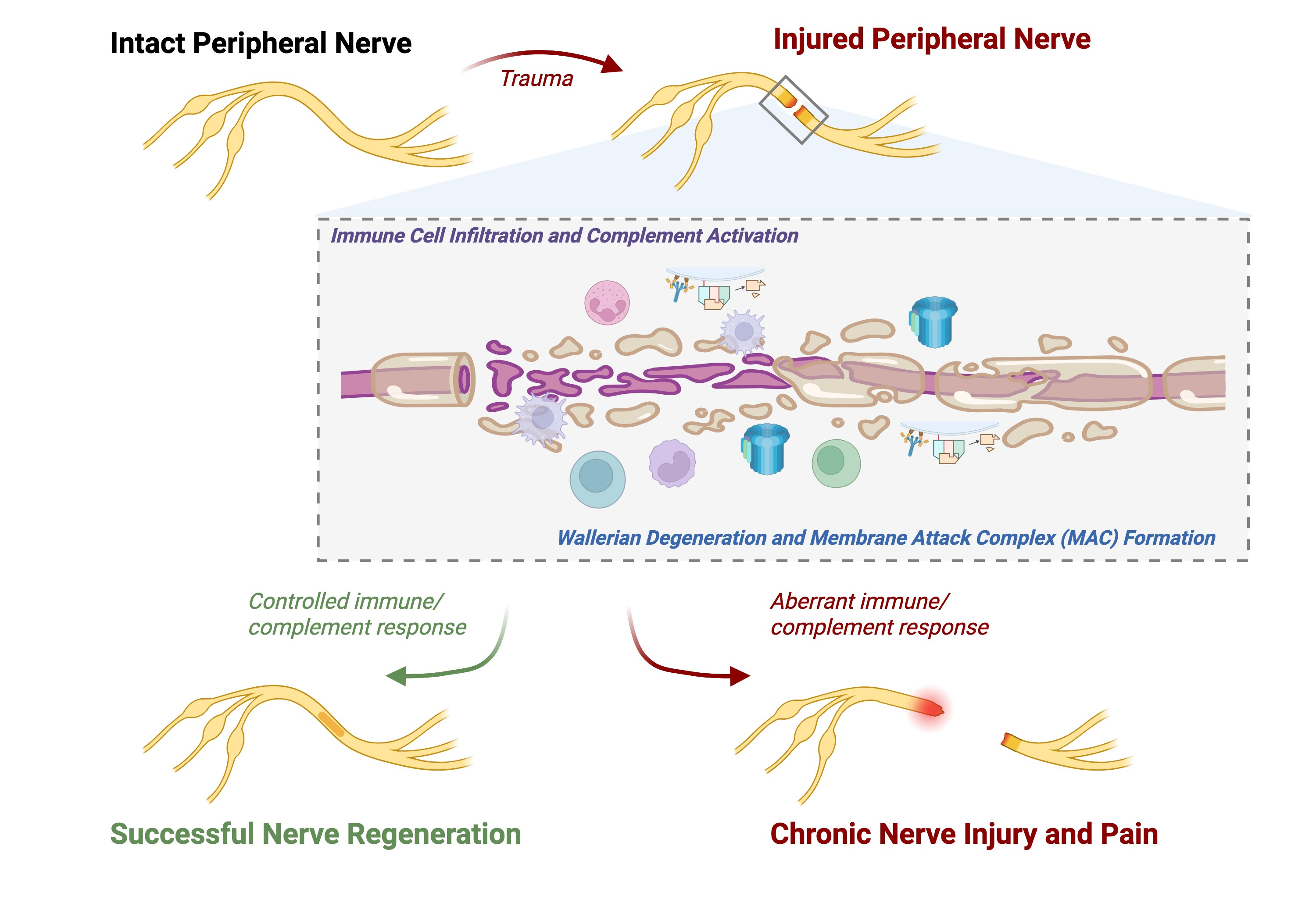
1. Acute and Chronic Phases of Traumatic Nerve Injury in the PNS
2. Scope of This Review and Methods
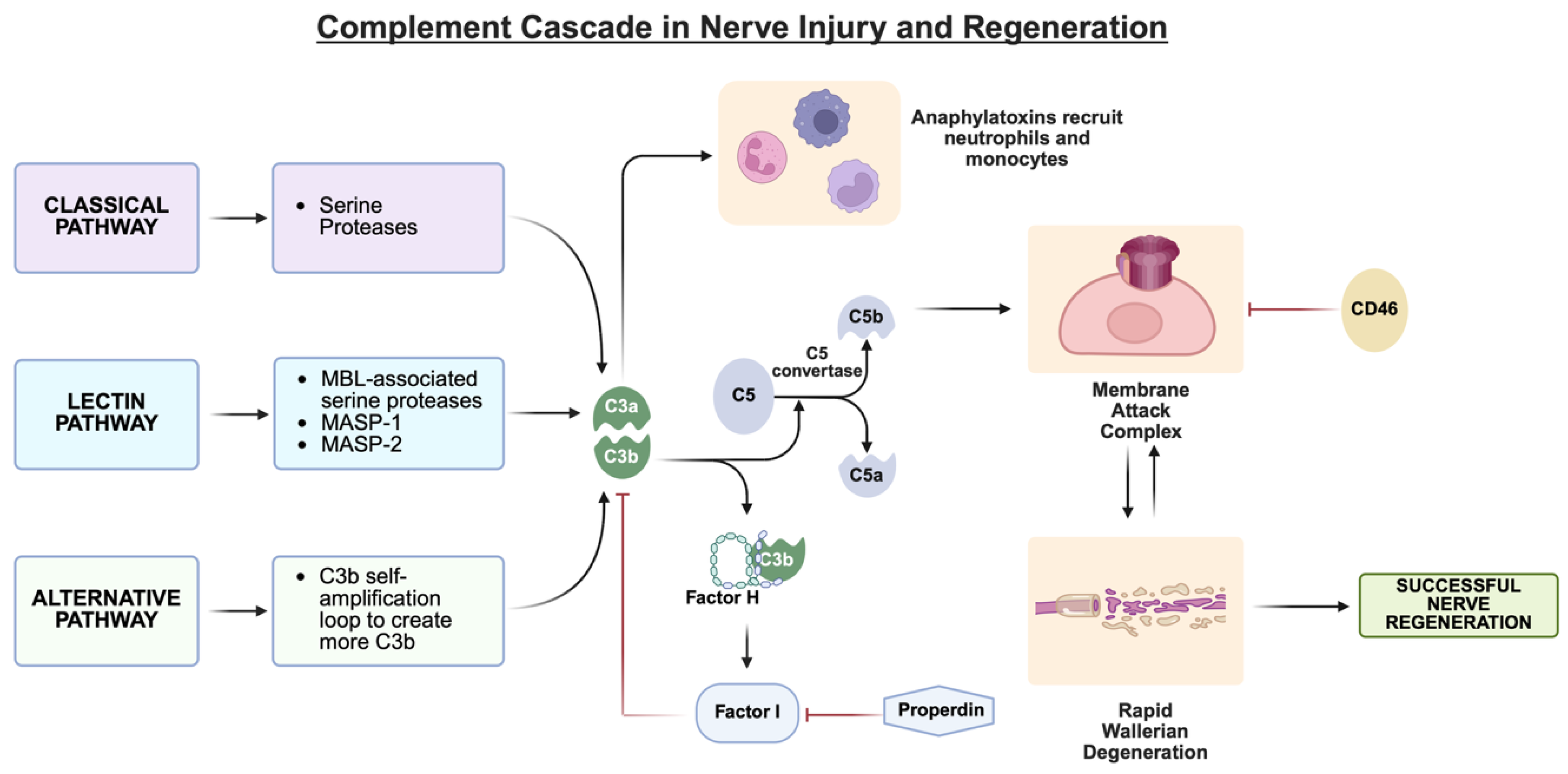
3. The Complement System (A General Overview)


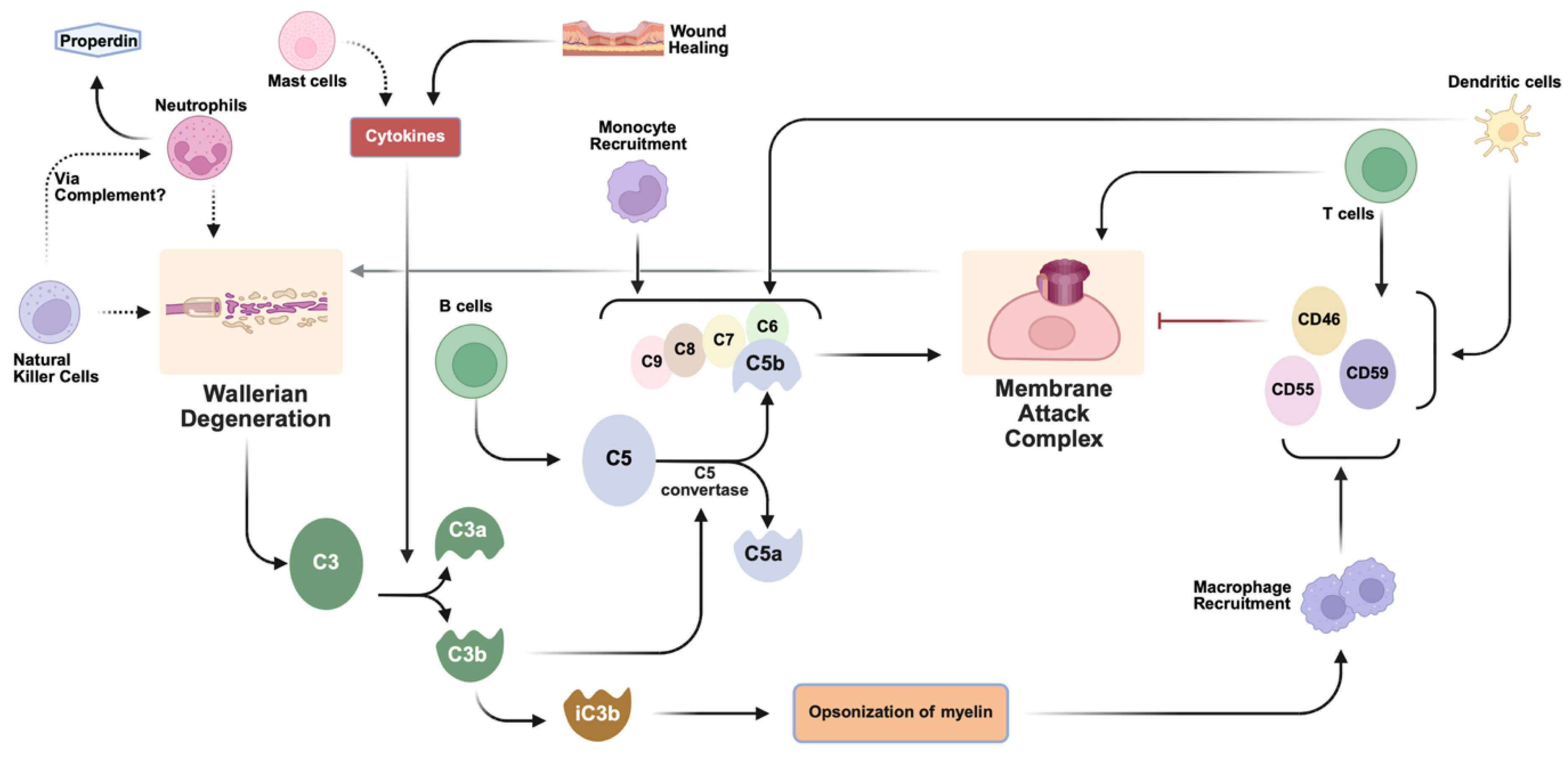
4. Local Complement Activation During Peripheral Nerve Injury and Nerve Regeneration
5. Cellular Interactions with the Complement System in Peripheral Nerve Injury
5.1. Neutrophils and Monocytes/Macrophages
5.2. Mast Cells
5.3. B-Cells and T-Cells
5.4. Dendritic Cells
5.5. Natural Killer Cells
5.6. Toll-like Receptors
6. Parallels to Complement Activation in Wound Healing and Spinal Cord Injury
6.1. Coagulation Factors and Wound Healing
6.2. Spinal Cord Injury
7. Therapeutic Implications
7.1. Complement as a Therapeutic Target
7.2. Therapeutic Windows and Delivery
7.3. Complementary Therapeutic Targets and Strategies
7.4. Other Translational Considerations
8. Conclusions
Author Contributions
Funding
Data Availability Statement
Conflicts of Interest
References
- Topp, K.S.; Boyd, B.S. Structure and Biomechanics of Peripheral Nerves: Nerve Responses to Physical Stresses and Impli-cations for Physical Therapist Practice. Phys. Ther. 2006, 86, 92–109. [Google Scholar] [CrossRef] [Scilit]
- Muangsanit, P.; Shipley, R.J.; Phillips, J.B. Vascularization Strategies for Peripheral Nerve Tissue Engineering. Anat. Rec. 2018, 301, 1657–1667. [Google Scholar] [CrossRef] [Scilit]
- Fregnan, F.; Muratori, L.; Simões, A.R.; Giacobini-Robecchi, M.G.; Raimondo, S. Role of Inflammatory Cytokines in Pe-ripheral Nerve Injury. Neural Regen. Res. 2012, 7, 2259–2266. [Google Scholar] [CrossRef]
- Rotshenker, S. Wallerian Degeneration: The Innate-Immune Response to Traumatic Nerve Injury. J. Neuroinflammation 2011, 8, 109. [Google Scholar] [CrossRef] [Scilit] [PubMed]
- Huang, Y.; Wu, L.; Zhao, Y.; Guo, J.; Li, R.; Ma, S.; Ying, Z. Schwann Cell Promotes Macrophage Recruitment through IL-17B/IL-17RB Pathway in Injured Peripheral Nerves. Cell Rep. 2024, 43, 113753. [Google Scholar] [CrossRef] [Scilit]
- Gordon, T. Peripheral Nerve Regeneration and Muscle Reinnervation. Int. J. Mol. Sci. 2020, 21, 8652. [Google Scholar] [CrossRef] [Scilit]
- Kalinski, A.L.; Yoon, C.; Huffman, L.D.; Duncker, P.C.; Kohen, R.; Passino, R.; Hafner, H.; Johnson, C.; Kawaguchi, R.; Carbajal, K.S.; et al. Analysis of the Immune Response to Sciatic Nerve Injury Identifies Efferocytosis as a Key Mechanism of Nerve Debridement. Elife 2020, 9, e60223. [Google Scholar] [CrossRef] [Scilit]
- Höke, A.; Brushart, T. Introduction to Special Issue: Challenges and Opportunities for Regeneration in the Peripheral Nervous System. Exp. Neurol. 2010, 223, 1–4. [Google Scholar] [CrossRef] [Scilit]
- Wood, M.D.; Kemp, S.W.P.; Weber, C.; Borschel, G.H.; Gordon, T. Outcome Measures of Peripheral Nerve Regeneration. Ann. Anat. 2011, 193, 321–333. [Google Scholar] [CrossRef] [Scilit] [PubMed]
- Makarenkova, H.P.; Shah, S.B.; Shestopalov, V.I. The Two Faces of Pannexins: New Roles in Inflammation and Repair. J. Inflamm. Res. 2018, 11, 273–288. [Google Scholar] [CrossRef] [Scilit] [PubMed]
- Baradaran, A.; El-Hawary, H.; Efanov, J.I.; Xu, L. Peripheral Nerve Healing: So Near and Yet So Far. Semin. Plast. Surg. 2021, 35, 204–210. [Google Scholar] [CrossRef] [Scilit]
- Gordon, T.; Tyreman, N.; Raji, M.A. The Basis for Diminished Functional Recovery after Delayed Peripheral Nerve Repair. J. Neurosci. 2011, 31, 5325–5334. [Google Scholar] [CrossRef] [Scilit] [PubMed]
- Ertürk, A.; Hellal, F.; Enes, J.; Bradke, F. Disorganized Microtubules Underlie the Formation of Retraction Bulbs and the Failure of Axonal Regeneration. J. Neurosci. 2007, 27, 9169–9180. [Google Scholar] [CrossRef] [Scilit] [PubMed]
- Paramel Mohan, S.; Ramalingam, M. Neuroscience of Peripheral Nerve Regeneration. J. Pharm. Bioallied. Sci. 2021, 13, S913–S916. [Google Scholar] [CrossRef] [Scilit]
- Khan, J.; Noboru, N.; Young, A.; Thomas, D. Pro and Anti-Inflammatory Cytokine Levels (TNF-α, IL-1β, IL-6 and IL-10) in Rat Model of Neuroma. Pathophysiology 2017, 24, 155–159. [Google Scholar] [CrossRef] [Scilit] [PubMed]
- Oliveira, K.M.C.; Pindur, L.; Han, Z.; Bhavsar, M.B.; Barker, J.H.; Leppik, L. Time Course of Traumatic Neuroma Devel-opment. PLoS ONE 2018, 13, e0200548. [Google Scholar] [CrossRef] [Scilit]
- Ricklin, D.; Hajishengallis, G.; Yang, K.; Lambris, J.D. Complement: A Key System for Immune Surveillance and Homeo-stasis. Nat. Immunol. 2010, 11, 785–797. [Google Scholar] [CrossRef] [Scilit]
- Ling, M.; Murali, M. Analysis of the Complement System in the Clinical Immunology Laboratory. Clin. Lab. Med. 2019, 39, 579–590. [Google Scholar] [CrossRef] [Scilit]
- Haapasalo, K.; Meri, S. Regulation of the Complement System by Pentraxins. Front. Immunol. 2019, 10, 1750. [Google Scholar] [CrossRef] [Scilit]
- Reis, E.S.; Mastellos, D.C.; Hajishengallis, G.; Lambris, J.D. New insights into the immune functions of complement. Nat. Rev. Immunol. 2019, 19, 503–516. [Google Scholar] [CrossRef] [Scilit]
- Soares, D.C.; Barlow, P.N. Structural Biology of the Complement System. In Structural Biology of the Complement System; CRC Press: Boca Raton, FL, USA, 2005. [Google Scholar]
- de Jonge, R.R.; van Schaik, I.N.; Vreijling, J.P.; Troost, D.; Baas, F. Expression of Complement Components in the Periph-eral Nervous System. Hum. Mol. Genet. 2004, 13, 295–302. [Google Scholar] [CrossRef] [Scilit]
- Dailey, A.T.; Avellino, A.M.; Benthem, L.; Silver, J.; Kliot, M. Complement Depletion Reduces Macrophage Infiltration and Activation during Wallerian Degeneration and Axonal Regeneration. J. Neurosci. 1998, 18, 6713–6722. [Google Scholar] [CrossRef] [Scilit] [PubMed]
- Hays, A.P.; Lee, S.S.; Latov, N. Immune Reactive C3d on the Surface of Myelin Sheaths in Neuropathy. J. Neuroimmunol. 1988, 18, 231–244. [Google Scholar] [CrossRef] [Scilit] [PubMed]
- Brück, W. The Role of Macrophages in Wallerian Degeneration. Brain Pathol. 1997, 7, 741–752. [Google Scholar] [CrossRef] [Scilit]
- Ramaglia, V.; King, R.H.M.; Nourallah, M.; Wolterman, R.; de Jonge, R.; Ramkema, M.; Vigar, M.A.; van der Wetering, S.; Morgan, B.P.; Troost, D.; et al. The Membrane Attack Complex of the Complement System Is Essential for Rapid Waller-ian Degeneration. J. Neurosci. 2007, 27, 7663–7672. [Google Scholar] [CrossRef] [Scilit] [PubMed]
- Brück, W.; Friede, R.L. The Role of Complement in Myelin Phagocytosis during PNS Wallerian Degeneration. J. Neurol. Sci. 1991, 103, 182–187. [Google Scholar] [CrossRef] [Scilit] [PubMed]
- DeJong, B.A.; Smith, M.E. A Role for Complement in Phagocytosis of Myelin. Neurochem. Res. 1997, 22, 491–498. [Google Scholar] [CrossRef] [Scilit]
- Kopper, T.J.; Gensel, J.C. Myelin as an Inflammatory Mediator: Myelin Interactions with Complement, Macrophages, and Microglia in Spinal Cord Injury. J. Neurosci. Res. 2018, 96, 969–977. [Google Scholar] [CrossRef] [Scilit]
- Bisby, M.A.; Chen, S. Delayed Wallerian Degeneration in Sciatic Nerves of C57BL/Ola Mice Is Associated with Impaired Regeneration of Sensory Axons. Brain Res. 1990, 530, 117–120. [Google Scholar] [CrossRef] [Scilit]
- Elsayed, H.; Faroni, A.; Ashraf, M.R.; Osuji, J.; Wunderley, L.; Zhang, L.; Elsobky, H.; Mansour, M.; Zidan, A.S.; Reid, A.J. Development and Characterisation of an in Vitro Model of Wallerian Degeneration. Front. Bioeng. Biotechnol. 2020, 8, 784. [Google Scholar] [CrossRef] [Scilit]
- Irfan, M.; Chung, S. C5L2 Modulates BDNF Production in Human Dental Pulp Stem Cells via P38α Pathway. Sci. Rep. 2023, 13, 74. [Google Scholar] [CrossRef] [Scilit]
- Yi, S.; Yuan, Y.; Chen, Q.; Wang, X.; Gong, L.; Liu, J.; Gu, X.; Li, S. Regulation of Schwann Cell Proliferation and Migration by miR-1 Targeting Brain-Derived Neurotrophic Factor after Peripheral Nerve Injury. Sci. Rep. 2016, 6, 29121. [Google Scholar] [CrossRef] [Scilit] [PubMed]
- Arbore, G.; Kemper, C. A Novel “Complement-Metabolism-Inflammasome Axis” as a Key Regulator of Immune Cell Effector Function. Eur. J. Immunol. 2016, 46, 1563–1573. [Google Scholar] [CrossRef] [Scilit]
- Triantafilou, M.; Hughes, T.R.; Morgan, B.P.; Triantafilou, K. Complementing the Inflammasome. Immunology 2016, 147, 152–164. [Google Scholar] [CrossRef] [Scilit]
- West, E.E.; Kunz, N.; Kemper, C. Complement and Human T Cell Metabolism: Location, Location, Location. Immunol. Rev. 2020, 295, 68–81. [Google Scholar] [CrossRef] [Scilit] [PubMed]
- de Bont, C.M.; Boelens, W.C.; Pruijn, G.J.M. NETosis, Complement, and Coagulation: A Triangular Relationship. Cell. Mol. Immunol. 2019, 16, 19–27. [Google Scholar] [CrossRef] [Scilit] [PubMed]
- Yuen, J.; Pluthero, F.G.; Douda, D.N.; Riedl, M.; Cherry, A.; Ulanova, M.; Kahr, W.H.A.; Palaniyar, N.; Licht, C. NETosing Neutrophils Activate Complement Both on Their Own NETs and Bacteria via Alternative and Non-Alternative Pathways. Front. Immunol. 2016, 7, 137. [Google Scholar] [CrossRef] [Scilit]
- Berends, E.T.M.; Kuipers, A.; Ravesloot, M.M.; Urbanus, R.T.; Rooijakkers, S.H.M. Bacteria under Stress by Complement and Coagulation. FEMS Microbiol. Rev. 2014, 38, 1146–1171. [Google Scholar] [CrossRef] [Scilit]
- Schneider, A.E.; Sándor, N.; Kárpáti, É.; Józsi, M. Complement Factor H Modulates the Activation of Human Neutrophil Granulocytes and the Generation of Neutrophil Extracellular Traps. Mol. Immunol. 2016, 72, 37–48. [Google Scholar] [CrossRef] [Scilit]
- van der Maten, E.; de Bont, C.M.; de Groot, R.; de Jonge, M.I.; Langereis, J.D.; van der Flier, M. Alternative Pathway Reg-ulation by Factor H Modulates Streptococcus Pneumoniae Induced Proinflammatory Cytokine Responses by Decreasing C5a Receptor Crosstalk. Cytokine 2016, 88, 281–286. [Google Scholar] [CrossRef] [Scilit]
- Romero, V.; Fert-Bober, J.; Nigrovic, P.A.; Darrah, E.; Haque, U.J.; Lee, D.M.; van Eyk, J.; Rosen, A.; Andrade, F. Im-mune-Mediated Pore-Forming Pathways Induce Cellular Hypercitrullination and Generate Citrullinated Autoantigens in Rheumatoid Arthritis. Sci. Transl. Med. 2013, 5, 209ra150. [Google Scholar] [CrossRef] [Scilit]
- Lindborg, J.A.; Mack, M.; Zigmond, R.E. Neutrophils Are Critical for Myelin Removal in a Peripheral Nerve Injury Mod-el of Wallerian Degeneration. J. Neurosci. 2017, 37, 10258–10277. [Google Scholar] [CrossRef] [Scilit]
- Balog, B.M.; Niemi, J.P.; Disabato, T.; Hashim, F.; Zigmond, R.E. CXCR2 Mediated Trafficking of Neutrophils and Neu-trophil Extracellular Traps Are Required for Myelin Clearance after a Peripheral Nerve Injury. Exp. Neurol. 2024, 382, 114985. [Google Scholar] [CrossRef] [Scilit]
- Sundsmo, J.S.; Curd, J.G.; Kolb, W.P.; Müller-Eberhard, H.J. Leukocyte Complement: Assembly of the Membrane Attack Complex of Complement by Human Peripheral Blood Leukocytes in the Presence and Absence of Serum. J. Immunol. 1978, 120, 855–860. [Google Scholar] [CrossRef] [Scilit]
- Nguyen, H.X.; Galvan, M.D.; Anderson, A.J. Characterization of Early and Terminal Complement Proteins Associated with Polymorphonuclear Leukocytes in Vitro and in Vivo after Spinal Cord Injury. J. Neuroinflammation 2008, 5, 26. [Google Scholar] [CrossRef] [Scilit] [PubMed]
- Camous, L.; Roumenina, L.; Bigot, S.; Brachemi, S.; Frémeaux-Bacchi, V.; Lesavre, P.; Halbwachs-Mecarelli, L. Comple-ment Alternative Pathway Acts as a Positive Feedback Amplification of Neutrophil Activation. Blood 2011, 117, 1340–1349. [Google Scholar] [CrossRef] [Scilit] [PubMed]
- Lubbers, R.; van Essen, M.F.; van Kooten, C.; Trouw, L.A. Production of Complement Components by Cells of the Im-mune System. Clin. Exp. Immunol. 2017, 188, 183–194. [Google Scholar] [CrossRef] [Scilit]
- Barilla-LaBarca, M.L.; Liszewski, M.K.; Lambris, J.D.; Hourcade, D.; Atkinson, J.P. Role of Membrane Cofactor Protein (CD46) in Regulation of C4b and C3b Deposited on Cells. J. Immunol. 2002, 168, 6298–6304. [Google Scholar] [CrossRef] [Scilit]
- West, E.E.; Woodruff, T.; Fremeaux-Bacchi, V.; Kemper, C. Complement in Human Disease: Approved and up-and-Coming Therapeutics. Lancet 2024, 403, 392–405. [Google Scholar] [CrossRef] [Scilit] [PubMed]
- Couves, E.C.; Gardner, S.; Voisin, T.B.; Bickel, J.K.; Stansfeld, P.J.; Tate, E.W.; Bubeck, D. Structural Basis for Membrane Attack Complex Inhibition by CD59. Nat. Commun. 2023, 14, 890. [Google Scholar] [CrossRef] [Scilit]
- Ramaglia, V.; Tannemaat, M.R.; de Kok, M.; Wolterman, R.; Vigar, M.A.; King, R.H.M.; Morgan, B.P.; Baas, F. Comple-ment Inhibition Accelerates Regeneration in a Model of Peripheral Nerve Injury. Mol. Immunol. 2009, 47, 302–309. [Google Scholar] [CrossRef] [Scilit] [PubMed]
- Qiao, N.; Lin, Y.; Wang, Z.; Chen, J.-Y.; Ge, Y.-Y.; Yao, S.-L.; Gong, J. Maresin1 Promotes M2 Macrophage Polarization Through Peroxisome Proliferator-Activated Receptor-γ Activation to Expedite Resolution of Acute Lung Injury. J. Surg. Res. 2020, 256, 584–594. [Google Scholar] [CrossRef] [Scilit] [PubMed]
- Elieh Ali Komi, D.; Shafaghat, F.; Kovanen, P.T.; Meri, S. Mast Cells and Complement System: Ancient Interactions be-tween Components of Innate Immunity. Allergy 2020, 75, 2818–2828. [Google Scholar] [CrossRef] [Scilit]
- Fukuoka, Y.; Hite, M.R.; Dellinger, A.L.; Schwartz, L.B. Human Skin Mast Cells Express Complement Factors C3 and C5. J. Immunol. 2013, 191, 1827–1834. [Google Scholar] [CrossRef] [Scilit]
- Lipitsä, T.; Naukkarinen, A.; Laitala, J.; Harvima, I.T. Complement C3 Is Expressed by Mast Cells in Cutaneous Vasculitis and Is Degraded by Chymase. Arch. Dermatol. Res. 2016, 308, 575–584. [Google Scholar] [CrossRef] [Scilit] [PubMed]
- Esposito, B.; De Santis, A.; Monteforte, R.; Baccari, G.C. Mast Cells in Wallerian Degeneration: Morphologic and Ul-tra-structural Changes. J. Comp. Neurol. 2002, 445, 199–210. [Google Scholar] [CrossRef] [Scilit]
- Green, D.P.; Limjunyawong, N.; Gour, N.; Pundir, P.; Dong, X. A Mast-Cell-Specific Receptor Mediates Neurogenic In-flammation and Pain. Neuron 2019, 101, 412–420.e3. [Google Scholar] [CrossRef] [Scilit]
- Francisco-Cruz, A.; Aguilar-Santelises, M.; Ramos-Espinosa, O.; Mata-Espinosa, D.; Marquina-Castillo, B.; Barrios-Payan, J.; Hernandez-Pando, R. Granulocyte-Macrophage Colony-Stimulating Factor: Not Just Another Haematopoietic Growth Factor. Med. Oncol. 2014, 31, 774. [Google Scholar] [CrossRef] [Scilit]
- Beurskens, F.J.; van Schaarenburg, R.A.; Trouw, L.A. C1q, Antibodies and Anti-C1q Autoantibodies. Mol. Immunol. 2015, 68, 6–13. [Google Scholar] [CrossRef] [Scilit]
- Paiano, J.; Harland, M.; Strainic, M.G.; Nedrud, J.; Hussain, W.; Medof, M.E. Follicular B2 Cell Activation and Class Switch Recombination Depend on Autocrine C3ar1/C5ar1 Signaling in B2 Cells. J. Immunol. 2019, 203, 379–388. [Google Scholar] [CrossRef] [Scilit]
- Cumpelik, A.; Heja, D.; Hu, Y.; Varano, G.; Ordikhani, F.; Roberto, M.P.; He, Z.; Homann, D.; Lira, S.A.; Dominguez-Sola, D.; et al. Dynamic Regulation of B Cell Complement Signaling Is Integral to Germinal Center Responses. Nat. Immunol. 2021, 22, 757–768. [Google Scholar] [CrossRef] [Scilit]
- West, E.E.; Kolev, M.; Kemper, C. Complement and the Regulation of T Cell Responses. Annu. Rev. Immunol. 2018, 36, 309–338. [Google Scholar] [CrossRef] [Scilit] [PubMed]
- Mehanna, A.; Szpotowicz, E.; Schachner, M.; Jakovcevski, I. Improved Regeneration after Femoral Nerve Injury in Mice Lacking Functional T- and B-Lymphocytes. Exp. Neurol. 2014, 261, 147–155. [Google Scholar] [CrossRef] [Scilit]
- Arbore, G.; West, E.E.; Spolski, R.; Robertson, A.A.B.; Klos, A.; Rheinheimer, C.; Dutow, P.; Woodruff, T.M.; Yu, Z.X.; O’Neill, L.A.; et al. T Helper 1 Immunity Requires Complement-Driven NLRP3 Inflammasome Activity in CD4+ T Cells. Science 2016, 352, aad1210. [Google Scholar] [CrossRef] [Scilit] [PubMed]
- Berger, A. Th1 and Th2 Responses: What Are They? BMJ 2000, 321, 424. [Google Scholar] [CrossRef] [Scilit]
- Kim, C.F.; Moalem-Taylor, G. Detailed Characterization of Neuro-Immune Responses Following Neuropathic Injury in Mice. Brain Res. 2011, 1405, 95–108. [Google Scholar] [CrossRef] [Scilit]
- Trahtemberg, U.; Mevorach, D. Apoptotic Cells Induced Signaling for Immune Homeostasis in Macrophages and Den-dritic Cells. Front. Immunol. 2017, 8, 1356. [Google Scholar] [CrossRef] [Scilit]
- van Kooten, C.; Fiore, N.; Trouw, L.A.; Csomor, E.; Xu, W.; Castellano, G.; Daha, M.R.; Gelderman, K.A. Complement Pro-duction and Regulation by Dendritic Cells: Molecular Switches between Tolerance and Immunity. Mol. Immunol. 2008, 45, 4064–4072. [Google Scholar] [CrossRef] [Scilit]
- Li, K.; Fazekasova, H.; Wang, N.; Sagoo, P.; Peng, Q.; Khamri, W.; Gomes, C.; Sacks, S.H.; Lombardi, G.; Zhou, W. Expres-sion of Complement Components, Receptors and Regulators by Human Dendritic Cells. Mol. Immunol. 2011, 48, 1121–1127. [Google Scholar] [CrossRef] [Scilit]
- Kwan, W.; van der Touw, W.; Heeger, P.S. Complement Regulation of T Cell Immunity. Immunol. Res. 2012, 54, 247–253. [Google Scholar] [CrossRef] [Scilit] [PubMed]
- Ross, G.D.; Vĕtvicka, V. CR3 (CD11b, CD18): A Phagocyte and NK Cell Membrane Receptor with Multiple Ligand Speci-ficities and Functions. Clin. Exp. Immunol. 1993, 92, 181–184. [Google Scholar] [CrossRef] [Scilit]
- Min, X.; Liu, C.; Wei, Y.; Wang, N.; Yuan, G.; Liu, D.; Li, Z.; Zhou, W.; Li, K. Expression and Regulation of Complement Re-ceptors by Human Natural Killer Cells. Immunobiology 2014, 219, 671–679. [Google Scholar] [CrossRef] [Scilit]
- Liu, C.-F.; Min, X.-Y.; Wang, N.; Wang, J.-X.; Ma, N.; Dong, X.; Zhang, B.; Wu, W.; Li, Z.-F.; Zhou, W.; et al. Complement Receptor 3 Has Negative Impact on Tumor Surveillance through Suppression of Natural Killer Cell Function. Front. Immunol. 2017, 8, 1602. [Google Scholar] [CrossRef] [Scilit] [PubMed]
- Davies, A.J.; Kim, H.W.; Gonzalez-Cano, R.; Choi, J.; Back, S.K.; Roh, S.E.; Johnson, E.; Gabriac, M.; Kim, M.-S.; Lee, J.; et al. Natural Killer Cells Degenerate Intact Sensory Afferents Following Nerve Injury. Cell 2019, 176, 716–728.e18. [Google Scholar] [CrossRef] [Scilit]
- Okun, E.; Griffioen, K.J.; Mattson, M.P. Toll-like Receptor Signaling in Neural Plasticity and Disease. Trends Neurosci. 2011, 34, 269–281. [Google Scholar] [CrossRef] [Scilit]
- Fitzgerald, K.A.; Kagan, J.C. Toll-like Receptors and the Control of Immunity. Cell 2020, 180, 1044–1066. [Google Scholar] [CrossRef] [Scilit] [PubMed]
- Abarca-Merlin, D.M.; Martínez-Durán, J.A.; Medina-Pérez, J.D.; Rodríguez-Santos, G.; Alvarez-Arellano, L. From Immun-ity to Neurogenesis: Toll-like Receptors as Versatile Regulators in the Nervous System. Int. J. Mol. Sci. 2024, 25, 5711. [Google Scholar] [CrossRef] [Scilit] [PubMed]
- Goldberg, B.S.; Ackerman, M.E. Antibody-Mediated Complement Activation in Pathology and Protection. Immunol. Cell Biol. 2020, 98, 305–317. [Google Scholar] [CrossRef] [Scilit]
- Yang, J.; Wise, L.; Fukuchi, K.-I. TLR4 Cross-Talk With NLRP3 Inflammasome and Complement Signaling Pathways in Alzheimer’s Disease. Front. Immunol. 2020, 11, 724. [Google Scholar] [CrossRef] [Scilit]
- Hawlisch, H.; Belkaid, Y.; Baelder, R.; Hildeman, D.; Gerard, C.; Köhl, J. C5a Negatively Regulates Toll-like Receptor 4-Induced Immune Responses. Immunity 2005, 22, 415–426. [Google Scholar] [CrossRef] [Scilit]
- la Sala, A.; Gadina, M.; Kelsall, B.L. G(i)-Protein-Dependent Inhibition of IL-12 Production Is Mediated by Activation of the Phosphatidylinositol 3-Kinase-Protein 3 Kinase B/Akt Pathway and JNK. J. Immunol. 2005, 175, 2994–2999. [Google Scholar] [CrossRef] [Scilit]
- Yan, J.; Smyth, M.J.; Teng, M.W.L. Interleukin (IL)-12 and IL-23 and Their Conflicting Roles in Cancer. Cold Spring Harb. Perspect. Biol. 2018, 10, a028530. [Google Scholar] [CrossRef] [Scilit]
- Sendide, K.; Reiner, N.E.; Lee, J.S.I.; Bourgoin, S.; Talal, A.; Hmama, Z. Cross-Talk between CD14 and Complement Re-ceptor 3 Promotes Phagocytosis of Mycobacteria: Regulation by Phosphatidylinositol 3-Kinase and Cytohesin-1. J. Immunol. 2005, 174, 4210–4219. [Google Scholar] [CrossRef] [Scilit]
- Boivin, A.; Pineau, I.; Barrette, B.; Filali, M.; Vallières, N.; Rivest, S.; Lacroix, S. Toll-like Receptor Signaling Is Critical for Wallerian Degeneration and Functional Recovery after Peripheral Nerve Injury. J. Neurosci. 2007, 27, 12565–12576. [Google Scholar] [CrossRef] [Scilit]
- Calvo, M.; Dawes, J.M.; Bennett, D.L. The Role of the Immune System in the Generation of Neuropathic Pain. Lancet Neurol. 2012, 11, 629–642. [Google Scholar] [CrossRef] [Scilit] [PubMed]
- Levin, M.E.; Jin, J.G.; Ji, R.-R.; Tong, J.; Pomonis, J.D.; Lavery, D.J.; Miller, S.W.; Chiang, L.W. Complement Activation in the Peripheral Nervous System Following the Spinal Nerve Ligation Model of Neuropathic Pain. Pain 2008, 137, 182–201. [Google Scholar] [CrossRef] [Scilit] [PubMed]
- Li, M.; Peake, P.W.; Charlesworth, J.A.; Tracey, D.J.; Moalem-Taylor, G. Complement Activation Contributes to Leuko-cyte Recruitment and Neuropathic Pain Following Peripheral Nerve Injury in Rats. Eur. J. Neurosci. 2007, 26, 3486–3500. [Google Scholar] [CrossRef] [Scilit]
- Hsieh, C.-H.; Rau, C.-S.; Kuo, P.-J.; Liu, S.-H.; Wu, C.-J.; Lu, T.-H.; Wu, Y.-C.; Lin, C.-W. Knockout of Toll-like Receptor Impairs Nerve Regeneration after a Crush Injury. Oncotarget 2017, 8, 80741–80756. [Google Scholar] [CrossRef] [Scilit]
- Zhang, X.; Kimura, Y.; Fang, C.; Zhou, L.; Sfyroera, G.; Lambris, J.D.; Wetsel, R.A.; Miwa, T.; Song, W.-C. Regulation of Toll-like Receptor–Mediated Inflammatory Response by Complement in Vivo. Blood 2007, 110, 228–236. [Google Scholar] [CrossRef] [Scilit]
- Freria, C.M.; Bernardes, D.; Almeida, G.L.; Simões, G.F.; Barbosa, G.O.; Oliveira, A.L.R. Impairment of Toll-like Receptors 2 and 4 Leads to Compensatory Mechanisms after Sciatic Nerve Axotomy. J. Neuroinflammation 2016, 13, 118. [Google Scholar] [CrossRef] [Scilit] [PubMed]
- Warwick, C.A.; Keyes, A.L.; Woodruff, T.M.; Usachev, Y.M. The Complement Cascade in the Regulation of Neu-roin-flammation, Nociceptive Sensitization, and Pain. J. Biol. Chem. 2021, 297, 101085. [Google Scholar] [CrossRef] [Scilit] [PubMed]
- Eriksson, O.; Mohlin, C.; Nilsson, B.; Ekdahl, K.N. The Human Platelet as an Innate Immune Cell: Interactions Between Ac-tivated Platelets and the Complement System. Front. Immunol. 2019, 10, 1590. [Google Scholar] [CrossRef] [Scilit]
- Heissig, B.; Salama, Y.; Takahashi, S.; Osada, T.; Hattori, K. The Multifaceted Role of Plasminogen in Inflammation. Cell. Signal. 2020, 75, 109761. [Google Scholar] [CrossRef] [Scilit]
- Sinno, H.; Malhotra, M.; Lutfy, J.; Jardin, B.; Winocour, S.; Brimo, F.; Beckman, L.; Watters, K.; Philip, A.; Williams, B.; et al. Complements C3 and C5 Individually and in Combination Increase Early Wound Strength in a Rat Model of Experi-mental Wound Healing. Plast. Surg. Int. 2013, 2013, 243853. [Google Scholar] [CrossRef] [Scilit]
- Sinno, H.; Malholtra, M.; Lutfy, J.; Jardin, B.; Winocour, S.; Brimo, F.; Beckman, L.; Watters, K.; Philip, A.; Williams, B.; et al. Topical Application of Complement C3 in Collagen Formulation Increases Early Wound Healing. J. Dermatol. Treat. 2013, 24, 141–147. [Google Scholar] [CrossRef] [Scilit]
- Sinno, H.; Malhotra, M.; Lutfy, J.; Jardin, B.; Winocour, S.; Brimo, F.; Beckman, L.; Watters, K.; Philip, A.; Williams, B.; et al. Accelerated Wound Healing with Topical Application of Complement C5. Plast. Reconstr. Surg. 2012, 130, 523–529. [Google Scholar] [CrossRef] [Scilit] [PubMed]
- Sinno, H.; Prakash, S. Complements and the Wound Healing Cascade: An Updated Review. Plast. Surg. Int. 2013, 2013, 146764. [Google Scholar] [CrossRef] [Scilit]
- Amara, U.; Flierl, M.A.; Rittirsch, D.; Klos, A.; Chen, H.; Acker, B.; Brückner, U.B.; Nilsson, B.; Gebhard, F.; Lambris, J.D.; et al. Molecular Intercommunication between the Complement and Coagulation Systems. J. Immunol. 2010, 185, 5628–5636. [Google Scholar] [CrossRef] [Scilit] [PubMed]
- Rafail, S.; Kourtzelis, I.; Foukas, P.G.; Markiewski, M.M.; DeAngelis, R.A.; Guariento, M.; Ricklin, D.; Grice, E.A.; Lambris, J.D. Complement Deficiency Promotes Cutaneous Wound Healing in Mice. J. Immunol. 2015, 194, 1285–1291. [Google Scholar] [CrossRef] [Scilit]
- Subramaniam, S.; Jurk, K.; Hobohm, L.; Jäckel, S.; Saffarzadeh, M.; Schwierczek, K.; Wenzel, P.; Langer, F.; Reinhardt, C.; Ruf, W. Distinct Contributions of Complement Factors to Platelet Activation and Fibrin Formation in Venous Thrombus De-velopment. Blood 2017, 129, 2291–2302. [Google Scholar] [CrossRef] [Scilit]
- Ma, A.C.; Kubes, P. Platelets, Neutrophils, and Neutrophil Extracellular Traps (NETs) in Sepsis. J. Thromb. Haemost. 2008, 6, 415–420. [Google Scholar] [CrossRef] [Scilit] [PubMed]
- Peerschke, E.I.; Yin, W.; Ghebrehiwet, B. Complement Activation on Platelets: Implications for Vascular Inflammation and Thrombosis. Mol. Immunol. 2010, 47, 2170–2175. [Google Scholar] [CrossRef] [Scilit]
- Saad, H.; El Baba, B.; Tfaily, A.; Kobeissy, F.; Gonzalez, J.G.; Refai, D.; Rodts, G.R.; Mustroph, C.; Gimbel, D.; Grossberg, J.; et al. Complement-Dependent Neuroinflammation in Spinal Cord Injury: From Pathology to Therapeutic Implications. Neural Regen. Res. 2025, 20, 1324–1335. [Google Scholar] [CrossRef] [Scilit]
- Brennan, F.H.; Gordon, R.; Lao, H.W.; Biggins, P.J.; Taylor, S.M.; Franklin, R.J.M.; Woodruff, T.M.; Ruitenberg, M.J. The Complement Receptor C5aR Controls Acute Inflammation and Astrogliosis Following Spinal Cord Injury. J. Neurosci. 2015, 35, 6517–6531. [Google Scholar] [CrossRef] [Scilit]
- Donnelly, D.J.; Popovich, P.G. Inflammation and Its Role in Neuroprotection, Axonal Regeneration and Functional Re-covery after Spinal Cord Injury. Exp. Neurol. 2008, 209, 378–388. [Google Scholar] [CrossRef] [Scilit]
- Alawieh, A.; Langley, E.F.; Weber, S.; Adkins, D.; Tomlinson, S. Identifying the Role of Complement in Triggering Neu-roinflammation after Traumatic Brain Injury. J. Neurosci. 2018, 38, 2519–2532. [Google Scholar] [CrossRef] [Scilit] [PubMed]
- Titiz, M.; Landini, L.; Souza Monteiro de Araujo, D.; Marini, M.; Seravalli, V.; Chieca, M.; Pensieri, P.; Montini, M.; De Si-ena, G.; Pasquini, B.; et al. Schwann Cell C5aR1 Co-Opts Inflammasome NLRP1 to Sustain Pain in a Mouse Model of En-dometriosis. Nat. Commun. 2024, 15, 10142. [Google Scholar] [CrossRef] [Scilit]
- Mueller, M.; Leonhard, C.; Wacker, K.; Ringelstein, E.B.; Okabe, M.; Hickey, W.F.; Kiefer, R. Macrophage Response to Pe-ripheral Nerve Injury: The Quantitative Contribution of Resident and Hematogenous Macrophages. Lab. Investig. 2003, 83, 175–185. [Google Scholar] [CrossRef] [Scilit]
- Chen, L.; Cheng, J.; Yang, X.; Jin, X.; Qi, Z.; Jin, Y.-Q. Bone Marrow-Derived Cells Response in Proximal Regions of Nerves after Peripheral Nerve Injury. Cell Biol. Int. 2017, 41, 863–870. [Google Scholar] [CrossRef] [Scilit] [PubMed]
- Lucas, D.; Scheiermann, C.; Chow, A.; Kunisaki, Y.; Bruns, I.; Barrick, C.; Tessarollo, L.; Frenette, P.S. Chemothera-py-Induced Bone Marrow Nerve Injury Impairs Hematopoietic Regeneration. Nat. Med. 2013, 19, 695–703. [Google Scholar] [CrossRef] [Scilit]
- Reynolds, D.N.; Smith, S.A.; Zhang, Y.P.; Mengsheng, Q.; Lahiri, D.K.; Morassutti, D.J.; Shields, C.B.; Kotwal, G.J. Vaccinia Virus Complement Control Protein Reduces Inflammation and Improves Spinal Cord Integrity Following Spinal Cord Injury. Ann. N. Y. Acad. Sci. 2004, 1035, 165–178. [Google Scholar] [CrossRef] [Scilit]
- Reynolds, D.N.; Smith, S.A.; Zhang, Y.-P.; Lahiri, D.K.; Morassutti, D.J.; Shields, C.B.; Kotwal, G.J. Vaccinia Virus Com-plement Control Protein Modulates Inflammation Following Spinal Cord Injury. Ann. N. Y. Acad. Sci. 2003, 1010, 534–539. [Google Scholar] [CrossRef] [Scilit]
- Cruz, M.P. Conestat Alfa (Ruconest): First Recombinant C1 Esterase Inhibitor for the Treatment of Acute Attacks in Pa-tients with Hereditary Angioedema. P T 2015, 40, 109–114. [Google Scholar]
- Riedl, M.A.; Bernstein, J.A.; Jacobs, J.S.; Craig, T.; Banerji, A.; Perego, F.; Lumry, W.R.; Wedner, H.J.; Gierer, S.; Manning, M.E.; et al. Donidalorsen Treatment of Hereditary Angioedema in Patients Previously on Long-Term Prophylaxis. J. Allergy Clin. Immunol. Pract. 2025, 13, 2381–2389.e3. [Google Scholar] [CrossRef] [Scilit]
- Ramaglia, V.; Wolterman, R.; De Kok, M.; Vigar, M.A.; Wagenaar-Bos, I.; King, R.H.M.; Morgan, B.P.; Baas, F. Soluble Com-plement Receptor 1 Protects the Peripheral Nerve from Early Axon Loss after Injury. Am. J. Pathol. 2008, 172, 1043–1052. [Google Scholar] [CrossRef] [Scilit] [PubMed]
- Riedl, M.A.; Grivcheva-Panovska, V.; Moldovan, D.; Baker, J.; Yang, W.H.; Giannetti, B.M.; Reshef, A.; Andrejevic, S.; Lockey, R.F.; Hakl, R.; et al. Recombinant Human C1 Esterase Inhibitor for Prophylaxis of Hereditary Angio-Oedema: A Phase 2, Multicentre, Randomised, Double-Blind, Placebo-Controlled Crossover Trial. Lancet 2017, 390, 1595–1602. [Google Scholar] [CrossRef] [Scilit] [PubMed]
- Chen, X.; Arumugam, T.V.; Cheng, Y.-L.; Lee, J.-H.; Chigurupati, S.; Mattson, M.P.; Basta, M. Combination Therapy with Low-Dose IVIG and a C1-Esterase Inhibitor Ameliorates Brain Damage and Functional Deficits in Experimental Ischemic Stroke. Neuromol. Med. 2018, 20, 63–72. [Google Scholar] [CrossRef] [Scilit] [PubMed]
- Emmens, R.W.; Wouters, D.; Zeerleder, S.; Van Ham, S.M.; Niessen, H.W.M.; Krijnen, P.A.J. On the Value of Therapeutic Interventions Targeting the Complement System in Acute Myocardial Infarction. Transl. Res. 2017, 182, 103–122. [Google Scholar] [CrossRef] [Scilit]
- Azoulay, E.; Zuber, J.; Bousfiha, A.A.; Long, Y.; Tan, Y.; Luo, S.; Essafti, M.; Annane, D. Complement System Activation: Bridging Physiology, Pathophysiology, and Therapy. Intensive Care Med 2024, 50, 1791–1803. [Google Scholar] [CrossRef] [Scilit]
- Tajdaran, K.; Chan, K.; Shoichet, M.S.; Gordon, T.; Borschel, G.H. Local Delivery of FK506 to Injured Peripheral Nerve Enhances Axon Regeneration after Surgical Nerve Repair in Rats. Acta Biomater. 2019, 96, 211–221. [Google Scholar] [CrossRef] [Scilit]
- Xiao, B.; Feturi, F.; Su, A.-J.A.; Van Der Merwe, Y.; Barnett, J.M.; Jabbari, K.; Khatter, N.J.; Li, B.; Katzel, E.B.; Venkata-ramanan, R.; et al. Nerve Wrap for Local Delivery of FK506/Tacrolimus Accelerates Nerve Regeneration. Int. J. Mol. Sci. 2024, 25, 847. [Google Scholar] [CrossRef] [Scilit]
- Yalikun, A.; Wang, S.; Li, L.; Liu, K.; Hamiti, Y.; Yusufu, A. GDNF-Loaded Composite Microspheres Enhanced Po-rous-Oriented Conduits for Peripheral Nerve Regeneration. Chem. Eng. J. 2025, 519, 165574. [Google Scholar] [CrossRef] [Scilit]
- Nawrotek, K.; Kubicka, M.; Gatkowska, J.; Wieczorek, M.; Michlewska, S.; Bekier, A.; Wach, R.; Rudnicka, K. Controlling the Spatiotemporal Release of Nerve Growth Factor by Chitosan/Polycaprolactone Conduits for Use in Peripheral Nerve Re-generation. Int. J. Mol. Sci. 2022, 23, 2852. [Google Scholar] [CrossRef] [Scilit]
- Bhatia, M.; Thomson, L. Morton’s Neuroma—Current Concepts Review. J. Clin. Orthop. Trauma 2020, 11, 406–409. [Google Scholar] [CrossRef] [Scilit]
- Climent, J.M.; Mondéjar-Gómez, F.; Rodríguez-Ruiz, C.; Díaz-Llopis, I.; Gómez-Gallego, D.; Martín-Medina, P. Treatment of Morton Neuroma with Botulinum Toxin A: A Pilot Study. Clin. Drug Investig. 2013, 33, 497–503. [Google Scholar] [CrossRef] [Scilit]
- Korimová, A.; Dubový, P. N-Formylated Peptide Induces Increased Expression of Both Formyl Peptide Receptor 2 (Fpr2) and Toll-Like Receptor 9 (TLR9) in Schwannoma Cells-An In Vitro Model for Early Inflammatory Profiling of Schwann Cells. Cells 2020, 9, 2661. [Google Scholar] [CrossRef] [Scilit] [PubMed]
- Lacagnina, M.J.; Willcox, K.F.; Boukelmoune, N.; Bavencoffe, A.; Sankaranarayanan, I.; Barratt, D.T.; Zuberi, Y.A.; Dayani, D.; Chavez, M.V.; Lu, J.T.; et al. B Cells Drive Neuropathic Pain–Related Behaviors in Mice through IgG–Fc Gamma Re-ceptor Signaling. Sci. Transl. Med. 2024, 16, eadj1277. [Google Scholar] [CrossRef] [Scilit] [PubMed]
- Li, A.; Pereira, C.; Hill, E.E.; Vukcevich, O.; Wang, A. In Vitro, In Vivo and Ex Vivo Models for Peripheral Nerve Injury and Regeneration. Curr. Neuropharmacol. 2022, 20, 344–361. [Google Scholar] [CrossRef] [Scilit]
- Gilliatt, R.W.; Hjorth, R.J. Nerve Conduction during Wallerian Degeneration in the Baloon. J. Neurol. Neurosurg. Psychiatry 1972, 35, 335–341. [Google Scholar] [CrossRef] [Scilit]
- Lubińska, L. Early Course of Wallerian Degeneration in Myelinated Fibres of the Rat Phrenic Nerve. Brain Res. 1977, 130, 47–63. [Google Scholar] [CrossRef] [Scilit] [PubMed]
- Nguyen, V.T.T.; Darville, N.; Vermeulen, A. Pharmacokinetics of Long-Acting Aqueous Nano-/Microsuspensions After In-tramuscular Administration in Different Animal Species and Humans-a Review. AAPS J. 2022, 25, 4. [Google Scholar] [CrossRef] [Scilit]
- Paradiso, A.; Volpi, M.; Rinoldi, C.; Celikkin, N.; Contessi Negrini, N.; Bilgen, M.; Dallera, G.; Pierini, F.; Costantini, M.; Święszkowski, W.; et al. In Vitro Functional Models for Human Liver Diseases and Drug Screening: Beyond Animal Testing. Biomater. Sci. 2023, 11, 2988–3015. [Google Scholar] [CrossRef] [Scilit] [PubMed]
- Jacobson, A.C.; Weis, J.H. Comparative Functional Evolution of Human and Mouse CR1 and CR2. J. Immunol. 2008, 181, 2953–2959. [Google Scholar] [CrossRef] [Scilit] [PubMed]
- Jackson, H.M.; Foley, K.E.; O’Rourke, R.; Stearns, T.M.; Fathalla, D.; Morgan, B.P.; Howell, G.R. A Novel Mouse Model Ex-pressing Human Forms for Complement Receptors CR1 and CR2. BMC Genet. 2020, 21, 101. [Google Scholar] [CrossRef] [Scilit] [PubMed]
- Yudhani, R.D.; Pakha, D.N.; Suyatmi, S.; Irham, L.M. Identifying Pathogenic Variants Related to Systemic Lupus Ery-the-matosus by Integrating Genomic Databases and a Bioinformatic Approach. Genom. Inform. 2023, 21, e37. [Google Scholar] [CrossRef] [Scilit]
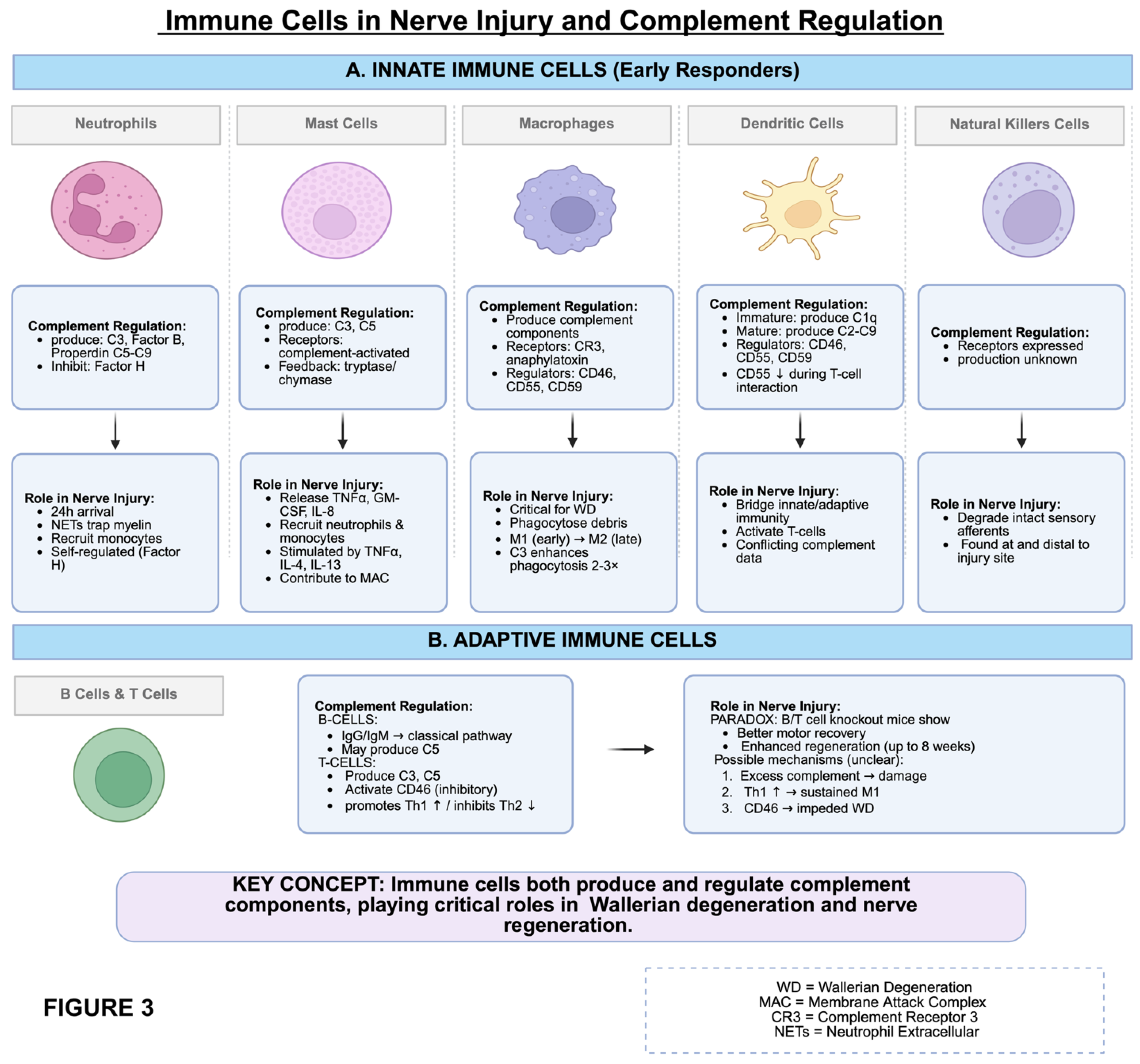

| Immune Cell Type | Known Interaction with the Complement System and/or Role in PNI | Conclusions (Evidence Level) |
|---|---|---|
| Neutrophils | Neutrophils serve as regulators of the complement system. Factor C3, located on neutrophil membranes, down-regulates the complement system, whereas properdin, produced by neutrophils, prolongs the half-life of C3 convertase, stabilizing the complement system. Upon arrival at the PNI site, neutrophils aid in Wallerian degeneration through the phagocytic clearance of myelin debris and formation of neutrophil extracellular traps (NETs). | Neutrophils and the complement system have parallel roles in Wallerian degeneration. Neutrophils and the complement system’s parallel roles have been shown in peripheral nerve injury models; however, no direct mechanistic interaction between the two has been evidenced in these models. |
| Macrophages | Macrophages create and express CD46, CD55 and CD59, all regulators of the complement system. They also contain anaphylatoxin receptors on their surface, which bind C3a and C5a and trigger immune cell activation, chemotaxis and inflammatory mediatory production. | Complement proteins (specifically C3) are necessary for macrophage invasion of degenerating nerves. Peripheral nerve injury model. |
| Complement activation in peripheral nerve injury may sustain pro-inflammatory M1 macrophage polarization and inhibit the shift to pro-regenerative M2 macrophages. Removing this inhibition has been proposed by inhibiting complement or usage of maresin 1 to promote M2 polarization. Hypothesized based on general immunology. | ||
| Mast Cells | Mast cells create complement proteins C3 and C5 and contain receptors on their surface which allow for complement proteins to activate them. Mast cells release pro-inflammatory cytokines and serine proteases at peripheral nerve injury sites. Secretion and activation of complement proteins is up-regulated by cytokines and serine proteases, respectively. | Mast cells release cytokines, including (but not limited to) TNF-α. In turn, cytokines may stimulate mast cells to release complement proteins, such as C5, which may help create MACs needed for Wallerian degeneration. Hypothesized based on general immunology. |
| B-cells | B-cells produce complement components C3 and factor I which participate in autocrine signaling pathways important for B-cell functions. B-cells also, for their own maturation, down-regulate the complement regulator DAF/CD55 on their own surfaces to permit local C3a and C5a generation. B-cells secrete the antibodies IgG and IgM, which can activate the classical pathway of the complement system. In a mutant mouse model without B-cells, there was better motor recovery and nerve regeneration 8 weeks post-injury. | The lack of lymphocyte-specific cytokine secretion positively affects macrophages’ role in regenerative processes. Hypothesized based on general immunology. |
| Antibodies released from B-cells induce the complement system unchecked, which may be caused by B-cells’ down-regulation of complement inhibitor DAF/CD55; too much complement activation can cause more damage than is needed, therefore hindering regeneration. Hypothesized based on general immunology. | ||
| B-cells drive mechanical allodynia after PNI through IgG-mediated complement activation. Peripheral nerve injury model. | ||
| T-cells | T-cells can produce complement factors and regulate the complement system by activating CD46. The complement system activates Th1 production but inhibits Th2 production. Th1 cells produce cytokines that cause a pro-inflammatory response, which must be balanced by anti-inflammatory cytokines produced by Th2 cells. | Over-activation of CD46 may inhibit the complement system, impeding Wallerian degeneration and therefore impairing regeneration. However, this hypothesis is less likely. Hypothesized based on general immunology. |
| Over-activation of the complement system may increase Th1 cytokines, leading to an increased pro-inflammatory response and impeding nerve regeneration. Hypothesized based on general immunology. | ||
| Dendritic Cells | Mature dendritic cells produce many complement proteins such as C2-C9 as well as the complement regulators CD46, CD55 and CD59, but do not create C1q, which is required to activate T-cells. Following PNI, dendritic cells infiltrate the injured sciatic nerve and ipsilateral dorsal root ganglia alongside neutrophils, macrophages, and lymphocytes. | Dendritic cell interactions with T-cells via complement proteins are in balance between a less activated state (via C1q) and an activated state (CD55 down-regulation), suggesting that complement pathways are important for this interaction. Hypothesized based on general immunology. |
| Natural Killer Cells | Natural killer cells contain many complement receptors on their surface, including CR3. In injured nerves, natural killer cells are found at and distal to the injury site and trigger the degradation of axons in the PNS. Thus, there is likely interaction between natural killer cells and the complement system in peripheral nerve injury. | NK cells are present in degenerating nerves. Peripheral nerve injury models. |
| The complement receptors such as CR3 located on NK cells’ surface could allow for communication with the complement system during Wallerian degeneration and the clearance of damaged axons/myelin. Hypothesized based on general immunology. | ||
| Toll-Like Receptors | Both TLR and complement signaling are activated following peripheral nerve injury and interact to amplify inflammatory responses. In sciatic nerve crush and spinal nerve ligation models, TLR2 and TLR4 are up-regulated on Schwann cells and glial cells, which triggers the production of pro-inflammatory mediators that recruit immune cells to the injury site. In parallel to this, C3 is deposited in injured nerves from 6 h to 7 days after injury. TLR2- and TLR4-deficient mice show impaired macrophage recruitment, delayed Wallerian degeneration, and compromised functional recovery after sciatic nerve lesion. Similarly, complement depletion using cobra venom factor reduces macrophage infiltration and activation, delays myelin clearance, and impairs axonal regeneration. | TLR ligands cause complement-dependent elevation of plasma IL-6, TNF-α, and IL-1β, with this regulatory effect mediated by the anaphylatoxin receptors C5aR and C3aR. This interaction appears to amplify inflammation through enhanced NF-κB and MAPK activation. Peripheral nerve injury models. |
| There is molecular crosstalk allowing for appropriate macrophage recruitment and Wallerian degeneration between TLRs and the complement system in peripheral nerve injury. Peripheral nerve injury models. |
Disclaimer/Publisher’s Note: The statements, opinions and data contained in all publications are solely those of the individual author(s) and contributor(s) and not of MDPI and/or the editor(s). MDPI and/or the editor(s) disclaim responsibility for any injury to people or property resulting from any ideas, methods, instructions or products referred to in the content. |
© 2026 by the authors. Licensee MDPI, Basel, Switzerland. This article is an open access article distributed under the terms and conditions of the Creative Commons Attribution (CC BY) license.
Share and Cite
Azar, C.; Pan, K.; Jain, P.; Sanchez-Lopez, E.; Shah, S.B. Roles of the Complement System in Peripheral Nerve Injury and Repair. Bioengineering 2026, 13, 251. https://doi.org/10.3390/bioengineering13020251
Azar C, Pan K, Jain P, Sanchez-Lopez E, Shah SB. Roles of the Complement System in Peripheral Nerve Injury and Repair. Bioengineering. 2026; 13(2):251. https://doi.org/10.3390/bioengineering13020251
Chicago/Turabian StyleAzar, Carmelina, Kaixin Pan, Prini Jain, Elsa Sanchez-Lopez, and Sameer B. Shah. 2026. "Roles of the Complement System in Peripheral Nerve Injury and Repair" Bioengineering 13, no. 2: 251. https://doi.org/10.3390/bioengineering13020251
APA StyleAzar, C., Pan, K., Jain, P., Sanchez-Lopez, E., & Shah, S. B. (2026). Roles of the Complement System in Peripheral Nerve Injury and Repair. Bioengineering, 13(2), 251. https://doi.org/10.3390/bioengineering13020251