
Article

Hydrological Modeling for Flood Adaptation under Climate Change: The Case of the Ancient Messene Archaeological Site in Greece

by
Angeliki Mentzafou
* and
Elias Dimitriou
Hellenic Centre for Marine Research—H.C.M.R., Institute of Marine Biological Resources and Inland Waters, 19013 Anavyssos, Greece
*
Author to whom correspondence should be addressed.
Hydrology 2022, 9(2), 19; https://doi.org/10.3390/hydrology9020019

Submission received: 24 December 2021 / Revised: 22 January 2022 / Accepted: 26 January 2022 / Published: 30 January 2022

Abstract

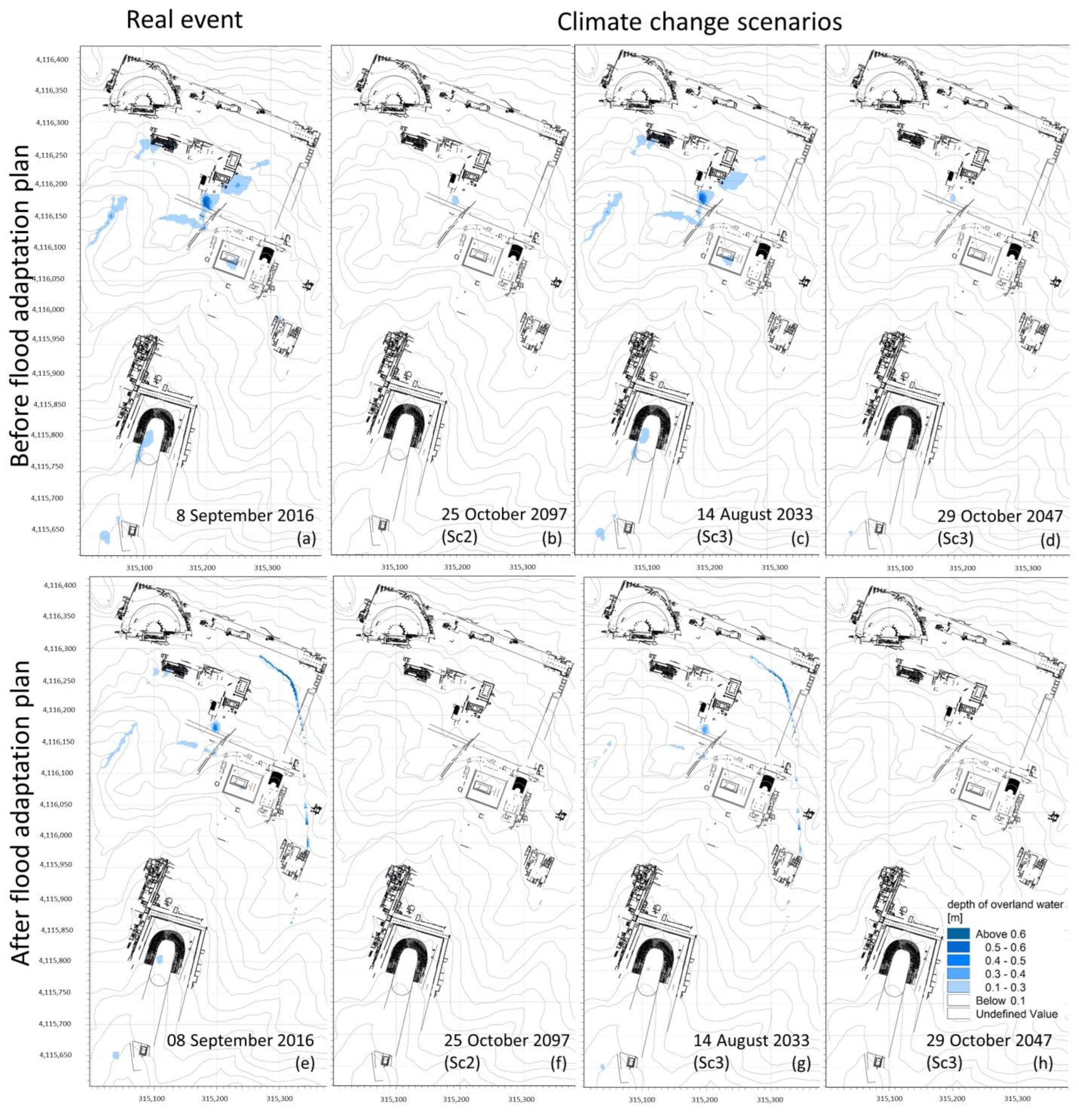
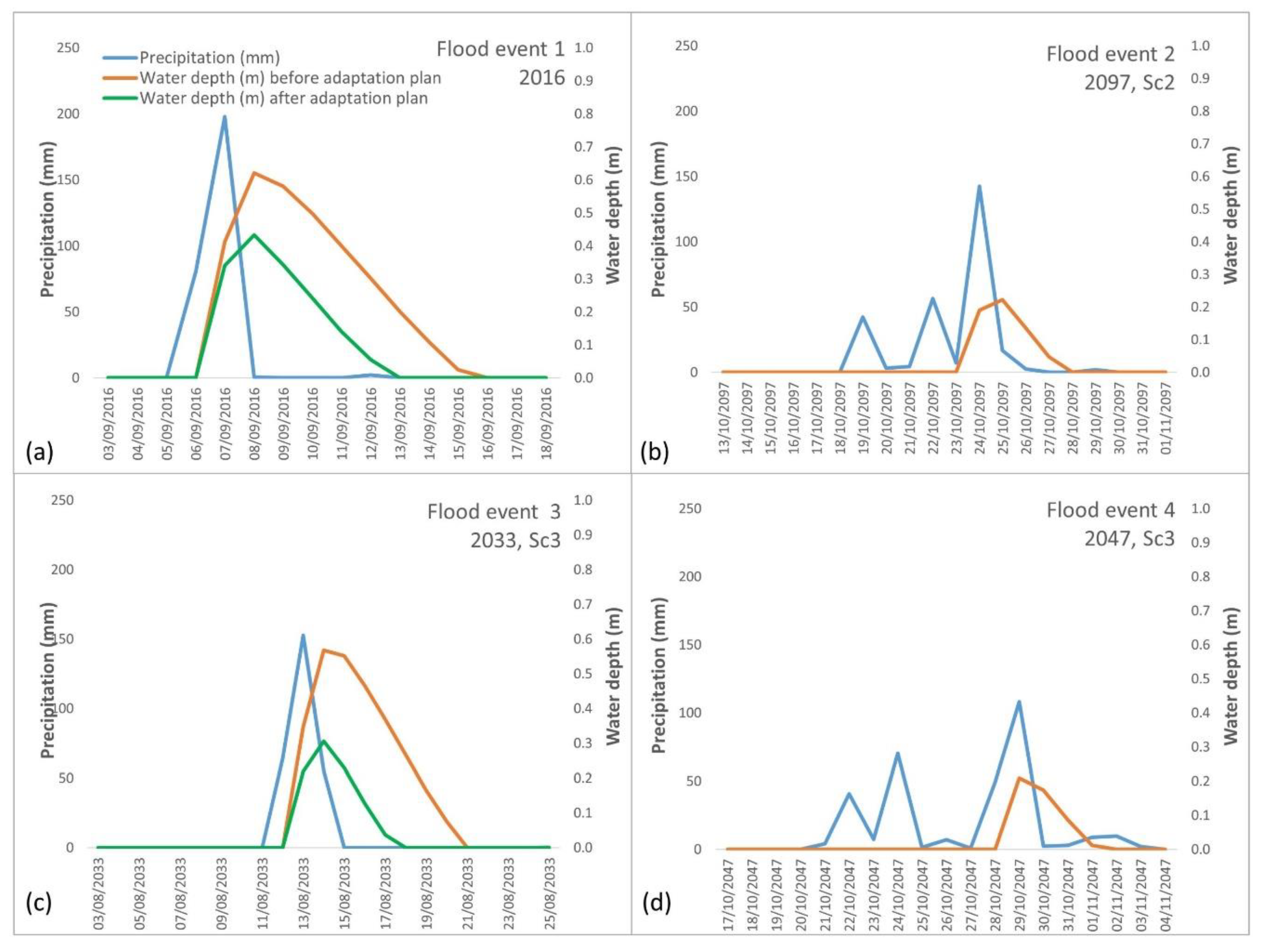
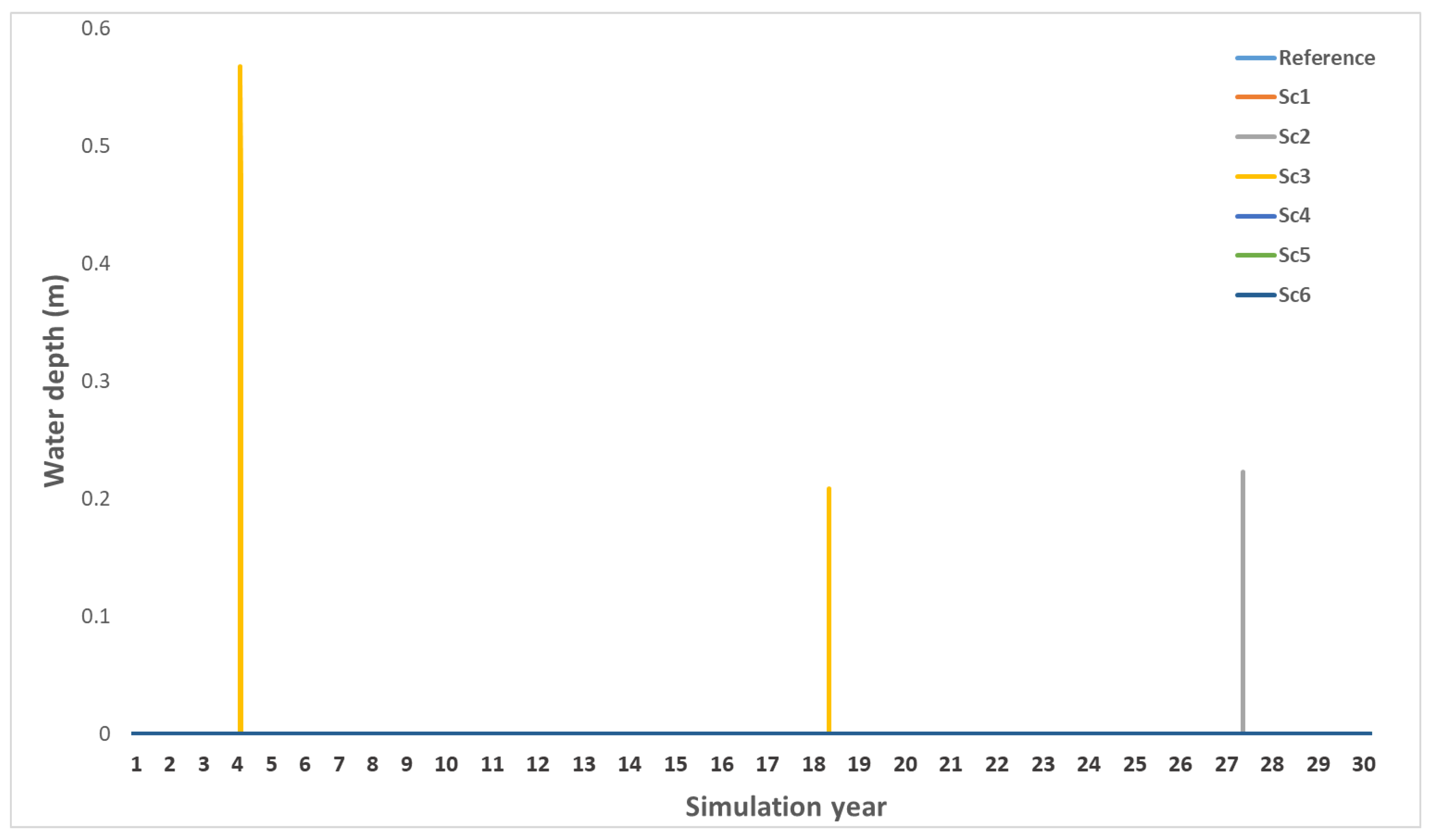
There is a growing global awareness about the impacts of climate change on cultural and natural heritage sites. In Greece—a homeland of important historical and cultural resources—archaeological sites are vulnerable to climate change-related flood events. In order to investigate the flood risk of the archaeological site of Ancient Messene under different climate change projections, a physically-based hydrological model was implemented and six climate change scenarios were examined. Additionally, the effectiveness of a soft structural nature-based solution adaption plan was evaluated. Based on the results, the archaeological site of Ancient Messene is shielded against small or larger flood events and only in case of extreme precipitation events is the area likely to be at risk. This flood risk can be further eliminated after implementing the soft structural nature-based solution adaptation plan proposed. Nature-based solutions provide a cost-effective alternative approach for flood risk reduction and climate change adaptation, with minimum possible disturbance, while hydrological modeling, even in case of data scarcity, constitute a valuable tool for flood risk estimation and adaptation plan management. Nature-based solutions seems to be most effective against small or medium precipitation events, and to limit the damages of extreme events. Their benefits for flood adaptation should not be underestimated.
Keywords: cultural heritage; flood risk management; mitigation; physically-based hydrological model; flood model; MIKE SHE; nature-based solutions cultural heritage; flood risk management; mitigation; physically-based hydrological model; flood model; MIKE SHE; nature-based solutions