
Article

Structuralization of Complicated Lotic Habitats Using Sentinel-2 Imagery and Weighted Focal Statistic Convolution

1
Department of Geography and Resource Management, The Chinese University of Hong Kong, Shatin, Hong Kong, China
2
Institute of Space and Earth Information Science, The Chinese University of Hong Kong, Shatin, Hong Kong, China
*
Author to whom correspondence should be addressed.
Hydrology 2022, 9(11), 195; https://doi.org/10.3390/hydrology9110195

Submission received: 8 October 2022 / Revised: 28 October 2022 / Accepted: 30 October 2022 / Published: 31 October 2022
(This article belongs to the Special Issue Advances in River Monitoring)

Abstract

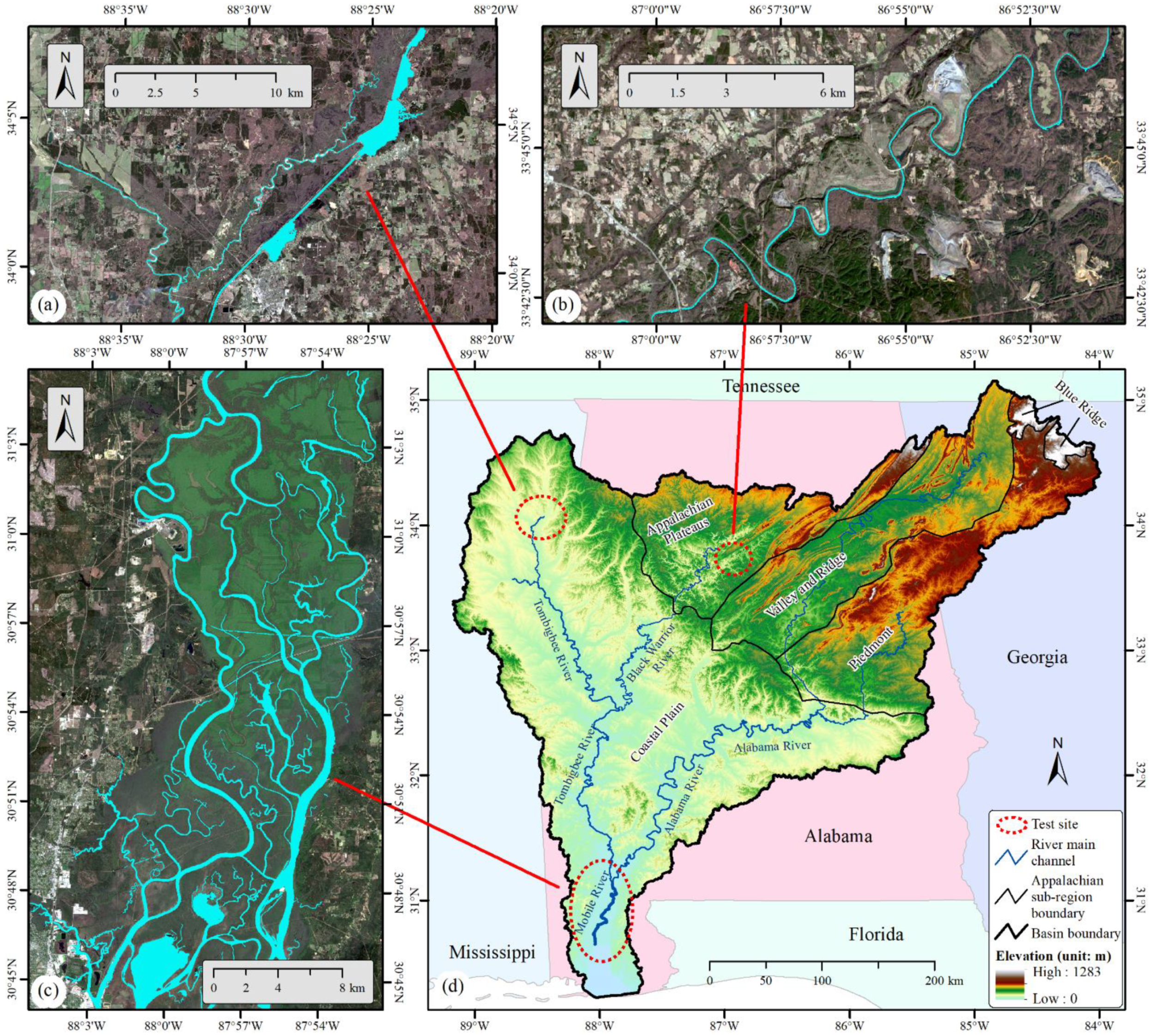
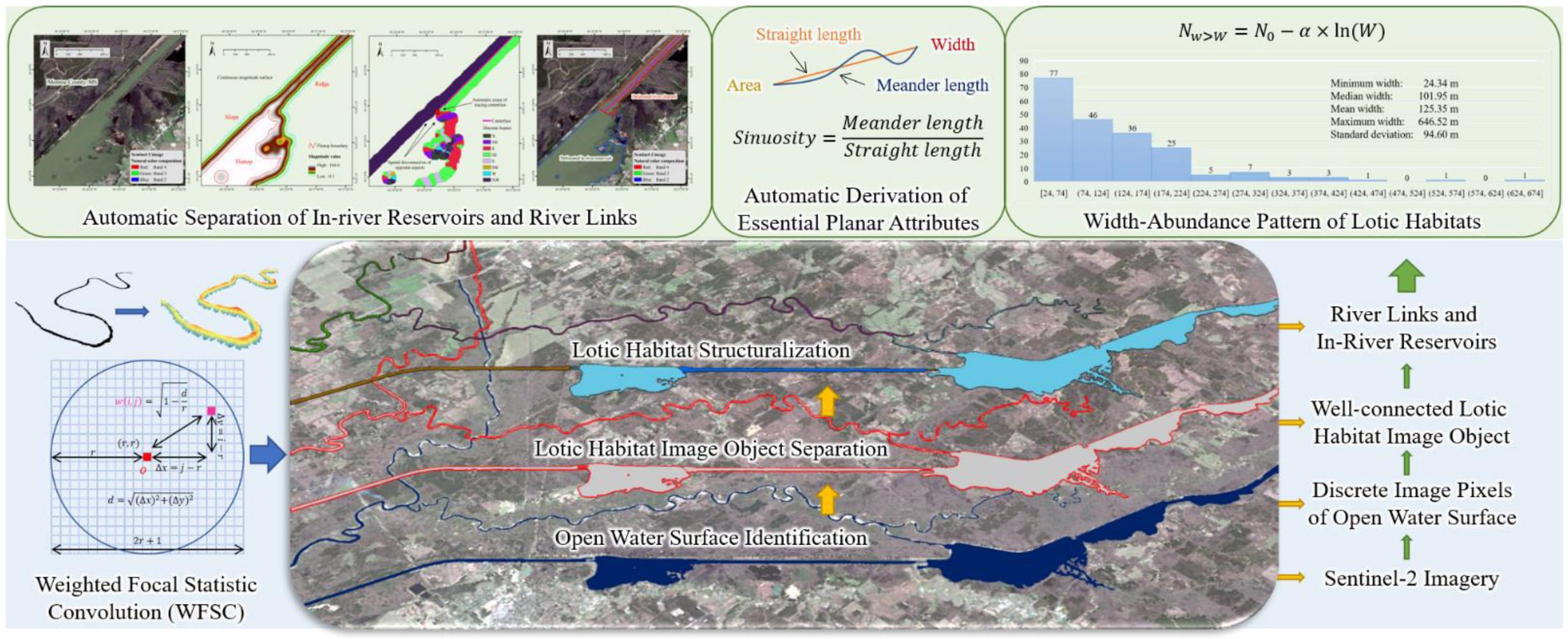
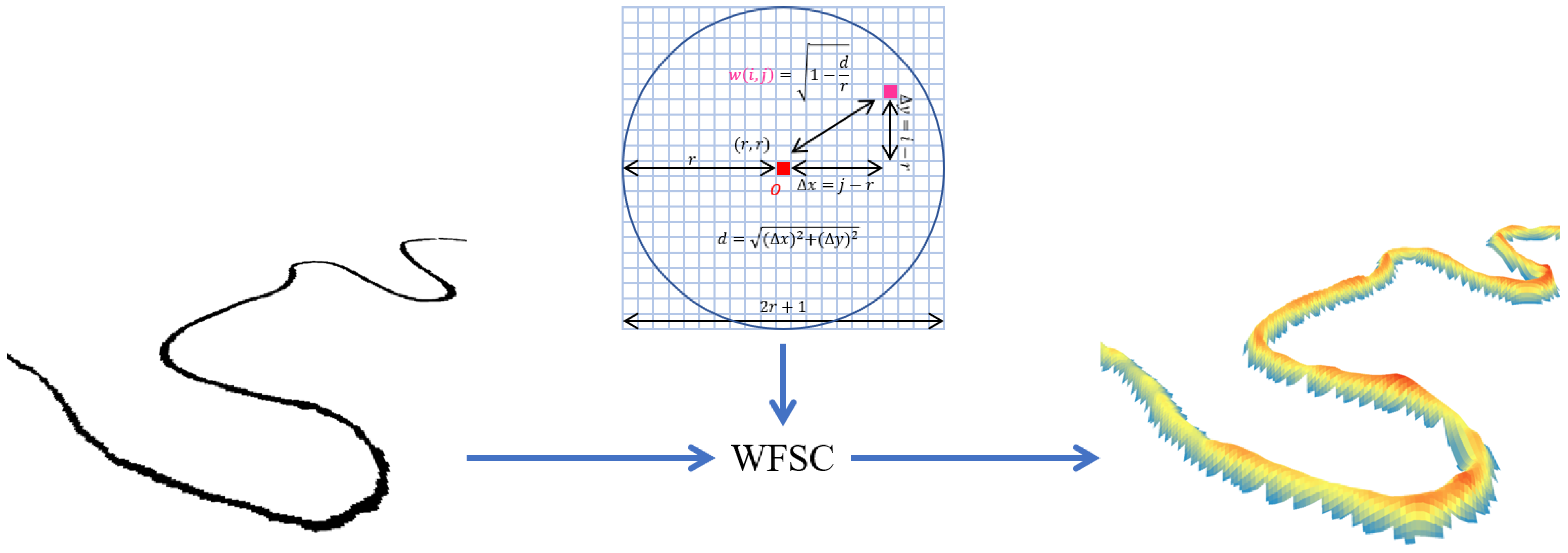
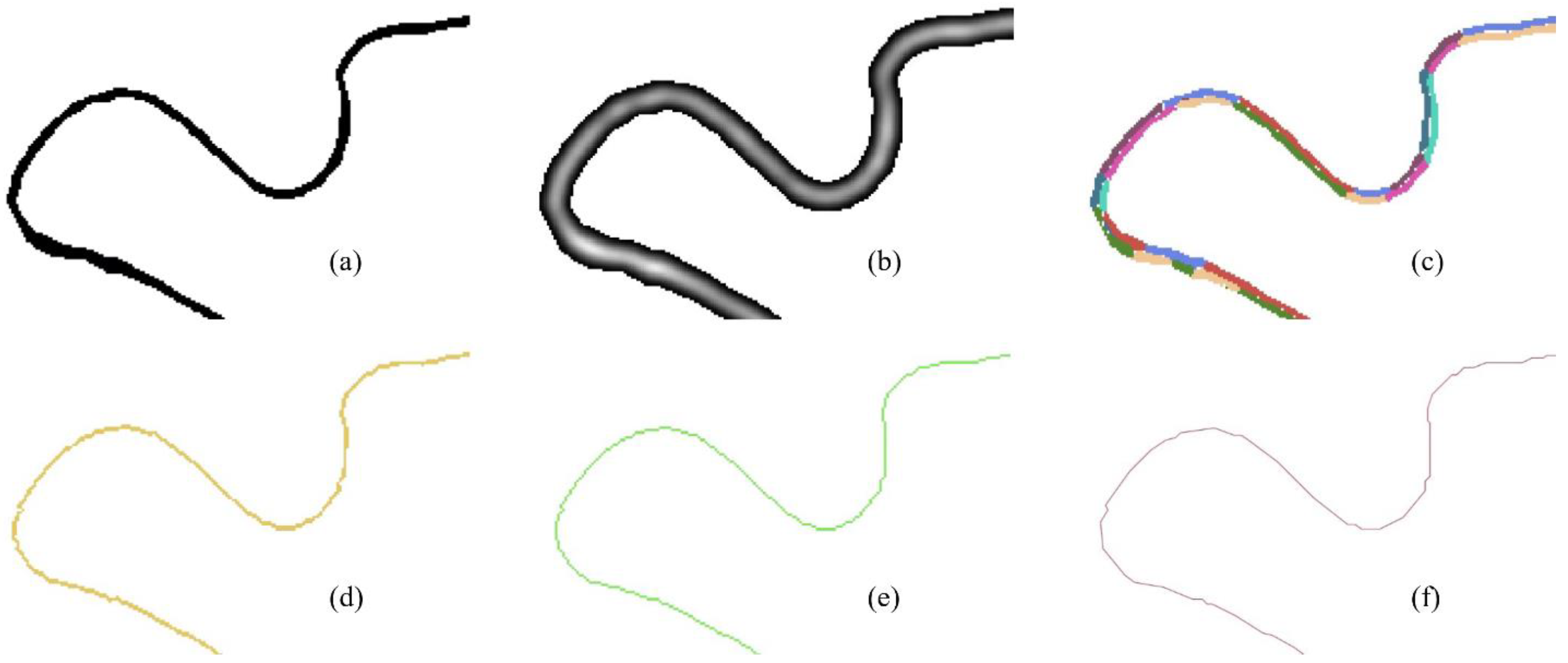
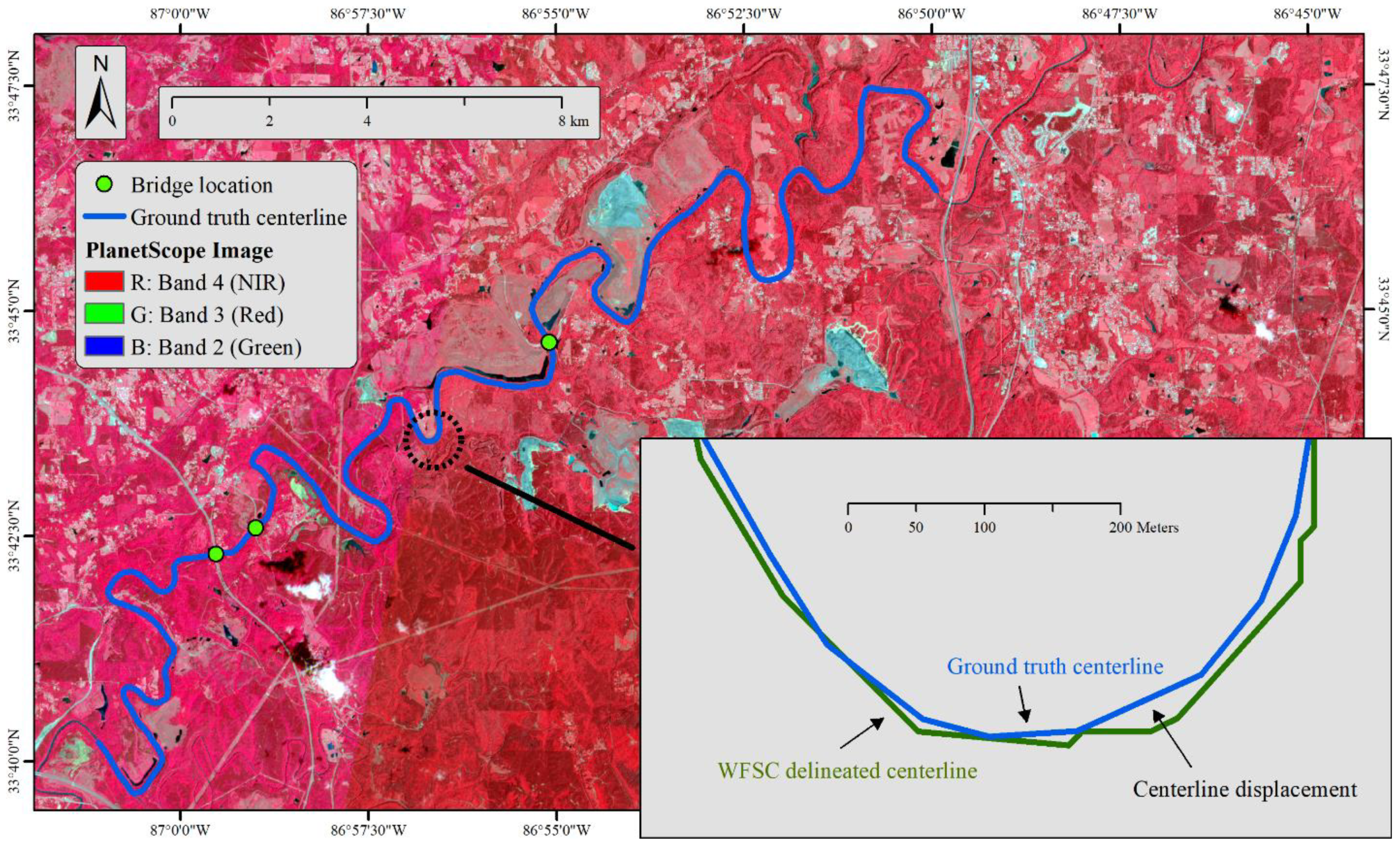
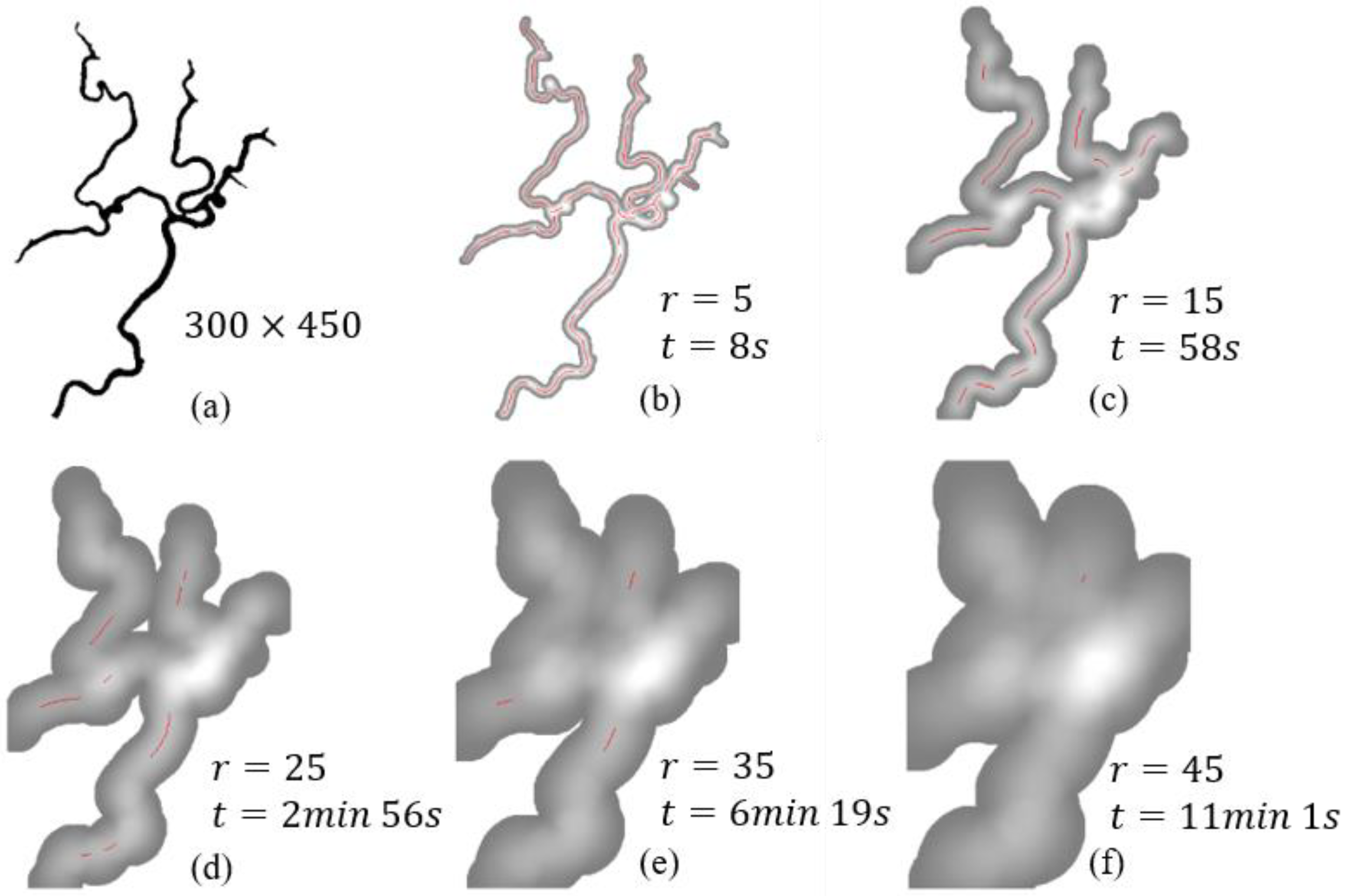
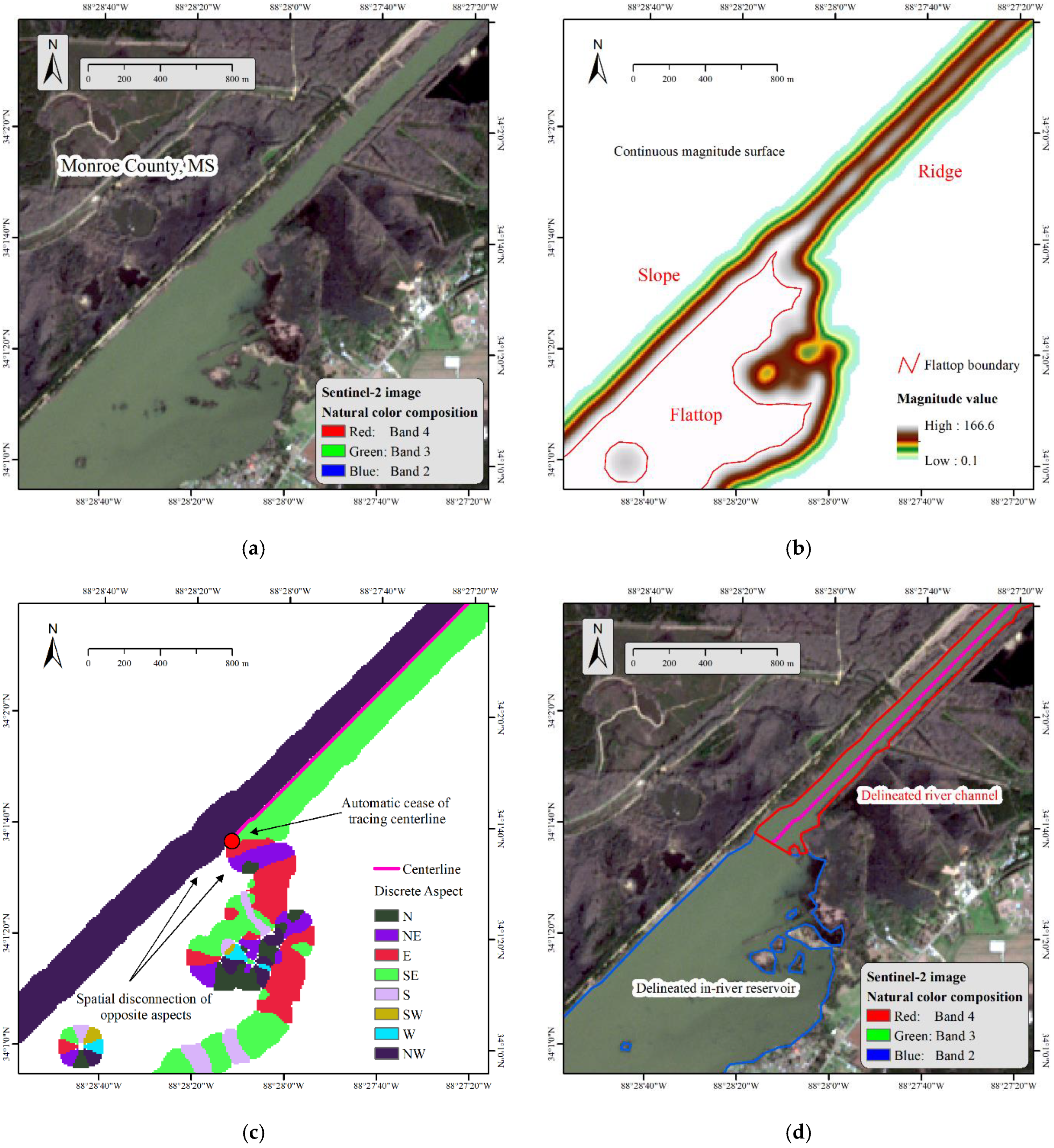
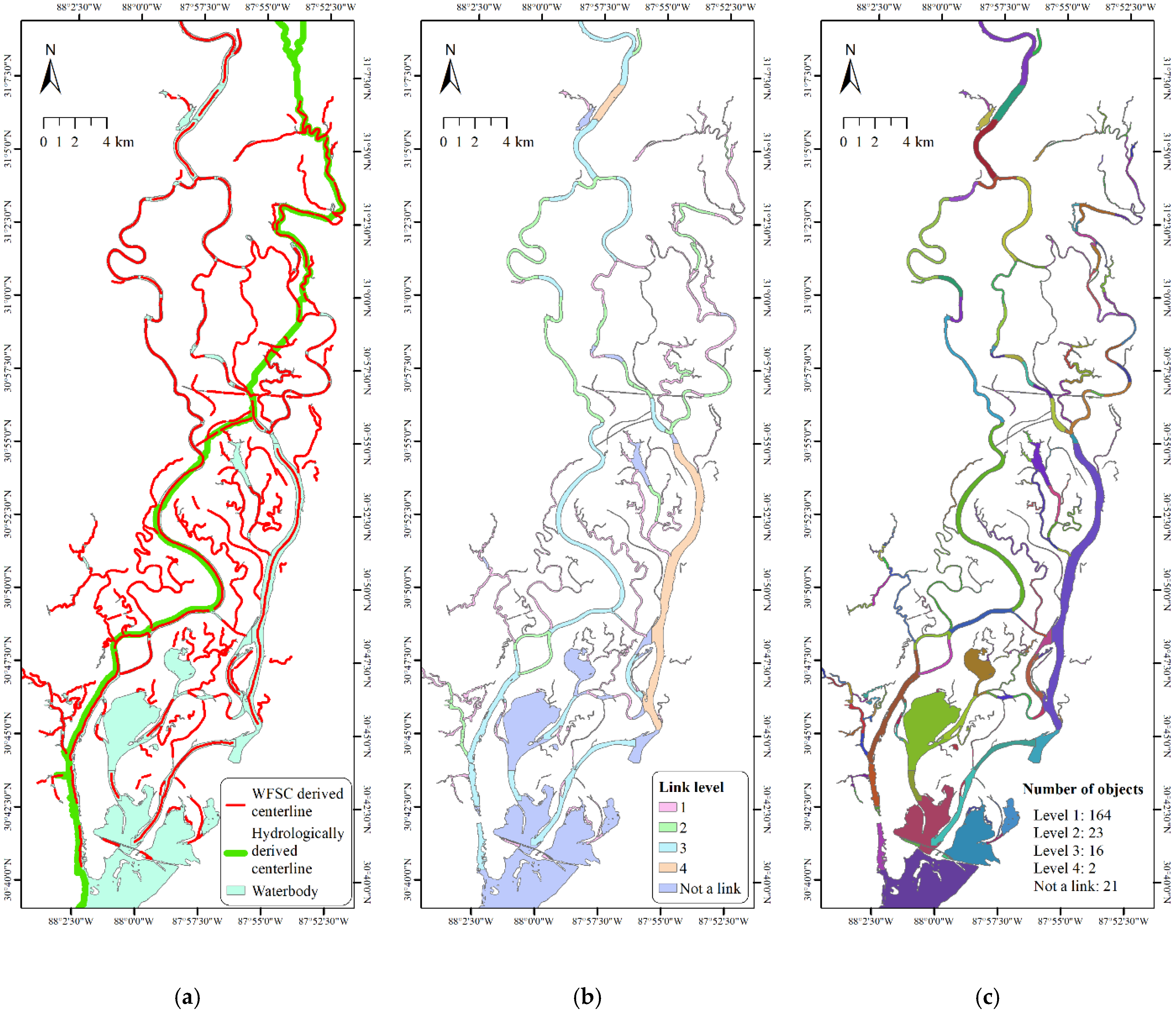
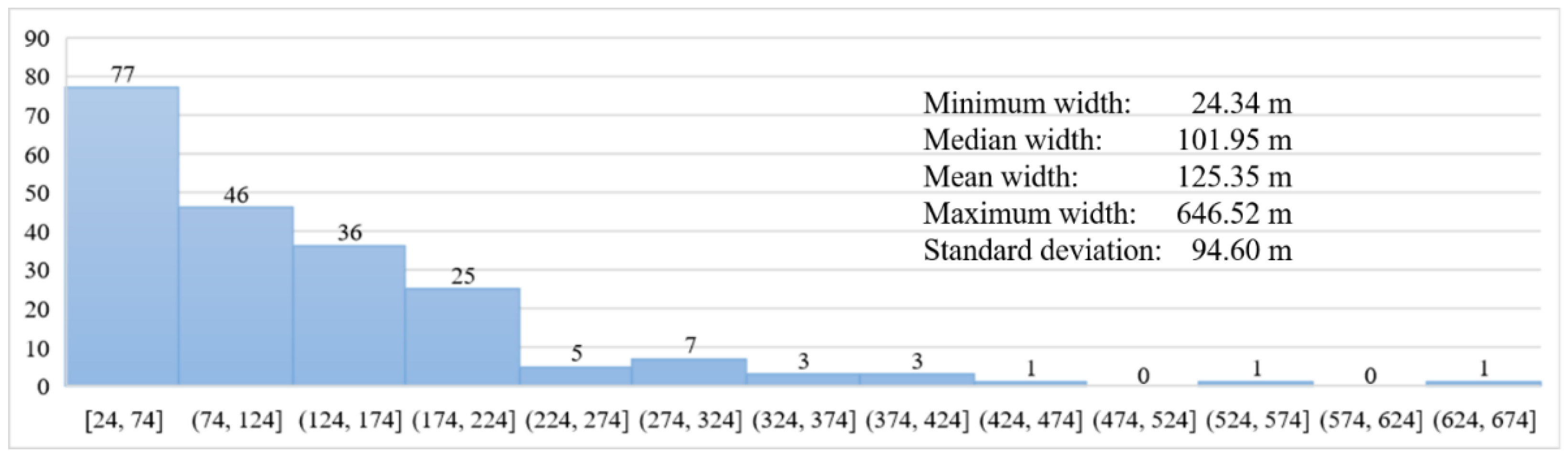
Deriving the proper structure of lotic habitats, namely the structuralization of lotic habitats, is crucial to monitoring and modeling water quality on a large scale. How to structuralize complicated lotic habitats for practical use remains challenging. This study novelly integrates remote sensing, geographic information system (GIS), and computer vision techniques to structuralize complicated lotic habitats. A method based on Sentinel-2 imagery and weighted focal statistic convolution (WFSC) is developed to structuralize the complicated lotic habitats into discrete river links. First, aquatic habitat image objects are delineated from Sentinel-2 imagery using geographic object-based image analysis (GEOBIA). These lotic habitat image objects are then separated from lentic habitat image objects using a hydrologically derived river network as a reference. Second, the binary image of the lotic habitat image objects is converted to a fuzzy magnitude surface using WFSC. The ridgelines on the magnitude surface are traced as the centerlines of river links. Finally, the centerlines of river links are used to split the complicated lotic habitats into discrete river links. Essential planar geometric attributes are then numerically derived from each river link. The proposed method was successfully applied to the braided river network in the Mobile River Basin in the U.S. The results indicate that the proposed method can properly structuralize lotic habitats with high spatial accuracy and correct topological consistency. The proposed method can also derive essential attributes that are difficult to obtain from conventional methods on a large scale. With sufficient measurements, a striking width–abundance pattern has been observed in our study area, indicating a promising logarithmic law in lotic habitat abundance.
Keywords: lotic habitat; Sentinel-2 imagery; GEOBIA; structuralization; image convolution; river link; remote sensing; GIS; image processing; computer vision lotic habitat; Sentinel-2 imagery; GEOBIA; structuralization; image convolution; river link; remote sensing; GIS; image processing; computer vision