
Article

Contributions of Human Activities and Climatic Variability to Changes in River Rwizi Flows in Uganda, East Africa

Department of Civil and Environmental Engineering, Kyambogo University, P.O. Box 1, Kyambogo, Kampala, Uganda
*
Author to whom correspondence should be addressed.
Hydrology 2021, 8(4), 145; https://doi.org/10.3390/hydrology8040145

Submission received: 30 August 2021 / Revised: 21 September 2021 / Accepted: 22 September 2021 / Published: 26 September 2021

Abstract

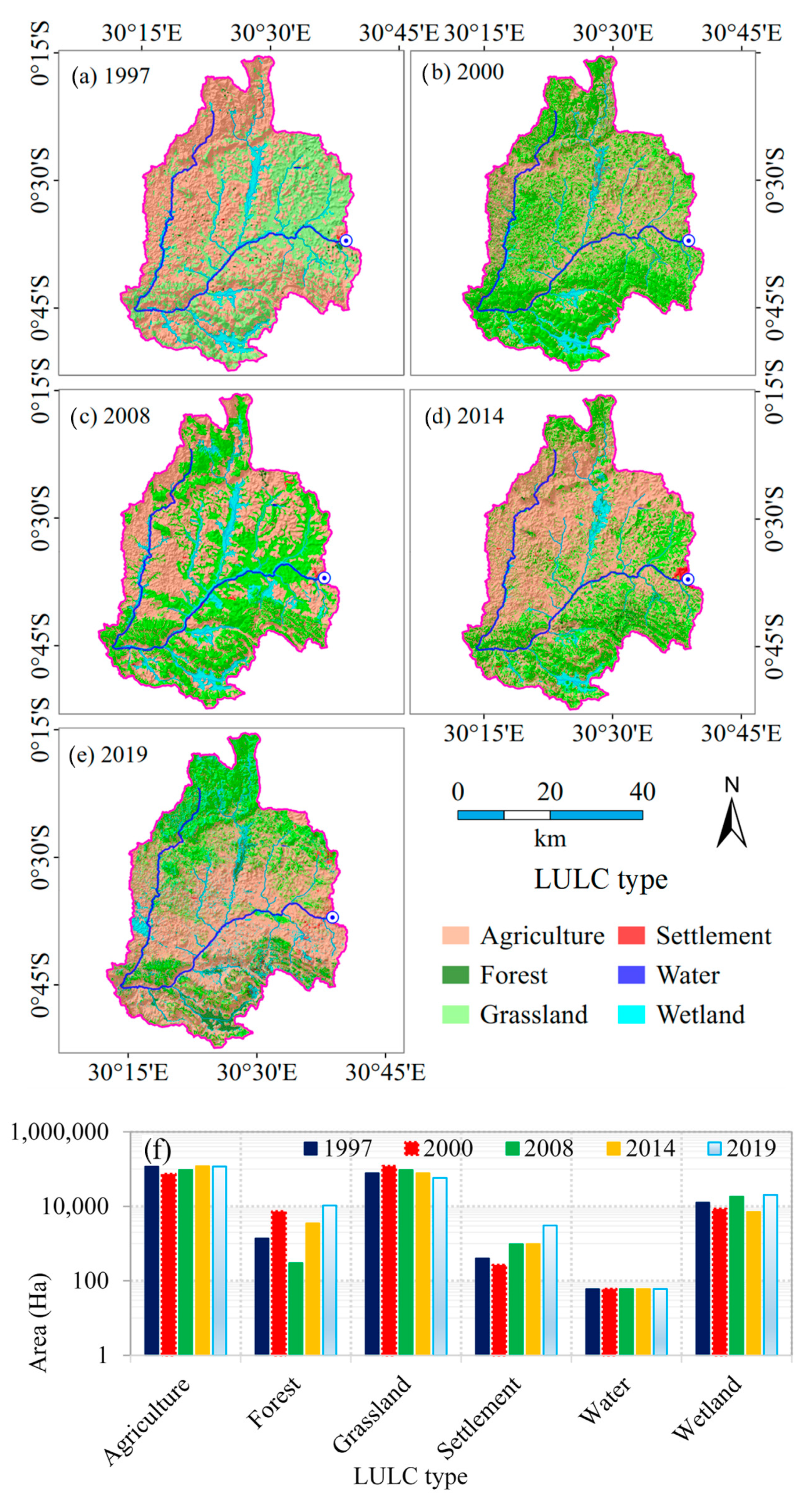
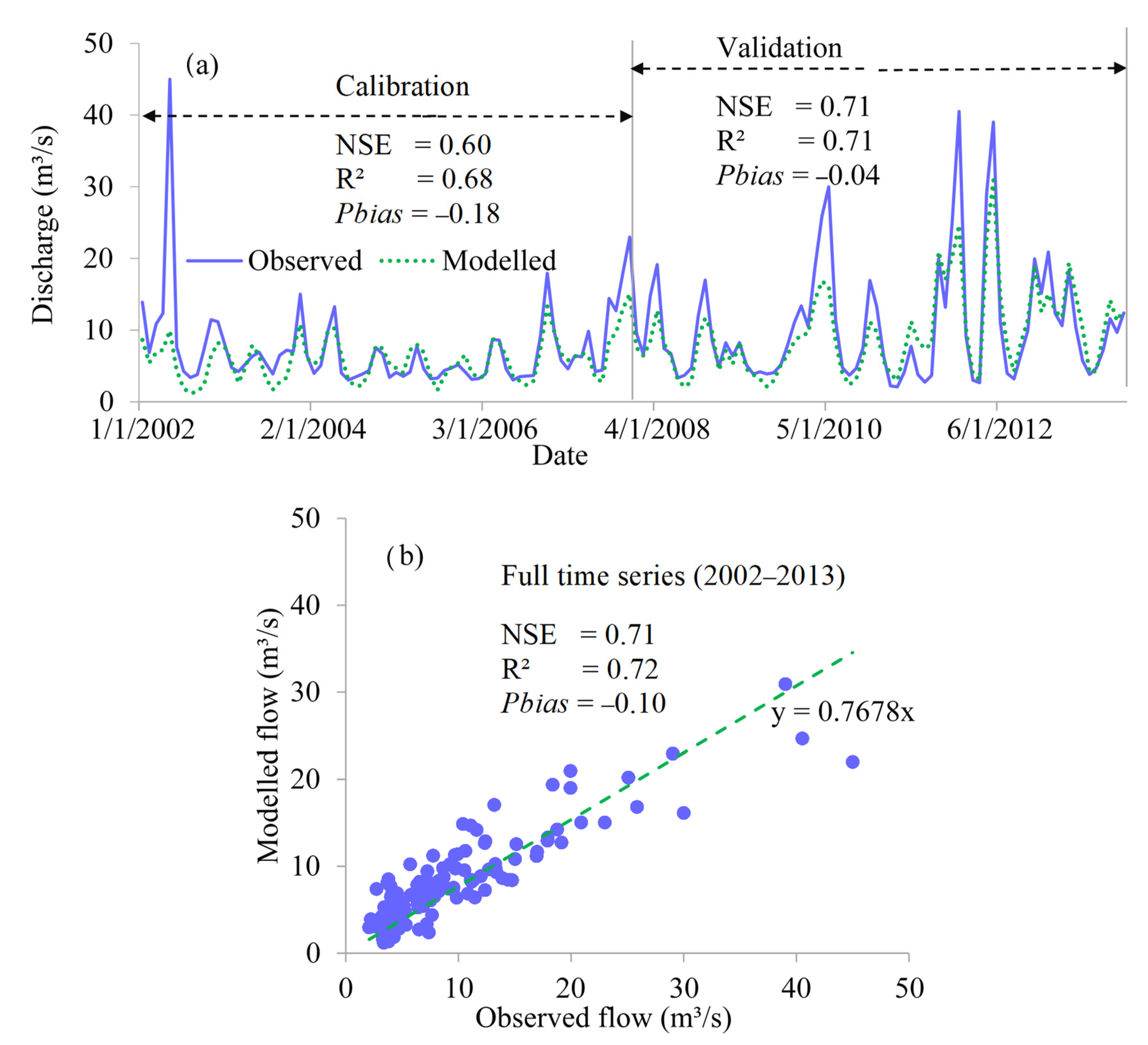
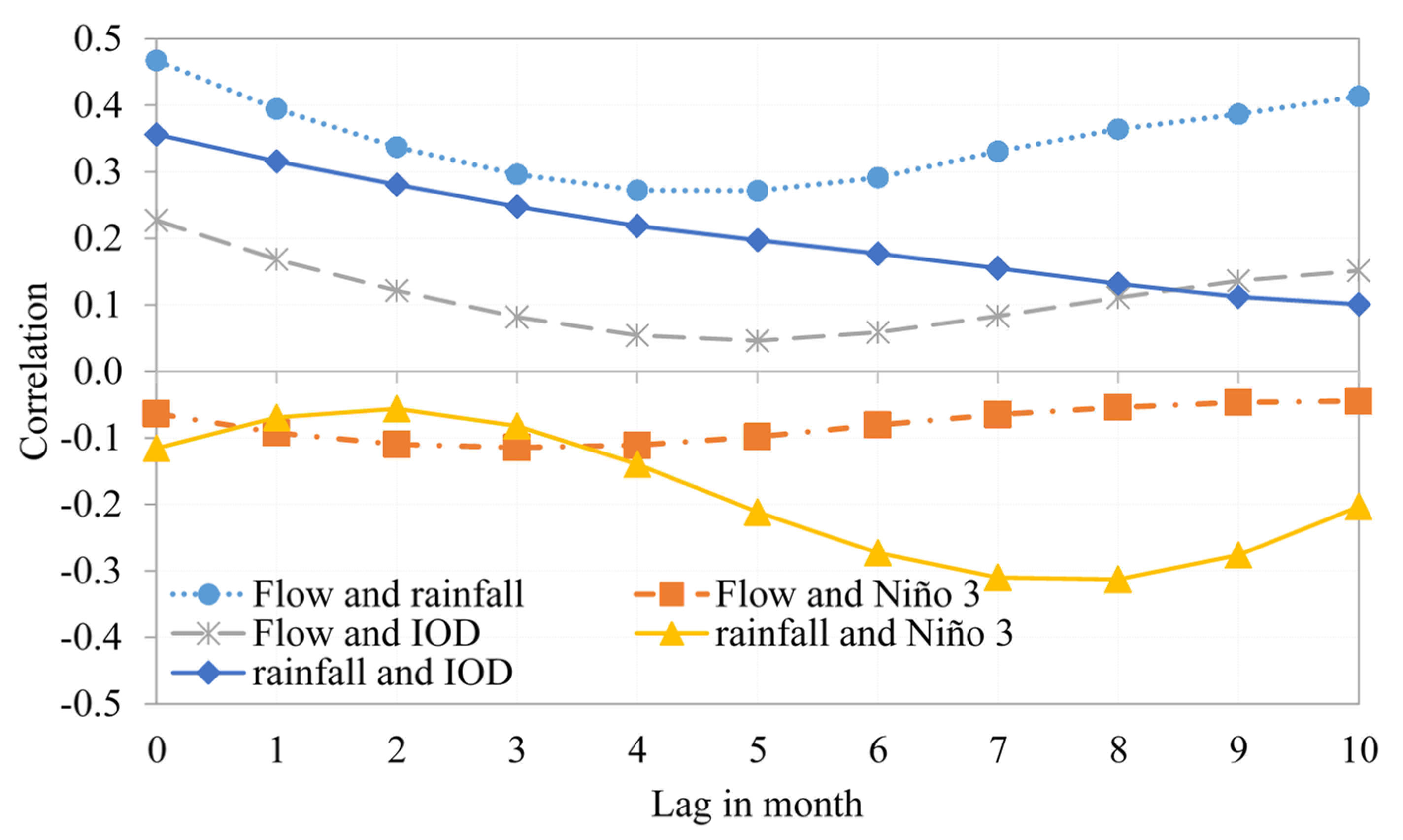
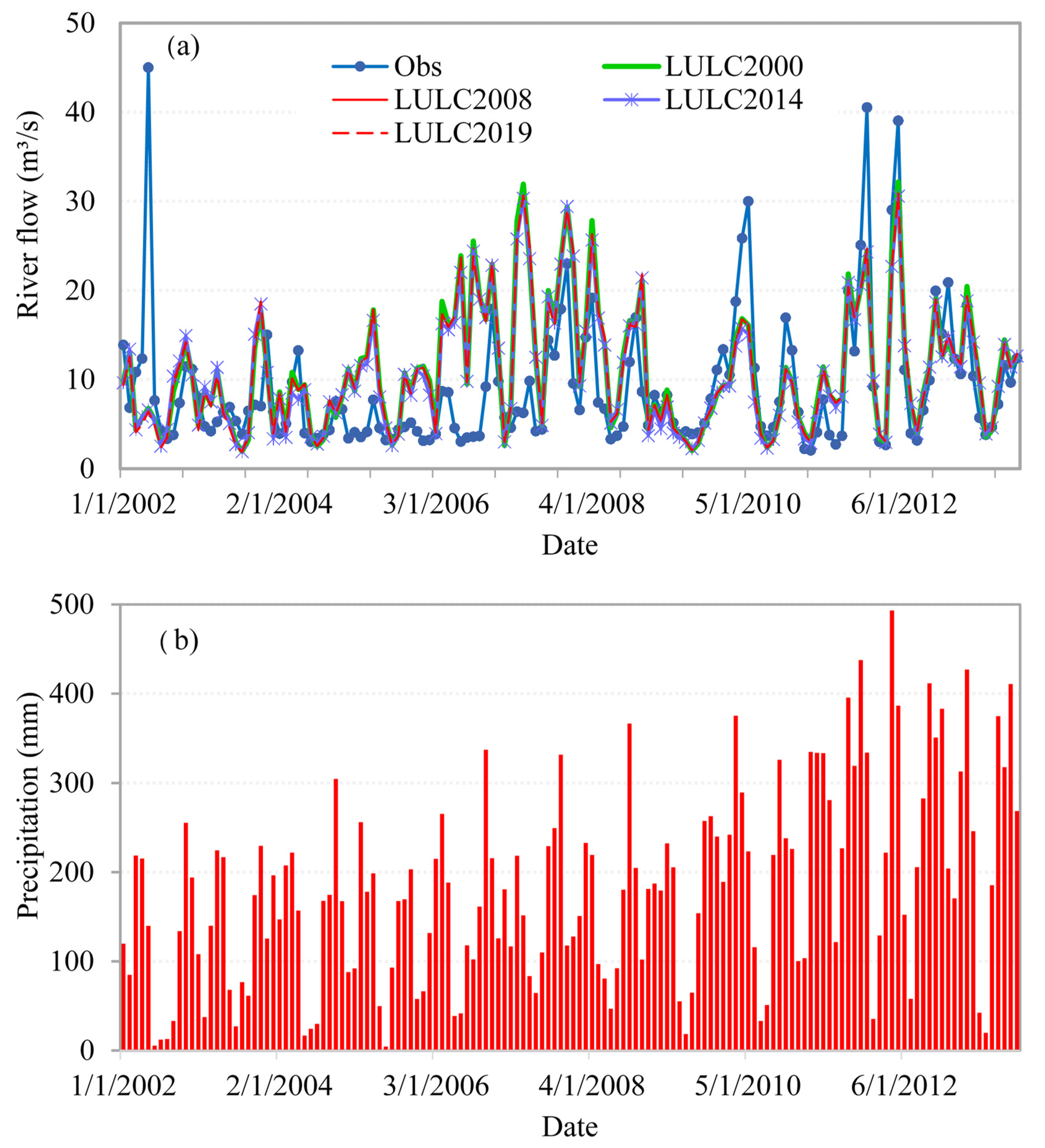
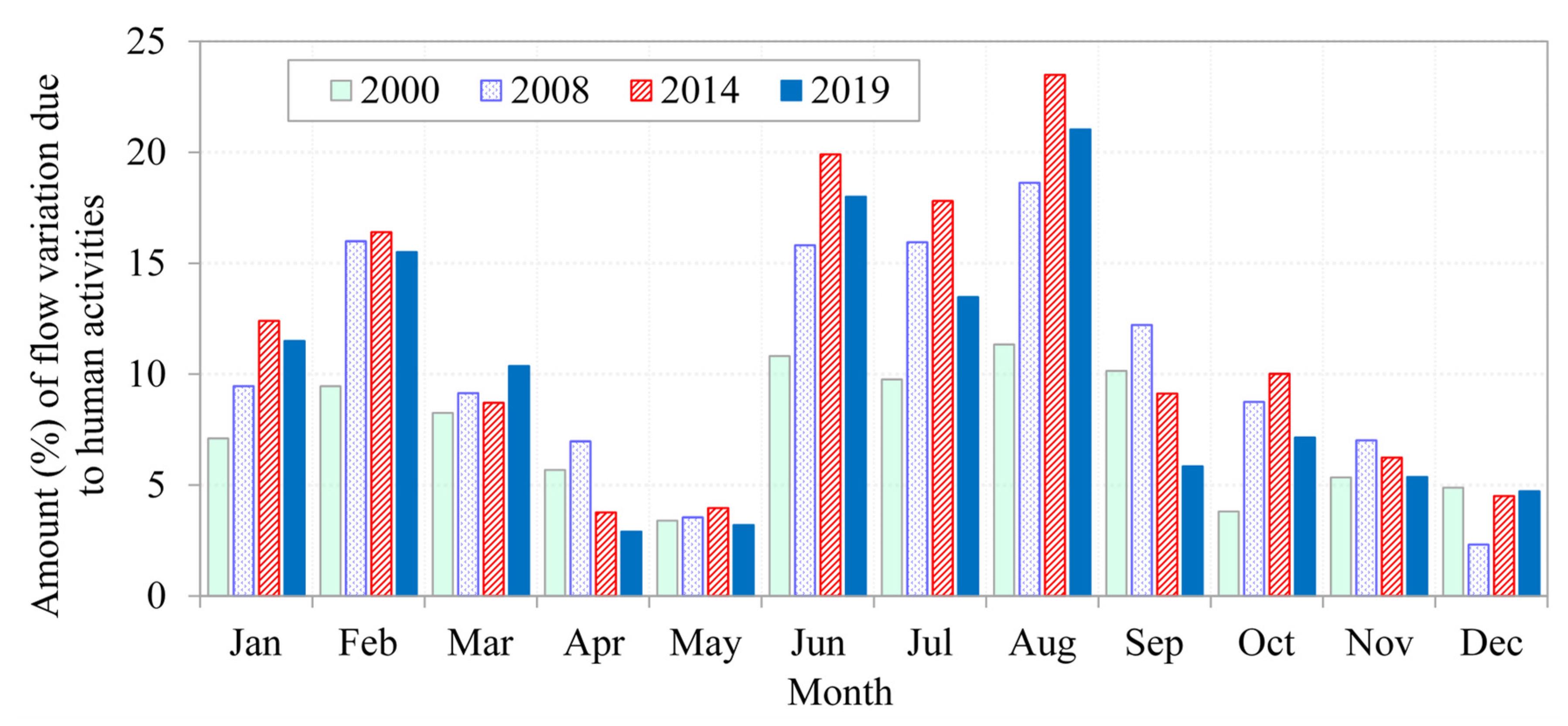
This study employed Soil and Water Assessment Tool (SWAT) to analyze the impacts of climate variability and human activities on River Rwizi flows. Changes in land use and land cover (LULC) types from 1997 to 2019 were characterized using remotely sensed images retrieved from Landsat ETM/TM satellites. SWAT was calibrated and validated over the periods 2002–2008 and 2009–2013, respectively. Correlation between rainfall and river flow was analyzed. By keeping the optimal values of model parameters fixed while varying the LULC maps, differences in the modeled flows were taken to reflect the impacts of LULC changes on rainfall–runoff generation. Impacts due to human activities included contributions from changes in LULC types and the rates of water abstracted from the river as a percentage of the observed flow. Climate variability was considered in terms of changes in climatic variables such as rainfall and evapotranspiration, among others. Variability of rainfall was analyzed with respect to changes in large-scale ocean-atmosphere conditions. From 2000 to 2014, the portion of River Rwizi catchment area covered by cropland increased from 23.0% to 51.6%, grassland reduced from 63.3% to 37.8%, and wetland decreased from 8.1% to 4.7%. Nash–Sutcliffe Efficiency values for calibration and validation were 0.60 and 0.71, respectively. Contributions of human activities to monthly river flow changes varied from 2.3% to 23.5%. Impacts of human activities on the river flow were on average found to be larger during the dry (14.7%) than wet (5.8%) season. Using rainfall, 20.9% of the total river flow variance was explained. However, climate variability contributed 73% of the river flow changes. Rainfall was positively and negatively correlated with Indian Ocean Dipole (IOD) and Niño 3, respectively. The largest percentages of the total rainfall variance explained by IOD and Niño 3 were 12.7% and 9.8%, respectively. The magnitude of the correlation between rainfall and IOD decreased with increasing lag in time. These findings are relevant for developing River Rwizi catchment management plans.
Keywords: climate variability; hydrological modeling; land-use or land cover (LULC) changes; rainfall–runoff; River Rwizi catchment; SWAT; Uganda climate variability; hydrological modeling; land-use or land cover (LULC) changes; rainfall–runoff; River Rwizi catchment; SWAT; Uganda