
Article

A Near Real-Time Hydrological Information System for the Upper Danube Basin
Institute for Hydrology and Water Management, University of Natural Resources and Life Sciences, Vienna (BOKU), Muthgasse 18, 1190 Vienna, Austria
*
Author to whom correspondence should be addressed.
Hydrology 2021, 8(4), 144; https://doi.org/10.3390/hydrology8040144

Submission received: 21 July 2021 / Revised: 15 September 2021 / Accepted: 19 September 2021 / Published: 23 September 2021
(This article belongs to the Special Issue Observations in Water Resources)

Abstract

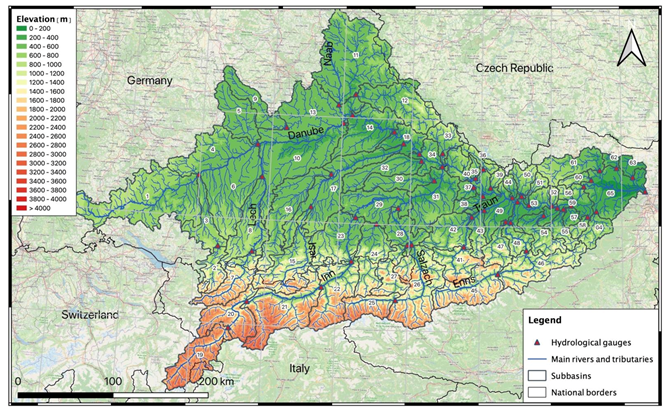
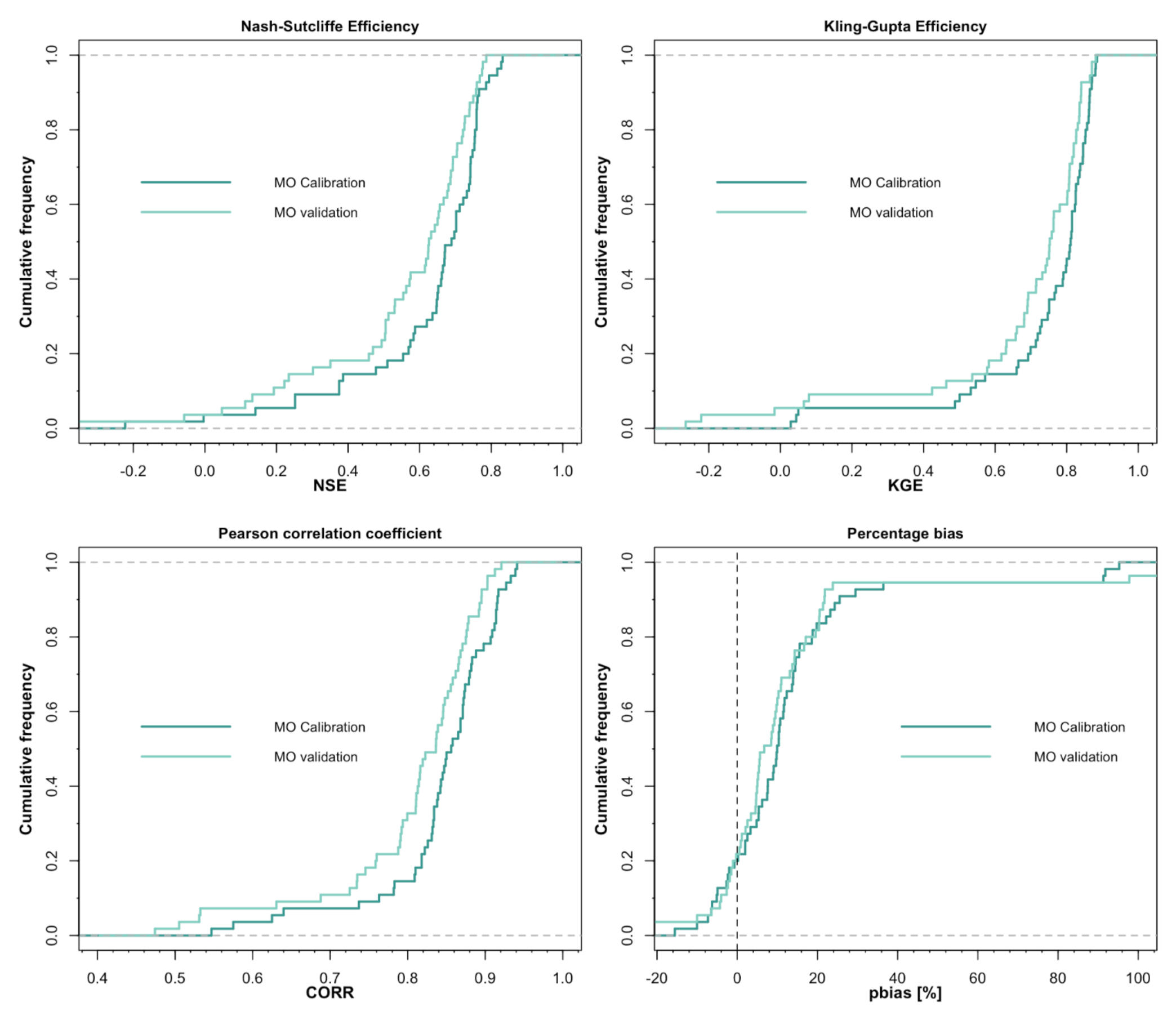
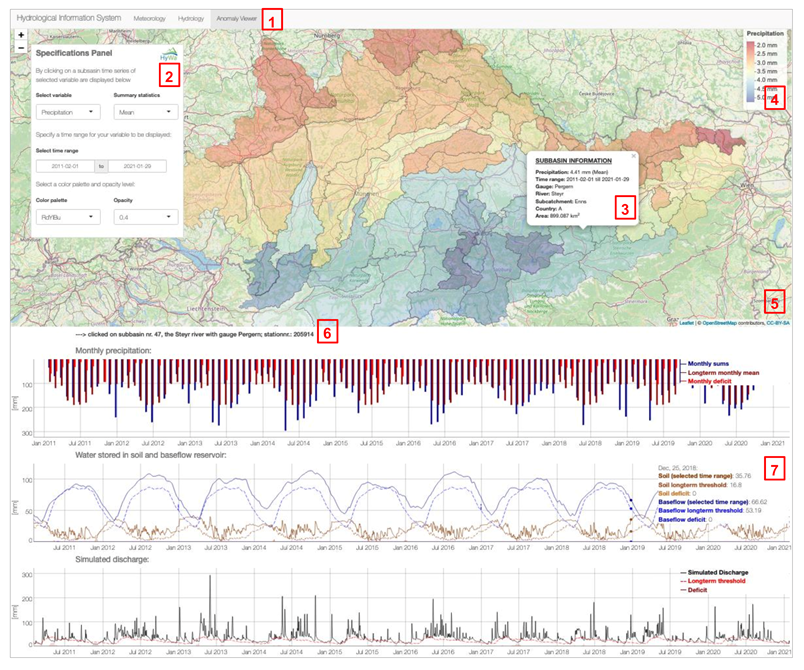
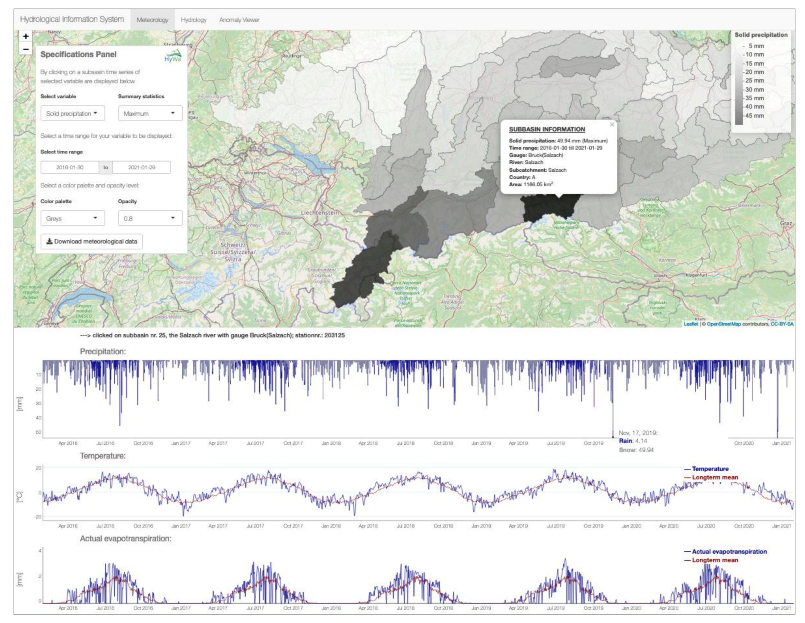
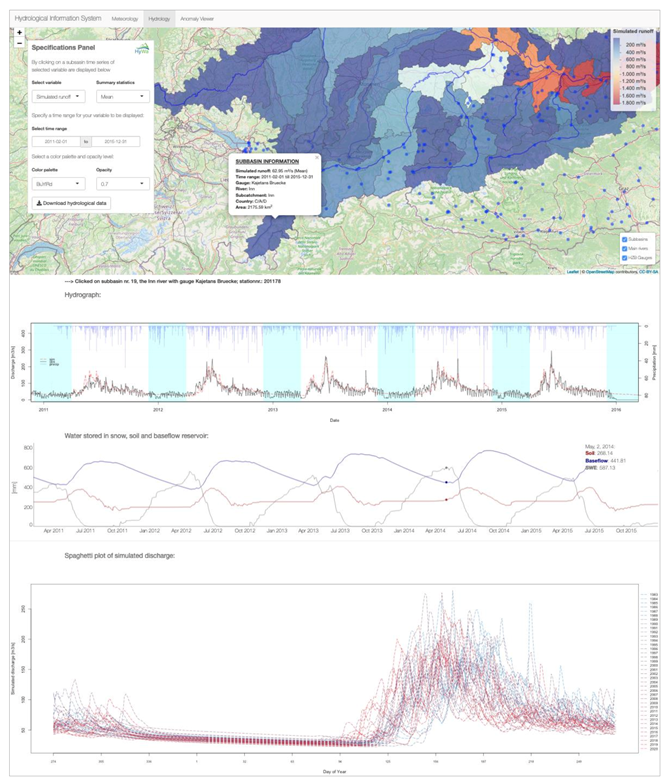
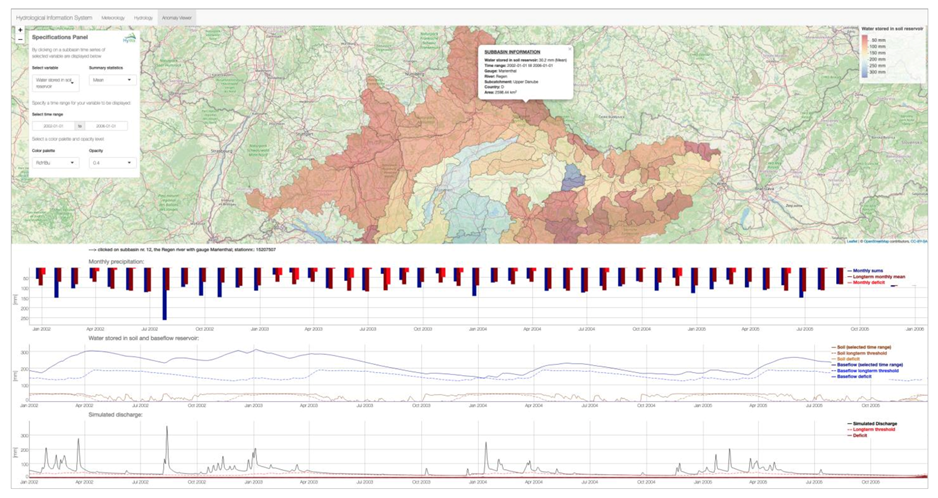
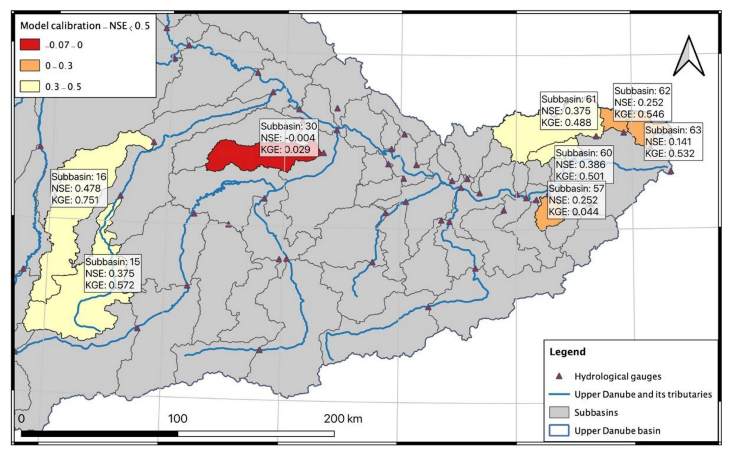
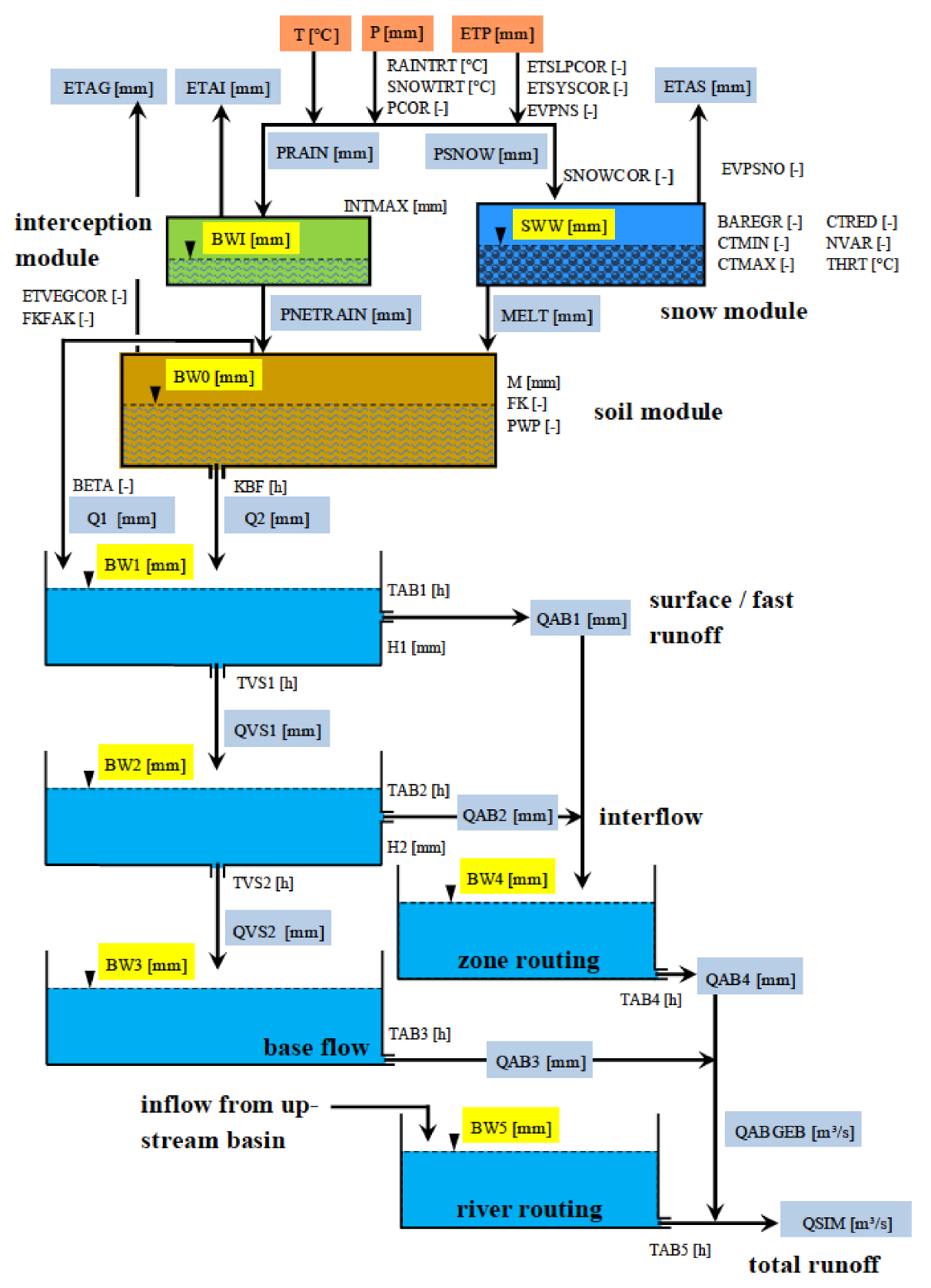
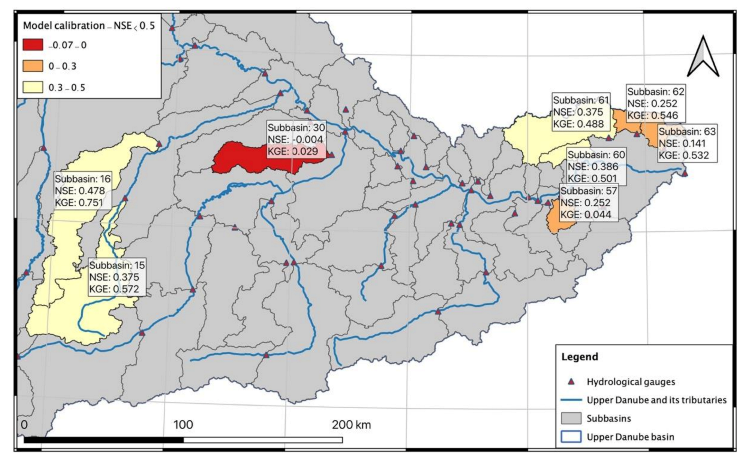
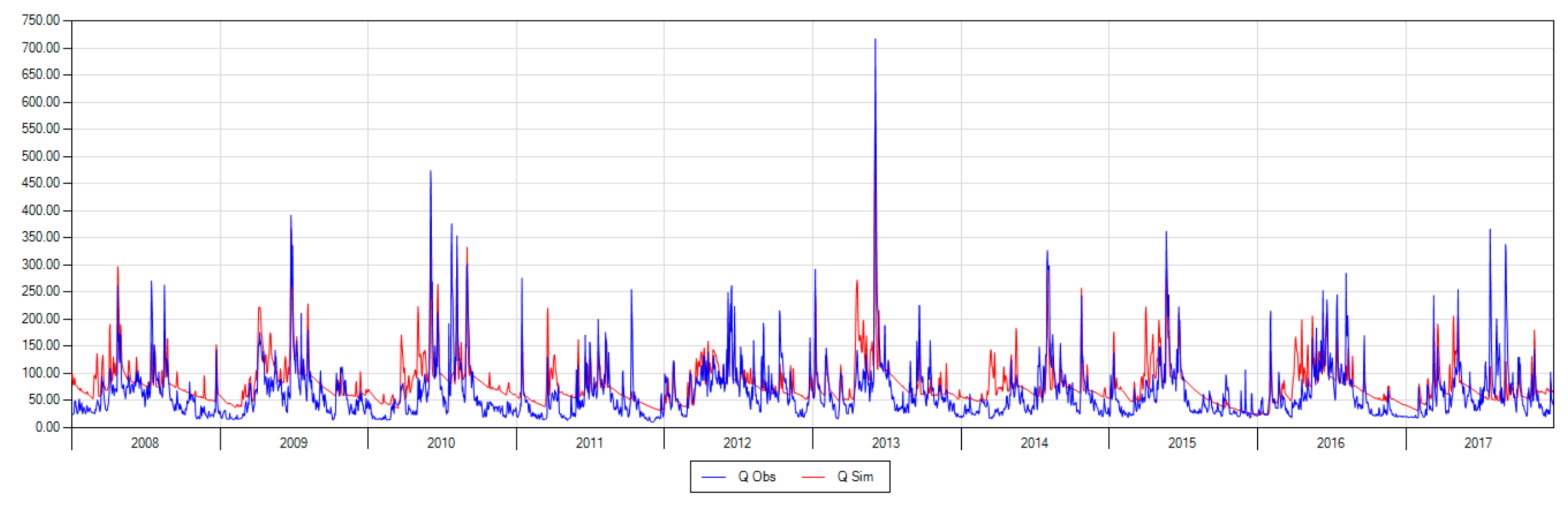
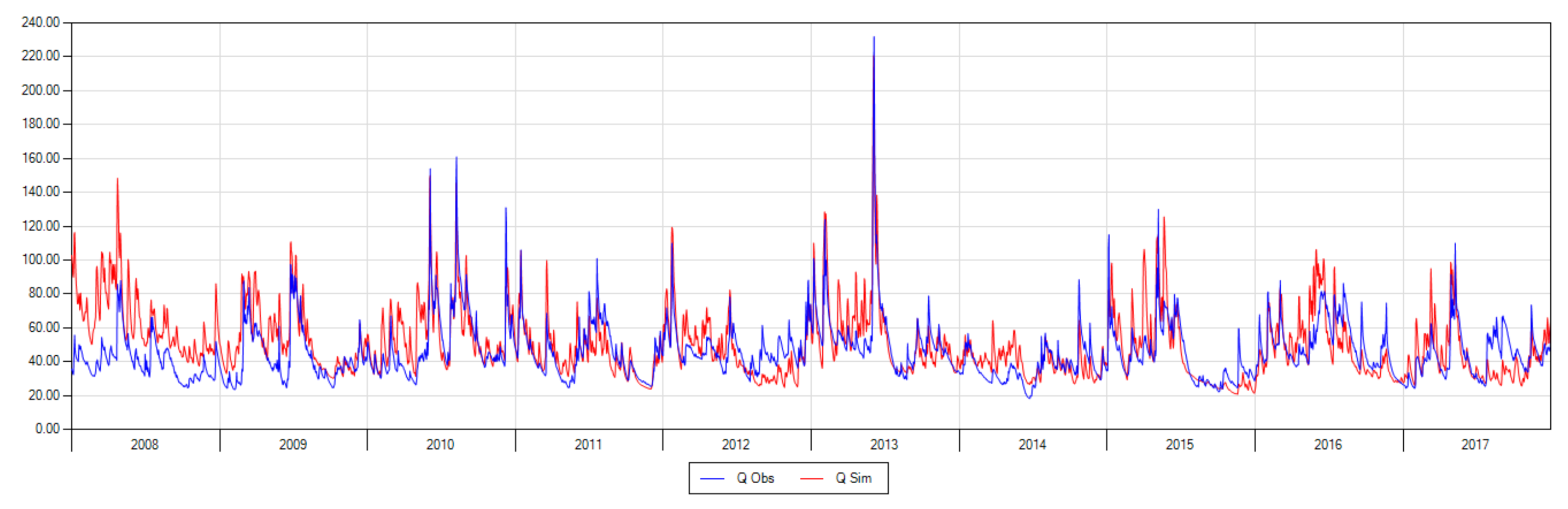
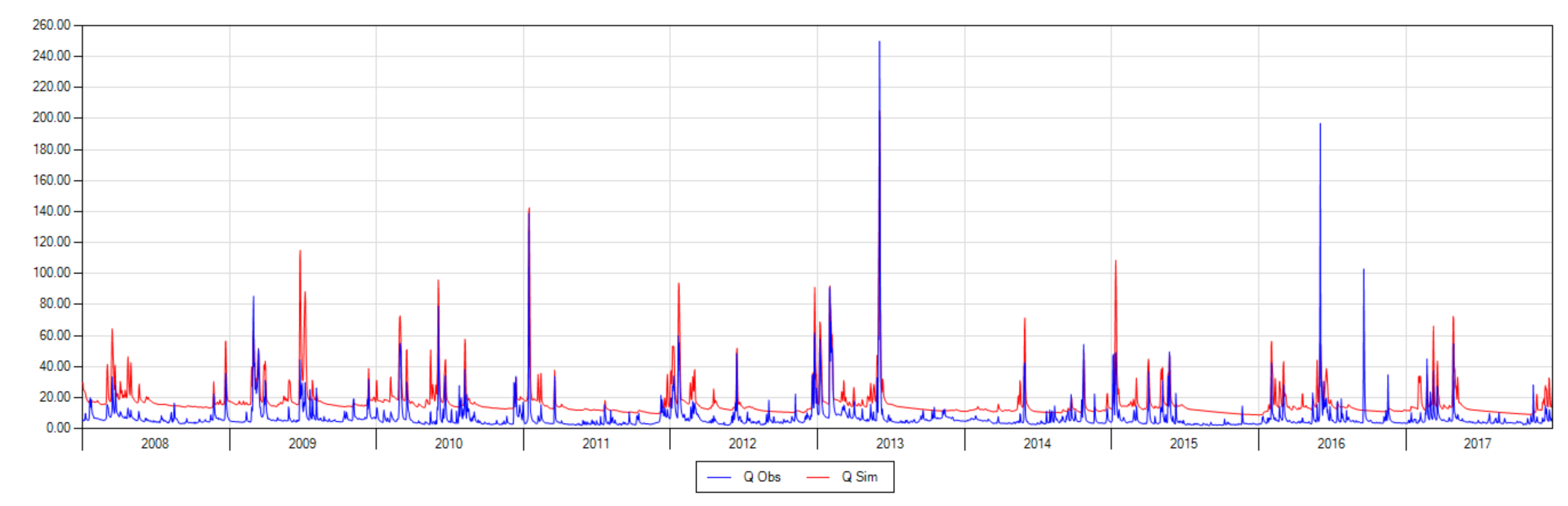
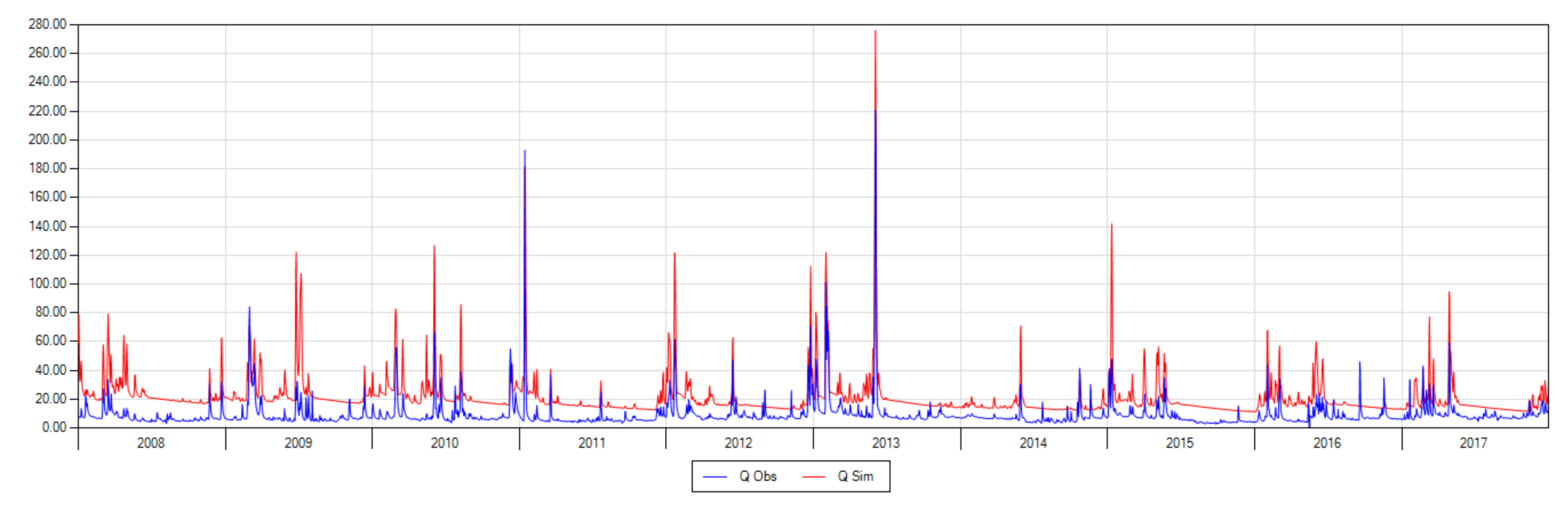
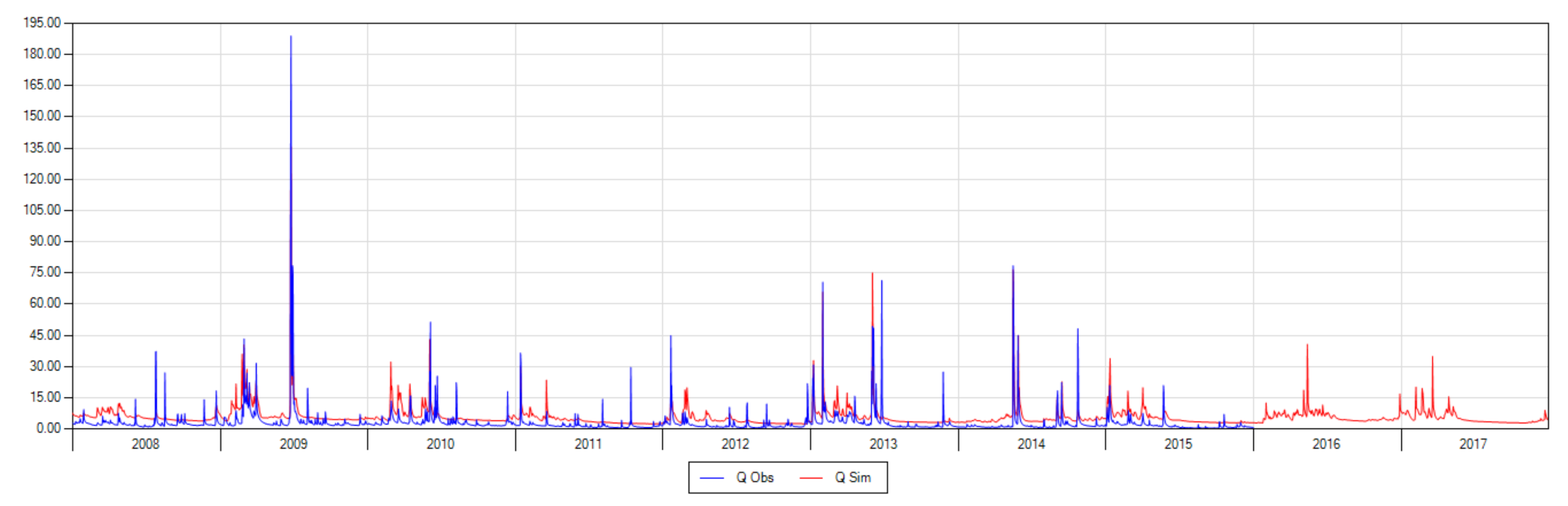
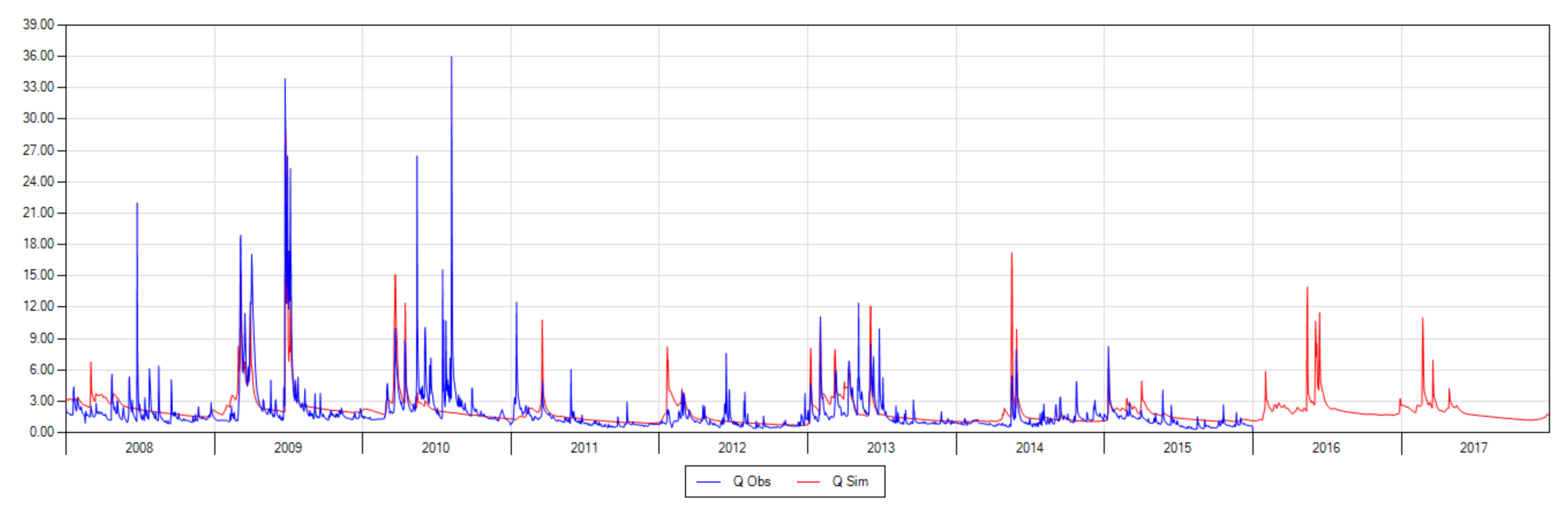
The multi-national catchment of the Upper Danube covers an area of more than 100,000 km2 and is of great ecological and economic value. Its hydrological states (e.g., runoff conditions, snow cover states or groundwater levels) affect fresh-water supply, agriculture, hydropower, transport and many other sectors. The timely knowledge of the current status is therefore of importance to decision makers from administration or practice but also the interested public. Therefore, a web-based, near real-time hydrological information system was conceptualized and developed for the Upper Danube upstream of Vienna (Upper Danube HIS), utilizing ERA5 reanalysis data (ERA5) and hydrological simulations provided by the semi-distributed hydrological model COSERO. The ERA5 reanalysis data led to comparatively high simulation performance for a total of 65 subbasins with a median NSE and KGE of 0.69 and 0.81 in the parameter calibration and 0.63 and 0.75 in the validation period. The Upper Danube HIS was implemented within the R programming environment as a web application based on the Shiny framework. This enables an intuitive, interactive access to the system. It offers various capabilities for a hydrometeorological analysis of the 65 subbasins of the Upper Danube basin, inter alia, a method for the identification of hydrometeorological droughts. This proof of concept and system underlines how valuable information can be obtained from freely accessible data and by the means of open source software and is made available to the hydrological community, water managers and the public.
Keywords: Upper Danube basin; hydrological information system; hydrological modelling; COSERO model; hydrometeorological deficit Upper Danube basin; hydrological information system; hydrological modelling; COSERO model; hydrometeorological deficit