Article

Bounding of Flow and Transport Analysis in Heterogeneous Saturated Porous Media: A Minimum Energy Dissipation Principle for the Bounding and Scale-Up

by
R. William Nelson
1 and
Gustavious P. Williams
2,*
1
Groundwater Hydrologist, Agricultural, and Civil Engineer, Retired, Ogden, UT 84401, USA
2
Department of Civil and Environmental Engineering, Brigham Young University, Provo, UT 84602, USA
*
Author to whom correspondence should be addressed.
Hydrology 2019, 6(2), 33; https://doi.org/10.3390/hydrology6020033

Submission received: 6 February 2019 / Revised: 9 April 2019 / Accepted: 21 April 2019 / Published: 25 April 2019

Abstract

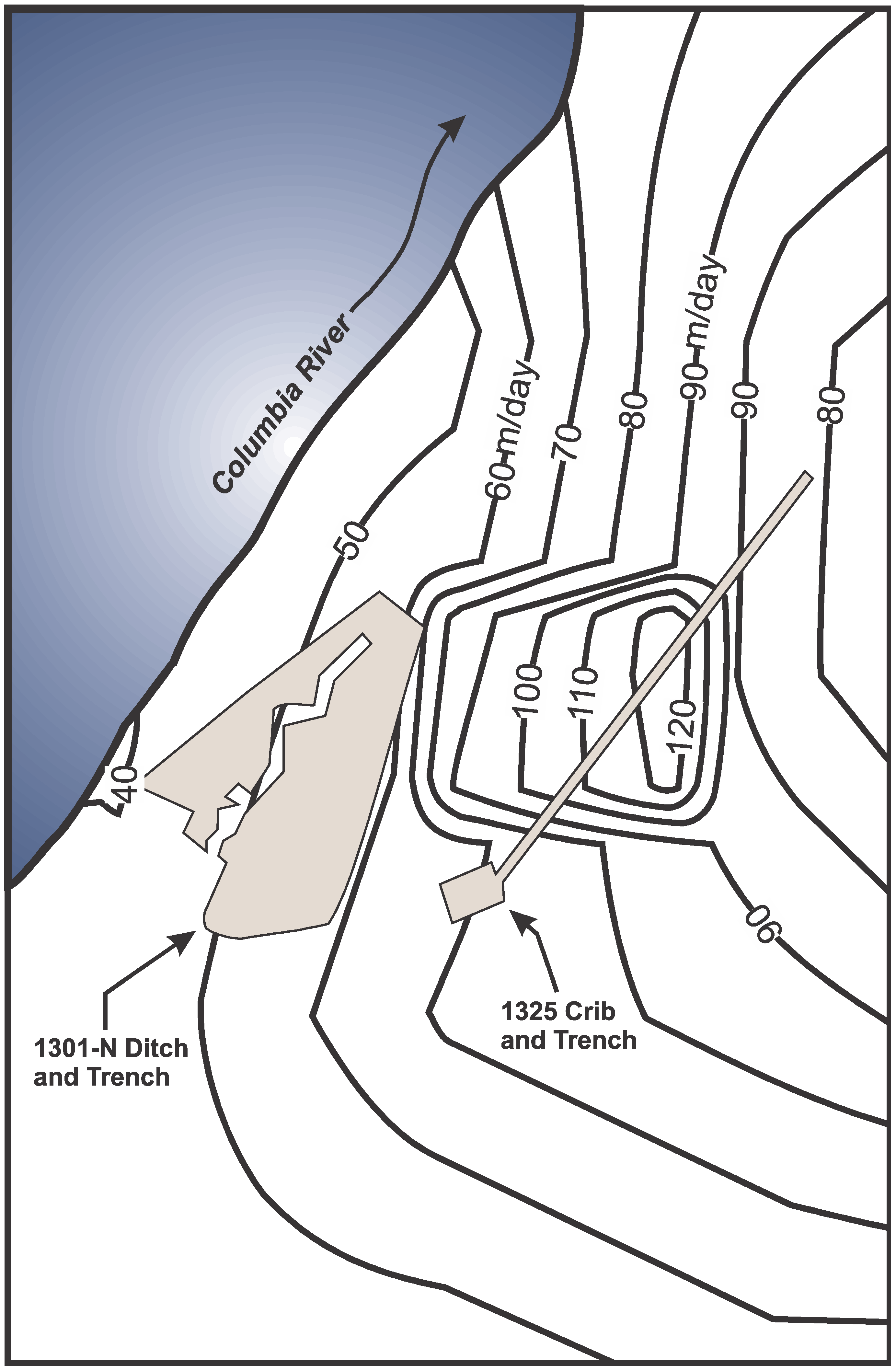
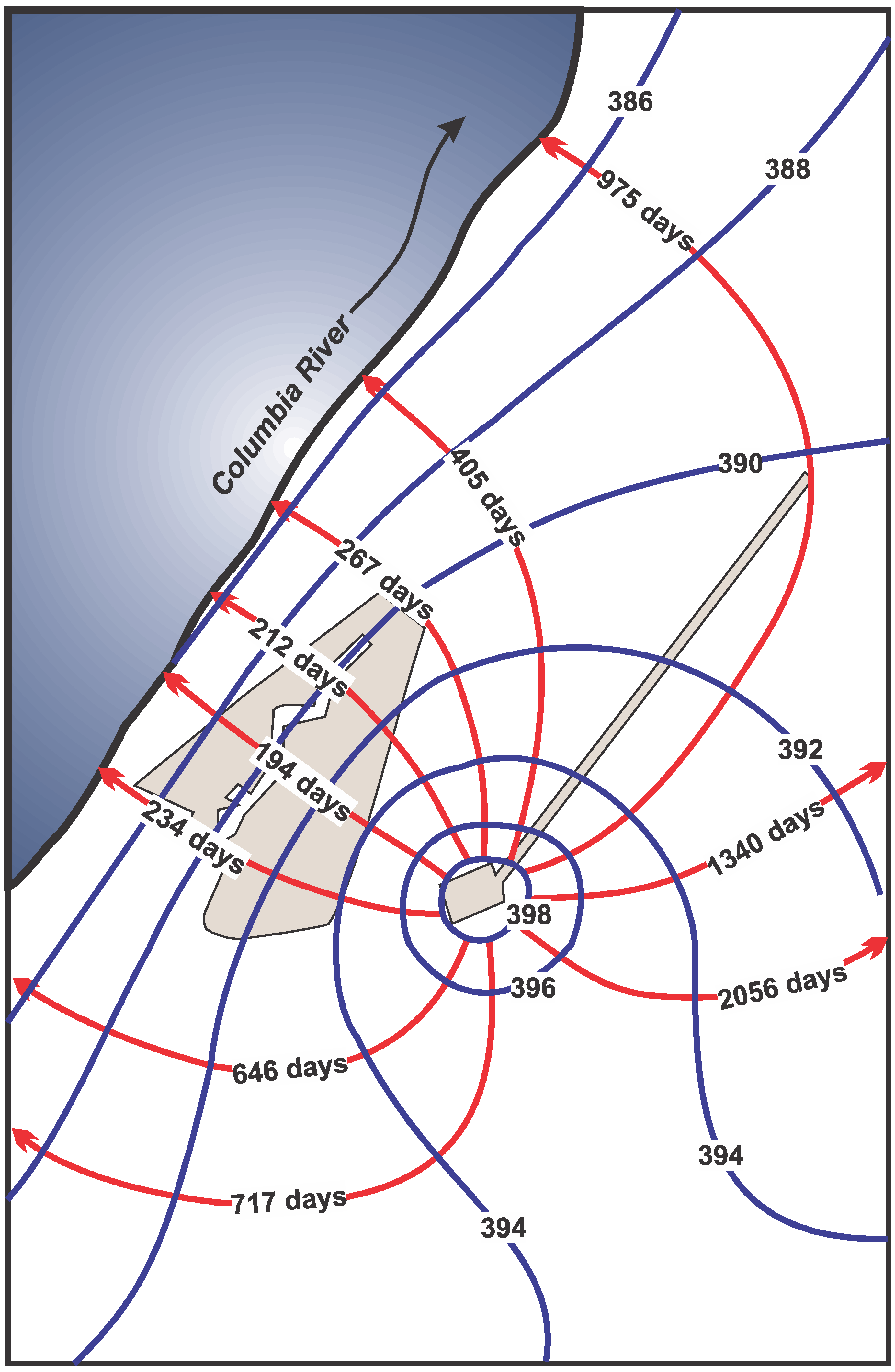
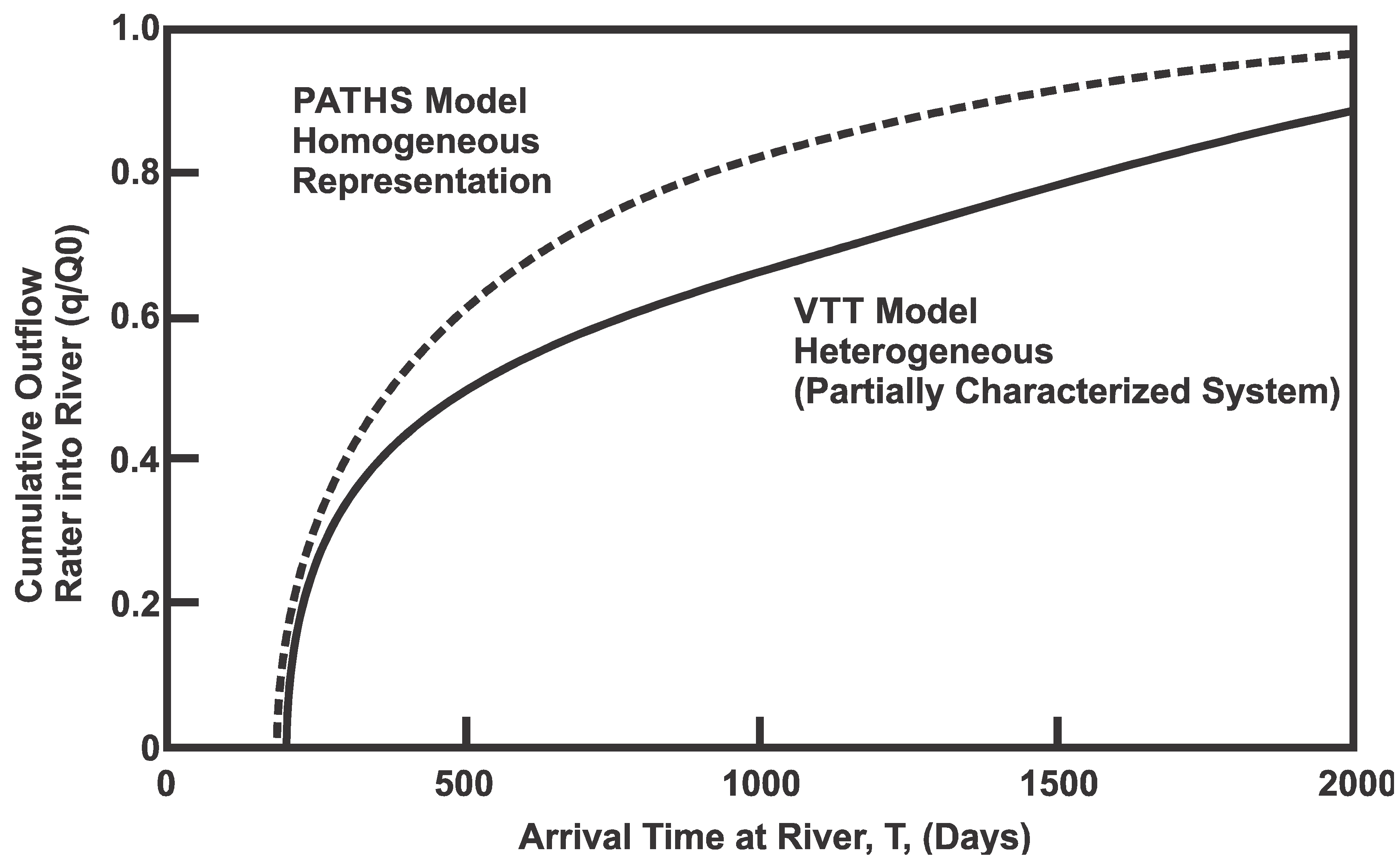
We apply minimum kinetic energy principles from classic mechanics to heterogeneous porous media flow equations to derive and evaluate rotational flow components to determine bounding homogenous representations. Kelvin characterized irrotational motions in terms of energy dissipation and showed that minimum dynamic energy dissipation occurs if the motion is irrotational; i.e., a homogeneous flow system. For porous media flow, reductions in rotational flow represent heterogeneity reductions. At the limit, a homogeneous system, flow is irrotational. Using these principles, we can find a homogenous system that bounds a more complex heterogeneous system. We present mathematics for using the minimum energy principle to describe flow in heterogeneous porous media along with reduced special cases with the necessary bounding and associated scale-up equations. The first, simple derivation involves no boundary differences and gives results based on direct Kelvin-type minimum energy principles. It provides bounding criteria, but yields only a single ultimate scale-up. We present an extended derivation that considers differing boundaries, which may occur between scale-up elements. This approach enables a piecewise less heterogeneous representation to bound the more heterogeneous system. It provides scale-up flexibility for individual model elements with differing sizes, and shapes and supports a more accurate representation of material properties. We include a case study to illustrate bounding with a single direct scale-up. The case study demonstrates rigorous bounding and provides insight on using bounding flow to help understand heterogeneous systems. This work provides a theoretical basis for developing bounding models of flow systems. This provides a means to justify bounding conditions and results.
Keywords: permeability bounding; minimum energy dissipation; permeability scale-up permeability bounding; minimum energy dissipation; permeability scale-up