1. Introduction
Access to drinking water is a fundamental human right and a prerequisite for sustainable development. According to the United Nations World Report (2019), more than 2.1 billion people still lack access to safe drinking water [
1,
2]. In sub-Saharan Africa, the availability of fresh water is essential to economic growth and social development, particularly for the 70% of the rural population dependent on agriculture [
3].
Climate change represents a major threat to the world’s water resources. According to the Intergovernmental Panel on Climate Change (IPCC), most regions of the world are likely to experience a negative impact on their freshwater resources and aquatic ecosystems, with increased evaporation and changes in precipitation patterns affecting runoff and the frequency of floods and droughts [
4,
5]. In semi-arid regions, these phenomena are amplified by potential evapotranspiration that is already higher than annual rainfall [
2].
According to the World Bank, water scarcity exacerbated by climate change could lead to a drop in GDP of around 6% in some regions, cause migration, and trigger conflicts [
6]. Faced with these challenges, assessing the availability of water resources is a fundamental step towards rational management [
6,
7]. It is crucial to focus on water-limited areas, as these regions are particularly vulnerable to the impacts of climate change and increasing water demand. Without immediate action, water will become a scarce resource even in areas where it is currently abundant, with far-reaching consequences for all socio-economic activities [
8,
9]. Failure to guarantee water security will jeopardise the achievement of several Sustainable Development Goals, including those relating to poverty, hunger, health, gender equality, clean energy, and the protection of ecosystems [
8,
10].
In Senegal, although water resources are estimated at 4747 m
3/capita/year, the water sector faces numerous challenges: scarcity, rainfall irregularity, vulnerability of resources, uneven spatial distribution, conflicts of use, overexploitation, and qualitative degradation [
6]. In the Senegal River basin, water resources face multiple challenges, such as climate variability, demographic pressures, and various productive activities [
3,
11].
Characterized by a semi-arid climate, Lake Guiers is a vital water resource for Senegal. It is fed by the Senegal River via the Taouey Canal spanning 17 km, holding a storage potential of 650 million m
3 of fresh water [
12]. The lake provides crucial ecosystem services such as drinking water supply (e.g., 50% of Dakar’s supply), small-scale local farming, agribusiness, livestock rearing, and household needs [
13]. Consequently, the basin fosters diverse socio-economic activities, including fishing, agriculture with an irrigable potential exceeding 100,000 hectares, and livestock farming involving various animal species [
14]. The soil fertility and abundance of water have promoted the establishment of many agri-industries, such as CSS, West Africa Farm, and Swame Agri, which specialize in the cultivation of crops such as rice, sugar cane, fodder, and fruit [
15,
16]. These water-intensive activities depend heavily on Lake Guiers as the main source of water supply.
Despite its critical importance, there is limited knowledge of Lake Guiers’ resources and how they might respond to global changes [
17,
18]. Statistics on water use and supply are sparse and incomplete. This lack of data hinders our ability to assess the impacts of climate change and population growth on the lake, which is crucial for formulating effective climate adaptation policies. The quality of Lake Guiers is deteriorating due to the supply of nutrients, mainly from agricultural areas, through landfill stations, drainage, irrigation, and soil washing [
19]. In addition, eutrophication of the lake caused by the proliferation of aquatic plants is becoming increasingly common, and tensions are emerging between the various users of the lake [
19]. Faced with these challenges, exacerbated by global climate change and increasing water demand, it has become imperative to evaluate and plan the management of this vital water resource. While some studies suggest a temporary increase in rainfall [
20], others predict a drying trend by the end of the century [
21,
22]. This uncertainty underscores the need to consider a wider range of climate scenarios in future planning [
4,
23].
Over the years, many hydrologic models have been used to assess water availability. WEAP is a widely used tool for integrated water resource management, particularly suited to contexts involving climate change and growing water demand. The model integrates climatic, demographic, and socio-economic variables in a systemic approach to evaluate future water availability and propose sustainable management strategies.
Despite the strategic importance of Lake Guiers for Senegal’s water security, few studies have comprehensively examined the combined effects of climate change and increasing human water demand on its long-term sustainability. In West Africa (e.g., [
4,
20]), most existing research has focused either on hydroclimatic variability or sector-specific water use, with few studies employing integrated modeling frameworks to capture interactions between climate scenarios, agricultural expansion, and urban water demand. This study addresses this gap by using the WEAP model to simulate multiple climate and socio-economic scenarios up to 2050. The results offer new insights into the vulnerability and future dynamics of Lake Guiers, providing evidence to support climate-resilient and integrated water resource management in Senegal and other semi-arid regions of West Africa.
1.1. Methodology
Study Area
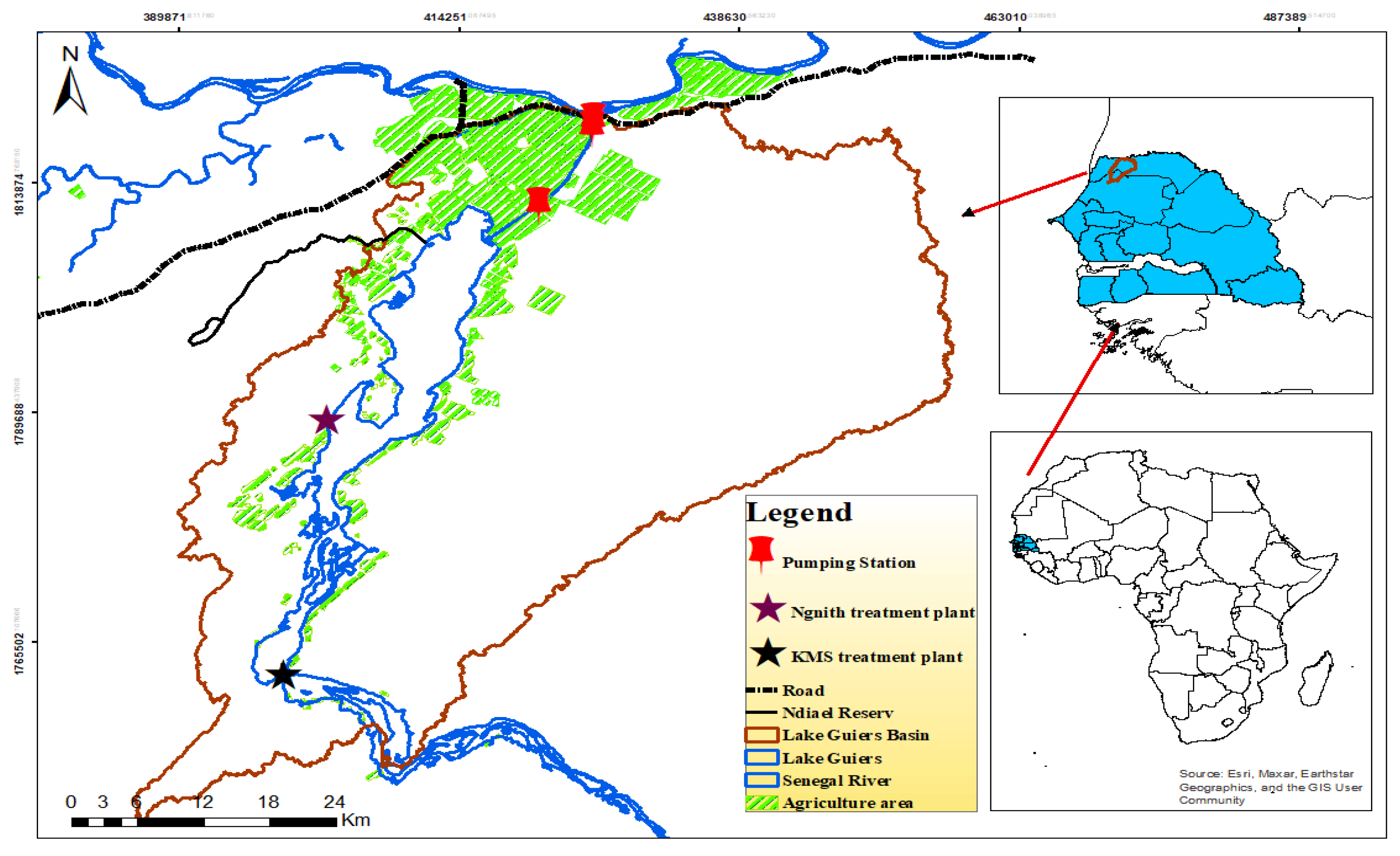
Lake Guiers, located in north-western Senegal between the regions of Saint-Louis and Louga, is one of the main reservoirs of Senegal (
Figure 1). It is 50 km long and 7 km wide, with a surface area varying between 252 and 340 km
2, with a management slope of 1.5 to 2.5 m/km
2. Its filling capacity fluctuates between 450 and 750 million m
3 according to the office in charge of the management of the lake, OLAC. The lake is linked to the Senegal River via the Taouey, a 17 km channel built in 1974 to optimise water transfers and reduce head losses. Two dams, Richard-Toll and Ndombo, were built to regulate the lake’s water supply. Historically, Lake Guiers received inflows from the Senegal River to the north, via the Taouey, and from the lower Ferlo valley to the south, notably via the Bounoum valley. At Keur Momar Sarr, the lake makes a bend and opens out towards this valley, which continues towards Yang-Yang, where the Ferlo fossil network begins, now dysfunctional due to the dune complex on the Ferlo plateau. Endorheic in nature, Lake Guiers is shallow, typical of Sahelian lakes, and plays an essential role in irrigation and the supply of drinking water via the Ngnith and KMS plants.
1.2. Data Collection
1.2.1. Climatic Projections
Climate change is affecting many sectors, not least water resources. Future climate projections focus mainly on temperature and precipitation. For this study, the CNRM-ESM2-1 general circulation model, developed by the Centre National de Recherches Météorologiques (CNRM, France) as part of the Coupled Model Intercomparison Project Phase 6 (CMIP6), was selected for its ability to accurately simulate climate conditions in West Africa [
24]. The Shared Socioeconomic Pathways (SSP) used are SSP2-4.5 (intermediate scenario) and SSP5-8.5 (high-emissions scenario), in line with the simulations developed as part of the IPCC’s sixth report (AR6).
Historical climate data covers the period 1985–2014, while future projections extend from 2015 to 2100. In addition, observed climate data from 2002 to 2017 from the CSS station, X6 Ndombo, supplied by OLAC, were used for calibration and downscaling. A downscaling and bias correction procedure was applied to the historical and future climate projections using CMHyd software, thereby improving the spatial resolution of the data (1.14°).
The results were analysed using Python 3.12 programming, including multiple linear regression (MLR) and the Mann–Kendall test, to identify significant climate trends. The Mann–Kendall test is a widely used statistical method for detecting trends in climatological and hydrological time series [
25]. This methodological approach supports a more detailed analysis of climate change impacts and contributes to improved projections for the study region.
1.2.2. Agricultural Surveys
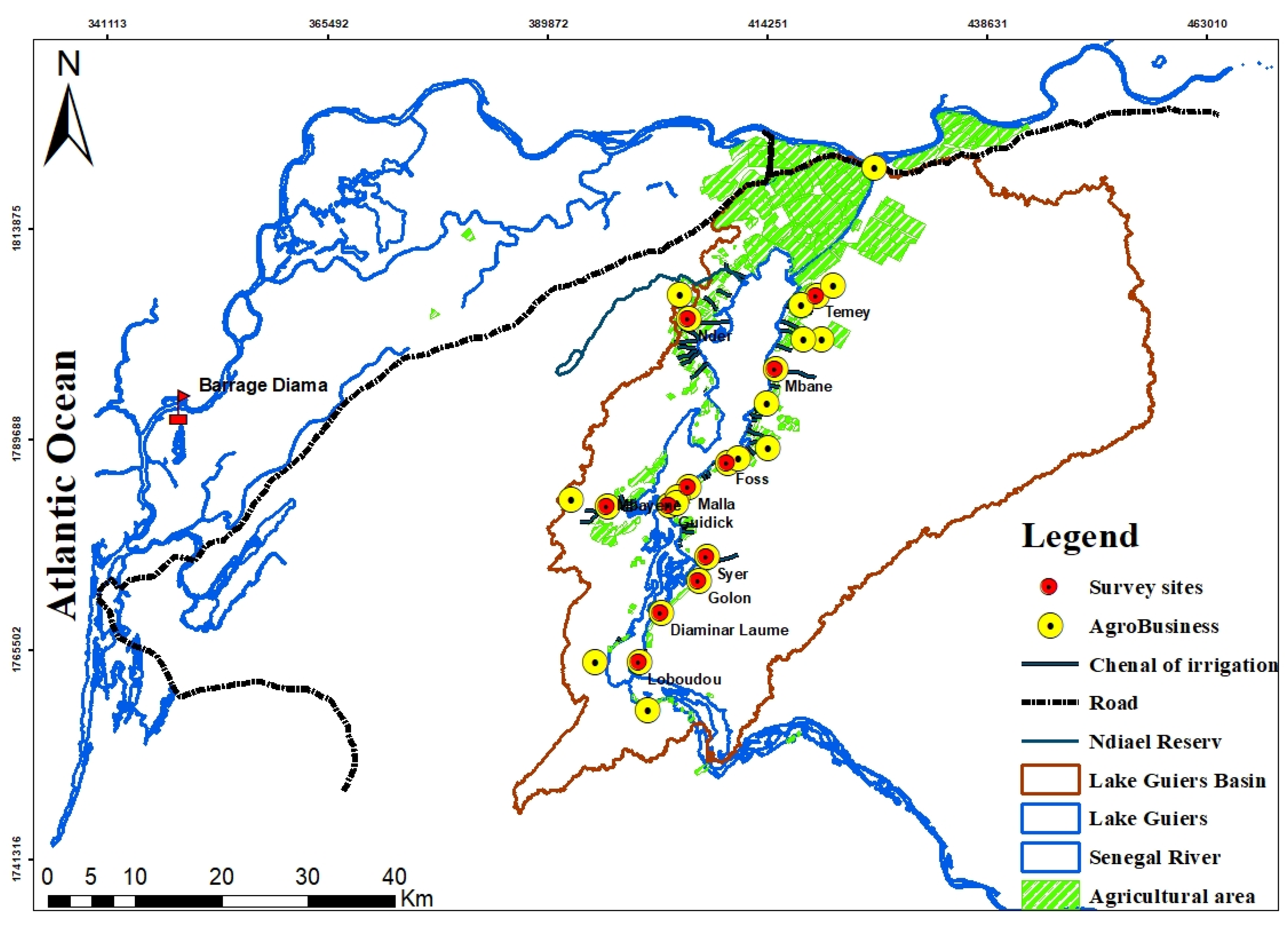
A total of twelve (12) smallholder farmers were surveyed, representing the major local water users in the region. While this sample size is limited, these farmers account for the principal irrigation withdrawals along the lake’s shoreline and were selected to capture the dominant patterns of agricultural water use. These farmers were selected in the following localities (
Figure 2).
The survey sites were identified beforehand using Google Earth, following the irrigation canals directly connected to Lake Guiers. In the field, survey sites were selected on the basis of the accessibility of the irrigated areas and the presence and availability of local farmers.
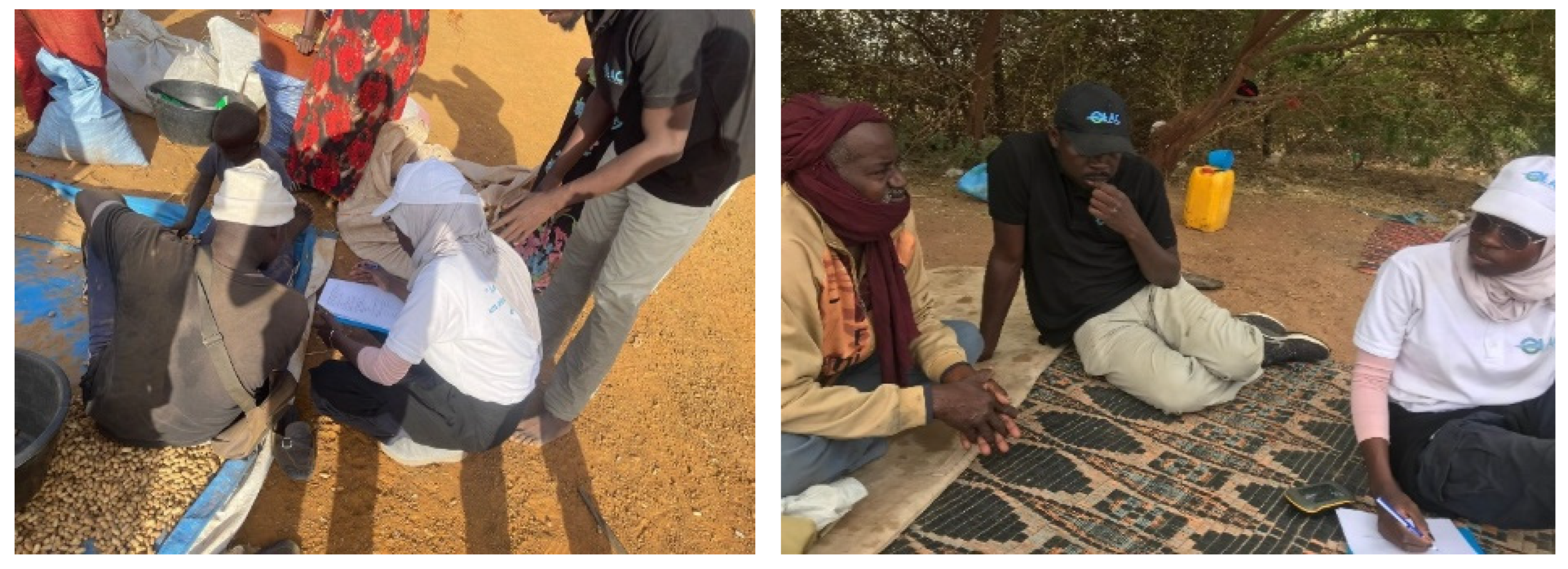
The surveys were carried out directly on the farm plots, in the local language, to ensure better understanding and smooth interaction with the farmers (
Figure 3). Several key factors were recorded, including: identification of the crops grown; the areas cultivated by type of crop; the number of motor-driven pumps connected to the lake; the operating capacity of these motor-driven pumps; the number of days that crops are irrigated; the length of the cropping seasons; problems encountered by farmers in accessing water (whether or not there are difficulties, the nature of the constraints); and recommendations and suggestions put forward by farmers to improve the management of water resources and irrigation.
In addition to surveying local farmers, due to lack of time and accessibility constraints, the agro-industrial enterprises located around Lake Guiers (
Figure 2) could not be surveyed directly. To overcome this limitation, the data collected in 2014 by OLAC were used to estimate their agricultural water requirements. Calculations of water requirements for agriculture were based on the work of [
3].
1.3. Modelling
1.3.1. Water Evaluation and Adaptation Planning (WEAP) Model Setup
WEAP is a user-friendly model developed by the Stockholm Environment Institute (SEI) for integrated water resources planning and management [
26,
27]. It is a valuable tool for simulating water allocation (supply and demand) dynamics under different scenarios. WEAP is a conceptual model that allows for the representation of physical water systems like watersheds, rivers, and reservoirs [
28]. The model requires various inputs such as land cover, soil types, water sources, water demands (agricultural, domestic, etc.), and economic factors [
26]. Hydrological simulations within WEAP can be performed using different methods. Ref. [
26] employed the rainfall–runoff method, while ref. [
29] and ref. [
28] used the soil moisture method.
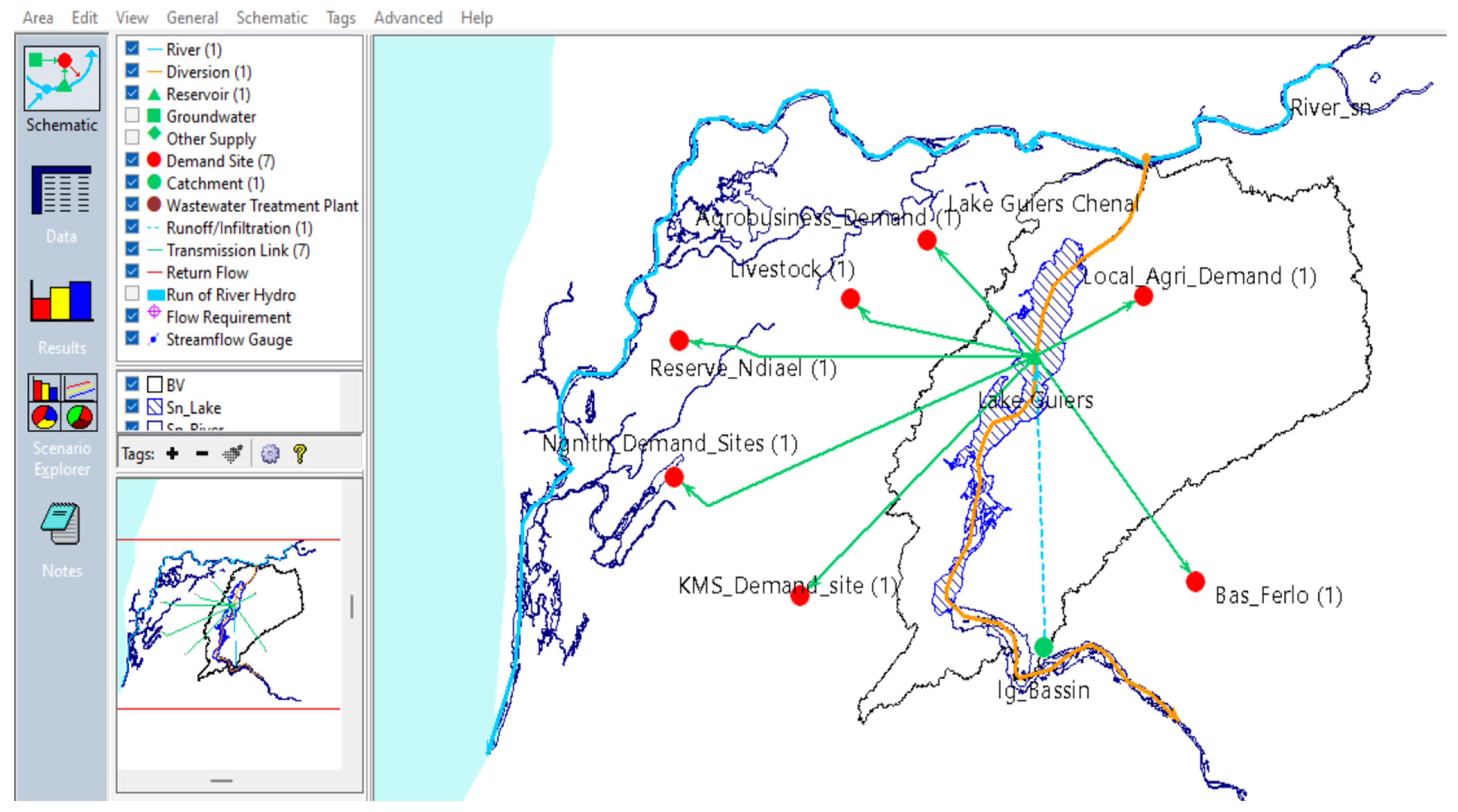
WEAP consists of five key components (
Figure 4): the Schematic View, which provides a visual representation of the water system; the Data View, a hierarchical tree structure for inputting and managing data across categories like Key Assumptions, Demand Sites, Hydrology, Supply and Resources, Water Quality, and Other Assumptions; the Results View, which displays scenario outcomes through charts, tables, or maps; the Scenario Explorer View, used to compare the impacts of different scenarios on water availability, ecosystem needs, and other factors; and the Notes View, which allows for documentation and referencing. Together, these features enable users to model, analyze, and evaluate water systems effectively, supporting informed decision-making and integrated water resources management.
The configuration of the model for the Lake Guiers basin follows several essential stages in order to ensure an accurate simulation adapted to the problem studied. Firstly, the basin was delimited using ArcGIS 10.4 and imported into WEAP in the form of a shapefile, including Lake Guiers and the Senegal River. Next, the hydrological system was configured by considering the lake as a reservoir fed by the river via the Taouey canal, represented by a diversion. Reservoir characteristics such as storage capacity, initial storage, head–volume curve, and monthly variation in observed volume were incorporated. Different water demand sites were defined, including irrigated perimeters, agribusiness, and livestock, as well as ecological zones such as the Ndiael Avifauna Reserve, fed by the lake via the Yetti Yone dike, and the Bas Ferlo, which receives water releases to the fossil valley (
Figure 4). The drinking water supply for Dakar and localities around the lake has also been taken into account through withdrawals from the Ngnith and Keur Momar Sarr (KMS) treatment plants, which are included as demand sites in the model. For each demand site, annual water consumption rates were used as input data. Regarding climate and hydrology, the input data of the Lake Guiers watershed, at a monthly time step, includes evaporation, precipitation, temperature, solar radiation, and wind speed, as well as the essential hydrological data. The configuration thus established provides an accurate representation, based on the current understanding and available data, of the interactions between water resources and demand in the Lake Guiers basin within the WEAP model.
1.3.2. Model Calibration and Validation
Calibration and validation of the model in WEAP are essential steps to ensure that the simulation accurately reproduces the evolution of water volumes in Lake Guiers. In WEAP, the observed volume corresponds to the actual reservoir storage data, generally derived from field measurements or historical data. For this study, the average observed volumes of Lake Guiers between 2010 and 2017 were used to calibrate the model, while the volume observed in 2020 was used for validation. It is acknowledged that a single validation year limits the robustness of the assessment; however, this was the most recent complete dataset available from OLAC. Calibration was performed manually by gradually adjusting model parameters, including monthly agricultural demand, Bas Ferlo demand, and the lake’s storage capacity to minimise the difference between simulated and observed volumes. Once the model had been calibrated, validation was used to test its robustness by comparing the simulations with independent data. The model’s performance was assessed using statistical indicators such as the Nash–Sutcliffe efficiency (NSE) and the coefficient of determination (R2). The NSE, ranging from 0 to 1, measures the accuracy of the simulations: a value close to 1 indicates a near-perfect match between simulated and observed volumes. The coefficient of determination (R2), also close to 1, is considered a significant indicator of the quality of the simulation. The data used to establish the reference and compare the simulations were obtained from OLAC.
1.3.3. Scenario Creation
To achieve the objectives of this study, the below scenarios were developed (
Table 1).
Note that all scenarios will incorporate the lake regulation zones defined in the WEAP model:
Inactive zone: 149 mm3 (minimum volume below which no demands can be satisfied);
Buffer zone: 453 mm3 (sufficient volume to satisfy demands);
Conservation zone: 652 mm3 (volume maintained to prevent lake overflow);
Maximum storage capacity: 750 mm3.
2. Results
2.1. Future Climatic Conditions for the Lake Guiers Basin
2.1.1. Precipitation
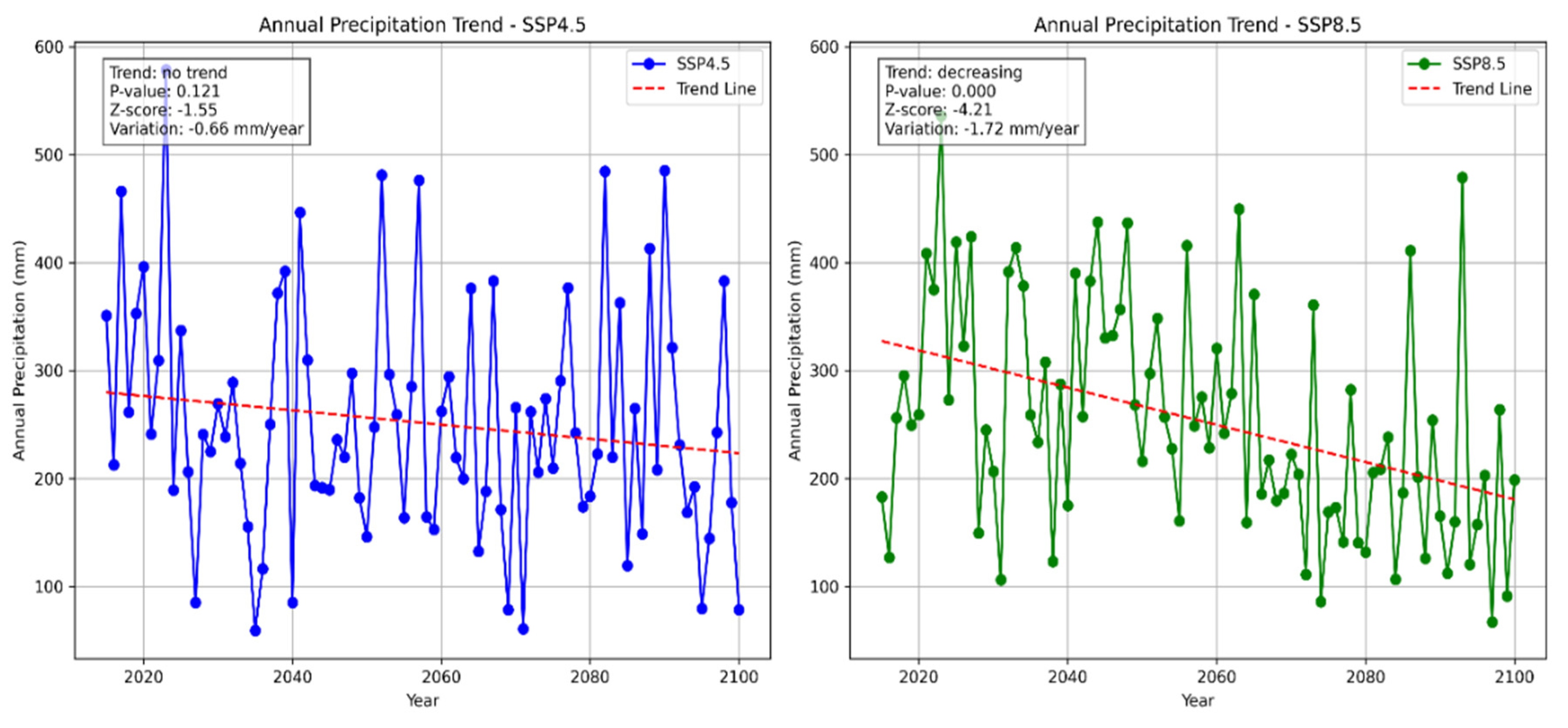
Analysis of precipitation trends under the SSP4.5 and SSP8.5 scenarios reveals contrasting trends, highlighting the impact of climate change on water resources (
Figure 5). Under SSP4.5, the trend is relatively stable, with a slight decrease of 0.66 mm/year, although this variation is not statistically significant (
p-value = 0.221). In contrast, the SSP8.5 scenario shows a marked decrease in precipitation of 1.72 mm/year, with a statistically significant trend (
p-value ≈ 0).
This reduction in precipitation under SSP8.5 could lead to increased water stress, affecting surface runoff, agricultural productivity, and drinking water supplies. Conversely, the relative stability observed under SSP4.5 suggests that mitigation efforts could limit these negative impacts. Specifically, the projections indicate a reduction in precipitation of 23.1 mm by mid-century (2050) and 56.1 mm by the end of the century (2100) under the SSP4.5 scenario. Under SSP8.5, on the other hand, precipitation could fall by 60.2 mm in 2050 and 146.2 mm in 2100, a much more pronounced decline.
These results underline the importance of adopting adaptation and sustainable water resource management strategies, such as improved storage, more efficient irrigation, and the preservation of ecosystems. They also serve as a reminder of the urgent need to reduce global greenhouse gas emissions, as the negative effects are much more marked under SSP8.5.
2.1.2. Temperature
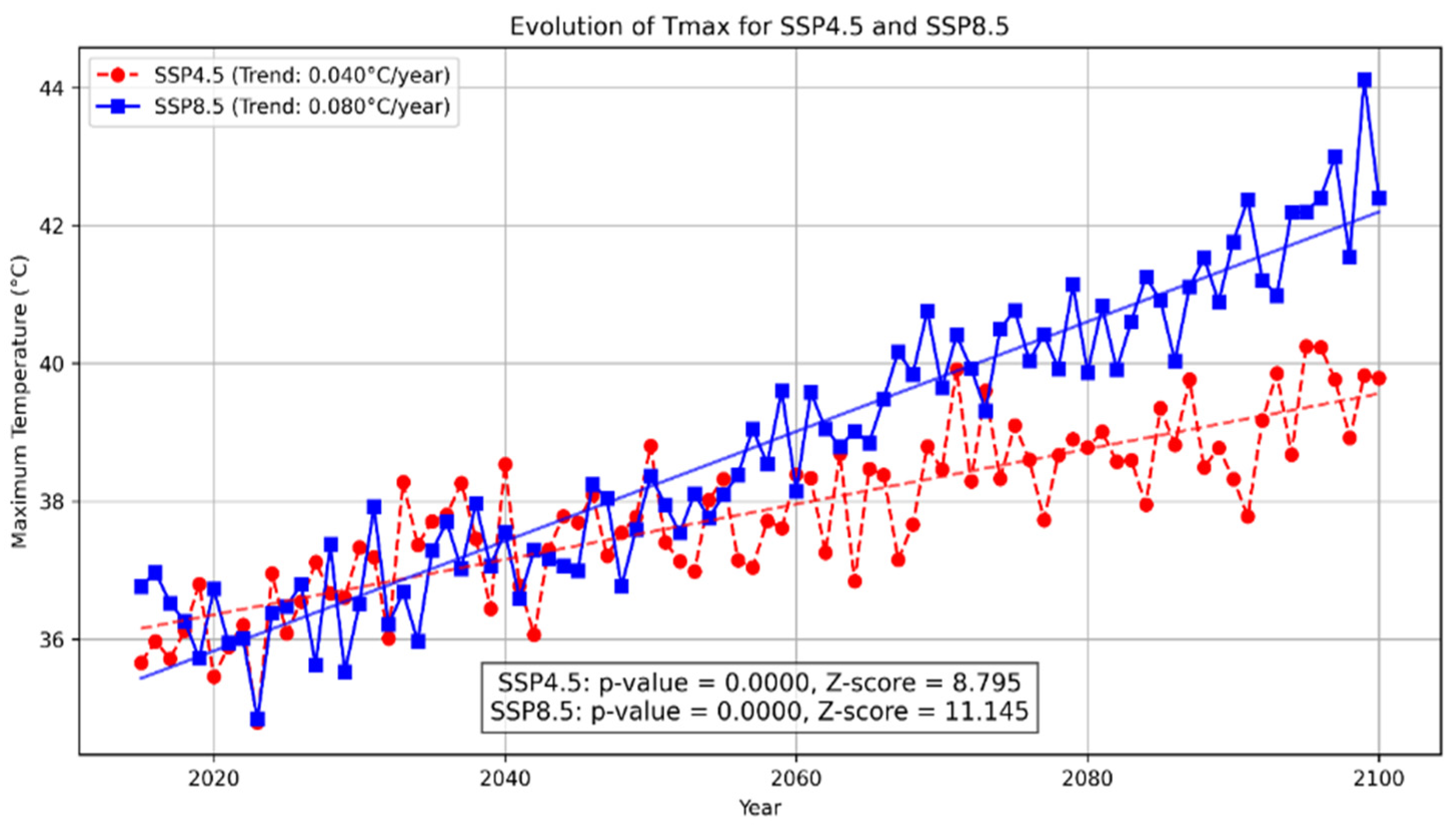
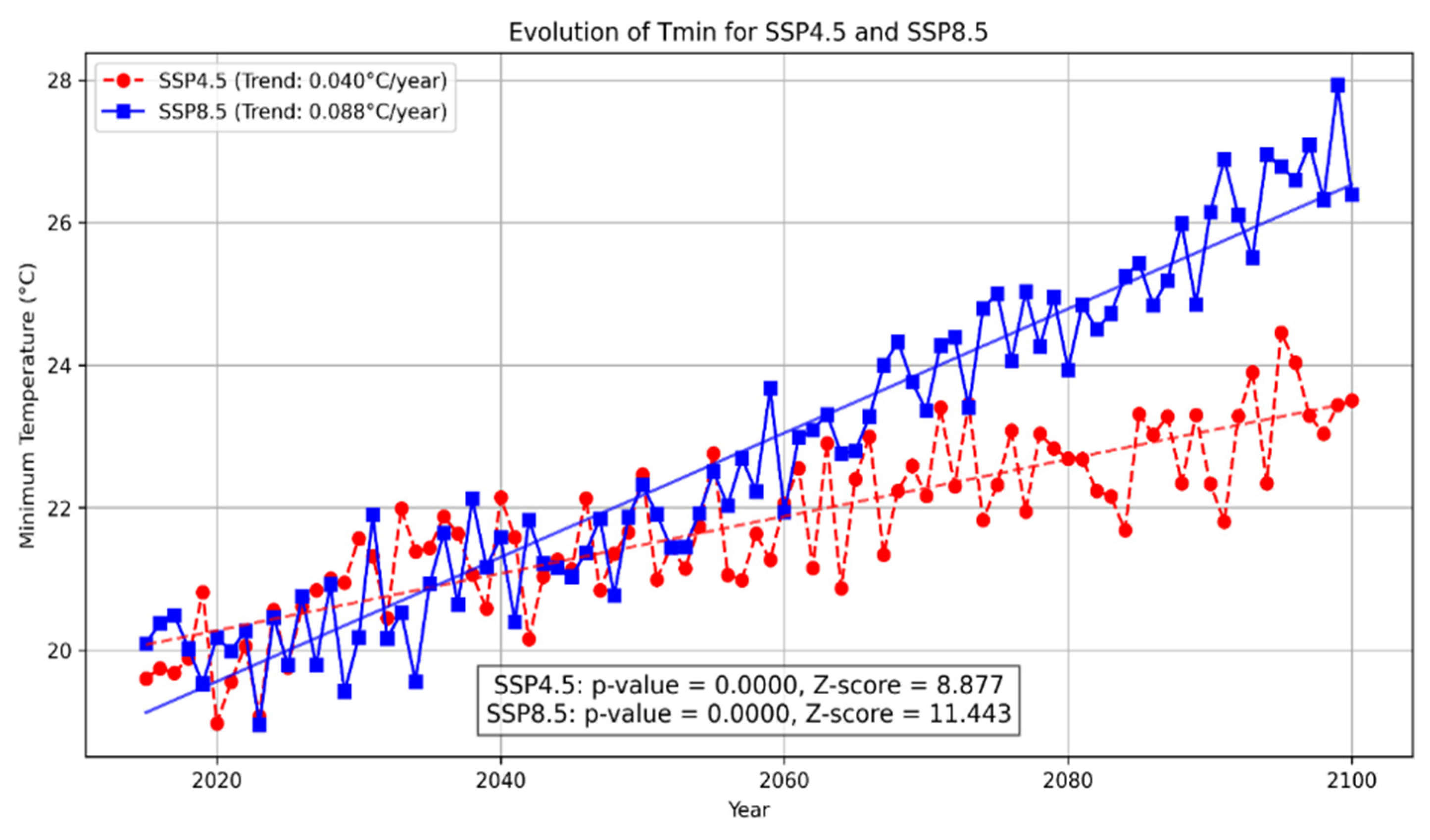
The following figures (
Figure 6 and
Figure 7) show changes in maximum (Tmax) and minimum (Tmin) temperatures under the SSP4.5 and SSP8.5 scenarios between 2015 and 2100. A significant upward trend is observed for both temperatures and under both scenarios, with a more marked increase under SSP8.5 (0.080 °C/year for Tmax and 0.088 °C/year for Tmin) compared with SSP4.5 (0.040 °C/year for Tmax and Tmin). The
p-values of 0.0000 and the high Z-scores confirm the statistical significance of these trends.
By 2050, temperatures would rise by 1.54 °C under SSP4.5 and 2.80 °C under SSP8.5. By 2100, this rise would reach 3.74 °C under SSP4.5 and 6.8 °C under SSP8.5, reflecting the greater impact of the high-emissions pathway. This simultaneous increase in minimum and maximum temperatures could intensify heat waves, reduce the daily temperature range, and have repercussions for evaporation, water availability, and ecosystems. The impacts could be of particular concern for agriculture, water resource management, and human health.
2.2. Agricultural Survey Results
A total of 14 agribusinesses were identified, and 12 villages were surveyed: Nder, Mbayène, Malla, Mbane, Diakhaye, Syer, Goloum, Diaminar, Louboudou, Temey, Foss, and Guidick. The main crops identified in the area were cassava, sweet potatoes, groundnuts, onions, watermelon, and various market garden crops. The annual volumes withdrawn are estimated at 79,331,457.14 m3, while crop water requirements amount to 69,115,088.03 m3/year. This represents annual losses of 10,216,369.11 m3, or a daily loss of around 33,496.29 m3. It should be noted that small-scale farmers do not operate throughout the year: a period of 60 days is reserved for harvesting, during which no water is withdrawn. In contrast, agribusinesses, which consume substantially larger volumes of water, have an estimated annual water requirement of 571,958,000 m3. This annual volume is approximately seven (7) times greater than the volumes withdrawn by local farmers. However, it should be noted that agribusinesses employ more water-efficient irrigation techniques (e.g., drip irrigation, sprinkler irrigation, pivot irrigation, etc.).
2.3. Calibration and Validation of Results
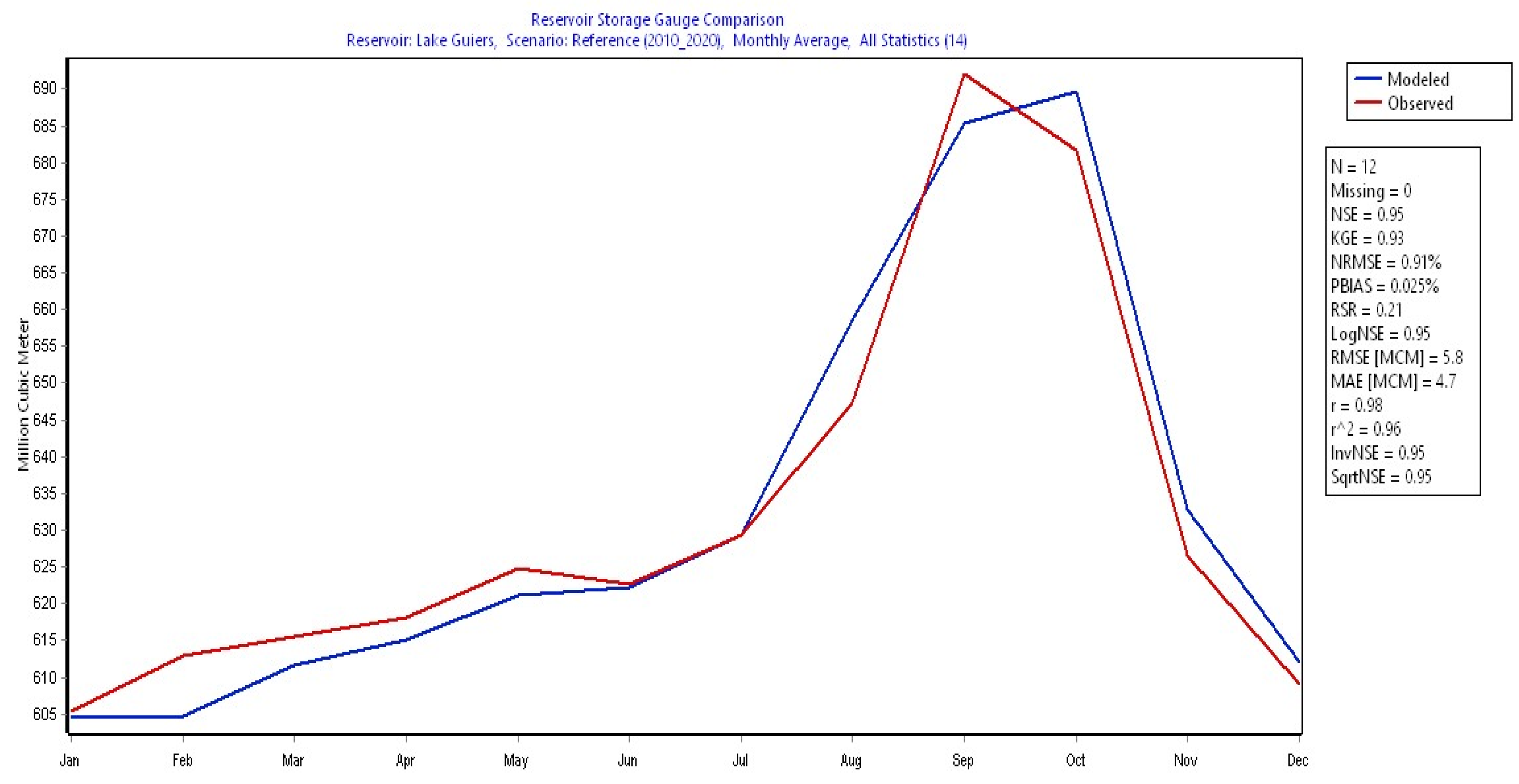
The WEAP model calibration results (
Figure 8) show excellent performance in reproducing observed volumes. A Nash–Sutcliffe Efficiency (NSE) of 0.95 and a Kling–Gupta Efficiency (KGE) of 0.93 indicate a very good match between simulated and observed volumes. The Normalised Root Mean Square Error (NRMSE) was very low at 0.91%, reflecting a low dispersion of errors. The PBIAS of 0.025% indicates an absence of systematic bias, meaning that the model neither underestimates nor overestimates volumes. The coefficient of determination (R
2) of 0.96 confirms a strong correlation between the observed and simulated values, reinforcing the reliability of the calibration. The indicators Inverse NSE (InvNSE = 0.95) and SqrtNSE (0.95) also show low error on low and mean values, attesting to the model’s robustness in reproducing flows over the entire calibration period.
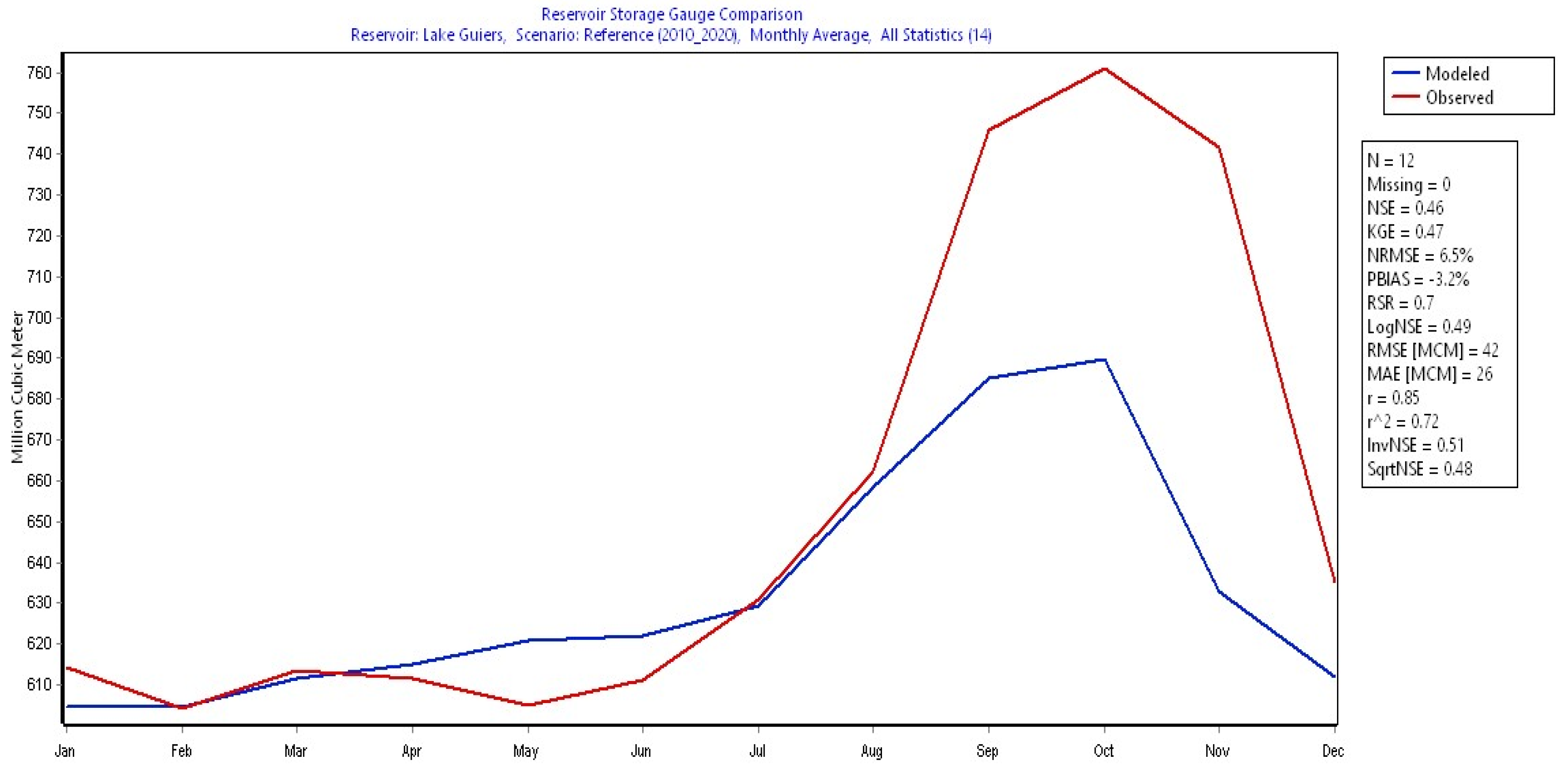
The validation results (
Figure 9) show that the model performs moderately well in reproducing volumes over an independent period. The NSE (0.46) and KGE (0.47) show a decrease in accuracy compared with the calibration, suggesting that the model only partially captures the variability in flows. The NRMSE, evaluated at 6.5%, reflects an increase in relative error, while the PBIAS (−3.2%) indicates a slight underestimation of simulated volumes. However, with an R
2 of 0.72, the model retains a satisfactory ability to explain the overall variability in flows. The values for InvNSE (0.51) and SqrtNSE (0.48) show room for improvement, particularly in reproducing low and medium flows. This reduction in validation performance can be explained in part by the absence of detailed data on the interannual variability in water use, which was incorporated into the model on a hypothetical basis.
2.4. Simulation of Scenarios with WEAP
2.4.1. Climate Change Scenarios
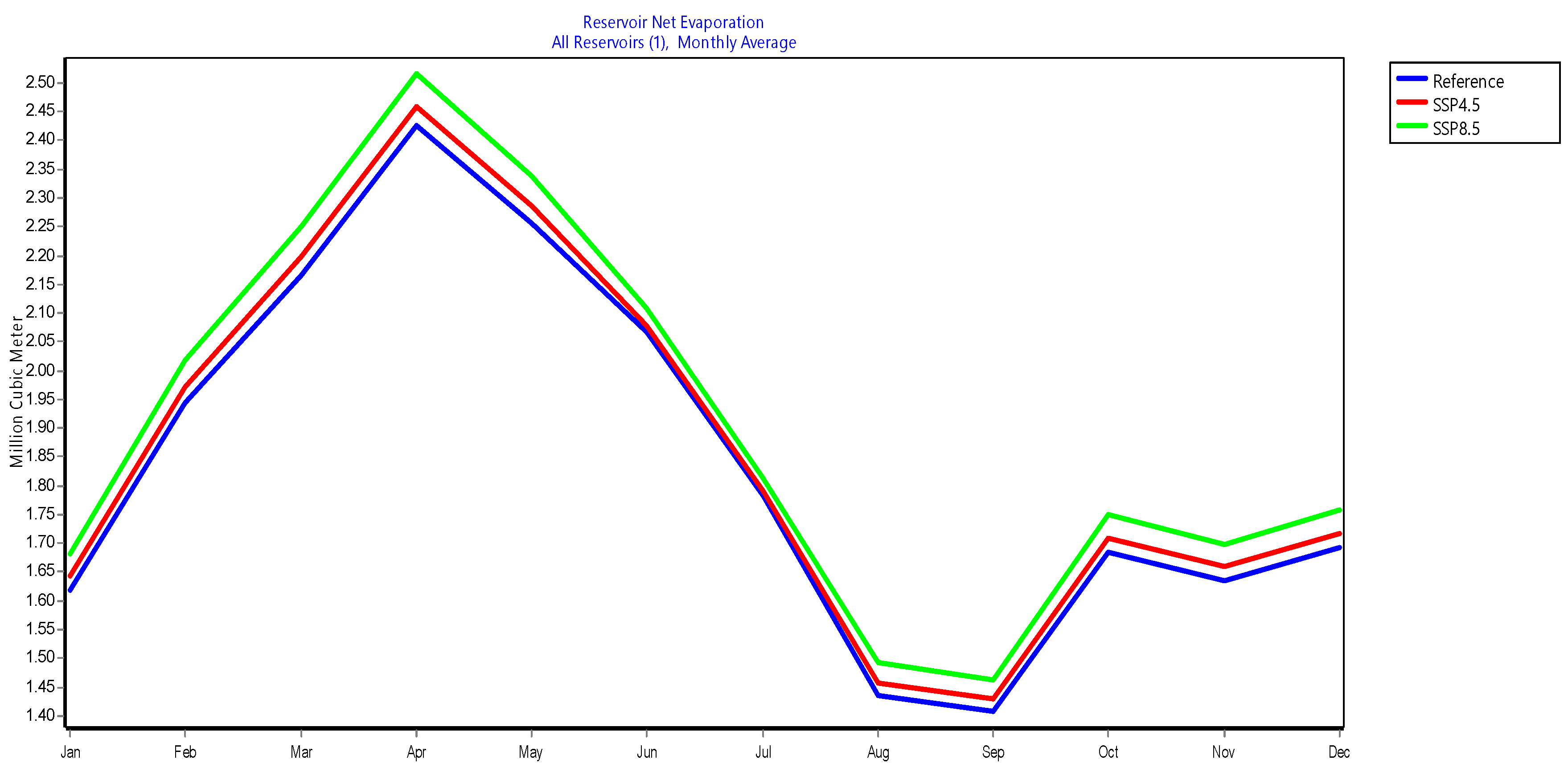
The following graph shows the mean monthly net evaporation from Lake Guiers (in millions of cubic metres) under three different scenarios: a baseline scenario, a moderate climate change scenario SSP4.5, and a more severe climate change scenario SSP8.5 (
Figure 10). All the scenarios show a similar seasonal cycle, with a peak in evaporation in April (hot season) and a minimum in September (rainy season). The SSP4.5 and SSP8.5 scenarios show systematically higher evaporation than the baseline scenario, which is consistent with the temperature increases predicted in the climate change scenarios. Indeed, the scenario SSP8.5 (the most pessimistic) shows the highest evaporation throughout the year, followed by the SSP4.5 and then the reference scenario. In April, evaporation reaches around 2.65 million m
3 for SSP8.5, 2.55 million m
3 for SSP4.5, and 2.45 million m
3 for the reference.
2.4.2. Increased Demand for Water from Extraction Plants
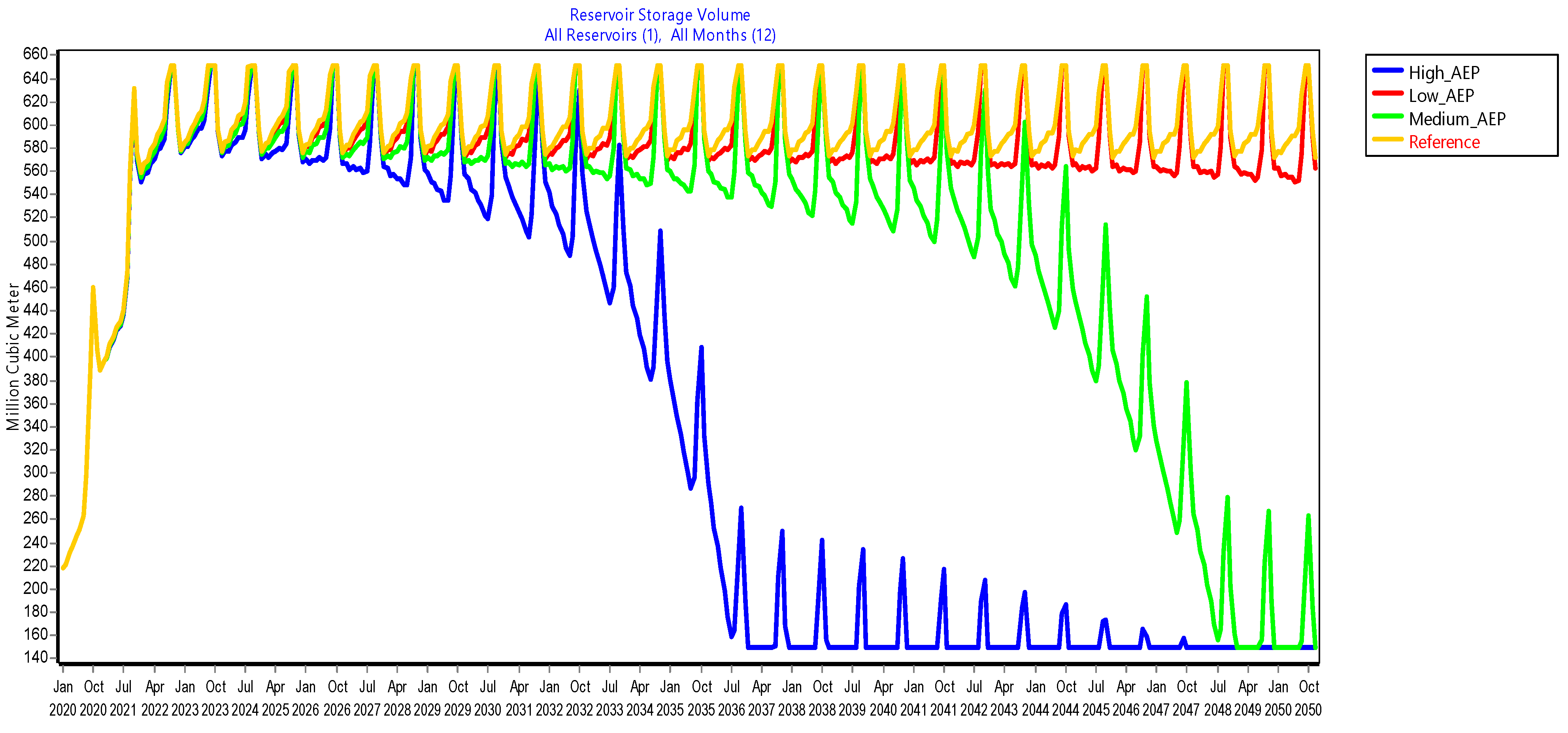
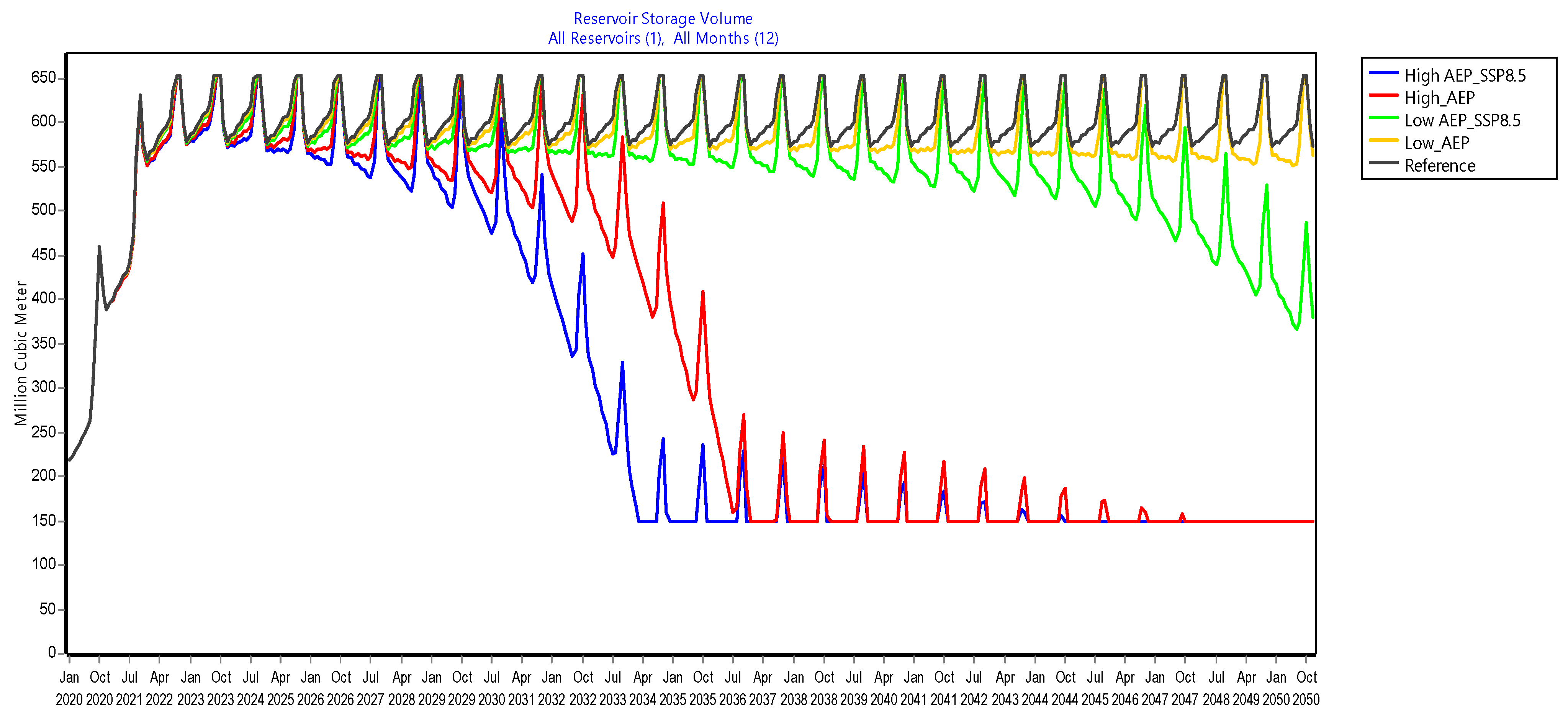
Three drinking water demand scenarios (referred to hereafter as AEP scenarios, from the French Alimentation en Eau Potable) were developed to assess future water demand. This figure (
Figure 11) illustrates changes in the storage volume of Lake Guiers between 2021 and 2050 according to three drinking water demand scenarios (AEP scenarios). The three scenarios initially present similar seasonal filling and emptying cycles, but their trajectories diverge considerably. The high-demand scenario (+10% for drinking water) shows a sharp decline from 2023 to 2024, reaching a structural deficit that stabilises at the inactive storage threshold of 149 million m
3 from 2037. The inactive volume of the lake is set at 149 million m
3. That is why the storage is not fully emptying to 0 m
3. The medium-demand scenario (+5% for drinking water) remains in balance until 2034 before gradually deteriorating, declining sharply from 2041 onwards, and also stabilising at 149 million m
3 in 2049. In contrast, the reference and low-demand scenarios (+2% for drinking water) maintain cyclical stability throughout the period, with constant fluctuations between 576 and 650 million m
3, demonstrating their long-term viability.
According to the different drinking water demand scenarios (AEP scenarios), under the high-demand scenario, drinking water needs can no longer be met from 2036, with a deficit that worsens considerably to reach 1150 million m3 of unsupplied water by 2050. The medium-demand scenario allows sufficient supply to be maintained until 2048, before a deficit of 150 million m3 is recorded in 2050. The low-demand scenario, on the other hand, is fully sustainable, ensuring that all drinking water needs are met throughout the period 2021–2050, thus confirming its long-term viability.
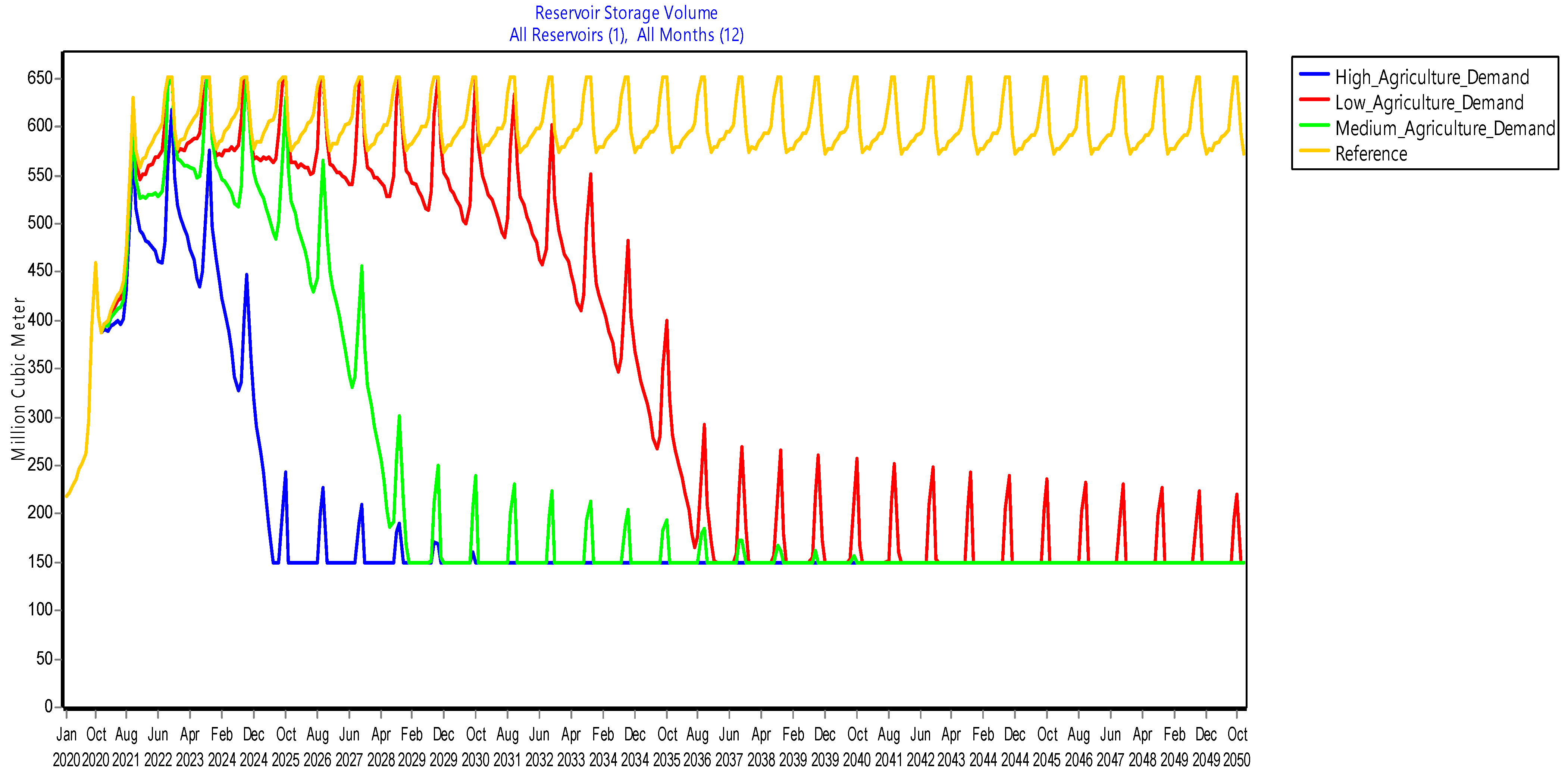
2.4.3. Increased Demand for Agriculture
Figure 12 shows changes in the storage volume of Lake Guiers from 2021 to 2050 under different agricultural demand scenarios. High agricultural demand (10%) causes a rapid decline in volume from 2023, leading to depletion of the inactive storage threshold of 149 million m
3 from 2025. The medium-demand (5%) scenario shows a gradual decline, reaching a critical level around 2028 before stabilising at around 149 million m
3. Low demand (2%) also leads to a rapid reduction after 2025, stabilising at around 149 million m
3 from 2037. In contrast, the reference scenario maintains stability, with regular oscillations between 576 and 650 million m
3 throughout the period. These results indicate that an increase in agricultural demand could cause the lake to dry up critically in the long term.
The high-agricultural-demand scenario shows an exponential increase in unmet demand from 2025, reaching around 10.5 billion m3 in 2050, revealing a growing inability to meet water needs. The medium-demand scenario also shows a gradual increase from 2028, reaching around 2 billion m3 in 2050. The low-demand scenario shows moderate unmet demand from 2036, remaining below 0.5 billion m3 over the whole period. On the other hand, the reference scenario fully satisfies demand without showing a deficit.
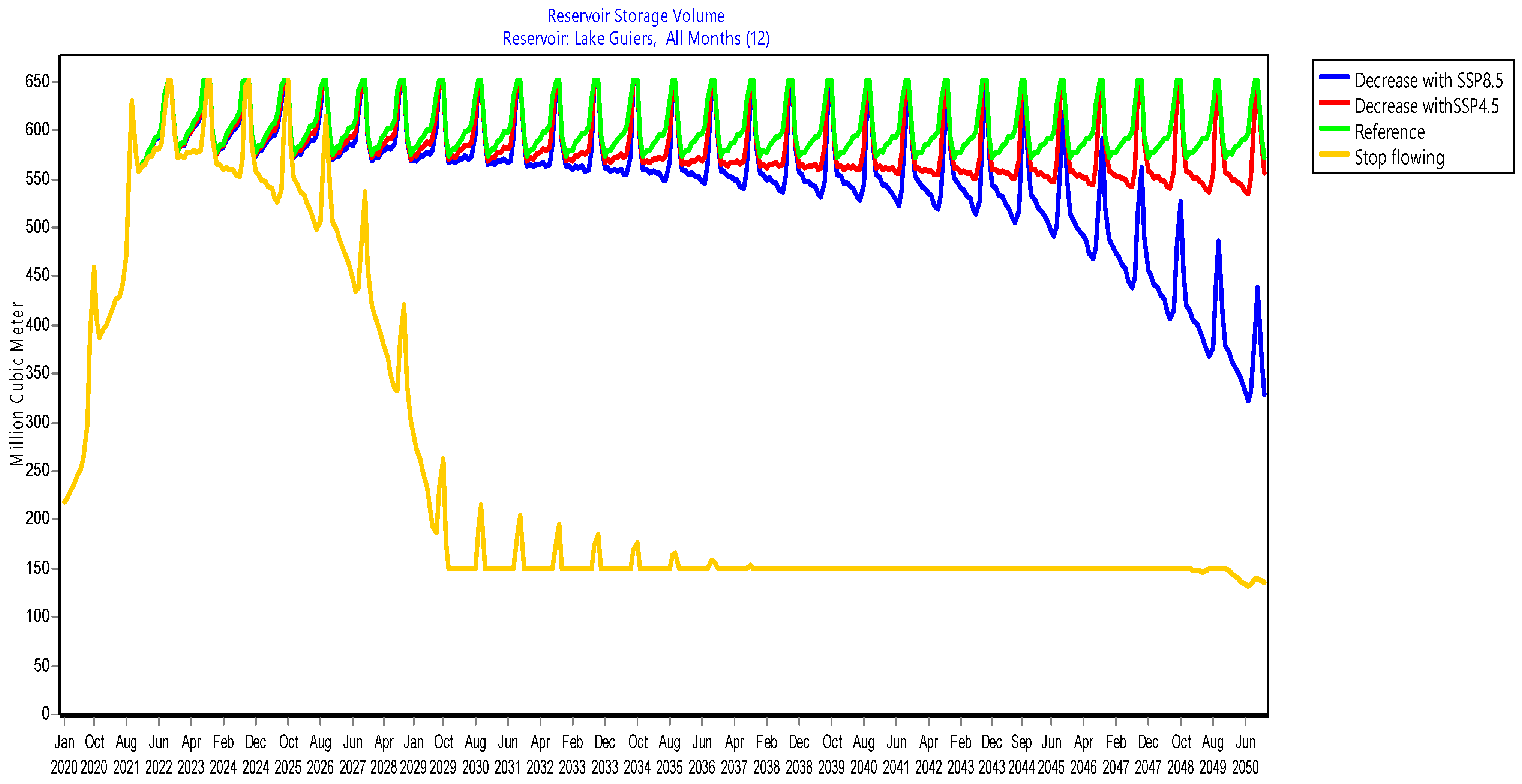
2.4.4. Senegal River Inflow Variation Under Climate Change
Figure 13 depicts the evolution of the storage volume of Lake Guiers according to three scenarios of reduced inflows of water from the Senegal River. The ‘Stop Flowing’ scenario simulates the total cessation of inflows, causing a rapid decline in volume from 2024, reaching the inactive storage threshold of 149 million m
3. The SSP 8.5 scenario, with a 16% reduction in river flows in 2050, shows a gradual decline in volume from 2046, despite seasonal refilling cycles. The SSP 4.5 scenario, which is more moderate, with a reduction of 8%, shows a slight fall but maintains regular oscillations. These results highlight the lake’s strong dependence on inflows from the river and the importance of maintaining these flows to ensure its sustainability in the face of climate change.
The unmet demand highlights a deficit of 25 million m3 for the ‘Stop Flowing’ scenario, indicating the growing inability to meet the water needs of demand sites. This deficit gradually increases, reaching 966.95 million m3 in 2050, underlining the growing risks of shortages in the long term.
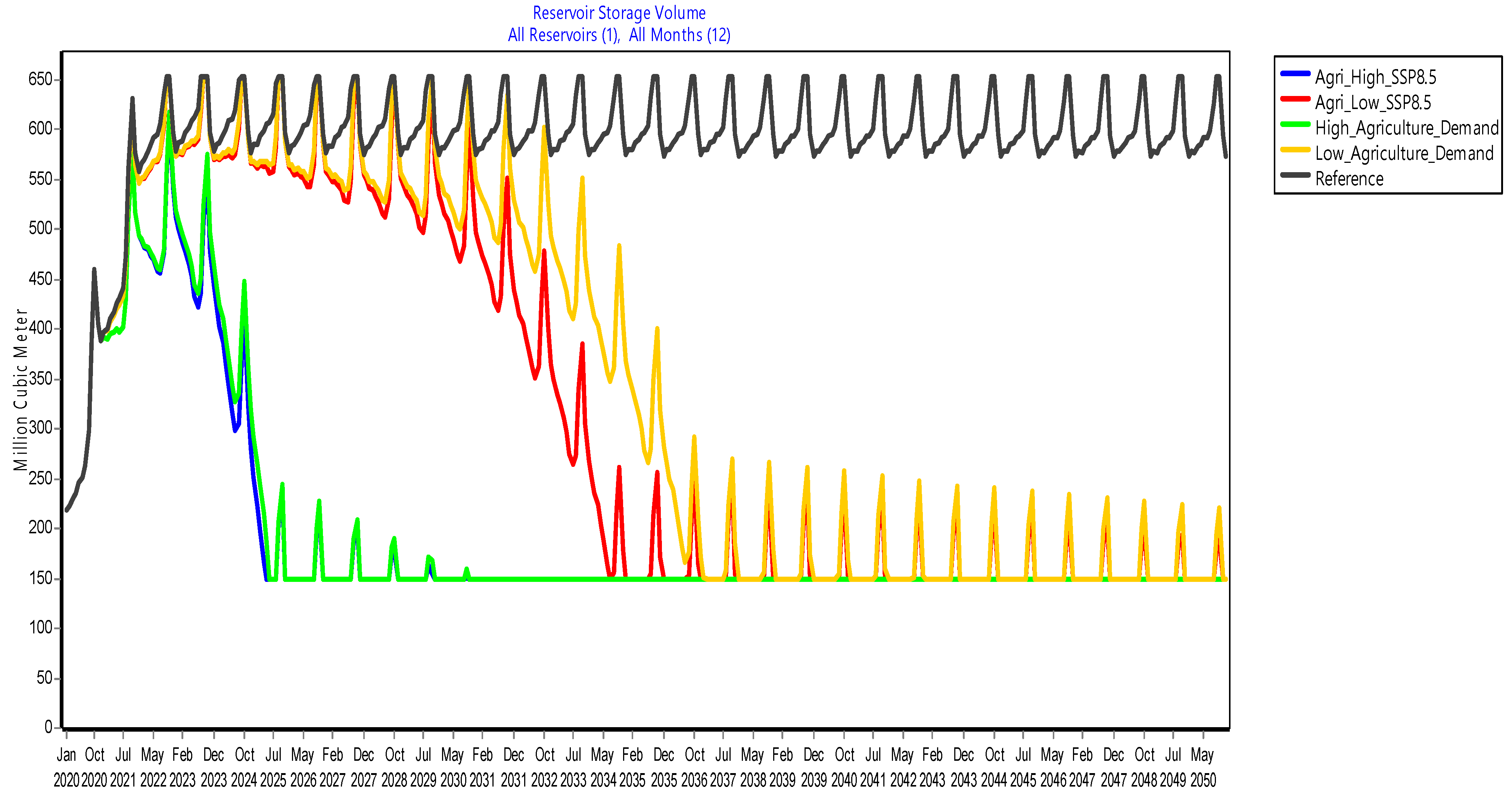
2.4.5. Future Project Scenarios (Grand Transfer-PREFERLO)
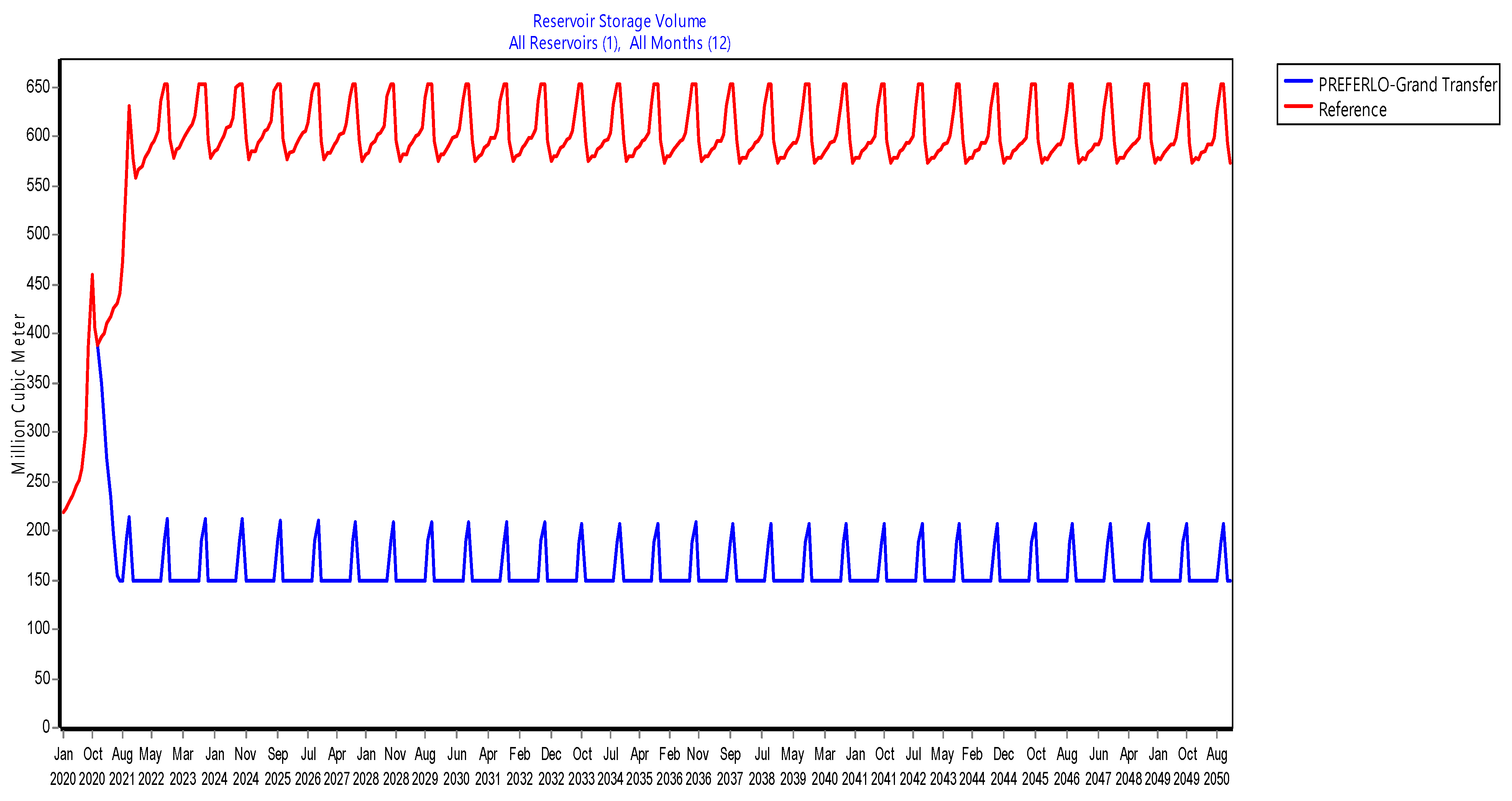
The inability of Lake Guiers to sustainably meet the water needs of the PREFERLO-Grand Transfer project is shown in
Figure 14. A rapid decrease in the volume of the reservoir is observed from the beginning of 2021 until the lake reaches its inactive volume, set at 149 million m
3. This critical threshold marks the point beyond which the lake can no longer ensure a viable water supply. Although inter-annual variations persist, particularly during the rainy season, they do not compensate for the overall depletion of resources.
This alarming situation is the result of annual withdrawals of around 556,237,370 m3 of water for the PREFERLO project, which aims to transfer water from Lake Guiers at Keur Momar Sarr to Vélingara Ferlo and Dahra. While this project pursues legitimate objectives of socio-economic development, ecosystem restoration, and adaptation to climate change in the Ferlo agro-sylvo-pastoral zone, the results show that Lake Guiers, as of now, does not have sufficient capacity to support withdrawals on such a scale in a sustainable manner.
4. Conclusions
This study assessed the availability of water resources in Lake Guiers in the face of the combined effects of climate change and increasing human pressures, using the WEAP model as an analytical tool. The results of the simulations reveal a significant vulnerability of Lake Guiers in the coming decades. The SSP4.5 and SSP8.5 climate scenarios indicate an increase in net evaporation that could significantly reduce the lake’s available volume by 2050. At the same time, the increase in demand for drinking water and agricultural water could put unsustainable pressure on this limited resource. A 10% increase in agricultural demand would draw the lake down to its inactive storage threshold (149 million m3) as early as 2025, beyond which no demand can be satisfied, while a similar increase for drinking water would result in a structural deficit from 2037. Field surveys also revealed significant water losses in the lake basin, estimated at 10,216,369.11 m3 per year, or around 33,496.29 m3 per day. These losses are attributable to poor management of the irrigation canals, the widespread absence of conservative irrigation systems, the obstruction of canal–lake junctions by aquatic plants, and the topographical constraints that affect the two shores of the lake differently. The PREFERLO-Grand Transfer project, as currently dimensioned with annual withdrawals of around 556 million m3, proves to be incompatible with the lake’s actual capacity, leading to a rapid drop in volume to the inactivity threshold (149 million m3).
Despite these findings, the study has notable limitations. The WEAP model, although showing excellent calibration performance (NSE = 0.95, KGE = 0.93), had weaker validation results (NSE = 0.46, KGE = 0.47), partly due to the lack of precise data on interannual variability in water use. This limitation underscores the need for more comprehensive data collection on water use practices and socio-economic changes to improve the robustness of future hydrological simulations.
Following this study, a number of recommendations can be made to ensure the sustainable management of Lake Guiers and the viability of the projects that depend on it, in particular PREFERLO-Grand Transfer and agricultural expansion. It is essential to develop new retention basins to capture the excess water from the Senegal River currently discharged into the Atlantic Ocean via the Diama dam, thus providing an alternative source for the PREFERLO project. At the same time, in-depth hydrological studies need to be carried out on the dynamics between the Senegal River and Lake Guiers, particularly upstream of the Richard-Toll works and before the Taouey, to optimise water transfers. Finally, modernising irrigation systems to use more economical technologies (drip irrigation, sprinkler irrigation) and implementing a management plan to prevent the proliferation of aquatic plants that obstruct canal–lake junctions are also essential to reduce significant water losses.
This study provides a scientific basis for informing political decisions and guiding investment in hydraulic infrastructure, in order to ensure sustainable management of Lake Guiers in the face of the challenges of climate change and the region’s socio-economic development. Implementing these recommendations will require a collaborative approach involving public authorities, research bodies, users, and technical and financial partners.



 ,
,