


Abstract
NDVI-based approaches offer an efficient method for estimating the C-factor, providing continuous spatial coverage and enabling monitoring of short-term changes in vegetation and management practices. This study aims to evaluate the performance of nine well-established NDVI-based C-factor models compared to RUSLE2 model estimates across a specific crop type, different tillage methods, and multiple time scales (monthly, seasonal, and yearly). While some NDVI models showed promising agreement with RUSLE2 estimates, this alignment was not sufficient to ensure accurate C-factor representation in the Gully Creek watershed. The results show that NDVI-based model performance varies systematically with crop type, tillage practice, and temporal scale. Monthly estimates generally reflect broader seasonal patterns, indicating that finer temporal resolution captures intra-seasonal variability without altering overall trends. These findings highlight the importance of accounting for spatial and temporal heterogeneity in C-factor estimation, as model effectiveness depends on local crop composition, management intensity, and temporal resolution rather than a single universally applicable approach.
1. Introduction
The Normalized Difference Vegetation Index (NDVI), a commonly used vegetation index, offers an alternative method for estimating the cover and management factor (C-factor) of the Universal Soil Loss Equation (USLE) through satellite imagery [1,2,3,4,5,6,7,8]. NDVI is calculated as the ratio of the difference between near-infrared and red reflectance to their sum [9]. Its values range from −1 to +1, indicating variations in land cover and vegetation density across pixels within a watershed. Several mathematical models have been suggested to derive C-factor values from NDVI, and using NDVI-based maps at different spatial and temporal scales can significantly reduce the time needed to estimate the C-factor [1,10].
Previous applications of NDVI-based models for C-factor estimation have mainly focused on large regional or watershed scales, especially in Europe [1,2,3,4,5,6,7,8,11], South America [12,13], and China [14,15]. These studies typically covered large watersheds, from hundreds to tens of thousands of square kilometers, often focusing on general land uses rather than specific crops or management practices. For example, Almagro et al. [13] examined Cerrado, pasture, eucalyptus, and bare soil land uses, while Smith et al. [8] looked at shrubland and agricultural land. Many studies used simplified methods, such as NDVI distributions [15] or C-factor classes [4], without considering crop-level differences. Temporal resolution was often limited, with some studies relying on single-date imagery [7,8] or short seasonal snapshots [16], whereas others used sparse or yearly NDVI data [2,15].
Recent research highlights important limitations of applying generic equations to specific agroecological regions, as they can produce significant inaccuracies, including negative values for vegetated areas and an inability to distinguish erosion risk across different land covers such as plantations, crops, and fallow land [17]. Furthermore, neglecting key temporal dynamics can lead to misrepresenting vegetation cover’s protective role throughout the growing season, reducing the accuracy of soil loss estimates. Studies indicate that C-factor values for a single land use can fluctuate by an order of magnitude between dormant and peak growing seasons, underscoring the need for high-temporal-resolution remote sensing data to generate dynamic C-factor maps that accurately reflect surface cover conditions at any given time [18].
In recent research, Allataifeh et al. [19] evaluated nine NDVI models to compare their effectiveness in estimating C-factor values for an agricultural watershed in southwestern Ontario, Canada. Satellite imagery from 2013 to 2020 was analyzed to examine similarities and differences among the models across detailed spatial and temporal scales. Their findings highlighted the importance of incorporating both spatial and temporal dimensions in hydrological modeling and provided valuable insights into the suitability of NDVI-based models for estimating the C-factor in southwestern Ontario. For example, seasonal analysis was sufficient for capturing overall vegetation dynamics while reducing resource requirements; however, a more detailed monthly analysis was recommended to better investigate seasonal variability. The authors also emphasized the need for further research to validate individual models and determine the most appropriate approach for specific study areas.
To assess the accuracy of NDVI-based C-factor estimates, validation against observed field measurements is crucial [20]. Unfortunately, field data is often unavailable for most sites to estimate and validate C-factor, making it necessary to rely on various models and alternative methods. In Ontario, Canada, the Revised Universal Soil Loss Equation, version 2 (RUSLE2), is widely used to estimate C-factor values. RUSLE2 is a computer-based model designed to estimate long-term average soil loss due to rill and inter-rill erosion [21].
The Ontario Ministry of Agriculture, Food and Agribusiness (OMAFA) has developed a tailored RUSLE2 parameter database specific to Ontario’s soil and climate conditions, facilitating its application across watersheds in the province (Ontario Ministry of Agriculture, Food and Agribusiness, 2025) [22]. While the core RUSLE2 algorithm remains unchanged, the OMAFA version includes an extra module that allows for exporting daily C-factor values. As a result, RUSLE2 outputs can serve as reference data for validating NDVI-derived C-factor estimates when field measurements are unavailable. It is important to note that this approach represents a model-based benchmarking rather than true validation using field observations, providing a consistent and physically informed reference for comparative evaluation.
Although the RUSLE2 database (USDA ARS, 2016) [21] was originally created for single-year crops, it has been expanded to include data for double cropping, crop rotation, and tillage-specific practices. These updates help RUSLE2 better represent agricultural management practices in erosion modeling.
To date, few studies in North America have systematically evaluated NDVI-based estimation of the C-factor while considering the effects of distributed land uses, diverse crop types, continuous temporal scales, and rotational or tillage practices [19]. This study addresses these key gaps by (i) comparing nine NDVI-derived models with RUSLE2 estimates of the C-factor in an agricultural watershed in southwestern Ontario, (ii) analyzing the spatial (crop and tillage are derived from separate agricultural fields, each representing a spatially explicit management unit) and temporal variability of NDVI-based C-factor values across annual, seasonal, and monthly scales, and (iii) evaluating the ability of NDVI models to reflect crop rotations and tillage practices through rigorous temporal validation against RUSLE2 outputs. By integrating these analyses, the study offers a comprehensive assessment of NDVI models’ reliability and underscores the importance of context-specific modeling for accurate soil erosion evaluation.
2. Materials and Methods
2.1. Study Area
This study was conducted in the Gully Creek watershed (Figure 1), a small (14.27 km2) agricultural watershed in southwestern Ontario, Canada, draining directly into Lake Huron, one of the Great Lakes [23]. The watershed is ecologically fragile and experiences high erosion rates, driven by a combination of variable soil textures (ranging from clay-rich to sandy materials), steep gradients toward Lake Huron, and intensive agricultural practices [24].
Figure 1.
Map of the Gully Creek watershed with the location of the weather station.
Elevation ranges from 292 m in the east to 176 m at the outlet, with slopes reaching up to 15%. Land use is dominated by agriculture (~65%), with corn, soybean, and winter wheat as the main crops, while forest (27%), hay and pasture (4%), and urban areas (3%) comprise the remainder. The selected crop types in this study represent the dominant agricultural systems within the watershed and were included to ensure that the analysis reflects the range of crop-specific management practices and vegetation dynamics present in the study area. Soils are predominantly fine- to medium-textured, with clay loam being the dominant class (>75%), particularly in the eastern portion of the watershed. A detailed description of watershed physiography, land use, and soil characteristics is provided in Allataifeh et al. [18] and in Supplementary Material.
2.2. Study Methodology
The detailed procedures for satellite image acquisition, NDVI processing, RUSLE2 parameterization, statistical evaluation, and multi-criteria ranking are described comprehensively in the Supplementary Material (S1–S3). Briefly, Landsat 8 imagery (2013–2017) obtained from the U.S. Geological Survey (USGS), EarthExplorer platform (https://earthexplorer.usgs.gov, accessed on 6 October 2025) was processed to derive NDVI values and compute C-factor estimates using nine widely cited empirical and semi-empirical NDVI-based models under Arc-GIS software environment. These models were selected based on their widespread use in the literature and their representation of different functional forms (linear, polynomial, and nonlinear), allowing for a comprehensive comparison of NDVI–C-factor relationships. The study period (2013–2017) was selected based on the availability of consistent and continuous field-level data required for RUSLE2 parameterization, ensuring reliable comparison between NDVI-derived and model-based C-factor estimates.
Data processing and model evaluation were performed using both Python and R. In Python, scripts were used to extract, organize, and aggregate the multi-year dataset. Preprocessing included cloud masking, image filtering, and temporal compositing to ensure data consistency across the study period. Each model was applied to the NDVI dataset to generate spatially explicit C-factor estimates at the field level. Although some models share similar input variables (NDVI), they differ in mathematical formulation and sensitivity to vegetation dynamics, providing complementary perspectives rather than fully independent estimators. Concurrently, daily field-level C-factor values were generated using RUSLE2 with region-specific management, soil, topographic, and climate inputs for 267 agricultural fields within the watershed.
Paired NDVI-derived and RUSLE2 C-factor datasets were aggregated at monthly, seasonal, and annual scales to examine spatiotemporal variability. Temporal aggregation was performed by averaging daily or image-based values within each time window to enable consistent comparison across scales. Model performance was evaluated using regression-based statistics (adjusted R2, RMSE, MAE), information-theoretic criteria (AIC, BIC), residual diagnostics (Mallows’ Cp), and distributional similarity testing (Kolmogorov–Smirnov test), followed by a multi-criteria ranking framework. This integrated methodology provides a robust basis for validating and comparatively assessing NDVI- and RUSLE2-based C-factor estimation approaches across crops, tillage systems, and temporal scales. This workflow ensures consistency between NDVI-derived and RUSLE2-based C-factor estimates across spatial and temporal dimensions.
3. Results and Discussion
The comparison between NDVI-based C-factor models and RUSLE2 was evaluated using three complementary perspectives: (i) distributional characteristics of each model (minimum, maximum, mean, spread, and skewness), (ii) crop-wise differences in predicted C-factors, and (iii) regression-based statistical performance metrics. Together, these analyses characterize systematic structural differences among models and quantify their relative agreement with RUSLE2 over the 2003–2017 study period.
Distributional statistics (Table 1) indicate substantial variability among the nine NDVI-based C-factor models. Mean C-factor values span a wide range, from 0.204 (Growth model) to 0.745 (Karaburun), demonstrating that different NDVI transformations yield markedly different C-factor magnitudes. Several models span the full theoretical 0–1 range, indicating a broad response to NDVI variability. In contrast, RUSLE2-derived C-factor values are more constrained (0.001–0.84) and exhibit lower overall dispersion (SD = 0.159). Most NDVI-based models show negative skewness, with distributions concentrated toward higher C-factor values and extended lower tails, whereas RUSLE2 exhibits positive skewness (0.704), indicating a predominance of lower C-factor values with fewer high-magnitude occurrences. These contrasting distributional characteristics illustrate fundamental differences in how NDVI-based models and RUSLE2 represent variability in cover-management conditions, particularly under low vegetation cover.
Table 1.
Comparison of distributional statistics for NDVI-based C-factor models and RUSLE2.
Crop-wise analysis (Figure 2) reveals systematic differences among models. Karaburun, Knijff, and Exponential yield substantially larger mean C-factor values relative to RUSLE2 across most crops. Models such as Durigon, DeJong, and Smith occupy an intermediate range, indicating consistent positive deviation from RUSLE2. In contrast, the Linear, Growth, and Cubic models produce lower and more subdued gradients in the heatmap, with C-factor values closer to those of RUSLE2 and reduced variability across crops.
Figure 2.
Heatmap of mean C-factor values predicted by nine NDVI-based models and RUSLE2 for seven crops (2003–2017).
These differences are primarily driven by variations in crop phenology, canopy structure, and management practices. Annual row crops (e.g., corn, soybean) show clearer NDVI–C-factor relationships due to well-defined growth cycles, whereas perennial and forage systems involve cutting, grazing, and residue dynamics that NDVI does not fully capture, resulting in greater divergence from RUSLE2 estimates. These patterns reflect underlying biophysical processes, including canopy development, residue cover, and soil exposure, which influence spectral response differently across crops and management systems.
Forages, grass hay, and pasture systems showed the biggest differences between NDVI-based models and RUSLE2 (Table S2). Unlike annual crops, these crops keep vegetation cover most of the year and go through multiple cutting, grazing, and regrowth cycles that NDVI do not capture well. After cutting or grazing, RUSLE2 shows more soil exposure, while NDVI stays moderately high because of low vegetation and ground biomass, highlighting NDVI’s limitations in these systems.
Regression-based evaluation (Table 2) confirms that NDVI-derived C-factor models explain only a limited proportion of variability in RUSLE2 estimates, as reflected by uniformly low adjusted R2 values across all models. Within this constrained explanatory range, simpler models such as the Linear, Cubic, and Durigon models show comparatively lower error metrics and more favorable information-criterion values, indicating greater numerical consistency and parsimony rather than strong predictive accuracy. In contrast, highly nonlinear NDVI transformations exhibit larger dispersion and reduced statistical efficiency. While the low R2 values indicate limited predictive capacity, differences among models remain relevant in practice, as overestimation of C-factor values may inflate erosion risk, whereas simpler models provide more stable relative assessments. Overall, these results emphasize that regression metrics primarily differentiate relative model behavior and complexity trade-offs, while reinforcing the need for temporal stratification and complementary analyses to better resolve NDVI–C-factor relationships.
Table 2.
Regression-based performance metrics for nine NDVI-derived C-factor models relative to RUSLE2.
Given the complexity of C-factor dynamics and known limitations of NDVI, high predictive accuracy is not expected; therefore, model performance is evaluated in relative terms, where lower error metrics and consistent ranking across conditions indicate more reliable agreement with RUSLE2 estimates.
Synthesizing all indicators through the multi-criteria ranking system (Table 3) reveals a clear hierarchy. Linear ranks first overall, followed by Cubic and Durigon. Growth, DeJong, and Smith hold intermediate positions, reflecting their modest but inconsistent performance. Karaburun, Knijff, and Exponential rank last, due to large errors, weak explanatory power, and extreme information-criterion penalties.
Table 3.
Overall performance ranking of NDVI-based C-factor models based on a multi-criteria scoring system.
Overall, analyses reveal a consistent pattern: simpler NDVI-based models (Linear, Cubic, Growth) most closely approximate RUSLE2, while strongly nonlinear models (Karaburun, Knijff, Exponential) produce large and persistent C-factor overestimations across all crops. The heatmap patterns and multi-criteria rankings confirm that these differences are robust across statistical metrics, crops, and evaluation methods. Based on this evidence, the Exponential, Knijff, and Karaburun models were excluded from further analysis, as they consistently showed the weakest agreement with RUSLE2, exhibiting the highest RMSE, MAE, AIC, BIC, and Mallows’ Cp values, the lowest adjusted R2, and systematic C-factor inflation. These patterns are consistent with previously reported sensitivities of NDVI-based transformations under conditions of canopy saturation, spectral mixing, and residue-dominated surfaces [1,2,4,25], suggesting a structural mismatch rather than random variability.
The intermediate models, Smith, DeJong, and Durigon, show moderate but less consistent agreement with RUSLE2: they perform better than the excluded models but still tend to overestimate C-factors and produce inconsistent crop-wise rankings compared with the top-performing Linear, Growth, and Cubic models. Differences among these intermediate models become more apparent when results are examined across temporal scales and management conditions, highlighting variability in their responses relative to the best-performing linear-based models.
To evaluate how management and temporal aggregation affect NDVI–RUSLE2 agreement, each temporal scale (annual, seasonal, monthly) was analyzed using a hierarchical structure: (i) overall C-factor comparisons, (ii) crop-stratified comparisons, (iii) tillage-specific comparisons, and (iv) combined crop–tillage evaluations. Along with regression metrics, multi-criteria ranking, and crop-specific visualizations, this framework offers a comprehensive assessment of model behavior and identifies conditions where NDVI-based models most closely match or diverge from RUSLE2 estimates.
3.1. Annual-Scale Evaluation of NDVI-Based C-Factor Models with RUSLE2
Annual-scale evaluation of NDVI-derived C-factor estimates relative to RUSLE2 C-factor (Figure 3) reveals consistent performance patterns throughout the 2013–2019 period. The Linear formulation exhibits the greatest stability across years, ranking first in each case and yielding the lowest RMSE, MAE, AIC, BIC, SBC, and Mallows’ Cp, indicating the strongest overall agreement with RUSLE2. Cubic and Durigon form a second performance tier, maintaining ranks of 2 to 3 in most years and showing comparatively low error statistics with intermediate information-criterion values. In contrast, the intermediate models, Growth, DeJong, and Smith, show more variability, with annual ranks fluctuating between 4 and 6, reflecting higher RMSE and MAE values and substantially larger AIC and BIC. Although these models capture some interannual patterns, they lack the precision and consistency demonstrated by the top-performing Linear, Cubic, and Durigon models.
Figure 3.
Annual performance ranking of NDVI-based C-factor models relative to RUSLE2 C-factor.
Crop-level evaluation provided an additional layer of insight into the relative performance of the NDVI-based models. The updated crop-wise ranking matrix (Figure 4) shows a strong, consistent pattern for beans, corn, forages, grass hay, pastures, soybeans, and winter wheat.
Figure 4.
Overall ranking of NDVI-based C-factor models for crops and years.
In majority, for crops and years, the Linear, Cubic, and Durigon models systematically rank among the top performers, mirroring their annual-scale performance and confirming their close alignment with RUSLE2 C-factor in both magnitude and temporal dynamics. These three models repeatedly show the strongest overall behavior, lower RMSE and MAE, and competitive adjusted R2, and substantially lower AIC/BIC and Mallows’ Cp, indicating both accuracy and appropriate complexity.
Integrating tillage into the NDVI–RUSLE2 comparison significantly enhances the ability to distinguish between different model behaviors and uncovers clear patterns driven by management practices. Linear, Cubic, and Durigon continue to exhibit the closest alignment with RUSLE2, while Growth, DeJong, and Smith remain intermediate performers, with their suitability depending on management intensity and year.
Corn exhibits the strongest contrast driven by tillage (Figure S2). Under high soil disturbance practices such as chisel plow, cut-and-row, and field cultivation systems, Cubic and Durigon often perform similarly to Linear. In conventional tillage and row-clean systems, the Linear model consistently occupies the top-ranking positions, whereas the Cubic and Durigon models show greater variability in their rankings. In no-till and zero-till systems, Linear ranks first in all years, with Cubic and Durigon forming a stable secondary tier (Figure S2). These patterns suggest that NDVI-based models for corn are especially sensitive to early-season tillage operations.
Soybean results exhibit patterns comparable to those observed for corn (Figure S3). Under no-till and zero-till, the Linear model consistently attains the lowest ranks across all evaluated years, indicating stable agreement with RUSLE2. In contrast, conventional tillage (CONSTILL) and disk/chisel systems (DKCHMTIL) display greater interannual variability, with rank positions occasionally shifting among Growth, DeJong, and Smith. Despite this variability, the Linear model maintains the most consistent interannual ranking across all soybean tillage categories.
Beans exhibit patterns comparable to soybeans but with greater interannual variability (Figure S8). Under conventional tillage, model rankings cluster within a narrow range, with Linear generally attaining the lowest rank, followed by Cubic and Durigon. Under no-till, rankings show increased interannual consistency, with Linear most frequently occupying the lowest rank, while Growth and DeJong occasionally shift upward in individual years without displaying sustained stability across the time series.
For forages, grass hay, and pasture systems predominantly managed under no-till, Linear most frequently attains the lowest rank across all evaluated years (Figures S9–S11). Cubic and Durigon typically occupy intermediate rank positions, whereas Smith, DeJong, and the remaining models tend to rank higher. This compression of rankings reflects reduced NDVI sensitivity in perennial systems, where consistently high biomass limits temporal contrast.
Winter wheat exhibits distinctive behavior associated with its overwinter growth cycle (Figure S12). Under no-till management, the Linear model most frequently attains the lowest rank, while Cubic and Durigon shift toward lower ranks in years characterized by pronounced spring NDVI increases. Growth and DeJong show comparatively stable rankings relative to other crops, but generally occupy higher-rank positions than Linear, Cubic, and Durigon.
Overall, introducing tillage information shows that soil management is a key factor influencing the agreement between NDVI and RUSLE2. Model performance peaks under no-till conditions, where residue stays intact and NDVI reliably reflects surface cover, and is weakest under intensive tillage, where early-season residue disturbance increases divergence between NDVI-derived estimates and RUSLE2 values. Considering all evaluated crops and tillage systems, the Linear, Cubic, and Durigon models show the most frequent correspondence with RUSLE2-derived C-factor values. The intermediate models (Growth, DeJong, and Smith) exhibit improved performance under selected crop–tillage conditions but display greater interannual and management-related variability, limiting their consistency for operational C-factor estimation.
Although previous analyses show how well NDVI-based models align with RUSLE2 trends for C-factor, they do not indicate whether the two datasets exhibit similar distributional characteristics. To assess this, a similarity analysis using the Kolmogorov–Smirnov (K–S) test at the 95% confidence level was performed, offering a stricter measure of statistical agreement by determining if NDVI-derived and RUSLE2 C-factors are comparable. Summary results are shown in Table 4, with detailed year-by-year data available in Supplementary Materials Tables S3–S9.
Table 4.
Annual Kolmogorov–Smirnov (K–S) test (95% confidence level) similarity between NDVI-derived and RUSLE2 C-factor distributions (no crop or tillage stratification).
The annual similarity percentages (Table 4) reveal significant variability across models and years. In 2013, all models showed some degree of similarity, with Durigon reaching the highest at 21%, while Growth showed none. In 2014, only Cubic maintained measurable similarity at 13%, with most models returning 0%. Over the study period, the Cubic, DeJong, and Durigon models displayed moderate but inconsistent similarity patterns, whereas Growth consistently exhibited very low agreement. The highest overall similarity, 21%, occurred in 2013, although several years had complete dissimilarity, probably due to limited Landsat coverage early in 2013 before regular Landsat 8 data collection began.
Overall, the low similarity values indicate that NDVI-based models, although showing statistical association with RUSLE2 in some cases, do not consistently reproduce comparable annual C-factor distributions. This behavior reflects well-documented characteristics of NDVI-based erosion modeling: (i) saturation under dense canopy conditions, which reduces sensitivity during peak growing periods [1,5]; (ii) spectral mixing and soil–residue brightness effects that distort NDVI responses under residue-dominated or sparsely vegetated conditions [1]; and (iii) the use of annual aggregation, which smooths management-driven variability associated with planting, harvesting, and tillage operations that strongly influence soil exposure but are weakly represented by NDVI averages [26].
Explicitly including tillage practices (Table S3, Supplementary Materials) shows that NDVI-based models have very little statistical similarity with RUSLE2, indicating that soil management information alone does not greatly improve agreement in distribution. Only a few isolated 100% matches occur, such as the Growth model in 2014–2015 under CHISPLOW and ROWCLT15, and Cubic, De Jong, Smith, and Growth in certain CHISPLOW tillage systems. These seem to be coincidental rather than strong evidence of consistent model behavior. A similar pattern appears when looking at crop-specific similarity (Table S4, Supplementary Materials). Isolated cases of complete agreement, such as those observed for Cubic or Durigon in edible beans during 2013, 2015, and 2016, occur infrequently and are crop-specific, indicating that these outcomes likely reflect conditions in individual years rather than consistent model-crop behavior.
When crop type and tillage practice are evaluated simultaneously (Tables S5–S9, Supplementary Materials), similarity levels remain generally low for all years, although a limited number of crop–tillage combinations reach complete agreement in isolated cases. In 2013 (Table S5), full agreement is primarily observed under reduced disturbance practices, including ZEROTILL for corn and beans and CUTROW for soybeans, suggesting more stable NDVI–C-factor behavior under minimal soil disturbance. In 2014 (Table S6) and 2015 (Table S7), several structured row-based tillage systems (e.g., CHISPLOW and ROWCLT15) exhibit complete similarity for selected crop–model combinations, indicating more consistent spectral responses under organized canopy configurations. The highest overall similarity occurs in 2016 (Table S8), where edible beans under NOTILL show complete agreement for multiple models, and several corn and soybean combinations exceed 50% similarity. These patterns coincide with comparatively uniform surface conditions during that year. In contrast, 2017 (Table S9) exhibits the lowest similarity levels, with only a single soybean–tillage combination reaching full agreement, highlighting the sensitivity of NDVI-derived C-factor estimates to interannual variability in vegetation development, management timing, and residue conditions.
Overall, these results highlight the need to explicitly consider management-related variability when evaluating NDVI-based soil cover models. Among the tested models, the Linear, Cubic, and Durigon models show the most consistent agreement with RUSLE2, characterized by stable central tendencies, relatively narrow value distributions, and lower variability across cropping systems. This behavior is consistent with previous studies indicating that simpler linear and polynomial NDVI-C-factor relationships tend to be less sensitive to noise in humid agricultural environments [20,27]. In contrast, the Growth, DeJong, and Smith models exhibit greater interannual variability, with performance differing among crops and years, reflecting increased sensitivity to variations in vegetation development and surface conditions, a pattern also reported for more complex NDVI transformations [26,28].
The irregular and highly context-dependent appearance of high-similarity cases underscores the limitations of annual NDVI-based C-factor estimation. Although annual aggregation is common in erosion modeling [29], it masks short-term fluctuations in vegetation and residue that strongly influence soil protection. Management activities, including tillage intensity, planting and harvest timing, and cover-crop practices, introduce substantial interannual variability that NDVI alone cannot consistently capture. As reported by Nikolova et al. [30], such management-driven fluctuations directly alter the C-factor and limit the reliability of static annual NDVI models.
Overall, the annual analysis shows that NDVI-based models cannot consistently reproduce RUSLE2 C-factor distributions without explicitly accounting for soil management practices and temporal variability in vegetation and residue conditions. Although annual NDVI metrics give a general idea of vegetation-related erosion risk, they do not capture the detailed dynamics of soil exposure and canopy protection. Therefore, accurate C-factor estimation requires moving beyond static yearly estimates toward seasonally adaptive approaches that explicitly incorporate management practices, crop development stages, and intra-seasonal variation in vegetation cover.
3.2. Seasonal-Scale Comparison of NDVI-Based C-Factor Models with RUSLE2
Seasonal analysis offers a mid-resolution view between annual and monthly scales, showing how NDVI-based models react to intra-annual changes in vegetation and residue. Although all four seasons were examined, summer and fall are emphasized in the spatial visualizations (Figure 5 and Figure 6) because they show the strongest differences in C-factor behavior, peak canopy cover in summer and residue-dominated conditions in fall, making them the most representative snapshots of watershed-scale C-factor variability.
Figure 5.
Spatial distribution of C-factor estimates across the Gully Creek watershed during the fall post-harvest season.
Figure 6.
Spatial distribution of C-factor estimates across the Gully Creek watershed during the summer growing season.
In fall, when vegetation is senescing and surface residue dominates, Linear, Cubic, and Growth models most closely mimic the low C-factor patterns of RUSLE2 (C ≈ 0–0.4). In contrast, nonlinear models, especially Durigon, tend to overestimate C-factors by misinterpreting low NDVI values from residue cover as bare soil, resulting in spatial patterns that differ from actual post-harvest conditions (Figure 5).
In summer, when canopy closure is nearly at its peak, C-factors are consistently low across the watershed, and most models, including Linear, Cubic, Growth, and DeJong, closely align with RUSLE2 in both magnitude and spatial distribution (Figure 6). Discrepancies mainly occur in nonlinear models, which produce localized patches of higher C-factor due to NDVI saturation under dense vegetation.
Overall, the seasonal comparison shows that NDVI-based models perform best during peak vegetative growth, when NDVI reliably indicates surface protection, and become less accurate during residue-rich periods, highlighting their sensitivity to phenological stage and their limited ability to distinguish residue cover from bare soil.
The seasonal NDVI-C-factor scatterplots for corn, soybeans, and winter wheat (Figure 7) show that the Linear, Cubic, and Durigon curves most closely resemble RUSLE2, especially during summer when vegetation is at peak density. The Cubic and Durigon models capture the sharper early-season decline in C-factor at low NDVI values, while the Linear model provides a more consistent approximation that aligns well with mid-range NDVI conditions in all crops. The Growth model performs inconsistently across seasons, sometimes approximating low NDVI behavior but diverging significantly during periods of rapid canopy development. The Smith and DeJong models exhibit the largest systematic deviations, consistently overestimating C-factor across the full NDVI range and failing to reflect the curvature seen in the RUSLE2 data. The seasonal panels also reveal crop-specific differences: spring data generally show greater scatter due to bare soil or partial-emergence conditions, while summer and fall patterns are more cohesive as canopy structure stabilizes.
Figure 7.
Seasonal NDVI–C-factor relationships for major crops compared against RUSLE2.
The seasonal ranking heatmap (Figure 8) compares the six retained models, Linear, Cubic, Durigon, Growth, DeJong, and Smith, across spring, summer, fall, and winter using the multi-criteria scoring framework. Across all seasons, the Linear model maintains the strongest and most consistent agreement with RUSLE2, ranking first in fall, spring, and winter, and remaining among the top performers in summer. This consistent performance reflects its robustness over the annual scale and its proportional NDVI–C-factor relationship, which effectively captures vegetation-driven soil cover changes throughout the year.
Figure 8.
Seasonal ranking of NDVI-based C-factor models relative to RUSLE2 across the four seasons.
Cubic and Durigon form a dependable second tier of performance. Cubic performs especially well in summer, when NDVI peaks and canopy cover is at its highest, indicating that its polynomial structure effectively captures mid-season nonlinearities. Durigon shows strong agreement in fall and summer and consistent performance across all seasons, aligning with its semi-empirical approach to scaling NDVI.
In contrast, the intermediate models, Growth, DeJong, and Smith, exhibit more seasonal variability. Growth performs reasonably well in fall and spring but declines in summer and winter, highlighting its sensitivity to transitional phenological stages where NDVI fluctuations disproportionately influence its exponential response. DeJong shows moderate but consistently lower performance compared to the top models. Smith often ranks lowest, especially in winter and early spring, when NDVI is heavily influenced by soil background and residue reflectance. These patterns suggest that while the intermediate models have some utility, they lack the seasonal stability required for reliable standalone C-factor estimation without additional model-specific adjustments.
Overall, the seasonal analysis reinforces the hierarchy of accuracy established at the annual level: Linear remains the most dependable NDVI-based proxy for RUSLE2, with Cubic and Durigon as strong alternatives. The other models show context-dependent performance and are thus evaluated at the monthly scale, where finer temporal resolution and explicit integration of crop and tillage effects might better define their operational usefulness.
The crop seasonal comparison (Figure 9) demonstrates a consistent hierarchy of model accuracy across all seven vegetation systems. Linear keeps the strongest and most stable agreement with RUSLE2 across every seasonal window and crop type, confirming its robustness to differences in canopy structure, residue persistence, and phenology. Cubic and Durigon form a reliable second tier, performing particularly well during summer and fall, when vegetation cover is most developed and NDVI most accurately reflects soil protection.
Figure 9.
Crop-specific seasonal ranking of NDVI-based C-factor models relative to RUSLE2 across the four meteorological seasons for seven major crop and forage systems.
The intermediate models, Growth, DeJong, and Smith, exhibit more variable, crop-dependent behavior. Growth performs reasonably well in summer and fall for row crops such as corn and soybeans but declines sharply in winter and early spring, when low NDVI and rapid fluctuations intensify its exponential response. DeJong and Smith show similar sensitivity, with occasional improvements in forage and pasture systems during peak biomass but weaker performance during dormant seasons. These inconsistencies highlight the need to keep them provisionally for more detailed monthly evaluation.
Incorporating tillage information further refines model differentiation across seasons (Corn Figure S4; Soybean Figure S5; Beans Figure S13; Forages Figure S14; Grass Hay Figure S15; Pastures Figure S6; Winter Wheat Figure S17). Across all tillage methods, Linear, Cubic, and Durigon consistently show the strongest seasonal agreement with RUSLE2, while Growth, DeJong, and Smith display irregular, context-dependent behavior. For corn (Figure S4), Linear ranks first or second in every season and tillage system. Cubic and Durigon also perform well, with Durigon especially strong in fall and winter, when residue-driven conditions dominate.
The intermediate models are much less predictable: Growth improves in spring and summer during active canopy growth but weakens in fall, when NDVI drops rapidly; DeJong and Smith cluster in mid- to lower-rank positions across most tillage systems, with particularly unstable performance in high-disturbance operations like CHISPLOW and CONSTILL. These patterns support the overall finding that, although intermediates can approximate RUSLE2 to some extent, their performance highly depends on season–tillage interactions. Seasonal tillage behavior for soybeans (Figure S5) closely mirrors the corn results but with slightly greater stability: Linear remains the top performer across nearly all tillage types and seasons, showing minimal sensitivity to differences among NOTILL, ZEROTILL, and CUT1ROW, while Cubic and Durigon consistently occupy the upper tier, with Cubic particularly strong in summer and fall, when soybean canopy cover is fully developed. The intermediate models exhibit crop-specific irregularities. Growth performs reasonably in spring and early summer under conservation tillage but deteriorates under more intensive disturbance, whereas DeJong and Smith maintain mid-range performance with limited ability to approach the top-tier group.
Across Beans, Forages, Grass Hay, Pastures, and Winter Wheat (Figures S13–S17), the same structural hierarchy persists: Linear, Cubic, and Durigon consistently form the stable upper grouping, with Linear almost always ranking first across all tillage categories, while Growth, DeJong, and Smith remain variable, occasionally improving in residue-rich or perennial systems but never surpassing the primary models.
Collectively, these seasonal tillage patterns reinforce the fidelity hierarchy established at the annual scale: (1) Linear remains the most reliable model across crops, seasons, and tillage systems; (2) Cubic and Durigon provide strong and consistent secondary alternatives; and (3) Growth, DeJong, and Smith show meaningful but inconsistent agreement with RUSLE2 and are therefore retained for continued comparison at the monthly scale. Incorporating tillage does not change the fundamental ranking but enhances differences in model sensitivity to vegetation dynamics and soil disturbance, with top-tier models demonstrating superior stability across management systems.
Seasonal aggregation also produces clearer temporal agreement than annual averages, aligning with prior findings that seasonal windows better capture vegetation dynamics and management effects [20,21,22,23,24,25,26,27]. Linear continues to show the strongest and most stable seasonal alignment with RUSLE2 (e.g., RMSE = 0.036; MAE = 0.035; bias ≈ 0), while Cubic and Durigon maintain competitive second- and third-place rankings. Durigon exhibits strong coherence (previously R2 = 0.699) but still moderately inflates C-factors during low-vegetation periods (CV ≈ 23%). Growth remains the most seasonally variable model (CV ≈ 45.5%), often overreacting to transitional phenological stages such as early emergence or post-harvest exposure, patterns noted by Ayalew et al. [28] and Beniaich et al. [26].
Overall, seasonal evaluation improves NDVI–RUSLE2 consistency compared to annual comparisons, yet persistent overestimation in nonlinear models remains evident, especially in winter and early spring, when bare soil enhances NDVI-based C-factor inflation. These outcomes reinforce Linear, Cubic, and Durigon as the primary candidates for subsequent monthly-scale and tillage-resolved analyses, with Growth, DeJong, and Smith provisionally retained for further assessment.
While regression results describe correlations and trends, they do not indicate how closely NDVI-based models reproduce the statistical distributions of RUSLE2-derived C-factors. To address this, the Kolmogorov–Smirnov (K–S) test was applied at the 95% confidence level, quantifying the percentage similarity between model-derived and RUSLE2 seasonal C-factor distributions. Summary results are presented in Table 5, with model-specific outputs in Supplementary Tables S10–S15.
Table 5.
Seasonal similarity between NDVI-based models and RUSLE2 C-factor (without crop or tillage differentiation) based on the Kolmogorov–Smirnov (K–S) test at the 95% confidence level.
Overall, similarity values remain low (3–26%), consistent with the weak annual-scale similarity patterns reported earlier. This confirms that although NDVI-based models can approximate the general seasonal trend of RUSLE2 outputs, their ability to reproduce the full statistical distribution of C-factor values is limited. Winter consistently shows the poorest performance, with similarities as low as 3% for the Karaburun, Knijff, and Exponential models, reflecting NDVI’s reduced sensitivity during dormant periods when vegetation is minimal and soil background noise dominates [1,27].
In contrast, spring and fall yield relatively higher similarities, reaching 26% for DeJong in spring and 21% for Growth in fall. These transitional phases, marked by rapid canopy emergence or senescence, provide stronger spectral contrast and NDVI responses that more closely correspond to RUSLE2’s representation of shifting soil exposure [2,20]. Summer similarities remain moderate (~16%) across most models: dense canopy cover stabilizes NDVI but also induces saturation, limiting sensitivity to further biomass increases [25,26].
Overall, the seasonal K–S analysis indicates that NDVI-based models best match RUSLE2 during times of active vegetation change, instead of at peak growth or dormancy. The consistently low winter values emphasize NDVI’s reliance on vegetation vigor and its reduced accuracy in bare soil or residue-heavy conditions. These results emphasize the importance of developing temporally adaptive NDVI models that include phenological stages and canopy dynamics to better represent seasonal variability in the C-factor.
When tillage practices are included in the seasonal K–S similarity analysis (Table S10, Supplementary Materials), a few isolated cases of high similarity appear, such as the Durigon model under CHISPLOW in spring reaching 100% similarity, and over 50% similarity for Durigon and DeJong under other spring low-disturbance systems. These isolated improvements suggest that certain management conditions, involving partial residue retention and structured soil disturbance, can temporarily improve NDVI–C-factor correspondence, although these patterns are not consistently seen across seasons or models.
Adding crop type (Table S11, Supplementary Materials) reveals clear differences in seasonal alignment. Crops such as beans and forages frequently exceed 50% similarity in spring, summer, and fall, while winter remains the weakest season (3–25% across most crops). These crop-dependent variations show how canopy architecture and phenology influence NDVI’s ability to track seasonal soil cover dynamics.
When crops and tillage are combined (Tables S12–S15, Supplementary Materials), the seasonal analysis becomes more informative and demonstrates modest but meaningful improvements over annual comparisons. In spring (Table S12), several crop tillage systems, including corn and beans under ZEROTILL and soybean and beans under CUT1ROW, consistently show high similarity (>50%) across most NDVI models. Durigon and DeJong also perform well for corn across multiple low-disturbance or structured systems (NOTILL, ROWCULT15, DKHMTIL, CHISPLOW), highlighting the stabilizing effect of residue on soil reflectance [2,20].
Summer (Table S13) maintains high similarity for systems with full canopy closure, soybean and beans under CUT1ROW, and beans under NOTILL, where NDVI best reflects vegetation cover. Fall (Table S14) shows similar results, with CUT1ROW soybean and NOTILL beans again exceeding 50% similarity, indicating that residue-retaining systems enhance NDVI–C-factor agreement after harvest. In winter (Table S15), similarity drops sharply; aside from corn under ZEROTILL, most crop–tillage combinations show weak or inconsistent results due to low vegetation activity and increased soil moisture effects, which reduce NDVI performance during dormancy [1,27].
Overall, the seasonal analysis addresses a key limitation of annual assessments by capturing intra-annual vegetation and management changes that strongly influence erosion processes. As shown by Marcinkowski et al. [29], erosion risk peaks within specific seasonal windows that annual averages obscure. Here, spring and fall have the strongest alignment with RUSLE2, likely due to transitional canopy conditions and less disturbance compared to the highly dynamic summer period. Conversely, winter consistently shows the poorest agreement, highlighting the well-known sensitivity of NDVI-based methods to dormant vegetation and bare soil conditions [1,30].
Incorporating tillage into the seasonal analysis also emphasizes the context-dependent nature of NDVI-derived C-factors. High similarities in spring likely align with tillage and planting activities that temporarily change surface reflectance in observable ways, especially for Durigon and DeJong, yet these changes are neither seasonal nor crop-specific. As highlighted by [31], ignoring seasonal variability and post-harvest bare soil exposure remains a significant limitation in current remote sensing-based erosion modeling [31].
3.3. Monthly-Scale Comparison of NDVI-Based C-Factor Models with RUSLE2
The monthly ranking analysis (Figure 10) shows much stronger temporal differences among the NDVI-based models than at the yearly or seasonal levels, reflecting the greater sensitivity of monthly NDVI to quick changes in vegetation and residue cover. Throughout all 12 months, the Linear model consistently ranks the highest, closely matching RUSLE2 during both low-vegetation periods (January–April, November–December) and peak canopy months (June–August). This consistent dominance suggests that a simple proportional NDVI–C-factor relationship remains reliable even at the highest temporal resolution, aligning with findings that linear NDVI transformations capture gradual vegetation changes without increasing noise [20,27].
Figure 10.
Overall monthly rank of NDVI-based C-factor models.
Cubic and Durigon form a stable second tier, typically alternating between ranks 2 to 3 throughout the year. Cubic maintains consistent performance during the growing season, while Durigon performs relatively better during canopy development (March–June) and senescence (October), reflecting its sensitivity to intermediate NDVI ranges. Although both show mild seasonal variation, they remain consistently closer to RUSLE2 than any other nonlinear models.
The intermediate models, Growth, DeJong, and Smith, display clear month-to-month variability. Growth performs adequately in winter and late fall but drops sharply during June–September, when rapid phenological changes intensify its nonlinear NDVI response. DeJong and Smith perform moderately during early-season months but diverge significantly at peak biomass, highlighting ongoing instability under high NDVI values. This volatility aligns with previous research showing that nonlinear NDVI-based models tend to overreact to short-term vegetation fluctuations [26,28].
Overall, the monthly analysis reinforces the hierarchy observed at broader temporal scales: Linear remains the most reliable surrogate for RUSLE2, followed by Cubic and Durigon as dependable alternatives, while Growth, DeJong, and Smith are retained for continued comparison due to inconsistent monthly performance. These results demonstrate that monthly NDVI provides meaningful discriminatory power, especially during rapid vegetation transitions when nonlinear models deviate most strongly from management-explicit RUSLE2 estimates.
The monthly comparison across all crops (Figure 11) reveals a much more dynamic performance landscape than the annual or seasonal analyses, reflecting the strong influence of phenological transitions, residue exposure, and crop-specific growth timing on NDVI-derived C-factors. Across months and crops, the Linear model continues to show the most stable and consistent alignment with RUSLE2, maintaining top or near-top ranks throughout the year and showing minimal degradation during transitional periods such as early spring (March–April) and late fall (October–November). This stability highlights its ability to track fine-scale vegetation fluctuations without amplifying NDVI noise, consistent with prior findings in temperate agroecosystems [20,21,22,23,24,25,26,27].
Figure 11.
Overall monthly rank of NDVI-based C-factor models across all crops.
The Cubic and Durigon models again emerge as reliable second-tier performers, although their behavior becomes more dependent on crop type and month at this finer temporal scale. Durigon performs well during months with clear canopy development (June–September) but declines during bare soil periods (January–March, November–December), reflecting the known tendency of nonlinear NDVI-based models to overestimate cover under low-NDVI conditions [2,25]. The Cubic model maintains stable mid-range behavior across most months, suggesting that its polynomial structure is less sensitive to NDVI instability at the beginning and end of the season.
The intermediate models Growth, DeJong, and Smith show the highest month-to-month variability. Growth often ranks lowest during early growing-season months, when small NDVI increases are exaggerated by its exponential form, but it improves temporarily during mid-season, when canopy conditions stabilize. DeJong and Smith display intermittent strength during specific months (particularly mid-summer), but lack the consistency needed for reliable monthly estimates. Their erratic behavior across crops and months aligns with previous findings that nonlinear NDVI models are prone to saturation effects, residue interference, and instability during rapid vegetation changes [1,26].
Overall, the monthly analysis confirms the hierarchy established at larger time scales: Linear remains the strongest NDVI-based surrogate for RUSLE2, with Cubic and Durigon serving as reliable secondary options. Conversely, Growth, DeJong, and Smith become increasingly unstable as vegetation dynamics speed up. These findings support moving the top three models into crop- and tillage-specific monthly evaluations, while keeping the intermediate models temporarily to see if management-aware stratification lowers their variability.
The crop monthly rankings (Figures S11–S15) offer a detailed view of each NDVI-based model’s behavior throughout the intra-annual vegetation cycle. As seen in the annual and seasonal analyses, the Linear model remains the top performer, ranking first or second nearly every month and across all crop types. Its stability during low-vegetation periods (January–April, November–December) and peak canopy months (June–August) underscores its strong ability to track monthly vegetation changes without systematic bias.
Cubic and Durigon form a consistent secondary level. Both models hold stable mid-to-high rankings from May through September, when vegetation cover most effects C-factor variability. Their strengths differ slightly during transitional phases: Cubic excels during early-spring green-up and late-fall residue periods, while Durigon is more dependable during fully developed canopy months, reflecting their different sensitivities to NDVI.
The intermediate models, Smith, DeJong, and Growth, show significant monthly variability across all crops. Their rankings fluctuate widely during transitional months (March–April, September–October), when NDVI reacts strongly to rapid phenological changes. Smith and DeJong sometimes achieve mid-ranking performance during peak biomass but fall sharply in early spring and late fall, when soil background and residue effects dominate NDVI signals. Growth shows the largest deviations, often dropping to the lowest rank during high-biomass periods due to the nonlinear amplification of its exponential structure.
These patterns confirm that, even after removing the structurally weak models (Exponential, Knijff, Karaburun), Linear, Cubic, and Durigon are the only models with enough temporal stability for monthly C-factor estimates, while the intermediate models lack the consistency needed for reliable high-frequency predictions.
Corn displays the clearest and most structured monthly ranking pattern among all crops (Figure S6). The Linear model maintains near-dominant performance throughout the year, ranking first in 10–12 months and never dropping below second place, reflecting corn’s well-defined phenology: bare soil in early spring, rapid canopy growth in June–July, and senescence in late fall. These predictable NDVI transitions closely match the Linear model’s proportional vegetation response. Cubic and Durigon are consistently second-tier models, especially from May to September, when corn is fully canopied and NDVI approaches saturation; their performance is more modest in post-harvest months (October–December) due to increased sensitivity to residue and soil background effects. In contrast, Smith, DeJong, and Growth exhibit marked monthly instability. Growth performs particularly poorly during peak-biomass months, where its nonlinear structure exaggerates NDVI saturation, causing it to drop to the lowest rank. Overall, these corn-specific patterns reinforce that corn is a highly diagnostic crop for evaluating NDVI-based models, highlighting the superior temporal fidelity of Linear and the moderate but consistent stability of Cubic and Durigon.
Soybeans show a monthly ranking pattern similar to corn but with more noticeable variation during early spring and late fall (Figure S7). The Linear model once again leads, maintaining top positions during the main growing months (June–September) and showing only slight declines during months dominated by residue. Cubic and Durigon perform well during peak canopy growth (June–August), when soybean leaf area is dense and uniform. Cubic often beats Durigon in April–May and October, probably because the quick NDVI changes during soybean green-up and senescence fit its polynomial curve better. Among the intermediate models, Smith and DeJong sometimes reach mid-tier levels during mid-summer but fall sharply during transitional months, while Growth performs the worst overall, especially at canopy maturity, when NDVI saturation enhances its nonlinear behavior response.
These patterns reflect the broader cross-crop monthly hierarchy (Figures S6, S7 and S18–S22). Across all vegetation systems, including beans with short growth cycles (Figure S18), forages and grass hay with repeated cutting–regrowth cycles (Figures S19 and S21), pastures with smoother seasonal dynamics (Figure S20), and winter wheat with notable phenological shifts (Figure S22), the Linear model consistently ranks first or second throughout the year. Its stability persists during both spring green-up and winter dormancy, demonstrating its strong ability to track incremental vegetation changes. Cubic and Durigon reliably form the second tier across all crops, excelling during periods of vigorous regrowth, dense canopy cover, or peak biomass, although their accuracy declines during post-harvest or dormant periods.
In contrast, Smith and DeJong show moderate but inconsistent performance, while Growth remains the most variable across all systems. Growth performs worst during abrupt NDVI declines (planting, cutting, senescence), low-NDVI phases (winter, post-harvest), and even under high-NDVI conditions (May–October), where its exponential transformation tends to overestimate C-factors.
Building on the regression results, monthly similarity analysis offers a more detailed assessment of how closely NDVI-based models replicate the statistical distributions of RUSLE2-derived C-factors. While regression metrics measure overall correlation strength, the K–S similarity test determines the proportion of months where NDVI-based and RUSLE2 distributions are statistically indistinguishable at the 95% confidence level. This distinction is crucial because apparent correlations can result from coincidental trends, whereas similarity indicates true distributional alignment. Due to the high month-to-month variability associated with planting, canopy development, and post-harvest residue exposure, monthly similarity provides a more nuanced view of model performance during key phenological transitions. Summary results are in Table 6, with detailed outputs in Supplementary Tables S16–S29.
Table 6.
Monthly similarity between NDVI-based models and RUSLE2 C-factor (without crop or tillage differentiation) based on the Kolmogorov–Smirnov (K–S) test at the 95% confidence level.
The monthly similarity results (Table 6) show that NDVI-based models reach higher agreement (22–45%) with RUSLE2 at fine temporal scales than at annual or seasonal levels, emphasizing the importance of temporal granularity in capturing rapid vegetation changes [31]. Similarity displays a clear seasonal pattern: the growing months (June–October) show the strongest alignment, with mean values exceeding 30% and reaching a peak of 45% for the Durigon model in September. These periods coincide with maximum biomass and canopy closure, when NDVI best reflects soil protection [26,29].
Conversely, dormant months (January–May, November–December) exhibit much lower similarities (<30%), reflecting NDVI’s decreased sensitivity under snow, residue, or senescent vegetation. During these times, NDVI generally underestimates surface cover, an expected limitation in low-photosynthetic conditions [1,30]. Although the highest observed similarity (45%) remains below the thresholds needed for reliable prediction, the monthly analysis shows that finer temporal resolution improves NDVI model responsiveness to short-term vegetation dynamics and reduces random variability compared with coarser temporal scales. This highlights the need for temporally adaptive NDVI models capable of capturing rapid changes in soil cover and vegetation growth.
Incorporating tillage practices into the monthly similarity assessment (Table S16, Supplementary Materials) shows how management timing and residue configuration influences NDVI-based C-factor estimates. Although similarity is generally low to moderate (<50%), clear patterns emerge. CHISPLOW exhibits over 50% similarity for most models from January to July and again in October to December, indicating that its persistent surface roughness and partial residue retention produce stable NDVI signals. ROWCLT15 similarly exceeds 50% similarity in several months (January–March, May, July–September), reflecting the strong spectral contrast caused by structured row cultivation. Other systems such as CONSTILL and CUT1ROW reach over 50% similarity only in specific months, driven by their characteristic residue arrangements (moderate residue for CONSTILL; alternating bare and covered rows for CUT1ROW). These findings highlight that NDVI’s sensitivity to management is highly context-dependent, aligning with Marcinkowski et al. [29], who point out that management operations influence soil–vegetation reflectance in ways often overlooked by static empirical models.
Including crop type (Table S17, Supplementary Materials) reveals additional structure. Beans frequently exceed 50% similarity across most models from April to December, reflecting the strong link between their dense canopies, high residue production, and RUSLE2’s soil cover representation. Notably, edible and white beans maintain high similarity even in November and December, months typically associated with vegetation dormancy. This likely indicates that surface residues persist, maintaining detectable protective cover in NDVI, even when photosynthetic activity is minimal [2,31].
The combined crop–tillage analysis (Tables S18–S29, Supplementary Materials) offers the most comprehensive insight into monthly NDVI–RUSLE2 agreement and shows clear improvements over annual and seasonal scales. Several crop–tillage combinations consistently surpass 50% similarity, especially corn with CHISPLOW or ROWCLT15, beans with NOTILL or ZEROTILL, and soybeans and beans with CUT1ROW. These systems share features such as continuous or partially protected soil cover, structured residue patterns, or predictable canopy structures, which generate stable NDVI signals that align well with RUSLE2’s management-related C-factor estimates. Reduced- and no-tillage systems particularly maintain residue cover that sustains higher NDVI values during early growth stages, while row-based systems produce repeatable spectral signatures once vegetation re-establishes [26,27].
These results demonstrate that specific management regimes create predictable vegetation–soil reflectance relationships, resulting in stronger NDVI–C-factor agreement during peak vegetation months (June–September). However, other systems show high variability or poor alignment, highlighting the complexity of erosion-related processes at monthly scales. This granularity supports the findings of Nikolova et al. [30], who observe that C-factors can fluctuate substantially within a growing season due to rapid changes in phenology, soil exposure, and management timing.
Overall, the monthly analysis provides the clearest view of both the strengths and limitations of NDVI-based C-factor estimation. While higher temporal resolution enhances NDVI’s sensitivity to vegetation dynamics and improves similarity compared to annual and seasonal assessments, significant challenges remain. Monthly patterns reveal that NDVI alone cannot fully capture the complex interactions between soil, vegetation, and management conditions such as residue persistence, tillage-induced roughness, and canopy structure that fundamentally influence erosion susceptibility. These limitations echo the observations of Negese (2024) [31] and Marcinkowski et al. [29], emphasizing that management-aware, multi-indicator frameworks are necessary for reliable operational C-factor estimation.
These results demonstrate that increasing temporal resolution enhances the ability of NDVI-based models to capture short-term vegetation dynamics and management effects, although it does not fully resolve structural limitations associated with residue and soil exposure conditions.
3.4. Limitations of Existing NDVI Models for C-Factor Estimation
The combined annual, seasonal, and monthly analyses demonstrate that existing NDVI-based C-factor models are not sufficiently reliable or transferable for representing soil cover conditions in Southwestern Ontario. Although the Linear, Cubic, and Durigon models occasionally show moderate agreement with RUSLE2, their performance degrades when evaluated across temporal scales, crop types, and tillage systems. No existing NDVI model provides a consistently robust or management-aware representation of soil protection in this temperate agricultural setting.
Across all temporal resolutions, statistical performance does not equate to physical realism. At the annual scale, the best-performing models exhibit stable rankings and modest correlations but still diverge from RUSLE2 in magnitude, distribution, and timing. Seasonal analyses further expose these weaknesses. NDVI-based models perform best during peak vegetation (May–September), when canopy cover dominates the spectral signal, but fail during erosion-critical periods, in specific, winter, early spring, and post-harvest, when residue, bare soil, freeze thaw processes, and soil moisture variability govern erosion risk.
Monthly evaluation provides the clearest evidence of structural limitations. Even the most stable model (Linear) exhibits systematic crop- and month-specific biases. Cubic and Durigon remain reliable during high-biomass months but become inconsistent during green-up, senescence, and dormancy. Intermediate models (Smith, DeJong, Growth) show pronounced month-to-month instability and fail to track management-driven changes in soil exposure or residue cover. These results confirm that vegetation-only indices cannot resolve the fine-scale temporal dynamics that control C-factor variability in managed agricultural systems.
Stratification by crop and tillage further highlights limited transferability. Model performance varies strongly across conventional, reduced, and no-till systems, with occasional high-similarity cases that are isolated and not reproducible across years or seasons. This behavior is consistent with findings by Durigon et al. (2014) [2] and Pechanec et al. [18], who showed that static NDVI equations cannot capture rapid changes in residue cover, surface roughness, and soil exposure caused by tillage and harvest operations.
Overall, the analyses indicate that existing NDVI-based C-factor models are not operationally suitable for Southwestern Ontario. Crop rotations, mixed tillage practices, winter dormancy, residue persistence, and freeze–thaw dynamics produce NDVI–soil cover relationships that differ fundamentally from those in regions where most NDVI models were originally developed. Direct application therefore leads to systematic bias and poor representation of erosion-critical periods.
These findings suggest that refining existing NDVI equations alone is insufficient. Instead, effective C-factor estimation requires a locally calibrated, management-aware, spatiotemporally explicit framework. Persistent failures during winter, early spring, and late fall indicate that NDVI alone cannot represent soil protection. Integrating complementary indices, such as BSI for exposed soil and residue, SAVI for soil-background correction, and moisture-sensitive indices (NDMI, LSWI), would substantially improve representation of non-growing season conditions that dominate erosion risk but are poorly captured by vegetation-only metrics.
The analysis is based on a single watershed, which may limit the generalizability of the findings to other regions with different climatic, soil, and management conditions. In addition, uncertainty arises from both NDVI-derived models and RUSLE2 parameterization, including assumptions related to vegetation representation, residue cover, and management practices. Future work could improve robustness by incorporating uncertainty analysis approaches such as error propagation or ensemble modeling to better quantify variability and reduce model-specific bias.
Furthermore, reliance on RUSLE2 as a reference introduces inherent model-to-model bias, as both NDVI-based approaches and RUSLE2 are subject to their own structural assumptions and uncertainties. Therefore, the results should be interpreted as a comparative evaluation rather than an absolute validation of C-factor estimates.
4. Conclusions
This study evaluated nine NDVI-based empirical and semi-empirical C-factor models across annual, seasonal, and monthly scales in the Gully Creek watershed, Ontario, Canada, using RUSLE2 as a reference. The results demonstrate that NDVI-based model performance varies systematically with crop type, tillage practice, and temporal resolution.
Across all analyses, simpler models such as Linear and Cubic showed more consistent agreement with RUSLE2, whereas nonlinear models exhibited systematic overestimation and instability. Model performance improved with increasing temporal resolution, with monthly analysis better capturing short-term vegetation dynamics, although limitations remained during residue-dominated and dormant periods.
The explicit incorporation of crop type and tillage practice further highlights the limited transferability of NDVI-based C-factor models. While moderate agreement with RUSLE2 is observed under isolated crop–tillage time combinations, these patterns are highly context-dependent and not reproducible across years. This strong dependence on management and phenological context confirms that NDVI-based models developed in Mediterranean, subtropical, or semi-arid environments cannot be directly applied to temperate agroecosystems characterized by high residue retention, diverse crop rotations, and freeze–thaw dynamics.
Overall, existing NDVI-based C-factor models are not sufficiently robust for direct application in temperate agricultural systems due to their limited ability to represent management-driven soil cover dynamics. From a practical perspective, NDVI-based approaches are better suited for relative spatial assessment and temporal monitoring rather than absolute prediction. Improving C-factor estimation will require integrating additional indices and management information, along with future field-based validation and development of decision-support tools.
Supplementary Materials
The following supporting information can be downloaded at: https://www.mdpi.com/article/10.3390/hydrology13050125/s1, Tables S1–S29; Figures S1–S22 are supporting material for this research. Additionally, the Supplementary Files, organized into sections S1 to S3 and S3.1 to S3.6 subsection, provide more detailed descriptions of the methodology and processes, specifically regarding the evaluation of NDVI and RUSLE2 C-Factor estimation used in this study. References [32,33,34,35,36,37,38] are cited in the Supplementary Materials.
Author Contributions
All analyses of the data and the preparation of the manuscripts were primarily completed by N.A. and R.S. under the supervision of R.R. and P.D. Conceptualization, R.R., P.D., P.G. and S.P.; methodology, N.A., R.R., P.D., S.P. and P.G.; formal analysis, N.A., R.R., P.D. and P.G.; investigation, R.R., P.D., S.P. and P.G.; resources, P.D., P.G., R.S., S.P. and R.R.; data curation, N.A.; writing—original draft preparation, N.A.; writing—review and editing, P.G., R.R., P.D. and S.P.; visualization, N.A., P.G., R.R., P.D., R.S. and S.P.; project administration, R.R., P.D. and P.G. All authors have read and agreed to the published version of the manuscript.
Funding
This research received no external funding.
Data Availability Statement
The data presented in this study are available upon request from the corresponding author.
Acknowledgments
The authors gratefully acknowledge the Ausable Bayfield Conservation Authority (ABCA) for providing access to the watershed and land management data of this study. The financial and institutional support received from the Ontario Ministry of the Environment, Conservation and Parks (MECP), Natural Sciences and Engineering Research Council of Canada (NSERC) and the University of Guelph, Ontario, Canada, is also sincerely appreciated. Their contributions made this research possible.
Conflicts of Interest
The authors declare no conflicts of interest.
References
- De Jong, S.M. Derivation of vegetative variables from a landsat tm image for modelling soil erosion. Earth Surf. Process. Landf. 1994, 19, 165–178. [Google Scholar] [CrossRef] [Scilit]
- Durigon, V.L.; Carvalho, D.F.; Antunes, M.A.H.; Oliveira, P.T.S.; Fernandes, M.M. NDVI time series for monitoring RUSLE cover management factor in a tropical watershed. Int. J. Remote Sens. 2014, 35, 441–453. [Google Scholar] [CrossRef] [Scilit]
- Hunink, J.E.; Eekhout, J.P.C.; Vente, J.D.; Contreras, S.; Droogers, P.; Baille, A. Hydrological Modelling using Satellite-Based Crop Coefficients: A Comparison of Methods at the Basin Scale. Remote Sens. 2017, 9, 174. [Google Scholar] [CrossRef] [Scilit]
- Karaburun, A. Estimation of C factor for soil erosion modeling using NDVI in Buyukcekmece watershed. Ozean J. Appl. Sci. 2010, 3, 77–85. [Google Scholar]
- Van Der Knijff, J.M.; Jones, R.J.A.; Montanarella, L. Soil Erosion Risk Assessment in Italy; EUR 19022(EN); Office for Official Publications of the European Communities: Luxembourg, 1999; p. 32. [Google Scholar]
- Knijff, J.M.; Jones, R.J.A.; Montanarella, L. Soil Erosion Risk Assessment in Europe; EUR 19022; Office for Official Publications of the European Communities: Luxembourg, 2000; p. 32. [Google Scholar]
- Vatandaşlar, C.; Yavuz, M. Modeling cover management factor of RUSLE using very high-resolution satellite imagery in a semiarid watershed. Environ. Earth Sci. 2017, 76, 65. [Google Scholar] [CrossRef] [Scilit]
- Smith, S.V.; Bullock, S.H.; Hinojosa-Corona, A.; Franco-Vizcaíno, E.; Escoto-Rodríguez, M.; Kretzschmar, T.G.; Farfán, L.M.; Salazar-Ceseña, J.M. Soil erosion and significance for carbon fluxes in a mountainous Mediterranean-climate watershed. Ecol. Appl. 2007, 17, 1379–1387. [Google Scholar] [CrossRef] [Scilit] [PubMed]
- Tucker, C.J. Red and photographic infrared linear combination for monitoring vegetation. Remote Sens. Environ. 1979, 8, 127–150. [Google Scholar] [CrossRef] [Scilit]
- Bajirao, T.S.; Kumar, P. Geospatial technology for prioritization of Koyna River basin of India based on soil erosion rates using different approaches. Environ. Sci. Pollut. Res. 2021, 28, 35242–35265. [Google Scholar] [CrossRef] [Scilit]
- Li, D.Q.; Lu, D.S.; Wu, M.; Shao, X.X.; Wei, J.H. Examining land cover and greenness dynamics in Hangzhou Bay in 1985–2016 using Landsat time-series data. Remote Sens. 2018, 10, 32. [Google Scholar] [CrossRef] [Scilit]
- Lense, G.H.E.; Moreira, R.S.; Bócoli, F.A.; Avanzi, J.C.; Teodoro, A.E.d.M.; Mincato, R.L. Estimation of sediments produced in a subbasin using the normalized difference vegetation index. Cienc. E Agrotecnologia 2020, 44, 1–10. [Google Scholar] [CrossRef] [Scilit]
- Almagro, A.; Thomé, T.C.; Colman, C.B.; Pereira, R.B.; Marcato Junior, J.; Rodrigues, D.B.B.; Oliveira, P.T.S. Improving cover and management factor (C-factor) estimation using remote sensing approaches for tropical regions. Int. Soil Water Conserv. Res. 2019, 7, 325–334. [Google Scholar] [CrossRef] [Scilit]
- Piao, S.; Fang, J.; Zhou, L.; Guo, Q.; Henderson, M.; Ji, W.; Li, Y.; Tao, S. Interannual variations of monthly seasonal normalized difference vegetation index (NDVI) in China from 1982 to 1999. J. Geophys. Res. 2003, 108, 4401. [Google Scholar] [CrossRef] [Scilit]
- Xu, W.; Liu, H.; Zhang, Q.; Liu, P. Response of vegetation ecosystem to climate change based on remote sensing and information entropy: A case study in the arid inland river basin of China. Environ. Earth Sci. 2021, 80, 132. [Google Scholar] [CrossRef] [Scilit]
- Demirci, A.; Karaburun, A. Estimation of soil erosion using RUSLE in a GIS framework: A case study in the Buyukcekmece Lake watershed, northwest Turkey. Environ. Earth Sci. 2012, 66, 903–913. [Google Scholar] [CrossRef] [Scilit]
- Makhdumi, W.; Shwetha, H.R.; Dwarakish, G.S.; Pai, J.B. Addressing Spatial Variability in Estimating Cover Management Factor of Soil Erosion Models using Geoinformatics: A Case Study of Netravati Catchment, Karnataka, India. Air Soil Water Res. 2025, 18, 1–15. [Google Scholar] [CrossRef] [Scilit]
- Pechanec, V.; Mráz, A.; Benc, A.; Cudlin, P. Analysis of spatiotemporal variability of C-factor derived from remote sensing data. J. Appl. Remote Sens. 2018, 12, 016022. [Google Scholar] [CrossRef] [Scilit]
- Allataifeh, N.; Rudra, R.; Daggupati, P.; Dhiman, J.; Goel, P.; Prasher, S. Spatiotemporal variability in the C-factor: An analysis using high resolution satellite imagery. Int. J. Sediment Res. 2023, 39, 83–99. [Google Scholar] [CrossRef] [Scilit]
- Yan, H.; Wang, L.; Wang, T.W.; Wang, Z.; Shi, Z.H. A synthesized approach for estimating the C-factor of RUSLE for a mixed landscape watershed: A case study in the Gongshui watershed, southern China. Agric. Ecosyst. Environ. 2020, 301, 107009. [Google Scholar] [CrossRef] [Scilit]
- USDS ARS. Revised Universal Soil Loss Equation 2. Revised Universal Soil Loss Equation 2—Overview of RUSLE2: USDA ARS. 2016. Available online: https://www.ars.usda.gov/southeast-area/oxford-ms/national-sedimentation-laboratory/watershed-physical-processes-research/research/rusle2/revised-universal-soil-loss-equation-2-download-rusle2/ (accessed on 18 November 2022).
- Ontario Ministry of Agriculture, Food and Agribusiness. 2025. Available online: https://www.ontario.ca/page/estimating-soil-erosion-water-ontario (accessed on 6 October 2025).
- Golmohammadi, G.; Rudra, R.; Dickinson, T.; Goel, P.; Veliz, M. Predicting the temporal variation of flow contributing areas using SWAT. J. Hydrol. 2017, 547, 375–386. [Google Scholar] [CrossRef] [Scilit]
- Brock, H.; Gutteridge, A.; Veliz, M. Management Plan for the Bayfield North Watersheds. Bayfield Conserv. Auth. Exeter Ont. 2010, 1, 47. [Google Scholar]
- Alexakis, D.D.; Hadjimitsis, D.G.; Agapiou, A. Quantifying the sensitivity of NDVI-based C-factor estimation and potential soil erosion prediction using spaceborne Earth observation data. Remote Sens. 2021, 13, 2121. [Google Scholar] [CrossRef] [Scilit]
- Adnane Beniaich, A.; Bencheikh, M.; Khedidja, N. UAV-based vegetation monitoring for assessing the C-factor of soil erosion models. Environ. Monit. Assess. 2022, 194, 566. [Google Scholar]
- Zhou, P.; Luukkanen, O.; Tokola, T.; Nieminen, J. Effect of vegetation cover on soil erosion in a mountainous watershed. Catena 2008, 75, 319–325. [Google Scholar] [CrossRef] [Scilit]
- Ayalew, T.; Lemma, H.; Teferi, E. A new method for estimating soil fertility using extreme gradient boosting and a backpropagation neural network. Catena 2020, 193, 104634. [Google Scholar] [CrossRef] [Scilit]
- Marcinkowski, P.; Szporak-Wasilewska, S. Assessing monthly dynamics of agricultural soil erosion risk in Poland. Geoderma Reg. 2024, 39, e00864. [Google Scholar] [CrossRef] [Scilit]
- Nikolova, V.; Stefanova, M.; Dimitrova, V. Cover management soil erosion factor using multispectral vegetation indices: An example of the river Sarayardere watershed (Eastern Rhodopes, Bulgaria). Inżynieria Miner. 2024, 1, 66–73. [Google Scholar] [CrossRef] [Scilit]
- Negese, A. Critical oversights of remote sensing-based RUSLE cover and management (C) factor estimation in Ethiopia: A review. Remote Sens. Appl. Soc. Environ. 2024, 33, 101089. [Google Scholar] [CrossRef] [Scilit]
- NASA. Landsat 8; 2013. Available online: https://science.nasa.gov/mission/landsat-8/ (accessed on 26 February 2022).
- USGS. EarthExplorer. 2021. Available online: https://earthexplorer.usgs.gov/ (accessed on 13 February 2021).
- United States Department of Agriculture. Natural Resources Conservation Service (USDA-NRCS); Revised Universal Soil Loss Equation Version 2 (RUSLE2) Handbook; U.S. Department of Agriculture: Washington, DC, USA, 2022.
- Waldhoff, G.; Lussem, U.; Bareth, G. Multi-Data Approach for remote sensing-based regional crop rotation mapping: A case study for the Rur catchment, Germany. Int. J. Appl. Earth Obs. Geoinf. 2017, 61, 55–69. [Google Scholar] [CrossRef] [Scilit]
- Gao, J. R-Squared (R2)—How much variation is explained? Res. Methods Med. Health Sci. 2024, 5, 104–109. [Google Scholar] [CrossRef] [Scilit]
- Willmott, C.J. Some comments on the evaluation of model performance. Bull. Am. Meteorol. Soc. 1982, 63, 1309–1313. [Google Scholar] [CrossRef] [Scilit]
- Cardoso, D.O.; Galeno, T.D. Online evaluation of the Kolmogorov-Smirnov test on arbitrarily large samples. J. Comput. Sci. 2023, 67, 101959. [Google Scholar] [CrossRef] [Scilit]
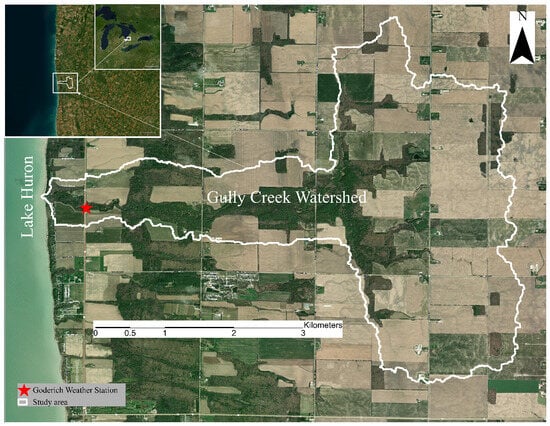
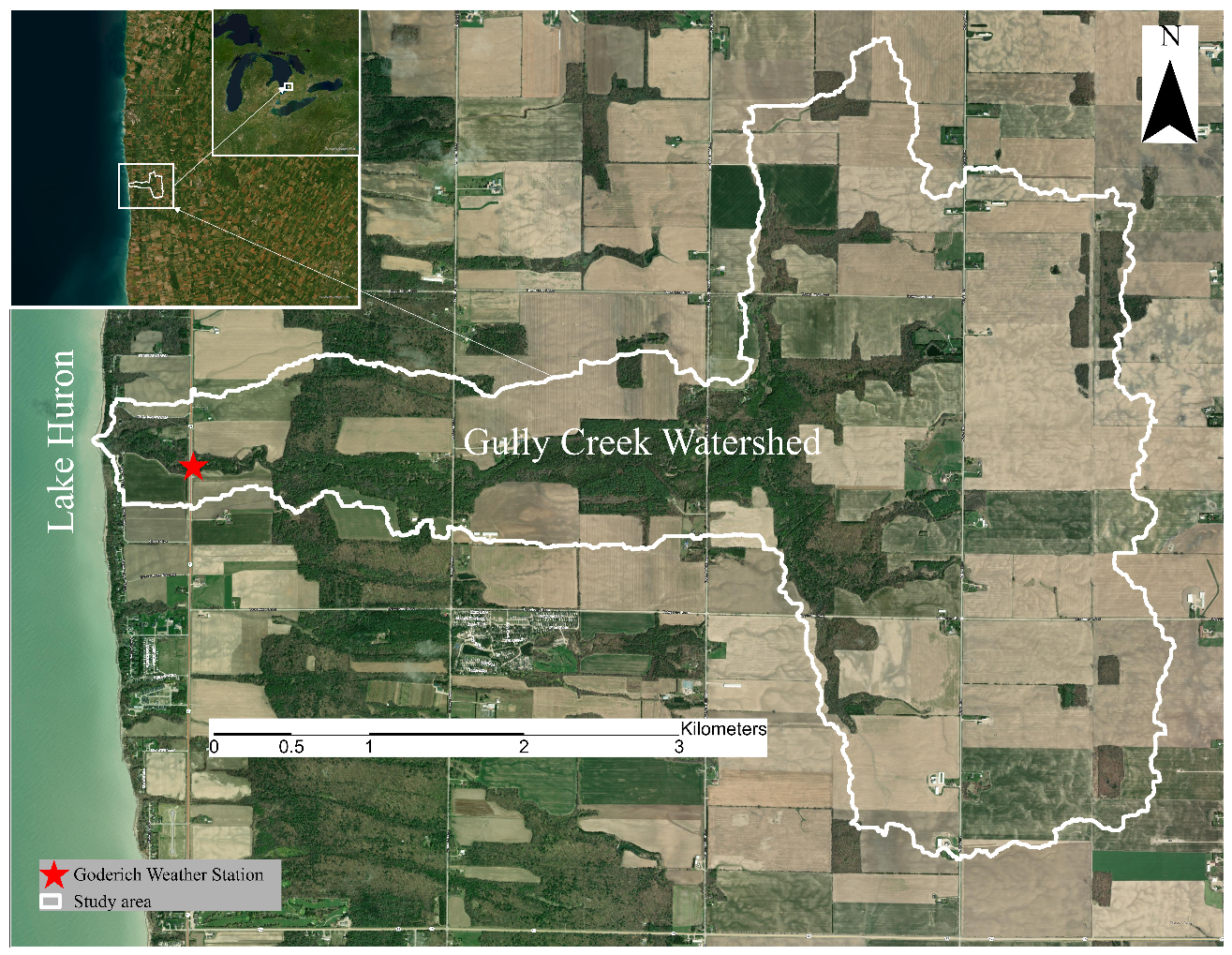
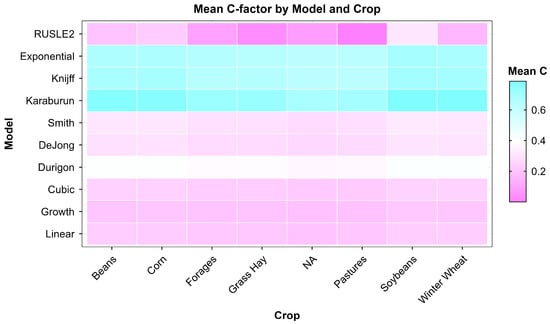
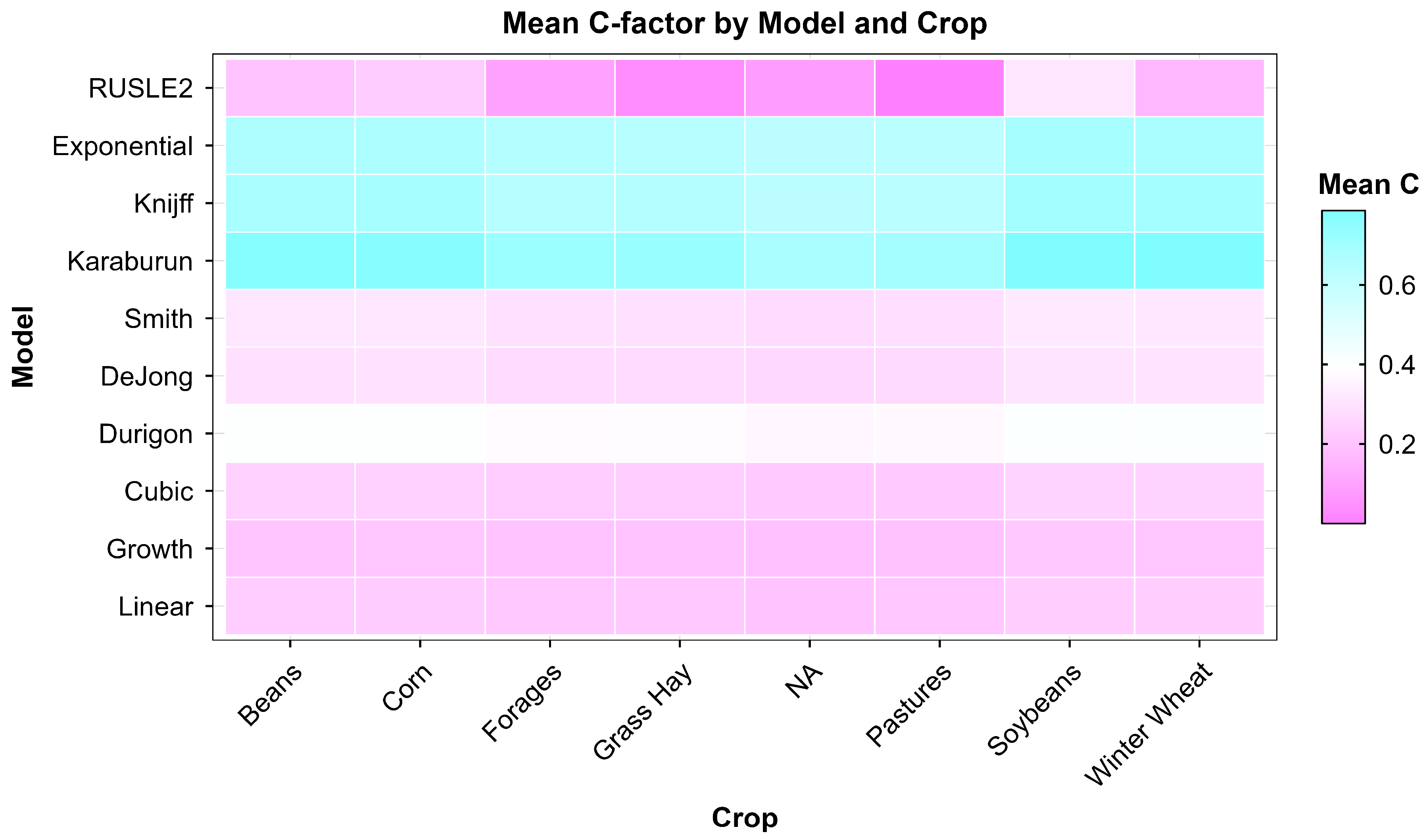
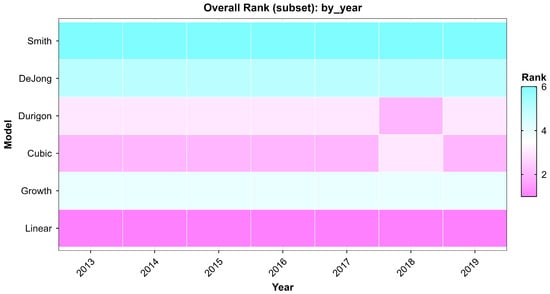
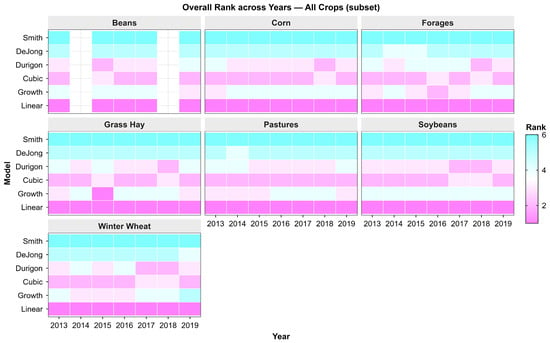
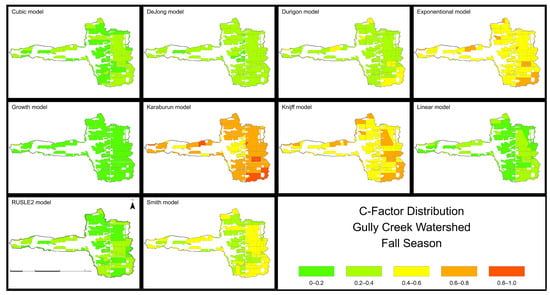
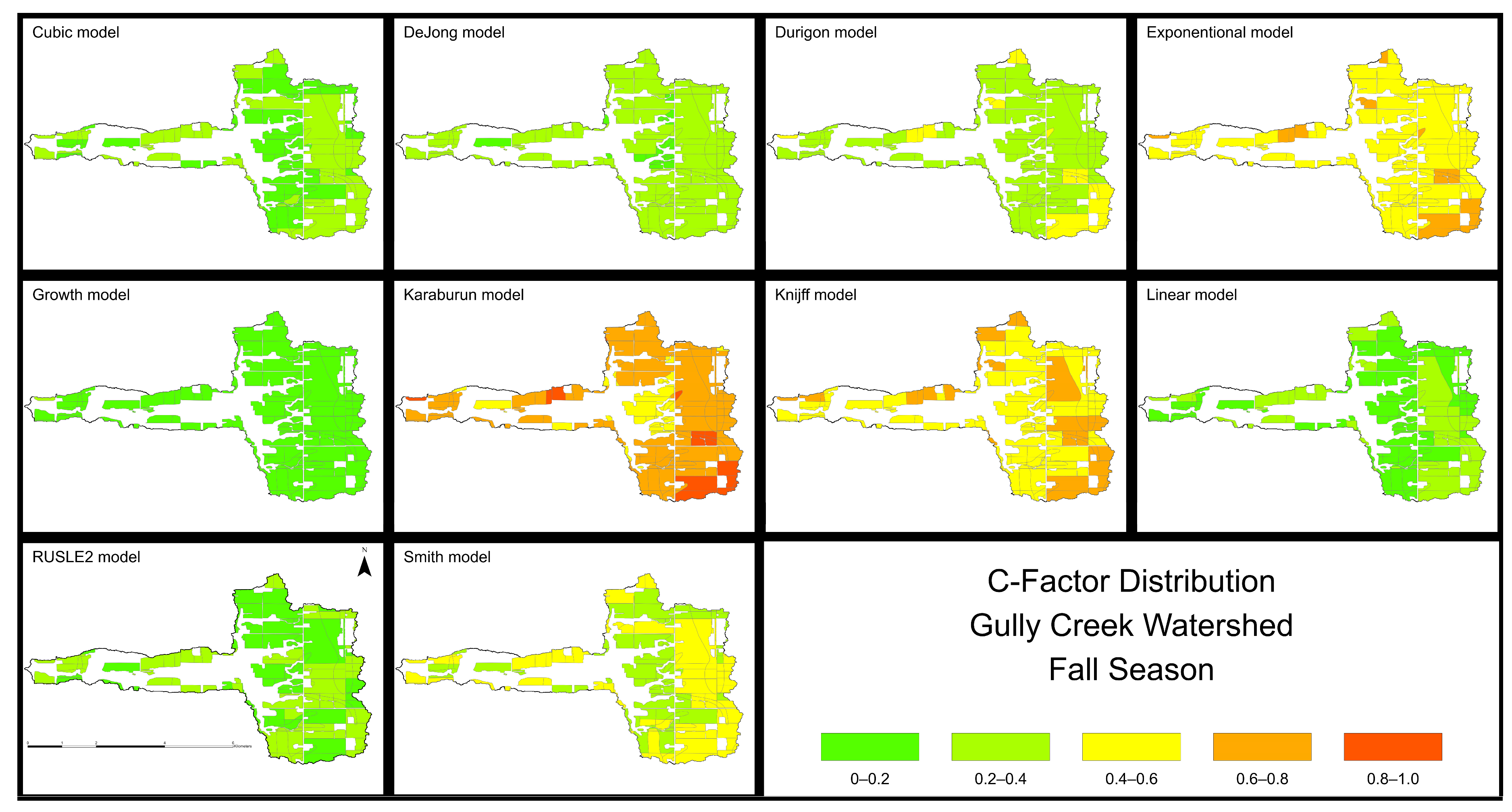
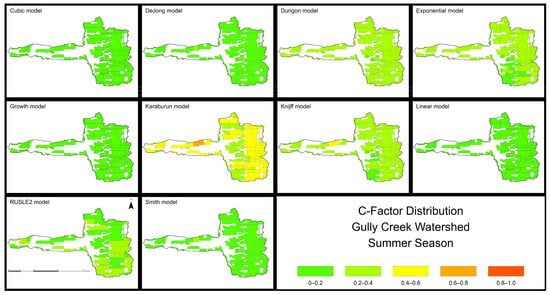
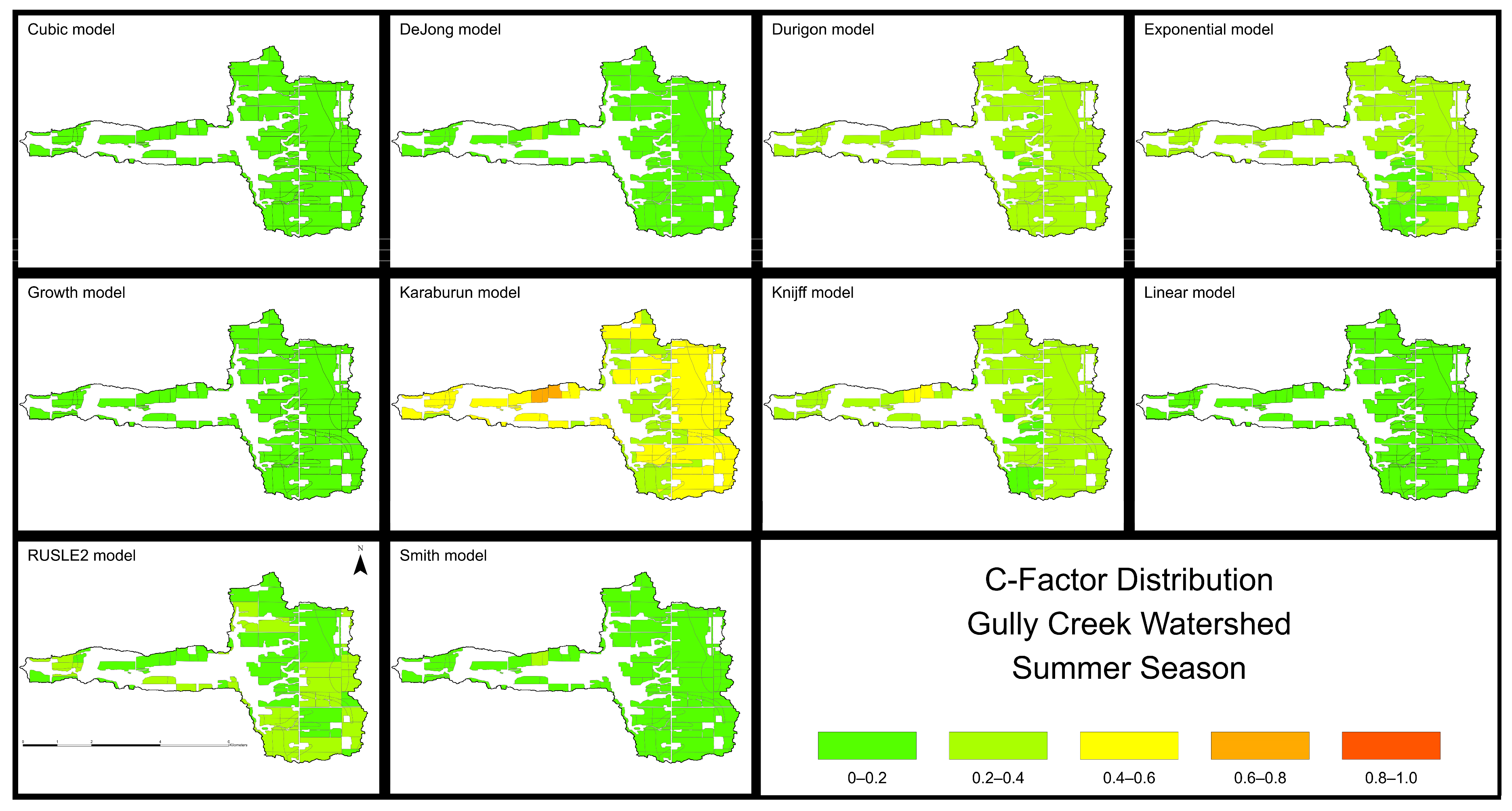
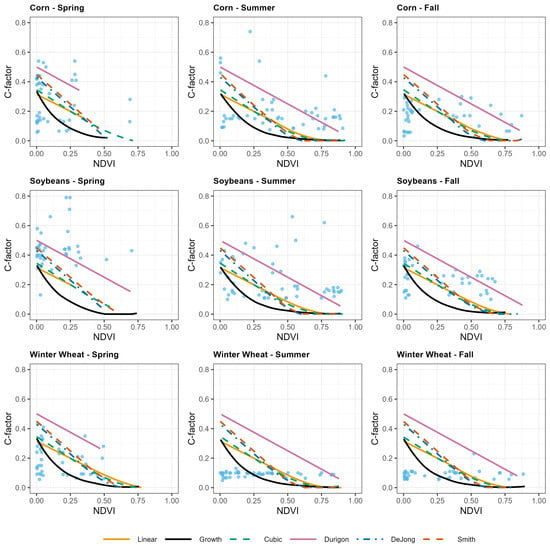
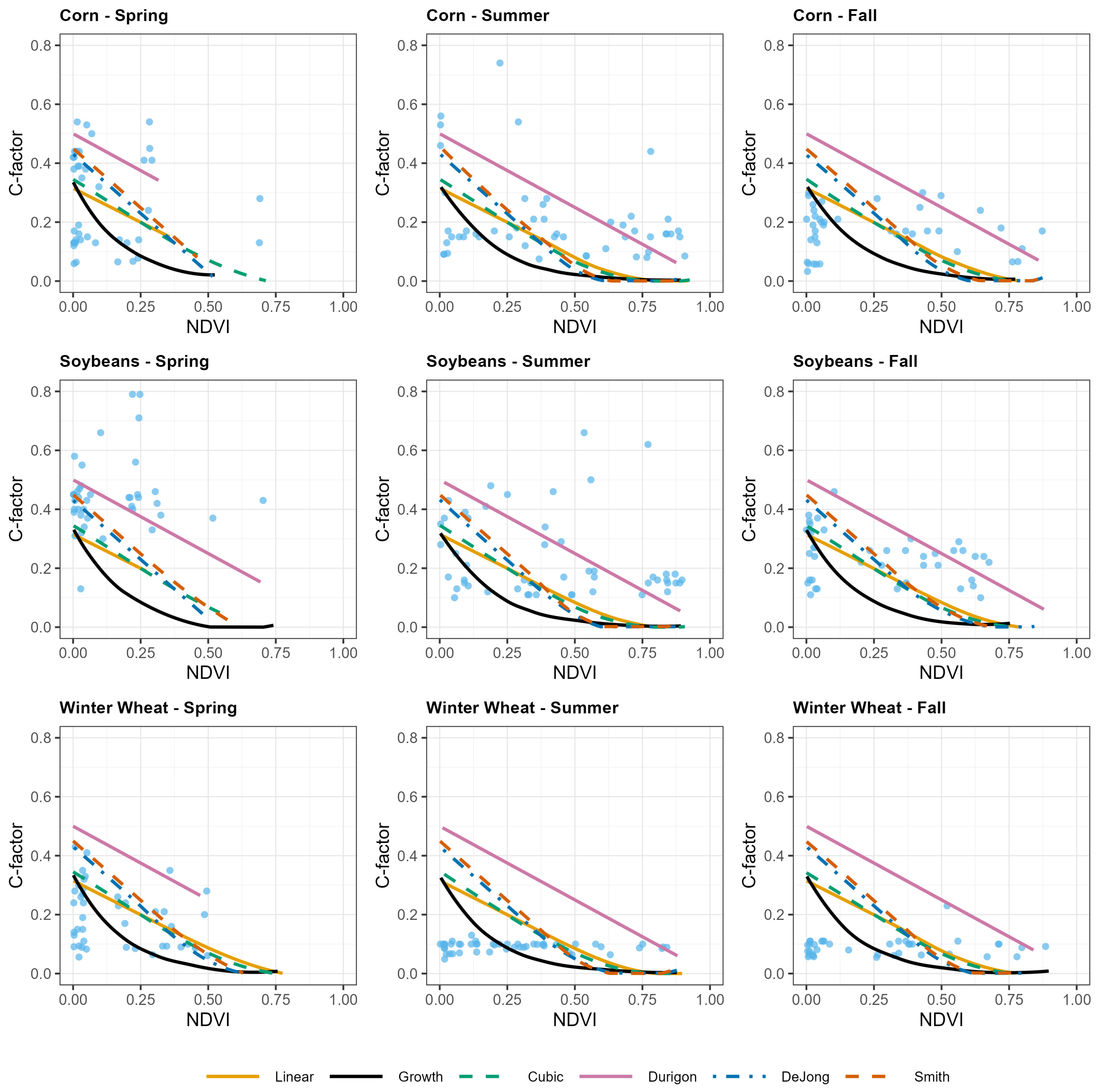
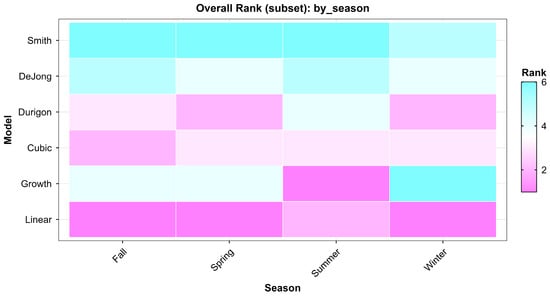
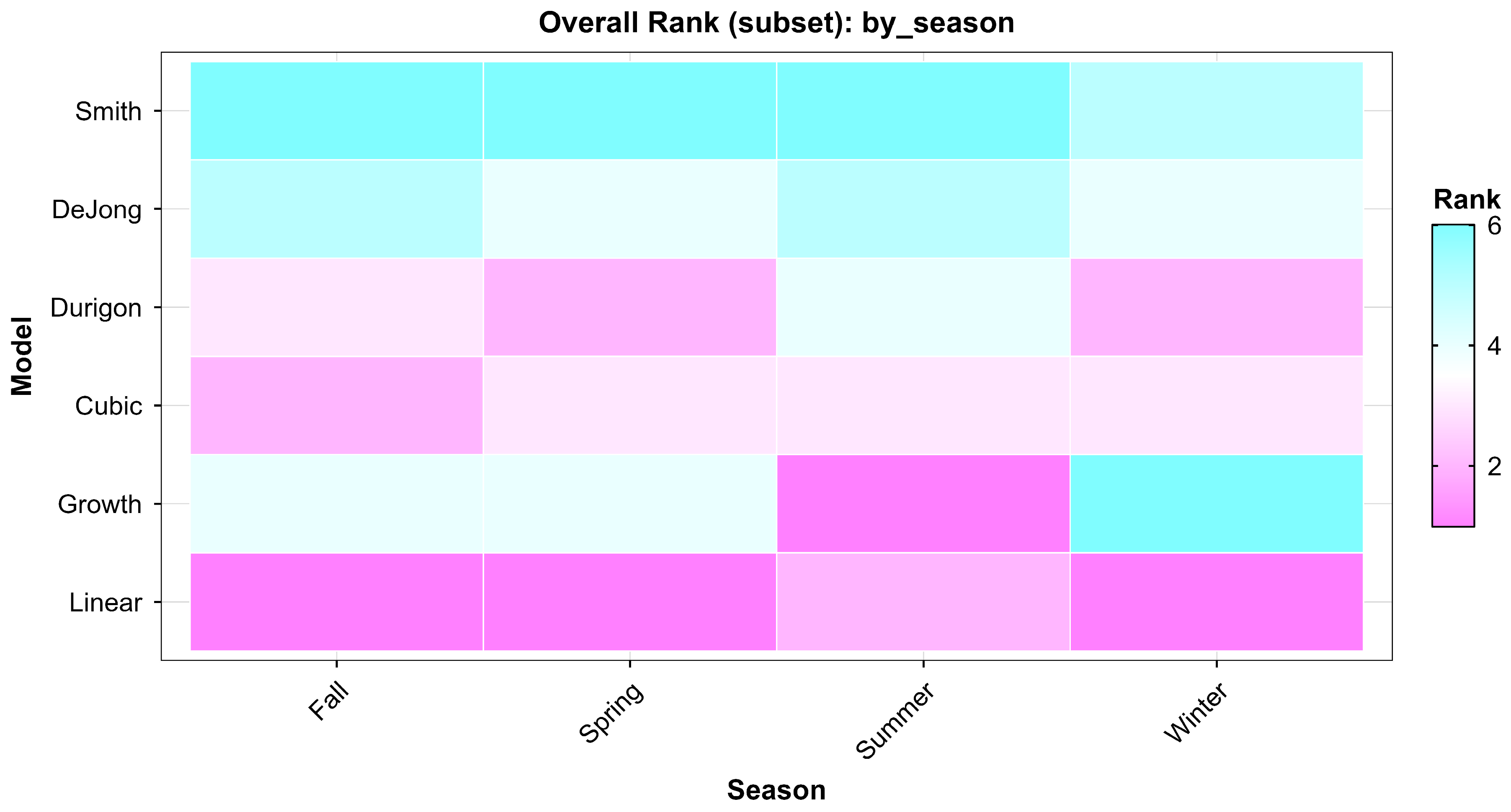
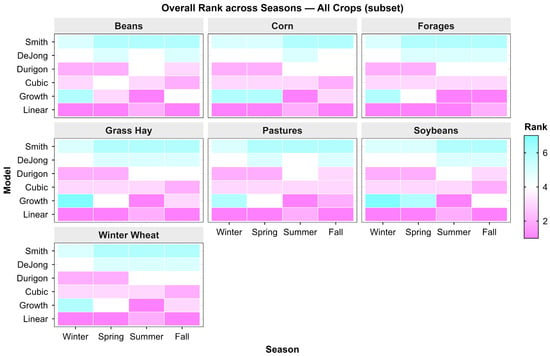
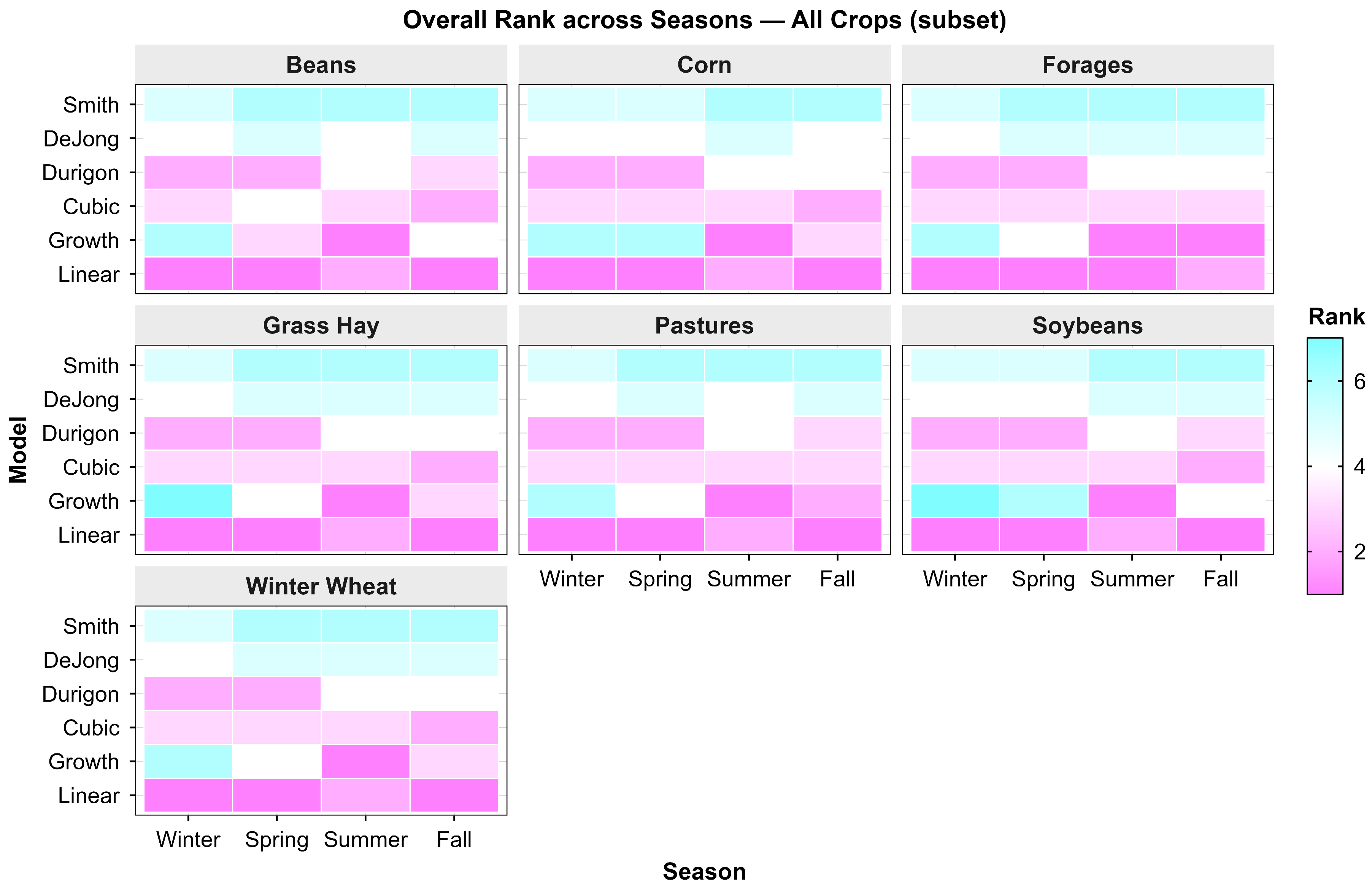
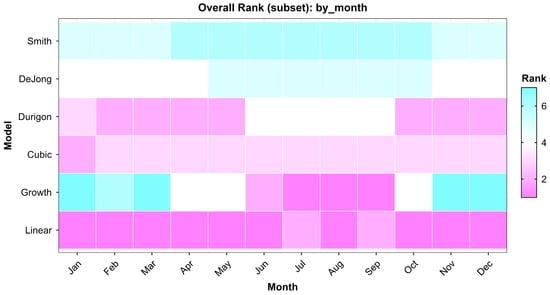
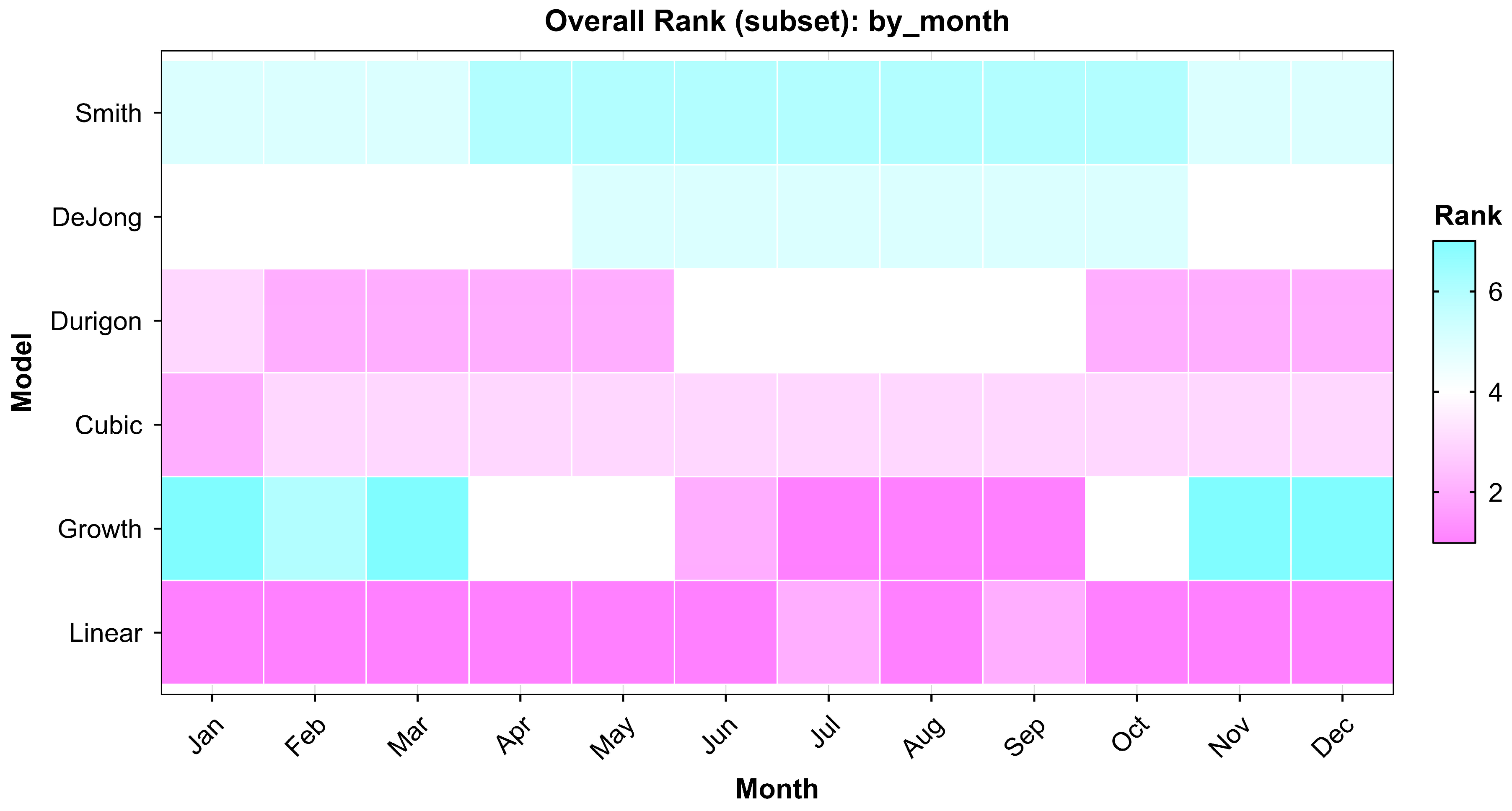
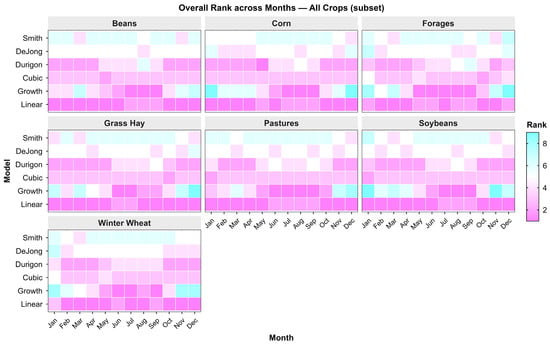
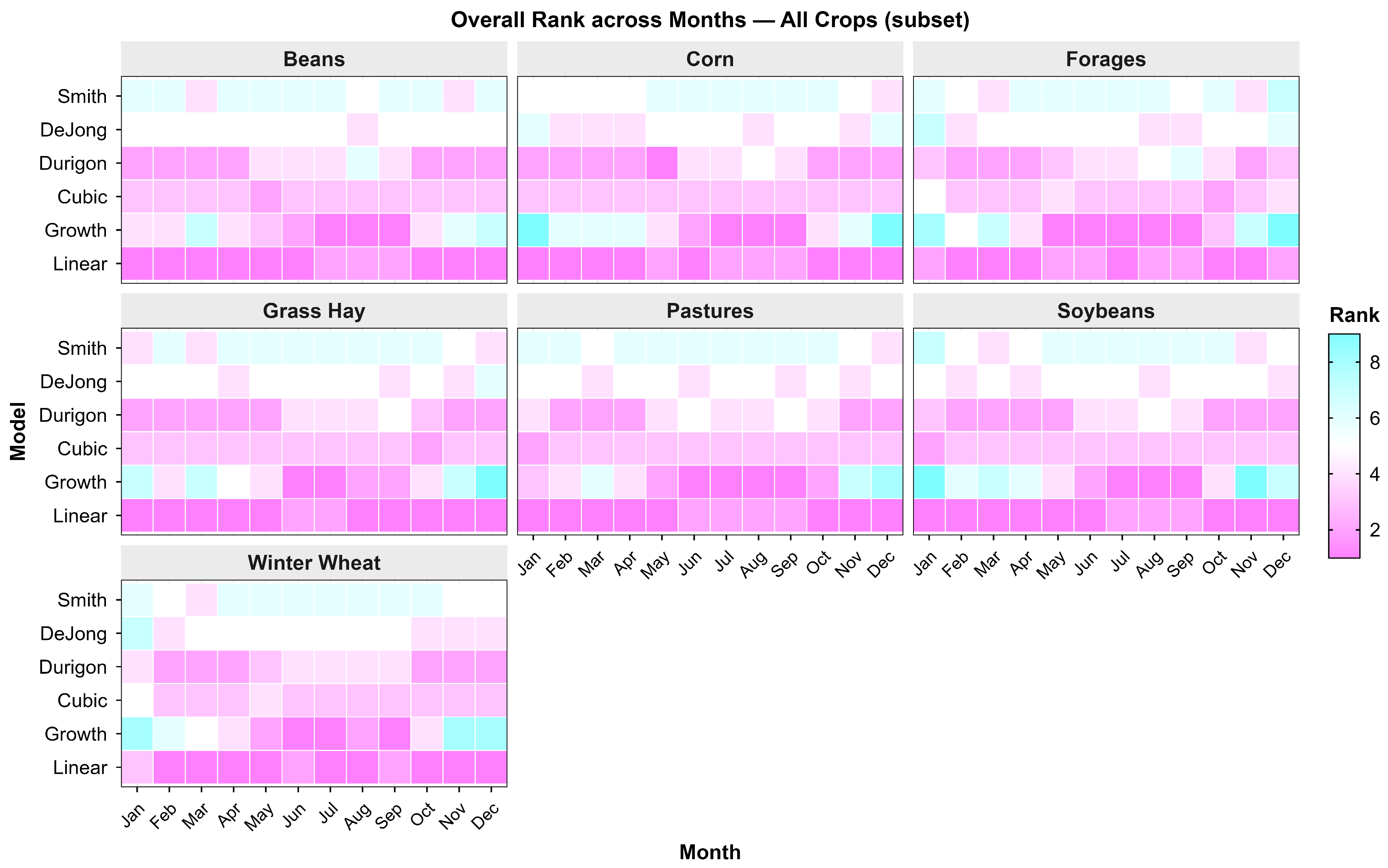

Disclaimer/Publisher’s Note: The statements, opinions and data contained in all publications are solely those of the individual author(s) and contributor(s) and not of MDPI and/or the editor(s). MDPI and/or the editor(s) disclaim responsibility for any injury to people or property resulting from any ideas, methods, instructions or products referred to in the content. |
© 2026 by the authors. Licensee MDPI, Basel, Switzerland. This article is an open access article distributed under the terms and conditions of the Creative Commons Attribution (CC BY) license.