1. Introduction
In recent years, the climatic context has clearly shown an increase in both the frequency and severity [
1] of extreme hydrological events [
2], primarily driven by the adverse effects of climate change and land use dynamics [
3]. These events pose a major risk to both human safety and infrastructure, whether referring to hydrotechnical or civil infrastructure. This is particularly critical in mountainous river basins where response time is limited. Consequently, the growing demand for rapid and accurate flood forecasting solutions, especially under constrained computational resources, has become a high priority in hydrological research. This makes the integration of artificial intelligence-based techniques highly relevant.
Classical hydraulic modeling tools such as HEC-RAS [
4], MIKE 21 [
5], or IBER [
6] provide a very solid foundation for simulating flood wave effects; however, their main drawbacks include high computational time and a significant requirement for input data and user expertise. This makes them less suitable for real-time forecasting or for scenarios that require rapid decision-making. As a result, there is a growing need for a hybrid or fully data-driven method capable of capturing hydraulic behavior through machine learning.
In parallel, the rapid global development of deep learning technologies [
7], particularly those based on recurrent neural networks (RNNs) [
8], has recently opened new perspectives for hydrological applications [
9]. These technologies have immense potential for reducing operational complexity and significantly decreasing the time required for flood wave prediction and propagation, starting from a well-defined dataset and set of assumptions.
RNNs are a special type of artificial neural network [
10], with architectures specifically designed to process sequential data and capable of learning complex temporal relationships, making them ideal for analyzing the propagation and forecasting of discharge and water level time series [
11,
12]. Due to their internal memory and recursive structure, two of their main advantages, these models can capture the dynamic and time varying shape of the flood wave [
13] and simulate the behavior of the entire hydraulic system based on past conditions (training).
According to the specialized literature, both RNNs [
14] and their improved variants such as Long Short-Term Memory (LSTM) [
15] and Gated Recurrent Unit (GRU) [
16] have been applied to various problems, including water level forecasting [
17], discharge prediction at different points along rivers [
18], precipitation forecasting [
19], runoff modeling, and hydrological risk assessment. However, artificial intelligence applications designed to replicate the propagation of flood waves compared to specialized hydraulic modeling software remain limited, particularly due to the lack of rigorous comparative methods and methodologies.
This paper aims to analyze a methodology based on prediction and modeling the hydraulic evolution of a flood wave synthetically generated and previously unknown to the neural networks over a short river segment of approximately 11.5 km. The selected river sector is the Bârsa River, a tributary of the Olt River in Romania [
20]. The study seeks to assess the potential of five types of recurrent neural networks—S-RNN, LSTM, GRU, Bi-LSTM, and Bi-GRU [
21]—in terms of their ability to simulate flood wave propagation, free surface water level, and flood wave volume [
22,
23]. Unlike other studies, this approach is rooted in a 2D hydraulic model developed using HEC-RAS software, with the results from the hydraulic simulations serving as training data for the neural networks. The goal of this approach is to translate knowledge from deterministic physical modeling [
24] into the space of neural modeling, with the primary objective of evaluating the capacity of RNNs to understand and replicate hydraulic behavior along a well-studied river segment.
Following the tests, the GRU and Bi-GRU networks demonstrated the highest accuracy in replicating the shape of the flood wave, with RMSE values below 1.45 and volume errors under 3% in most of the analyzed sections. LSTM, on the other hand, showed weaker performance in some cases, with volume errors exceeding 9%, particularly in downstream areas near confluences.
To validate the simulated results, the network predictions are compared both globally (across 22 evenly distributed cross-sections selected at key points along the river) and locally, in two representative sections located downstream of confluences with other rivers. To enhance confidence in the simulated outcomes, model evaluation was performed using standard hydrological metrics [
25], such as Nash–Sutcliffe Efficiency (NSE), the Coefficient of Determination (
), Mean Squared Error (MSE), Root Mean Squared Error (RMSE), and Mean Absolute Error (MAE).
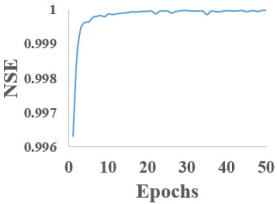
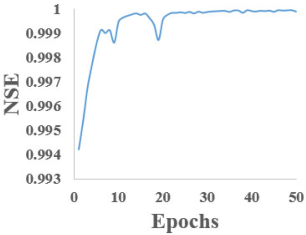
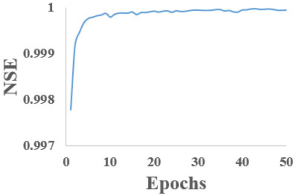
The values obtained for NSE and ere consistently close to 1, confirming the fidelity of the neural network simulations in relation to the data generated with HEC-RAS. Additionally,, the networks demonstrated good stability in maintaining the general shape of the hydrographs and accurately estimating peak discharges.
Moreover, the results obtained in this study demonstrate the potential to directly influence both engineering practice and flood risk management policy by offering a fast and automated alternative to classical hydraulic simulations. The integration of recurrent neural networks into the process of flood wave forecasting and propagation [
26], as well as in determining water surface levels along river segments, could enable local flood risk management authorities to generate real-time predictions of water level and discharge at key points within the hydrographic network particularly in areas known to have a high flood risk [
27]. The main advantage is that it eliminates the need to run full-scale hydraulic models after the neural networks have been trained. This result is particularly valuable in emergency situations, where reaction time is critical and running a full physical model may become unfeasible due to limited resources or time constraints.
In the scientific literature, most studies based on recurrent neural networks (RNNs) applied to hydrology focus on streamflow forecasting at a single control point [
8,
11] or on estimating the peak value of a flood wave [
22,
23]. Moreover, many of these studies do not test the ability of RNNs to reproduce an entire spatial–temporal flood wave propagation process, as classical physical models like HEC-RAS or MIKE do.
Thus, a significant knowledge gap emerges as follows: can an RNN-based model fully replace a hydraulic solver within a river reach, using only upstream information and synthetic data, without access to the explicit geometry of the riverbed?
The present study aims to address this question by evaluating the performance of five recurrent neural network architectures (Simple RNN, LSTM, Bi-LSTM, GRU, and Bi-GRU), trained on the outputs of a 2D HEC-RAS hydraulic model. The main objectives are to test the ability of these networks to reproduce the shape of the flood wave along the entire river section, across multiple cross-sections; and to identify the optimal architecture for potential operational deployment.
The novelty of this study lies in its holistic approach to flood wave propagation, treating it not merely as a pointwise problem but as a spatial–temporal sequence, thus contributing significantly to the integration of AI into hydraulic modeling. Moreover, the use of synthetic yet realistic data enables a controlled and reproducible validation of the proposed methods.
Given the need for efficient emergency management such as flood warnings or rapid post-event assessments, this method could become a valuable tool for both those responsible for managing hydrotechnical infrastructure and the authorities in charge of emergency response [
28]. Thus, the present study offers both a theoretical and practical contribution, supported by the analyzed case study, demonstrating its immediate relevance to modern strategies for adapting to extreme hydrometeorological phenomena caused by climate change.
The conclusions support the potential of integrating recurrent neural networks into early warning systems, drastically reducing computational costs and enabling real-time operational forecasting. The study also has several limitations, outlined as follows: the use of synthetic data excludes unforeseen influences present in real-world datasets (such as measurement errors or atypical flood behaviors), and extending the approach to other catchments requires a new training phase, which limits the direct generalization of the trained networks.
2. Materials and Methods
2.1. Study Area
The Bârsa River (cadastral code 08.01.050) is one of the most important tributaries within the upper hydrographic basin of the Olt River (cadastral code 08.01), with their confluence occurring near the locality of Feldioara.
Significant for the Transylvanian region of Romania, the Bârsa River extends over 73 km, encompassing a hydrographic basin area of 937 km
2, and it crosses major localities, notably, the Brașov Municipality and the town of Zărnești [
29].
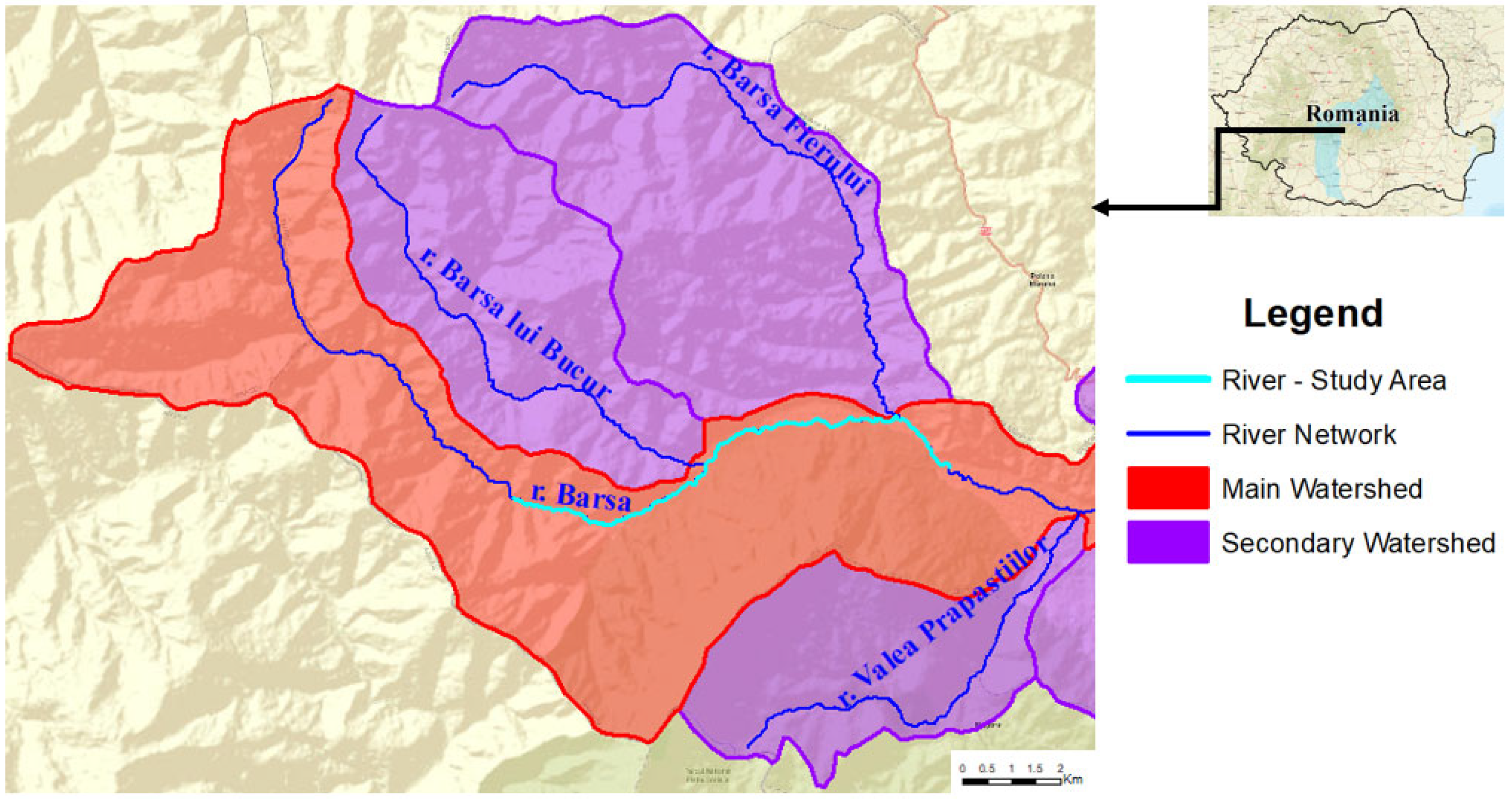
The current paper focuses on the upper hydrographic basin of the Bârsa River, specifically analyzing an approximately 11.5 km-long section (
Figure 1). This chosen area is located roughly 12 km downstream from the river’s source and is characterized by two significant left-bank tributaries (Bârsa lui Bucur River and Bârsa Fierului River), which play a crucial role in the hydrology of the main river.
2.2. Data
The maximum discharge values were calculated based on a detailed analysis of historical information regarding the runoff regime of the Bârsa River. Given that the basin area, within the context of the current study, is less than 100 km
2, genetic calculation formulas were employed to determine the maximum discharge, in accordance with the current methodology [
30,
31]. These formulas rely on the maximum rainfall intensity corresponding to a 1% probability, as well as the runoff coefficient, assessed according to basin slope, land use patterns, and vegetation cover. Calculations were performed by the National Institute of Hydrology and Water Management (INHGA) within the framework of the project “Flood Hazard and Flood Risk Maps and Flood Risk Management Plans for Romania” [
32] and were provided by S.C. AQUAPROIECT S.A.
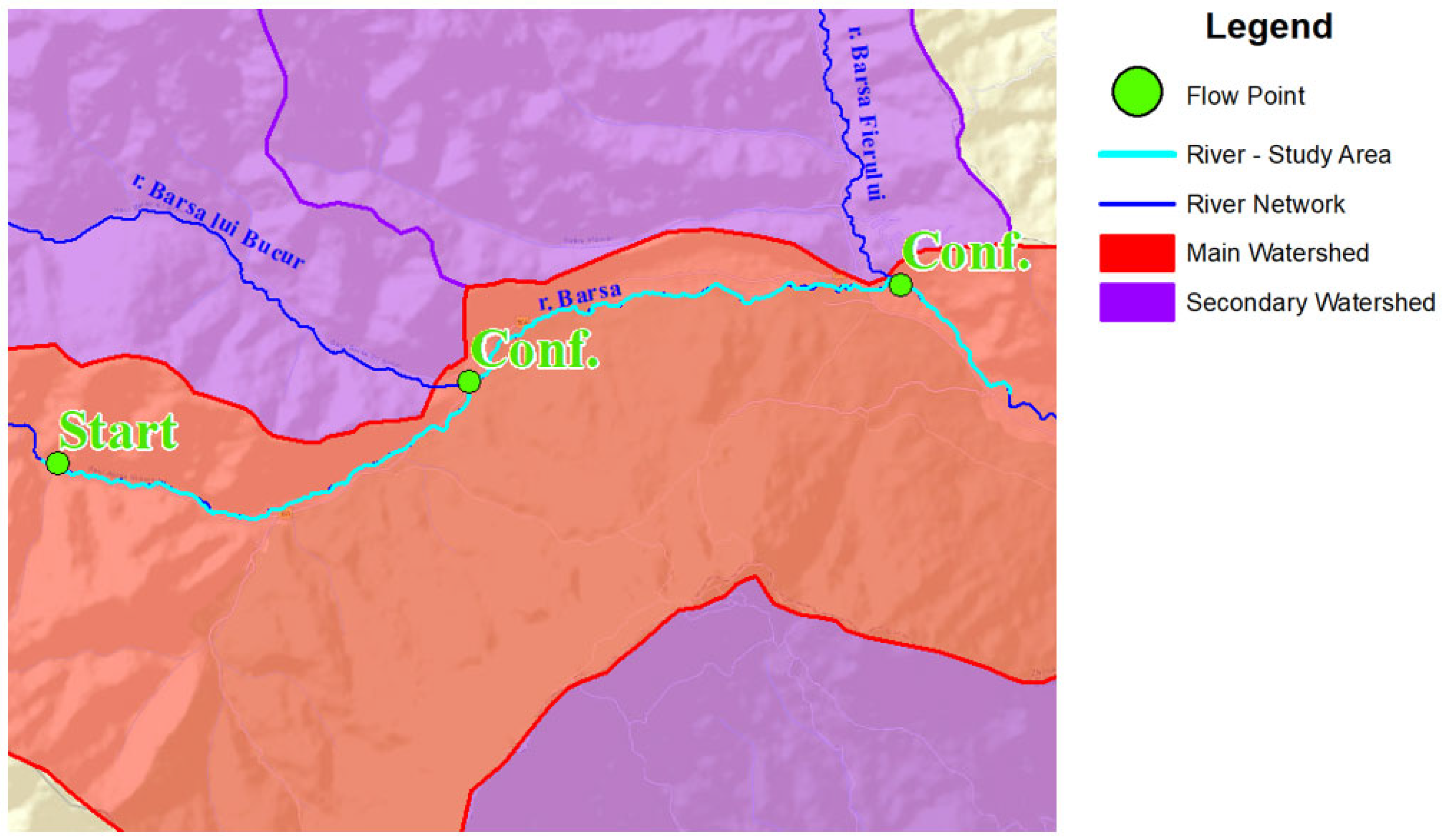
Synthetic hydrographs determined at three key points along the configuration of the Bârsa River were used as input data. As illustrated in
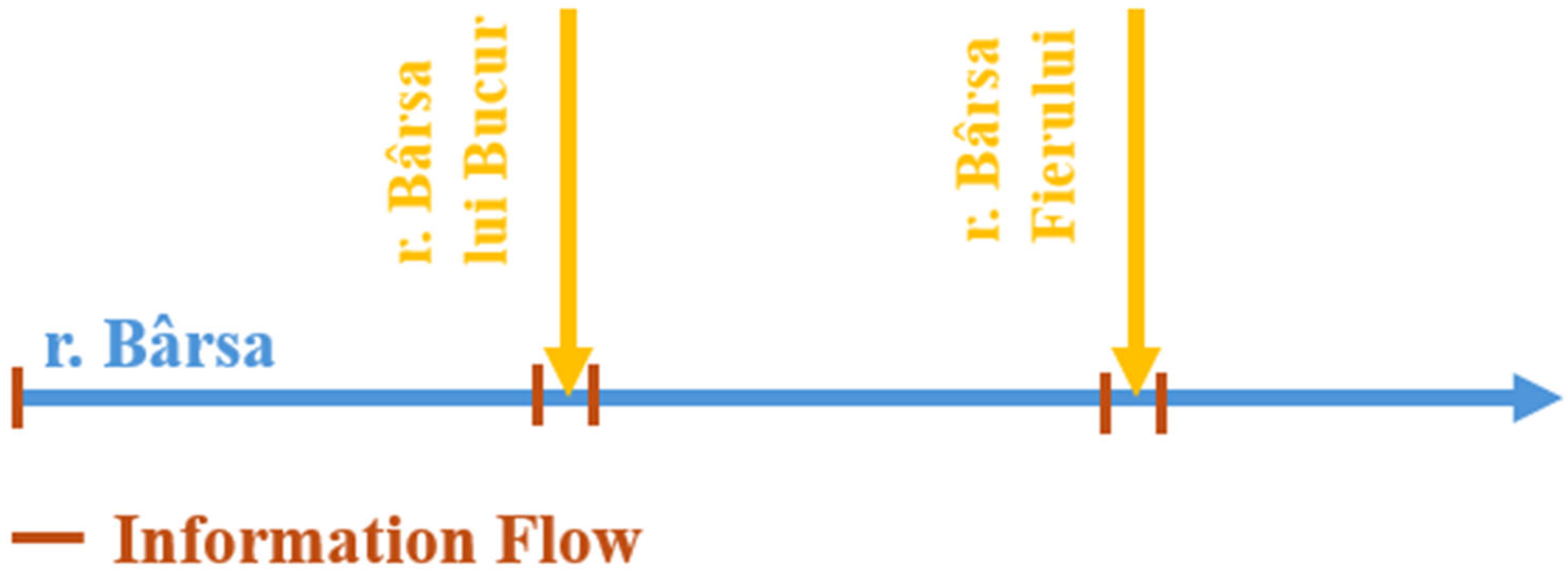
Figure 2, the data were provided at the starting point of the analysis (start point) and at the confluence of the Bârsa River with its tributaries, Bârsa lui Bucur River and Bârsa Fierului River (conf. points). Flow values were delivered both upstream and downstream of the confluence, thus allowing the exact contribution of the inflows to be determined.
At each of the three input points, seven synthetic hydrographs were determined, for annual exceedance probabilities of 0.1%, 0.2%, 0.5%, 1%, 1%CC, 10%, and 33%, respectively. The hydraulic hypothesis adopted along the river assumed a constant annual exceedance probability throughout its length (
Figure 3).
To fulfill this hydraulic hypothesis, discharge corrections were applied at the confluence zones, accompanied by uniformly distributed lateral inflows along the river’s length.
Hydraulic Modeling
The adopted hydraulic hypothesis was fulfilled through flood wave propagation using hydraulic modeling software HEC-RAS (Hydrologic Engineering Center’s River Analysis System), version 6.6, developed by the US Army Corps of Engineers Hydrologic Engineering Center [
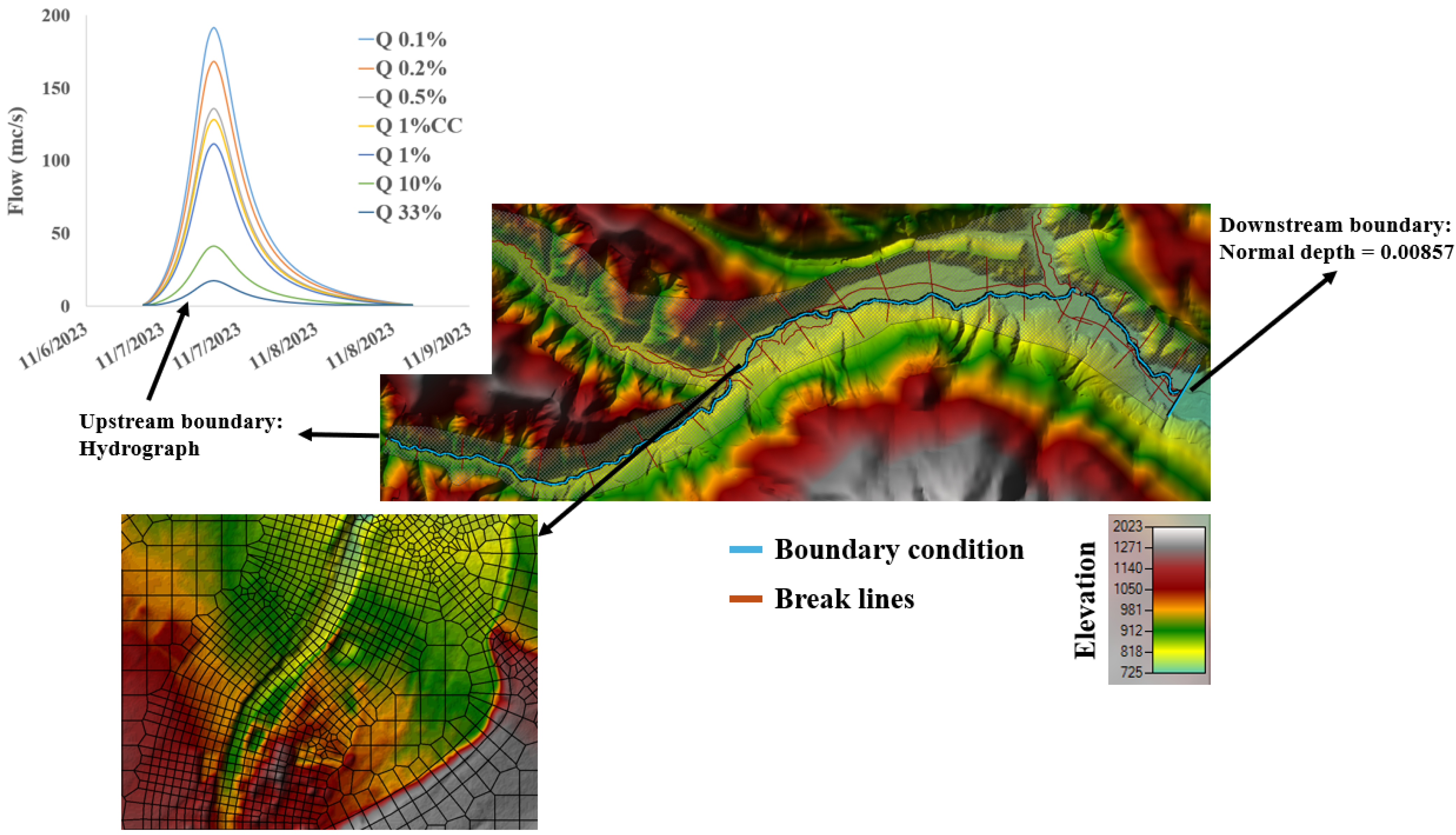
33]. For this purpose, a fully 2D hydraulic model was built (
Figure 4), incorporating over 119,000 computational cells, with a resolution of 15 m
2 in the floodplain area and a higher resolution of 5 m
2 within the main riverbed and near features that may influence flow (embankments, roads, or bridges).
The hydraulic modeling was performed for all seven synthetic hydrographs calculated (annual exceedance probabilities of 0.1%, 0.2%, 0.5%, 1% CC, 1%, 10%, and 33%). Calculations were based on the Digital Terrain Model (DTM), into which measured topo-bathymetric cross-sections along the river were integrated [
34,
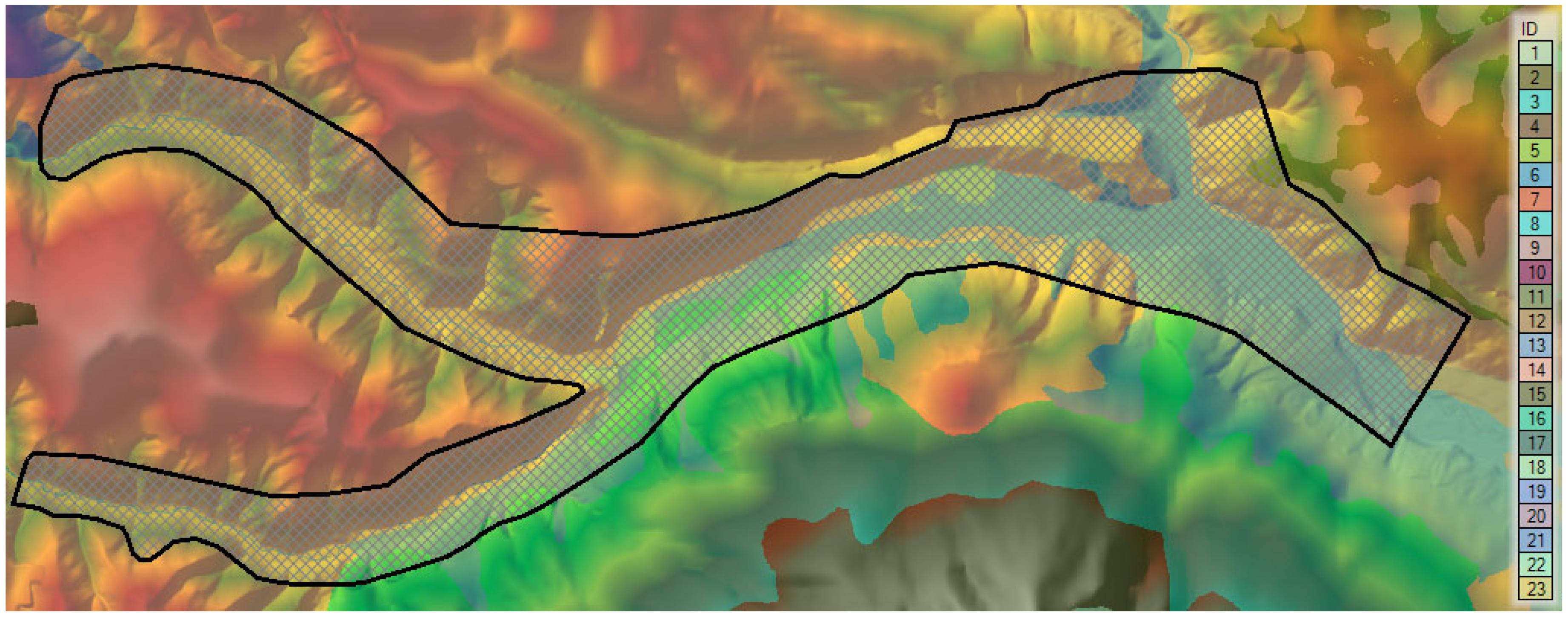
35]. In addition to the DTM, the model considered the land cover types present in the area. Thus, roughness coefficients (
Figure 5) were sourced from the specialized literature (
Table 1) [
36] and distributed according to land cover types, facilitated by the freely available European Union resource, Corine Land Cover [
37].
Another important element, addressed with utmost seriousness, was the stability of the model, achieved using the Courant number (Courant–Friedrichs–Lewy—CFL).
The CFL number is a dimensionless parameter used as a necessary condition for convergence in the numerical solution of certain partial differential equations (especially hyperbolic equations) [
38].
where v—propagation velocity (e.g., water velocity); ∆t—time step; ∆x—spatial step (length of a computational cell).
It appears in the numerical analysis of explicit time integration schemes when these are used for numerical solutions. Consequently, the time step must be smaller than some upper bound, given a fixed spatial increment, in many computer simulations with explicit time displacement; otherwise, the simulation produces incorrect or unstable results [
39].
If the CFL value is less than 1, the numerical solution is considered stable (a necessary condition, but not always sufficient). Conversely, if the CFE value is greater than 1, the solution is considered numerically unstable, thus changing the time step.
This parameter is fundamental in hydraulic modeling, based on the relationship between the physical propagation velocity of the flood wave and the ratio between the time step and computational cell size. Maintaining the Courant number within a specific interval ensures the numerical stability of the model and minimizes volume and water level errors in mathematical modeling. The present study established upper and lower limits of 2 and 0.7, respectively, enhancing model stability and thereby the quality of results [
40]. Setting the upper limit to a relatively low number may increase simulation time but ensures calculations of high accuracy, which was desired for this study.
The summarized results presented in
Table 2, obtained after adjusting the model stability and applying a variable time step based on the Courant number, indicate a high degree of quality for the resulting hydraulic outputs, thus enhancing the reliability of the data obtained. If we look at the percentage error, we observe an increasing trend from AEP 0.2% to AEP 10% although the increase is low. The explanation is related to the fact that for higher APE, the model has the calculation cells filled with water, while for lower AEP, they start to be empty; thus, the model needs more iterations to stabilize.
2.3. Model Evaluation Metrics
Regarding the evaluation of the performance of the recurrent neural networks employed, several metrics specifically used in time-series processing were selected, precisely matching the context of the discharge and water level hydrographs that formed the basis for training and testing the neural networks.
The Mean Squared Error (MSE) is the first metric used to analyze the competence of the model and is defined by Equation (2) [
41].
where
represents the data simulated by the neural network, and
represents the data used for training. MSE quantifies the mean of squared errors between the observed (real) and predicted values by the network.
where RMSE (Root Mean Squared Error) is the square root of the MSE, offering the advantage of returning precise values measured in the same units as the training data, thus being easier to interpret [
42].
Other metrics are the MAE Equation (4),
Equation (5), and NSE Equation (6).
where MAE (Mean Absolute Error) represents the mean of the absolute values of the errors, with
denoting the values simulated by the network and
d the training data [
43]. The main advantage of this metric is that it does not overemphasize peak values, making it more realistic in low-flow or low altitude regions.
Taking a step further, in order to enhance confidence in the quality of model training, several more robust metrics were also employed, such as the Coefficient of Determination
[
44], which is based on the Pearson correlation, expressed as follows:
The coefficient offers several advantages, including its ability to purely capture the correlation between simulated and observed values, as well as its independence from systematic bias.
In addition to
, the Nash–Sutcliffe Efficiency (NSE) metric was also employed. NSE is a fundamental performance metric in hydrology, as it evaluates the model’s ability to reproduce the dynamics of observed values based on the simulated data [
45].
Given the suitability of
and NSE for hydrological tasks, these metrics were considered key elements in evaluating the performance of the recurrent neural network prediction models [
46,
47,
48]. By using these metrics, a more reliable and detailed assessment is provided compared to traditional metrics. This approach enables a more nuanced evaluation of model performance, accounting for the inherent complexity of hydrological modeling.
2.4. Recurrent Neuronal Networks
Recurrent Neural Networks (RNNs) are a class of more advanced Artificial Neural Networks (ANNs), with their main advantage being the ability to model sequential data characterized by temporal dependencies [
49]. This feature is essential in the analysis of hydrological data, which change their characteristics over time.
Another key feature of RNNs lies in their recurrent connections, which allow information to be reused in successive stages of the learning process [
50]. As a result, these models are capable of capturing dynamic relationships and temporal contexts within time series.
Due to their specific architecture [
51], RNNs are highly effective in identifying complex patterns, particularly in large volumes of data, and are very capable of forecasting future values, making them extremely useful across various application domains.
In the present article, five different RNNs were analyzed, each with distinct configurations. The objective was to identify the optimal training approach based on the available data and to determine the method that yields the best performance.
2.4.1. Simple Recurrent Neuronal Networks
Simple Recurrent Neural Networks (S-RNNs) represent the most fundamental and basic form of RNNs, characterized by the recurrent connection between layers. The key distinction between this type of network and traditional feedforward neural networks lies in the ability of S-RNNs to use the hidden state from a previous time step as part of the current input, thereby enabling short-term memory of past information within analyzed data sequences.
Although their simple architecture offers advantages in terms of implementation and interpretability, S-RNNs can encounter significant challenges when it comes to retaining long-term information. Nevertheless, they can be a suitable choice for modeling data with short-term temporal dependencies.
The fundamental equations that describe the functioning of S-RNNs are as follows [
52]:
where
—hidden state;
—output vector;
—input vector at time t;
—previous layer (recurrence);
;
—matrix of weights associated with the inputs;
—the bias vector associated with the hidden layer;
—the activation function;
—the matrix of hidden weights in the output layer; and
—the bias associated with the output.
2.4.2. Long Short-Term Memory
Long Short-Term Memory (LSTM) neural networks are a more advanced and specialized variant of recurrent neural networks, specifically designed to address the vanishing gradient problem and to enhance the ability to capture long-term temporal dependencies in data sequences. Hochreiter and Schmidhuber [
53] are the originators of this type of network, which has since undergone various improvements that have further increased its capabilities [
54].
The main advantage of LSTM over classical RNNs lies in the use of internal structures called gates and memory cells, which can store information over extended periods of time [
55]. The LSTM architecture is built on three fundamental components: the cell state, representing long-term memory; the hidden state, which captures the output from the previous time step; and the input data from the current time step [
56].
Through its gating mechanisms, the LSTM can selectively decide what information to retain, what to forget, and what to pass on, enabling the network to memorize complex long-term relationships. These states are defined by the following equations.
where
,
, and
are the values of the forget gates, input gates, and output gates at time step t.
s a sigmoid activation function,
is the candidate cell state value,
and
are weighted matrices, and
represents element-wise multiplication.
2.4.3. Gated Recurrent Unit
Gated Recurrent Units (GRUs) are a simplified yet highly effective variant of LSTM networks. They were introduced to retain the advantages of LSTM models while adopting similar architecture [
57]. The main difference between the two lies in the number of internal gates as follows: while LSTMs use three gates, the GRU model uses only two—update and reset gates.
The update gate determines how much of the previous information should be carried forward, whereas the reset gate decides how much of the past information should be forgotten or retained.
Both GRU and LSTM models excel at managing long-term sequential dependencies; however, the key distinction is that GRUs achieve this with a simpler, more efficient architecture, making them a preferred choice in many cases [
58].
In GRU architecture, the output of the memory cell (
) at time step t serves both as the input for the next computation and as the basis for decision-making. The equations that define these values are the following:
2.4.4. Bidirectional Long Short-Term Memory
Bidirectional Long Short-Term Memory (Bi-LSTM) recurrent neural networks are a powerful extension of classical LSTM networks, with the ability to capture both past and future dependencies in sequential datasets [
59]. The fundamental difference from standard LSTMs, which process data in a single direction (typically forward), is that Bi-LSTMs have two LSTM layers that analyze the data in opposite directions [
60]. The first layer processes the input sequence from start to end, while the second layer processes the sequence from end to start.
The combined output of these two LSTM networks allows for the extraction of more complex sequence representations, which increases both the complexity and performance of the network. The final output is a combination of the forward and backward sequences, often through concatenation, making Bi-LSTMs particularly useful for tasks that require sequential context.
2.4.5. Bidirectional Gated Recurrent Unit
Similarly to Bi-LSTM networks, Bidirectional Gated Recurrent Unit (Bi-GRU) networks have the ability to process sequential information in both the forward (from start to end) and backward (from end to start) directions [
61]. Their underlying architecture is similar to that of Bi-LSTM networks, incorporating the general characteristics of GRUs [
62].
This dual approach enables the modeling of global temporal contexts, allowing the network to take into account both past and future information relative to a given point in a sequence.
2.5. Methods
For the present study, the deep learning models (S-RNN, LSTM, GRU, Bi-LSTM, Bi-GRU) [
63] were developed using free Python software (version 3.12.0). In addition to Python, the working environment was built using the TensorFlow package (version 2.16.1) and Keras (version 3.3.3), all of which are open source [
64,
65].
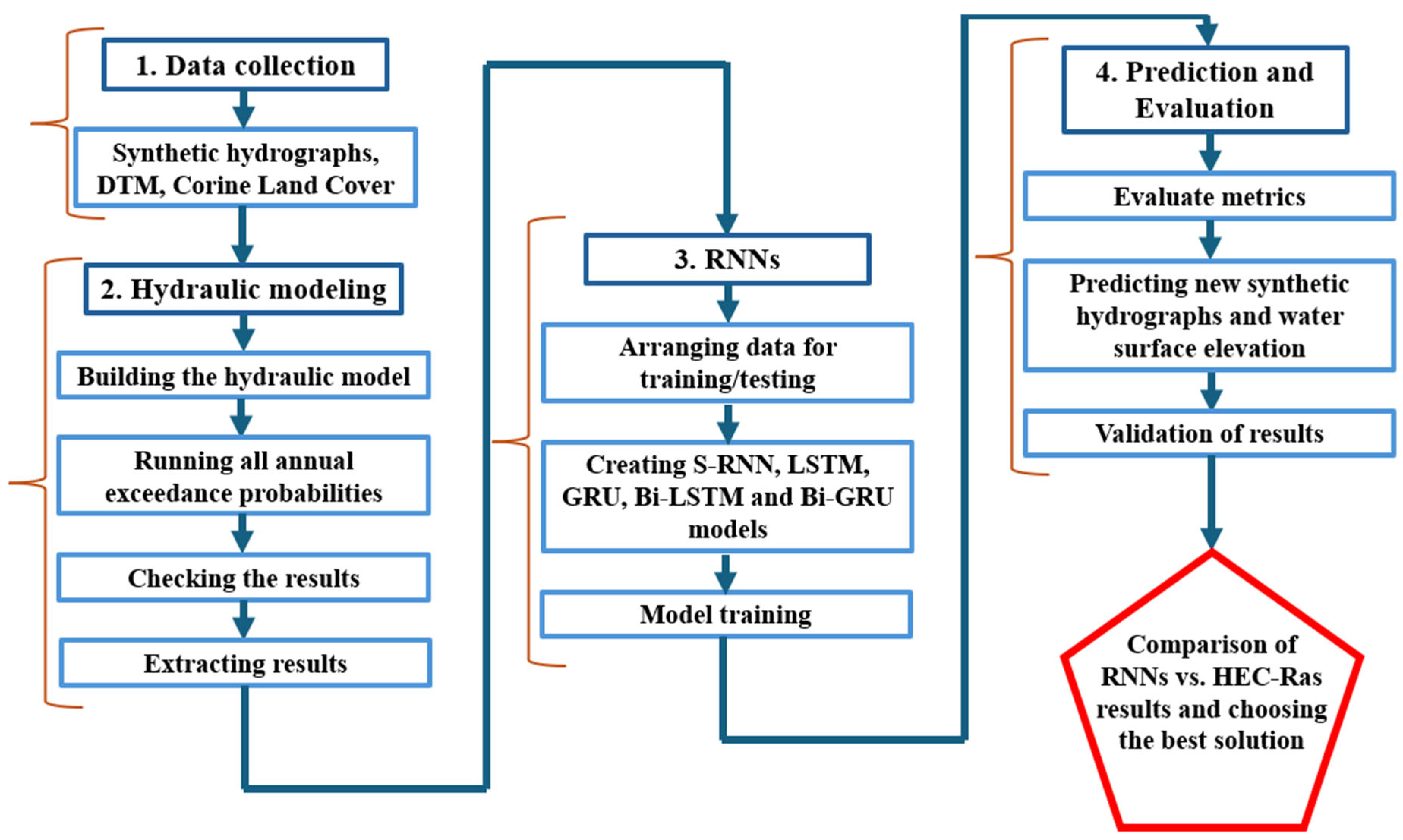
The workflow diagram is presented in
Figure 6. The process is divided into four major successive stages, each with a different level of complexity.
The first stage involves the collection of input data required for hydraulic modeling. This includes synthetic discharge hydrographs for various annual exceedance probabilities, the Digital Terrain Model (DTM), land use information (Corine Land Cover), as well as existing hydrotechnical and road infrastructure.
The second stage of the workflow consists of performing hydraulic modeling, starting from building the hydraulic model using HEC-RAS software, followed by running all the synthetic hydrographs delivered by INHGA, presented previously. Once hydraulic modeling is completed and the flow hydrographs have been propagated over the analyzed sector, they are evaluated in terms of model stability and reliability. If the obtained result meets the performance requirements and the model presents the desired stability, the result extraction stage follows. The results obtained through 2D hydraulic modeling will serve as data for training the neural networks, so that, starting from a series of known scenarios, the neural networks are able to predict other values, previously unknown.
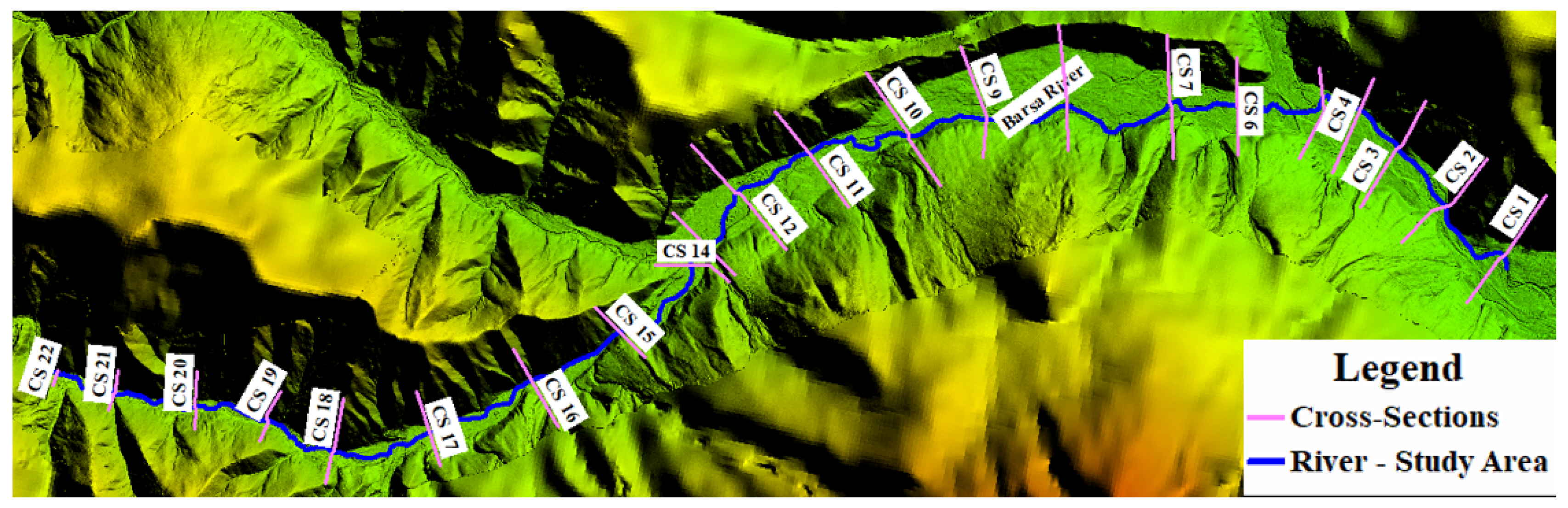
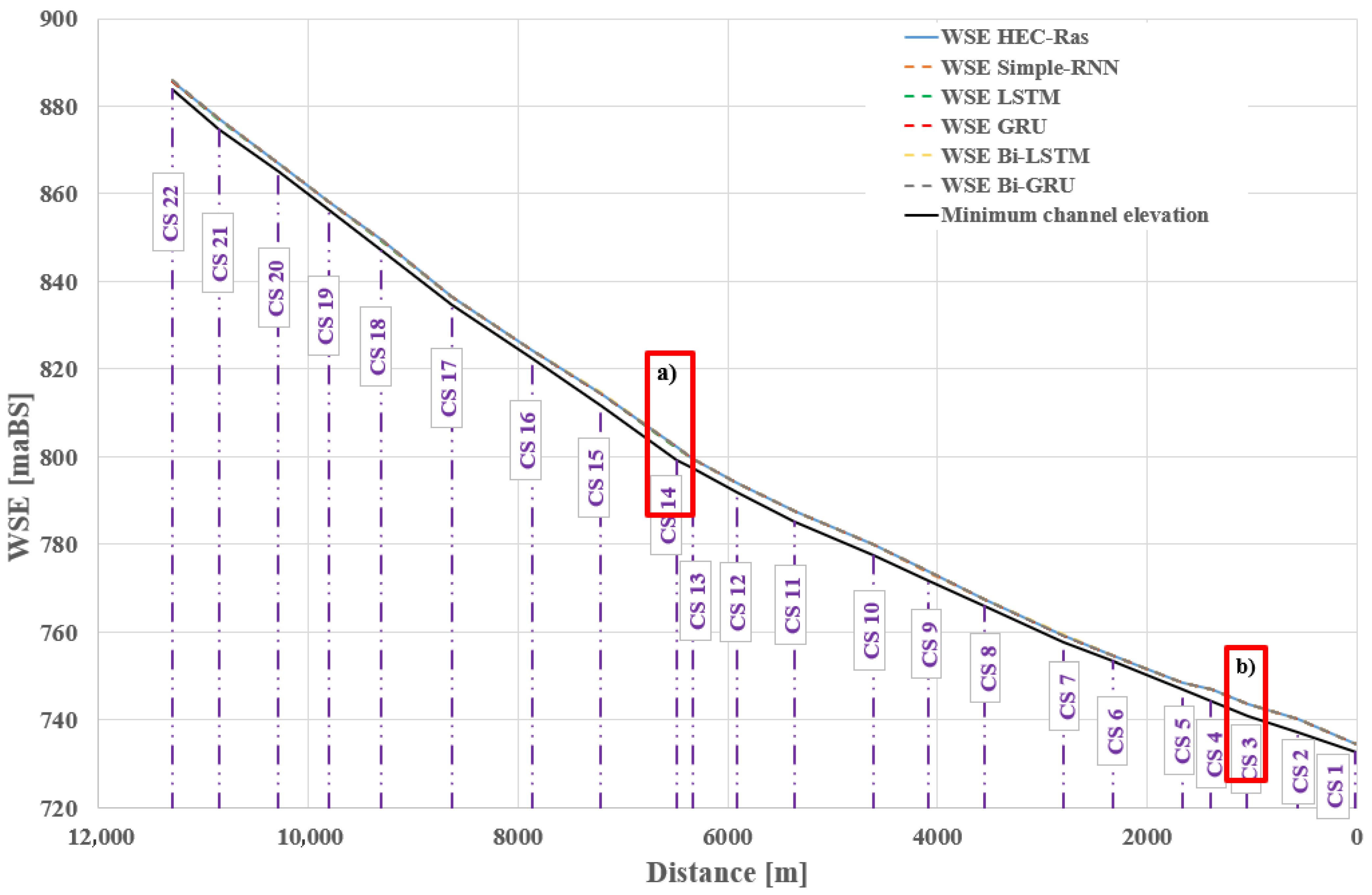
To extract the results and support the training of the neural networks, 22 points (control sections) were defined (
Figure 7), at which discharge and water level hydrographs resulting from the hydraulic modeling of the seven AEP scenarios were extracted. The distance between the control sections is approximately 500 m, and they were strategically placed to capture all significant flow variation points along the studied river segment, enabling the neural networks to be trained with an understanding of the basin’s flow characteristics.
Although roughness and channel geometry are not direct inputs in the RNN models, they are inherently embedded in the training data, which are generated from HEC-RAS simulations that integrate Manning’s N coefficients and terrain-based hydrodynamic parameters. The networks thus learn from the effects these features produce on discharge and water level profiles.
The input data for the neural networks consist exclusively of the temporal evolution of discharge at the upstream section. Channel geometry and terrain roughness are not explicitly provided; however, their influence is already embedded in the training datasets extracted from the HEC-RAS model. As a result, the neural networks learn to anticipate the shapes of the flood wave and the water level downstream without direct access to the physical parameters of the catchment.
The input hydrographs were provided by INHGA within the Flood Risk Management Plan, while the water levels were automatically extracted from the results of 2D hydraulic simulations for the 22 control sections.
The third stage involves the construction of the neural networks [
63]. The data obtained from the hydraulic modeling were edited and arranged in such a way that the networks could learn the variation patterns of discharge and water level both at each study section and along the river. Once the optimal data arrangement was determined, the training and testing of the neural networks commenced.
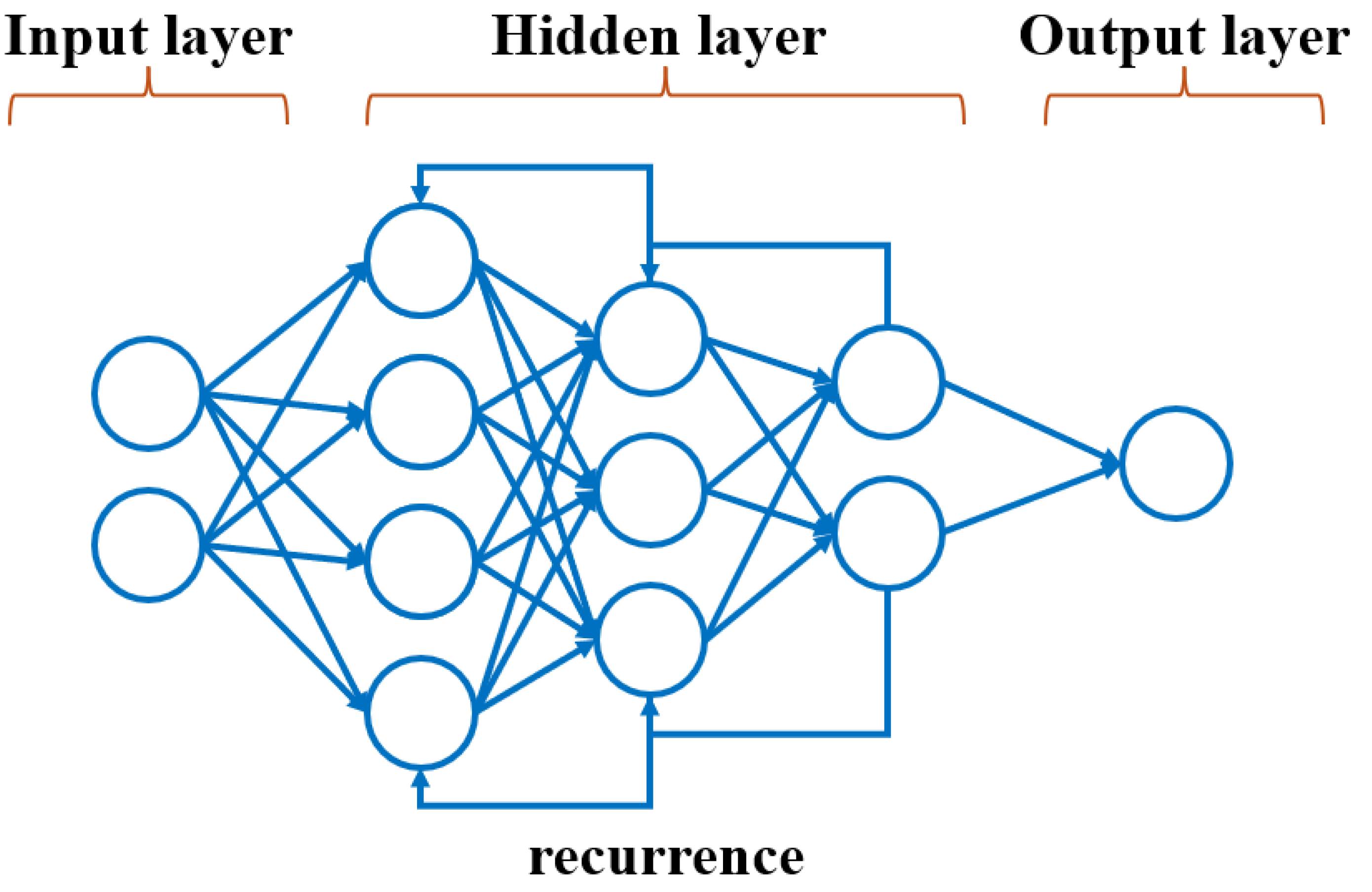
Figure 8 presents a simplified diagram of the neural architecture used for the five types of RNNs studied. Regarding the hidden layers, a technique based on three fully connected hidden layers was adopted. The number of neurons in these layers was carefully selected, drawing from the specialized literature [
66], which recommends an architecture with a decreasing number of neurons from one layer to the next—an approach shown to offer clear advantages in analyzing problems involving temporal data sequences (such as hydrological data, temperature, or other time series).
For the first hidden layer, 256 neurons were chosen, a number considered suitable given the input data volume (approximately 31,000 elements). The second layer contains 128 neurons, reducing the size of the previous layer and serving to abstract the initial information, thereby helping to prevent overfitting. The final hidden layer further compacts the information with 64 neurons, supporting robust and more stable prediction.
After defining the internal architecture of the RNNs, the next step involved establishing how the data would be used. For training and testing purposes, the dataset was split into two subsets as follows: 80% of the data was used for training, while the remaining percentage was allocated for testing [
67].
Another important parameter was the configuration of the time window over which the network would learn and retain data. The sequence length (i.e., the number of consecutive steps the model considers) was set to 10. This means the model always uses the previous 10 data points to predict the next one (the 11th). This value was chosen experimentally through a trial-and-error process and was found to yield the best results, providing the model with sufficient information about the temporal variation in discharge and water level, as well as the ability to detect trends in their changes.
Another essential parameter that needed to be defined is the activation function, which underpins the computations. In the present study, to maintain consistency across results and enable a clear comparison between the types of networks analyzed, the Rectified Linear Unit (ReLU) was chosen as the activation function. ReLU is one of the most widely used activation functions in deep learning, characterized by a simple and clear mathematical definition [
68,
69,
70].
Thus, if the input value is positive, the function returns the value itself; if the input value is negative, the function returns 0. ReLU is a simple and fast function, with the major advantage of addressing the vanishing gradient problem, providing the model with greater stability and faster training.
The final parameter to be discussed in the RNN preparation phase is the algorithm used to adjust and optimize the neural weights. For this purpose, in order to improve prediction accuracy, the Adaptive Moment Estimation (ADAM) function was selected as the optimizer [
71,
72]. This is one of the most popular and high-performing optimization algorithms for most practical problems, with the capability to automatically adapt to each individual parameter, quickly adjusting the learning rate.
The fourth and final stage consists of generating new predictions using the trained RNNs. Starting with the information available for the seven AEP scenarios used in training the model, a new synthetic hydrograph was proposed, different in both maximum flow and flood wave volume. The hydrograph was created by interpolating between two known AEPs, 0.2% and 0.5%, respectively, using the passage coefficient, so it was easy to use this coefficient for both uniformly distributed flows between points and for the lateral inflows that the tributaries bring.
The new hydrograph was inserted at the upstream point of the model, considering the hypothesis of preserving the constant probability along the river and first propagated using the hydraulic modeling software HEC-Ras, following which the resulting flow and water level hydrographs were extracted in the 22 analyzed points. Moving towards the end of the workflow, the same newly created hydrograph was then propagated through each of the five RNN models studied.
After checking the training and testing metrics, we move on to the stage of extracting the results and validating them, and then towards the end of the experiment where a direct comparison of the obtained data is made. The next chapter synthesizes and analyzes the flow and water level hydrographs obtained at the key points of the models, comparing their peak values, presenting the results along the river, and evaluating the ability of the RNN models to predict the maximum flow, the free water level, the shape of the flood waves, and their volume.
4. Conclusions
The present study successfully demonstrates the potential of RNNs in predicting essential hydraulic characteristics, namely, peak discharge, water level, and flood wave volume within a new flood scenario on the Bârsa River. The methodological framework was robust, grounded in 2D hydraulic modeling using HEC-RAS and the analysis of five different recurrent neural network architectures (S-RNN, LSTM, GRU, Bi-LSTM, and Bi-GRU), evaluating their performance in simulating the propagation of a previously unknown flood wave.
This approach partially differs from the commonly known application of RNNs, as it fully emulates a 2D hydraulic model along the entire longitudinal profile of a river valley, based on synthetic hydrographs. This provides a fully reproducible and controlled testing framework.
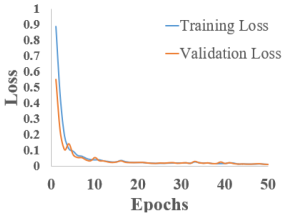
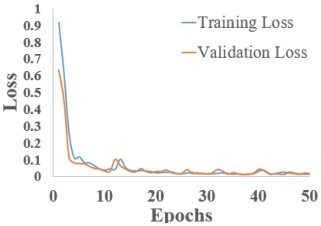
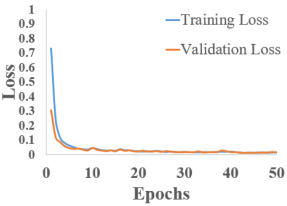
When discussing overall model performance, all five RNN types yielded satisfactory results, with NSE and values extremely close to 1. This confirms the networks’ ability to learn from hydraulic data and their effectiveness in reproducing the shape of the flood wave. However, differences between architectures become more apparent in detailed prediction analysis such as wave shifting, peak overestimation, or errors in flood volume estimation.
The performance of the networks was clearly differentiated through quantitative analyses as follows: GRU achieved average RMSE values between 1.22 and 1.33 and MAE ≈ 0.27, while LSTM frequently exceeded 2.9 in RMSE and 10% in volume errors in downstream areas.
Across the entire assessment, GRU and Bi-GRU networks stood out for their balance between accuracy and stability. GRU achieved the lowest errors across all three key indicators (WSE, Q, Volume), followed closely by Bi-GRU, which showed a slight tendency to overestimate peak values. The Bi-LSTM and Bi-GRU networks performed particularly well in predicting water levels, giving them an advantage in that respect. Nevertheless, Bi-LSTM showed mild instabilities in peak discharge estimation in several sections, indicating higher local sensitivity. On the other hand, the LSTM network consistently performed the weakest, especially in estimating flood volume, with errors often exceeding 10% in multiple sections. Despite being a well-established architecture, LSTM showed lower adaptability in this study’s context.
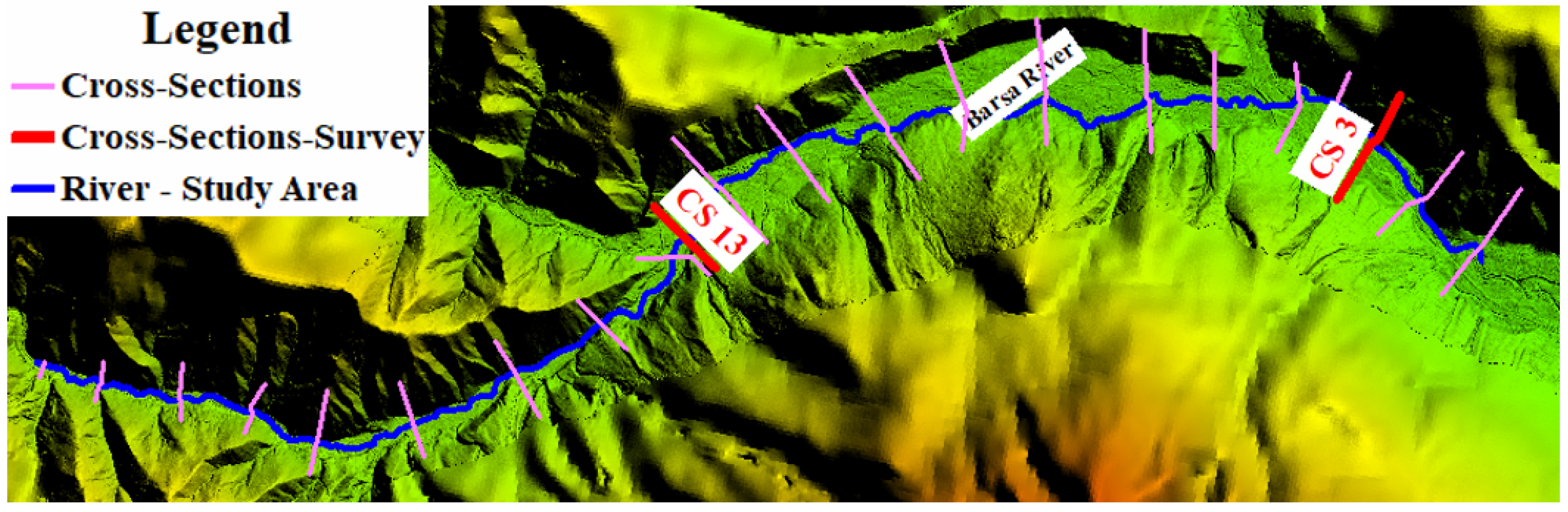
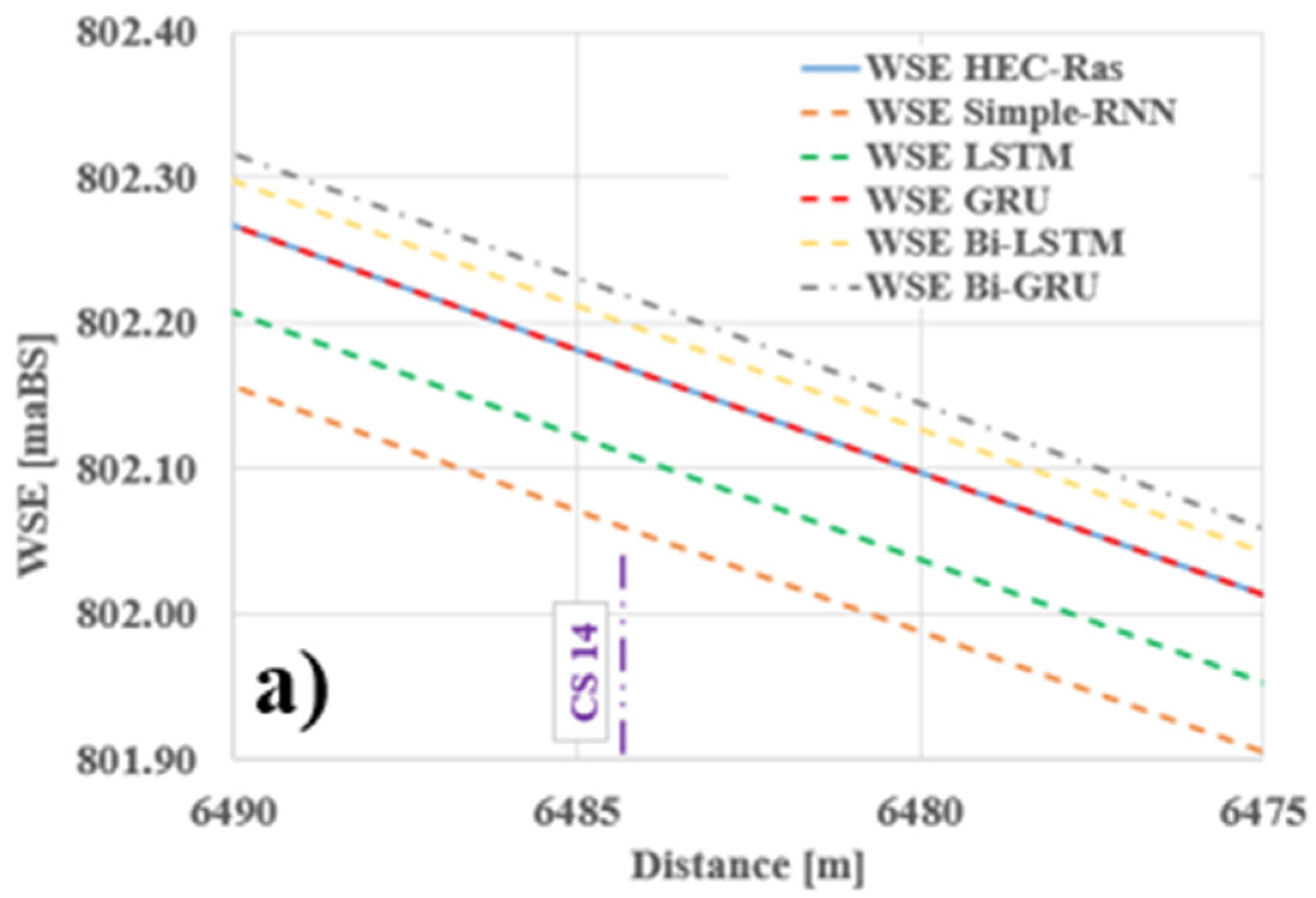
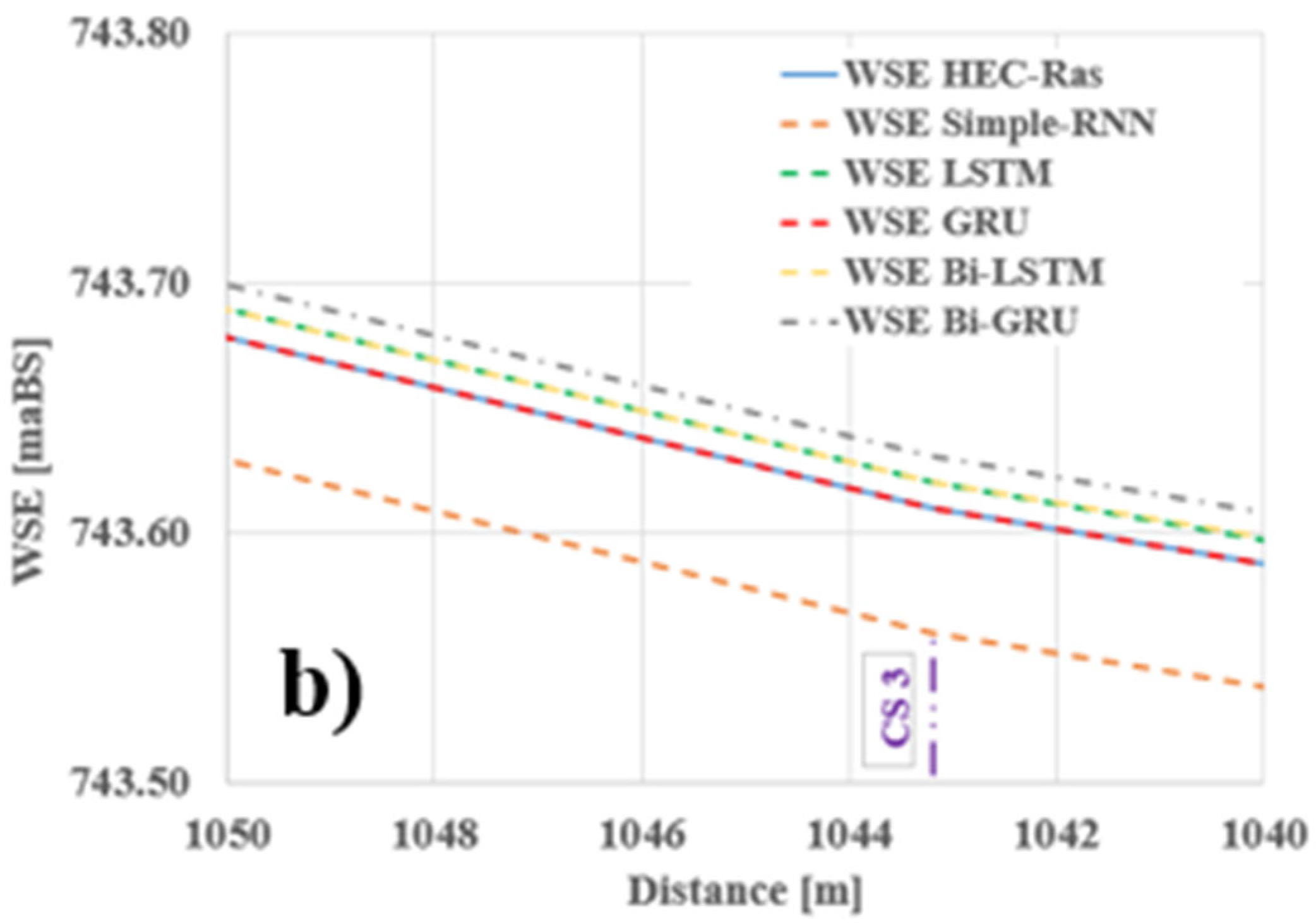
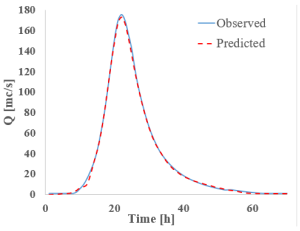
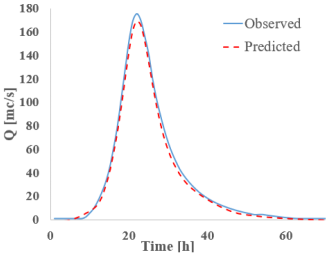
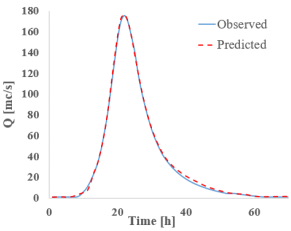
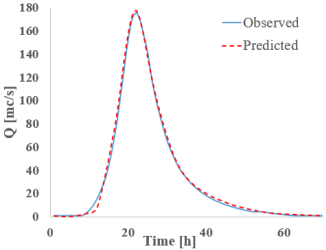
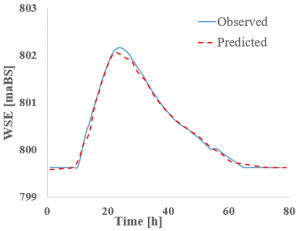
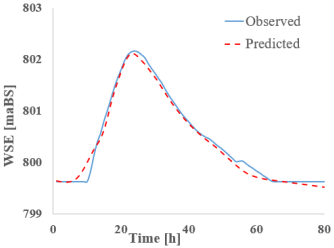
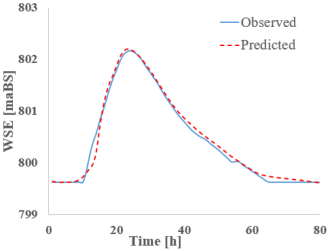
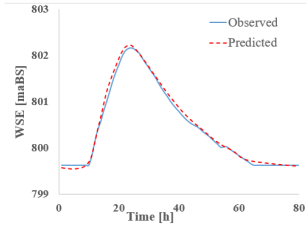
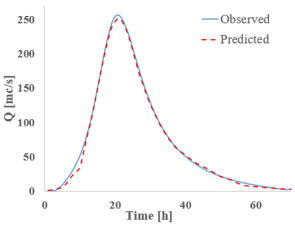
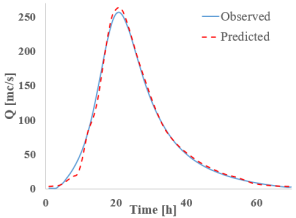
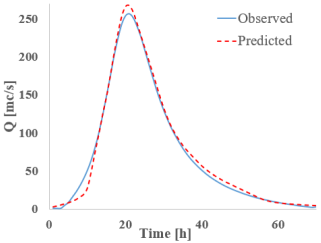
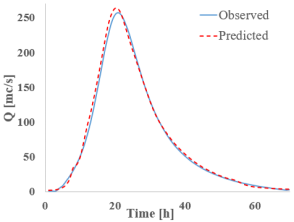
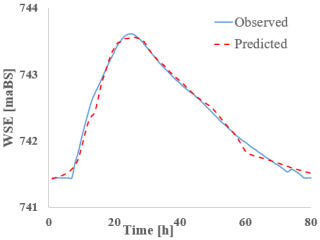
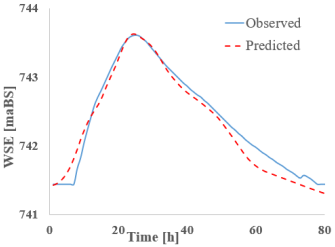
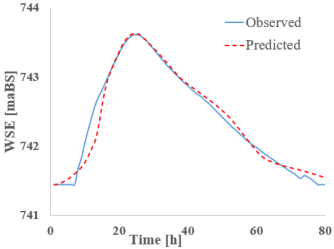
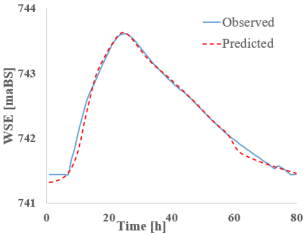
The detailed evaluations in critical sections CS 13 (downstream of the confluence with Bârsa lui Bucur River) and CS 3 (downstream of the confluence with Bârsa Fierului River) enabled a fine-grained analysis. Here, good alignment was observed between the simulated hydrographs based on RNN and those obtained through classical modeling, particularly for the GRU, Bi-GRU, and S-RNN networks. Discharge and water level errors remained below 4%, while estimated volumes closely matched the reference values.
For the critical sections, the peak flow and flood volume values simulated by GRU and Bi-GRU remained within ±4% of the HEC-RAS model, validating their capability to accurately replicate the physical model.
The longitudinal profile highlighted the networks’ strong ability to generalize the flood wave prediction along the entire river segment. Absolute water level errors remained within ±0.1 m (with only a few isolated exceedances), demonstrating high confidence in their predictive capabilities.
These results indicate that the GRU and Bi-GRU networks not only have the potential to replace the execution of a full physical model, but they also provide a valid alternative for real-time applications, especially under hydrological emergency conditions.
This study’s approach indicates that the GRU network is highly recommended for future hydrological applications involving flood wave propagation, offering the best trade-off between simplicity and accuracy. The Bi-GRU model also delivered excellent results in this context, with the main trade-off being its increased complexity and longer training times.
The use of the GRU network is recommended for early warning systems, particularly in small or urban catchments where response time is limited and traditional simulations cannot be executed quickly.
For regional applications with complex hydrographic networks, Bi-GRU may offer a more accurate alternative, albeit with higher computational costs. Both models can be integrated into operational automatic forecasting workflows, eliminating the need to rerun mathematical models once the AI is trained.
Limitations and Future Direction
This study presents the analysis of synthetic hydrographs, having both the shape and the duration known, which makes them easier to understand by recurrent neural networks. Even if this is an advantage for the present work, at a global level it can be an important disadvantage. Thus, future research directions must consider irregular flood waves, having several peaks and different durations.
If we look at the results obtained, they clearly indicate that RNNs can be used for the propagation and forecasting of flood waves. Developing the algorithm by bringing in recorded data, enlarging the analyzed sector, either at the sub-basin or entire hydrographic basin level, as well as using more advanced network architectures, can be future research directions.
The working method can be transferred to specific areas, especially known to have a high risk of flooding, laying the foundation for a high-speed and high-performance flood warning system, based on artificial intelligence.