
Computational Modeling of the Thermodynamics of Non-Covalent Host–Guest Inclusion Complexes

 and
and
Abstract
1. Introduction
2. Theory
3. Materials and Methods
4. Results and Discussion
4.1. Dimethomorph
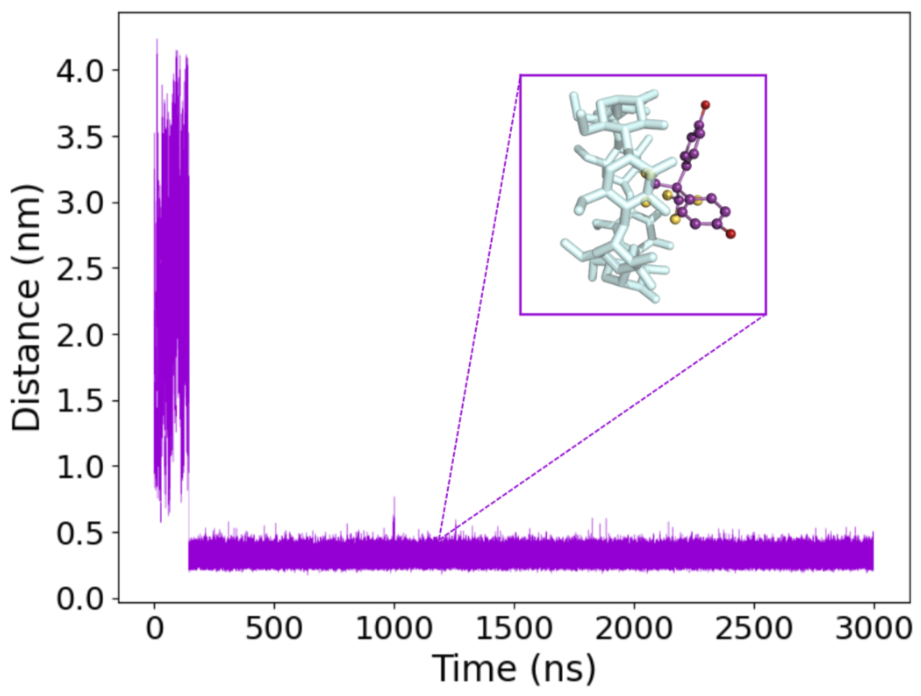
4.1.1. Structural Characterization
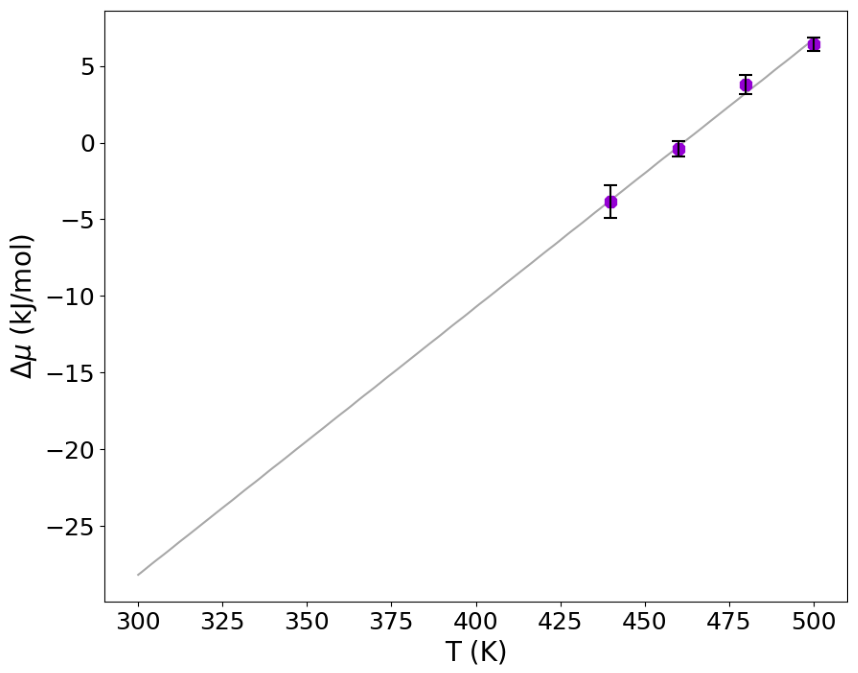
4.1.2. Thermodynamics
4.2. Fluorinated Bisphenol A
5. Conclusions
Supplementary Materials
Author Contributions
Funding
Data Availability Statement
Conflicts of Interest
References
- Elgarahy, A.M.; Elwakeel, K.Z.; Akhdhar, A.; Hamza, M.F. Recent advances in greenly synthesized nanoengineered materials for water/wastewater remediation: An overview. Nanotechnol. Environ. Eng. 2021, 6, 9. [Google Scholar] [CrossRef] [Scilit]
- Zhang, Y.; Zhou, L.; Wang, C.; Liu, S. Synergistic antifungal effect and potential mechanism of Dimethomorph combined with Pyrimethanil against Phytophthora capsici. Food Chem. 2024, 457, 140158. [Google Scholar] [CrossRef] [Scilit] [PubMed]
- Liang, H.; Li, L.; Li, W.; Wu, Y.; Zhou, Z.; Liu, F. Dissipation and residue of dimethomorph in pepper and soil under field conditions. Ecotoxicol. Environ. Saf. 2011, 74, 1331–1335. [Google Scholar] [CrossRef] [Scilit]
- Fan, R.; Zhang, W.; Jia, L.; Li, L.; Zhao, J.; Zhao, Z.; Peng, S.; Chen, Y.; Yuan, X. Combined developmental toxicity of the pesticides difenoconazole and dimethomorph on embryonic zebrafish. Toxins 2021, 13, 854. [Google Scholar] [CrossRef] [Scilit] [PubMed]
- European Food Safety Authority (EFSA); Alvarez, F.; Arena, M.; Auteri, D.; Binaglia, M.; Castoldi, A.F.; Chiusolo, A.; Colagiorgi, A.; Colas, M.; Crivellente, F.; et al. Peer review of the pesticide risk assessment of the active substance dimethomorph. EFSA J. 2023, 21, e08032. [Google Scholar] [CrossRef] [Scilit]
- Wang, C.; Zhang, Q.; Wang, F.; Liang, W. Toxicological effects of dimethomorph on soil enzymatic activity and soil earthworm (Eisenia fetida). Chemosphere 2017, 169, 316–323. [Google Scholar] [CrossRef] [Scilit] [PubMed]
- Eladak, S.; Grisin, T.; Moison, D.; Guerquin, M.J.; N’Tumba-Byn, T.; Pozzi-Gaudin, S.; Benachi, A.; Livera, G.; Rouiller-Fabre, V.; Habert, R. A new chapter in the bisphenol A story: Bisphenol S and bisphenol F are not safe alternatives to this compound. Fertil. Steril. 2015, 103, 11–21. [Google Scholar] [CrossRef] [Scilit]
- Rubin, B.S. Bisphenol A: An endocrine disruptor with widespread exposure and multiple effects. J. Steroid Biochem. Mol. Biol. 2011, 127, 27–34. [Google Scholar] [CrossRef] [Scilit]
- Moreman, J.; Lee, O.; Trznadel, M.; David, A.; Kudoh, T.; Tyler, C.R. Acute toxicity, teratogenic, and estrogenic effects of bisphenol A and its alternative replacements bisphenol S, bisphenol F, and bisphenol AF in zebrafish embryo-larvae. Environ. Sci. Technol. 2017, 51, 12796–12805. [Google Scholar] [CrossRef] [Scilit]
- Syeda, S.E.Z.; Nowacka, D.; Khan, M.S.; Skwierawska, A.M. Recent advancements in cyclodextrin-based adsorbents for the removal of hazardous pollutants from waters. Polymers 2022, 14, 2341. [Google Scholar] [CrossRef] [Scilit]
- Del Valle, E.M. Cyclodextrins and their uses: A review. Process Biochem. 2004, 39, 1033–1046. [Google Scholar] [CrossRef] [Scilit]
- Loftsson, T.; Jarho, P.; Másson, M.; Järvinen, T. Cyclodextrins in drug delivery. Expert Opin. Drug Deliv. 2005, 2, 335–351. [Google Scholar] [CrossRef] [Scilit]
- Tian, B.; Hua, S.; Tian, Y.; Liu, J. Cyclodextrin-based adsorbents for the removal of pollutants from wastewater: A review. Environ. Sci. Pollut. Res. 2021, 28, 1317–1340. [Google Scholar] [CrossRef] [Scilit]
- Kurkov, S.V.; Loftsson, T. Cyclodextrins. Int. J. Pharm. 2013, 453, 167–180. [Google Scholar] [CrossRef] [Scilit] [PubMed]
- Loftsson, T.; Duchene, D. Cyclodextrins and their pharmaceutical applications. Int. J. Pharm. 2007, 329, 1–11. [Google Scholar] [CrossRef] [Scilit]
- Schneider, H.J.; Blatter, T.; Simova, S. Host guest chemistry. 26. NMR and fluorescence studies of cyclodextrin complexes with guest molecules containing both phenyl and naphthyl units. J. Am. Chem. Soc. 1991, 113, 1996–2000. [Google Scholar] [CrossRef] [Scilit]
- Xing, S.; Zhang, Q.; Zhang, C.; Zhao, Q.; Ai, H.; Sun, D. Isothermal Titration Calorimetry and Theoretical Studies on Host-guest Interaction of Ibuprofen with α-, β-and γ-Cyclodextrin. J. Solut. Chem. 2009, 38, 531–543. [Google Scholar] [CrossRef] [Scilit]
- Blair, S.M.; Kempen, E.C.; Brodbelt, J.S. Determination of binding selectivities in host-guest complexation by electrospray/quadrupole ion trap mass spectrometry. J. Am. Soc. Mass Spectrom. 1998, 9, 1049–1059. [Google Scholar] [CrossRef] [Scilit]
- Novo, M.; Granadero, D.; Bordello, J.; Al-Soufi, W. Host–guest association studied by fluorescence correlation spectroscopy. J. Incl. Phenom. Macrocycl. Chem. 2011, 70, 259–268. [Google Scholar] [CrossRef] [Scilit]
- D’Abramo, M.; Del Galdo, S.; Amadei, A. Theoretical–computational modelling of the temperature dependence of the folding–unfolding thermodynamics and kinetics: The case of a Trp-cage. Phys. Chem. Chem. Phys. 2019, 21, 23162–23168. [Google Scholar] [CrossRef] [Scilit]
- Berendsen, H.J.; Grigera, J.R.; Straatsma, T.P. The missing term in effective pair potentials. J. Phys. Chem. 1987, 91, 6269–6271. [Google Scholar] [CrossRef] [Scilit]
- Del Galdo, S.; Marracino, P.; D’Abramo, M.; Amadei, A. In silico characterization of protein partial molecular volumes and hydration shells. Phys. Chem. Chem. Phys. 2015, 17, 31270–31277. [Google Scholar] [CrossRef] [Scilit] [PubMed]
- Bussi, G.; Donadio, D.; Parrinello, M. Canonical sampling through velocity rescaling. J. Chem. Phys. 2007, 126, 014101. [Google Scholar] [CrossRef] [Scilit]
- Shiraishi, K.; Minamitani, E.; Kim, K. Benchmarking thermostat algorithms in molecular dynamics simulations of a binary Lennard-Jones glass-former model. J. Chem. Phys. 2026, 164, 164501. [Google Scholar] [CrossRef] [Scilit]
- Jo, S.; Kim, T.; Iyer, V.G.; Im, W. CHARMM-GUI: A web-based graphical user interface for CHARMM. J. Comput. Chem. 2008, 29, 1859–1865. [Google Scholar] [CrossRef] [Scilit] [PubMed]
- Abraham, M.J.; Murtola, T.; Schulz, R.; Páll, S.; Smith, J.C.; Hess, B.; Lindahl, E. GROMACS: High performance molecular simulations through multi-level parallelism from laptops to supercomputers. SoftwareX 2015, 1–2, 19–25. [Google Scholar] [CrossRef] [Scilit]
- Huang, J.; MacKerell, A.D., Jr. CHARMM36 all-atom additive protein force field: Validation based on comparison to NMR data. J. Comput. Chem. 2013, 34, 2135–2145. [Google Scholar] [CrossRef] [Scilit]
- Hess, B.; Bekker, H.; Berendsen, H.J.; Fraaije, J.G. LINCS: A linear constraint solver for molecular simulations. J. Comput. Chem. 1997, 18, 1463–1472. [Google Scholar] [CrossRef]
- Essmann, U.; Perera, L.; Berkowitz, M.L.; Darden, T.; Lee, H.; Pedersen, L.G. A smooth particle mesh Ewald method. J. Chem. Phys. 1995, 103, 8577–8593. [Google Scholar] [CrossRef] [Scilit]
- Darden, T.; York, D.; Pedersen, L. Particle mesh Ewald: An N log (N) method for Ewald sums in large systems. J. Chem. Phys. 1993, 98, 10089–10092. [Google Scholar] [CrossRef] [Scilit]
- Xiao, Y.-M.; Wang, J.; Wang, M.-A.; Liu, J.-P.; Yuan, H.-Z.; Qin, Z.-H. Study on the inclusion complexes of flumorph and dimethomorph with β-cyclodextrin to improve fungicide formulation. J. Chem. Soc. Pak. 2010, 32, 363–369. [Google Scholar]
- Chelli, S.; Majdoub, M.; Jouini, M.; Aeiyach, S.; Maurel, F.; Chane-Ching, K.I.; Lacaze, P.C. Host–guest complexes of phenol derivatives with β-cyclodextrin: An experimental and theoretical investigation. J. Phys. Org. Chem. 2007, 20, 30–43. [Google Scholar] [CrossRef] [Scilit]



| DMME | DMMZ | |||||
|---|---|---|---|---|---|---|
| T (K) | n | (kJ/mol) | n | (kJ/mol) | ||
| 440 | 2810 | 0.79 | 0.84 | 1803 | 1.91 | −2.36 |
| 460 | 2849 | 0.44 | 3.13 | 2484 | 0.97 | 0.12 |
| 480 | 3323 | 0.27 | 3.24 | 2663 | 0.44 | 3.24 |
| 500 | 3010 | 0.15 | 7.84 | 2796 | 0.29 | 5.20 |
| DMM | (kJ/mol) | (kJ/mol) | (kJ/mol K) |
|---|---|---|---|
| DMME (300 K) | −15.4 ± 3.1 | −49.9 | −0.12 |
| DMMZ (300 K) | −20.4 ± 4.8 | −59.1 | −0.13 |
| Experimental values [31] | |||
| DMM (298 K) | −14.3 | −49.3 | −0.12 |
| T (K) | n | (kJ/mol) | |
|---|---|---|---|
| 440 | 791 | 2.85 | −3.83 |
| 460 | 1399 | 1.11 | −0.41 |
| 480 | 1641 | 0.39 | 3.79 |
| 500 | 1831 | 0.21 | 6.40 |
| (kJ/mol) | (kJ/mol) | (kJ/mol K) | |
|---|---|---|---|
| FBPA (300 K) | −28.2 ± 2.3 | −80.5 | −0.17 |
| Experimental values [32] | |||
| FBPA (298 K) | −25.6 ± 0.7 | −100.1 | −0.25 |
Disclaimer/Publisher’s Note: The statements, opinions and data contained in all publications are solely those of the individual author(s) and contributor(s) and not of MDPI and/or the editor(s). MDPI and/or the editor(s) disclaim responsibility for any injury to people or property resulting from any ideas, methods, instructions or products referred to in the content. |
© 2026 by the authors. Licensee MDPI, Basel, Switzerland. This article is an open access article distributed under the terms and conditions of the Creative Commons Attribution (CC BY) license.
Share and Cite
Ciattaglia, G.; Gianvincenzo, P.D.; Moya, S.E.; Navizet, I.; D’Abramo, M. Computational Modeling of the Thermodynamics of Non-Covalent Host–Guest Inclusion Complexes. ChemEngineering 2026, 10, 70. https://doi.org/10.3390/chemengineering10060070
Ciattaglia G, Gianvincenzo PD, Moya SE, Navizet I, D’Abramo M. Computational Modeling of the Thermodynamics of Non-Covalent Host–Guest Inclusion Complexes. ChemEngineering. 2026; 10(6):70. https://doi.org/10.3390/chemengineering10060070
Chicago/Turabian StyleCiattaglia, Giulia, Paolo Di Gianvincenzo, Sergio E. Moya, Isabelle Navizet, and Marco D’Abramo. 2026. "Computational Modeling of the Thermodynamics of Non-Covalent Host–Guest Inclusion Complexes" ChemEngineering 10, no. 6: 70. https://doi.org/10.3390/chemengineering10060070
APA StyleCiattaglia, G., Gianvincenzo, P. D., Moya, S. E., Navizet, I., & D’Abramo, M. (2026). Computational Modeling of the Thermodynamics of Non-Covalent Host–Guest Inclusion Complexes. ChemEngineering, 10(6), 70. https://doi.org/10.3390/chemengineering10060070