Review

Review of Integrated Lean Techniques and Ergonomic Analysis to Upgrade Troubleshooting Systems for Process Enhancement

by
Matshidiso Moso
* and
Oludolapo Akanni Olanrewaju
Department of Industrial Engineering, Faculty of Engineering and the Built Environment, Durban University of Technology, Durban 4000, South Africa
*
Author to whom correspondence should be addressed.
Standards 2026, 6(2), 12; https://doi.org/10.3390/standards6020012
Submission received: 26 August 2025 / Revised: 3 November 2025 / Accepted: 4 February 2026 / Published: 1 April 2026

Abstract

Occupational Health and Safety systems, as well as physical Ergonomics, serve a common goal, which is to eliminate safety-related injuries within production systems. The analysis of potential hazards that could compromise the safety of operations’ employees assists in preventing a high rate of safety-related injuries. Safer processes result in a high output rate and, hence, a profitable business. Focusing on the accuracy of problem solving and failure prediction analysis on new processes could potentially result in zero safety-related injuries, good-quality products, cost reduction, and the elimination of delays within the processes. This research seeks to add more knowledge to the fields of Occupational Health and Safety systems and Total Productive Maintenance by combining lean manufacturing troubleshooting models with Ergonomic analysis, as well as Hazard Identification Risk Analysis, to predict future kaizen projects for businesses. The proposed upgrade to the problem-solving model was developed by evaluating and reviewing the impact of Ergonomic analysis on different production systems. It was found that Ergonomic analysis provides solutions for a more comfortable working environment; hence, the existing troubleshooting model was combined with an Ergonomic exercise. The proposed model is more beneficial to production systems. It could potentially result in zero safety-related injuries, high-quality products, more accurate problem analysis, and more innovation by enabling kaizen projects. The proposed model was applied in the electronics industry, where it resulted in drastic improvements. The old method, which was causing fatigue, was eliminated, and a new machine was designed and prototyped. The new machine assisted the company in this case study in reducing delays, eliminating defects, and reducing costs. Furthermore, the proposed troubleshooting model evaluated an impactful kaizen project, which was the introduction of new technologies that will eliminate the power-up stage.

1. Introduction

Safety incidents are injuries that occur due to unsafe acts and unsafe work conditions; therefore, it is important to adhere to Occupational Health and Safety protocols [1]. Hasanain et al. [2] found that Ergonomic theories focus on human body factors, which include both physical and cognitive aspects, to eliminate stress and fatigue during in-progress work. Keshvarparast et al. [3] further noted that Ergonomics and Occupational Health and Safety standards focus on improving work conditions to eliminate injuries on duty, hence a high productivity rate. Lean manufacturing optimizes processes for meaningful change. Lean manufacturing is composed of a variety of strategies that assist organizations in implementing a culture of continuous improvement, hence a high productivity rate and good compliance with Integrated Management System standards [4].
The Health Diabetics Committee et al. [5] found that for every impactful improvement, some specific standards and policies need to be followed. To identify a standard that aligns with Ergonomic analysis for process enhancement, research was conducted by developing a model that validates different studies within the Ergonomics field. The PRISMA data analysis model was used to evaluate different studies, and it was found that ISO 45001:2018 relates to Ergonomic analysis due to their common goal, which is to reduce safety-related issues within processes for a safer work environment [6].
Research focusing on increasing employees’ morale in bicycle assembly manufacturers was conducted to reduce heavy workloads and decrease cycle time. Value Stream Mapping (VSM) and Ergonomic analysis were adopted to carry out the study. The analysis resulted in a good change, which gave the organization a true reflection of how good their Safety and Quality Standard requirements are and a clear picture of workload distribution to the employees for Ergonomically friendly processes [7]. Analysis of lean manufacturing impact when solving production problems was conducted in the textile industry, and the study revealed that even though the implemented solutions result in a high productivity rate, there is a need to consider Ergonomic exercise for good compliance with safety standards [8].
A study was conducted in the construction sector to reduce safety incidents and to increase the productivity rate by increasing employees’ morale. A model integrating physical Ergonomics’ methodology and the Discrete Event Simulation was constructed and applied to evaluate processes that are not ergonomically friendly in the construction sector. The proposed model results were successful in the manner that the employees’ morale increased due to ergonomically friendly processes, resulting in a high productivity rate. Furthermore, the proposed model was flexible for the analysis of bigger production scales; hence, it is applicable in most manufacturing industries [9].
Research was carried out in the petrochemical industry to eliminate safety incidents by integrating Occupational Health and Safety standards with Ergonomic theory. Digital twin technology, which focuses on analyzing workstations in a production plant by evaluating manual and automated equipment safety hazards and macro ergonomics, was adopted. Digital twin technology focuses on a variety of aspects, which include physical perception, communication transmission, storage management, model construction, visual interaction, and intelligent optimization. Hence, the findings of the study were considered for continual improvement projects [10].
An analysis was carried out in the steel industry to evaluate the impact of an Ergonomic study on employees’ morale and well-being increases. A questionnaire composed of a human resources productivity assessment and Occupational Health and Safety risks assessment was constructed, and participants in the case study company were recruited and evaluated. The study resulted in findings that assisted the case study company to focus on reducing factors causing fatigue during work-in-progress in production workstations and safer work conditions; hence, fewer injuries were observed after the study [11].
The focus of employee wellness within operations results in zero injuries and a high productivity rate; hence, the integration of Ergonomic theories as well as Occupational Health and Safety standards results in a smooth workflow [12]. A study was carried out in an assembly manufacturing cell; the purpose of the study was to re-assign work elements considering the effectiveness of operators’ body motions as well as robotics’ movements. The work elements were evaluated and analyzed according to complexity. The bi-objective mixed integer model, including the Ergonomic theory, was constructed and applied to reduce cycle time as well as safety incidents. The study analysis resulted in further development of the NSGA-II theorem, which assisted in ensuring the elimination of safety incidents, optimization of the production line by rating the operators and robotic work elements to measure the Overall Equipment Effectiveness (OEE) and, hence, less fatigue operation and a high productivity rate [13].
Research to enhance equipment utilization and the tasks within operators, machines, and the work environment was carried out. A systematic approach was adopted in this study by using a Human Factor Engineering (HFE) methodology, which is composed of Ergonomic evaluation, work elements allocation analysis, process enhancement, as well as training plans; hence, physical and cognitive Ergonomic assessment was performed. The study resulted in drastic improvements; the working stations were redesigned considering the task distribution, which is aligned with Ergonomically friendly standards as well as Occupational Health and Safety standards. The Discrete Event simulation and virtual simulation were used to conduct training for employees and to evaluate future continuous improvement projects [14].
Aswin et al. [15] explained that most safety incidents result from a lack of safety awareness within work operations; hence, a study was carried out in the agriculture sector on a rice farm, where the functionality of Ergonomic models was examined using an ANOVA test with a random sampling method.
It was found that most farm workers were not aware of safety protocols, and they could not recognize the processes that added more stress during work-in-progress. The study assisted in identifying major causes of unsafe work conditions; hence, safety awareness programs were recommended [15]. A study in the agricultural industry to evaluate the safety incident rate was conducted, and it was further found that the employees and the top management were not aware of safety protocols, which resulted in many safety incidents. The study also evaluated the equipment used in the agricultural sector, which was not Ergonomically friendly. This research contributed some future insight into the fact that agricultural industries need to take into consideration safety awareness and Ergonomical assessments [16].
The ISO basic standards emphasize finding the opportunity that arises with process nonconformances; hence, the Integrated Management System has an interlink with quality, safety and environmental standards [17]. A study was conducted in the automobile parts manufacturing industry to evaluate the interlink between Ergonomic analysis and green and lean manufacturing. The Value Stream Mapping tool was applied as a systematic review of a study together with the Ergonomic analysis using Rapid Entire Body analysis linked to a standard Nordic Questionnaire incorporated with Carbon Footprint Analysis to examine environmental aspects and impact. The research resulted into drastic improvements; the employees’ moral was increased due to an improvement in working conditions, the cycle time of the preparation processes decreased by 21%, and a 30% decrease in carbon emissions was observed; hence, a relationship between Ergonomics studies, green manufacturing and lean manufacturing was outlined to be the process enhancement and reason for the increase in the productivity rate [18].
The effectiveness of combining the lean six sigma with Ergonomic analysis was evaluated, and it was found that most studies included the DMAIC tool and the Value Stream Mapping, as examined through the review of a variety of previous studies. Hence, the importance of combining lean techniques and Ergonomics study was evaluated and proved to be one of the most effective methods of problem solving for zero injuries and a high productivity rate [19].
A study integrating a lean tool, the Single Minute Exchange of Dies (SMED), with Ergonomic theory for the purpose of cycle time reduction and improvements in work conditions in the production plant was carried out. A model composed of the Interval Valued Pythagorean Fuzzy Analytic method was constructed to identify non-ergonomical factors and the ranking and allocation of elements. The proposed model was trialed in the white goods manufacturing industry, with the cycle time reduction for the preparation workstation decreasing by 58%, and Ergonomically friendly equipment was prioritized, which resulted in 19% Overall Effectiveness of Equipment [20].
Research combining SLP and lean techniques was conducted in the food manufacturing industry. The case study company had some issues with the labor productivity rate, which was very low, resulting in a non-profitable organization. The SLP, as a systematic approach to examine the root cause of the problem, was adopted in conjunction with the 5S and Poka Yoke. The processes were optimized and resulted in a positive impact; hence, the labor producing rate was increased to 25.02 Kg/Sol. The time taken to produce the product decreased by 3.19%, and the application of 5S resulted in an improved cleaning process, with a cycle time reduction of 5.35%. Furthermore, the waste coming out of the process was reduced by 54.17% [21].
Repetitive elements within processes normally results from operations that are too manual and not operations that are not Ergonomically friendly [22]. Research was conducted in the plastic manufacturing industry to reduce the absenteeism rate; it was found that the employees working for this industry were suffering from repetitive motion injuries resulting from the workload, which involves more manual work and, hence, regional musculoskeletal disorders. The study was conducted through four phases to determine the goals, finding the root cause of the problem, redesigning the processes and an assessment of the proposed solution. An Ergonomic risks assessment model verified using Delmia V5 application and RULA, REBA and OCRA methodology was constructed. An application of the proposed model assisted the case study company to decrease Ergonomical risks by 55% in other processes and 66.7% in other critical working stations. Hence, this study resulted in PEN 42.929 cost savings due to the reduced absenteeism rate, which contributed to the high productivity rate [23].
Sarbat et al. [24] found that Ergonomically friendly processes motivate employees, hence increasing the high productivity rate. An Ergonomic study to improve the comfort of body features for human body posture and motion on the interaction with robots in semi-automated operation was conducted using an anthropometric table and Ergonomical risks assessment. This application led to the robotic system being optimized to reduce heavy workload in manual operations. The simulation was performed to verify the success of the study; the proposed method added more knowledge in the smart manufacturing field and advanced technology for employee wellness [25].
Asran et al. 2026 [26] evaluated that, Ergonomics study complements ISO 45001 by contributing to safer process design and safer work Environment hence less safety injuries. The simplicity of the workstation processes results in a highly motivated employee and, hence, fewer safety incidents and a high productivity rate [27]. Even though ISO 45001:2018 addresses safety-related issues and ensures compliance, and additional risks management standards within manufacturing processes, other systems have been established [28]. ISO 31000:2018 focuses on risk investigations in different phases to ensure safety compliance; hence, a study was conducted for Hazards Risks Identification (HIRA) in a technical review, and a Digital Twin prediction model composed of different phases of risks evaluation was developed. It was found that the model was useful for unpredictable safety risks and nature-related accidents resulting from climate change, leading to better forecasts of future natural disasters for preventive measures [27]. A study to evaluate the relationship between lean manufacturing and Ergonomic analysis was conducted with surveys and verified by the Fuzi Delphi model. The 3Ms lean technique tool (Muri, Mura, Muda) was found to be a perfect match with Ergonomic analysis, where Muda was found to be Human Energy Waste due to the complexity of the machinery used, Muri was found to be unequal workload, which results in overburden, and Mura was found to be overloading of workers’ ability to perform tasks. This study had a significant impact on process engineers and compliance practitioners in considering future models that integrate Ergonomic analysis with lean manufacturing [29]. Analysis for the commonality between lean manufacturing and Ergonomics was conducted to validate the impact within waste management processes. Lean techniques, such as Value Stream Mapping (VSM) and even types of waste, simulation models, Ergonomic analysis using the Captiv system and Key Performance Indicator systems, were adopted to conduct this study, which had a significant impact of employees’ well-being and cycle time reduction; hence, it was validated that lean manufacturing and Ergonomics serve similar purposes of enhancing processes for good compliance with Safety and Quality assurance standards [30].
Research was conducted in the metal manufacturing sector to eliminate safety accidents. Value Stream Mapping together with Ergonomic analysis was applied. The study resulted in drastic improvements, with a significant impact on quality issues, with a 20% defects reduction, 11.8% reduction in human-related issues, which include psychological problems, and a 4.4% productivity rate increase, showing good compliance with Safety and Quality Assurance standards [31]. Analysis of the shoe manufacturing industry to investigate the reasons for a high worker truancy rate of 5.59% was conducted. Ishikawa and Ergonomic body parts usage ratings methodology were adopted in this study. It was found that the equipment used for processing the shoes was not user-friendly; hence, the case study company considered improving the work conditions [32].
The Occupational Health and Safety standards encompass both safer work conditions and a high productivity rate. In the literature, it has been evaluated that Occupational Health and Safety standards and Ergonomics share the same goals. The lean techniques act as a catalyst for optimizing both Occupational Health and Safety standards and Ergonomics. An opportunity to combine Ergonomics with problem-solving techniques to eliminate safety incidents, improve quality of products, reduce cost and increase employee morale has been identified in the literature since the current Ergonomic and safety models are modelled separately from troubleshooting systems that include Integrated Management Systems [33]. Vicente et al. [34] conducted a study from different researchers to evaluate the impact of lean manufacturing combined with ergonomics for a safer work environment, and it was found that even though goals are similar for these tools, they are normally applied separately, which limits the organization’s potential innovations. ISO 45001:2018 and ISO 9001:2018 require finding opportunities for improvements after problem solving, which serves as a common goal for both Safety- and Quality-related problem-solving practices [35]. ISO 45001:2018 is a safety standard related to Ergonomic studies, and ISO 9001 is a quality standard related to lean manufacturing due to process enhancement goals, which validates the correlation of Ergonomic studies and lean manufacturing [36]. Rahardjo et al. [37] found that lean manufacturing is a multiple-activity strategic approach that focuses on small tasks of process improvements, which builds up to greater achievements for business entities. Bennassi et al. [38] further examined that lean manufacturing sustains business innovations by improving the quality of the product, eliminating delays during processing, safer process assurance as well as employee morale increases. This research seeks to integrate Ergonomic analysis together with lean techniques for process enhancement, ISO45001:2018 and ISO9001:2018 for good compliance and for the prediction of future kaizen projects.

2. Gap Identified

Currently, the existing troubleshooting model [39] covers the kaizen project evaluation and innovative improvements in the organizations. After reviewing the literature, it was found that Ergonomics reduces safety incidents, proving the common goal between the Occupational Health and Safety systems and Ergonomics to eliminate injuries within production systems. The opportunity was, thus, identified to incorporate Ergonomic exercise and Hazard Identification and Risks Analysis to improve the existing troubleshooting models that deal with safety-related injury investigations.

3. Significance and Contribution of the Study

The importance of this study is to contribute to knowledge in the Occupational Health and Safety systems niche by evaluating Ergonomic issues within safety incidents to reduce safety-related injuries. It has been evaluated that safety-related injuries within manufacturing systems can be reduced by including Ergonomic analysis, which results in safer processes [40]. The combination of Ergonomic analysis and Hazards Risks Identification exercise would potentially result in drastic improvements. The Hazards Risks Identification Analysis (HIRA) is a potential risks evaluation that is performed to monitor risks within processes and provide precautions [41].
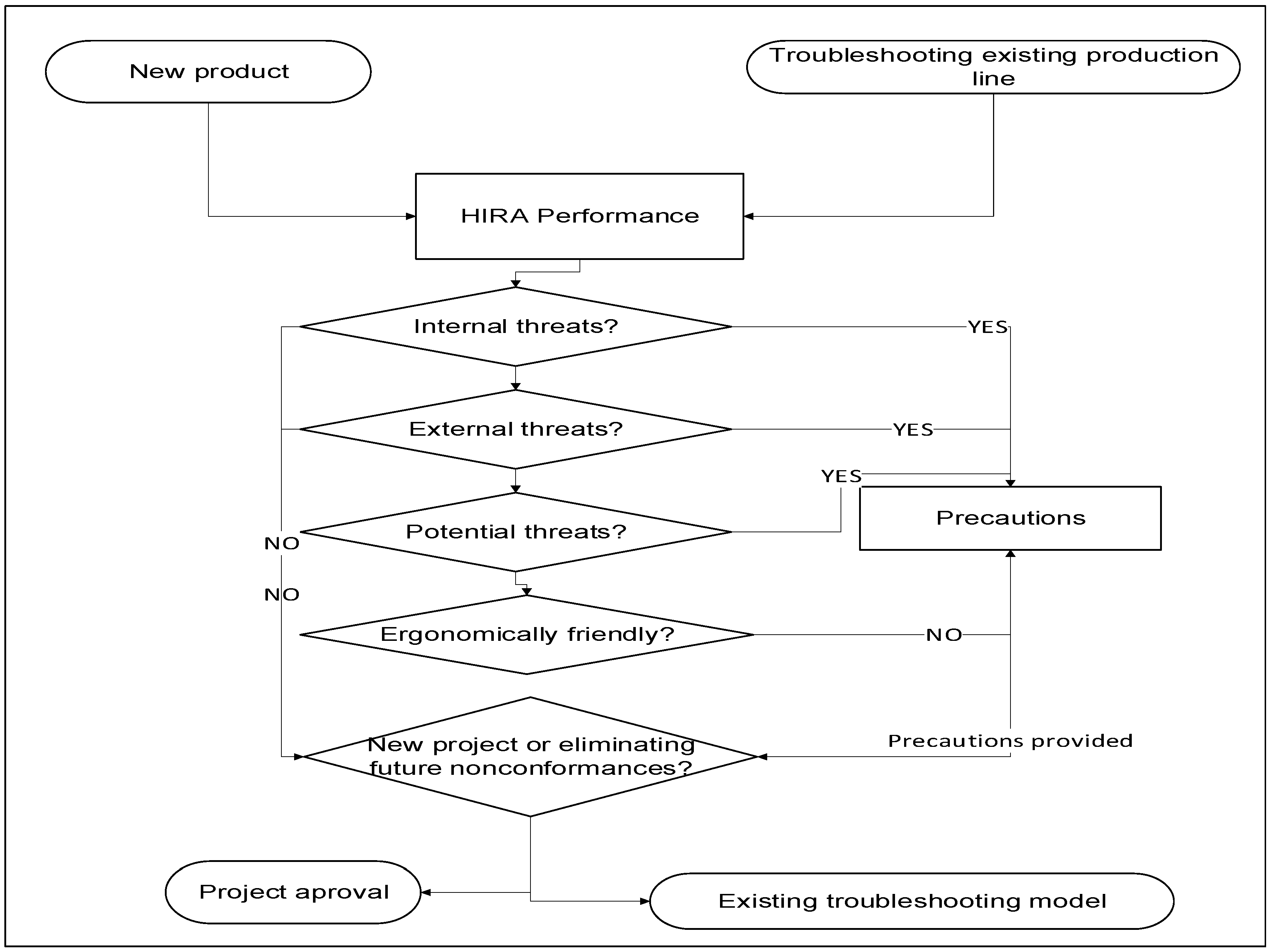
The main significance of this study is to improve the accuracy of problem solving related to safety-related injuries, by combining Ergonomic exercise with safety-related injuries using troubleshooting systems and the Hazards Risks Identification Analysis (HIRA). Figure 1 is an illustration of both the new production system (Hazard Identification Risks Analysis combined with Ergonomics) and existing production system to fulfil Occupational Health and Safety requirements. The HIRA exercise is performed by analyzing internal, external and potential threats and then providing precautions, if any. This study seeks to add Ergonomic analysis for better results.

4. Materials and Methods

4.1. Brief

Currently, the existing troubleshooting model is made up of the combination of lean techniques, Ishikawa analysis, 5Whys, eight types of waste, and risk rating. These lean tools serve as a problem-solving technique that integrates the quality nonconformances, safety-related injuries, and engineering maintenance issues to provide solutions and evaluate future kaizen projects [42]. The proposed upgrade to the lean model seeks to improve the safety-related injury investigations by including the Occupational Health and Safety analysis, the Hazard Identification and Risks Analysis (HIRA), and the Ergonomics analysis. Ergonomic analysis is based on the evaluation of the human body’s features when performing tasks. By adopting Ergonomic analysis within production systems, one could eliminate safety-related injuries, leading to a high productivity rate and a profitable organization [43]. The existing model will be upgraded, incorporating Ergonomic exercise, Hazard Identification and Risk Analysis.

4.2. Composition of the Upgraded Model

The upgraded model is composed of Ergonomics and Hazard Identification, as well as Risk Analysis. The ergonomic exercise will be performed by evaluating the body features, gender, body-positioning status category, measurements, and design description. Table 1 illustrates the body features that are evaluated during the Ergonomic exercise to improve the working tools and working environment, leading to fewer safety-related injuries.
Table 2 is an illustration of the risk identification analysis of the process. It is composed of the item or process to be analyzed and the nature of the process, where the risk level is analyzed in terms of how serious the risk is, from minor to major impact. It is also composed of potential threats analysis, where SWOT analysis is performed. Precautions and preventive actions are also considered.

5. Comparison of the Methods and Discussion

Currently, the existing model only incorporates lean manufacturing, safety-related injury investigations, quality defects as well as engineering maintenance for kaizen projects. For project evaluation, the fault or defect is logged and allocated to its specific problems, whether it is safety-related injuries, quality defects or engineering maintenance. The investigation is then initiated using integrated lean tools. After the lean technique is applied to the risks, analysis is performed for continuous improvements in project evaluation. The continuous improvement projects are divided into three categories, including the Integrated Management Systems (IMS) based on ISO45001:2018, which focuses on improving quality systems and safety systems.
The other two continuous improvements are the 5S principles project and process engineering. The 5S principles projects focus on eliminating waste within systems, and the process engineering projects mainly focus on Total Productive Maintenance (TPM), which assists in improving the overall effectiveness of the equipment within the production manufacturing systems. The proposed method improves the accuracy of the evaluation of continual improvement projects by introducing Ergonomic exercise and Hazard Identification and Risks Analysis (HIRA) within the troubleshooting model.
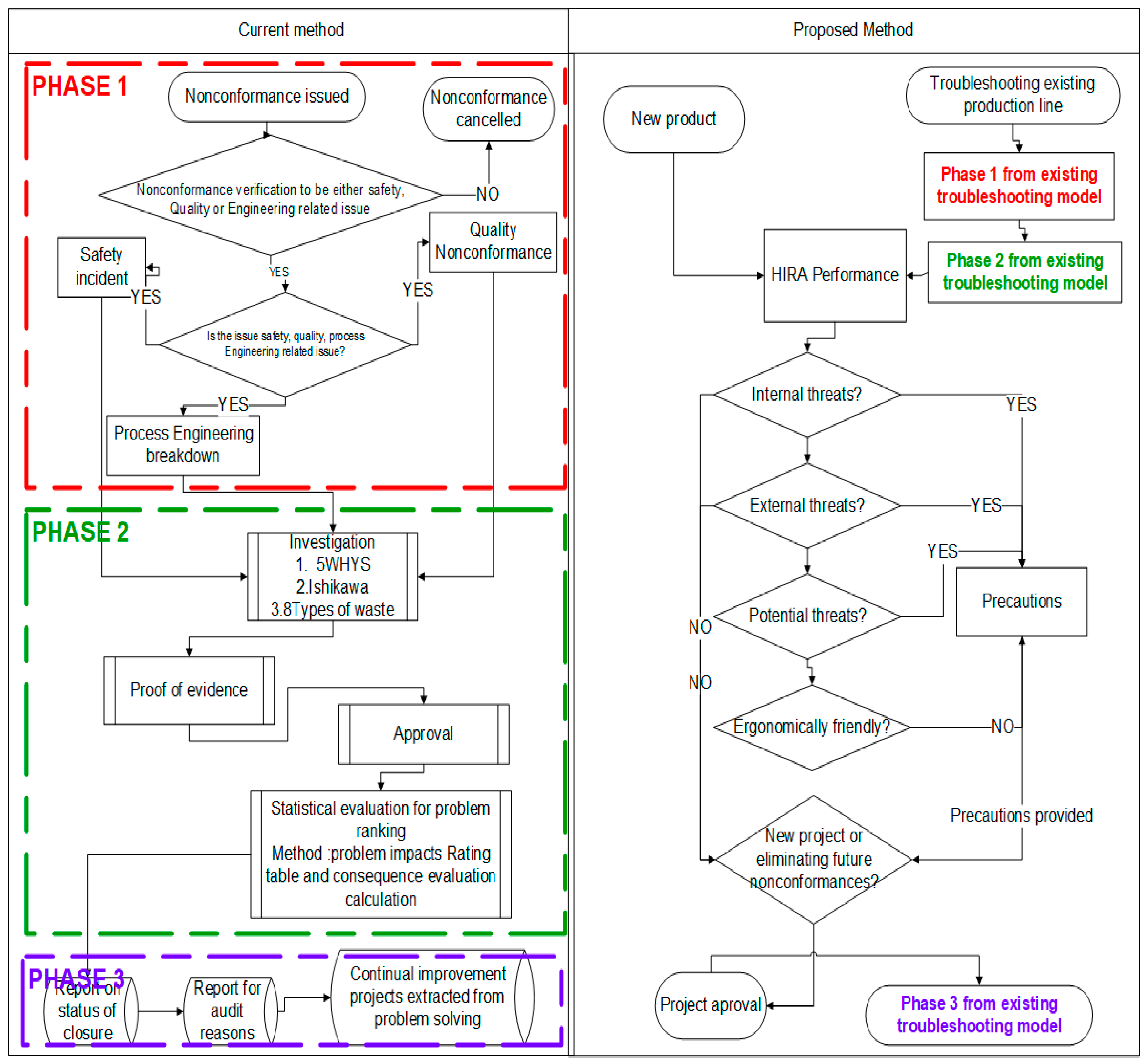
In the proposed model, the Ergonomic issues and the hazards that could cause potential threats are examined, and precautions are recommended. The other stream of analysis is extracted from the existing model, where the troubleshooting of the production line undergoes phase 1 and phase 2 from the previous model and goes through Hazard Identification and Risks Analysis exercise and Ergonomic exercise after that. It then goes to phase 3 of the current troubleshooting model, and if there are any precautions that are identified, they are recommended to the end user, as per Figure 2’s illustration.
The proposed model encompasses both new production lines and new products for trial purposes and the existing production line. It serves as a multipurpose model that focuses on the accuracy of problem solving and prevention of possible defects in the newly proposed processes by applying Hazard Identification and Risks Analysis (HIRA) incorporated with SWOT analysis as well as Ergonomic exercise. The benefit of the new model is to potentially have zero safety-related injuries by predicting and providing corrections to avoid future occurrences of the problem.

6. Application and Results Discussion

To simulate the effectiveness of the proposed upgrade to the current troubleshooting method, the proposed troubleshooting version was applied in an electronics industry that specializes in smart TVs and Decoders. Even though technology has improved within the electronics sector, it has been found that some customers still prefer a TV that is both smart and still has an option for Decoders, especially for customers who do not have full WIFI access; hence, a product with both features is advantageous. The main objective of this study was to improve the Decoder assembly plant since the absenteeism rate was high due to common sickness; hence, there are delays in the process because most customers still prefer both features.
The proposed upgraded model was applied; the fault was logged and defined to be nonconforming since the productivity rate was very low, with operators complaining about headaches from bending up and down. The time study was conducted for the entire process, and the power up of jigs was found to be the bottleneck. This fault was logged as a safety issue, due to the illness of the operators. Table 3 illustrates the time study, where a sample of ten cycles was taken to define the process and detect problems.
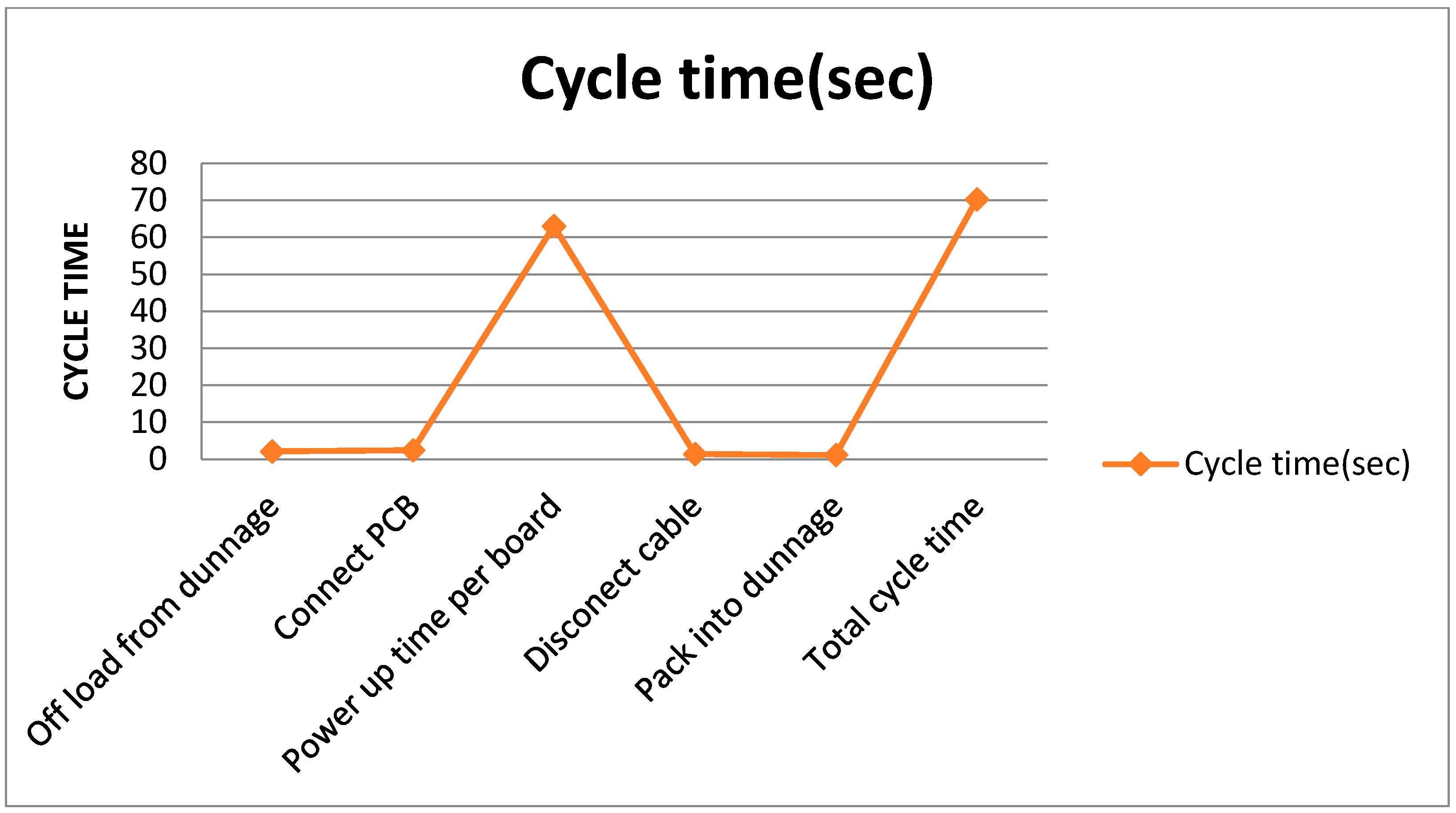
Table 4 and Figure 3 illustrate a summary of the power station.
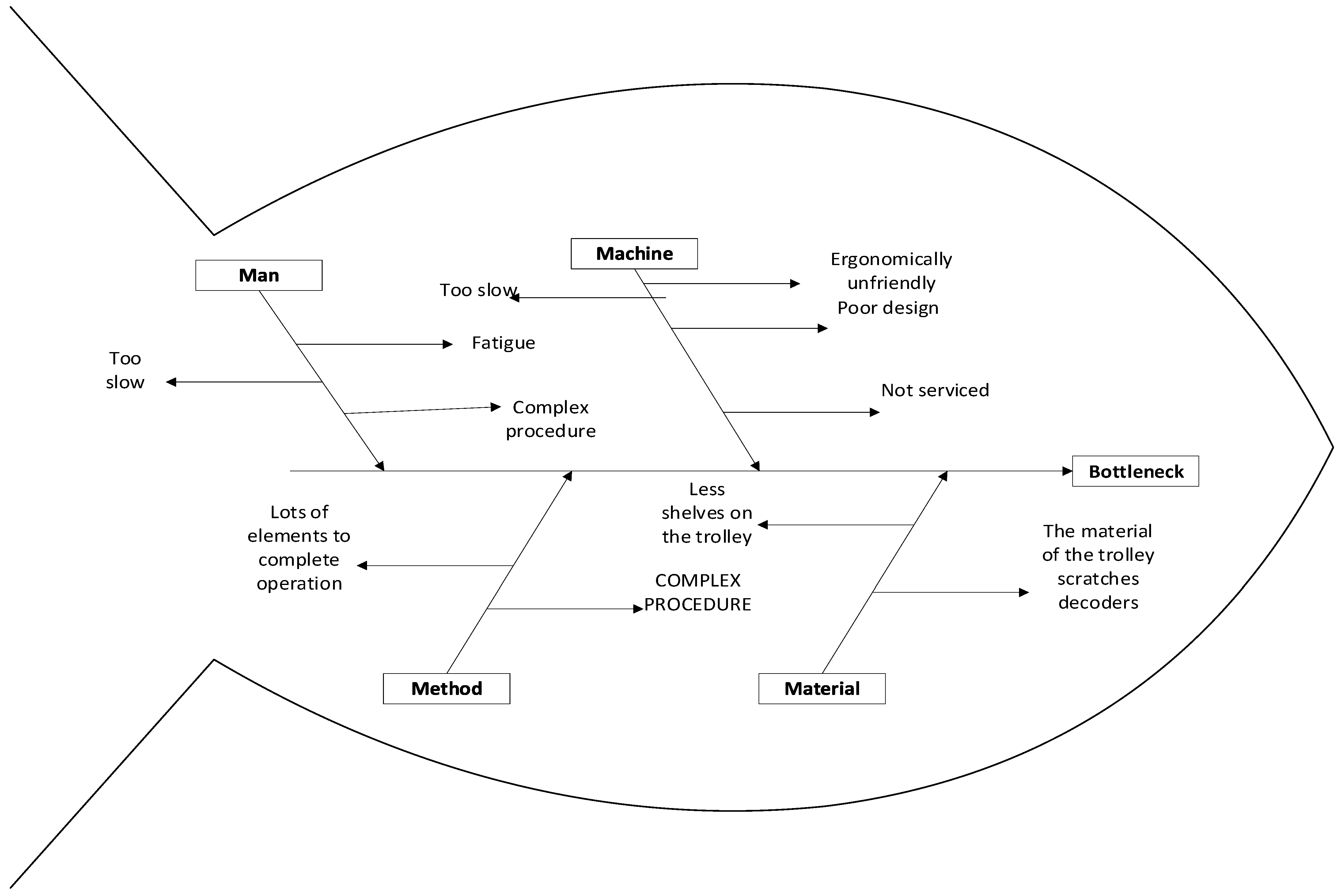
The 5Whys and Ishikawa analysis were performed, and it was found that the reason for delays is that the power-up process was taking longer and was not user-friendly. It was also found that the process was contributing to the scrap rate; hence, waste was found in double handling, which compromises quality, delays and defects. Figure 4 illustrates the root cause analysis.
The Ergonomic study was performed for better results. A body dimensions table was applied to specify the suitable measurements and design for the proposed machine. It was found that the focus should be on the elbow height, since the new machine is used while standing rather than bending up and down. Table 5 illustrates the specific body dimensions, where the design flexibility resulted in an average of females and males from the anthropometric table. Table 6 is an illustration of SWOT analysis to assess the hazards in the process.
The applied troubleshooting model resulted in drastic improvements, and a ten-power-up jig was designed, where the operators insert the PCBs in the slots instead of bending up and down. Table 7 illustrates the savings made by comparing both the current and proposed scenarios.

7. Conclusions

Rumanti et al. [46] validated that the market value of a business is defined by the innovation and creativity of the organization. Li et al. [47] further found that there are varieties of components that make up the creativity of a business. If these components are evaluated and maintained properly, the innovation of a business constantly improves, meaning a profitable organization. The defect occurrence within manufacturing processes’ preventive action could potentially evaluate more opportunities for continuous improvement projects [48]. The upgrade to the existing troubleshooting systems was reviewed, and it is considered to improve the problem-solving analysis and innovation of businesses by leveraging the tools involved in problem solving. Lean techniques assist in accelerating process enhancements. Even though lean techniques can assist in providing solutions, it is important to be guided by different policies and standards because some organizations still use scientific methods to improve the productivity rate [49]. The scientific method is a traditional method that focuses on improving productivity without taking employees’ wellness into consideration [50]. Most of the industries that are doing well have adopted the Total Quality Management approach, which focuses on customers’ needs by involving all employees in continuous improvement strategies together with top management [51].
This research seeks to close the gap of problem-solving accuracy within troubleshooting models by finding opportunities for improvements within defect occurrence, upgrading safety-related injury investigations with the incorporation of HIRA and Ergonomic exercise during the new process simulation and the troubleshooting of the existing process. The proposed method will add value by eliminating safety hazards within processes; it is incorporated into the existing troubleshooting model to produce more future kaizen projects related to Occupational Health and Safety systems, quality systems and Total Productive Maintenance systems

8. Future Uses of the Current Study: Recommendations

The proposed model will add more knowledge in problem-solving techniques within production systems. The impact of an Ergonomic study was reviewed within processes, and we found that Ergonomic study assists in eliminating safety hazards; hence, there is an opportunity to integrate troubleshooting models—Ergonomic analysis and HIRA exercise. Even though this combination brings accuracy in problem solving, the Vulnerability Assessment and Critical Control Point and the Threats Assessment and Critical Control Point are recommended for future studies in some industries, like food manufacturing.

Author Contributions

Conceptualization, M.M.; methodology, M.M. and O.A.O.; model development, M.M.; validation, M.M. and O.A.O.; formal analysis, M.M.; investigation, M.M. resources, O.A.O.; data curation, M.M.; writing—original draft preparation, M.M.; writing—review and editing, M.M. and O.A.O.; visualization, O.A.O.; supervision, O.A.O.; funding acquisition, O.A.O. All authors have read and agreed to the published version of the manuscript.

Funding

This research received no external funding.

Data Availability Statement

The original contributions presented in the study are included in the article.

Conflicts of Interest

The authors declare no conflicts of interest.

References

  1. Małysa, T.; Furman, J.; Pawlak, S.; Šolc, M. Application of Selected Lean Manufacturing Tools to Improve Work Safety in the Construction Industry. Appl. Sci. 2024, 14, 6312. [Google Scholar] [CrossRef]
  2. Hasanain, B. The Role of Ergonomic and Human Factors in Sustainable Manufacturing: A Review. Machines 2024, 12, 159. [Google Scholar] [CrossRef]
  3. Keshvarparast, A.; Battini, D.; Battaia, O.; Pirayesh, A. Collaborative robots in manufacturing and assembly systems: Literature review and future research agenda. J. Intell. Manuf. 2024, 35, 2065–2118. [Google Scholar] [CrossRef]
  4. Dewicka, A. Macroergonomics in the structure of the ISO 45001 occupational health and safety management system. Sci. Pap. Silesian Univ. Technol. Organ. Manag. Ser. 2024, 2024, 55–67. [Google Scholar] [CrossRef]
  5. American Diabetes Association Professional Practice Committee; ElSayed, N.A.; McCoy, R.G.; Aleppo, G.; Balapattabi, K.; Beverly, E.A.; Early, K.B.; Bruemmer, D.; Echouffo-Tcheugui, J.B.; Eichorst, B.; et al. 5. Facilitating Positive Health Behaviors and Well-being to Improve Health Outcomes: Standards of Care in Diabetes—2025. Diabetes Care 2025, 48, S86–S127. [Google Scholar] [CrossRef]
  6. Rodríguez-Gámez, I.F.; Maldonado-Macías, A.A.; Mrugalska, B.; Leyva, E.L.; Arellano, J.L.H.; Rodríguez, Y. A New Ergonomics Management Model for Supply Chains. In Human Factors in Engineering; CRC Press: Boca Raton, FL, USA, 2023; pp. 1–28. [Google Scholar] [CrossRef]
  7. Bittencourt, V.; Buchbinder, M.; Saakes, D.; Thiede, S. Integrated lean and ergonomic assessment for the planning of human-centered factories. Procedia CIRP 2023, 120, 344–349. [Google Scholar] [CrossRef]
  8. Hamja, A.; Latif, M.A.; Marma, M.; Haq, M.; Mustafa, A.; Morshed, M.S. Involving employees in reducing musculoskeletal discomfort while implementing lean: Insights from the ready-made garments industry. Int. J. Product. Perform. Manag. 2025, 74, 2988–3008. [Google Scholar] [CrossRef]
  9. Zhang, H.; Lin, Y. Modeling and evaluation of ergonomic risks and controlling plans through discrete-event simulation. Autom. Constr. 2023, 152, 104920. [Google Scholar] [CrossRef]
  10. Jia, J.; Wang, X.; Xu, Y.; Song, Z.; Zhang, Z.; Wu, J.; Liu, Z. Digital twin technology and ergonomics for comprehensive improvement of safety in the petrochemical industry. Process Saf. Prog. 2024, 43, 507–522. [Google Scholar] [CrossRef]
  11. Rostami, M.; Choobineh, A.; Shakerian, M.; Faraji, M.; Modarresifar, H. Assessing the effectiveness of an ergonomics intervention program with a participatory approach: Ergonomics settlement in an Iranian steel industry. Int. Arch. Occup. Environ. Health 2022, 95, 953–964. [Google Scholar] [CrossRef] [PubMed]
  12. Savković, M.; Djapan, M.; Caiazzo, C.; Pušica, M.; Vukićević, A.; Marinković, D.; Komatina, N. Ergonomic Optimization of Assembly Workstations: Effects on Productivity and Mental Workload. Safety 2026, 12, 15. [Google Scholar] [CrossRef]
  13. Cai, M.; Liang, R.; Luo, X.; Liu, C. Task allocation strategies considering task matching and ergonomics in the human-robot collaborative hybrid assembly cell. Int. J. Prod. Res. 2023, 61, 7213–7232. [Google Scholar] [CrossRef]
  14. Reiman, A.; Kaivo-Oja, J.; Parviainen, E.; Takala, E.-P.; Lauraeus, T. Human factors and ergonomics in manufacturing in the industry 4.0 context—A scoping review. Technol. Soc. 2021, 65, 101572. [Google Scholar] [CrossRef]
  15. Aswin, B.; Rini, W.N.E.; Hidayati, F. Effectiveness of Innovative Ergonomic Models in Preventing Occupational Fatigue in Rice Farmers. Indones. J. Occup. Saf. Health 2024, 13, 194–200. Available online: https://e-journal.unair.ac.id/IJOSH/article/download/55826/29863 (accessed on 14 November 2024). [CrossRef]
  16. Pilarczyk, M.; Ulewicz, R. Evaluating Occupational Hazards and Prevention Strategies in Agriculture: Case Study. Syst. Saf. Hum. Tech. Facil. Environ. 2023, 5, 212–223. [Google Scholar] [CrossRef]
  17. Ford, G. Non-Conformance and Rework in Construction: A Quality Management Improvement Initiative for Change. Ph.D. Thesis, Cardiff University, Cardiff, UK, 2024. [Google Scholar]
  18. Kanan, M.; Dilshad, A.R.; Zahoor, S.; Hussain, A.; Habib, M.S.; Mehmood, A.; Abusaq, Z.; Hamdan, A.; Asad, J. An Empirical Study of the Implementation of an Integrated Ergo-Green-Lean Framework: A Case Study. Sustainability 2023, 15, 10138. [Google Scholar] [CrossRef]
  19. Kolge, R.; Somatkar, A.; Deshmukh, M.; Hadole, K.; Ahire, H. Ergonomic Design and Analysis of Workstations in Manufacturing Industries for Enhanced Safety and Productivity. Int. Res. J. Innov. Sci. Technol. 2026, 1, 1–9. Available online: https://irjist.org/index.php/irjist/article/view/2 (accessed on 1 February 2026).
  20. Kose, Y.; Civan, H.N.; Ayyildiz, E.; Cevikcan, E. An Interval Valued Pythagorean Fuzzy AHP–TOPSIS Integrated Model for Ergonomic Assessment of Setup Process under SMED. Sustainability 2022, 14, 13804. [Google Scholar] [CrossRef]
  21. Huarcaya-Melendez, V.; Platero-Mamani, A. Production Model Based on Lean Tools and SLP to Increase Labor Productivity in Companies in the Food Industry. Adv. Transdiscipl. Eng. 2023, 35, 651–660. [Google Scholar] [CrossRef]
  22. Balafoutas, D.; Joukhadar, R.; Vlahos, N. Optimising ergonomics in minimally invasive gynaecological surgery: A comprehensive review and practice recommendations. Facts Views Vis. Obgyn 2025, 17, 180. [Google Scholar] [CrossRef]
  23. Quiroz-Flores, J.C.; Abásolo-Núñez, B.; Suárez-Miñano, D.; Nallusamy, S. Minimization of per-sonnel absenteeism with the application of proposed ergonomic model in a plastics manufacturing industry. Appl. Sci. 2023, 13, 7858. [Google Scholar] [CrossRef]
  24. Sarbat, I.; Tasan, S.O. Ergonomics indicators: A proposal for sustainable process performance measurement in ergonomics. Ergonomics 2022, 65, 3–38. [Google Scholar] [CrossRef]
  25. Chintada, A.; Umasankar, V. Improvement of productivity by implementing occupational ergonomics. J. Ind. Prod. Eng. 2022, 39, 59–72. [Google Scholar] [CrossRef]
  26. Asran, A.; Irwan, I. Examining Occupational Safety and Health Awareness Behind the Hustle and Bustle of Traditional Markets: Evidence from Informal Workers in Makassar, Indonesia. Gold. Ratio Soc. Sci. Educ. 2026, 6, 163–177. [Google Scholar] [CrossRef]
  27. Yunusa-Kaltungo, A.; Ray, S.; AlSanad, S.; Sokunbi, I.; Manu, P.; Cheung, C.M.; Mohandes, S.R. Assessment of safety climate perception of maintenance workers during major overhauls, outages, shutdowns or turnarounds (MoOSTs). Qual. Reliab. Eng. Int. 2024, 40, 2936–2953. [Google Scholar] [CrossRef]
  28. Goh, Y.M. Introduction to Workplace Safety and Health Management: A Systems Thinking Approach; World Scientific Publishing Co. Pte. Ltd.: Singapore, 2024. [Google Scholar] [CrossRef]
  29. Umar, R.Z.R.; Tiong, J.Y.; Ahmad, N.; Dahalan, J. Development of framework integrating ergonomics in Lean’s Muda, Muri, and Mura concepts. Prod. Plan. Control 2024, 35, 1466–1474. [Google Scholar] [CrossRef]
  30. Weerapperuma, A.; Hassan, A.; Muller, L.; Camargo, M.; Ferveur, N. Contribution to the synergies between ergonomics and lean management for industrial performance: A simulation-based approach. Procedia CIRP 2025, 136, 486–491. [Google Scholar] [CrossRef]
  31. Domínguez-Alfaro, D.; Mendoza-Muñoz, I.; Montoya-Reyes, M.I.; Vargas-Bernal, O.Y.; Jacobo-Galicia, G. Design and Implementation of Integral Ergo-Value Stream Mapping in a Metal-Mechanical Company to Improve Ergonomic and Productive Conditions: A Case Study. Logistics 2023, 7, 100. [Google Scholar] [CrossRef]
  32. Wodajeneh, S.N.; Azene, D.K.; Sileyew, K.J. Synergizing ergonomic principles with lean philosophy model towards productivity improvement in the shoes manufacturing industry. Int. J. Workplace Health Manag. 2025, 18, 5–24. [Google Scholar] [CrossRef]
  33. Vicente, I.; Godina, R.; Gabriel, A.T. Applications and future perspectives of integrating Lean Six Sigma and Ergonomics. Saf. Sci. 2024, 172, 106418. [Google Scholar] [CrossRef]
  34. TMoreira, T.d.C.R.; Nascimento, D.L.d.M.; Smirnova, Y.; Santos, A.C.d.S.G.d. Lean six sigma 4.0 methodology for optimizing occupational exams in operations management. Int. J. Lean Six Sigma 2024, 15, 93–119. [Google Scholar] [CrossRef]
  35. Rodríguez-Martín, M.; Rodríguez-Gonzálvez, P.; Domingo, R.; Rodríguez-Martín, M.; Rodríguez-Gonzálvez, P.; Domingo, R. Asking about Risk in a Company: A New Approach to Learning ISO 45001 in Engineering Programs. Standards 2023, 3, 21–30. [Google Scholar] [CrossRef]
  36. Kineber, A.F.; Antwi-Afari, M.F.; Elghaish, F.; Zamil, A.M.A.; Alhusban, M.; Qaralleh, T.J.O. Benefits of Implementing Occupational Health and Safety Management Systems for the Sustainable Construction Industry: A Systematic Literature Review. Sustainability 2023, 15, 12697. [Google Scholar] [CrossRef]
  37. Rahardjo, B.; Wang, F.K.; Lo, S.C.; Chu, T.H. A Sustainable Innovation Framework Based on Lean Six Sigma and Industry 5.0. Arab. J. Sci. Eng. 2023, 49, 7625–7642. [Google Scholar] [CrossRef]
  38. Benassi, C. Societal Institutions and Contradictions in the Workplace: A comparative analysis of lean management systems in Germany, Italy, and the United Kingdom. Organ. Stud. 2024, 45, 385–407. [Google Scholar] [CrossRef]
  39. Moso, M.; Olanrewaju, O.A. An Application of Lean Techniques to Construct an Integrated Management Systems Preventive Action Model and Evaluation: Kaizen Projects. Processes 2024, 12, 1069. [Google Scholar] [CrossRef]
  40. Benson, C.; Obasi, I.C.; Akinwande, D.V.; Ile, C. The impact of interventions on health, safety and environment in the process industry. Heliyon 2024, 10, e23604. [Google Scholar] [CrossRef]
  41. Thabit, A. Enhancing Laboratory Safety Culture: Data-Driven Risk Management in Metal Powder Laboratories. 2024. Available online: https://osuva.uwasa.fi/handle/10024/18358 (accessed on 18 March 2025).
  42. de Almeida, M.S.; Junior, M.V.; Silva, C.A.D.S.; Ferreira, A.D.S. Use of Lean Methodology And Tools in Production Management to Improve the Efficiency of the Production Process—Case Study in a Pim Company. Rev. Gestão Secr. 2025, 16, e4722. [Google Scholar] [CrossRef]
  43. Chu, C.H.; Pan, J.K.; Chen, Y.W. Ergonomic workplace design based on real-time integration between virtual and augmented realities. Robot. Comput. Integr. Manuf. 2025, 92, 102859. [Google Scholar] [CrossRef]
  44. Saha, A.K.; Jahin, M.A.; Rafiquzzaman, M.; Mridha, M.F. Ergonomic design of computer laboratory furniture: Mismatch analysis utilizing anthropometric data of university students. Heliyon 2024, 10, e34063. [Google Scholar] [CrossRef]
  45. Gulen, M.F.; Uflaz, E.; Gumus, F.; Orhan, M.; Arslan, O. An integrated SWOT-based interval type-2 fuzzy AHP and TOPSIS methodology for digital transformation strategy selection in maritime safety. Ocean. Eng. 2025, 323, 120518. [Google Scholar] [CrossRef]
  46. Rumanti, A.A.; Rizana, A.F.; Achmad, F. Exploring the role of organizational creativity and open innovation in enhancing SMEs performance. J. Open Innov. Technol. Mark. Complex. 2023, 9, 100045. [Google Scholar] [CrossRef]
  47. Li, K. Valuation Driven Innovation. In Asia-Pacific Financial Markets; Springer: Berlin/Heidelberg, Germany, 2025; pp. 1–43. [Google Scholar] [CrossRef]
  48. Russell, J.L.; Bryk, A.S.; Peurach, D.J.; Sherer, J.Z.; Duff, M.; Sherer, D.; Matthis, C. Catalyzing Scientific-Professional Learning Communities: A Framework for Conceptualizing the Health and Development of Educational Improvement Networks. Peabody J. Educ. 2025, 100, 7–27. [Google Scholar] [CrossRef]
  49. Sojka, V.; Lepsik, P. Tools of Theory of Inventive Problem Solving Used for Process Improvement-A Systematic Literature Review. Processes 2025, 13, 226. [Google Scholar] [CrossRef]
  50. Çoşkun, N.; Metin, M. Scientific evolution from the definition of Hirschsprung disease to the present: A bibliometric analysis (1980–2023). Pediatr. Res. 2025, 98, 706–714. [Google Scholar] [CrossRef]
  51. Chaher, D.; Lakhal, L. The impact of TQM on financial and non-financial performance: The mediating role of corporate social responsibility. TQM J. 2025, 37, 1687–1715. [Google Scholar] [CrossRef]
Figure 1. An illustration of the integration of Hazard Identification Risks Analysis (HIRA) and Ergonomics analysis. Source [Author].
Standards 06 00012 g001
Figure 2. An illustration of the proposed lean and Ergonomics integrated model. Source: [Author].
Standards 06 00012 g002
Figure 3. An illustration of the summary of the time study analysis. Source: [Author].
Standards 06 00012 g003
Figure 4. An illustration of Ishikawa analysis. Source: [Author].
Standards 06 00012 g004
Table 1. An illustration of Ergonomics analysis related to body features. Source: [44].
Height/Item to Be AnalyzedGenderBody Positioning Category MeasurementsDesign Description (Flexibility)
Sitting Bending Up and Down (Carrying Weights)Standing Weight (kg)Height (cm)
WeightF
M
Eye heightF
M
Shoulder heightF
M
Elbow heightF
M
Knuckle heightF
M
Sitting HeightF
M
Standing/Stature heightF
M
Elbow rest heightF
M
Thigh clearest heightF
M
Knee heightF
M
Buttock knee heightF
M
Popliteal heightF
M
Chest DepthF
M
Elbow to Elbow breadthF
M
Hip Breadth sittingF
M
Table 2. An illustration of Risks Identification Analysis of the process. Source: [45].
ProcessNature of the Process (Risk Level)Potential Threats Precautions and Preventive Action
MinorMajor Moderate SWOT
Table 3. An illustration of the time study to define the process. Source: [Author].
No.Element DescriptionSum of 10 Cycles ObservedCycle Time (s)STD (s)No. of OperatorsEffective Std Time/Unit
1Assembly PCB and base37.733.774.072.002.04
2Pairing stage number 133.633.363.632.001.82
3Assembly fascia31.663.173.422.001.71
4Insert screws on the RCA23.622.362.551.002.55
5Pairing stage number 234.643.463.742.001.73
6Stick warranty sticker27.622.762.982.001.49
7Load STB’s in the trolley23.942.392.591.002.59
8Connect DC jacks13.531.351.461.001.46
9Powering 16 Standard box581.0058.1062.751.0062.75
Table 4. An illustration of overall effectiveness analysis of the PCB power up process. Source: [Author].
ElementsCycle Time (s)Machine CapacityNo. of OperatorsEffective Standard Time per Unit (s)
Off load from dunnage2.16None12.61
Connect 16 PCBs to the trolley2.48416 spaced trolleys21.25
Power up time per board63.07216 spaced trolleys03.9
Disconnect cable1.40416 spaced trolleys11.5
Pack into dunnage1.188None11.8188
Total70.308 59.99
Table 5. An illustration of body dimensions and positioning. Source: [Author].
Height/Item to Be AnalyzedGenderBody Positioning Category Measurements Design Description (Flexibility)
Sitting Bending Up and Down (Carrying Weights)StandingWeight (kg)Height (cm)
Elbow height Fnot applicable Not applicable Standing position Not applicable 109.9 Average for both male and female = (109.9 + 101.2)/2 = 105.55 cm
MNot applicable Not applicable Standing position Not applicable 101.2
Table 6. An illustration of SWOT analysis. Source: [27].
ProcessNature of the Process (Risk Level)Potential Threats Precautions and Preventive Action
MinorMajor Moderate SWOT
Loading of PCB’sMinor risk No strengths. The process results in backache and low output rate The process results in back aches due to bending up and down There is kaizen opportunities related to process re-design to be more comfortable for end-users Low output rate hence the customers are delayed Improve the equipment
Table 7. An illustration of the benefits of the proposed model. Source: [Author].
ExpensesBeforeAfterCost Savings
Head count of operators523
Total cycle time (s)9.936.9
Hourly output3631200837 Gained
Labor cost (Rands)113.4545.3868.07
Disclaimer/Publisher’s Note: The statements, opinions and data contained in all publications are solely those of the individual author(s) and contributor(s) and not of MDPI and/or the editor(s). MDPI and/or the editor(s) disclaim responsibility for any injury to people or property resulting from any ideas, methods, instructions or products referred to in the content.