

Age-Specific Radiological Risk of 222Rn in Drinking Water Wells Along the Sultandağı Fault Zone (Türkiye): A One-Year Monitoring Study

Highlights
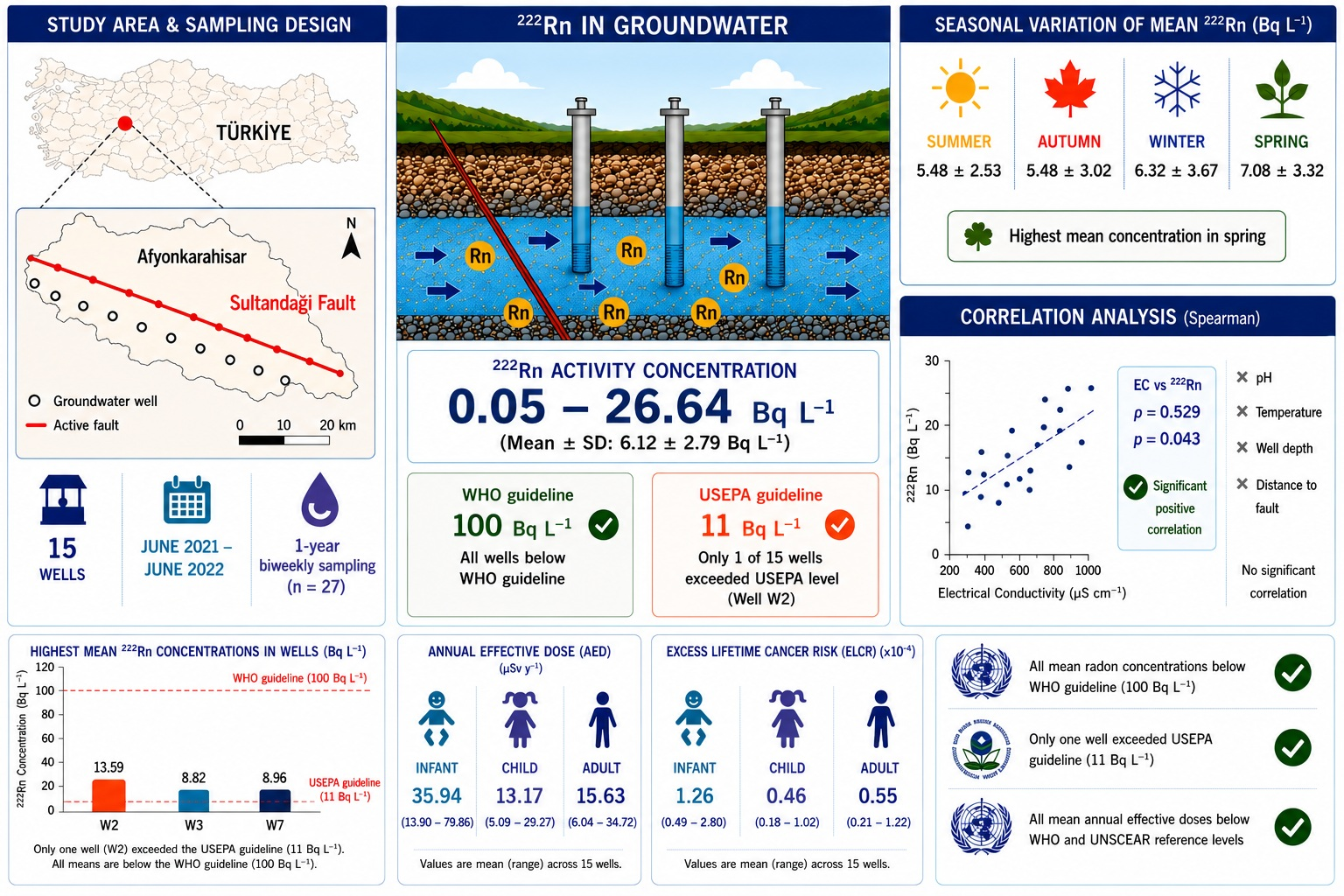
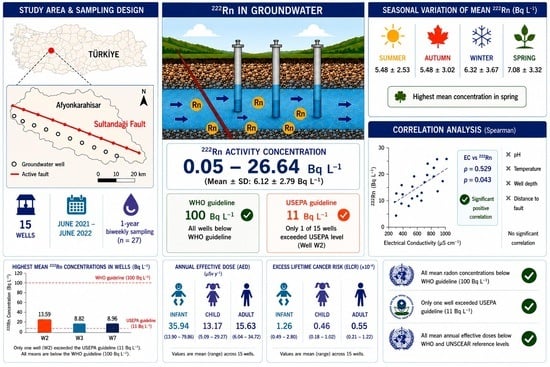
- ²²²Rn was monitored biweekly in 15 drinking-water wells over a one-year period.
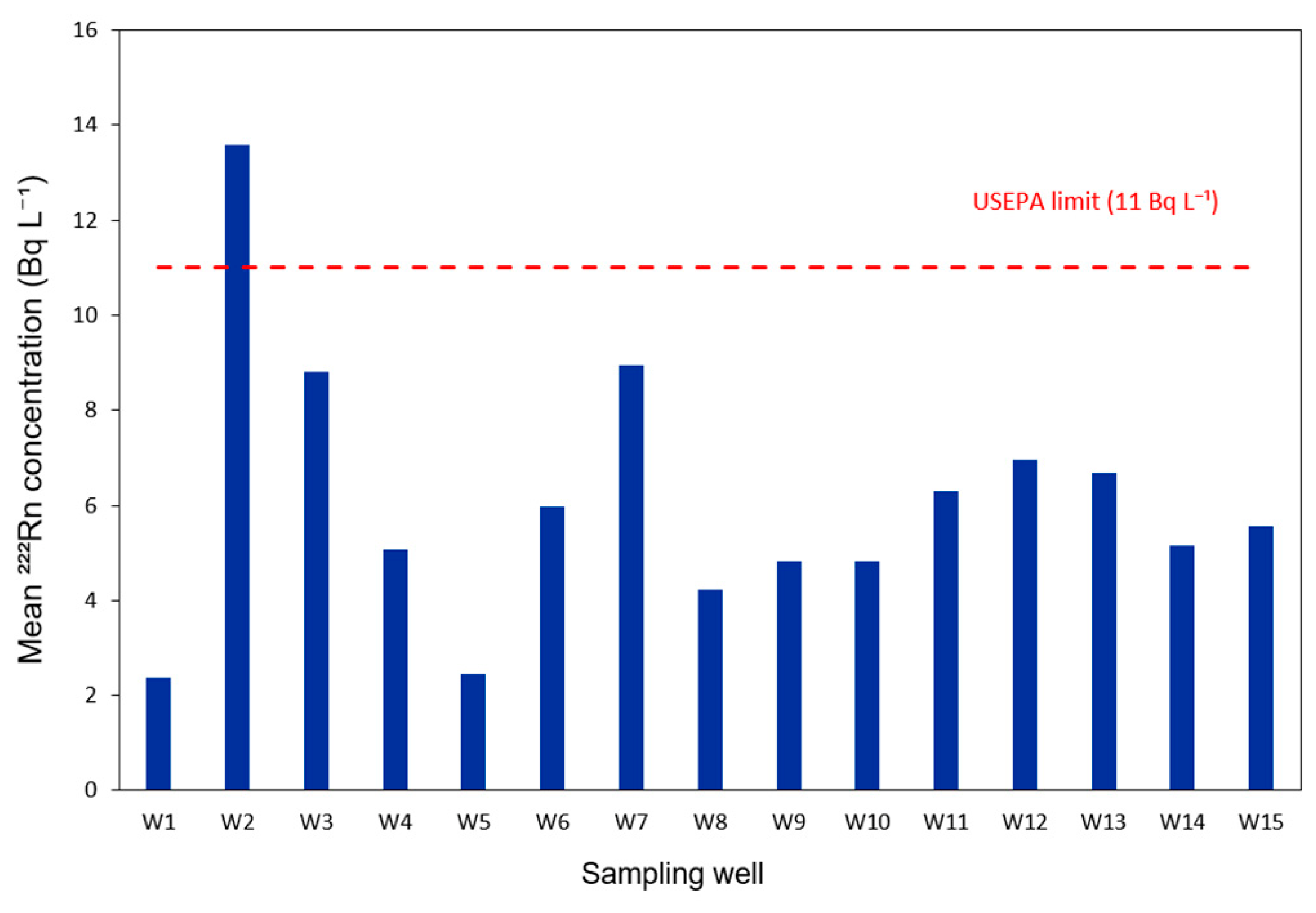
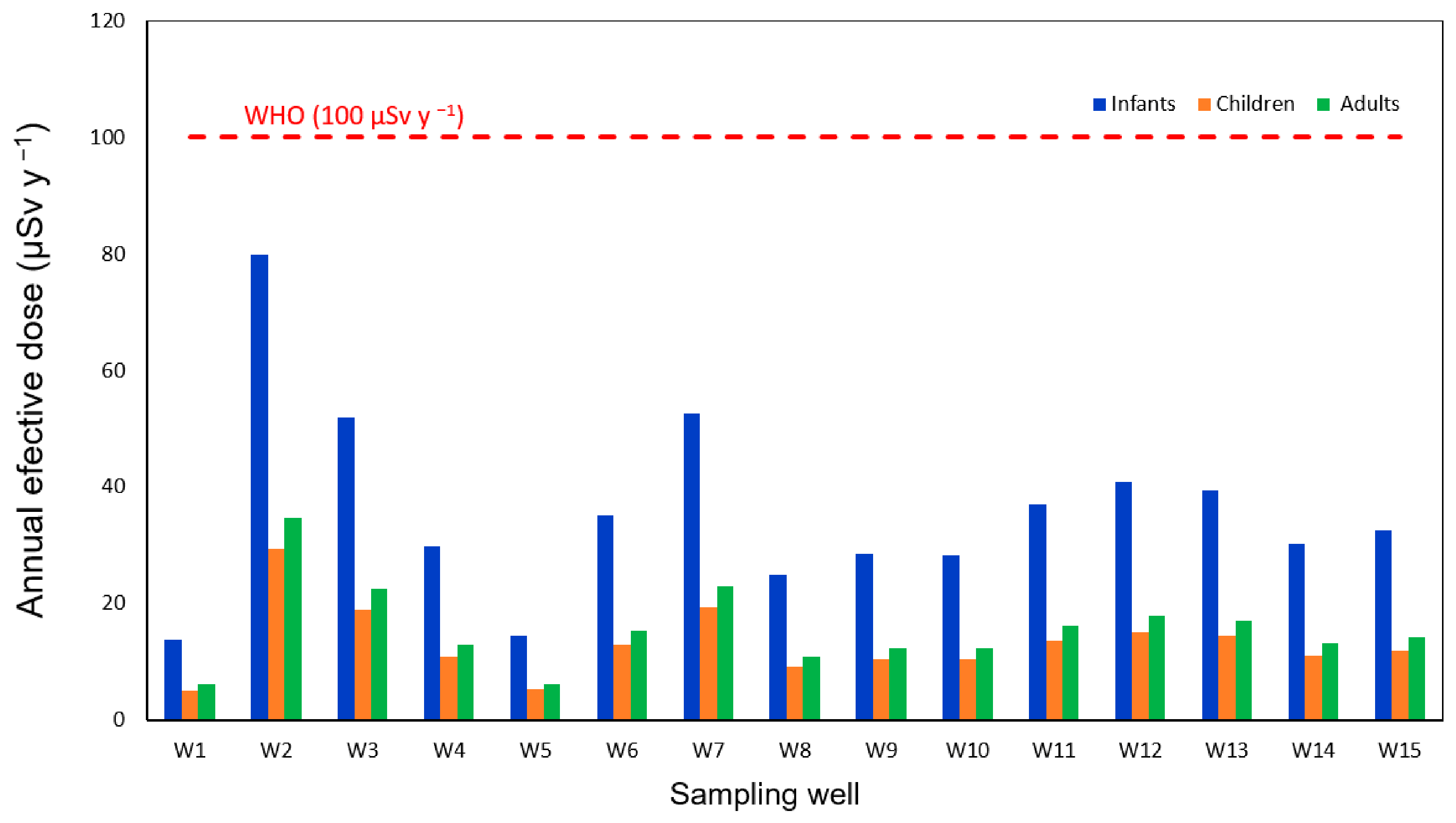
- ²²²Rn concentrations ranged from 0.05 to 26.64 Bq L−1; only one well exceeded the USEPA-recommended limit, whereas all remained below the WHO reference level.
- Age-specific annual effective dose (AED) and excess lifetime cancer risk (ELCR) were highest for infants.
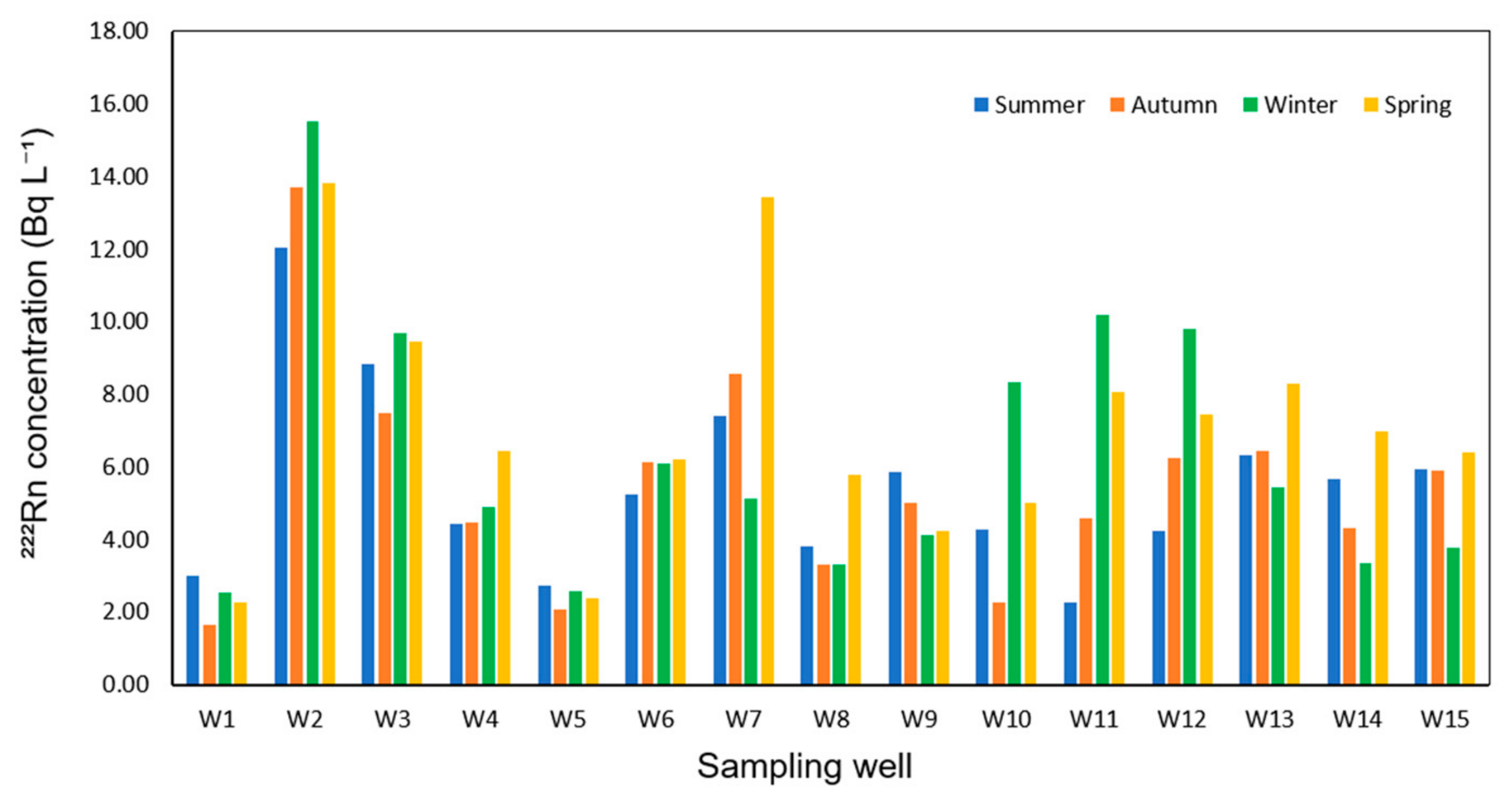
- Groundwater ²²²Rn concentrations were significantly higher in spring than in autumn.
- Long-term monitoring revealed seasonal variability in groundwater ²²²Rn concentrations.
- The findings provide baseline data for radiological monitoring of drinking-water wells in tectonically active regions.
Abstract
Share and Cite
Sandıkcıoğlu Gümüş, A. Age-Specific Radiological Risk of 222Rn in Drinking Water Wells Along the Sultandağı Fault Zone (Türkiye): A One-Year Monitoring Study. Toxics 2026, 14, 670. https://doi.org/10.3390/toxics14080670
Sandıkcıoğlu Gümüş A. Age-Specific Radiological Risk of 222Rn in Drinking Water Wells Along the Sultandağı Fault Zone (Türkiye): A One-Year Monitoring Study. Toxics. 2026; 14(8):670. https://doi.org/10.3390/toxics14080670
Chicago/Turabian StyleSandıkcıoğlu Gümüş, Ayla. 2026. "Age-Specific Radiological Risk of 222Rn in Drinking Water Wells Along the Sultandağı Fault Zone (Türkiye): A One-Year Monitoring Study" Toxics 14, no. 8: 670. https://doi.org/10.3390/toxics14080670
APA StyleSandıkcıoğlu Gümüş, A. (2026). Age-Specific Radiological Risk of 222Rn in Drinking Water Wells Along the Sultandağı Fault Zone (Türkiye): A One-Year Monitoring Study. Toxics, 14(8), 670. https://doi.org/10.3390/toxics14080670