



The Effect of 1-Ethyl-3-Methylimidazolium Chloride on Oxidative Stress and the Functioning of the Photosynthetic Apparatus in Maize Seedlings—The Modulatory Role of Exogenous Ascorbic Acid





Abstract
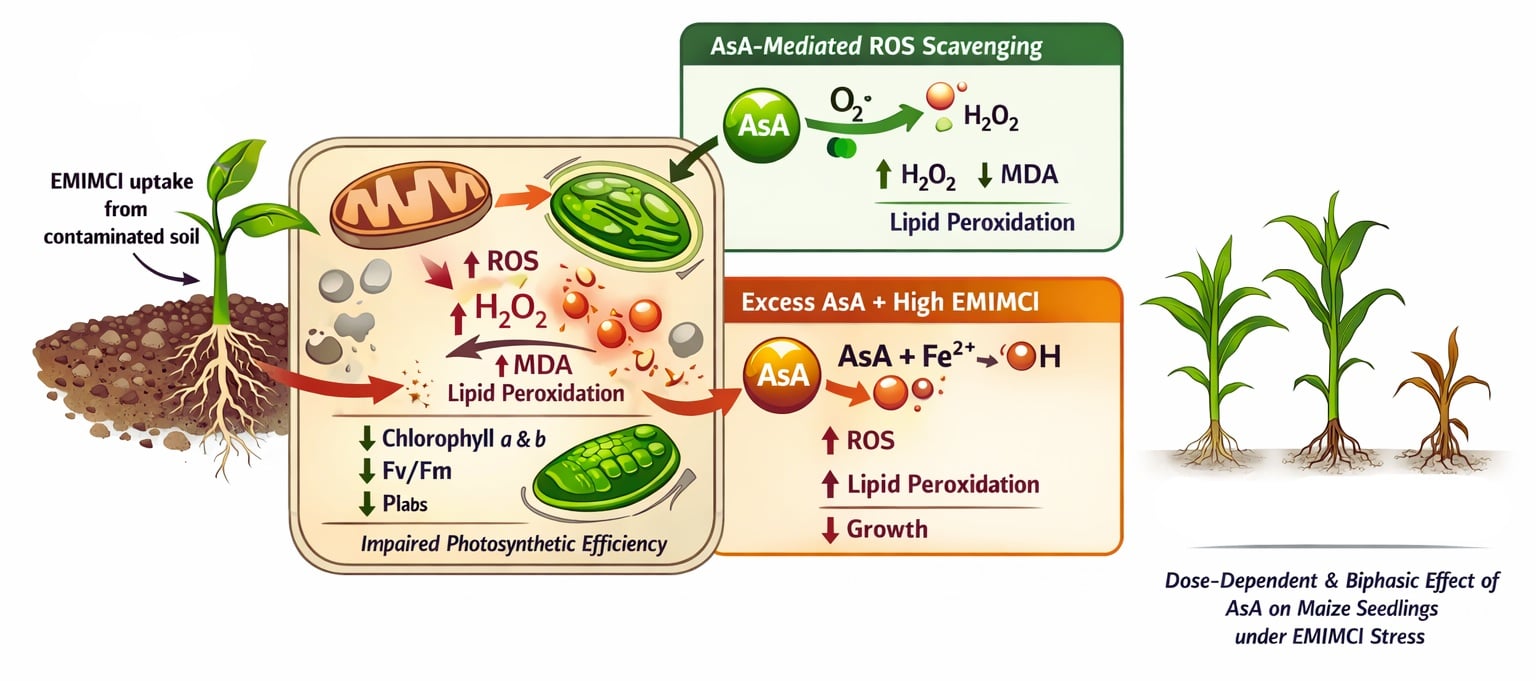
Share and Cite
Pawłowska, B.; Lechowska, A.; Ščurek, R.; Biczak, R. The Effect of 1-Ethyl-3-Methylimidazolium Chloride on Oxidative Stress and the Functioning of the Photosynthetic Apparatus in Maize Seedlings—The Modulatory Role of Exogenous Ascorbic Acid. Toxics 2026, 14, 589. https://doi.org/10.3390/toxics14070589
Pawłowska B, Lechowska A, Ščurek R, Biczak R. The Effect of 1-Ethyl-3-Methylimidazolium Chloride on Oxidative Stress and the Functioning of the Photosynthetic Apparatus in Maize Seedlings—The Modulatory Role of Exogenous Ascorbic Acid. Toxics. 2026; 14(7):589. https://doi.org/10.3390/toxics14070589
Chicago/Turabian StylePawłowska, Barbara, Aleksandra Lechowska, Radomír Ščurek, and Robert Biczak. 2026. "The Effect of 1-Ethyl-3-Methylimidazolium Chloride on Oxidative Stress and the Functioning of the Photosynthetic Apparatus in Maize Seedlings—The Modulatory Role of Exogenous Ascorbic Acid" Toxics 14, no. 7: 589. https://doi.org/10.3390/toxics14070589
APA StylePawłowska, B., Lechowska, A., Ščurek, R., & Biczak, R. (2026). The Effect of 1-Ethyl-3-Methylimidazolium Chloride on Oxidative Stress and the Functioning of the Photosynthetic Apparatus in Maize Seedlings—The Modulatory Role of Exogenous Ascorbic Acid. Toxics, 14(7), 589. https://doi.org/10.3390/toxics14070589
