Elevated CO2 Drives the Enrichment of Multidrug Resistance Genes in Paddy Soils

Highlights
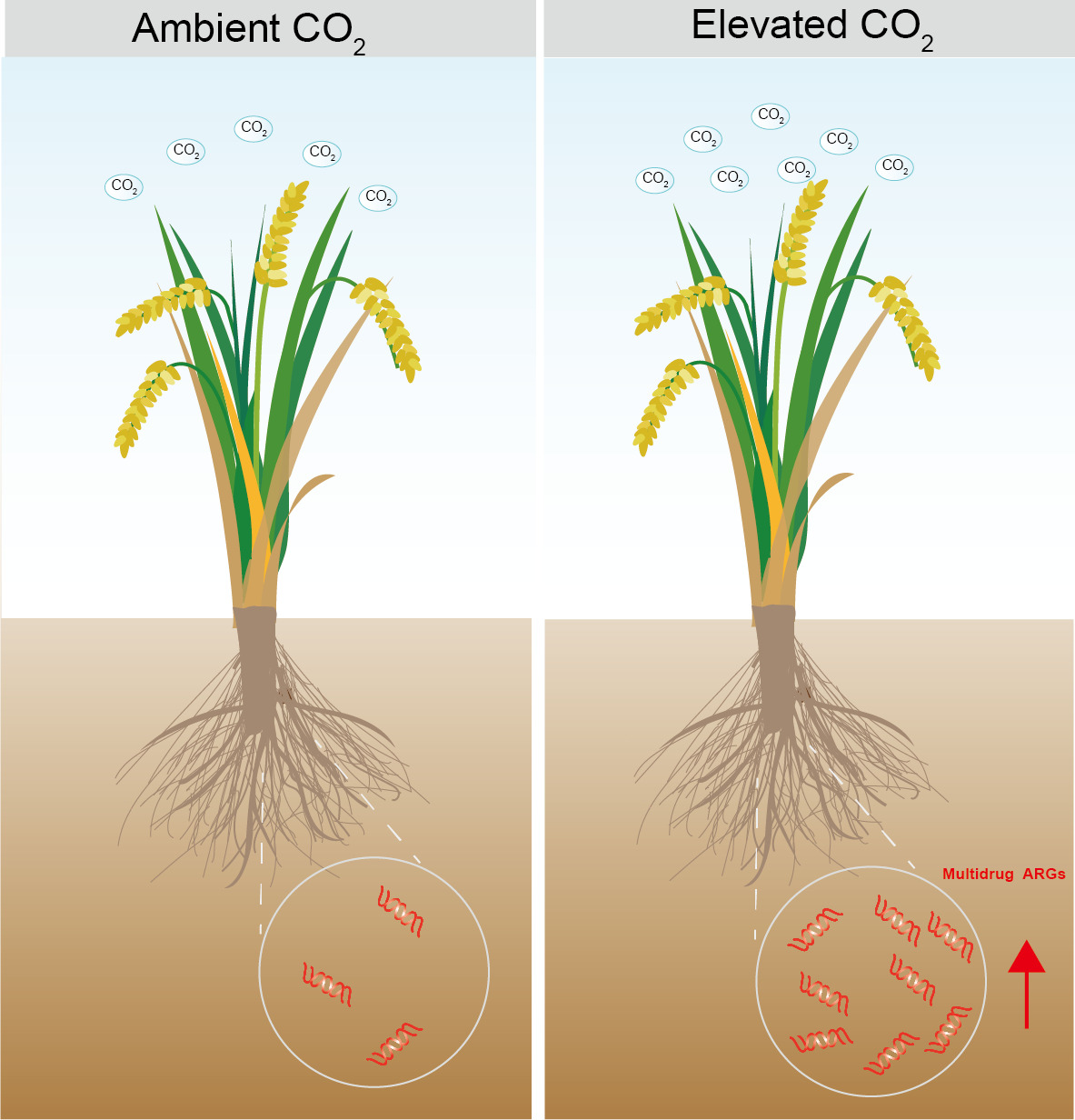
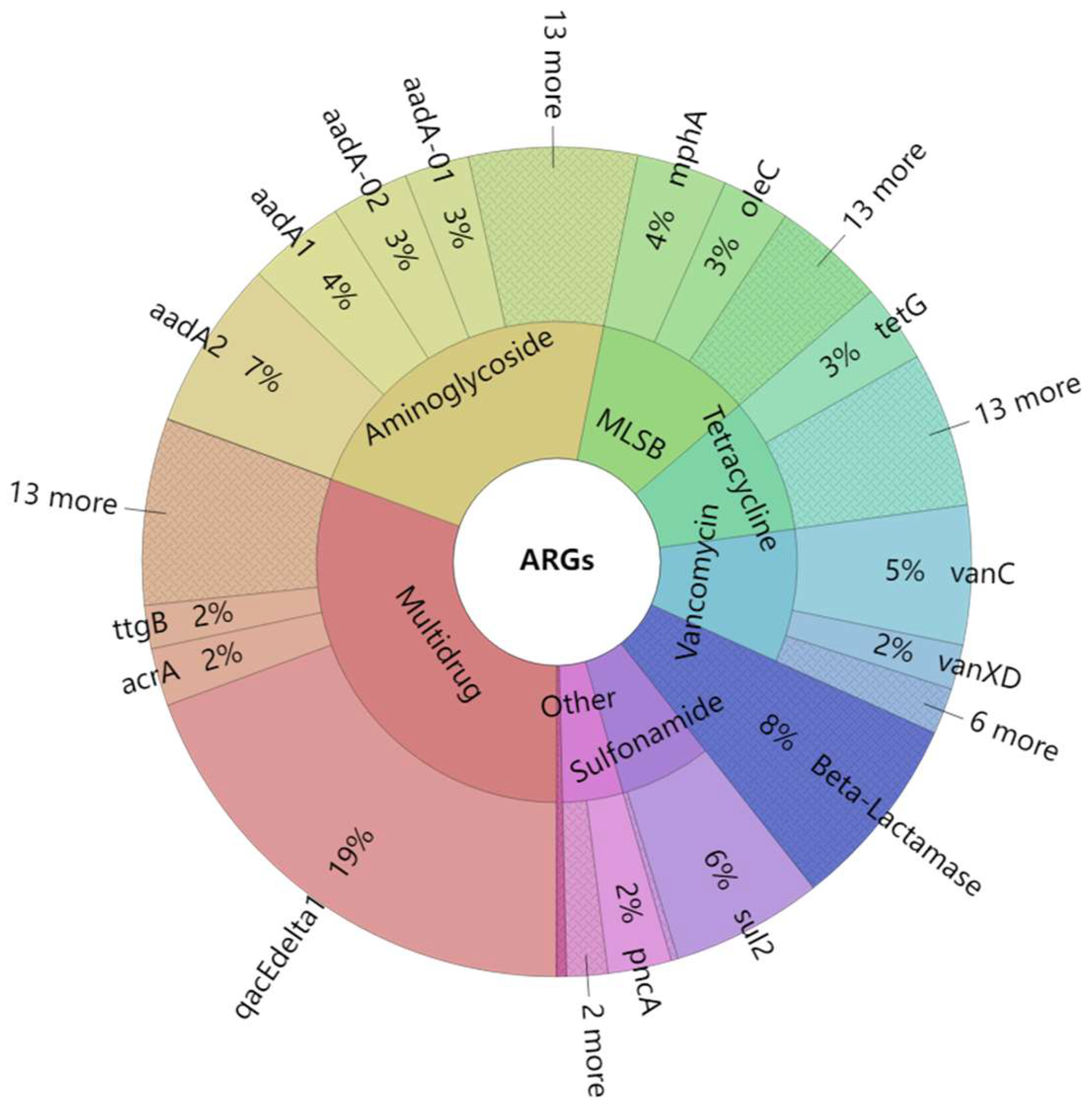
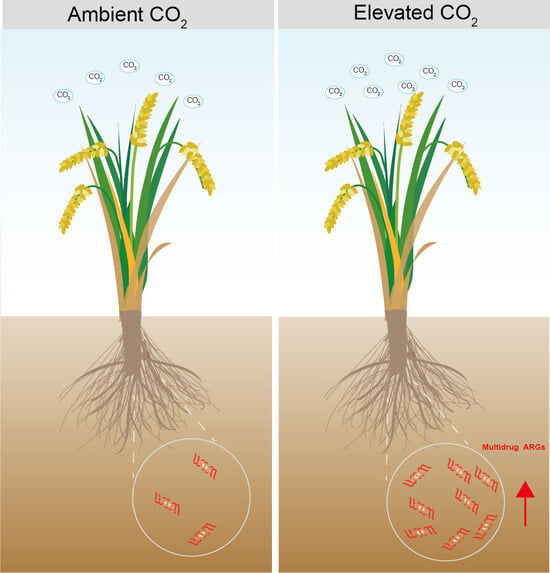
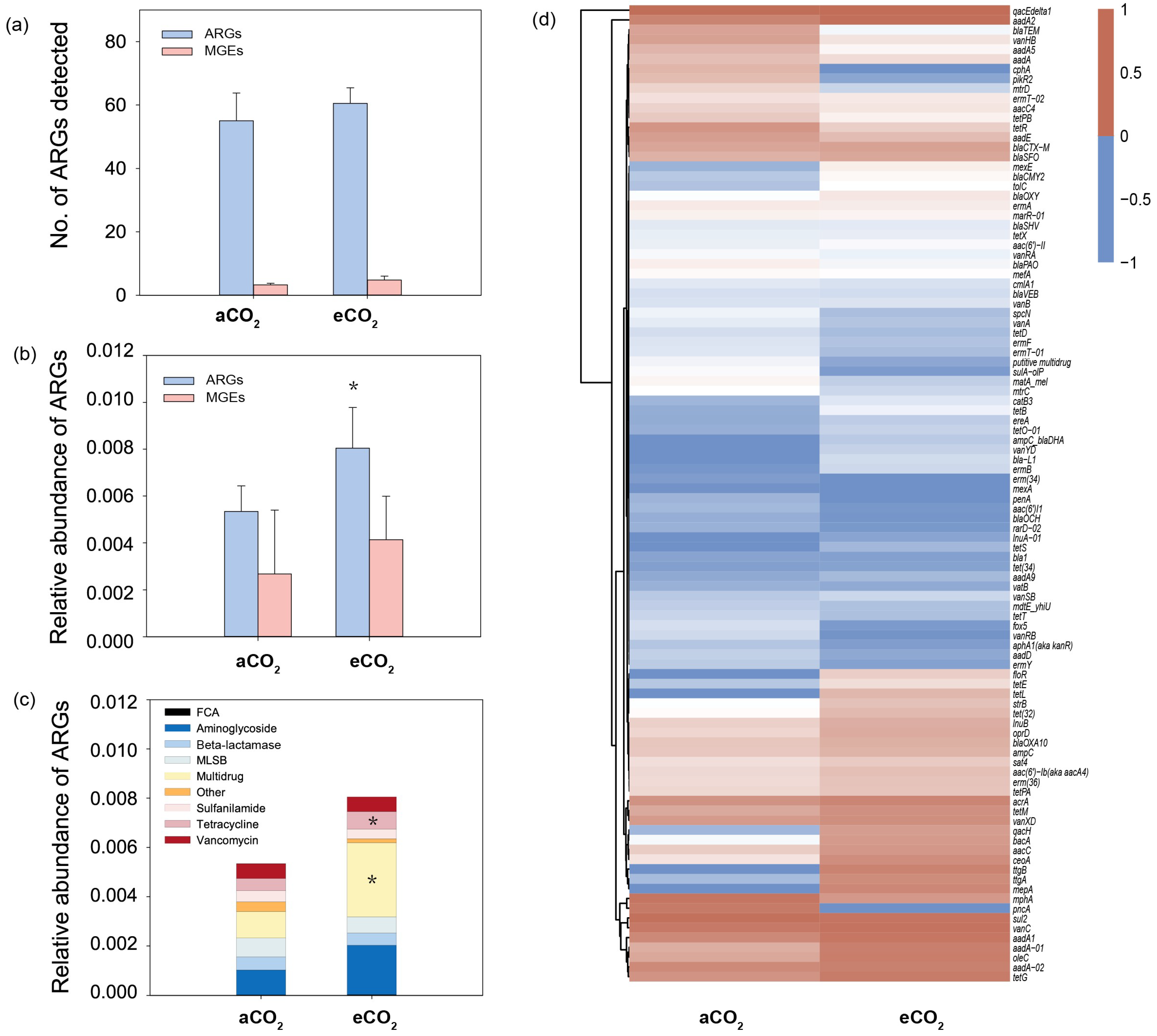
- Elevated CO2 increases the abundance of soil multidrug-resistance genes by 2.8-fold.
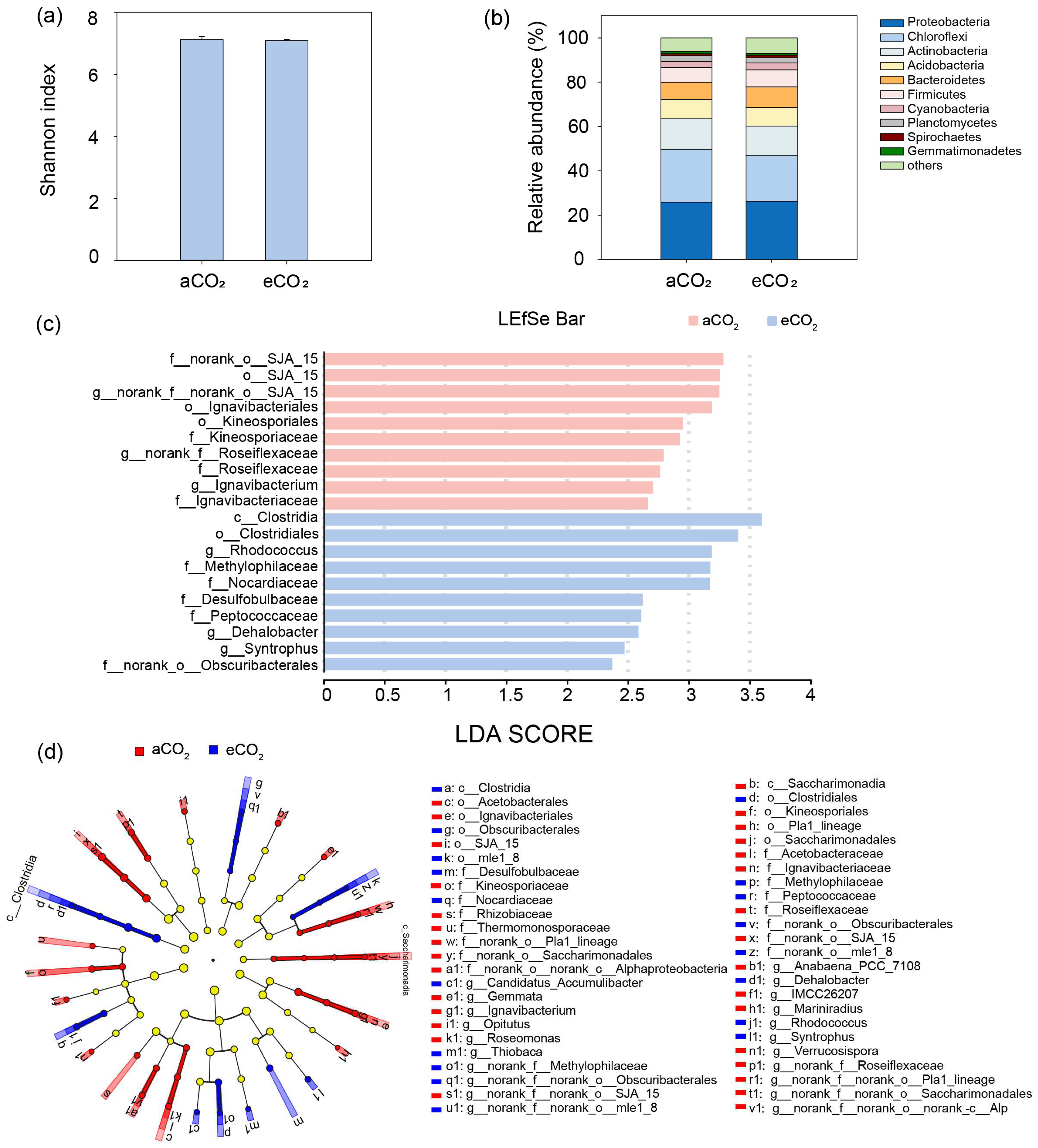
- Clostridia and Dehalobacter are key bacterial biomarkers under eCO2.
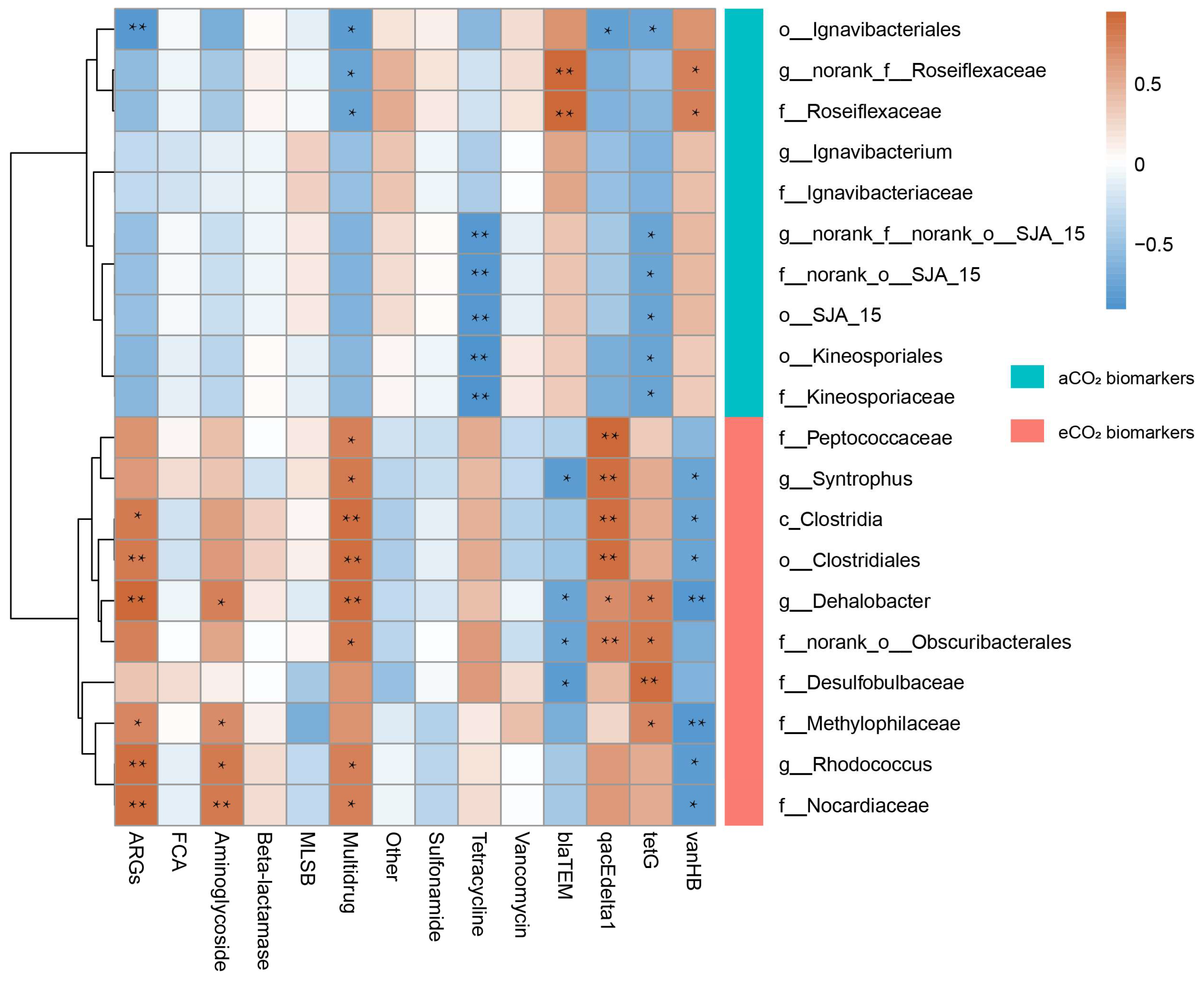
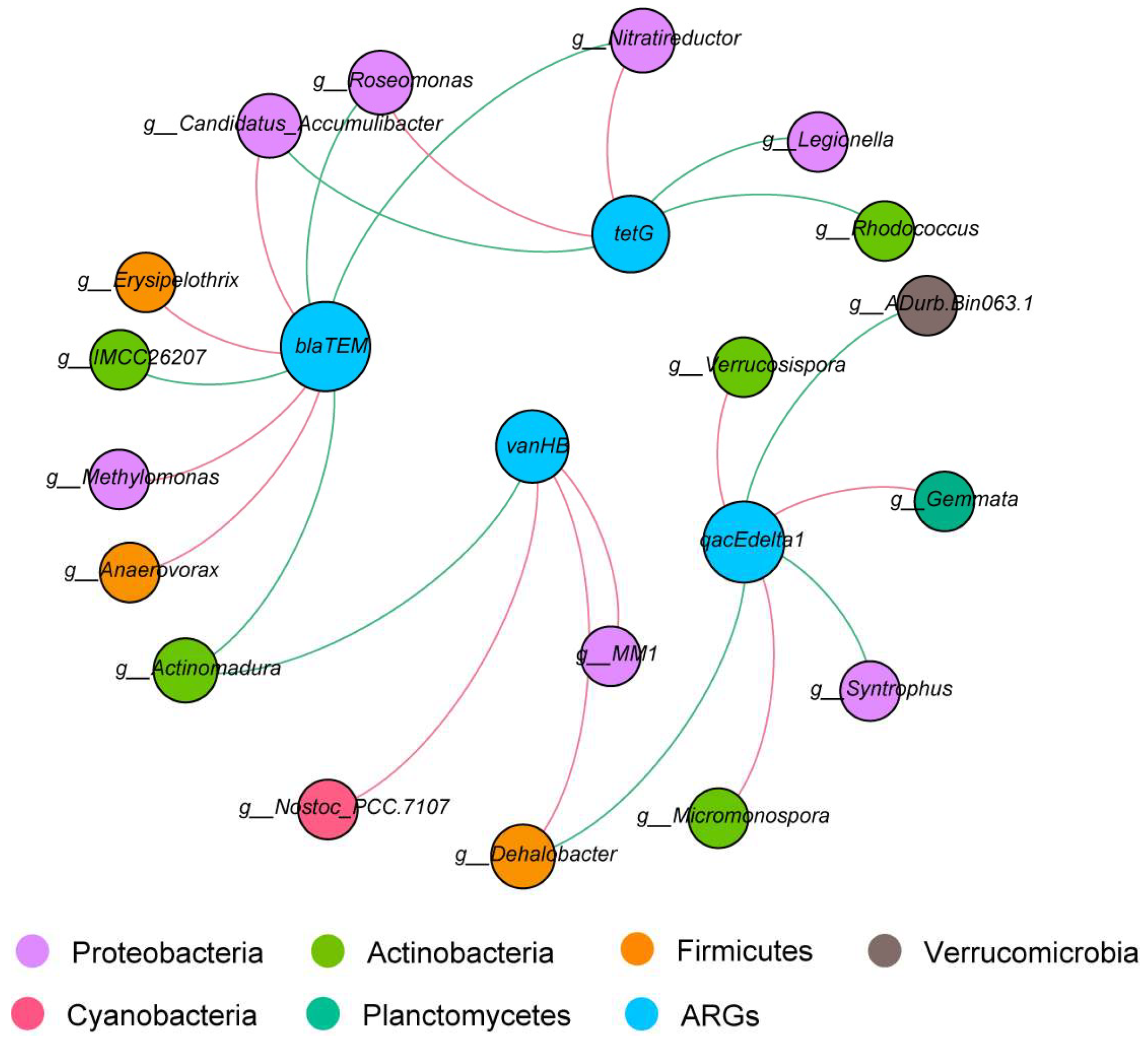
- The potential bacterial hosts are the primary driver of soil ARG proliferation under eCO2.
- The main findings highlighted that the responses of multidrug-resistance genes and their potential bacterial hosts to elevated CO2 are critical for assessing the ecological risks of antibiotic resistance dissemination in paddy soil under climate change.
Abstract
1. Introduction
2. Materials and Methods
2.1. FACE System and Pot Experiment
2.2. DNA Extraction and High-Throughput qPCR
2.3. Bacterial 16S rRNA Gene Sequencing
2.4. Soil Physicochemical Properties Analyses
2.5. Statistical Analysis
3. Results and Discussion
3.1. Rice Biomass and Soil Physicochemical Properties Subsection
3.2. Soils ARGs and MGEs
3.3. Soil Bacterial Communities
3.4. Association of Soil ARGs with Bacterial Communities
4. Conclusions
Supplementary Materials
Author Contributions
Funding
Institutional Review Board Statement
Informed Consent Statement
Data Availability Statement
Conflicts of Interest
References
- MacFadden, D.R.; McGough, S.F.; Fisman, D.; Santillana, M.; Brownstein, J.S. Antibiotic resistance increases with local temperature. Nat. Clim. Change 2018, 8, 510–514. [Google Scholar] [CrossRef] [Scilit] [PubMed]
- Zarean, M.; Dave, S.H.; Brar, S.K.; Kwong, R.W.M. Environmental drivers of antibiotic resistance: Synergistic effects of climate change, co-pollutants, and microplastics. J. Hazard. Mater. Adv. 2025, 19, 100768. [Google Scholar] [CrossRef] [Scilit]
- van Groenigen, K.J.; Qi, X.; Osenberg, C.W.; Luo, Y.; Hungate, B.A. Faster Decomposition under increased atmospheric CO2 limits soil carbon storage. Science 2014, 344, 508–509. [Google Scholar] [CrossRef] [Scilit]
- Calvo, O.C.; Franzaring, J.; Schmid, I.; Müller, M.; Brohon, N.; Fangmeier, A. Atmospheric CO2 enrichment and drought stress modify root exudation of barley. Glob. Change Biol. 2017, 23, 1292–1304. [Google Scholar] [CrossRef] [Scilit]
- Forsberg, K.J.; Reyes, A.; Wang, B.; Selleck, E.M.; Sommer, M.O.A.; Dantas, G. The shared antibiotic resistome of soil bacteria and human pathogens. Science 2012, 337, 1107–1111. [Google Scholar] [CrossRef] [Scilit] [PubMed]
- Blagodatskaya, E.; Kuzyakov, Y. Active microorganisms in soil: Critical review of estimation criteria and approaches. Soil Biol. Biochem. 2013, 67, 192–211. [Google Scholar] [CrossRef] [Scilit]
- NOAA Global Monitoring Laboratory. Trends in Atmospheric Carbon Dioxide; National Oceanic and Atmospheric Administration: Washington, DC, USA, 2025. [Google Scholar]
- IPCC. Summary for Policymakers. In Climate Change 2021: The Physical Science Basis: Contribution of Working Group I to the Sixth Assessment Report of the Intergovernmental Panel on Climate Change; Cambridge University Press: Cambridge, UK, 2021. [Google Scholar]
- Ng, C.W.W.; Liao, J.X.; Lau, S.Y.; So, P.S.; Hau, B.C.H.; Peprah-manu, D. Coupled effects of elevated CO2 and biochar on microbial communities of vegetated soil. J. Environ. Manag. 2023, 342, 118136. [Google Scholar] [CrossRef] [Scilit]
- Terrer, C.; Phillips, R.P.; Hungate, B.A.; Rosende, J.; Pett-Ridge, J.; Craig, M.E.; van Groenigen, K.J.; Keenan, T.F.; Sulman, B.N.; Stocker, B.D.; et al. A trade-off between plant and soil carbon storage under elevated CO2. Nature 2021, 591, 599–603. [Google Scholar] [CrossRef] [Scilit]
- Qiu, Z.; He, X.; Yu, H.; Zhu, C.; Shen, W. Differential responses of soil bacterial communities to elevated CO2 between strongly CO2-responsive and weakly CO2-responsive rice cultivars. Sci. Total Environ. 2023, 869, 161843. [Google Scholar] [CrossRef] [Scilit]
- Sun, Y.; Wang, C.; Yang, J.; Liao, J.; Chen, H.Y.H.; Ruan, H.; Xu, X. Elevated CO2 shifts soil microbial communities from K- to r-strategists. Glob. Ecol. Biogeogr. 2021, 30, 961–972. [Google Scholar] [CrossRef] [Scilit]
- Jia, W.; Zheng, T.; Zhao, Y.; Deng, F.; Yang, Y.; Liang, C.; He, H.; Zhang, X. Nitrogen application influences the effect of bacteria on the belowground allocation of photosynthesized carbon under elevated CO2. Soil Biol. Biochem. 2023, 180, 109021. [Google Scholar] [CrossRef] [Scilit]
- Zhu, Y.G.; Johnson, T.A.; Su, J.Q.; Qiao, M.; Guo, G.X.; Stedtfeld, R.D.; Hashsham, S.A.; Tiedje, J.M. Diverse and abundant antibiotic resistance genes in Chinese swine farms. Proc. Natl. Acad. Sci. USA 2013, 110, 3435–3440. [Google Scholar] [CrossRef] [Scilit]
- Pruden, A.; Pei, R.; Storteboom, H.; Carlson, K.H. Antibiotic resistance genes as emerging contaminants: Studies in Northern Colorado. Environ. Sci. Technol. 2006, 40, 7445–7450. [Google Scholar] [CrossRef] [Scilit]
- Kim, D.W.; Cha, C.J. Antibiotic resistome from the One-Health perspective: Understanding and controlling antimicrobial resistance transmission. Exp. Mol. Med. 2021, 53, 301–309. [Google Scholar] [CrossRef] [Scilit]
- Perry, J.A.; Wright, G.D. The antibiotic resistance “mobilome”: Searching for the link between environment and clinic. Front. Microbiol. 2013, 4, 138. [Google Scholar] [CrossRef] [Scilit]
- von Wintersdorff, C.J.; Penders, J.; van Niekerk, J.M.; Mills, N.D.; Majumder, S.; van Alphen, L.B.; Savelkoul, P.H.; Wolffs, P.F. Dissemination of antimicrobial resistance in microbial ecosystems through horizontal gene transfer. Front. Microbiol. 2016, 7, 173. [Google Scholar] [CrossRef] [Scilit]
- Seiler, C.; Berendonk, T.U. Heavy metal driven co-selection of antibiotic resistance in soil and water bodies impacted by agriculture and aquaculture. Front. Microbiol. 2012, 3, 399. [Google Scholar] [CrossRef] [Scilit] [PubMed]
- Liao, J.Q.; Huang, H.N.; Chen, Y.G. CO2 promotes the conjugative transfer of multiresistance genes by facilitating cellular contact and plasmid transfer. Environ. Int. 2019, 129, 333–342. [Google Scholar] [CrossRef] [Scilit]
- Xu, M.; Xiang, Q.; Xu, F.; Guo, L.; Carter, L.J.; Du, W.; Zhu, C.; Yin, Y.; Ji, R.; Wang, X.; et al. Elevated CO2 alleviated the dissemination of antibiotic resistance genes in sulfadiazine-contaminated soil: A free-air CO2 enrichment study. J. Hazard. Mater. 2023, 450, 131079. [Google Scholar] [CrossRef] [Scilit] [PubMed]
- Xu, F.; Du, W.C.; Carter, L.J.; Xu, M.L.; Wang, G.B.; Qiu, L.L.; Zhu, J.G.; Zhu, C.W.; Yin, Y.; Ji, R.; et al. Elevated CO2 concentration modifies the effects of organic fertilizer substitution on rice yield and soil ARGs. Sci. Total Environ. 2021, 754, 141898. [Google Scholar] [CrossRef] [Scilit] [PubMed]
- Qiu, L.; Wang, Y.; Du, W.; Ai, F.; Yin, Y.; Guo, H. Efflux pumps activation caused by mercury contamination prompts antibiotic resistance and pathogen’s virulence under ambient and elevated CO2 concentration. Sci. Total Environ. 2023, 863, 160831. [Google Scholar] [CrossRef] [Scilit]
- Wang, Y.; Xu, M.; Wang, X.; Ai, F.; Du, W.; Yin, Y.; Ji, R.; Guo, H. Elevated atmospheric CO2 reduced antibiotics accumulation in rice grains and soil ARGs abundance in multiple antibiotics-contaminated paddy fields. Chem. Res. Chin. Univ. 2023, 39, 455–464. [Google Scholar] [CrossRef] [Scilit]
- Li, X.-Y.; Zhu, C.-W.; Chen, S.; Xiang, Q.; Lu, C.; Lin, X.-Y.; Chen, Q.-L. Elevated CO2 increased antibiotic resistomes in seed endophytes: Evidence from a free-air CO2 enrichment (FACE) experiment. Environ. Sci. Technol. 2024, 58, 23190–23200. [Google Scholar] [CrossRef] [Scilit] [PubMed]
- Zhu, C.; Ziska, L.; Zhu, J.; Zeng, Q.; Xie, Z.; Tang, H.; Jia, X.; Hasegawa, T. The temporal and species dynamics of photosynthetic acclimation in flag leaves of rice (Oryza sativa) and wheat (Triticum aestivum) under elevated carbon dioxide. Physiol. Plant 2012, 145, 395–405. [Google Scholar] [CrossRef] [Scilit] [PubMed]
- Guo, H.; Zhu, J.; Zhou, H.; Sun, Y.; Yin, Y.; Pei, D.; Ji, R.; Wu, J.; Wang, X. Elevated CO2 levels affects the concentrations of copper and cadmium in crops grown in soil contaminated with heavy metals under fully open-air field conditions. Environ. Sci. Technol. 2011, 45, 6997–7003. [Google Scholar] [CrossRef] [Scilit]
- Su, J.Q.; Wei, B.; Ou-Yang, W.Y.; Huang, F.Y.; Zhao, Y.; Xu, H.J.; Zhu, Y.G. Antibiotic resistome and its association with bacterial communities during sewage sludge composting. Environ. Sci. Technol. 2015, 49, 7356–7363. [Google Scholar] [CrossRef] [Scilit]
- Xiang, Q.; Zhu, D.; Chen, Q.L.; O’Connor, P.; Yang, X.R.; Qiao, M.; Zhu, Y.G. Adsorbed sulfamethoxazole exacerbates the effects of polystyrene (approximately 2 mum) on gut microbiota and the antibiotic resistome of a soil collembolan. Environ. Sci. Technol. 2019, 53, 12823–12834. [Google Scholar] [CrossRef] [Scilit]
- Chen, Q.L.; An, X.L.; Li, H.; Zhu, Y.G.; Su, J.Q.; Cui, L. Do manure-borne or indigenous soil microorganisms influence the spread of antibiotic resistance genes in manured soil? Soil Biol. Biochem. 2017, 114, 229–237. [Google Scholar] [CrossRef] [Scilit]
- Caporaso, J.G.; Kuczynski, J.; Stombaugh, J.; Bittinger, K.; Bushman, F.D.; Costello, E.K.; Fierer, N.; Peña, A.G.; Goodrich, J.K.; Gordon, J.I.; et al. QIIME allows analysis of high-throughput community sequencing data. Nat. Methods 2010, 7, 335–336. [Google Scholar] [CrossRef] [Scilit]
- Edgar, R.C. Search and clustering orders of magnitude faster than BLAST. Bioinformatics 2010, 26, 2460–2461. [Google Scholar] [CrossRef] [Scilit]
- Bremner, J.M. Determination of nitrogen in soil by the Kjeldahl method. J. Agric. Sci. 1960, 55, 11–33. [Google Scholar] [CrossRef] [Scilit]
- Han, X.; Cheng, Z.; Meng, H. Soil properties, nutrient dynamics, and soil enzyme activities associated with garlic stalk decomposition under various conditions. PLoS ONE 2012, 7, e50868. [Google Scholar] [CrossRef] [Scilit]
- Baker-Austin, C.; Wright, M.S.; Stepanauskas, R.; McArthur, J.V. Co-selection of antibiotic and metal resistance. Trends Microbiol. 2006, 14, 176–182. [Google Scholar] [CrossRef] [Scilit]
- Segata, N.; Izard, J.; Waldron, L.; Gevers, D.; Miropolsky, L.; Garrett, W.S.; Huttenhower, C. Metagenomic biomarker discovery and explanation. Genome Biol. 2011, 12, R60. [Google Scholar] [CrossRef] [Scilit]
- Ondov, B.D.; Bergman, N.H.; Phillippy, A.M. Interactive metagenomic visualization in a Web browser. BMC Bioinform. 2011, 12, 385. [Google Scholar] [CrossRef] [Scilit]
- Usui, Y.; Sakai, H.; Tokida, T.; Nakamura, H.; Nakagawa, H.; Hasegawa, T. Rice grain yield and quality responses to free-air CO2 enrichment combined with soil and water warming. Glob. Change Biol. 2016, 22, 1256–1270. [Google Scholar] [CrossRef] [Scilit] [PubMed]
- Hu, S.; Tong, K.; Chen, W.; Wang, Y.; Wang, Y.; Yang, L. Response of rice grain quality to elevated atmospheric CO2 concentration: A meta-analysis of 20-year FACE studies. Field Crops Res. 2022, 284, 108562. [Google Scholar] [CrossRef] [Scilit]
- Hu, S.; Wang, Y.; Yang, L. Response of rice yield traits to elevated atmospheric CO2 concentration and its interaction with cultivar, nitrogen application rate and temperature: A meta-analysis of 20 years FACE studies. Sci. Total Environ. 2021, 764, 142797. [Google Scholar] [CrossRef] [Scilit]
- Wang, X.; Cai, C.; Song, L.; Zhou, W.; Yang, X.; Gu, X.; Zhu, C. Responses of rice grain yield and quality to factorial combinations of ambient and elevated CO2 and temperature in T-FACE environments. Field Crops Res. 2024, 309, 109328. [Google Scholar] [CrossRef] [Scilit]
- Zhang, Z.; Chu, C. Nitrogen-use divergence between Indica and Japonica rice: Variation at nitrate assimilation. Mol. Plant 2020, 13, 6–7. [Google Scholar] [CrossRef] [Scilit] [PubMed]
- Pei, J.; Li, J.; Fang, C.; Zhao, J.; Nie, M.; Wu, J. Different responses of root exudates to biochar application under elevated CO2. Agric. Ecosyst. Environ. 2020, 301, 107061. [Google Scholar] [CrossRef] [Scilit]
- James, K.L.; Kung, J.W.; Crable, B.R.; Mouttaki, H.; Sieber, J.R.; Nguyen, H.H.; Yang, Y.; Xie, Y.; Erde, J.; Wofford, N.Q.; et al. Syntrophus aciditrophicus uses the same enzymes in a reversible manner to degrade and synthesize aromatic and alicyclic acids. Environ. Microbiol. 2019, 21, 1833–1846. [Google Scholar] [CrossRef] [Scilit] [PubMed]
- Chen, X.; Zhou, Y.; Mai, Z.; Cheng, H.; Wang, X. Mangroves increased the mercury methylation potential in the sediment by producing organic matters and altering microbial methylators community. Sci. Total Environ. 2025, 962, 178457. [Google Scholar] [CrossRef] [Scilit] [PubMed]
- Doronina, N.; Kaparullina, E.; Trotsenko, Y. The Family Methylophilaceae. In The Prokaryotes: Alphaproteobacteria and Betaproteobacteria; Rosenberg, E., DeLong, E.F., Lory, S., Stackebrandt, E., Thompson, F., Eds.; Springer: Berlin/Heidelberg, Germany, 2014; pp. 869–880. [Google Scholar]
- Motteran, F.; Nadai, B.M.; Braga, J.K.; Silva, E.L.; Varesche, M.B.A. Metabolic routes involved in the removal of linear alkylbenzene sulfonate (LAS) employing linear alcohol ethoxylated and ethanol as co-substrates in enlarged scale fluidized bed reactor. Sci. Total Environ. 2018, 640–641, 1411–1423. [Google Scholar] [CrossRef] [Scilit] [PubMed]
- Forsberg, K.J.; Patel, S.; Gibson, M.K.; Lauber, C.L.; Knight, R.; Fierer, N.; Dantas, G. Bacterial phylogeny structures soil resistomes across habitats. Nature 2014, 509, 612–616. [Google Scholar] [CrossRef] [Scilit]
- Ye, G.; Li, M.; Huang, H.; Avellán-Llaguno, R.D.; Chen, J.; Chen, G.; Huang, Q. Polystyrene microplastic exposure induces selective accumulation of antibiotic resistance genes in gut microbiota and its potential health risks. Int. J. Biol. Macromol. 2025, 309, 142983. [Google Scholar] [CrossRef] [Scilit]
- Yang, Y.; Xing, S.; Chen, Y.; Wu, R.; Wu, Y.; Wang, Y.; Mi, J.; Liao, X. Profiles of bacteria/phage-comediated ARGs in pig farm wastewater treatment plants in China: Association with mobile genetic elements, bacterial communities and environmental factors. J. Hazard. Mater. 2021, 404, 124149. [Google Scholar] [CrossRef] [Scilit]
- Liu, D.; Zhang, Y.; Yang, Q.; Li, Y.; Li, J.; Liao, X. Fate of ofloxacin in rural wastewater treatment facility: Removal performance, pathways and microbial characteristics. Bioresour. Technol. 2023, 371, 128611. [Google Scholar] [CrossRef] [Scilit]
- Yang, F.; Wang, X.; Tian, X.; Zhang, Z.; Zhang, K.; Zhang, K. Cow manure simultaneously reshaped antibiotic and metal resistome in the earthworm gut tract by metagenomic analysis. Sci. Total Environ. 2023, 856, 159010. [Google Scholar] [CrossRef] [Scilit]
- Liu, H.; Sun, H.; Zhang, M.; Liu, Y. Dynamics of microbial community and tetracycline resistance genes in biological nutrient removal process. J. Environ. Manag. 2019, 238, 84–91. [Google Scholar] [CrossRef] [Scilit]
- Bello-López, J.M.; Trejo-Uriostegui, I.; Domínguez-Mendoza, C.A.; Castañeda-García, C.; Rojo-Medina, J. Identification and molecular characterization of Roseomonas genomospecies 5 isolated from Umbilical Cord Blood Unit. Rev. Médica Hosp. Gen. México 2017, 80, 24–30. [Google Scholar] [CrossRef] [Scilit]
- Ainsworth, E.A.; Rogers, A. The response of photosynthesis and stomatal conductance to rising [CO2]: Mechanisms and environmental interactions. Plant Cell Environ. 2007, 30, 258–270. [Google Scholar] [CrossRef] [Scilit]
- Grover, M.; Maheswari, M.; Desai, S.; Gopinath, K.A.; Venkateswarlu, B. Elevated CO2: Plant associated microorganisms and carbon sequestration. Appl. Soil Ecol. 2015, 95, 73–85. [Google Scholar] [CrossRef] [Scilit]
- Faust, K.; Raes, J. Microbial interactions: From networks to models. Nat. Rev. Microbiol. 2012, 10, 538–550. [Google Scholar] [CrossRef] [Scilit]



| Ambient CO2 | Elevated CO2 | ||
|---|---|---|---|
| Rice | Aboveground biomass (g pot−1) | 57.0 ± 2.4 a | 63.4 ± 5.1 a |
| Grain weight (g pot−1) | 34.5 ± 2.1 a | 37.2 ± 2.6 a | |
| Tiller no. | 11.0 ± 0.4 a | 12.5 ± 1.2 a | |
| Height (cm) | 61.8 ± 2.8 a | 64.0 ± 2.9 a | |
| Soil | pH | 5.69 ± 0.07 a | 5.57 ± 0.13 a |
| Total nitrogen (g kg−1) | 1.20 ± 0.05 a | 1.17 ± 0.02 a | |
| Total phosphorus (g kg−1) | 0.90 ± 0.02 a | 0.91 ± 0.04 a | |
| Zinc (mg kg−1) | 77.5 ± 0.8 a | 82.3 ± 1.5 a | |
| Copper (mg kg−1) | 23.3 ± 0.3 a | 24.0 ± 0.4 a | |
| Lead (mg kg−1) | 31.5 ± 0.2 a | 30.5 ± 0.6 a | |
| Nickel (mg kg−1) | 18.7 ± 0.5 a | 18.8 ± 0.5 a |
Disclaimer/Publisher’s Note: The statements, opinions and data contained in all publications are solely those of the individual author(s) and contributor(s) and not of MDPI and/or the editor(s). MDPI and/or the editor(s) disclaim responsibility for any injury to people or property resulting from any ideas, methods, instructions or products referred to in the content. |
© 2026 by the authors. Licensee MDPI, Basel, Switzerland. This article is an open access article distributed under the terms and conditions of the Creative Commons Attribution (CC BY) license.
Share and Cite
Xu, F.; Xiang, Q.; Wang, G.; Peng, X.; Zhou, Y.; Guo, H. Elevated CO2 Drives the Enrichment of Multidrug Resistance Genes in Paddy Soils. Toxics 2026, 14, 467. https://doi.org/10.3390/toxics14060467
Xu F, Xiang Q, Wang G, Peng X, Zhou Y, Guo H. Elevated CO2 Drives the Enrichment of Multidrug Resistance Genes in Paddy Soils. Toxics. 2026; 14(6):467. https://doi.org/10.3390/toxics14060467
Chicago/Turabian StyleXu, Fen, Qian Xiang, Guobing Wang, Xitian Peng, Youxiang Zhou, and Hongyan Guo. 2026. "Elevated CO2 Drives the Enrichment of Multidrug Resistance Genes in Paddy Soils" Toxics 14, no. 6: 467. https://doi.org/10.3390/toxics14060467
APA StyleXu, F., Xiang, Q., Wang, G., Peng, X., Zhou, Y., & Guo, H. (2026). Elevated CO2 Drives the Enrichment of Multidrug Resistance Genes in Paddy Soils. Toxics, 14(6), 467. https://doi.org/10.3390/toxics14060467