
Review

Source, Monitoring Techniques and Prospects of Bioaerosols: A Review

1
State Key Laboratory of Environmental Criteria and Risk Assessment, Chinese Research Academy of Environmental Sciences, Beijing 100012, China
2
Institute of Environmental Science, Shanxi University, Taiyuan 030006, China
*
Authors to whom correspondence should be addressed.
Toxics 2026, 14(5), 404; https://doi.org/10.3390/toxics14050404

Submission received: 26 March 2026 / Revised: 23 April 2026 / Accepted: 27 April 2026 / Published: 8 May 2026

Abstract

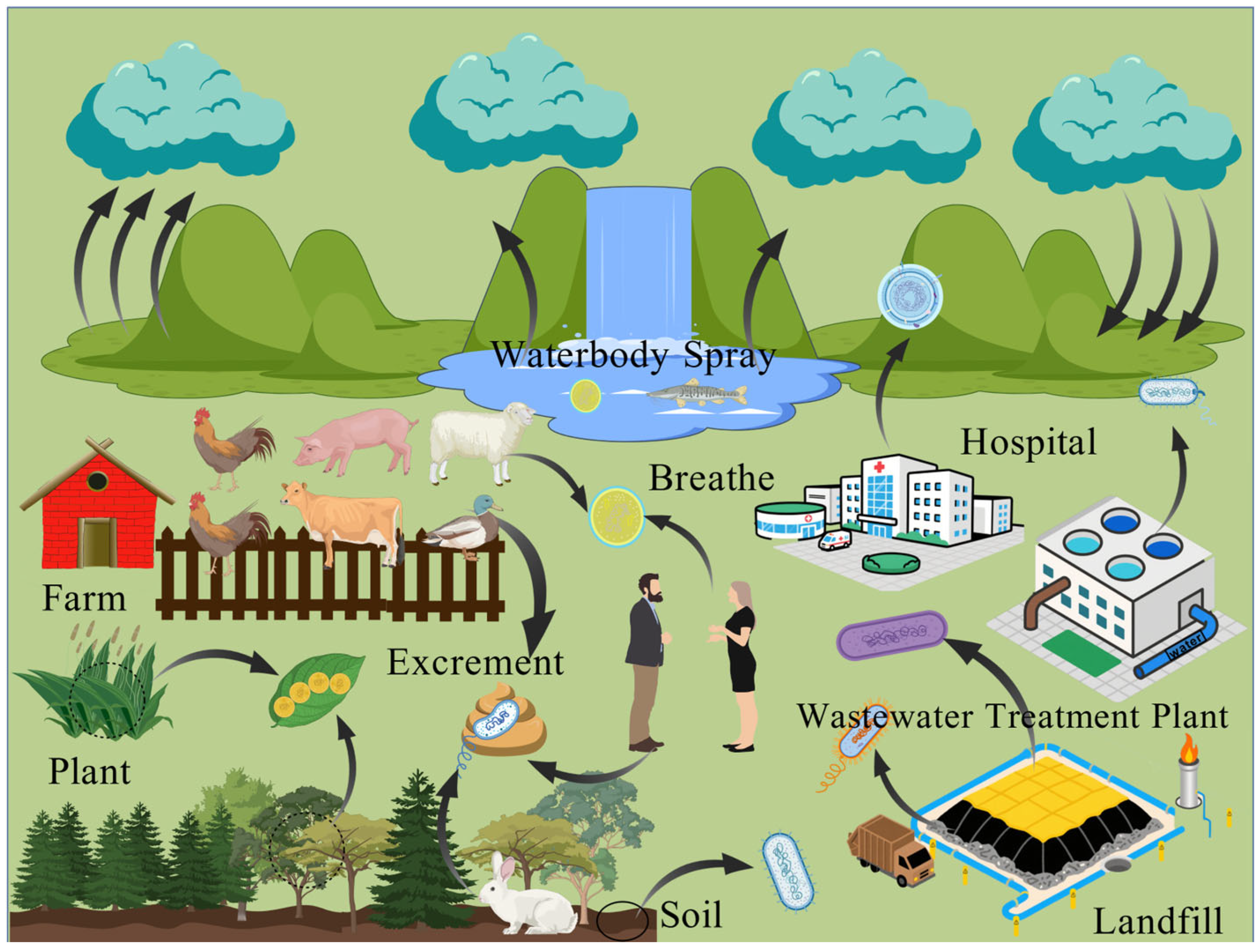
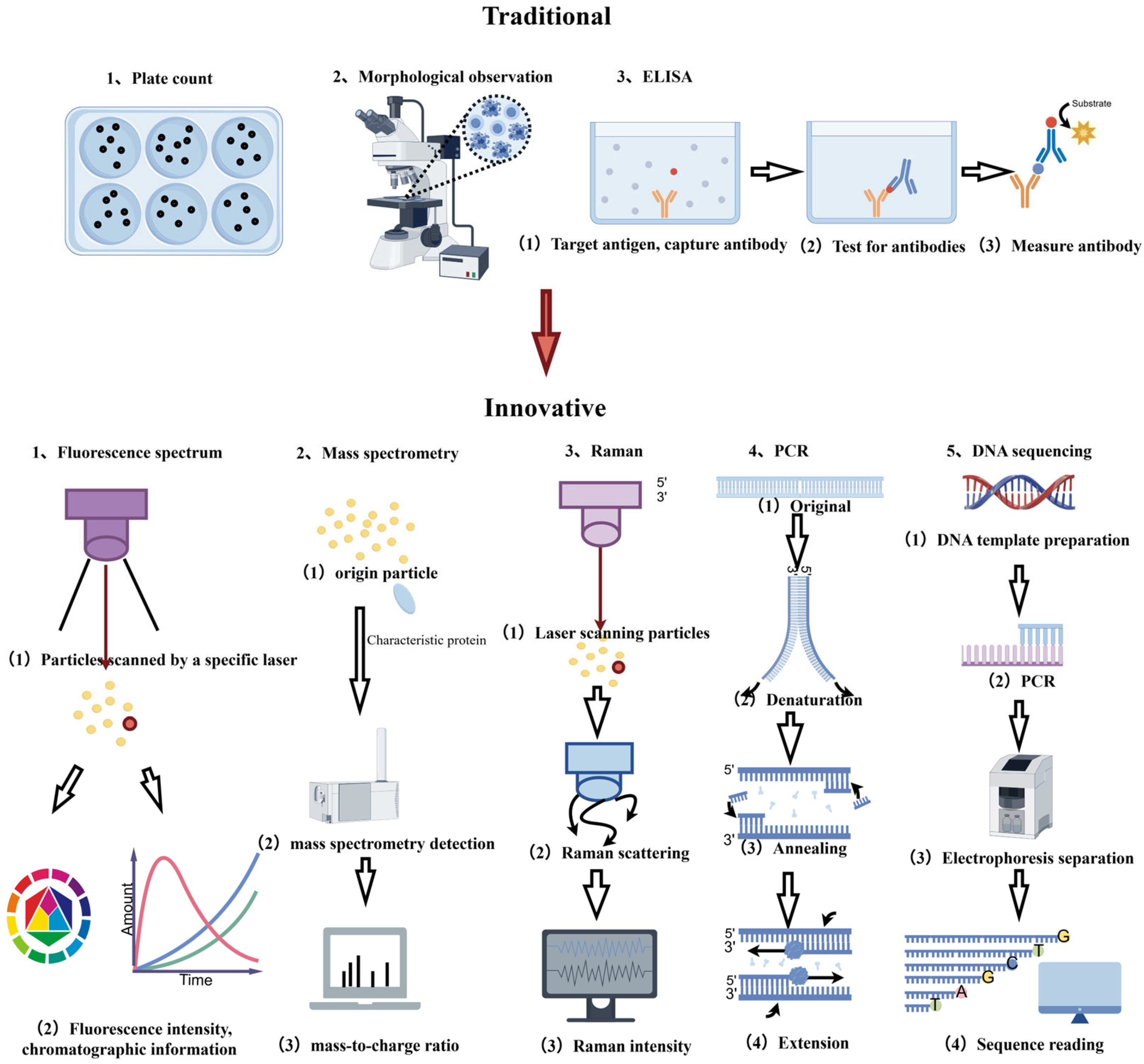
Bioaerosols play significant roles in ecological interactions, climate change, and public health. Their diverse origins contribute to a dynamic atmospheric microbiome with considerable spatiotemporal variability, which are generally categorized as natural and anthropogenic sources. Accurate monitoring and source apportionment are critical for assessing environmental impacts and health risks. This review systematically summarizes the characteristics of bioaerosol sources and emphasizes emission risks from intensive human activities. This study also elucidates source apportionment strategies of bioaerosols and analyzes the technological evolution from traditional culture-based methods to advanced molecular and real-time physicochemical systems. In addition, the shift of bioaerosol monitoring technologies towards high-sensitivity, culture-independent, and online monitoring is emphasized in this review. An outlook on future research priorities is provided in the end. We emphasize the pressing need to establish localized characteristic databases, develop integrated real-time monitoring systems coupling rapid screening with deep biological analysis, and optimize the application of machine learning and AI algorithms to enhance the precision of multi-source contribution modeling in complex environments.
Keywords: bioaerosols; sources; monitoring methods bioaerosols; sources; monitoring methods