Flower-like CoFe-LDH Activated Peroxymonosulfate for Tetracycline Degradation: Efficiency and Mechanism



Highlights
- We successfully constructed a three-dimensional flower-shaped CoFe LDH catalyst.
- The CoFe LDH/PMS system exhibits excellent catalytic degradation performance for tetracycline.
- The catalytic system has good universality and environmental adaptability.
- The main findings emphasize that the CoFe LDH/PMS system can be effectively used to remove antibiotics and has good universality and environmental adaptability.
Abstract
1. Introduction
2. Materials and Methods
2.1. Reagents and Instruments
2.2. Material Preparation and Characterization
2.3. Experimental Method
2.4. Analytical Methods
3. Results and Discussion
3.1. Characterization Analysis of CoFe-LDH
3.1.1. SEM
3.1.2. XRD
3.1.3. FT-IR
3.1.4. XPS
3.2. Removal Efficiency of TC by CoFe-LDH
3.2.1. Adsorption Effect of CoFe-LDH on TC
3.2.2. Degradation Effect of TC by PMS Activated by CoFe-LDH
3.3. Influence Conditions of Reaction System
3.3.1. Material Dosage
3.3.2. PMS Dosage
3.3.3. pH
3.3.4. Inorganic Anions
3.4. Universality of CoFe-LDH/PMS
3.4.1. Degradation Effect of Different Target Pollutants
3.4.2. Degradation Effect in Actual Water
3.5. Analysis of Degradation Mechanism
4. Conclusions
- (1)
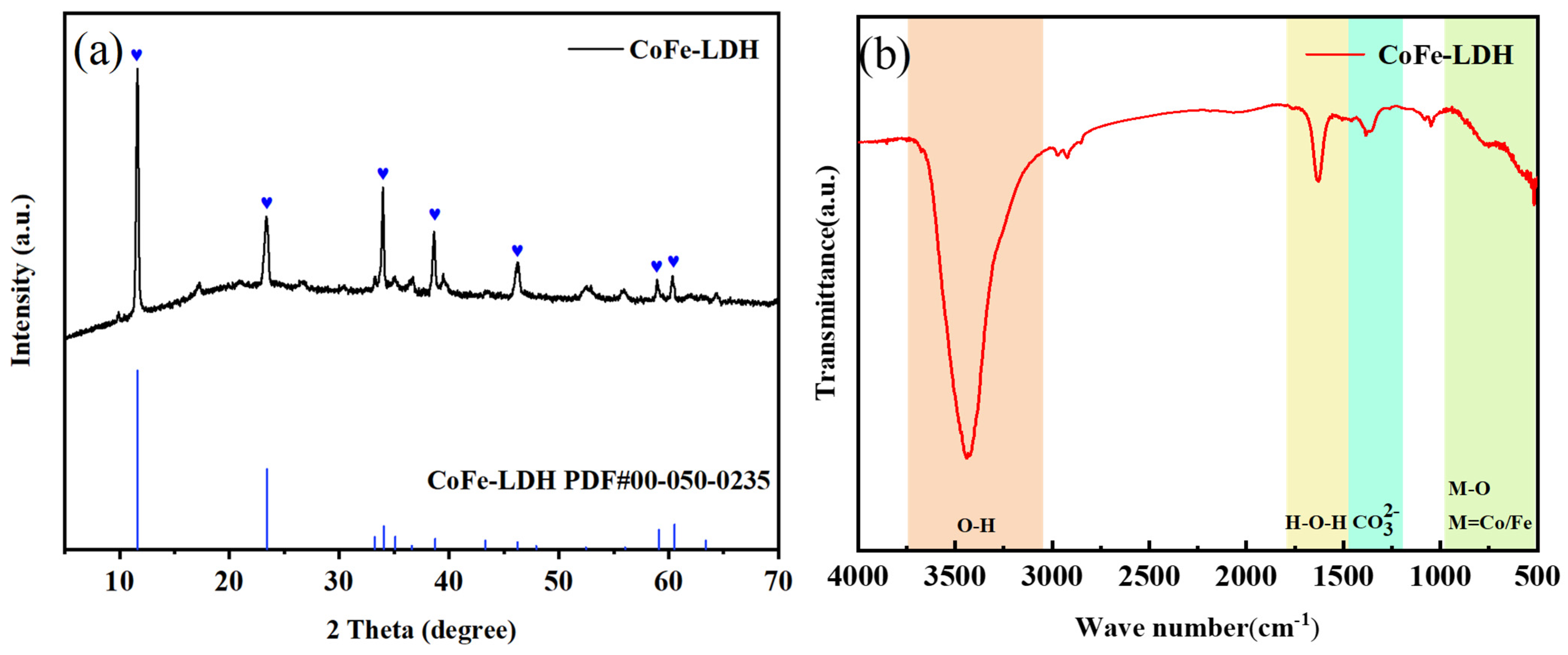
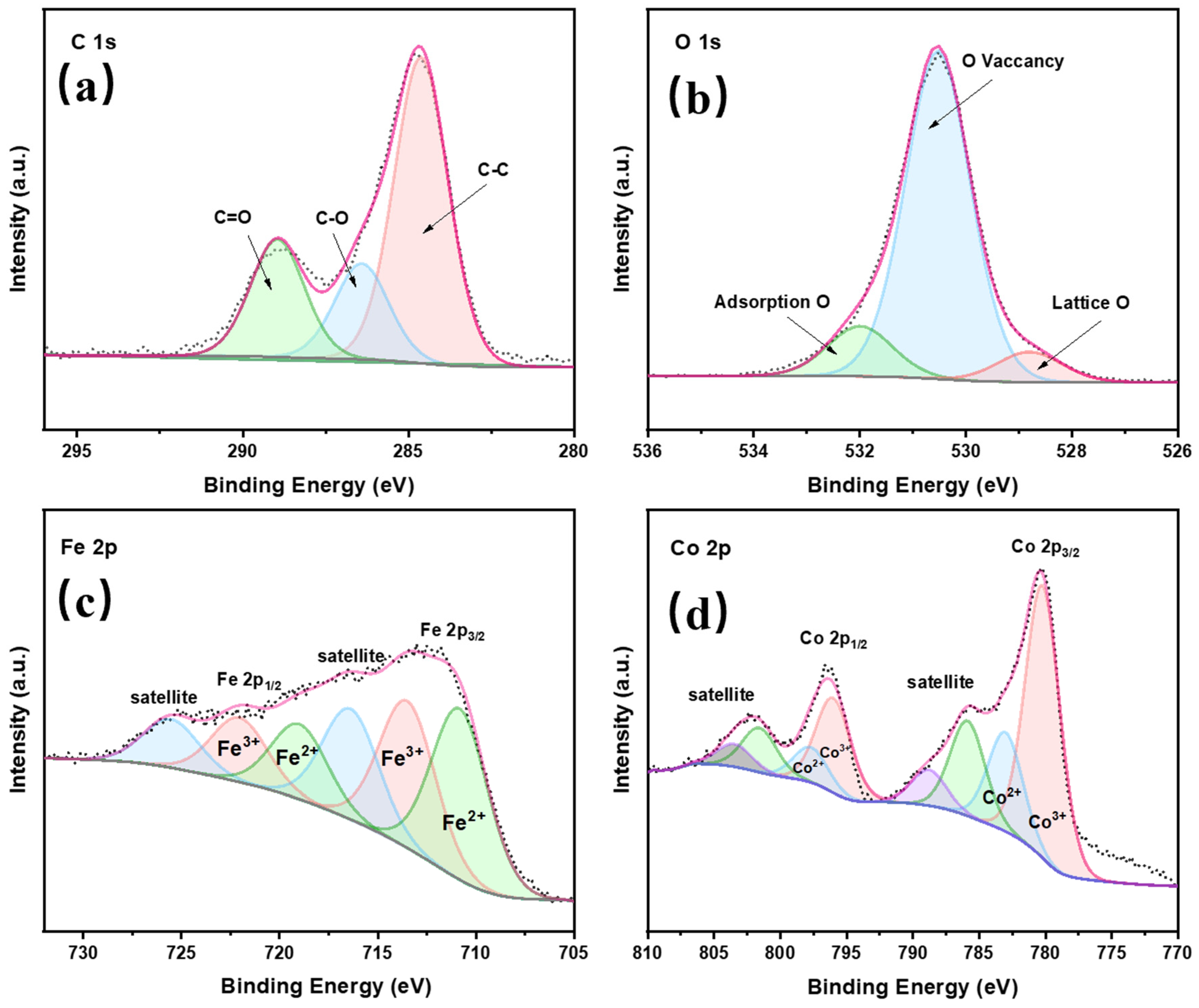
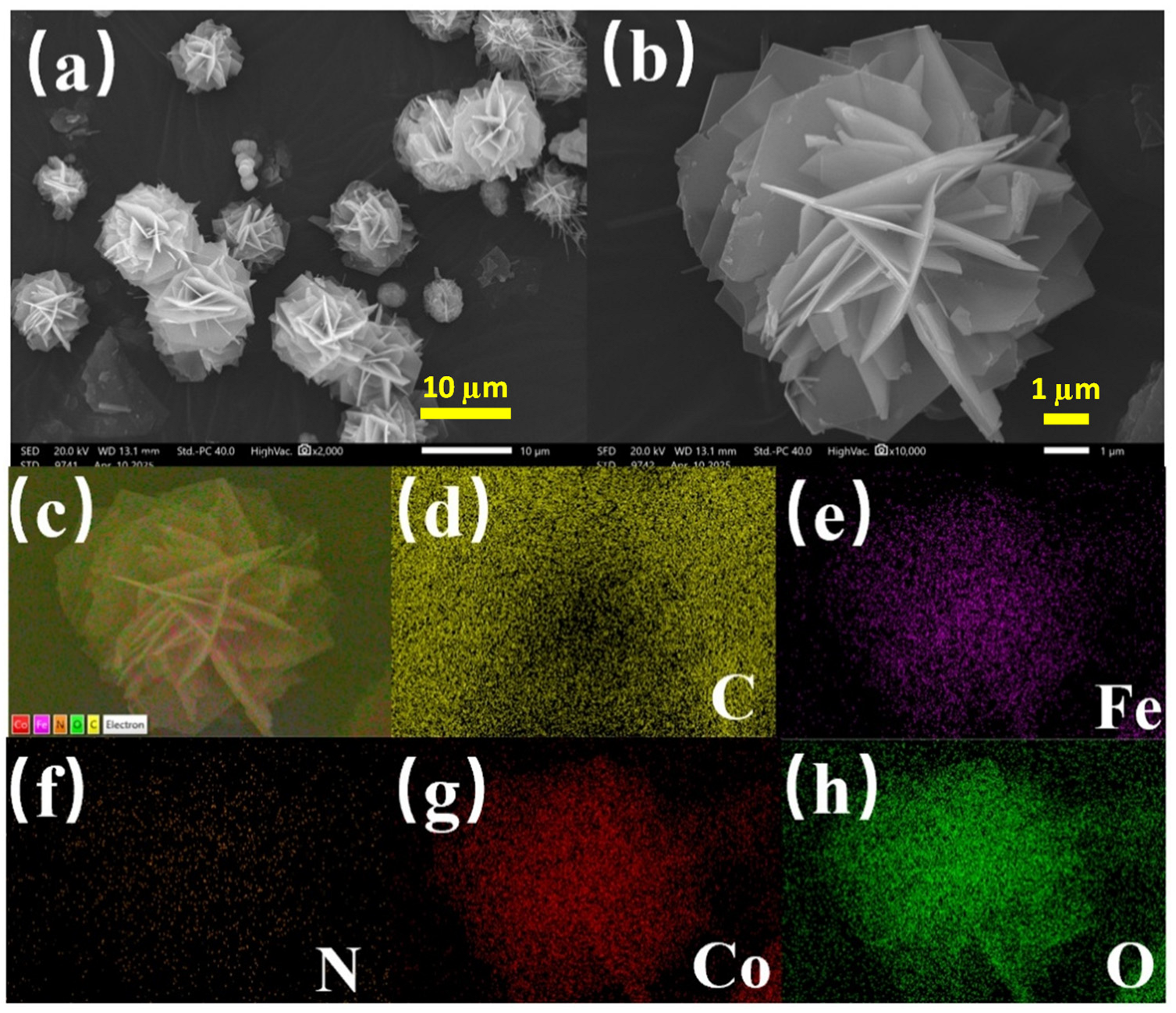
- A three-dimensional flower-like CoFe-LDH material was synthesized via a hydrothermal method. Its crystal structure and chemical composition were confirmed using multiple characterization techniques, including SEM, XRD, FTIR, and XPS.
- (2)
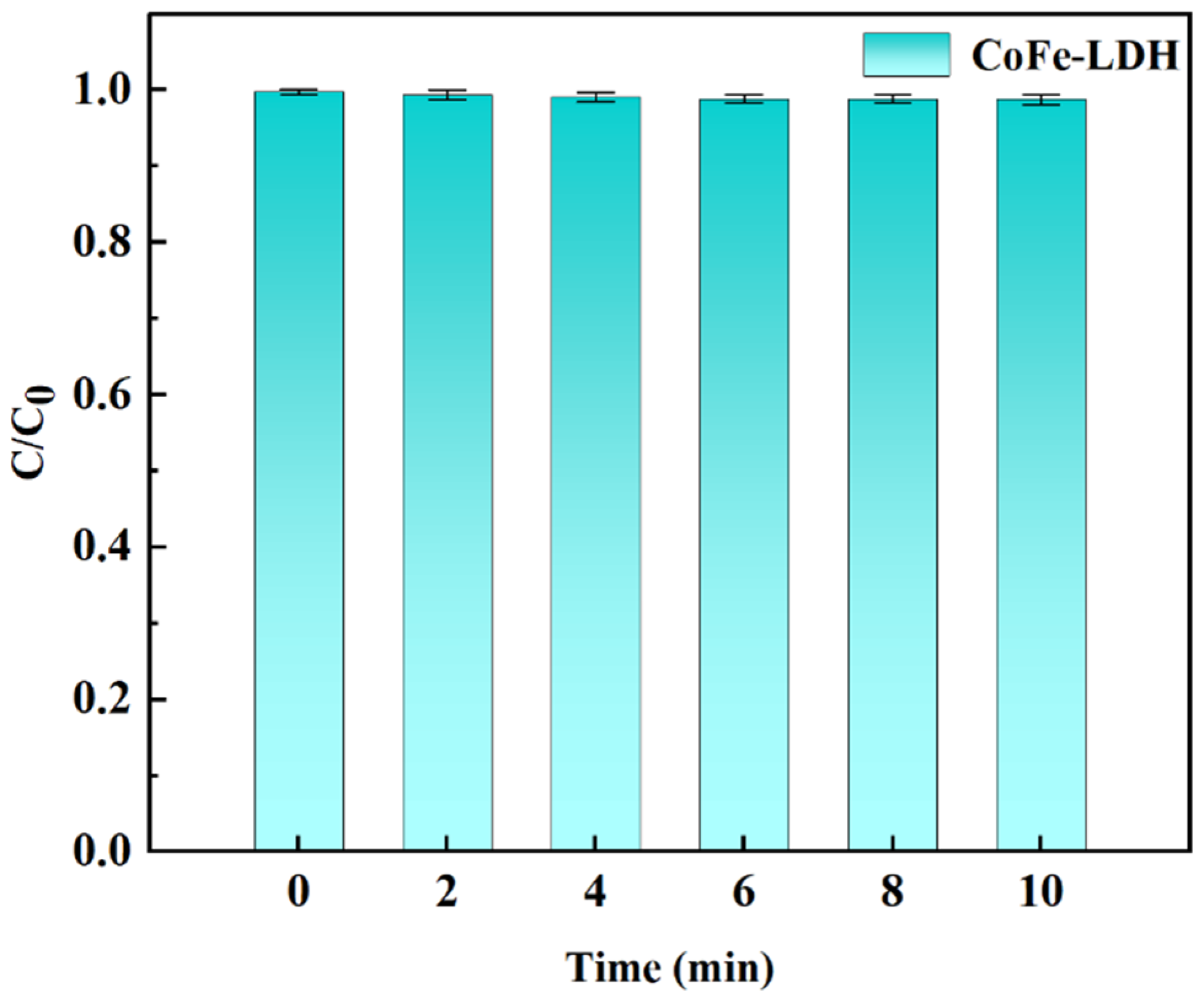
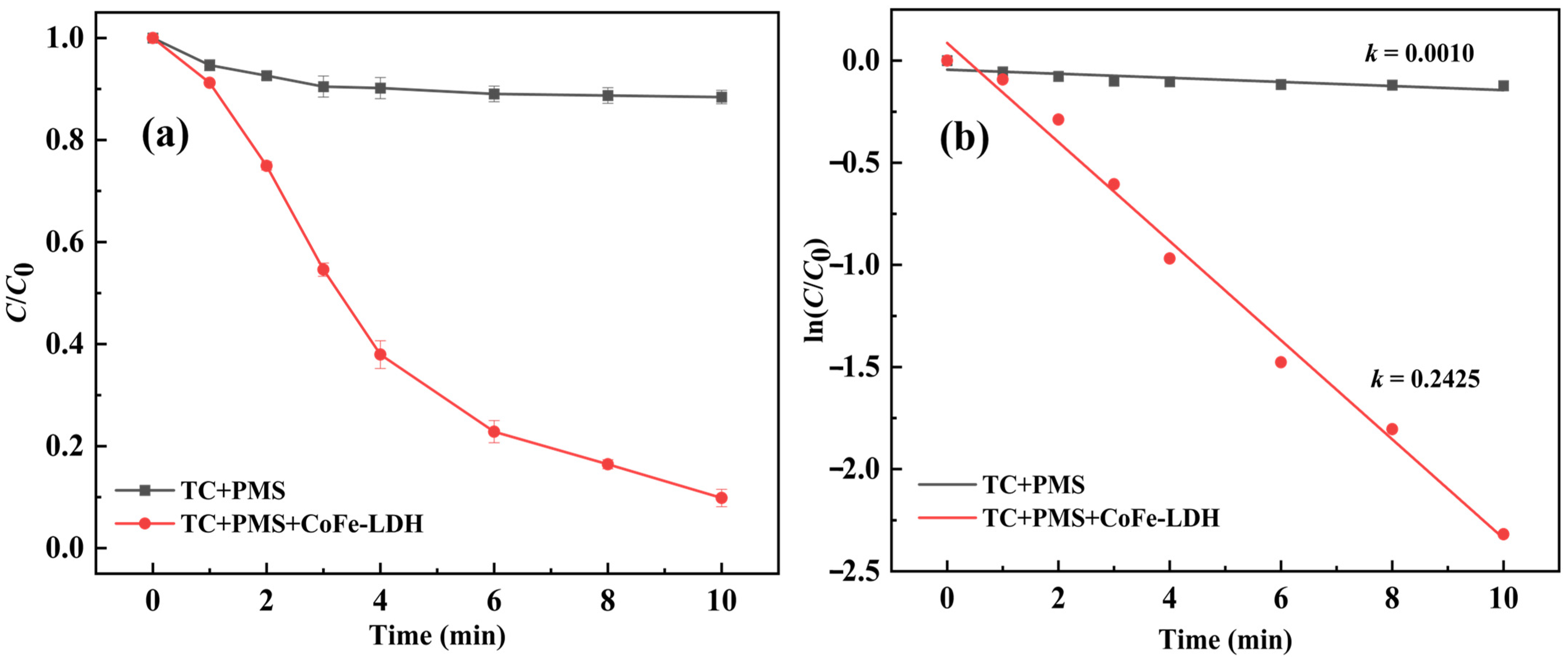
- CoFe-LDH exhibited negligible adsorption capacity for TC. However, upon the addition of PMS, the degradation efficiency of TC reached 90.17% within 10 min. Kinetic analysis revealed that the apparent reaction rate constant for TC degradation in the CoFe-LDH/PMS system was 242 times higher than that in the PMS-alone system.
- (3)
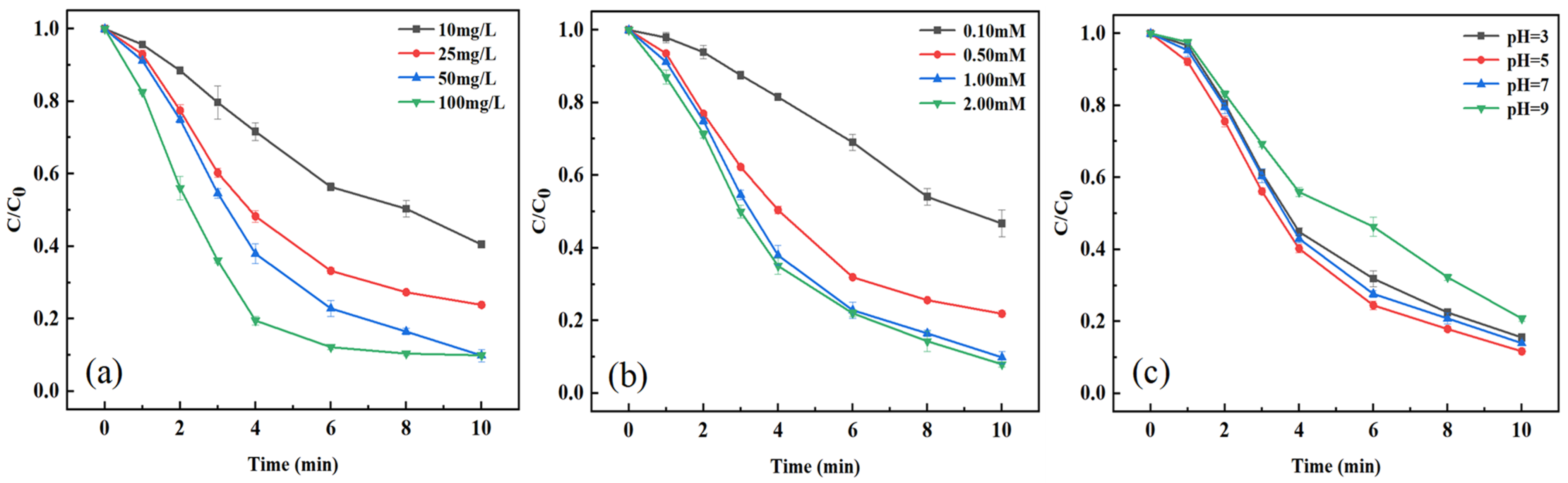
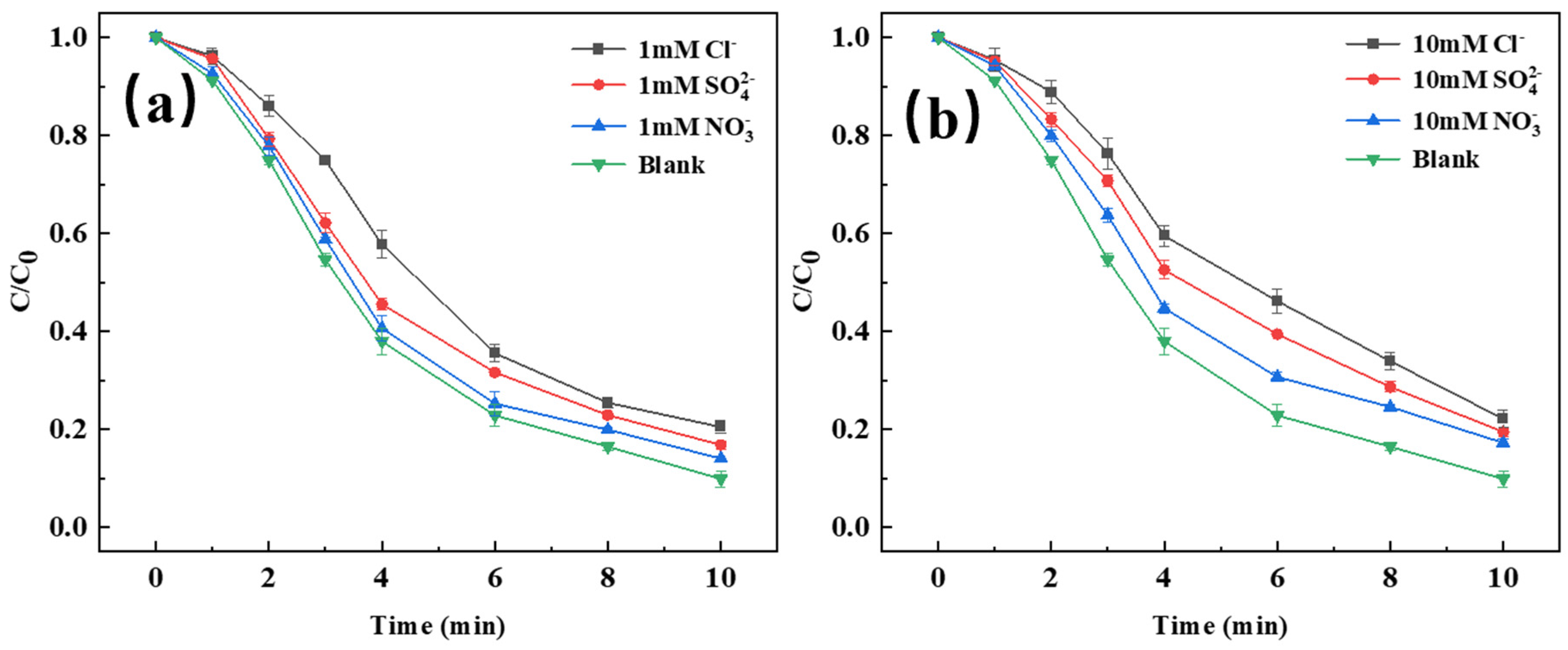
- The CoFe-LDH/PMS system achieved optimal performance under weakly acidic conditions, with the optimal dosages of CoFe-LDH and PMS being 50 mg/L and 1.00 mM, respectively. The presence of interfering anions such as Cl−, , and inhibited the degradation process.
- (4)
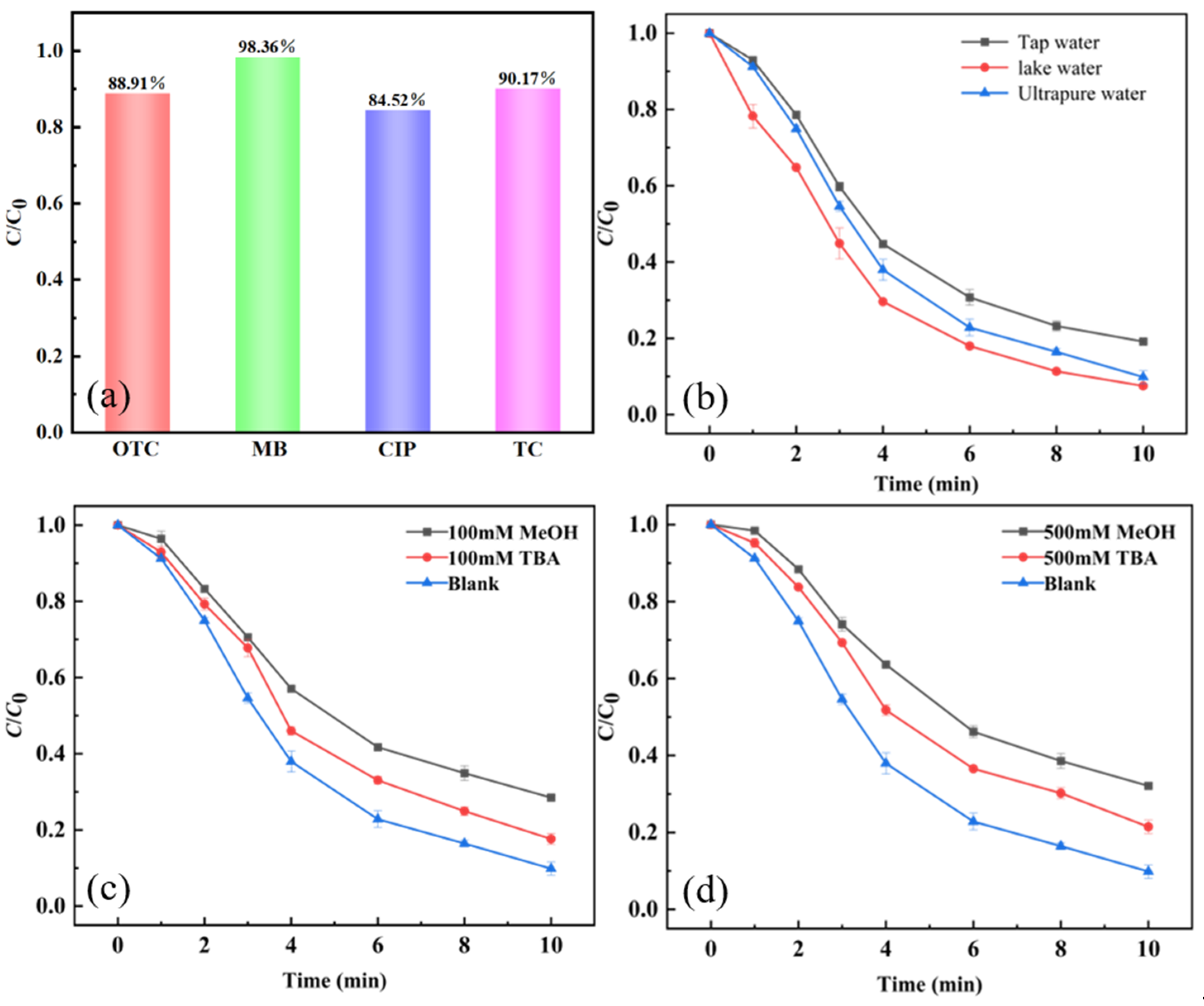
- The CoFe-LDH/PMS system also demonstrated high efficiency in degrading other organic pollutants, including OTC, MB, and CIP. Its performance was minimally affected by matrix interference from lake water and tap water, confirming its broad applicability.
- (5)
- Radical quenching experiments confirmed the involvement of •OH and in the reaction, with playing a more dominant role in TC degradation than •OH.
Author Contributions
Funding
Institutional Review Board Statement
Informed Consent Statement
Data Availability Statement
Acknowledgments
Conflicts of Interest
References
- Chu, K.; Qin, S.; Tian, Z.; Ye, F.; Yang, X.; Gu, L.; Liu, Y.; Zhang, Y.; Sha, Y. Distribution and potential risks of antibiotics in inland lakes in China. Environ. Res. 2026, 288, 123289. [Google Scholar] [CrossRef]
- Shao, J.; Chen, T.; Jiang, L.; Lv, J.; Zhang, J.; Wu, D.; Zhang, F.; Wang, Y.; Jiang, G. Spatial distribution and ecological risk assessment of pharmaceuticals and personal care products across China’s coastal waters. J. Hazard. Mater. 2026, 501, 1140899. [Google Scholar] [CrossRef]
- Wang, C.; Song, Y.; Liang, J.; Wang, Y.; Zhang, D.; Zhao, Z. Antibiotic resistance genes are transferred from manure-contaminated water bodies to the gut microbiota of animals through the food chain. Environ. Pollut. 2024, 363, 125087. [Google Scholar] [CrossRef]
- Chen, K.; Li, J.; Lin, L.; Qin, W.; Gao, Y.; Hu, E.; Jiang, J. Occurrence, fate and control strategies of heavy metals and antibiotics in livestock manure compost land application: A review. Sci. Total Environ. 2024, 957, 177381. [Google Scholar] [CrossRef]
- Amangelsin, Y.; Semenova, Y.; Dadar, M.; Aljofan, M.; Bjørklund, G. The Impact of Tetracycline Pollution on the Aquatic Environment and Removal Strategies. Antibiotics 2023, 12, 440. [Google Scholar] [CrossRef]
- Zhang, J.; Li, W.; Zhang, X.; Wang, X.; Lv, L. Combined applications of UV and chlorine on antibiotic resistance control: A critical review. Environ. Res. 2024, 243, 117884. [Google Scholar] [CrossRef]
- Li, Y.; Zhang, Y.; Wang, D.; Zhao, J.; Yu, H.; Chen, Y.; Yang, J. Effect of antibiotics on diverse aquatic plants in aquatic ecosystems. Aquat. Toxicol. 2025, 281, 107289. [Google Scholar] [CrossRef] [PubMed]
- Kim, M.; Kim, H.; Byun, J.; Yang, E.; Choi, H. Gravity-driven removal of tetracycline from water using a hierarchically porous adsorptive nanofibrous membrane system functionalized with metal-organic framework. Water Res. 2026, 290, 124939. [Google Scholar] [CrossRef] [PubMed]
- Wang, Y.Y.; Du, B.; Wu, G.X. Tetracycline in anaerobic digestion: Microbial inhibition, removal pathways, and conductive material mitigation. J. Hazard. Mater. 2025, 496, 139378. [Google Scholar] [CrossRef] [PubMed]
- Pearson, J.C.; Gillett, E.; Gadri, N.D.; Dionne, B. Tetracyclines, the old and the new: A narrative review. CMI Commun. 2025, 2, 105059. [Google Scholar] [CrossRef]
- Basak, M.; Das, G. Fluorescent Sensors for Tetracycline Detection in Aqueous Medium: A Mini-Review. Chem. Asian J. 2024, 19, e202400406. [Google Scholar] [CrossRef]
- Luo, Y.; Su, R. Removal of tetracycline via ultraviolet-activated peroxyacetic acid: Performance and mechanism. Toxics 2026, 14, 184. [Google Scholar] [CrossRef]
- Khan, Z.U.; Gul, N.S.; Sabahat, S.; Sun, J.Y.; Tahir, K.; Shah, N.S.; Muhammad, N.; Rahim, A.; Imran, M.; Iqbal, J.; et al. Removal of organic pollutants through hydroxyl radical-based advanced oxidation processes. Ecotoxicol. Environ. Saf. 2023, 267, 115564. [Google Scholar] [CrossRef]
- Lee, Y.M.; Lee, G.; Zoh, K.D. Benzophenone-3 degradation via UV/H2O2 and UV/persulfate reactions. J. Hazard. Mater. 2021, 403, 11. [Google Scholar] [CrossRef]
- Kalidhasan, S.; Park, D.-G.; Jin, K.S.; Lee, H.-Y. Engineered polymer–clay–copper oxides catalyst for the oxidation and reduction of organic molecules: Synergy of degradation and instinctive interface stability by polymer self-healing function. Surf. Interfaces 2023, 39, 102934. [Google Scholar] [CrossRef]
- Zhang, P.P.; Yang, Y.Y.; Duan, X.G.; Wang, S.B. Oxidative polymerization versus degradation of organic pollutants in heterogeneous catalytic persulfate chemistry. Water Res. 2024, 255, 121485. [Google Scholar] [CrossRef]
- Peng, H.H.; Xiong, W.P.; Yang, Z.H.; Tong, J.; Xiang, Y.P.; Zhang, Z.F.; Xu, Z.Y. Insights into the mechanism of persulfate activation by hollow MOF-derived carbon: Electron transfer-triggered non-radical oxidization for antibiotic removal. Environ. Sci.-Nano 2024, 11, 216–228. [Google Scholar] [CrossRef]
- Zhou, T.; Shi, C.; Wang, Y.; Wang, X.; Lei, Z.; Liu, X.; Wu, J.; Luo, F.; Wang, L. Progress of metal-loaded biochar-activated persulfate for degradation of emerging organic contaminants. Water Sci. Technol. 2024, 90, 824–843. [Google Scholar] [CrossRef] [PubMed]
- Wang, C.; Huo, Y.; Lu, W.; Shen, X.; Xu, L. A comparative study of sulfite activation using different transition metal ions for the degradation of bisphenol A. J. Environ. Chem. Eng. 2024, 12, 112432. [Google Scholar] [CrossRef]
- Forouzesh, M.; Ebadi, A.; Abedini, F. Thermocatalytic persulfate activation for metronidazole removal in the continuous operation. Sep. Purif. Technol. 2021, 258, 118055. [Google Scholar] [CrossRef]
- Liu, Z.B.; Ren, X.; Duan, X.Y.; Sarmah, A.K.; Zhao, X.S. Remediation of environmentally persistent organic pollutants (POPs) by persulfates oxidation system (PS): A review. Sci. Total Environ. 2023, 863, 160818. [Google Scholar] [CrossRef] [PubMed]
- Luo, Y.; Liu, Z.; Ye, M.; Zhou, Y.; Su, R.; Huang, S.; Chen, Y.; Dai, X. Synergistic enhancement of oxytetracycline hydrochloride removal by UV/ZIF-67 (Co)-activated peroxymonosulfate. Water 2024, 16, 2586. [Google Scholar] [CrossRef]
- Su, R.; Li, Z.; Cheng, F.; Dai, X.; Wang, H.; Luo, Y.; Huang, L. Advances in the degradation of emerging contaminants by persulfate oxidation technology. Water Air Soil Pollut. 2023, 234, 754. [Google Scholar] [CrossRef]
- Qiu, H.; Wang, C.; Jiang, L.; Niu, H.; Wang, X.; Qin, W.; Xu, F.; Hao, L. A microbial-driven persulfate activating-cycling system for in-depth oxytetracycline degradation and bacterial antibiotic resistance control. Water Res. 2025, 275, 123151. [Google Scholar] [CrossRef]
- Nunes, R.F.; Teixeira, A. An overview on surfactants as pollutants of concern: Occurrence, impacts and persulfate-based remediation technologies. Chemosphere 2022, 300, 134507. [Google Scholar] [CrossRef]
- Su, B.; Zhong, Y.; Zhuang, X.; Zhang, L.; Zhang, M.; Chen, J.; Liang, H.; Mu, Y.; Xu, T.; Chen, Y.; et al. Degradation of tetracycline hydrochloride by cobalt-doped biochar-activated peroxymonosulfate. Water 2025, 17, 1730. [Google Scholar] [CrossRef]
- Su, R.; Yao, H.; Wang, H.; Chen, Y.; Huang, S.; Luo, Y.; Ma, X. Metal-organic frameworks for removing emerging organic pollutants: A review. J. Water Process Eng. 2025, 70, 107096. [Google Scholar] [CrossRef]
- Su, R.; Wang, Z.; Liu, Z.; Chen, Y.; Wang, H.; Dai, X.; Ge, X.; Luo, Y. Single atoms in environmental catalysis: Breakthroughs in synthesis and application. J. Water Process Eng. 2024, 68, 106319. [Google Scholar] [CrossRef]
- Eghbali, P.; Hassani, A.; Waclawek, S.; Lin, K.Y.A.; Sayyar, Z.; Ghanbari, F. Recent advances in design and engineering of MXene-based catalysts for photocatalysis and persulfate-based advanced oxidation processes: A state-of-the-art review. Chem. Eng. J. 2024, 480, 147920. [Google Scholar] [CrossRef]
- Rajabi, S.; Nasiri, A.; Hashemi, M. Enhanced activation of persulfate by CuCoFe2O4@MC/AC as a novel nanomagnetic heterogeneous catalyst with ultrasonic for metronidazole degradation. Chemosphere 2022, 286, 131872. [Google Scholar] [CrossRef]
- Zhu, H.; Ma, H.; Yu, J.; Zhao, Z.; Xu, L.; Li, X.; Rao, Y.; Lai, B.; Pu, S. Encapsulating MnFe LDH in Biochar Tunes Persulfate Activation from Radical to Nonradical Pathway: Significant Role of Electron Transfer. ACS EST Water 2023, 3, 3343–3356. [Google Scholar] [CrossRef]
- Hu, M.; Zhao, D.; Yan, X.; Wang, Y.; Zhang, J.; Hu, X.; Zhou, M.; Liu, P. Enhanced peroxymonosulfate activation for antibiotic and heavy metal removal using ZIF-67-derived magnetic Ni/Co-LDH@NC: Bimetallic electronic synergy and oxygen vacancy effects. Appl. Catal. B Environ. Energy 2025, 362, 124753. [Google Scholar] [CrossRef]
- Jawad, A.; Lang, J.; Liao, Z.; Khan, A.; Ifthikar, J.; Lv, Z.; Long, S.; Chen, Z.; Chen, Z. Activation of persulfate by CuOx@Co-LDH: A novel heterogeneous system for contaminant degradation with broad pH window and controlled leaching. Chem. Eng. J. 2018, 335, 548–559. [Google Scholar] [CrossRef]
- Kim, M.; Oh, I.; Choi, H.; Jang, W.; Song, J.; Kim, C.S.; Yoo, J.-W.; Cho, S. A solution-based route to compositionally complex metal oxide structures using high-entropy layered double hydroxides. Cell Rep. Phys. Sci. 2022, 3, 100702. [Google Scholar] [CrossRef]
- Wang, Q.; Zuo, W.; Tian, Y.; Kong, L.; Cai, G.; Zhang, H.; Li, L.; Zhang, J. Functionally-designed floatable amino-modified ZnLa layered double hydroxides/cellulose acetate beads for tetracycline removal: Performance and mechanism. Carbohydr. Polym. 2023, 311, 120752. [Google Scholar] [CrossRef] [PubMed]
- Fui, H.; Gao, S.; Ma, X.; Huang, Y. Facile fabrication of CoAl-LDH nanosheets for efficient rhodamine B degradation via peroxymonosulfate activation. RSC Adv. 2023, 13, 29695–29705. [Google Scholar] [CrossRef]
- Matsuda, K.; Iio, N.; Kawashimo, M.; Okuda, A.; Fukuzaki, R.; Tarutani, N.; Katagiri, K.; Inumaru, K. Comprehensive Analysis of the Chemical and Structural Transformations of Mg-Al-CO3 Layered Double Hydroxides with Different Mg/Al Ratios at Elevated Temperatures. Inorg. Chem. 2023, 62, 17276–17287. [Google Scholar] [CrossRef]
- Jiang, S.; Wu, M.; Xu, Z.; Zhao, J.; Liu, R. Controllable construction of NiFe MOF/LDH heterojunction with interfacial charge transfer as efficient oxygen evolution electrocatalyst. Colloids Surf. A Physicochem. Eng. Asp. 2023, 677, 132400. [Google Scholar] [CrossRef]
- Deng, Q.; Zhang, X.; Chang, L.; Chai, H.; Huang, Y. The MOF/LDH derived heterostructured Co3O4/MnCo2O4 composite for enhanced degradation of levofloxacin by peroxymonosulfate activation. Sep. Purif. Technol. 2022, 294, 121182. [Google Scholar] [CrossRef]
- Sharma, R.; Arizaga, G.G.C.; Saini, A.K.; Shandilya, P. Layered double hydroxide as multifunctional materials for environmental remediation: From chemical pollutants to microorganisms. Sustain. Mater. Technol. 2021, 29, e00319. [Google Scholar] [CrossRef]
- Li, D.; Ali, J.; Shahzad, A.; Abdelnasser Gendy, E.; Nie, H.; Jiang, W.; Xiao, H.; Chen, Z.; Wang, S. Persulfate coupled with Cu2+/LDH-MoS4: A novel process for the efficient atrazine abatement, mechanism and degradation pathway. Chem. Eng. J. 2022, 436, 134933. [Google Scholar] [CrossRef]
- Wang, S.; Yuan, F.; Yang, G.; Luo, S.; Chen, M.; Fan, T.; Ma, J. In situ construction of CoFe-LDH by regulating the Co/Fe molar ratio for promoting oxygen evolution reaction. Mol. Catal. 2022, 525, 112339. [Google Scholar]
- Zhang, J.; Ma, Y.; Zhang, W.; Huang, X.; Wang, X.; Huang, Y.; Zhang, P. CuBi2O4/calcined ZnAlBi-LDHs heterojunction: Simultaneous removal of Cr(VI) and tetracycline through effective adsorption and photocatalytic redox. J. Clean. Prod. 2022, 365, 132810. [Google Scholar] [CrossRef]
- Liu, L.; Hao, L.; Ma, H.; Su, M.; Liu, Z.; Zhang, Y. Hollow prismatic Mo-doped CoFe layered double hydroxides derived from metal-organic compounds for boosting oxygen evolution reaction. J. Alloys Compd. 2025, 1038, 182859. [Google Scholar] [CrossRef]
- Lv, J.; Liu, P.; Li, R.; Wang, L.; Zhang, K.; Zhou, P.; Huang, X.; Wang, G. Constructing accelerated charge transfer channels along V-Co-Fe via introduction of V into CoFe-layered double hydroxides for overall water splitting. Appl. Catal. B-Environ. 2021, 298, 120587. [Google Scholar] [CrossRef]
- Amin, R.M.; Taha, M.; Moaty, S.A.A.; El-Ela, F.I.A.; Nassar, H.F.; GadelHak, Y.; Mahmoud, R.K. Gamma radiation as a green method to enhance the dielectric behaviour, magnetization, antibacterial activity and dye removal capacity of Co-Fe LDH nanosheets. RSC Adv. 2019, 9, 32544–32561. [Google Scholar] [CrossRef]
- Yu, S.; Wang, X.; Liu, Y.; Chen, Z.; Wu, Y.; Liu, Y.; Pang, H.; Song, G.; Chen, J.; Wang, X. Efficient removal of uranium(VI) by layered double hydroxides supported nanoscale zero-valent iron: A combined experimental and spectroscopic studies. Chem. Eng. J. 2019, 365, 51–59. [Google Scholar] [CrossRef]
- Qiu, X.; Zhao, Y.; Jia, Z.; Li, C.; Jin, R.; Mutabazi, E. Fe and Zn co-doped carbon nanoparticles as peroxymonosulfate activator for efficient 2, 4-dichorophenol degradation. Environ. Res. 2024, 240, 117313. [Google Scholar] [CrossRef]
- Hu, P.; Long, M. Cobalt-catalyzed sulfate radical-based advanced oxidation: A review on heterogeneous catalysts and applications. Appl. Catal. B Environ. Int. J. Devoted Catal. Sci. Its Appl. 2016, 181, 103–117. [Google Scholar] [CrossRef]
- Zhu, H.; Yang, B.; Yang, J.; Yuan, Y.; Zhang, J. Persulfate-enhanced degradation of ciprofloxacin with SiC/g-C3N4 photocatalyst under visible light irradiation. Chemosphere 2021, 276, 130217. [Google Scholar] [CrossRef]
- Luo, Y.; Su, R.; Yao, H.; Zhang, A.; Xiang, S.; Huang, L. Degradation of trimethoprim by sulfate radical-based advanced oxidation processes: Kinetics, mechanisms, and effects of natural water matrices. Environ. Sci. Pollut. Res. 2021, 28, 62572–62582. [Google Scholar] [CrossRef] [PubMed]
- Wang, J.; Wang, S. Effect of inorganic anions on the performance of advanced oxidation processes for degradation of organic contaminants. Chem. Eng. J. 2021, 411, 128392. [Google Scholar] [CrossRef]
- Wang, J.; Wang, S. Activation of persulfate (PS) and peroxymonosulfate (PMS) and application for the degradation of emerging contaminants. Chem. Eng. J. 2018, 334, 1502–1517. [Google Scholar] [CrossRef]
- Zhong, H.; Ji, X.; Yang, C.; Tang, C.; Hu, X.; Cai, J.; Yin, Q.; Wang, J.; Hu, X.; Tan, X. Z-Scheme Heterojunction α-Fe2O3/Tubular g-C3N4 with C Defects for Photocatalytic Degradation of Microcystin-LR in Water: Generation and Effect of Critical Species 1O2. ACS Catal. 2024, 14, 6272–6291. [Google Scholar] [CrossRef]
- Wang, Y.; Cao, J.; Yang, Z.; Xiong, W.; Xu, Z.; Song, P.; Jia, M.; Sun, S.; Zhang, Y.; Li, W. Fabricating iron-cobalt layered double hydroxide derived from metal-organic framework for the activation of peroxymonosulfate towards tetracycline degradation. J. Solid State Chem. 2021, 294, 121857. [Google Scholar] [CrossRef]




Disclaimer/Publisher’s Note: The statements, opinions and data contained in all publications are solely those of the individual author(s) and contributor(s) and not of MDPI and/or the editor(s). MDPI and/or the editor(s) disclaim responsibility for any injury to people or property resulting from any ideas, methods, instructions or products referred to in the content. |
© 2026 by the authors. Licensee MDPI, Basel, Switzerland. This article is an open access article distributed under the terms and conditions of the Creative Commons Attribution (CC BY) license.
Share and Cite
Luo, Y.; Zhou, Y.; Xu, T.; Su, R.; Ma, X.; Yan, W. Flower-like CoFe-LDH Activated Peroxymonosulfate for Tetracycline Degradation: Efficiency and Mechanism. Toxics 2026, 14, 389. https://doi.org/10.3390/toxics14050389
Luo Y, Zhou Y, Xu T, Su R, Ma X, Yan W. Flower-like CoFe-LDH Activated Peroxymonosulfate for Tetracycline Degradation: Efficiency and Mechanism. Toxics. 2026; 14(5):389. https://doi.org/10.3390/toxics14050389
Chicago/Turabian StyleLuo, Yiting, Yihui Zhou, Tao Xu, Rongkui Su, Xiancheng Ma, and Wende Yan. 2026. "Flower-like CoFe-LDH Activated Peroxymonosulfate for Tetracycline Degradation: Efficiency and Mechanism" Toxics 14, no. 5: 389. https://doi.org/10.3390/toxics14050389
APA StyleLuo, Y., Zhou, Y., Xu, T., Su, R., Ma, X., & Yan, W. (2026). Flower-like CoFe-LDH Activated Peroxymonosulfate for Tetracycline Degradation: Efficiency and Mechanism. Toxics, 14(5), 389. https://doi.org/10.3390/toxics14050389