Exposure to Urinary and Dust Parabens: Compound-Specific Risks for Pediatric Respiratory Allergic Phenotypes
 , ,
, ,  ,
, 

Highlights
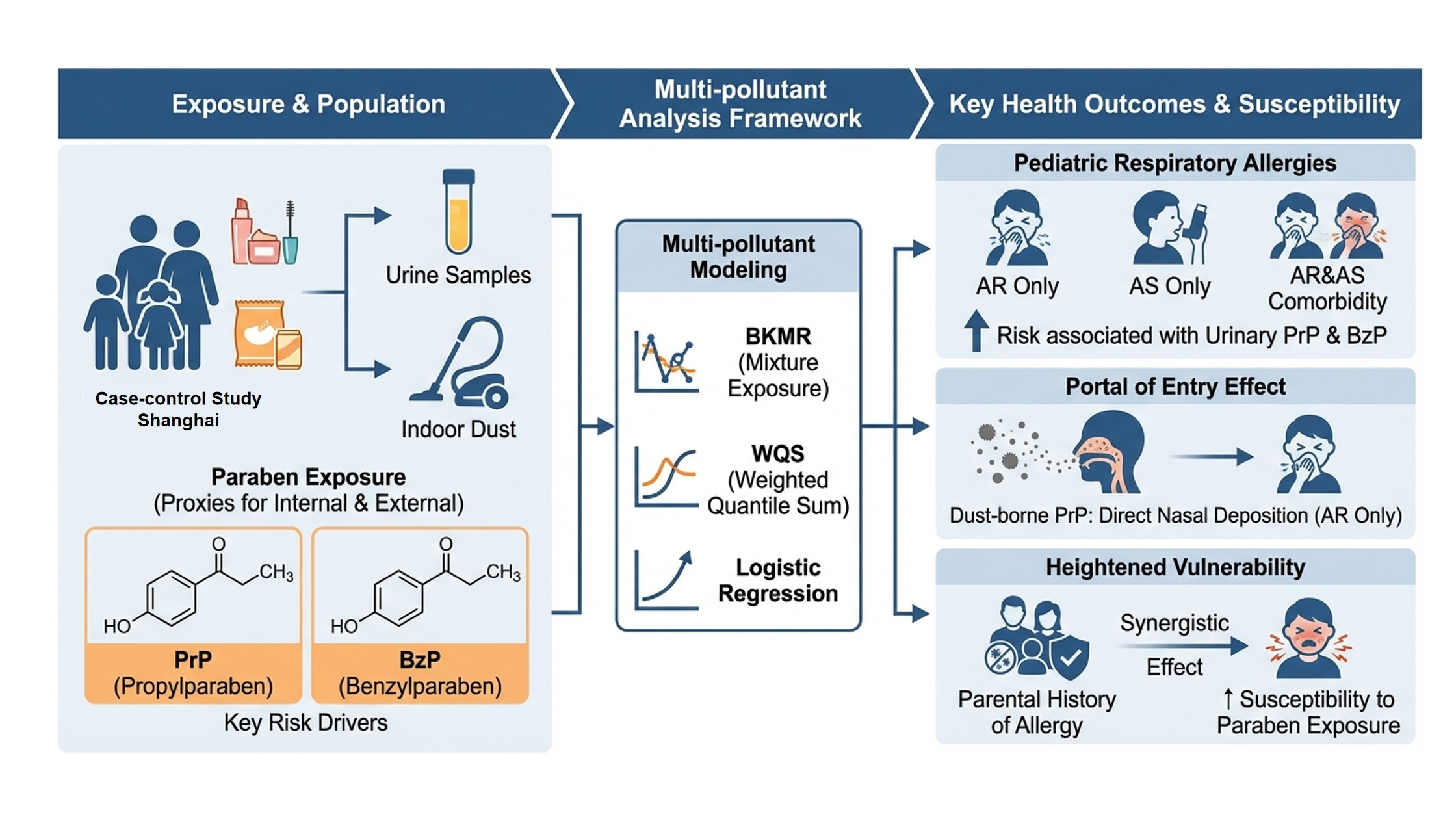
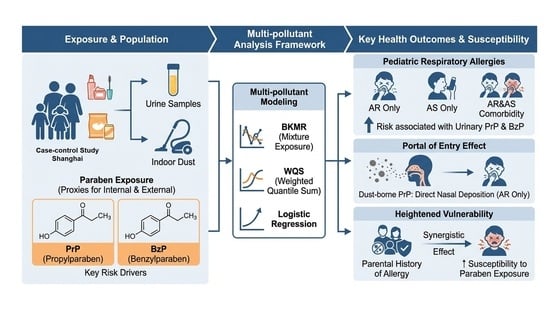
- Propylparaben(PrP) was the most abundant compound detected in both pediatric urine and indoor dust samples.
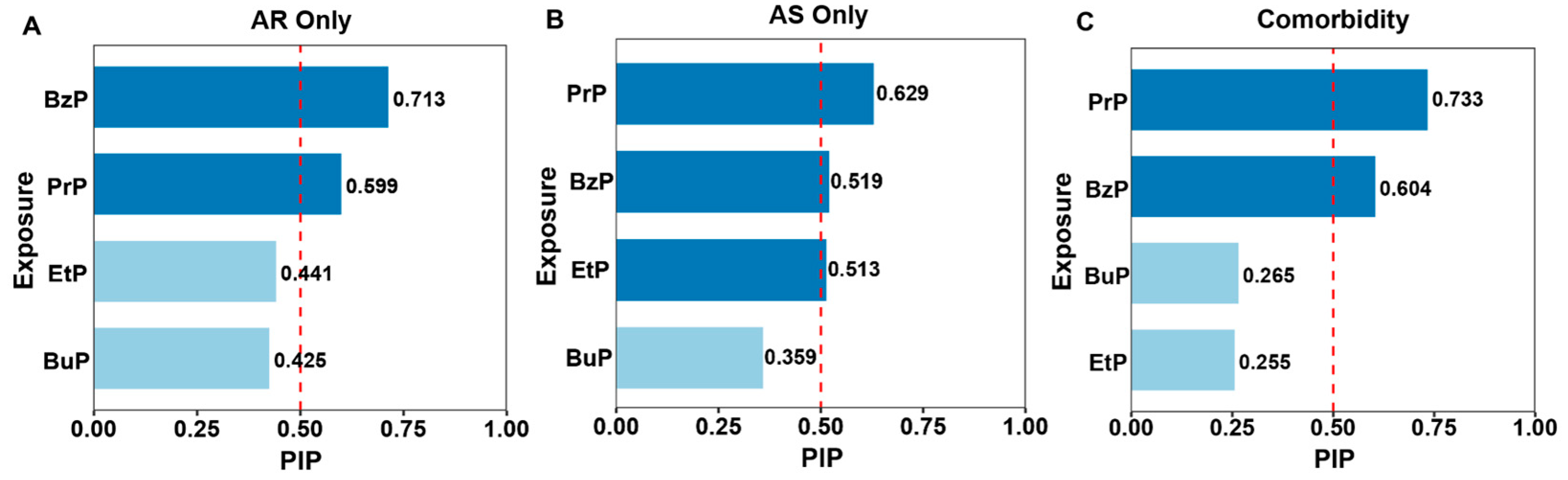
- Urinary PrP and benzylparaben(BzP) were primary drivers of allergic risks, while dust-borne PrP was specifically associated with allergic rhinitis.
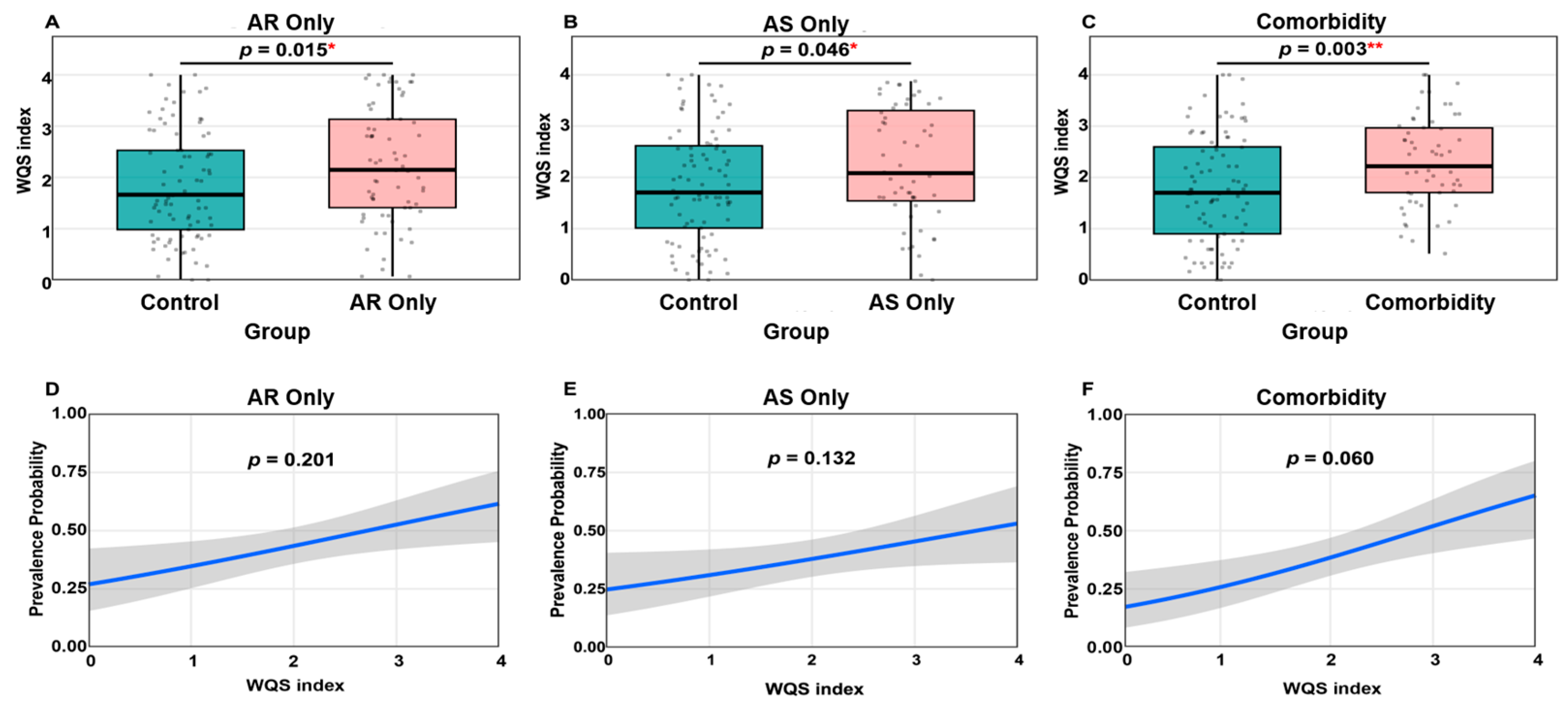
- Mixture analyses identified the combined risks of specific paraben analogs, which were further modified by a parental history of allergy.
- The findings highlight that multi-media monitoring, including both indoor dust and urine, is essential for a comprehensive assessment of paraben exposure and its associated allergic risks in children.
Abstract
1. Introduction
2. Materials and Methods
2.1. Study Subjects
2.2. Data and Sample Collection
2.3. Chemical Analysis
2.3.1. Sample Preparation
2.3.2. Instrumental Analysis
2.3.3. Quality Assurance and Quality Control (QA/QC)
2.4. Statistical Analysis
3. Results
3.1. Demographics and Household Characteristics
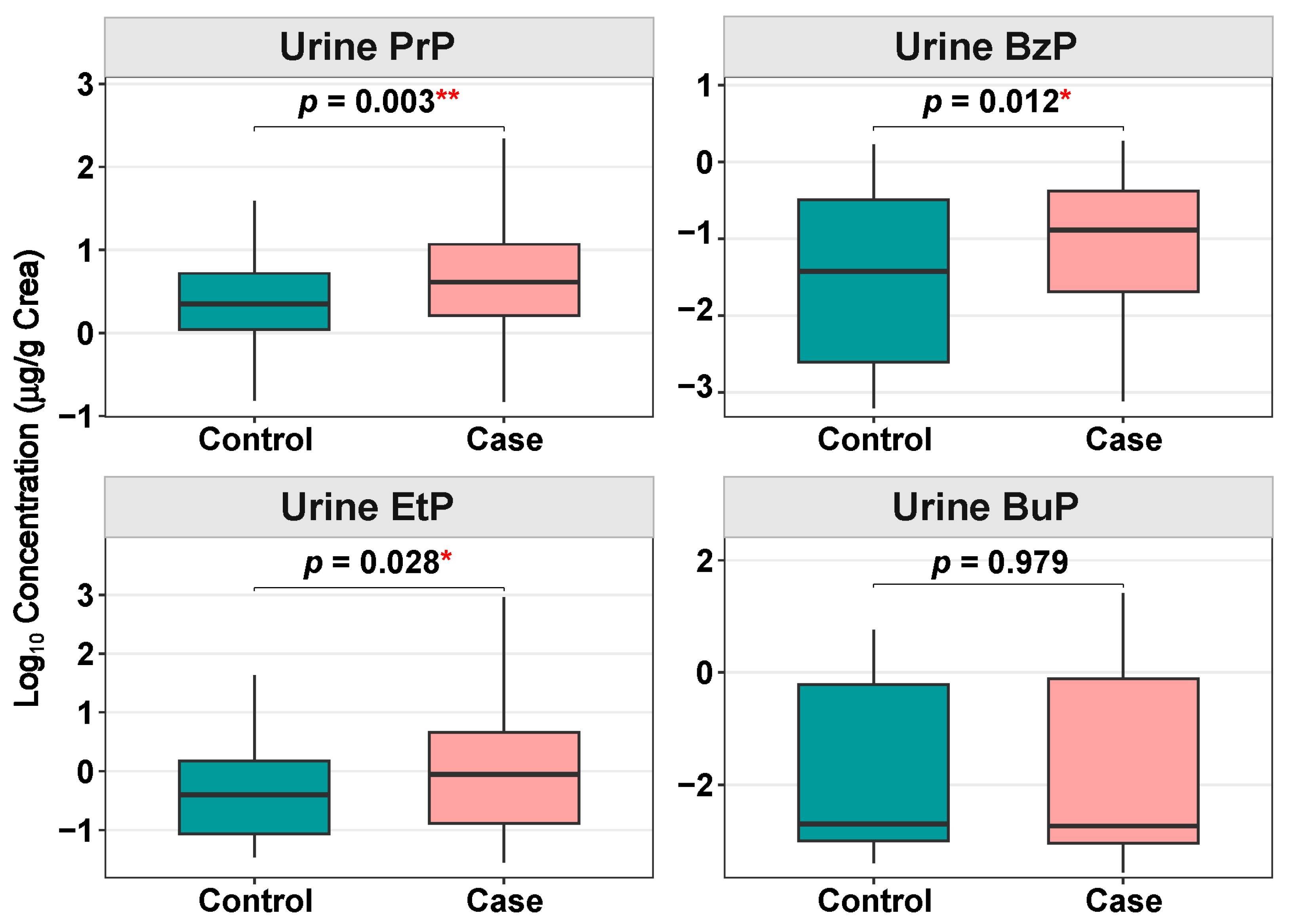
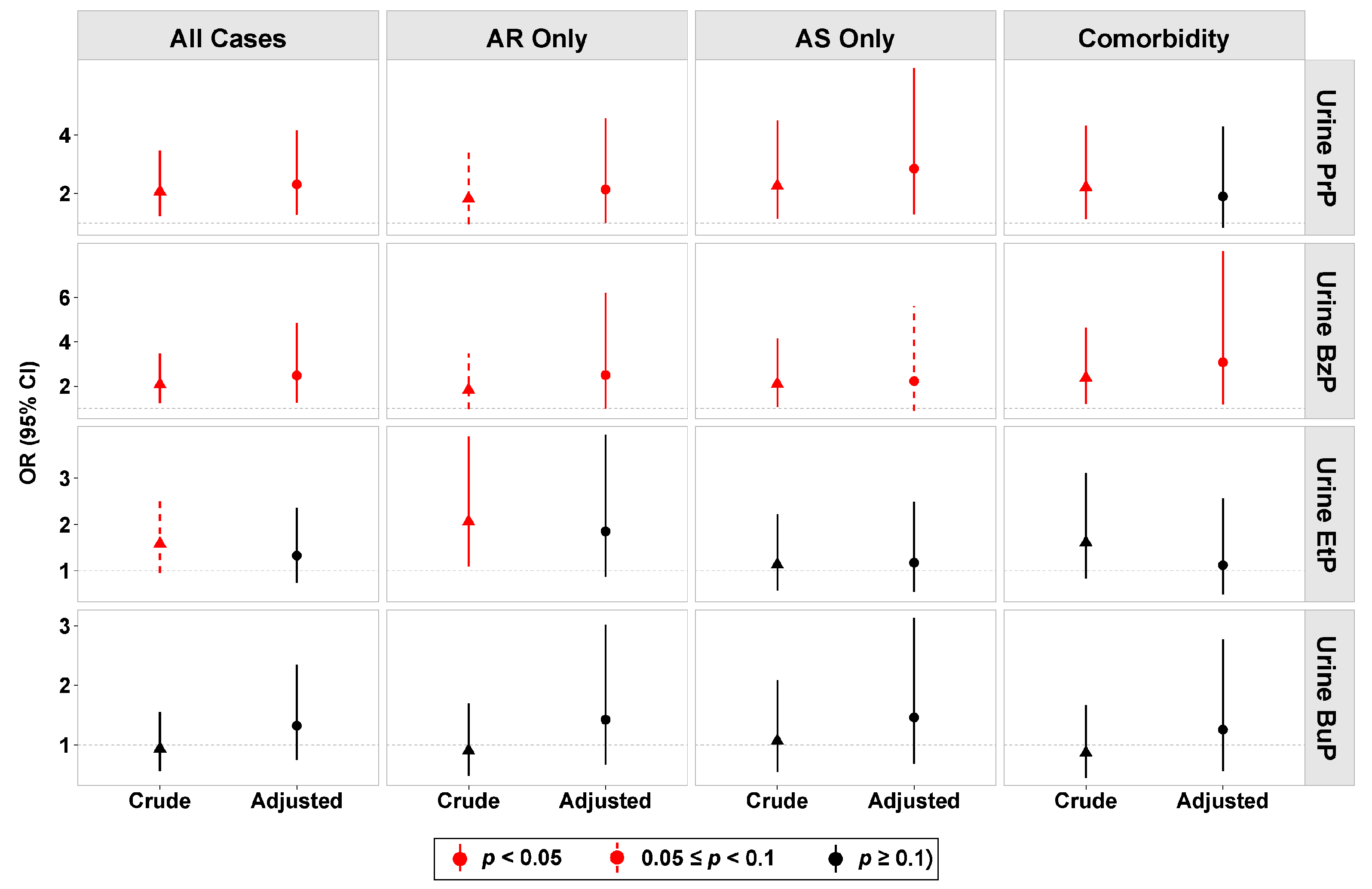
3.2. Urine Paraben Compounds and Associations with Respiratory Allergic Phenotypes
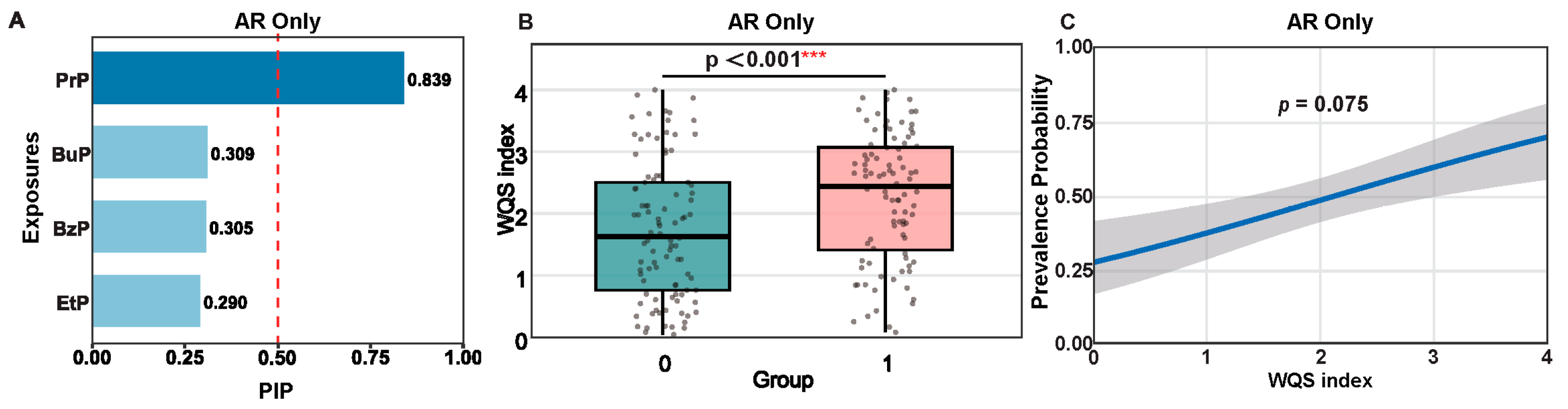
3.3. Urine Paraben Mixture and Associations with Respiratory Allergic Phenotypes
3.4. Dust Parabens and Association with Respiratory Allergic Phenotypes
3.5. Interaction Between Paraben Exposure and Parental History of Allergy
4. Discussion
5. Conclusions
Supplementary Materials
Author Contributions
Funding
Institutional Review Board Statement
Informed Consent Statement
Data Availability Statement
Conflicts of Interest
Abbreviations
| LOD | Limits of detection |
| LOQ | Limits of quantification |
| DR | Detection rate |
| AR | Allergic rhinitis |
| AS | Asthma |
| AR&AS | Allergic rhinitis & Asthma |
| PCPs | Personal care products |
| EDCs | Endocrine-disrupting chemicals |
| PrP | Propylparaben |
| BzP | Butylparaben |
| EtP | Ethylparaben |
| BuP | Benzylparaben |
| ISAAC | International Study of Asthma and Allergies in Childhood |
| UAD | United Airway Disease |
| BKMR | Bayesian Kernel Machine Regression |
| WQS | Weighted Quantile Sum |
| PIP | Posterior Inclusion Probability |
References
- Jackson-Browne, M.S.; Henderson, N.; Patti, M.; Spanier, A.; Braun, J.M. The impact of early-life exposure to antimicrobials on asthma and eczema risk in children. Curr. Environ. Health Rep. 2019, 6, 214–224. [Google Scholar] [CrossRef]
- Yilmaz, B.; Terekeci, H.; Sandal, S.; Kelestimur, F. Endocrine disrupting chemicals: Exposure, effects on human health, mechanism of action, models for testing and strategies for prevention. Rev. Endocr. Metab. Disord. 2020, 21, 127–147. [Google Scholar] [CrossRef]
- Gore, A.C.; Chappell, V.A.; Fenton, S.E.; Flaws, J.A.; Nadal, A.; Prins, G.S.; Toppari, J.; Zoeller, R.T. Edc-2: The endocrine society’s second scientific statement on endocrine-disrupting chemicals. Endocr. Rev. 2015, 36, E1–E150. [Google Scholar] [CrossRef] [PubMed]
- Fu, J.; Yao, Y.; Huang, Z.; Guo, Z.; Chen, X.; Tang, X.; Ge, Y.; Xiao, Q.; Sha, Y.; Lu, S. Sex-specific and trimester-specific associations of prenatal exposure to bisphenols, parabens, and triclosan with neonatal birth size and gestational age. Environ. Sci. Technol. 2024, 58, 13687–13696. [Google Scholar] [CrossRef] [PubMed]
- Agarwal, D.; Bhatt, U.; Soni, V. Ecotoxicological impacts of parabens on flora and fauna. npj Emerg. Contam. 2025, 1, 12. [Google Scholar] [CrossRef]
- Wu, C.; Xia, W.; Li, Y.; Li, J.; Zhang, B.; Zheng, T.; Zhou, A.; Zhao, H.; Huo, W.; Hu, J.; et al. Repeated measurements of paraben exposure during pregnancy in relation to fetal and early childhood growth. Environ. Sci. Technol. 2019, 53, 422–433. [Google Scholar] [CrossRef] [PubMed]
- Zhang, D.; Liu, X.; Xiao, Q.; Han, L.; Yang, J.; Li, X.; Xu, J.; Zheng, Q.; Ma, J.; Chen, J.; et al. Co-exposure to bisphenols, parabens, and antimicrobials and association with coronary heart disease: Oxidative stress as a potential mediating factor? Environ. Sci. Technol. 2023, 57, 531–538. [Google Scholar] [CrossRef] [PubMed]
- Choi, W.; Kim, S.; Baek, Y.-W.; Choi, K.; Lee, K.; Kim, S.; Do Yu, S.; Choi, K. Exposure to environmental chemicals among korean adults-updates from the second korean national environmental health survey (2012–2014). Int. J. Hyg. Environ. Health 2017, 220, 29–35. [Google Scholar] [CrossRef]
- Centers for Disease Control and Prevention (CDC). Fourth National Report on Human Exposure to Environmental Chemicals; Updated Tables, March 2021; U.S. Department of Health and Human Services: Atlanta, GA, USA, 2021. Available online: https://www.cdc.gov/exposurereport/ (accessed on 7 November 2025).
- Liu, Y.; Du, J.; Zhang, L.; Ren, J.; Zhao, Y.; Jin, Y.; Niu, Y.; Shao, B. Individual and joint association of phenol and paraben exposure with asthma outcomes among us adults: A nationally representative cross-sectional study. Biomed. Environ. Sci. 2025, 38, 1. [Google Scholar] [CrossRef]
- Wang, L.; Liu, T.; Liu, F.; Zhang, J.; Wu, Y.; Sun, H. Occurrence and profile characteristics of the pesticide imidacloprid, preservative parabens, and their metabolites in human urine from rural and urban China. Environ. Sci. Technol. 2015, 49, 14633–14640. [Google Scholar] [CrossRef]
- Liao, Y.; Li, J.; Li, X.; Zhu, Z.; Gao, Y.; Wei, Y.; Wang, B.; Chen, C.; Nong, C.; Liu, J.; et al. Assessment of human parabens exposure and health risk based on global biomonitoring data. Environ. Res. 2025, 285, 122461. [Google Scholar] [CrossRef] [PubMed]
- Ye, X.; Bishop, A.M.; Reidy, J.A.; Needham, L.L.; Calafat, A.M. Parabens as urinary biomarkers of exposure in humans. Environ. Health Perspect. 2006, 114, 1843–1846. [Google Scholar] [CrossRef] [PubMed]
- Golden, R.; Gandy, J.; Vollmer, G. A review of the endocrine activity of parabens and implications for potential risks to human health. Crit. Rev. Toxicol. 2005, 35, 435–458. [Google Scholar] [CrossRef]
- Hassan, S.; Thacharodi, A.; Priya, A.; Meenatchi, R.; Hegde, T.A.; R, T.; Nguyen, H.T.; Pugazhendhi, A. Endocrine disruptors: Unravelling the link between chemical exposure and women’s reproductive health. Environ. Res. 2024, 241, 117385. [Google Scholar] [CrossRef]
- Sotelo-Orozco, J.; Calafat, A.M.; Cook Botelho, J.; Schmidt, R.J.; Hertz-Picciotto, I.; Bennett, D.H. Exposure to endocrine disrupting chemicals including phthalates, phenols, and parabens in infancy: Associations with neurodevelopmental outcomes in the marbles study. Int. J. Hyg. Environ. Health 2024, 261, 114425. [Google Scholar] [CrossRef]
- Diamanti-Kandarakis, E.; Bourguignon, J.P.; Giudice, L.C.; Hauser, R.; Prins, G.S.; Soto, A.M.; Zoeller, R.T.; Gore, A.C. Endocrine-disrupting chemicals: An endocrine society scientific statement. Endocr. Rev. 2009, 30, 293–342. [Google Scholar] [CrossRef]
- Nowak, K.; Ratajczak-Wrona, W.; Górska, M.; Jabłońska, E. Parabens and their effects on the endocrine system. Mol. Cell Endocrinol. 2018, 474, 238–251. [Google Scholar] [CrossRef]
- Sonnenburg, A.; Schreiner, M.; Stahlmann, R. Assessment of the sensitizing potency of preservatives with chance of skin contact by the loose-fit coculture-based sensitization assay (lcsa). Arch. Toxicol. 2015, 89, 2339–2344. [Google Scholar] [CrossRef]
- Caon, T.; Costa, A.C.; de Oliveira, M.A.; Micke, G.A.; Simões, C.M. Evaluation of the transdermal permeation of different paraben combinations through a pig ear skin model. Int. J. Pharm. 2010, 391, 1–6. [Google Scholar] [CrossRef] [PubMed]
- Darbre, P.D.; Byford, J.R.; Shaw, L.E.; Hall, S.; Coldham, N.G.; Pope, G.S.; Sauer, M.J. Oestrogenic activity of benzylparaben. J. Appl. Toxicol. 2003, 23, 43–51. [Google Scholar] [CrossRef]
- Spanier, A.J.; Fausnight, T.; Camacho, T.F.; Braun, J.M. The associations of triclosan and paraben exposure with allergen sensitization and wheeze in children. Allergy Asthma Proc. 2014, 35, 475–481. [Google Scholar] [CrossRef] [PubMed]
- Berger, K.; Eskenazi, B.; Balmes, J.; Holland, N.; Calafat, A.M.; Harley, K.G. Associations between prenatal maternal urinary concentrations of personal care product chemical biomarkers and childhood respiratory and allergic outcomes in the chamacos study. Environ. Int. 2018, 121, 538–549. [Google Scholar] [CrossRef] [PubMed]
- Quirós-Alcalá, L.; Hansel, N.N.; McCormack, M.C.; Matsui, E.C. Paraben exposures and asthma-related outcomes among children from the us general population. J. Allergy Clin. Immunol. 2019, 143, 948–956.e4. [Google Scholar] [CrossRef]
- Phanumartwiwath, A.; Liana, D.; Duan, H. Association of environmental phenol and paraben exposure with allergic biomarkers in eczema: Findings from nhanes 2005–2006. Arch. Dermatol. Res. 2025, 317, 452. [Google Scholar] [CrossRef] [PubMed]
- Nowak, K.; Jabłońska, E.; Ratajczak-Wrona, W. Immunomodulatory effects of synthetic endocrine disrupting chemicals on the development and functions of human immune cells. Environ. Int. 2019, 125, 350–364. [Google Scholar] [CrossRef] [PubMed]
- Lee-Sarwar, K.; Hauser, R.; Calafat, A.M.; Ye, X.; O’Connor, G.T.; Sandel, M.; Bacharier, L.B.; Zeiger, R.S.; Laranjo, N.; Gold, D.R.; et al. Prenatal and early-life triclosan and paraben exposure and allergic outcomes. J. Allergy Clin. Immunol. 2018, 142, 269–278.e15. [Google Scholar] [CrossRef]
- Vernet, C.; Pin, I.; Giorgis-Allemand, L.; Philippat, C.; Benmerad, M.; Quentin, J.; Calafat, A.M.; Ye, X.; Annesi-Maesano, I.; Siroux, V.; et al. In utero exposure to select phenols and phthalates and respiratory health in five-year-old boys: A prospective study. Environ. Health Perspect 2017, 125, 097006. [Google Scholar] [CrossRef]
- Serbes, M.; Cutrera, R.; Altıntaş, D. Airway inflammation: United airway in children. In Pediatric Airway Diseases; Yüksel, H., Yilmaz, O., Bayar Muluk, N., Myer, C.M., Eds.; Springer Nature: Cham, Switzerland, 2024; pp. 429–436. [Google Scholar]
- Greiner, A.N.; Hellings, P.W.; Rotiroti, G.; Scadding, G.K. Allergic rhinitis. Lancet 2011, 378, 2112–2122. [Google Scholar] [CrossRef]
- Tameeris, E.; Bohnen, A.M.; Bindels, P.J.E.; Elshout, G. The effect of allergic rhinitis treatment on asthma control: A systematic review. npj Prim. Care Respir. Med. 2025, 35, 4. [Google Scholar] [CrossRef]
- de Groot, E.P.; Nijkamp, A.; Duiverman, E.J.; Brand, P.L. Allergic rhinitis is associated with poor asthma control in children with asthma. Thorax 2012, 67, 582–587. [Google Scholar] [CrossRef]
- Gaffin, J.M.; Castro, M.; Bacharier, L.B.; Fuhlbrigge, A.L. The role of comorbidities in difficult-to-control asthma in adults and children. J. Allergy Clin. Immunol. Pract. 2022, 10, 397–408. [Google Scholar] [CrossRef]
- Du, S.; Tang, H.; Chen, H.; Shen, Y.; Niu, Z.; Chen, T.; Wei, J.; Meng, X.; Su, W.; Wu, Q.; et al. Association of multiple environmental exposures with rhinitis and asthma symptoms in preschool children: Identifying critical risk factor. Ecotoxicol. Environ. Saf. 2025, 289, 117490. [Google Scholar] [CrossRef]
- Yang, I.V.; Lozupone, C.A.; Schwartz, D.A. The environment, epigenome, and asthma. J. Allergy Clin. Immunol. 2017, 140, 14–23. [Google Scholar] [CrossRef]
- Laor, P.; Limpanont, Y.; Phuanukoonnon, S.; Kho, Y.; Choi, K.; Kliengchuay, W.; Park, S.; Tantrakarnapa, K. Urinary paraben concentrations among children from the northernmost of thailand: Cross-sectional study for exposure and health risks. Ecotoxicol. Environ. Saf. 2025, 295, 118172. [Google Scholar] [CrossRef] [PubMed]
- Ghassabian, A.; Vandenberg, L.; Kannan, K.; Trasande, L. Endocrine-disrupting chemicals and child health. Annu. Rev. Pharmacol. Toxicol. 2022, 62, 573–594. [Google Scholar] [CrossRef] [PubMed]
- The Editorial Board; Chinese Journal of Pediatrics; Society of Pediatrics; Chinese Medical Association. Consensus on diagnosis and management of allergic diseases in children. Chin. J. Pediatr. 2019, 57, 164–171. [Google Scholar] [CrossRef]
- Wang, L.; Wu, Y.; Zhang, W.; Kannan, K. Characteristic profiles of urinary p-hydroxybenzoic acid and its esters (parabens) in children and adults from the united states and China. Environ. Sci. Technol. 2013, 47, 2069–2076. [Google Scholar] [CrossRef] [PubMed]
- European Commission. Commission Regulation (EU) No 358/2014 of 9 April 2014 Amending Annexes II and V to Regulation (EC) No 1223/2009 of the European Parliament and of the Council on Cosmetic Products. Off. J. Eur. Union 2014, L107, 5–8. Available online: https://eur-lex.europa.eu/legal-content/EN/TXT/?uri=CELEX:32014R0358 (accessed on 7 November 2025).
- Aubert, N.; Ameller, T.; Legrand, J.J. Systemic exposure to parabens: Pharmacokinetics, tissue distribution, excretion balance and plasma metabolites of [14c]-methyl-, propyl- and butylparaben in rats after oral, topical or subcutaneous administration. Food Chem. Toxicol. 2012, 50, 445–454. [Google Scholar] [CrossRef]
- Liu, S.; Zhang, Z.; Zhao, C.; Zhang, M.; Han, F.; Hao, J.; Wang, X.; Shan, X.; Zhou, W. Nonlinear responses of biofilm bacteria to alkyl-chain length of parabens by dft calculation. J. Hazard Mater. 2024, 472, 134460. [Google Scholar] [CrossRef]
- Boberg, J.; Taxvig, C.; Christiansen, S.; Hass, U. Possible endocrine disrupting effects of parabens and their metabolites. Reprod. Toxicol. 2010, 30, 301–312. [Google Scholar] [CrossRef] [PubMed]
- Shin, G.S.; Park, Y.; Kim, J.Y.; Kim, C.H.; An, M.J.; Lee, H.M.; Jo, A.R.; Kim, J.; Hwangbo, Y.; Kim, J.W. Propylparaben-induced endoplasmic reticulum stress triggers g2/m phase cell cycle arrest and initiates caspase-3-dependent apoptosis in human lung cells. Genes Genom. 2025, 47, 223–233. [Google Scholar] [CrossRef]
- Murawski, A.; Tschersich, C.; Rucic, E.; Schwedler, G.; Moos, R.K.; Kasper-Sonnenberg, M.; Brüning, T.; Koch, H.M.; Kolossa-Gehring, M. Parabens in urine of children and adolescents in germany-human biomonitoring results of the german environmental survey 2014–2017 (geres v). Environ. Res. 2021, 194, 110502. [Google Scholar] [CrossRef]
- Waits, A.; Chang, C.H.; Huang, Y.F.; Tsai, M.S.; Hou, J.W.; Wang, P.W.; Chen, C.Y.; Hsieh, C.J.; Wu, M.T.; Wang, S.L.; et al. Socioeconomic status in the association between use of personal care products and exposure to endocrine-disrupting chemicals in pregnant taiwanese women. Front. Public Health 2025, 13, 1537669. [Google Scholar] [CrossRef]
- Guo, X.; Qian, J.; Ren, H.; Ding, E.; Ma, X.; Zhang, J.; Qiu, T.; Lu, Y.; Sun, P.; Li, C.; et al. Exposure profiles, determinants, and health risks of chemicals in personal care products among healthy older adults from the China bape study. J. Hazard. Mater. 2025, 488, 137365. [Google Scholar] [CrossRef]
- Lu, W.; Ou, T.; Song, Q.; Shi, Z.; Sun, Z.; Shen, L.; Ma, W.; Mai, S.; Wang, Z.; Zang, J. Ultra-processed food consumption is associated with an increased risk of abdominal obesity in adults: A cross-sectional study in shanghai. Foods 2025, 14, 3955. [Google Scholar] [CrossRef]
- Hodges, J.E.; Holmes, C.M.; Vamshi, R.; Mao, D.; Price, O.R. Estimating chemical emissions from home and personal care products in china. Environ. Pollut. 2012, 165, 199–207. [Google Scholar] [CrossRef] [PubMed]
- Wang, L.; Liao, C.; Liu, F.; Wu, Q.; Guo, Y.; Moon, H.-B.; Nakata, H.; Kannan, K. Occurrence and human exposure of p-hydroxybenzoic acid esters (parabens), bisphenol a diglycidyl ether (badge), and their hydrolysis products in indoor dust from the united states and three east asian countries. Environ. Sci. Technol. 2012, 46, 11584–11593. [Google Scholar] [CrossRef]
- Liao, C.; Chen, L.; Kannan, K. Occurrence of parabens in foodstuffs from china and its implications for human dietary exposure. Environ. Int. 2013, 57–58, 68–74. [Google Scholar] [CrossRef] [PubMed]
- Yii, A.C.A.; Tay, T.R.; Choo, X.N.; Koh, M.S.Y.; Tee, A.K.H.; Wang, D.Y. Precision medicine in united airways disease: A “treatable traits” approach. Allergy 2018, 73, 1964–1978. [Google Scholar] [CrossRef]
- Kanda, A.; Kobayashi, Y.; Asako, M.; Tomoda, K.; Kawauchi, H.; Iwai, H. Regulation of interaction between the upper and lower airways in united airway disease. Med. Sci. 2019, 7, 27. [Google Scholar] [CrossRef]
- Togias, A.; Gergen, P.J.; Hu, J.W.; Babineau, D.C.; Wood, R.A.; Cohen, R.T.; Makhija, M.M.; Khurana Hershey, G.K.; Kercsmar, C.M.; Gruchalla, R.S.; et al. Rhinitis in children and adolescents with asthma: Ubiquitous, difficult to control, and associated with asthma outcomes. J. Allergy Clin. Immunol. 2019, 143, 1003–1011.e10. [Google Scholar] [CrossRef] [PubMed]
- Sousa-Pinto, B.; Bousquet, J.; Vieira, R.J.; Schünemann, H.J.; Zuberbier, T.; Bognanni, A.; Togias, A.; Samolinski, B.; Valiulis, A.; Williams, S.; et al. Allergic rhinitis and its impact on asthma (aria)-eaaci guidelines-2024–2025 revision: Part i-guidelines on intranasal treatments. Allergy 2025. [Google Scholar] [CrossRef] [PubMed]
- Denton, E.; Bousquet, J. Quality of life in combined asthma and rhinitis: The impact of sniff, sneeze, and wheeze. J. Allergy Clin. Immunol. Pract. 2022, 10, 853–854. [Google Scholar] [CrossRef] [PubMed]
- Kang, H.Y.; Park, C.S.; Bang, H.R.; Sazonov, V.; Kim, C.J. Effect of allergic rhinitis on the use and cost of health services by children with asthma. Yonsei Med. J. 2008, 49, 521–529. [Google Scholar] [CrossRef]
- Schramm, B.; Ehlken, B.; Smala, A.; Quednau, K.; Berger, K.; Nowak, D. Cost of illness of atopic asthma and seasonal allergic rhinitis in Germany: 1-yr retrospective study. Eur. Respir J. 2003, 21, 116–122. [Google Scholar] [CrossRef]
- Xiao, C.; Puddicombe, S.M.; Field, S.; Haywood, J.; Broughton-Head, V.; Puxeddu, I.; Haitchi, H.M.; Vernon-Wilson, E.; Sammut, D.; Bedke, N.; et al. Defective epithelial barrier function in asthma. J. Allergy Clin. Immunol. 2011, 128, 549–556.e1–12. [Google Scholar] [CrossRef]
- Soyka, M.B.; Wawrzyniak, P.; Eiwegger, T.; Holzmann, D.; Treis, A.; Wanke, K.; Kast, J.I.; Akdis, C.A. Defective epithelial barrier in chronic rhinosinusitis: The regulation of tight junctions by ifn-γ and il-4. J. Allergy Clin. Immunol. 2012, 130, 1087–1096.e10. [Google Scholar] [CrossRef]
- Bousquet, J.; Melén, E.; Haahtela, T.; Koppelman, G.H.; Togias, A.; Valenta, R.; Akdis, C.A.; Czarlewski, W.; Rothenberg, M.; Valiulis, A.; et al. Rhinitis associated with asthma is distinct from rhinitis alone: The aria-medall hypothesis. Allergy 2023, 78, 1169–1203. [Google Scholar] [CrossRef]
- Schleimer, R.P.; Berdnikovs, S. Etiology of epithelial barrier dysfunction in patients with type 2 inflammatory diseases. J. Allergy Clin. Immunol. 2017, 139, 1752–1761. [Google Scholar] [CrossRef]
- Tattersall, M.C.; Jarjour, N.N.; Busse, P.J. Systemic inflammation in asthma: What are the risks and impacts outside the airway? J. Allergy Clin. Immunol. Pract. 2024, 12, 849–862. [Google Scholar] [CrossRef]
- Hu, Y.; Zhang, Z.; Sun, L.; Zhu, D.; Liu, Q.; Jiao, J.; Li, J.; Qi, M. The estrogenic effects of benzylparaben at low doses based on uterotrophic assay in immature sd rats. Food Chem. Toxicol. 2013, 53, 69–74. [Google Scholar] [CrossRef]
- Engeli, R.T.; Rohrer, S.R.; Vuorinen, A.; Herdlinger, S.; Kaserer, T.; Leugger, S.; Schuster, D.; Odermatt, A. Interference of paraben compounds with estrogen metabolism by inhibition of 17β-hydroxysteroid dehydrogenases. Int. J. Mol. Sci. 2017, 18, 2007. [Google Scholar] [CrossRef] [PubMed]
- Li, L.; Hu, G.; Luo, X.; Wei, Z.; He, J. Association of urine parabens with liver function in us adolescents based on nhanes 2007–2016. Sci. Rep. 2025, 15, 21198. [Google Scholar] [CrossRef]
- Perlroth, N.H.; Castelo Branco, C.W. Current knowledge of environmental exposure in children during the sensitive developmental periods. J. Pediatr. (Rio J.) 2017, 93, 17–27. [Google Scholar] [CrossRef]
- Marenholz, I.; Nickel, R.; Rüschendorf, F.; Schulz, F.; Esparza-Gordillo, J.; Kerscher, T.; Grüber, C.; Lau, S.; Worm, M.; Keil, T.; et al. Filaggrin loss-of-function mutations predispose to phenotypes involved in the atopic march. J. Allergy Clin. Immunol. 2006, 118, 866–871. [Google Scholar] [CrossRef]
- Osawa, R.; Konno, S.; Akiyama, M.; Nemoto-Hasebe, I.; Nomura, T.; Nomura, Y.; Abe, R.; Sandilands, A.; McLean, W.H.; Hizawa, N.; et al. Japanese-specific filaggrin gene mutations in japanese patients suffering from atopic eczema and asthma. J. Investig. Dermatol. 2010, 130, 2834–2836. [Google Scholar] [CrossRef]
- Drislane, C.; Irvine, A.D. The role of filaggrin in atopic dermatitis and allergic disease. Ann. Allergy Asthma Immunol. 2020, 124, 36–43. [Google Scholar] [CrossRef] [PubMed]
- Ogulur, I.; Mitamura, Y.; Yazici, D.; Pat, Y.; Ardicli, S.; Li, M.; D’Avino, P.; Beha, C.; Babayev, H.; Zhao, B.; et al. Type 2 immunity in allergic diseases. Cell Mol. Immunol. 2025, 22, 211–242. [Google Scholar] [CrossRef] [PubMed]
- McFadden, J.P.; Thyssen, J.P.; Basketter, D.A.; Puangpet, P.; Kimber, I. T helper cell 2 immune skewing in pregnancy/early life: Chemical exposure and the development of atopic disease and allergy. Br. J. Dermatol. 2015, 172, 584–591. [Google Scholar] [CrossRef]
- Wang, D.; Zou, L.; Jin, Q.; Hou, J.; Ge, G.; Yang, L. Human carboxylesterases: A comprehensive review. Acta Pharm. Sin. B 2018, 8, 699–712. [Google Scholar] [CrossRef] [PubMed]
- Fujino, C.; Watanabe, Y.; Uramaru, N.; Kitamura, S. Transesterification of a series of 12 parabens by liver and small-intestinal microsomes of rats and humans. Food Chem. Toxicol. 2014, 64, 361–368. [Google Scholar] [CrossRef]
- Zhu, Q.; Wang, M.; Jia, J.; Hu, Y.; Wang, X.; Liao, C.; Jiang, G. Occurrence, distribution, and human exposure of several endocrine-disrupting chemicals in indoor dust: A nationwide study. Environ. Sci. Technol. 2020, 54, 11333–11343. [Google Scholar] [CrossRef]
- Canosa, P.; Rodríguez, I.; Rubí, E.; Cela, R. Determination of parabens and triclosan in indoor dust using matrix solid-phase dispersion and gas chromatography with tandem mass spectrometry. Anal. Chem. 2007, 79, 1675–1681. [Google Scholar] [CrossRef]
- Chen, J.; Hartmann, E.M.; Kline, J.; Van Den Wymelenberg, K.; Halden, R.U. Assessment of human exposure to triclocarban, triclosan and five parabens in U.S. Indoor dust using dispersive solid phase extraction followed by liquid chromatography tandem mass spectrometry. J. Hazard. Mater. 2018, 360, 623–630. [Google Scholar] [CrossRef]
- Mercier, F.; Glorennec, P.; Thomas, O.; Le Bot, B. Organic contamination of settled house dust, a review for exposure assessment purposes. Environ. Sci. Technol. 2011, 45, 6716–6727. [Google Scholar] [CrossRef]
- Cao, Z.-G.; Yu, G.; Chen, Y.-S.; Cao, Q.-M.; Fiedler, H.; Deng, S.-B.; Huang, J.; Wang, B. Particle size: A missing factor in risk assessment of human exposure to toxic chemicals in settled indoor dust. Environ. Int. 2012, 49, 24–30. [Google Scholar] [CrossRef]
- Schroeter, J.D.; Garcia, G.J.M.; Kimbell, J.S. Effects of surface smoothness on inertial particle deposition in human nasal models. J. Aerosol Sci. 2011, 42, 52–63. [Google Scholar] [CrossRef]
- Kolanjiyil, A.V.; Kleinstreuer, C. Computational analysis of aerosol-dynamics in a human whole-lung airway model. J. Aerosol Sci. 2017, 114, 301–316. [Google Scholar] [CrossRef]
- Ha, E.K.; Kwak, J.H.; Kim, J.H.; Lee, K.S.; Jee, H.M.; Shin, Y.H.; Baek, H.S.; Han, M.Y. Paraben exposure related to staphylococcal enterotoxin ige sensitization, allergic rhinitis and nasal patency in children. Sci. Rep. 2025, 15, 6038. [Google Scholar] [CrossRef] [PubMed]
- Thomas, R.J. Particle size and pathogenicity in the respiratory tract. Virulence 2013, 4, 847–858. [Google Scholar] [CrossRef]
- Schwab, J.A.; Zenkel, M. Filtration of particulates in the human nose. Laryngoscope 1998, 108, 120–124. [Google Scholar] [CrossRef] [PubMed]




| Characteristics | Control | All Cases | AR Only | AS Only | AR&AS Comorbidity | ||||
|---|---|---|---|---|---|---|---|---|---|
| n = 120 | n = 246 | p | n = 105 | p | n = 66 | p | n = 75 | p | |
| Age, mean ± SD, years | 6.91 ± 2.64 | 7.15 ± 2.57 | 0.415 | 7.51 ± 2.57 | 0.089 | 6.45 ± 2.63 | 0.256 | 7.26 ± 2.41 | 0.358 |
| Weight, means ± SD, kg | 27.29 ± 11.00 | 28.03 ± 11.70 | 0.569 | 28.75 ± 11.95 | 0.346 | 25.86 ± 12.02 | 0.415 | 28.91 ± 10.96 | 0.321 |
| Height, means ± SD, cm | 123.70 ± 17.34 | 124.83 ± 17.27 | 0.558 | 126.06 ± 18.14 | 0.322 | 120.75 ± 16.59 | 0.269 | 126.56 ± 16.21 | 0.253 |
| BMIa, means ± SD, kg/m2 | 17.35 ± 4.37 | 17.56 ± 5.25 | 0.709 | 17.90 ± 6.74 | 0.467 | 17.12 ± 3.98 | 0.725 | 17.47 ± 3.65 | 0.851 |
| Gender, n (%) | 0.019 | 0.034 | 0.031 | 0.376 | |||||
| Male | 64 (53.8) | 165 (67.1) | 72 (68.6) | 47 (71.2) | 46 (61.3) | ||||
| Female | 55 (46.2) | 81 (32.9) | 33 (31.4) | 19 (28.8) | 29 (38.7) | ||||
| Residency area, n (%) | 0.351 | 0.976 | 0.380 | 0.200 | |||||
| Rural | 33 (27.5) | 81 (32.9) | 30 (28.6) | 23 (34.8) | 28 (37.3) | ||||
| Urban | 87 (72.5) | 165 (67.1) | 75 (71.4) | 43 (65.2) | 47 (62.7) | ||||
| Parents’ Education Level, n (%) | <0.001 | 0.001 | 0.071 | 0.009 | |||||
| Undergraduate and below | 66 (55.0) | 182 (74.0) | 80 (76.2) | 46 (69.7) | 56 (74.7) | ||||
| Above Undergraduate | 54 (45.0) | 64 (26.0) | 25 (23.8) | 20 (30.3) | 19 (25.3) | ||||
| Parental History of Allergies, n (%) | <0.001 | <0.001 | 0.001 | <0.001 | |||||
| No | 86 (71.7) | 98 (39.8) | 42 (40.0) | 31 (47.0) | 25 (33.3) | ||||
| Yes | 34 (28.3) | 148 (60.2) | 63 (60.0) | 35 (53.0) | 50 (66.7) | ||||
| Single Child, n (%) | 0.183 | 0.351 | 0.247 | 0.398 | |||||
| Yes | 67 (56.8) | 159 (64.6) | 67 (63.8) | 44 (66.7) | 48 (64.0) | ||||
| No | 51 (43.2) | 87 (35.4) | 38 (36.2) | 22 (33.3) | 27 (36.0) | ||||
| Breastfeeding duration, n (%) | 0.089 | 0.187 | 0.445 | 0.079 | |||||
| 0 month | 10 (8.3) | 39 (15.9) | 16 (15.2) | 9 (13.6) | 14 (18.7) | ||||
| <6 months | 32 (26.7) | 71 (28.9) | 31 (29.5) | 19 (28.8) | 21 (28.0) | ||||
| ≥6 months | 78 (65.0) | 136 (55.3) | 58 (55.2) | 38 (57.6) | 40 (53.3) | ||||
| Frequency of using air purifiers, n (%) | 0.094 | 0.103 | 0.972 | 0.062 | |||||
| Rarely or Never Used | 69 (57.5) | 117 (47.6) | 48 (45.7) | 37 (56.1) | 32 (42.7) | ||||
| Frequently Used | 51 (42.5) | 129 (52.4) | 57 (54.3) | 29 (43.9) | 43 (57.3) | ||||
| Frequency of Bedroom Cleaning, n (%) | 0.283 | 0.452 | 0.056 | 0.803 | |||||
| Once per day | 42 (35.0) | 78 (31.7) | 32 (30.5) | 23 (34.8) | 23 (30.7) | ||||
| 2–3 times per week | 45 (37.5) | 80 (32.5) | 36 (34.3) | 15 (22.7) | 29 (38.7) | ||||
| ≤Once per week | 33 (27.5) | 88 (35.8) | 37 (35.2) | 28 (42.4) | 23 (30.7) | ||||
| Bedroom flooring materials, n (%) | 0.560 | 0.839 | 0.487 | 0.223 | |||||
| Wooden Floor | 82 (68.3) | 159 (64.6) | 74 (70.5) | 41 (62.1) | 44 (58.7) | ||||
| Non-Wooden Floor | 38 (31.7) | 87 (35.4) | 31 (29.5) | 25 (37.9) | 31 (41.3) | ||||
| Bedroom wall Materials, n (%) | 0.864 | 0.754 | 0.616 | 0.827 | |||||
| Wallpaper | 20 (16.7) | 39 (15.9) | 22 (21.0) | 8 (12.1) | 9 (12.0) | ||||
| Water-based paint/Emulsion paint, n (%) | 57 (47.5) | 111 (45.1) | 45 (42.9) | 29 (43.9) | 37 (49.3) | ||||
| Whitewashed wall | 31 (25.8) | 64 (26.0) | 25 (23.8) | 19 (28.8) | 20 (26.7) | ||||
| Others | 12 (10.0) | 32 (13.0) | 13 (12.4) | 10 (15.2) | 9 (12.0) | ||||
| Furry pet, n (%) | 0.429 | 0.384 | 0.909 | 0.579 | |||||
| No | 95 (79.2) | 184 (74.8) | 77 (73.3) | 51 (77.3) | 56 (74.7) | ||||
| Yes | 25 (20.8) | 62 (25.2) | 28 (26.7) | 15 (22.7) | 19 (25.3) | ||||
| Parental history of smoking, n (%) | 0.041 | 0.100 | 0.271 | 0.062 | |||||
| No | 80 (67.8) | 137 (55.9) | 59 (56.2) | 38 (58.5) | 40 (53.3) | ||||
| Yes | 38 (32.2) | 108 (44.1) | 46 (43.8) | 27 (41.5) | 35 (46.7) | ||||
Disclaimer/Publisher’s Note: The statements, opinions and data contained in all publications are solely those of the individual author(s) and contributor(s) and not of MDPI and/or the editor(s). MDPI and/or the editor(s) disclaim responsibility for any injury to people or property resulting from any ideas, methods, instructions or products referred to in the content. |
© 2026 by the authors. Licensee MDPI, Basel, Switzerland. This article is an open access article distributed under the terms and conditions of the Creative Commons Attribution (CC BY) license.
Share and Cite
Zhu, Y.; Du, S.; Lin, Z.; Li, Q.; Tang, H.; Niu, Z.; Norbäck, D.; Prapamontol, T.; Sun, C.; Li, J.; et al. Exposure to Urinary and Dust Parabens: Compound-Specific Risks for Pediatric Respiratory Allergic Phenotypes. Toxics 2026, 14, 281. https://doi.org/10.3390/toxics14040281
Zhu Y, Du S, Lin Z, Li Q, Tang H, Niu Z, Norbäck D, Prapamontol T, Sun C, Li J, et al. Exposure to Urinary and Dust Parabens: Compound-Specific Risks for Pediatric Respiratory Allergic Phenotypes. Toxics. 2026; 14(4):281. https://doi.org/10.3390/toxics14040281
Chicago/Turabian StyleZhu, Yangyang, Shuang Du, Zhiqi Lin, Qingshuang Li, Hao Tang, Zhiping Niu, Dan Norbäck, Tippawan Prapamontol, Chanjuan Sun, Jiufeng Li, and et al. 2026. "Exposure to Urinary and Dust Parabens: Compound-Specific Risks for Pediatric Respiratory Allergic Phenotypes" Toxics 14, no. 4: 281. https://doi.org/10.3390/toxics14040281
APA StyleZhu, Y., Du, S., Lin, Z., Li, Q., Tang, H., Niu, Z., Norbäck, D., Prapamontol, T., Sun, C., Li, J., & Zhao, Z. (2026). Exposure to Urinary and Dust Parabens: Compound-Specific Risks for Pediatric Respiratory Allergic Phenotypes. Toxics, 14(4), 281. https://doi.org/10.3390/toxics14040281