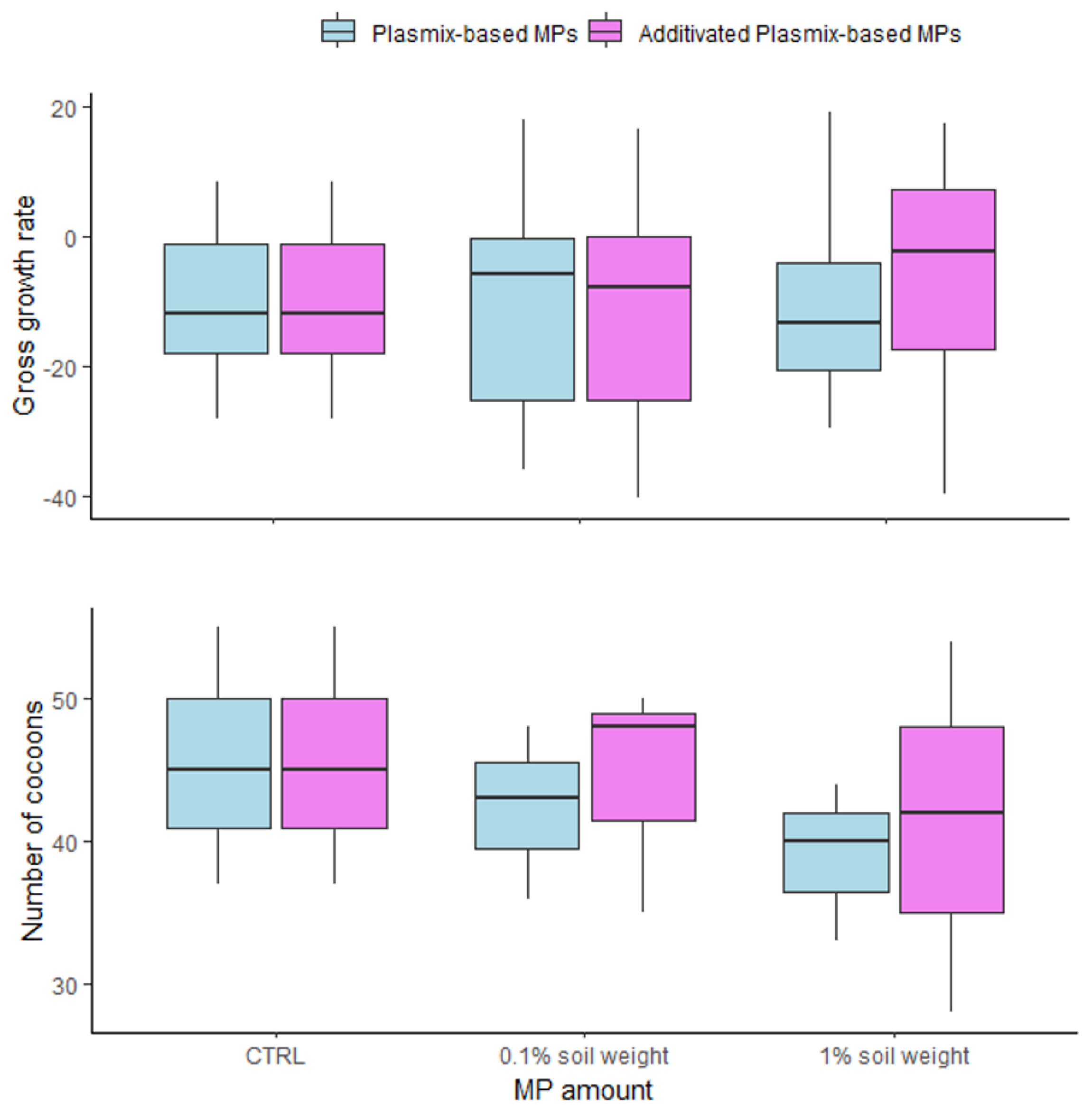


Exposure to Microplastics Made of Plasmix-Based Materials at Low Amounts Did Not Induce Adverse Effects on the Earthworm Eisenia foetida

 , , , ,
  and
and 
Abstract
Share and Cite
De Felice, B.; Gazzotti, S.; Roncoli, M.; Conterosito, E.; Gianotti, V.; Ortenzi, M.A.; Parolini, M. Exposure to Microplastics Made of Plasmix-Based Materials at Low Amounts Did Not Induce Adverse Effects on the Earthworm Eisenia foetida. Toxics 2024, 12, 300. https://doi.org/10.3390/toxics12040300
De Felice B, Gazzotti S, Roncoli M, Conterosito E, Gianotti V, Ortenzi MA, Parolini M. Exposure to Microplastics Made of Plasmix-Based Materials at Low Amounts Did Not Induce Adverse Effects on the Earthworm Eisenia foetida. Toxics. 2024; 12(4):300. https://doi.org/10.3390/toxics12040300
Chicago/Turabian StyleDe Felice, Beatrice, Stefano Gazzotti, Maddalena Roncoli, Eleonora Conterosito, Valentina Gianotti, Marco Aldo Ortenzi, and Marco Parolini. 2024. "Exposure to Microplastics Made of Plasmix-Based Materials at Low Amounts Did Not Induce Adverse Effects on the Earthworm Eisenia foetida" Toxics 12, no. 4: 300. https://doi.org/10.3390/toxics12040300
APA StyleDe Felice, B., Gazzotti, S., Roncoli, M., Conterosito, E., Gianotti, V., Ortenzi, M. A., & Parolini, M. (2024). Exposure to Microplastics Made of Plasmix-Based Materials at Low Amounts Did Not Induce Adverse Effects on the Earthworm Eisenia foetida. Toxics, 12(4), 300. https://doi.org/10.3390/toxics12040300