Article

Resourcization of Argillaceous Limestone with Mn3O4 Modification for Efficient Adsorption of Lead, Copper, and Nickel

1
School of Environmental Science and Engineering, Shaanxi University of Science & Technology, Xi’an 710021, China
2
College of Natural Resources and Environment, Joint Institute for Environmental Research & Education, South China Agricultural University, Guangzhou 510642, China
3
College of Resource and Environment, Yunnan Agricultural University, Kunming 650201, China
*
Author to whom correspondence should be addressed.
Toxics 2024, 12(1), 72; https://doi.org/10.3390/toxics12010072

Submission received: 24 November 2023 / Revised: 5 January 2024 / Accepted: 12 January 2024 / Published: 15 January 2024
(This article belongs to the Section Toxicity Reduction and Environmental Remediation)

Abstract

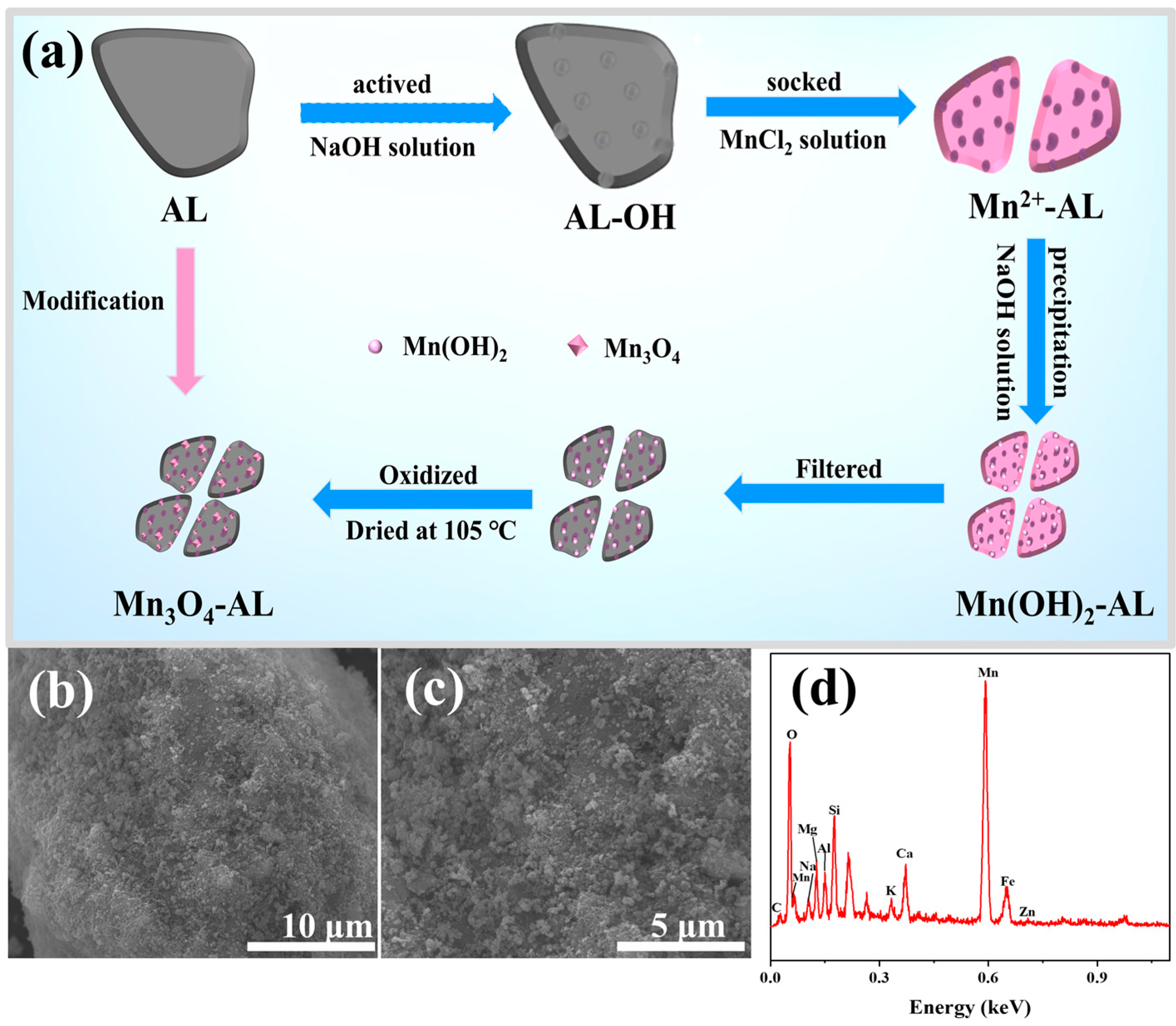
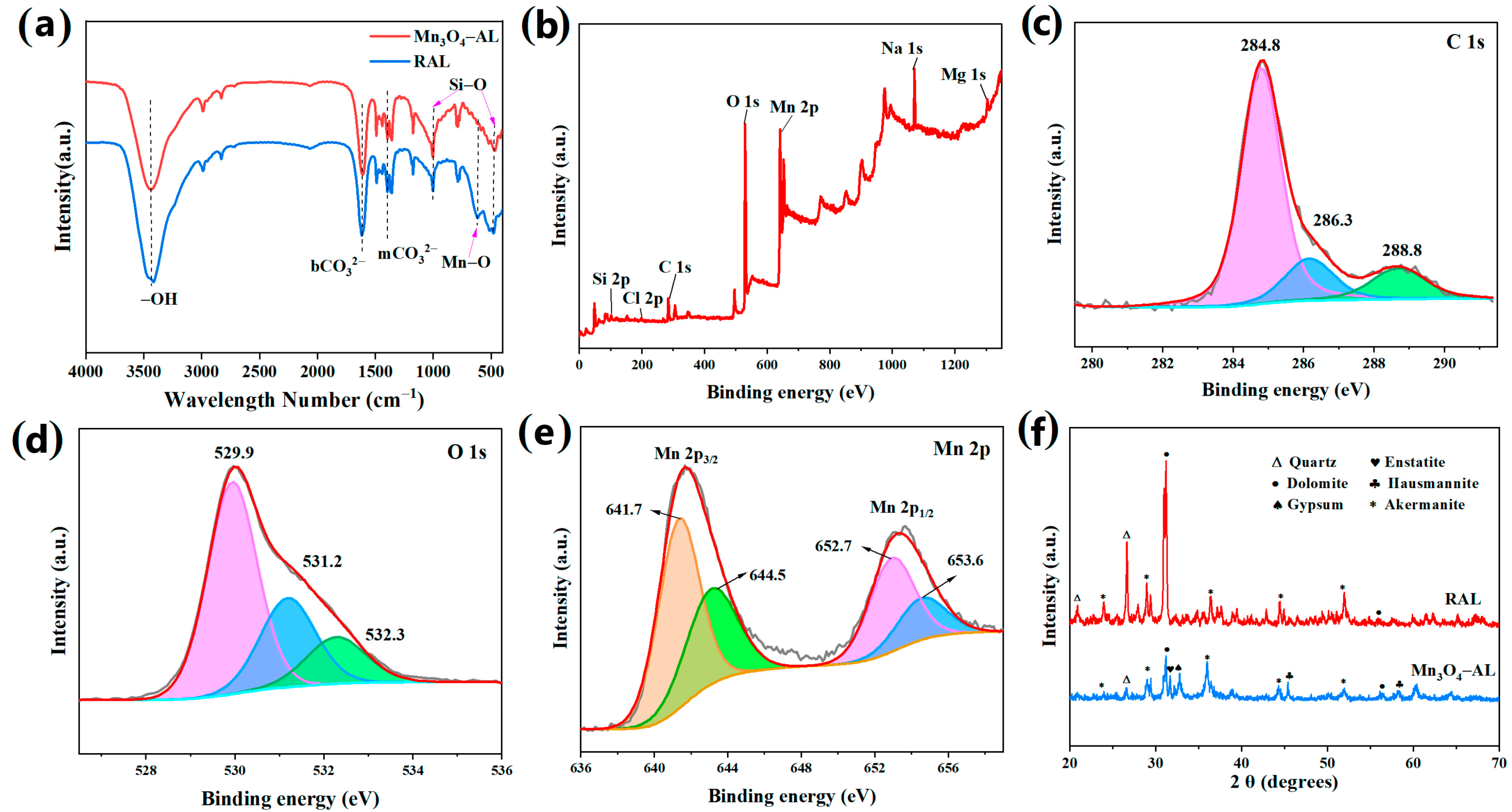
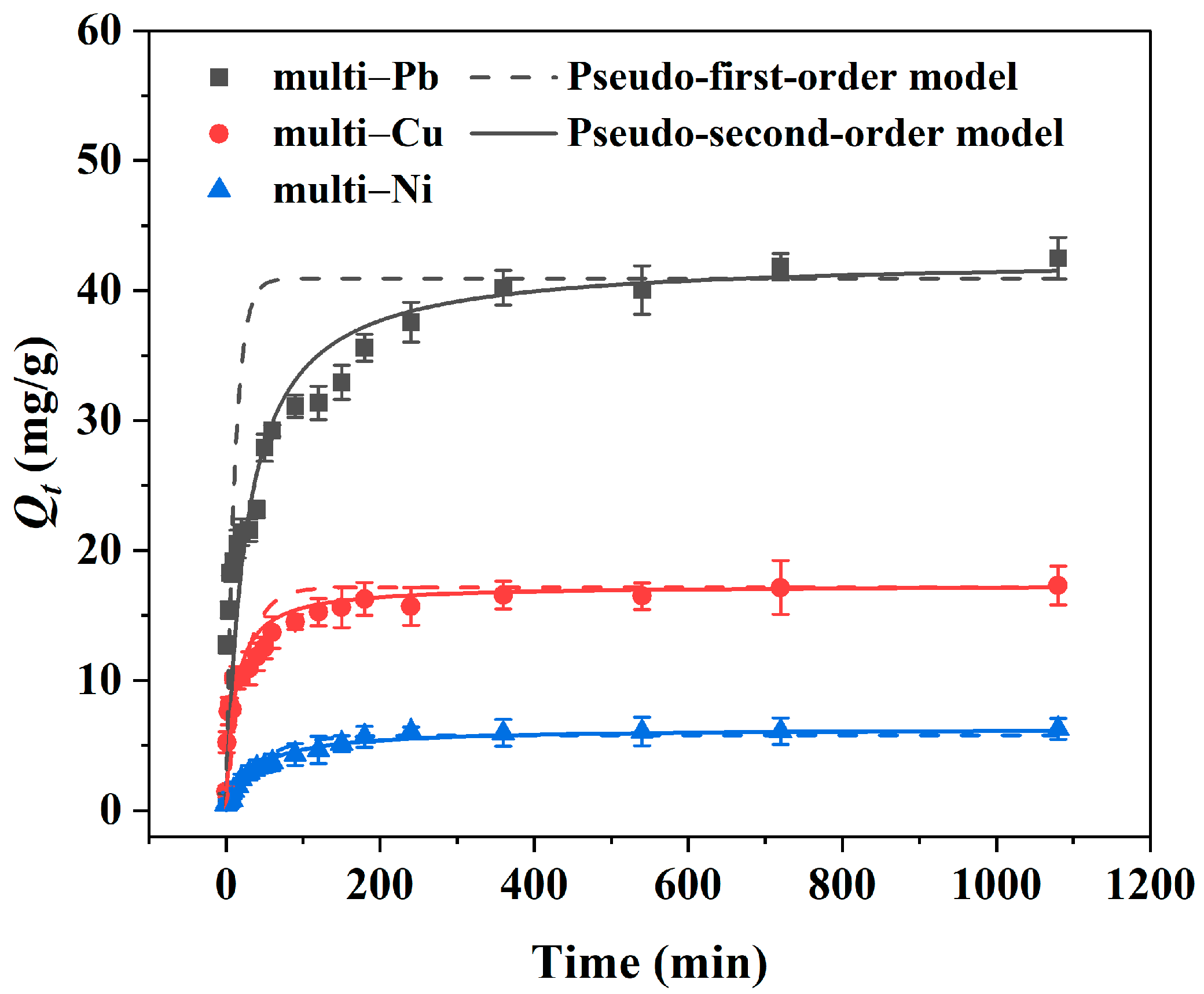
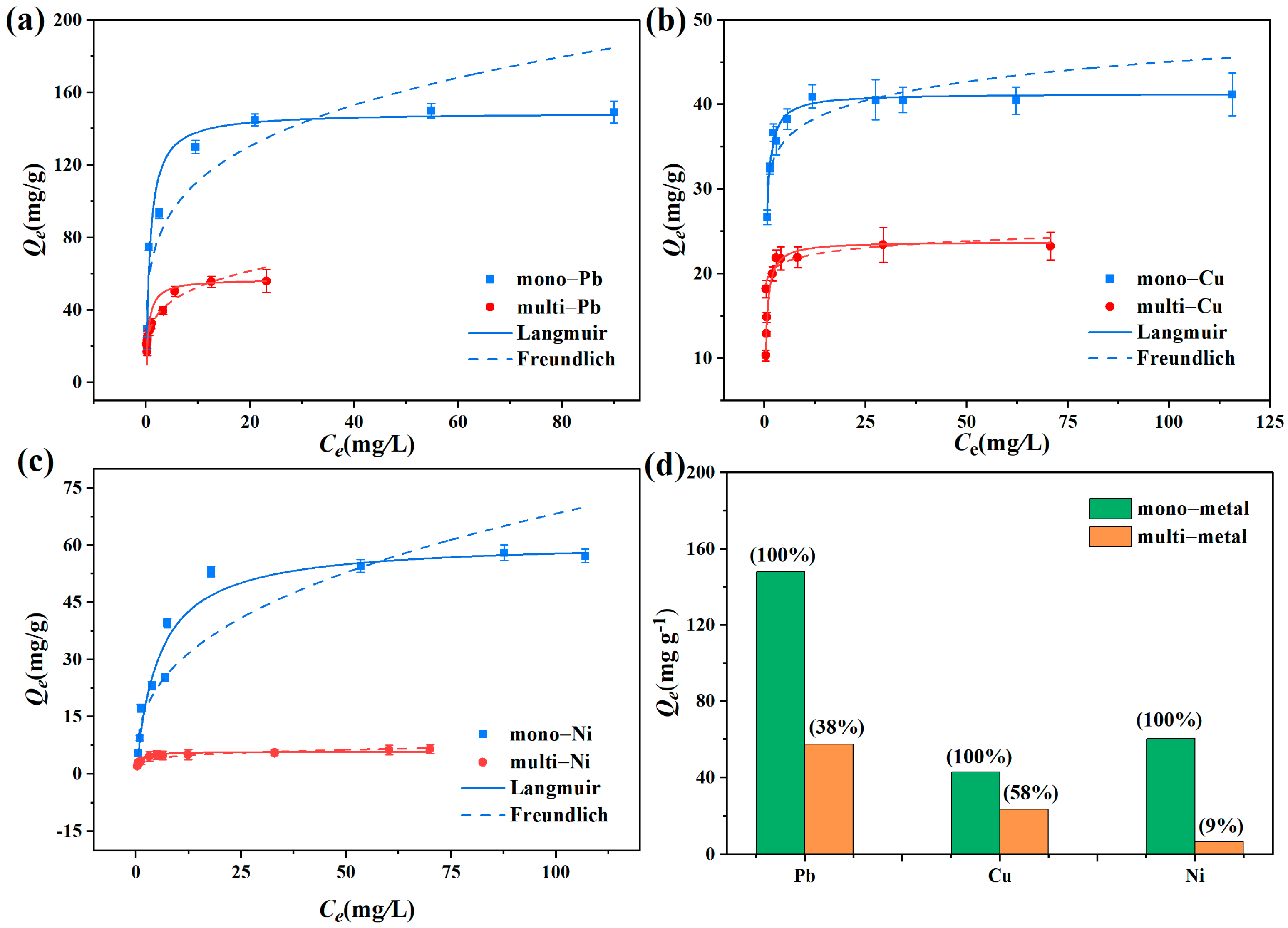
Argillaceous limestone (AL) is comprised of carbonate minerals and clay minerals and is widely distributed throughout the Earth’s crust. However, owing to its low surface area and poorly active sites, AL has been largely neglected. Herein, manganic manganous oxide (Mn3O4) was used to modify AL by an in-situ deposition strategy through manganese chloride and alkali stepwise treatment to improve the surface area of AL and enable its utilization as an efficient adsorbent for heavy metals removal. The surface area and cation exchange capacity (CEC) were enhanced from 3.49 to 24.5 m2/g and 5.87 to 31.5 cmoL(+)/kg with modification, respectively. The maximum adsorption capacities of lead (Pb2+), copper (Cu2+), and nickel (Ni2+) ions on Mn3O4-modified argillaceous limestone (Mn3O4–AL) in mono-metal systems were 148.73, 41.30, and 60.87 mg/g, respectively. In addition, the adsorption selectivity in multi-metal systems was Pb2+ > Cu2+ > Ni2+ in order. The adsorption process conforms to the pseudo-second-order model. In the multi-metal system, the adsorption reaches equilibrium at about 360 min. The adsorption mechanisms may involve ion exchange, precipitation, electrostatic interaction, and complexation by hydroxyl groups. These results demonstrate that Mn3O4 modification realized argillaceous limestone resourcization as an ideal adsorbent. Mn3O4-modified argillaceous limestone was promising for heavy metal-polluted water and soil treatment.
Keywords: manganese oxides; argillaceous limestone; adsorption mechanism; heavy metal; competitive adsorption manganese oxides; argillaceous limestone; adsorption mechanism; heavy metal; competitive adsorption