1. Introduction
The purchasing function occupies a strategic position within the supply chain, serving as the interface between external suppliers and internal customers, who in turn deliver products and services to external customers [
1]. In this context, industrial companies must effectively manage and steer their purchasing processes to strengthen their competitiveness in increasingly demanding markets [
2]. Given the strategic role of procurement in improving organizational performance, rigorous management of procurement processes and supply chains is essential to support competitiveness and ensure organizational success [
3].
Furthermore, in an environment marked by significant transformations—notably the growing integration of sustainable practices and the implementation of digital transformation projects—the purchasing function is increasingly called upon to contribute to value creation and support the company’s overall performance [
4].
In this context, evaluating purchasing performance emerges as a major challenge for supporting these changes and fostering continuous improvement initiatives [
4]. Indeed, analyzing the performance of the purchasing process is an essential management tool that enables decision-makers to identify inefficiencies, improve relationships with suppliers, and ensure that purchasing activities align with the company’s strategic objectives [
2,
4]. Organizations must also rigorously assess the effectiveness of the internal and external interactions involved in acquiring goods and services in order to determine which products or services can be provided internally and under what conditions [
5]. Moreover, purchasing evaluation provides decision-support information to purchasing departments and top management, enabling them to assess the effectiveness of purchasing strategies and organizational decisions [
6].
However, the limitations of traditional evaluation methods are particularly evident in the context of procurement, which is characterized by multiple, sometimes conflicting objectives, as well as uncertain information [
4]. This complexity is exacerbated when evaluation relies on criteria expressed through linguistic variables such as “good,” “average,” or “poor,” whose interpretation varies among evaluators, thereby making judgments inherently subjective and imprecise [
7,
8].
Furthermore, evaluating the performance of the purchasing function typically involves multiple experts with differing perceptions and assessments, which increases the complexity of the decision-making process and places it within the framework of multi-criteria decision-making problems. In this context, traditional approaches reveal their limitations, as they fail to adequately account for the subjectivity and uncertainty associated with human judgments.
Existing purchasing performance evaluation approaches are often based on rigid quantitative indicators and do not adequately capture the uncertainty and subjectivity associated with human judgments. In addition, many existing models rely on single-evaluator assessments or deterministic scoring methods, which limits their ability to represent the complexity of real industrial evaluation contexts. These limitations become particularly significant when evaluations are expressed using linguistic terms and involve multiple internal stakeholders with different perceptions.
In this context, fuzzy logic emerges as a suitable solution, as it enables the handling and quantification of the imprecision inherent in concepts related to subjective human evaluation [
8]. By rigorously modeling the uncertainty and subjectivity of judgments, it helps improve the robustness and consistency of evaluations, thus constituting a relevant approach to support the decision-making process in purchasing performance evaluation.
Although several studies have applied fuzzy logic and MCDM approaches to procurement and supplier evaluation problems, limited attention has been devoted to the evaluation of centralized purchasing process performance within industrial organizations. Existing studies mainly focus on supplier selection, cost optimization, or strategic procurement decisions, while the evaluation of purchasing service performance from the perspective of internal clients remains insufficiently explored. In addition, many existing approaches rely on predefined quantitative indicators or deterministic scoring procedures, which provide limited support for representing subjective perceptions expressed through linguistic assessments. Furthermore, the aggregation of judgments from multiple evaluators under uncertainty is rarely addressed within a unified evaluation framework. Therefore, there is a need for a structured fuzzy-based approach capable of modeling the complexity and subjectivity associated with purchasing performance evaluation.
To address this issue, this article proposes a methodology based on a fuzzy logic model, aimed at evaluating the performance of the purchasing function in a context characterized by the subjectivity of judgments and the multiplicity of criteria. This approach allows for the integration of evaluations expressed as linguistic variables into a structured framework, while reducing the imprecision associated with traditional evaluation methods.
The proposed model aims to provide a more comprehensive, consistent, and industry-relevant assessment of purchasing performance, while supporting decision-makers in the evaluation process. Its implementation is illustrated through a real-world case study conducted within an industrial company, demonstrating the relevance and value of the proposed approach.
This article is organized as follows:
Section 2 presents a literature review;
Section 3 describes the proposed methodology;
Section 4 outlines the application of the model through a case study;
Section 5 presents and discusses the results obtained; and
Section 6 concludes the study.
2. Literature Review
The evaluation of purchasing performance relies on a variety of approaches, ranging from traditional methods to more advanced techniques designed to better account for the complexity of the decision-making process. The most widely used methods in organizations generally rely on simple tools such as rating systems, performance indicators, or direct weighting approaches. Although easy to implement, these methods have certain limitations, particularly due to their reliance on qualitative judgments and their difficulty in simultaneously integrating multiple interdependent criteria.
In fact, the evaluation of purchasing performance often involves both quantitative and qualitative criteria, the assessment of which relies largely on expert judgment, which can introduce significant variability in the results obtained. Furthermore, traditional approaches generally rely on rigid models that are ill-suited to accounting for the uncertainty and imprecision associated with human perceptions.
To address these limitations, several studies have turned to multi-criteria decision-making methods, recognized for their ability to handle complex problems involving multiple, often conflicting criteria within a structured framework. In this context, we review, in the following section, the approaches most frequently used in the literature.
The AHP (Analytic Hierarchy Process) method, developed by Saaty in 1980, is a widely used multi-criteria decision-making method, as it allows all evaluation criteria to be considered simultaneously [
9].
In his work, Rezaei developed a multi-criteria decision-making (MCDM) method based on the Best Worst Method (BWM). This approach relies on pairwise comparisons between the criterion deemed best and the one considered worst, relative to all other criteria [
10]. Recently, the BWM has gained popularity due to its ease of application. It requires fewer comparisons than the AHP method, while offering more consistent and reliable results [
7].
Moreover, Hwang and Yoon introduced the TOPSIS method, recognized for its ease of application. Its principle is based on the idea that the best alternative is the one closest to the positive ideal solution and farthest from the negative ideal solution [
11].
MCDM methods have been widely applied in purchasing and supply chain management. For example, Handfield et al. employed AHP to support environmentally conscious supplier evaluation and selection decisions [
12]. Similarly, Almeida proposed a multicriteria model combining utility theory and ELECTRE to support outsourcing contract selection [
13]. Shenoy, Sharma and Shiva Prasad applied the TOPSIS method to evaluate and rank factors influencing the performance of an internal supply chain in a manufacturing company, demonstrating the usefulness of MCDM techniques for supporting strategic decision-making in industrial environments [
14]. These studies demonstrate the relevance of structured decision-making approaches for procurement- and supply chain-related problems involving multiple criteria and conflicting objectives.
More recently, Şimşek et al. (2026) [
5] proposed a SIWEC-based decision-support model to evaluate purchasing processes in solar energy investment projects. Their study identified strategic planning as a key determinant of purchasing performance and highlighted the importance of digital coordination and data-driven procurement management. While this work contributes to the assessment of purchasing-related activities, it focuses on project procurement contexts and does not explicitly address linguistic evaluations, multiple evaluators, and uncertainty within centralized purchasing performance assessment [
5].
However, most existing studies focus primarily on supplier selection, supplier ranking, outsourcing decisions, strategic procurement problems, or project-based purchasing contexts. Comparatively little attention has been paid to the evaluation of centralized purchasing process performance from the perspective of internal clients. Furthermore, many existing approaches rely on deterministic assessments and provide limited support for handling linguistic evaluations, uncertainty, and the aggregation of judgments from multiple evaluators within a unified framework. These limitations motivate the development of a fuzzy decision-support model specifically adapted to centralized purchasing performance evaluation.
Despite the effectiveness of MCDM methods, they remain limited when faced with uncertainty and the subjectivity of human judgments, particularly when multiple qualitative criteria are evaluated by different experts. Fuzzy logic provides a suitable solution to model these imprecisions and to offer a more nuanced representation of evaluations.
3. Material and Methods
3.1. Presentation of Fuzzy Logic
Fuzzy Logic, introduced by mathematician Lotfi Zadeh in the 1960s, is an artificial intelligence approach that models uncertainty and imprecision through continuous values between 0 and 1. This differs from traditional Boolean logic, which is limited to binary outcomes of “True” or “False” (1 or 0) [
7].
Fuzzy logic is one of the main techniques in artificial intelligence, aimed at developing models capable of simulating intelligent behavior. Its primary goal is to represent human reasoning in a structured form that can be interpreted and utilized by computers [
15].
Fuzzy rules and membership functions form the core components of fuzzy logic. They make it possible to translate linguistic knowledge expressed by experts into mathematical formulations, thereby enabling the conversion of qualitative evaluations into quantitative analyses [
15].
In a fuzzy logic approach, process modeling consists of partitioning the model’s variables into fuzzy sets that represent different linguistic states [
16].
Conditional if…then rules are employed to specify the output corresponding to each combination of these classes. The conditions can be linked through logical operators such as AND, OR, or XOR (Either…or), allowing the modeling of complex relationships between variables [
16].
3.2. Fuzzification
It allows precise numerical data to be converted into fuzzy representations through associated membership functions [
17]. This conversion is achieved by defining membership functions for both input and output variables, thereby mapping numerical values to linguistic terms. It involves specifying the shape of each membership function and assigning a degree of membership to every predefined state [
18].
The most frequently adopted membership function shapes are triangular and trapezoidal.
3.3. Fuzzy Inference System
This step involves linking the defined fuzzy sets to the rule base in order to produce the system’s output. The rules serve as a formal representation of expert knowledge in the corresponding field of application [
17].
After defining the linguistic variables, they are applied in the inference engine using rules based on expert knowledge and written in natural language, which helps formalize human reasoning, a central purpose of fuzzy logic [
18].
3.4. Defuzzification
The transformation of numerical inputs into linguistic variables during the fuzzification stage is not sufficient on its own. A reverse operation is required to convert the fuzzy output back into a precise numerical value. This reverse transformation, which maps linguistic results to real-world values, is known as defuzzification [
7].
Defuzzification is therefore an essential step for producing a crisp output that can be effectively interpreted and applied in practical, real-world decision-making contexts [
17].
The main defuzzification methods are commonly used: the mean of maximum, the center of gravity, and the maximum of output [
17].
3.5. Structure of the Fuzzy Logic Model
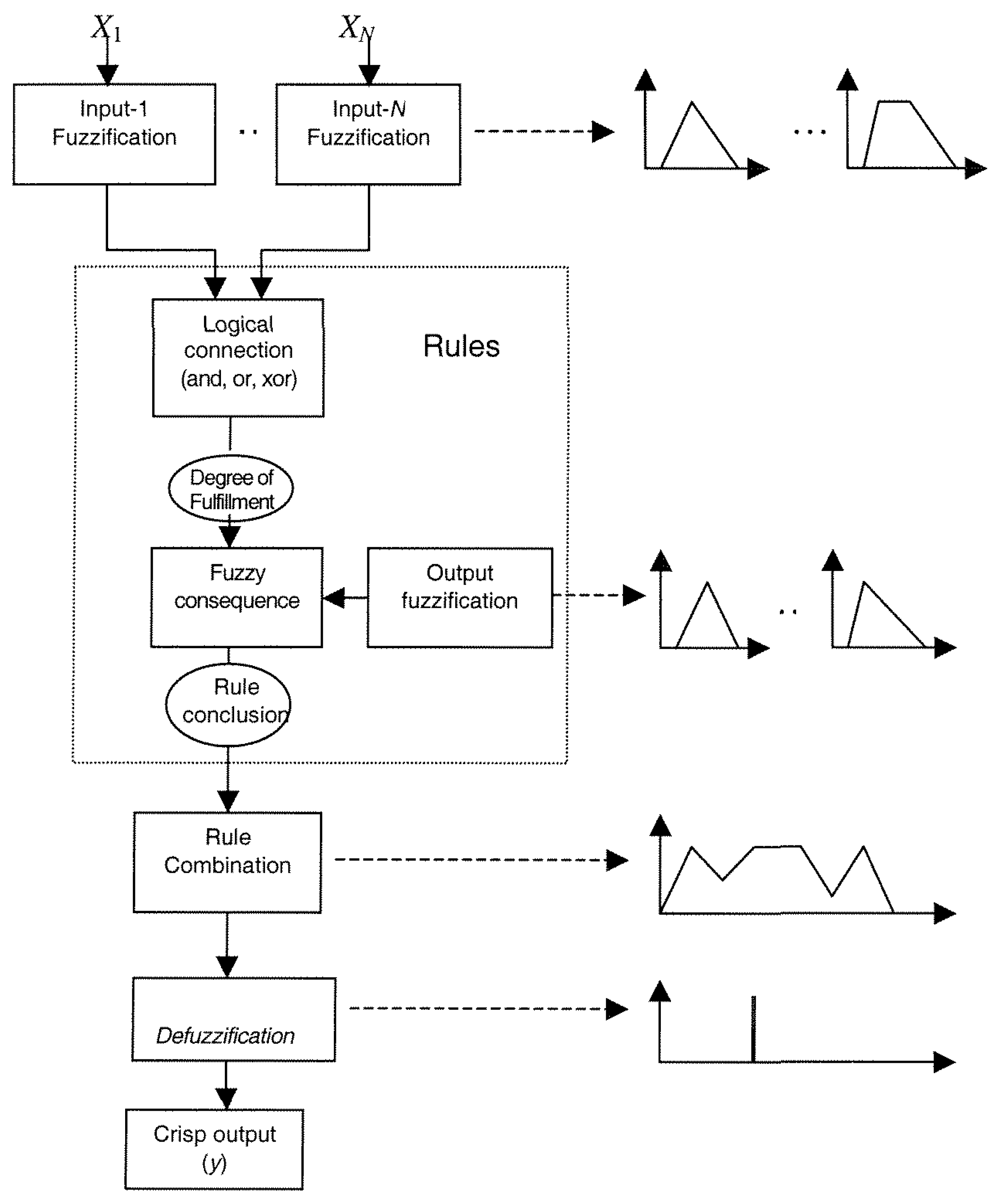
The diagram below in
Figure 1 illustrates the steps of fuzzy logic modeling described earlier, emphasizing its overall structure and main interactions:
4. Case Study
4.1. Industrial Case Study and Evaluation Procedure
To illustrate the applicability of the proposed method, a case study was conducted within an industrial company operating in the mining sector in southern Morocco. The company has a centralized purchasing department responsible for managing purchases across all its sites. Each year, internal clients involved in the procurement process evaluate the performance of this centralized department using a structured evaluation grid based on predefined criteria and qualitative linguistic scales such as “Good,” “Average,” “Poor,” and “Very Poor.”
The evaluation process is conducted collaboratively through discussions involving four internal evaluators from the procurement process team. Rather than performing independent evaluations, the evaluators collectively discuss each criterion in order to reach a consensus regarding the assigned assessment. The evaluation grid used in this study corresponds to the internal assessment tool routinely employed by the company for the annual evaluation of the centralized purchasing department.
The different evaluation criteria included in the company’s assessment grid were grouped into four main categories: Service Quality, Responsiveness, Compliance, and Collaboration. These categories were defined based on both the literature and the organizational context of the company. The selected dimensions were established by grouping the original evaluation criteria into broader categories consistent with purchasing performance evaluation practices reported in the literature.
The interaction among these criteria, combined with the subjective nature of the evaluators’ judgments, makes the evaluation process complex and introduces uncertainty into decision-making. To address this complexity and better capture the nuances of human judgment, the proposed approach employs fuzzy logic. This method allows linguistic evaluations to be converted into gradual numerical values, thereby providing a structured and coherent framework for assessing the centralized purchasing process while accounting for both the multiplicity of criteria and the inherent subjectivity of expert evaluations. In the proposed model, the linguistic assessments assigned by the evaluators are directly associated with the corresponding fuzzy membership functions defined for each input variable.
4.2. Indicators Definition
The proposed evaluation indicators were defined based on the company’s existing evaluation practices and refined using concepts commonly addressed in the literature related to purchasing and service performance evaluation.
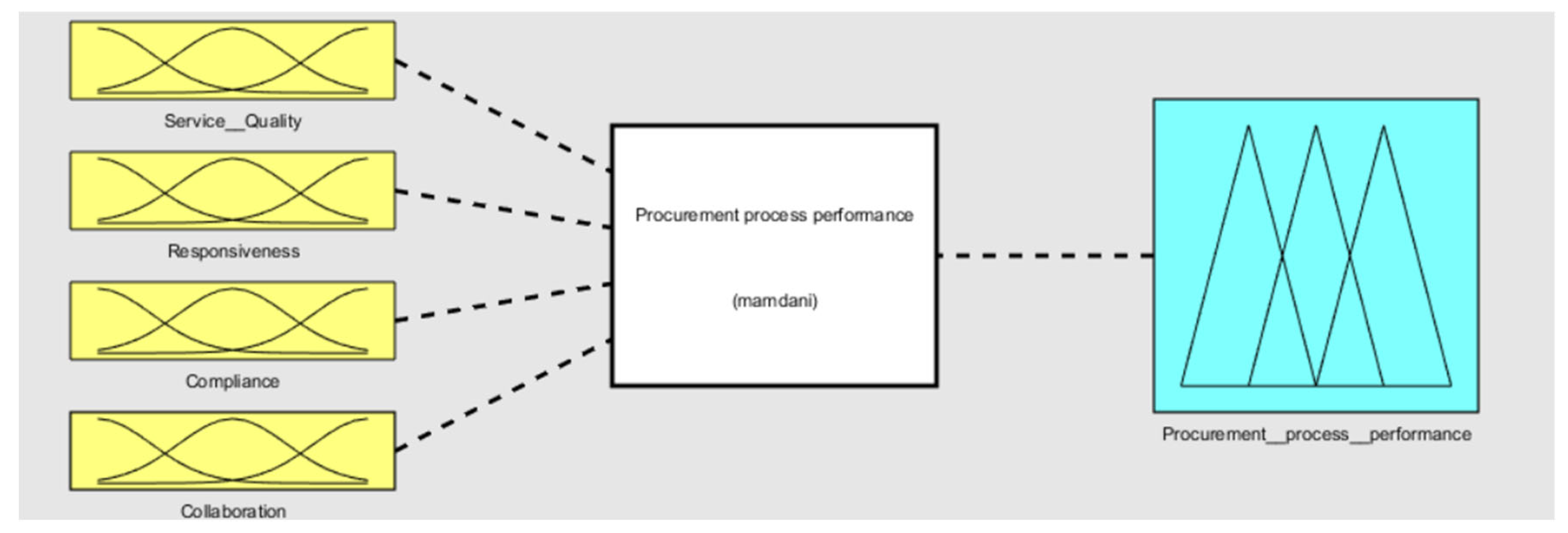
Procurement process performance: considered as the output measure, is determined using the four input indicators listed below:
Service Quality: The ability of the purchasing department to meet the needs of internal clients reliably and accurately. It is a global judgment based on users’ perceptions, resulting from the assessment of gaps between their expectations and actual performance [
19].
Responsiveness: Evaluates the personalized and attentive care the purchasing department provides to its internal clients. It reflects the department’s ability to respond quickly and efficiently to requests, to listen to specific needs, and to provide appropriate support [
19].
Compliance: Reflects the purchasing department’s adherence to internal procedures and rules.
Collaboration: Measures the cooperation and expertise-sharing of the purchasing department with internal clients.
The structure of the proposed fuzzy model is outlined below in
Figure 2.
4.3. Modeling of Indicators
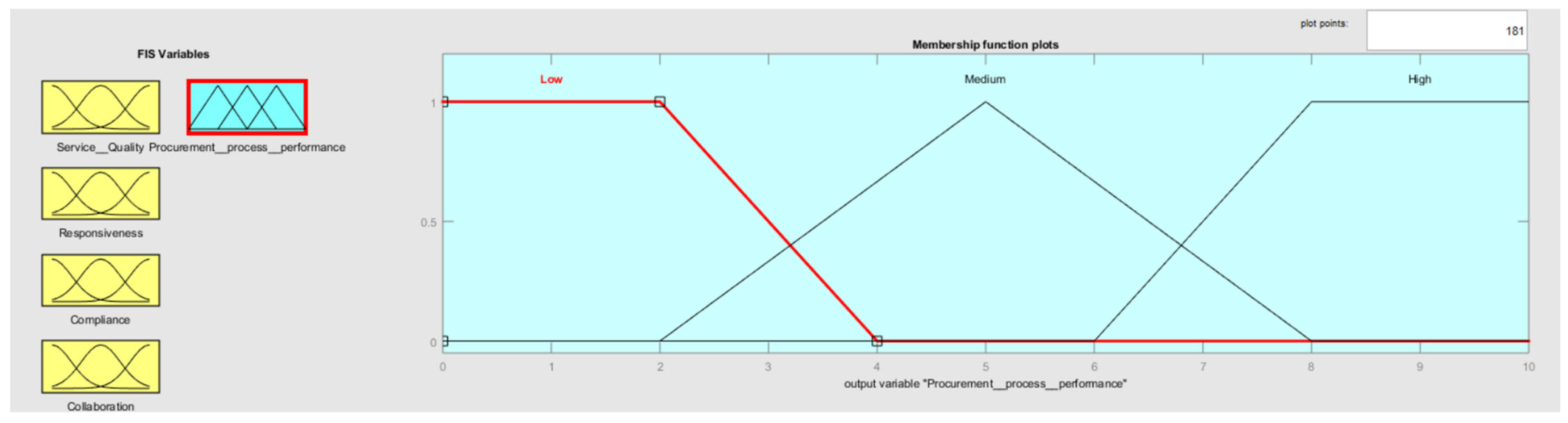
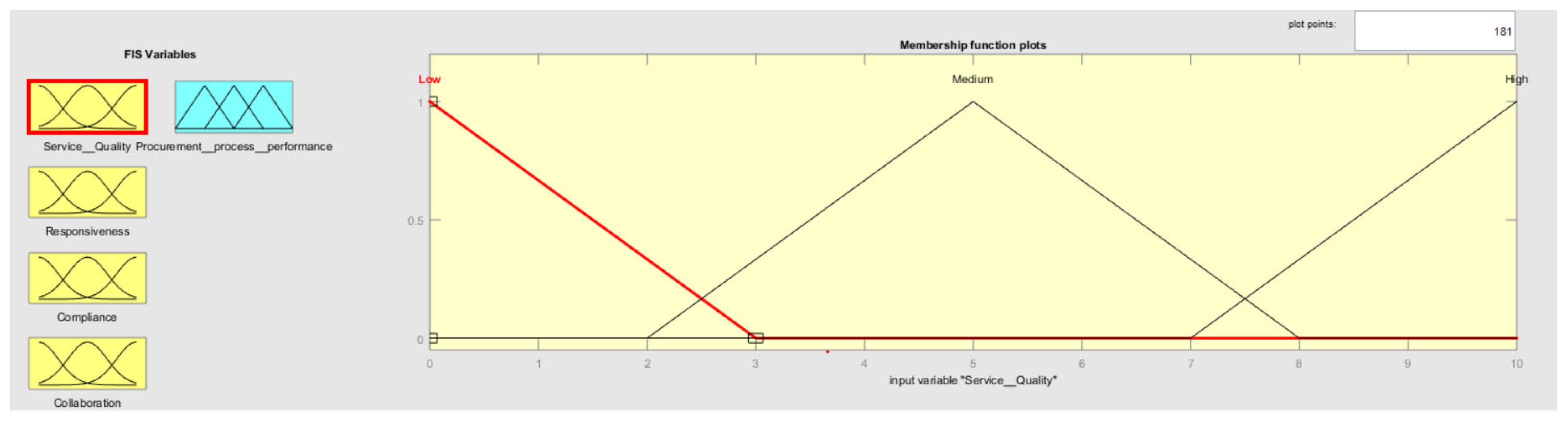
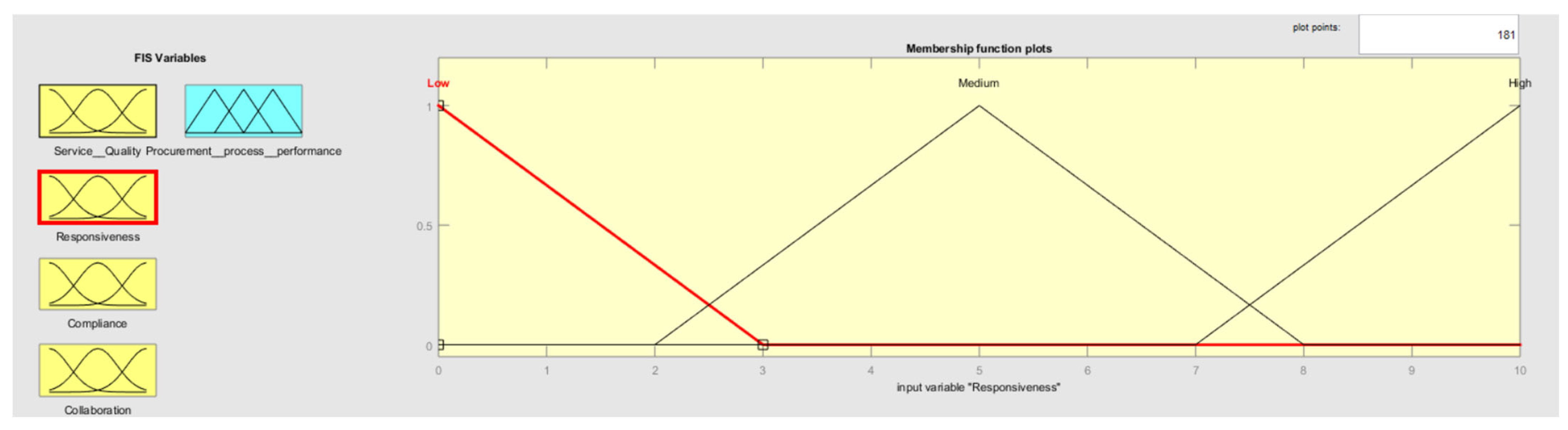
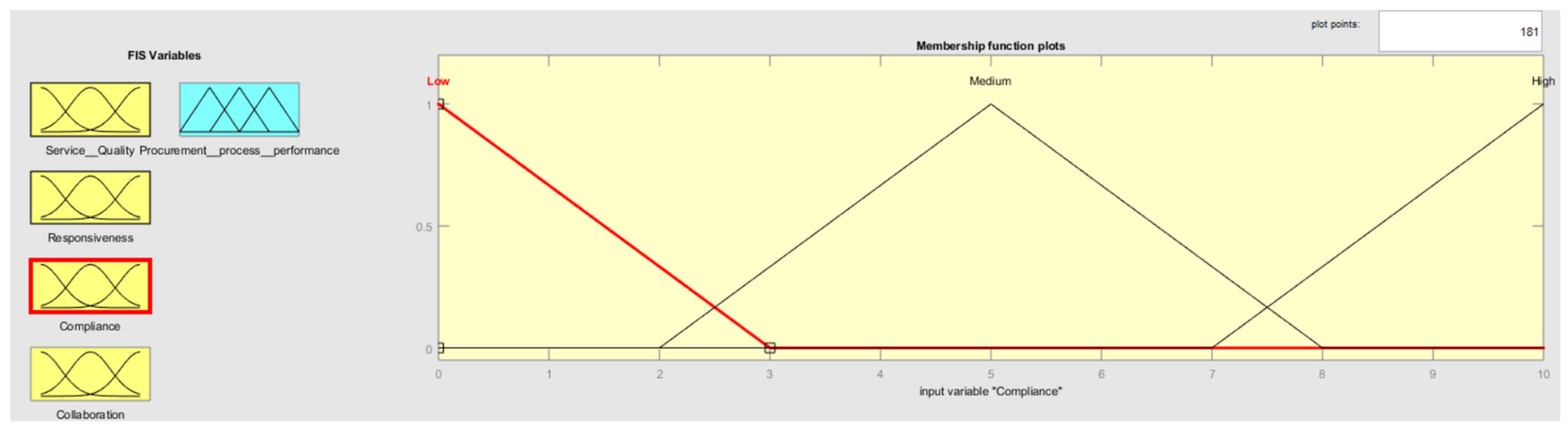
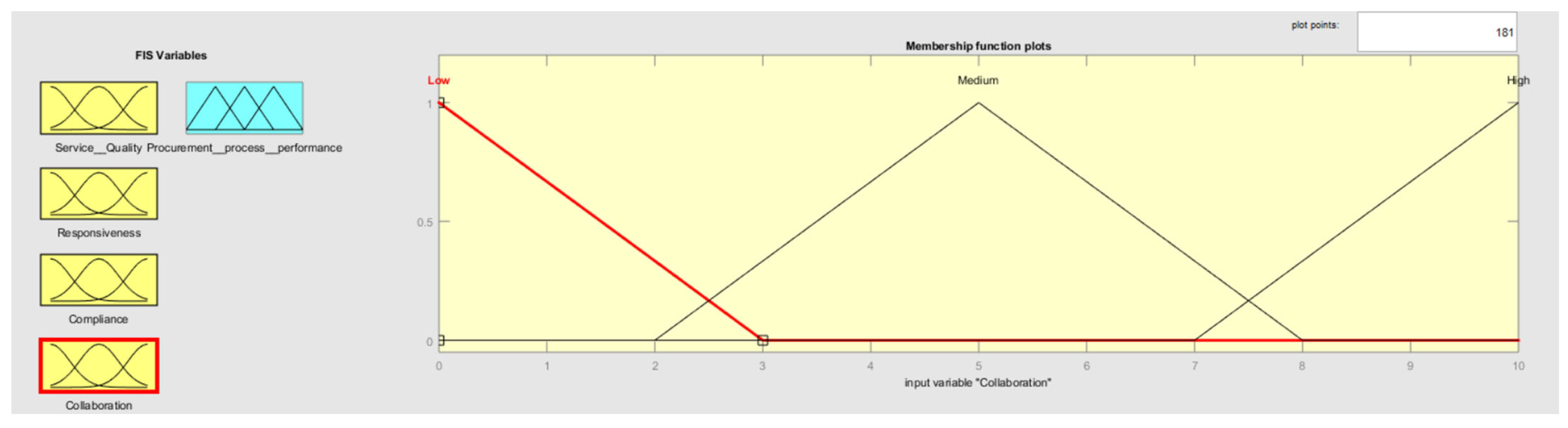
Triangular and trapezoidal membership functions were selected due to their simplicity, interpretability, and frequent use in fuzzy decision-making systems.
4.4. Fuzzy Inference
This phase focuses on the development of fuzzy rules established by experts to capture the relationships between the various input indicators.
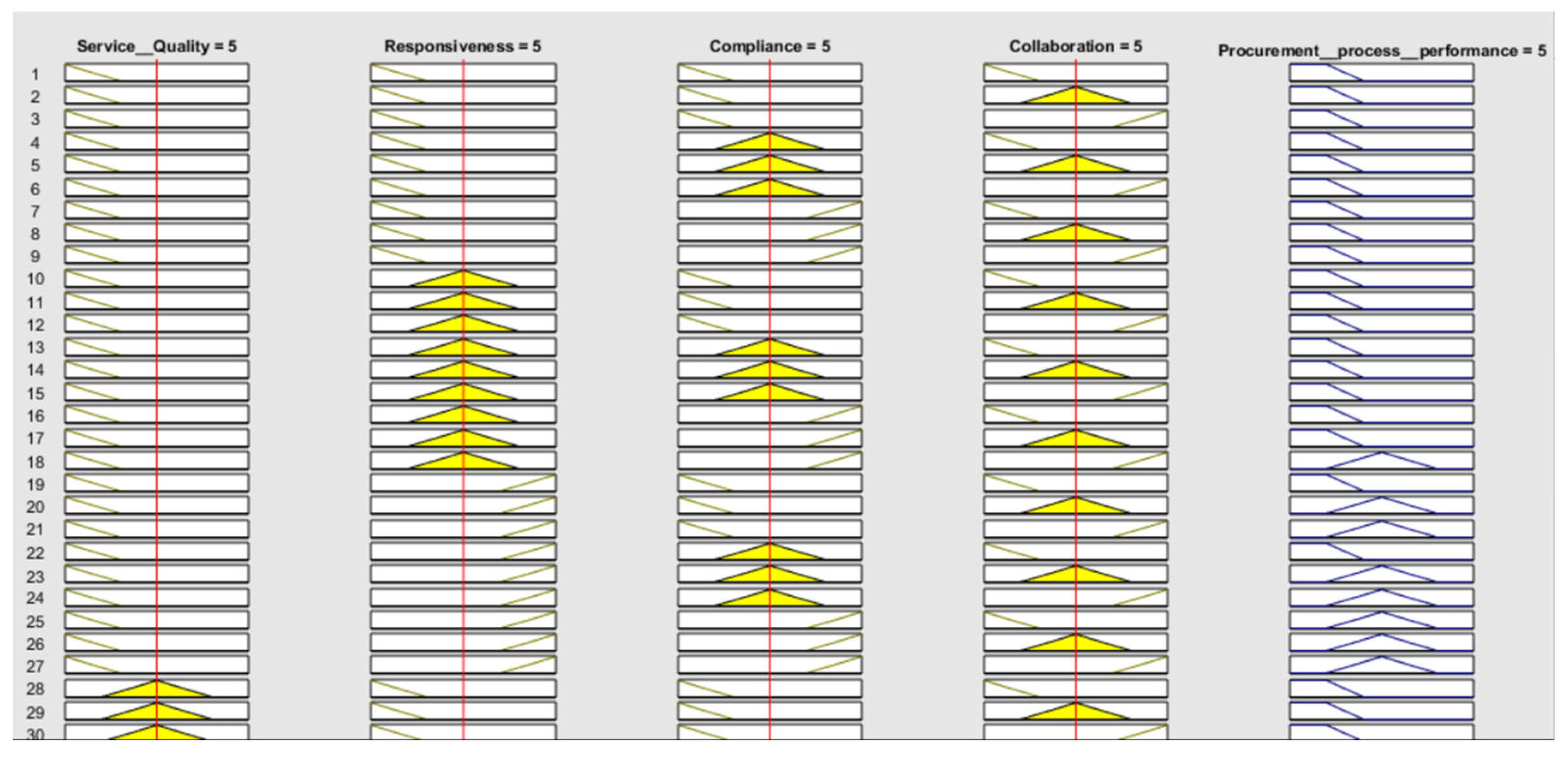
In our case study, we implemented 81 fuzzy rules (3*3*3*3) using the AND operator.
As an illustration, some of the fuzzy rules used in our case study are presented below in
Figure 8.
The fuzzy rule base was developed based on expert knowledge and the organizational evaluation practices adopted within the studied company. The rules were defined through discussions with the evaluators involved in the purchasing performance assessment process in order to reflect the relationships between the different evaluation criteria and the expected performance levels within the company context.
4.5. Defuzzification
As illustrated in the
Figure 9 below, the defuzzification stage applies the center of gravity method to transform the fuzzy set—comprising service quality, responsiveness, compliance, and collaboration—into a precise numerical value that represents procurement process performance:
5. Results and Discussion
Once the inference system has been implemented, the defuzzification results must be analyzed. Graphical analysis facilitates a clearer understanding of the relationships between input and output indicators. To this end, surface plots are examined by varying two input variables while keeping the remaining two constant, with the output displayed on the y-axis.
5.1. Use Case 1
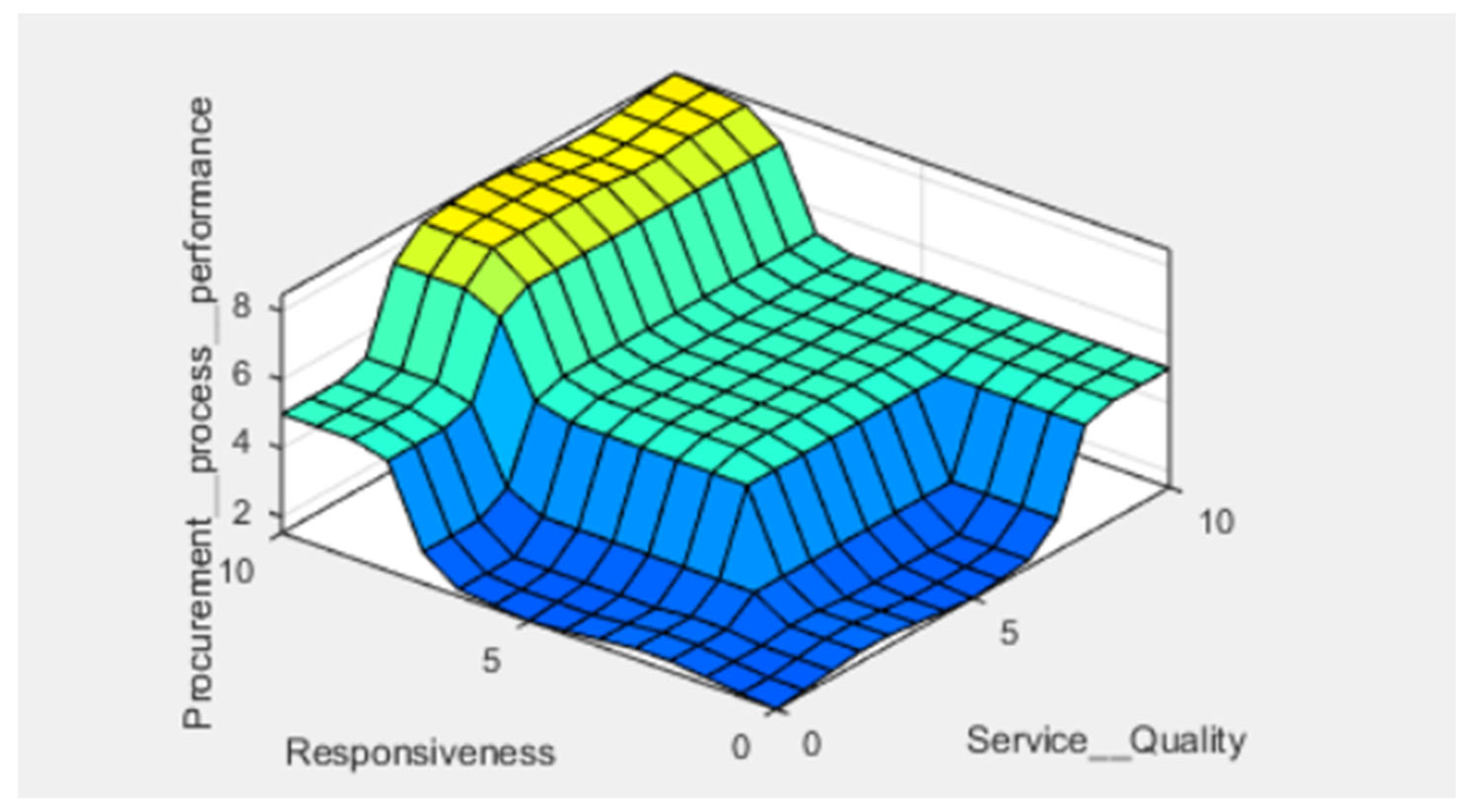
In this case, the indicators Compliance and Collaboration are set as medium (
Figure 10).
The surface analysis highlights that the performance of the purchasing process jointly depends on the levels of Service Quality and Responsiveness. When both criteria are low, performance remains at a low level. An improvement in one of the two criteria leads to only a limited increase in performance, which remains within an intermediate range. This indicates that an isolated improvement is not sufficient to achieve a high level of performance.
In contrast, when both criteria simultaneously reach high levels, performance increases significantly, attaining high values. This observation shows that these two dimensions act in a complementary manner and that their combination is necessary to achieve optimal performance in the purchasing process. Thus, neither of the two criteria alone appears sufficient to compensate for the weakness of the other.
Finally, the progression observed between the different zones reflects a consistent evolution of performance according to variations in the two criteria. Performance increases gradually as the levels of Service Quality and Responsiveness improve, highlighting their joint contribution to the overall evaluation of the purchasing process.
5.2. Use Case 2
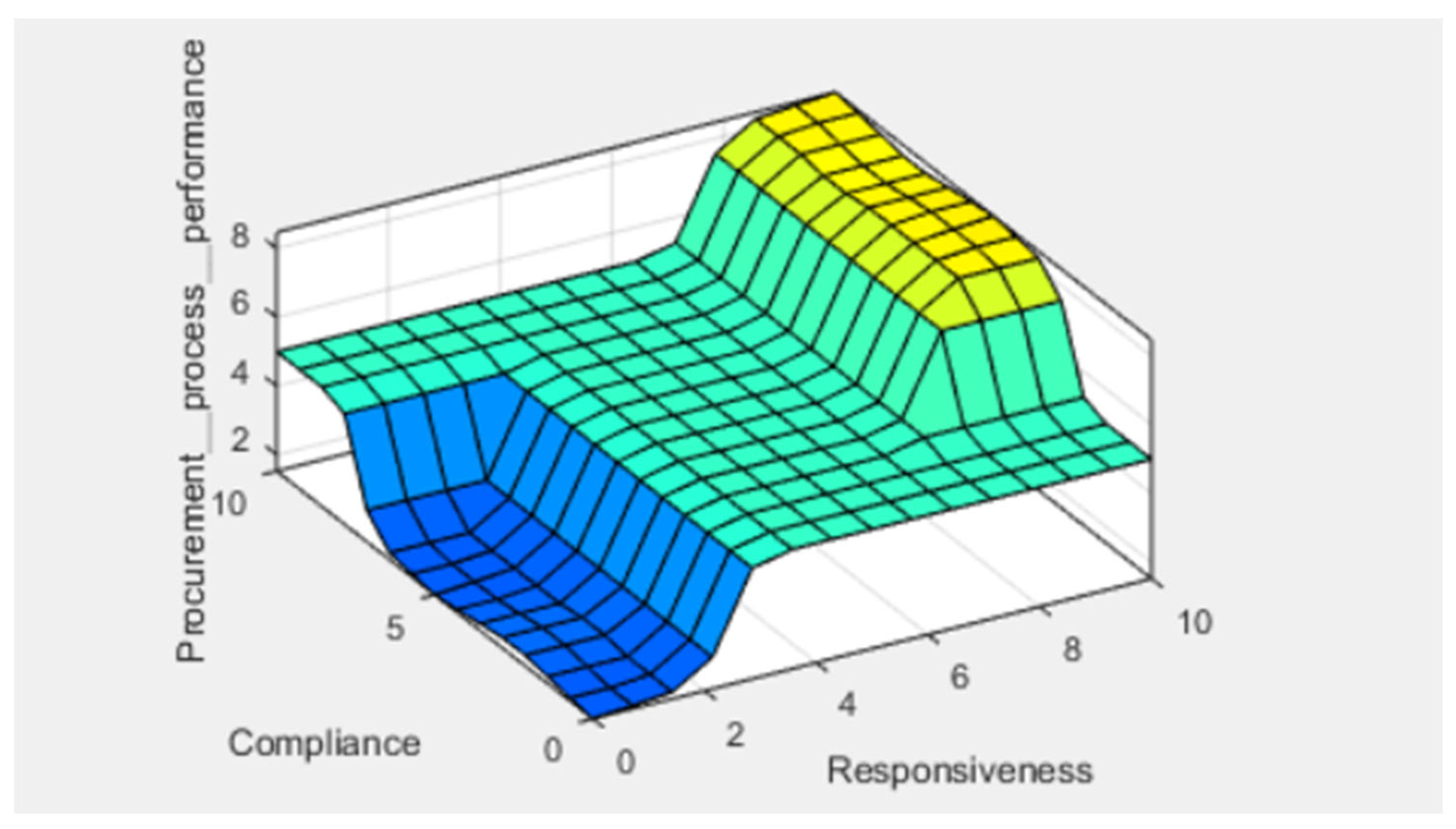
In this case, the indicators Service Quality and Collaboration are set as medium (
Figure 11).
The analysis of this surface shows that the performance of the purchasing process mainly depends on the level of Responsiveness. When responsiveness is low, overall performance remains low; however, an improvement in the level of Compliance allows for a slight increase in performance, without reaching high levels. This indicates that compliance can partially mitigate the effects of low responsiveness, but cannot fully compensate for its impact.
As responsiveness increases, performance improves more significantly. This evolution is particularly evident when Responsiveness reaches high levels, where performance becomes high. In this case, compliance contributes to slightly reinforcing this improvement, but its effect remains secondary compared to that of responsiveness. Thus, for a given level of Responsiveness, variations in compliance lead to only limited adjustments in performance.
Overall, this surface highlights that Responsiveness is the main driver of performance improvement, while Compliance acts as an adjustment factor. Performance is primarily driven by responsiveness, whereas compliance plays a complementary role, slightly modulating performance levels without being the main determinant.
5.3. Use Case 3
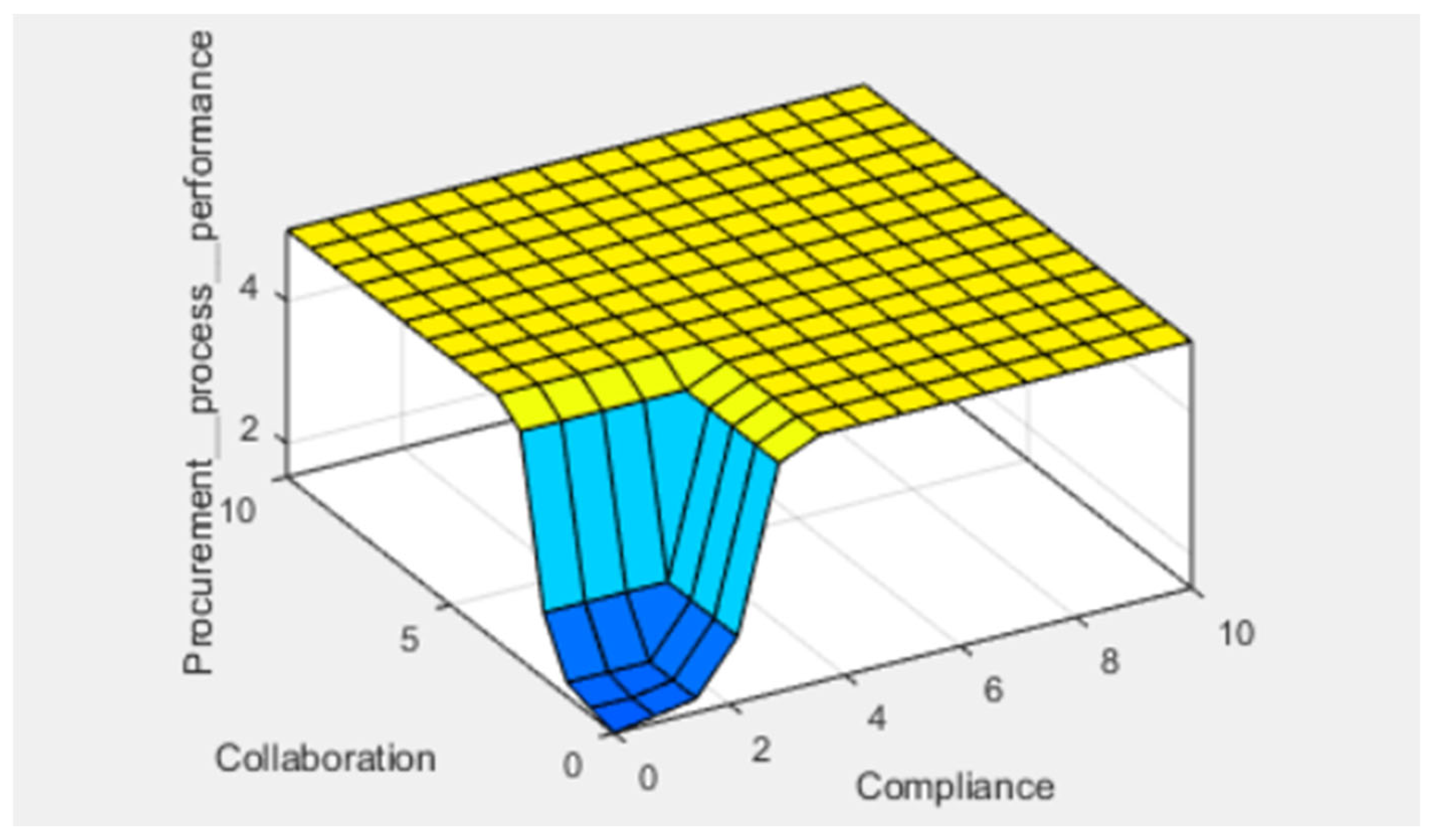
In this case, the indicators Service Quality and Responsiveness are set as medium (
Figure 12).
The analysis of this surface shows that the performance of the purchasing process remains generally high for most combinations of Compliance and Collaboration. Indeed, as soon as one of the two criteria reaches a medium or high level, performance falls within a high range and varies only slightly. This indicates that, in this configuration, these two criteria do not induce significant variations in performance over a large part of the studied domain.
However, a marked decrease in performance is observed when both criteria are simultaneously low. This area, clearly visible on the surface, corresponds to a drop to low performance levels. This shows that the joint absence of compliance and collaboration can significantly degrade performance, even though these criteria, when considered individually, do not have a decisive effect.
Thus, this surface highlights that neither compliance nor collaboration constitutes a major lever for performance improvement when considered separately. Their influence becomes significant only in extreme situations, particularly when their levels are simultaneously low, reflecting a combined effect rather than a strong individual impact.
5.4. Use Case 4
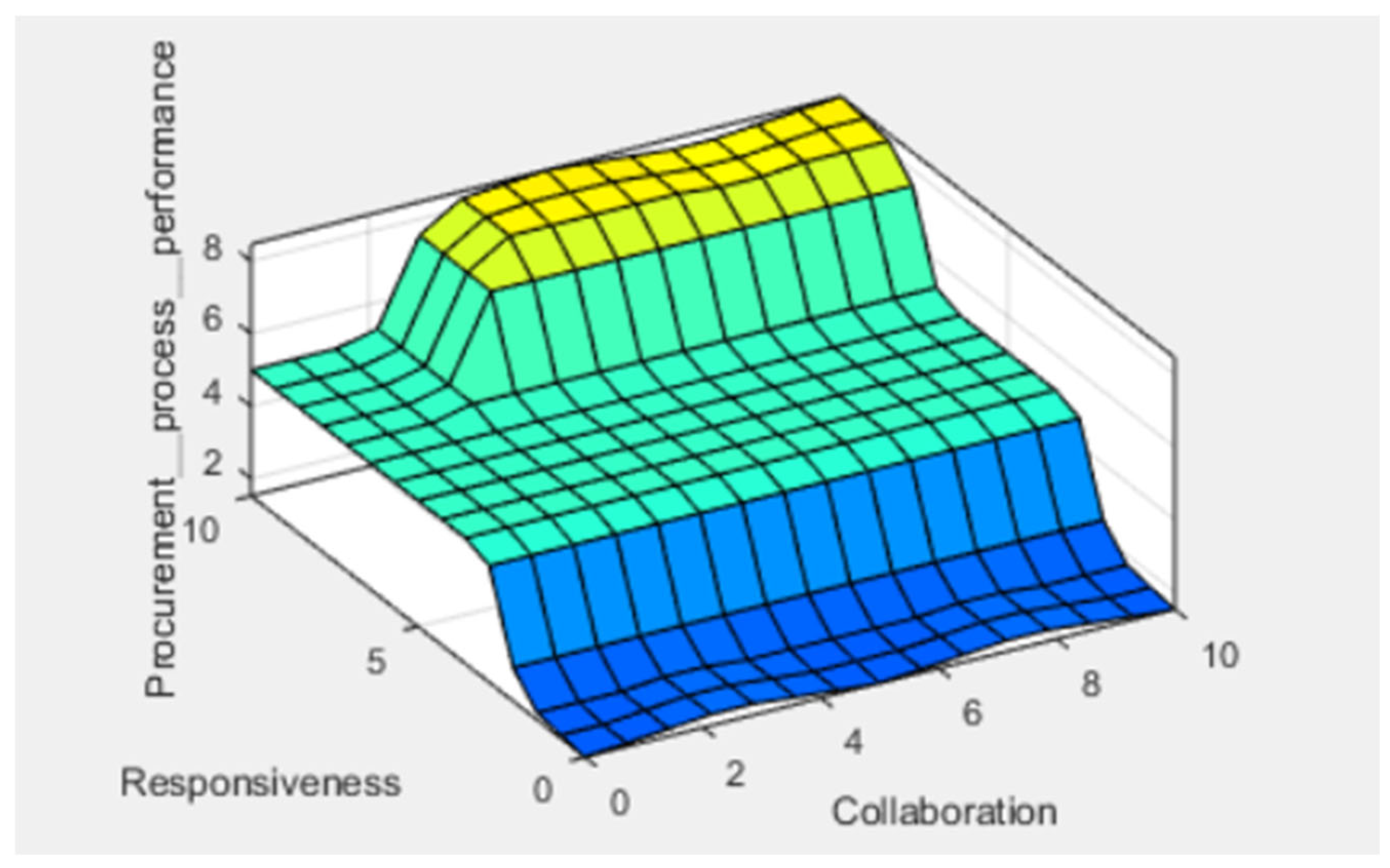
In this case, the indicators Service Quality and Compliance are set as medium (
Figure 13).
The analysis of this surface shows that the performance of the purchasing process is strongly influenced by the level of Responsiveness. When responsiveness is low, performance remains at a low level, regardless of the level of Collaboration. This low-performance area is clearly visible on the surface and indicates that low responsiveness is a limiting factor that collaboration cannot compensate for.
As responsiveness increases, performance improves significantly, reaching an intermediate level and then a high level when Responsiveness becomes high. In this case, variations in collaboration lead to only limited changes in performance. Indeed, for a given level of responsiveness, the surface remains relatively stable along the Collaboration axis, reflecting a moderate influence of this criterion.
Thus, this surface highlights that Responsiveness plays a determining role in improving performance, while Collaboration has a secondary impact. Performance is mainly driven by responsiveness, whereas collaboration acts as a complementary factor without generating major variations.
5.5. Overall Analysis and Discussion
The analysis of the surfaces generated by the fuzzy system highlights the multidimensional nature of purchasing process performance, which cannot be explained by a single criterion but results from the interaction of several complementary factors. The results show that this performance mainly depends on service quality and responsiveness, while being influenced, to a lesser extent, by compliance with procedures and collaboration. This interaction reflects the complexity of the evaluation process, where multiple dimensions simultaneously contribute to the formation of the overall judgment.
The surface combining Service Quality and Responsiveness confirms that these two criteria are the main drivers of performance. A joint improvement in these two dimensions makes it possible to achieve high performance levels, whereas a weakness in one of them significantly limits the overall result. These observations show that the performance of the purchasing process primarily relies on the department’s ability to effectively meet the needs of internal clients, both in terms of quality and responsiveness.
Furthermore, the analysis highlights that the role of Compliance depends on the context in which it is applied. The results indicate that a high level of compliance can contribute to improving performance, particularly when the other criteria are at sufficient levels. However, when the main criteria are weak, its effect remains limited. Compliance therefore appears as an adjustment factor, capable of supporting performance without being its main determinant.
Finally, the analysis of the surfaces associated with Collaboration shows that this criterion does not lead to significant variations in performance when considered alongside the other indicators. For a given level of service quality or responsiveness, performance changes only slightly with respect to collaboration. This indicates that its influence remains limited and that it does not act as a direct lever for performance improvement. Thus, collaboration appears more as a complementary factor, whose effect depends on the level of the other criteria without constituting a major determinant.
Overall, these results confirm the relevance of the fuzzy logic approach for evaluating the performance of the centralized purchasing process. The model makes it possible to account for interactions between multiple interdependent criteria and to produce a gradual evaluation that is closer to the actual judgments of stakeholders. By simultaneously integrating service quality, responsiveness, compliance, and collaboration, this approach provides a coherent analytical framework adapted to performance evaluation in a complex organizational context.
5.6. Application and Evaluation of the Proposed Model Through an Industrial Case Study
This section presents the application of the proposed fuzzy model to a real case from an industrial company. The company has a centralized purchasing department whose performance is evaluated annually by internal clients using a structured evaluation form. The assessments are expressed in qualitative terms (High, Medium, etc.), which makes their direct use in a decision-support approach difficult.
In order to illustrate the applicability of the proposed approach over different evaluation periods, three annual evaluations available within the company were analyzed. The different evaluation indicators were grouped and translated according to the four criteria of the proposed model: Service Quality, Responsiveness, Compliance, and Collaboration. The corresponding input values and fuzzy model outputs are presented in
Table 2.
The obtained results indicate consistently high purchasing performance levels across the analyzed evaluation periods. The fuzzy model produces performance scores ranging from 8.11 to 8.26, which are coherent with the generally favorable assessments assigned by the evaluators. These results illustrate the applicability of the proposed approach to real organizational evaluation data and demonstrate its ability to transform qualitative assessments into a consistent overall performance indicator.
Overall, the results demonstrate the ability of the proposed fuzzy approach to convert qualitative assessments into quantified performance indicators while preserving the interpretability of the evaluation process. The model also provides decision-makers with additional insights regarding the influence of different evaluation criteria on the resulting performance assessment.
Sensitivity Analysis of the Defuzzification Method
To assess the influence of the selected defuzzification method on the model output, additional tests were performed using alternative defuzzification techniques available in MATLAB 8.5. The results obtained for the case study scenario (Service Quality = 8, Responsiveness = 5, Compliance = 9, Collaboration = 9) are presented in
Table 3.
The results indicate that the Centroid, Bisector, and MOM methods produce relatively similar performance scores, leading to the same overall interpretation of purchasing performance. Although the SOM method yields a lower value, the obtained results generally confirm the suitability of the Centroid method for the present application. The Centroid approach was retained because it considers the entire aggregated output fuzzy set and provides a balanced representation of the inferred performance level.
6. Conclusions
In an industrial context marked by increasing demands for the performance of support functions, the purchasing process plays a strategic role in value creation and operational efficiency within companies. Its performance evaluation relies on several interdependent criteria, often expressed through qualitative and subjective judgments provided by internal clients. This multidimensional and imprecise nature makes it difficult to obtain a consistent overall assessment using conventional approaches.
In this context, this article proposes an evaluation model based on fuzzy logic to estimate the performance of the centralized purchasing process. The model relies on four input criteria—Service Quality, Responsiveness, Compliance, and Collaboration—allowing the capture of different dimensions of perceived performance. Based on these criteria, the fuzzy system generates a synthetic output indicator, namely the performance of the purchasing process, providing a gradual evaluation that is more representative of operational reality.
The application of the model to a real case from an industrial company has demonstrated its ability to transform qualitative evaluations into a quantified and interpretable indicator. This application highlights the consistency of the model and its relevance as a decision-support tool, facilitating the identification of areas for improvement in the purchasing process.
However, the results obtained remain dependent on the choices related to membership functions and the rule base, which are defined according to the studied context. Moreover, the case study relies on aggregated data, which limits the analysis of variability among evaluators. Future work could therefore focus on the use of more detailed data, the integration of additional criteria, as well as the application of the model to other organizational contexts in order to assess its robustness and generalization capability.