Article

Downstream Food Waste in Restaurant Supply Chains: Behavioural Drivers and Implications for Sustainable Logistics in a Mediterranean Context

Department of Agribusiness and Supply Chain Management, School of Applied Economics and Social Sciences, Agricultural University of Athens, 322 00 Thiva, Greece
*
Author to whom correspondence should be addressed.
Logistics 2026, 10(5), 115; https://doi.org/10.3390/logistics10050115
Submission received: 7 April 2026 / Revised: 7 May 2026 / Accepted: 12 May 2026 / Published: 15 May 2026

Abstract

Background: Food waste at the consumption stage creates inefficiencies in food supply chains, with restaurants acting as downstream nodes where consumer behaviour affects operations. This study examines the behavioural drivers of plate waste in restaurants in Greece, within a Mediterranean context, and considers their implications for sustainable logistics. Methods: A cross-sectional online survey was conducted with 228 restaurant consumers in Greece. Data were analysed using descriptive statistics, Spearman’s rank-order correlation, and one-way ANOVA to examine associations between behavioural factors, restaurant type, socio-demographic characteristics, and self-reported food waste frequency. Results: Environmental awareness, intention to reduce food waste, and likelihood of taking leftovers home were negatively associated with self-reported food waste frequency. Perceiving food waste as a serious societal problem was not significantly associated with waste behaviour. Restaurant type had no significant effect, while socio-demographic effects were limited. Conclusions: Consumer-level behavioural factors explain restaurant food waste more consistently than structural restaurant characteristics. Behaviourally informed interventions, including portion flexibility and facilitated leftover retention, may improve both food waste reduction and restaurant efficiency.

1. Introduction

Food waste has emerged as one of the most pressing sustainability challenges of the twenty-first century [1]. Globally, approximately one-third of food produced for human consumption is lost or wasted each year, generating substantial environmental, economic, and social consequences [2,3]. Beyond the ethical paradox of food waste coexisting with food insecurity, discarded food represents wasted land, water, energy, and labour, while contributing significantly to greenhouse gas emissions [4,5]. The urgency of addressing this issue is reflected in the Sustainable Development Goals (SDGs), particularly Target 12.3 of the United Nations, which calls for halving per capita global food waste at the retail and consumer levels by 2030.
Within the European context, food waste remains a systemic issue across all stages of the supply chain [6]. Recent Eurostat estimates indicate that households and food services account for a substantial share of total food waste in the European Union [7]. While restaurant food waste has received growing scholarly attention, fewer studies isolate consumer-level behavioural drivers of plate waste in specific dining contexts, particularly in Southern European and Mediterranean restaurant settings [2,3]. This gap is significant, given that restaurants constitute a critical interface between supply chain operations and final consumption [1,6]. From a logistics perspective, restaurants represent the final node of the food supply chain, where demand is realised, and operational decisions are validated [8]. Consumer-generated plate waste introduces variability in actual consumption relative to planned demand, creating inefficiencies that propagate upstream through procurement, inventory management, and production planning [9]. Research on household food waste in Greece has similarly shown that consumer purchasing behaviour, particularly promotion-driven buying and weak waste-reduction intentions, generates demand irregularities that complicate upstream logistics planning and inventory management [10]. As such, food waste at the consumption stage can be understood not only as a sustainability concern but also as a source of supply chain inefficiency.
Unlike household settings, where waste is shaped by purchasing and storage decisions [11], food waste in restaurants emerges from the interaction between operational design (e.g., menu structure, portion size, service format) and consumer behaviour (e.g., ordering patterns, leftover management, and waste-reduction intentions) [12]. Consumer decisions directly affect plate waste [4], which in turn influences procurement planning, demand forecasting, and upstream resource efficiency [12]. Restaurant food waste therefore represents not only a behavioural phenomenon but also a sustainability issue embedded within hospitality systems [11].
Existing research suggests that environmental awareness and pro-sustainability attitudes are associated with lower food waste levels [3]. However, empirical evidence consistently identifies an “attitude–behaviour gap,” in which individuals recognise food waste as problematic but fail to translate this awareness into consistent waste-reducing practices [13]. This gap may be particularly pronounced in out-of-home consumption contexts [13], where social norms, experiential dining motivations, portion expectations, and perceived value considerations may override environmental concerns [14]. Despite growing scholarly attention to restaurant food waste, fewer studies have examined how this gap manifests in Mediterranean restaurant settings or how consumer-side behavioural factors compare with restaurant format in shaping waste behaviour [3].
The Mediterranean context provides an especially relevant setting for examining these dynamics. Food consumption patterns in Mediterranean countries are characterised by shared dining practices, norms of abundance, and strong social dimensions of eating, which influence portion expectations and consumption behaviour. In Greece, these cultural characteristics are particularly pronounced and may shape food waste patterns in ways that differ from Northern European contexts typically represented in the literature. While prior studies have investigated household food waste in Greece [15,16], fewer have focused specifically on consumer behaviour in restaurant settings or examined these dynamics through the social and operational characteristics of Mediterranean dining [6]. Although the empirical data of this study are drawn from Greece, these features are broadly representative of Mediterranean food cultures, supporting the wider relevance of the findings beyond a single national context.
Despite growing attention to plate waste as a behavioural issue, its implications for logistics and supply chain management remain underexplored [9]. In restaurant settings, plate waste reflects not only consumer choices but also operational decisions such as portioning, demand forecasting, and inventory planning. However, existing research has not systematically examined how these behavioural drivers translate into operational challenges at the restaurant level, creating a gap between consumer-focused insights and supply chain perspectives. More specifically, existing studies have more often examined restaurant food waste as either an operational or behavioural issue, while fewer have explicitly examined how consumer-side behavioural variation shapes plate waste within restaurant systems. Against this background, the present study investigates the role of consumer behaviour in shaping food waste frequency in restaurants in Greece [6,17]. In doing so, it conceptualises consumer behaviour as a demand-side driver of operational inefficiency in restaurant supply chains. Consumer-generated plate waste distorts realised demand at the point of consumption, weakening the alignment between ordered, prepared, and consumed quantities. This has direct implications for portion planning, procurement calibration, inventory replenishment, and short-horizon demand forecasting. Accordingly, the aim of this study is to assess whether consumer-side behavioural factors explain variation in self-reported restaurant food waste more consistently than structural restaurant characteristics. Specifically, it examines:
  • Whether environmental awareness and intention to reduce waste are associated with self-reported food waste frequency;
  • Whether restaurant type influences waste behaviour;
  • Whether socio-demographic characteristics are linked to variations in food waste frequency.
By addressing these questions, the study contributes to three streams of research. First, it extends sustainable consumption scholarship by examining the attitude–behaviour gap in out-of-home dining contexts [18,19]. Second, it challenges structurally deterministic explanations of restaurant food waste by assessing the relative influence of behavioural versus format-related factors [20]. Third, it contributes to logistics and supply chain management literature by empirically illustrating how consumer-level behavioural patterns shape operational inefficiencies in restaurant supply chains, while providing context-specific insights for hospitality managers and policymakers seeking behaviourally informed strategies aligned with SDG 12.3 [21,22].

2. Literature Review and Hypotheses Development

2.1. Food Waste in Out-of-Home Consumption Contexts

Food waste occurs across all stages of the food supply chain [3,4]; within this broader system, out-of-home consumption is a complex domain where behavioural and operational sources of waste intersect [6]. While food waste in restaurants and hospitality settings has received increasing scholarly attention [3], existing research has more often focused on operational sources of waste than on consumer-level behavioural variation at the point of consumption. Most existing studies examine these dimensions separately, emphasising either operational inefficiencies or consumer behaviour, while fewer assess their relative explanatory relevance within a single analytical framework.
According to estimates from, food services account for a significant share of food waste within the European Union, underscoring the need to better understand behavioural and operational drivers in this sector [7].
Restaurant food waste differs structurally from household waste. In domestic settings, waste is primarily shaped by purchasing decisions, storage practices, and meal planning routines [23,24]. In contrast, food waste in restaurants emerges from the interaction between operational decisions, such as menu design, portion sizes, procurement practices, and service formats, and consumer behaviour at the point of consumption [6]. Studies focusing on hospitality environments identify overproduction, inaccurate demand forecasting, large portion sizes, and buffet-style service formats as key contributors to waste generation [11,25,26].
Particularly in buffet and all-you-can-eat formats, the absence of portion constraints may encourage consumers to serve quantities exceeding their actual consumption capacity [26]. Measurement-based studies in restaurant settings further demonstrate that food waste is often driven not only by kitchen inefficiencies but also by plate waste generated by customers [27]. These findings suggest that attributing restaurant food waste solely to managerial shortcomings oversimplifies the phenomenon [12]. Consumer decision-making plays a central role in determining the final volume of discarded food [6].
Beyond operational factors, behavioural determinants are increasingly recognised as critical drivers of food waste [1,5]. Research indicates that individual habits, impulsive ordering, and limited planning skills can significantly influence waste levels [23]. Broader consumer-oriented frameworks emphasise that food waste behaviour is shaped by multiple goals, situational influences, and contextual constraints rather than by environmental concern alone [28]. Moreover, the effectiveness of prevention strategies depends heavily on consumer engagement and behavioural adaptation [29].
From a systems perspective, food waste in restaurants also affects upstream supply chain performance [4]. In supply chain terms, this relationship can be understood as a downstream source of demand variability, where consumer-level waste weakens the reliability of realised demand signals and reduces operational alignment across procurement, preparation, and replenishment decisions. Inaccurate demand forecasting, order cancellations, and overstocking can amplify inefficiencies across multi-tier food networks [30]. A system-wide interdisciplinary approach suggests that mitigation strategies must address both operational practices and behavioural drivers to achieve meaningful waste reduction [31]. Similarly, identifying leverage points across the supply chain requires integrating consumer-level insights into broader prevention strategies [32].
The Mediterranean context provides a particularly relevant setting for examining these dynamics. In Greece, social norms of hospitality, abundance, and shared dining practices may influence consumption behaviour and portion expectations [6]. Empirical studies in the Greek context have documented significant levels of food waste and behavioural patterns associated with purchasing and consumption habits [23,24]. At the same time, policy implementation and national strategies for waste reduction remain ineffective [33]. Despite this, research focusing specifically on restaurant food waste from a behavioural perspective in Greece remains scarce.
Existing literature highlights that restaurant food waste cannot be understood solely as an operational inefficiency [12]. Rather, it represents a behavioural–operational interface where consumer decisions directly influence sustainability outcomes [4]. Investigating the behavioural determinants of food waste in out-of-home contexts is therefore essential for developing effective strategies aligned with sustainable consumption objectives.
Taken together, these characteristics suggest that restaurant food waste in Mediterranean settings should not be interpreted solely through operational inefficiency or individual preference. In contexts where eating is strongly social, portion abundance carries symbolic value and shared dining is culturally normalised, food waste behaviour is shaped not only by environmental awareness but also by social expectations embedded in the dining experience. This makes Mediterranean restaurant settings particularly relevant for examining how contextual norms mediate the relationship between food waste awareness and actual consumption behaviour.

2.2. Consumer Behaviour and the Attitude–Behaviour Gap in Restaurant Food Waste

Understanding food waste in restaurant contexts requires examining the behavioural mechanisms underlying individual consumption decisions [3,12]. Increasingly, food waste is conceptualised not only as a logistical or operational issue but as a behavioural outcome shaped by attitudes, intentions, habits, and contextual influences [6,34]. Rather than treating these perspectives as separate explanatory streams, the present study brings them into direct comparison by assessing whether behavioural factors explain variation in plate waste more consistently than restaurant format. Research on sustainable consumption indicates that food-related behaviours are embedded within broader consumer goals and situational constraints rather than being driven solely by environmental awareness [28]. However, prior studies have more often examined these behavioural drivers in isolation, offering limited comparative insight into how they perform relative to structural characteristics such as restaurant format.
Empirical evidence suggests that individuals who recognise the environmental and social implications of food waste are generally more inclined to adopt waste-reducing practices [29]. However, the relationship between environmental concern and actual behaviour remains inconsistent [13]. Studies examining food waste prevention effectiveness indicate that awareness alone is often insufficient to ensure behavioural change [34,35]. This discrepancy between expressed concern and observable behaviour is commonly described as the “attitude–behaviour gap” [1].
In the context of food waste, the attitude–behaviour gap becomes particularly visible when consumers acknowledge the seriousness of food waste yet continue engaging in practices that generate waste [12]. Research on household food waste in Greece demonstrates that impulsive purchasing behaviour and limited planning skills can increase waste levels, even among individuals who are generally aware of the issue [23]. Similarly, sociodemographic determinants, including income and household characteristics, influence the likelihood of food waste generation, sometimes in ways that are not directly aligned with environmental awareness [36]. These findings suggest that behavioural patterns are shaped by a complex interplay of cognitive, economic, and situational factors [12].
Restaurant environments introduce additional behavioural dynamics [1]. Unlike household settings, consumers in restaurants operate within predefined menu structures, portion sizes, and social contexts [13]. Studies examining waste in hospitality settings highlight that plate waste is significantly affected by portion sizes, service formats, and consumer choices at the point of consumption [26,27]. For example, buffet-style and all-you-can-eat formats reduce portion control constraints and may encourage over-serving, increasing the probability of leftover waste [26]. In such settings, environmental attitudes may be overshadowed by value perceptions, social norms, or experiential motivations [13].
Another critical behavioural dimension in restaurant contexts concerns leftover management [37]. Taking unfinished food home represents a direct waste-prevention behaviour [34]. Nevertheless, social perceptions, convenience considerations, or lack of habitual practice may limit this behaviour [6,11]. Research indicates that prevention strategies are most effective when consumers actively participate in waste-reduction practices rather than relying solely on managerial interventions [27,29,34]. Thus, examining leftover practices provides an important behavioural indicator of waste-reduction engagement in out-of-home settings [13].
Demographic characteristics further shape food waste behaviour. Evidence from cross-national studies suggests that age, education level, and income influence both awareness and behavioural outcomes [36]. In the Greek context, differences in consumption habits and purchasing patterns have been linked to varying waste levels across demographic groups [23,24]. However, findings remain mixed, indicating that demographic factors may moderate rather than directly determine food waste behaviour [38].
From a sustainability perspective, investigating these behavioural inconsistencies is essential. If environmental awareness does not automatically translate into reduced waste in restaurant settings, policy interventions must address contextual and behavioural barriers alongside informational campaigns [5]. Examining the relationships between environmental awareness, intention to reduce waste, leftover practices, and demographic characteristics provides a structured way to assess whether and how the attitude–behaviour gap manifests in out-of-home consumption contexts.
Accordingly, the present study does not seek to replace these approaches, but to integrate them more directly by comparatively assessing behavioural and structural influences within the same empirical design. Taken together, prior research has established that restaurant food waste is shaped by both operational and behavioural factors, but less attention has been given to comparatively assessing the relative influence of consumer-side behavioural variables and restaurant format within a single analytical framework. Building on this behavioural framework, the next section formulates hypotheses concerning the association between awareness, intention, restaurant type, socio-demographic characteristics, and self-reported food waste frequency.

2.3. Research Hypotheses

Based on the theoretical considerations outlined above, this study develops a set of hypotheses examining the relationship between environmental awareness, behavioural intentions, restaurant characteristics, and food waste frequency in restaurant settings.

2.3.1. Environmental Awareness and Food Waste Frequency

Environmental awareness reflects the degree to which individuals recognise the environmental consequences of food waste and perceive it as a serious sustainability issue [38]. Empirical evidence suggests that consumers who acknowledge the ecological and social implications of food waste are more likely to engage in preventive behaviours [29,34]. However, the strength of this relationship varies across contexts and may be moderated by situational influences [28]. In the Greek context, previous research indicates that awareness and behavioural habits do not always align, yet increased consciousness about food waste has been associated with improved food management practices [23]. Extending this reasoning to restaurant environments, it is reasonable to expect that higher environmental awareness will be associated with lower levels of self-reported food waste.
H1. 
Environmental awareness is negatively associated with self-reported food waste frequency in restaurants.

2.3.2. Intention to Reduce Waste and Waste Behaviour

Behavioural intention represents an individual’s declared willingness to adopt waste-reducing practices [11,38]. Studies examining food waste prevention indicate that stronger intentions and perceived responsibility are associated with lower food waste [29,34]. Nevertheless, research on the “actionability” of food waste reduction highlights that not all preventive behaviours are equally easy to implement, and situational barriers may reduce behavioural consistency [35]. Despite these constraints, individuals who explicitly express a willingness to reduce food waste are expected to engage in more cautious consumption behaviours, such as avoiding over-ordering or being mindful of portion size [12]. This expectation is consistent with dominant rational–cognitive models in plate waste research [38]. Accordingly, a negative association between intention and waste frequency is anticipated.
H2. 
Intention to reduce food waste is negatively associated with self-reported food waste frequency in restaurants.

2.3.3. Leftover Practices and Waste Reduction

Taking unfinished food home constitutes a direct behavioural strategy to reduce plate waste in restaurant settings [11,38]. Research in hospitality environments demonstrates that plate waste represents a significant proportion of total restaurant food waste [27]. Furthermore, buffet-style and unrestricted serving formats have been shown to increase leftover generation [26]. Consumers who actively request takeaway packaging for leftovers are engaging in a concrete waste-prevention behaviour [34]. Therefore, individuals who report a higher likelihood of taking leftovers home are expected to exhibit lower food waste frequency.
H3. 
Consumers who are more likely to take leftovers home report lower food waste frequency in restaurants.

2.3.4. Restaurant Type and Food Waste

Restaurant format may shape the structural conditions under which food waste occurs, but its influence is unlikely to be deterministic. Service format, portion standardisation, and the degree of consumer autonomy may affect the likelihood of over-ordering or over-serving [11]. For example, buffet-style and all-you-can-eat formats have been associated with higher levels of plate waste than fixed-portion or quick-service settings [26,39], while operational routines and preparation practices may also vary across restaurant types [25]. However, these structural conditions remain mediated by consumer choice at the point of consumption. Restaurant type is therefore better understood as a contextual condition that may shape waste behaviour rather than as an independent determinant, warranting empirical examination of whether different dining formats are associated with meaningful variation in reported food waste frequency.
H4. 
Self-reported food waste frequency differs across restaurant types.

2.3.5. Socio-Demographic Characteristics and Food Waste

Previous research identifies socio-demographic variables as potential determinants of food waste behaviour. Age, income, education, and household characteristics have been associated with differences in waste generation patterns [36]. In Greece, purchasing behaviour and consumption habits vary across demographic groups, influencing food waste outcomes [23,24]. Although findings are not entirely consistent across studies, it is reasonable to examine whether waste frequency differs across demographic categories in restaurant contexts.
H5. 
Self-reported food waste frequency differs across socio-demographic groups (age, gender, income, and education).
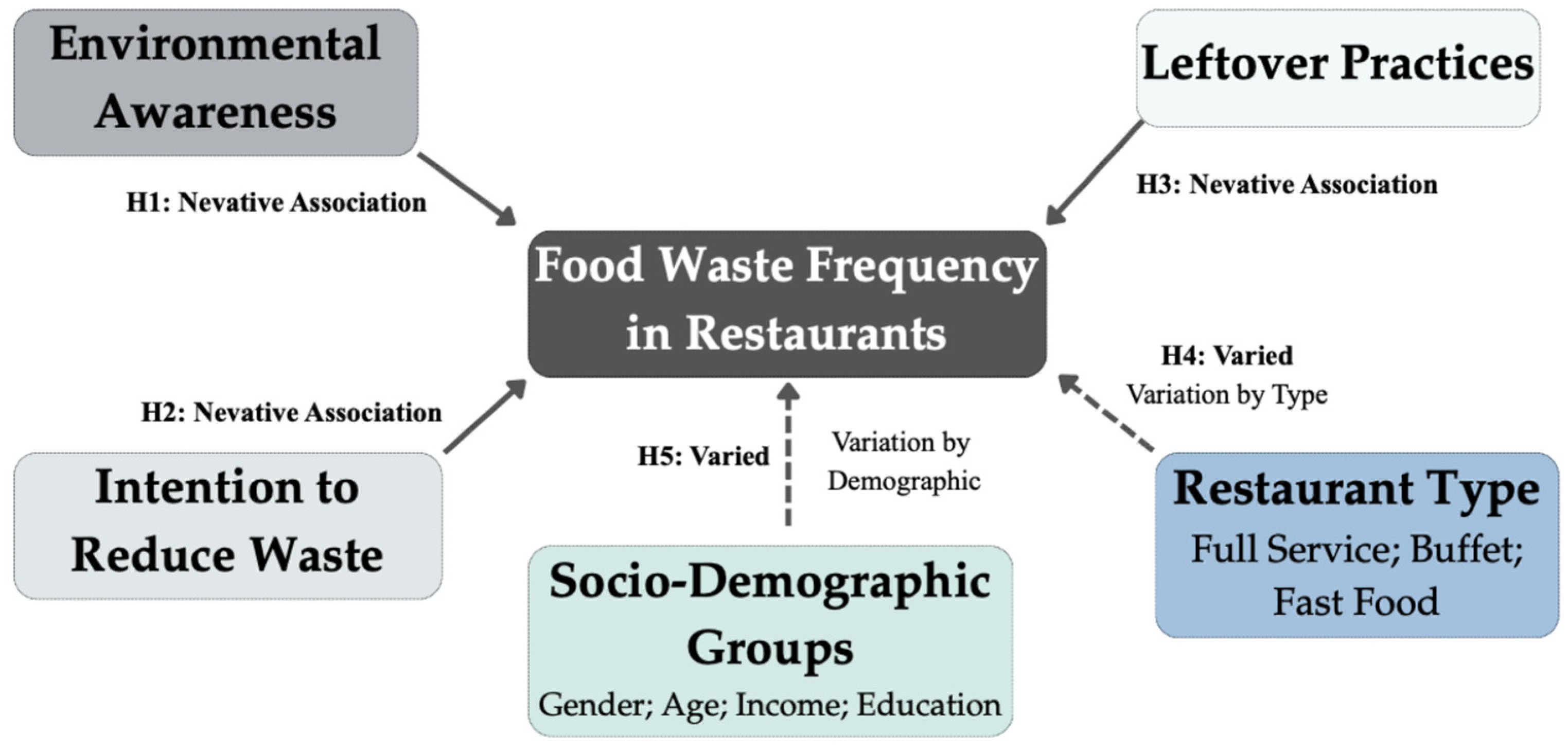
Figure 1 summarises the conceptual model and hypothesised relationships examined in this study. The conceptual structure of the study is grounded in the attitude–behaviour gap and in a behavioural–operational interpretation of restaurant food waste, rather than in a formal structural framework such as the Theory of Planned Behaviour. This is consistent with a recognised strand of empirical food waste research in hospitality that examines behavioural associations and contextual drivers using exploratory, associational designs without full theoretical models [38,40]. The contribution of the study lies in specifying, within a Mediterranean and logistics context, the mechanisms through which consumer-level behavioural variation generates operational inefficiencies at the restaurant supply chain level.

3. Materials and Methods

3.1. Research Design

This study employed a quantitative, cross-sectional research design to examine the relationship between consumer behaviour and food waste frequency in restaurant settings. Data were collected through a structured online questionnaire administered to adult consumers in Greece. The survey approach was selected as appropriate for capturing self-reported attitudes, intentions, and behavioural practices related to food waste in out-of-home dining contexts.
The research focused specifically on restaurant consumption rather than household food waste, aiming to explore behavioural determinants within the hospitality sector. Accordingly, the empirical design is intended to identify directional behavioural associations rather than to develop predictive models or establish causal relationships.
Consistent with the exploratory aim of the study, the empirical design is intended to identify directional behavioural associations with self-reported restaurant food waste rather than to develop predictive models or establish causal relationships. The analysis, therefore, prioritises transparent, well-established techniques over complex modelling, and findings are interpreted as indicative patterns within the sampled population.

3.2. Sampling and Data Collection

Data were collected over a one-month period using an online questionnaire distributed via social media platforms. Participation was voluntary and anonymous. Respondents were required to be at least 18 years old and to have experience dining in restaurants. The use of an online convenience sample of restaurant customers follows established practice in exploratory studies on plate waste and leftover-reduction intentions, which typically recruit respondents through digital channels rather than through probabilistic sampling frames [41].
A total of 228 valid responses were obtained and included in the analysis. The sampling method can be characterised as convenience sampling, as participants were recruited through digital distribution channels rather than random selection. While this approach limits full generalisability, it is commonly used in behavioural food waste research [23,36]. This sampling approach also likely overrepresents younger and more educated respondents and should therefore be interpreted as capturing directional behavioural patterns within a digitally accessible consumer segment rather than population-level estimates.
The use of an online convenience sample reflects the practical difficulty of defining a probabilistic sampling frame for restaurant customers and follows other exploratory studies on plate waste and restaurant customers that rely on digitally recruited respondents. As such, the sample is best understood as capturing directional behavioural patterns among digitally connected restaurant users in Greece, rather than providing nationally representative estimates—a limitation that is taken into account when interpreting external validity.
The sample consisted of 58.3% women and 39.9% men, with a small proportion identifying otherwise. The majority of respondents were between 18 and 34 years old. Education levels were predominantly tertiary, and income distribution was concentrated in lower- and middle-income categories. Detailed descriptive statistics are presented in Section 4.

3.3. Measurement Instrument

The questionnaire was developed based on prior literature on food waste behaviour and hospitality waste management [23,26,27]. It consisted of 20 items organised into three main sections:
  • Consumer Behaviour and Restaurant Practices, including preferred restaurant type and dining frequency.
  • Food Waste Behaviour, including self-reported frequency of leaving food on the plate, likelihood of taking leftovers home, perception of food waste as a problem, perceived environmental impact, and intention to reduce food waste.
  • Socio-Demographic Variables, including gender, age, income, and education level.
Food waste frequency was measured using a four-point ordinal scale (1 = “Not at all” to 4 = “Very often”), while environmental awareness, perceived problem severity, and intention to reduce food waste were assessed using single global Likert-type items. This reflects a deliberate trade-off between measurement granularity and respondent burden in an online survey that covers multiple behavioural domains and is consistent with large-scale food-waste surveys that use concise self-report indicators to capture key attitudes and behaviours. The use of single global Likert-type items for core constructs reflects a deliberate trade-off between measurement granularity and respondent burden in an online survey and is consistent with broader food-waste and attitude surveys that rely on succinct indicators for key perceptions and intentions [42].
All items were administered in Greek and were adapted from previous studies where possible; wording and response options were reviewed by two domain experts for content and face validity in the Greek context, and the questionnaire was pre-tested for clarity and consistency prior to distribution, with no major revisions required.
Key constructs (environmental awareness, perception of food waste as a problem, intention to reduce food waste, likelihood of taking leftovers home) were operationalised as single global items. This reflects a deliberate trade-off between measurement depth and respondent burden in an online survey covering multiple behavioural domains and is consistent with food-waste and attitude surveys that employ succinct Likert-type indicators for core constructs. Item wording was informed by prior food-waste and hospitality research and reviewed by two domain experts to ensure content and face validity in the Greek context.
Throughout the manuscript, a distinction is maintained between three related but conceptually separate items: (1) perceived environmental impact of food waste, reflecting the respondent’s belief that food waste has negative environmental consequences; (2) perception of food waste as a societal problem, referring to the general recognition of food waste as a serious issue; and (3) environmental awareness, used as a summary term for the combined orientation toward the environmental dimension of food waste. These constructs are treated as distinct variables in the analysis, as shown in the Spearman correlation matrix (Table 1), which reports their separate associations with food waste frequency.

3.4. Statistical Analysis

Data were analysed using IBM SPSS Statistics, version 27. Both descriptive and inferential statistical techniques were employed. Given the exploratory objective of the study, the analysis prioritised transparent and appropriate associational techniques over predictive or model-building approaches.
Descriptive statistics were used to summarise demographic characteristics, restaurant preferences, and key behavioural variables. Given the ordinal nature of several measures and the lack of normality assumptions, Spearman’s rank-order correlation was used to examine monotonic associations between environmental awareness, intention to reduce food waste, leftover practices, and food waste frequency. In line with standard recommendations for ordinal survey data, Spearman’s rho was selected as a non-parametric correlation coefficient that does not require interval-level measurement or normally distributed variables. Differences in food-waste frequency across restaurant types and socio-demographic groups were examined using one-way ANOVA, treating the four-point waste frequency scale as approximately interval, as is common in behavioural research employing Likert-type outcomes.
Given the exploratory purpose of the study, ANOVA results are interpreted cautiously as indicative group patterns, and more complex multivariate or predictive models were not pursued. This focus on standard, transparent techniques is consistent with other empirical work on plate waste, leftover practices and restaurant customer behaviour, facilitating comparison with studies that examine taking leftovers home and related behavioural intentions. Statistical significance was evaluated at the 5% level (p < 0.05), with emphasis placed on the direction and robustness of observed associations rather than on maximising explanatory power. Following common practice in applied behavioural research, the four-point waste frequency scale was treated as approximately interval for these group comparisons, and the ANOVA results are interpreted as robust but approximate tests of mean differences rather than strict parametric inference.
Given the exploratory and associational focus of the study and the use of single-item ordinal measures, more complex multivariate or ordinal models (e.g., regression or structural equation approaches) were not implemented in order to avoid overstating causal or predictive claims beyond what the data can support.

4. Results

4.1. Descriptive Statistics

The final sample consisted of 228 respondents residing in Greece. Women represented 58.3% of the sample, men 39.9%, and 1.8% identified otherwise. The largest age group was 18–24 years (42.1%), followed by 25–34 years (27.2%). Most participants held tertiary education degrees, while income distribution was concentrated in lower and middle-income categories.
Regarding food waste behaviour in restaurants, 50% of respondents reported moderate levels of food waste, while 23.7% reported high levels. Only 6.1% indicated that they never leave food on their plate. The mean food waste frequency was 2.91 (SD = 0.824), indicating generally moderate waste behaviour.
Environmental awareness was high overall, with 61.4% characterising food waste as a “very important” problem. However, 64% reported that they usually do not take leftovers home, suggesting a potential discrepancy between awareness and behaviour.

4.2. Environmental Awareness, Intention, and Leftover Practices (H1–H3)

Spearman’s rank-order correlation analysis was conducted to examine the associations between environmental awareness, intention to reduce food waste, leftover practices, and food waste frequency (Table 1).
Food waste frequency was negatively and significantly associated with:
  • Environmental awareness (ρ = −0.177, p = 0.007);
  • Intention to reduce food waste (ρ = −0.235, p < 0.001);
  • Likelihood of taking leftovers home (ρ = −0.156, p = 0.018).
These findings indicate that higher environmental awareness, stronger intention to reduce food waste, and more frequent leftover management are associated with lower reported waste frequency in restaurants. The corresponding correlation coefficients (ρ ≈ −0.16 to −0.24) are statistically significant but small, which is consistent with prior food-waste research where individual attitudinal predictors typically exhibit modest effect sizes within multifactorial behavioural models. The observed associations were statistically significant but small in magnitude (|ρ| = 0.156–0.235). The small but statistically significant correlations observed (ρ ≈ −0.15 to −0.23) are in line with previous behavioural studies on restaurant food waste, which similarly report modest effect sizes for individual attitudinal predictors within multifactorial behavioural models [41,43]. Given the small magnitude of these coefficients, the results are interpreted as indicating modest behavioural associations with food waste frequency rather than strong or practically decisive effects.
Therefore, H1, H2, and H3 are all supported. Notably, perception of food waste as a serious problem was not significantly correlated with food waste frequency (ρ = 0.080, p = 0.230), suggesting a possible attitude–behaviour gap.

4.3. Restaurant Type Differences (H4)

To examine whether food waste frequency differs across restaurant types, one-way ANOVA was conducted (Table 2).
Mean waste frequency was highest in buffet-style restaurants (M = 3.00) and hotels (M = 3.00), followed by full-service restaurants (M = 2.96) and taverns (M = 2.93). Fast-food establishments reported the lowest mean waste frequency (M = 2.88).
However, differences across restaurant types were not statistically significant (p > 0.05). Thus, H4 was not supported.

4.4. Socio-Demographic Differences (H5)

One-way ANOVA analyses were conducted to assess differences in food waste frequency across socio-demographic categories (Table 3).
Gender differences in food waste frequency were not statistically significant. However, women reported significantly higher perception of food waste as a serious problem compared to men (F(2,225) = 3.758, p = 0.025). The absence of statistically significant differences across restaurant types in this sample does not imply that format effects are irrelevant in all contexts; rather, it suggests that, under the present measurement and sample conditions, structural differences alone do not emerge as strong predictors relative to individual-level behavioural variation.
Age differences were not consistently significant in relation to food waste frequency. However, age significantly influenced support for portion reduction policies (F(4,223) = 2.940, p = 0.021), with younger respondents expressing stronger support (Table 4), while restaurant type preferences also varied across age groups (Table 5).
Differences across income (Table 6) and education categories (Table 7) showed variation in mean values, but statistical significance was not consistently observed across all groups.
Overall, while some demographic variations were identified, they were not uniformly significant across all tested variables. Therefore, H5 receives partial support.

5. Discussion

This study set out to examine whether food waste in restaurant settings is primarily shaped by structural characteristics of hospitality formats or by consumer-level behavioural determinants. In line with prior empirical work on restaurant plate waste and leftover-reduction intentions, the analysis combines descriptive distributions with standard inferential techniques (correlations, ANOVA, and regression) to examine relationships between behavioural variables, rather than comparing alternative modelling ‘baselines’ or benchmark methods [41,42]. The findings suggest that behavioural factors exhibit more consistent statistical associations with food waste frequency than structural restaurant characteristics, although the effect sizes are modest and should be interpreted as indicative rather than decisive [1,6].

5.1. Implications for Theory

This study contributes to the literature in three principal ways. Its contribution lies in examining consumer-side behavioural variation in restaurant food waste within a Mediterranean setting and in interpreting these behavioural patterns through an operational and supply chain lens. First, it extends research on the attitude–behaviour gap into restaurant environments, which remain less examined compared to household contexts [1]. The findings suggest that the gap in hospitality settings is characterised less by complete behavioural inconsistency and more by insufficient translation of passive awareness into actionable intention.
Second, the study challenges structurally deterministic explanations of restaurant food waste by demonstrating that format effects alone do not account for behavioural outcomes [4,12]. This underscores the importance of consumer agency in shaping sustainability performance. Alongside behavioural factors, the operational complexity of agri-food supply chains, including the challenges of implementing traceability across multiple tiers, further underscores the difficulty of achieving end-to-end waste reduction [44].
Third, by highlighting leftover practices as a key behavioural determinant [4,34], the study identifies a practical and measurable intervention point within the broader sustainable consumption framework.
Together, these contributions reinforce the need to conceptualise restaurant food waste as a behavioural–operational phenomenon rather than solely a managerial inefficiency [4].

5.2. Implications for Practise and Policy

For restaurant managers, the findings suggest that reducing food waste requires integrating behavioural strategies alongside operational improvements [5]. Encouraging leftover take-away practices, offering flexible portion sizes, and implementing behavioural nudges at the point of ordering may represent effective interventions [11,34]. Since awareness alone does not guarantee action, policies should prioritise behavioural facilitation rather than relying solely on informational campaigns [12]. Practically, these findings support low-cost interventions such as flexible portion options, default takeaway packaging for unfinished meals, and simple point-of-order prompts that help consumers better align their ordering decisions with expected consumption. In practice, these measures can be implemented through modular portion menus, default packaging protocols for unfinished meals, and brief server prompts at the point of ordering to calibrate expected consumption before order confirmation.
At the policy level, the results support the objectives of Sustainable Development Goal 12.3 of the United Nations, which aims to halve food waste at the consumer and retail levels. Addressing restaurant food waste is essential for reducing resource inefficiencies across food supply chains [2,6]. The present results further suggest that behavioural determinants should be integrated more directly into hospitality sustainability frameworks and food waste reduction strategies targeting out-of-home consumption contexts.
Because the study is cross-sectional and associational, the identified relationships cannot be interpreted as causal; we therefore describe behavioural variables as correlates of food waste frequency and discuss implications as hypotheses for practice and future research rather than as confirmed causal mechanisms.
At the operational level, plate waste reduces the accuracy with which ordered quantities can be interpreted as realised consumption, thereby weakening procurement calibration, portion planning, and short-cycle inventory decisions. Behavioural interventions that reduce over-ordering or improve leftover retention can therefore improve both waste prevention and operational alignment. Achieving circular outcomes in food supply chains requires not only behavioural change at the consumption stage but also structural mechanisms, such as traceability systems, that connect downstream waste signals with upstream resource planning decisions [45]. Plate waste affects not only disposal outcomes but also procurement planning, inventory management, and upstream resource use [4]. By demonstrating that behavioural variables significantly influence waste frequency, this study highlights the need for integrated strategies that combine operational efficiency with behavioural design.

5.3. Limitations of the Study and Future Research Directions

Several limitations should be acknowledged. First, the use of convenience sampling through social media limits representativeness and external validity, particularly given the likely overrepresentation of younger and more highly educated respondents and the absence of a defined population sampling frame. Second, the study relies on single-item, self-reported measures for key constructs, including environmental awareness, intention to reduce food waste, leftover practices and food-waste frequency. This measurement strategy inevitably introduces measurement error and limits the psychometric precision of the constructs, as we did not implement multi-item scales, internal consistency testing (e.g., Cronbach’s alpha) or formal construct validation. These constraints are typical of exploratory survey designs where questionnaire length must be tightly controlled, but they mean that the indicators should be interpreted as pragmatic behavioural proxies rather than as fully specified latent constructs.
Furthermore, collecting all variables via a single self-report questionnaire raises the possibility of common method bias, a well-documented issue in behavioural survey research. To mitigate this risk, the survey was anonymous, items were worded in a neutral and non-evaluative manner, and predictor and outcome variables were interspersed rather than presented in separate blocks. Nevertheless, self-report bias and shared method variance cannot be ruled out and may have attenuated or inflated some associations. For this reason, the findings are interpreted as directional patterns within the sampled population, and we avoid strong claims about causal relationships or precise effect magnitudes, especially regarding the absolute level of food waste reported. Given the strong normative salience of food waste as an environmental issue, respondents may also have overstated environmentally desirable attitudes while underreporting their actual waste behaviour. This may have contributed to the observed attitude–behaviour gap and should be considered when interpreting self-reported food waste frequency.
From a logistics research perspective, a key priority for future work is combining behavioural survey data with operational records, such as procurement orders, daily inventory write-offs, and portion waste logs, to directly quantify the supply chain cost of consumer plate waste. Observational measurement of plate waste could provide more objective data. Comparative cross-country studies may also help determine whether the observed patterns are culturally specific or generalisable across different dining contexts [6,38]. Finally, integrating behavioural analysis with operational performance metrics may further advance understanding of the behavioural–supply chain interface [4,5].
In conclusion, restaurant food waste should not be conceptualised solely as a managerial inefficiency but as a behavioural phenomenon embedded within hospitality systems [38]. Bridging the gap between awareness and action in out-of-home consumption settings represents a critical step toward advancing sustainable food systems [12,13].

5.4. Behavioural Determinants as Primary Drivers

The significant negative associations between environmental awareness, intention to reduce waste, leftover practices, and food waste frequency indicate that individual-level behavioural factors are central in shaping restaurant waste outcomes [11,34]. Consumers who report stronger environmental awareness and higher intention to reduce waste tend to generate less plate waste, suggesting that cognitive and motivational variables retain explanatory power even in out-of-home contexts [34].
However, the findings also reveal a critical nuance. While awareness and intention are associated with lower waste frequency, the perception of food waste as a serious societal problem does not significantly predict behaviour [3]. This distinction highlights an important dimension of the attitude–behaviour gap. General recognition of food waste as an issue does not automatically translate into context-specific behavioural restraint [38]. In restaurant settings, abstract concern appears insufficient unless accompanied by personal intention and actionable practices [12,13]. Although the effect sizes are modest, they are consistent with behavioural research where multiple situational factors shape consumption outcomes.
This suggests that the attitude–behaviour gap in hospitality contexts may not be a complete disconnect between cognition and action, but rather a differentiation between passive awareness and active behavioural commitment [4,12]. Sustainable consumption interventions must therefore move beyond informational campaigns and focus on strengthening behavioural intention and facilitating practical action [13]. In Mediterranean dining contexts, where shared eating, abundance norms, and hospitality rituals shape expectations around food consumption, this gap may be further reinforced by social expectations that normalise over-ordering and discourage waste-prevention behaviours such as taking leftovers home.

5.5. The Limited Influence of Restaurant Format

Contrary to expectations derived from hospitality literature [6,11], food waste frequency did not significantly differ across restaurant types. Although buffet-style and hotel environments exhibited slightly higher mean values, structural format alone did not produce statistically meaningful differences.
This finding challenges the assumption that operational design inherently determines waste outcomes [1]. While buffet systems reduce portion constraints and may create opportunities for over-serving [26], consumer agency appears to mediate these structural conditions. Even within permissive formats, behavioural dispositions influence final waste levels [11].
The implication is that restaurant food waste cannot be addressed solely through format redesign [5,12]. Structural interventions must be complemented by behavioural strategies that influence ordering decisions, portion perception, and leftover management [5,12]. The results therefore reinforce the importance of analysing the behavioural–operational interface rather than treating operational inefficiencies as the primary explanatory factor.

5.6. Leftover Management as a Behavioural Leverage Point

Among the behavioural variables examined, leftover practices represent a particularly actionable mechanism [6]. Consumers who report a higher likelihood of taking leftovers home exhibit lower waste frequency, suggesting that simple post-consumption behaviours can substantially reduce plate waste [34].
However, the relatively low prevalence of leftover takeaway practices indicates the presence of social or contextual barriers [11]. Cultural norms, convenience concerns, or perceived stigma may discourage this behaviour [34]. Normalising and facilitating leftover management, through proactive staff prompts, standardised packaging practices, or visible sustainability messaging, may therefore represent a low-cost, high-impact intervention [12].
From a sustainability management perspective, leftover facilitation may function as a behavioural “leverage point” capable of reducing waste without fundamentally altering restaurant operations [12].

5.7. Rethinking the Role of Demographics

Socio-demographic variables showed limited and inconsistent effects on food waste frequency, supporting evidence from other studies [38]. Although differences in perception emerged across gender and age groups, these did not consistently translate into behavioural variation. This finding supports prior evidence that demographic segmentation alone provides limited explanatory power for food waste behaviour [23,34,36].
The implication is that behavioural interventions should prioritise psychological and situational drivers over demographic targeting [4]. Sustainable consumption strategies may be more effective when they address habits, norms, and contextual cues rather than relying on age- or income-based segmentation models [2].

6. Conclusions

This study examined the behavioural determinants of food waste in restaurant settings, focusing on environmental awareness, intention to reduce waste, leftover practices, restaurant type, and socio-demographic characteristics in a Greek context. The findings indicate that restaurant food waste is more consistently associated with consumer-level behavioural factors than with structural restaurant characteristics alone. The findings further highlight the persistence of the attitude–behaviour gap in out-of-home consumption settings, suggesting that awareness alone is insufficient to reduce food waste behaviour. In Mediterranean restaurant settings, where shared dining and norms of abundance are socially embedded, these contextual expectations may further weaken the translation of awareness into waste-reducing behaviour. From a logistics and supply chain perspective, the findings suggest that plate waste should be treated as a source of demand signal distortion at the point of consumption. When ordered quantities systematically exceed consumed quantities, realised demand becomes a weaker basis for procurement, portion design, and inventory planning. Interventions such as portion flexibility and facilitated takeaway practices may therefore improve the alignment between prepared and consumed quantities, supporting both waste reduction and more efficient downstream resource planning. Overall, the study highlights the importance of integrating behavioural insights into hospitality sustainability strategies and operational planning in order to support more effective food waste reduction in restaurant environments.

Author Contributions

Conceptualization, M.K. and F.A.; methodology, M.K.; software, M.K. and A.K.; validation, M.K. and F.A.; formal analysis, M.K.; investigation, M.K., A.K. and M.S.; resources, M.K., A.K. and M.S.; data curation, M.K.; writing—original draft preparation, M.K.; writing—review and editing, A.K., M.S. and F.A.; supervision, F.A. All authors have read and agreed to the published version of the manuscript.

Funding

This research received no external funding.

Institutional Review Board Statement

Ethical review and approval were waived for this study by Institution Committee due to Legal Regulations (Research Ethics and Deontology Committees (REDC) operate at public universities under Greek Law 4521/2018. The Agricultural University of Athens (AUA) maintains such a committee (Ε.H.Δ.Ε. ΓΠA), governed by its internal Regulation of Principles and Procedures. Under Article 4.3(a) of this Regulation, mandatory prior approval is required exclusively for externally funded research projects involving human subjects. The present study was not an externally funded research project; it was an independent academic survey conducted for scholarly publication. Consequently, under Article 4.3(b) of the same Regulation, review by the Ε.H.Δ.Ε. ΓΠA does not constitute a mandatory precondition for conducting or publishing the research. The research involved an anonymous, voluntary survey administered to adult food supply chain actors. No interventions, clinical procedures, physical examinations, or collection of biological material were performed. Participants faced no physical, psychological, legal, financial, or social risk.)

Informed Consent Statement

Informed consent for participation was obtained from all subjects involved in the study.

Data Availability Statement

The original contributions presented in this study are included in the article. Further inquiries can be directed to the corresponding author.

Conflicts of Interest

The authors declare no conflicts of interest.

Abbreviations

The following abbreviations are used in this manuscript:
SDGsSustainable Development Goals

References

  1. Elkhwesky, Z.; Gumbo, A.R.; Abuelhassan, A.E.; Hassan, H.; Elkhwesky, F.F.Y.; El Manzani, Y. A Systematic Review with Bibliometric Analysis of Food Waste Research in Contemporary Hospitality. J. Culin. Sci. Technol. 2025, 1–33. [Google Scholar] [CrossRef] [Scilit]
  2. Salume, P.K.; Barbosa, M.W.; Pinto, M.d.R. Food Waste and Consumer Behavior: A Bibliometric and Review Study and Future Research Directions. Foods 2026, 15, 380. [Google Scholar] [CrossRef] [Scilit]
  3. Wani, M.D.; Dada, Z.A.; Shah, S.A. What Factors Influence Consumers’ Intention and Food Waste Reduction Perceptions in Indian Restaurants? Br. Food J. 2024, 127, 569–587. [Google Scholar] [CrossRef] [Scilit]
  4. Nand, A.A.; Bhattacharya, A.; Prajogo, D.; Sohal, A.; de Vass, T. Understanding Food Waste in the Hospitality Industry: A Social Practice Theory Approach. Int. J. Hosp. Manag. 2025, 130, 104232. [Google Scholar] [CrossRef] [Scilit]
  5. Tang, X.; Li, S.; An, J. From Plate to Prep: Designing Behavioral Intervention Tools to Reduce Food Waste in Restaurant Staff and Customers. Int. J. Gastron. Food Sci. 2025, 42, 101308. [Google Scholar] [CrossRef] [Scilit]
  6. Aleksanyan, V.; Gevorgyan, S.; Markosyan, D.; Arion, F.H.; Khachatryan, K.; Oroian, F.C.; Muresan, I.C.; Arion, I.D.; Chis, S. Managing Food Waste in the Restaurant Sector: Comparative Insights from Greece and Armenia. Sustainability 2025, 17, 11386. [Google Scholar] [CrossRef] [Scilit]
  7. Eurostat. Food Waste and Food Waste Prevention—Estimates. Available online: https://ec.europa.eu/eurostat/statistics-explained/index.php?title=Food_waste_and_food_waste_prevention_-_estimates (accessed on 26 February 2026).
  8. Rashid, A.; Baloch, N.; Rasheed, R.; Ngah, A.H. Big Data Analytics-Artificial Intelligence and Sustainable Performance through Green Supply Chain Practices in Manufacturing Firms of a Developing Country. J. Sci. Technol. Policy Manag. 2025, 16, 42–67. [Google Scholar] [CrossRef] [Scilit]
  9. Rashid, A.; Rasheed, R.; Amirah, N.A. Synergizing TQM, JIT, and Green Supply Chain Practices: Strategic Insights for Enhanced Environmental Performance. Logistics 2025, 9, 18. [Google Scholar] [CrossRef] [Scilit]
  10. Ntai, S.; Kontopanou, M.; Anastasiadis, F. Leveraging Household Food Waste Consumer Behaviour to Optimise Logistics. Logistics 2025, 9, 126. [Google Scholar] [CrossRef] [Scilit]
  11. Morkunas, M.; Wang, Y.; Borsellino, V. What Really Drives Food Waste in the Restaurant Industry? Evidence from Lithuania. J. Qual. Assur. Hosp. Tour. 2025, 1–38. [Google Scholar] [CrossRef] [Scilit]
  12. Munir, K. Towards Sustainable Food Waste Management in Restaurants: A Case Study by Applying Social Practice Theory. Int. J. Gastron. Food Sci. 2025, 42, 101293. [Google Scholar] [CrossRef] [Scilit]
  13. Pizzo, A.; Suter, M.; Bauer, J.M.; Reisch, L.A. Food Waste Salience and Task Knowledge to Reduce Individual Food Waste: A Field Experiment in a Restaurant Setting. J. Behav. Exp. Econ. 2025, 117, 102375. [Google Scholar] [CrossRef] [Scilit]
  14. Nichifor, B.; Zait, L.; Timiras, L. Drivers, Barriers, and Innovations in Sustainable Food Consumption: A Systematic Literature Review. Sustainability 2025, 17, 2233. [Google Scholar] [CrossRef] [Scilit]
  15. Sigala, E.G.; Chroni, C.; Boikou, K.; Abeliotis, K.; Panagiotakos, D.; Lasaridi, K. Quantification of Household Food Waste in Greece to Establish the 2021 National Baseline and Methodological Implications. Waste Manag. 2024, 190, 102–112. [Google Scholar] [CrossRef] [Scilit]
  16. Kritikou, T.; Panagiotakos, D.; Abeliotis, K.; Lasaridi, K. Investigating the Determinants of Greek Households Food Waste Prevention Behaviour. Sustainability 2021, 13, 11451. [Google Scholar] [CrossRef] [Scilit]
  17. Vardopoulos, I.; Abeliotis, K.; Lasaridi, K. A Systematic Informetric Analysis and Literature Review of Food Waste Quantification Studies in the Food Service Industry. Sustainability 2024, 17, 103. [Google Scholar] [CrossRef] [Scilit]
  18. Widiyawati, S.; Anityasari, M.; Dewi, R.S.; Lukodono, R.P. Review: Exploring the Impact of Serving Methods on Food Consumption—Gaps and Opportunities in Sustainability and Consumer Behavior. IOP Conf. Ser. Earth Environ. Sci. 2025, 1493, 012009. [Google Scholar] [CrossRef] [Scilit]
  19. Tan, B.C.; Khan, N.; Lau, T.C. Moving towards Sustainable Restaurants: Bridging the Attitude-Behaviour Gap. Int. J. Sustain. Soc. 2022, 14, 258–273. [Google Scholar] [CrossRef] [Scilit]
  20. Goodman-Smith, F.; Mirosa, R.; Mirosa, M. Understanding the Effect of Dining and Motivational Factors on Out-Of-Home Consumer Food Waste. Sustainability 2020, 12, 6507. [Google Scholar] [CrossRef] [Scilit]
  21. Zhao, N.; Begho, T. Micro-Level Contributions Towards SDG Target 12.3: Identifying the Behavioural Drivers of Household Food Waste Reduction. Stud. Microecon. 2025, 13, 106–126. [Google Scholar] [CrossRef] [Scilit]
  22. Boulet, M.; Stott, A.; Kneebone, S. Which Behaviours Matter? Prioritising Food Waste Reduction Behaviours for Targeted Policy and Program Approaches. J. Environ. Manag. 2023, 345, 118668. [Google Scholar] [CrossRef] [Scilit]
  23. Ponis, S.T.; Papanikolaou, P.-A.; Katimertzoglou, P.; Ntalla, A.C.; Xenos, K.I. Household Food Waste in Greece: A Questionnaire Survey. J. Clean. Prod. 2017, 149, 1268–1277. [Google Scholar] [CrossRef] [Scilit]
  24. Abeliotis, K.; Lasaridi, K.; Costarelli, V.; Chroni, C. The Implications of Food Waste Generation on Climate Change: The Case of Greece. Sustain. Prod. Consum. 2015, 3, 8–14. [Google Scholar] [CrossRef] [Scilit]
  25. Aamir, M.; Ahmad, H.; Javaid, Q.; Hasan, S.M. Waste Not, Want Not: A Case Study on Food Waste in Restaurants of Lahore, Pakistan. J. Food Prod. Mark. 2018, 24, 591–610. [Google Scholar] [CrossRef] [Scilit]
  26. Food Waste Reduction Alliance. Best Practices & Emerging Solutions Toolkit; Food Waste Reduction Alliance: Arlington, VA, USA, 2014. [Google Scholar]
  27. Sakaguchi, L.; Pak, N.; Potts, M.D. Tackling the Issue of Food Waste in Restaurants: Options for Measurement Method, Reduction and Behavioral Change. J. Clean. Prod. 2018, 180, 430–436. [Google Scholar] [CrossRef] [Scilit]
  28. van Geffen, L.; van Herpen, E.; Sijtsema, S.J. A Broader Perspective on Household Food Waste: A Call for Encompassing Consumers’ Food Related Goals, the Food System, and the Impact of Reduction Activities. Resour. Conserv. Recycl. 2020, 163, 105041. [Google Scholar] [CrossRef] [Scilit]
  29. Casonato, C.; García-Herrero, L.; Caldeira, C.; Sala, S. What a Waste! Evidence of Consumer Food Waste Prevention and Its Effectiveness. Sustain. Prod. Consum. 2023, 41, 305–319. [Google Scholar] [CrossRef] [Scilit]
  30. Mena, C.; Terry, L.A.; Williams, A.; Ellram, L. Causes of Waste across Multi-Tier Supply Networks: Cases in the UK Food Sector. Int. J. Prod. Econ. 2014, 152, 144–158. [Google Scholar] [CrossRef] [Scilit]
  31. Dora, M.; Biswas, S.; Choudhary, S.; Nayak, R.; Irani, Z. A System-Wide Interdisciplinary Conceptual Framework for Food Loss and Waste Mitigation Strategies in the Supply Chain. Ind. Mark. Manag. 2021, 93, 492–508. [Google Scholar] [CrossRef] [Scilit]
  32. Priefer, C.; Jörissen, J.; Bräutigam, K.-R. Food Waste Prevention in Europe—A Cause-Driven Approach to Identify the Most Relevant Leverage Points for Action. Resour. Conserv. Recycl. 2016, 109, 155–165. [Google Scholar] [CrossRef] [Scilit]
  33. WWF. Hellas Measures to Reduce Food Waste. Available online: https://contentarchive.wwf.gr/images/pdfs/food-waste-measures.pdf (accessed on 5 April 2026).
  34. Kozic, T.; Wolf, R.; Straus, S. An Exploratory Analysis of Consumer Attitudes and Behavioural Intentions Toward Food Waste Reduction in Slovenian Food Services. Sustainability 2025, 17, 3953. [Google Scholar] [CrossRef] [Scilit]
  35. Li, X.; Hu, W.; Li, J.; Qing, P. The Actionability of Household Food Waste Reduction. Sustain. Prod. Consum. 2024, 51, 55–66. [Google Scholar] [CrossRef] [Scilit]
  36. Bilska, B.; Tomaszewska, M.; Kołożyn-Krajewska, D. Food Waste in Polish Households—Characteristics and Sociodemographic Determinants on the Phenomenon. Nationwide Research. Waste Manag. 2024, 176, 30–40. [Google Scholar] [CrossRef] [Scilit] [PubMed]
  37. Talwar, S.; Kaur, P.; Yadav, R.; Sharma, R.; Dhir, A. Food Waste and Out-of-Home-Dining: Antecedents and Consequents of the Decision to Take Away Leftovers after Dining at Restaurants. J. Sustain. Tour. 2023, 31, 47–72. [Google Scholar] [CrossRef] [Scilit]
  38. Liu, Y.; Wells, V.K.; Kapetanaki, A.B. Understanding Out-of-Home Plate Waste: A Systematic Review and Future Research Agenda. Int. J. Hosp. Manag. 2026, 135, 104630. [Google Scholar] [CrossRef] [Scilit]
  39. Baldwin, C.; Wilberforce, N.; Kapur, A. Restaurant and Food Service Life Cycle Assessment and Development of a Sustainability Standard. Int. J. Life Cycle Assess. 2011, 16, 40–49. [Google Scholar] [CrossRef] [Scilit]
  40. Dhir, A.; Talwar, S.; Kaur, P.; Malibari, A. Food Waste in Hospitality and Food Services: A Systematic Literature Review and Framework Development Approach. J. Clean. Prod. 2020, 270, 122861. [Google Scholar] [CrossRef] [Scilit]
  41. Kim, W.; Che, C.; Jeong, C. Restaurant Customers’ Food Leftover Reduction Intention Derived from Nature Connection and Biospheric Values: A Comparison between Men and Women. Front. Psychol. 2023, 13, 976102. [Google Scholar] [CrossRef] [Scilit]
  42. Guimarães, N.S.; Reis, M.G.; Fontes, L.D.A.; Zandonadi, R.P.; Botelho, R.B.A.; Alturki, H.A.; Saraiva, A.; Raposo, A. Plate Food Waste in Food Services: A Systematic Review and Meta-Analysis. Nutrients 2024, 16, 1429. [Google Scholar] [CrossRef] [Scilit]
  43. Asif, F.; Donato, C.; Ishaq, M.I. Beyond the Plate: A Systematic Literature Review on Consumer-Driven Food Waste in Hospitality. Bus. Strategy Environ. 2026, bse.70901. [Google Scholar] [CrossRef] [Scilit]
  44. Anastasiadis, F.; Apostolidou, I.; Tsolakis, N. Challenges and Opportunities of Supply Chain Traceability: Insights from Emergent Agri-Food Sector. Supply Chain. Manag. 2025, 30, 106–126. [Google Scholar] [CrossRef] [Scilit]
  45. Anastasiadis, F.; Manikas, I.; Apostolidou, I.; Wahbeh, S. The Role of Traceability in End-to-End Circular Agri-Food Supply Chains. Ind. Mark. Manag. 2022, 104, 196–211. [Google Scholar] [CrossRef] [Scilit]
Figure 1. Downstream Food Waste in Restaurant Supply Chains.
Logistics 10 00115 g001
Table 1. Spearman Correlation Matrix of Food Waste Frequency and Behavioural Variables.
Frequency of WasteProblem of WasteEnvironmental ImpactIntention to ReduceTaking Leftovers Home
Frequency of wasteCorrelation Coefficient1.0000.080−0.177 **−0.235 **−0.156 *
Sig. (2-tailed).0.2300.007<0.0010.018
N228228228228228
Problem of wasteCorrelation Coefficient0.0801.000−0.310 **−0.250 **−0.161 *
Sig. (2-tailed)0.230.<0.001<0.0010.015
N228228228228228
Environmental ImpactCorrelation Coefficient−0.177 **−0.310 **1.0000.292 **0.271 **
Sig. (2-tailed)0.007<0.001.<0.001<0.001
N228228228228228
Intention to reduceCorrelation Coefficient−0.235 **−0.250 **0.292 **1.0000.147 **
Sig. (2-tailed)<0.001<0.001<0.001.0.027
N228228228228228
Taking leftovers homeCorrelation Coefficient−0.156 *−0.161 *0.271 **0.147 *1.000
Sig. (2-tailed)0.0180.015<0.0010.027.
N228228228228228
** Correlation is significant at the 0.01 level (2-tailed). * Correlation is significant at the 0.05 level (2-tailed).
Table 2. Mean and standard deviation of food waste frequency across restaurant types.
Type of RestaurantMean Waste ScoreStandard DeviationN
Fast Food2.880.802121
Taverns2.930.807158
Restaurants2.960.79279
Buffets3.000.73912
Hotels3.000.8167
Table 3. One-way ANOVA results for differences in food waste frequency across groups.
SSDfMS (Mean Square)FSig.
Between Groups3.84521.9223.7580.025
Within Groups115.1162250.512
Total118.961227
Table 4. One-way ANOVA results for differences in food waste-related variables across age groups.
SSDfMS (Mean Square)FSig.
Between Groups16.49744.1242.9400.021
Within Groups312.8192231.403
Total329.316227
Table 5. Distribution of restaurant type preferences across age groups.
Age GroupFast FoodTavernsRestaurantsBuffetsHotels
18–240.780.610.350.020.02
25–340.560.730.370.060.03
35–440.140.730.320.090.05
45–540.240.800.360.040.04
55+0.090.780.260.130.04
Table 6. Mean and standard deviation of food waste frequency by income level.
IncomeMean Waste ScoreNStandard Deviation
€ 0–10,000 2.87940.806
€ 10,000–20,0002.98800.826
€ 20,000–30,0002.44160.892
€ 30,000 and above3.17120.718
Prefer not to answer3.04260.824
Table 7. Mean and standard deviation of food waste frequency by education level.
IncomeMean Waste ScoreNStandard Deviation
Secondary Education2.98460.882
Tertiary Education2.941360.758
Postgraduate2.73450.939
Doctoral4.001-
Disclaimer/Publisher’s Note: The statements, opinions and data contained in all publications are solely those of the individual author(s) and contributor(s) and not of MDPI and/or the editor(s). MDPI and/or the editor(s) disclaim responsibility for any injury to people or property resulting from any ideas, methods, instructions or products referred to in the content.