Article

Design of Predictive Tools to Estimate Freshness Index in Farmed Sea Bream (Sparus aurata) Stored in Ice


by
Juan Calanche
1,2,
Selene Pedrós
1,3,
Pedro Roncalés
1 and
José Antonio Beltrán
1,*
1
Department of Animal Production and Food Science, Meat and Fish Science and Technology Laboratory, Faculty of Veterinary, University of Zaragoza, 50013 Zaragoza, Spain
2
Department of Food Technology, School of Applied Sciences of the Sea, Nueva Esparta Core, University of Orient, 6301 Nueva Esparta, Venezuela
3
School of Veterinary Medicine, University College of Dublin, D04 Belfield, Ireland
*
Author to whom correspondence should be addressed.
Foods 2020, 9(1), 69; https://doi.org/10.3390/foods9010069
Submission received: 27 November 2019 / Revised: 30 December 2019 / Accepted: 5 January 2020 / Published: 8 January 2020
(This article belongs to the Special Issue Seafood and Seafood Products)

Abstract

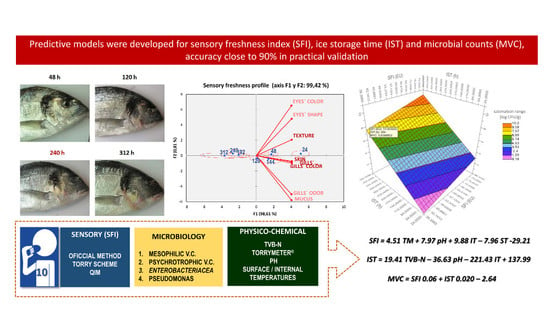
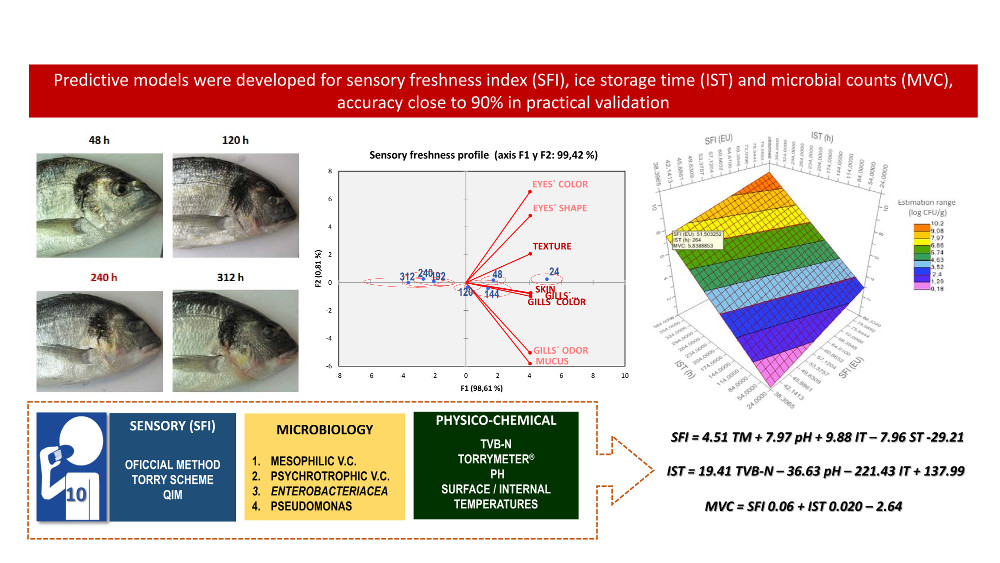
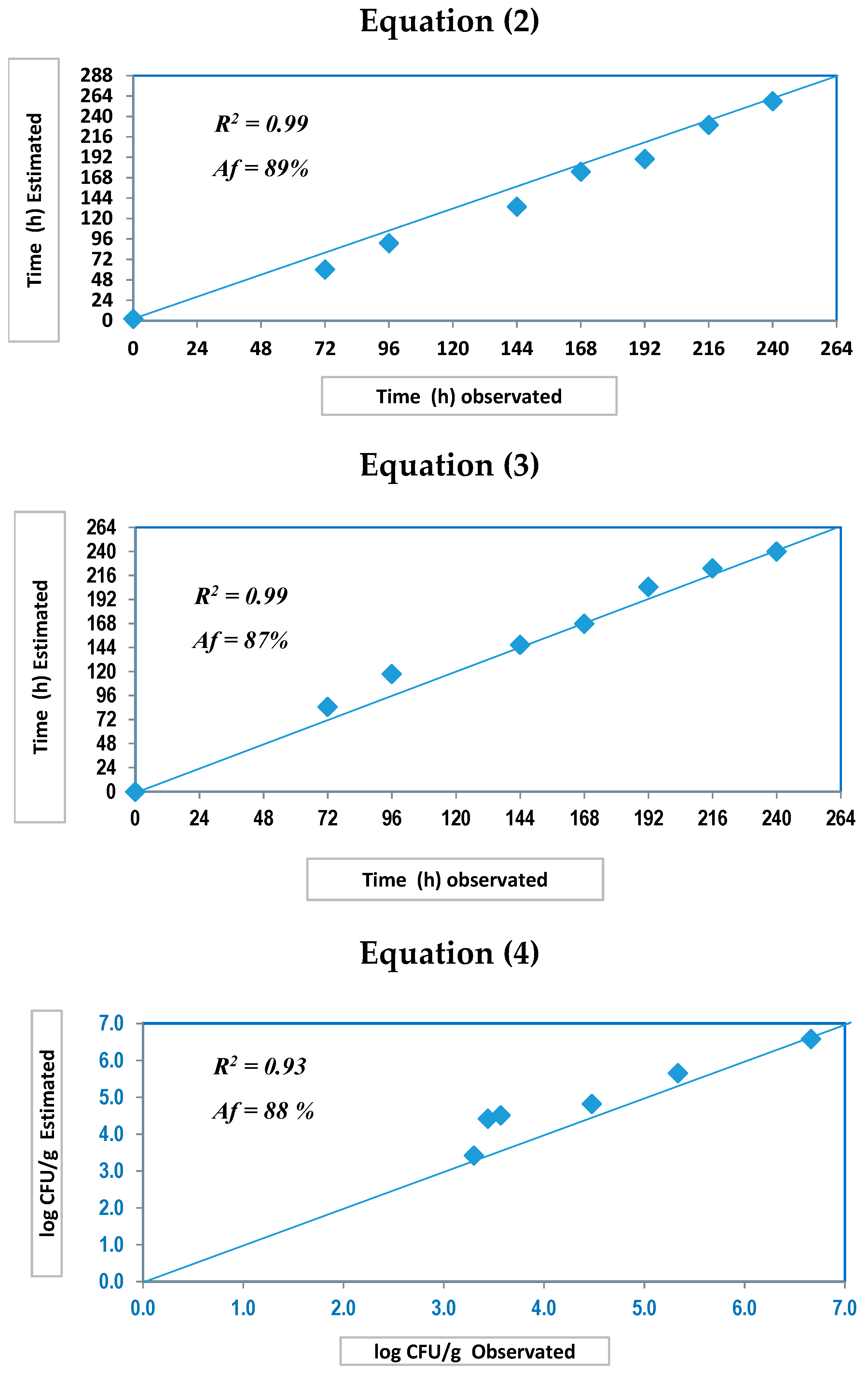
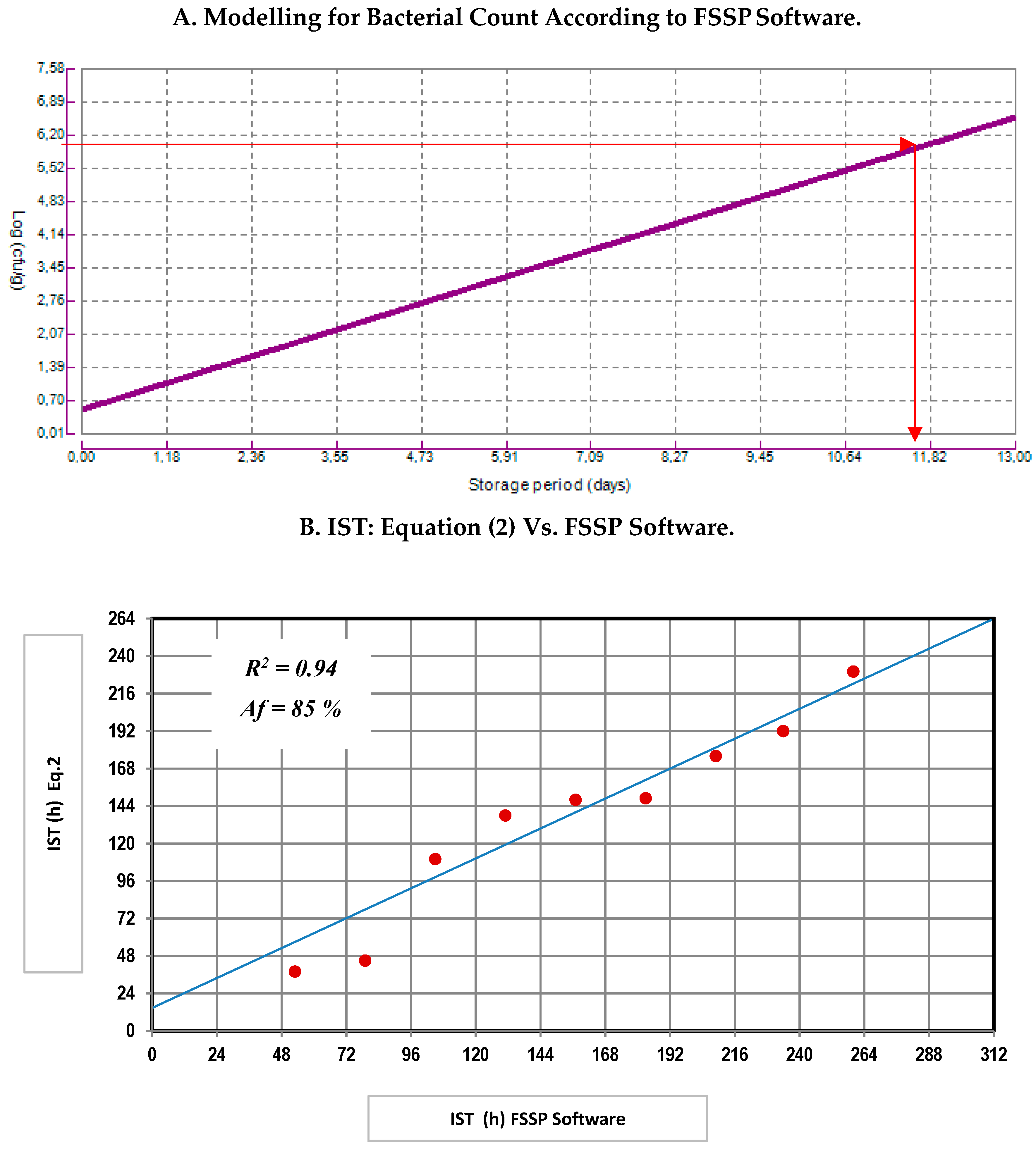
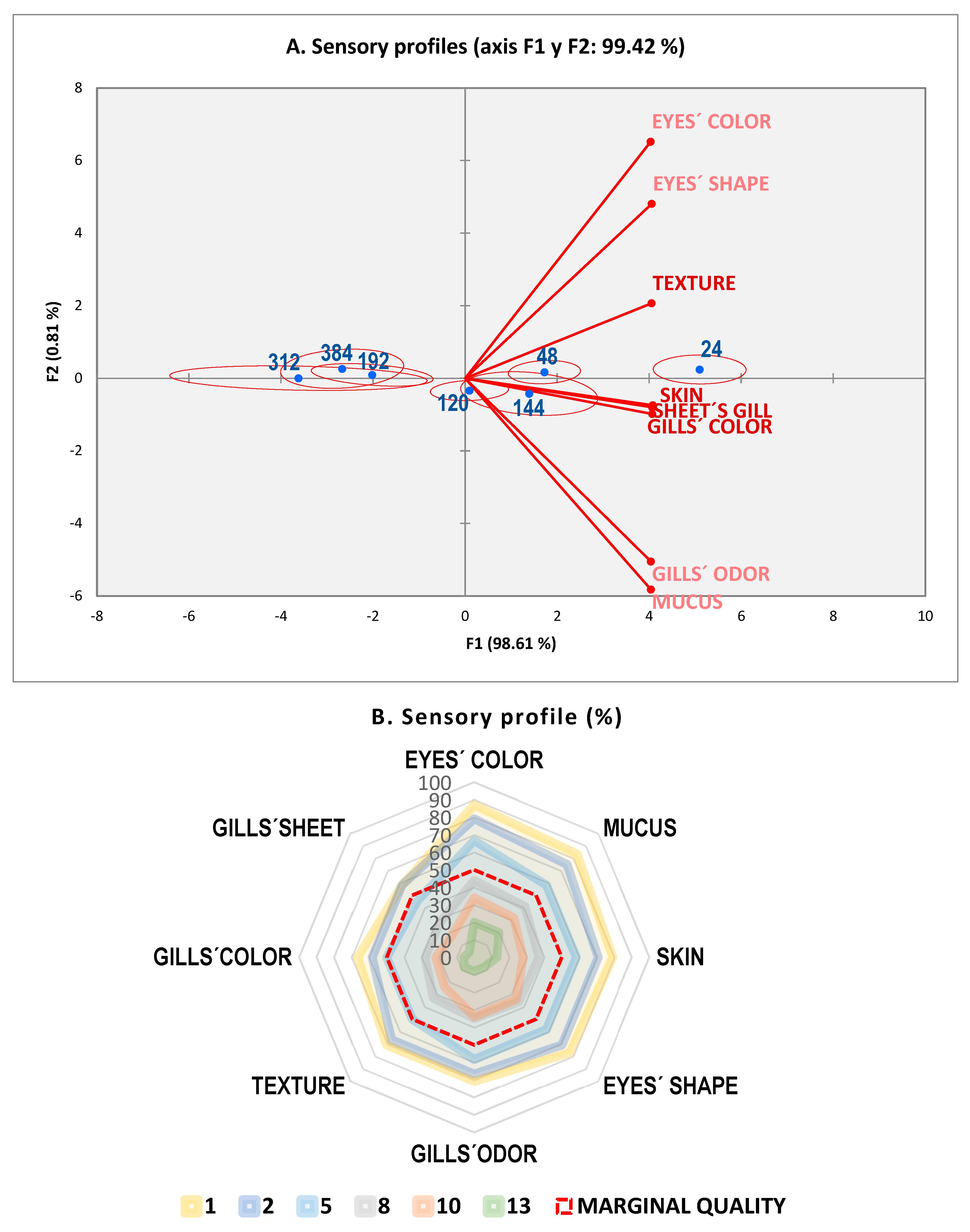
This research studied sea bream freshness evolution through storage time in ice by determining different quality parameters and sensory profiles. Predictive models for freshness index, storage time, and microbial counts were designed from these data. Physico–chemical parameters were assessed to evaluate the quality of fish; microbial growth was controlled to ensure food safety, and sensory analyses were carried out to characterize quality deterioration. Predictive models were developed and improved with the aim of being used as tools for quality management in the seafood industry. Validation was conducted in order to establish the accuracy of models. There was a good relationship between the physico–chemical and microbiological parameters. Sensory analysis and microbial counts allowed for the establishment of a shelf-life of 10 days, which corresponded to a poor quality (according to the European Community’s system of grading fish for marketing purposes), with a freshness index lower than 50%. Sensory profiles showed that gill and flesh texture were the most vulnerable attributes during storage in ice related to spoilage. The predictive models for the freshness index (%) and ice storage time (h) exhibited an accuracy close to 90% following practical validation.
Keywords: partial least square regression; modelling; fish quality tools; shelf life partial least square regression; modelling; fish quality tools; shelf life
Graphical Abstract