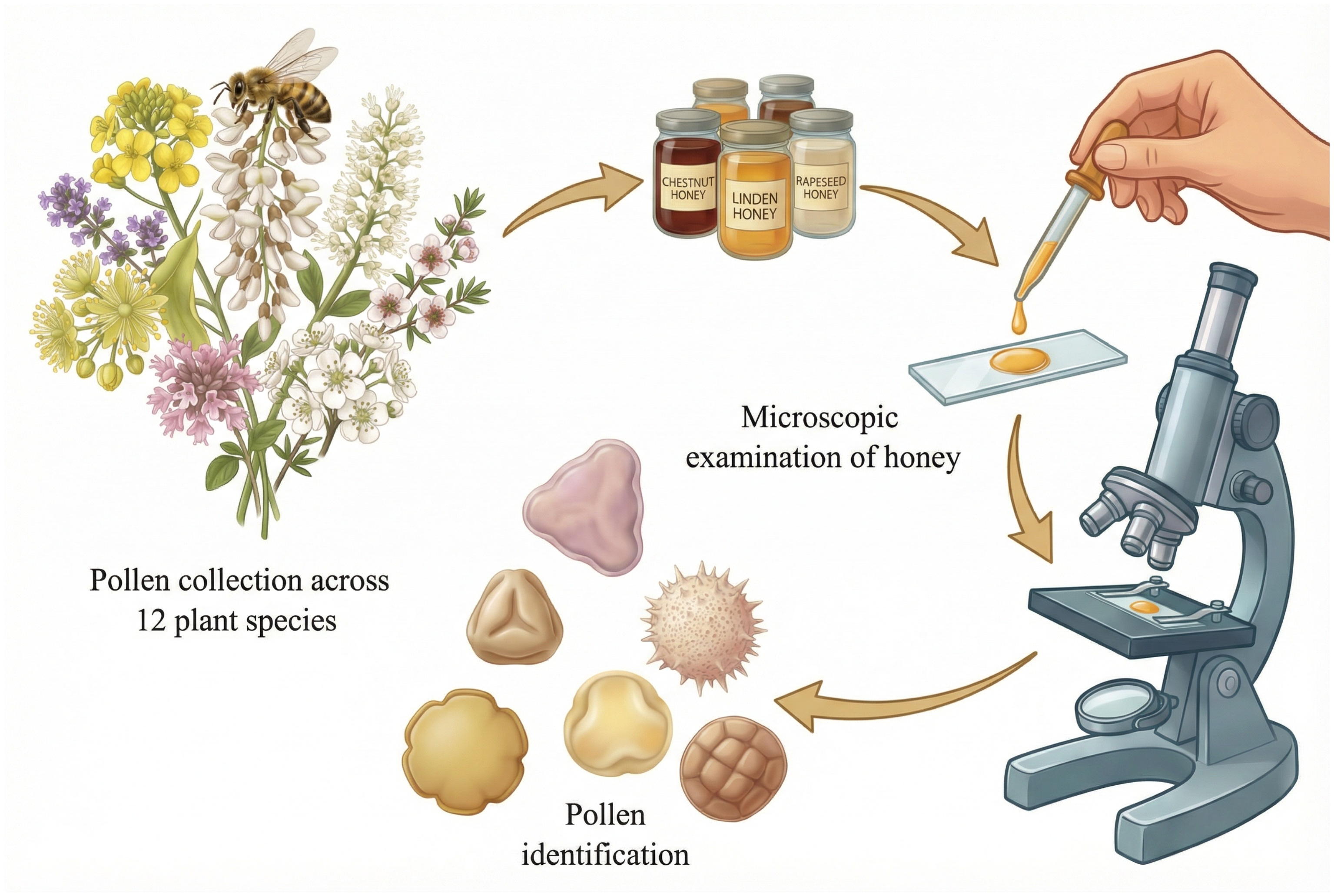
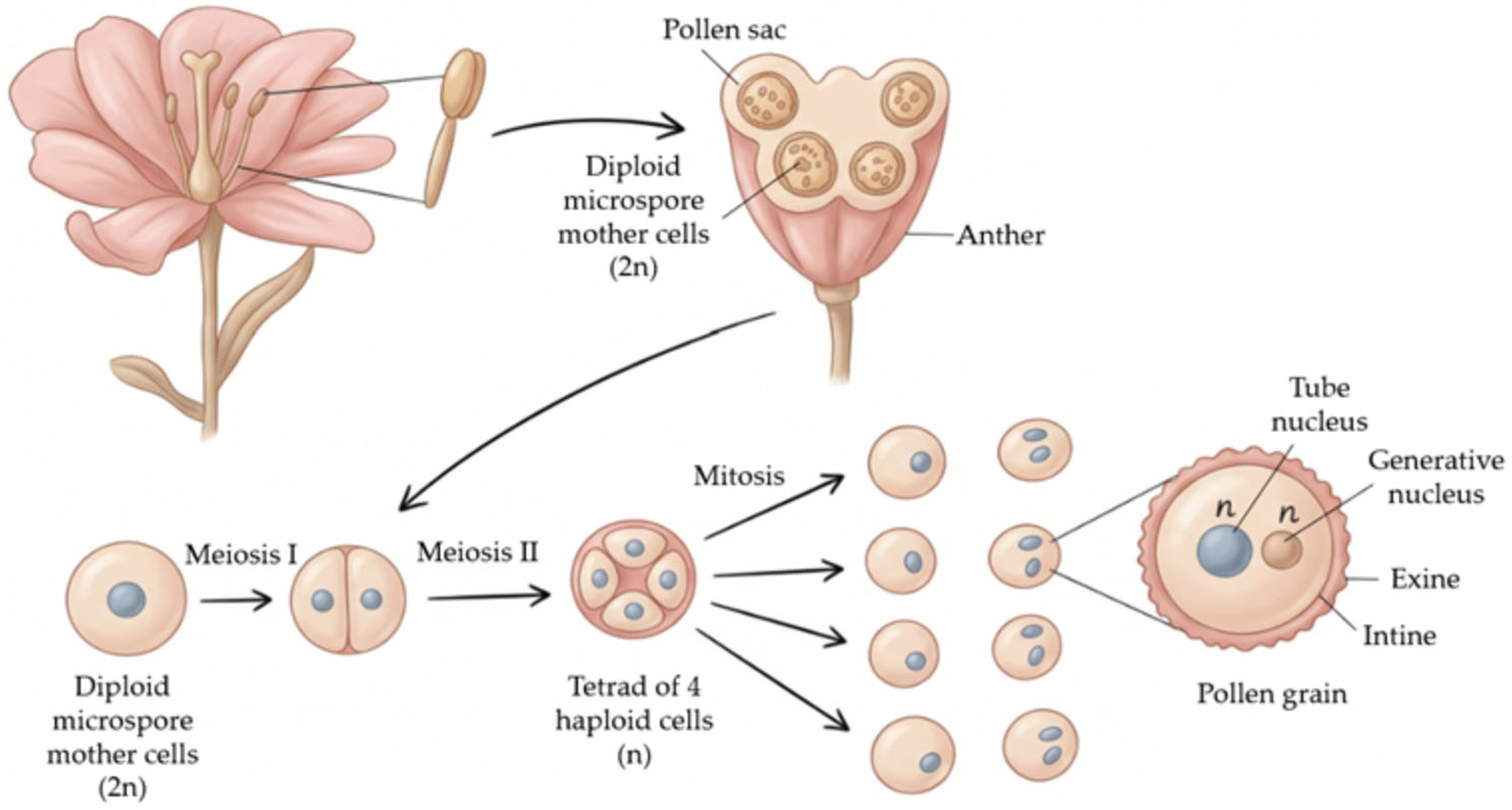
Melissopalynological and Physicochemical Analysis of Selected Honey Samples from Romania, Spain, Malaysia, and New Zealand
 ,
,  ,
,  and
and
Abstract
1. Introduction
2. Materials and Methods
2.1. Honey Samples and Geographical Origin
2.2. Melissopalynological Analysis
2.3. Physicochemical Analysis
3. Results
3.1. Pollen Spectrum of Individual Honey Types
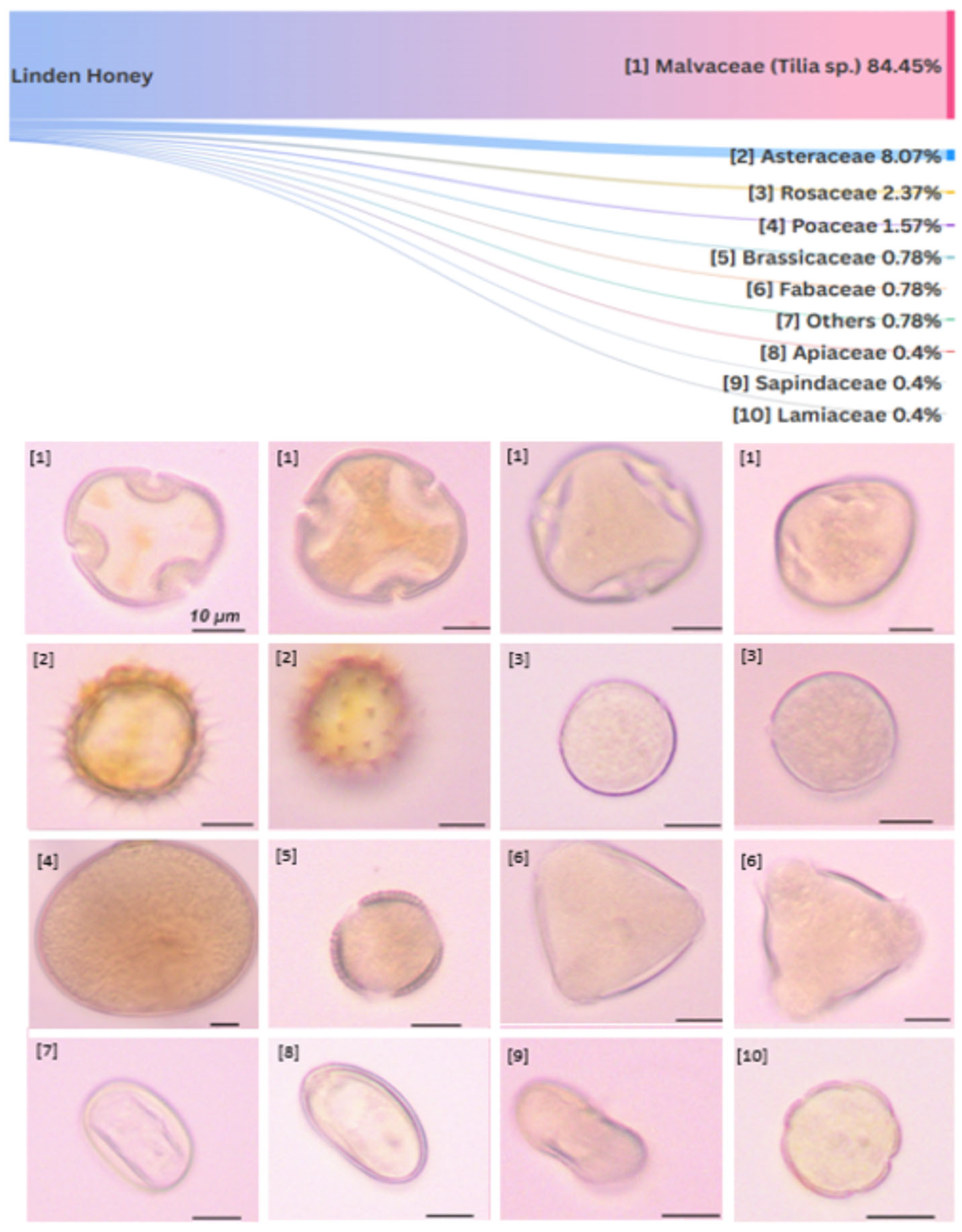
3.1.1. Linden Honey
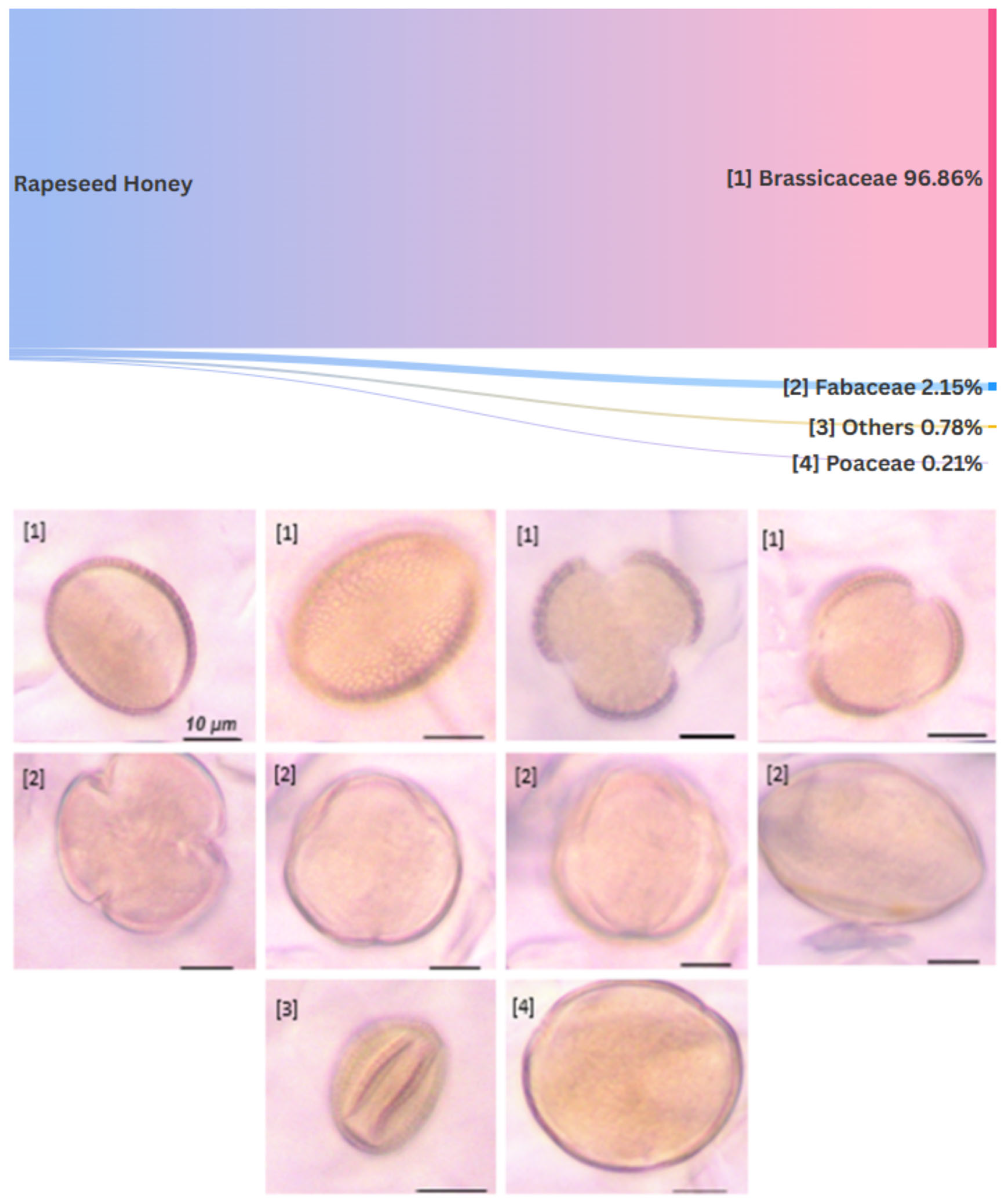
3.1.2. Rapeseed Honey
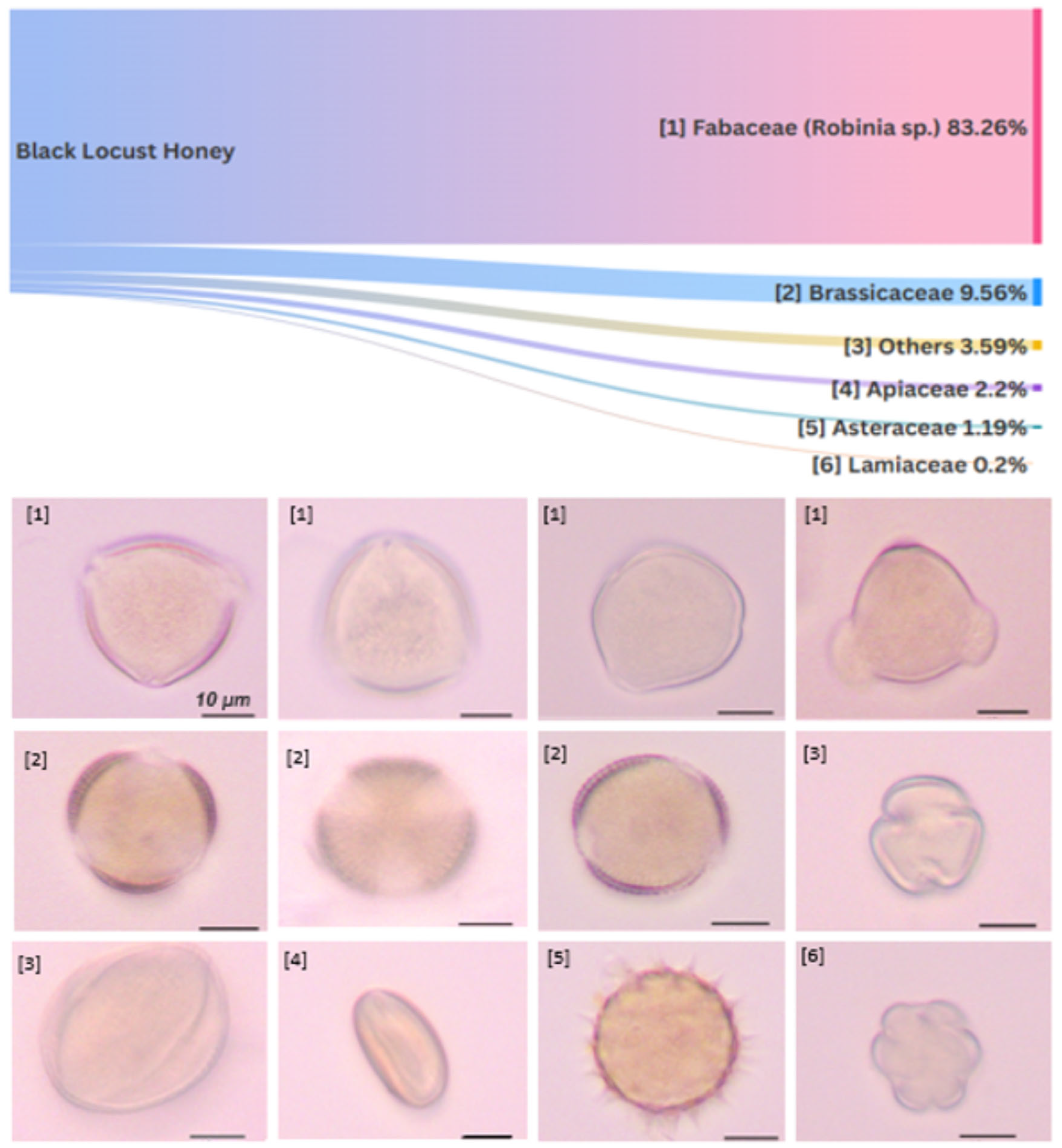
3.1.3. Black Locust Honey
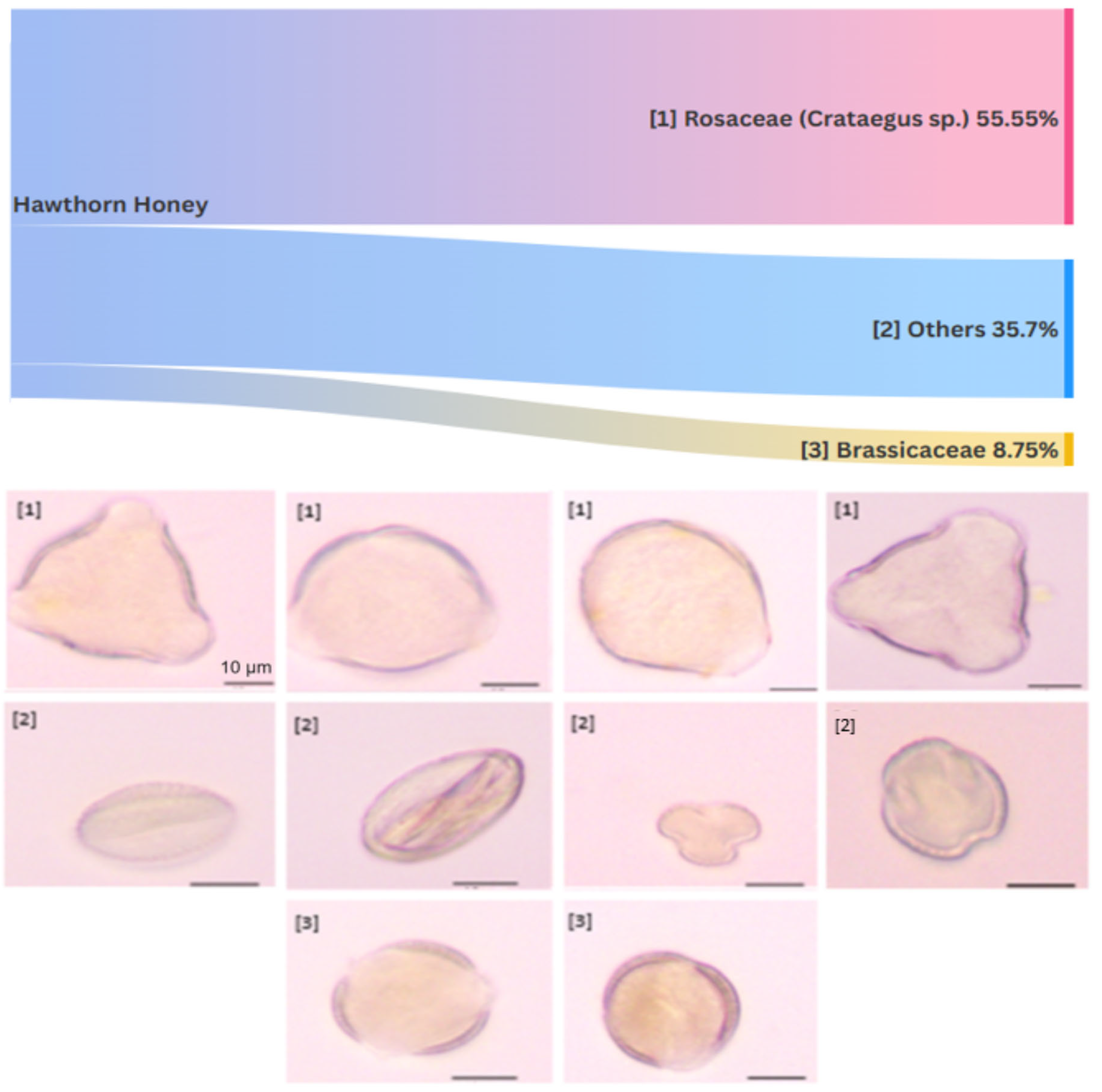
3.1.4. Hawthorn Honey
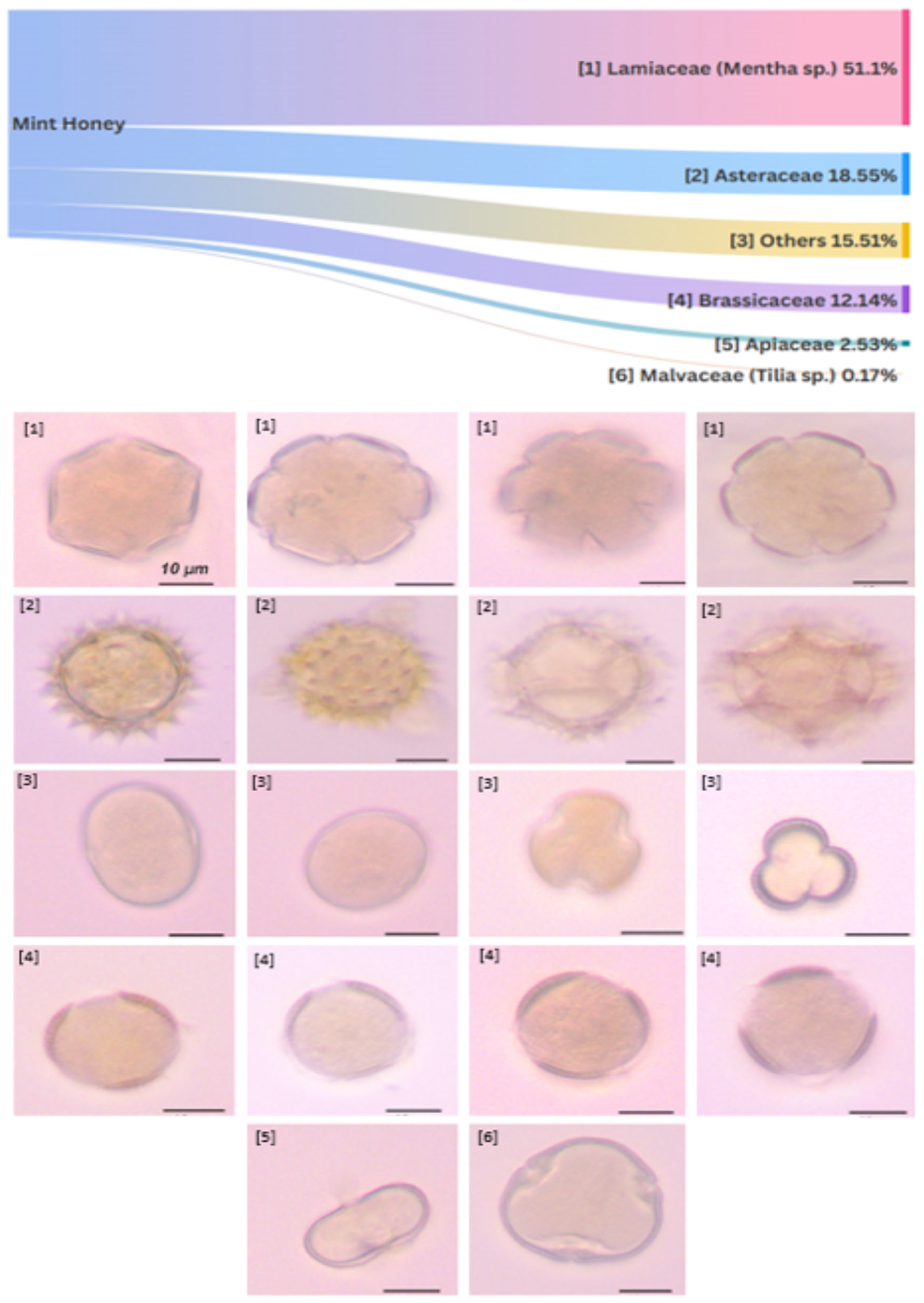
3.1.5. Mint Honey
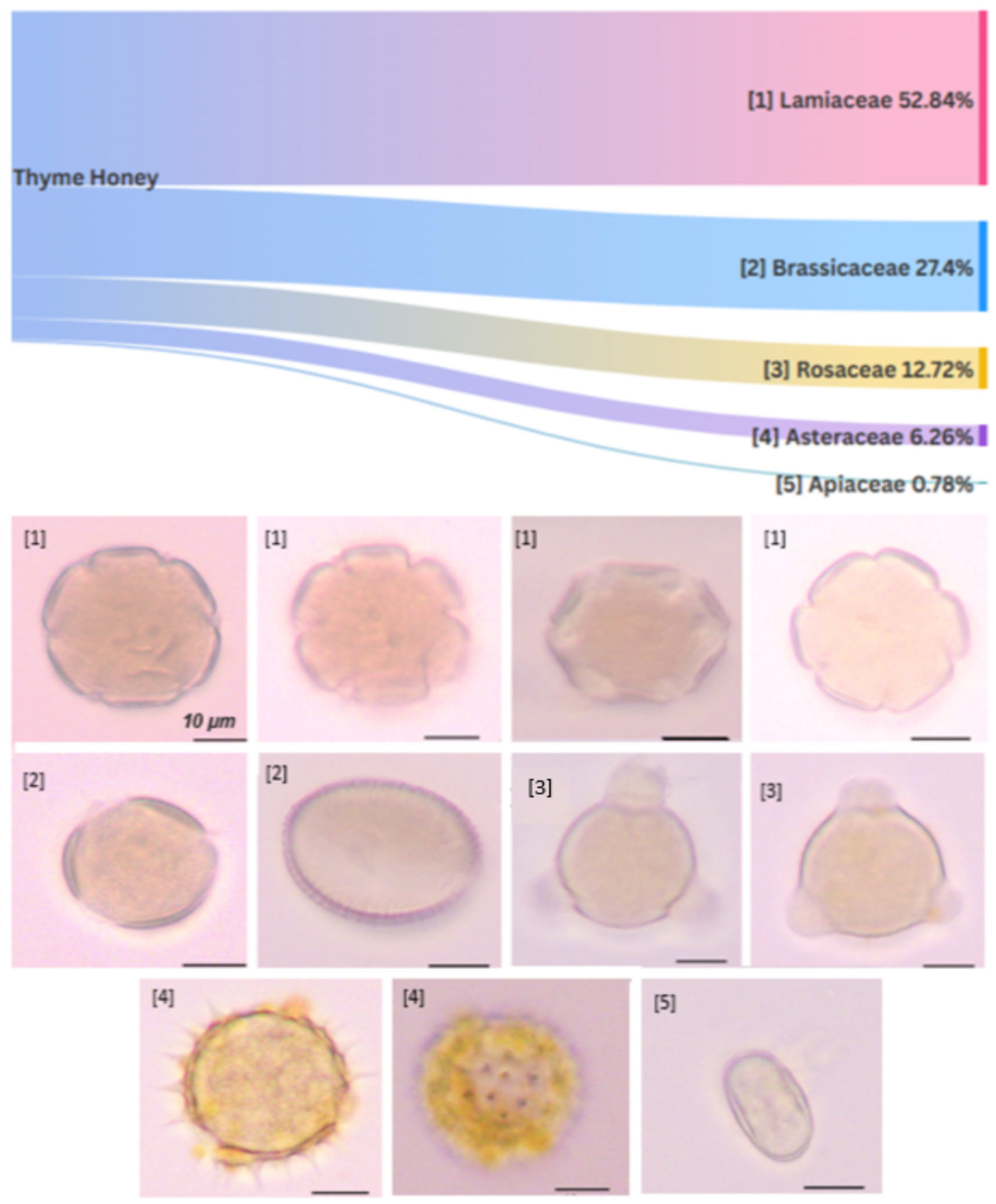
3.1.6. Thyme Honey
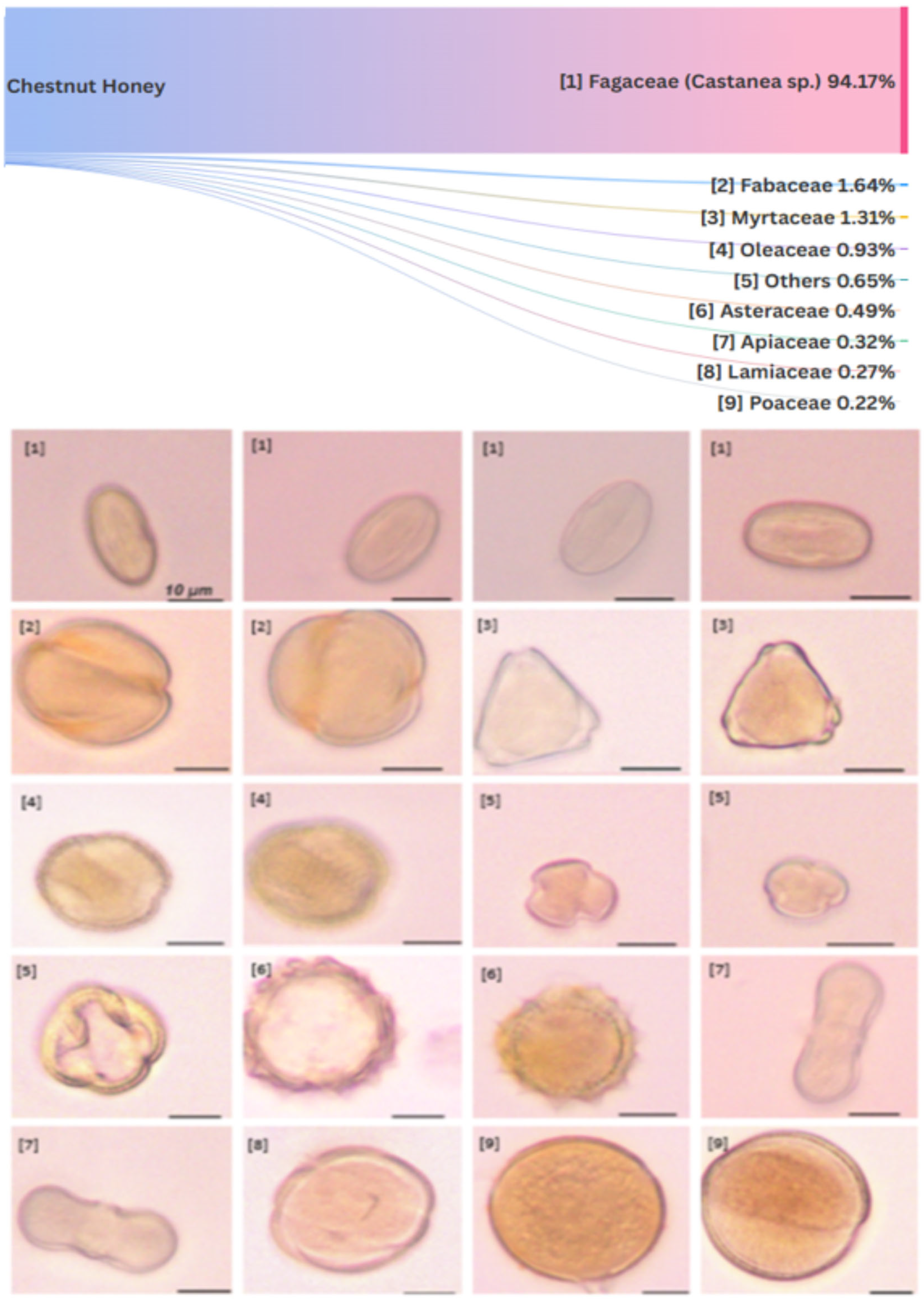
3.1.7. Chestnut Honey
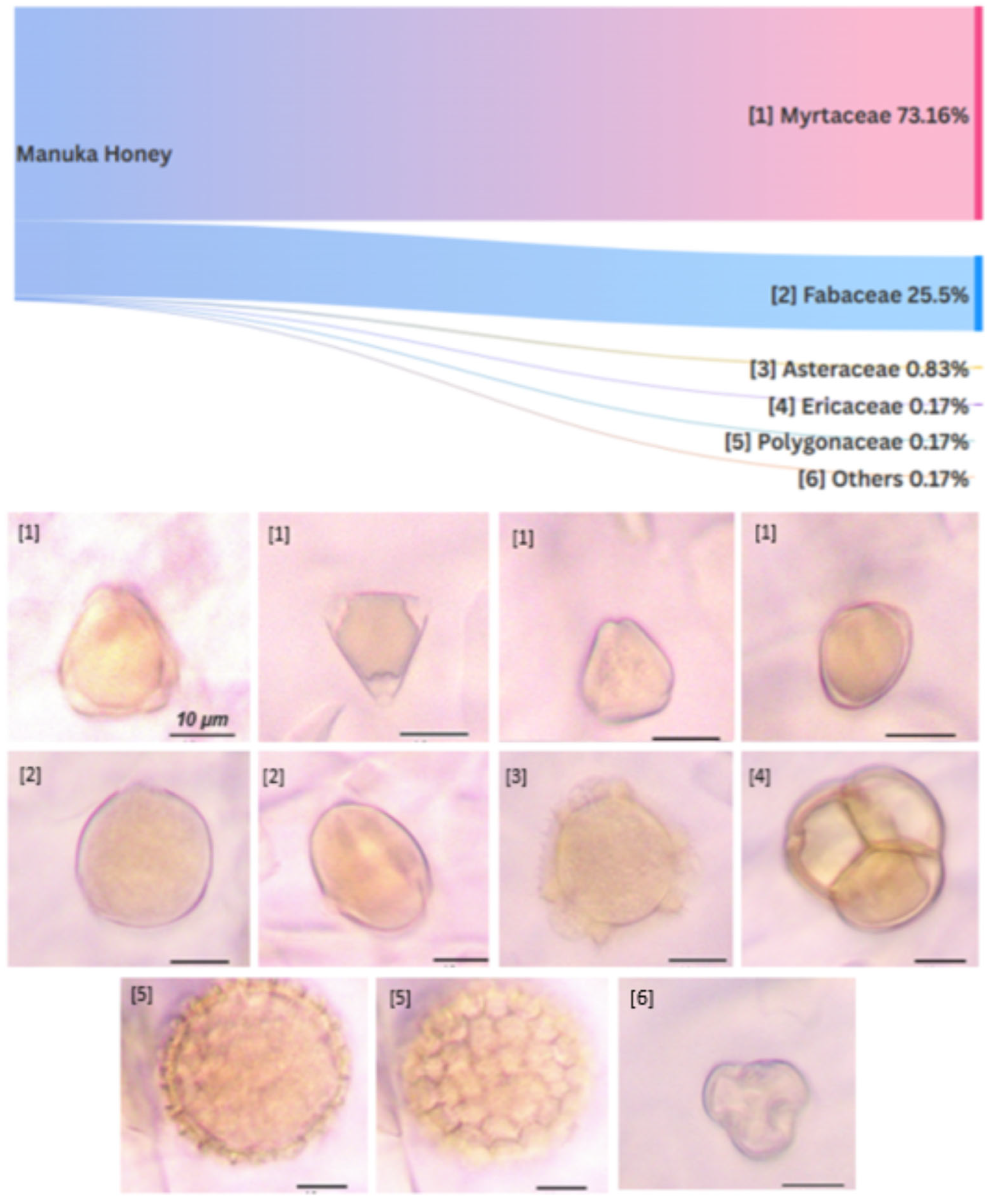
3.1.8. Manuka Honey
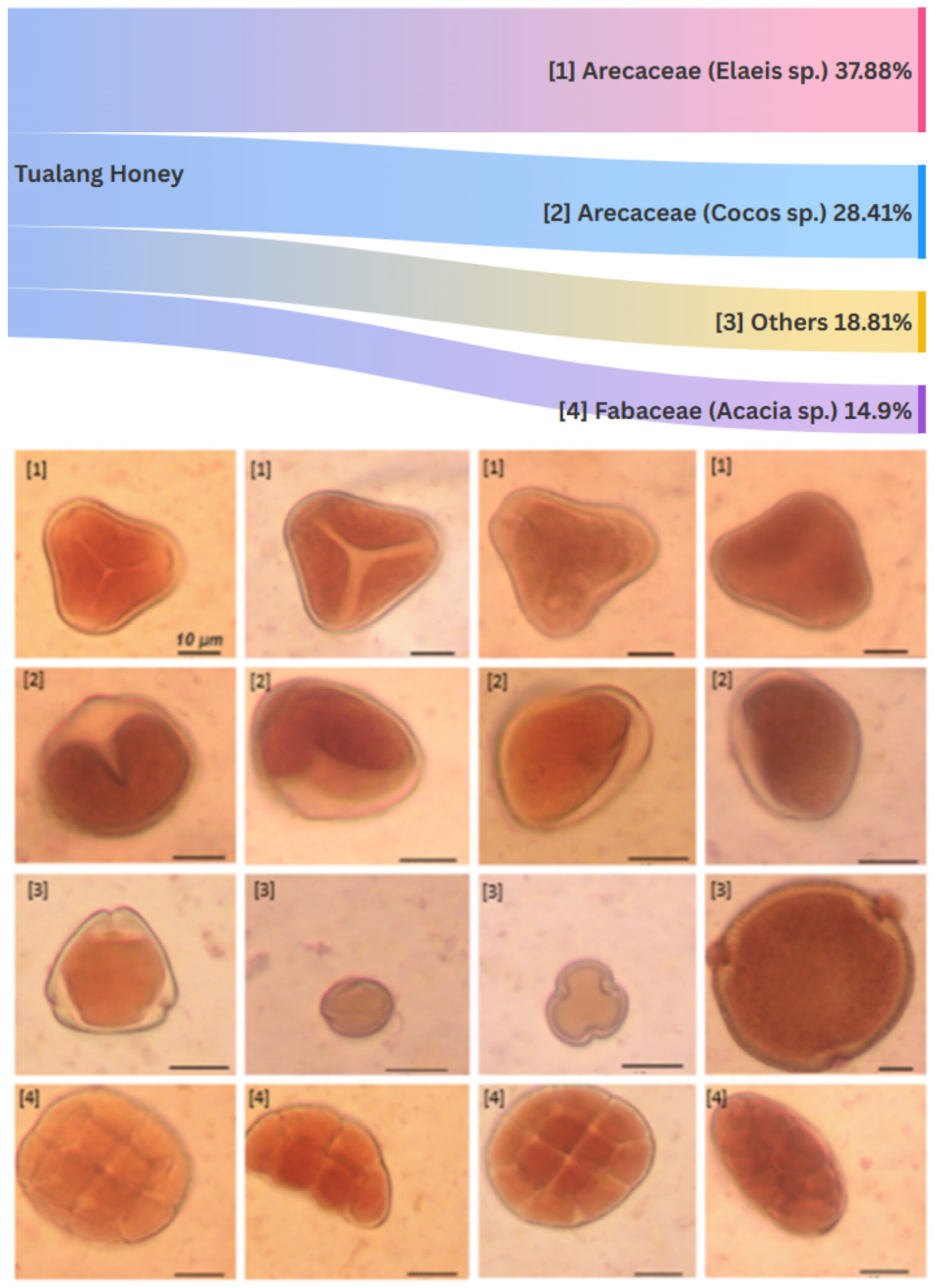
3.1.9. Tualang Honey
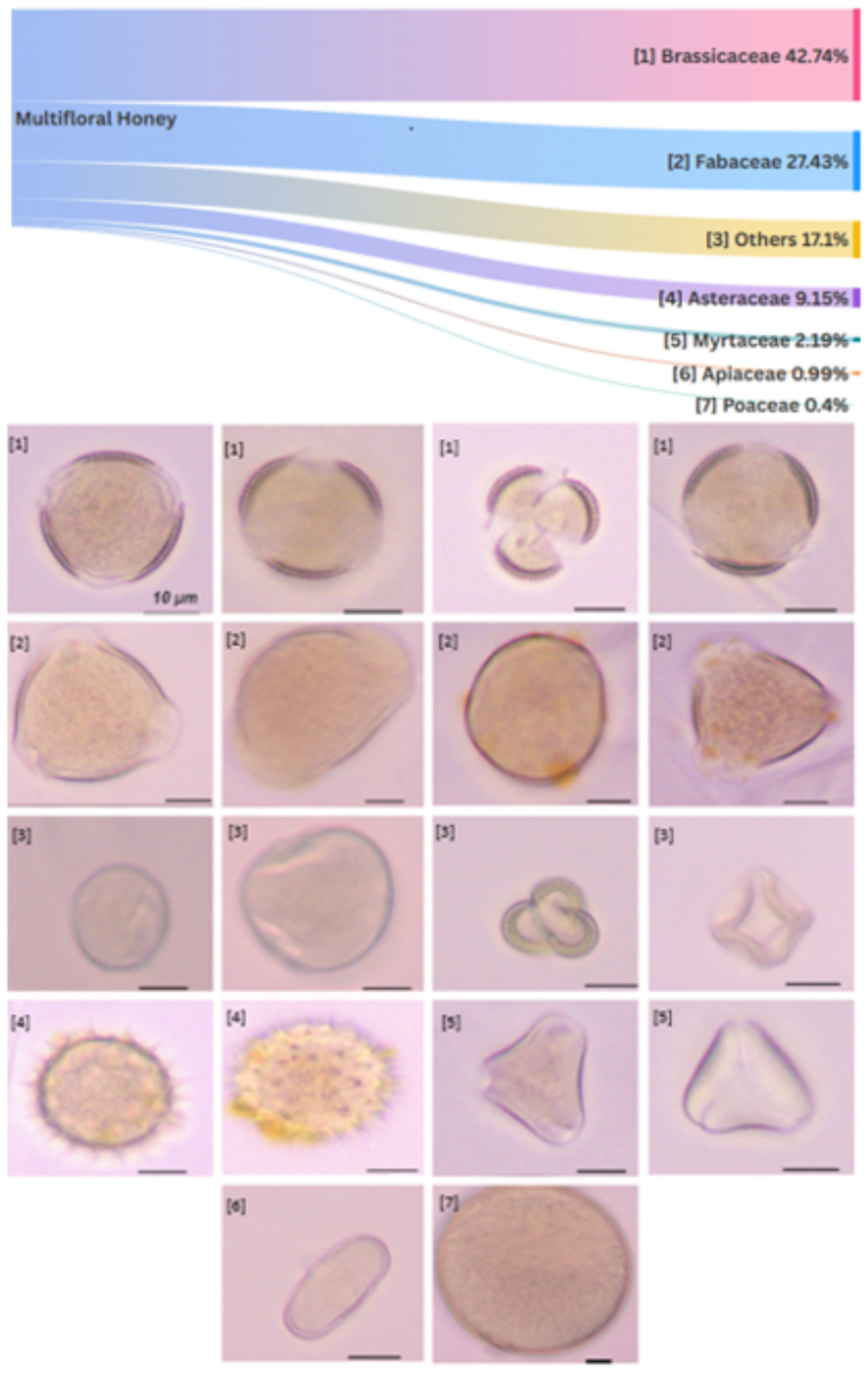
3.1.10. Multifloral Honey
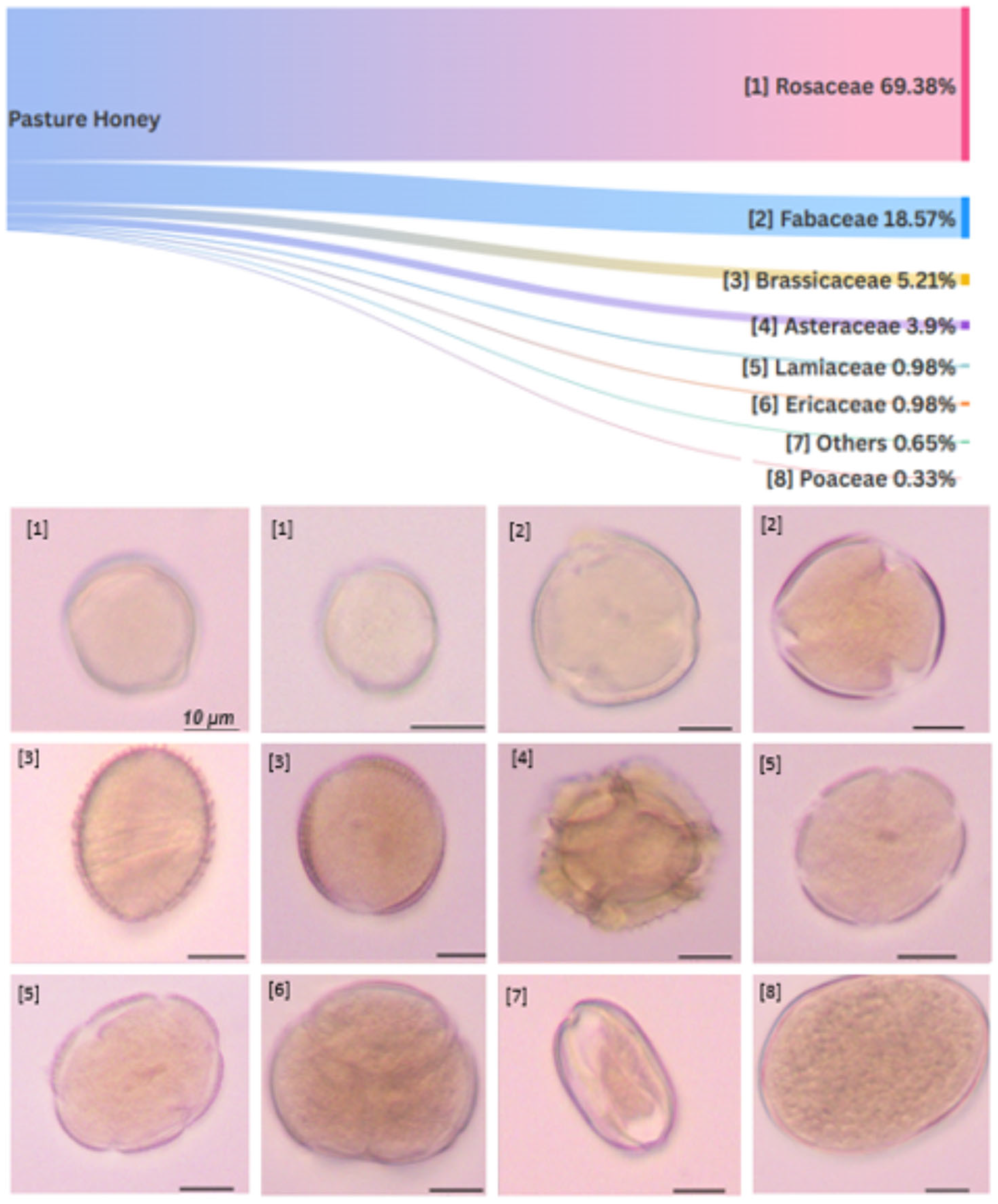
3.1.11. Pasture Honey
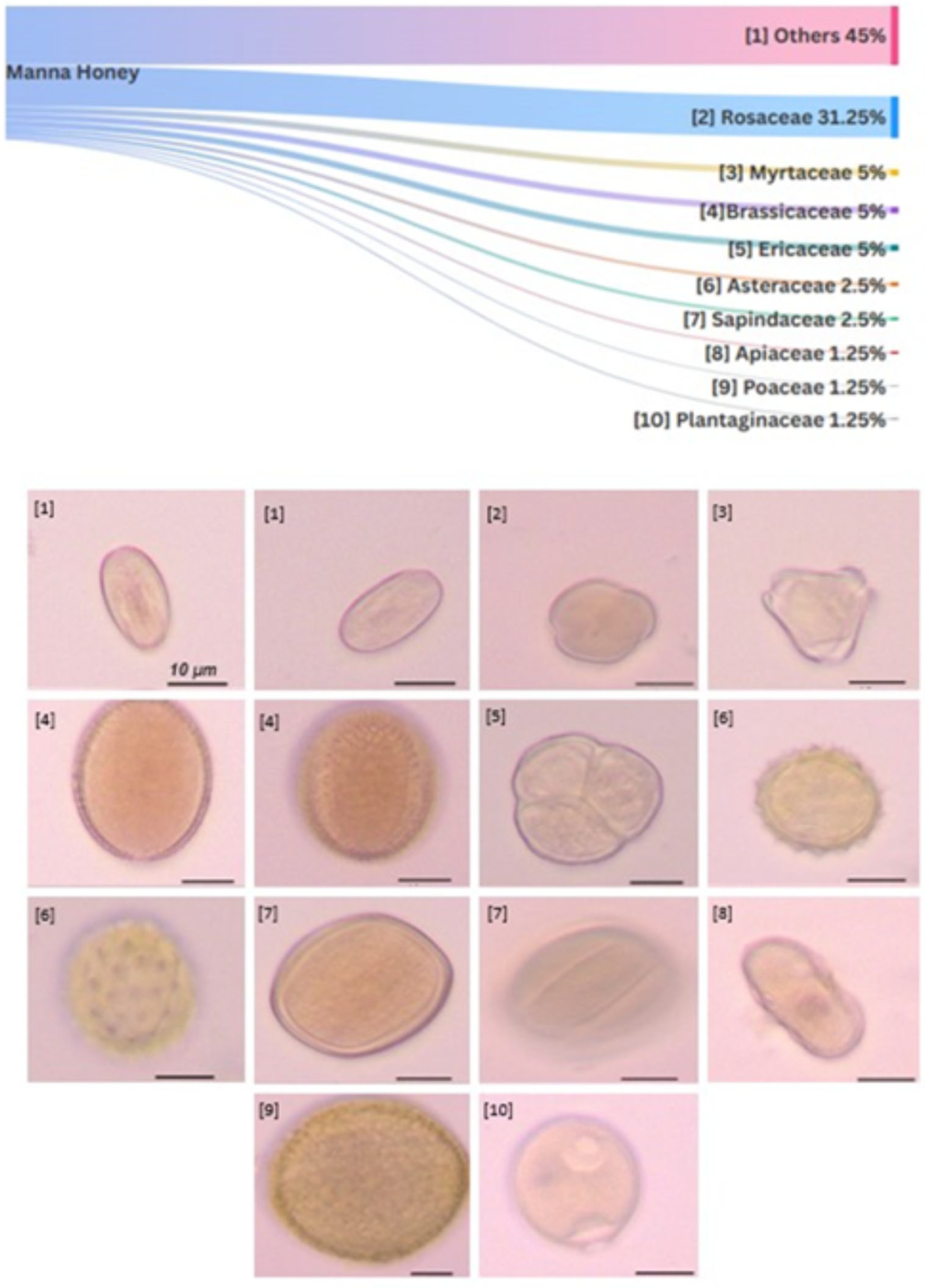
3.1.12. Manna Honey
3.2. Physicochemical Profile of Honey Samples from Different Botanical Origins
4. Discussion
4.1. General Discussion
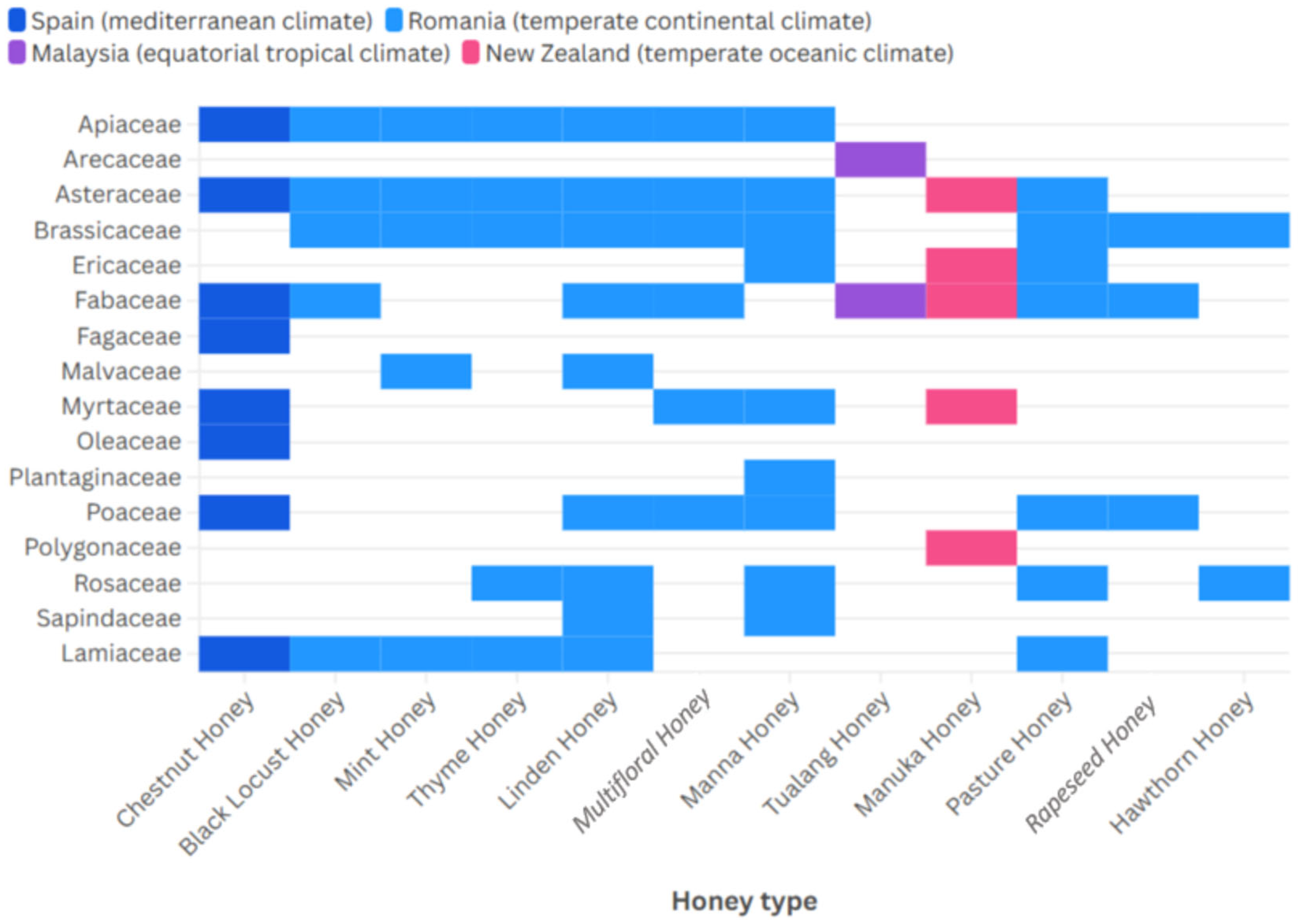
4.2. Comparative Melissopalynological Profiles by Climatic Region
4.3. Floral Diversity and Dominance Among Honey Types
4.4. Physicochemical Parameters Relevant to Honey Quality and Authenticity
5. Conclusions
Author Contributions
Funding
Institutional Review Board Statement
Informed Consent Statement
Data Availability Statement
Conflicts of Interest
References
- Pospiech, M.; JavůFrková, Z.; Hrabec, P.; Čížková, H.; Titěra, D.; Štarha, P.; Ljasovská, S.; Kružík, V.; Podskalská, T.; Bednář, J.; et al. Physico-Chemical and Melissopalynological Characterization of Czech Honey. Appl. Sci. 2021, 11, 4989. [Google Scholar] [CrossRef]
- Naila, A.; Flint, S.H.; Sulaiman, A.Z.; Ajit, A.; Weeds, Z. Classical and Novel Approaches to the Analysis of Honey and Detection of Adulterants. Food Control 2018, 90, 152–165. [Google Scholar] [CrossRef]
- Tlak Gajger, I.; Vlainić, J. Antioxidant Activity of Honey Bee Products. Antioxidants 2025, 14, 64. [Google Scholar] [CrossRef]
- Ahmed, S.; Sulaiman, S.A.; Baig, A.A.; Ibrahim, M.; Liaqat, S.; Fatima, S.; Jabeen, S.; Shamim, N.; Othman, N.H. Honey as a Potential Natural Antioxidant Medicine: An Insight into Its Molecular Mechanisms of Action. Oxidative Med. Cell. Longev. 2018, 2018, 8367846. [Google Scholar] [CrossRef]
- Erejuwa, O.O.; Sulaiman, S.A.; Ab Wahab, M.S. Honey: A Novel Antioxidant. Molecules 2012, 17, 4400–4423. [Google Scholar] [CrossRef] [PubMed]
- Raweh, H.S.A.; Badjah-Hadj-Ahmed, A.Y.; Iqbal, J.; Alqarni, A.S. Physicochemical Composition of Local and Imported Honeys Associated with Quality Standards. Foods 2023, 12, 2181. [Google Scholar] [CrossRef] [PubMed]
- Fadzil, M.A.M.; Mustar, S.; Rashed, A.A. The Potential Use of Honey as a Neuroprotective Agent for the Management of Neurodegenerative Diseases. Nutrients 2023, 15, 1558. [Google Scholar] [CrossRef]
- Zaid, S.S.M.; Ruslee, S.S.; Mokhtar, M.H. Protective Roles of Honey in Reproductive Health: A Review. Molecules 2021, 26, 3322. [Google Scholar] [CrossRef]
- El Sohaimy, S.A.; Masry, S.H.D.; Shehata, M.G. Physicochemical Characteristics of Honey from Different Origins. Ann. Agric. Sci. 2015, 60, 279–287. [Google Scholar] [CrossRef]
- Spoială, A.; Ilie, C.-I.; Ficai, D.; Ficai, A.; Andronescu, E. Synergic Effect of Honey with Other Natural Agents in Developing Efficient Wound Dressings. Antioxidants 2022, 12, 34. [Google Scholar] [CrossRef]
- Vallianou, N.G.; Gounari, P.; Skourtis, A.; Panagos, J.; Kazazis, C. Honey and Its Anti-Inflammatory, Anti-Bacterial and Anti-Oxidant Properties. Gen. Med. 2014, 2, 1–5. [Google Scholar] [CrossRef]
- Hafidh, S.; Fíla, J.; Honys, D. Male Gametophyte Development and Function in Angiosperms: A General Concept. Plant Reprod. 2016, 29, 31–51. [Google Scholar] [CrossRef] [PubMed]
- Tulu, D.; Aleme, M.; Mengistu, G.; Bogale, A.; Bezabeh, A.; Mendesil, E. Melissopalynological Analysis and Floral Spectra of Apis Mellifera Scutellata Lepeletier Bees in Different Agroecologies of Southwest Ethiopia. Heliyon 2023, 9, e16047. [Google Scholar] [CrossRef] [PubMed]
- Von Der Ohe, W.; Persano Oddo, L.; Piana, M.L.; Morlot, M.; Martin, P. Harmonized Methods of Melissopalynology. Apidologie 2004, 35, S18–S25. [Google Scholar] [CrossRef]
- Dragota, C.; Grigorescu, I.; Dumitrascu, M.; Doroftei, M.; Mierla, M.; Nastase, M. Climatic Potential and Key Meteorological Drivers for the Dynamics of Invasive Terrestrial Plant Species in Romanian Protected Areas. In Proceedings of the 3rd International Symposium on Weeds and Invasive Plants, Ascona, Switzerland, 3–7 October 2011; pp. 2–7. [Google Scholar]
- National Institute of Water and Atmospheric Research (NIWA). Overview of New Zealand’s Climate; NIWA: Auckland, New Zealand, 2025. [Google Scholar]
- Stephens, J.M.C.; Molan, P.C.; Clarkson, B.D. A Review of Leptospermum scoparium (Myrtaceae) in New Zealand. N. Z. J. Bot. 2005, 43, 431–449. [Google Scholar] [CrossRef]
- Díaz-López, C.; Pérez-Rendon, C.A.; Serrano-Jiménez, A.; Barrios-Padura, Á. Evaluating Resilience and Thermal Comfort in Mediterranean Dwellings: A Level(s) Framework Approach. Appl. Sci. 2025, 15, 2136. [Google Scholar] [CrossRef]
- Amin, I.M.Z.B.M.; Ercan, A.; Ishida, K.; Kavvas, M.L.; Chen, Z.Q.; Jang, S.-H. Impacts of Climate Change on the Hydro-Climate of Peninsular Malaysia. Water 2019, 11, 1798. [Google Scholar] [CrossRef]
- PalDat—A Palynological Database. Available online: https://www.paldat.org/ (accessed on 15 June 2025).
- SR 784-3:2009; Honey. Methods of Analysis. Romanian Standards Association (ASRO): Bucharest, Romania, 2009.
- Sęk, A.; Porębska, A.; Szczęsna, T. Quality of Commercially Available Manuka Honey Expressed by Pollen Composition, Diastase Activity, and Hydroxymethylfurfural Content. Foods 2023, 12, 2930. [Google Scholar] [CrossRef]
- Li, X.; Prebble, J.G.; De Lange, P.J.; Raine, J.I.; Newstrom-Lloyd, L. Discrimination of Pollen of New Zealand Mānuka (Leptospermum scoparium Agg.) and Kānuka (Kunzea spp.) (Myrtaceae). PLoS ONE 2022, 17, e0269361. [Google Scholar] [CrossRef]
- Hegazi, N.M.; Elghani, G.E.A.; Farag, M.A. The Super-Food Manuka Honey, a Comprehensive Review of Its Analysis and Authenticity Approaches. J. Food Sci. Technol. 2022, 59, 2527–2534. [Google Scholar] [CrossRef]
- Yagi, S.; Khristova, P.; Khalid, S.A. Chemotaxonomical and Palynological Studies on Nine Acacia Species Occurring in Sudan. J. Plant Stud. 2012, 1, 61. [Google Scholar] [CrossRef]
- Hamid, K.; Mohd, A.; Mohd Zohdi, R.; Eshak, Z.; Omar, R. Pollen Analysis of Selected Malaysian Honey. Acad. J. Entomol. 2015, 8, 99–103. [Google Scholar]
- Louveaux, J.; Maurizio, A.; Vorwohl, G. Methods of Melissopalynology. Bee World 1978, 59, 139–157. [Google Scholar] [CrossRef]
- Dobre, I.; Georgescu, L.A.; Alexe, P.; Escuredo, O.; Seijo, M.C. Rheological Behavior of Different Honey Types from Romania. Food Res. Int. 2012, 49, 126–132. [Google Scholar] [CrossRef]
- Hejcman, M.; Hejcmanová, P.; Pavlů, V.; Beneš, J. Origin and History of Grasslands in C Entral E Urope—A Review. Grass Forage Sci. 2013, 68, 345–363. [Google Scholar] [CrossRef]
- CODEX 12-1981; Codex Standard for Honey–Codex Alimentarius Commission. FAO/WHO: Rome, Italy, 2019.
- European Commission Council. Directive 2001/110/EC Relating to Honey; EU: Brussels, Belgium, 2002; pp. 47–52. [Google Scholar]
- Rolnik, A.; Olas, B. The Plants of the Asteraceae Family as Agents in the Protection of Human Health. Int. J. Mol. Sci. 2021, 22, 3009. [Google Scholar] [CrossRef]
- Bodor, Z.; Kovacs, Z.; Benedek, C.; Hitka, G.; Behling, H. Origin Identification of Hungarian Honey Using Melissopalynology, Physicochemical Analysis, and Near Infrared Spectroscopy. Molecules 2021, 26, 7274. [Google Scholar] [CrossRef]
- Yankova-Nikolova, A.; Vlahova-Vangelova, D.; Balev, D.; Kolev, N.; Dragoev, S.; Lowndes-Nikolova, B. Comparative Study of Bulgarian Linden Honey (Tilia sp.). Foods 2025, 14, 175. [Google Scholar] [CrossRef]
- Rajs, B.B.; Flanjak, I.; Mutić, J.; Vukojević, V.; Đurđić, S.; Primorac, L. Characterization of Croatian Rape (Brassica sp.) Honey by Pollen Spectrum, Physicochemical Characteristics, and Multielement Analysis by ICP-OES. J. AOAC Int. 2017, 100, 881–888. [Google Scholar] [CrossRef]
- Uršulin-Trstenjak, N.; Hrga, I.; Stjepanović, B.; Dragojlović, D.; Levanić, D. Determination of Botanic Origin of the Croatian Black Locust Honey (Istria Region) Using Melissopalynological Analysis. J. Hyg. Eng. Des. 2013, 4, 122–126. [Google Scholar]
- Jerković, I.; Hegić, G.; Marijanović, Z.; Bubalo, D. Organic Extractives from Mentha spp. Honey and the Bee-Stomach: Methyl Syringate, Vomifoliol, Terpenediol I, Hotrienol and Other Compounds. Molecules 2010, 15, 2911–2924. [Google Scholar] [CrossRef] [PubMed]
- Pauliuc, D.; Dranca, F.; Ropciuc, S.; Oroian, M. Advanced Characterization of Monofloral Honeys from Romania. Agriculture 2022, 12, 526. [Google Scholar] [CrossRef]
- Karatas, S.; Aktumsek, A.; Duru, M.E. Investigation of Physicochemical Properties of Some Monofloral Honeys in South Western Anatolia. Int. J. Second. Metab. 2019, 6, 251–262. [Google Scholar] [CrossRef]
- Karabournioti, S.E.; Tsiripidis, I.; Thrasyvoulou, A.; Eleftheriou, E.P. Melissopalynological Attributes of Some Greek Thyme Honeys. J. Apic. Res. 2009, 48, 104–114. [Google Scholar] [CrossRef]
- Özkök, A.; Özenirler, Ç.; Canlı, D.; Mayda, N.; Sorkun, K. Monofloral Features of Turkish Honeys According to Mellissopalynologic, Total Phenolic Acid and Total Flavonoid Content. Gazi Univ. J. Sci. 2018, 31, 713–723. [Google Scholar]
- Ucurum, O.; Tosunoglu, H.; Takma, Ç.; Birlik, P.M.; Berber, M.; Kolaylı, S. Distinctive Properties of the Pine, Oak, Chestnut and Multifloral Blossom and Honeydew Honeys. Eur. Food Res. Technol. 2024, 250, 1765–1774. [Google Scholar] [CrossRef]
- Moar, N.T. Pollen Analysis of New Zealand Honey. N. Z. J. Agric. Res. 1985, 28, 39–70. [Google Scholar] [CrossRef]
- Ahmed, S.; Othman, N.H. Review of the Medicinal Effects of Tualang Honey and a Comparison with Manuka Honey. Malays. J. Med. Sci. 2013, 20, 6–13. [Google Scholar]
- Chirsanova, A.; Capcanari, T.; Boistean, A.; Siminiuc, R. Physico-Chemical Profile of Four Types of Honey from the South of the Republic of Moldova. Food Nutr. Sci. 2021, 12, 874–888. [Google Scholar] [CrossRef]
- Magyar, D.; Dumitrica, P.; Mura-Mészáros, A.; Medzihradszky, Z.; Leelőssy, Á.; Saint Martin, S. The Occurrence of Skeletons of Silicoflagellata and Other Siliceous Bioparticles in Floral Honeys. Foods 2021, 10, 421. [Google Scholar] [CrossRef]
- Mohamed, M.; Sirajudeen, K.; Swamy, M.; Yaacob, M.; Sulaiman, S. Studies on the Antioxidant Properties of Tualang Honey of Malaysia. Afr. J. Trad. Compl. Alt. Med. 2010, 7, 59–63. [Google Scholar] [CrossRef] [PubMed]
- Al Hadhrami, A.Z.M.S.; Al Mazrooei, F.R.A.; Al Mamari, S.; Al Humaid, S.H.J.; Khan, S.; Akhtar, M.J. Physicochemical Evaluation to Assess the Quality of Honey Samples Marketed in Oman. Int. J. Second. Metab. 2023, 10, 394–404. [Google Scholar] [CrossRef]
- Tsegaye, A.; Ebrahim, Y.; Tsegaye, A.; Bihonegn, A.; Lemma, M.; Girmay, A. Identification and Characterization of Major Mono-Floral Honey and Assessing Their Properties in Wag Lasta Area of Amhara Region, Ethiopia. J. Food Compos. Anal. 2026, 153, 109085. [Google Scholar] [CrossRef]
- Yiğit, Y.; Yalçın, S.; Onbaşılar, E.E. Effects of Different Packaging Types and Storage Periods on Physicochemical and Antioxidant Properties of Honeys. Foods 2024, 13, 3594. [Google Scholar] [CrossRef]



| Honey Type | Geographical Origin | Coordinates | Source |
|---|---|---|---|
| Linden (Tilia sp.) | Snagov, Romania | 44.71° N, 26.15° E | Beekeeper |
| Rapeseed (Brassica sp.) | Giurgiu, Romania | 43.90° N, 25.97° E | Beekeeper |
| Black locust (Robinia sp.) | Călărași, Romania | 44.20° N, 27.33° E | Beekeeper |
| Hawthorn (Crataegus sp.) | Argeș, Romania | 44.90° N, 24.73° E | Beekeeper |
| Mint (Mentha sp.) | Constanța, Romania | 44.18° N, 28.65° E | Beekeeper |
| Thyme (Thymus sp.) | Dolj, Romania | 44.32° N, 23.80° E | Beekeeper |
| Chestnut (Castanea sp.) | Spain | Not available | Commercial |
| Manuka (Leptospermum sp.) | New Zealand | Not available | Commercial |
| Tualang (Koompassia sp.) | Malaysia | Not available | Commercial |
| Multifloral (mixed floral sources) | Dolj, Romania | 44.32° N, 23.80° E | Beekeeper |
| Pasture (mixed floral sources) | Argeș, Romania | 44.90° N, 24.73° E | Beekeeper |
| Manna (forest honeydew origin) | Dâmbovița, Romania | 44.77° N, 25.32° E | Beekeeper |
| Honey Type | Water (%) | Sucrose (%) | Reducing Sugars (%) | Diastase Index | HMF (mg/100 g) |
|---|---|---|---|---|---|
| Linden | 15.20 ± 0.30 | 3.33 ± 0.22 | 73.27 ± 4.67 | 17.90 ± 2.28 | 0.75 ± 0.09 |
| Rapeseed | 15.80 ± 0.29 | 2.20 ± 0.14 | 78.00 ± 4.98 | 17.90 ± 2.28 | 2.38 ± 0.30 |
| Black locust | 17.20 ± 0.32 | 3.54 ± 0.23 | 65.97 ± 4.71 | 17.90 ± 2.28 | 3.42 ± 0.43 |
| Hawthorn | 16.00 ± 0.29 | 2.02 ± 0.13 | 74.50 ± 4.75 | 23.80 ± 3.03 | 1.23 ± 0.15 |
| Mint | 16.00 ± 0.29 | 1.74 ± 0.11 | 77.27 ± 4.93 | 17.90 ± 2.28 | 8.51 ± 1.07 |
| Thyme | 16.00 ± 0.29 | 2.82 ± 0.19 | 74.53 ± 4.76 | 10.90 ± 1.39 | 4.07 ± 0.51 |
| Chestnut | 16.60 ± 0.31 | 9.12 ± 0.60 | 65.97 ± 4.21 | 29.40 ± 3.75 | 2.28 ± 0.29 |
| Manuka | 15.20 ± 0.30 | 3.26 ± 0.21 | 75.17 ± 4.80 | 17.90 ± 2.28 | 6.01 ± 0.76 |
| Tualang | 15.00 ± 0.28 | 4.58 ± 0.30 | 72.18 ± 4.61 | 10.90 ± 1.39 | 43.85 ± 5.52 |
| Multifloral | 15.60 ± 0.29 | 1.87 ± 0.12 | 77.13 ± 4.92 | 17.90 ± 2.28 | 8.26 ± 1.04 |
| Pasture | 16.40 ± 0.30 | 2.35 ± 0.15 | 75.63 ± 4.83 | 17.90 ± 2.28 | 28.36 ± 3.57 |
| Manna | 16.40 ± 0.30 | 9.82 ± 0.65 | 64.93 ± 4.14 | 38.50 ± 4.90 | 1.67 ± 0.21 |
| Frequency (%) | |||||||||||||||||
|---|---|---|---|---|---|---|---|---|---|---|---|---|---|---|---|---|---|
| Honey Type | Malvaceae | Asteraceae | Rosaceae | Fabaceae | Fagaceae | Brassicaceae | Lamiaceae | Myrtaceae | Apiaceae | Sapindaceae | Ericaceae | Polygonaceae | Oleaceae | Plantaginaceae | Poaceae | Arecaceae | Others |
| Linden | 84.45 | 8.07 | 2.37 | 0.78 | - | 0.78 | 0.4 | - | 0.4 | 0.4 | - | - | - | - | 1.57 | - | 0.78 |
| Rapeseed | - | - | - | 2.15 | - | 96.86 | - | - | - | - | - | - | - | - | 0.21 | - | 0.78 |
| Black locust | - | 1.19 | - | 83.26 | - | 9.56 | 0.2 | - | 2.2 | - | - | - | - | - | - | - | 3.59 |
| Hawthorn | - | - | 55.55 | - | - | 8.75 | - | - | - | - | - | - | - | - | - | - | 35.7 |
| Mint | 0.17 | 18.55 | - | - | - | 12.14 | 51.1 | - | 2.53 | - | - | - | - | - | - | - | 15.51 |
| Thyme | - | 6.26 | 12.72 | - | - | 27.4 | 52.84 | - | 0.78 | - | - | - | - | - | - | - | - |
| Chestnut | - | 0.49 | - | 1.64 | 94.17 | - | 0.27 | 1.31 | 0.32 | - | - | - | 0.93 | - | 0.22 | - | 0.65 |
| Manuka | - | 0.83 | - | 25.5 | - | - | - | 73.16 | - | - | 0.17 | 0.17 | - | - | - | - | 0.17 |
| Tualang | - | - | - | 14.9 | - | - | - | - | - | - | - | - | - | - | - | 66.29 | 18.81 |
| Multifloral | - | 9.15 | - | 27.43 | - | 42.74 | - | 2.19 | 0.99 | - | - | - | - | - | 0.4 | - | 17.1 |
| Pasture | - | 3.9 | 69.38 | 18.57 | - | 5.21 | 0.98 | - | - | - | 0.98 | - | - | - | 0.33 | - | 0.65 |
| Manna | - | 2.5 | 31.25 | - | - | 5.0 | - | 5.0 | 1.25 | 2.5 | 5.0 | - | - | 1.25 | 1.25 | - | 45.0 |
Disclaimer/Publisher’s Note: The statements, opinions and data contained in all publications are solely those of the individual author(s) and contributor(s) and not of MDPI and/or the editor(s). MDPI and/or the editor(s) disclaim responsibility for any injury to people or property resulting from any ideas, methods, instructions or products referred to in the content. |
© 2026 by the authors. Licensee MDPI, Basel, Switzerland. This article is an open access article distributed under the terms and conditions of the Creative Commons Attribution (CC BY) license.
Share and Cite
Ioniță-Mîndrican, C.-B.; Ancuceanu, R.; Dinu, M.; Oprea, E.; Negrei, C. Melissopalynological and Physicochemical Analysis of Selected Honey Samples from Romania, Spain, Malaysia, and New Zealand. Foods 2026, 15, 1517. https://doi.org/10.3390/foods15091517
Ioniță-Mîndrican C-B, Ancuceanu R, Dinu M, Oprea E, Negrei C. Melissopalynological and Physicochemical Analysis of Selected Honey Samples from Romania, Spain, Malaysia, and New Zealand. Foods. 2026; 15(9):1517. https://doi.org/10.3390/foods15091517
Chicago/Turabian StyleIoniță-Mîndrican, Corina-Bianca, Robert Ancuceanu, Mihaela Dinu, Eliza Oprea, and Carolina Negrei. 2026. "Melissopalynological and Physicochemical Analysis of Selected Honey Samples from Romania, Spain, Malaysia, and New Zealand" Foods 15, no. 9: 1517. https://doi.org/10.3390/foods15091517
APA StyleIoniță-Mîndrican, C.-B., Ancuceanu, R., Dinu, M., Oprea, E., & Negrei, C. (2026). Melissopalynological and Physicochemical Analysis of Selected Honey Samples from Romania, Spain, Malaysia, and New Zealand. Foods, 15(9), 1517. https://doi.org/10.3390/foods15091517