Microbiological Quality of Maize Silage in Relation to Agricultural Practices: A Four-Year Study


Abstract
1. Introduction
2. Materials and Methods
2.1. Experimental Design and Sampling
2.2. Measurement of pH Value
2.3. Microbiological Analyses
2.4. Typing of Clostridium spp. Isolates by PCR Methods
2.5. Identification of Bacteria by MALDI-TOF MS
2.6. Calculations and Statistics
3. Results
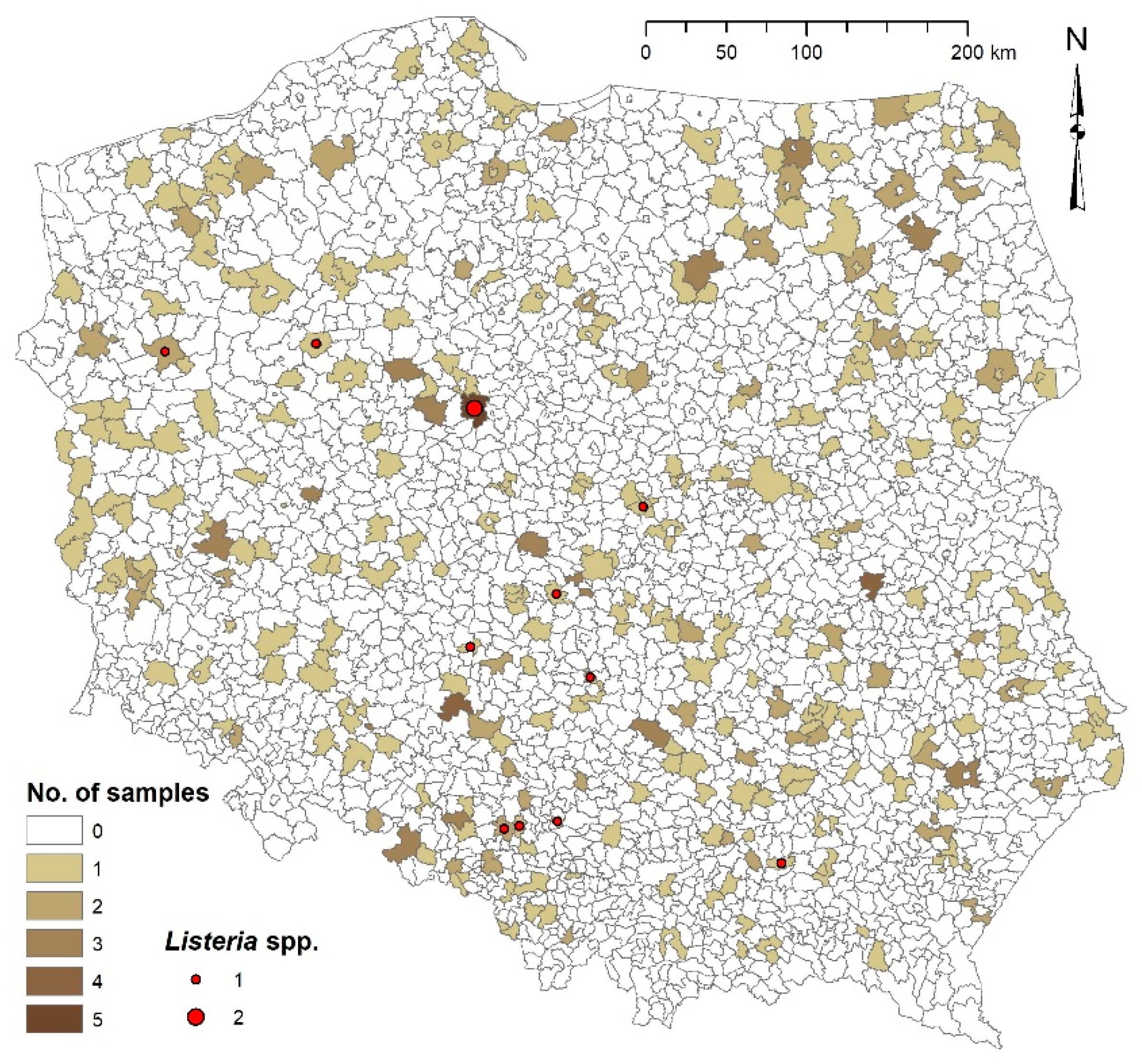
3.1. Farm Characteristics
3.2. PH Value of Maize Silages
3.3. Prevalence of Bacteria
3.4. Toxotype of C. Perfringens Isolates
3.5. Count of Hygiene Indicators
3.6. Effect of Organic Fertilization
3.7. Effect of Silage Inoculation
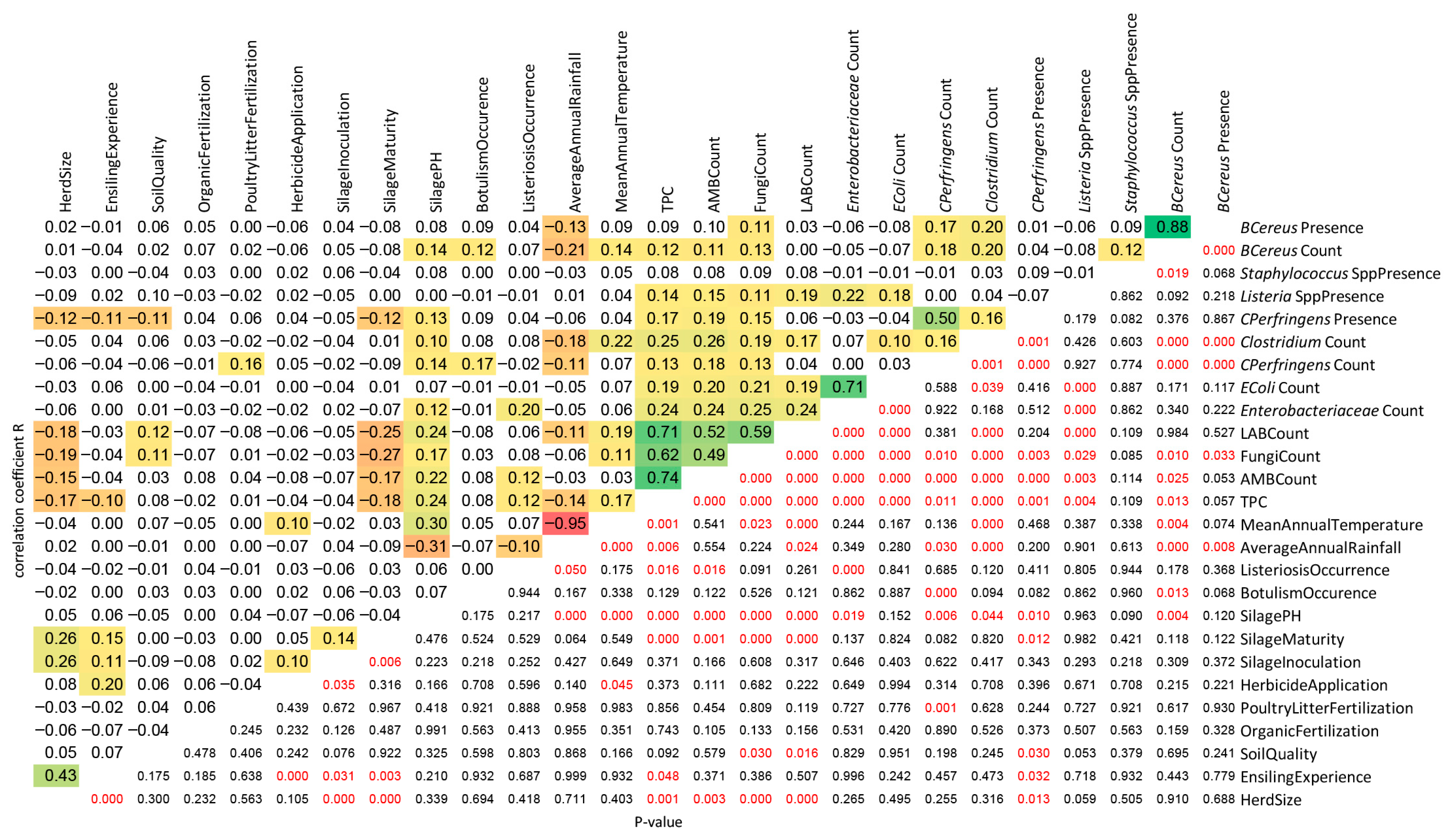
3.8. Correlation of Parameters
4. Discussion
5. Conclusions
Author Contributions
Funding
Institutional Review Board Statement
Informed Consent Statement
Data Availability Statement
Acknowledgments
Conflicts of Interest
References
- Łuczak, W.; Chudoba, K. Konserwacja pasz metodą kiszenia w ujęciu historycznym. Wiad. Zootech. 2013, 4, 106–116. [Google Scholar]
- Balouzat, J.; Vaudaux, A.; Madrange, P.; Botreau, R.; Braun, E.; Breen, J.; Britz, W.; Dimon, P.; Guillier, M.; Hennart, S.; et al. Description of Beef Production. 2025. ⟨hal-05274188⟩. Available online: https://hal.science/hal-05274188v1/file/Balouzat_SustainBeef%20-%20Delivrable%202.1.pdf (accessed on 15 April 2026).
- Ziętara, W.; Pietrzak, M.; Malak-Rawlikowska, A. Polish dairy farm transformations and competitiveness 20 years after Poland’s accession to the European Union. Animals 2024, 14, 2013. [Google Scholar] [CrossRef]
- Alonso, V.A.; Pereyra, C.M.; Keller, L.A.M.; Dalcero, A.M.; Rosa, C.A.R.; Chiacchiera, S.M.; Cavaglieri, L.R. Fungi and mycotoxins in silage: An overview. J. Appl. Microbiol. 2013, 115, 637–643. [Google Scholar] [CrossRef]
- Wilkinson, J.M.; Davies, D.R. The aerobic stability of silage: Key findings and recent developments. Grass Forage Sci. 2012, 68, 1–19. [Google Scholar] [CrossRef]
- Dolci, P.; Tabacco, E.; Cocolin, L.; Borreani, G. Microbial dynamics during aerobic exposure of corn silage stored under oxygen barrier or polyethylene films. Appl. Environ. Microbiol. 2011, 77, 7499–7507. [Google Scholar] [CrossRef]
- Pahlow, G.; Muck, R.E.; Driehuis, F.; Oude Elferink, S.J.W.H.; Spoelstra, S.F. Microbiology of ensiling. In Silage Science and Technology; Buxton, D.R., Muck, R.E., Harrison, J.H., Eds.; American Society of Agronomy, Crop Science Society of America, Soil Science Society of America: Madison, WI, USA, 2003; pp. 31–93. Available online: https://research.wur.nl/en/publications/microbiology-of-ensiling/ (accessed on 15 April 2026).
- Queiroz, O.C.M.; Ogunade, I.M.; Weinberg, Z.; Adesogan, A.T. Silage review: Foodborne pathogens in silage and their mitigation by silage additives. J. Dairy Sci. 2017, 101, 4132–4142. [Google Scholar] [CrossRef]
- Muck, R.E. Silage microbiology and its control through additives. R. Bras. Zootec. 2010, 39, 183–191. [Google Scholar] [CrossRef]
- Vissers, M.M.M.; Driehuis, F. On-farm hygienic milk production. In Milk Processing and Quality Management; Tamime, A.Y., Ed.; Wiley-Blackwell: Chichester, UK, 2009; pp. 1–22. Available online: https://ubblab.weebly.com/uploads/4/7/4/6/47469791/milk_processing_and_quality_management.pdf (accessed on 15 April 2026).
- Donald, A.S.; Fenlon, D.R.; Seddon, B. The relationships between ecophysiology, indigenous microflora and growth of Listeria monocytogenes in grass silage. J. Appl. Bacteriol. 1995, 79, 141−148. [Google Scholar] [CrossRef] [PubMed]
- Presser, K.A.; Ross, T.; Ratkowsky, D.A. Modelling the growth limits (growth/no growth interface) of Escherichia coli as a function of temperature, pH, lactic acid concentration, and water activity. Appl. Environ. Microbiol. 1998, 64, 1773–1779. [Google Scholar] [CrossRef] [PubMed]
- Trunet, C.; Mtimet, N.; Mathot, A.-G.; Postollec, F.; Leguerinel, I.; Sohier, D.; Couvert, O.; Carlin, F.; Coroller, L. Modeling the recovery of heat-treated Bacillus licheniformis Ad978 and Bacillus weihenstephanensis KBAB4 spores at suboptimal temperature and pH using growth limits. Appl. Environ. Microbiol. 2015, 81, 562–568. [Google Scholar] [CrossRef]
- Wong, D.M.; Young-Perkins, K.E.; Merson, R.L. Factors influencing Clostridium botulinum spore germination, outgrowth, and toxin formation in acidified media. Appl. Environ. Microbiol. 1988, 54, 1446–1450. [Google Scholar] [CrossRef]
- Arpaia, N.; Campbell, C.; Fan, X.; Dikiy, S.; Van Der Veeken, J.; De Roos, P.; Liu, H.; Cross, J.R.; Pfeffer, K.; Coffer, P.J.; et al. Metabolites produced by commensal bacteria promote peripheral regulatory T-cell generation. Nature 2013, 504, 451–455. [Google Scholar] [CrossRef] [PubMed]
- Colditz, I.G. Effects of the immune system on metabolism: Implications for production and disease resistance in livestock. Livest. Prod. Sci. 2002, 75, 257–268. [Google Scholar] [CrossRef]
- Agerholm, J.S.; Jensen, N.E.; Dantzer, V.; Jensen, H.E.; Aarestrup, F.M. Experimental Infection of Pregnant Cows with Bacillus licheniformis Bacteria. Vet. Pathol. 1999, 36, 191–201. [Google Scholar] [CrossRef] [PubMed]
- Anacker, G. Mikrobiologische Futterqualität—Ursache für Gesundheitsprobleme in Milchviehherden? Proc. 40. Viehwirtschaftliche Fachtagung, 18.-19. April 2013, Bericht LFZ RaumbergGumpenstein 2013; pp. 93–100. Available online: https://elib.tiho-hannover.de/servlets/MCRFileNodeServlet/etd_derivate_00000154/schoenherrf_ss17.pdf (accessed on 15 April 2026).
- Bourry, A.; Poutrel, B.; Rocourt, J. Bovine mastitis caused by Listeria monocytogenes: Characteristics of natural and experimental infections. J. Med. Microbiol. 1995, 43, 125–132. [Google Scholar] [CrossRef]
- Bundrant, B.N.; Hutchins, T.; den Bakker, H.C.; Fortes, E.; Wiedmann, M. Listeriosis outbreak in dairy cattle caused by an unusual Listeria monocytogenes serotype 4b strain. J. Vet. Diagn. Investig. 2011, 23, 155–158. [Google Scholar] [CrossRef]
- Guizelini, C.C.; Lemos, R.A.A.; de Paula, J.L.P.; Pupin, R.C.; Gomes, D.C.; Barros, C.S.L.; Neves, D.A.; Alcântara, L.O.B.; Silva, R.O.S.; Lobato, F.C.F.; et al. Type C botulism outbreak in feedlot cattle fed contaminated corn silage. Anaerobe 2019, 55, 103–106. [Google Scholar] [CrossRef]
- McGuirk, S.M. Forage feeding and biosecurity issues for cattle. In 2002 Symposium and Joint Meeting of Professional Nutrient Applicators of Wisconsi; Wisconsin Custon Harvest Operators, and Wisconsin Forage Council: Madison, WI, USA, 2002. [Google Scholar]
- Welay, G.M.; Tedla, D.G.; Teklu, G.G.; Weldearegay, S.K.; Shibeshi, M.B.; Kidane, H.H.; Gebrezgiabher, B.B.; Abraha, T.H. A preliminary survey of major diseases of ruminants and management practices in Western Tigray province, northern Ethiopia. BMC Vet. Res. 2018, 14, 293. [Google Scholar] [CrossRef]
- Zain, M.E. Impact of mycotoxins on humans and animals. J. Saudi Chem. Soc. 2011, 15, 129–144. [Google Scholar] [CrossRef]
- Lundén, J.; Tolvanen, R.; Korkeala, H. Human listeriosis outbreaks linked to dairy products in Europe. J. Dairy Sci. 2004, 87, E6–E12. [Google Scholar] [CrossRef]
- Zucali, M.; Bava, L.; Colombini, S.; Brasca, M.; Decimo, M.; Morandi, S.; Tamburini, A.; Crovetto, G.M. Management practices and forage quality affecting the contamination of milk with anaerobic spore-forming bacteria. J. Sci. Food Agric. 2015, 95, 1294–1302. [Google Scholar] [CrossRef]
- Agerholm, J.S.; Krogh, H.V.; Jensen, H.E. A Retrospective Study of Bovine Abortions Associated with Bacillus licheniformis. J. Vet. Med. 1995, 42, 225–234. [Google Scholar] [CrossRef]
- Gonzalez, P.; Alonso, M.L.; Sager, V.A.; Morlaco, R.; Magnoli, M.B.; Astoreca, C.E.; Rosa, A.L.; Chiacchiera, S.M.; Dalcero, A.M.; Cavaglieri, L.R. Fungi and selected mycotoxins from pre- and postfermented corn silage. J. Appl. Microbiol. 2008, 104, 1034–1041. [Google Scholar] [CrossRef]
- Nucera, D.M.; Grassi, M.A.; Morra, P.; Piano, S.; Tabacco, E.; Borreani, G. Detection, identification, and typing of Listeria species from baled silages fed to dairy cows. J. Dairy Sci. 2016, 99, 6121–6133. [Google Scholar] [CrossRef]
- Te Giffel, M.; Wagendorp, A.; Herrewegh, A.; Driehuis, F. Bacterial spores in silage and raw milk. Antonie Van Leeuwenhoek 2002, 81, 625–630. [Google Scholar] [CrossRef]
- Minihan, D.; Whyte, P.; O’Mahoney, M.; Fanning, S.; McGill, K.; Collins, J.D. Campylobacter spp. in Irish feedlot cattle: A longitudinal study involving pre-harvest and harvest phases of the food chain. J. Vet. Med. 2004, B51, 28–33. [Google Scholar] [CrossRef]
- Stanley, K.; Jones, K. Cattle and sheep farms as reservoirs of Campylobacter. J. Appl. Microbiol. 2003, 94, 104S–113S. [Google Scholar] [CrossRef]
- García-González, T.; Sáenz-Hidalgo, H.K.; Silva-Rojas, H.V.; Morales-Nieto, C.; Vancheva, T.; Koebnik, R.; Ávila-Quezada, G.D. Enterobacter cloacae, an Emerging Plant-Pathogenic Bacterium Affecting Chili Pepper Seedlings. Plant Pathol. J. 2018, 34, 1–10. [Google Scholar] [CrossRef]
- Markova, Y.A.; Romanenko, A.S.; Dukhanina, A.V. Isolation of bacteria of the family Enterobacteriaceae from plant tissues. Microbiol. 2005, 74, 575–578. [Google Scholar] [CrossRef]
- Postollec, F.; Mathot, A.G.; Bernard, M.; Divanac’h, M.L.; Pavan, S.; Sohier, D. Tracking spore-forming bacteria in food: From natural biodiversity to selection by processes. Int. J. Food Microbiol. 2012, 158, 1–8. [Google Scholar] [CrossRef]
- Rubin, B.E.R.; Gibbons, S.M.; Kennedy, S.; Hampton-Marcell, J.; Owens, S.; Gilbert, J.A. Investigating the impact of storage conditions on microbial community composition in soil samples. PLoS ONE 2013, 8, e70460. [Google Scholar] [CrossRef]
- Kung, L.; Shaver, R.D. Interpretation and use of silage fermentation analysis reports. Focus Forage 2001, 3, 1–5. [Google Scholar]
- ISO 6579:2002; Microbiology of Food and Animal Feeding Stuffs—Horizontal Method for the Detection of Salmonella spp. ISO: Geneva, Switzerland, 2002.
- ISO 4833-1:2013; Microbiology of the Food Chain—Horizontal Method for the Enumeration of Microorganisms. Part 1. Colony Count at 30 degrees C by the Pour Plate Technique. ISO: Geneva, Switzerland, 2013.
- PN-R-64791:1994; Animal Feedingstuffs. Requirements and Microbiological Examination. Polish Committee for Standardization: Warsaw, Poland, 1994.
- ISO 11290-1:1999; Microbiology of Food and Animal Feeding Stuffs—Horizontal Method for the Detection and Enumeration of Listeria monocytogenes. Part 1. Detection Method. ISO: Geneva, Switzerland, 1999.
- ISO 7937:2004; Microbiology of Food and Animal Feeding Stuffs—Horizontal Method for the Enumeration of Clostridium perfringens. Colony-count technique. ISO: Geneva, Switzerland, 2004.
- ISO 21528-2:2004; Microbiology of Food and Animal Feeding Stuffs—Horizontal Method for the Detection and Enumeration of Enterobacteriaceae. Part 2. Colony-Count Technique. ISO: Geneva, Switzerland, 2004.
- ISO 16649-2:2001; Microbiology of Food and Animal Feeding Stuffs—Horizontal Method for the Enumeration of Beta-glucuronidase-positive Escherichia coli. Part 2. Colony-Count Technique at 44 °C Using 5-bromo-4-chloro-3-indolyl beta-D-glucuronide. ISO: Geneva, Switzerland, 2001.
- ISO 6888-2:1999; Microbiology of Food and Animal Feeding Stuffs—Horizontal Method for the Enumeration of Coagulase-positive Staphylococci (Staphylococcus aureus and Other Species). Part 2: Technique Using Rabbit Plasma Fibrinogen Agar Medium. ISO: Geneva, Switzerland, 1999.
- PN-A-82055-12:1997; Meat and Meat Preparations—Microbiological Tests—Detection of Anaerobic Spore-forming Bacteria and Anaerobic Spore-forming Sulfate(IV)-reducing Bacteria. Polish Committee for Standardization: Warsaw, Poland, 1997.
- ISO 10272-1:2006; Microbiology of Food and Animal Feeding Stuffs—Horizontal Method for Detection and Enumeration of Campylobacter spp. Part 1: Detection Method. ISO: Geneva, Switzerland, 2006.
- ISO 15214:1998; Microbiology of Food and Animal Feeding Stuffs—Horizontal Method for the Enumeration of Mesophilic Lactic Acid Bacteria. Colony-Count Technique at 30 Degrees C. ISO: Geneva, Switzerland, 1998.
- ISO 7932:2004; Microbiology of Food and Animal Feeding Stuffs—Horizontal Method for the Enumeration of Presumptive Bacillus cereus. Colony-Count Technique at 30 Degrees C. ISO: Geneva, Switzerland, 2004.
- ISO 6887-4:2017; Microbiology of the Food Chain—Preparation of Test Samples, Initial Suspension and Decimal Dilutions for Microbiological Examination—Part 4: Specific Rules for the Preparation of Miscellaneous Products. ISO: Geneva, Switzerland, 2017.
- Baums, C.G.; Schotte, U.; Amtsberg, G.; Goethe, R. Diagnostic multiplex PCR for toxin genotyping of Clostridium perfringens isolates. Vet. Microbiol. 2004, 100, 11–16. [Google Scholar] [CrossRef] [PubMed]
- Kukier, E.; Kwiatek, K. Occurrence of Clostridium perfringens in food chain. Bull. Vet. Inst. Pulawy 2010, 54, 571–576. [Google Scholar]
- Raphael, B.H.; Andreadis, J.D. Real-time PCR detection of the nontoxic nonhemagglutinin gene as a rapid screening method for bacterial isolates harboring the botulinum neurotoxin (A–G) gene complex. J. Microbiol. Methods 2007, 71, 343–346. [Google Scholar] [CrossRef]
- Malin, J.; Haiko, J.; Baharak, S. Rapid identification of bacterial species directly from enrichment broth by MALDI-TOF mass spectrometry. Biomed. J. Sci. Tech. Res. 2018, 10, BJSTR. MS.ID.001897. [Google Scholar] [CrossRef]
- Dlabola, J.; Hashish, E.; Pauly, B.; Kubisiak, B.; Behm, I.; Heseler, R.; Schliephake, A.; Wieler, L.H.; Neubauer, H.; Seyboldt, C. Clostridium botulinum type D/C intoxication in a dairy cow stock in Saxony-Anhalt (Germany)--report on an innovative diagnostic approach. Berl. Munch. Tierarztl. Wochenschr. 2016, 129, 111–117. [Google Scholar]
- Grajewski, J.; Potkański, A.; Raczkowska-Werwińska, K.; Twarużek, M.; Miklaszewska, B.; Grabowska, M.; Gubała, A.; Selwet, M. Jakość higieniczna kiszonki z kukurydzy zakiszanej z dodatkiem biologicznym lub chemicznym. Med. Wet. 2007, 63, 205–208. [Google Scholar]
- Mlejnková, V.; Fröhdeová, M.; Kalhotka, L.; Doležal, P. Microbiological quality of experimental silages in combination with the addition of topsoil soil layer and ensiling additives. Acta Univ. Agric. Silvic Mendel Brun. 2014, 62, 1041–1048. [Google Scholar] [CrossRef]
- Papić, B.; Golob, M.; Kušar, D.; Pate, M.; Zdovc, I. Source tracking on a dairy farm reveals a high occurrence of subclinical mastitis due to hypervirulent Listeria monocytogenes clonal complexes. J. Appl. Microbiol. 2019, 127, 1349–1361. [Google Scholar] [CrossRef]
- Raczkowska-Werwińska, K.; Potkański, A.; Grajewski, J.; Twarużek, M.; Miklaszewska, B.; Łukomska, W.; Gubała, A.; Selwet, M. Wpływ wybranych dodatków na wartość pokarmową i mikroflorę kiszonki z kukurydzy inokulowanej Penicillium verrucosum 410. Med. Wet. 2008, 64, 240–244. [Google Scholar]
- Salwa, A.; Kopczewski, A.; Borkowska-Opacka, B.; Przewoski, W.; Strzałkowski, L.; Sroka, A.; Arent, Z.; Malinowski, E.; Lachowski, A. Enzootia listeriozy u bydła na Kaszubach. Med. Wet. 2007, 63, 1579–1582. [Google Scholar]
- Selwet, M. The effect of bacterial silage inoculant on the fermentation, cell wall contents and aerobic stability of maize silage. Acta Sci. Pol. Zootechnica 2011, 10, 83–92. [Google Scholar]
- Stoškus, R.; Jatkauskas, J.; Vrotniakiene, V.; Juozaitiene, V. The effect of mixed bacterial inoculant on the microbial population and aerobic stability of lucerne and maize balage. J. Anim. Feed Sci. 2019, 28, 383–391. [Google Scholar] [CrossRef]
- Szymańska, G.; Sulewska, H.; Selwet, M. Hygienic condition of maize silage (Zea mays L.) depending on cutting height and ensiling additive. Turk. J. Agric. For. 2014, 38, 354–361. [Google Scholar] [CrossRef]
- Nightingale, K.K.; Schukken, Y.H.; Nightingale, C.R.; Fortes, E.D.; Ho, A.J.; Her, Z.; Grohn, Y.T.; McDonough, P.L.; Wiedmann, M. Ecology and transmission of Listeria monocytogenes infecting ruminants and in the farm environment. Appl. Environ. Microbiol. 2004, 70, 4458–4467. [Google Scholar] [CrossRef]
- Borucki, M.K.; Gay, C.C.; Reynolds, J.; McElwain, K.L.; Kim, S.H.; Call, D.R.; Knowles, D.P. Genetic diversity of Listeria monocytogenes strains from a high-prevalence dairy farm. Appl. Environ. Microbiol. 2005, 71, 5893–5899. [Google Scholar] [CrossRef]
- Septian, F.; Kardaya, D.; Astuti, W.D. Evaluasi kualitas silase limbah sayuran pasar yang diperkaya dengan berbagai aditif dan bakteri asam laktat. J. Pertanian 2011, 2, 117–124. [Google Scholar]
- Addah, W.; Baah, J.; Groenewegen, P.; Okine, E.K.; McAllister, T.A. Comparison of the fermentation characteristics, aerobic stability and nutritive value of barley and corn silages ensiled with or without a mixed bacterial inoculant. Can. J. Anim. Sci. 2011, 91, 133–146. [Google Scholar] [CrossRef]
- Driehuis, F. Silage and the safety and quality of dairy foods: A review. Agric. Food Sci. 2013, 22, 16–34. [Google Scholar] [CrossRef]
- Litjens, I. Untersuchungen zur Silagequalität—Siliererfolg/Hygienestatus und Futterwert—Auf Milchkuhbetrieben in Deutschland. 2020. Available online: https://elib.tiho-hannover.de/receive/tiho_mods_00003632 (accessed on 15 April 2026).
- Perry, C.M.; Donnelly, C.W. Incidence of Listeria monocytogenes in silage and its subsequent control by specific and nonspecific antagonism. J. Food Prot. 1990, 53, 642–647. [Google Scholar] [CrossRef] [PubMed]
- Puntillo, M.; Gaggiotti, M.; Oteiza, J.M.; Binetti, A.; Massera, A.; Vinderola, G. Potential of lactic acid bacteria isolated from different forages as silage inoculants for improving fermentation quality and aerobic stability. Front. Microbiol. 2020, 11, 586716. [Google Scholar] [CrossRef]
- Pyś, J.B.; Karpowicz, A.; Szałata, A. Effect of Rapeseed Meal and Ensiling Preparations on Fermentation Quality, Microbiological Composition and Aerobic Stability of Whole-Plant Maize Silages. In Proceedings of the 14th International Symposium Forage Conservation, Brno, Czech Republic, 17–19 March 2010. [Google Scholar]
- Vaičiulienė, G.; Bakutis, B.; Jovaišiene, J.; Falkauskas, R.; Gerulis, G.; Kerziene, S.; Baliukoniene, V. Prevalence of mycotoxins and endotoxins in total mixed rations and different types of ensiled forages for dairy cows in Lithuania. Toxins 2021, 13, 890. [Google Scholar] [CrossRef]
- Zielińska, K.J.; Fabiszewska, A.U.; Wróbel, B. Increase in biogas yield from whole crop maize silage prepared with the addition of inoculant Lactosil Biogaz Plus. J. Res. Appl. Agric. Eng. 2018, 63, 157–161. [Google Scholar]
- Moura, A.; Disson, O.; Lavina, M.; Thouvenot, P.; Huang, L.; Leclercq, A.; Fredriksson-Ahomaa, M.; Eshwar, A.K.; Stephan, R.; Lecuit, M. Atypical hemolytic Listeria innocua isolates are virulent, albeit less than Listeria monocytogenes. Infect. Immun. 2019, 87, e00758-18. [Google Scholar] [CrossRef]
- Rocourt, J.; Hof, H.; Schrettenbrunner, A.; Malinverni, R.; Bille, J. Acute purulent Listeria seeligeri meningitis in an immunocompetent adult. Schweiz. Med. Wochenschr. 1986, 116, 248–251. [Google Scholar]
- Husu, J.R. Epidemiological studies on the occurrence of Listeria monocytogenes in the feces of dairy cattle. J. Vet. Med. B. 1990, 37, 276–282. [Google Scholar] [CrossRef]
- Konosonoka, I.H.; Jemeljanovs, A.; Osmane, B.; Ikauniece, D.; Gulbe, G. Incidence of Listeria spp. in dairy cows feed and raw milk in Latvia. ISRN Vet. Sci. 2012, 2012, 435187. [Google Scholar] [CrossRef] [PubMed]
- Sanaa, M.; Audurier, A.; Poutrel, B.; Menard, J.L.; Serieys, F. Origin of bovine raw milk contamination by Listeria monocytogenes. In Symposium on Bacteriological Quality of Raw Milk, IDF, Austria; International Dairy Federation: Brussels, Belgium, 1996; pp. 84–88. Available online: https://agris.fao.org/search/es/records/6472149069d6cbfdd4a354cd (accessed on 1 January 2026).
- Tasci, F.; Turutoglu, H.; Ogutcu, H. Investigations of Listeria species in milk and silage produced in Burdur Province. Kafkas Univ. Vet. Fak. Derg. 2010, 16, S93–S97. [Google Scholar] [CrossRef]
- Vilar, M.J.; Yus, E.; Sanjuan, M.L.; Diequez, F.J.; Rodriquez-Otero, J.L. Prevalence of and risk factors for Listeria species on dairy farms. J. Dairy Sci. 2007, 90, 5083–5088. [Google Scholar] [CrossRef]
- Castro, H.; Jaakkonen, A.; Hakkinen, M.; Korkeala, H.; Lindström, M. Occurrence, persistence, and contamination routes of Listeria monocytogenes genotypes on three Finnish dairy cattle farms: A longitudinal study. Appl. Environ. Microbiol. 2018, 84, e02000-17. [Google Scholar] [CrossRef]
- Grant, M.A.; Eklund, C.A.; Shields, S.C. Monitoring dairy silage for five bacterial groups with potential for human pathogenesis. J. Food Prot. 1995, 58, 879–883. [Google Scholar] [CrossRef]
- Jovaišienė, J.; Bakutis, B.; Baliukonienė, V.; Kačergius, A.; Paškevičius, A.; Gerulis, G. Hygienic sanitary estimation of maize silage in dairy farms in Lithuania. In Proceedings of the 7th International Scientific Conference Rural Development 2015 At: Aleksandras Stulginskis University, Kaunas, Lithuania, 19–20 November, 2015. [Google Scholar] [CrossRef]
- Rea, M.C.; Cogan, T.M.; Tobin, S. Incidence of pathogenic bacteria in raw milk in Ireland. J. Appl. Bacteriol. 1992, 73, 331–336. [Google Scholar] [CrossRef]
- Nowak, M.; Paluszak, Z.; Wiktorczyk-Kapischke, N.; Grudlewska-Buda, K.; Budzyńska, A.; Skonieczna-Kurpiel, J.; Wałecka-Zacharska, E.; Huse-Kutowska, M.; Skowron, K. Characterization of Listeria monocytogenes strains isolated from soil under organic carrot farming. Front. Microbiol. 2025, 15, 1530446. [Google Scholar] [CrossRef]
- Ryser, E.; Arimi, S.M.; Donnelly, C.W. Effects of pH on distribution of Listeria ribotypes in corn, hay, and grass silage. Appl. Environ. Microb. 1997, 63, 3695–3697. [Google Scholar] [CrossRef] [PubMed]
- Borreani, G.; Ferrero, F.; Nucera, D.; Casale, M.; Piano, S.; Tabacco, E. Dairy farm management practices and the risk of contamination of tank milk from Clostridium spp. and Paenibacillus spp. spores in silage, total mixed ration, dairy cow feces, and raw milk. J. Dairy Sci. 2019, 102, 8273–8289. [Google Scholar] [CrossRef] [PubMed]
- Tabacco, E.; Piano, S.; Cavallarin, L.; Bernardes, T.F.; Borreani, G. Clostridia spore formation during aerobic deterioration of maize and sorghum silages as influenced by Lactobacillus buchneri and Lactobacillus plantarum inoculants. J. Appl. Microbiol. 2009, 107, 1632–1641. [Google Scholar] [CrossRef]
- Zhou, Y.; Drouin, P.; Lafrenière, C. Effects on microbial diversity of fermentation temperature (10 °C and 20 °C), long-term storage at 5 °C, and subsequent warming of corn silage. Anim. Biosci. 2019, 32, 1528–1539. [Google Scholar] [CrossRef] [PubMed]
- Doležal, P.; Dvořáček, J.; Loučka, R. Konzervace krmiv a jejich využití ve výživě zvířat. In Vydání: 1 Olomouc: Vydavatelství Baštan; Mendelova Univerzita v Brně: Brno, Czech Republic, 2012; p. 307. ISBN 978-80-87091-33-3. [Google Scholar]
- Zeman, L.; Doležal, P.; Kopřiva, A. Výživa a krmení hospodářských zvířat. 2006, 1. vyd. Praha: Profi Press. Available online: https://www.databazeknih.cz/knihy/vyziva-a-krmeni-hospodarskych-zvirat-265080 (accessed on 1 January 2026).
- Kaiser, E.; Weiss, K. Fermentation process during the ensiling of green forage low in nitrate. 2. Fermentation process after supplementation of nitrate, nitrite, lactic-acid bacteria and formic acid. Arch. Anim. Nutr. 1997, 50, 187–200. [Google Scholar] [CrossRef]
- Goeser, J. Mold, Yeast and Clostridium perfringens Guidelines for Agricultural Feeds and Total Mixed Rations. 2016, Rock River Laboratory, INC, 710 Commerce Drive, PO Box 169, Watertown, WI 53094, 920-261-0446. Available online: www.rockriverlab.eu/wp-content/uploads/MoldYeastandClostridia2016.pdf (accessed on 15 April 2026).
- Dennison, A.C.; VanMetre, D.C.; Callan, R.J.; Dinsmore, P.; Mason, G.L.; Ellis, R.P. Hemorrhagic bowel syndrome in dairy cattle: 22 cases (1997–2000). J. Am. Vet. Med. Assoc. 2002, 221, 686–689. [Google Scholar] [CrossRef]
- Azimirad, M.; Gholami, F.; Yadegar, A.; Knight, D.R.; Shamloei, S.; Aghdaei, H.A.; Zali, M.R. Prevalence and characterization of Clostridium perfringens toxinotypes among patients with antibiotic-associated diarrhea in Iran. Sci Rep. 2019, 9, 7792. [Google Scholar] [CrossRef]
- Rood, J.I.; Adams, V.; Lacey, J.; Lyras, D.; McClane, B.A.; Melville, S.B.; Moore, R.J.; Popoff, M.R.; Sarker, M.R.; Songer, J.G.; et al. Expansion of the Clostridium perfringens toxin-based typing scheme. Anaerobe 2018, 53, 5–10. [Google Scholar] [CrossRef]
- Uzal, F.A.; Vidal, J.E.; McClane, B.A.; Gurjar, A.A. Clostridium perfringens toxins involved in mammalian veterinary diseases. Open Toxinology J. 2010, 2, 24–42. [Google Scholar] [CrossRef]
- Fohler, S.; Klein, G.; Hoedemaker, M.; Scheu, T.; Seyboldt, C.; Campe, A.; Jensen, K.C.; Abdulmawjood, A. Diversity of Clostridium perfringens toxin-genotypes from dairy farms. BMC Microbiol. 2016, 16, 199. [Google Scholar] [CrossRef]
- Le Maréchal, C.; Hulin, O.; Macé, S.; Chuzeville, C.; Rouxel, S.; Poëzevara, T.; Mazuet, C.; Pozet, F.; Sellal, E.; Martin, L.; et al. A case report of a botulism outbreak in beef cattle due to the contamination of wheat by a roaming cat carcass: From the suspicion to the management of the outbreak. Animals 2019, 9, 1025. [Google Scholar] [CrossRef] [PubMed]
- Myllykoski, J.; Lindström, M.; Keto-Timonen, R.; Söderholm, H.; Jakala, J.; Kallio, H.; Korkeala, H. Type C bovine botulism outbreak due to carcass contaminated non-acidified silage. Epidemiol. Infect. 2009, 137, 284–293. [Google Scholar] [CrossRef] [PubMed]
- Relun, A.; Dorso, L.; Douart, A.; Chartier, C.; Guatteo, R.; Mazuet, C.; Popoff, M.R.; Assié, S. A large outbreak of bovine botulism possibly linked to a massive contamination of grass silage by type D/C Clostridium botulinum spores on a farm with dairy and poultry operations. Epidemiol. Infect. 2017, 145, 3477–3485. [Google Scholar] [CrossRef]
- Kim, J.C.; Oh, E.; Kim, J.; Jeon, B. Regulation of oxidative stress resistance in Campylobacter jejuni, a microaerophilic foodborne pathogen. Front. Microbiol. 2015, 6, 751. [Google Scholar] [CrossRef]
- Mohammadpour, H.; Berizi, E.; Hosseinzadeh, S.; Majlesi, M.; Zare, M. The prevalence of Campylobacter spp. in vegetables, fruits, and fresh produce: A systematic review and meta-analysis. Gut Pathog. 2018, 10, 41. [Google Scholar] [CrossRef] [PubMed]
- Taylor, E.V.; Herman, K.M.; Ailes, E.C.; Fitzgerald, C.; Yoder, J.S.; Mahon, B.E.; Tauxe, R.V. Common source outbreaks of Campylobacter infection in the USA, 1997–2008. Epidemiol. Infect. 2013, 141, 987–996. [Google Scholar] [CrossRef]
- Thomas, C.; Hill, D.J.; Mabey, M. Evaluation of the effect of temperature and nutrients on the survival of Campylobacter spp. in water microcosms. J. Appl. Microbiol. 1999, 86, 1024–1032. [Google Scholar] [CrossRef] [PubMed]
- Vilar, M.J.; Peña, F.J.; Pérez, I.; Diéguez, F.J.; Sanjuán, M.L.; Rodríguez-Otero, J.L.; Yus, E. Presence of Listeria, Arcobacter, and Campylobacter spp. in dairy farms in Spain. Berl. Munch. Tierarztl. Wochenschr. 2010, 123, 58–62. [Google Scholar] [PubMed]
- Janda, J.M.; Abbott, S.L. The changing face of the family Enterobacteriaceae (Order: “Enterobacterales”): New members, taxonomic issues, geographic expansion, and new diseases and disease syndromes. Clin. Microbiol. Rev. 2021, 34, e00174-20. [Google Scholar] [CrossRef]
- Lee, H.A.; Hong, S.; Park, H.; Kim, H.; Kim, O. Cronobacter sakazakii infection induced fatal clinical sequels including meningitis in neonatal icr mice. Lab. Anim. Res. 2011, 27, 59–62. [Google Scholar] [CrossRef][Green Version]
- Adhikari, B.; Besser, T.E.; Gay, J.M.; Fox, L.K.; Davis, M.A.; Cobbold, R.N.; Berge, A.C.; McClanahan, R.; Hancock, D.D. Introduction of new multidrug-resistant Salmonella enterica strains into commercial dairy herds. J. Dairy Sci. 2009, 92, 4218–4228. [Google Scholar] [CrossRef]
- Ruoho, O. An Epidemic of Salmonellosis Caused by Silage Containing Salmonella at a Dairy Farm; ISAH: Tartu, Estonia, 2007; pp. 882–884. Available online: https://www.isah-soc.org/userfiles/downloads/proceedings/Proc_ISAH_2007_Volume_II/164_Ruoho.pdf (accessed on 15 April 2026).
- Fenlon, D.R.; Wilson, J. Growth of Escherichia coli O157 in poorly fermented laboratory silage: A possible environmental dimension in the epidemiology of E. coli O157. Lett. Appl. Microbiol. 2000, 30, 118–121. [Google Scholar] [CrossRef]
- Pahlow, G. O2-abhängige Veränderungen der Mikroflora in Silagen mit Lactobacterienzusatz. In: Kongressband 1984: Vorträge gehalten auf dem 96. VdLUFA-Kongreß in Karlsruhe 17.-22. September 1984. Landwirtsch. Forsch.—Sonderh. 1985, 41, 630–639. Available online: https://orgprints.org/id/eprint/40199/3/AB%20gesamt.pdf (accessed on 15 April 2026).
- Nadeau, E.; Rustas, B.-O.; Arnesson, A.; Swensson, C. Maize silage quality on Swedish dairy and beef farms. In Proceedings of the 14th International Symposium Forage Conservation, Brno, Czech Republic, 17–19 March 2010. [Google Scholar]
- Váradyová, Z.; Kišidayová, S.; Lauková, A.; Jalč, D. Influence of inoculated maize silage and sunflower oil on the in vitro fermentation, ciliate population and fatty acid outputs in the rumen fluid collected from sheep. Czech J. Anim. Sci. 2010, 55, 105–115. [Google Scholar] [CrossRef]
- Weinberg, Z.G.; Ashbell, G.; Chen, Y.; Gamburg, M.; Sela, S. The effect of sewage irrigation on safety and hygiene of forage crops and silage. Anim. Feed Sci. Technol. 2004, 116, 271–280. [Google Scholar] [CrossRef]
- Herriott, D.E.; Hancock, D.D.; Ebel, E.D.; Carpenter, L.V.; Rice, D.H.; Besser, T.E. Association of herd management factors with colonization of dairy cattle by shiga toxin-positive Escherichia coli O157. J. Food Prot. 1998, 61, 802–807. [Google Scholar] [CrossRef]
- Lin, J.; Smith, M.P.; Chapin, K.C.; Baik, H.S.; Bennett, G.N.; Foster, J.W. Mechanisms of acid resistance in enterohemorrhagic Escherichia coli. Appl. Environ. Microbiol. 1996, 62, 3094–3100. [Google Scholar] [CrossRef]
- Suehr, Q.J.; Chen, F.; Anderson, N.M.; Keller, S.E. Effect of Ph on survival of Escherichia coli O157, Escherichia coli O121, and Salmonella enterica during desiccation and short-term storage. J. Food Prot. 2020, 83, 211–220. [Google Scholar] [CrossRef]
- Pedroso, A.F.; Adesogan, A.T.; Queiroz, O.C.; Williams, S.K. Control of Escherichia coli O157:H7 in corn silage with or without various inoculants: Efficacy and mode of action. J. Dairy Sci. 2010, 93, 1098–1104. [Google Scholar] [CrossRef]
- Driehuis, F.; Wilkinson, J.M.; Jiang, Y.; Ogunade, I.; Adesogan, A.T. Silage review: Animal and human health risks from silage. J. Dairy Sci. 2018, 101, 4093–4110. [Google Scholar] [CrossRef]
- Rodrigo, D.; Rosell, C.M.; Martinez, A. Risk of Bacillus cereus in relation to rice and derivatives. Foods 2021, 10, 302. [Google Scholar] [CrossRef]
- Crielly, E.M.; Logan, N.A.; Anderton, A. Studies on the Bacillus flora of milk and milk products. J. Appl. Bacteriol. 1994, 77, 256–263. [Google Scholar] [CrossRef]
- Slaghuis, B.A.; te Giffel, M.C.; Beumer, R.R.; André, G. Effect of pasturing on the incidence of Bacillus cereus spores in raw milk. Int. Dairy J. 1997, 7, 201–205. [Google Scholar] [CrossRef]
- Vissers, M.M.M.; Driehuis, F.; Te Giffel, M.C.; De Jong, P.; Lankveld, J.M.G. Concentrations of butyric acid bacteria spores in silage and relationships with aerobic deterioration. J. Dairy Sci. 2007, 90, 928–936. [Google Scholar] [CrossRef]
- Christiansson, A.; Bertilsson, J.; Svensson, B. Bacillus cereus spores in raw milk: Factors affecting the contamination of milk during the grazing period. J. Dairy Sci. 1999, 82, 305–314. [Google Scholar] [CrossRef]
- Buehner, K.P.; Anand, S.; Garcia, A. Prevalence of thermoduric bacteria and spores on 10 Midwest dairy farms. J. Dairy Sci. 2014, 97, 6777–6784. [Google Scholar] [CrossRef]
- Hammer, P.; Lembke, F.; Suhren, G.; Heeschen, W. Characterization of a heat resistant mesophilic Bacillus species affecting quality of raw milk—A preliminary report. Kiel. Milchwirtsch. Forschungsber. 1995, 47, 303–311. [Google Scholar]
- Pettersson, B.; de Silva, S.K.; Uhlén, M.; Priest, F.G. Bacillus siralis sp. nov., a novel species from silage with a higher order structural attribute in the 16S rRNA genes. Int. J. Syst. Evol. Microbiol. 2000, 6, 2181–2187. [Google Scholar] [CrossRef]
- Damgaaerd, P.H.; Larsen, H.D.; Hansen, B.M.; Bresciani, J.; Jorgensen, K. Enterotoxin-producing strains of Bacillus thuringiensis isolated from food. Lett. Appl. Microbiol. 1996, 23, 146–150. [Google Scholar] [CrossRef]
- Yoo, J.G.; Chang, J.H.; Kim, S.Y.; Ji, J.Y.; Hong, S.W.; Park, B.Y. Analysis of emetic toxin production by Bacillus species using cellular cytotoxicity, molecular, and chromatographic assays. Biotechnol. Bioprocess Eng. 2014, 19, 978–983. [Google Scholar] [CrossRef]
- Bianco, A.; Capozzi, L.; Monno, M.R.; Del Sambro, L.; Manzulli, V.; Pesole, G.; Loconsole, D.; Parisi, A. characterization of Bacillus cereus group isolates from human bacteremia by whole-genome sequencing. Front. Microbiol. 2021, 11, 599524. [Google Scholar] [CrossRef]
- Capra, E.; Cremonesi, P.; Pietrelli, A.; Puccio, S.; Luini, M.; Stella, A.; Castiglioni, B. Genomic and transcriptomic comparison between Staphylococcus aureus strains associated with high and low within herd prevalence of intra-mammary infection. BMC Microbiol. 2017, 17, 21. [Google Scholar] [CrossRef] [PubMed]
- De Visscher, A.; Supré, K.; Haesebrouck, F.; Zadoks, R.N.; Piessens, V.; Van Coillie, E.; Piepers, S.; De Vliegher, S. Further evidence for the existence of environmental and host-associated species of coagulase-negative staphylococci in dairy cattle. Vet. Microbiol. 2014, 17, 466–474. [Google Scholar] [CrossRef]
- Levison, L.J.; Miller-Cushon, E.K.; Tucker, A.L.; Bergeron, R.; Leslie, K.E.; Barkema, H.W.; DeVries, T.J. Incidence rate of pathogen-specific clinical mastitis on conventional and or-ganic Canadian dairy farms. J. Dairy Sci. 2016, 99, 1341–1350. [Google Scholar] [CrossRef]
- Nyman, A.K.; Fasth, C.; Waller, K.P. Intramammary infections with different non-aureus staphylococci in dairy cows. J. Dairy Sci. 2018, 101, 1403–1418. [Google Scholar] [CrossRef] [PubMed]
- Srednik, M.; Tremblay, Y.; Labrie, J.; Archambault, M.; Jacques, M.; Fernández Cirelli, A.; Gentilini, E.R. Biofilm formation and antimicrobial resistance genes of coagulase-negative staphylococci isolated from cows with mastitis in Argentina. FEMS Microbiol. Lett. 2017, 364, 1–8. [Google Scholar] [CrossRef] [PubMed]
- Malinowska, M.; Tokarz-Deptuła, B.; Deptuła, W. The respiratory tract micro biota in physiological and pathological conditions. Post. Mikrobiol. 2016, 55, 279–283. [Google Scholar]
- Becker, K.; Heilmann, C.; Peters, G. Coagulase-negative staphylococci. Clin. Microbiol. Rev. 2014, 27, 870–926. [Google Scholar] [CrossRef]
- Podkowik, M.; Park, J.Y.; Seo, K.S.; Bystroń, J.; Bania, J. Enterotoxigenic potential of coagulase-negative staphylococci. Int. J. Food Microbiol. 2013, 163, 34–40. [Google Scholar] [CrossRef] [PubMed]
- Yu, J.; Hou, Q.; Li, W.; Huang, W.; Mo, L.; Yao, C.; An, X.; Sun, Z.; Wei, H. Profiling of the viable bacterial and fungal microbiota in fermented feeds using single-molecule real-time sequencing. J. Anim. Sci. 2020, 98, skaa029. [Google Scholar] [CrossRef]
- Kalúzová, M.; Kacániová, M.; Bíro, D.; Šimko, M.; Gálik, B.; Rolinec, M.; Hanušovský, O.; Felšöciová, S.; Jurácek, M. The change in microbial diversity and mycotoxins concentration in corn silage after addition of silage additives. Diversity 2022, 14, 592. [Google Scholar] [CrossRef]
- Omemu, A.M.; Okafor, U.I.; Obadina, A.O.; Bankole, M.O.; Adeyeye, S.A.O. Microbiological assessment of maize ogi cofermented with pigeon pea. Food Sci. Nutr. 2018, 6, 1238–1253. [Google Scholar] [CrossRef] [PubMed]
- Coelho, M.M.; Gonçalves, L.C.; Rodrigues, J.A.S.; Keller, K.M.; de Souza dos Anjos, G.V.; Ottoni, D.; Michel, P.H.F.; Jayme, D.G. Chemical characteristics, aerobic stability, and microbiological counts in corn silage re-ensiled with bacterial inoculant. Pesqui. Agropecu. Bras. 2018, 53, 1045–1052. [Google Scholar] [CrossRef]
- Jungbluth, K.H. Effects on Aerobic Processes at Silage Faces. Doctoral Dissertation, Rheinische Friedrich-Wilhelms-Universität Bonn, Bonn, Germany, 2018. Available online: https://bonndoc.ulb.uni-bonn.de/xmlui/bitstream/handle/20.500.11811/7329/4954.pdf?sequence=1&isAllowed=y (accessed on 15 April 2026).
- Naumann, C.; Bassler, R. (Eds.) Die Chemische Untersuchung von Futtermitteln; VDLUFA-Verlag: Darmstadt, Germany, 2012; Available online: https://books.google.pl/books/about/Die_chemische_Untersuchung_von_Futtermit.html?id=ki8VwwEACAAJ&redir_esc=y (accessed on 15 April 2026).
- Romero, J.J.; Zhao, Y.; Balseca-Paredes, M.A.; Tiezzi, F.; Gutierrez-Rodriguez, E.; Castillo, M.S. Laboratory silo type and inoculation effects on nutritional composition, fermentation, and bacterial and fungal communities of oat silage. J. Dairy Sci. 2017, 100, 1812–1828. [Google Scholar] [CrossRef] [PubMed]
- Productschap Diervoeder. Good Manufacturing Practices. Certification Scheme Animal Feed Sector, 2006. Version Marzo 2008; Appendix 1: Product Standards (Including Residue Standards); Productschap Diervoeder: The Hague, The Netherland, 2009; pp. 1–39. [Google Scholar]
- Jatkauskas, J.; Vrotniakienė, V.; Stoškus, R. Variations in fermentation, bacterial population and aerobic stability in maize silage Zemdirbyste. Agriculture 2018, 105, 377–382. [Google Scholar] [CrossRef]
- Keller, L.A.M.; González Pereyra, M.L.; Keller, K.M.; Alonso, V.A.; Oliveira, A.A.; Almeida, T.X.; Barbosa, T.S.; Nunes, L.M.T.; Cavaglieri, L.R.; Rosa, C.A.R. Fungal and mycotoxins contamination in corn silage: Monitoring risk before and after fermentation. J. Stored Prod. Res. 2013, 52, 42–47. [Google Scholar] [CrossRef]
- Bernardes, T.F.; Daniel, J.L.P.; Adesogan, A.T.; McAllister, T.A.; Drouin, P.; Nussio, L.G.; Huhtanen, P.; Tremblay, G.F.; Bélanger, G.; Cai, Y. Silage review: Unique challenges of silages made in hot and cold regions. J. Dairy Sci. 2018, 101, 4001–4019. [Google Scholar] [CrossRef]
- Kim, S.C.; Adesogan, A.T. Influence of ensiling temperature, simulated rainfall, and delayed sealing on fermentation characteristics and aerobic stability of corn silage. J. Dairy Sci. 2006, 89, 3122–3132. [Google Scholar] [CrossRef] [PubMed]
- Ellis, J.L.; Hindrichsen, I.K.; Klop, G.; Kinley, R.D.; Milora, N.; Bannink, A.; Dijkstra, J. Effects of lactic acid bacteria silage inoculation on methane emission and productivity of Holstein Friesian dairy cattle. J. Dairy Sci. 2016, 99, 7159–7174. [Google Scholar] [CrossRef] [PubMed]
- Muck, R.E.; Nadeau, E.M.G.; Mcallister, T.A.; Contreras-Govea, F.E.; Santos, M.C.; Kung, L., Jr. Silage review: Recent advances and future uses of silage additives. J. Dairy Sci. 2018, 101, 3980–4000. [Google Scholar] [CrossRef]
- Roszak, D.B.; Colwell, R.R. Survival strategies of bacteria in the natural environment. Microbiol. Rev. 1987, 51, 365–379. [Google Scholar] [CrossRef]
- Nishino, N.; Wada, H.; Yoshida, M.; Shiota, H. Microbial counts, fermentation products, and aerobic stability of whole crop corn and a total mixed ration ensiled with and without inoculation of Lactobacillus casei or Lactobacillus buchneri. J. Dairy Sci. 2004, 87, 2563–2570. [Google Scholar] [CrossRef]
- Santos, A.O.; Ávila, C.L.; Schwan, R.F. Selection of tropical lactic acid bacteria for enhancing the quality of maize silage. J. Dairy Sci. 2013, 96, 7777–7789. [Google Scholar] [CrossRef] [PubMed]



| No and Title of Method | Step of Method | Detection/Quantification Limit | ||||
|---|---|---|---|---|---|---|
| Primary Enrichment | Secondary Enrichment | Isolation | Confirmation | |||
| liquid Non-Selective Medium/Incubation Conditions | Selective Liquid Medium/Incubation Conditions | Selective Agar Medium/Incubation Conditions | Test | |||
| ISO 6579:2002 Horizontal method for the detection of Salmonella spp. [38] | Buffered Peptone Water 1/37 °C/18 h | Rappaport–Vassiliadis soya peptone broth (RVS) 1/41.5 °C/24 h | Xylose lysine deoxycholate agar (XLD) 2/37 °C/24 h | biochemical identification, serological identification | LOD 5 ≥ 3 cfu/g | |
| Muller–Kauffmann tetrathionate-novobiocin broth (MKTTn) 2/37 °C/24 h | Brilliant green agar (BGA) 2/37 °C/24 h | |||||
| ISO 4833-1:2013 Horizontal method for the enumeration of microorganisms. Part 1. Colony count at 30 degrees C by the pour plate technique [39] | NA | NA | Plate count agar (PCA) 2/30 °C/72 h | NA | LOQ 6 ≥ 10 cfu/g | |
| PN-R-64791:1994 Animal feedingstuffs. Requirements and microbiological examination [40] | presence of anaerobic spore-forming bacteria (Clostridium) | NA | Wrzosek broth 3/37 °C/48 h/anaerobic conditions | Willis-Hobbs agar 3/37 °C/48 h/anaerobic conditions | biochemical identification, microscopic identification (Gram staining) | LOD < 10 cfu/g |
| Wilson-Blair agar 2/37 °C/48 h/anaerobic conditions | ||||||
| enumeration of fungi | NA | NA | Dichloran-rose Bengal chloramphenicol agar (DRBC) 2/25 °C/7 d | NA | LOQ ≥ 10 cfu/g | |
| enumeration of aerobic mesophilic bacteria | NA | NA | Nutrient agar 2/37 °C/48 h | NA | LOQ ≥ 10 cfu/g | |
| ISO 11290-1:1999/A1:2004 Horizontal method for the detection and enumeration of Listeria monocytogenes. Part 1. Detection method [41] | half-Fraser broth 2/37 °C/24 h | Fraser broth 2/37 °C/24 h | ALOA agar 4/37 °C/24 h | biochemical identification/ | LOD ≥ 2 cfu/g | |
| Oxford agar 2/37 °C/24 h | ||||||
| ISO 7937:2004 Horizontal method for the enumeration of Clostridium perfringens. Colony-count technique [42] | NA | NA | Tryptose sulfite cycloserine agar (SC) 2/37 °C/20 h/a anaerobic conditions | biochemical identification | LOQ ≥ 10 cfu/g | |
| ISO 21528-2:2004 Horizontal method for the detection and enumeration of Enterobacteriaceae. Part 2. Colony-count technique [43] | NA | NA | Violet red bile glucose agar (VRBG) 1/37 °C/24 h | biochemical identification | LOQ ≥ 10 cfu/g | |
| ISO 16649-2:2001 Horizontal method for the enumeration of beta-glucuronidase-positive Escherichia coli. Part 2. Colony-count technique at 44 degrees C using 5-bromo-4-chloro-3-indolyl beta-D-glucuronide [44] | NA | NA | Tryptone bile x-glucuronide agar (TBX) 2/44 °C/24 h | NA | LOQ ≥ 10 cfu/g | |
| ISO 6888-2:1999 Horizontal method for the enumeration of coagulase-positive staphylococci (Staphylococcus aureus and other species). Part 2: Technique using rabbit plasma fibrinogen agar medium [45] | NA | NA | Baird-Parker RPF agar 2/37 °C/24–48 h | NA | LOQ ≥ 10 cfu/g | |
| PN-A-82055-12 Detection of anaerobic spore-forming bacteria and anaerobic spore-forming sulfate-reducing bacteria (IV) [46] | NA | Wrzosek broth 3/37 °C/48 h/anaerobic conditions | Willis-Hobbs agar 3/37 °C/48 h/anaerobic conditions | biochemical identification, microscopic identification (Gram staining) | LOD < 10 cfu/g | |
| Wilson-Blair agar 2/37 °C/48 h/anaerobic conditions | ||||||
| ISO 10272-1:2006 Horizontal method for detection and enumeration of Campylobacter spp. Part 1: Detection method [47] | NA | Bolton selective enrichment broth 2/41.5 °C/48 h/microaerobic conditions | Modified charcoal-cefoperazone-deoxycholate agar (mCCDA) 2/41.5 °C/48 h/microaerobic conditions | biochemical identification, morphological identification | LOD ≥ 5 cfu/g | |
| ISO 15214:1998 Horizontal method for the enumeration of mesophilic lactic acid bacteria. Colony-count technique at 30 degrees C [48] | NA | NA | De Man, Rogosa and Sharpe agar (MRS) 2/30 °C/72 h | NA | LOQ ≥ 10 cfu/g | |
| ISO 7932:2004 Horizontal method for the enumeration of presumptive Bacillus cereus. Colony-count technique at 30 degrees C [49] | NA | NA | Mannitol yolk polymyxin agar (MYP) 2/30 °C/24 h | biochemical identification | LOQ ≥ 10 cfu/g | |
| Microorganism | 1 log10 | 2 log10 | 3 log10 | 4 log10 | 5 log10 | 6 log10 | 7 log10 | 8 log10 | 9 log10 | Range (log10 cfu/g) | Mean Value (log10 cfu/g) | Median Value (log10 cfu/g) |
|---|---|---|---|---|---|---|---|---|---|---|---|---|
| % of Samples | ||||||||||||
| TPC | 0.4 | 1.4 | 9.1 | 35.1 | 30.1 | 14.9 | 6.5 | 1.8 | 0.4 | 1.6–9.4 | 5.3 | 5.0 |
| AMB | 0.7 | 2.9 | 12.3 | 46.4 | 23.6 | 6.9 | 4.3 | 1.4 | 1.1 | 1.8–9.5 | 4.9 | 4.7 |
| Fungi | 60.5 | 13.8 | 6.5 | 6.9 | 3.6 | 4.0 | 2.5 | 1.8 | 0 | 1–8.9 | 2.3 | 1.3 |
| LAB | 14.5 | 13.8 | 15.9 | 20.3 | 13.8 | 11.6 | 7.2 | 2.5 | 0 | 1–8.9 | 4.2 | 4.1 |
| Enterobacteriaceae | 97.5 | 0.7 | 0 | 1.1 | 0 | 0.4 | 0 | 0 | 0 | 1–6.2 | 1.1 | 1.0 |
| E. coli | 98.2 | 0.4 | 0.4 | 0.7 | 0 | 0 | 0 | 0 | 0 | 1–4.7 | 1.0 | 1.0 |
| Clostridium | 21.4 | 28.6 | 28.3 | 15.6 | 5.8 | 0 | 0 | 0 | 0 | 1–5 | 2.5 | 2.0 |
| C. perfringens | 97.1 | 2.5 | 0 | 0 | 0 | 0 | 0 | 0 | 0 | 1–2.6 | 1.0 | 1.0 |
| B. cereus | 87.3 | 11.6 | 0.7 | 0 | 0 | 0 | 0 | 0 | 0 | 1–3.4 | 1.2 | 1.0 |
| Microorganism | 1 log10 | 2 log10 | 3 log10 | 4 log10 | 5 log10 | 6 log10 | 7 log10 | 8 log10 | 9 log10 | Range (log10 cfu/g) | Mean Value (log10 cfu/g) | Median Value (log10 cfu/g) |
|---|---|---|---|---|---|---|---|---|---|---|---|---|
| % of Samples | ||||||||||||
| TPC | 0 | 0.8 | 3.8 | 23.8 | 32.3 | 18.5 | 13.1 | 3.8 | 3.8 | 2.4–9.7 | 5.8 | 5.6 |
| AMB | 0 | 3.8 | 10.0 | 36.2 | 28.5 | 8.5 | 7.7 | 2.3 | 3.1 | 2.4–9.7 | 5.3 | 4.9 |
| Fungi | 47.7 | 16.9 | 7.7 | 4.6 | 5.4 | 7.7 | 6.9 | 3.1 | 0 | 1–8.6 | 3.0 | 2.0 |
| LAB | 11.5 | 10.0 | 11.5 | 13.1 | 20.8 | 17.7 | 8.5 | 6.2 | 0.8 | 1–9.3 | 4.8 | 5.0 |
| Enterobacteriaceae | 95.4 | 0.8 | 0.8 | 3.1 | 0 | 0 | 0 | 0 | 0 | 1–4.9 | 1.1 | 1.0 |
| E. coli | 99.2 | 0 | 0.8 | 0 | 0 | 0 | 0 | 0 | 0 | 1–3 | 1.0 | 1.0 |
| Clostridium | 13.8 | 35.4 | 30.8 | 12.3 | 7.7 | 0 | 0 | 0 | 0 | 1–5 | 2.6 | 3.0 |
| C. perfringens | 93.8 | 5.4 | 0 | 0.8 | 0 | 0 | 0 | 0 | 0 | 1–4.2 | 1.1 | 1.0 |
| B. cereus | 80.0 | 15.4 | 4.6 | 0 | 0 | 0 | 0 | 0 | 0 | 1–3.2 | 1.3 | 1.0 |
| Microorganism | 1 log10 | 2 log10 | 3 log10 | 4 log10 | 5 log10 | 6 log10 | 7 log10 | 8 log10 | 9 log10 | Range (log10 cfu/g) | Mean Value (log10 cfu/g) | Median Value (log10 cfu/g) |
|---|---|---|---|---|---|---|---|---|---|---|---|---|
| % of Samples | ||||||||||||
| TPC | 0.2 | 1.2 | 7.4 | 31.5 | 30.8 | 16.0 | 8.9 | 2.5 | 1.5 | 1.6–9.7 | 5.5 | 5.2 |
| AMB | 0.5 | 3.2 | 11.6 | 43.3 | 25.1 | 7.4 | 5.4 | 1.7 | 1.7 | 1.8–9.7 | 5 | 4.8 |
| Fungi | 56.7 | 14.8 | 6.9 | 6.2 | 4.2 | 5.2 | 3.9 | 2.2 | 0 | 1–8.9 | 2.5 | 1.6 |
| LAB | 13.5 | 12.6 | 14.8 | 18.0 | 16.0 | 13.5 | 7.6 | 3.7 | 0.2 | 1–9.3 | 4.4 | 4.5 |
| Enterobacteriaceae | 97.0 | 0.7 | 0.2 | 1.7 | 0 | 0.2 | 0 | 0 | 0 | 1–6.2 | 1.1 | 1.0 |
| E. coli | 98.8 | 0.2 | 0.5 | 0.5 | 0 | 0 | 0 | 0 | 0 | 1–4.7 | 1.0 | 1.0 |
| Clostridium | 19.0 | 31.0 | 29.1 | 14.5 | 6.4 | 0 | 0 | 0 | 0 | 1–5 | 2.6 | 2.5 |
| C. perfringens | 96.3 | 3.4 | 0 | 0.2 | 0 | 0 | 0 | 0 | 0 | 1–4.2 | 1.1 | 1.0 |
| B. cereus | 85.0 | 13.1 | 2 | 0 | 0 | 0 | 0 | 0 | 0 | 1–3.4 | 1.2 | 1.0 |
| Microorganism | Maize Silages | |||||||||||
|---|---|---|---|---|---|---|---|---|---|---|---|---|
| Inoculated | Non-Inoculated | Fertilized | Non-Fertilized | |||||||||
| Range (log10 cfu/g) | Mean Value (log10 cfu/g) | Median Value (log10 cfu/g) | Range (log10 cfu/g) | Mean Value (log10 cfu/g) | Median Value (log10 cfu/g) | Range (log10 cfu/g) | Mean Value (log10 cfu/g) | Median Value (log10 cfu/g) | Range (log10 cfu/g) | Mean Value (log10 cfu/g) | Median Value (log10 cfu/g) | |
| TPC | 1.60–9.14 | 5.38 | 5.07 | 2.59–9.71 | 5.52 | 5.25 | 1.60–9.54 | 5.43 | 5.19 | 2.43–9.71 | 5.57 | 5.17 |
| AMB | 1.77–9.20 | 4.94 | 4.79 | 2.41–9.66 | 5.10 | 4.85 | 1.84–9.51 | 5.08 | 4.86 | 1.77–9.66 | 4.90 | 4.72 |
| Fungi | 1–8.47 | 2.53 | 1.47 | 1–8.89 | 2.57 | 1.69 | 1–8.89 | 2.43 | 1.47 | 1–8.60 | 2.91 | 1.77 |
| LAB | 1–9.27 | 4.30 | 4.07 | 1–8.90 | 4.50 | 4.63 | 1–8.90 | 4.33 | 4.43 | 1–9.27 | 4.69 | 4.63 |
| Enterobacteriaceae | 1–6.23 | 1.07 | 1.0 | 1–4.86 | 1.09 | 1.0 | 1–6.23 | 1.08 | 1.0 | 1–4.07 | 1.08 | 1.0 |
| E. coli | 1–4.71 | 1.03 | 1.0 | 1–4.14 | 1.03 | 1.0 | 1–4.71 | 1.03 | 1.0 | 1–4.14 | 1.04 | 1.0 |
| Clostridium | 1.0–5.0 | 2.53 | 2.0 | 1.0–5.0 | 2.61 | 3.0 | 1.0–5.0 | 2.60 | 3.0 | 1.0–5.0 | 2.51 | 2.0 |
| C. perfringens | 1–2.43 | 1.05 | 1.0 | 1–4.23 | 1.08 | 1.0 | 1–2.69 | 1.06 | 1.0 | 1–4.23 | 1.10 | 1.0 |
| B. cereus | 1–3.39 | 1.26 | 1.0 | 1–3.17 | 1.18 | 1.0 | 1–3.39 | 1.24 | 1.0 | 1–3.17 | 1.14 | 1.0 |
Disclaimer/Publisher’s Note: The statements, opinions and data contained in all publications are solely those of the individual author(s) and contributor(s) and not of MDPI and/or the editor(s). MDPI and/or the editor(s) disclaim responsibility for any injury to people or property resulting from any ideas, methods, instructions or products referred to in the content. |
© 2026 by the authors. Licensee MDPI, Basel, Switzerland. This article is an open access article distributed under the terms and conditions of the Creative Commons Attribution (CC BY) license.
Share and Cite
Kukier, E.; Bocian, Ł.; Pytka, M. Microbiological Quality of Maize Silage in Relation to Agricultural Practices: A Four-Year Study. Foods 2026, 15, 1518. https://doi.org/10.3390/foods15091518
Kukier E, Bocian Ł, Pytka M. Microbiological Quality of Maize Silage in Relation to Agricultural Practices: A Four-Year Study. Foods. 2026; 15(9):1518. https://doi.org/10.3390/foods15091518
Chicago/Turabian StyleKukier, Elżbieta, Łukasz Bocian, and Monika Pytka. 2026. "Microbiological Quality of Maize Silage in Relation to Agricultural Practices: A Four-Year Study" Foods 15, no. 9: 1518. https://doi.org/10.3390/foods15091518
APA StyleKukier, E., Bocian, Ł., & Pytka, M. (2026). Microbiological Quality of Maize Silage in Relation to Agricultural Practices: A Four-Year Study. Foods, 15(9), 1518. https://doi.org/10.3390/foods15091518