Ginseng Promotes White Adipose Tissue Browning: A Network of Thermogenic Pathways and Gut Microbiota Modulation

 and
and
Abstract
1. Introduction
2. Molecular Basis of Ginseng in White Adipose Tissue Browning
2.1. Ginsenosides and Thermogenic Signaling in Adipocytes
2.1.1. Major Ginsenosides and β3-AR–Related Signaling
2.1.2. Rare Ginsenosides and AMPK-Related Signaling
2.2. Non-Saponin Constituents and Metabolic Regulation
2.3. Interpreting Molecular Changes and Thermogenic Outcomes
3. The Role of the Intestinal Microbiota in the Process of Ginseng Promoting the Browning of White Adipose Tissue
3.1. Ginseng Participates in White Adipose Tissue Browning Through Modulation of Short-Chain Fatty Acid Metabolism
3.2. Ginseng Participates in White Adipose Tissue Browning Through Modulation of Medium- and Long-Chain Fatty Acid Metabolism
3.3. Ginseng Participates in White Adipose Tissue Browning Through Modulation of Bile Acid Metabolism
4. Ginseng May Promotes White Adipose Tissue Browning via the “Gut–X” Organ Axis
4.1. Ginseng Participates in the Regulation of White Adipose Tissue Browning Through the Gut–Adipose Axis
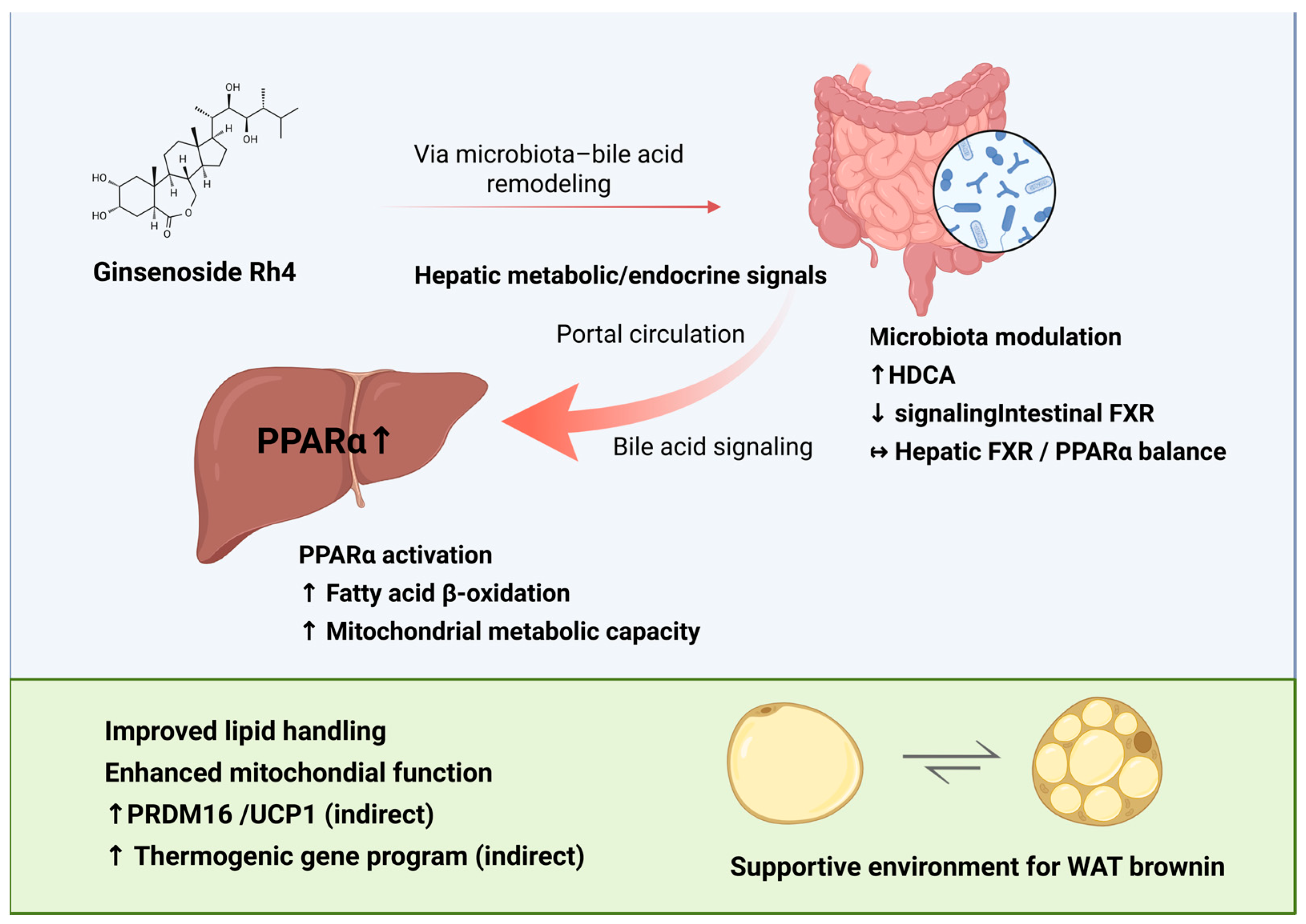
4.2. Ginseng Participates in Adipose Tissue Browning-Related Metabolic Regulation Through the Gut–Liver Axis

| Category | Experimental Models | Mode of Action | Regulatory Logic | Key Pathways/Molecules | Limitations/Conclusion | Supporting References |
|---|---|---|---|---|---|---|
| Major Ginsenosides (Rb1, Rb2, Rg1, Rd) | 3T3-L1 preadipocytes; DIO C57BL/6J mice | Direct Activation | Signal Transduction | AMPK, PKA, β3-AR, PGC-1α | Well-validated; effects may vary based on metabolic background. | [31,32,33,34,35,36,37,38,39,40,41,42] |
| Rare Ginsenosides (F1, Rg3) | ob/ob mice; DIO C57BL/6J mice | Direct & Indirect | Signaling/Metabolic Reprogramming | cAMP/PKA, AMPK/mTORC1 | Primarily WAT-specific; requires receptor-binding assays to confirm causality. | [44,45,46,47,48,49] |
| Polysaccharides/Dietary Fiber | DIO C57BL/6J mice | Indirect Regulation | Environment Optimization | Gut microbiota-metabolite axis | Mostly correlative; lacks direct evidence for canonical thermogenic marker induction. | [50,51,52,53,54] |
| Microbial Metabolites (e.g., MA) | Antibiotic-treated mice; FMT-recipient C57BL/6J mice | Indirect Sensitization | Signal Enhancement | β-AR sensitization | Highlights systemic synergy; currently associative, lacking direct receptor-interaction proof. | [69,70,71,82,90] |
| Ginsenoside Rh4 (Gut-Liver Axis) | DIO C57BL/6J mice; db/db diabetic mice | Indirect Regulation | Organ Cross-talk | Bile acids, FXR, PPARα | Inter-organ communication; no direct evidence of action on adipocytes. | [63,75,95,96,97,98] |
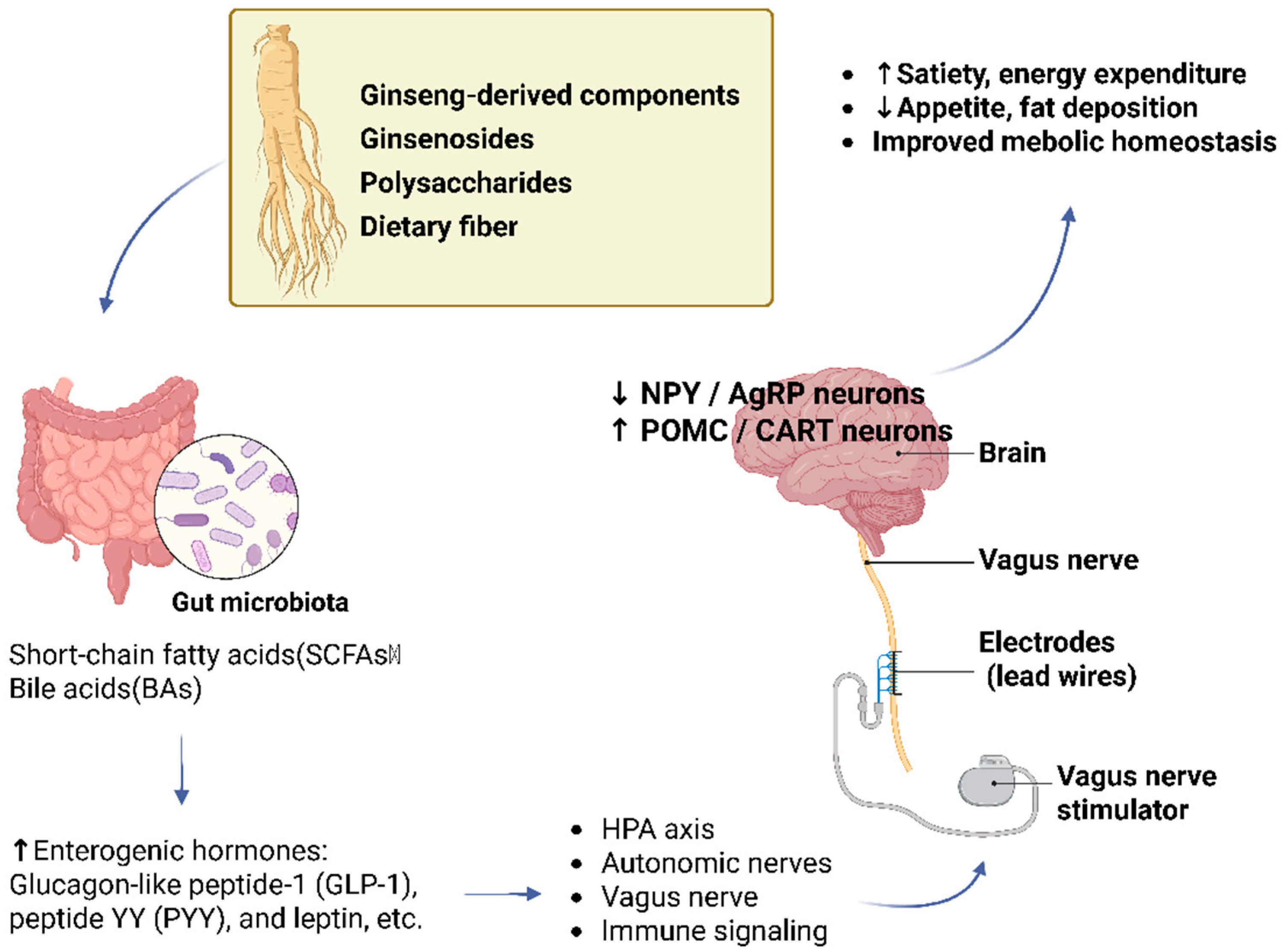
4.3. Ginseng Participates in Energy Metabolism Related to Adipose Tissue Browning Through the Gut–Brain Axis
5. Role of Fermentation in Enhancing Ginseng-Induced White Adipose Tissue Browning
5.1. Direct Adipocyte-Level Mechanisms
5.2. Indirect Microbiota-Dependent Mechanisms
6. Limitations and Perspectives
7. Conclusions
Author Contributions
Funding
Institutional Review Board Statement
Informed Consent Statement
Data Availability Statement
Acknowledgments
Conflicts of Interest
References
- World Obesity Federation. World Obesity Atlas 2024; World Obesity Federation: London, UK, 2024; Available online: https://data.worldobesity.org/publications/WOF-Obesity-Atlas-v7.pdf (accessed on 14 January 2026).
- Blüher, M. Obesity: Global epidemiology and pathogenesis. Nat. Rev. Endocrinol. 2019, 15, 288–298. [Google Scholar] [CrossRef] [PubMed]
- Afshin, A.; Forouzanfar, M.H.; Reitsma, M.B. Health effects of overweight and obesity in 195 countries over 25 years. N. Engl. J. Med. 2017, 377, 13–27. [Google Scholar] [CrossRef]
- Saltiel, A.R.; Olefsky, J.M. Inflammatory mechanisms linking obesity and metabolic disease. J. Clin. Investig. 2017, 127, 1–4. [Google Scholar] [CrossRef]
- Rosen, E.D.; Spiegelman, B.M. What we talk about when we talk about fat. Cell 2014, 156, 20–44. [Google Scholar] [CrossRef]
- Cannon, B.; Nedergaard, J. Brown adipose tissue: Function and physiological significance. Physiol. Rev. 2004, 84, 277–359. [Google Scholar] [CrossRef]
- Kajimura, S.; Spiegelman, B.M.; Seale, P. Brown and beige fat: Physiological roles beyond heat generation. Cell Metab. 2015, 22, 546–559. [Google Scholar] [CrossRef] [PubMed]
- Wu, J.; Boström, P.; Sparks, L.M. Beige adipocytes are a distinct type of thermogenic fat cell in mouse and human. Cell 2012, 150, 366–376. [Google Scholar] [CrossRef] [PubMed]
- Seale, P.; Bjork, B.; Yang, W. PRDM16 controls a brown fat/skeletal muscle switch. Nature 2008, 454, 961–967. [Google Scholar] [CrossRef]
- Harms, M.; Seale, P. Brown and beige fat: Development, function and therapeutic potential. Nat. Med. 2013, 19, 1252–1263. [Google Scholar] [CrossRef]
- Cypess, A.M.; Weiner, L.S.; Roberts-Toler, C. Activation of human brown adipose tissue by a β3-adrenergic receptor agonist. Cell Metab. 2015, 21, 33–38. [Google Scholar] [CrossRef]
- Bartness, T.J.; Shrestha, Y.B.; Vaughan, C.H. Neural innervation of white adipose tissue and the control of lipolysis. Am. J. Physiol. Regul. Integr. Comp. Physiol. 2014, 306, R697–R710. [Google Scholar] [CrossRef]
- Xu, B.; Goulding, E.H.; Zang, K. Brain-derived neurotrophic factor regulates energy balance downstream of melanocortin-4 receptor. Nat. Neurosci. 2003, 6, 736–742. [Google Scholar] [CrossRef] [PubMed]
- Enerbäck, S.; Jacobsson, A.; Simpson, E.M. Mice lacking mitochondrial uncoupling protein are cold-sensitive but not obese. Nature 1997, 387, 90–94. [Google Scholar] [CrossRef]
- Bianco, A.C.; Salvatore, D.; Gereben, B. Deiodinases: Implications of the local control of thyroid hormone action. J. Clin. Investig. 2002, 110, 647–650. [Google Scholar] [CrossRef]
- Puigserver, P.; Spiegelman, B.M. Peroxisome proliferator-activated receptor-γ coactivator 1α (PGC-1α). Endocr. Rev. 2003, 24, 78–90. [Google Scholar] [CrossRef]
- Kajimura, S.; Seale, P.; Tomaru, T. Initiation of myoblast to brown fat switch by a PRDM16–C/EBP-β transcriptional complex. Nature 2009, 460, 1154–1158. [Google Scholar] [CrossRef]
- Hardie, D.G. AMPK: A key regulator of energy balance in the single cell and the whole organism. Int. J. Obes. 2008, 32, S7–S12. [Google Scholar] [CrossRef]
- Hardie, D.G.; Ross, F.A.; Hawley, S.A. AMPK: A nutrient and energy sensor that maintains energy homeostasis. Nat. Rev. Mol. Cell Biol. 2012, 13, 251–262. [Google Scholar] [CrossRef] [PubMed]
- Herzig, S.; Shaw, R.J. AMPK: Guardian of metabolism and mitochondrial homeostasis. Nat. Rev. Mol. Cell Biol. 2018, 19, 121–135. [Google Scholar] [CrossRef] [PubMed]
- Arch, J.R.S. The discovery of drugs for obesity, the metabolic effects of leptin and β3-adrenoceptor agonists. Int. J. Obes. 2002, 26, S8–S11. [Google Scholar] [CrossRef]
- Carey, A.L.; Formosa, M.F.; Van Every, B. Ephedrine activates brown adipose tissue in lean but not obese humans. Diabetes 2013, 62, 861–866. [Google Scholar] [CrossRef]
- Attele, A.S.; Wu, J.A.; Yuan, C.S. Ginseng pharmacology: Multiple constituents and multiple actions. Biochem. Pharmacol. 1999, 58, 1685–1693. [Google Scholar] [CrossRef]
- Luo, H.-Y.; Fang, J.; Zhang, W.-H.; Chan, K.-C.; Chan, Y.-M.; Dong, C.-X.; Li, S.-L.; Lyu, A.-P.; Xu, J. Dissecting the anti-obesity components of ginseng: How ginseng polysaccharides and ginsenosides target gut microbiota to suppress high-fat diet-induced obesity. J. Adv. Res. 2025, 75, 811–828. [Google Scholar] [CrossRef]
- Kim, J.H. Cardiovascular diseases and Panax ginseng: A review. J. Ginseng Res. 2012, 36, 16–26. [Google Scholar] [CrossRef] [PubMed]
- Christensen, L.P. Ginsenosides: Chemistry, biosynthesis, analysis, and potential health effects. Adv. Food Nutr. Res. 2009, 55, 1–99. [Google Scholar] [CrossRef]
- Hou, M.; Wang, R.; Zhao, S. Ginsenosides in Panax genus and their biosynthesis. Acta Pharm. Sin. B 2021, 11, 1813–1834. [Google Scholar] [CrossRef] [PubMed]
- Kim, T.H. Ginsenosides for the Treatment of Insulin Resistance and Diabetes: Therapeutic Perspectives and Mechanistic Insights. J. Ginseng Res. 2024, 48, 276–285. [Google Scholar] [CrossRef] [PubMed]
- Fan, W.; Fan, L.; Wang, Z.; Mei, Y.; Liu, L.; Li, L.; Yang, L.; Wang, Z. Rare ginsenosides: A unique perspective of ginseng research. J. Adv. Res. 2024, 66, 303–328. [Google Scholar] [CrossRef]
- Thyagarajan, B.; Foster, M.T. Beiging of White Adipose Tissue as a Therapeutic Strategy for Weight Loss in Humans. Horm. Mol. Biol. Clin. Investig. 2017, 31, e20170016. [Google Scholar] [CrossRef]
- Shen, L.; Xiong, Y.; Wang, D.Q. Ginsenoside Rb1 reduces obesity by activating AMPK signaling pathway. J. Ethnopharmacol. 2013, 147, 350–358. [Google Scholar] [CrossRef]
- Xu, M.Y.; Lee, S.Y.; Kang, S.S.; Kim, Y.S. Antioxidant and anti-adipogenic activities of ginsenoside Rb1. Phytother. Res. 2009, 23, 1109–1116. [Google Scholar] [CrossRef]
- Zhou, Y.; Wang, S.; Ying, H. Ginsenoside Rb1 induces beige adipocyte formation via AMPK signaling. Biochem. Biophys. Res. Commun. 2018, 506, 458–464. [Google Scholar] [CrossRef]
- Shen, T.; Lee, J.H.; Park, M.H. Ginsenoside Rb1 suppresses hepatic gluconeogenesis and inflammation. Biochem. Pharmacol. 2012, 84, 1168–1177. [Google Scholar] [CrossRef]
- Wang, Y.; Liu, J.; Ma, A.; Chen, Y. Ginsenoside Rb1 attenuates inflammation by inhibiting NF-κB/NLRP3 signaling. Int. Immunopharmacol. 2015, 28, 215–221. [Google Scholar] [CrossRef]
- Liu, Y.; Wei, J.; Gao, Y. Ginsenoside Rb2 regulates lipid metabolism through AMPK–ULK1–mTOR pathway. Phytomedicine 2020, 76, 153257. [Google Scholar] [CrossRef]
- Machado, S.A.; Pasquarelli-do-Nascimento, G.; da Silva, D.S. Browning of the White Adipose Tissue Regulation: New Insights into Nutritional and Metabolic Relevance in Health and Diseases. Nutr. Metab. 2022, 19, 94. [Google Scholar] [CrossRef]
- Kim, J.H.; Hahm, D.H.; Yang, D.C. Ginsenoside Rb2 activates PI3K/Akt signaling and improves energy metabolism. J. Ginseng Res. 2014, 38, 132–139. [Google Scholar] [CrossRef]
- Lee, Y.S.; Kim, W.S.; Kim, K.H. Ginsenoside Rg1 activates AMPK and enhances fatty acid oxidation. Metabolism 2012, 61, 1372–1380. [Google Scholar] [CrossRef]
- Lee, K.; Seo, Y.-J.; Song, J.-H. Ginsenoside Rg1 Promotes Browning by Inducing UCP1 Expression and Mitochondrial Activity in 3T3-L1 and Subcutaneous White Adipocytes. J. Ginseng Res. 2018, 43, 589–599. [Google Scholar] [CrossRef]
- Hong, Y.; Lin, Y.; Si, Q.; Yang, L. Ginsenoside Rd promotes thermogenic gene expression via cAMP/PKA signaling. Phytother. Res. 2016, 30, 1346–1354. [Google Scholar] [CrossRef]
- Yao, L.; Han, Z.; Zhao, G.; Yanfang, X.; Zhou, X.; Dai, R.; Han, M.; Wang, Z.; Xin, R.; Wang, S. Ginsenoside Rd Ameliorates High Fat Diet-Induced Obesity by Enhancing Adaptive Thermogenesis in a cAMP-Dependent Manner. Obesity 2020, 28, 783–792. [Google Scholar] [CrossRef] [PubMed]
- Nag, S.A.; Qin, J.J.; Wang, W. Ginsenosides as anticancer agents: Structure–activity relationship. Front. Pharmacol. 2012, 3, 25. [Google Scholar] [CrossRef] [PubMed]
- Meng, Y.; Li, W.; Hu, C. Ginsenoside F1 Administration Promotes UCP1-Dependent Fat Browning and Ameliorates Obesity-Associated Insulin Resistance. Food Sci. Hum. Wellness 2023, 12, 2061–2072. [Google Scholar] [CrossRef]
- Shin, J.; Lee, Y.; Ju, S.H.; Jung, Y.J.; Sim, D.; Lee, S.-J. Unveiling the Potential of Natural Compounds: A Comprehensive Review on Adipose Thermogenesis Modulation. Int. J. Mol. Sci. 2024, 25, 4915. [Google Scholar] [CrossRef]
- Wu, Y.; Chen, Y.; Xu, J. Ginsenoside Rg1 promotes browning of white adipocytes. Biochem. Biophys. Res. Commun. 2019, 511, 386–392. [Google Scholar] [CrossRef]
- Hwang, J.T.; Lee, M.S.; Kim, H.J. Anti-obesity effect of ginsenoside Rg3 via AMPK activation. Biochem. Pharmacol. 2009, 78, 1027–1037. [Google Scholar] [CrossRef]
- Liu, W.; Zhang, S.-X.; Ai, B.; Pan, H.; Zhang, D.; Jiang, Y.; Hu, L.; Sun, L.; Chen, Z.-S.; Lin, L. Ginsenoside Rg3 Promotes Cell Growth through Activation of mTORC1. Front. Cell Dev. Biol. 2021, 9, 730309. [Google Scholar] [CrossRef]
- Lee, J.H.; Kim, M.H.; Kim, J.H. Ginsenoside Rg3 suppresses adipogenesis and promotes energy expenditure. Int. J. Mol. Sci. 2020, 21, 2555. [Google Scholar] [CrossRef]
- Sun, Y.; Li, T.; Xie, J. Structural characterization and bioactivity of ginseng polysaccharides. Carbohydr. Polym. 2018, 181, 351–360. [Google Scholar] [CrossRef]
- Wang, J.; Zhou, Y.; Yu, Y.; Wang, Y.; Xue, D.; Zhou, Y.; Li, X. A Ginseng-Derived Rhamnogalacturonan I (RG-I) Pectin Promotes Longevity via TOR Signalling in Caenorhabditis elegans. Carbohydr. Polym. 2023, 312, 120818. [Google Scholar] [CrossRef]
- Li, S.; Chen, C.; Wang, J. Steamed ginseng polysaccharide GPS-1 activates AMPK pathway. J. Funct. Foods 2019, 58, 91–101. [Google Scholar] [CrossRef]
- Slavin, J. Dietary fiber and body weight. Nutrition 2005, 21, 411–418. [Google Scholar] [CrossRef] [PubMed]
- Canfora, E.E.; Jocken, J.W.; Blaak, E.E. Short-chain fatty acids in control of body weight and insulin sensitivity. Nat. Rev. Endocrinol. 2015, 11, 577–591. [Google Scholar] [CrossRef]
- Moreno-Navarrete, J.M.; Fernández-Real, J.M. The gut microbiota modulates both browning of white adipose tissue and the activity of brown adipose tissue. Rev. Endocr. Metab. Disord. 2019, 20, 387–397. [Google Scholar] [CrossRef]
- Qi, L.W.; Wang, C.Z.; Yuan, C.S. Isolation and analysis of ginseng: Advances and challenges. Nat. Prod. Rep. 2011, 28, 467–495. [Google Scholar] [CrossRef] [PubMed]
- Peng, D.; Wang, H.; Qu, C.; Xie, L.H.; Wicks, S.M.; Xie, J.T. Ginsenoside Re: Its chemistry, metabolism and pharmacokinetics. Chin. Med. 2012, 7, 2. [Google Scholar] [CrossRef]
- Calabrese, E.J. Hormesis and ginseng: Ginseng mixtures and individual constituents commonly display hormesis dose responses, especially for neuroprotective effects. Molecules 2020, 25, 2719. [Google Scholar] [CrossRef] [PubMed]
- Li, Z.; Wang, Y.; Xu, Q.; Ma, J.; Li, X.; Tian, Y.; Wen, Y.; Chen, T. Ginseng and Health Outcomes: An Umbrella Review. Front. Pharmacol. 2023, 14, 1069268. [Google Scholar] [CrossRef]
- Zhang, L. Ginseng oligopeptides attenuate obesity-related inflammation. Phytomedicine 2020, 69, 153197. [Google Scholar] [CrossRef]
- Lagouge, M.; Argmann, C.; Gerhart-Hines, Z. Resveratrol improves mitochondrial function and protects against metabolic disease by activating SIRT1 and PGC-1α. Cell 2006, 127, 1109–1122. [Google Scholar] [CrossRef]
- Ummarino, D. Matrix turnover linked to dietary weight loss. Nat. Rev. Rheumatol. 2017, 13, 568. [Google Scholar] [CrossRef]
- den Besten, G. The role of short-chain fatty acids in the interplay between diet, gut microbiota, and host energy metabolism. J. Lipid Res. 2013, 54, 2325–2340. [Google Scholar] [CrossRef]
- Canfora, E.E.; Meex, R.C.R.; Venema, K.; Blaak, E.E. Gut microbial metabolites in obesity, NAFLD and T2DM. Nat. Rev. Endocrinol. 2019, 15, 261–273. [Google Scholar] [CrossRef]
- Kimura, I.; Inoue, D.; Hirano, K.; Tsujimoto, G. The SCFA receptor GPR43 and energy metabolism. Front. Endocrinol. 2014, 5, 85. [Google Scholar] [CrossRef]
- Byrne, C.; Chambers, E.S.; Morrison, D.J.; Frost, G. The role of short-chain fatty acids in appetite regulation and energy homeostasis. Int. J. Obes. 2015, 39, 1331–1338. [Google Scholar] [CrossRef]
- May, K.S.; den Hartigh, L.J. Modulation of Adipocyte Metabolism by Microbial Short-Chain Fatty Acids. Nutrients 2021, 13, 3666. [Google Scholar] [CrossRef] [PubMed]
- Li, Z.; Yi, C.X.; Katiraei, S.; Kooijman, S.; Zhou, E.; Chung, C.K.; Gao, Y.; van den Heuvel, J.K.; Meijer, O.C.; Berbée, J.F.P. MCT1-dependent transport of propionate promotes white adipose tissue browning. Mol. Metab. 2018, 8, 173–183. [Google Scholar] [CrossRef]
- Tolhurst, G.; Heffron, H.; Lam, Y.S.; Parker, H.E.; Habib, A.M.; Diakogiannaki, E.; Cameron, J.; Grosse, J.; Reimann, F.; Gribble, F.M. Short-chain fatty acids stimulate glucagon-like peptide-1 secretion via FFAR2. Diabetes 2012, 61, 364–371. [Google Scholar] [CrossRef] [PubMed]
- Gao, Z.; Yin, J.; Zhang, J.; Ward, R.E.; Martin, R.J.; Lefevre, M.; Cefalu, W.T.; Ye, J. Butyrate improves insulin sensitivity and increases energy expenditure in mice. Diabetes 2009, 58, 1509–1517. [Google Scholar] [CrossRef] [PubMed]
- Davie, J.R. Inhibition of histone deacetylase activity by butyrate. J. Nutr. 2003, 133, 2485S–2493S. [Google Scholar] [CrossRef]
- Li, X.; Wang, Y.; Wang, K.; Wu, Y.; Liu, J.; Chen, S.; Zhou, Y. Ginsenosides regulate bile acid metabolism via FXR/CYP7A1 signaling to improve metabolic disorders. Phytomedicine 2020, 69, 153234. [Google Scholar] [CrossRef]
- St-Onge, M.P.; Jones, P.J.H. Physiological effects of medium-chain triglycerides: Potential agents in the prevention of obesity. J. Nutr. 2002, 132, 329–332. [Google Scholar] [CrossRef] [PubMed]
- Nagao, K.; Yanagita, T. Medium-Chain Fatty Acids: Functional Lipids for the Prevention and Treatment of the Metabolic Syndrome. Pharmacol. Res. 2009, 61, 208–212. [Google Scholar] [CrossRef]
- Zhang, J.; Lv, W.; Liu, X.; Sun, Z.; Zeng, M.; Kang, J.; Zhang, Q.; Liu, F.; Ma, S.; Su, J.; et al. Ginsenoside Rh4 prevents endothelial dysfunction as a novel AMPK activator. Br. J. Pharmacol. 2024, 181, 3346–3363. [Google Scholar] [CrossRef]
- Chen, Z.; Zhang, Z.; Liu, J. Gut microbiota: Therapeutic targets of ginseng against multiple disorders and ginsenoside transformation. Front. Cell. Infect. Microbiol. 2022, 12, 853981. [Google Scholar] [CrossRef]
- Bai, X.; Duan, Z.; Deng, J. Ginsenoside Rh4 inhibits colorectal cancer via the modulation of gut microbiota-mediated bile acid metabolism. J. Adv. Res. 2025, 72, 37–52. [Google Scholar] [CrossRef] [PubMed]
- Wang, J.; Li, Y.; Zhao, X. Ginsenoside Rg1 alleviates obesity by modulating bile acid profiles and gut microbiota. J. Ginseng Res. 2021, 45, 528–538. [Google Scholar] [CrossRef]
- Ding, L.; Yang, L.; Wang, Z.; Huang, W. Bile Acid Nuclear Receptor FXR and Digestive System Diseases. Acta Pharm. Sin. B 2015, 5, 135–144. [Google Scholar] [CrossRef]
- Watanabe, M.; Houten, S.M.; Mataki, C.; Christoffolete, M.A.; Kim, B.W.; Sato, H.; Messaddeq, N.; Harney, J.W.; Ezaki, O.; Kodama, T. Bile acids induce energy expenditure by promoting intracellular thyroid hormone activation. Nature 2006, 439, 484–489. [Google Scholar] [CrossRef] [PubMed]
- Zhang, Y.; Lee, F.Y.; Barrera, G. Activation of FXR improves lipid metabolism and insulin sensitivity. Cell Metab. 2006, 4, 59–68. [Google Scholar] [CrossRef]
- Wang, J.; Li, Y.; Cheung, K.; Zheng, X. Bile Acid Signaling in the Regulation of Whole Body Metabolic and Immunological Homeostasis. Sci. China Life Sci. 2023, 67, 865–878. [Google Scholar] [CrossRef]
- Li, X.; Yao, Y.; Yu, C. Modulation of PPARα-thermogenesis gut microbiota interactions in obese mice administrated with zingerone. J. Sci. Food Agric. 2022, 103, 3065–3076. [Google Scholar] [CrossRef]
- den Besten, G.; Bleeker, A.; Gerding, A. Short-chain fatty acids protect against diet-induced obesity via a PPARγ-dependent switch. J. Lipid Res. 2015, 56, 1768–1780. [Google Scholar] [CrossRef]
- Wang, Y.; Tang, Y.; He, Z.H. Slit3 secreted from M2-like macrophages increases sympathetic activity and thermogenesis in adipose tissue. Nat. Metab. 2021, 3, 1536–1551. [Google Scholar] [CrossRef]
- Nguyen, K.D.; Qiu, Y.; Cui, X. Alternatively activated macrophages produce catecholamines to sustain adaptive thermogenesis. Nature 2011, 480, 104–108. [Google Scholar] [CrossRef]
- Aryal, B.; Singh, A.K.; Zhang, X.; Varela, L.; Rotllán, N.; Goedeke, L.; Chaube, B.; Camporez, J.P.; Vatner, D.F.; Horváth, T.L.; et al. Absence of ANGPTL4 in Adipose Tissue Improves Glucose Tolerance and Attenuates Atherogenesis. JCI Insight 2018, 3, e97918. [Google Scholar] [CrossRef]
- Kleiner, S.; Spiegelman, B.M. PPARγ coactivator 1α: Transcriptional control of mitochondrial biogenesis. Endocr. Rev. 2013, 34, 78–90. [Google Scholar] [CrossRef]
- Garcia, D.; Shaw, R.J. AMPK: Mechanisms of cellular energy sensing and restoration of metabolic balance. Molec. Cell 2017, 66, 789–800. [Google Scholar] [CrossRef] [PubMed]
- Quan, L.H.; Zhang, C.; Dong, M. Myristoleic acid produced by enterococci reduces obesity through brown fat activation. Nat. Commun. 2019, 10, 3723. [Google Scholar] [CrossRef]
- Bäckhed, F.; Ding, H.; Wang, T.; Hooper, L.V.; Koh, G.Y.; Nagy, A.; Semenkovich, C.F.; Gordon, J.I. The Gut Microbiota as an Environmental Factor That Regulates Fat Storage. Proc. Natl. Acad. Sci. USA 2004, 101, 15718–15723. [Google Scholar] [CrossRef]
- Iván, J.; Major, E.; Sipos, A. The short-chain fatty acid propionate inhibits adipogenic differentiation of human chorion-derived mesenchymal stem cells through free fatty acid receptor 2. Stem Cells Dev. 2017, 26, 1724–1733. [Google Scholar] [CrossRef]
- Zhu, X.; Wang, X.; Wang, J. Intermittent fasting-induced Orm2 promotes adipose browning via the GP130/IL23R-p38 cascade. Adv. Sci. 2024, 11, 2407789. [Google Scholar] [CrossRef]
- Kim, K.H.; Kim, Y.H.; Son, J.E. Intermittent fasting promotes adipose thermogenesis and metabolic homeostasis via VEGF-mediated alternative activation of macrophage. Cell Res. 2017, 27, 1309–1326. [Google Scholar] [CrossRef] [PubMed]
- Alhamoud, Y.; Abudumijiti, T.; Wu, J. Stimulation of non-shivering thermogenesis by bioactive compounds: A focus on gut microbiota-mediated mechanisms. Trends Food Sci. Technol. 2024, 154, 104779. [Google Scholar] [CrossRef]
- Zhao, L.; Sui, M.; Zhang, T. The interaction between ginseng and gut microbiota. Front. Nutr. 2023, 10, 1301468. [Google Scholar] [CrossRef]
- Zhang, Z.; He, Y.; Zhao, M. Qinlian Hongqu decoction modulates FXR/TGR5/GLP-1 pathway to improve insulin resistance in NAFLD mice: Bioinformatics and experimental study. ACS Omega 2024, 9, 45447–45466. [Google Scholar] [CrossRef]
- Chiang, J.Y.L. Bile acid metabolism and signaling. Compr. Physiol. 2013, 3, 1191–1212. [Google Scholar] [CrossRef]
- Yang, S.; Duan, Z.; Zhang, S. Ginsenoside Rh4 improves hepatic lipid metabolism and inflammation in a model of NAFLD by targeting the gut–liver axis and modulating FXR signaling pathway. Foods 2023, 12, 2492. [Google Scholar] [CrossRef] [PubMed]
- Turnbaugh, P.J.; Ley, R.E.; Mahowald, M.A. An obesity-associated gut microbiome with increased capacity for energy harvest. Nature 2006, 444, 1027–1031. [Google Scholar] [CrossRef] [PubMed]
- Lynch, S.V.; Pedersen, O. The human intestinal microbiome in health and disease. N. Engl. J. Med. 2016, 375, 2369–2379. [Google Scholar] [CrossRef]
- Brestoff, J.R.; Artis, D. Immune regulation of metabolic homeostasis in health and disease. Cell 2015, 161, 146–160. [Google Scholar] [CrossRef]
- Silva, A.I.; Direito, M.; Pinto-Ribeiro, F. Effects of intermittent fasting on regulation of metabolic homeostasis: A systematic review and meta-analysis in health and metabolic-related disorders. J. Clin. Med. 2023, 12, 3699. [Google Scholar] [CrossRef] [PubMed]
- Dijk, W.; Kersten, S. Regulation of lipid metabolism by angiopoietin-like proteins. Curr. Opin. Lipidol. 2014, 25, 336–343. [Google Scholar] [CrossRef]
- Lin, J.; Handschin, C.; Spiegelman, B.M. Metabolic control through the PGC-1 family. Cell Metab. 2005, 1, 361–370. [Google Scholar] [CrossRef]
- Cryan, J.F.; Dinan, T.G. Mind-altering microorganisms: The impact of the gut microbiota on brain and behaviour. Nat. Rev. Neurosci. 2012, 13, 701–712. [Google Scholar] [CrossRef]
- Frost, G.; Sleeth, M.L.; Sahuri-Arisoylu, M. The short-chain fatty acid acetate reduces appetite via a central homeostatic mechanism. Nat. Commun. 2014, 5, 3611. [Google Scholar] [CrossRef] [PubMed]
- Perry, R.J.; Peng, L.; Barry, N.A. Acetate mediates a microbiome–brain–β-cell axis to promote metabolic syndrome. Nature 2016, 534, 213–217. [Google Scholar] [CrossRef]
- Wang, W.; Xue, Y.J.; Zhou, J. Exploring the antimicrobial activity of rare ginsenosides and the progress of their related pharmacological effects. Phytomedicine 2024, 133, 155904. [Google Scholar] [CrossRef]
- Kim, D.H. Gut microbiota-mediated pharmacokinetics of ginseng saponins. J. Ginseng Res. 2017, 42, 255–263. [Google Scholar] [CrossRef] [PubMed]
- Feng, F.; Ko, H.A.; Truong, T.M.T.; Song, W.J.; Ko, E.J.; Kang, I. Ginsenoside Rg3, enriched in red ginseng extract, improves lipopolysaccharide-induced suppression of brown and beige adipose thermogenesis with mitochondrial activation. Sci. Rep. 2024, 14, 9157. [Google Scholar] [CrossRef]
- Nan, B.; Liu, Y.; You, Y. Protective effects of enhanced minor ginsenosides in Lactobacillus fermentum KP-3–fermented ginseng in mice fed a high-fat diet. Food Funct. 2018, 9, 6020–6028. [Google Scholar] [CrossRef]
- Kang, D.; Li, Z.; Ji, G.E. Anti-obesity effects of a mixture of fermented ginseng, Bifidobacterium longum BORI, and Lactobacillus paracasei CH88 in high-fat diet-fed mice. J. Microbiol. Biotechnol. 2018, 28, 688–696. [Google Scholar] [CrossRef]
- Bai, J.; Zhu, Z.; Luo, W. Microbial fermentation affects the structure–activity relationship of bioactive compounds in ginseng and its applications in fermentation products: A review. Foods 2025, 14, 2473. [Google Scholar] [CrossRef]
- Chambers, E.S.; Viardot, A.; Psichas, A.; Morrison, D.J.; Murphy, K.G.; Zac-Varghese, S.E.; MacDougall, K.; Preston, T.; Tedford, C.; Finlayson, G.S. Effects of targeted delivery of propionate to the human colon on appetite regulation, body weight maintenance, and adiposity in overweight adults. Gut 2015, 64, 1744–1754. [Google Scholar] [CrossRef]
- Shin, Y.-J.; Lee, D.-Y.; Kim, J.Y. Effect of fermented red ginseng on gut microbiota dysbiosis- or immobilization stress-induced anxiety, depression, and colitis in mice. J. Ginseng Res. 2023, 47, 255–264. [Google Scholar] [CrossRef] [PubMed]
- Oh, J.S.; Lee, S.R.; Hwang, K.T. Anti-obesity effects of the dietary combination of fermented red ginseng with levan in a high-fat diet mouse model. Phytother. Res. 2014, 28, 617–622. [Google Scholar] [CrossRef]
- Kho, M.C.; Lee, Y.J.; Park, J.H. Fermented red ginseng potentiates improvement of metabolic dysfunction in metabolic syndrome rat models. Nutrients 2016, 8, 369. [Google Scholar] [CrossRef] [PubMed]
- Yang, C.; Zhang, Y.; Jia, M. Fermentation interactions and lipid-lowering potential of Monascus purpureus-fermented ginseng. Food Biosci. 2025, 66, 106260. [Google Scholar] [CrossRef]
- Zhou, Q.; Zhang, Y.; Jia, M. Unveiling the gut microbiota’s role: Monascus fermented ginseng’s impact on hyperlipidemia in vitro. Food Nutr. 2025, 1, 100018. [Google Scholar] [CrossRef]
- Li, Z.; Kim, H.J.; Park, M.S. Effects of fermented ginseng root and ginseng berry on obesity and lipid metabolism in mice fed a high-fat diet. J. Ginseng Res. 2017, 42, 312–319. [Google Scholar] [CrossRef]
- Park, C.H.; Kim, M.; Woo, M. Comparison of the effects of nonfermented and fermented Panax ginseng root against hypertriglyceridemia in high-fat diet-fed mice. J. Med. Food 2018, 21, 317–321. [Google Scholar] [CrossRef] [PubMed]


| Genus | Metabolic Function | Model | Experimental Animals | Ginseng Component |
|---|---|---|---|---|
| Akkermansia ↑ | Gut barrier integrity, insulin sensitivity, anti-inflammatory effects | DIO | C57BL/6J | Red ginseng extract, red ginseng dietary fiber, ginsenoside Rb1 |
| Roseburia ↑ | Butyrate production, energy metabolism | DIO | C57BL/6J | Red ginseng extract |
| Monoglobus ↑ | Dietary fiber degradation | DIO | C57BL/6J | Red ginseng dietary fiber |
| Parasutterella ↑ | Regulation of bile acid and lipid metabolism | DIO | C57BL/6J | Red ginseng extract, ginsenoside Rb1 |
| Bacteroides ↑ | Polysaccharide utilization, SCFA production | DIO | C57BL/6J | Ginsenoside Rb1, ginseng polysaccharides |
| Parabacteroides ↑ | Anti-inflammatory effects, lipid metabolism improvement | DIO/IBS | C57BL/6J | Red ginseng |
| Faecalibacterium ↑ | Butyrate production, anti-inflammatory effects | DIO | C57BL/6J | Ginseng polysaccharides (in some studies) |
| Anaerostipes ↑ | Butyrate production | DIO | C57BL/6J | Ginseng polysaccharides |
| Blautia ↑ | Energy homeostasis, SCFA production | DIO | C57BL/6J | Red ginseng extract |
| Butyricicoccus ↑ | Gut barrier function, butyrate production | DIO | C57BL/6J | Ginseng polysaccharides |
| Lactobacillus ↑ | Metabolic and inflammatory regulation | DIO | db/db mice (Lepr−/−, C57BLKS/J) | Red ginseng, ginseng polysaccharides |
| Bifidobacterium ↑ | Anti-inflammatory effects, metabolic improvement | DIO | C57BL/6J | Ginseng polysaccharides |
| Allobaculum ↑ | Associated with lean phenotype | DIO | C57BL/6J | Red ginseng extract |
| Desulfovibrio ↓ | LPS and H2S production, pro-inflammatory | DIO | C57BL/6J | Red ginseng extract, red ginseng dietary fiber |
| Bilophila ↓ | Bile acid-dependent pro-inflammatory bacterium | DIO | C57BL/6J | Red ginseng dietary fiber |
| Oscillibacter ↓ | Associated with insulin resistance | DIO | C57BL/6J | Red ginseng extract |
| Ruminococcus ↓ | Mucin degradation, inflammation | DIO | C57BL/6J | Red ginseng extract |
| Alistipes ↓ | Obesity- and inflammation-associated | DIO | C57BL/6J | Red ginseng dietary fiber |
| Enterobacter ↓ | Source of endotoxin | DIO | C57BL/6J | Ginseng polysaccharides |
| Escherichia ↓ | LPS production, metabolic endotoxemia | DIO | C57BL/6J | Ginseng polysaccharides |
| Klebsiella ↓ | Inflammation, fatty liver-associated | DIO | C57BL/6J | Red ginseng |
| Helicobacter ↓ | Pro-inflammatory | DIO | C57BL/6J | Red ginseng |
| Prevotella ↓ | Positively associated with insulin resistance | DIO | C57BL/6J | Red ginseng |
Disclaimer/Publisher’s Note: The statements, opinions and data contained in all publications are solely those of the individual author(s) and contributor(s) and not of MDPI and/or the editor(s). MDPI and/or the editor(s) disclaim responsibility for any injury to people or property resulting from any ideas, methods, instructions or products referred to in the content. |
© 2026 by the authors. Licensee MDPI, Basel, Switzerland. This article is an open access article distributed under the terms and conditions of the Creative Commons Attribution (CC BY) license.
Share and Cite
Yang, L.; Li, Y.; Wang, J.; Li, D.; He, Y.; Miao, X.; Sun, M.; Niu, H.; Luo, Z.; Hua, M.; et al. Ginseng Promotes White Adipose Tissue Browning: A Network of Thermogenic Pathways and Gut Microbiota Modulation. Foods 2026, 15, 1037. https://doi.org/10.3390/foods15061037
Yang L, Li Y, Wang J, Li D, He Y, Miao X, Sun M, Niu H, Luo Z, Hua M, et al. Ginseng Promotes White Adipose Tissue Browning: A Network of Thermogenic Pathways and Gut Microbiota Modulation. Foods. 2026; 15(6):1037. https://doi.org/10.3390/foods15061037
Chicago/Turabian StyleYang, Luran, Yueqiao Li, Jinghui Wang, Da Li, Yuguang He, Xinyu Miao, Mubai Sun, Honghong Niu, Zhengyang Luo, Mei Hua, and et al. 2026. "Ginseng Promotes White Adipose Tissue Browning: A Network of Thermogenic Pathways and Gut Microbiota Modulation" Foods 15, no. 6: 1037. https://doi.org/10.3390/foods15061037
APA StyleYang, L., Li, Y., Wang, J., Li, D., He, Y., Miao, X., Sun, M., Niu, H., Luo, Z., Hua, M., & Zhou, X. (2026). Ginseng Promotes White Adipose Tissue Browning: A Network of Thermogenic Pathways and Gut Microbiota Modulation. Foods, 15(6), 1037. https://doi.org/10.3390/foods15061037