Nutritional, Ethical and Ecological Aspects of Cultured Meat with Particular Emphasis on Functional Food Production: A Comprehensive Literature Review

 ,
,  , ,
, ,
Abstract
1. Introduction
2. Materials and Methods
3. Determinants of CM Production
4. CM Quality
5. CM Production and Quality Engineering Towards Functional Foods
6. Shaping the Quality of CM
6.1. Shaping the Chemical Composition and Nutritional Value Towards Functional Foods
6.2. Shaping Sensory Quality
6.3. Shaping CM Safety
7. Consumer Preferences Towards CM
8. Ethical Aspects of CM Production
9. Commercial Production of CM
9.1. Advantages of CM
9.2. Barriers to CM Production
9.3. CM Production Safety
10. Conclusions
Author Contributions
Funding
Institutional Review Board Statement
Informed Consent Statement
Data Availability Statement
Conflicts of Interest
Abbreviations
| AI | artificial intelligence |
| BSE | bovine spongiform encephalopathy |
| CBM | cell-based meat |
| CM | cultured meat |
| CMC | cultured (lab-grown) muscle cells |
| CMT | cultured muscle tissue |
| ECM | extracellular matrix |
| FS | fat substitute |
| GMOs | genetically modified organisms |
| GMS | glycerol monostearate |
| HAc | hyaluronic acid |
| iPSCs | induced pluripotent stem cells |
| LCA | life cycle assessment |
| MSC | muscle satellite cells |
| NPF | natural plant fiber |
| PEG | polyethylene glycol |
| PGA | polygalacturonic acid |
| PUFA | polyunsaturated fatty acids |
| SFA | saturated fatty acids |
References
- Lee, H.J.; Yong, H.I.; Kim, M.; Choi, Y.-S.; Jo, C. Status of Meat Alternatives and Their Potential Role in the Future Meat Market—A Review. Asian-Australas. J. Anim. Sci. 2020, 33, 1533–1543. [Google Scholar] [CrossRef]
- Deliza, R.; Rodríguez, B.; Reinoso-Carvalho, F.; Lucchese-Cheung, T. Cultured Meat: A Review on Accepting Challenges and Upcoming Possibilities. Curr. Opin. Food Sci. 2023, 52, 101050. [Google Scholar] [CrossRef]
- Hocquette, J.-F. Consumer Perception of Livestock Production and Meat Consumption; an Overview of the Special Issue “Perspectives on Consumer Attitudes to Meat Consumption”. Meat Sci. 2023, 200, 109163. [Google Scholar] [CrossRef]
- Sanchez-Sabate, R.; Badilla-Briones, Y.; Sabaté, J. Understanding Attitudes towards Reducing Meat Consumption for Environmental Reasons—A Qualitative Synthesis Review. Sustainability 2019, 11, 6295. [Google Scholar] [CrossRef]
- Michel, F.; Hartmann, C.; Siegrist, M. Consumers’ Associations, Perceptions and Acceptance of Meat and Plant-Based Meat Alternatives. Food Qual. Prefer. 2021, 87, 104063. [Google Scholar] [CrossRef]
- Smith, K.; Watson, A.W.; Lonnie, M.; Peeters, W.M.; Oonincx, D.; Tsoutsoura, N.; Simon-Miquel, G.; Szepe, K.; Cochetel, N.; Pearson, A.G.; et al. Meeting the Global Protein Supply Requirements of a Growing and Ageing Population. Eur. J. Nutr. 2024, 63, 1425–1433. [Google Scholar] [CrossRef]
- van Vliet, S.; Bain, J.R.; Muehlbauer, M.J.; Provenza, F.D.; Kronberg, S.L.; Pieper, C.F.; Huffman, K.M. A Metabolomics Comparison of Plant-Based Meat and Grass-Fed Meat Indicates Large Nutritional Differences despite Comparable Nutrition Facts Panels. Sci. Rep. 2021, 11, 13828. [Google Scholar] [CrossRef] [PubMed]
- Cedeno, F.R.P.; Olubiyo, O.J.; Ferreira, S. From Microbial Proteins to Cultivated Meat for Alternative Meat-like Products: A Review on Sustainable Fermentation Approaches. J. Biol. Eng. 2025, 19, 44. [Google Scholar] [CrossRef] [PubMed]
- GFI. State of the Industry Report. In Cultivated Meat; Good Food Institute: Washington, DC, USA, 2021. [Google Scholar]
- Joo, S.-T.; Choi, J.-S.; Hur, S.-J.; Kim, G.-D.; Kim, C.-J.; Lee, E.-Y.; Bakhsh, A.; Hwang, Y.-H. A Comparative Study on the Taste Characteristics of Satellite Cell Cultured Meat Derived from Chicken and Cattle Muscles. Food Sci. Anim. Resour. 2022, 42, 175–185. [Google Scholar] [CrossRef]
- Li, Y.; Liu, W.; Li, S.; Zhang, M.; Yang, F.; Wang, S. Porcine Skeletal Muscle Tissue Fabrication for Cultured Meat Production Using Three-Dimensional Bioprinting Technology. J. Future Foods 2021, 1, 88–97. [Google Scholar] [CrossRef]
- Ong, S.; Choudhury, D.; Naing, M.W. Cell-Based Meat: Current Ambiguities with Nomenclature. Trends Food Sci. Technol. 2020, 102, 223–231. [Google Scholar] [CrossRef]
- Manning, L.; Dooley, J.J.; Dunsford, I.; Goodman, M.K.; MacMillan, T.C.; Morgans, L.C.; Rose, D.C.; Sexton, A.E. Threat or Opportunity? An Analysis of Perceptions of Cultured Meat in the UK Farming Sector. Front. Sustain. Food Syst. 2023, 7, 1277511. [Google Scholar] [CrossRef]
- Treich, N. Cultured Meat: Promises and Challenges. Environ. Resour. Econ. 2021, 79, 33–61. [Google Scholar] [CrossRef]
- Peker, A.; İplikçioğlu Aral, G.; Orkan, Ş.; Aral, Y. A Comprehensive Outlook on Cultured Meat and Conventional Meat Production. Ank. Üniversitesi Vet. Fakültesi Derg. 2024, 71, 511–522. [Google Scholar] [CrossRef]
- Broucke, K.; Pamel, E.V.; Coillie, E.V.; Herman, L.; Royen, G.V. Cultured Meat and Challenges Ahead: A Review on Nutritional, Technofunctional and Sensorial Properties, Safety and Legislation. Meat Sci. 2023, 195, 109006. [Google Scholar] [CrossRef]
- Thorrez, L.; Vandenburgh, H. Challenges in the Quest for ‘Clean Meat’. Nat. Biotechnol. 2019, 37, 215–216. [Google Scholar] [CrossRef]
- Fraeye, I.; Kratka, M.; Vandenburgh, H.; Thorrez, L. Sensorial and Nutritional Aspects of Cultured Meat in Comparison to Traditional Meat: Much to Be Inferred. Front. Nutr. 2020, 7, 35. [Google Scholar] [CrossRef]
- Kim, M.; Jung, H.Y.; Ellies-Oury, M.-P.; Chriki, S.; Hocquette, J.-F.; Jo, C. Technological Aspects of Bridging the Gap Between Cell-Based Food and Conventional Meat. Meat Muscle Biol. 2024, 8, 17645. [Google Scholar] [CrossRef]
- Rubio, N.R.; Xiang, N.; Kaplan, D.L. Plant-Based and Cell-Based Approaches to Meat Production. Nat. Commun. 2020, 11, 6276. [Google Scholar] [CrossRef]
- FAO. Meat Market Review: Emerging Trends and Outlook; FAO: Rome, Italy, 2023. [Google Scholar]
- Kwasny, T.; Dobernig, K.; Riefler, P. Towards Reduced Meat Consumption: A Systematic Literature Review of Intervention Effectiveness, 2001–2019. Appetite 2022, 168, 105739. [Google Scholar] [CrossRef] [PubMed]
- Whitnall, T.; Pitts, N. Global Trends in Meat Consumption. Agric. Commod. 2019, 9, 96–99. [Google Scholar]
- Quan, L.; Han, H. Consumer Behavior toward Cultured Meat in the Foodservice Industry: Insights from IPA and fsQCA Analysis on Shifting Trends. J. Retail. Consum. Serv. 2025, 85, 104307. [Google Scholar] [CrossRef]
- Chen, L.; Guttieres, D.; Koenigsberg, A.; Barone, P.W.; Sinskey, A.J.; Springs, S.L. Large-Scale Cultured Meat Production: Trends, Challenges and Promising Biomanufacturing Technologies. Biomaterials 2022, 280, 121274. [Google Scholar] [CrossRef] [PubMed]
- Bjørndal, T.; Dey, M.; Tusvik, A. Economic Analysis of the Contributions of Aquaculture to Future Food Security. Aquaculture 2024, 578, 740071. [Google Scholar] [CrossRef]
- Costello, C.; Cao, L.; Gelcich, S.; Cisneros-Mata, M.Á.; Free, C.M.; Froehlich, H.E.; Golden, C.D.; Ishimura, G.; Maier, J.; Macadam-Somer, I.; et al. The Future of Food from the Sea. Nature 2020, 588, 95–100. [Google Scholar] [CrossRef] [PubMed]
- Samy-Kamal, M.; Mehanna, S.F. Evolution of Fishing Effort and Fishing Capacity during the Last Two Decades (2000–2019) in Egypt’s Marine Fisheries: Spotting the Fleet Overcapacity. Reg. Environ. Change 2023, 23, 113. [Google Scholar] [CrossRef]
- Kang, H.S.; Bang, S.; Lee, H.; Moon, C.H.; Gwon, J.Y.; Seo, J.H.; Cha, G.D.; Lee, D.-H.; Lee, K.-Y.; Hwang, H.; et al. Development of Cultivated Fish Meat: Advances in Cellular Agriculture, Biomaterials, and Scaffolding Techniques. Trends Food Sci. Technol. 2025, 162, 105088. [Google Scholar] [CrossRef]
- Obirikorang, K.A.; Quagrainie, K.; Kassah, J.E.; Von Ahnen, M. Editorial: Sustainable Aquaculture Production for Improved Food Security. Front. Sustain. Food Syst. 2024, 8, 1485956. [Google Scholar] [CrossRef]
- Leroy, F.; Smith, N.W.; Adesogan, A.T.; Beal, T.; Iannotti, L.; Moughan, P.J.; Mann, N. The Role of Meat in the Human Diet: Evolutionary Aspects and Nutritional Value. Anim. Front. 2023, 13, 11–18. [Google Scholar] [CrossRef]
- Balasubramanian, B.; Liu, W.; Pushparaj, K.; Park, S. The Epic of In Vitro Meat Production—A Fiction into Reality. Foods 2021, 10, 1395. [Google Scholar] [CrossRef]
- Issara, U.; Park, S.; Park, S. Determination of Fat Accumulation Reduction by Edible Fatty Acids and Natural Waxes In Vitro. Food Sci. Anim. Resour. 2019, 39, 430–445. [Google Scholar] [CrossRef] [PubMed]
- Giglio, F.; Scieuzo, C.; Ouazri, S.; Pucciarelli, V.; Ianniciello, D.; Letcher, S.; Salvia, R.; Laginestra, A.; Kaplan, D.L.; Falabella, P. A Glance into the Near Future: Cultivated Meat from Mammalian and Insect Cells. Small Sci. 2024, 4, 2400122. [Google Scholar] [CrossRef]
- Stephens, N.; Ellis, M. Cellular Agriculture in the UK: A Review [Version 1; Peer Review: 2 Approved, 2 Approved with Reservations]. Wellcome Open Res. 2020, 5, 12. [Google Scholar] [CrossRef]
- Santos, A.C.A.; Camarena, D.E.M.; Roncoli Reigado, G.; Chambergo, F.S.; Nunes, V.A.; Trindade, M.A.; Stuchi Maria-Engler, S. Tissue Engineering Challenges for Cultivated Meat to Meet the Real Demand of a Global Market. Int. J. Mol. Sci. 2023, 24, 6033. [Google Scholar] [CrossRef] [PubMed]
- Stubelj, M.; Gleščič, E.; Žvanut, B.; Širok, K. Factors Influencing the Acceptance of Alternative Protein Sources. Appetite 2025, 210, 107976. [Google Scholar] [CrossRef] [PubMed]
- Molotoks, A.; Smith, P.; Dawson, T.P. Impacts of Land Use, Population, and Climate Change on Global Food Security. Food Energy Secur. 2021, 10, e261. [Google Scholar] [CrossRef]
- Agostoni, C.; Baglioni, M.; La Vecchia, A.; Molari, G.; Berti, C. Interlinkages between Climate Change and Food Systems: The Impact on Child Malnutrition—Narrative Review. Nutrients 2023, 15, 416. [Google Scholar] [CrossRef]
- Macdiarmid, J.I.; Whybrow, S. Nutrition from a Climate Change Perspective. Proc. Nutr. Soc. 2019, 78, 380–387. [Google Scholar] [CrossRef]
- Owino, V.; Kumwenda, C.; Ekesa, B.; Parker, M.E.; Ewoldt, L.; Roos, N.; Lee, W.T.; Tome, D. The Impact of Climate Change on Food Systems, Diet Quality, Nutrition, and Health Outcomes: A Narrative Review. Front. Clim. 2022, 4, 941842. [Google Scholar] [CrossRef]
- Lynch, J.; Pierrehumbert, R. Climate Impacts of Cultured Meat and Beef Cattle. Front. Sustain. Food Syst. 2019, 3, 5. [Google Scholar] [CrossRef]
- Park, H.; Cho, I.; Heo, S.; Han, K.; Baek, Y.; Sim, W.; Jeong, D.-W. Metabolomic Insights of Cultured Meat Compared to Conventional Meat. Sci. Rep. 2025, 15, 15668. [Google Scholar] [CrossRef]
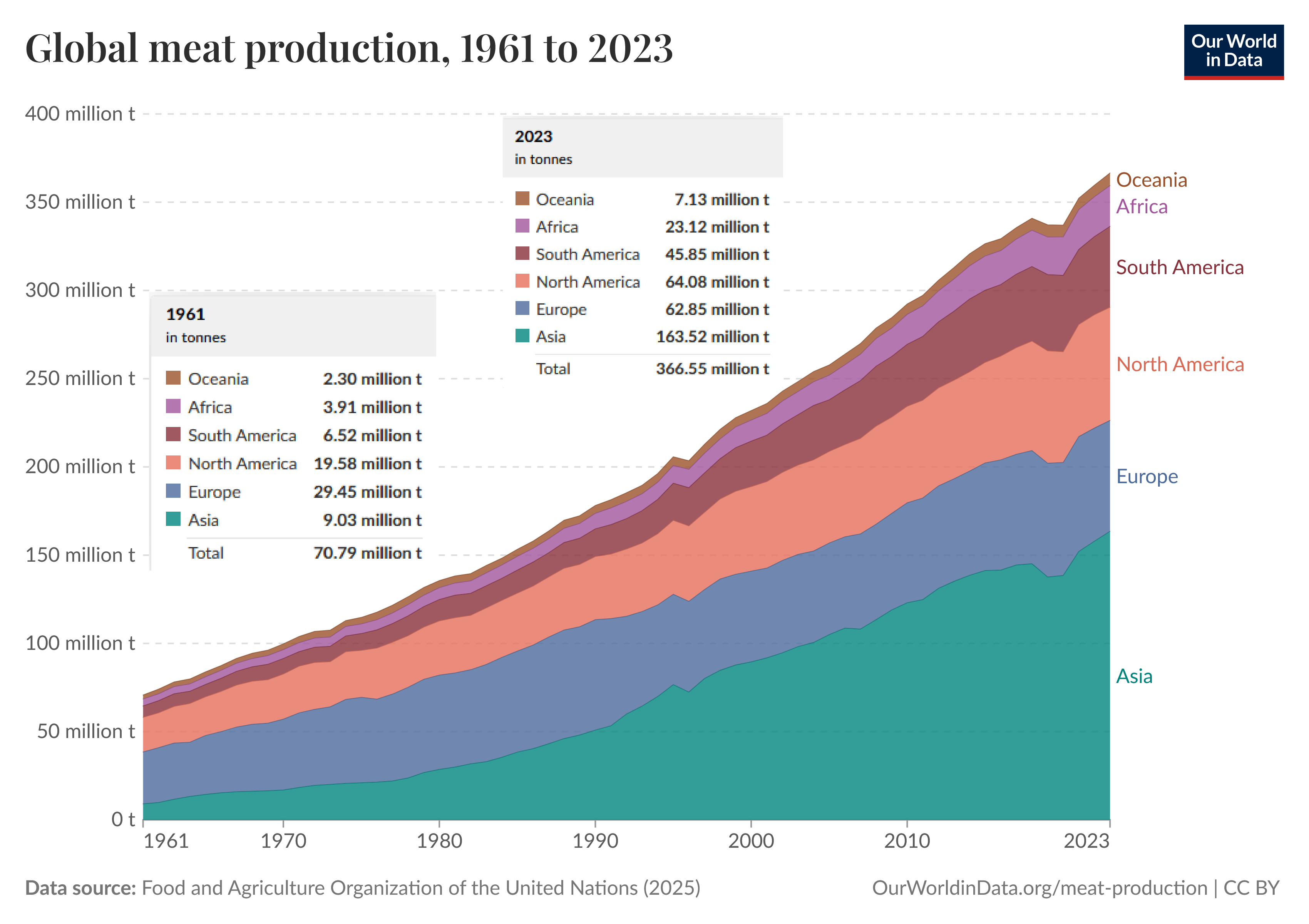
- Food and Agriculture Organization of the United Nations. Total Meat Production; Food and Agriculture Organization of the United Nations: Rome, Italy, 2025. [Google Scholar]
- Bourdrez, V.; Chriki, S. Qualités Nutritionnelle, Organoleptique et Disposition à Payer Pour Les Alternatives à La Viande: Cas Des Analogues Végétaux, de La” Viande In Vitro” et Des Insectes. INRAE Prod. Anim. 2022, 35, 217–236. [Google Scholar] [CrossRef]
- Romão, B.; Botelho, R.B.A.; Torres, M.L.; da Costa Maynard, D.; de Holanda, M.E.M.; Borges, V.R.P.; Raposo, A.; Zandonadi, R.P. Nutritional Profile of Commercialized Plant-Based Meat: An Integrative Review with a Systematic Approach. Foods 2023, 12, 448. [Google Scholar] [CrossRef]
- Cutroneo, S.; Prandi, B.; Faccini, A.; Pellegrini, N.; Sforza, S.; Tedeschi, T. Comparison of Protein Quality and Digestibility between Plant-Based and Meat-Based Burgers. Food Res. Int. 2023, 172, 113183. [Google Scholar] [CrossRef]
- Boukid, F. Plant-Based Meat Analogues: From Niche to Mainstream. Eur. Food Res. Technol. 2021, 247, 297–308. [Google Scholar] [CrossRef]
- Jahn, S.; Furchheim, P.; Strässner, A.-M. Plant-Based Meat Alternatives: Motivational Adoption Barriers and Solutions. Sustainability 2021, 13, 13271. [Google Scholar] [CrossRef]
- Siddiqui, S.A.; Bahmid, N.A.; Mahmud, C.M.M.; Boukid, F.; Lamri, M.; Gagaoua, M. Consumer Acceptability of Plant-, Seaweed-, and Insect-Based Foods as Alternatives to Meat: A Critical Compilation of a Decade of Research. Crit. Rev. Food Sci. Nutr. 2023, 63, 6630–6651. [Google Scholar] [CrossRef]
- Onwezen, M.C.; Bouwman, E.P.; Reinders, M.J.; Dagevos, H. A Systematic Review on Consumer Acceptance of Alternative Proteins: Pulses, Algae, Insects, Plant-Based Meat Alternatives, and Cultured Meat. Appetite 2021, 159, 105058. [Google Scholar] [CrossRef]
- Zhang, C.; Guan, X.; Yu, S.; Zhou, J.; Chen, J. Production of Meat Alternatives Using Live Cells, Cultures and Plant Proteins. Curr. Opin. Food Sci. 2022, 43, 43–52. [Google Scholar] [CrossRef]
- Leroy, F.; Barnard, N.D. Children and Adults Should Avoid Consuming Animal Products to Reduce Risk for Chronic Disease: NO. Am. J. Clin. Nutr. 2020, 112, 931–936. [Google Scholar] [CrossRef]
- Leroy, F.; Abraini, F.; Beal, T.; Dominguez-Salas, P.; Gregorini, P.; Manzano, P.; Rowntree, J.; van Vliet, S. Animal Board Invited Review: Animal Source Foods in Healthy, Sustainable, and Ethical Diets—An Argument against Drastic Limitation of Livestock in the Food System. Animal 2022, 16, 100457. [Google Scholar] [CrossRef] [PubMed]
- Asher, K.E.; Peters, P. Meat Reduction, Vegetarianism, or Chicken Avoidance: US Omnivores’ Impressions of Three Meat-Restricted Diets. Br. Food J. 2020, 123, 387–404. [Google Scholar] [CrossRef]
- Demartini, E.; Vecchiato, D.; Finos, L.; Mattavelli, S.; Gaviglio, A. Would You Buy Vegan Meatballs? The Policy Issues around Vegan and Meat-Sounding Labelling of Plant-Based Meat Alternatives. Food Policy 2022, 111, 102310. [Google Scholar] [CrossRef]
- Zandonadi, R.P.; Ramos, M.C.; Elias, F.T.S.; Guimarães, N.S. Global Insights into Cultured Meat: Uncovering Production Processes, Potential Hazards, Regulatory Frameworks, and Key Challenges—A Scoping Review. Foods 2025, 14, 129. [Google Scholar] [CrossRef] [PubMed]
- Seah, J.S.H.; Singh, S.; Tan, L.P.; Choudhury, D. Scaffolds for the Manufacture of Cultured Meat. Crit. Rev. Biotechnol. 2022, 42, 311–323. [Google Scholar] [CrossRef]
- Aschemann-Witzel, J.; Ares, G.; Thøgersen, J.; Monteleone, E. A Sense of Sustainability?—How Sensory Consumer Science Can Contribute to Sustainable Development of the Food Sector. Trends Food Sci. Technol. 2019, 90, 180–186. [Google Scholar] [CrossRef]
- Stephens, N.; Sexton, A.E.; Driessen, C. Making Sense of Making Meat: Key Moments in the First 20 Years of Tissue Engineering Muscle to Make Food. Front. Sustain. Food Syst. 2019, 3, 45. [Google Scholar] [CrossRef]
- Srutee, R.; Sowmya, R.S.; Annapure, U.S. Clean Meat: Techniques for Meat Production and Its Upcoming Challenges. Anim. Biotechnol. 2022, 33, 1721–1729. [Google Scholar] [CrossRef]
- Liu, J.; Chriki, S.; Kombolo, M.; Santinello, M.; Pflanzer, S.B.; Hocquette, É.; Ellies-Oury, M.-P.; Hocquette, J.-F. Consumer Perception of the Challenges Facing Livestock Production and Meat Consumption. Meat Sci. 2023, 200, 109144. [Google Scholar] [CrossRef]
- Bhat, Z.F.; Morton, J.D.; Mason, S.L.; Bekhit, A.E.-D.A.; Bhat, H.F. Technological, Regulatory, and Ethical Aspects of In Vitro Meat: A Future Slaughter-Free Harvest. Compr. Rev. Food Sci. Food Saf. 2019, 18, 1192–1208. [Google Scholar] [CrossRef]
- Gaydhane, M.K.; Mahanta, U.; Sharma, C.S.; Khandelwal, M.; Ramakrishna, S. Cultured Meat: State of the Art and Future. Biomanufacturing Rev. 2018, 3, 1. [Google Scholar] [CrossRef]
- Munteanu, C.; Mireşan, V.; Răducu, C.; Ihuţ, A.; Uiuiu, P.; Pop, D.; Neacşu, A.; Cenariu, M.; Groza, I. Can Cultured Meat Be an Alternative to Farm Animal Production for a Sustainable and Healthier Lifestyle? Front. Nutr. 2021, 8, 749298. [Google Scholar] [CrossRef]
- Tuomisto, H.L.; Teixeira de Mattos, M.J. Environmental Impacts of Cultured Meat Production. Environ. Sci. Technol. 2011, 45, 6117–6123. [Google Scholar] [CrossRef]
- Tuomisto, H.L.; Ryynänen, T. Environmental Impacts of Cultivated Meat. In Cultivated Meat: Technologies, Commercialization and Challenges; Soccol, C.R., Molento, C.F.M., Reis, G.G., Karp, S.G., Eds.; Springer Nature Switzerland: Cham, Switzerland, 2024; pp. 277–297. ISBN 978-3-031-55968-6. [Google Scholar]
- Rodríguez Escobar, M.I.; Cadena, E.; Nhu, T.T.; Cooreman-Algoed, M.; De Smet, S.; Dewulf, J. Analysis of the Cultured Meat Production System in Function of Its Environmental Footprint: Current Status, Gaps and Recommendations. Foods 2021, 10, 2941. [Google Scholar] [CrossRef]
- Lin, J.W.X.; Maran, N.; Lim, A.J.; Ng, S.B.; Teo, P.S. Current Challenges, and Potential Solutions to Increase Acceptance and Long-Term Consumption of Cultured Meat and Edible Insects—A Review. Future Foods 2025, 11, 100544. [Google Scholar] [CrossRef]
- Sinke, P.; Swartz, E.; Sanctorum, H.; van der Giesen, C.; Odegard, I. Ex-Ante Life Cycle Assessment of Commercial-Scale Cultivated Meat Production in 2030. Int. J. Life Cycle Assess. 2023, 28, 234–254. [Google Scholar] [CrossRef]
- Sinke, P.; Odegard, I. LCA of Cultivated Meat. In Future Projections for Different Scenarios; CE Delft: Delft, The Netherlands, 2021. [Google Scholar]
- Dueñas-Ocampo, S.; Eichhorst, W.; Newton, P. Plant-Based and Cultivated Meat in the United States: A Review and Research Agenda through the Lens of Socio-Technical Transitions. J. Clean. Prod. 2023, 405, 136999. [Google Scholar] [CrossRef]
- Chriki, S.; Hocquette, J.-F. The Myth of Cultured Meat: A Review. Front. Nutr. 2020, 7, 7. [Google Scholar] [CrossRef] [PubMed]
- Gilbert, W.; Thomas, L.F.; Coyne, L.; Rushton, J. Review: Mitigating the Risks Posed by Intensification in Livestock Production: The Examples of Antimicrobial Resistance and Zoonoses. Animal 2021, 15, 100123. [Google Scholar] [CrossRef]
- Bernstein, J.; Dutkiewicz, J. A Public Health Ethics Case for Mitigating Zoonotic Disease Risk in Food Production. Food Ethics 2021, 6, 9. [Google Scholar] [CrossRef] [PubMed]
- Arango, L.; Chaudhury, S.H.; Septianto, F. The Role of Demand-Based Scarcity Appeals in Promoting Cultured Meat. Psychol. Mark. 2023, 40, 1501–1520. [Google Scholar] [CrossRef]
- Santo, R.E.; Kim, B.F.; Goldman, S.E.; Dutkiewicz, J.; Biehl, E.M.B.; Bloem, M.W.; Neff, R.A.; Nachman, K.E. Considering Plant-Based Meat Substitutes and Cell-Based Meats: A Public Health and Food Systems Perspective. Front. Sustain. Food Syst. 2020, 4, 134. [Google Scholar] [CrossRef]
- Williams, S.C.P. Customers Start Eating Lab-Grown Meat—With a Side of Uncertainty. Engineering 2024, 34, 3–5. [Google Scholar] [CrossRef]
- Kouarfaté, B.B.; Durif, F.N. A Systematic Review of Determinants of Cultured Meat Adoption: Impacts and Guiding Insights. Br. Food J. 2023, 125, 2737–2763. [Google Scholar] [CrossRef]
- Ozhava, D.; Bhatia, M.; Freman, J.; Mao, Y. Sustainable Cell Sources for Cultivated Meat. J. ISSN 2022, 2766, 2276. [Google Scholar] [CrossRef]
- Zhang, G.; Zhao, X.; Li, X.; Du, G.; Zhou, J.; Chen, J. Challenges and Possibilities for Bio-Manufacturing Cultured Meat. Trends Food Sci. Technol. 2020, 97, 443–450. [Google Scholar] [CrossRef]
- Post, M.J.; Levenberg, S.; Kaplan, D.L.; Genovese, N.; Fu, J.; Bryant, C.J.; Negowetti, N.; Verzijden, K.; Moutsatsou, P. Scientific, Sustainability and Regulatory Challenges of Cultured Meat. Nat. Food 2020, 1, 403–415. [Google Scholar] [CrossRef]
- Melzener, L.; Verzijden, K.E.; Buijs, A.J.; Post, M.J.; Flack, J.E. Cultured Beef: From Small Biopsy to Substantial Quantity. J. Sci. Food Agric. 2021, 101, 7–14. [Google Scholar] [CrossRef]
- Olenic, M.; Deelkens, C.; Heyman, E.; Vlieghere, E.D.; Zheng, X.; van Hengel, J.; Schauwer, C.D.; Devriendt, B.; Smet, S.D.; Thorrez, L. Review: Livestock Cell Types with Myogenic Differentiation Potential: Considerations for the Development of Cultured Meat. Animal 2025, 19, 101242. [Google Scholar] [CrossRef]
- Jairath, G.; Mal, G.; Gopinath, D.; Singh, B. A Holistic Approach to Access the Viability of Cultured Meat: A Review. Trends Food Sci. Technol. 2021, 110, 700–710. [Google Scholar] [CrossRef]
- Groundbreaking New Reports Reveal Massive Environmental Benefits, Cost-Competitiveness of Cultivated Meat. 2021. Available online: https://gfi-apac.org/groundbreaking-new-reports-reveal-massive-environmental-benefits-cost-competitiveness-of-cultivated-meat/ (accessed on 25 March 2021).
- Choudhury, D.; Singh, S.; Seah, J.S.H.; Yeo, D.C.L.; Tan, L.P. Commercialization of Plant-Based Meat Alternatives. Trends Plant Sci. 2020, 25, 1055–1058. [Google Scholar] [CrossRef]
- Stout, A.J.; Mirliani, A.B.; Rittenberg, M.L.; Shub, M.; White, E.C.; Yuen, J.S.K.; Kaplan, D.L. Simple and Effective Serum-Free Medium for Sustained Expansion of Bovine Satellite Cells for Cell Cultured Meat. Commun. Biol. 2022, 5, 466. [Google Scholar] [CrossRef]
- Zidarič, T.; Milojević, M.; Vajda, J.; Vihar, B.; Maver, U. Cultured Meat: Meat Industry Hand in Hand with Biomedical Production Methods. Food Eng. Rev. 2020, 12, 498–519. [Google Scholar] [CrossRef]
- Sun, A.; Wu, W.; Soladoye, O.P.; Aluko, R.E.; Bak, K.H.; Fu, Y.; Zhang, Y. Maillard Reaction of Food-Derived Peptides as a Potential Route to Generate Meat Flavor Compounds: A Review. Food Res. Int. 2022, 151, 110823. [Google Scholar] [CrossRef] [PubMed]
- Park, S.; Jung, S.; Heo, J.; Koh, W.-G.; Lee, S.; Hong, J. Chitosan/Cellulose-Based Porous Nanofilm Delivering C-Phycocyanin: A Novel Platform for the Production of Cost-Effective Cultured Meat. ACS Appl. Mater. Interfaces 2021, 13, 32193–32204. [Google Scholar] [CrossRef]
- Park, S.; Jung, S.; Choi, M.; Lee, M.; Choi, B.; Koh, W.-G.; Lee, S.; Hong, J. Gelatin MAGIC Powder as Nutrient-Delivering 3D Spacer for Growing Cell Sheets into Cost-Effective Cultured Meat. Biomaterials 2021, 278, 121155. [Google Scholar] [CrossRef]
- Su, L.; Jing, L.; Zeng, X.; Chen, T.; Liu, H.; Kong, Y.; Wang, X.; Yang, X.; Fu, C.; Sun, J.; et al. 3D-Printed Prolamin Scaffolds for Cell-Based Meat Culture. Adv. Mater. 2023, 35, 2207397. [Google Scholar] [CrossRef]
- Dohmen, R.G.J.; Hubalek, S.; Melke, J.; Messmer, T.; Cantoni, F.; Mei, A.; Hueber, R.; Mitic, R.; Remmers, D.; Moutsatsou, P.; et al. Muscle-Derived Fibro-Adipogenic Progenitor Cells for Production of Cultured Bovine Adipose Tissue. npj Sci. Food 2022, 6, 6. [Google Scholar] [CrossRef]
- Lee, M.; Park, S.; Choi, B.; Kim, J.; Choi, W.; Jeong, I.; Han, D.; Koh, W.-G.; Hong, J. Tailoring a Gelatin/Agar Matrix for the Synergistic Effect with Cells to Produce High-Quality Cultured Meat. ACS Appl. Mater. Interfaces 2022, 14, 38235–38245. [Google Scholar] [CrossRef] [PubMed]
- Pasitka, L.; Cohen, M.; Ehrlich, A.; Gildor, B.; Reuveni, E.; Ayyash, M.; Wissotsky, G.; Herscovici, A.; Kaminker, R.; Niv, A.; et al. Spontaneous Immortalization of Chicken Fibroblasts Generates Stable, High-Yield Cell Lines for Serum-Free Production of Cultured Meat. Nat. Food 2023, 4, 35–50. [Google Scholar] [CrossRef]
- Fish, K.D.; Rubio, N.R.; Stout, A.J.; Yuen, J.S.K.; Kaplan, D.L. Prospects and Challenges for Cell-Cultured Fat as a Novel Food Ingredient. Trends Food Sci. Technol. 2020, 98, 53–67. [Google Scholar] [CrossRef] [PubMed]
- Kim, C.-J.; Kim, S.-H.; Lee, E.-Y.; Son, Y.-M.; Bakhsh, A.; Hwang, Y.-H.; Joo, S.-T. Optimal Temperature for Culturing Chicken Satellite Cells to Enhance Production Yield and Umami Intensity of Cultured Meat. Food Chem. Adv. 2023, 2, 100307. [Google Scholar] [CrossRef]
- Hadi, J.; Brightwell, G. Safety of Alternative Proteins: Technological, Environmental and Regulatory Aspects of Cultured Meat, Plant-Based Meat, Insect Protein and Single-Cell Protein. Foods 2021, 10, 1226. [Google Scholar] [CrossRef] [PubMed]
- Lee, M.; Park, S.; Choi, B.; Choi, W.; Lee, H.; Lee, J.M.; Lee, S.T.; Yoo, K.H.; Han, D.; Bang, G.; et al. Cultured Meat with Enriched Organoleptic Properties by Regulating Cell Differentiation. Nat. Commun. 2024, 15, 77. [Google Scholar] [CrossRef] [PubMed]
- Kuppusamy, P.; Kim, D.; Soundharrajan, I.; Hwang, I.; Choi, K.C. Adipose and Muscle Cell Co-Culture System: A Novel In Vitro Tool to Mimic the In Vivo Cellular Environment. Biology 2021, 10, 6. [Google Scholar] [CrossRef]
- Pallaoro, M.; Modina, S.C.; Fiorati, A.; Altomare, L.; Mirra, G.; Scocco, P.; Di Giancamillo, A. Towards a More Realistic In Vitro Meat: The Cross Talk between Adipose and Muscle Cells. Int. J. Mol. Sci. 2023, 24, 6630. [Google Scholar] [CrossRef]
- Wang, Y.; Zhuang, D.; Munawar, N.; Zan, L.; Zhu, J. A Rich-Nutritious Cultured Meat via Bovine Myocytes and Adipocytes Co-Culture: Novel Prospect for Cultured Meat Production Techniques. Food Chem. 2024, 460, 140696. [Google Scholar] [CrossRef]
- Ma, T.; Ren, R.; Lv, J.; Yang, R.; Zheng, X.; Hu, Y.; Zhu, G.; Wang, H. Transdifferentiation of Fibroblasts into Muscle Cells to Constitute Cultured Meat with Tunable Intramuscular Fat Deposition. eLife 2024, 13, RP93220. [Google Scholar] [CrossRef]
- Aimaletdinov, A.; Abyzova, M.; Kurilov, I.; Yuferova, A.; Rutland, C.; Rizvanov, A.; Zakirova, E. Isolation, Culturing and 3D Bioprinting Equine Myoblasts. Biol. Commun. 2022, 67, 152–159. [Google Scholar] [CrossRef]
- Kumar, P.; Sharma, N.; Narnoliya, L.K.; Verma, A.K.; Mehta, N.; Bhavsar, P.P.; Kumar, A.; Lee, S.-J.; Sazili, A.Q. Recent Advances in In-Vitro Meat Production—A Review. Ann. Anim. Sci. 2024, 24, 393–411. [Google Scholar] [CrossRef]
- Adi, P.; Mulyani, R.; Yudhistira, B.; Chang, C.-K.; Gavahian, M.; Hsieh, C.-W. Designing Cultivated Meat: Overcoming Challenges in the Production Process and Developing Sustainable Packaging Solutions. Trends Food Sci. Technol. 2024, 152, 104675. [Google Scholar] [CrossRef]
- Marcus, N.; Klink-Lehmann, J.; Hartmann, M. Exploring Factors Determining German Consumers’ Intention to Eat Meat Alternatives. Food Qual. Prefer. 2022, 100, 104610. [Google Scholar] [CrossRef]
- Guan, X.; Lei, Q.; Yan, Q.; Li, X.; Zhou, J.; Du, G.; Chen, J. Trends and Ideas in Technology, Regulation and Public Acceptance of Cultured Meat. Future Foods 2021, 3, 100032. [Google Scholar] [CrossRef]
- Fu, W.; Zhang, H.; Whaley, J.E.; Kim, Y.-K. Do Consumers Perceive Cultivated Meat as a Sustainable Substitute to Conventional Meat? Assessing the Facilitators and Inhibitors of Cultivated Meat Acceptance. Sustainability 2023, 15, 11722. [Google Scholar] [CrossRef]
- Chandrababu, A.; Puthumana, J. CRISPR-Edited, Cell-Based Future-Proof Meat and Seafood to Enhance Global Food Security and Nutrition. Cytotechnology 2024, 76, 619–652. [Google Scholar] [CrossRef]
- Albrecht, F.B.; Ahlfeld, T.; Klatt, A.; Heine, S.; Gelinsky, M.; Kluger, P.J. Biofabrication’s Contribution to the Evolution of Cultured Meat. Adv. Healthc. Mater. 2024, 13, 2304058. [Google Scholar] [CrossRef]
- Guo, X.; Wang, D.; He, B.; Hu, L.; Jiang, G. 3D Bioprinting of Cultured Meat: A Promising Avenue of Meat Production. Food Bioprocess Technol. 2024, 17, 1659–1680. [Google Scholar] [CrossRef]
- Gurel, M.; Rathod, N.; Cabrera, L.Y.; Voyton, S.; Yeo, M.; Ozogul, F.; Ozbolat, I.T. A Narrative Review: 3D Bioprinting of Cultured Muscle Meat and Seafood Products and Its Potential for the Food Industry. Trends Food Sci. Technol. 2024, 152, 104670. [Google Scholar] [CrossRef]
- Kang, D.-H.; Louis, F.; Liu, H.; Shimoda, H.; Nishiyama, Y.; Nozawa, H.; Kakitani, M.; Takagi, D.; Kasa, D.; Nagamori, E.; et al. Engineered Whole Cut Meat-like Tissue by the Assembly of Cell Fibers Using Tendon-Gel Integrated Bioprinting. Nat. Commun. 2021, 12, 5059. [Google Scholar] [CrossRef]
- Wang, Y.; Wang, S.; Zhuang, D.; Zan, L.; Zhu, J. Quercetin-Enriched Animal-Free Scaffolds for Promoted Cell Proliferation and Differentiation in Cultured Meat Production. Food Chem. 2025, 464, 141622. [Google Scholar] [CrossRef]
- Niu, R.; Xin, Q.; Lao, J.; Huang, X.; Chen, Q.; Yin, J.; Chen, J.; Liu, D.; Xu, E. Topological Polymeric Glucosyl Nanoaggregates in Scaffold Enable High-Density Piscine Muscle Tissue. Biomaterials 2025, 314, 122819. [Google Scholar] [CrossRef] [PubMed]
- Que, C.; Cai, X.; Xu, Y.; Yang, J.; Zhu, L.; Zhang, L.; Tang, W.; Zhu, K.; Li, C. Advances of 3D/4D Printed Hydrogels for Sensory and Nutritional Enhancement of Cell-Cultured Meat. Food Res. Int. 2025, 221, 117287. [Google Scholar] [CrossRef]
- Qin, Z.; Li, Z.; Huang, X.; Du, L.; Li, W.; Gao, P.; Chen, Z.; Zhang, J.; Guo, Z.; Li, Z.; et al. Advances in 3D and 4D Printing of Gel-Based Foods: Mechanisms, Applications, and Future Directions. Gels 2025, 11, 94. [Google Scholar] [CrossRef]
- Rasmussen, M.K.; Gold, J.; Kaiser, M.W.; Moritz, J.; Räty, N.; Rønning, S.B.; Ryynänen, T.; Skrivergaard, S.; Ström, A.; Therkildsen, M.; et al. Critical Review of Cultivated Meat from a Nordic Perspective. Trends Food Sci. Technol. 2024, 144, 104336. [Google Scholar] [CrossRef]
- Lima, T.L.S.; da Costa, G.F.; do Alves, R.N.; de Araújo, C.D.L.; da Silva, G.F.G.; Ribeiro, N.L.; de Figueiredo, C.F.V.; de Andrade, R.O. Vegetable Oils in Emulsified Meat Products: A New Strategy to Replace Animal Fat. Food Sci. Technol. 2022, 42, e103621. [Google Scholar] [CrossRef]
- Albergaria, J.D.S.; dos Santos, A.E.A.; Guadalupe, J.L.M.; de Araújo, I.P.; Copola, A.G.L.; Santos, J.P.F.; Jorge, E.C.; de Andrade, L.O.; da Silva, A.B. Edible Microcapsules Containing Canola Oil for Cultivated Meat Production. Appl. Food Res. 2025, 5, 101158. [Google Scholar] [CrossRef]
- Zeng, X.; Meng, Z.; He, J.; Mao, M.; Li, X.; Chen, P.; Fan, J.; Li, D. Embedded Bioprinting for Designer 3D Tissue Constructs with Complex Structural Organization. Acta Biomater. 2022, 140, 1–22. [Google Scholar] [CrossRef]
- Berg, J.; Kurreck, J. Clean Bioprinting—Fabrication of 3D Organ Models Devoid of Animal Components. Altex 2021, 38, 269–288. [Google Scholar] [CrossRef]
- Chotelersak, K.; Teerawongsuwan, S.; Suwan, N.; Saipin, N.; Jaisin, Y.; Suriyut, J.; Boonprom, P.; Dorn-in, S.; Rungsiwiwut, R. In Vitro Cultured Meat: Nutritional Aspects for the Health and Safety of Future Foods. Trends Sci. 2024, 22, 9060. [Google Scholar] [CrossRef]
- Marques, D.M.C.; Jabouille, M.; Gusmão, A.; Leite, M.; Sanjuan-Alberte, P.; Ferreira, F.C. Microalgae-Enriched (Bio)Inks for 3D Bioprinting of Cultured Seafood. npj Sci. Food 2025, 9, 23. [Google Scholar] [CrossRef]
- Schätzlein, E.; Blaeser, A. Recent Trends in Bioartificial Muscle Engineering and Their Applications in Cultured Meat, Biorobotic Systems and Biohybrid Implants. Commun. Biol. 2022, 5, 737. [Google Scholar] [CrossRef]
- Lanzoni, D.; Rebucci, R.; Formici, G.; Cheli, F.; Ragone, G.; Baldi, A.; Violini, L.; Sundaram, T.S.; Giromini, C. Cultured Meat in the European Union: Legislative Context and Food Safety Issues. Curr. Res. Food Sci. 2024, 8, 100722. [Google Scholar] [CrossRef]
- Becerra, M.O.; Contreras, L.M.; Lo, M.H.; Díaz, J.M.; Herrera, G.C. Lutein as a Functional Food Ingredient: Stability and Bioavailability. J. Funct. Foods 2020, 66, 103771. [Google Scholar] [CrossRef]
- Kim, D.-H.; Wang, Y.; Jung, H.; Field, R.L.; Zhang, X.; Liu, T.-C.; Ma, C.; Fraser, J.S.; Brestoff, J.R.; Dyken, S.J.V. A Type 2 Immune Circuit in the Stomach Controls Mammalian Adaptation to Dietary Chitin. Science 2023, 381, 1092–1098. [Google Scholar] [CrossRef] [PubMed]
- Papadimitriou, N.; Markozannes, G.; Kanellopoulou, A.; Critselis, E.; Alhardan, S.; Karafousia, V.; Kasimis, J.C.; Katsaraki, C.; Papadopoulou, A.; Zografou, M.; et al. An Umbrella Review of the Evidence Associating Diet and Cancer Risk at 11 Anatomical Sites. Nat. Commun. 2021, 12, 4579. [Google Scholar] [CrossRef]
- Shikano, A.; Kuda, T.; Shibayama, J.; Toyama, A.; Ishida, Y.; Takahashi, H.; Kimura, B. Effects of Lactobacillus plantarum Uruma-SU4 Fermented Green Loofah on Plasma Lipid Levels and Gut Microbiome of High-Fat Diet Fed Mice. Food Res. Int. 2019, 121, 817–824. [Google Scholar] [CrossRef] [PubMed]
- Kobayashi, K.; Tanaka, M.; Tanabe, S.; Yatsukawa, Y.; Tanaka, M.; Suzuki, T. Distinguishing Glutamic Acid in Foodstuffs and Monosodium Glutamate Used as Seasoning by Stable Carbon and Nitrogen Isotope Ratios. Heliyon 2018, 4, e00800. [Google Scholar] [CrossRef] [PubMed]
- Fu, Y.; Liu, J.; Hansen, E.T.; Bredie, W.L.P.; Lametsch, R. Structural Characteristics of Low Bitter and High Umami Protein Hydrolysates Prepared from Bovine Muscle and Porcine Plasma. Food Chem. 2018, 257, 163–171. [Google Scholar] [CrossRef]
- Chi, W.; Cao, L.; Sun, G.; Meng, F.; Zhang, C.; Li, J.; Wang, L. Developing a Highly pH-Sensitive ĸ-Carrageenan-Based Intelligent Film Incorporating Grape Skin Powder via a Cleaner Process. J. Clean. Prod. 2020, 244, 118862. [Google Scholar] [CrossRef]
- Yang, J.; Fan, Y.; Cui, J.; Yang, L.; Su, H.; Yang, P.; Pan, J. Colorimetric Films Based on Pectin/Sodium Alginate/Xanthan Gum Incorporated with Raspberry Pomace Extract for Monitoring Protein-Rich Food Freshness. Int. J. Biol. Macromol. 2021, 185, 959–965. [Google Scholar] [CrossRef]
- Khalil, R.K.S.; Abdelrahim, D.S.; Khattab, S.A.N. Sustainable Utilization of Valorized Agro-Wastes for Active and Intelligent Packaging of Processed Meats. Food Hydrocoll. 2024, 150, 109660. [Google Scholar] [CrossRef]
- Levi, S.; Yen, F.-C.; Baruch, L.; Machluf, M. Scaffolding Technologies for the Engineering of Cultured Meat: Towards a Safe, Sustainable, and Scalable Production. Trends Food Sci. Technol. 2022, 126, 13–25. [Google Scholar] [CrossRef]
- Singh, A.; Kumar, V.; Singh, S.K.; Gupta, J.; Kumar, M.; Sarma, D.K.; Verma, V. Recent Advances in Bioengineered Scaffold for In Vitro Meat Production. Cell Tissue Res. 2023, 391, 235–247. [Google Scholar] [CrossRef]
- Wang, Y.; Zou, L.; Liu, W.; Chen, X. An Overview of Recent Progress in Engineering Three-Dimensional Scaffolds for Cultured Meat Production. Foods 2023, 12, 2614. [Google Scholar] [CrossRef]
- Kulus, M.; Jankowski, M.; Kranc, W.; Golkar Narenji, A.; Farzaneh, M.; Dzięgiel, P.; Zabel, M.; Antosik, P.; Bukowska, D.; Mozdziak, P.; et al. Bioreactors, Scaffolds and Microcarriers and In Vitro Meat Production—Current Obstacles and Potential Solutions. Front. Nutr. 2023, 10, 1225233. [Google Scholar] [CrossRef]
- Allan, S.J.; De Bank, P.A.; Ellis, M.J. Bioprocess Design Considerations for Cultured Meat Production with a Focus on the Expansion Bioreactor. Front. Sustain. Food Syst. 2019, 3, 44. [Google Scholar] [CrossRef]
- Tuomisto, H.L.; Allan, S.J.; Ellis, M.J. Prospective Life Cycle Assessment of a Bioprocess Design for Cultured Meat Production in Hollow Fiber Bioreactors. Sci. Total Environ. 2022, 851, 158051. [Google Scholar] [CrossRef] [PubMed]
- Wang, Y.; Chen, Y.; Li, Y.; Zuo, D.; Huang, X.; Tian, X.; Li, Y.; Wang, W. Collagen as a Diversely Structural Biomaterial: From Assembly Strategies to Potential Applications in Food Industry. Food Hydrocoll. 2025, 159, 110694. [Google Scholar] [CrossRef]
- Yin, W.; Sun, Z.; McClements, D.J.; Jin, Z.; Qiu, C. Advances in 3D Scaffold Materials and Fabrication Techniques for Cultured Meat Production: A Review. Food Biosci. 2025, 73, 107564. [Google Scholar] [CrossRef]
- Ahmad, K.; Lim, J.-H.; Lee, E.-J.; Chun, H.-J.; Ali, S.; Ahmad, S.S.; Shaikh, S.; Choi, I. Extracellular Matrix and the Production of Cultured Meat. Foods 2021, 10, 3116. [Google Scholar] [CrossRef]
- Siddiqui, S.A.; Bahmid, N.A.; Karim, I.; Mehany, T.; Gvozdenko, A.A.; Blinov, A.V.; Nagdalian, A.A.; Arsyad, M.; Lorenzo, J.M. Cultured Meat: Processing, Packaging, Shelf Life, and Consumer Acceptance. LWT 2022, 172, 114192. [Google Scholar] [CrossRef]
- Lee, S.Y.; Lee, D.Y.; Yun, S.H.; Lee, J.; Mariano, E.; Park, J.; Choi, Y.; Han, D.; Kim, J.S.; Hur, S.J. Current Technology and Industrialization Status of Cell-Cultivated Meat. J. Anim. Sci. Technol. 2024, 66, 1–30. [Google Scholar] [CrossRef] [PubMed]
- Lee, J.; Lee, H.; Cheon, K.-H.; Park, C.; Jang, T.-S.; Kim, H.-E.; Jung, H.-D. Fabrication of Poly(Lactic Acid)/Ti Composite Scaffolds with Enhanced Mechanical Properties and Biocompatibility via Fused Filament Fabrication (FFF)–Based 3D Printing. Addit. Manuf. 2019, 30, 100883. [Google Scholar] [CrossRef]
- Baheiraei, N.; Razavi, M.; Ghahremanzadeh, R. Reduced Graphene Oxide Coated Alginate Scaffolds: Potential for Cardiac Patch Application. Biomater. Res. 2023, 27, 109. [Google Scholar] [CrossRef]
- Zo, S.M.; Sood, A.; Won, S.Y.; Choi, S.M.; Han, S.S. Structuring the Future of Cultured Meat: Hybrid Gel-Based Scaffolds for Edibility and Functionality. Gels 2025, 11, 610. [Google Scholar] [CrossRef]
- Xia, P.; Miyajima, H.; Fujita, S. Development of Biomimetic Edible Scaffolds for Cultured Meat Based on the Traditional Freeze-Drying Method for Ito-Kanten (Japanese Freeze-Dried Agar). Gels 2025, 11, 299. [Google Scholar] [CrossRef]
- Oliveira, C.; Neves, N.M.; Reis, R.L.; Martins, A.; Silva, T.H. A Review on Fucoidan Antitumor Strategies: From a Biological Active Agent to a Structural Component of Fucoidan-Based Systems. Carbohydr. Polym. 2020, 239, 116131. [Google Scholar] [CrossRef]
- Lee, J.-H.; Kim, T.-K.; Kang, M.-C.; Park, M.-K.; Park, S.-H.; Choi, J.-S.; Choi, Y.-S. Effect of Crude Polysaccharides from Ecklonia Cava Hydrolysate on Cell Proliferation and Differentiation of Hanwoo Muscle Stem Cells for Cultured Meat Production. Foods 2024, 13, 563. [Google Scholar] [CrossRef]
- Prasopdee, T.; Sinthuvanich, C.; Chollakup, R.; Uttayarat, P.; Smitthipong, W. The Albumin/Starch Scaffold and Its Biocompatibility with Living Cells. Mater. Today Commun. 2021, 27, 102164. [Google Scholar] [CrossRef]
- Dong, Y.; Wei, Z.; Xue, C. Recent Advances in Carrageenan-Based Delivery Systems for Bioactive Ingredients: A Review. Trends Food Sci. Technol. 2021, 112, 348–361. [Google Scholar] [CrossRef]
- Su, T.; Zhang, M.; Zeng, Q.; Pan, W.; Huang, Y.; Qian, Y.; Dong, W.; Qi, X.; Shen, J. Mussel-Inspired Agarose Hydrogel Scaffolds for Skin Tissue Engineering. Bioact. Mater. 2021, 6, 579–588. [Google Scholar] [CrossRef] [PubMed]
- Hong, S.-J.; Kim, D.-H.; Ryoo, J.-H.; Park, S.-M.; Kwon, H.-C.; Keum, D.-H.; Shin, D.-M.; Han, S.-G. Influence of Gelatin on Adhesion, Proliferation, and Adipogenic Differentiation of Adipose Tissue-Derived Stem Cells Cultured on Soy Protein–Agarose Scaffolds. Foods 2024, 13, 2247. [Google Scholar] [CrossRef] [PubMed]
- Wollschlaeger, J.O.; Maatz, R.; Albrecht, F.B.; Klatt, A.; Heine, S.; Blaeser, A.; Kluger, P.J. Scaffolds for Cultured Meat on the Basis of Polysaccharide Hydrogels Enriched with Plant-Based Proteins. Gels 2022, 8, 94. [Google Scholar] [CrossRef]
- Shah, S.; Famta, P.; Shahrukh, S.; Jain, N.; Vambhurkar, G.; Srinivasarao, D.A.; Raghuvanshi, R.S.; Singh, S.B.; Srivastava, S. Multifaceted Applications of Ulvan Polysaccharides: Insights on Biopharmaceutical Avenues. Int. J. Biol. Macromol. 2023, 234, 123669. [Google Scholar] [CrossRef]
- Yi, X.; Xie, J.; Mei, J. Recent Advances in Marine-Derived Polysaccharide Hydrogels: Innovative Applications and Challenges in Emerging Food Fields. Polymers 2025, 17, 2553. [Google Scholar] [CrossRef]
- Zennifer, A.; Senthilvelan, P.; Sethuraman, S.; Sundaramurthi, D. Key Advances of Carboxymethyl Cellulose in Tissue Engineering & 3D Bioprinting Applications. Carbohydr. Polym. 2021, 256, 117561. [Google Scholar] [CrossRef]
- Narayanan, K.B.; Bhaskar, R.; Kim, H.; Han, S.S. In Vitro Cytocompatibility Assessment of Novel 3D Chitin/Glucan- and Cellulose-Based Decellularized Scaffolds for Skin Tissue Engineering. Sustainability 2023, 15, 15618. [Google Scholar] [CrossRef]
- Zhang, J.; Liu, P.; Wu, A.; Song, Y.; Li, Q.; Liao, X.; Zhao, J. Towards Understanding Pectin-Protein Interaction and the Role of Pectin in Plant-Based Meat Analogs Constructing. LWT 2024, 202, 116325. [Google Scholar] [CrossRef]
- Wu, Y.; Li, Y.; Yang, Q.; He, C.; Tang, J.; Shi, L.; Dai, J.; Zhang, C. Lotus Fiber-Derived Scaffolds for Enhanced Cultured Meat Production: Quality and Sustainability. Bioact. Mater. 2025, 51, 807–824. [Google Scholar] [CrossRef] [PubMed]
- Kim, W.-J.; Kim, Y.; Lu, Y.; Ovissipour, R.; Nitin, N. Evaluation of Plant-Based Composite Materials as 3D Printed Scaffolds for Cell Growth and Proliferation in Cultivated Meat Applications. Food Hydrocoll. 2025, 160, 110823. [Google Scholar] [CrossRef]
- Verma, D.; Sharma, S.K. Recent Advances in Guar Gum Based Drug Delivery Systems and Their Administrative Routes. Int. J. Biol. Macromol. 2021, 181, 653–671. [Google Scholar] [CrossRef]
- Chiu, K.-H.; Li, S.A.; Schillberg, S.; Ngwa, C.J. Plant-Based Alginate-Guar Gum-Konjac Glucomannan Scaffold with Enhanced Thermal Stability and Biocompatibility for Cultured Meat Production. Future Foods 2025, 12, 100795. [Google Scholar] [CrossRef]
- Kim, Y.H.; Jeong, Y.; Chang, Y.H. High Internal Phase Pickering Emulsion Gel Stabilized by Whey Protein Isolate/Rutin/Guar Gum Complex for 3D Bio-Inks. Food Res. Int. 2025, 221, 117569. [Google Scholar] [CrossRef]
- Ben-Arye, T.; Shandalov, Y.; Ben-Shaul, S.; Landau, S.; Zagury, Y.; Ianovici, I.; Lavon, N.; Levenberg, S. Textured Soy Protein Scaffolds Enable the Generation of Three-Dimensional Bovine Skeletal Muscle Tissue for Cell-Based Meat. Nat. Food 2020, 1, 210–220. [Google Scholar] [CrossRef]
- Sui, X.; Zhang, T.; Jiang, L. Soy Protein: Molecular Structure Revisited and Recent Advances in Processing Technologies. Annu. Rev. Food Sci. Technol. 2021, 12, 119–147. [Google Scholar] [CrossRef]
- Glusac, J.; Fishman, A. Enzymatic and Chemical Modification of Zein for Food Application. Trends Food Sci. Technol. 2021, 112, 507–517. [Google Scholar] [CrossRef]
- Huang, X.; Zeng, J.; Wang, Y. Comparison of the Enhanced Attachment and Proliferation of the Human Mesenchymal Stem Cells on the Biomimetic Nanopatterned Surfaces of Zein, Silk Fibroin, and Gelatin. J. Biomed. Mater. Res. B Appl. Biomater. 2023, 111, 161–172. [Google Scholar] [CrossRef] [PubMed]
- Melzener, L.; Spaans, S.; Hauck, N.; Pötgens, A.J.G.; Flack, J.E.; Post, M.J.; Doğan, A. Short-Stranded Zein Fibers for Muscle Tissue Engineering in Alginate-Based Composite Hydrogels. Gels 2023, 9, 914. [Google Scholar] [CrossRef] [PubMed]
- Jones, J.D.; Rebello, A.S.; Gaudette, G.R. Decellularized Spinach: An Edible Scaffold for Laboratory-Grown Meat. Food Biosci. 2021, 41, 100986. [Google Scholar] [CrossRef]
- Arslan, Y.; Paradiso, A.; Celiktas, N.; Erdogan, T.; Yesil-Celiktas, O.; Swieszkowski, W. Bioinspired Microstructures through Decellularization of Plants for Tissue Engineering Applications. Eur. Polym. J. 2023, 198, 112415. [Google Scholar] [CrossRef]
- Bektas, C.; Lee, K.; Jackson, A.; Bhatia, M.; Mao, Y. Bovine Placentome-Derived Extracellular Matrix: A Sustainable 3D Scaffold for Cultivated Meat. Bioengineering 2024, 11, 854. [Google Scholar] [CrossRef]
- Lu, H.; Ying, K.; Shi, Y.; Liu, D.; Chen, Q. Bioprocessing by Decellularized Scaffold Biomaterials in Cultured Meat: A Review. Bioengineering 2022, 9, 787. [Google Scholar] [CrossRef]
- Koo, Y.W.; Lim, C.S.; Darai, A.; Lee, J.; Kim, W.; Han, I.; Kim, G.H. Shape-Memory Collagen Scaffold Combined with Hyaluronic Acid for Repairing Intervertebral Disc. Biomater. Res. 2023, 27, 26. [Google Scholar] [CrossRef] [PubMed]
- Jaime-Rodríguez, M.; Del Prado-Audelo, M.L.; Sosa-Hernández, N.A.; Anaya-Trejo, D.P.; Villarreal-Gómez, L.J.; Cabrera-Ramírez, Á.H.; Ruiz-Aguirre, J.A.; Núñez-Tapia, I.; Puskar, M.; Marques dos Reis, E.; et al. Evaluation of Biocompatible Materials for Enhanced Mesenchymal Stem Cell Expansion: Collagen-Coated Alginate Microcarriers and PLGA Nanofibers. Biomolecules 2025, 15, 345. [Google Scholar] [CrossRef]
- Han, J.H.; Jang, S.W.; Kim, Y.R.; Na, G.R.; Park, J.H.; Choi, H.W. Comparative Analysis of Different Extracellular Matrices for the Maintenance of Bovine Satellite Cells. Animals 2024, 14, 3496. [Google Scholar] [CrossRef]
- Schneider, K.H.; Goldberg, B.J.; Hasturk, O.; Mu, X.; Dötzlhofer, M.; Eder, G.; Theodossiou, S.; Pichelkastner, L.; Riess, P.; Rohringer, S.; et al. Silk Fibroin, Gelatin, and Human Placenta Extracellular Matrix-Based Composite Hydrogels for 3D Bioprinting and Soft Tissue Engineering. Biomater. Res. 2023, 27, 117. [Google Scholar] [CrossRef]
- Wang, Y.; Wang, J.; Ma, M.; Gao, R.; Wu, Y.; Zhang, C.; Huang, P.; Wang, W.; Feng, Z.; Gao, J. Hyaluronic-Acid-Nanomedicine Hydrogel for Enhanced Treatment of Rheumatoid Arthritis by Mediating Macrophage–Synovial Fibroblast Cross-Talk. Biomater. Res. 2024, 28, 0046. [Google Scholar] [CrossRef]
- Lamparelli, E.P.; Casagranda, V.; Pressato, D.; Maffulli, N.; Della Porta, G.; Bellini, D. Synthesis and Characterization of a Novel Composite Scaffold Based on Hyaluronic Acid and Equine Type I Collagen. Pharmaceutics 2022, 14, 1752. [Google Scholar] [CrossRef] [PubMed]
- Tang, X.; Deng, G.; Yang, L.; Wang, X.; Xiang, W.; Zou, Y.; Lu, N. Konjac Glucomannan-Fibrin Composite Hydrogel as a Model for Ideal Scaffolds for Cell-Culture Meat. Food Res. Int. 2024, 187, 114425. [Google Scholar] [CrossRef]
- Geurs, I.; Vlieghere, E.D.; Grootaert, C.; Tzompa-Sosa, D.A.; Philips, C.; Bray, F.; Rolando, C.; Smet, S.D.; Dewettinck, K.; Vlierberghe, S.V.; et al. The Extracellular Matrix of Beef: A Characterization towards a 3D Scaffold for Cultured Meat. Food Struct. 2025, 45, 100447. [Google Scholar] [CrossRef]
- Alam, A.M.M.N.; Kim, C.-J.; Kim, S.-H.; Kumari, S.; Lee, E.-Y.; Hwang, Y.-H.; Joo, S.-T. Scaffolding Fundamentals and Recent Advances in Sustainable Scaffolding Techniques for Cultured Meat Development. Food Res. Int. 2024, 189, 114549. [Google Scholar] [CrossRef]
- Wang, C.; Makvandi, P.; Zare, E.N.; Tay, F.R.; Niu, L. Advances in Antimicrobial Organic and Inorganic Nanocompounds in Biomedicine. Adv. Ther. 2020, 3, 2000024. [Google Scholar] [CrossRef]
- Wang, Y.; Zhong, Z.; Munawar, N.; Wang, R.; Zan, L.; Zhu, J. Production of Green-Natural and “Authentic” Cultured Meat Based on Proanthocyanidins-Dialdehyde Chitosan-Collagen Ternary Hybrid Edible Scaffolds. Food Res. Int. 2024, 175, 113757. [Google Scholar] [CrossRef]
- Li, L.; Zhang, Y.; Xu, Z.; Yan, S.; Yan, N.; Zhao, C.; Niu, Y.; Ding, S.; Zhou, G.; Chen, L.; et al. Engineering Scaffold-Cell Interactions for Cultured Meat: Mechanisms, Materials, and Emerging AI-Driven Strategies. Trends Food Sci. Technol. 2025, 165, 105362. [Google Scholar] [CrossRef]
- Zheng, Y.-Y.; Chen, Y.; Zhu, H.-Z.; Li, C.-B.; Song, W.-J.; Ding, S.-J.; Zhou, G.-H. Production of Cultured Meat by Culturing Porcine Smooth Muscle Cells In Vitro with Food Grade Peanut Wire-Drawing Protein Scaffold. Food Res. Int. 2022, 159, 111561. [Google Scholar] [CrossRef] [PubMed]
- Bomkamp, C.; Skaalure, S.C.; Fernando, G.F.; Ben-Arye, T.; Swartz, E.W.; Specht, E.A. Scaffolding Biomaterials for 3D Cultivated Meat: Prospects and Challenges. Adv. Sci. 2022, 9, 2102908. [Google Scholar] [CrossRef] [PubMed]
- Kumar, A.; Sood, A.; Han, S.S. Technological and Structural Aspects of Scaffold Manufacturing for Cultured Meat: Recent Advances, Challenges, and Opportunities. Crit. Rev. Food Sci. Nutr. 2023, 63, 585–612. [Google Scholar] [CrossRef]
- Ianovici, I.; Zagury, Y.; Redenski, I.; Lavon, N.; Levenberg, S. 3D-Printable Plant Protein-Enriched Scaffolds for Cultivated Meat Development. Biomaterials 2022, 284, 121487. [Google Scholar] [CrossRef]
- Su, L.; Jing, L.; Zeng, S.; Fu, C.; Huang, D. Sorghum Prolamin Scaffolds-Based Hybrid Cultured Meat with Enriched Sensory Properties. J. Agric. Food Chem. 2024, 72, 23355–23365. [Google Scholar] [CrossRef]
- Murugan, P.; Yap, W.S.; Ezhilarasu, H.; Suntornnond, R.; Le, Q.B.; Singh, S.; Seah, J.S.H.; Tan, P.L.; Zhou, W.; Tan, L.P.; et al. Decellularised Plant Scaffolds Facilitate Porcine Skeletal Muscle Tissue Engineering for Cultivated Meat Biomanufacturing. npj Sci. Food 2024, 8, 25. [Google Scholar] [CrossRef] [PubMed]
- Hong, T.K.; Do, J.T. Generation of Chicken Contractile Skeletal Muscle Structure Using Decellularized Plant Scaffolds. ACS Biomater. Sci. Eng. 2024, 10, 3500–3512. [Google Scholar] [CrossRef]
- Chen, Z.; Xiong, W.; Guo, Y.; Jin, X.; Wang, L.; Ge, C.; Tan, W.; Zhou, Y. Three-Dimensional Pore Structure of the Decellularized Parsley Scaffold Regulates Myogenic Differentiation for Cell Cultured Meat. J. Food Sci. 2024, 89, 5646–5658. [Google Scholar] [CrossRef]
- Chen, X.; Li, L.; Chen, L.; Shao, W.; Chen, Y.; Fan, X.; Liu, Y.; Tang, C.; Ding, S.; Xu, X.; et al. Tea Polyphenols Coated Sodium Alginate-Gelatin 3D Edible Scaffold for Cultured Meat. Food Res. Int. 2023, 173, 113267. [Google Scholar] [CrossRef] [PubMed]
- Xiang, N.; Yuen, J.S.K.; Stout, A.J.; Rubio, N.R.; Chen, Y.; Kaplan, D.L. 3D Porous Scaffolds from Wheat Glutenin for Cultured Meat Applications. Biomaterials 2022, 285, 121543. [Google Scholar] [CrossRef] [PubMed]
- Chen, Y.; Zhang, W.; Ding, X.; Ding, S.; Tang, C.; Zeng, X.; Wang, J.; Zhou, G. Programmable Scaffolds with Aligned Porous Structures for Cell Cultured Meat. Food Chem. 2024, 430, 137098. [Google Scholar] [CrossRef]
- Lee, S.-H.; Choi, J. The Need for Research on the Comparison of Sensory Characteristics between Cultured Meat Produced Using Scaffolds and Meat. Food Sci. Anim. Resour. 2024, 44, 269–283. [Google Scholar] [CrossRef]
- Sun, Z.; Yin, W.; McClements, D.J.; Chen, B.; Ji, H.; Jin, Z.; Qiu, C. Insight into Cultured Meat: The Effect of Anisotropy and the Use of Polysaccharides and Proteins from Non-Animal Origins for Scaffold Design. Carbohydr. Polym. 2025, 370, 124357. [Google Scholar] [CrossRef]
- Farshidfar, N.; Iravani, S.; Varma, R.S. Alginate-Based Biomaterials in Tissue Engineering and Regenerative Medicine. Mar. Drugs 2023, 21, 189. [Google Scholar] [CrossRef]
- Reig-Vano, B.; Tylkowski, B.; Montané, X.; Giamberini, M. Alginate-Based Hydrogels for Cancer Therapy and Research. Int. J. Biol. Macromol. 2021, 170, 424–436. [Google Scholar] [CrossRef]
- Bomkamp, C.; Musgrove, L.; Marques, D.M.C.; Fernando, G.F.; Ferreira, F.C.; Specht, E.A. Differentiation and Maturation of Muscle and Fat Cells in Cultivated Seafood: Lessons from Developmental Biology. Mar. Biotechnol. 2023, 25, 1–29. [Google Scholar] [CrossRef]
- Moeini, A.; Pedram, P.; Fattahi, E.; Cerruti, P.; Santagata, G. Edible Polymers and Secondary Bioactive Compounds for Food Packaging Applications: Antimicrobial, Mechanical, and Gas Barrier Properties. Polymers 2022, 14, 2395. [Google Scholar] [CrossRef]
- Wei, Z.; Dai, S.; Huang, J.; Hu, X.; Ge, C.; Zhang, X.; Yang, K.; Shao, P.; Sun, P.; Xiang, N. Soy Protein Amyloid Fibril Scaffold for Cultivated Meat Application. ACS Appl. Mater. Interfaces 2023, 15, 15108–15119. [Google Scholar] [CrossRef]
- Xiang, N.; Yao, Y.; Yuen, J.S.K.; Stout, A.J.; Fennelly, C.; Sylvia, R.; Schnitzler, A.; Wong, S.; Kaplan, D.L. Edible Films for Cultivated Meat Production. Biomaterials 2022, 287, 121659. [Google Scholar] [CrossRef]
- Song, W.-J.; Liu, P.-P.; Zheng, Y.-Y.; Meng, Z.-Q.; Zhu, H.-Z.; Tang, C.-B.; Li, H.-X.; Ding, S.-J.; Zhou, G.-H. Production of Cultured Fat with Peanut Wire-Drawing Protein Scaffold and Quality Evaluation Based on Texture and Volatile Compounds Analysis. Food Res. Int. 2022, 160, 111636. [Google Scholar] [CrossRef] [PubMed]
- Liu, S.; Hua, S.; Gu, X.; Cai, P.; Zhou, Y.; Wang, Y.; Zhou, M.; Shan, T. Production of Sodium Alginate-Gelatin Composite Hydrogel-Based 3D Cultured Fat with Low Cholesterol and High Polyunsaturated Fatty Acids. Food Hydrocoll. 2024, 154, 110156. [Google Scholar] [CrossRef]
- Carson, C.; Macias-Velasco, J.F.; Gunawardana, S.; Miranda, M.A.; Oyama, S.; Pierre, C.L.S.; Schmidt, H.; Wayhart, J.P.; Lawson, H.A. Brown Adipose Expansion and Remission of Glycemic Dysfunction in Obese SM/J Mice. Cell Rep. 2020, 33, 108237. [Google Scholar] [CrossRef]
- Xu, Z.; You, W.; Zhou, Y.; Chen, W.; Wang, Y.; Shan, T. Cold-Induced Lipid Dynamics and Transcriptional Programs in White Adipose Tissue. BMC Biol. 2019, 17, 74. [Google Scholar] [CrossRef]
- Louis, F.; Furuhashi, M.; Yoshinuma, H.; Takeuchi, S.; Matsusaki, M. Mimicking Wagyu Beef Fat in Cultured Meat: Progress in Edible Bovine Adipose Tissue Production with Controllable Fatty Acid Composition. Mater. Today Bio 2023, 21, 100720. [Google Scholar] [CrossRef] [PubMed]
- Gu, X.; Hua, S.; Liu, S.; Zhou, Y.; Tan, L.P.; Wang, Y.; Zhou, M.; Shan, T. A Konjac Glucomannan/Alginate-Based Hydrogel for Cultured Fat Production with Enhanced Lipo-Nutritional Features. Food Hydrocoll. 2026, 172, 111873. [Google Scholar] [CrossRef]
- Zheng, Y.-Y.; Shi, Y.-F.; Zhu, H.-Z.; Ding, S.-J.; Zhou, G.-H. Quality Evaluation of Cultured Meat with Plant Protein Scaffold. Food Res. Int. 2022, 161, 111818. [Google Scholar] [CrossRef]
- Iravani, S.; Varma, R.S. Plants and Plant-Based Polymers as Scaffolds for Tissue Engineering. Green Chem. 2019, 21, 4839–4867. [Google Scholar] [CrossRef]
- Jahangirian, H.; Azizi, S.; Rafiee-Moghaddam, R.; Baratvand, B.; Webster, T.J. Status of Plant Protein-Based Green Scaffolds for Regenerative Medicine Applications. Biomolecules 2019, 9, 619. [Google Scholar] [CrossRef]
- Levi, S.; Zernov, A.; Martin, P.; Baruch, L.; Zussman, E.; Machluf, M. Not Just a Protein Source: Chickpea Protein-Based Scaffolds for Cultured Meat. Food Hydrocoll. 2026, 172, 111847. [Google Scholar] [CrossRef]
- Kolodkin-Gal, I.; Dash, O.; Rak, R. Probiotic Cultivated Meat: Bacterial-Based Scaffolds and Products to Improve Cultivated Meat. Trends Biotechnol. 2024, 42, 269–281. [Google Scholar] [CrossRef]
- Allan, S.J.; Ellis, M.J.; De Bank, P.A. Decellularized Grass as a Sustainable Scaffold for Skeletal Muscle Tissue Engineering. J. Biomed. Mater. Res. A 2021, 109, 2471–2482. [Google Scholar] [CrossRef] [PubMed]
- Thyden, R.; Perreault, L.R.; Jones, J.D.; Notman, H.; Varieur, B.M.; Patmanidis, A.A.; Dominko, T.; Gaudette, G.R. An Edible, Decellularized Plant Derived Cell Carrier for Lab Grown Meat. Appl. Sci. 2022, 12, 5155. [Google Scholar] [CrossRef]
- Harris, A.F.; Lacombe, J.; Zenhausern, F. The Emerging Role of Decellularized Plant-Based Scaffolds as a New Biomaterial. Int. J. Mol. Sci. 2021, 22, 12347. [Google Scholar] [CrossRef]
- Kim, D.; Kim, M.; Lee, C.; Jang, H.; Kim, W.; Park, J.H. Decellularized Extracellular Matrix Scaffolds from Pleurotus ferulae Mushrooms for Sustainable Production of Steak-like Cultured Meat with Authentic Texture. Mater. Today Bio 2025, 35, 102327. [Google Scholar] [CrossRef] [PubMed]
- Liu, Y.; Zhou, Y.; Jia, D.; Yang, Z.; Li, D.; Li, W.; Liu, B. Insight into the Aluminum Dopant-Induced Structure and Mechanical Property Variation in Amorphous SiBCN Ceramics. J. Mater. Sci. Technol. 2025, 239, 161–171. [Google Scholar] [CrossRef]
- Singh, A.; Singh, S.K.; Kumar, V.; Gupta, J.; Kumar, M.; Sarma, D.K.; Singh, S.; Kumawat, M.; Verma, V. Derivation and Characterization of Novel Cytocompatible Decellularized Tissue Scaffold for Myoblast Growth and Differentiation. Cells 2024, 13, 41. [Google Scholar] [CrossRef]
- Liu, Y.; Gao, A.; Wang, T.; Zhang, Y.; Zhu, G.; Ling, S.; Wu, Z.; Jin, Y.; Chen, H.; Lai, Y.; et al. Growing Meat on Autoclaved Vegetables with Biomimetic Stiffness and Micro-Patterns. Nat. Commun. 2025, 16, 161. [Google Scholar] [CrossRef]
- Choi, K.-H.; Yoon, J.W.; Kim, M.; Lee, H.J.; Jeong, J.; Ryu, M.; Jo, C.; Lee, C.-K. Muscle Stem Cell Isolation and In Vitro Culture for Meat Production: A Methodological Review. Compr. Rev. Food Sci. Food Saf. 2021, 20, 429–457. [Google Scholar] [CrossRef]
- Xie, Y.; Cai, L.; Ding, S.; Wang, C.; Wang, J.; Ibeogu, I.H.; Li, C.; Zhou, G. An Overview of Recent Progress in Cultured Meat: Focusing on Technology, Quality Properties, Safety, Industrialization, and Public Acceptance. J. Nutr. 2025, 155, 745–755. [Google Scholar] [CrossRef]
- Stephens, N.; Silvio, L.D.; Dunsford, I.; Ellis, M.; Glencross, A.; Sexton, A. Bringing Cultured Meat to Market: Technical, Socio-Political, and Regulatory Challenges in Cellular Agriculture. Trends Food Sci. Technol. 2018, 78, 155–166. [Google Scholar] [CrossRef] [PubMed]
- World Health Organization. Food Safety Aspects of Cell-Based Food; World Health Organization: Geneva, Switzerland, 2023; ISBN 92-4-007094-X.
- Kolkmann, A.M.; Post, M.J.; Rutjens, M.A.M.; van Essen, A.L.M.; Moutsatsou, P. Serum-Free Media for the Growth of Primary Bovine Myoblasts. Cytotechnology 2020, 72, 111–120. [Google Scholar] [CrossRef]
- Frezal, C.; Nenert, C.; Gay, H. Meat Protein Alternatives: Opportunities and Challenges for Food Systems’ Transformation. In OECD Food, Agriculture and Fisheries Papers; OECD Publishing: Paris, France, 2022. [Google Scholar]
- Bryant, C.; Barnett, J. Consumer Acceptance of Cultured Meat: A Systematic Review. Meat Sci. 2018, 143, 8–17. [Google Scholar] [CrossRef]
- EFSA Panel on Dietetic Products, Nutrition and Allergies (NDA) Products; Nutrition; Allergies (NDA); Turck, D.; Bresson, J.-L.; Burlingame, B.; Dean, T.; Fairweather-Tait, S.; Heinonen, M.; Hirsch-Ernst, K.I.; et al. Guidance on the Preparation and Submission of an Application for Authorisation of a Novel Food in the Context of Regulation (EU) 2015/2283 (Revision 1)2. EFSA J. 2021, 19, e06555. [Google Scholar] [CrossRef]
- Tuomisto, H.L. The Eco-friendly Burger: Could Cultured Meat Improve the Environmental Sustainability of Meat Products? EMBO Rep. 2019, 20, e47395. [Google Scholar] [CrossRef] [PubMed]
- Dekkers, B.L.; Boom, R.M.; van der Goot, A.J. Structuring Processes for Meat Analogues. Trends Food Sci. Technol. 2018, 81, 25–36. [Google Scholar] [CrossRef]
- Zhang, P.; Zhao, X.; Zhang, S.; Li, G.; Midgley, A.C.; Fang, Y.; Zhao, M.; Nishinari, K.; Yao, X. The Important Role of Cellular Mechanical Microenvironment in Engineering Structured Cultivated Meat: Recent Advances. Curr. Res. Food Sci. 2024, 9, 100865. [Google Scholar] [CrossRef]
- O’Neill, E.N.; Cosenza, Z.A.; Baar, K.; Block, D.E. Considerations for the Development of Cost-Effective Cell Culture Media for Cultivated Meat Production. Compr. Rev. Food Sci. Food Saf. 2021, 20, 686–709. [Google Scholar] [CrossRef]
- Clinquart, A.; Ellies-Oury, M.P.; Hocquette, J.F.; Guillier, L.; Santé-Lhoutellier, V.; Prache, S. Review: On-Farm and Processing Factors Affecting Bovine Carcass and Meat Quality. Animal 2022, 16, 100426. [Google Scholar] [CrossRef]
- Stout, A.J.; Mirliani, A.B.; Soule-Albridge, E.L.; Cohen, J.M.; Kaplan, D.L. Engineering Carotenoid Production in Mammalian Cells for Nutritionally Enhanced Cell-Cultured Foods. Metab. Eng. 2020, 62, 126–137. [Google Scholar] [CrossRef] [PubMed]
- Yen, F.-C.; Glusac, J.; Levi, S.; Zernov, A.; Baruch, L.; Davidovich-Pinhas, M.; Fishman, A.; Machluf, M. Cultured Meat Platform Developed through the Structuring of Edible Microcarrier-Derived Microtissues with Oleogel-Based Fat Substitute. Nat. Commun. 2023, 14, 2942. [Google Scholar] [CrossRef] [PubMed]
- Martínez, L.; Ros, G.; Nieto, G. Fe, Zn and Se Bioavailability in Chicken Meat Emulsions Enriched with Minerals, Hydroxytyrosol and Extra Virgin Olive Oil as Measured by Caco-2 Cell Model. Nutrients 2018, 10, 969. [Google Scholar] [CrossRef] [PubMed]
- Li, X.; Zhang, G.; Zhao, X.; Zhou, J.; Du, G.; Chen, J. A Conceptual Air-Lift Reactor Design for Large Scale Animal Cell Cultivation in the Context of In Vitro Meat Production. Chem. Eng. Sci. 2020, 211, 115269. [Google Scholar] [CrossRef]
- Melios, S.; Grasso, S.; Bolton, D.; Crofton, E. A Comparison of the Sensory Characteristics of Plant-Based, Nitrite-Free, Dry-Cured and Brine-Cured Bacon Rashers with Temporal Dominance of Sensations and Partial Napping with Ultra-Flash Profiling. LWT 2024, 204, 116323. [Google Scholar] [CrossRef]
- Melios, S.; Grasso, S.; Bolton, D.; Crofton, E. Sensory Characterisation of Meatless and Nitrite-Free Cooked Ham Alternatives in Comparison to Conventional Counterparts: Temporal Dominance of Sensations and Partial Napping with Ultra-Flash Profiling. Food Res. Int. 2024, 190, 114625. [Google Scholar] [CrossRef] [PubMed]
- Lee, S.Y.; Kang, H.J.; Lee, D.Y.; Kang, J.H.; Ramani, S.; Park, S.; Hur, S.J. Principal Protocols for the Processing of Cultured Meat. J. Anim. Sci. Technol. 2021, 63, 673–680. [Google Scholar] [CrossRef]
- Paredes, J.; Cortizo-Lacalle, D.; Imaz, A.M.; Aldazabal, J.; Vila, M. Application of Texture Analysis Methods for the Characterization of Cultured Meat. Sci. Rep. 2022, 12, 3898. [Google Scholar] [CrossRef]
- Post, M.J.; Hocquette, J.-F. New Sources of Animal Proteins: Cultured Meat. In New Aspects of Meat Quality; Elsevier: Amsterdam, The Netherlands, 2017; pp. 425–441. [Google Scholar]
- Mateti, T.; Laha, A.; Shenoy, P. Artificial Meat Industry: Production Methodology, Challenges, and Future. JOM 2022, 74, 3428–3444. [Google Scholar] [CrossRef]
- Wang, Y.; Yang, X.; Li, L. Formation of pH-Responsive Hydrogel Beads and Their Gel Properties: Soybean Protein Nanofibers and Sodium Alginate. Carbohydr. Polym. 2024, 329, 121748. [Google Scholar] [CrossRef] [PubMed]
- Singh, A.; Verma, V.; Kumar, M.; Kumar, A.; Sarma, D.K.; Singh, B.; Jha, R. Stem Cells-Derived In Vitro Meat: From Petri Dish to Dinner Plate. Crit. Rev. Food Sci. Nutr. 2022, 62, 2641–2654. [Google Scholar] [CrossRef]
- Roy, B.C.; Bruce, H.L. Contribution of Intramuscular Connective Tissue and Its Structural Components on Meat Tenderness-Revisited: A Review. Crit. Rev. Food Sci. Nutr. 2024, 64, 9280–9310. [Google Scholar] [CrossRef]
- Wu, D.; Pang, S.; Bäther, S.; Woelken, L.; Abyzova, M.; Morales-Dalmau, J.; Haibel, A.; Jia, Y.; Berg, J.; Kaufer, B.B.; et al. Embedded Bioprinting Enables Precise Fabrication of Cultured Meat with Authentic Structural Properties. Food Hydrocoll. 2026, 171, 111795. [Google Scholar] [CrossRef]
- Kawecki, N.S.; Norris, S.C.P.; Xu, Y.; Wu, Y.; Davis, A.R.; Fridman, E.; Chen, K.K.; Crosbie, R.H.; Garmyn, A.J.; Li, S.; et al. Engineering Multicomponent Tissue by Spontaneous Adhesion of Myogenic and Adipogenic Microtissues Cultured with Customized Scaffolds. Food Res. Int. 2023, 172, 113080. [Google Scholar] [CrossRef]
- Ong, K.J.; Johnston, J.; Datar, I.; Sewalt, V.; Holmes, D.; Shatkin, J.A. Food Safety Considerations and Research Priorities for the Cultured Meat and Seafood Industry. Compr. Rev. Food Sci. Food Saf. 2021, 20, 5421–5448. [Google Scholar] [CrossRef]
- Lee, M.; Choi, W.; Lee, J.M.; Lee, S.T.; Koh, W.-G.; Hong, J. Flavor-Switchable Scaffold for Cultured Meat with Enhanced Aromatic Properties. Nat. Commun. 2024, 15, 5450. [Google Scholar] [CrossRef] [PubMed]
- Handral, H.K.; Tay, S.H.; Chan, W.W.; Choudhury, D. 3D Printing of Cultured Meat Products. Crit. Rev. Food Sci. Nutr. 2022, 62, 272–281. [Google Scholar] [CrossRef] [PubMed]
- Horgan, G.W.; Scalco, A.; Craig, T.; Whybrow, S.; Macdiarmid, J.I. Social, Temporal and Situational Influences on Meat Consumption in the UK Population. Appetite 2019, 138, 1–9. [Google Scholar] [CrossRef] [PubMed]
- Quevedo-Silva, F.; Pereira, J.B. Factors Affecting Consumers’ Cultivated Meat Purchase Intentions. Sustainability 2022, 14, 12501. [Google Scholar] [CrossRef]
- Pakseresht, A.; Kaliji, S.A.; Canavari, M. Review of Factors Affecting Consumer Acceptance of Cultured Meat. Appetite 2022, 170, 105829. [Google Scholar] [CrossRef]
- Siegrist, M.; Hartmann, C. Perceived Naturalness, Disgust, Trust and Food Neophobia as Predictors of Cultured Meat Acceptance in Ten Countries. Appetite 2020, 155, 104814. [Google Scholar] [CrossRef]
- Bryant, C.; Sanctorum, H. Alternative Proteins, Evolving Attitudes: Comparing Consumer Attitudes to Plant-Based and Cultured Meat in Belgium in Two Consecutive Years. Appetite 2021, 161, 105161. [Google Scholar] [CrossRef]
- Klöckner, C.A.; Engel, L.; Moritz, J.; Burton, R.J.; Young, J.F.; Kidmose, U.; Ryynänen, T. Milk, Meat, and Fish from the Petri Dish—Which Attributes Would Make Cultured Proteins (Un)Attractive and for Whom? Results From a Nordic Survey. Front. Sustain. Food Syst. 2022, 6, 847931. [Google Scholar] [CrossRef]
- Mancini, M.C.; Antonioli, F. Exploring Consumers’ Attitude towards Cultured Meat in Italy. Meat Sci. 2019, 150, 101–110. [Google Scholar] [CrossRef]
- Weinrich, R.; Strack, M.; Neugebauer, F. Consumer Acceptance of Cultured Meat in Germany. Meat Sci. 2020, 162, 107924. [Google Scholar] [CrossRef]
- Dean, D.; Rombach, M.; Vriesekoop, F.; de Koning, W.; Aguiar, L.K.; Anderson, M.; Mongondry, P.; Urbano, B.; Luciano, C.A.G.; Jiang, B.; et al. Should I Really Pay a Premium for This? Consumer Perspectives on Cultured Muscle, Plant-Based and Fungal-Based Protein as Meat Alternatives. J. Int. Food Agribus. Mark. 2024, 36, 502–526. [Google Scholar] [CrossRef]
- Giezenaar, C.; Godfrey, A.J.R.; Ogilvie, O.J.; Coetzee, P.; Weerawarna, N.R.P.M.; Foster, M.; Hort, J. Perceptions of Cultivated Meat in Millennial and Generation X Consumers Resident in Aotearoa New Zealand. Sustainability 2023, 15, 4009. [Google Scholar] [CrossRef]
- Kerslake, E.; Kemper, J.A.; Conroy, D. What’s Your Beef with Meat Substitutes? Exploring Barriers and Facilitators for Meat Substitutes in Omnivores, Vegetarians, and Vegans. Appetite 2022, 170, 105864. [Google Scholar] [CrossRef] [PubMed]
- Vita, G.D.; Blanc, S.; Brun, F.; Bracco, S.; D’Amico, M. Quality Attributes and Harmful Components of Cured Meats: Exploring the Attitudes of Italian Consumers towards Healthier Cooked Ham. Meat Sci. 2019, 155, 8–15. [Google Scholar] [CrossRef]
- Melios, S.; Grasso, S.; Bolton, D.; Crofton, E. Sensory Quality and Consumer Perception of Reduced/Free-from Nitrates/Nitrites Cured Meats. Curr. Opin. Food Sci. 2024, 58, 101183. [Google Scholar] [CrossRef]
- Brennan, R.; McGrath, H.; Canning, L. Business-to-Business Marketing; SAGE Publications Ltd.: London, UK, 2024. [Google Scholar]
- Ahmad, N.A.; Arshad, F.; Nurul Azian Zakaria, S.; Ahmed, M.U. A Review of Cultured Meat and Its Current Public Perception. Curr. Nutr. Food Sci. 2023, 19, 928–944. [Google Scholar] [CrossRef]
- Bryant, C.; Dillard, C. The Impact of Framing on Acceptance of Cultured Meat. Front. Nutr. 2019, 6, 103. [Google Scholar] [CrossRef] [PubMed]
- de Koning, W.; Dean, D.; Vriesekoop, F.; Aguiar, L.K.; Anderson, M.; Mongondry, P.; Oppong-Gyamfi, M.; Urbano, B.; Luciano, C.A.G.; Jiang, B.; et al. Drivers and Inhibitors in the Acceptance of Meat Alternatives: The Case of Plant and Insect-Based Proteins. Foods 2020, 9, 1292. [Google Scholar] [CrossRef]
- Escribano, A.J.; Peña, M.B.; Díaz-Caro, C.; Elghannam, A.; Crespo-Cebada, E.; Mesías, F.J. Stated Preferences for Plant-Based and Cultured Meat: A Choice Experiment Study of Spanish Consumers. Sustainability 2021, 13, 8253. [Google Scholar] [CrossRef]
- Franceković, P.; García-Torralba, L.; Sakoulogeorga, E.; Vučković, T.; Perez-Cueto, F.J.A. How Do Consumers Perceive Cultured Meat in Croatia, Greece, and Spain? Nutrients 2021, 13, 1284. [Google Scholar] [CrossRef] [PubMed]
- Gómez-Luciano, C.A.; de Aguiar, L.K.; Vriesekoop, F.; Urbano, B. Consumers’ Willingness to Purchase Three Alternatives to Meat Proteins in the United Kingdom, Spain, Brazil and the Dominican Republic. Food Qual. Prefer. 2019, 78, 103732. [Google Scholar] [CrossRef]
- Bryant, C.; Szejda, K.; Parekh, N.; Deshpande, V.; Tse, B. A Survey of Consumer Perceptions of Plant-Based and Clean Meat in the USA, India, and China. Front. Sustain. Food Syst. 2019, 3, 11. [Google Scholar] [CrossRef]
- Engel, L.; Vilhelmsen, K.; Richter, I.; Moritz, J.; Ryynänen, T.; Young, J.F.; Burton, R.J.F.; Kidmose, U.; Klöckner, C.A. Psychological Factors Influencing Consumer Intentions to Consume Cultured Meat, Fish and Dairy. Appetite 2024, 200, 107501. [Google Scholar] [CrossRef]
- Hocquette, É.; Liu, J.; Ellies-Oury, M.-P.; Chriki, S.; Hocquette, J.-F. Does the Future of Meat in France Depend on Cultured Muscle Cells? Answers from Different Consumer Segments. Meat Sci. 2022, 188, 108776. [Google Scholar] [CrossRef]
- Jacobs, A.-K.; Windhorst, H.-W.; Gickel, J.; Chriki, S.; Hocquette, J.-F.; Ellies-Oury, M.-P. German Consumers’ Attitudes toward Artificial Meat. Front. Nutr. 2024, 11, 1401715. [Google Scholar] [CrossRef] [PubMed]
- Kombolo Ngah, M.; Chriki, S.; Ellies-Oury, M.-P.; Liu, J.; Hocquette, J.-F. Consumer Perception of “Artificial Meat” in the Educated Young and Urban Population of Africa. Front. Nutr. 2023, 10, 1127655. [Google Scholar] [CrossRef] [PubMed]
- Ruzgys, S.; Pickering, G.J. Perceptions of Cultured Meat Among Youth and Messaging Strategies. Front. Sustain. Food Syst. 2020, 4, 122. [Google Scholar] [CrossRef]
- Bryant, C.; Barnett, J. Consumer Acceptance of Cultured Meat: An Updated Review (2018–2020). Appl. Sci. 2020, 10, 5201. [Google Scholar] [CrossRef]
- Mendes, G.; Biscarra-Bellio, J.C.; Heidemann, M.S.; Taconeli, C.A.; Molento, C.F.M. How Much Do Opinions Regarding Cultivated Meat Vary within the Same Country? The Cases of São Paulo and Salvador, Brazil. PLoS ONE 2025, 20, e0317956. [Google Scholar] [CrossRef]
- Ford, H.; Gould, J.; Danner, L.; Bastian, S.E.P.; Yang, Q. “I Guess It’s Quite Trendy”: A Qualitative Insight into Young Meat-Eaters’ Sustainable Food Consumption Habits and Perceptions towards Current and Future Protein Alternatives. Appetite 2023, 190, 107025. [Google Scholar] [CrossRef]
- Anant, N.; Pillay, A.; Juraimi, S.A.; Sheen, F.; Fogel, A.; Chong, M.F.-F.; Smith, B.P.C.; Pink, A.E. “It’s Most Likely Gonna Be the Future”: A Qualitative Study Exploring Child and Parent Perceptions of Alternative Proteins. Appetite 2025, 207, 107898. [Google Scholar] [CrossRef] [PubMed]
- de Valente, J.P.S.; Fiedler, R.A.; Sucha Heidemann, M.; Molento, C.F.M. First Glimpse on Attitudes of Highly Educated Consumers towards Cell-Based Meat and Related Issues in Brazil. PLoS ONE 2019, 14, e0221129. [Google Scholar] [CrossRef]
- Szejda, K.; Bryant, C.J.; Urbanovich, T. US and UK Consumer Adoption of Cultivated Meat: A Segmentation Study. Foods 2021, 10, 1050. [Google Scholar] [CrossRef] [PubMed]
- Tomiyama, A.J.; Kawecki, N.S.; Rosenfeld, D.L.; Jay, J.A.; Rajagopal, D.; Rowat, A.C. Bridging the Gap between the Science of Cultured Meat and Public Perceptions. Trends Food Sci. Technol. 2020, 104, 144–152. [Google Scholar] [CrossRef]
- Rolland, N.C.M.; Markus, C.R.; Post, M.J. The Effect of Information Content on Acceptance of Cultured Meat in a Tasting Context. PLoS ONE 2020, 15, e0231176. [Google Scholar] [CrossRef]
- Bryant, C.J.; Barnett, J.C. What’s in a Name? Consumer Perceptions of in Vitro Meat under Different Names. Appetite 2019, 137, 104–113. [Google Scholar] [CrossRef]
- Nezlek, J.B.; Forestell, C.A. Food Neophobia and the Five Factor Model of Personality. Food Qual. Prefer. 2019, 73, 210–214. [Google Scholar] [CrossRef]
- Hwang, J.; You, J.; Moon, J.; Jeong, J. Factors Affecting Consumers’ Alternative Meats Buying Intentions: Plant-Based Meat Alternative and Cultured Meat. Sustainability 2020, 12, 5662. [Google Scholar] [CrossRef]
- Hartmann, C.; Furtwaengler, P.; Siegrist, M. Consumers’ Evaluation of the Environmental Friendliness, Healthiness and Naturalness of Meat, Meat Substitutes, and Other Protein-Rich Foods. Food Qual. Prefer. 2022, 97, 104486. [Google Scholar] [CrossRef]
- Pasqualone, A. Balancing Innovation and Neophobia in the Production of Food for Plant-Based Diets. Foods 2022, 11, 1702. [Google Scholar] [CrossRef]
- Warner, R.D. Review: Analysis of the Process and Drivers for Cellular Meat Production. Animal 2019, 13, 3041–3058. [Google Scholar] [CrossRef]
- Chia, A.; Shou, Y.; Wong, N.M.Y.; Cameron-Smith, D.; Sim, X.; Dam, R.M.V.; Chong, M.F.-F. Complexity of Consumer Acceptance to Alternative Protein Foods in a Multiethnic Asian Population: A Comparison of Plant-Based Meat Alternatives, Cultured Meat, and Insect-Based Products. Food Qual. Prefer. 2024, 114, 105102. [Google Scholar] [CrossRef]
- Rombach, M.; Dean, D.; Vriesekoop, F.; de Koning, W.; Aguiar, L.K.; Anderson, M.; Mongondry, P.; Oppong-Gyamfi, M.; Urbano, B.; Luciano, C.A.G.; et al. Is Cultured Meat a Promising Consumer Alternative? Exploring Key Factors Determining Consumer’s Willingness to Try, Buy and Pay a Premium for Cultured Meat. Appetite 2022, 179, 106307. [Google Scholar] [CrossRef] [PubMed]
- Melios, S.; Grasso, S. Meat Fans’ and Meat Reducers’ Attitudes towards Meat Consumption and Hybrid Meat Products in the UK: A Cluster Analysis. Int. J. Food Sci. Technol. 2024, 59, 9394–9401. [Google Scholar] [CrossRef]
- Dagevos, H. Finding Flexitarians: Current Studies on Meat Eaters and Meat Reducers. Trends Food Sci. Technol. 2021, 114, 530–539. [Google Scholar] [CrossRef]
- Faccio, E.; Guiotto Nai Fovino, L. Food Neophobia or Distrust of Novelties? Exploring Consumers’ Attitudes toward GMOs, Insects and Cultured Meat. Appl. Sci. 2019, 9, 4440. [Google Scholar] [CrossRef]
- Reis, G.G.; Heidemann, M.S.; Borini, F.M.; Molento, C.F.M. Livestock Value Chain in Transition: Cultivated (Cell-Based) Meat and the Need for Breakthrough Capabilities. Technol. Soc. 2020, 62, 101286. [Google Scholar] [CrossRef]
- Bryant, C.J. Culture, Meat, and Cultured Meat. J. Anim. Sci. 2020, 98, skaa172. [Google Scholar] [CrossRef]
- Etter, B.; Michel, F.; Siegrist, M. Which Are the Most Promising Protein Sources for Meat Alternatives? Food Qual. Prefer. 2024, 119, 105226. [Google Scholar] [CrossRef]
- Yu, Y.; Wassmann, B.; Lanz, M.; Siegrist, M. Willingness to Consume Cultured Meat: A Meta-Analysis. Trends Food Sci. Technol. 2025, 164, 105226. [Google Scholar] [CrossRef]
- Dagevos, H.; Verbeke, W. Meat Consumption and Flexitarianism in the Low Countries. Meat Sci. 2022, 192, 108894. [Google Scholar] [CrossRef]
- Tonsor, G.T.; Lusk, J.L. U.S. Perspective: Meat Demand Outdoes Meat Avoidance. Meat Sci. 2022, 190, 108843. [Google Scholar] [CrossRef]
- Font-i-Furnols, M.; Guerrero, L. Spanish Perspective on Meat Consumption and Consumer Attitudes. Meat Sci. 2022, 191, 108874. [Google Scholar] [CrossRef]
- Ngapo, T.M. Meat Analogues, the Canadian Meat Industry and the Canadian Consumer. Meat Sci. 2022, 191, 108846. [Google Scholar] [CrossRef]
- Realini, C.E.; Ares, G.; Antúnez, L.; Brito, G.; Luzardo, S.; del Campo, M.; Saunders, C.; Farouk, M.M.; Montossi, F.M. Meat Insights: Uruguayan Consumers’ Mental Associations and Motives Underlying Consumption Changes. Meat Sci. 2022, 192, 108901. [Google Scholar] [CrossRef]
- Hötzel, M.J.; Vandresen, B. Brazilians’ Attitudes to Meat Consumption and Production: Present and Future Challenges to the Sustainability of the Meat Industry. Meat Sci. 2022, 192, 108893. [Google Scholar] [CrossRef] [PubMed]
- Liu, J.; Hocquette, É.; Ellies-Oury, M.-P.; Chriki, S.; Hocquette, J.-F. Chinese Consumers’ Attitudes and Potential Acceptance toward Artificial Meat. Foods 2021, 10, 353. [Google Scholar] [CrossRef] [PubMed]
- Dupont, J.; Fiebelkorn, F. Attitudes and Acceptance of Young People toward the Consumption of Insects and Cultured Meat in Germany. Food Qual. Prefer. 2020, 85, 103983. [Google Scholar] [CrossRef]
- Choudhury, D.; Tseng, T.W.; Swartz, E. The Business of Cultured Meat. Trends Biotechnol. 2020, 38, 573–577. [Google Scholar] [CrossRef]
- Wilks, M.; Hornsey, M.; Bloom, P. What Does It Mean to Say That Cultured Meat Is Unnatural? Appetite 2021, 156, 104960. [Google Scholar] [CrossRef] [PubMed]
- Rosenfeld, D.L.; Tomiyama, A.J. Would You Eat a Burger Made in a Petri Dish? Why People Feel Disgusted by Cultured Meat. J. Environ. Psychol. 2022, 80, 101758. [Google Scholar] [CrossRef]
- Harris, J.; Ladak, A.; Mathur, M.B. The Effects of Exposure to Information About Animal Welfare Reforms on Animal Farming Opposition: A Randomized Experiment. Anthrozoös 2022, 35, 773–788. [Google Scholar] [CrossRef]
- Kamalapuram, S.K.; Handral, H.; Choudhury, D. Cultured Meat Prospects for a Billion! Foods 2021, 10, 2922. [Google Scholar] [CrossRef]
- Broom, D.M. A Method for Assessing Sustainability, with Beef Production as an Example. Biol. Rev. 2021, 96, 1836–1853. [Google Scholar] [CrossRef]
- Simões, J.; Moran, D.; Edwards, S.; Bonnet, C.; Lopez-Sebastian, A.; Chemineau, P. Editorial: Sustainable Livestock Systems for High-Producing Animals. Animal 2021, 15, 100371. [Google Scholar] [CrossRef] [PubMed]
- Abbate, S.; Centobelli, P.; Cerchione, R. The Digital and Sustainable Transition of the Agri-Food Sector. Technol. Forecast. Soc. Change 2023, 187, 122222. [Google Scholar] [CrossRef]
- Aschemann-Witzel, J.; Mulders, M.D.G.H.; Mouritzen, S.L.T. Outside-in and Bottom-up: Using Sustainability Transitions to Understand the Development Phases of Mainstreaming Plant-Based in the Food Sector in a Meat and Dairy Focused Economy. Technol. Forecast. Soc. Change 2023, 197, 122906. [Google Scholar] [CrossRef]
- Cassia, F.; Magno, F. The Value of Self-Determination Theory in Marketing Studies: Insights from the Application of PLS-SEM and NCA to Anti-Food Waste Apps. J. Bus. Res. 2024, 172, 114454. [Google Scholar] [CrossRef]
- Mas, F.D.; Massaro, M.; Ndou, V.; Raguseo, E. Blockchain Technologies for Sustainability in the Agrifood Sector: A Literature Review of Academic Research and Business Perspectives. Technol. Forecast. Soc. Change 2023, 187, 122155. [Google Scholar] [CrossRef]
- Piancharoenwong, A.; Badir, Y.F. IoT Smart Farming Adoption Intention under Climate Change: The Gain and Loss Perspective. Technol. Forecast. Soc. Change 2024, 200, 123192. [Google Scholar] [CrossRef]
- Castellani, P.; Cassia, F.; Vargas-Sánchez, A.; Giaretta, E. Food Innovation towards a Sustainable World: A Study on Intention to Purchase Lab-Grown Meat. Technol. Forecast. Soc. Change 2025, 211, 123912. [Google Scholar] [CrossRef]
- Willett, W.; Rockström, J.; Loken, B.; Springmann, M.; Lang, T.; Vermeulen, S.; Garnett, T.; Tilman, D.; DeClerck, F.; Wood, A.; et al. Food in the Anthropocene: The EAT–Lancet Commission on Healthy Diets from Sustainable Food Systems. Lancet 2019, 393, 447–492. [Google Scholar] [CrossRef]
- Croney, C.; Swanson, J. Is Meat Eating Morally Defensible? Contemporary Ethical Considerations. Anim. Front. 2023, 13, 61–67. [Google Scholar] [CrossRef]
- Aubin, J.; Vieux, F.; Féon, S.L.; Tharrey, M.; Peyraud, J.L.; Darmon, N. Environmental Trade-Offs of Meeting Nutritional Requirements with a Lower Share of Animal Protein for Adult Subpopulations. Animal 2025, 19, 101182. [Google Scholar] [CrossRef] [PubMed]
- González, N.; Marquès, M.; Nadal, M.; Domingo, J.L. Meat Consumption: Which Are the Current Global Risks? A Review of Recent (2010–2020) Evidences. Food Res. Int. 2020, 137, 109341. [Google Scholar] [CrossRef]
- Xu, X.; Sharma, P.; Shu, S.; Lin, T.-S.; Ciais, P.; Tubiello, F.N.; Smith, P.; Campbell, N.; Jain, A.K. Global Greenhouse Gas Emissions from Animal-Based Foods Are Twice Those of Plant-Based Foods. Nat. Food 2021, 2, 724–732. [Google Scholar] [CrossRef]
- Salzano, A.; D’Occhio, M.J.; Balestrieri, A.; Bifulco, G.; Limone, A.; Campanile, G. Nutritional, Environmental and Social Profiles of Natural Meat and Food Derived from Cultured Muscle Cells: An Overview. Meat Sci. 2025, 228, 109868. [Google Scholar] [CrossRef]
- Huang, W.; Yin, M.; Xia, J.; Zhang, X. A Review of Cross-Scale and Cross-Modal Intelligent Sensing and Detection Technology for Food Quality: Mechanism Analysis, Decoupling Strategy and Integrated Applications. Trends Food Sci. Technol. 2024, 151, 104646. [Google Scholar] [CrossRef]
- Madl, L.; Chang, C.; Innocenti, M.; Bargu, S. Ethical Impact Assessment of Cultured Meat and Seafood; FEASTS: Brussels, Belgium, 2025. [Google Scholar]
- Helliwell, R.; Burton, R.J.F. The Promised Land? Exploring the Future Visions and Narrative Silences of Cellular Agriculture in News and Industry Media. J. Rural Stud. 2021, 84, 180–191. [Google Scholar] [CrossRef]
- Bakhsh, A.; Kim, B.; Ishamri, I.; Choi, S.; Li, X.; Li, Q.; Hur, S.J.; Park, S. Cell-Based Meat Safety and Regulatory Approaches: A Comprehensive Review. Food Sci. Anim. Resour. 2025, 45, 145–164. [Google Scholar] [CrossRef]
- Azhar, A.; Zeyaullah, M.; Bhunia, S.; Kacham, S.; Patil, G.; Muzammil, K.; Khan, M.S.; Sharma, S. Cell-Based Meat: The Molecular Aspect. Front. Food Sci. Technol. 2023, 3, 1126455. [Google Scholar] [CrossRef]
- Poirier, N.; Russell, J. Does In Vitro Meat Constitute Animal Liberation? J. Anim. Ethics 2019, 9, 199–211. [Google Scholar] [CrossRef]
- Kolkmann, A.M.; Van Essen, A.; Post, M.J.; Moutsatsou, P. Development of a Chemically Defined Medium for in Vitro Expansion of Primary Bovine Satellite Cells. Front. Bioeng. Biotechnol. 2022, 10, 895289. [Google Scholar] [CrossRef] [PubMed]
- Kenigsberg, J.A.; Zivotofsky, A.Z. A Jewish Religious Perspective on Cellular Agriculture. Front. Sustain. Food Syst. 2020, 3, 128. [Google Scholar] [CrossRef]
- Lee, A. Meat-Ing Demand: Is In Vitro Meat a Pragmatic, Problematic, or Paradoxical Solution? Can. J. Women Law 2018, 30, 1–41. [Google Scholar] [CrossRef]
- Pajčin, I.; Knežić, T.; Savic Azoulay, I.; Vlajkov, V.; Djisalov, M.; Janjušević, L.; Grahovac, J.; Gadjanski, I. Bioengineering Outlook on Cultivated Meat Production. Micromachines 2022, 13, 402. [Google Scholar] [CrossRef]
- Lim, T.; Chang, H.; Saad, M.K.; Joyce, C.M.; Park, B.; O’Beirne, S.X.; Cohen, M.A.; Kaplan, D.L. Development of Serum-Reduced Medium for Mackerel Muscle Cell Line Cultivation. ACS Sustain. Chem. Eng. 2024, 12, 11683–11691. [Google Scholar] [CrossRef]
- Mi, J.; Koh, H.S.A.; Srinivas, V.; Birch, W.R.; Zhou, W. Towards Affordable Cultivated Meat: The Potential of Plant Protein Hydrolysates. Trends Food Sci. Technol. 2025, 163, 105178. [Google Scholar] [CrossRef]
- Bomkamp, C.; Carter, M.; Cohen, M.; Gertner, D.; Ignaszewski, E.; Murray, S.; O’Donnell, M.; Pierce, B.; Swartz, E.; Voss, S. State of the Industry Report: Cultivated Meat and Seafood. Good Food Inst. GFI Retrieved June 2022, 19, 2024. [Google Scholar]
- Lee, D.Y.; Lee, S.Y.; Jung, J.W.; Kim, J.H.; Oh, D.H.; Kim, H.W.; Kang, J.H.; Choi, J.S.; Kim, G.-D.; Joo, S.-T.; et al. Review of Technology and Materials for the Development of Cultured Meat. Crit. Rev. Food Sci. Nutr. 2023, 63, 8591–8615. [Google Scholar] [CrossRef]
- Melios, S.; Gkatzionis, K.; Liu, J.; Ellies-Oury, M.-P.; Chriki, S.; Hocquette, J.-F. Potential Cultured Meat Consumers in Greece: Attitudes, Motives, and Attributes Shaping Perceptions. Future Foods 2025, 11, 100538. [Google Scholar] [CrossRef]
- Gross, T. Novel Food Regulation in Israel—From Directive to Regulation; GSAP: Tel Aviv, Israel, 2021. [Google Scholar]
- Formici, G. Meating the Future: Alcune Riflessioni Sulla Necessità Di Promuovere Un Attento Dibattito Regolatorio in Materia Di Cd Carne Sintetica. Forum Quad. Cost. 2023, 2023, 15–19. [Google Scholar]
- SFA. Guidelines on Applying for Pre-Market Approval for a Novel Food; Singapore Food Agency: Singapore, 2024. [Google Scholar]
- FDA. FDA Completes First Pre-Market Consultation for Human Food Made Using Animal Cell Culture Technology; Food and Drug Administration: Silver Spring, MD, USA, 2022. [Google Scholar]
- Health Canada. Guidelines for the Safety Assessment of Novel Foods; Updated; Health Canada: Ottawa, ON, Canada, 2022. [Google Scholar]
- European Food Safety Authority; Afonso, A.L.; Gelbmann, W.; Germini, A.; Fernández, E.N.; Parrino, L.; Precup, G.; Ververis, E. EFSA Scientific Colloquium 27: Cell Culture-derived Foods and Food Ingredients. EFSA Support. Publ. 2024, 21, 8664E. [Google Scholar]
- Senatto Della Repubblica. Atto Senato Disposizioni in Materia di Divieto di Produzione e di Immissione Sul Mercato di Alimenti e Mangimi Sintetici; Senatto Della Repubblica: Rome, Italy, 2023; pp. 1–23. [Google Scholar]
- Israel—Ministry of Health. Novel Food in Israel. Available online: https://www.gov.il/en/pages/novel-food (accessed on 1 February 2026).
- FAO. Cell-Based Food and Precision Fermentation—Products, Safety and the Future Role. In Stakeholder Roundtable Meeting Report; FAO: Rome, Italy, 2024. [Google Scholar] [CrossRef]
- Gomez Romero, S.; Boyle, N. Systems Biology and Metabolic Modeling for Cultivated Meat: A Promising Approach for Cell Culture Media Optimization and Cost Reduction. Compr. Rev. Food Sci. Food Saf. 2023, 22, 3422–3443. [Google Scholar] [CrossRef]
- Maramraju, S.; Kowalczewski, A.; Kaza, A.; Liu, X.; Singaraju, J.P.; Albert, M.V.; Ma, Z.; Yang, H. AI-Organoid Integrated Systems for Biomedical Studies and Applications. Bioeng. Transl. Med. 2024, 9, e10641. [Google Scholar] [CrossRef] [PubMed]
- Qiu, L. U.S. Approves the Sale of Lab-Grown Chicken. The New York Times. Section B. Page 3. 2023. Available online: https://www.nytimes.com/2023/06/21/us/lab-grown-meat-sale-approval.html (accessed on 18 October 2025).
- Marquez, A.S.; Messer, E.; Gerber, S.; Cash, S.B. “It’s Supposed to Be Real Meat”—An Analysis of Media Coverage of the First United States Sales Approval of Cell-Cultivated Chicken. Future Foods 2025, 11, 100659. [Google Scholar] [CrossRef]
- Gorman, A. Australia’s First Lab-Grown Meat Will Be on Menus within Weeks. 2025. [Google Scholar]
- Chiu, A. No Bones, No Scales, No Problem: The First Lab-Grown Salmon Sold in the U.S. Wash. Post 2025. [Google Scholar]
- Tsvakirai, C.Z. The Valency of Consumers’ Perceptions toward Cultured Meat: A Review. Heliyon 2024, 10, e27649. [Google Scholar] [CrossRef]
- Palmieri, N.; Perito, M.A.; Lupi, C. Consumer Acceptance of Cultured Meat: Some Hints from Italy. Br. Food J. 2020, 123, 109–123. [Google Scholar] [CrossRef]
- Wang, O.; Scrimgeour, F. Consumer Segmentation and Motives for Choice of Cultured Meat in Two Chinese Cities: Shanghai and Chengdu. Br. Food J. 2022, 125, 396–414. [Google Scholar] [CrossRef]
- Hamad, A.; Tayel, A. Food 2050 Concept: Trends That Shape the Future of Food. J. Future Foods 2025, 6, 1053–1066. [Google Scholar] [CrossRef]
- Suntornnond, R.; Yap, W.S.; Lim, P.Y.; Choudhury, D. Redefining the Plate: Biofabrication in Cultivated Meat for Sustainability, Cost Efficiency, Nutrient Enrichment, and Enhanced Organoleptic Experiences. Curr. Opin. Food Sci. 2024, 57, 101164. [Google Scholar] [CrossRef]
- Chriki, S.; Ellies-Oury, M.-P.; Hocquette, J.-F. Is “Cultured Meat” a Viable Alternative to Slaughtering Animals and a Good Comprise between Animal Welfare and Human Expectations? Anim. Front. 2022, 12, 35–42. [Google Scholar] [CrossRef]
- Hocquette, J.-F.; Chriki, S.; Fournier, D.; Ellies-Oury, M.-P. Review: Will “Cultured Meat” Transform Our Food System towards More Sustainability? Animal 2025, 19, 101145. [Google Scholar] [CrossRef] [PubMed]
- Tavan, M.; Smith, N.W.; McNabb, W.C.; Wood, P. Reassessing the Sustainability Promise of Cultured Meat: A Critical Review with New Data Perspectives. Crit. Rev. Food Sci. Nutr. 2025, 65, 7201–7209. [Google Scholar] [CrossRef]
- Wood, P.; Thorrez, L.; Hocquette, J.-F.; Troy, D.; Gagaoua, M. “Cellular Agriculture”: Current Gaps between Facts and Claims Regarding “Cell-Based Meat”. Anim. Front. 2023, 13, 68–74. [Google Scholar] [CrossRef]
- Loo, E.J.V.; Caputo, V.; Lusk, J.L. Consumer Preferences for Farm-Raised Meat, Lab-Grown Meat, and Plant-Based Meat Alternatives: Does Information or Brand Matter? Food Policy 2020, 95, 101931. [Google Scholar] [CrossRef]
- Stephens, N. Join Our Team, Change the World: Edibility, Producibility and Food Futures in Cultured Meat Company Recruitment Videos. Food Cult. Soc. 2022, 25, 32–48. [Google Scholar] [CrossRef]
- Newman, L. The promise and peril of “cultured meat”. In In Green Meat?: Sustaining Eaters Animals and the Planet; Katz-Rosene, R.M., Martin, S.J., Eds.; McGill-Queen’s University Press: Canada, 2020; pp. 169–184. [Google Scholar]
- Ye, Y.; Zhou, J.; Guan, X.; Sun, X. Commercialization of Cultured Meat Products: Current Status, Challenges, and Strategic Prospects. Future Foods 2022, 6, 100177. [Google Scholar] [CrossRef]
- Bushnell, C.; Specht, L.; Almy, J. Cultivated Meat and Seafood. In State of the Industry Report; Good Food Institute: Washington, DC, USA, 2022. [Google Scholar]
- Tsvakirai, C.Z.; Nalley, L.L.; Tshehla, M. What Do We Know about Consumers’ Attitudes towards Cultured Meat? A Scoping Review. Future Foods 2024, 9, 100279. [Google Scholar] [CrossRef]
- Tuomisto, H.L. Challenges of Assessing the Environmental Sustainability of Cellular Agriculture. Nat. Food 2022, 3, 801–803. [Google Scholar] [CrossRef]
- Smetana, S.; Ristic, D.; Pleissner, D.; Tuomisto, H.L.; Parniakov, O.; Heinz, V. Meat Substitutes: Resource Demands and Environmental Footprints. Resour. Conserv. Recycl. 2023, 190, 106831. [Google Scholar] [CrossRef] [PubMed]
- Kirsch, M.; Morales-Dalmau, J.; Lavrentieva, A. Cultivated Meat Manufacturing: Technology, Trends, and Challenges. Eng. Life Sci. 2023, 23, e2300227. [Google Scholar] [CrossRef] [PubMed]
- Flaws, B. Fonterra Is Investing in Artificial Meat, But Would You Eat It; Stuff: Wellington, New Zealand, 2019. [Google Scholar]
- Terazono, E. Lab-Grown Chicken Start-up Slashes Production Costs. Financial Times. 452-f3e0. 2021. Available online: https://www.ft.com/content/ae4dd452-f3e0-4a38-a29d-3516c5280bc7 (accessed on 18 October 2025).
- Garrison, G.L.; Biermacher, J.T.; Brorsen, B.W. How Much Will Large-Scale Production of Cell-Cultured Meat Cost? J. Agric. Food Res. 2022, 10, 100358. [Google Scholar] [CrossRef]
- Pasitka, L.; Wissotsky, G.; Ayyash, M.; Yarza, N.; Rosoff, G.; Kaminker, R.; Nahmias, Y. Empirical Economic Analysis Shows Cost-Effective Continuous Manufacturing of Cultivated Chicken Using Animal-Free Medium. Nat. Food 2024, 5, 693–702. [Google Scholar] [CrossRef]
- Bambridge-Sutton, A. Gourmey Cuts Cultivated Meat Costs to €7/Kg 2025.
- Mridul, A. Could AI Be the Solution for Cheap Cultivated Meat? This French Startup Is Betting on It 2025.
- Bell, D. Supermarkets and Cultivated Meat: What to Know 2026.
- Djisalov, M.; Knežić, T.; Podunavac, I.; Živojević, K.; Radonic, V.; Knežević, N.Ž.; Bobrinetskiy, I.; Gadjanski, I. Cultivating Multidisciplinarity: Manufacturing and Sensing Challenges in Cultured Meat Production. Biology 2021, 10, 204. [Google Scholar] [CrossRef]
- Patil, R.A.; Bhavana, A.; Patil, B.R. Cultured Meat: The Upcoming Meat Production Having Sustainable Benefits over Conventional Meat Production: A Review. Agric. Rev. 2024, 45, 82–88. [Google Scholar] [CrossRef]
- Hossain, M.A.; Ellahi, R.M.; Alam, F. Dissecting the Cultured Meat Supply Chain: A Comprehensive Review. Trends Food Sci. Technol. 2025, 164, 105269. [Google Scholar] [CrossRef]
- Bhat, Z.F.; Morton, J.D.; Bekhit, A.E.-D.A.; Kumar, S.; Bhat, H.F. Cultured Meat: Challenges in the Path of Production and 3D Food Printing as an Option to Develop Cultured Meat-Based Products. In Alternative Proteins; CRC Press: Boca Raton, FL, USA, 2022. [Google Scholar]
- Nobre, F.S. Cultured Meat and the Sustainable Development Goals. Trends Food Sci. Technol. 2022, 124, 140–153. [Google Scholar] [CrossRef]
- US FDA. Freedom of Information Summary—Original New Animal Drug Application: NADA 141–542 pPL657 rDNA Construct in Domestic Pigs; FDA: Silver Spring, MD, USA, 2020. [Google Scholar]
- Furuhashi, M.; Morimoto, Y.; Shima, A.; Nakamura, F.; Ishikawa, H.; Takeuchi, S. Formation of Contractile 3D Bovine Muscle Tissue for Construction of Millimetre-Thick Cultured Steak. npj Sci. Food 2021, 5, 6. [Google Scholar] [CrossRef]
- Gasteratos, K. 90 Reasons to Consider Cellular Agriculture; Harvard Library: Cambridge, MA, USA, 2019. [Google Scholar]
- Olenic, M.; Thorrez, L. Cultured Meat Production: What We Know, What We Don’t Know and What We Should Know. Ital. J. Anim. Sci. 2023, 22, 749–753. [Google Scholar] [CrossRef]
- Ramezani, P.; Motamedzadegan, A. Exploring the Potential of Cultured Meat: Technological Advancements, Sustainability Prospects, and Challenges. Iran. Food Sci. Technol. Res. J. 2024, 20, 81–103. [Google Scholar]
- Stout, A.J. Strategies for Enhanced Cultured Meat Products and Processes; Tufts University: Medford, MA, USA, 2023; ISBN 979-8-3744-0129-5. [Google Scholar]
- Bui, H.T.; Filimonau, V.; Ermolaev, V.A. Cultivated Meat in Tourism and Hospitality: Setting the Scene and Outlining Future Research Agenda. J. Foodserv. Bus. Res. 2025, 28, 843–854. [Google Scholar] [CrossRef]
- Morais-da-Silva, R.L.; Reis, G.G.; Sanctorum, H.; Molento, C.F.M. The Social Impacts of a Transition from Conventional to Cultivated and Plant-Based Meats: Evidence from Brazil. Food Policy 2022, 111, 102337. [Google Scholar] [CrossRef]
- McClements, D.J. Ultraprocessed Plant-Based Foods: Designing the next Generation of Healthy and Sustainable Alternatives to Animal-Based Foods. Compr. Rev. Food Sci. Food Saf. 2023, 22, 3531–3559. [Google Scholar] [CrossRef]
- Kaliji, S.A.; Pakseresht, A.; Hocquette, J.-F. Can Blockchain Revolutionize Meat Production? Addressing Transparency, Trust, and Compliance in Conventional and Cultured Meat. Trends Food Sci. Technol. 2025, 163, 105197. [Google Scholar] [CrossRef]
- Brooks, S. Configuring the Digital Farmer: A Nudge World in the Making? Econ. Soc. 2021, 50, 374–396. [Google Scholar] [CrossRef]
- Duncan, E.; Rotz, S.; Magnan, A.; Bronson, K. Disciplining Land through Data: The Role of Agricultural Technologies in Farmland Assetisation. Sociol. Rural. 2022, 62, 231–249. [Google Scholar] [CrossRef]
- Siegrist, M.; Michel, F.; Hartmann, C. The Shift from Meat to Plant-Based Proteins: Consumers and Public Policy. Curr. Opin. Food Sci. 2024, 58, 101182. [Google Scholar] [CrossRef]
- Barone, P.W.; Wiebe, M.E.; Leung, J.C.; Hussein, I.T.M.; Keumurian, F.J.; Bouressa, J.; Brussel, A.; Chen, D.; Chong, M.; Dehghani, H.; et al. Viral Contamination in Biologic Manufacture and Implications for Emerging Therapies. Nat. Biotechnol. 2020, 38, 563–572. [Google Scholar] [CrossRef]
- Reddy, B.L.; Saier, M.H., Jr. The Causal Relationship between Eating Animals and Viral Epidemics. Microb. Physiol. 2020, 30, 2–8. [Google Scholar] [CrossRef]
- Welch, D.; Swartz, E. Food Safety Considerations for Cultivated Meat; The Good Food Institute: Washington, DC, USA, 2020. [Google Scholar]
- Habowski, K.; Sant’Ana, A.S. Microbiology of Cultivated Meat: What Do We Know and What We Still Need to Know? Trends Food Sci. Technol. 2024, 154, 104759. [Google Scholar] [CrossRef]
- Jaime-Rodríguez, M.; Cadena-Hernández, A.L.; Rosales-Valencia, L.D.; Padilla-Sánchez, J.M.; Chavez-Santoscoy, R.A. Are Genetic Drift and Stem Cell Adherence in Laboratory Culture Issues for Cultivated Meat Production? Front. Nutr. 2023, 10, 1189664. [Google Scholar] [CrossRef]
- Yang, D.H.; Kook, K.-S.; Heo, Y.; Kim, W.-J. Future Protein Alternative: Recent Progress and Challenges in Cellular Agriculture. Food Sci. Biotechnol. 2025, 34, 423–445. [Google Scholar] [CrossRef]
- Manning, L. Responsible Innovation: Mitigating the Food Safety Aspects of Cultured Meat Production. J. Food Sci. 2024, 89, 4638–4659. [Google Scholar] [CrossRef]
- Guo, Y.; Ding, S.-J.; Ding, X.; Liu, Z.; Wang, J.-L.; Chen, Y.; Liu, P.-P.; Li, H.-X.; Zhou, G.-H.; Tang, C.-B. Effects of Selected Flavonoids Oncellproliferation and Differentiation of Porcine Muscle Stem Cells for Cultured Meat Production. Food Res. Int. 2022, 160, 111459. [Google Scholar] [CrossRef] [PubMed]
- Ong, S.; Loo, L.; Pang, M.; Tan, R.; Teng, Y.; Lou, X.; Chin, S.K.; Naik, M.Y.; Yu, H. Decompartmentalisation as a Simple Color Manipulation of Plant-Based Marbling Meat Alternatives. Biomaterials 2021, 277, 121107. [Google Scholar] [CrossRef] [PubMed]
- Yun, S.H.; Lee, D.Y.; Lee, S.Y.; Lee, J.; Mariano, E.J.; Joo, S.-T.; Choi, I.; Choi, J.S.; Kim, G.-D.; Hur, S.J. Improved Culture Procedure for Bovine Muscle Satellite Cells for Cultured Meat. Food Res. Int. 2023, 174, 113660. [Google Scholar] [CrossRef] [PubMed]
- Banach, J.L.; van der Berg, J.P.; Kleter, G.; van Bokhorst-van de Veen, H.; Bastiaan-Net, S.; Pouvreau, L.; van Asselt, E.D. Alternative Proteins for Meat and Dairy Replacers: Food Safety and Future Trends. Crit. Rev. Food Sci. Nutr. 2023, 63, 11063–11080. [Google Scholar] [CrossRef]
- EFSA Panel on Nutrition, Novel Foods and Food Allergens (NDA); Turck, D.; Bohn, T.; Castenmiller, J.; de Henauw, S.; Hirsch-Ernst, K.I.; Maciuk, A.; Mangelsdorf, I.; McArdle, H.J.; Naska, A.; et al. Guidance on the Scientific Requirements for an Application for Authorisation of a Novel Food in the Context of Regulation (EU) 2015/2283. EFSA J. 2024, 22, e8961. [Google Scholar] [CrossRef]
- Lee, L.Y.G.N.; Leow, S.Y.; Wen, H.; Soh, J.Y.; Chiang, W.C.; Zhong, Y.; Tham, E.H.; Loh, W.; Delsing, D.J.; Lee, B.W.; et al. An Evaluation of the Mechanisms of Galacto-Oligosaccharide (GOS)-Induced IgE Cross-Linking on Basophils in GOS Allergy. Front. Allergy 2022, 3, 840454. [Google Scholar] [CrossRef]
- Commins, S.P. Diagnosis & Management of Alpha-Gal Syndrome: Lessons from 2500 Patients. Expert Rev. Clin. Immunol. 2020, 16, 667–677. [Google Scholar] [CrossRef]
- Anania, C.; Cuomo, B.; D’Auria, E.; Decimo, F.; Giannì, G.; Indirli, G.C.; Manca, E.; Mondì, F.; Pendezza, E.; Sartorio, M.U.A.; et al. Sustainable Nutrition and Food Allergy: A State-of-the-Art Review. Nutrients 2025, 17, 2448. [Google Scholar] [CrossRef]
- Tan, Y.Q.; Ong, H.C.; Yong, A.M.H.; Fattori, V.; Mukherjee, K. Addressing the Safety of New Food Sources and Production Systems. Compr. Rev. Food Sci. Food Saf. 2024, 23, e13341. [Google Scholar] [CrossRef]
- Ong, K.J.; Case, F.; Shatkin, J.A. Food Safety of Fermented Proteins and Cultivated Meat and Seafood. In Cellular Agriculture; Academic Press: Cambridge, MA, USA, 2024; pp. 77–94. [Google Scholar]
- Li, L.; Chen, L.; Chen, X.; Chen, Y.; Ding, S.; Fan, X.; Liu, Y.; Xu, X.; Zhou, G.; Zhu, B.; et al. Chitosan-sodium Alginate-Collagen/Gelatin Three-Dimensional Edible Scaffolds for Building a Structured Model for Cell Cultured Meat. Int. J. Biol. Macromol. 2022, 209, 668–679. [Google Scholar] [CrossRef]
- Ng, S.; Kurisawa, M. Integrating Biomaterials and Food Biopolymers for Cultured Meat Production. Acta Biomater. 2021, 124, 108–129. [Google Scholar] [CrossRef]
- Sealy, M.P.; Avegnon, K.L.M.; Garrett, A.; Delbreilh, L.; Bapat, S.; Malshe, A.P. Understanding Biomanufacturing of Soy-Based Scaffolds for Cell-Cultured Meat by Vat Polymerization. CIRP Ann. 2022, 71, 209–212. [Google Scholar] [CrossRef]
- Hubalek, S.; Post, M.J.; Moutsatsou, P. Towards Resource-Efficient and Cost-Efficient Cultured Meat. Curr. Opin. Food Sci. 2022, 47, 100885. [Google Scholar] [CrossRef]
- Zhang, J.; Liu, L.; Liu, H.; Yoon, A.; Rizvi, S.S.H.; Wang, Q. Changes in Conformation and Quality of Vegetable Protein during Texturization Process by Extrusion. Crit. Rev. Food Sci. Nutr. 2019, 59, 3267–3280. [Google Scholar] [CrossRef] [PubMed]
- Lee, S.-H.; Choi, J. Three-Dimensional Scaffolds, Materials, and Fabrication for Cultured Meat Applications: A Scoping Review and Future Direction. Food Hydrocoll. 2024, 152, 109881. [Google Scholar] [CrossRef]
- Zhang, K.; Zang, M.; Wang, S.; Zhang, Z.; Li, D.; Li, X. Development of Meat Analogs: Focus on the Current Status and Challenges of Regulatory Legislation. Compr. Rev. Food Sci. Food Saf. 2023, 22, 1006–1029. [Google Scholar] [CrossRef]
- Engels, W.; Siu, J.; van Schalkwijk, S.; Wesselink, W.; Jacobs, S.; Bachmann, H. Metabolic Conversions by Lactic Acid Bacteria during Plant Protein Fermentations. Foods 2022, 11, 1005. [Google Scholar] [CrossRef] [PubMed]
- Kyrylenko, A.; Eijlander, R.T.; Alliney, G.; de Bos, E.L.; Wells-Bennik, M.H.J. Levels and Types of Microbial Contaminants in Different Plant-Based Ingredients Used in Dairy Alternatives. Int. J. Food Microbiol. 2023, 407, 110392. [Google Scholar] [CrossRef]
- Sogore, T.; Guo, M.; Sun, N.; Jiang, D.; Shen, M.; Ding, T. Microbiological and Chemical Hazards in Cultured Meat and Methods for Their Detection. Compr. Rev. Food Sci. Food Saf. 2024, 23, e13392. [Google Scholar] [CrossRef] [PubMed]
- Garcia, E.E.C.; Nabeshima, E.H.; Sadahira, M.S.; Ferrari, R.A.; da Silva, N.; Sarantopoulos, C.I.G.; Berbari, S.A.; Pacheco, M.T.B. Estudo Regulatório Sobre Proteínas Alternativas No Brasil: Proteínas Vegetais; GFI Brasil: São Paulo, Brazil, 2022. [Google Scholar]
- Failla, M.; Hopfer, H.; Wee, J. Evaluation of Public Submissions to the USDA for Labeling of Cell-Cultured Meat in the United States. Front. Nutr. 2023, 10, 1197111. [Google Scholar] [CrossRef] [PubMed]
- Stevens, H.; Ruperti, Y. Smart Food: Novel Foods, Food Security, and the Smart Nation in Singapore. Food Cult. Soc. 2024, 27, 754–774. [Google Scholar] [CrossRef]



| Type of Biomaterial | Source of Origin | Properties | Literature |
|---|---|---|---|
| Polysaccharides | |||
| Alginate | brown algae | ability to generate hydrogels when exposed to divalent cations such as calcium; can serve as a supporting matrix that maintains a hydrated environment for cell development and differentiation | [149,150,151,152] |
| Fucoidan | brown algae | anti-inflammatory, antithrombotic and anticancer effects; biocompatibility and ability to form hydrogels biocompatibility and ability to form hydrogels | [153,154] |
| Starch | seeds and tubers of plants | thickening, gelling and stabilizing properties; a biocompatible, biodegradable and renewable material that supports cell growth and is suitable for ecological production | [151,155] |
| Carrageenan or carrageenans | red algae | Stabilizing properties, gelling agents and thickeners; highly effective in creating durable gels; Biocompatibility and ability to form different structures; | [152,156] |
| Agarose | red algae | forms a semi-solid gel at low concentrations, making it well suited for constructing scaffolds; Agarose gels are biocompatible and capable of maintaining a hydrated environment, which facilitates cell proliferation and differentiation. | [157,158,159] |
| Ulvan sulfated polysaccharide | green seaweed | immunomodulatory, antioxidant and antithrombotic properties | [160,161] |
| Cellulose | cell walls of land plants | can be processed to obtain a variety of derivatives, including hydrogels and scaffolds, which are used in tissue engineering and CM production; the permeability of the structures allows for the effective diffusion of oxygen and nutrients, thus facilitating cell development and proliferation | [151,162,163] |
| Pectin | cell walls of citrus peels and apple pomace | gelling agent, stabilizer and thickener; ability to form gels in the presence of calcium ions, pectin is a desirable material for building scaffolds in CM production | [164,165,166] |
| Guar gum | guar seeds (Cyamopsis tetragonoloba) | high water solubility and gelling properties; By forming stable gels, it supports cell growth in a hydrated environment; its biocompatibility and non-toxicity make it suitable for edible scaffolds, improving the structure and texture of the final product | [167,168,169] |
| Proteins | |||
| Soy protein | soy | innate compatibility and biochemical similarity to the ECM; has excellent gelling and emulsifying properties; suitability for cell adhesion, proliferation and maturation; | [152,158,170,171] |
| Zein protein | corn | biocompatibility, flexibility and cellular compatibility; The ability to create strong, flexible films and fibers; to be used as a scaffold in the cultivation of meat with a meat-like consistency; Zein scaffolds support MSC adhesion, proliferation and differentiation | [172,173,174] |
| Cell-free plants | |||
| from decellularized plant tissues | natural abundance, biocompatibility and ability to create complex 3D structures; enabling the replication of structural and mechanical features of animal tissues | [175,176,177,178] | |
| Biomaterials of animal origin | |||
| Collagen | various connective tissues in animals | is considered the gold standard for scaffolds with properties similar to ECM; Thanks to its supporting structure, collagen provides an optimal environment for cell adhesion and proliferation; | [177,179,180,181] |
| Gelatine | produced by partial hydrolysis or heating of collagen | It is similar to collagen, yet easier to transform into other forms such as gels, films and sponges; supports the growth of various cell types and can form hydrogels that maintain a moist environment necessary for cellular activity | [151,158,181,182] |
| Hyaluronic acid (HAc) | extracellular matrix (ECM) of connective tissue | plays an important role in moisturizing tissues and facilitating cell communication; attracting and retaining water, thus creating a hydrated environment that promotes cell growth and differentiation; | [183,184] |
| Fibrin | fibrinogen | supports cell migration and tissue formation, highly biocompatible, promoting cell adhesion and growth; provides a scaffolding that resembles the body’s tissue structure, facilitating the development of well-organized and functional tissues | [185,186,187] |
| Chitosan | Chitin of crustacean shells | Biocompatibility, biodegradability and inherent antibacterial properties of chitosan; Provides structural rigidity, facilitates cell adhesion and proliferation, thus creating a favorable environment for tissue development; | [151,188,189] |
| Keratin | Animal hair and nails | strong biocompatibility and ability to support cell adhesion and proliferation, keratin creates an optimal environment for cell growth and differentiation | [29,140,190] |
| Nutritional Goal | Bioengineering Levers | Evidence Regarding Bioavailability and Safety | Literature |
|---|---|---|---|
| Nutrients and amino acid profile | |||
| Maintaining a complete protein profile | Cell line selection; differentiation regulation; media optimization | Amino acid profile similar to conventional meat; no toxicological signals | [82] |
| Increasing the share of selected amino acids | Metabolic modifications; precursor supplementation | The possibility of modulating the AA profile has been confirmed in vitro; no clinical trials have been conducted. | [20,230] |
| Lipids and fatty acid profile | |||
| Reduction in saturated fatty acids | Regulation of adipogenesis; use of vegetable oils | Possibility of modulating the lipid profile; need to assess oxidative stability | [170,231] |
| Enriched with omega-3 fatty acids | Algae oil addition; adipocyte engineering | Omega 3incorporation confirmed in in vitro models | [232,233] |
| Micronutrients (iron, B12, zinc) | |||
| Providing heme iron | Co-cultures; recombinant heme | Bioavailability theoretically high; no in vivo studies | [234,235] |
| Providing vitamin B12 | Media supplementation; immobilization B12 | Supplementation required; stability unconfirmed | [18,77] |
| Optimizing zinc and selenium levels | Precise media supplementation | No risk signals; bioavailability dependent on chemical form | [42,236] |
| Texture, structure and digestibility | |||
| Digestibility comparable to traditional meat | Optimization of the fiber and adipocyte ratio; control of maturation | In vitro digestion models indicate similar digestibility | [237,238] |
| Improved texture and sensory properties | Bioprinting; scaffolding with adjustable porosity | No data on the effect on bioavailability; safety unchanged | [170,239] |
| Microbiological and chemical safety | |||
| zoonotic pathogens | Aseptic production; no contact with the animal | Microbiological risk significantly lower than in traditional meat | [231,235] |
| Elimination of antibiotic residues | Antibiotic-free production | No residue in commercial products | [230,233] |
| Chemical pollution control | Standardization of media and scaffolds | High purity; full toxicology evaluations required | [20,42] |
| Health-promoting functionality | |||
| Enrichment with bioactive peptides | precursor protein expression | Theoretical data; no in vivo studies | [82,238] |
| Reduction in pro-inflammatory compounds | Control of cellular oxidative stress | Lower levels of lipid oxidation products in preliminary studies | [77,236] |
Disclaimer/Publisher’s Note: The statements, opinions and data contained in all publications are solely those of the individual author(s) and contributor(s) and not of MDPI and/or the editor(s). MDPI and/or the editor(s) disclaim responsibility for any injury to people or property resulting from any ideas, methods, instructions or products referred to in the content. |
© 2026 by the authors. Licensee MDPI, Basel, Switzerland. This article is an open access article distributed under the terms and conditions of the Creative Commons Attribution (CC BY) license.
Share and Cite
Gil, M.; Rudy, M.; Duma-Kocan, P.; Stanisławczyk, R.; Dziki, D. Nutritional, Ethical and Ecological Aspects of Cultured Meat with Particular Emphasis on Functional Food Production: A Comprehensive Literature Review. Foods 2026, 15, 891. https://doi.org/10.3390/foods15050891
Gil M, Rudy M, Duma-Kocan P, Stanisławczyk R, Dziki D. Nutritional, Ethical and Ecological Aspects of Cultured Meat with Particular Emphasis on Functional Food Production: A Comprehensive Literature Review. Foods. 2026; 15(5):891. https://doi.org/10.3390/foods15050891
Chicago/Turabian StyleGil, Marian, Mariusz Rudy, Paulina Duma-Kocan, Renata Stanisławczyk, and Dariusz Dziki. 2026. "Nutritional, Ethical and Ecological Aspects of Cultured Meat with Particular Emphasis on Functional Food Production: A Comprehensive Literature Review" Foods 15, no. 5: 891. https://doi.org/10.3390/foods15050891
APA StyleGil, M., Rudy, M., Duma-Kocan, P., Stanisławczyk, R., & Dziki, D. (2026). Nutritional, Ethical and Ecological Aspects of Cultured Meat with Particular Emphasis on Functional Food Production: A Comprehensive Literature Review. Foods, 15(5), 891. https://doi.org/10.3390/foods15050891