Analysis of Microbial Interactions During the Production of Chinese Ethnic Fermented Foods

Abstract
1. Introduction

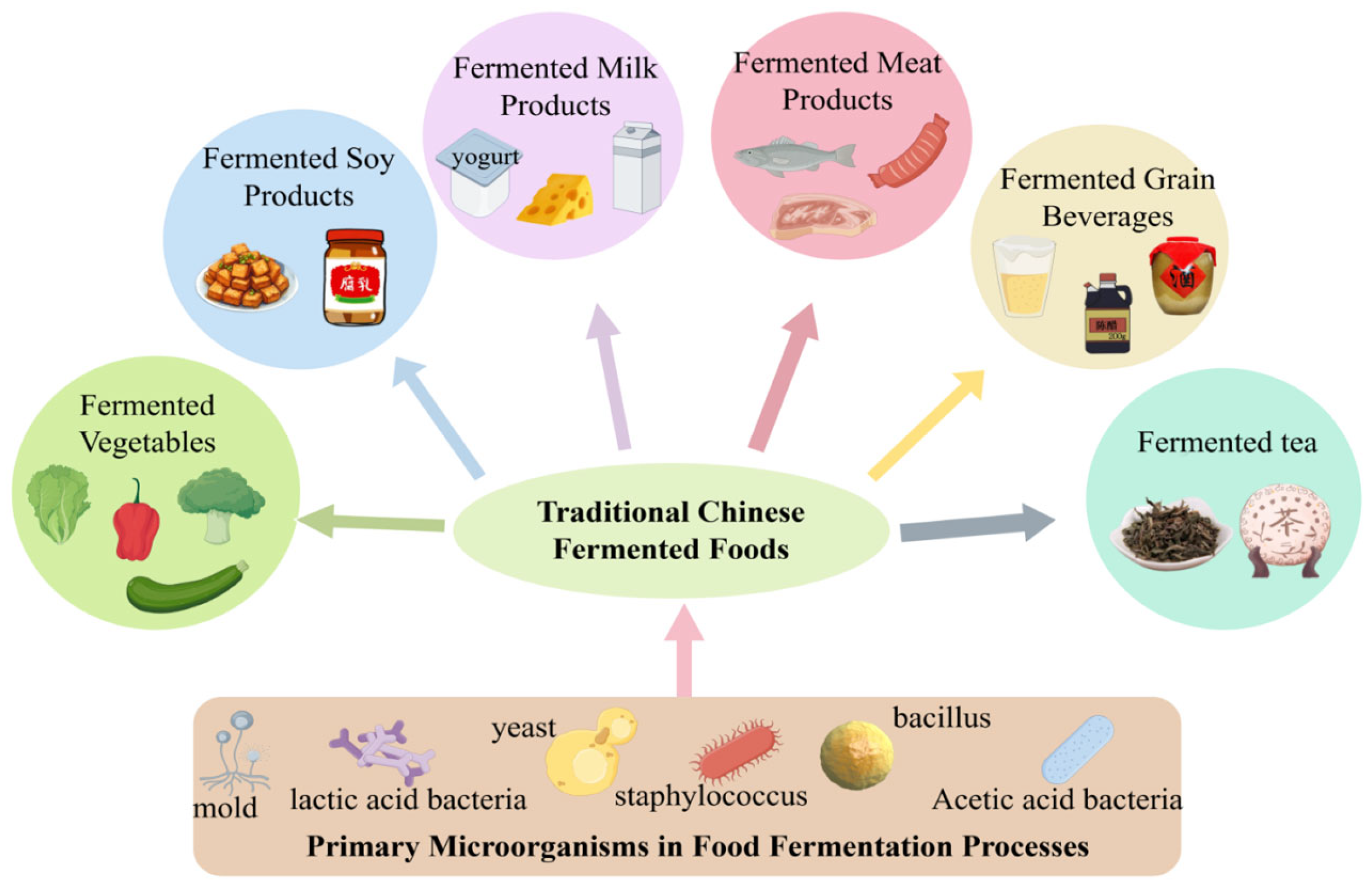
| Types of Fermented Foods with Chinese Characteristics | The Microbial Strains Used in the Fermentation Process | References | |
|---|---|---|---|
| Fermented soybean products | Soy sauce | Aspergillus oryzae, Aspergillus sojae, Aspergillus niger | [27] |
| Fermented bean curd | Enterococcus, Lactococcus, Geotrichum, Mortierella, Bacillus cereus | [28] | |
| Soybean Paste | Aspergillus oryzae, Biscudii yeast, Bacillus, and Lactobacillus plantarum | [29,30] | |
| Fermented grain products | Vinegar | Lactobacillus, Lacticaseibacillus, Lentilactobacillus, Limosilactobacillus, Leuconostoc, and Pediococcus. | [31] |
| Baijiu | Lactobacillus, Thermoactinomyces, Aquabacterium, Aspergillus, and Kazachstania | [32] | |
| Rice wine | Lactobacillus plantarum, Lactobacillus paracasei, Leuconostoc mesenteroides and Saccharomyces cerevisiae | [33] | |
| Fermented Vegetable Products | Pickled cabbage | Latilactobacillus sakei, Loigolactobacillus coryniformis subsp. torquens, Lactiplantibacillus plantarum subsp. plantarum, and Secundilactobacillus malefermentans | [34] |
| Kimchi | Lactococcus, Weismannia, and Lactobacillus | [35] | |
| Fermented meat products | Pickled Fish | Lactobacillus plantarum, Streptococcus, Staphylococcus, Bacillus, Micrococcus, Pseudomonas, Candida, Saccharomyces cerevisiae, and Saccharomyces | [36] |
| Ham | P. urinaeequi, P. pentosaceus, and L. pentosus.; S. xylosus, S. equus, S. gallinarum | [37] | |
| Fermented dairy products | Cheese | Lactococcus, Streptococcus, Lactobacillus, Leuconostoc, and Enterococcus | [38] |
| Yogurt | Lactobacillus, Streptococcus, Streptococcus, Leuconostoc, Bifidobacterium, and Peptostreptococcus | [39] | |
2. Microbial Interactions
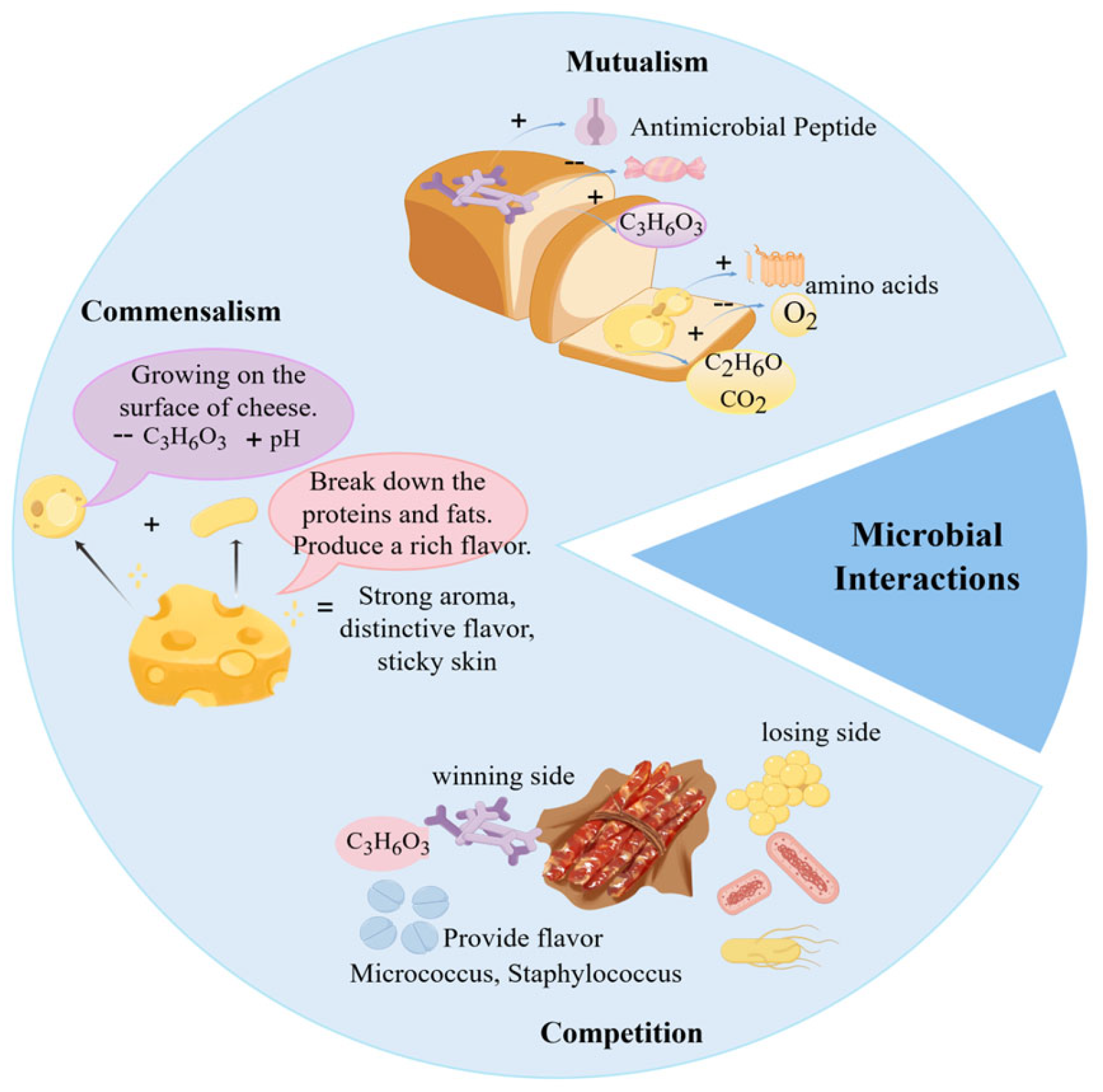
2.1. Mutualism
2.2. Commensalism
2.3. Competition
2.4. Shared Mechanisms Underlying Microbial Interactions in Food Fermentations
| Function Type | Fermented Foods | Primary Strains | Interactions Between Strains | References |
|---|---|---|---|---|
| Mutualism | Yogurt | Streptococcus thermophilus and Lactobacillus delbrueckii ssp. bulgaricus | S. thermophilus provides formic acid, folic acid, carbon dioxide, and fatty acids to initiate the growth of L. bulgaricus. L. bulgaricus produces excess peptides and free amino acids to meet the biosynthetic demands of S. thermophilus. | [83] |
| Fermented bean curd | Mucor, Lactobacillus, Bacillus and Saccharomyces | Mucor decomposes proteins and starch into peptides, amino acids, and monosaccharides, which are then utilized by yeast to produce alcohol, esters, and other aromatic compounds. | [84] | |
| Sourdough Bread | Saccharomyces exiguus and Lactic acid bacteria | Lactic acid bacteria convert sugars in flour into lactic acid and acetic acid, which yeast utilizes. The carbon dioxide produced by yeast causes the dough to rise, creating more space for lactic acid bacteria to thrive. | [85] | |
| Commensalism | Cheddar cheese | Streptococcus thermophilus and Lactococcus strains | S. thermophilus has a crucial role in boosting Lactococcus growth | [86] |
| Soy sauce | L. Fermentum and Zygosaccharomyces rouxii | L. Fermentum alleviates the inhibitory effect of acetic acid on Zygosaccharomyces rouxii, and its metabolites promote the growth of Zygosaccharomyces rouxii | [87] | |
| Baijiu | S. cerevisiae and Lactobacillus buchneri | Yeast and lactic acid bacteria synergistically enhance product yield while mutually supplying nutrients to promote growth and metabolic activity. | [32] | |
| Competition | Marula wine | Lactobacillus, Lactobacillus plantarum; luconobacter oxydans, Acetobacter pasteuriannus | Lactic acid bacteria inhibit the growth of acetic acid bacteria through malic acid-lactic acid fermentation. | [88] |
| Sausage | Debaryomyces hansenii (yeast), Penicillium and Aspergillu competing for limited resources | Yeast and mold protect the fermentation process internally by competing for resources, contributing unique flavors and textures to the sausage casing. Bifidobacteria metabolize carbohydrates to produce lactic acid and small amounts of acetic acid, lowering the product’s pH. | [89] |
3. Microbial Interactions in Fermented Foods of China’s Ethnic Minorities
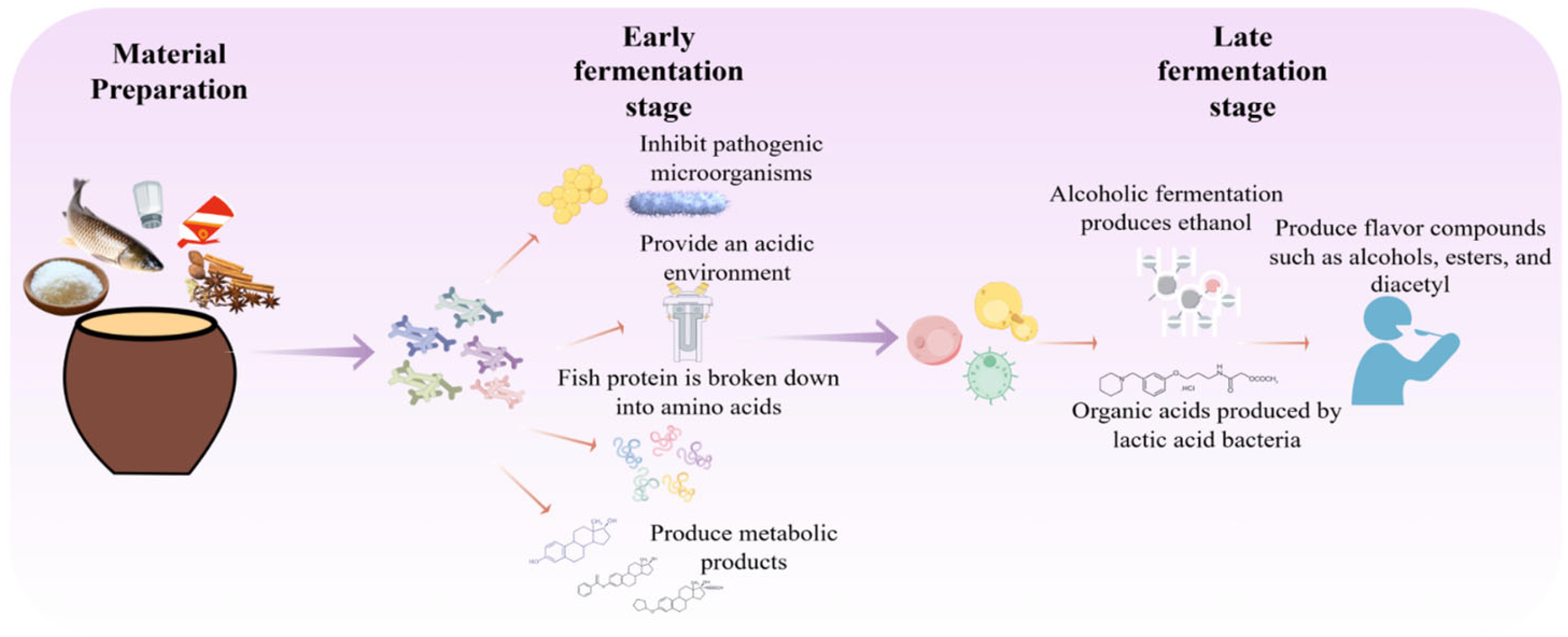
3.1. Dong Ethnic Fermented Fish: A “Sour-Savory Symphony” Driven by Lactic Acid Bacteria and Yeast

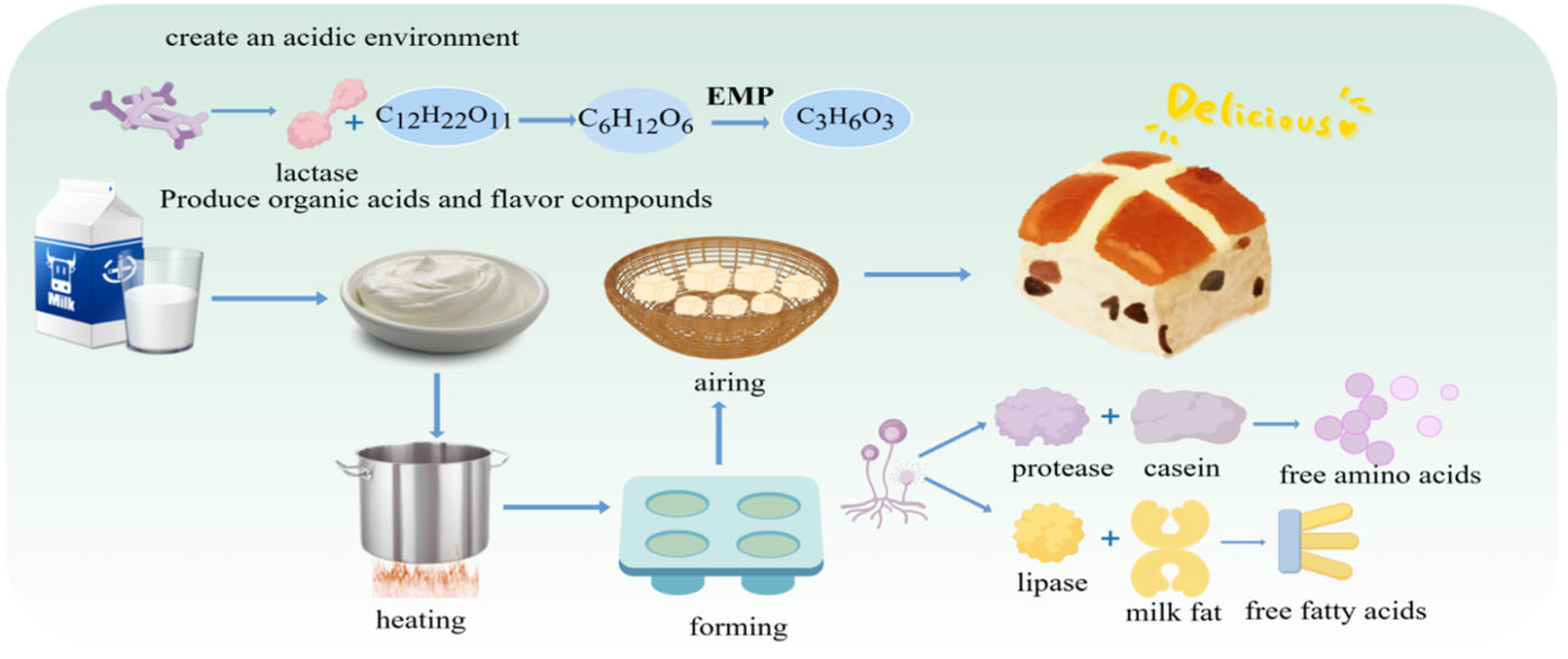
3.2. Milk Tofu: The “Flavor Shaping” by Lactic Acid Bacteria and Molds

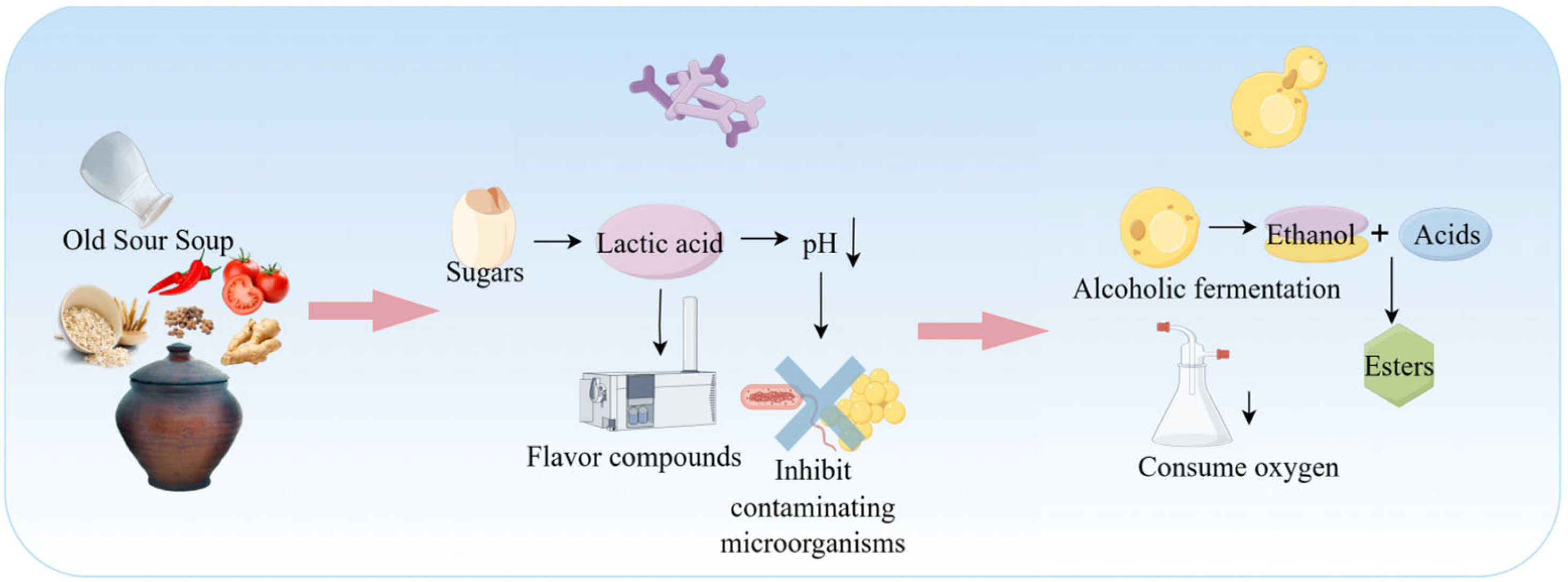
3.3. Miao Sour Soup: A Lactobacillus-Dominated “Sour-Aroma Ecosystem”

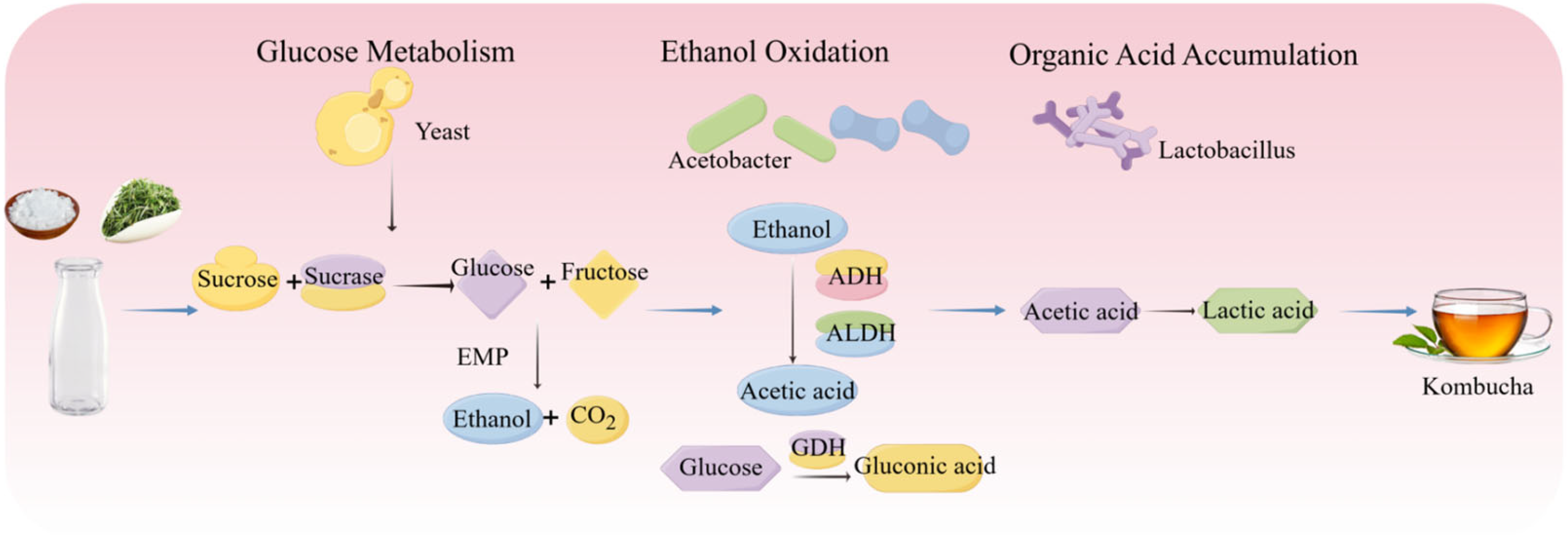
3.4. Manchurian Kombucha

4. Conclusions and Outlook
4.1. Fermented Foods and Human Health
4.2. Drawbacks in Traditional Fermented Food Production Methods
4.3. Modern Technology Empowers Traditional Fermentation
4.3.1. Precise Microbiome Regulation and Engineered Microbial Consortia
4.3.2. Real-Time Monitoring and Intelligent Process Control
4.3.3. Targeted Flavor and Health-Oriented Design
Author Contributions
Funding
Institutional Review Board Statement
Informed Consent Statement
Data Availability Statement
Conflicts of Interest
Abbreviations
| AAB | acetic acid bacteria |
| LAB | lactic acid bacteria |
| EMP | Embden–Meyerhof–Parnas |
| LA | Lactic Acid |
| ADH | Alcohol Dehydrogenase |
| ALDH | Aldehyde Dehydrogenase |
| GDH | Glucose Dehydrogenase |
References
- Zhang, K.; Zhang, T.; Guo, R.; Ye, Q.; Zhao, H.; Huang, X. The regulation of key flavor of traditional fermented food by microbial metabolism: A review. Food Chem. X 2023, 19, 100871. [Google Scholar] [CrossRef]
- Farag, M.A.; Jomaa, S.A.; El-Wahed, A.A.; El-Seedi, A.H.R. The Many Faces of Kefir Fermented Dairy Products: Quality Characteristics, Flavour Chemistry, Nutritional Value, Health Benefits, and Safety. Nutrients 2020, 12, 346. [Google Scholar] [CrossRef] [PubMed]
- Yuan, Y.; Mu, D.; Guo, L.; Wu, X.; Chen, X.; Li, X. From flavor to function: A review of fermented fruit drinks, their microbial profiles and health benefits. Food Res. Int. 2024, 196, 115095. [Google Scholar] [CrossRef] [PubMed]
- Leeuwendaal, N.K.; Stanton, C.; O’Toole, P.W.; Beresford, T.P. Fermented Foods, Health and the Gut Microbiome. Nutrients 2022, 14, 1527. [Google Scholar] [CrossRef] [PubMed]
- Diez-Ozaeta, I.; Astiazaran, O.J. Fermented foods: An update on evidence-based health benefits and future perspectives. Food Res. Int. 2022, 156, 111133. [Google Scholar] [CrossRef]
- Padhi, S.; Sarkar, P.; Sahoo, D.; Rai, A.K. Potential of fermented foods and their metabolites in improving gut microbiota function and lowering gastrointestinal inflammation. J. Sci. Food. Agric. 2025, 105, 4058–4069. [Google Scholar] [CrossRef]
- Chi, Z.; Zhang, M.; Fu, B.; Wang, X.; Yang, H.; Fang, X.; Li, Z.; Teng, T.; Shi, B. Branched Short-Chain Fatty Acid-Rich Fermented Protein Food Improves the Growth and Intestinal Health by Regulating Gut Microbiota and Metabolites in Young Pigs. J. Agric. Food. Chem. 2024, 72, 21594–21609. [Google Scholar] [CrossRef]
- Rul, F.; Béra-Maillet, C.; Champomier-Vergès, M.C.; El-Mecherfi, K.E.; Foligné, B.; Michalski, M.C.; Milenkovic, D.; Savary-Auzeloux, I. Underlying evidence for the health benefits of fermented foods in humans. Food Funct. 2022, 13, 4804–4824. [Google Scholar] [CrossRef]
- Balasubramanian, R.; Schneider, E.; Gunnigle, E.; Cotter, P.D.; Cryan, J.F. Fermented foods: Harnessing their potential to modulate the microbiota-gut-brain axis for mental health. Neurosci. Biobehav. Rev. 2024, 158, 105562. [Google Scholar] [CrossRef]
- Deng, M.; Yang, W.G. Microbial diversity and metabolic pathways involved in flavor formation in Xiangxi sour meat. China J. Food Sci. 2025, 25, 325–337. [Google Scholar]
- Sun, H.X.; Li, Z.Y.; Chen, Z.H.; Zhao, X.Q.; Kang, C.Y.; Sun, J.L. Isolation, screening, and phenotypic characterization of lactic acid bacteria from traditional fermented sour fish. China J. Food Sci. 2024, 24, 380–391. [Google Scholar]
- Zhang, X.; Zheng, Y.; Feng, J.; Zhou, R.; Ma, M. Integrated metabolomics and high-throughput sequencing to explore the dynamic correlations between flavor related metabolites and bacterial succession in the process of Mongolian cheese production. Food Res. Int. 2022, 160, 111672. [Google Scholar] [CrossRef] [PubMed]
- Huang, Z.; Habib, A.; Ding, X.; Lv, H. Physiochemical and Microbial Analysis of Tibetan Yak Milk Yogurt in Comparison to Locally Available Yogurt. Molecules 2023, 28, 5242. [Google Scholar] [CrossRef]
- Xiong, K.; Han, F.; Wang, Z.; Du, M.; Chen, Y.; Tang, Y.; Wang, Z. Screening of dominant strains in red sour soup from Miao nationality and the optimization of inoculating fermentation conditions. Food Sci. Nutr. 2020, 9, 261–271. [Google Scholar] [CrossRef] [PubMed]
- Zhang, Y.; Qi, B.; Li, Q.; Yang, C.; Yu, P.; Yang, X.; Li, T. Dynamic changes on sensory property, nutritional quality and metabolic profiles of green kernel black beans during Eurotium cristatum-based solid-state fermentation. Food Chem. 2024, 455, 139846. [Google Scholar] [CrossRef]
- Ren, H.; Li, J.; Lan, Y.; Lu, N.; Tian, H.; Li, J.; Zhang, Z.; Li, L.; Sun, Y.; Zheng, Y. Bioaugmented ensiling of sweet sorghum with Pichia anomala and cellulase and improved enzymatic hydrolysis of silage via ball milling. J. Environ. Manag. 2024, 354, 120327. [Google Scholar] [CrossRef]
- Zhao, Y.; Wu, C.; Bai, J.; Li, J.; Cheng, K.; Zhou, X.; Dong, Y.; Xiao, X. Fermented barley extracts with Lactobacillus plantarum dy-1 decreased fat accumulation of Caenorhabditis elegans in a daf-2-dependent mechanism. J. Food Biochem. 2020, 44, e13459. [Google Scholar] [CrossRef]
- Fujita, H.; Ushio, M.; Suzuki, K.; Abe, M.S.; Yamamichi, M.; Okazaki, Y.; Canarini, A.; Hayashi, I.; Fukushima, K.; Fukuda, S.; et al. Facilitative interaction networks in experimental microbial community dynamics. Front. Microbiol. 2023, 14, 1153952. [Google Scholar] [CrossRef]
- Liu, W.; Tang, Y.; Zhang, J.; Bai, J.; Zhu, Y.; Zhu, L.; Zhao, Y.; Daglia, M.; Xiao, X.; He, Y. Microbial Interactions in Food Fermentation: Interactions, Analysis Strategies, and Quality Enhancement. Foods 2025, 14, 2515. [Google Scholar] [CrossRef]
- Pierce, E.C.; Dutton, R.J. Putting microbial interactions back into community contexts. Curr. Opin. Microbiol. 2022, 65, 56–63. [Google Scholar] [CrossRef]
- Tzamourani, A.P.; Taliadouros, V.; Paraskevopoulos, I.; Dimopoulou, M. Developing a novel selection method for alcoholic fermentation starters by exploring wine yeast microbiota from Greece. Front. Microbiol. 2023, 14, 1301325. [Google Scholar] [CrossRef]
- Zheng, H.; Liu, Z.; Zheng, H.; Miao, Y.; Liu, C.; Zong, M.; Lou, W. Investigation into optimizing fermentation processes to enhance uric acid degradation by probiotics. J. Biotechnol. 2024, 396, 28–35. [Google Scholar] [CrossRef] [PubMed]
- Wu, Q.; Yuan, Q.; Wang, X.; Chen, L.; Yi, S.; Huang, X.; Wang, J.; Wang, X. Synergistic Fermentation of Pichia kluyveri and Saccharomyces cerevisiae Integrated with Two-Step Sugar-Supplement for Preparing High-Alcohol Kiwifruit Wine. Metabolites 2024, 14, 310. [Google Scholar] [CrossRef] [PubMed]
- Rizo, J.; Guillén, D.; Farrés, A.; Díaz-Ruiz, G.; Sánchez, S.; Wacher, C.; Rodríguez-Sanoja, R. Omics in traditional vegetable fermented foods and beverages. Crit. Rev. Food. Sci. Nutr. 2020, 60, 791–809. [Google Scholar] [CrossRef] [PubMed]
- Rossi, F.; Tucci, P.; Del Matto, I.; Marino, L.; Amadoro, C.; Colavita, G. Autochthonous Cultures to Improve Safety and Standardize Quality of Traditional Dry Fermented Meats. Microorganisms 2023, 11, 1306. [Google Scholar] [CrossRef]
- Hawaz, H.; Bottari, B.; Scazzina, F.; Carini, E. Eastern African traditional fermented foods and beverages: Advancements, challenges, and perspectives on food technology, nutrition, and safety. Compr. Rev. Food. Sci. Food Saf. 2025, 24, e70137. [Google Scholar] [CrossRef]
- Liu, Y.; Sun, G.; Li, J.; Cheng, P.; Song, Q.; Lv, W.; Wang, C. Starter molds and multi-enzyme catalysis in koji fermentation of soy sauce brewing: A review. Food Res. Int. 2024, 184, 114273. [Google Scholar] [CrossRef]
- Wan, H.; Liu, T.; Su, C.; Ji, X.; Wang, L.; Zhao, Y.; Wang, Z. Evaluation of bacterial and fungal communities during the fermentation of Baixi sufu, a traditional spicy fermented bean curd. J. Sci. Food. Agric. 2020, 100, 1448–1457. [Google Scholar] [CrossRef]
- Li, S.; Guo, L.; Gu, J.; Mu, G.; Tuo, Y. Screening lactic acid bacteria and yeast strains for soybean paste fermentation in northeast of China. Food Sci. Nutr. 2023, 11, 4502–4515. [Google Scholar] [CrossRef]
- Deng, W.; Wang, M.; Li, Z.; Liu, G.; Liu, Z.; Yu, H.; Liu, J. Effect of the changs of microbial community on flavor components of traditional soybean paste during storage period. Food Res. Int. 2022, 161, 111866. [Google Scholar] [CrossRef]
- Leal Maske, B.; Murawski De Mello, A.F.; Da Silva Vale, A.; Prado Martin, J.G.; de Oliveira Soares, D.L.; De Dea Lindner, J.; Soccol, C.R.; de Melo Pereira, G.V. Exploring diversity and functional traits of lactic acid bacteria in traditional vinegar fermentation: A review. Int. J. Food Microbiol. 2024, 412, 110550. [Google Scholar] [CrossRef] [PubMed]
- Gao, L.; Zhou, J.; He, G. Effect of microbial interaction on flavor quality in Chinese baijiu fermentation. Front. Nutr. 2022, 9, 960712. [Google Scholar] [CrossRef] [PubMed]
- Peng, B.; Huang, H.; Xu, J.; Xin, Y.; Hu, L.; Wen, L.; Li, L.; Chen, J.; Han, Y.; Li, C. Rice Wine Fermentation: Unveiling Key Factors Shaping Quality, Flavor, and Technological Evolution. Foods 2025, 14, 2544. [Google Scholar] [CrossRef] [PubMed]
- Zhang, S.; Zhang, Y.; Wu, L.; Zhang, L.; Wang, S. Characterization of microbiota of naturally fermented sauerkraut by high-throughput sequencing. Food Sci. Biotechnol. 2022, 32, 855–862. [Google Scholar] [CrossRef]
- Cha, J.; Kim, Y.B.; Park, S.; Lee, S.H.; Roh, S.W.; Son, H.; Whon, T.W. Does kimchi deserve the status of a probiotic food? Crit. Rev. Food. Sci. Nutr. 2024, 64, 6512–6525. [Google Scholar] [CrossRef]
- Belleggia, L.; Osimani, A. Fermented fish and fermented fish-based products, an ever-growing source of microbial diversity: A literature review. Food Res. Int. 2023, 172, 113112. [Google Scholar] [CrossRef]
- Wang, Z.; Wang, Z.; Ji, L.; Zhang, J.; Zhao, Z.; Zhang, R.; Bai, T.; Hou, B.; Zhang, Y.; Liu, D.; et al. A Review: Microbial Diversity and Function of Fermented Meat Products in China. Front. Microbiol. 2021, 12, 645435. [Google Scholar] [CrossRef]
- Bettera, L.; Levante, A.; Bancalari, E.; Bottari, B.; Gatti, M. Lactic acid bacteria in cow raw milk for cheese production: Which and how many? Front. Microbiol. 2023, 13, 1092224. [Google Scholar] [CrossRef]
- Taye, Y.; Degu, T.; Fesseha, H.; Mathewos, M. Isolation and Identification of Lactic Acid Bacteria from Cow Milk and Milk Products. Sci. World J. 2021, 2021, 4697445. [Google Scholar] [CrossRef]
- Yu, H.; Li, P.; Yin, P.; Cai, J.; Jin, B.; Zhang, H.; Lu, S. Bacterial community succession and volatile compound changes in Xinjiang smoked horsemeat sausage during fermentation. Food Res. Int. 2023, 174, 113656. [Google Scholar] [CrossRef]
- Wen, L.; Yang, L.; Chen, C.; Li, J.; Fu, J.; Liu, G.; Kan, Q.; Ho, C.; Huang, Q.; Lan, Y.; et al. Applications of multi-omics techniques to unravel the fermentation process and the flavor formation mechanism in fermented foods. Crit. Rev. Food. Sci. Nutr. 2024, 64, 8367–8383. [Google Scholar] [CrossRef] [PubMed]
- Sun, X.; Yu, L.; Xiao, M.; Zhang, C.; Zhao, J.; Narbad, A.; Chen, W.; Zhai, Q.; Tian, F. Exploring Core fermentation microorganisms, flavor compounds, and metabolic pathways in fermented Rice and wheat foods. Food Chem. 2025, 463, 141019. [Google Scholar] [CrossRef] [PubMed]
- Liang, Y.; Chang, C.; Jiang, T.; Zheng, T.; Ji, Y.; Guo, Y.; Pan, D.; Zhang, T.; Wu, Z. Antioxidant Peptides Derived from Cheese Products via Single and Mixed Lactobacillus Strain Fermentation. J. Agric. Food. Chem. 2024, 72, 21221–21230. [Google Scholar] [CrossRef] [PubMed]
- Qi, C.; Wen, B.; Zheng, Y.; Wang, S.; Zhao, Y.; Liu, Y.; Gao, Z.; Ma, X.; Wang, W. Combining Untargeted Metabolomics and High-Throughput Sequencing to Explore the Dynamics of Small-Molecular Metabolites in the Fermentation Stage of Inner Mongolian Cheese. J. Agric. Food. Chem. 2025, 73, 20341–20351. [Google Scholar] [CrossRef]
- Wu, J.Y.; Wee, S.; Ler, S.G.; Henry, C.J.; Gunaratne, J. Unraveling the impact of tempeh fermentation on protein nutrients: An in vitro proteomics and peptidomics approach. Food Chem. 2025, 474, 143154. [Google Scholar] [CrossRef]
- D’Souza, G.; Shitut, S.; Preussger, D.; Yousif, G.; Waschina, S.; Kost, C. Ecology and evolution of metabolic cross-feeding interactions in bacteria. Nat. Prod. Rep. 2018, 35, 455–488. [Google Scholar] [CrossRef]
- Auchtung, J.M.; Hallen-Adams, H.E.; Hutkins, R. Microbial interactions and ecology in fermented food ecosystems. Nat. Reviews. Microbiol. 2025, 23, 622–634. [Google Scholar] [CrossRef]
- Elhalis, H.; Cox, J.; Frank, D.; Zhao, J. Microbiological and biochemical performances of six yeast species as potential starter cultures for wet fermentation of coffee beans. LWT 2021, 137, 110430. [Google Scholar] [CrossRef]
- Shen, X.; Wang, Q.; Zheng, J.; Li, X.; Li, S.; Yin, Y.; Shang, M.; Liu, K.; Yuan, W.; Zhang, J. Effect on Arabica Coffee Flavor Quality of Enhanced Fermentation with Pichia membranifaciens Through Change Microbial Communities and Chemical Compounds. Food Sci. Nutr. 2025, 13, e70512. [Google Scholar] [CrossRef]
- Rocha, H.A.; Borém, F.M.; Alves, A.P.D.C.; Santos, C.M.D.; Schwan, R.F.; Haeberlin, L.; Nakajima, M.; Sugino, R. Natural fermentation with delayed inoculation of the yeast Torulaspora delbrueckii: Impact on the chemical composition and sensory profile of natural coffee. Food Res. Int. 2023, 174, 113632. [Google Scholar] [CrossRef]
- Cassimiro, D.M.D.J.; Batista, N.N.; Fonseca, H.C.; Oliveira Naves, J.A.; Coelho, J.M.; Bernardes, P.C.; Dias, D.R.; Schwan, R.F. Wet fermentation of Coffea canephora by lactic acid bacteria and yeasts using the self-induced anaerobic fermentation (SIAF) method enhances the coffee quality. Food Microbiol. 2023, 110, 104161. [Google Scholar] [CrossRef] [PubMed]
- Helena Sances Rabelo, M.; Meira Borém, F.; Paula De Carvalho Alves, A.; Soares Pieroni, R.; Mendes Santos, C.; Nakajima, M.; Sugino, R. Fermentation of coffee fruit with sequential inoculation of Lactiplantibacillus plantarum and Saccharomyces cerevisiae: Effects on volatile composition and sensory characteristics. Food Chem. 2024, 444, 138608. [Google Scholar] [CrossRef] [PubMed]
- Janne Carvalho Ferreira, L.; Luiz Lima Bertarini, P.; Rodrigues Do Amaral, L.; Souza Gomes, M.D.; Maciel De Oliveira, L.; Diniz Santos, L. Coinoculation of Saccharomyces cerevisiae and Bacillus amyloliquefaciens in solid-state and submerged coffee fermentation: Influences on chemical and sensory compositions. LWT 2024, 202, 116299. [Google Scholar] [CrossRef]
- Duru, I.C.; Laine, P.; Andreevskaya, M.; Paulin, L.; Kananen, S.; Tynkkynen, S.; Auvinen, P.; Smolander, O. Metagenomic and metatranscriptomic analysis of the microbial community in Swiss-type Maasdam cheese during ripening. Int. J. Food Microbiol. 2018, 281, 10–22. [Google Scholar] [CrossRef]
- Dan, T.; Hu, H.; Tian, J.; He, B.; Tai, J.; He, Y. Influence of Different Ratios of Lactobacillus delbrueckii subsp. bulgaricus and Streptococcus thermophilus on Fermentation Characteristics of Yogurt. Molecules 2023, 28, 2123. [Google Scholar] [CrossRef]
- Zengler, K.; Zaramela, L.S. The social network of microorganisms—How auxotrophies shape complex communities. Nature Reviews. Microbiology 2018, 16, 383–390. [Google Scholar] [CrossRef]
- Suzuki-Iwashima, A.; Matsuura, H.; Iwasawa, A.; Shiota, M. Metabolomics analyses of the combined effects of lactic acid bacteria and Penicillium camemberti on the generation of volatile compounds in model mold-surface-ripened cheeses. J. Biosci. Bioeng. 2020, 129, 333–347. [Google Scholar] [CrossRef]
- Canon, F.; Briard-Bion, V.; Jardin, J.; Thierry, A.; Gagnaire, V. Positive Interactions Between Lactic Acid Bacteria Could Be Mediated by Peptides Containing Branched-Chain Amino Acids. Front. Microbiol. 2022, 12, 793136. [Google Scholar] [CrossRef]
- Machado, D.; Maistrenko, O.M.; Andrejev, S.; Kim, Y.; Bork, P.; Patil, K.R.; Patil, K.R. Polarization of microbial communities between competitive and cooperative metabolism. Nat. Ecol. Evol. 2021, 5, 195–203. [Google Scholar] [CrossRef]
- Lee, S.H.; Whon, T.W.; Roh, S.W.; Jeon, C.O. Unraveling microbial fermentation features in kimchi: From classical to meta-omics approaches. Appl. Microbiol. Biotechnol. 2020, 104, 7731–7744. [Google Scholar] [CrossRef]
- Seo, S.; Park, S.; Kim, E.; Cho, K.; Kwon, S.J.; Son, H. Effect of Fungi on Metabolite Changes in Kimchi During Fermentation. Molecules 2020, 25, 5040. [Google Scholar] [CrossRef] [PubMed]
- Jung, S.; Hwang, I.M.; Lee, J. Temperature impact on microbial and metabolic profiles in kimchi fermentation. Heliyon 2024, 10, e27174. [Google Scholar] [CrossRef] [PubMed]
- Zilelidou, E.A.; Nisiotou, A. Understanding Wine through Yeast Interactions. Microorganisms 2021, 9, 1620. [Google Scholar] [CrossRef] [PubMed]
- El Dana, F.; David, V.; Tourdot-Maréchal, R.; Hayar, S.; Colosio, M.; Alexandre, H. Bioprotection with Saccharomyces cerevisiae: A Promising Strategy. Microorganisms 2025, 13, 1163. [Google Scholar] [CrossRef]
- Harlé, O.; Legrand, J.; Tesnière, C.; Pradal, M.; Mouret, J.; Nidelet, T. Investigations of the mechanisms of interactions between four non-conventional species with Saccharomyces cerevisiae in oenological conditions. PLoS ONE 2020, 15, e233285. [Google Scholar] [CrossRef]
- Zong, E.; Yang, J.; Zhang, J.; Wang, X.; Zhang, S.; Peng, Y.; Lai, J.; Sun, X.; Zeng, S.; Ao, L.; et al. Environmental factor driven microbial interactions regulate flavor metabolisms in polymicrobial fermented alcoholic beverages: A dynamic coupling framework. Food Res. Int. 2026, 225, 118097. [Google Scholar] [CrossRef]
- Torres-Guardado, R.; Esteve-Zarzoso, B.; Reguant, C.; Bordons, A. Microbial interactions in alcoholic beverages. Int. Microbiol. Off. J. Span. Soc. Microbiol. 2022, 25, 1–15. [Google Scholar] [CrossRef]
- Ashaolu, T.J.; Varga, L.; Greff, B. Nutritional and functional aspects of European cereal-based fermented foods and beverages. Food Res. Int. 2025, 209, 116221. [Google Scholar] [CrossRef]
- Wolkers Rooijackers, J.C.M.; Turner, O.; Almekinders, E.; Smid, E.J. Spatial-temporal distribution of oxygen and its effect on microbial dynamics and vitamin B12 content in lupin tempeh. LWT 2024, 201, 116275. [Google Scholar] [CrossRef]
- Liu, S.; Zhou, Y.; Zhou, Z.; Zhou, Z.; Han, X.; Xu, Y.; Mao, J. Environmental factors drive microbial succession and huangjiu flavor formation during raw wheat qu fermentation. Food Biosci. 2023, 51, 102342. [Google Scholar] [CrossRef]
- Peng, Y.; Zhou, C.; Qiu, F.; Peng, D.; Wang, X.; Li, X. Acid-resistant Bacillus velezensis effectively controls pathogenic Colletotrichum capsici and improves plant health through metabolic interactions. Appl. Environ. Microbiol. 2025, 91, e325–e340. [Google Scholar] [CrossRef]
- Yuan, J.; Ma, D.; Yang, Y.; Zhao, Y.; Ren, H.; Liu, X.; Tan, M.; Li, K. A review and prospects: Multi-omics and artificial intelligence-based approaches to understanding the effects of lactic acid bacteria and yeast interactions on fermented foods. Innov. Food Sci. Emerg. Technol. 2025, 99, 103874. [Google Scholar] [CrossRef]
- Salvatore, M.M.; Maione, A.; Buonanno, A.; Guida, M.; Andolfi, A.; Salvatore, F.; Galdiero, E. Biological activities, biosynthetic capacity and metabolic interactions of lactic acid bacteria and yeast strains from traditional home-made kefir. Food Chem. 2025, 470, 142657. [Google Scholar] [CrossRef] [PubMed]
- Gu, Y.; Zhang, B.; Tian, J.; Li, L.; He, Y. Physiology, quorum sensing, and proteomics of lactic acid bacteria were affected by Saccharomyces cerevisiae YE4. Food Res. Int. 2023, 166, 112612. [Google Scholar] [CrossRef] [PubMed]
- Tran, T.; Roullier-Gall, C.; Verdier, F.; Martin, A.; Schmitt-Kopplin, P.; Alexandre, H.; Grandvalet, C.; Tourdot-Maréchal, R. Microbial Interactions in Kombucha through the Lens of Metabolomics. Metabolites 2022, 12, 235. [Google Scholar] [CrossRef]
- Román-Camacho, J.J.; Santos-Dueñas, I.M.; García-García, I.; García-Martínez, T.; Peinado, R.A.; Mauricio, J.C. Correlating Microbial Dynamics with Key Metabolomic Profiles in Three Submerged Culture-Produced Vinegars. Foods 2024, 14, 56. [Google Scholar] [CrossRef]
- Han, D.; Yang, Y.; Guo, Z.; Dai, S.; Jiang, M.; Zhu, Y.; Wang, Y.; Yu, Z.; Wang, K.; Rong, C.; et al. A Review on the Interaction of Acetic Acid Bacteria and Microbes in Food Fermentation: A Microbial Ecology Perspective. Foods 2024, 13, 2534. [Google Scholar] [CrossRef]
- Hong, H.H.; Kim, M.K. Physiochemical Quality and Sensory Characteristics of koji Made with Soybean, Rice, and Wheat for Commercial doenjang Production. Foods 2020, 9, 975. [Google Scholar] [CrossRef]
- Aragão, M.D.O.P.; Lima, F.R.; Passamani, F.R.F.; Santos, M.A.D.A.; Rezende, J.D.P.; Batista, L.R. Fungal and bacterial diversity present on the rind and core of Natural Bloomy Rind Artisanal Minas Cheese from the Canastra region, Brazil. Food Res. Int. 2025, 202, 115724. [Google Scholar] [CrossRef]
- Qiu, F.; Li, W.; Chen, X.; Du, B.; Li, X.; Sun, B. Targeted microbial collaboration to enhance key flavor metabolites by inoculating Clostridium tyrobutyricum and Saccharomyces cerevisiae in the strong-flavor Baijiu simulated fermentation system. Food Res. Int. 2024, 190, 114647. [Google Scholar] [CrossRef]
- Han, Y.; Wang, X.; Li, H.; Liu, Y.; Han, M.; Chen, Y.; Ren, J.; Liu, T.; Liang, Y.; Hu, X.; et al. Microbial communities and metabolite dynamics in the flowering fermentation of Fu brick Tea: Correlations with mycotoxin degradation. Food Biosci. 2025, 68, 106706. [Google Scholar] [CrossRef]
- Shetty, S.A.; Kuipers, B.; Atashgahi, S.; Aalvink, S.; Smidt, H.; de Vos, W.M. Inter-species Metabolic Interactions in an In-vitro Minimal Human Gut Microbiome of Core Bacteria. npj Biofilms Microbomes 2022, 8, 21. [Google Scholar] [CrossRef] [PubMed]
- Ge, Y.; Yu, X.; Zhao, X.; Liu, C.; Li, T.; Mu, S.; Zhang, L.; Chen, Z.; Zhang, Z.; Song, Z.; et al. Fermentation characteristics and postacidification of yogurt by Streptococcus thermophilus CICC 6038 and Lactobacillus delbrueckii ssp. bulgaricus CICC 6047 at optimal inoculum ratio. J. Dairy. Sci 2024, 107, 123–140. [Google Scholar] [CrossRef] [PubMed]
- Feng, X.; Dong, Z.; Hao, T. High-throughput sequencing-based study on bacterial community structure and functional prediction of fermented bean curd from different regions in China. Sci. Rep. 2025, 15, 28317. [Google Scholar] [CrossRef]
- Gänzle, M.G.; Qiao, N.; Bechtner, J. The quest for the perfect loaf of sourdough bread continues: Novel developments for selection of sourdough starter cultures. Int. J. Food Microbiol. 2023, 407, 110421. [Google Scholar] [CrossRef]
- Melkonian, C.; Zorrilla, F.; Kjærbølling, I.; Blasche, S.; Machado, D.; Junge, M.; Sørensen, K.I.; Andersen, L.T.; Patil, K.R.; Zeidan, A.A. Microbial interactions shape cheese flavour formation. Nat. Commun. 2023, 14, 8348. [Google Scholar] [CrossRef]
- Feng, Y.; Wu, W.; Huang, M.; Su, G.; Zhao, M.; Feng, Y. Mechanistic insights into soy sauce flavor enhancement via Co-culture of Limosilactobacillus fermentum and Zygosaccharomyces rouxii. Food Biosci. 2024, 61, 104979. [Google Scholar] [CrossRef]
- Phiri, A.; La Grange, D.; Moganedi, K. Microbial and Chemical Dynamics during Marula Wine Fermentation. Beverages 2022, 8, 50. [Google Scholar] [CrossRef]
- Álvarez, M.; Andrade, M.J.; Cebrián, E.; Roncero, E.; Delgado, J. Perspectives on the Probiotic Potential of Indigenous Moulds and Yeasts in Dry-Fermented Sausages. Microorganisms 2023, 11, 1746. [Google Scholar] [CrossRef]
- Tang, X.; Luo, K.L. A study on Dong sour fish culture from the perspective of ecological ethnology. J. Guangxi Norm. Univ. Natl. 2021, 38, 18–22. [Google Scholar]
- Zhang, X.J. Identification of Key Characteristic Flavor Compounds in Fermented Sour Fish and the Improvement Effect of Aroma-Producing Yeasts. Master’s Thesis, Jiangnan University, Wuxi, China, 2023. [Google Scholar]
- Liu, Y.P.; You, S.B.; Ma, D.Y.; Xia, H.; Bian, F.; Geng, Y.; Shi, S.T.; Yu, J.H.; Bi, Y.P. Screening of high-protease-producing strains and evaluation of their effects on the bioactivity of Spirulina fermentates. Food Ferment. Ind. 2021, 47, 140–145. [Google Scholar]
- Zhou, B.Q.; Liu, Y.L.; Huang, Y.Q.; Li, X.H.; Wang, F.X.; Ma, X.Y. Research progress on microbial community composition and its correlation with flavor metabolism in fermented fish products in China. Food Sci. 2024, 45, 281–289. [Google Scholar]
- Chen, J.; Zhang, Y.; Huang, X.; Dong, M.; Dong, X.; Zhou, D.; Zhu, B.; Qin, L. Integrated volatolomics and metabolomics analysis reveals the characteristic flavor formation in Chouguiyu, a traditional fermented mandarin fish of China. Food Chem. 2023, 418, 135874. [Google Scholar] [CrossRef] [PubMed]
- Shen, Y.; Wu, Y.; Wang, Y.; Li, L.; Li, C.; Zhao, Y.; Yang, S. Contribution of autochthonous microbiota succession to flavor formation during Chinese fermented mandarin fish (Siniperca chuatsi). Food Chem. 2021, 348, 129107. [Google Scholar] [CrossRef] [PubMed]
- Ma, X.; Zhou, B.; Jiang, L.; Xie, M.; Rong, Z.; Yin, S.; Wang, F.; Liu, Y.; Li, X. Microbial interactions between Lactoplantibacillus plantarum and Rhodotorula mucilaginosa in the fermented fish juice system. Food Res. Int. 2025, 208, 116166. [Google Scholar] [CrossRef]
- Wang, M. Study on Traditional Mongolian Food Processing Techniques. Master’s Thesis, Inner Mongolia Normal University, Hohhot, China, 2017. [Google Scholar]
- Qigeqi. Study on Traditional Milk Tofu Starters and Their Applications. Master’s Thesis, Inner Mongolia Agricultural University, Hohhot, China, 2023. [Google Scholar]
- Daling. Composition and Changes of Microbial Communities during Traditional Milk Tofu Production. Master’s Thesis, Inner Mongolia Agricultural University, Hohhot, China, 2022. [Google Scholar]
- Wang, B.; Wang, J.; Xu, L.Y.; Zhang, J.H.; Ai, N.S.; Cao, Y.P. Characterization of the key odorants in kurut with aroma recombination and omission studies. J. Dairy. Sci. 2020, 103, 4164–4173. [Google Scholar] [CrossRef]
- Xu, W.; Tegexibayaer; Li, C.; Yang, B.; Guo, L. Isolation and identification and lipase activity of mold in Mongolian Hurood. China Brew. 2023, 42, 109–113. [Google Scholar]
- Duan, F.; Luo, Y.; Li, D.; Zhong, D.; He, G.; Wei, Z.; Jia, L. Kaili Red sour soup: Correlations in composition/microbial metabolism and flavor profile during post-fermentation. Food Chem. 2024, 435, 137602. [Google Scholar]
- Zhou, X.; Zhou, W.; He, X.; Deng, Y.; Li, L.; Li, M.; Feng, X.; Zhang, L.; Zhao, L. Effects of post-fermentation on the flavor compounds formation in red sour soup. Front. Nutr. 2022, 9, 1007164. [Google Scholar] [CrossRef]
- Zhou, X.; Liu, Z.; Xie, L.; Li, L.; Zhou, W.; Zhao, L. The Correlation Mechanism between Dominant Bacteria and Primary Metabolites during Fermentation of Red Sour Soup. Foods 2022, 11, 341. [Google Scholar] [CrossRef]
- Lin, L.; Zeng, J.; Tian, Q.; Ding, X.; Zhang, X.; Gao, X. Effect of the bacterial community on the volatile flavour profile of a Chinese fermented condiment—Red sour soup—During fermentation. Food Res. Int. 2022, 155, 111059. [Google Scholar] [CrossRef] [PubMed]
- Li, J.; Wang, X.; Wu, W.; Jiang, J.; Feng, D.; Shi, Y.; Hu, P. Comparison of Fermentation Behaviors and Characteristics of Tomato Sour Soup between Natural Fermentation and Dominant Bacteria-Enhanced Fermentation. Microorganisms 2022, 10, 640. [Google Scholar] [CrossRef] [PubMed]
- Zhang, P.; Hu, M.; Meng, W.; Wang, J.; Yuan, Z.; Wang, F.; Li, S. Microbial community structure analysis and screening of dominant strains in Guizhou white sour soup: Enhancing safety, improving flavor, and shortening fermentation cycle. Food Chem. X 2025, 30, 102953. [Google Scholar] [CrossRef] [PubMed]
- Wang, B.; Rutherfurd-Markwick, K.; Zhang, X.; Mutukumira, A.N. Kombucha: Production and Microbiological Research. Foods 2022, 11, 3456. [Google Scholar] [CrossRef]
- Yuan, L.; Li, M.; Xu, X.; Shi, X.; Chen, G.; Lao, F.; Wu, J. Comparative genomics and fermentation flavor characterization of five selected lactic acid bacteria provide predictions for flavor biosynthesis metabolic pathways in fermented muskmelon puree. Food Front. 2024, 5, 508–521. [Google Scholar] [CrossRef]
- Huang, Y.; Peng, X.; Chen, Y.; Wang, Y.; Ma, J.; Zhu, M.; Liu, Z.; Xiao, Y. Decoding the dynamic evolution of volatile organic compounds of dark tea during solid-state fermentation with Debaryomyces hansenii using HS-SPME-GC/MS, E-nose and transcriptomic analysis. LWT 2025, 223, 117765. [Google Scholar] [CrossRef]
- Xiao, Y.; Chen, H.; Chen, Y.; Ho, C.; Wang, Y.; Cai, T.; Li, S.; Ma, J.; Guo, T.; Zhang, L.; et al. Effect of inoculation with different Eurotium cristatum strains on the microbial communities and volatile organic compounds of Fu brick tea. Food Res. Int. 2024, 197, 115219. [Google Scholar] [CrossRef]
- Li, X.; Tso, N.; Huang, S.; Wang, J.; Zhou, Y.; Liu, R. A Comprehensive Evaluation of Microbial Synergistic Metabolic Mechanisms and Health Benefits in Kombucha Fermentation: A Review. Biology 2025, 14, 952. [Google Scholar] [CrossRef]
- Laureys, D.; Britton, S.J.; De Clippeleer, J. Kombucha Tea Fermentation: A Review. J. Am. Soc. Brew. Chem. 2020, 78, 165–174. [Google Scholar] [CrossRef]
- Liu, S.Q.; Fan, L.Y.; Wang, S.; Wang, Y.; Yuan, L. Research progress on the development and utilization of functional microorganisms in kombucha. Sci. Technol. Food Ind. 2024, 45, 388–395. [Google Scholar]
- Andrade, D.K.A.; Wang, B.; Lima, E.M.F.; Shebeko, S.K.; Ermakov, A.M.; Khramova, V.N.; Ivanova, I.V.; Rocha, R.D.S.; Vaz-Velho, M.; Mutukumira, A.N.; et al. Kombucha: An Old Tradition into a New Concept of a Beneficial, Health-Promoting Beverage. Foods 2025, 14, 1547. [Google Scholar] [CrossRef]
- Antolak, H.; Piechota, D.; Kucharska, A. Kombucha Tea-A Double Power of Bioactive Compounds from Tea and Symbiotic Culture of Bacteria and Yeasts (SCOBY). Antioxidants 2021, 10, 1541. [Google Scholar] [CrossRef]
- Jafari, R.; Naghavi, N.S.; Khosravi-Darani, K.; Doudi, M.; Shahanipour, K. Kombucha microbial starter with enhanced production of antioxidant compounds and invertase. Biocatal. Agric. Biotechnol. 2020, 29, 101789. [Google Scholar] [CrossRef]
- Cardoso, R.R.; Neto, R.O.; Dos Santos D’Almeida, C.T.; Do Nascimento, T.P.; Pressete, C.G.; Azevedo, L.; Martino, H.S.D.; Cameron, L.C.; Ferreira, M.S.L.; Barros, F.A.R.D. Kombuchas from green and black teas have different phenolic profile, which impacts their antioxidant capacities, antibacterial and antiproliferative activities. Food Res. Int. 2020, 128, 108782. [Google Scholar] [CrossRef] [PubMed]
- Abedi, E.; Hashemi, S.M.B. Lactic acid production—Producing microorganisms and substrates sources-state of art. Heliyon 2020, 6, e4974. [Google Scholar] [CrossRef] [PubMed]
- Teran, M.D.M.; de Moreno De LeBlanc, A.; Savoy De Giori, G.; LeBlanc, J.G. Thiamine-producing lactic acid bacteria and their potential use in the prevention of neurodegenerative diseases. Appl. Microbiol. Biotechnol. 2021, 105, 2097–2107. [Google Scholar] [CrossRef]
- Voidarou, C.; Antoniadou, M.; Rozos, G.; Tzora, A.; Skoufos, I.; Varzakas, T.; Lagiou, A.; Bezirtzoglou, E. Fermentative Foods: Microbiology, Biochemistry, Potential Human Health Benefits and Public Health Issues. Foods 2020, 10, 69. [Google Scholar] [CrossRef]
- Rousta, N.; Aslan, M.; Yesilcimen Akbas, M.; Ozcan, F.; Sar, T.; Taherzadeh, M.J. Effects of fungal based bioactive compounds on human health: Review paper. Crit. Rev. Food. Sci. Nutr. 2024, 64, 7004–7027. [Google Scholar] [CrossRef]
- Thapa, S.; Li, H.; OHair, J.; Bhatti, S.; Chen, F.; Nasr, K.A.; Johnson, T.; Zhou, S. Biochemical Characteristics of Microbial Enzymes and Their Significance from Industrial Perspectives. Mol. Biotechnol. 2019, 61, 579–601. [Google Scholar] [CrossRef]
- Sánchez, B.; Delgado, S.; Blanco-Míguez, A.; Lourenço, A.; Gueimonde, M.; Margolles, A. Probiotics, gut microbiota, and their influence on host health and disease. Mol. Nutr. Food Res. 2017, 61, 10–1002. [Google Scholar] [CrossRef]
- Berding, K.; Bastiaanssen, T.F.S.; Moloney, G.M.; Boscaini, S.; Strain, C.R.; Anesi, A.; Long-Smith, C.; Mattivi, F.; Stanton, C.; Clarke, G.; et al. Feed your microbes to deal with stress: A psychobiotic diet impacts microbial stability and perceived stress in a healthy adult population. Mol. Psychiatry 2023, 28, 601–610. [Google Scholar] [CrossRef] [PubMed]
- Shawky, E.; Surendran, S.; El-Khair, R.M.A. Fermented Vegetables as a Source of Psychobiotics: A Review of the Evidence for Mental Health Benefits. In Probiotics Antimicrob. Proteins; 2025. [Google Scholar] [CrossRef]
- Pyo, Y.; Kwon, K.H.; Jung, Y.J. Probiotic Functions in Fermented Foods: Anti-Viral, Immunomodulatory, and Anti-Cancer Benefits. Foods 2024, 13, 2386. [Google Scholar] [CrossRef] [PubMed]
- Lee, A.H.; Randhawa, S.K.; Meisel, M. Dietary Commensal Wrestles Iron from Tumor Microenvironment to Activate Antitumoral Macrophages. Cancer Res. 2024, 84, 2400–2402. [Google Scholar] [CrossRef] [PubMed]
- Ray, M.; Manjunath, A.; Halami, P.M. Effect of probiotics as an immune modulator for the management of COVID-19. Arch. Microbiol. 2023, 205, 182. [Google Scholar] [CrossRef]
- Zawistowska-Rojek, A.; Tyski, S. How to Improve Health with Biological Agents-Narrative Review. Nutrients 2022, 14, 1700. [Google Scholar] [CrossRef]
- Singh, A.; Negi, P.S. Appraising the role of biotics and fermented foods in gut microbiota modulation and sleep regulation. J. Food Sci. 2025, 90, e17634. [Google Scholar] [CrossRef]
- Oniszczuk, A.; Oniszczuk, T.; Gancarz, M.; Szymańska, J. Role of Gut Microbiota, Probiotics and Prebiotics in the Cardiovascular Diseases. Molecules 2021, 26, 1172. [Google Scholar] [CrossRef]
- Dwivedi, S.; Singh, V.; Sharma, K.; Sliti, A.; Baunthiyal, M.; Shin, J. Significance of Soy-Based Fermented Food and Their Bioactive Compounds Against Obesity, Diabetes, and Cardiovascular Diseases. Plant Foods Hum. Nutr. 2024, 79, 1–11. [Google Scholar] [CrossRef]
- Peluzio, M.D.C.G.; Dias, M.D.M.E.; Martinez, J.A.; Milagro, F.I. Kefir and Intestinal Microbiota Modulation: Implications in Human Health. Front. Nutr. 2021, 8, 638740. [Google Scholar] [CrossRef]
- Patel, P.; Butani, K.; Kumar, A.; Singh, S.; Prajapati, B.G. Effects of Fermented Food Consumption on Non-Communicable Diseases. Foods 2023, 12, 687. [Google Scholar] [CrossRef]
- Jin, G.; Zhao, Y.; Xin, S.; Li, T.; Xu, Y. Solid-State Fermentation Engineering of Traditional Chinese Fermented Food. Foods 2024, 13, 3003. [Google Scholar] [CrossRef]
- Tang, L. Research on Safety Risk Control and Management of Traditional Fermented Foods. Master’s Thesis, Hebei University of Economics and Business, Shijiazhuang, China, 2022. [Google Scholar]
- Elhalis, H.; Chin, X.H.; Chow, Y. Soybean fermentation: Microbial ecology and starter culture technology. Crit. Rev. Food. Sci. Nutr. 2024, 64, 7648–7670. [Google Scholar] [CrossRef] [PubMed]
- Huo, L.X.; Tan, X.; Ji, Q.; Qiao, C.; Pan, L. Research progress on traditional fermented foods based on omics approaches. China J. Food Sci. 2025, 25, 486–500. [Google Scholar]
- Fan, J.; Qu, G.; Wang, D.; Chen, J.; Du, G.; Fang, F. Synergistic Fermentation with Functional Microorganisms Improves Safety and Quality of Traditional Chinese Fermented Foods. Foods 2023, 12, 2892. [Google Scholar] [CrossRef] [PubMed]
- Jin, R.; Song, J.; Liu, C.; Lin, R.; Liang, D.; Aweya, J.J.; Weng, W.; Zhu, L.; Shang, J.; Yang, S. Synthetic microbial communities: Novel strategies to enhance the quality of traditional fermented foods. Compr. Rev. Food. Sci. Food Saf. 2024, 23, e13388. [Google Scholar] [CrossRef]
- Wang, Y.; Chen, Q.; Li, L.; Chen, S.; Zhao, Y.; Li, C.; Xiang, H.; Wu, Y.; Sun-Waterhouse, D. Transforming the fermented fish landscape: Microbiota enable novel, safe, flavorful, and healthy products for modern consumers. Compr. Rev. Food. Sci. Food Saf. 2023, 22, 3560–3601. [Google Scholar] [CrossRef]
- Dysin, A.P.; Egorov, A.R.; Godzishevskaya, A.A.; Kirichuk, A.A.; Tskhovrebov, A.G.; Kritchenkov, A.S. Biologically Active Supplements Affecting Producer Microorganisms in Food Biotechnology: A Review. Molecules 2023, 28, 1413. [Google Scholar] [CrossRef]
- Ban, S.D.; Zhang, J.X.; Zong, C.Y.; Wang, X.D.; Zhang, Z.M.; Dou, S.H.; Liang, L.; Chen, Y.Y.; Chen, F. From traditional fermented foods to “big health” foods: New opportunities for functional microorganisms. China Brew. 2025, 44, 8–13. [Google Scholar]


Disclaimer/Publisher’s Note: The statements, opinions and data contained in all publications are solely those of the individual author(s) and contributor(s) and not of MDPI and/or the editor(s). MDPI and/or the editor(s) disclaim responsibility for any injury to people or property resulting from any ideas, methods, instructions or products referred to in the content. |
© 2026 by the authors. Licensee MDPI, Basel, Switzerland. This article is an open access article distributed under the terms and conditions of the Creative Commons Attribution (CC BY) license.
Share and Cite
Jiang, X.; Li, X.; Song, P.; Dou, Y.; Xue, J.; Wu, Z.; Ma, S.; Wei, W.; Zheng, W.; Dou, S.; et al. Analysis of Microbial Interactions During the Production of Chinese Ethnic Fermented Foods. Foods 2026, 15, 489. https://doi.org/10.3390/foods15030489
Jiang X, Li X, Song P, Dou Y, Xue J, Wu Z, Ma S, Wei W, Zheng W, Dou S, et al. Analysis of Microbial Interactions During the Production of Chinese Ethnic Fermented Foods. Foods. 2026; 15(3):489. https://doi.org/10.3390/foods15030489
Chicago/Turabian StyleJiang, Xinyue, Xianghao Li, Panpan Song, Yao Dou, Jiayi Xue, Ze Wu, Shuaijun Ma, Wuxuan Wei, Wenjing Zheng, Shaohua Dou, and et al. 2026. "Analysis of Microbial Interactions During the Production of Chinese Ethnic Fermented Foods" Foods 15, no. 3: 489. https://doi.org/10.3390/foods15030489
APA StyleJiang, X., Li, X., Song, P., Dou, Y., Xue, J., Wu, Z., Ma, S., Wei, W., Zheng, W., Dou, S., & Dong, L. (2026). Analysis of Microbial Interactions During the Production of Chinese Ethnic Fermented Foods. Foods, 15(3), 489. https://doi.org/10.3390/foods15030489