Ultrasonic Monitoring of the Processes of Blast Freezing and Thawing of Meat †

Abstract
1. Introduction
2. Materials and Methods
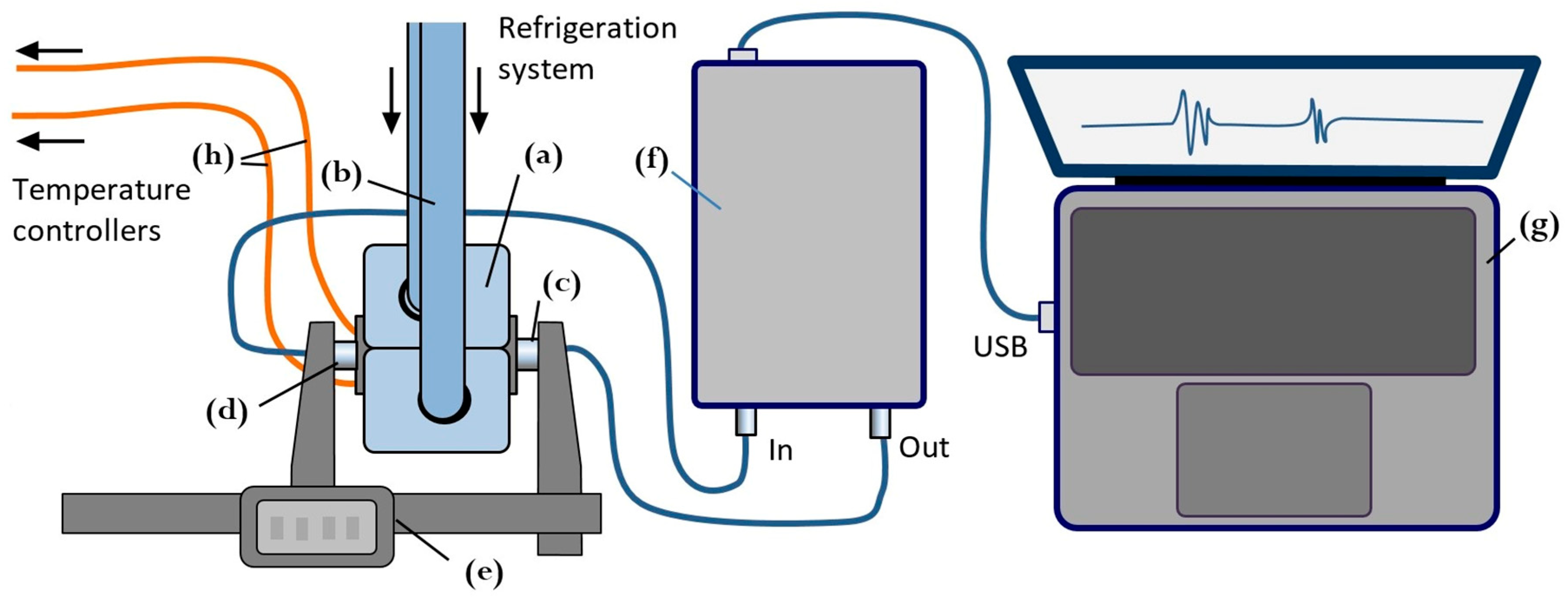
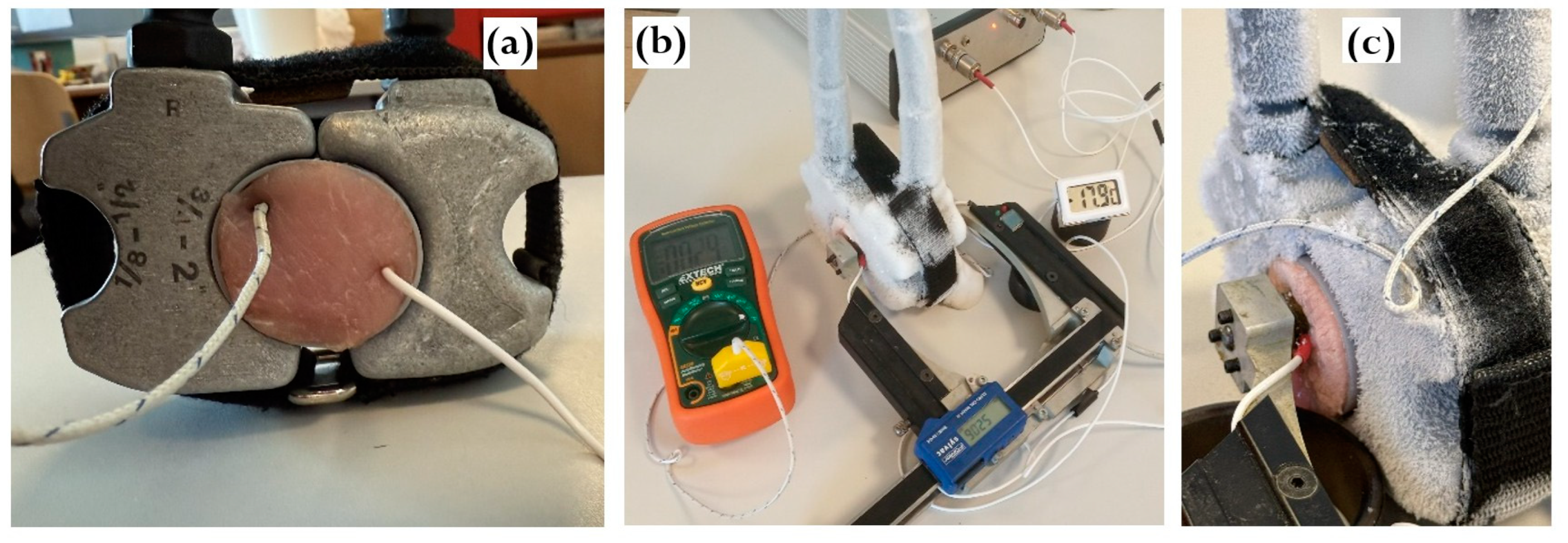
2.1. Experimental Setup
2.2. Ultrasonic Measurements
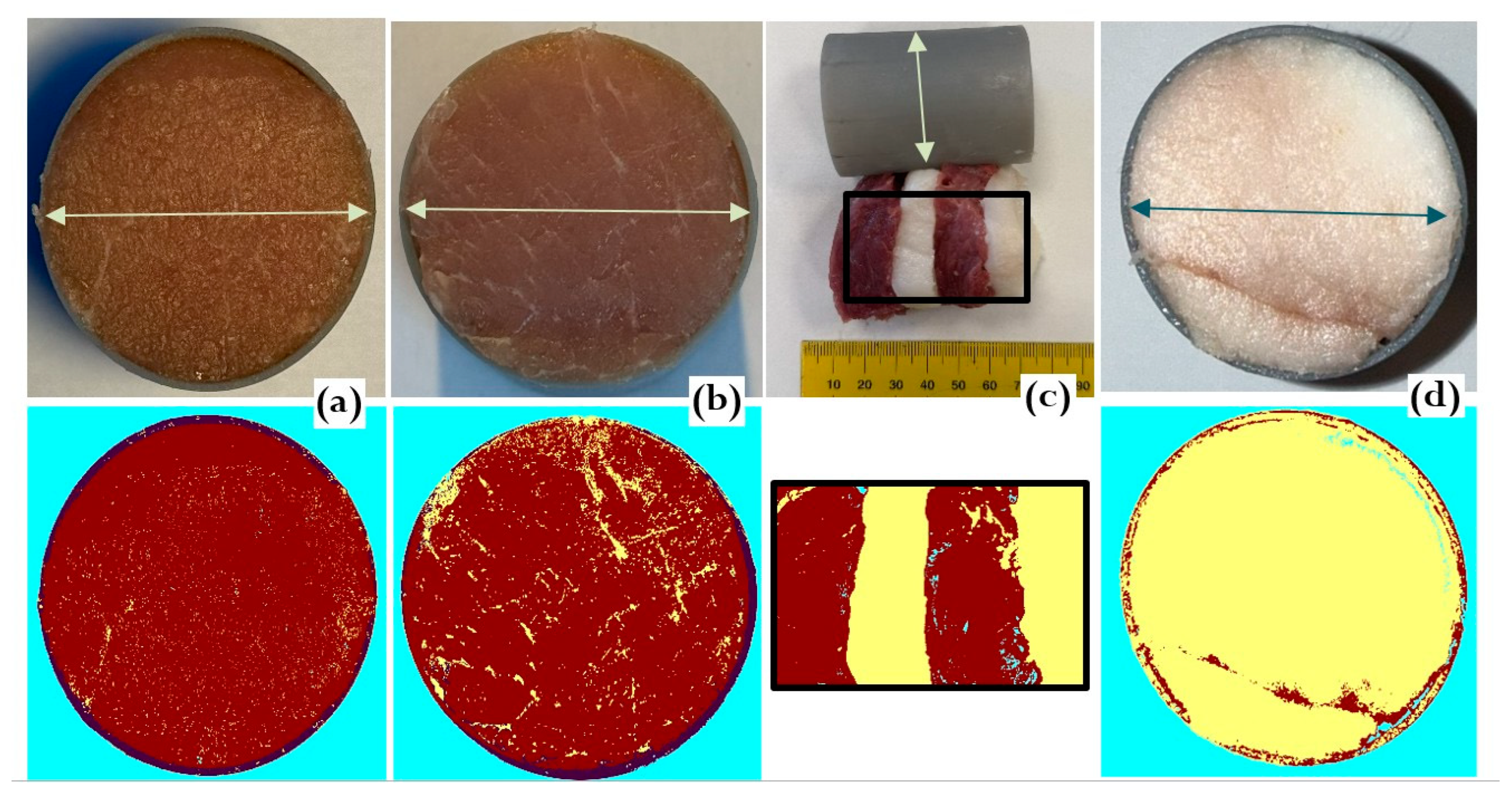
2.3. Specimens
- Water (reference for freezing behavior of high water-content tissues). Lean pork contains 72–76% water [13];
- Lean pork (<4% fat);
- Marbled pork (~10% fat);
- Layered lean–fat structure (alternating layers of lard and lean meat perpendicular to ultrasound propagation path; ~45% fat);
- Lard. (~99% fat).
3. Results and Discussion
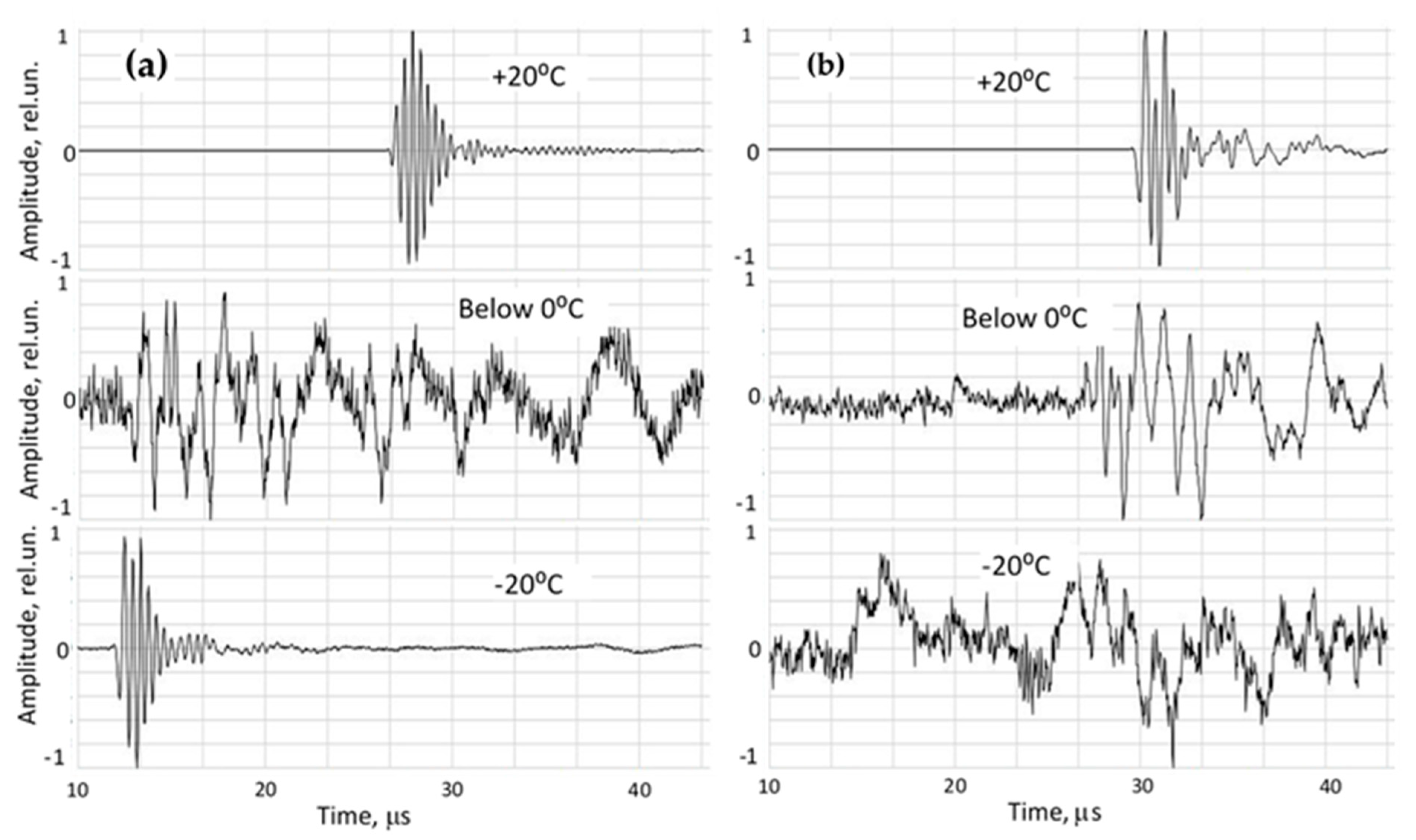
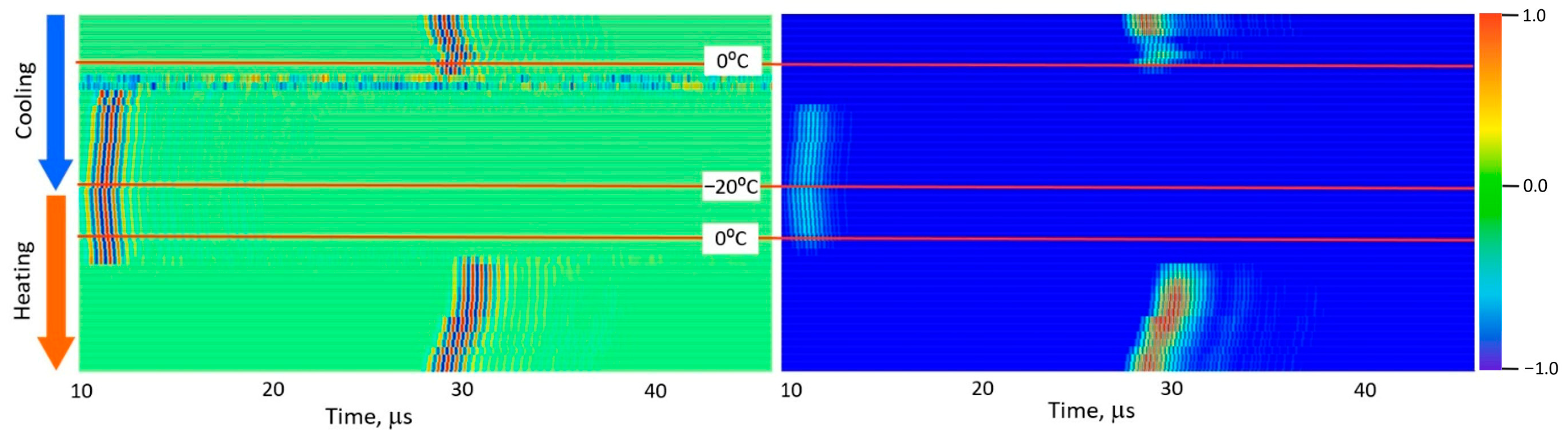
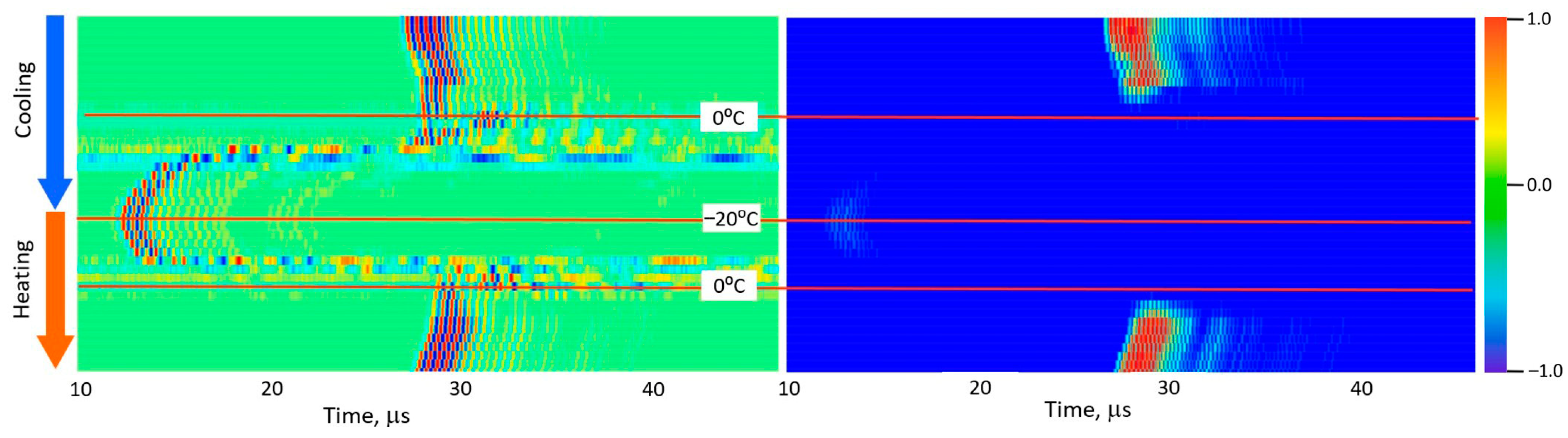
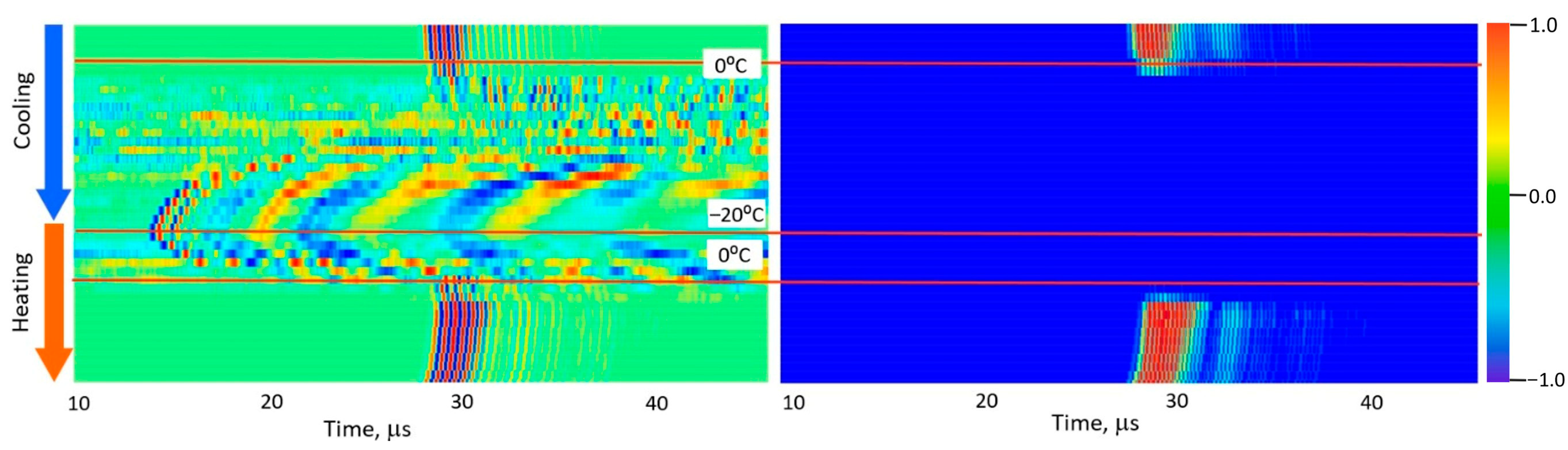
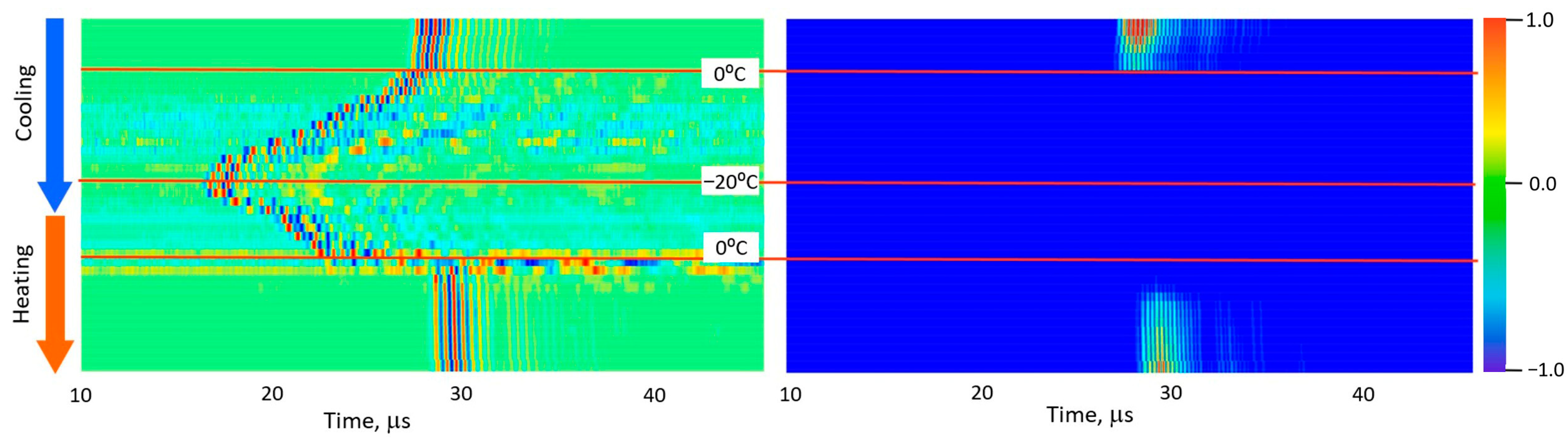
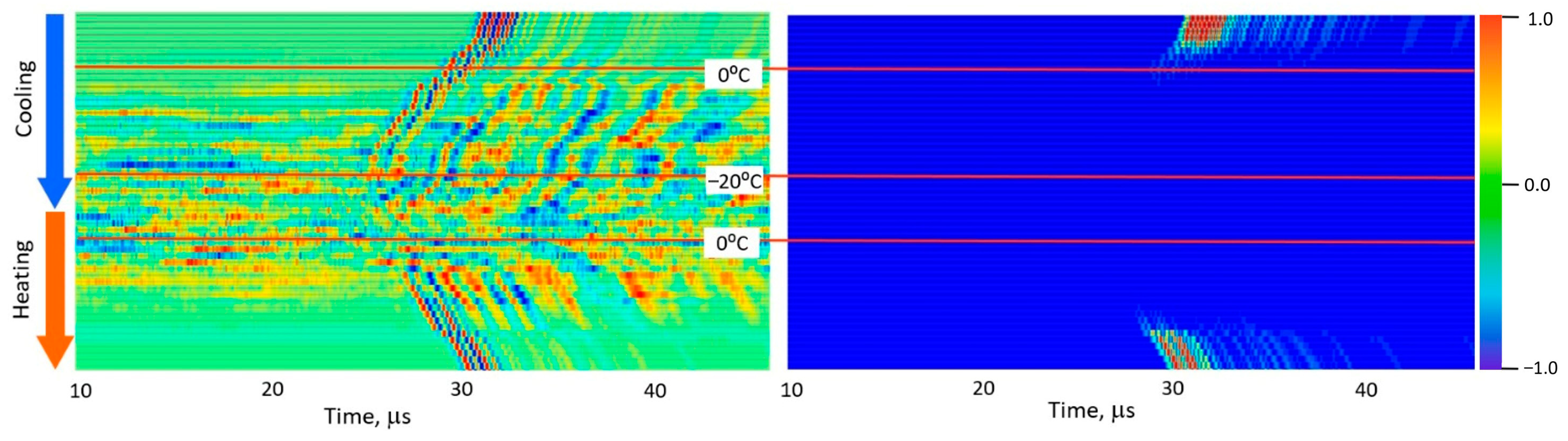
3.1. Signal Behavior During Freezing
- (a)
- Lean meat (high water content), characterized by:
- -
- Rapid disappearance of signals indicated the coexistence of liquid water and ice, where emerging crystals scatter ultrasound and increase attenuation.
- -
- Once fully frozen, the specimen formed a more homogeneous acoustic medium, making it possible to partially recover the signal (SNR 50–100).
- -
- Ultrasound velocity increased sharply as propagation transitioned from liquid-like tissue to solid-like (ice) behavior.
- (b)
- Fatty tissue (lard), characterized by:
- -
- Signal amplitude declined continuously across the full temperature range.
- -
- MHz-range signals disappeared completely at deep-frozen states.
- -
- Only weak low-frequency components persisted in frozen fat.
3.2. Stepwise Freeze–Thaw Profiles
- (a)
- A strong amplitude drop at the onset of freezing in all tissues.
- (b)
- Reappearance of MHz-range signals at deep-frozen states in lean meat, but not in fat-rich specimens.
- (c)
- Faster freezing and thawing transitions in lean meat compared with fatty meat.
- (d)
- Symmetrical acoustic behavior during cooling and heating, forming distinctive freeze–thaw “gates.”
- (e)
3.3. Quantitative Analyses
- (a)
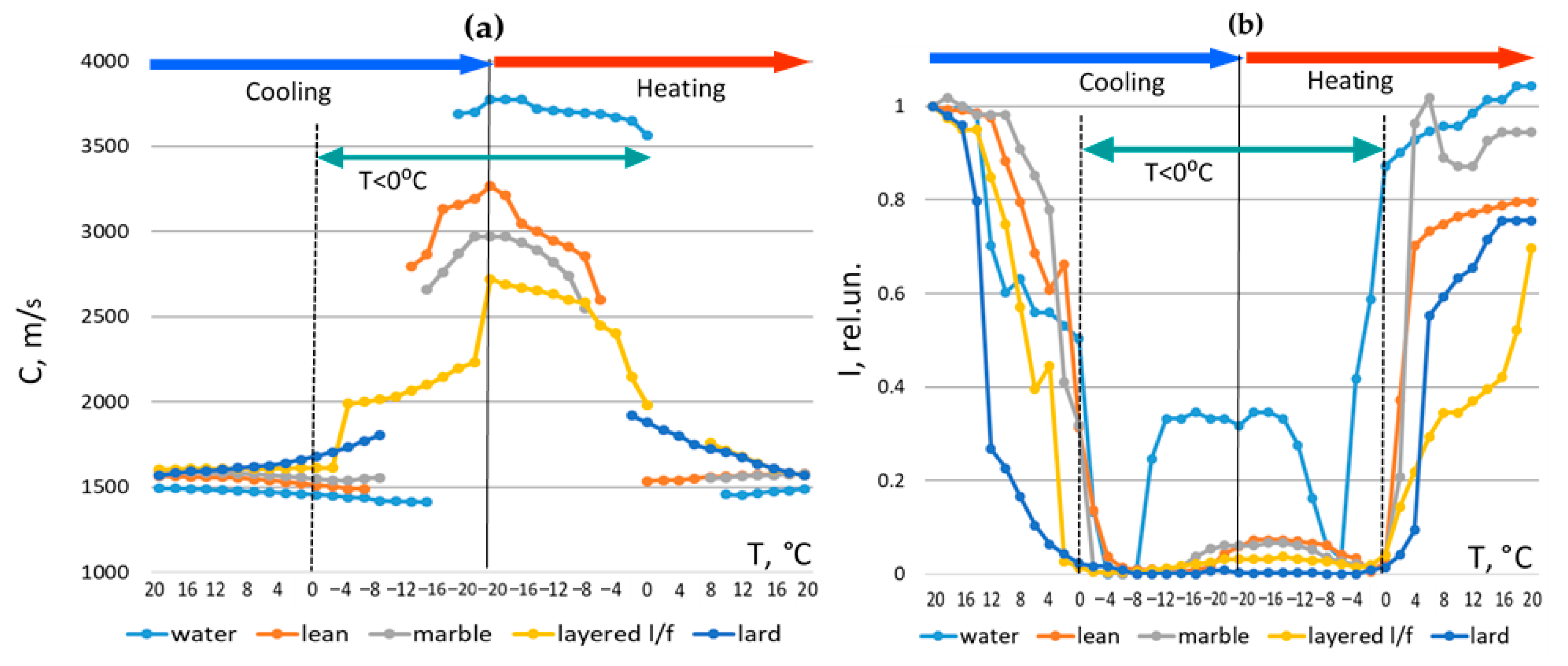
- Lean meat behaved similarly to water, exhibiting sharp velocity transitions and substantial intensity recovery after complete freezing.
- (b)
- Fatty tissues exhibited behavior closer to pure fat, with minimal velocity increase and persistent intensity loss.
- (c)
- A sharp intensity drop consistently marked the onset of freezing.
- (d)
- A velocity jump from 1400–1600 m/s in a warm state to >2000 m/s in a frozen state indicated complete freezing for all types of meat.
- (e)
- Restoration of velocity and intensity to near-initial values indicated complete thawing for all types of meat.
- (f)
- Extremely low intensities and abrupt transitions corresponded to incomplete or partial freezing or thawing occurring due to temperature gradients and hysteresis effects.
3.4. Research Outlook
4. Conclusions
Author Contributions
Funding
Institutional Review Board Statement
Informed Consent Statement
Data Availability Statement
Acknowledgments
Conflicts of Interest
References
- Jiang, L.; Liu, D.; Wang, W.; Li, R.; Yu, S.; Zhou, J. Advancements and perspectives of novel freezing and thawing technologies effects on meat: A review. Food Res. Int. 2025, 204, 115942. [Google Scholar] [CrossRef] [Scilit] [PubMed]
- Zhan, X.; Sun, D.-W.; Zhu, Z.; Wang, Q.J. Improving the quality and safety of frozen muscle foods by emerging freezing technologies: A review. Crit. Rev. Food Sci. Nutr. 2018, 58, 2925–2938. [Google Scholar] [CrossRef] [Scilit] [PubMed]
- Cheng, W.; Gao, Q.; Sun, Y.; Li, X.; Chen, X.; Chong, Z.; Sheng, W. Research progress of freezing processes and devices for fresh meat products. Int. J. Refrig. 2024, 161, 71–82. [Google Scholar] [CrossRef] [Scilit]
- Jeong, S.K.; Jo, K.; Lee, S.; Jeon, H.; Kim, S.; Han, S.; Woo, M.; Choi, Y.S.; Jung, S. Changes in the properties of frozen meat with freezing and storage conditions and non-destructive analyses for monitoring meat quality. Food Sci. Anim. Resour. 2025, 45, 711–726. [Google Scholar] [CrossRef] [Scilit]
- Prempeh, N.Y.A.; Nunekpeku, X.; Murugesan, A.; Li, H. Ultrasound in the food industry: Mechanisms and applications for non-invasive texture and quality analysis. Foods 2025, 14, 2057. [Google Scholar] [CrossRef] [Scilit]
- Jha, R.; Lang, W.; Jedermann, R. Ultrasonic measurement setup for monitoring pre-thawing stages of food. J. Sens. Sens. Syst. 2023, 12, 133–139. [Google Scholar] [CrossRef] [Scilit]
- Chen, H.; Sun, Q.; Xuan, L.; Lin, Z.; Yang, Z.; Huang, X.; Li, Z.; Gao, W.; Ren, J.; Shi, J.; et al. Ultrasonic technology for predicting beef thawing degree and endpoint. J. Food Eng. 2024, 383, 112236. [Google Scholar] [CrossRef] [Scilit]
- Grassi, S.; Jiménez, A.; Ruiz, J.; González-Mohino, A. Use of ultrasound and NIRs as tools for monitoring ice formation in superchilled meat. J. Food Eng. 2024, 369, 111957. [Google Scholar] [CrossRef] [Scilit]
- Khan, M.A.; Ahmad, B.; Kamboh, A.A.; Qadeer, Z. Use of NMR relaxometry for determination of meat properties: A brief review. Food Mater. Res. 2022, 2, 8. [Google Scholar] [CrossRef] [Scilit]
- Wang, B.; Bai, X.; Du, X.; Pan, N.; Shi, S.; Xia, X. Comparison of effects from ultrasound thawing, vacuum thawing and microwave thawing on the quality properties and oxidation of porcine Longissimus lumborum. Foods 2022, 11, 1368. [Google Scholar] [CrossRef] [Scilit] [PubMed]
- Bhandari, S.; Devage, S.A.; Kumar, R.; Ramanathan, R.; Krishnan, S. Electrochemical measurement of freeze–thaw cycle impact on sarcoplasmic oxidation in beef. ACS Meas. Sci. Au 2025, 5, 287–293. [Google Scholar] [CrossRef] [Scilit] [PubMed]
- Mironovs, V.; Tatarinov, A.; Abayev, A.; Zemchenkovs, V. Experimental system for investigating processes of shock freezing of meat. Agron. Res. 2024, 22, 495–502. [Google Scholar]
- Honikel, K.O. Water-holding capacity of meat. In Muscle Development of Livestock Animals: Physiology, Genetics and Meat Quality; Pas, M.F., Everts, M.E., Haagsman, H.P., Eds.; CABI Publishing: Cambridge, MA, USA, 2004; pp. 389–400. [Google Scholar]
- Koc, A.B.; Vatandas, M. Ultrasonic velocity measurements on some liquids under thermal cycle: Ultrasonic velocity hysteresis. Food Res. Int. 2006, 39, 1075–1083. [Google Scholar] [CrossRef] [Scilit]
- Wesolowski, A.; Sienkiewicz, J.J.; Skibniewska, K.A.; Luczycka, D.; Choszcz, D. Hysteresis of ultrasound velocity in pork lard and water during a thermal cycle. J. Food Eng. 2016, 190, 48–53. [Google Scholar] [CrossRef] [Scilit]
- Bamber, J.C.; Hill, C.R. Ultrasonic attenuation and propagation speed in mammalian tissues as a function of temperature. Ultrasound Med. Biol. 1979, 5, 149–157. [Google Scholar] [CrossRef] [Scilit]
- Taniguchi, D.K.; Martin, R.W.; Myers, J.; Silverstein, F.E. Measurement of the ultrasonic attenuation of fat at high frequency. Acad. Radiol. 1994, 1, 114–120. [Google Scholar] [CrossRef] [Scilit]
- Koch, T.; Lakshmanan, S.; Brand, S.; Wicke, M.; Raum, K.; Mörlein, D. Ultrasound velocity and attenuation of porcine soft tissues with respect to structure and composition: II. Skin and backfat. Meat Sci. 2011, 88, 67–74. [Google Scholar] [CrossRef] [Scilit]
- Cholakova, D.; Tcholakova, S.; Denkov, N.D. Polymorphic phase transitions in bulk triglyceride mixtures. Cryst. Growth Des. 2023, 23, 2075–2091. [Google Scholar] [CrossRef] [Scilit]
- Wu, X.; Zhang, Z.; He, Z.; Wang, Z.; Qin, F.; Zeng, M.; Chen, J. Effect of freeze-thaw cycles on the oxidation of protein and fat and its relationship with the formation of heterocyclic aromatic amines and advanced glycation end products in raw meat. Molecules 2021, 26, 1264. [Google Scholar] [CrossRef] [Scilit]
- Dang, D.S.; Bastarrachea, L.J.; Martini, S.; Matarneh, S.K. Crystallization behavior and quality of frozen meat. Foods 2021, 10, 2707. [Google Scholar] [CrossRef] [Scilit]
- Leygonie, C.; Britz, T.J.; Hoffman, L.C. Impact of freezing and thawing on the quality of meat: A review. Meat Sci. 2012, 91, 93–98. [Google Scholar] [CrossRef] [Scilit]
- Mironovs, V.; Sokolovs, V.; Zemchenkovs, V.; Kuzmina, J.; Stankevica, V.; Lapkovskis, V. Investigation of a shock freezing concept with additional electromagnetic field exposure. Adv. Sci. Technol. 2023, 134, 63–72. [Google Scholar] [CrossRef] [Scilit]
- Mei, H.; Xie, J. New ultrasonic assisted technology of freezing, cooling and thawing in solid food processing: A review. Ultrason. Sonochem. 2022, 90, 106185. [Google Scholar] [CrossRef] [Scilit]


Disclaimer/Publisher’s Note: The statements, opinions and data contained in all publications are solely those of the individual author(s) and contributor(s) and not of MDPI and/or the editor(s). MDPI and/or the editor(s) disclaim responsibility for any injury to people or property resulting from any ideas, methods, instructions or products referred to in the content. |
© 2026 by the authors. Licensee MDPI, Basel, Switzerland. This article is an open access article distributed under the terms and conditions of the Creative Commons Attribution (CC BY) license.
Share and Cite
Tatarinov, A.; Osipova, M.; Mironovs, V. Ultrasonic Monitoring of the Processes of Blast Freezing and Thawing of Meat. Foods 2026, 15, 328. https://doi.org/10.3390/foods15020328
Tatarinov A, Osipova M, Mironovs V. Ultrasonic Monitoring of the Processes of Blast Freezing and Thawing of Meat. Foods. 2026; 15(2):328. https://doi.org/10.3390/foods15020328
Chicago/Turabian StyleTatarinov, Alexey, Marija Osipova, and Viktors Mironovs. 2026. "Ultrasonic Monitoring of the Processes of Blast Freezing and Thawing of Meat" Foods 15, no. 2: 328. https://doi.org/10.3390/foods15020328
APA StyleTatarinov, A., Osipova, M., & Mironovs, V. (2026). Ultrasonic Monitoring of the Processes of Blast Freezing and Thawing of Meat. Foods, 15(2), 328. https://doi.org/10.3390/foods15020328