From Forestry By-Product to Functional Food Ingredient Innovation: Antiproliferative, Antimetastatic and Antiplasmodial Activities of Norway Spruce Sawdust Extract
 , , ,
, , ,  , , ,
, , ,
Abstract
1. Introduction
2. Materials and Methods
2.1. Chemicals and Reagents
2.2. NSBE Phenolic Composition
2.3. Cell Lines, Culture Conditions, and Treatment Schedule
2.4. Effect of NSBE on Cell Adhesion
2.5. Antiproliferative Activity of NSBE
2.6. Antimetastatic Activity of NSBE Through Migration by Wound Healing Assay
2.7. Evaluation of the Genotoxicity of NSBE by Chromosomal Aberrations Assay
2.8. In Vitro Antimalarial Properties
2.9. Statistical Analysis
3. Results and Discussion
3.1. Phenolic Composition and Chemical Characterization of NSBE
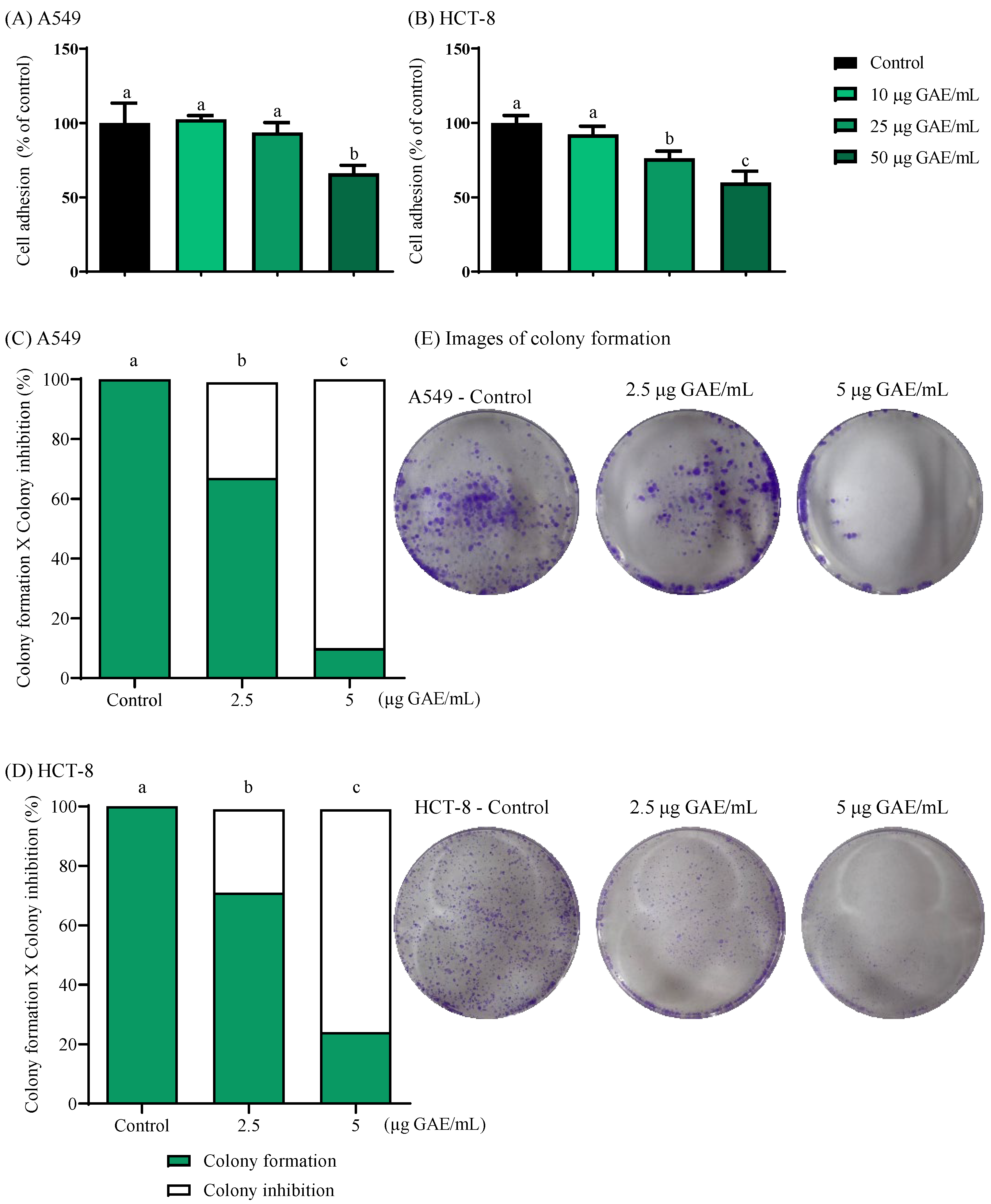
3.2. NSBE Impaired Cell Adhesion
3.3. NSBE Inhibits the Colony Formation
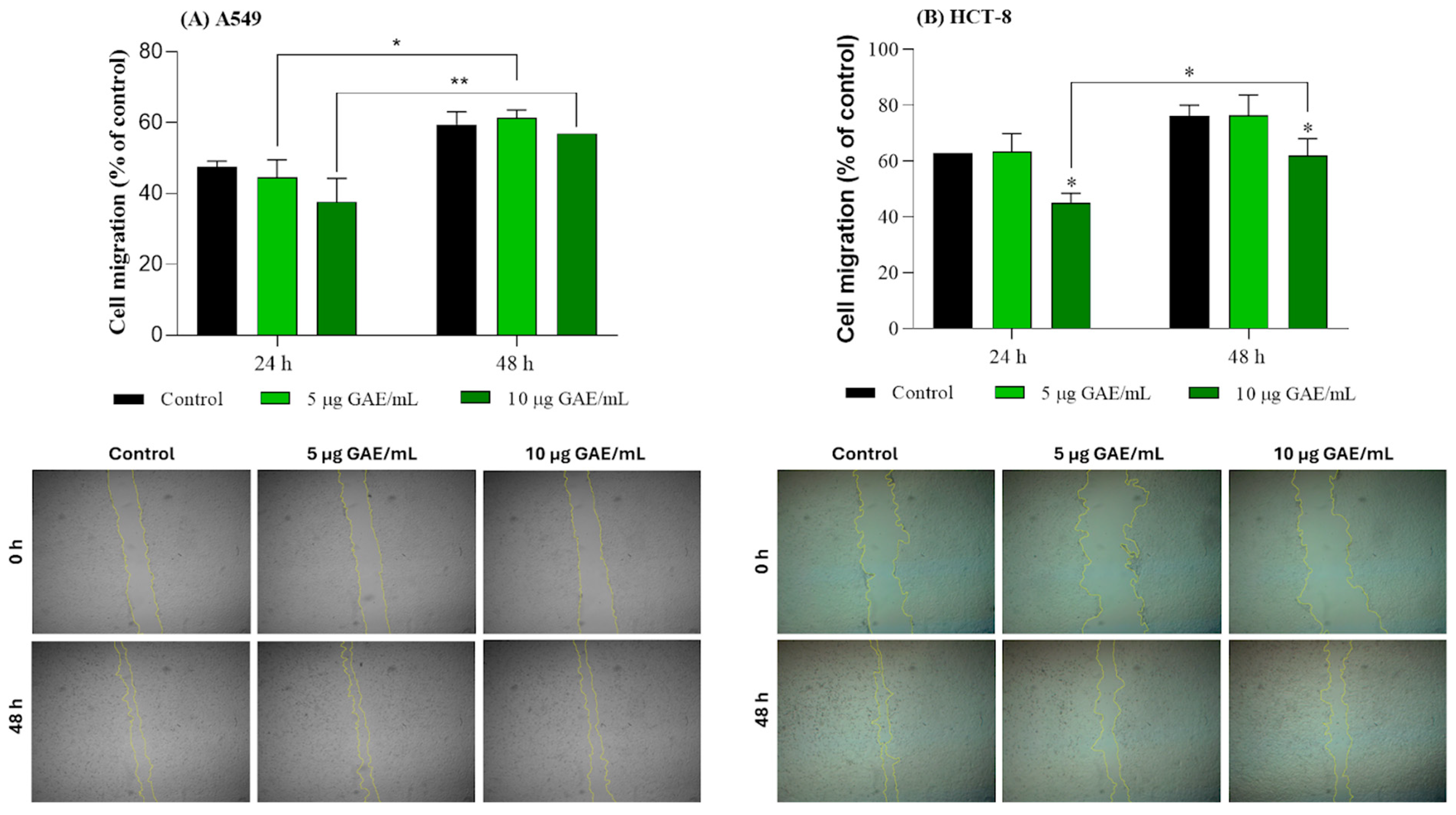
3.4. Migration Profile of A549 and HCT-8 Cells Treated with NSBE
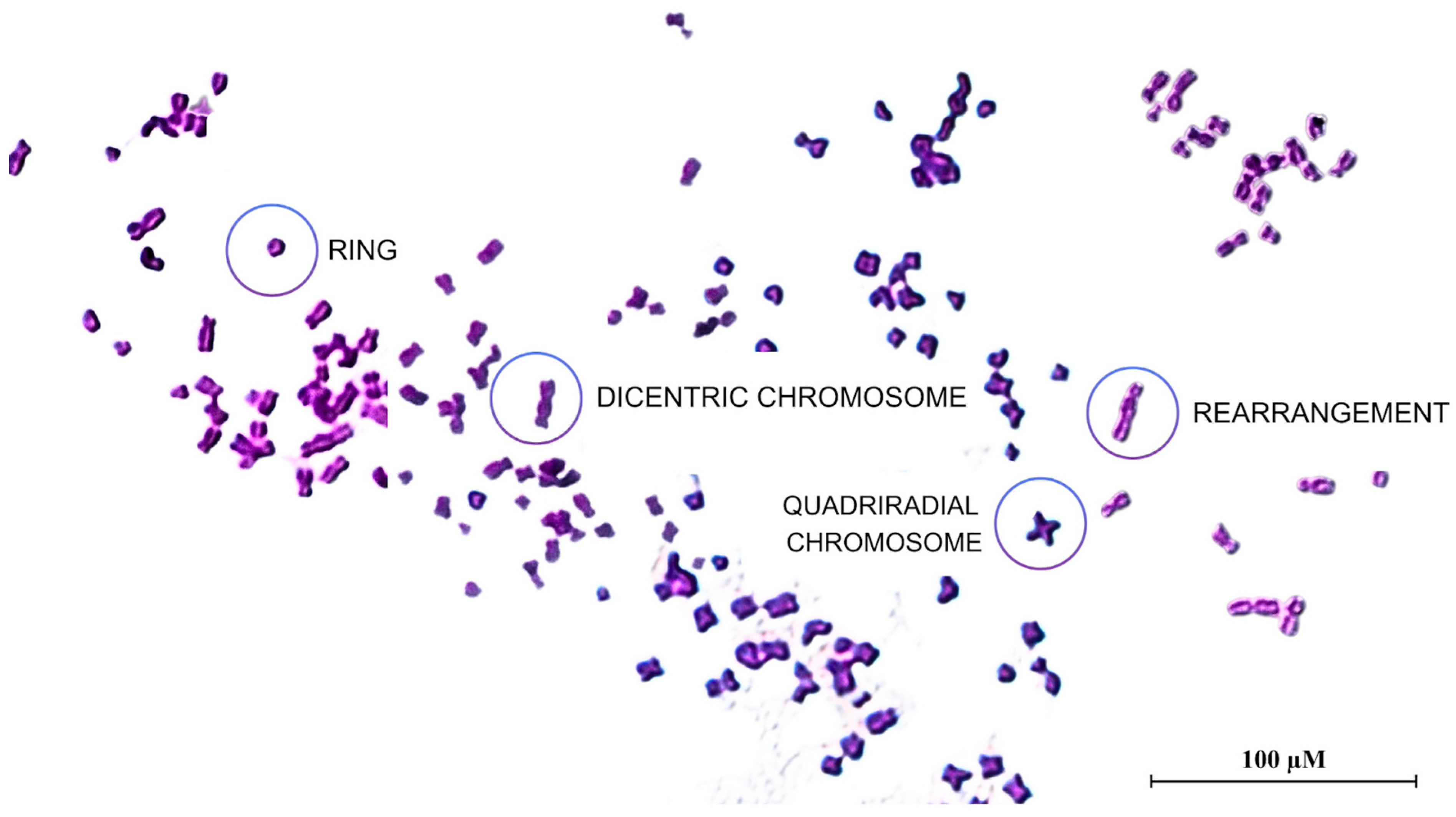
3.5. NSBE Protected Against Cisplatin-Induced Chromosomal Damage
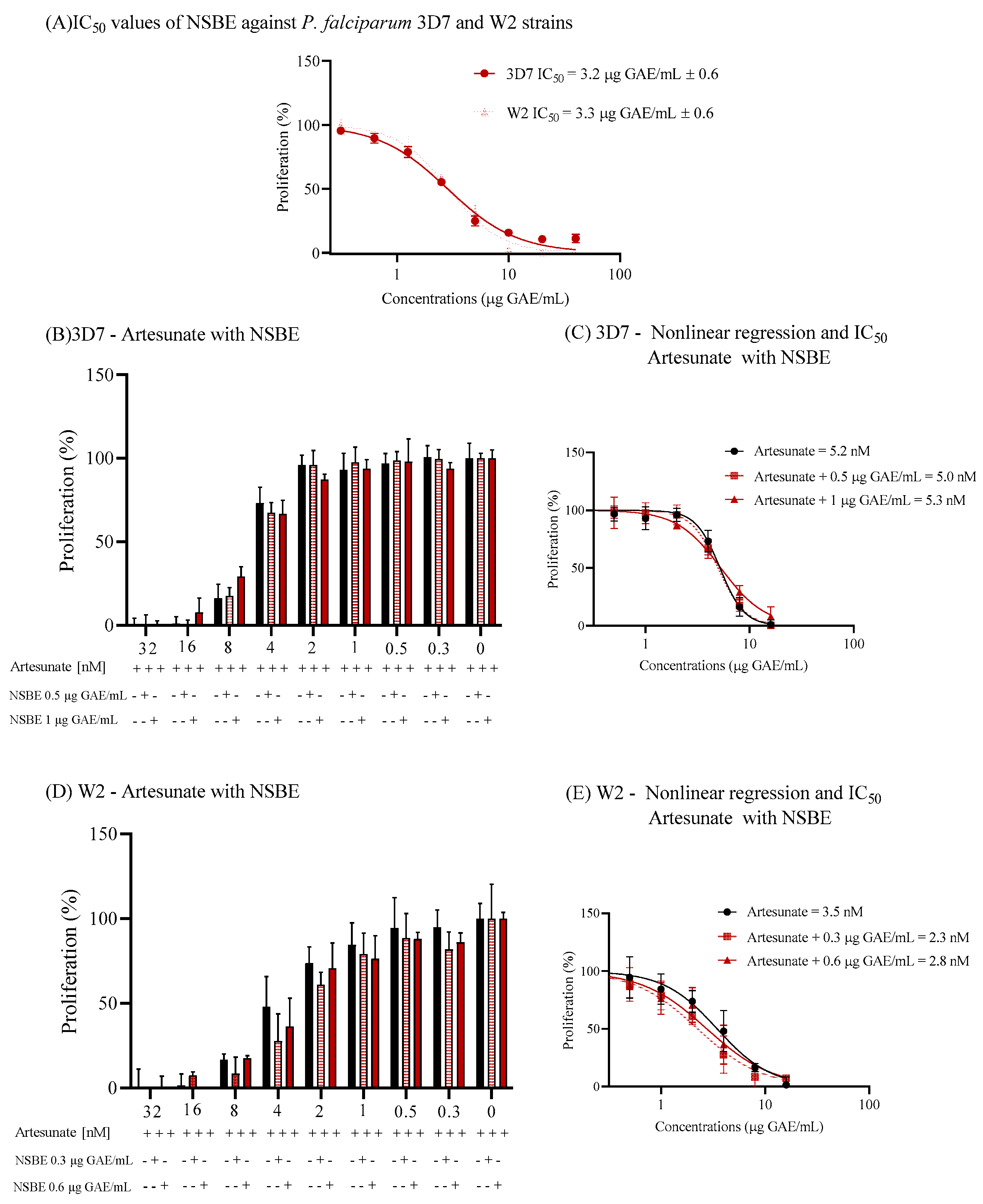
3.6. NSBE Exerts Antimalarial Activity in 3D7 and W2 Strains
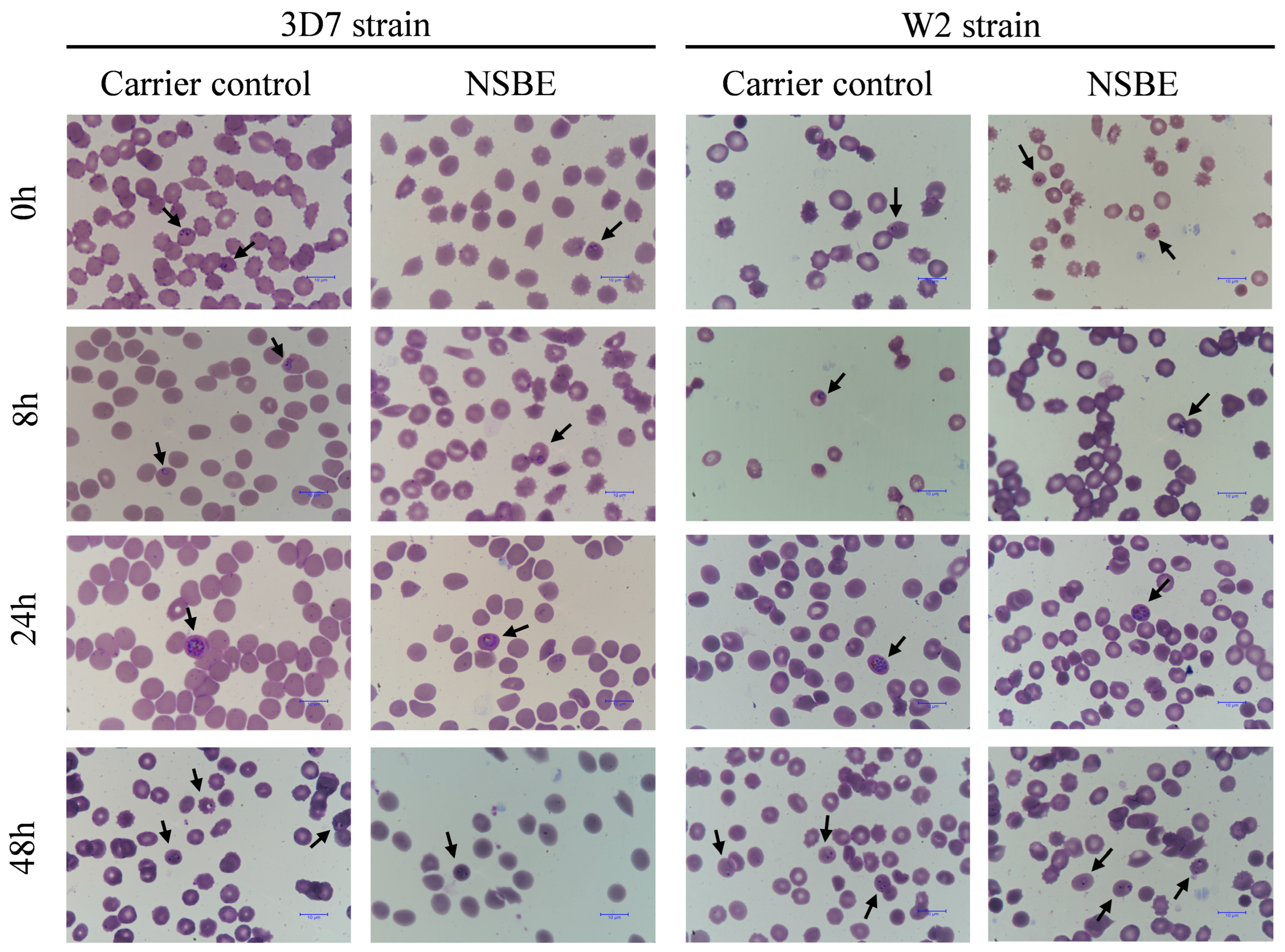
3.7. Microscopic Evaluation of the Intraerythrocytic Cycle
4. Conclusions
Author Contributions
Funding
Institutional Review Board Statement
Informed Consent Statement
Data Availability Statement
Conflicts of Interest
References
- Zhao, H.; Mikkonen, K.S.; Kilpeläinen, P.O.; Lehtonen, M.I. Spruce galactoglucomannan-stabilized emulsions enhance bioaccessibility of bioactive compounds. Foods 2020, 9, 672. [Google Scholar] [CrossRef]
- United Nations. Transforming Our World: The 2030 Agenda for Sustainable Development; United Nations: New York, NY, USA, 2015; Available online: https://sdgs.un.org/2030agenda (accessed on 1 January 2026).
- Granato, D.; Reshamwala, D.; Korpinen, R.; Azevedo, L.; Vieira do Carmo, M.A.; Cruz, T.M.; Marques, M.B.; Wen, M.; Zhang, L.; Marjomäki, V.; et al. From the forest to the plate—Hemicelluloses, galactoglucomannan, glucuronoxylan, and phenolic-rich extracts from unconventional sources as functional food ingredients. Food Chem. 2022, 381, 132284. [Google Scholar] [CrossRef]
- Lima, A.S.; Cruz, T.M.; Mohammadi, N.; da Silva Cruz, L.; da Rocha Gaban de Oliveira, R.; Vieira, F.V.; Zhou, F.; Zhang, L.; Granato, D.; Azevedo, L. Turning agro-food waste into resources: Exploring the antioxidant effects of bioactive compounds bioaccessibility from digested jabuticaba tree leaf extract. Food Chem. 2025, 469, 142538. [Google Scholar] [CrossRef]
- do Carmo, M.A.V.; Fidelis, M.; Sanchez, C.A.; Castro, A.P.; Camps, I.; Colombo, F.A.; Marques, M.J.; Myoda, T.; Granato, D.; Azevedo, L. Camu-camu (Myrciaria dubia) seeds as a novel source of bioactive compounds with promising antimalarial and antischistosomicidal properties. Food Res. Int. 2020, 136, 109334. [Google Scholar] [CrossRef]
- Crispim, M.; Silva, T.C.; Dos Santos Lima, A.; da Silva Cruz, L.; Bento, N.A.; Cruz, T.M.; Stelle, Y.; Mar, J.M.; de Queiroz Rocha, D.; de Araújo Bezerra, J.; et al. From traditional amazon use to food applications: Tapirira guianensis seed extracts as a triad of antiproliferative effect, oxidative defense, and antimalarial activity. Foods 2025, 14, 467. [Google Scholar] [CrossRef]
- Lima, A.S.; Pedreira, F.R.O.; Bento, N.A.; Novaes, R.D.; dos Santos, E.G.; de Almeida Lima, G.D.; de Almeida, L.A.; Belo, T.C.A.; Vieira, F.V.; Mohammadi, N.; et al. Digested galactoglucomannan mitigates oxidative stress in human cells, restores gut bacterial diversity, and provides chemopreventive protection against colon cancer in rats. Int. J. Biol. Macromol. 2024, 277, 133986. [Google Scholar] [CrossRef] [PubMed]
- Vlaicu, P.A.; Untea, A.E.; Varzaru, I.; Saracila, M.; Oancea, A.G. Designing nutrition for health—Incorporating dietary by-products into poultry feeds to create functional foods with insights into health benefits, risks, bioactive compounds, food component functionality and safety regulations. Foods 2023, 12, 4001. [Google Scholar] [CrossRef]
- Jomova, K.; Raptova, R.; Alomar, S.Y.; Alwasel, S.H.; Nepovimova, E.; Kuca, K.; Valko, M. Reactive oxygen species, toxicity, oxidative stress, and antioxidants: Chronic diseases and aging. Arch. Toxicol. 2023, 97, 2499–2574. [Google Scholar] [CrossRef]
- Tsouh Fokou, P.V.; Kamdem Pone, B.; Appiah-Oppong, R.; Ngouana, V.; Bakarnga-Via, I.; Ntieche Woutouoba, D.; Flore Donfack Donkeng, V.; Tchokouaha Yamthe, L.R.; Fekam Boyom, F.; Arslan Ateşşahin, D.; et al. An update on antitumor efficacy of catechins: From molecular mechanisms to clinical applications. Food Sci. Nutr. 2025, 13, e70169. [Google Scholar] [CrossRef] [PubMed]
- Al-Khayri, J.M.; Sahana, G.R.; Nagella, P.; Joseph, B.V.; Alessa, F.M.; Al-Mssallem, M.Q. Flavonoids as potential anti-inflammatory molecules: A Review. Molecules 2022, 27, 2901. [Google Scholar] [CrossRef] [PubMed]
- Willemann, J.R.; Escher, G.B.; Kaneshima, T.; Furtado, M.M.; Sant’Ana, A.S.; Vieira do Carmo, M.A.; Azevedo, L.; Granato, D. Response surface optimization of phenolic compounds extraction from camu-camu (Myrciaria dubia) seed coat based on chemical properties and bioactivity. J. Food Sci. 2020, 85, 2358–2367. [Google Scholar] [CrossRef]
- Schechtel, S.L.; de Matos, V.C.R.; Santos, J.S.; Cruz, T.M.; Marques, M.B.; Wen, M.; Zhang, L.; Furtado, M.M.; Sant’Ana, A.S.; Vieira do Carmo, M.A.; et al. Flaxleaf Fleabane Leaves (Conyza bonariensis), A new functional nonconventional edible plant? J. Food Sci. 2019, 84, 473–482. [Google Scholar] [CrossRef]
- World Health Organization. World Malaria Report. 2024: Addressing Inequity in the Global Malaria Response; WHO: Geneva, Switzerland, 2024; Available online: https://www.who.int/teams/global-malaria-programme/reports/world-malaria-report-2024 (accessed on 18 November 2025).
- De Noronha, M.C.; Cardoso, R.R.; dos Santos D’Almeida, C.T.; Vieira do Carmo, M.A.; Azevedo, L.; Maltarollo, V.G.; Júnior, J.I.R.; Eller, M.R.; Cameron, L.C.; Ferreira, M.S.L.; et al. Black tea kombucha: Physicochemical, microbiological and comprehensive phenolic profile changes during fermentation, and antimalarial activity. Food Chem. 2022, 384, 132515. [Google Scholar] [CrossRef]
- Rifna, E.J.; Dwivedi, M.; Seth, D.; Pradhan, R.C.; Sarangi, P.K.; Tiwari, B.K. Transforming the potential of renewable food waste biomass towards food security and supply sustainability. Sustain. Chem. Pharm. 2024, 38, 101515. [Google Scholar] [CrossRef]
- Kilpeläinen, P.O.; Hautala, S.S.; Byman, O.O.; Tanner, L.J.; Korpinen, R.I.; Lillandt, M.K.-J.; Pranovich, A.V.; Kitunen, V.H.; Willför, S.M.; Ilvesniemi, H.S. Pressurized hot water flow-through extraction system scale up from the laboratory to the pilot scale. Green Chem. 2014, 16, 186–194. [Google Scholar] [CrossRef]
- Bhattarai, M.; Pitkänen, L.; Kitunen, V.; Korpinen, R.; Ilvesniemi, H.; Kilpeläinen, P.O.; Lehtonen, M.; Mikkonen, K.S. Functionality of spruce galactoglucomannans in oil-in-water emulsions. Food Hydrocoll. 2019, 86, 154–161. [Google Scholar] [CrossRef]
- Maestro Durán, M.; Borja Padilla, R.; Martín Martín, A.; Fiestas Ros de Ursinos, J.A.; Alba Mendoza, J. Bíodegradación de ios compuestos fenólícos presentes en el alpechín. Grasas Aceites 1991, 42, 271–276. [Google Scholar] [CrossRef][Green Version]
- Horszwald, A.; Andlauer, W. Characterisation of bioactive compounds in berry juices by traditional photometric and modern microplate methods. J. Berry Res. 2011, 1, 189–199. [Google Scholar] [CrossRef]
- Yermako, A.I.; Arasimov, V.V.; Yarosh, N.P. Methods of Biochemical Analysis of Plants; Agropromizdat: Leningrad, Russia, 1987; pp. 122–142. [Google Scholar]
- Jia, Z.; Tang, M.; Wu, J. The determination of flavonoid contents in mulberry and their scavenging effects on superoxide radicals. Food Chem. 1999, 64, 555–559. [Google Scholar] [CrossRef]
- Pijuan, J.; Barceló, C.; Moreno, D.F.; Maiques, O.; Sisó, P.; Mart, R.M.; Macià, A.; Panosa, A. In vitro Cell Migration, Invasion, and Adhesion Assays: From cell imaging to data analysis. Front. Cell Dev. Biol. 2019, 7, 107. [Google Scholar] [CrossRef]
- Franken, N.A.P.; Rodermond, H.M.; Stap, J.; Haveman, J.; van Bree, C. Clonogenic assay of cells in vitro. Nat. Protoc. 2006, 1, 315–319. [Google Scholar] [CrossRef] [PubMed]
- Vale, J.A.; Rodrigues, M.P.; Lima, Â.M.A.; Santiago, S.S.; de Almeida Lima, G.D.; Almeida, A.A.; Oliveira, L.L.; Bressan, G.C.; Teixeira, R.R.; Machado-Neves, M. Synthesis of cinnamic acid ester derivatives with antiproliferative and antimetastatic activities on murine melanoma cells. Biomed. Pharmacother. 2022, 148, 112689. [Google Scholar] [CrossRef] [PubMed]
- Sampaio, J.G.; Pressete, C.G.; Costa, A.V.; Martins, F.T.; de Almeida Lima, G.D.; Ionta, M.; Teixeira, R.R. Methoxylated cinnamic esters with antiproliferative and antimetastatic effects on human lung adenocarcinoma cells. Life 2023, 13, 1428. [Google Scholar] [CrossRef] [PubMed]
- Wilson, A.; Grabowski, P.; Elloway, J.; Ling, S.; Stott, J.; Doherty, A. Transforming early pharmaceutical assessment of genotoxicity: Applying statistical learning to a high throughput, multi end point in vitro micronucleus assay. Sci. Rep. 2021, 11, 2535. [Google Scholar] [CrossRef]
- Auerbach, A.; Rogatko, A.; Schroeder-Kurth, T. International fanconi anemia registry: Relation of clinical symptoms to diepoxybutane sensitivity. Blood 1989, 73, 391–396. [Google Scholar] [CrossRef]
- Trager, W.; Jensen, J.B. Human malaria parasites in continuous culture. Science 1976, 193, 673–675. [Google Scholar] [CrossRef]
- Sannella, A.R.; Messori, L.; Casini, A.; Francesco Vincieri, F.; Bilia, A.R.; Majori, G.; Severini, C. Antimalarial properties of green tea. Biochem. Biophys. Res. Commun. 2007, 353, 177–181. [Google Scholar] [CrossRef]
- Do Carmo, M.A.V.; Pressete, C.G.; Marques, M.J.; Granato, D.; Azevedo, L. Polyphenols as potential antiproliferative agents: Scientific trends. Curr. Opin. Food Sci. 2018, 24, 26–35. [Google Scholar] [CrossRef]
- Montibus, M.; Vitrac, X.; Coma, V.; Loron, A.; Pinson-Gadais, L.; Ferrer, N.; Verdal-Bonnin, M.-N.; Gabaston, J.; Waffo-Téguo, P.; Richard-Forget, F.; et al. Screening of wood/forest and vine by-products as sources of new drugs for sustainable strategies to control fusarium graminearum and the production of mycotoxins. Molecules 2021, 26, 405. [Google Scholar] [CrossRef]
- Janiszewska, M.; Primi, M.C.; Izard, T. Cell adhesion in cancer: Beyond the migration of single cells. J. Biol. Chem. 2020, 295, 2495–2505. [Google Scholar] [CrossRef]
- Ferreira-Santos, P.; Genisheva, Z.; Botelho, C.; Santos, J.; Ramos, C.; Teixeira, J.A.; Rocha, C.M.R. Unravelling the biological potential of pinus pinaster bark extracts. Antioxidants 2020, 9, 334. [Google Scholar] [CrossRef]
- Pitkänen, L.; Heinonen, M.; Mikkonen, K.S. Safety considerations of plant polysaccharides for food use: A case study on phenolic-rich softwood galactoglucomannan extract. Food Funct. 2018, 9, 1931–1943. [Google Scholar] [CrossRef] [PubMed]
- Ruan, Y.; Chen, L.; Xie, D.; Luo, T.; Xu, Y.; Ye, T.; Chen, X.; Feng, X.; Wu, X. Mechanisms of cell adhesion molecules in endocrine-related cancers: A concise outlook front endocrinol. Lausanne 2022, 13, 865436. [Google Scholar] [CrossRef]
- Michael, M.; Parsons, M. New perspectives on integrin-dependent adhesions. Curr. Opin. Cell Biol. 2020, 63, 31–37. [Google Scholar] [CrossRef] [PubMed]
- Carrano, R.; Grande, M.; Leti Maggio, E.; Zucca, C.; Bei, R.; Palumbo, C.; Focaccetti, C.; Nardozi, D.; Lucarini, V.; Angiolini, V.; et al. Dietary polyphenols effects on focal adhesion plaques and metalloproteinases in cancer invasiveness. Biomedicines 2024, 12, 482. [Google Scholar] [CrossRef]
- Pérez-Durán, J.; Luna, A.; Portilla, A.; Martínez, P.; Ceballos, G.; Ortíz-Flores, M.Á.; Solis-Paredes, J.M.; Nájera, N. (−)-Epicatechin inhibits metastatic-associated proliferation, migration, and invasion of murine breast cancer cells in vitro. Molecules 2023, 28, 6229. [Google Scholar] [CrossRef] [PubMed]
- Eastman, A. Improving anticancer drug development begins with cell culture: Misinformation perpetrated by the misuse of cytotoxicity assays. Oncotarget 2017, 8, 8854–8866. [Google Scholar] [CrossRef]
- Paes, L.T.; D’Almeida, C.T.S.; do Carmo, M.A.V.; da Silva Cruz, L.; Bubula de Souza, A.; Viana, L.M.; Gonçalves Maltarollo, V.; Martino, H.S.D.; Domingues de Almeida Lima, G.; Larraz Ferreira, M.S.; et al. Phenolic-rich extracts from toasted white and tannin sorghum flours have distinct profiles influencing their antioxidant, antiproliferative, anti-adhesive, anti-invasive, and antimalarial activities. Food Res. Int. 2024, 176, 113739. [Google Scholar] [CrossRef]
- Russo, G.L.; Stampone, E.; Cervellera, C.; Borriello, A. Regulation of p27Kip1 and p57Kip2 functions by natural polyphenols. Biomolecules 2020, 10, 1316. [Google Scholar] [CrossRef]
- Sun, H.; Yin, M.; Hao, D.; Shen, Y. Anti-cancer activity of catechin against A549 lung carcinoma cells by induction of cyclin kinase inhibitor p21 and suppression of cyclin E1 and P–AKT. Appl. Sci. 2020, 10, 2065. [Google Scholar] [CrossRef]
- Hołota, M.; Posmyk, M.M. Nature-inspired strategies in cancer management: The potential of plant extracts in modulating tumour biology. Int. J. Mol. Sci. 2025, 26, 6894. [Google Scholar] [CrossRef]
- Wu, Y.; Liu, C.; Niu, Y.; Xia, J.; Fan, L.; Wu, Y.; Gao, W. Procyanidins mediate antineoplastic effects against non-small cell lung cancer via the JAK2/STAT3 pathway. Transl. Cancer Res. 2021, 10, 2023–2035. [Google Scholar] [CrossRef]
- Coșarcă, S.-L.; Moacă, E.-A.; Tanase, C.; Muntean, D.L.; Pavel, I.Z.; Dehelean, C.A. Spruce and beech bark aqueous extracts: Source of polyphenols, tannins and antioxidants correlated to in vitro antitumor potential on two different cell lines. Wood Sci. Technol. 2019, 53, 313–333. [Google Scholar] [CrossRef]
- Li, S.; Sampson, C.; Liu, C.; Piao, H.; Liu, H.-X. Integrin signaling in cancer: Bidirectional mechanisms and therapeutic opportunities. Cell Commun. Signal. 2023, 21, 266. [Google Scholar] [CrossRef]
- Chastney, M.R.; Kaivola, J.; Leppänen, V.-M.; Ivaska, J. The role and regulation of integrins in cell migration and invasion. Nat. Rev. Mol. Cell Biol. 2025, 26, 147–167. [Google Scholar] [CrossRef]
- Paniagua, I.; Jacobs, J. Quantification of chromosomal aberrations in mammalian cells. Bio. Protoc. 2023, 13, e4739. [Google Scholar] [CrossRef]
- Hemminki, K.; Niazi, Y.; Vodickova, L.; Vodicka, P.; Försti, A. Genetic and environmental associations of nonspecific chromosomal aberrations. Mutagenesis 2025, 40, 30–38. [Google Scholar] [CrossRef]
- Al-Naqeb, G.; Kalmpourtzidou, A.; Giampieri, F.; De Giuseppe, R.; Cena, H. Genotoxic and antigenotoxic medicinal plant extracts and their main phytochemicals: “A review”. Front. Pharmacol. 2024, 15, 1448731. [Google Scholar] [CrossRef] [PubMed]
- del Carmen García-Rodríguez, M.; Kacew, S. Green tea catechins: Protectors or threats to DNA? A review of their antigenotoxic and genotoxic effects. Arch. Toxicol. 2025, 99, 3485–3504. [Google Scholar] [CrossRef]
- Lee, S.; Rauch, J.; Kolch, W. Targeting MAPK Signaling in cancer: Mechanisms of drug resistance and sensitivity. Int. J. Mol. Sci. 2020, 21, 1102. [Google Scholar] [CrossRef] [PubMed]
- Dantas, T.B.V.; Moura, I.M.R.; Costa, R.P.; Souza, G.E.; Severino, R.P.; Consolaro, H.N.; Oliveira, L.F.; Bonatto, V.; Cass, Q.B.; Guido, R.V.C.; et al. tandem mass spectrometry and bio-guided isolation of secondary metabolites with antiplasmodial activity from Dalbergia miscolobium bark. Chem. Biodivers. 2025, 22, e01449. [Google Scholar] [CrossRef] [PubMed]
- Harada, Y. Manipulating mannose metabolism as a potential anticancer strategy. FEBS J. 2025, 292, 1505–1519. [Google Scholar] [CrossRef]
- Eussen, S.R.B.M.; Verhagen, H.; Klungel, O.H.; Garssen, J.; van Loveren, H.; van Kranen, H.J.; Rompelberg, C.J.M. Functional foods and dietary supplements: Products at the interface between pharma and nutrition. Eur. J. Pharmacol. 2011, 668, S2–S9. [Google Scholar] [CrossRef]
- Erhirhie, E.O.; Ikegbune, C.; Okeke, A.I.; Onwuzuligbo, C.C.; Madubuogwu, N.U.; Chukwudulue, U.M.; Okonkwo, O.B. Antimalarial herbal drugs: A review of their interactions with conventional antimalarial drugs. Clin. Phytoscience 2021, 7, 4. [Google Scholar] [CrossRef]
- Plirat, W.; Chaniad, P.; Phuwajaroanpong, A.; Konyanee, A.; Viriyavejakul, P.; Septama, A.W.; Punsawad, C. Efficacy of artesunate combined with Atractylodes lancea or Prabchompoothaweep remedy extracts as adjunctive therapy for the treatment of cerebral malaria. BMC Complement. Med. Ther. 2023, 23, 332. [Google Scholar] [CrossRef]
- Mamede, L.; Ledoux, A.; Jansen, O.; Frédérich, M. Natural phenolic compounds and derivatives as potential antimalarial agents. Planta Med. 2020, 86, 585–618. [Google Scholar] [CrossRef] [PubMed]
- Tayler, N.M.; De Jesús, R.; Spadafora, R.; Coronado, L.M.; Spadafora, C. Antiplasmodial activity of Cocos nucifera leaves in Plasmodium berghei-infected mice. J. Parasit. Dis. 2020, 44, 305–313. [Google Scholar] [CrossRef]
- Ribeiro, G.d.J.G.; Rei Yan, S.L.; Palmisano, G.; Wrenger, C. Plant extracts as a source of natural products with potential antimalarial effects: An update from 2018 to 2022. Pharmaceutics 2023, 15, 1638. [Google Scholar] [CrossRef]
- Herraiz, T.; Guillén, H.; González-Peña, D.; Arán, V.J. Antimalarial quinoline drugs inhibit β-hematin and increase free hemin catalyzing peroxidative reactions and inhibition of cysteine proteases. Sci. Rep. 2019, 9, 15398. [Google Scholar] [CrossRef] [PubMed]
- Ortiz, S.; Vásquez-Ocmín, P.G.; Cojean, S.; Bouzidi, C.; Michel, S.; Figadère, B.; Grougnet, R.; Boutefnouchet, S.; Maciuk, A. Correlation study on methoxylation pattern of flavonoids and their heme-targeted antiplasmodial activity. Bioorg. Chem. 2020, 104, 104243. [Google Scholar] [CrossRef]
- Metsämuuronen, S.; Sirén, H. Bioactive phenolic compounds, metabolism and properties: A review on valuable chemical compounds in Scots pine and Norway spruce. Phytochem. Rev. 2019, 18, 623–664. [Google Scholar] [CrossRef]
- Herniter, I.A.; Lo, R.; Muñoz-Amatriaín, M.; Lo, S.; Guo, Y.-N.; Huynh, B.-L.; Lucas, M.; Jia, Z.; Roberts, P.A.; Lonard, S.; et al. Seed coat pattern QTL and development in cowpea (Vigna unguiculata [L.] Walp.). Front. Plant Sci. 2019, 10, 1346. [Google Scholar] [CrossRef] [PubMed]
- Alves, U.; Jardim e Silva, E.; Santos, J.G.; Santos, L.O.; Lanna, E.; Souza Pinto, A.C.; Fonseca, A.L.; Pilla Varotti, F.; Batista, R. Potent and selective antiplasmodial activity of marine sponges from Bahia state, Brazil. Int. J. Parasitol. Drugs Drug Resist. 2021, 17, 80–83. [Google Scholar] [CrossRef] [PubMed]



| Chemical Compounds | Content |
|---|---|
| Ortho-diphenolics (mg CAE/g) | 10.5 ± 0.2 |
| Tannins (mg CTE/g) | 2.7 ± 0.83 |
| Flavonols (mg QE/g) | 1.9 ± 0.2 |
| Flavonoids (mg CTE/g) | 16.4 ± 1.08 |
| Epicatechin (µg/g) [5] | ≈177 |
| Catechin (µg/g) [5] | ≈45 |
| Total reducing phenolic content (mg GAE/g) [5] | ~33 |
| NSBE | CIS | TC | Aberrant Type | TNCA | CA (%) | NSBE | CIS | TC | Aberrant Type | TNCA | CA (%) | ||||||
|---|---|---|---|---|---|---|---|---|---|---|---|---|---|---|---|---|---|
| R | DC | QC | RE | R | DC | QC | RE | ||||||||||
| NC | - | 5072 | 1 | 11 | 6 | 31 | 49 | 0.97 a | NC | - | 5072 | 1 | 11 | 6 | 31 | 49 | 0.97 a |
| PC | yes | 5323 | 2 | 17 | 5 | 51 | 75 | 1.41 b | PC | yes | 5323 | 2 | 17 | 5 | 51 | 75 | 1.41 b |
| 0 | - | 5263 | 1 | 21 | 3 | 28 | 53 | 1.01 abc | 10 | yes | 5656 | 0 | 7 | 3 | 40 | 50 | 0.88 ac |
| 25 | - | 5288 | 2 | 1 | 1 | 40 | 44 | 0.83 ac | 25 | yes | 4935 | 2 | 4 | 1 | 44 | 51 | 1.03 abc |
| 50 | - | 4869 | 0 | 9 | 0 | 32 | 41 | 0.84 ac | 50 | yes | 4890 | 1 | 11 | 1 | 45 | 58 | 1.19 abc |
Disclaimer/Publisher’s Note: The statements, opinions and data contained in all publications are solely those of the individual author(s) and contributor(s) and not of MDPI and/or the editor(s). MDPI and/or the editor(s) disclaim responsibility for any injury to people or property resulting from any ideas, methods, instructions or products referred to in the content. |
© 2026 by the authors. Licensee MDPI, Basel, Switzerland. This article is an open access article distributed under the terms and conditions of the Creative Commons Attribution (CC BY) license.
Share and Cite
Carvalho Cardoso Consentini, J.; Furlaneto, G.; Alves Bento, N.; Caputo Silva, T.; Vitor Vieira, F.; Kilpelainen, P.; Paiva da Silva, G.K.; Bofill Verdaguer, I.; Crispim, M.; dos Santos Lima, A.; et al. From Forestry By-Product to Functional Food Ingredient Innovation: Antiproliferative, Antimetastatic and Antiplasmodial Activities of Norway Spruce Sawdust Extract. Foods 2026, 15, 264. https://doi.org/10.3390/foods15020264
Carvalho Cardoso Consentini J, Furlaneto G, Alves Bento N, Caputo Silva T, Vitor Vieira F, Kilpelainen P, Paiva da Silva GK, Bofill Verdaguer I, Crispim M, dos Santos Lima A, et al. From Forestry By-Product to Functional Food Ingredient Innovation: Antiproliferative, Antimetastatic and Antiplasmodial Activities of Norway Spruce Sawdust Extract. Foods. 2026; 15(2):264. https://doi.org/10.3390/foods15020264
Chicago/Turabian StyleCarvalho Cardoso Consentini, Julia, Gabriela Furlaneto, Nathália Alves Bento, Thaise Caputo Silva, Fernando Vitor Vieira, Petri Kilpelainen, Giselly Karoline Paiva da Silva, Ignasi Bofill Verdaguer, Marcell Crispim, Amanda dos Santos Lima, and et al. 2026. "From Forestry By-Product to Functional Food Ingredient Innovation: Antiproliferative, Antimetastatic and Antiplasmodial Activities of Norway Spruce Sawdust Extract" Foods 15, no. 2: 264. https://doi.org/10.3390/foods15020264
APA StyleCarvalho Cardoso Consentini, J., Furlaneto, G., Alves Bento, N., Caputo Silva, T., Vitor Vieira, F., Kilpelainen, P., Paiva da Silva, G. K., Bofill Verdaguer, I., Crispim, M., dos Santos Lima, A., & Azevedo, L. (2026). From Forestry By-Product to Functional Food Ingredient Innovation: Antiproliferative, Antimetastatic and Antiplasmodial Activities of Norway Spruce Sawdust Extract. Foods, 15(2), 264. https://doi.org/10.3390/foods15020264