Print, Eat, Heal: Unravelling the Potential of Bioactives in 3D Food Technology

 , , , and
Abstract
1. Introduction
2. Materials and Methods
3. Bioinks and Foodinks
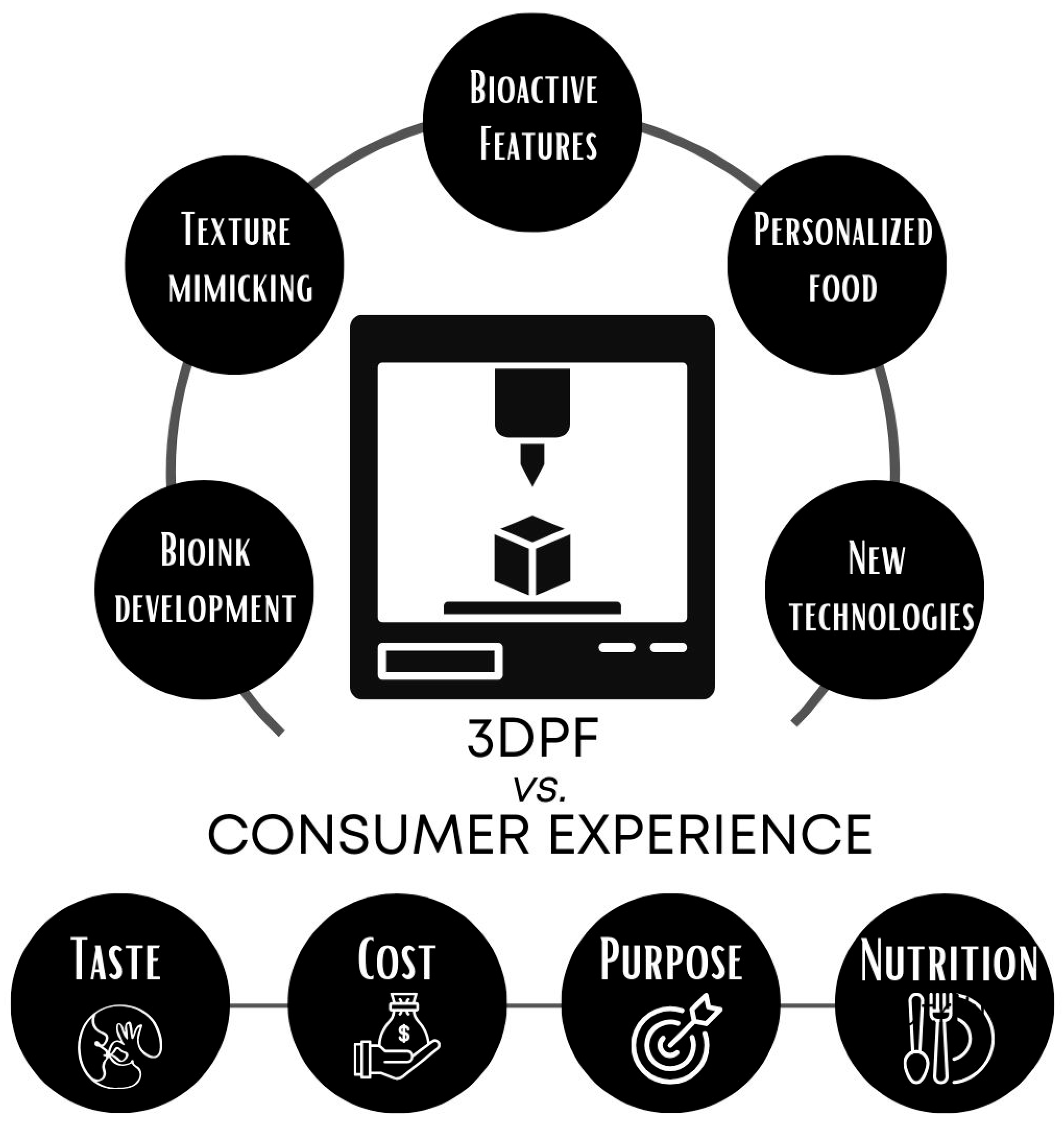
4. Overview of 3D Food Printing
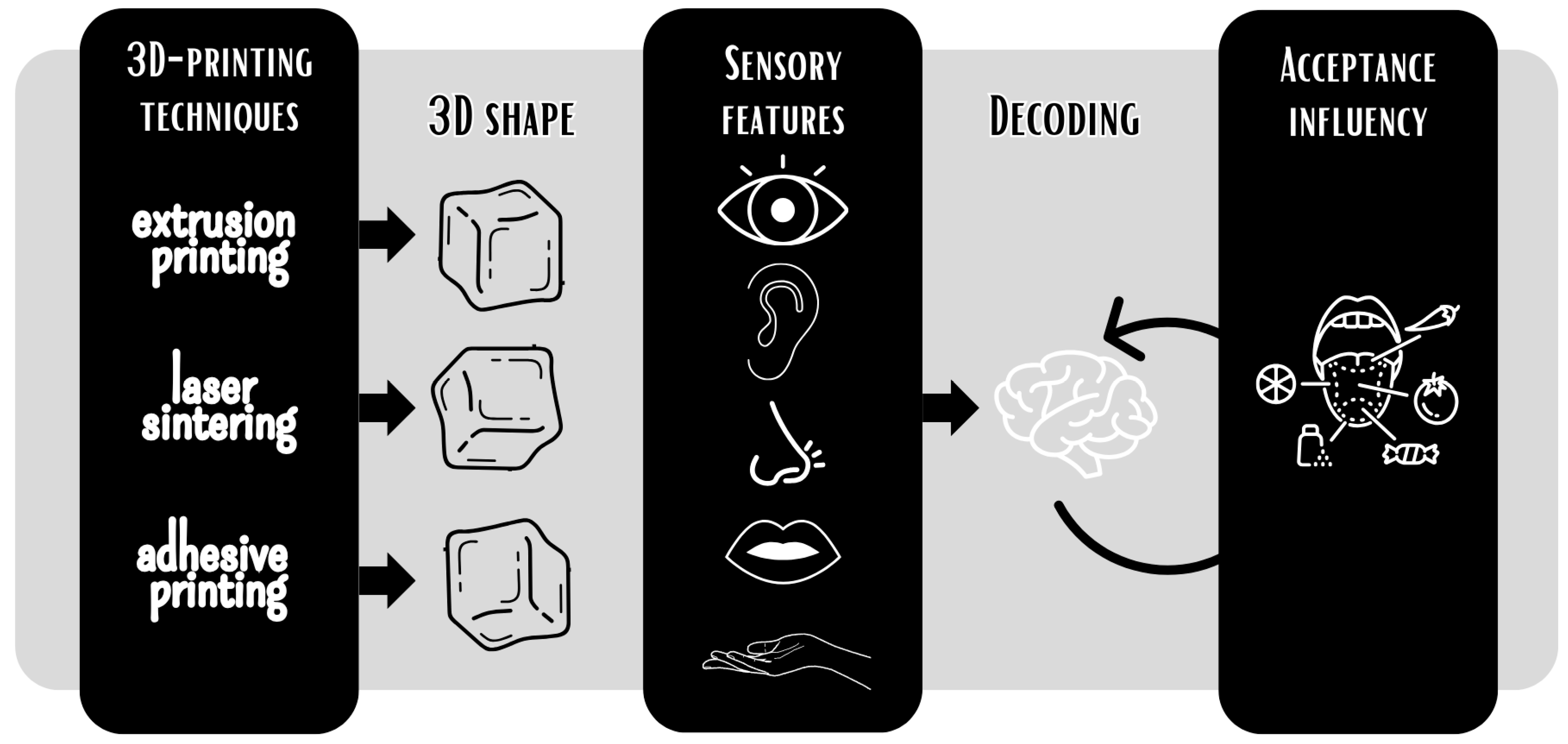
4.1. Presentation Coupled with Acceptance: Using Less Conventional Foods, Even Those Aesthetically Imperfect
4.2. Innovation Leads to Meat Analogs: The Pursuit of Perfect Texture and Presentation Has Begun
4.3. 3DPF for Nutrition and Health in Acute or Chronic Conditions
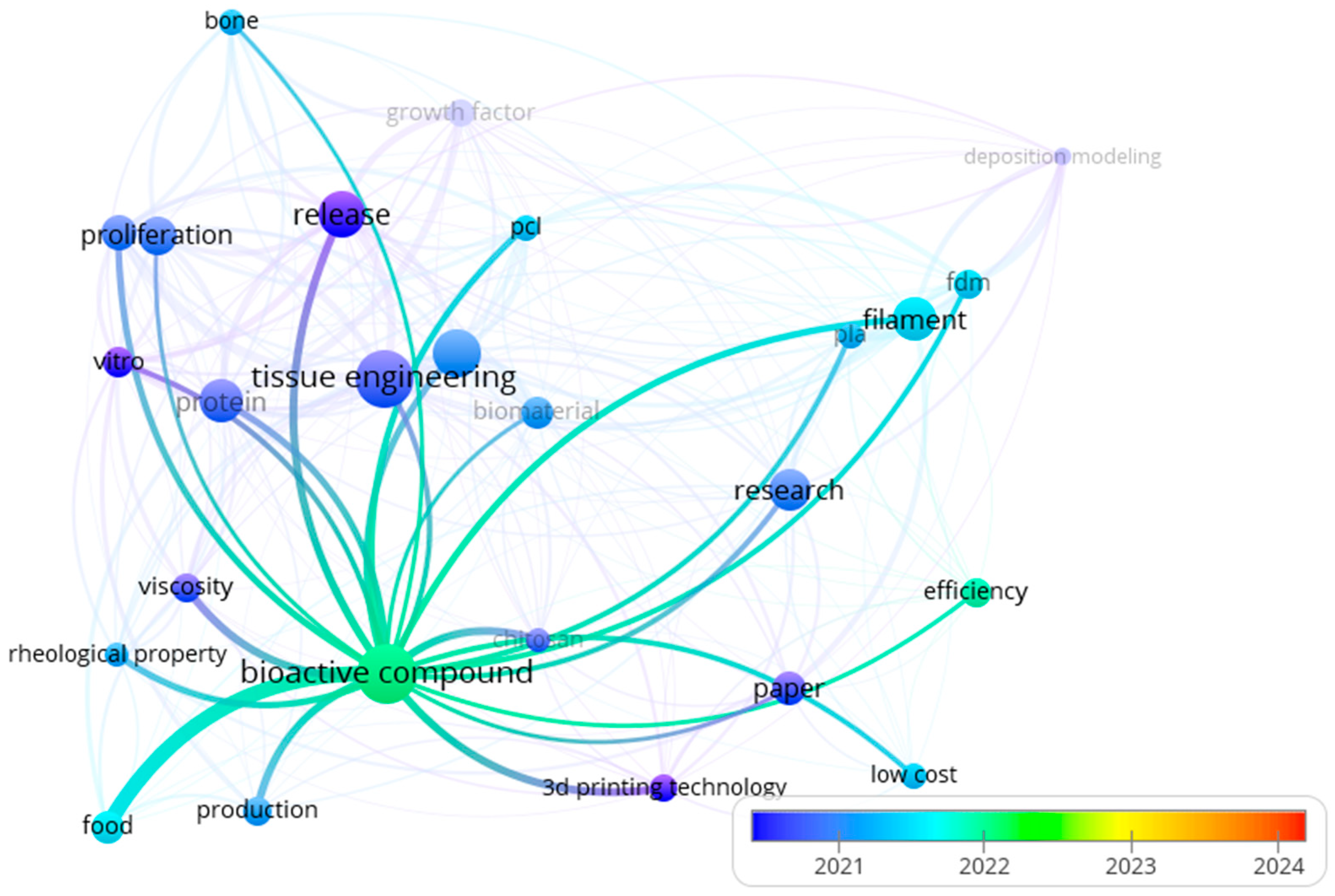
5. Landscapes of Bioactive Compounds in 3DPF
6. Conclusions
Author Contributions
Funding
Institutional Review Board Statement
Informed Consent Statement
Data Availability Statement
Conflicts of Interest
References
- Sun, J.; Zhou, W.; Huang, D.; Fuh, J.Y.H.; Hong, G.S. An Overview of 3D Printing Technologies for Food Fabrication. Food Bioproc Tech. 2015, 8, 1605–1615. [Google Scholar] [CrossRef]
- Eswaran, H.; Ponnuswamy, R.D.; Kannapan, R.P. Perspective Approaches of 3D Printed Stuffs for Personalized Nutrition: A Comprehensive Review. Ann. 3D Print. Med. 2023, 12, 100125. [Google Scholar] [CrossRef]
- Taneja, A.; Sharma, R.; Ayush, K.; Sharma, A.; Mousavi Khaneghah, A.; Regenstein, J.M.; Barba, F.J.; Phimolsiripol, Y.; Sharma, S. Innovations and Applications of 3-D Printing in Food Sector. Int. J. Food Sci. Technol. 2022, 57, 3326–3332. [Google Scholar] [CrossRef]
- Zhu, W.; Iskandar, M.M.; Baeghbali, V.; Kubow, S. Three-Dimensional Printing of Foods: A Critical Review of the Present State in Healthcare Applications, and Potential Risks and Benefits. Foods 2023, 12, 3287. [Google Scholar] [CrossRef]
- Wang, M.; Lu, X.; Zheng, X.; Li, W.; Wang, L.; Qian, Y.; Zeng, M. Rheological and Physicochemical Properties of Spirulina Platensis Residues-Based Inks for Extrusion 3D Food Printing. Food Res. Int. 2023, 169, 112823. [Google Scholar] [CrossRef]
- Markovinović, A.B.; Brdar, D.; Putnik, P.; Bosiljkov, T.; Durgo, K.; Huđek Turković, A.; Brčić Karačonji, I.; Jurica, K.; Pavlić, B.; Granato, D.; et al. Strawberry Tree Fruits (Arbutus Unedo L.): Bioactive Composition, Cellular Antioxidant Activity, and 3D Printing of Functional Foods. Food Chem. 2024, 433, 137287. [Google Scholar] [CrossRef]
- Feng, M.; Zhang, M.; Mujumdar, A.S.; Guo, Z. Influence of Components Interaction in Recombined Food Gels on 3D Printing: A Comprehensive Review. Food Hydrocoll. 2024, 151, 109782. [Google Scholar] [CrossRef]
- Braga-Souto, R.N.; Bürck, M.; Nakamoto, M.M.; Braga, A.R.C. Cracking Spirulina Flavor: Compounds, Sensory Evaluations, and Solutions. Trends Food Sci. Technol. 2025, 156, 104847. [Google Scholar] [CrossRef]
- Fratelli, C.; Burck, M.; Amarante, M.C.A.; Braga, A.R.C. Antioxidant Potential of Nature’s “Something Blue”: Something New in the Marriage of Biological Activity and Extraction Methods Applied to C-Phycocyanin. Trends Food Sci. Technol. 2021, 107, 309–323. [Google Scholar] [CrossRef]
- Wang, M.; Yin, Z.; Zeng, M. Microalgae as a Promising Structure Ingredient in Food: Obtained by Simple Thermal and High-Speed Shearing Homogenization. Food Hydrocoll. 2022, 131, 107743. [Google Scholar] [CrossRef]
- Salgado, M.T.S.F.; Fernandes e Silva, E.; Matsumoto, A.M.; Mattozo, F.H.; de Amarante, M.C.A.d.; Kalil, S.J.; Votto, A.P.d.S. C-Phycocyanin Decreases Proliferation and Migration of Melanoma Cells: In Silico and in Vitro Evidences. Bioorg. Chem. 2022, 122, 105757. [Google Scholar] [CrossRef]
- Salgado, M.T.S.F.; Silva, M.C.S.; Fratelli, C.; Braga, A.R.C.; Lopes, T.B.G.; Ferreira, E.; da Silva, I.L.D.; Paiva, L.S.d.; Votto, A.P.d.S. Bioactive C-Phycocyanin Exerts Immunomodulatory and Antitumor Activity in Mice with Induced Melanoma. Toxicol. Appl. Pharmacol. 2024, 484, 116874. [Google Scholar] [CrossRef]
- Xu, C.; Zhu, J.; Gong, G.; Guo, L.; Zhang, Y.; Zhang, Z.; Ma, C. Anthocyanin Attenuates High Salt-Induced Hypertension via Inhibiting the Hyperactivity of the Sympathetic Nervous System. Clin. Exp. Hypertens. 2023, 45, 2233717. [Google Scholar] [CrossRef]
- Yang, Y.; Du, L.; Hosokawa, M.; Miyashita, K. Effect of Spirulina Lipids on High-Fat and High-Sucrose Diet Induced Obesity and Hepatic Lipid Accumulation in C57BL/6J Mice. J. Funct. Foods 2020, 65, 103741. [Google Scholar] [CrossRef]
- Liu, Z.; Zhang, M.; Bhandari, B.; Wang, Y. 3D Printing: Printing Precision and Application in Food Sector. Trends Food Sci. Technol. 2017, 69, 83–94. [Google Scholar] [CrossRef]
- Ahmadzadeh, S.; Ubeyitogullari, A. Enhancing the Stability of Lutein by Loading into Dual-Layered Starch-Ethyl Cellulose Gels Using 3D Food Printing. Addit. Manuf. 2023, 69, 103549. [Google Scholar] [CrossRef]
- Fernandes, A.S.; Jacob-Lopez, E.; Zepka, L.Q.; de Rosso, V.V.; Roca, M. Bioactive Compound-Loaded Food-Grade Bigels: (II) Delivery Systems Focusing on the Bioaccessibility of Chlorophylls and the Effects of Microstructure and 3D Printing. Food Hydrocoll. 2025, 169, 111596. [Google Scholar] [CrossRef]
- Jan van Eck, N.; Waltman, L.; Van Eck, N.J.; Waltman, L. Text Mining and Visualization Using VOSviewer. arXiv 2011, arXiv:1109.2058. [Google Scholar] [CrossRef]
- Prabhakaran, P.; Palaniyandi, T.; Kanagavalli, B.; Ram kumar, V.; Hari, R.; Sandhiya, V.; Baskar, G.; Rajendran, B.K.; Sivaji, A. Prospect and Retrospect of 3D Bio-Printing. Acta Histochem. 2022, 124, 151932. [Google Scholar] [CrossRef]
- Feng, C.; Zhang, M.; Bhandari, B. Materials Properties of Printable Edible Inks and Printing Parameters Optimization during 3D Printing: A Review. Crit. Rev. Food Sci. Nutr. 2019, 59, 3074–3081. [Google Scholar] [CrossRef]
- Li, X.; Zheng, F.; Wang, X.; Geng, X.; Zhao, S.; Liu, H.; Dou, D.; Leng, Y.; Wang, L.; Fan, Y. Biomaterial Inks for Extrusion-Based 3D Bioprinting: Property, Classification, Modification, and Selection. Int. J. Bioprint 2022, 9, 649. [Google Scholar] [CrossRef]
- Nachal, N.; Moses, J.A.; Karthik, P.; Anandharamakrishnan, C. Applications of 3D Printing in Food Processing. Food Eng. Rev. 2019, 11, 123–141. [Google Scholar] [CrossRef]
- Jiang, H.; Zheng, L.; Zou, Y.; Tong, Z.; Han, S.; Wang, S. 3D Food Printing: Main Components Selection by Considering Rheological Properties. Crit. Rev. Food Sci. Nutr. 2019, 59, 2335–2347. [Google Scholar] [CrossRef]
- Lee, J. A 3d Food Printing Process for the New Normal Era: A Review. Processes 2021, 9, 1495. [Google Scholar] [CrossRef]
- Jiang, D.; Liu, Y.; Jiang, H.; Rao, S.; Fang, W.; Wu, M.; Yuan, L.; Fang, W. A Novel Screen-Printed Mast Cell-Based Electrochemical Sensor for Detecting Spoilage Bacterial Quorum Signaling Molecules (N-Acyl-Homoserine-Lactones) in Freshwater Fish. Biosens. Bioelectron. 2018, 102, 396–402. [Google Scholar] [CrossRef] [PubMed]
- Mantihal, S.; Kobun, R.; Lee, B.B. 3D Food Printing of as the New Way of Preparing Food: A Review. Int. J. Gastron. Food Sci. 2020, 22, 100260. [Google Scholar] [CrossRef]
- Ramos-Souza, C.; Fernandes, A.S.; Mazzo, T.M.; Perrechil, F.; De Rosso, V.V. Fine-Tuning Carotenoid-Enriched Bigel Formulations: Exploring the Influence of Oleogel: Hydrogel Ratio on Physicochemical Properties and 3D Food Printing. Food Hydrocoll. 2025, 164, 111202. [Google Scholar] [CrossRef]
- Fernandes, A.S.; Neves, B.V.; Mazzo, T.M.; Longo, E.; Jacob-Lopez, E.; Zepka, L.Q.; de Rosso, V.V. Bigels as Potential Inks for Extrusion-Based 3d Food Printing: Effect of Oleogel Fraction on Physical Characterization and Printability. Food Hydrocoll. 2023, 144, 108986. [Google Scholar] [CrossRef]
- Lenie, M.D.R.; Ahmadzadeh, S.; Van Bockstaele, F.; Ubeyitogullari, A. Development of a PH-Responsive System Based on Starch and Alginate-Pectin Hydrogels Using Coaxial 3D Food Printing. Food Hydrocoll. 2024, 153, 109989. [Google Scholar] [CrossRef]
- Markovinović, A.B.; Putnik, P.; Bosiljkov, T.; Kostelac, D.; Frece, J.; Markov, K.; Žigolić, A.; Kaurinović, J.; Pavlić, B.; Duralija, B.; et al. 3D Printing of Functional Strawberry Snacks: Food Design, Texture, Antioxidant Bioactive Compounds, and Microbial Stability. Antioxidants 2023, 12, 436. [Google Scholar] [CrossRef]
- Carranza, T.; Guerrero, P.; Caba, K.d.l.; Etxabide, A. Texture-Modified Soy Protein Foods: 3D Printing Design and Red Cabbage Effect. Food Hydrocoll. 2023, 145, 109141. [Google Scholar] [CrossRef]
- Huang, S.; Zhang, Y.; Chen, Q.; Liu, Y.; Lu, L.; Arain, M.M.; Li, Z.; Pan, S.; Liu, F. Pectin Based Gels and Their Advanced Application in Food: From Hydrogel to Emulsion Gel. Food Hydrocoll. 2025, 160, 110841. [Google Scholar] [CrossRef]
- Liu, Y.; Chen, K.; Zeng, Q.; Wang, P.; Zhang, Y. The Impact of Dietary Fibers on the Construction and Molecular Network of Extrusion-Based 3D-Printed Chicken Noodles: Unlocking the Potential of Specialized Functional Food. Food Chem. 2025, 463, 141065. [Google Scholar] [CrossRef]
- Mazur, J.; Sobczak, P.; Panasiewicz, M.; Łusiak, P.; Krajewska, M.; Findura, P.; Obidziński, S.; Żukiewicz-Sobczak, W. Mechanical Properties and Biodegradability of Samples Obtained by 3D Printing Using FDM Technology from PLA Filament with By-Products. Sci. Rep. 2025, 15, 5847. [Google Scholar] [CrossRef] [PubMed]
- Ramos-Souza, C.; da Trindade, L.G.; Braga, A.R.C.; Perrechil, F.; De Rosso, V.V. Electrospun Microfibers of Zein and Polyethylene Oxide: A Study on Pequi Carotenoid Encapsulation. Food Hydrocoll. 2025, 166, 111299. [Google Scholar] [CrossRef]
- Neves, B.V.; Fernandes, A.S.; Bonsanto, F.P.; Capriles, V.D.; Braga, A.R.C.; de Rosso, V.V. Exploring Different Food-Grade Bigel Systems for Delivering Bioactive Carotenoids: Part 2—Potential for Extrusion-Based 3D Printing. Food Hydrocoll. 2025, 167, 111428. [Google Scholar] [CrossRef]
- Neves, B.V.; Fernandes, A.S.; Nass, P.; Jacob-Lopes, E.; Zepka, L.Q.; Mazzo, T.M.; Longo, E.; Cavalcante Braga, A.R.; de Rosso, V.V. Exploring Different Food-Grade Bigel Systems for Delivering Bioactive Carotenoids: Part 1—Evaluation of Color Parameters. Food Hydrocoll. 2025, 169, 111625. [Google Scholar] [CrossRef]
- Chen, Y.; Zhang, M.; Sun, Y.; Phuhongsung, P. Improving 3D/4D Printing Characteristics of Natural Food Gels by Novel Additives: A Review. Food Hydrocoll. 2022, 123, 107160. [Google Scholar] [CrossRef]
- Godoi, F.C.; Prakash, S.; Bhandari, B.R. 3d Printing Technologies Applied for Food Design: Status and Prospects. J. Food Eng. 2016, 179, 44–54. [Google Scholar] [CrossRef]
- Armstrong, C.D.; Yue, L.; Deng, Y.; Qi, H.J. Enabling Direct Ink Write Edible 3D Printing of Food Purees with Cellulose Nanocrystals. J. Food Eng. 2022, 330, 111086. [Google Scholar] [CrossRef]
- Lee, C.P.; Karyappa, R.; Hashimoto, M. 3D Printing of Milk-Based Product. RSC Adv. 2020, 10, 29821–29828. [Google Scholar] [CrossRef]
- Jonkers, N.; van Dijk, W.J.; Vonk, N.H.; van Dommelen, J.A.W.; Geers, M.G.D. Anisotropic Mechanical Properties of Selective Laser Sintered Starch-Based Food. J. Food Eng. 2022, 318, 110890. [Google Scholar] [CrossRef]
- Zhong, X.; Wang, K.; Chen, Z.; Fei, S.; Li, J.; Tan, M.; Su, W. Incorporation of Fucoxanthin into 3D Printed Pickering Emulsion Gels Stabilized by Salmon By-Product Protein/Pectin Complexes. Food Funct. 2024, 15, 1323–1339. [Google Scholar] [CrossRef]
- Shang, W.; Sun, Y.; Song, J.; Zhang, P.; Hou, Y.; Wang, H.; Tan, M. Novel High Internal Phase Oleogels-in-Water Pickering Emulsions Stabilized Solely by Whey Protein Isolate for 3D Printing and Fucoxanthin Delivery. Food Hydrocoll. 2023, 140, 108609. [Google Scholar] [CrossRef]
- Cikrikci Erunsal, S.; Karabiyik, M.B.; Kirdi, K.S.; Inac, H.N. Development of Psyllium Seed Husk-Based Colorimetric Indicator by Different Homogenization Methods. Chem. Pap. 2023, 77, 1729–1740. [Google Scholar] [CrossRef]
- Huang, J.H.R.; Lim, G.C.W.; Su, C.-H.; Ciou, J.-Y. Improvement of 3D White Chocolate Printing Molding Effect with Oleogels. Heliyon 2023, 9, e19165. [Google Scholar] [CrossRef] [PubMed]
- Li, R.; Koirala, S.; Prakash, S.; Xu, Y.; Bhandari, B. Omega-3 Incorporation Effects on the Structural, Rheological, and Sensory Properties of 3D-Printed Chocolate. Sustain. Food Technol. 2025, 3, 2134–2143. [Google Scholar] [CrossRef]
- Ouyang, H.; Chen, W.; Lu, X. Development of 3D Printed Chocolate with Reduced Saturated Fat Using Starch-Based Oleogels. Food Chem. 2025, 496, 146957. [Google Scholar] [CrossRef]
- Su, S.; Pilavci, E.; Yesiloz, Ş.E.; Demir, A.U.; Sancakli, A.; Gunduz, S.; Arik Kibar, E.A.; Bahar, M.B.; Gunduz, O. An Innovative Approach of 3D Printed Functional Foods: Grasshoppers Based Cookies. Int. J. Gastron. Food Sci. 2025, 40, 101137. [Google Scholar] [CrossRef]
- Baik, W.; Lee, D.; Lee, Y.; Baik, W.; Lee, D.; Lee, Y. Effects of Gryllus Bimaculatus Powder on Physicochemical Properties and Consumer Acceptability of 3D-Printed Gluten-Free Chocolate Cookies Using Survival Analysis. Foods 2025, 14, 2291. [Google Scholar] [CrossRef]
- Lim, W.S.; Lim, N.; Kim, H.W.; Park, H.J. Effect of Emulsion Gel as Butter Substitute on the Dimensional Stability and Nutritional Profile of 3D Printed Cookies. Food Biosci. 2023, 56, 103207. [Google Scholar] [CrossRef]
- Niu, D.; Zhang, M.; Tang, T.; Mujumdar, A.S.; Li, J. Investigation of 3D Printing of Children Starch Gummies with Precise and Special Shape Based on Change of Model Parameters. J. Food Eng. 2023, 356, 111568. [Google Scholar] [CrossRef]
- Veselý, M.; Záruba, D.; Elbl, J.; Veselý, M.; Záruba, D.; Elbl, J. Development of 3D-Printed Chewable Gummy Tablets with Adjustable Ondansetron Content for the Treatment of Pediatric Patients. Pharmaceutics 2025, 17, 458. [Google Scholar] [CrossRef]
- Praveen, H.S.; Kiran kumar, G.B.; Naik, P.; Goudanavar, P. Pharmaceutical 3D Printing for Psychiatric Medications: Advanced Innovations in Taste Masking and Personalized Oral Drug Delivery. Pharm. Res. 2025, 42, 1953–1979. [Google Scholar] [CrossRef]
- Fratini, C.; Aluigi, A.; Tiboni, M.; Casettari, L. 3D-Printed Chewable Gummies: A Customizable Approach to Formulate Propranolol in the Paediatric Population. J. Drug Deliv. Sci. Technol. 2025, 114, 107581. [Google Scholar] [CrossRef]
- Miserez, B.; Necchi Rohers, G.; Van De Steene, J.; Vermeulen, A.; Jacxsens, L.; De Meulenaer, B. Gas and Liquid Chromatography-Tandem Mass Spectrometry Methods for the Analysis in Food of 110 Chemicals from Printing Inks and Adhesives Used in Food Contact Materials. Food Chem. 2025, 476, 143475. [Google Scholar] [CrossRef]
- Wang, D.; Guo, J.; Wang, Y.; Yang, Y.; Jiang, B.; Li, D.; Feng, Z.; Liu, C. Whey Protein Isolate Nanofibrils as Emulsifying Agent to Improve Printability of Cheddar Cheese for 3D Printing. Food Hydrocoll. 2023, 142, 108807. [Google Scholar] [CrossRef]
- Scheele, S.C.; Hartmann, C.; Siegrist, M.; Binks, M.; Egan, P.F. Consumer Assessment of 3D-Printed Food Shape, Taste, and Fidelity Using Chocolate and Marzipan Materials. 3D Print. Addit. Manuf. 2022, 9, 473–482. [Google Scholar] [CrossRef]
- Ahmadzadeh, S.; Clary, T.; Rosales, A.; Ubeyitogullari, A. Upcycling Imperfect Broccoli and Carrots into Healthy Snacks Using an Innovative 3D Food Printing Approach. Food Sci. Nutr. 2024, 12, 84–93. [Google Scholar] [CrossRef]
- Yu, I.K.M.; Wong, K.H. Food Waste-Derived 3D Printable Materials: A Carbon Neutral Solution to Global Foodloss. Trends Food Sci. Technol. 2023, 137, 156–166. [Google Scholar] [CrossRef]
- Bürck, M.; Ramos, S.d.P.; Braga, A.R.C. Enhancing the Biological Effects of Bioactive Compounds from Microalgae through Advanced Processing Techniques: Pioneering Ingredients for Next-Generation Food Production. Foods 2024, 13, 1811. [Google Scholar] [CrossRef] [PubMed]
- Li, J.; Hu, H.; Niu, R.; Zhu, Q.; Yao, S.; Zhou, J.; Liu, D.; Xu, E. Simulated Construction of Plant-Based Fish Meat with Composite Structure via Dual-Nozzle Extrusion 3D Printing. Food Phys. 2025, 2, 100028. [Google Scholar] [CrossRef]
- Demircan, E.; Aydar, E.F.; Mertdinc, Z.; Kasapoglu, K.N.; Ozcelik, B. 3D Printable Vegan Plant-Based Meat Analogue: Fortification with Three Different Mushrooms, Investigation of Printability, and Characterization. Food Res. Int. 2023, 173, 113259. [Google Scholar] [CrossRef]
- Calton, A.; Lille, M.; Sozer, N. 3-D Printed Meat Alternatives Based on Pea and Single Cell Proteins and Hydrocolloids: Effect of Paste Formulation on Process-Induced Fibre Alignment and Structural and Textural Properties. Food Res. Int. 2023, 174, 113633. [Google Scholar] [CrossRef] [PubMed]
- Comission, E. Development of Personalised Food Using Rapid Manufacturing for the Nutrition of Elderly Consumers; |PERFORMANCE|Project|Fact Sheet|FP7|CORDIS|; European Commission: Brussels, Belgium, 2012.
- Zhang, C.; Wang, C.S.; Girard, M.; Therriault, D.; Heuzey, M.C. 3D Printed Protein/Polysaccharide Food Simulant for Dysphagia Diet: Impact of Cellulose Nanocrystals. Food Hydrocoll. 2024, 148, 109455. [Google Scholar] [CrossRef]
- Guo, J.; Zhang, M.; Adhikari, B.; Ma, Y.; Luo, Z. Formulation and Characterization of 3D Printed Chickpea Protein Isolate-Mixed Cereal Dysphagia Diet. Int. J. Biol. Macromol. 2023, 253, 127251. [Google Scholar] [CrossRef]
- Ekonomou, S.; Hadnađev, M.; Gioxari, A.; Abosede, O.R.; Soe, S.; Stratakos, A.C. Advancing Dysphagia-Oriented Multi-Ingredient Meal Development: Optimising Hydrocolloid Incorporation in 3D Printed Nutritious Meals. Food Hydrocoll. 2024, 147, 109300. [Google Scholar] [CrossRef]
- Aburto, A.E.; Santiago, G.T.d.; Álvarez, M.M.; Hernández, C.C. Advances and Prospective Applications of 3D Food Printing for Health Improvement and Personalized Nutrition. Compr. Rev. Food Sci. Food Saf. 2021, 20, 5722–5741. [Google Scholar] [CrossRef]
- Leena, M.M.; Anukiruthika, T.; Moses, J.A.; Anandharamakrishnan, C. Co-Delivery of Curcumin and Resveratrol through Electrosprayed Core-Shell Nanoparticles in 3D Printed Hydrogel. Food Hydrocoll. 2022, 124, 107200. [Google Scholar] [CrossRef]
- Peng, M.; Gao, Z.; Liao, Y.; Guo, J.; Shan, Y. Development of Functional Kiwifruit Jelly with Chenpi (FKJ) by 3D Food Printing Technology and Its Anti-Obesity and Antioxidant Potentials. Foods 2022, 11, 1894. [Google Scholar] [CrossRef]
- Álvarez-Castillo, E.; Oliveira, S.; Bengoechea, C.; Sousa, I.; Raymundo, A.; Guerrero, A. A Circular Economy Approach in the Development of Superabsorbent Polymeric Matrices: Evaluation of the Mineral Retention. Sustainability 2023, 15, 12088. [Google Scholar] [CrossRef]
- Molina-Montero, C.; Matas, A.; Igual, M.; Martínez-Monzó, J.; García-Segovia, P. Impact of Apricot Pulp Concentration on Cylindrical Gel 3D Printing. Gels 2023, 9, 253. [Google Scholar] [CrossRef]
- Molina-Montero, C.; Vicente-Jurado, D.; Igual, M.; Martínez-Monzó, J.; García-Segovia, P. Fiber Enrichment of 3D Printed Apricot Gel Snacks with Orange By-Products. Gels 2023, 9, 569. [Google Scholar] [CrossRef] [PubMed]
- Radoš, K.; Pastor, K.; Kojić, J.; Drakula, S.; Dujmić, F.; Novotni, D.; Čukelj Mustač, N. Influence of Infill Level and Post-Processing on Physical Parameters and Betaine Content of Enriched 3D-Printed Sweet Snacks. Foods 2023, 12, 4417. [Google Scholar] [CrossRef]
- Sartori, A.G.d.O.; Saliba, A.S.M.C.; Bitencourt, B.S.; Guedes, J.S.; Torres, L.C.R.; Alencar, S.M.d.; Augusto, P.E.D. Anthocyanin Bioaccessibility and Anti-Inflammatory Activity of a Grape-Based 3D Printed Food for Dysphagia. Innov. Food Sci. Emerg. Technol. 2023, 84, 103289. [Google Scholar] [CrossRef]
- Xie, D.; Hu, H.; Huang, Q.; Lu, X. Influence of Oleogel/Hydrogel Ratios and Emulsifiers on Structural and Digestion Properties of Food-Grade 3D Printed Bigels as Carriers for Quercetin and Catechin. Food Hydrocoll. 2023, 144, 108948. [Google Scholar] [CrossRef]
- Li, Z.; Zhang, L.; Shan, Y.; Zhao, Y.; Dai, L.; Wang, Y.; Sun, Q.; McClements, D.J.; Cheng, Y.; Xu, X. Fabrication of High Internal Phase Emulsions (HIPEs) Using Pea Protein Isolate-Hyaluronic Acid-Tannic Acid Complexes: Application of Curcumin-Loaded HIPEs as Edible Inks for 3D Food Printing. Food Chem. 2024, 460, 140402. [Google Scholar] [CrossRef]
- Dankar, I.; Haddarah, A.; Omar, F.E.L.; Sepulcre, F.; Pujolà, M. 3D Printing Technology: The New Era for Food Customization and Elaboration. Trends Food Sci. Technol. 2018, 75, 231–242. [Google Scholar] [CrossRef]
- Zhang, H.; Tang, Y.; Zhang, Y.; Zhang, S.; Qu, J.; Wang, X.; Kong, R.; Han, C.; Liu, Z. Fucoxanthin: A Promising Medicinal and Nutritional Ingredient. Evid. Based Complement. Alternat. Med. 2015, 2015, 723515. [Google Scholar] [CrossRef] [PubMed]
- Hewlings, S.J.; Kalman, D.S. Curcumin: A Review of Its Effects on Human Health. Foods 2017, 6, 92. [Google Scholar] [CrossRef]
- Tian, B.; Liu, J. Resveratrol: A Review of Plant Sources, Synthesis, Stability, Modification and Food Application. J. Sci. Food Agric. 2020, 100, 1392–1404. [Google Scholar] [CrossRef] [PubMed]
- Li, S.; Hao, Y.; Gao, Q. Development of Emulsion Gels Stabilized by Chitosan and Octenyl Succinic Anhydride-Modified β-Cyclodextrin Complexes for β-Carotene Digestion and 3D Printing. J. Agric. Food Chem. 2023, 71, 18587–18600. [Google Scholar] [CrossRef] [PubMed]



| 3DPF Technique | Print Parameters | Foodink Ingredients | Rheological and Texture Behavior | Post Treatment | Reference |
|---|---|---|---|---|---|
| Extrusion | 500 mm.min−1 speed; 0.84 mm nozzle diameter | 10% gelatin; 1, 1.5, 2, 2.5% gellan gum | Gellan added to gelatin leads to shear-thinning and self-healing properties | Stored at room temperature | [70] |
| Extrusion | 15 mm.s−1 speed; 0.84 nozzle diameter; infill pattern rectilinear 90% density; 40 °C | 30.26% chenpi decoction; 35% kiwifruit juice; 2.88% pectin | - | Non specified | [71] |
| Co-axial extrusion | 4 mm.s−1 speed; 0.4, 0.7, 1 mm layer height; 25 °C core nozzle; 55, 65, 75 °C outer nozzle; 0.01 mPa core nozzle; 0.17 to 0.38 mPa outer nozzle printing pressure; 0.7 mm core nozzle; 1.2 mm outer nozzle diameter | 9, 10, 11, 12% w/w starch; 6, 8, 10% w/v ethyl cellulose; 20 mg.g−1 lutein in ethyl cellulose solution | The best printability is achieved with a 0.7 mm layer height; ethyl cellulose chains organize, leading to low viscosity and shear-thickening behavior at low shear rates and shear-thinning behavior at higher shear rates. | Stored at 4 °C for 48 h, then freeze-dried | [16] |
| Extrusion | 0.024 mL.s−1 flow rate; 20 °C; 1.5 mm nozzle diameter | 1:0:0, 9:1:0 8.5:0:1.5 porcine plasma protein; pea protein concentrate; soy protein isolate, respectively; 55% glycerol 45% polymer mixture described above | - | Immersion in salt-containing solutions at room temperature for 24 h | [72] |
| Extrusion | 800 mm.s−1 speed; 3.5 mm layer thickness; 1.4 flow rate; 6 mm nozzle height first layer; or 14,000 mm. s−1 speed; 3.5 mm layer thickness; 1.65 flow rate; 4.5 mm nozzle height first layer; room temperature | 10, 15, 20% corn or wheat starch | Starch content in gels is directly proportional to the hardness; the extrusion test describes the texture of the final printed samples more robustly than the penetration test. | Stored at 4 °C | [30] |
| Extrusion | 20 mm.s−1 speed; 1.63 mm layer height; 1.63 mm nozzle diameter; 100% rectilinear infill | 30, 50, 70% apricot pulp; 5% gelatin bovine | Greater amounts of pulp have led to better printability and higher viscosity; stronger elastic property, and more solid behavior after extrusion | Stored at room temperature | [73] |
| Fused deposition modeling extrusion | 20 mm.s−1 speed; 1.2 mm layer height; 25 °C; 1.2 mm nozzle diameter; 100% infill | 30, 50, 70% apricot pulp; 3 g fiber orange byproducts; 5% bovine gelatin | Predominantly elastic behavior; enhanced viscoelastic properties upon the introduction of orange by-product and the elevation of apricot pulp percentage; 30% pulp had better extrusion | Stored at room temperature | [74] |
| Extrusion | 1 mm3.s−1 print speed; 30 °C, 0.84 mm nozzle diameter, 20, 30, or 40% infill | 30 g oat flour; 11.5 g defatted hazelnut flour; 6 g rice protein; 6 g oil; 5 g, sugar; 1.7 g betaine; 0.9 g psyllium; 0.5 g cinnamon | The dough presented a viscoelastic behavior with good printability and smooth extrusion | Oven drying at 130 °C for 20, 25, or 30 min; air frying at 180 °C for 5 or 7 min; vacuum drying at 80 °C for 60 or 90 °C | [75] |
| Extrusion | 10 mm.s−1 printing speed; 0.84 mm nozzle diameter; 20 °C | 5% bovine gelatin and cassava starch; grape juice | Grape juice reduced the pH from 5.6 to 3.8, leading to a decrease in gel firmness | Stored at room temperature | [76] |
| Extrusion | 1 mm3.s−1 extrusion rate; 1 mm nozzle diameter | 10 mL soybean; 0, 2, 4, 6% GM; 5% heat-induced whey protein isolate. The oil phase was 80% of all emulsions | Glyceryl monostearate ≥ 4% resulted in thixotropic recovery of approximately 90% | Stored at room temperature, with freeze–thaw stability tests also performed | [44] |
| Extrusion | 70 mm.s−1 printing speed; 150 mm.s−1 extrusion rate; 0.86 mm nozzle diameter | Bigels at 30, 50, 70% oleogel concentration; 1% w/w lecithin or monoglyceride | - | Stored at 4 °C | [77] |
| Extrusion | 2 programs: 8000 mm.min−1 or 1400 mm.min−1 speed; 3.4- or 3.5-mm printing line thickness; 1.4 or 1.65 flow rate; 4 mm nozzle diameter; 4.5 or 6 mm first layer height | 4, 6, 8% w/w wheat or corn starch; Arbustus unedo homogenized fruit | Corn starch resulted in a smaller particle size distribution, and thus, the firmness was higher | Non specified | [6] |
| Extrusion | 1 mm3.s−1 extrusion rate; 1 mm nozzle diameter; room temperature; 80% infill | 2% salmon byproduct protein; 0, 0.25, 0.75, 1% pectin | The gel network between salmon protein and pectin improved the viscoelasticity. 0.75 and 1% pectin formulations were stable in the range of 20–80 °C | Stored at room temperature | [43] |
| Extrusion | 5 mm.s−1 printing speed; 0.84 mm nozzle diameter; 90% infill; 25 °C | Pea protein isolate (PPI); hyaluronic acid (HA); tannic acid (TA); curcumin | Better viscosity, viscoelasticity, and thixotropy, when 7:1 (HA:TA) | Stored at room temperature | [78] |
| Bioactive Compounds | Source | Antioxidant Activity | Bioaccessibility | Parameters Affecting Bioaccessibility | Health Effects | Reference |
|---|---|---|---|---|---|---|
| Curcumin and resveratrol | Commercial | 80% DPPH scavenging activity and 250 μM ascorbic acid FRAP | 79% (curcumin); 82% (resveratrol) | Solubility of the ingredients | [70] | |
| Total flavonols; total phenolic content | Jelly made of kiwifruit (Actinidia chinensis Planch), commercial pectin, and chenpi (aged citrus peel from Citrus reticulata) | 81.65 ± 2.65 μmol/g TE ABTS and 5.94 ± 0.21 μmol/g TE DPPH radical scavenging capacity, and 15.49 ± 0.21 μmol/g TE FRAP reducing capacity. | - | - | Food intake, liver weight, and adipose tissue weight were significantly reduced in the mouse model | [71] |
| Lutein | Commercial | - | - | The authors discuss that the amorphous structure of the 3DPF would probably increase the bioaccessibility | - | [16] |
| Astaxanthin | Commercial | - | - | - | Astaxanthin | [72] |
| Condensed tannins, hydroxycinnamic acids; anthocyanins; flavanols; total flavonoids | Strawberry juice blend | 486.96 ± 0.29 µM DPPH and 1.24 ± 0.01 mM FRAP | - | - | Condensed tannins, hydroxycinnamic acids; anthocyanins; flavanols; total flavonoids | [30] |
| Total carotenoids, lycopene, and total phenols | Apricot pulp (Prunus Armeniaca L.) | 58.1 ± 1.2 mgGA/100 g of total phenolic compounds (TPC) in the formulation with 70% pulp | - | - | Total carotenoids, lycopene, and total phenols | [73] |
| Total carotenoids, lycopene, and total phenols | Apricot pulp; orange byproducts | 179 ± 14 mgTrolox/100 g of TPC in the formulation with 70% orange byproducts | - | - | - | [74] |
| Betaine | Commercial | - | - | Although the authors did not measure the bioaccessibility, the temperature affected the total amount of betaine, as the most significant amount was achieved in the vacuum drying post-processing | - | [75] |
| Anthocyanins | Pasteurized whole grape juice | - | 28.7% and 22.9% in heat-treated starch and grape juice; 16.3% without heat treatment | Gelling and heat treatment (130 °C) for 2 h or 4 h to dry the starch before the 3D printing process | All gels reduced NF-κB activation, while TNF-α and CXCL2/MIP-2 secretion decreased in cells treated with native and starch-dried gels for 2 h before obtaining 3D printed gels | [76] |
| Fucoxanthin | Commercial | - | 45.48% in the samples with GM and 28.62% without GM | Encapsulation of fucoxanthin by oleogels-in-water HIPEs. In the microstructure, GM hydrolysis and gel network enhanced micelle formation and reduced lipid droplet size | - | [44] |
| Quercetin and catechin | Commercial | - | 53.37% (catechin); 11.08% (quercetin) | GM and lecithin; oil droplet size and hydrogel-in-oleogel structure enhanced the digestion of lipids | - | [77] |
| Tannins, hydroxycinnamic acids, flavonols, total flavonoids, and anthocyanins | Arbutus Unedo L. extract | 652.86 ± 10.59 (mg GAE/100 g) TPC; 67.82 ± 0.06 (mg TE/100 g) DPPH; 1.49 ± 0.03 (g TE/100 g) FRAP for the formulation containing 4% starch | - | Lee speed, flow, line thickness, and nozzle diameter did not affect DPPH, but affected FRAP | The effects (protection against DNA damage, cytotoxic effects against the carcinogenic AGS cell line, and HepG2) were evaluated in the extracts and not in the final 3DPF | [6] |
| Fucoxanthin | Commercial | 80.75% DPPH radical scavenging in the sample containing 1% pectin | 50.06% in the sample containing 1% pectin | The amount of pectin contributed to a stronger spatial resistance, avoiding the accumulation of droplets and favoring the lipase action; the Pickering emulsion gels slowed the release of fucoxanthin within the intestinal fluid; both mechanisms enhanced bioaccessibility | - | [43] |
| Curcumin | Commercial | - | 78.6% when 7:1 (HA:TA) | Gel network structurization by HA and TA, and a smaller oil droplet size | [78] |
Disclaimer/Publisher’s Note: The statements, opinions and data contained in all publications are solely those of the individual author(s) and contributor(s) and not of MDPI and/or the editor(s). MDPI and/or the editor(s) disclaim responsibility for any injury to people or property resulting from any ideas, methods, instructions or products referred to in the content. |
© 2026 by the authors. Licensee MDPI, Basel, Switzerland. This article is an open access article distributed under the terms and conditions of the Creative Commons Attribution (CC BY) license.
Share and Cite
Bürck, M.; Nakamoto, M.M.; Ramos, S.d.P.; Assis, M.; Braga, A.R.C. Print, Eat, Heal: Unravelling the Potential of Bioactives in 3D Food Technology. Foods 2026, 15, 260. https://doi.org/10.3390/foods15020260
Bürck M, Nakamoto MM, Ramos SdP, Assis M, Braga ARC. Print, Eat, Heal: Unravelling the Potential of Bioactives in 3D Food Technology. Foods. 2026; 15(2):260. https://doi.org/10.3390/foods15020260
Chicago/Turabian StyleBürck, Monize, Monica Masako Nakamoto, Sergiana dos Passos Ramos, Marcelo Assis, and Anna Rafaela Cavalcante Braga. 2026. "Print, Eat, Heal: Unravelling the Potential of Bioactives in 3D Food Technology" Foods 15, no. 2: 260. https://doi.org/10.3390/foods15020260
APA StyleBürck, M., Nakamoto, M. M., Ramos, S. d. P., Assis, M., & Braga, A. R. C. (2026). Print, Eat, Heal: Unravelling the Potential of Bioactives in 3D Food Technology. Foods, 15(2), 260. https://doi.org/10.3390/foods15020260