Article

A Market Survey of Pesticide Residues in Fruit Juices in Slovenia in 2026

by
Helena Baša Česnik
Central Laboratories, Agricultural Institute of Slovenia, Hacquetova ulica 17, SI-1000 Ljubljana, Slovenia
Foods 2026, 15(19), 3521; https://doi.org/10.3390/foods15193521 (registering DOI)
Submission received: 17 August 2026 / Revised: 24 September 2026 / Accepted: 29 September 2026 / Published: 1 October 2026
(This article belongs to the Section Food Quality and Safety)

Abstract

Although the European Food Safety Authority (EFSA) encourages the monitoring of pesticide residues in food, only 8.4% of processed fruit samples were monitored in the EU in 2023. In addition, the literature mainly focuses on pesticide residues in fruit rather than in juices. In the present study, 91 fruit juice samples were analyzed using GC-MS/MS for the presence of 32 active substances. The validated analytical method used was compliant with SANTE/11312/2021. Of the samples inspected, 29.7% were positive for at least one of the 32 targeted substances, while 6.6%, or 1.1, after calculation refinement by an alternative scenario, potentially exceeded the Maximum Residue Level (MRL). Potential MRL exceedances of fluopyram in table grape and mango, kresoxim-methyl in apple, tebuconazole in mango, and trifloxystrobin in apple did not pose a chronic or acute risk to consumers. Acute risk to consumers was theoretically calculated for apples containing tebuconazole. After calculation refinement by an alternative scenario, no acute risk was theoretically observed.

1. Introduction

In the European Union (EU), a reduction in the sale of plant protection products (PPPs) has been observed, with the latest data showing that, in 2023, approximately 292,000 tons of pesticides were sold in the EU, which is 9% less than in 2022. However, in Slovenia, the Statistical Office has reported that around 738 tons of PPPs were sold in 2024, which is 3% higher than in 2023. These data demonstrate that the amounts of PPPs used by farmers remain high [1,2].
The exposure of human populations to pesticides can lead to hematological and neurological disorders [3], potentially causing cancer [4], diabetes [5], central nervous system disorders (Parkinson’s disease, Alzheimer’s disease) [6], reproductive system disorders [7,8], endocrine disruption [9], and cognitive impairment among older people [10].
To protect consumers, annual monitoring of pesticide residues in food is conducted in the EU to ensure that food on the market is safe. MRL exceedances were observed in the EU from 2020 to 2023 in 3.7% to 5.1% of fruit, vegetables, cereals, and animal-origin food samples [11,12,13,14], representing a potential risk to consumers.
In Slovenian studies, fruit was found to contain more active substances than vegetables [15], and the proportion of fruit samples that tested positive for pesticide residues (74.2%) was higher than that of vegetables (21.0%) [16]. In the latest research, 59.1% of analyzed fruit in Slovenia tested positive, with concentrations up to 0.13 mg/kg [17]. A similar percentage of positive fruit samples (52.9%) was found in Turkey, with the highest concentration of 1.6 mg/kg [18], and in Saudi Arabia (50.0%), with the highest concentration of 2.9 mg/kg [19]. The first study in Poland, conducted in 2024, found a slightly higher percentage of positive samples (65.8%), with concentrations reaching up to 7.1 mg/kg [20], while a second study in Poland in 2026 found much higher percentages, with 91% of fruit samples containing pesticide residues at concentration levels up to 2.2 mg/kg [21]. A similar observation was made in the first studies in China [22] and Egypt [23], where 88.6% and 88.1% of fruit samples contained pesticide residues, respectively. In contrast, in Jordan and in the second study in China, positive fruit samples represented only 26.4% and 24.5% of inspected samples, with the highest concentrations being 3.7 mg/kg and 3.4 mg/kg, respectively [24,25].
Based on the high percentage of positive fruit samples worldwide, pesticide residues are also expected to be found in processed fruit products such as fruit juices. However, in 2023, only 8.4% of inspected samples monitored in the EU were processed fruit [14], and there are fewer investigations of pesticide residues in juice compared to fruit. From 2011 to 2026, at least eight surveys were conducted in which pesticide residues were measured in fruit juice [26,27,28,29,30,31,32,33]. Among other compounds, azoxystrobin, boscalid, cyprodinil, fludioxonil, iprovalicarb, clomazone, kresoxim-methyl, metazachlor, myclobutanil, pendimethalin, penconazole, pyraclostrobin, pyrimethanil, pirimicarb, pyriproxyfen, tebufenpyrad, tebuconazole, tefluthrin, tetraconazole, and trifloxystrobin were analyzed in these surveys, as in the present study. Pesticide residues not only reduce the quality of fruit juice but can also alter its flavor and produce a peculiar smell, representing another reason for monitoring pesticide residues in fruit juices [33].
In previous studies, pomegranate [32], grape [26,28,30], guava [30], mango [26,30], apple [26,28,29], orange [26,28,30], peach [26,28], strawberry [26,27,28,31], pear [26,28], raspberry [27,28], cherry [28], apricot [28], blueberry [28], plum [28], pineapple [26,28], currant [27], mandarin [26], banana [26], and grapefruit [26] juices were analyzed. However, only one study [26] included seven multifruit juices. To the best of our knowledge, apart from our study in 2025 [34] and a study conducted in 2011 [26], the present study is among the few in which fruit juices produced from two or more types of fruit were studied alongside fruit juices produced from one type of fruit. As in the 2025 study [34], the fruit composition of the juices is reported in the present study.
This survey focuses on pesticide residues in fruit juices on the Slovenian market in 2026, produced in various countries. The active substances authorized in Slovenia and the EU were reviewed in 2022 [35,36], and thirty-two that are amenable to gas chromatography and have been successfully validated were selected. Eleven of these active substances are fluorinated pesticides, all of which are, according to the new OECD definition, PFASs (per- and polyfluoroalkyl substances), as they contain at least one fully fluorinated methyl or methylene carbon atom (substances containing a CF3 or CF2 (=CF2 or –CF2–) group, without H, Cl, Br, or I). PFASs are persistent and toxic compounds that, in recent years, have been of great interest in food safety. Among the thirty-two active substances, six were insecticides/acaricides, eight were herbicides, and eighteen were fungicides. Measured concentrations in fruit juices were recalculated to estimate the concentrations in fruit, while compliance with MRLs in fruit was evaluated and a consumer risk assessment was conducted.
The present survey, conducted in 2026, is a continuation of a previous survey carried out in 2025 in which only 40 fruit and vegetable juices were analyzed [34]. The current study includes over twice as many samples as the previous one (some were sampled both years), with a larger proportion of juices originating from countries outside of Slovenia (37.4%, compared with 12.5% in the previous study). Juices in the 2025 study were collected and analyzed to demonstrate the robustness of the analytical method presented in previous work [34]. The present study focuses on pesticide residues in juices in the context of food safety monitoring.

2. Materials and Methods

2.1. Sampling

Ninety-one samples of fruit juices were collected from wholesaler Slovenian stores in March 2026: seventy-four were packed in 1 L packages and seventeen in 0.2 L packages. Twenty-four samples were produced in Austria, two in Croatia, one in Hungary, five in Italy, two in Serbia, and fifty-seven in Slovenia. No sample was designated as organic. A description of the samples is presented in Table 1.
All samples were randomly selected to cover all types of juices from specific producers: Dana, Smodin, Presad, Moj dan, Fructal, and Lumpi from Slovenia, and Rauch, Vindi, Lumpi, S-Budget, Spar, and Despar from other countries. It should be noted that relatively few juices from other countries are sold in Slovenia, as there are many domestic producers.
For each type of juice, one sample was collected. Four samples from Fructal packed in 0.2 L containers had the same label as four samples packed in 1 L containers.
Since samples were collected within one month, seasonal variability is not addressed. The present study is also limited by its unequal and non-representative sampling of foreign countries, where some countries are represented by only one or two samples.
Thirteen samples, 26-593, 26-596, 26-597, 26-609, 26-610, 26-715, 26-718, 26-726, 26-729, 26-738, 26-744, 26-745 and 26-746, were assessed by type of juice and producer in 2026, overlapping with samples from 2025.

2.2. Analyses

2.2.1. Chemicals

The certified standards were obtained from Dr. Ehrenstorfer (Augsburg, Germany), while acetone p.a., acetone HPLC-grade, dichloromethane p.a., and petroleum ether p.a. were supplied by J.T. Baker (Deventer, The Netherlands). All other chemicals were from Sigma-Aldrich (Steinheim, Germany).

2.2.2. Extraction and Determination

The samples were buffered with sodium acetate and acetic acid, and then extracted with a mixture of acetone, dichloromethane, and petroleum ether at a 1:2:2 (v:v:v) ratio. Determination was performed using a gas chromatograph (Agilent Technologies 8890, Shanghai, China) coupled with a tandem mass spectrometer (Agilent Technologies 7010B, Santa Clara, CA, USA), equipped with a Gerstel 20PRE0795 multipurpose sampler (Gerstel, Sursee, Switzerland). More detailed extraction and determination procedures have been published elsewhere [34].
The studied active substances were azoxystrobin, benthiavalicarb-isopropyl, boscalid, clomazone, cyprodinil, flonicamid, fluazifop-p-butyl, fludioxonil, flufenacet, fluopicolide, fluopyram, flutolanil, iprovalicarb, kresoxim-methyl, lambda-cyhalothrin, metazachlor, metribuzin, myclobutanil, napropamide, penconazole, pendimethalin, pirimicarb, proquinazid, prosulfocarb, pyraclostrobin, pyrimethanil, pyriproxyfen, tebuconazole, tebufenpyrad, tefluthrin, tetraconazole, and trifloxystrobin. Eleven of these are classified as PFASs: flonicamid, fluazifop-p-butyl, fludioxonil, flufenacet, fluopicolide, fluopyram, flutolanil, lambda-cyhalothrin, tefluthrin, tetraconazole, and trifloxystrobin.
Calibration was performed using matrix-matched standards in apple juice.

2.2.3. Validation Parameters for Fruit Juice

The limit of quantification (LOQ) for all thirty-two active substances was 0.005 mg/L. Linearity ranged from 0.005 to 0.03 mg/L or 0.005 to 0.04 mg/L, with R2 ≥ 0.99. Recoveries obtained during validation ranged from 72.2% to 104.2%, with RSDs from 6.3% to 18.0%. Measurement uncertainties of repeatability ranged from 7.0% to 26.0%, and of reproducibility from 12.7% to 36.0%. The method complies with SANTE 11312/2021 [37], and more detailed validation parameters have been published elsewhere [34]. In the Supplementary Materials, LOQs, procedural recoveries, RSDs, and matrix effects are reported. Average procedural recoveries obtained during the analyses were in the range 74.9–100.7%, with RSDs of 2.3–16.6%. The matrix effect was 38–363%.

2.3. Calculation of Residues in Fruit

Pesticide residues in juices were divided by fruit portion and processing factors (PFs) from the EU database [38], if available, to determine pesticide residues in fruit. PFs from the EU database are presented in the Supplementary Materials. Where PFs were not available, a PF of 1 was used. Each PF is the only one reported in the EU database [38] for a specific combination of active substance and juice type. If PFs for grape juice were, for instance, used for mango juice, a significant error could occur in the calculations.
A density of 1 kg/L was used to recalculate the estimated concentration in fruit from juice.
The formula for calculating the residues in fruit from residues in juice was
C (fruit) in mg/kg = C (juice) in mg/L × 100% / (fruit portion in % × PF).
As a worst-case scenario, it was assumed that all residues in the juice originated from each fruit ingredient. The calculated pesticide residues in fruit were compared with MRLs and used for consumer risk assessment.
For fruit exceeding MRLs, a refinement of concentration in fruit was conducted less conservatively using the whole fruit portion as an alternative scenario:
C (fruit) in mg/kg = C (juice) in mg/L × 100% / (sum of fruit portion in % × PF)
The sum of the fruit portion is the sum of the individual fruit portions for each type of fruit in the juice.

2.4. Consumer Risk Assessment

Consumer risk assessment was conducted using the European Food Safety Authority (EFSA) PRIMO model Rev. 3.1. This model includes more than thirty EU diets but does not include processed food. Input values for chronic exposure were the median values of pesticide residues in fruit and Acceptable Daily Intakes (ADIs). The model calculates chronic exposure by multiplying median residues by mean consumption data at the 50th percentile (the latter is already included in the model). The resulting value is divided by the ADI and multiplied by 100 to express exposure as a percentage of the ADI. Input values for acute exposure were the maximum values of pesticide residues in fruit and Acute Reference Doses (ARfDs). The model calculates acute exposure by multiplying the highest residues by large-portion consumption data at the 97.5th percentile (the latter is already included in the model). The resulting value is divided by the ARfD and multiplied by 100 to express exposure as a percentage of the ARfD. Where an ARfD was not allocated, the ADI was used instead as a worst-case scenario. The ARfD value is always set higher than or equal to the ADI. Acceptable chronic exposure is ≤100% of the ADI, and acceptable acute exposure is ≤100% of the ARfD.

2.5. Data

In this paper, only results at or above the LOQ are reported, as suggested by the French Accreditation Committee COFRAC, when the range of pesticide residue analyses was accredited according to SIST EN ISO/IEC 17025 [39]. The laboratory itself revoked accreditation in the field of pesticide residues because the financial costs outweighed the benefits.
The median was calculated from the positive results with residues at or above the LOQ. For consumer exposure, only residues at or above the LOQ were used.

3. Results and Discussion

3.1. Measured Residues in Juice

In the present study, positive juice samples were defined as those in which pesticide residues (from the list of thirty-two analyzed active substances) were found at or above the LOQ. Negative juice samples were defined as those in which pesticide residues (from the list of thirty-two analyzed active substances) were not found, as they were either absent or below the LOQ.
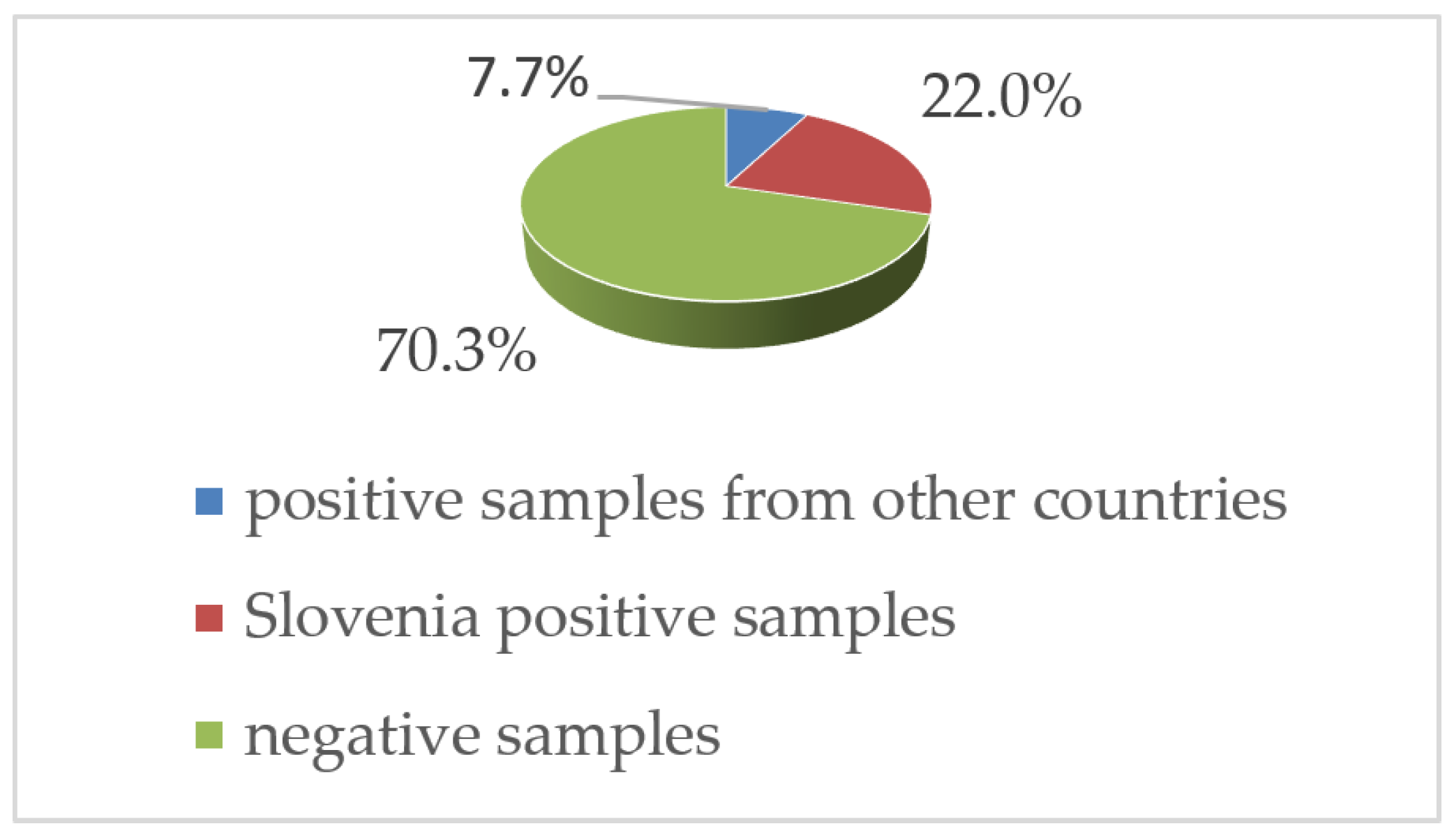
In the present research, twenty-seven fruit juice samples were positive for at least one of the thirty-two targeted substances (29.7%): five from Austria (20.8% of Austrian samples), two from Italy (40.0% of Italian samples), and twenty from Slovenia (35.1% of Slovenian samples). In addition, 20.6% of samples from foreign countries were positive for at least 1 of the 32 targeted substances (7 out of 34 samples). When comparing positive samples with all samples analyzed from each country using Fisher’s exact test, the p value was 0.445 for Austria–Slovenia, 1.00 for Italy–Slovenia and 0.602 for Austria–Italy. Since p > 0.05, the differences in proportions are not statistically significant. The results are presented in Figure 1.
Regarding packaging, 3 out of 17 juice samples packed in 0.2 L vessels (17.6%) were positive, while 24 of 74 juices packed in 1 L vessels (32.4%) were positive. When comparing positive samples with all samples analyzed for both types of packaging using Fisher’s exact test, the p value was 0.559. Since p > 0.05, the differences in proportions are not statistically significant. All three positive samples packed in 0.2 L vessels originated from Slovenia.
Eleven juice samples contained one active substance, eight samples contained two active substances, four samples contained three active substances, three samples contained four active substances, and one sample contained five active substances. The proportion of juice samples with multiple residues was 17.6% (16 out of 91 samples): 5 from other countries (14.7% of samples from other countries) and 11 from Slovenia (19.3% of Slovenian samples). Regarding packaging, 3 out of 17 juice samples packed in 0.2 L vessels (17.6%) (all positive 0.2 L samples) and 13 out of 74 juice samples packed in 1 L vessels (17.6%) contained multiple residues. When comparing positive samples with multiple residues with all samples from Slovenia and abroad using Fisher’s exact test, the p value was 0.781. Since p > 0.05, the differences in proportions are not statistically significant.
Positive juice samples contained fruit portions of apple, apricot, black currant, table grape, grapefruit, mango, orange, peach, pear, pineapple, or strawberry. Fruits not present in positive juice samples were aronia, banana, blueberry, sour cherry, cranberry, lemon, pomegranate, and raspberry.
In positive samples, ten active substances were found: boscalid, cyprodinil, flonicamid, fludioxonil, fluopyram, kresoxim-methyl, pirimicarb, pyrimethanil, tebuconazole, and trifloxystrobin. Four of these are PFASs: flonicamid, fludioxonil, fluopyram, and trifloxystrobin. The most frequently detected substances were fludioxonil, found in 13 samples (14.3% of all samples), and boscalid and fluopyram, each found in 10 samples (11.0% of all samples). Concentrations of active substances ranged from 0.005 to 0.065 mg/L. The results for concentrations in juice samples are presented in Table 2.
In Spain, 43% of analyzed fruit juice samples tested positive. Among the active substances, tebuconazole, which was analyzed but not found in the present study, was quantified at concentrations up to 0.017 mg/L [26]. In Poland, 60% of berry fruit juices (black currant, redcurrant, raspberry, strawberry) contained pesticide residues at concentrations up to 0.33 mg/kg. Among the active substances examined in the present study, boscalid (the most frequently found), cyprodinil, pyrimethanil, fludioxonil, and trifloxystrobin were found. These substances were also present in samples from this survey [27]. In Serbia, 71.2% of analyzed fruit juices were positive, and 60.0% contained multiple residues, which is higher than in the present survey. The highest number of active substances per sample was six, and the highest concentration was 0.629 mg/kg, which is also higher than in Slovenia. Among the active substances analyzed in the present study, azoxystrobin, cyprodinil, myclobutanil, pyrimethanil, pyriproxyfen, and trifloxystrobin were found. Of these, cyprodinil, pyrimethanil, and trifloxystrobin were also present in juices in Slovenia [28]. In Turkey, 98.2% of pomegranate juices tested positive for pesticide residues, with 45.0% containing multiple residues. Among the substances analyzed in the present survey, azoxystrobin, boscalid, and fludioxonil were quantified at concentrations up to 0.014 mg/kg. The latter two active substances were also found in the study in Slovenia [32]. The present study included only one pomegranate juice sample, for which none of the targeted pesticides were above the analytical threshold.
A limitation of this study is that residues in fruit juices were monitored only for one month in 2026. The proportion of positive samples was lower in the present study (29.7%) than in the 2025 study (42.5%) [34]. The purpose of the present research is to provide information about pesticide residues, including PFASs, in processed food. This information on food safety will allow data scientists to recommend which types of juices need to be inspected.

3.2. Calculated Estimated Residues in Fruit

Calculations of the estimated residues in fruit revealed compliance with MRLs, with the exception of four fruit samples containing fluopyram, representing possible exceedances in mango (sample designation 26-628) and table grape (sample designations 26-738, 26-746, 26-748). Possible exceedances were also observed for kresoxim-methyl in apple (sample designation 26-623), tebuconazole in mango (sample designation 26-734), and trifloxystrobin in apple (sample designations 26-623, 26-746). Altogether, six samples had possible MRL exceedances in their fruit: sample 26-623 had possible exceedances of kresoxim-methyl and trifloxystrobin in apple, and sample 26-746 had two possible exceedances of fluopyram and trifloxystrobin in table grape and apple, respectively. Samples with possible exceedances originated from Austria (one sample), Italy (one sample), and Slovenia (four samples). This represented 5.9% of samples from foreign countries (2 out of 34 samples) and 7.0% of samples from Slovenia (4 out of 57 samples). The calculated reconstructed concentrations in fruit are presented in Table 3.
When calculation refinement by alternative scenario was conducted to estimate residues in fruit by assuming that all residue in a juice sample was equally distributed among the portions of individual fruits, only one fruit sample (sample 26-628) showed an estimated MRL exceedance, indicating probable MRL exceedance of fluopyram in mango. After refinement, only 1.1% of samples possibly exceeded their MRLs. This approach cannot be treated as a reliable estimate of MRL compliance, as the residue may originate entirely from a single fruit ingredient. The refinement results by alternative scenario of possible MRL exceedances are presented in Table 4, and the refinement results by alternative scenario of the calculated estimated concentrations in apple for boscalid, fludioxonil, and tebuconazole, which can potentially lead to acute exposure, are presented in Table 5.
In Serbia, 2.2% of samples exceeded the MRLs in fruit [26], while in the present study, the percentage was 6.6% under the first scenario (the entire residue in the juice sample belongs to each type of fruit) and 1.1% under the alternative scenario (all residue in a juice sample was evenly distributed among the sum of portions of the individual fruits).
A limitation of this approach of back-calculating from juice to fruit is the uncertainty of the calculated concentration results. Although PFs are usually <1, when a PF of 1 was used, underestimation of concentrations in fruit could occur, and possible MRL exceedances could be overlooked. However, the same approach using PFs is adopted by EFSA in its annual reports on the monitoring of pesticide residues in food. This approach is also used by laboratories conducting official control of food on the market. When processed fruit is analyzed, laboratories have to conduct a risk assessment to decide whether the product can remain on the market or has to be withdrawn from it. Despite the uncertainty associated with the back-calculation approach, at the moment, this is the best way to determine what remains on or what is removed from the market.

3.3. Risk Assessment

Estimated daily intakes (EDIs) for chronic exposure and Estimated Short-Term Intakes (ESTIs) for acute exposure were calculated using the EFSA PRIMO model and are expressed as a percentage of the ADI and ARfD, respectively. The diets with the highest EDIs were DE child for boscalid, fludioxonil, kresoxim-methyl, pirimicarb, tebuconazole, and trifloxystrobin, and NL toddler for cyprodinil, flonicamid, fluopyram, and pyrimethanil.
Calculations of acute exposure show that there is a possible acute risk for boscalid in apples consumed by children (480% ARfD) and adults (125% ARfD), and in apple juice consumed by children (107% ARfD), but not by adults. A possible acute risk was also observed for fludioxonil (fluorinated pesticide) in apples consumed by children (110% ARfD), but not by adults, and not in apple juice consumed by children or adults. Finally, a possible acute risk was found for tebuconazole in apples consumed by children (101% ARfD), but not in apples consumed by adults or in juice consumed by children or adults. The acute risk assessment in EFSA PRIMo Rev 3.1, using input values only for raw products (for instance, apples), automatically calculates exposure for both raw and processed fruit (in the case of apples, apple juice). Data on possible exceedances in apple juice were not calculated directly from measurements of concentrations in apple juice.
The results show that fruits in which potential MRL exceedances were observed (fluopyram in table grape, fluopyram and tebuconazole in mango, kresoxim-methyl and trifloxystrobin in apple) do not pose a risk to consumers. This can be explained by the fact that MRLs are trade standards and not toxicological limits. Theoretical acute risk was posed by apple, where the maximum concentrations of boscalid, fludioxonil, and tebuconazole were estimated to be close to the MRLs but did not exceed them.
The EFSA PRIMo model rev. 3.1 automatically uses the ADI as the input value for calculations of acute exposure when the ARfD has not been set. This is because the ARfD value is always higher than—or, in the worst case, equal to—the ADI. It should be noted that, during the authorization process for PPPs and active substances, acute exposure is not calculated when an ARfD is not set, as in the case of boscalid and fludioxonil, since it is assumed that such substances are not acutely toxic. Therefore, it can be stated with certainty that theoretical acute risk is observed only for tebuconazole. The results are presented in Table 6, while detailed calculations of chronic exposure are presented in Tables S3–S13 in the Supplementary Materials.
The refinement of acute exposure by alternative approach was conducted by calculating estimated residues in fruit, assuming that all residue in a juice sample was evenly distributed among the sum of portions of the individual fruits (for example, for a juice sample containing 20% apples and 10% peach, the fruit portion is 30%). Since the ESTI was potentially exceeded for boscalid, fludioxonil, and tebuconazole only in apples consumed by children, refinement by alternative approach was conducted for apples only (Table 7). For apples, data from Table 5 were used in the calculations, and only boscalid potentially exceeded 100% of the ARfD for apples consumed by children (154% of the ARfD). It should be noted that no ARfD was allocated for boscalid and that using the ADI value instead of the ARfD probably results in an overestimation. Therefore, based on alternative approach calculations, it can be concluded with certainty only that, theoretically, no active substance posed an acute risk to consumers.
As in the present research, previous research has shown that chronic exposure to analyzed fruit juices from Serbia, Poland, and Turkey does not pose a risk to consumers [27,28,32]. In contrast to the present study, boscalid and fludioxonil were not analyzed in Serbia, and tebuconazole was not found there. However, the active substance carbofuran, which is no longer approved in the EU and was not included in the present study, posed an acute risk for preschool children in Serbia [28].

4. Conclusions

In the present study, 29.7% of fruit juices tested positive for at least one of the 32 targeted substances. After using the residues in juice to estimate the residues in fruit, assuming that all residues in each juice sample belonged to a type of fruit from which the juice was produced, and comparing these values with valid MRLs, 6.6% of samples potentially exceeded their MRLs. After recalculation using an alternative approach, assuming that all residues in each juice sample belonged to the whole fruit portion when the juice was produced from two or more types of fruit, only 1.1% of fruit samples potentially exceeded their MRLs. Multiple residues were present in 17.6% of juice samples, with ten active substances identified: boscalid, cyprodinil, flonicamid, fludioxonil, fluopyram, kresoxim-methyl, pirimicarb, pyrimethanil, tebuconazole, and trifloxystrobin. Four of these are PFASs: flonicamid, fludioxonil, fluopyram, and trifloxystrobin. While chronic exposure was acceptable, acute exposure was potentially unacceptable for tebuconazole in apple. After refining the calculation using an alternative approach, assuming that all residues in the juice sample belonged to the whole fruit portion from which the juice was produced, acute exposure was potentially acceptable.
In the future, this kind of research will continue to ensure the safety of processed food on the market.

Supplementary Materials

The following supporting information can be downloaded at: https://www.mdpi.com/article/10.3390/foods15193521/s1, Table S1: Limit of quantification, procedural recoveries, matrix effect on apple matrix. Table S2: Processing factors for production of juices from fruit. Table S3: Average consumption data in g/kg bw/day for populations with highest chronic exposure. Table S4: Theoretical maximum daily intake (TMDI) expressed as % ADI for 5 most critical diets for boscalid. Table S5: Theoretical maximum daily intake (TMDI) expressed as % ADI for 5 most critical diets for cyprodinil. Table S6: Theoretical maximum daily intake (TMDI) expressed as % ADI for 5 most critical diets for flonicamid. Table S7: Theoretical maximum daily intake (TMDI) expressed as % ADI for 5 most critical diets for fludioxonil. Table S8: Theoretical maximum daily intake (TMDI) expressed as % ADI for 5 most critical diets for fluopyram. Table S9: Theoretical maximum daily intake (TMDI) expressed as % ADI for 5 most critical diets for kresoxim-methyl. Table S10: Theoretical maximum daily intake (TMDI) expressed as % ADI for 5 most critical diets for pirimicarb. Table S11: Theoretical maximum daily intake (TMDI) expressed as % ADI for 5 most critical diets for pyrimethanil. Table S12: Theoretical maximum daily intake (TMDI) expressed as % ADI for 5 most critical diets for tebuconazole. Table S13: Theoretical maximum daily intake (TMDI) expressed as % ADI for 5 most critical diets for trifloxystrobin.

Funding

This research was funded by The Slovenian Research and Innovation Agency (ARIS), grant numbers P4-0133 (core funding of research programme) and I0-E006 (project METROFOOD-SI).

Institutional Review Board Statement

Not applicable.

Informed Consent Statement

Not applicable.

Data Availability Statement

The original contributions presented in this study are included in the article/Supplementary Materials. Further inquiries can be directed to the corresponding author.

Acknowledgments

The author expresses thanks to Janja Debevc for her help with the preparation of the extracts. For financial support, the author expresses thanks to the Ministry of the Republic of Slovenia for Agriculture, Administration of the Republic of Slovenia for Food Safety, Veterinary and Plant Protection.

Conflicts of Interest

The author declares no conflicts of interest.

Abbreviations

The following abbreviations are used in this manuscript:
ADIAcceptable Daily Intake
ARfDAcute Reference Dose
EDIEstimated Daily Intake
EFSAEuropean Food Safety Authority
ESTIEstimated Short-Term Intake
GC-MS/MSGas Chromatograph coupled with tandem Mass Spectrometer
LOQLimit of Quantification
MRLMaximum Residue Level
PFProcessing Factor
PFASsPer- and Polyfluoroalkyl Substances
PPPPlant Protection Product

References

  1. Available online: https://ec.europa.eu/eurostat/web/products-eurostat-news/w/ddn-20250513-1 (accessed on 21 July 2026).
  2. Available online: https://www.stat.si/statweb/en/News/Index/13845 (accessed on 21 July 2026).
  3. Hu, R.; Huang, X.; Huang, J.; Li, Y.; Zhang, C.; Yin, Y.; Chen, Z.; Jin, Y.; Cai, J.; Cui, F. Long- and Short-Term Health Effects of Pesticide Exposure: A Cohort Study from China. PLoS ONE 2015, 10, e0128766. [Google Scholar] [CrossRef] [Scilit] [PubMed]
  4. Samanic, C.M.; De Roos, A.J.; Stewart, P.A.; Rajaraman, P.; Waters, M.A.; Inskip, P. Occupational Exposure to Pesticides and Risk of Adult Brain Tumors. Am. J. Epidemiol. 2008, 167, 976–985. [Google Scholar] [CrossRef] [Scilit] [PubMed]
  5. Everett, C.J.; Frithsen, I.L.; Diaz, V.A.; Koopman, R.J.; Simpson, W.M.; Mainous, A.G., III. Association of a polychlorinated dibenzo-p-dioxin, a polychlorinated biphenyl, and DDT with diabetes in the 1999–2002 National Health and Nutrition Examination Survey. Environ. Res. 2007, 103, 413–418. [Google Scholar] [CrossRef] [Scilit] [PubMed]
  6. Baldi, I.; Lebailly, P.; Mohammed-Brahim, B.; Letenneur, L.; Dartigues, J.F.; Brochard, P. Neurodegenerative Diseases and Exposure to Pesticides in the Elderly. Am. J. Epidemiol. 2003, 157, 409–414. [Google Scholar] [CrossRef] [Scilit] [PubMed]
  7. Kumar, S. Occupational Exposure Associated with Reproductive Dysfunction. J. Occup. Health 2004, 46, 1–19. [Google Scholar] [CrossRef] [Scilit] [PubMed]
  8. Mehrpour, O.; Karrari, P.; Zamani, N.; Tsatsakis, A.M.; Abdollahi, M. Occupational exposure to pesticides and consequences on male semen and fertility: A review. Toxicol. Lett. 2014, 230, 146–156. [Google Scholar] [CrossRef] [Scilit] [PubMed]
  9. Gasnier, C.; Dumont, C.; Benachour, N.; Clair, E.; Chagnon, M.C.; Séralini, G.E. Glyphosate-based herbicides are toxic and endocrine disruptors in human cell lines. Toxicology 2009, 262, 184–191. [Google Scholar] [CrossRef] [Scilit] [PubMed]
  10. Lee, D.H.; Lind, P.M.; Jacobs, D.R., Jr.; Salihovic, S.; van Bavel, B.; Lind, L. Association between background exposure to organochlorine pesticides and the risk of cognitive impairment: A prospective study that accounts for weight change. Environ. Int. 2016, 89–90, 179–184. [Google Scholar] [CrossRef] [Scilit] [PubMed]
  11. EFSA. The 2020 European Union report on pesticide residues in food. EFSA J. 2022, 20, 7215. [Google Scholar] [CrossRef] [Scilit] [PubMed]
  12. EFSA. The 2021 European Union report on pesticide residues in food. EFSA J. 2023, 21, 7939. [Google Scholar] [CrossRef] [Scilit] [PubMed]
  13. EFSA. The 2022 European Union report on pesticide residues in food. EFSA J. 2024, 22, 1–91. [Google Scholar] [CrossRef] [Scilit] [PubMed]
  14. EFSA. The 2023 European Union report on pesticide residues in food. EFSA J. 2025, 23, 1–48. [Google Scholar] [CrossRef] [Scilit] [PubMed]
  15. Baša Česnik, H.; Velikonja Bolta, Š.; Gregorčič, A. Pesticide Residues in Agricultural Products of the Slovene origin found in 2007. Acta Chim. Slov. 2009, 56, 484–493. Available online: https://acta-arhiv.chem-soc.si/56/56-2-484.pdf (accessed on 21 July 2026).
  16. Baša Česnik, H.; Velikonja Bolta, Š.; Gregorčič, A. Pesticide residues in agricultural products of Slovene origin found in 2001–2009. In Pesticides–Formulations, Effects, Fate; Stoytcheva, M., Ed.; IntechOpen: Rijeka, Croatia, 2011; pp. 199–223. Available online: https://www.intechopen.com/books/493 (accessed on 21 July 2026).
  17. Baša Česnik, H. Multiresidual gas chromatography-tandem mass spectrometry method for determination of plant protection product residues in fruit. JCEA 2025, 26, 345–357. [Google Scholar] [CrossRef] [Scilit]
  18. Karaağaçlı, H.; Balkan, T.; Kizilarslan, M.; Kara, K. Pesticide residues in citrus fruits from Türkiye: Assessment of distribution, matrix effects, and health risks in lemon, mandarin, and orange. J. Food Compost. Anal. 2025, 147, 108091. [Google Scholar] [CrossRef] [Scilit]
  19. Alenazi, M.; Al-Zaid, A.; Najai, J.; Al-Dossari, A.; Al-Batti, A.; Al-Bahouth, F. Pesticide residue distribution in citrus fruits: Effectiveness of peeling as a mitigation strategy. Environ. Pollut. Manag. 2025, 2, 114–121. [Google Scholar] [CrossRef] [Scilit]
  20. Jankowska, M.; Kaczyński, P.; Hrynko, I.; Rutkowska, E.; Iwaniuk, P.; Ilyasova, G.; Łozowicka, B. Dietary risk assessment of children and adults consuming fruit and vegetables with multiple pesticide residues. Chemosphere 2024, 369, 143858. [Google Scholar] [CrossRef] [Scilit] [PubMed]
  21. Jankowska, M.; Kaczyński, P.; Absatarova, D.; Iwaniuk, P.; Hrynko, I.; Konecki, R.; Łozowicka, B.; Łuniewski, S.; Pietkun, M.; Rutkowska, E.; et al. The pesticide residue status in fruits and fashionable smoothies in the context of acute exposure and cumulative health risk. Food Control 2026, 181, 111739. [Google Scholar] [CrossRef] [Scilit]
  22. Si, W.; Song, Y.; Guo, C.; Huang, Z.; Chen, L.; Xu, F.; Bai, B.; Huo, K.; Wang, S. Multi-model risk assessment of pesticide residues in seasonal fruits based on integrated targeted/non-targeted screening: Implications for vulnerable populations. Food Chem. X 2025, 28, 102599. [Google Scholar] [CrossRef] [Scilit] [PubMed]
  23. Malhat, F.; Abdel-Megeed, M.; Saber, E.; Shokr, S.A.S.; Eissa, F. Pesticide residues in fruits from Egyptian markets: Detection, compliance, co-occurrence, and health risk assessment. J. Food Compost. Anal. 2025, 145, 107842. [Google Scholar] [CrossRef] [Scilit]
  24. Alajlouni, A.M.; Abu-Oudeh, A.F.; Abu-Hardan, M.S.; Al-Sakaji, A.A. Residue levels and risk assessment of pesticides in fruits from the Aqaba region in Jordan. J. Food Compost. Anal. 2024, 135, 106642. [Google Scholar] [CrossRef] [Scilit]
  25. Dong, J.; Wu, Q.; Yuan, H.; Ding, C.; Fu, Z.; Liu, Z.; Yan, H.; Liu, X.; Shen, S.; Li, H. Comprehensive analysis and risk assessment of pyrethroid pesticide residues in the market-sold fruits from the Beijing-Tianjin-Hebei region, China. Environ. Res. 2025, 286, 122940. [Google Scholar] [CrossRef] [Scilit] [PubMed]
  26. Ferrer, C.; Martínez-Bueno, M.J.; Lozano, A.; Fernández-Alba, A.R. Pesticide residue analysis of fruit juices by LC–MS/MS direct injection. One year pilot survey. Talanta 2011, 83, 1552–1561. [Google Scholar] [CrossRef] [Scilit] [PubMed]
  27. Wołejko, E.; Łozowicka, B.; Kaczyński, P. Pesticide residues in berries fruits and juices and the potential risk for consumers. Desalin. Water Treat. 2014, 52, 3804–3818. [Google Scholar] [CrossRef] [Scilit]
  28. Torović, L.; Vuković, G.; Dimitrov, N. Pesticide residues in fruit juice in Serbia: Occurrence and health risk estimates. J. Food Compos. Anal. 2021, 99, 103889. [Google Scholar] [CrossRef] [Scilit]
  29. Zhao, H.; Li, R.; Hu, J. Frequently used pesticides and their metabolites residues in apple and apple juice from markets across China: Occurrence and health risk assessment. LWT 2023, 178, 114610. [Google Scholar] [CrossRef] [Scilit]
  30. Liviz, C.A.M.; Maciel, G.M.; Pedro, A.C.; Riberio, I.S.; Fernandes, I.A.A.; Pinheiro, D.F.; Lima, N.P.; Martins, L.R.R.; Haminiuk, C.W.I. Physicochemical properties, bioactive compounds, and pesticide residues in commercial fruit juices. Michrochem. J. 2025, 218, 115144. [Google Scholar] [CrossRef] [Scilit]
  31. Bešlić, I.P.; Krivohlavek, A.; Kljusurič, J.G.; Ivešić, M.; Andačić, I.M.; Bevardi, M.; Kuharić, Ž.; Markovinović, A.B.; Stulić, V.; Herceg, Z.; et al. Influence of high intensity pulsed electric field (HIPEF) on the bioactive profile, mineral, heavy metal and pesticide content in the juice of strawberries harvested at two stages of ripeness. Food Chem. 2025, 497, 146856. [Google Scholar] [CrossRef] [Scilit] [PubMed]
  32. Kayisoglu, C.; Odabas, E.; Kabak, B. Assessment of health risks associated with multi-residue and highly polar pesticides in pomegranate juice. Food Control 2026, 181, 111757. [Google Scholar] [CrossRef] [Scilit]
  33. Li, C.; Ju, J.; Xie, Y.; Yu, H.; Guo, Y.; Yao, W.; Qian, H. Effects of interactions between polygalacturonase and pesticide residues during enzymatic hydrolysis on the yield of apple juice. LWT 2021, 147, 111562. [Google Scholar] [CrossRef] [Scilit]
  34. Baša Česnik, H. Pesticide residues in juice and wine: Validation of a multi-method and a market survey with consumer risk assessment. Food Chem. 2026, 525, 150618. [Google Scholar] [CrossRef] [Scilit] [PubMed]
  35. Available online: https://spletni2.furs.gov.si/FFS/REGSR/index.htm (accessed on 21 February 2022).
  36. Available online: https://ec.europa.eu/food/plant/pesticides/eu-pesticides-database/start/screen/active-substances (accessed on 21 February 2022).
  37. EU Reference Laboratories for Residues of Pesticides. Analytical Quality Control and Method Validation Procedures for Pesticide Residues Analysis in Food and Feed SANTE 11312/2021. Available online: https://food.ec.europa.eu/system/files/2023-11/pesticides_mrl_guidelines_wrkdoc_2021-11312.pdf (accessed on 3 February 2025).
  38. Zincke, F.; Kittelmann, A.; Scholz, R.; Michalski, B.; Tietz, E. European database of processing factors for pesticides residues in food (Version 4). Zenodo 2024. [Google Scholar] [CrossRef]
  39. SIST/EN/ISO 17025:2017; General Requirements for the Competence of Testing and Calibration Laboratories. ICS 03.120.20, CEN-CENELEC; Management Centre: Brussels, Belgium, 2017.
Figure 1. Proportions (%) of positive samples and negative samples by country across all 91 samples.
Foods 15 03521 g001
Table 1. Samples of fruit juices.
Sample DesignationVolume (L)ContentOrigin
26-5901orange 12%, lemon 1%Austria
26-5911orange 25%Austria
26-5921orange 100%Austria
26-5931orange 100%Austria
26-5941grapefruit 30%Austria
26-5951apple 50%Austria
26-5961apple 100%Austria
26-5971peach 35%Austria
26-5981strawberry 10%, apple 15%Austria
26-5991blueberry 5%, apple 20%Austria
26-6001black currant 20%Austria
26-6011cranberry 25%, apple 5%Austria
26-6021pineapple 100%Austria
26-6031orange 50%Slovenia
26-6041pineapple 100%Slovenia
26-6051sour cherry 25%Slovenia
26-6061apple 50%Slovenia
26-6071lemon 6%, raspberry, strawberry, black currant, sour cherry 0.6%Slovenia
26-6081strawberry 23%, apple 21%Slovenia
26-6091peach 33%, apple 17%Slovenia
26-6101apricot 25%, orange 9%, apple 8%Slovenia
26-6111lemon 75%Slovenia
26-6121mango 10%, peach 5%, orange 5%Slovenia
26-6131pomegranate 25%Slovenia
26-6141peach 25%Slovenia
26-6151orange 100%Hungary
26-6161orange 100%Austria
26-6171orange 25%Austria
26-6181orange 100%Italy
26-6191apple 100%Slovenia
26-6201apple 100%Austria
26-6211apple 100%Italy
26-6221strawberry 23%, apple 22%Slovenia
26-6231strawberry 30%, apple and black currant 10%Austria
26-6241pineapple 100%Italy
26-6251pineapple 100%Italy
26-6261apricot 40%Austria
26-6271peach 25%Austria
26-6281peach 32%, mango 10%Italy
26-6291blueberry 11%, apple 9%Austria
26-7081peach 100%Slovenia
26-7091apple 100%Slovenia
26-7101pear 100%Slovenia
26-7111orange 100%Slovenia
26-7121grape 100%Slovenia
26-7131apple 100%Slovenia
26-7141aronia 100%Slovenia
26-7151orange 100%Slovenia
26-7161pineapple 100%Slovenia
26-7171strawberry 25%, apple 18%, grape 2%Slovenia
26-7181apple 100%Slovenia
26-7191apple 33%, aronia 10%, grape 7%Slovenia
26-7201apricot 25%Slovenia
26-7211peach 25%Slovenia
26-7221apple 50%Slovenia
26-7231grape 17%, blueberry 3%Slovenia
26-7241apple 50%Slovenia
26-7251apple 28.1%, grape 15%, currant 2.8%, sour cherry 2.3%, strawberry 1%, raspberry 0.8%Slovenia
26-7261apple 100%Slovenia
26-7271apple 7%, raspberry 3%Slovenia
26-7281pineapple 100%Slovenia
26-7291apple 100%Slovenia
26-7301apricot 30%, apple 13%Slovenia
26-7311pineapple 45%, orange 40%Slovenia
26-7321peach 50%Slovenia
26-7331apple 100%Slovenia
26-7341peach 25%, apple 25%, grape 20%, mango 10%Slovenia
26-7351apple 73%, grape 17%, lemon 3.7%, black currant 1.5%, aronia 1.3%, sour cherry 1%, raspberry 0.3%Slovenia
26-7361orange 50%Slovenia
26-7371strawberry 8%, apple 70%, aronia 5%Slovenia
26-7381strawberry 30%, apple 11%, grape 4%Slovenia
26-7391orange 100%Slovenia
26-7401black currant 25%Slovenia
26-7411apple 29%, pear 20%, peach 1%Slovenia
26-7420.2apple 100%Slovenia
26-7430.2peach 32%, apple 18%Slovenia
26-7440.2black currant 25%Slovenia
26-7450.2orange 100%Slovenia
26-7460.2strawberry 30%, apple 11%, grape 4%Slovenia
26-7470.2apple 100%Serbia
26-7480.2strawberry 25%, apple 18%, grape 2%Slovenia
26-7490.2orange 100%Serbia
26-7500.2pineapple 100%Slovenia
26-7510.2orange 11%Austria
26-7520.2peach 7%, apple 5%Austria
26-7530.2apple 12%Austria
26-7540.2sour cherry 5%, orange 5%, banana 2%Austria
26-7550.2apple 10%Slovenia
26-7560.2strawberry 10%, apple 15%Slovenia
26-7570.2apple 50%Croatia
26-7580.2orange 50%Croatia
Table 2. Results for positive fruit juice samples in mg/L.
Sample
Designation
BoscalidCyprodinilFlonicamidFludioxonilFluopyramKresoxim-
methyl
PirimicarbPyrimethanilTebuconazoleTrifloxystrobin
26-592 0.008 0.009
26-594 0.024
26-6090.020 0.0490.006
26-610 0.009
26-612 0.011
26-618 0.009
26-6230.005 0.0130.008 0.013
26-6260.015 0.005 0.005
26-6270.006 0.011
26-6280.006 0.0380.007 0.006
26-708 *0.021 0.0650.007 0.0080.008
26-709 0.011
26-710 0.0100.005 0.0290.010
26-711 0.036
26-717 0.011
26-7200.006
26-721 0.011
26-729 0.005 0.005
26-7300.016 0.012
26-731 0.005
26-732 0.005 0.015 0.005
26-733 0.019
26-7340.006 0.012
26-738 0.0080.007
26-7430.010 0.005
26-746 0.007 0.007
26-748 0.0050.005 0.006
* To measure the concentration of fludioxonil, the sample was diluted fourfold before analysis.
Table 3. Calculated reconstructed concentrations in fruit in mg/kg.
AppleApricotBlack
Currant
Grape
(Table)
GrapeFruitMangoOrangePeachPearPineappleStrawberry
boscalid
MRL25155 2 5 6
min0.370.020.050.08 0.06 0.02 0.02
max1.80.050.050.08 0.06 0.06 0.02
median0.790.040.050.08 0.06 0.03 0.02
cyprodinil
MRL2 22
min0.005 0.0090.01
max0.005 0.0090.01
median0.005 0.0090.01
flonicamid
MRL0.3 0.3
min0.005 0.005
max0.005 0.005
median0.005 0.005
fludioxonil
MRL55 5 21010 74
min0.860.04 0.20 0.110.010.03 0.010.02
max3.80.04 0.56 0.380.220.22 0.010.04
median2.10.04 0.23 0.250.060.06 0.010.03
fluopyram
MRL0.81.5420.50.01 1.5 2
min0.120.010.132.50.080.07 0.01 0.02
max0.570.010.133.50.080.07 0.02 0.04
median0.220.010.132.70.080.07 0.02 0.02
kresoxim-methyl
MRL0.2 0.90 1.5
min0.76 0.08 0.03
max0.76 0.08 0.03
median0.76 0.08 0.03
pirimicarb
MRL0.5
min0.005
max0.02
median0.01
pyrimethanil
MRL15 81015
min0.01 0.0090.0080.03
max0.01 0.040.0080.03
median0.01 0.0090.0080.03
tebuconazole
MRL0.30.6 0.5 0.1 0.60.3
min0.140.01 0.06 0.06 0.010.01
max0.280.04 0.06 0.12 0.050.01
median0.210.03 0.06 0.09 0.010.01
trifloxystrobin
MRL0.7 33 1
min0.44 0.130.17 0.02
max1.6 0.130.32 0.04
median0.77 0.130.24 0.03
Table 4. Refinement of calculated concentrations in fruits that exceeded MRLs in Table 3 in mg/kg.
AppleGrape
(Table)
Mango
fluopyram
MRL 20.01
min 0.160.02
max 0.220.02
median 0.220.02
kresoxim-methyl
MRL0.2
min0.20
max0.20
median0.20
tebuconazole
MRL 0.1
min 0.02
max 0.02
median 0.02
trifloxystrobin
MRL0.7
min0.19
max0.41
median0.30
Table 5. Refinement of calculated estimated concentrations of active substances in fruits, in mg/kg, for those exceeding an ESTI of 100% of the ARfD.
Apple
boscalid
MRL2
min0.11
max0.57
median0.29
fludioxonil
MRL5
min0.37
max3.27
median0.71
tebuconazole
MRL0.3
min0.05
max0.08
median0.07
Table 6. Risk assessment for fruit using EFSA PRIMO model.
ADIARfDEDIESTI
(mg/kg bw/d)(mg/kg bw)(% ADI)(% ARfD)
Boscalid0.04/25480
Cyprodinil0.03/0.35
Flonicamid0.0250.0250.33
Fludioxonil0.37/7110
Fluopyram0.0120.55551
Kresoxim-methyl0.4/220
Pirimicarb0.0350.10.42
Pyrimethanil0.17/0.23
Tebuconazole0.030.039101
Trifloxystrobin0.10.51034
Table 7. Refinement of acute risk assessment using values from Table 5 using the EFSA PRIMo model.
ADIARfDESTI
(mg/kg bw/d)(mg/kg bw)(% ARfD)
Boscalid0.04/154
Fludioxonil0.37/95
Tebuconazole0.030.0331
Disclaimer/Publisher’s Note: The statements, opinions and data contained in all publications are solely those of the individual author(s) and contributor(s) and not of MDPI and/or the editor(s). MDPI and/or the editor(s) disclaim responsibility for any injury to people or property resulting from any ideas, methods, instructions or products referred to in the content.