Mass Spectrometry-Based Lipidomics in Coffee: Linking Lipid Transformation to Flavor Formation and Quality Control



Abstract
1. Introduction to Coffee Lipids
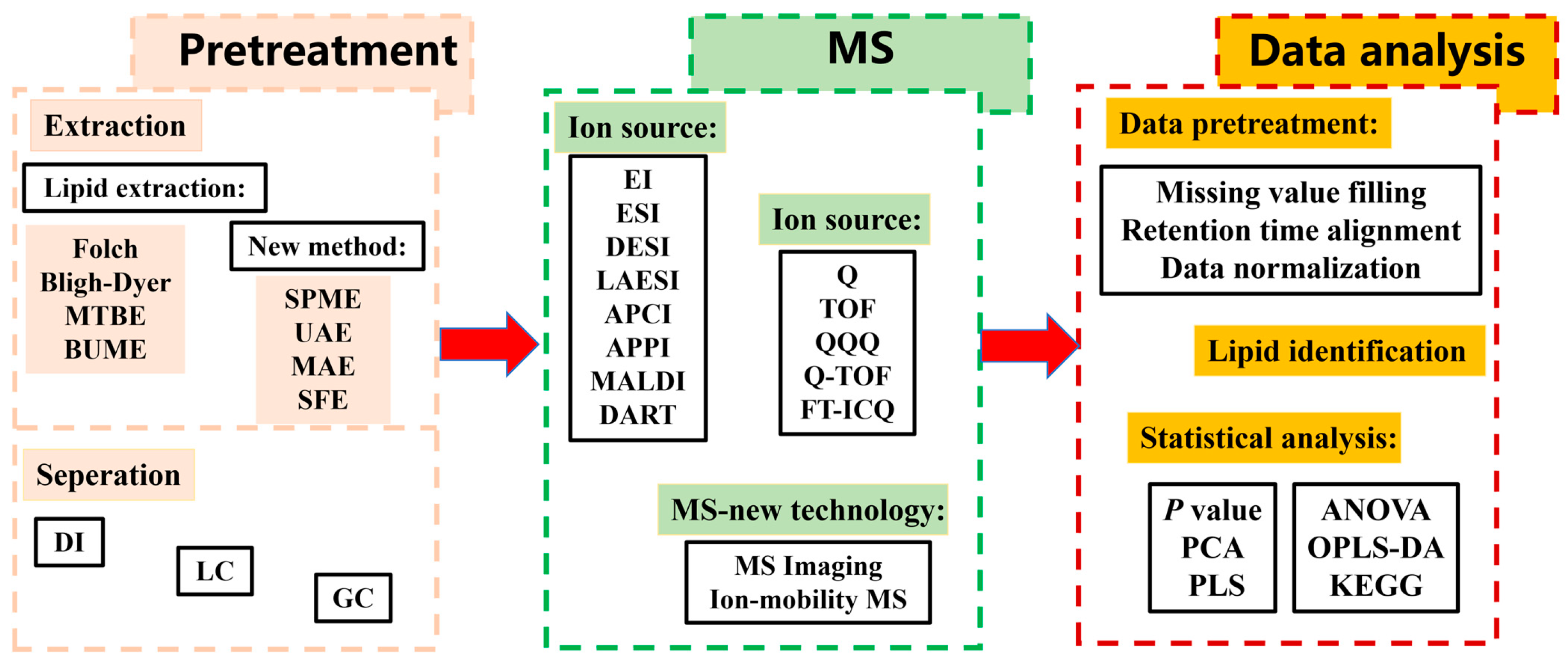
2. Mass Spectrometry-Based Lipidomics for Coffee Analysis
2.1. Lipid Extraction Strategies
2.2. Mass Spectrometry-Based Lipidomics Platforms
2.3. Lipidomics Data Processing and Chemometrics
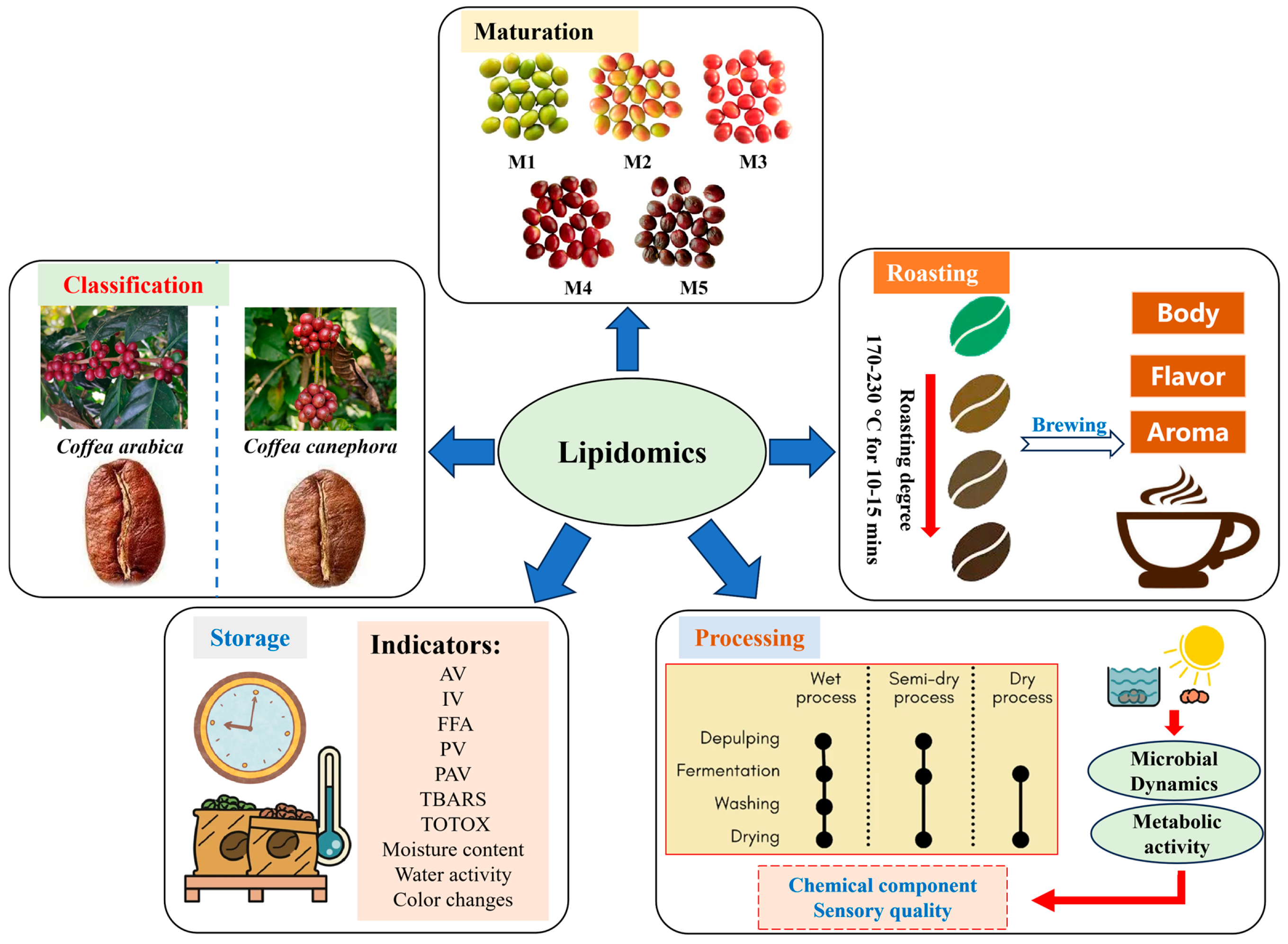
3. Applications of Lipidomics in Coffee Research
3.1. Lipidomics in Coffee Bean Maturation
3.2. Lipidomics for Coffee Species and Variety Discrimination
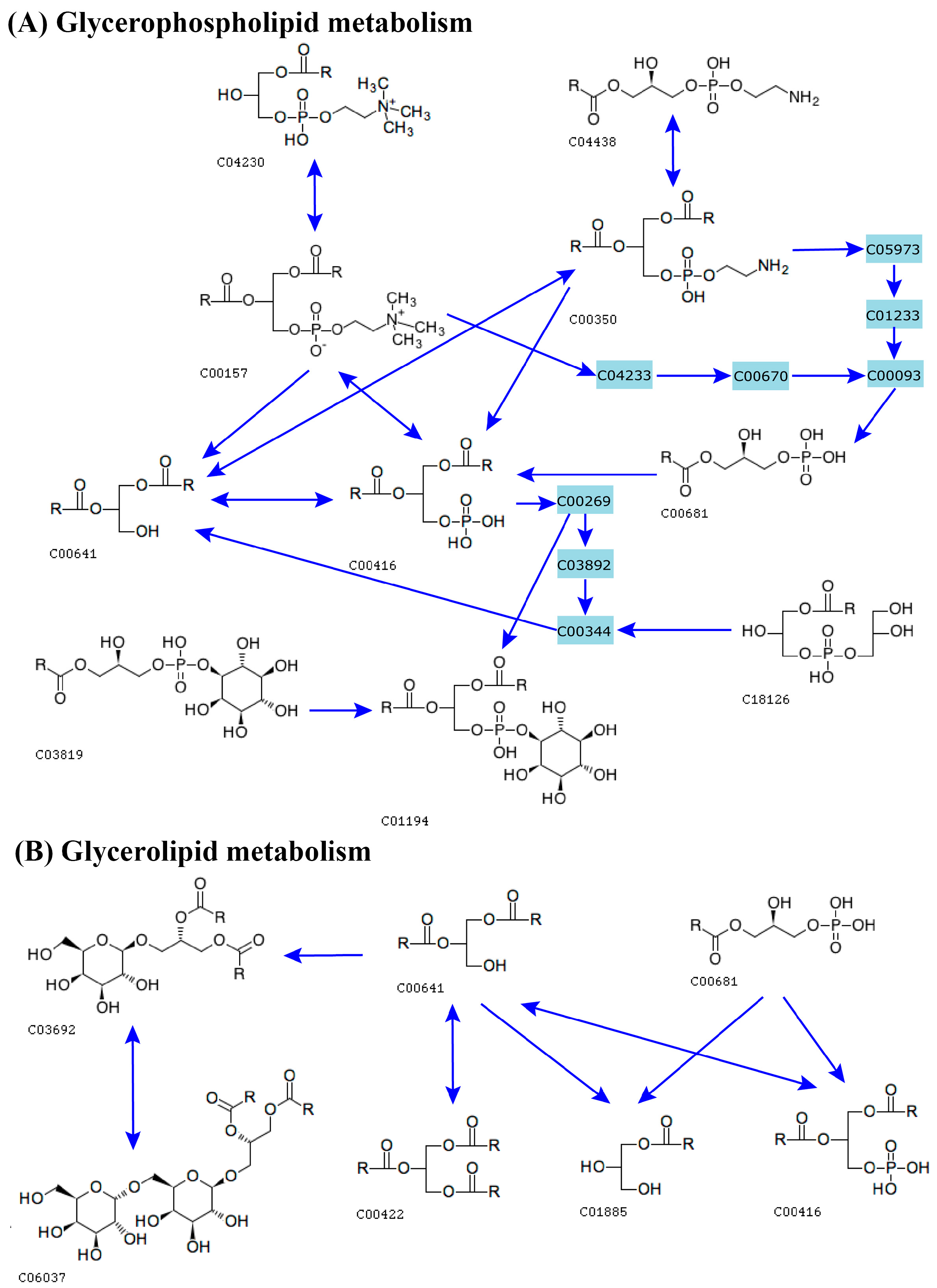
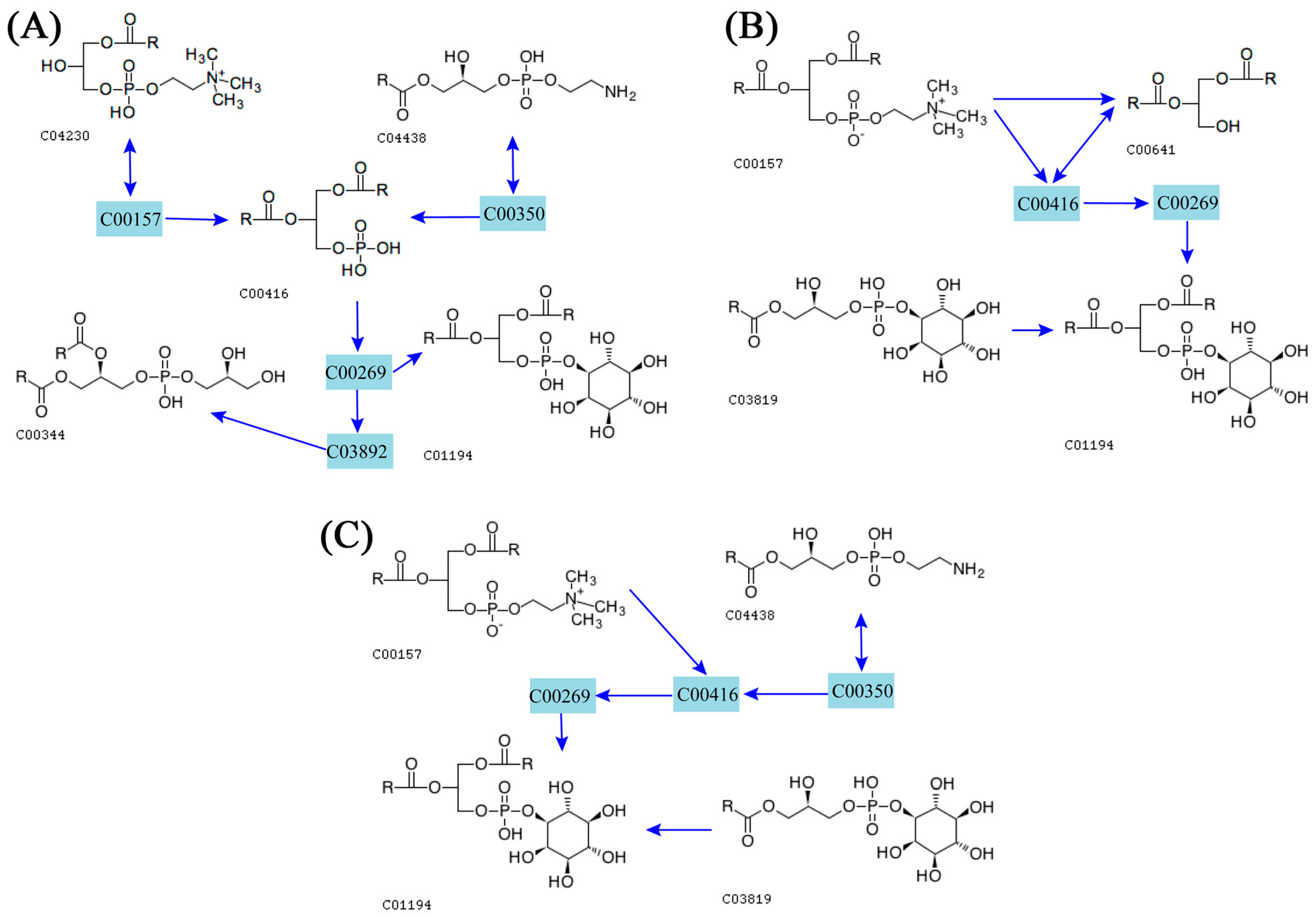
3.3. Lipidomics in Postharvest Processing of Coffee
3.4. Lipidomics in Coffee Roasting
3.5. Effects of Storage on Coffee Lipids
4. Conclusions and Future Perspectives
4.1. Conclusions
4.2. Current Limitations and Challenges
4.3. Future Perspectives
Author Contributions
Funding
Institutional Review Board Statement
Informed Consent Statement
Data Availability Statement
Acknowledgments
Conflicts of Interest
Abbreviations
References
- Wang, Y.; Wang, X.; Dong, J.; Li, L.; Du, P.; Liu, X.; Yang, Q. Coffee Blending: Development Trend under the New Wave. Food Chem. 2026, 507, 148167. [Google Scholar] [CrossRef] [PubMed]
- Ferrão, L.F.V.; Caixeta, E.T.; Pena, G.; Zambolim, E.M.; Cruz, C.D.; Zambolim, L.; Ferrão, M.A.G.; Sakiyama, N.S. New EST-SSR Markers of Coffea arabica: Transferability and Application to Studies of Molecular Characterization and Genetic Mapping. Mol. Breed. 2015, 35, 31. [Google Scholar] [CrossRef]
- Sunarharum, W.B.; Williams, D.J.; Smyth, H.E. Complexity of Coffee Flavor: A Compositional and Sensory Perspective. Food Res. Int. 2014, 62, 315–325. [Google Scholar] [CrossRef]
- Qiu, M.; Hu, G.; Wang, X.; Zhang, L. The Sources and Mechanisms of Bioactive Ingredients in Coffee. Food Funct. 2019, 10, 3113–3126. [Google Scholar] [CrossRef] [PubMed]
- Wang, Y.; Wang, X.; Hu, G.; Zhang, Z.; Al-Romaima, A.; Bai, X.; Li, J.; Zhou, L.; Li, Z.; Qiu, M. Comparative Studies of Fermented Coffee Fruits Post-Treatments on Chemical and Sensory Properties of Roasted Beans in Yunnan, China. Food Chem. 2023, 423, 136332. [Google Scholar] [CrossRef] [PubMed]
- de Souza Gois Barbosa, M.; dos Santos Scholz, M.B.; Kitzberger, C.S.G.; de Toledo Benassi, M. Correlation between the Composition of Green Arabica Coffee Beans and the Sensory Quality of Coffee Brews. Food Chem. 2019, 292, 275–280. [Google Scholar] [CrossRef] [PubMed]
- dos Santos Scholz, M.B.; Prudencio, S.H.; Kitzberger, C.S.G.; dos Santos Ferreira da Silva, R.S. Physico-Chemical Characteristics and Sensory Attributes of Coffee Beans Submitted to Two Post-Harvest Processes. J. Food Meas. Charact. 2019, 13, 831–839. [Google Scholar] [CrossRef]
- Wang, X.; Wang, Y.; Hu, G.; Hong, D.; Guo, T.; Li, J.; Li, Z.; Qiu, M. Review on Factors Affecting Coffee Volatiles: From Seed to Cup. J. Sci. Food Agric. 2022, 102, 1341–1352. [Google Scholar] [CrossRef] [PubMed]
- Toledo, P.R.A.B.; Pezza, L.; Pezza, H.R.; Toci, A.T. Relationship between the Different Aspects Related to Coffee Quality and Their Volatile Compounds. Compr. Rev. Food Sci. Food Saf. 2016, 15, 705–719. [Google Scholar] [CrossRef] [PubMed]
- Cornelio-Santiago, H.P.; Gonçalves, C.B.; de Oliveira, N.A.; de Oliveira, A.L. Supercritical CO2 Extraction of Oil from Green Coffee Beans: Solubility, Triacylglycerol Composition, Thermophysical Properties and Thermodynamic Modelling. J. Supercrit. Fluids 2017, 128, 386–394. [Google Scholar] [CrossRef]
- Speer, K.; Kölling-Speer, I. The Lipid Fraction of Coffee Bean. Braz. J. Plant Physiol. 2006, 18, 201–216. [Google Scholar] [CrossRef]
- Lu, K.; He, Y.; Cao, Y.; Zhu, T.; Liu, Q.; Liu, B.; Duan, Y.; Zhou, Y.; Yang, F.; Li, H.; et al. Generation of Coffee Flavor Compounds from Fresh Cherry to Cup: Deciphering the Contribution of Microbiota Metabolism. J. Future Foods 2026, 6, 1067–1079. [Google Scholar] [CrossRef]
- Poisson, L.; Blank, I.; Dunkel, A.; Hofmann, T. The Chemistry of Roasting-Decoding Flavor Formation. In The Craft and Science of Coffee; Folmer, B., Ed.; Academic Press: San Diego, CA, USA, 2017; pp. 273–309. [Google Scholar]
- Hu, G.; Peng, X.; Gao, Y.; Huang, Y.; Li, X.; Su, H.; Qiu, M. Effect of Roasting Degree of Coffee Beans on Sensory Evaluation: Research from the Perspective of Major Chemical Ingredients. Food Chem. 2020, 331, 127329. [Google Scholar] [CrossRef] [PubMed]
- Vila, M.A.; Andueza, S.; Paz de Peña, M.; Cid, C. Fatty Acid Evolution during the Storage of Ground, Roasted Coffees. J. Am. Oil Chem. Soc. 2005, 82, 639–646. [Google Scholar] [CrossRef]
- Speer, K.; Kölling-Speer, I. Lipids. In Coffee: Production, Quality and Chemistry; Farah, A., Ed.; The Royal Society of Chemistry: London, UK, 2019; pp. 458–483. [Google Scholar]
- Ribeiro, R.C.; Teixeira, R.S.S.; de Rezende, C.M. Extrusion Pretreatment of Green Arabica Coffee Beans for Lipid Enhance Extraction. Ind. Crops Prod. 2024, 221, 119318. [Google Scholar] [CrossRef]
- Jiménez-Mendoza, J.A.; Santos-Sánchez, N.F.; Pérez-Santiago, A.D.; Sánchez-Medina, M.A.; Matías-Pérez, D.; García-Montalvo, I.A. Preliminary Analysis of Unsaturated Fatty Acid Profiles of Coffea arabica L. in Samples with a Denomination of Origin and Speciality of Oaxaca, Mexico. J. Oleo Sci. 2023, 72, 153–160. [Google Scholar] [CrossRef] [PubMed]
- Dong, W.; Chen, Q.; Wei, C.; Hu, R.; Long, Y.; Zong, Y.; Chu, Z. Comparison of the Effect of Extraction Methods on the Quality of Green Coffee Oil from Arabica Coffee Beans: Lipid Yield, Fatty Acid Composition, Bioactive Components, and Antioxidant Activity. Ultrason. Sonochem. 2021, 74, 105578. [Google Scholar] [CrossRef] [PubMed]
- Nebesny, E.; Budryn, G. Convective and Microwave Roasting as Well as Storage of Coffee in Polyethylene Bags: Changes in Lipid Fraction. Dtsch. Lebensm. Rundsch. 2006, 102, 547–554. [Google Scholar]
- Antonelo, D.S.; Paschoal, V.R.; Silva, S.D.E.; Rosa, A.F.; Vasco, D.A.; Beline, M.; Gerrard, D.E.; Ventura, R.V.; Balieiro, J.C.D. Effects of Electrical Stimulation on Metabolomic and Lipidomic Profiles of Beef Longissimus thoracis Muscle. Meat Sci. 2026, 237, 110094. [Google Scholar] [CrossRef] [PubMed]
- Zhang, J.; Fang, Y.N.; Wang, L.; Cao, C.P.; Wang, S.; Yang, A.Q.; Zhao, B.H.; Wu, X.S.; Chen, Y. Lipidomic, Metabolomic, and Proteomic Profiles Provide Insight into Differences in Meat Quality between Rabbit Longissimus lumborum and Hind-Leg Muscles. Food Chem. 2026, 513, 149027. [Google Scholar] [CrossRef] [PubMed]
- Jia, W.; Li, R.; Wu, X.; Liu, S.; Shi, L. UHPLC-Q-Orbitrap HRMS-Based Quantitative Lipidomics Reveals the Chemical Changes of Phospholipids during Thermal Processing Methods of Tan Sheep Meat. Food Chem. 2021, 360, 130153. [Google Scholar] [CrossRef] [PubMed]
- Yang, Q.; Liu, C.X.; Xu, M.X.; Gu, M.H.; Xu, L.; Li, S.B.; Zheng, X.C.; Zhang, D.Q.; Chen, L. Random Forest-Assisted Widely Targeted Lipidomic Reveals Differences in Tan Lamb Meat Quality in Different Regions. Foods 2025, 14, 4046. [Google Scholar] [CrossRef] [PubMed]
- Wang, R.B.; Liu, P.Y.; Guo, H.M.; Zhao, H.Y.; Zhu, R.K.; Hao, X.H.; Li, H.H.; Xu, T.; Tang, H.G.; Zhong, H.C.; et al. Insights into the Portraits of Natural DHA-Enriched Milk via Analyzing Lipidomic/Proteomic Composition of MFGM and Stability of DHA. Food Chem. 2026, 511, 148689. [Google Scholar] [CrossRef] [PubMed]
- Avci, H.R.; Ozcan, T.; Asan, A.A.; Eren, O.; Kaygisiz, M.; Polat, F. Multidimensional Proteomic, Lipidomic, and Sensory Evaluation of Reduced-Fat Kashar Cheese Enriched with Buttermilk Powder as a Protein-Based Fat Replacer. J. Food Compos. Anal. 2026, 153, 109154. [Google Scholar] [CrossRef]
- Campaniello, M.; Nardelli, V.; Zianni, R.; Tomaiuolo, M.; Miedico, O.; Iammarino, M.; Mentana, A. Microwave-Assisted Extraction/UHPLC-Q-Orbitrap-MS-Based Lipidomic Workflow for Comprehensive Study of Lipids in Soft Cheese. Foods 2024, 13, 1033. [Google Scholar] [CrossRef] [PubMed]
- Amai, S.; Yuki, K.; Gowda, S.G.B.; Gowda, D.; Hui, S.P. Lipidomic Profiling of Edible Japanese Sea Urchins by LC-MS. Foods 2025, 14, 2268. [Google Scholar] [CrossRef] [PubMed]
- Li, P.H.; Zhang, M.Q.; Xie, D.X.; Zhang, X.M.; Zhang, S.S.; Gao, F.Y.; Wang, Y.L.; Hsiao, C.D.; Li, X.B.; Liu, K.C. Characterization and Bioactivities of Phospholipids from Squid Viscera and Gonads Using Ultra-Performance Liquid Chromatography-Q-Exactive Orbitrap/Mass Spectrometry-Based Lipidomics and Zebrafish Models. Food Funct. 2021, 12, 7986–7996. [Google Scholar] [CrossRef] [PubMed]
- Suraksha, K.; Gowda, D.; Siddaiah, C.N.; Chellapilla, T.S.; Hui, S.P.; Gowda, S.G.B. Comprehensive Lipidomic Profiling of Dietary Indian Millets and Identification of Fatty Acid Esters of Hydroxy Fatty Acids by Untargeted LC/MS. Food Chem. 2026, 511, 148792. [Google Scholar] [CrossRef] [PubMed]
- Lim, D.K.; Mo, C.; Lee, J.H.; Long, N.P.; Dong, Z.; Li, J.; Lim, J.; Kwon, S.W. The Integration of Multi-Platform MS-Based Metabolomics and Multivariate Analysis for the Geographical Origin Discrimination of Oryza sativa L. J. Food Drug Anal. 2018, 26, 769–777. [Google Scholar] [CrossRef] [PubMed]
- Yan, B.W.; Chang, C.Y.; Sui, Y.; Zheng, N.; Fang, Y.Y.; Zhang, Y.Y.; Zhang, M.; He, D.; Zhang, L.G. Transcriptomic and Lipidomic Analysis Reveals the Regulatory Network of Lipid Metabolism in Cannabis sativa. Foods 2025, 14, 2809. [Google Scholar] [CrossRef] [PubMed]
- Liu, P.Y.; Liu, Z.F.; Zhu, J.; Zhou, H.; Zhang, G.N.; Sun, Z.W.; Zhou, Z.; Liu, Y. Analysis of the Lipidomic Profile of Vegetable Oils and Animal Fats and Changes during Aging by UPLC-Q-Exactive Orbitrap Mass Spectrometry. Anal. Methods 2024, 16, 4150–4159. [Google Scholar] [CrossRef] [PubMed]
- Silva, A.C.R.; Garrett, R.; Rezende, C.M.; Meckelmann, S.W. Lipid Characterization of Arabica and Robusta Coffee Beans by Liquid Chromatography-Ion Mobility-Mass Spectrometry. J. Food Compos. Anal. 2022, 111, 104587. [Google Scholar] [CrossRef]
- Aurum, F.S.; Imaizumi, T.; Thammawong, M.; Suhandy, D.; Praseptiangga, D.; Tsuta, M.; Nagata, M.; Nakano, K. Lipidomic Profiling of Indonesian Coffee to Determine Its Geographical Origin by LC-MS/MS. Eur. Food Res. Technol. 2022, 248, 2887–2899. [Google Scholar] [CrossRef]
- Zhu, J.; Zhou, L.; Zhao, M.; Wei, F.; Fu, H.; Marchioni, E. Revealing the Dynamic Changes of Lipids in Coffee Beans during Roasting Based on UHPLC-QE-HR-AM/MS/MS. Food Res. Int. 2023, 174, 113507. [Google Scholar] [CrossRef] [PubMed]
- Han, X.; Gross, R.W. Global Analyses of Cellular Lipidomes Directly from Crude Extracts of Biological Samples by ESI Mass Spectrometry: A Bridge to Lipidomics. J. Lipid Res. 2003, 44, 1071–1079. [Google Scholar] [CrossRef] [PubMed]
- Lee, H.C.; Yokomizo, T. Applications of Mass Spectrometry-Based Targeted and Non-Targeted Lipidomics. Biochem. Biophys. Res. Commun. 2018, 504, 576–581. [Google Scholar] [CrossRef] [PubMed]
- Zhao, X.E.; Zhu, S.; Liu, H. Recent Progresses of Derivatization Approaches in the Targeted Lipidomics Analysis by Mass Spectrometry. J. Sep. Sci. 2020, 43, 1838–1846. [Google Scholar] [CrossRef] [PubMed]
- Rustam, Y.H.; Reid, G.E. Analytical Challenges and Recent Advances in Mass Spectrometry Based Lipidomics. Anal. Chem. 2018, 90, 374–397. [Google Scholar] [CrossRef] [PubMed]
- Tang, S.; Zhang, H.; Lee, H.K. Advances in Sample Extraction. Anal. Chem. 2016, 88, 228–249. [Google Scholar] [CrossRef] [PubMed]
- Araujo, P.; Tilahun, E.; Zeng, Y. A Novel Strategy for Discriminating Marine Oils by Using the Positional Distribution (sn-1, sn-2, sn-3) of Omega-3 Polyunsaturated Fatty Acids in Triacylglycerols. Talanta 2018, 182, 32–37. [Google Scholar] [CrossRef] [PubMed]
- Nurseitova, M.A.; Amutova, F.B.; Zhakupbekova, A.A.; Omarova, A.S.; Kondybayev, A.B.; Bayandy, G.A.; Akhmetsadykov, N.N.; Faye, B.; Konuspayeva, G.S. Comparative Study of Fatty Acid and Sterol Profiles for the Investigation of Potential Milk Fat Adulteration. J. Dairy Sci. 2019, 102, 7723–7733. [Google Scholar] [CrossRef] [PubMed]
- Gil, A.; Zhang, W.; Wolters, J.C.; Permentier, H.; Boer, T.; Horvatovich, P.; Heiner-Fokkema, M.R.; Reijngoud, D.-J.; Bischoff, R. One- vs Two-Phase Extraction: Re-Evaluation of Sample Preparation Procedures for Untargeted Lipidomics in Plasma Samples. Anal. Bioanal. Chem. 2018, 410, 5859–5870. [Google Scholar] [CrossRef] [PubMed]
- Sarafian, M.H.; Gaudin, M.; Lewis, M.R.; Martin, F.-P.; Holmes, E.; Nicholson, J.K.; Dumas, M.-E. Objective Set of Criteria for Optimization of Sample Preparation Procedures for Ultra-High Throughput Untargeted Blood Plasma Lipid Profiling by Ultra Performance Liquid Chromatography-Mass Spectrometry. Anal. Chem. 2014, 86, 5766–5774. [Google Scholar] [CrossRef] [PubMed]
- Xie, Y.; Wu, B.; Wu, Z.; Tu, X.; Xu, S.; Lv, X.; Yin, H.; Xiang, J.; Chen, H.; Wei, F. Ultrasound-Assisted One-Phase Solvent Extraction Coupled with Liquid Chromatography-Quadrupole Time-of-Flight Mass Spectrometry for Efficient Profiling of Egg Yolk Lipids. Food Chem. 2020, 319, 126547. [Google Scholar] [CrossRef] [PubMed]
- Suh, J.H.; Niu, Y.S.; Hung, W.L.; Ho, C.T.; Wang, Y. Lipidomic Analysis for Carbonyl Species Derived from Fish Oil Using Liquid Chromatography-Tandem Mass Spectrometry. Talanta 2017, 168, 31–42. [Google Scholar] [CrossRef] [PubMed]
- Gorassini, A.; Verardo, G.; Fregolent, S.-C.; Bortolomeazzi, R. Rapid Determination of Cholesterol Oxidation Products in Milk Powder Based Products by Reversed Phase SPE and HPLC-APCI-MS/MS. Food Chem. 2017, 230, 604–610. [Google Scholar] [CrossRef] [PubMed]
- Reyes-Garcés, N.; Gionfriddo, E. Recent Developments and Applications of Solid Phase Microextraction as a Sample Preparation Approach for Mass-Spectrometry-Based Metabolomics and Lipidomics. TrAC Trends Anal. Chem. 2019, 113, 172–181. [Google Scholar] [CrossRef]
- Horák, T.; Čulík, J.; Čejka, P.; Jurková, M.; Kellner, V.; Dvořák, J.; Hašková, D. Analysis of Free Fatty Acids in Beer: Comparison of Solid-Phase Extraction, Solid-Phase Microextraction, and Stir Bar Sorptive Extraction. J. Agric. Food Chem. 2009, 57, 11081–11085. [Google Scholar] [CrossRef] [PubMed]
- Birjandi, A.P.; Mirnaghi, F.S.; Bojko, B.; Wąsowicz, M.; Pawliszyn, J. Application of Solid Phase Microextraction for Quantitation of Polyunsaturated Fatty Acids in Biological Fluids. Anal. Chem. 2014, 86, 12022–12029. [Google Scholar] [CrossRef] [PubMed]
- Wu, F.; Wang, J.; Zhao, Q.; Jiang, N.; Lin, X.; Xie, Z.; Li, J.; Zhang, Q. Detection of Trans-Fatty Acids by High Performance Liquid Chromatography Coupled with In-Tube Solid-Phase Microextraction Using Hydrophobic Polymeric Monolith. J. Chromatogr. B 2017, 1040, 214–221. [Google Scholar] [CrossRef] [PubMed]
- Cecchi, L.; Migliorini, M.; Giambanelli, E.; Rossetti, A.; Cane, A.; Mulinacci, N. New Volatile Molecular Markers of Rancidity in Virgin Olive Oils under Nonaccelerated Oxidative Storage Conditions. J. Agric. Food Chem. 2019, 67, 13150–13163. [Google Scholar] [CrossRef] [PubMed]
- Capriotti, A.L.; Cavaliere, C.; Piovesana, S.; Stampachiacchiere, S.; Samperi, R.; Ventura, S.; Laganà, A. Simultaneous Determination of Naturally Occurring Estrogens and Mycoestrogens in Milk by Ultrahigh-Performance Liquid Chromatography-Tandem Mass Spectrometry Analysis. J. Agric. Food Chem. 2015, 63, 8940–8946. [Google Scholar] [CrossRef] [PubMed]
- Wu, B.; Wei, F.; Xu, S.; Xie, Y.; Lv, X.; Chen, H.; Huang, F. Mass Spectrometry-Based Lipidomics as a Powerful Platform in Foodomics Research. Trends Food Sci. Technol. 2021, 107, 358–376. [Google Scholar] [CrossRef]
- Wang, M.; Wang, C.; Han, R.H.; Han, X. Novel Advances in Shotgun Lipidomics for Biology and Medicine. Prog. Lipid Res. 2016, 61, 83–108. [Google Scholar] [CrossRef] [PubMed]
- Sun, T.; Wang, X.; Cong, P.; Xu, J.; Xue, C. Mass Spectrometry-Based Lipidomics in Food Science and Nutritional Health: A Comprehensive Review. Compr. Rev. Food Sci. Food Saf. 2020, 19, 2530–2558. [Google Scholar] [CrossRef] [PubMed]
- Hinz, C.; Liggi, S.; Griffin, J.L. The Potential of Ion Mobility Mass Spectrometry for High-Throughput and High-Resolution Lipidomics. Curr. Opin. Chem. Biol. 2018, 42, 42–50. [Google Scholar] [CrossRef]
- Han, X. Lipidomics for Studying Metabolism. Nat. Rev. Endocrinol. 2016, 12, 668–679. [Google Scholar] [CrossRef] [PubMed]
- Wang, J.; Wang, C.; Han, X. Tutorial on Lipidomics. Anal. Chim. Acta 2019, 1061, 28–41. [Google Scholar] [CrossRef] [PubMed]
- Guo, T.; Yong, W.; Jin, Y.; Zhang, L.; Liu, J.; Wang, S.; Chen, Q.; Dong, Y.; Su, H.; Tan, T. Applications of DART-MS for Food Quality and Safety Assurance in Food Supply Chain. Mass Spectrom. Rev. 2017, 36, 161–187. [Google Scholar] [CrossRef] [PubMed]
- Hartler, J.; Armando, A.M.; Trötzmüller, M.; Dennis, E.A.; Köfeler, H.C.; Quehenberger, O. Automated Annotation of Sphingolipids Including Accurate Identification of Hydroxylation Sites Using MSn Data. Anal. Chem. 2020, 92, 14054–14062. [Google Scholar] [CrossRef]
- Hartler, J.; Triebl, A.; Ziegl, A.; Trötzmüller, M.; Rechberger, G.N.; Zeleznik, O.A.; Zierler, K.A.; Torta, F.; Cazenave-Gassiot, A.; Wenk, M.R.; et al. Deciphering Lipid Structures Based on Platform-Independent Decision Rules. Nat. Methods 2017, 14, 1171–1174. [Google Scholar] [CrossRef] [PubMed]
- Checa, A.; Bedia, C.; Jaumot, J. Lipidomic Data Analysis: Tutorial, Practical Guidelines and Applications. Anal. Chim. Acta 2015, 885, 1–16. [Google Scholar] [CrossRef] [PubMed]
- Wang, Y.; Wang, X.; Liu, X.; Liu, X.; Li, L.; Sun, Z. Comparative Lipidomics Analysis Reveals Changes in Lipid Profile of Arabica Coffee at Different Maturity. Food Chem. X 2024, 24, 102062. [Google Scholar] [CrossRef] [PubMed]
- Silva, A.C.R.; da Silva, C.C.; Garrett, R.; Rezende, C.M. Comprehensive Lipid Analysis of Green Arabica Coffee Beans by LC-HRMS/MS. Food Res. Int. 2020, 137, 109727. [Google Scholar] [CrossRef] [PubMed]
- Cossignani, L.; Montesano, D.; Simonetti, M.S.; Blasi, F. Authentication of Coffea arabica According to Triacylglycerol Stereospecific Composition. J. Anal. Methods Chem. 2016, 2016, 7482620. [Google Scholar] [CrossRef] [PubMed]
- Romano, R.; Santini, A.; Le Grottaglie, L.; Manzo, N.; Visconti, A.; Ritieni, A. Identification Markers Based on Fatty Acid Composition to Differentiate between Roasted Arabica and Canephora (Robusta) Coffee Varieties in Mixtures. J. Food Compos. Anal. 2014, 35, 1–9. [Google Scholar] [CrossRef]
- Fabella-Garcia, J.M.A.; Kretzschmar, T.; Patel, P.; Liu, L. From Green Bean to Brewed Coffee: A Lipidomic Perspective on Coffee Lipid Composition. Food Chem. 2025, 496, 146606. [Google Scholar] [CrossRef] [PubMed]
- Ismaiel, L.; Fanesi, B.; Kuhalskaya, A.; Barp, L.; Moret, S.; Pacetti, D.; Lucci, P. The Determination of Triacylglycerols and Tocopherols Using UHPLC-CAD/FLD Methods for Assessing the Authenticity of Coffee Beans. Foods 2023, 12, 4197. [Google Scholar] [CrossRef] [PubMed]
- Martín, M.J.; Pablos, F.; González, A.G.; Valdenebro, M.S.; León-Camacho, M. Fatty Acid Profiles as Discriminant Parameters for Coffee Varieties Differentiation. Talanta 2001, 54, 291–297. [Google Scholar] [CrossRef] [PubMed]
- Scholz, M.B.S.; Pagiatto, N.F.; Kitzberger, C.S.G.; Pereira, L.F.P.; Davrieux, F.; Charmetant, P.; Leroy, T. Validation of Near-Infrared Spectroscopy for the Quantification of Cafestol and Kahweol in Green Coffee. Food Res. Int. 2014, 61, 176–182. [Google Scholar] [CrossRef]
- de Roos, B.; van der Weg, G.; Urgert, R.; van de Bovenkamp, P.; Charrier, A.; Katan, M.B. Levels of Cafestol, Kahweol, and Related Diterpenoids in Wild Species of the Coffee Plant Coffea. J. Agric. Food Chem. 1997, 45, 3065–3069. [Google Scholar] [CrossRef]
- Kamm, W.; Dionisi, F.; Fay, L.B.; Hischenhuber, C.; Schmarr, H.G.; Engel, K.H. Rapid and Simultaneous Analysis of 16-O-Methylcafestol and Sterols as Markers for Assessment of Green Coffee Bean Authenticity by On-Line LC-GC. J. Am. Oil Chem. Soc. 2002, 79, 1109–1113. [Google Scholar] [CrossRef]
- Carrera, F.; León-Camacho, M.; Pablos, F.; González, A.G. Authentication of Green Coffee Varieties According to Their Sterolic Profile. Anal. Chim. Acta 1998, 370, 131–139. [Google Scholar] [CrossRef]
- Alves, R.C.; Casal, S.; Alves, M.R.; Oliveira, M.B. Discrimination between Arabica and Robusta Coffee Species on the Basis of Their Tocopherol Profiles. Food Chem. 2009, 114, 295–299. [Google Scholar] [CrossRef]
- Cheng, B.; Furtado, A.; Smyth, H.E.; Henry, R.J. Influence of Genotype and Environment on Coffee Quality. Trends Food Sci. Technol. 2016, 57, 20–30. [Google Scholar] [CrossRef]
- Sant’Ana, G.C.; Pereira, L.F.P.; Pot, D.; Ivamoto, S.T.; Domingues, D.S.; Ferreira, R.V.; Pagiatto, N.F.; da Silva, B.S.R.; Nogueira, L.M.; Kitzberger, C.S.G.; et al. Genome-Wide Association Study Reveals Candidate Genes Influencing Lipids and Diterpenes Contents in Coffea arabica L. Sci. Rep. 2018, 8, 465. [Google Scholar] [CrossRef] [PubMed]
- Anagbogu, C.F.; Zhou, J.; Olasupo, F.O.; Baba Nitsa, M.; Beckles, D.M. Lipidomic and Metabolomic Profiles of Coffea canephora L. Beans Cultivated in Southwestern Nigeria. PLoS ONE 2021, 16, e0234758. [Google Scholar] [CrossRef] [PubMed]
- Wang, Y.; Wang, X.; Du, P.; Liu, X.; He, S.; Li, L.; Liu, X.; Chen, Z. Lipidomic Profiling Provides Insights on Arabica Coffee Flavor Diversity in Different Postharvest Processing Methods. Curr. Res. Food Sci. 2025, 10, 101108. [Google Scholar] [CrossRef] [PubMed]
- Wang, X.; Quan, C.; Liu, X.; Wang, Y.; Bai, X.; Li, Y.; Liu, X. Quantitative Lipidomics Reveals the Effects of Roasting Degree on Arabica Coffee Beans Lipid Profiles. Food Control 2025, 169, 111015. [Google Scholar] [CrossRef]
- Cong, S.; Dong, W.; Zhao, J.; Hu, R.; Long, Y.; Chi, X. Characterization of the Lipid Oxidation Process of Robusta Green Coffee Beans and Shelf Life Prediction during Accelerated Storage. Molecules 2020, 25, 1157. [Google Scholar] [CrossRef] [PubMed]
- Haile, M.; Kang, W. The Harvest and Post-Harvest Management Practices‘ Impact on Coffee Quality. In Coffee-Production and Research; Alves, F., Ed.; IntechOpen: London, UK, 2019. [Google Scholar]
- Dussert, S.; Davey, M.W.; Laffargue, A.; Doulbeau, S.; Swennen, R.; Etienne, H. Oxidative Stress, Phospholipid Loss and Lipid Hydrolysis during Drying and Storage of Intermediate Seeds. Physiol. Plant. 2006, 127, 192–204. [Google Scholar] [CrossRef]
- Aung Moon, S.; Wongsakul, S.; Kitazawa, H.; Saengrayap, R. Lipid Oxidation Changes of Arabica Green Coffee Beans during Accelerated Storage with Different Packaging Types. Foods 2022, 11, 3040. [Google Scholar] [CrossRef] [PubMed]
- Sinaga, H.; Karo-Karo, T.; Nurminah, M.; Hilman, A.; Sitanggang, A.E. Effect of Various Packaging on the Quality of Gayo Arabica Coffee Processed Using Full-Washed Method. IOP Conf. Ser. Earth Environ. Sci. 2023, 1241, 012097. [Google Scholar] [CrossRef]
- de Melo Pereira, G.V.; de Carvalho Neto, D.P.; Magalhães Júnior, A.I.; Vásquez, Z.S.; Medeiros, A.B.P.; Vandenberghe, L.P.S.; Soccol, C.R. Exploring the Impacts of Postharvest Processing on the Aroma Formation of Coffee Beans—A Review. Food Chem. 2019, 272, 441–452. [Google Scholar] [CrossRef]
- Yeretzian, C.; Jordan, A.; Badoud, R.; Lindinger, W. From the Green Bean to the Cup of Coffee: Investigating Coffee Roasting by On-Line Monitoring of Volatiles. Eur. Food Res. Technol. 2002, 214, 92–104. [Google Scholar] [CrossRef]
- Jham, G.N.; Velikova, R.; Vidal Muller, H.; Nikolova-Damyanova, B.; Cecon, P.R. Lipid Classes and Triacylglycerols in Coffee Samples from Brazil: Effects of Coffee Type and Drying Procedures. Food Res. Int. 2001, 34, 111–115. [Google Scholar] [CrossRef]
- Pazmiño-Arteaga, J.; Gallardo, C.; González-Rodríguez, T.; Winkler, R. Loss of Sensory Cup Quality: Physiological and Chemical Changes during Green Coffee Storage. Plant Foods Hum. Nutr. 2022, 77, 1–11. [Google Scholar] [CrossRef] [PubMed]
- Hermawati, E.; Sihombing, R.; Sarungu, Y.; Marlina, A.; Leoanggraini, U.; Hariyadi, T. Effect of Fruit Ripening Level and Roasting Temperature on Robusta Coffee Bean Quality. Curr. J. Int. J. Appl. Technol. Res. 2023, 4, 41–52. [Google Scholar] [CrossRef]
- Osorio Pérez, V.; Álvarez-Barreto, C.I.; Matallana, L.G.; Acuña, J.R.; Echeverri, L.F.; Imbachí, L.C. Effect of Prolonged Fermentations of Coffee Mucilage with Different Stages of Maturity on the Quality and Chemical Composition of the Bean. Fermentation 2022, 8, 519. [Google Scholar] [CrossRef]
- Osorio Pérez, V.; Matallana Pérez, L.G.; Fernandez-Alduenda, M.R.; Alvarez Barreto, C.I.; Gallego Agudelo, C.P.; Montoya Restrepo, E.C. Chemical Composition and Sensory Quality of Coffee Fruits at Different Stages of Maturity. Agronomy 2023, 13, 341. [Google Scholar] [CrossRef]
- Mehari, B.; Redi-Abshiro, M.; Chandravanshi, B.S.; Combrinck, S.; McCrindle, R.; Atlabachew, M. GC-MS Profiling of Fatty Acids in Green Coffee (Coffea arabica L.) Beans and Chemometric Modeling for Tracing Geographical Origins from Ethiopia. J. Sci. Food Agric. 2019, 99, 3811–3823. [Google Scholar] [PubMed]
- Agatonovic-Kustrin, S.; Morton, D.W.; Smirnov, V.; Petukhov, A.; Gegechkori, V.; Kuzina, V.; Gorpinchenko, N.; Ramenskaya, G. Analytical Strategies in Lipidomics for Discovery of Functional Biomarkers from Human Saliva. Dis. Markers 2019, 2019, 6741518. [Google Scholar] [CrossRef] [PubMed]
- González, A.G.; Pablos, F.; Martín, M.J.; León-Camacho, M.; Valdenebro, M.S. HPLC Analysis of Tocopherols and Triglycerides in Coffee and Their Use as Authentication Parameters. Food Chem. 2001, 73, 93–101. [Google Scholar] [CrossRef]
- Wang, Y.; Wang, X.; Hu, G.; Hong, D.; Bai, X.; Guo, T.; Zhou, H.; Li, J.; Qiu, M. Chemical Ingredients Characterization Basing on 1H NMR and SHS-GC/MS in Twelve Cultivars of Coffea arabica Roasted Beans. Food Res. Int. 2021, 147, 110544. [Google Scholar] [CrossRef] [PubMed]
- Bicho, N.; Lidon, F.; Ramalho, J.; Leitão, A. Quality Assessment of Arabica and Robusta Green and Roasted Coffees—A Review. Emir. J. Food Agric. 2013, 25, 945–950. [Google Scholar] [CrossRef]
- Goldemberg, D.C.; Antonio, A.G.; Farah, A.; Maia, L.C. Coffea canephora: A Promising Natural Anticariogenic Product. In Coffee in Health and Disease Prevention; Preedy, V.R., Ed.; Academic Press: San Diego, CA, USA, 2015; pp. 615–625. [Google Scholar]
- Cortés-Macías, E.T.; López, C.F.; Gentile, P.; Girón-Hernández, J.; López, A.F. Impact of Post-Harvest Treatments on Physicochemical and Sensory Characteristics of Coffee Beans in Huila, Colombia. Postharvest Biol. Technol. 2022, 187, 111852. [Google Scholar] [CrossRef]
- Banti, M.; Atlaw, T. Effect of Processing Methods on Physicochemical and Cup Quality of Coffee at Jimma, Ethiopia. Heliyon 2024, 10, e30480. [Google Scholar] [CrossRef] [PubMed]
- Sinaga, H.; Nurminah, M.; Hilman, A. Gayo Coffee Processing with Natural, Semi-Washed and Full-Washed Methods. E3S Web Conf. 2021, 332, 01012. [Google Scholar] [CrossRef]
- Kitzberger, C.S.G.; Pot, D.; Marraccini, P.; Pereira, L.F.P.; dos Santos Scholz, M.B. Flavor Precursors and Sensory Attributes of Coffee Submitted to Different Post-Harvest Processing. AIMS Agric. Food 2020, 5, 700–714. [Google Scholar] [CrossRef]
- Pramudita, D.; Araki, T.; Sagara, Y.; Tambunan, A.H. Roasting and Colouring Curves for Coffee Beans with Broad Time-Temperature Variations. Food Bioprocess Technol. 2017, 10, 1509–1520. [Google Scholar] [CrossRef]
- Wei, F.; Tanokura, M. Chemical Changes in the Components of Coffee Beans during Roasting. In Coffee in Health and Disease Prevention; Preedy, V.R., Ed.; Academic Press: San Diego, CA, USA, 2015; pp. 83–91. [Google Scholar]
- Münchow, M.; Alstrup, J.; Steen, I.; Giacalone, D. Roasting Conditions and Coffee Flavor: A Multi-Study Empirical Investigation. Beverages 2020, 6, 29. [Google Scholar] [CrossRef]
- Illy, A.; Viani, R. Espresso Coffee: The Science of Quality, 2nd ed.; Academic Press: Cambridge, MA, USA, 2005. [Google Scholar]
- Hameed, A.; Hussain, S.A.; Ijaz, M.U.; Ullah, S.; Pasha, I.; Suleria, H.A.R. Farm to Consumer: Factors Affecting the Organoleptic Characteristics of Coffee. II: Postharvest Processing Factors. Compr. Rev. Food Sci. Food Saf. 2018, 17, 1184–1237. [Google Scholar] [CrossRef] [PubMed]
- Lim, L.T.; Zwicker, M.; Wang, X. Coffee: One of the Most Consumed Beverages in the World. In Comprehensive Biotechnology, 3rd ed.; Moo-Young, M., Ed.; Pergamon: Oxford, UK, 2019; pp. 275–285. [Google Scholar]
- Smrke, S.; Adam, J.; Mühlemann, S.; Lantz, I.; Yeretzian, C. Effects of Different Coffee Storage Methods on Coffee Freshness after Opening of Packages. Food Packag. Shelf Life 2022, 33, 100893. [Google Scholar] [CrossRef]



| Research Area | Key Findings | Evidence Strength | Main Limitations | References |
|---|---|---|---|---|
| Maturation | Glycerophospholipids and glycerolipids, including PA, LPA, and DG, are remodeled during fruit development. | Moderate | Direct links to sensory outcomes have not been established; maturity definitions vary across studies. | [65,66] |
| Specific lipid species have been proposed as candidate maturity markers. | Preliminary | Independent validation across diverse genotypes, environments, and harvest years is still needed. | [65,66] | |
| Species/variety discrimination | Arabica and Robusta differ in TAGs, fatty acids, diterpenes, sterols, and tocopherols. | Relatively strong | Environmental effects may confound species-specific signals; universal cut-off values are not yet available. | [34,67,68,69,70,71,72,73,74,75,76] |
| Lipid profiles can separate cultivars or populations within Arabica. | Moderate | Larger multi-origin validation is required; maturity stage and processing method may influence classification. | [77,78,79] | |
| Postharvest processing | Glycerophospholipid metabolism appears to be a major pathway affected by dry, wet, and semi-dry processing; 37 candidate markers have been proposed. | Moderate | Sensory correlation was not performed; candidate markers require validation across coffee types, regions, and harvest years. | [80] |
| Roasting | Phospholipids, including PC, PE, and PI, change markedly with roasting degree. | Moderate | The degradation mechanisms and their contribution to specific aroma compounds remain incompletely elucidated. | [36,81] |
| Oxidized lipid species and volatile aldehydes increase during roasting. | Moderate | Direct precursor-product tracking from specific lipid species to defined flavor notes is still lacking. | [36,81] | |
| Specific TAGs or lipid ratios may serve as candidate markers of roasting degree. | Preliminary to moderate | Targeted quantification and validation across different roasting profiles are needed. | [36,81] | |
| Storage | Unsaturated fatty acids undergo oxidation during storage, generating aldehydes such as hexanal and nonenal that may contribute to off-flavors. | Moderate | Sensory threshold levels and their matrix-dependent effects in coffee have not been fully determined. | [82,83] |
| Phospholipids, including LPC, PC, PE, and PI, decline during storage. | Moderate | Changes are strongly dependent on packaging, temperature, humidity, oxygen exposure, and storage duration; no universal storage marker has been established. | [84] | |
| Lipidomics may support early detection of coffee quality loss during storage. | Preliminary | Roasted coffee storage remains under-studied; stronger correlation with sensory shelf-life is needed. | [84,85,86] |
Disclaimer/Publisher’s Note: The statements, opinions and data contained in all publications are solely those of the individual author(s) and contributor(s) and not of MDPI and/or the editor(s). MDPI and/or the editor(s) disclaim responsibility for any injury to people or property resulting from any ideas, methods, instructions or products referred to in the content. |
© 2026 by the authors. Licensee MDPI, Basel, Switzerland. This article is an open access article distributed under the terms and conditions of the Creative Commons Attribution (CC BY) license.
Share and Cite
Wang, Y.; Wang, X.; Du, P.; Liu, X. Mass Spectrometry-Based Lipidomics in Coffee: Linking Lipid Transformation to Flavor Formation and Quality Control. Foods 2026, 15, 2196. https://doi.org/10.3390/foods15122196
Wang Y, Wang X, Du P, Liu X. Mass Spectrometry-Based Lipidomics in Coffee: Linking Lipid Transformation to Flavor Formation and Quality Control. Foods. 2026; 15(12):2196. https://doi.org/10.3390/foods15122196
Chicago/Turabian StyleWang, Yanbing, Xiaoyuan Wang, Ping Du, and Xiaogang Liu. 2026. "Mass Spectrometry-Based Lipidomics in Coffee: Linking Lipid Transformation to Flavor Formation and Quality Control" Foods 15, no. 12: 2196. https://doi.org/10.3390/foods15122196
APA StyleWang, Y., Wang, X., Du, P., & Liu, X. (2026). Mass Spectrometry-Based Lipidomics in Coffee: Linking Lipid Transformation to Flavor Formation and Quality Control. Foods, 15(12), 2196. https://doi.org/10.3390/foods15122196