Article

Acute Effects of Hom Pathum and Tubtim Chumphae Rice Jellies on Glycemic Response, Endurance Performance, and Oxidative Stress in Healthy Adults: A Randomized Crossover Study

by
Orachorn Boonla
1,
Uraiporn Booranasuksakul
1,
Pongrung Chancharoen
1,
Thapanee Roengrit
2,
Promtpong Anuchitchanchai
3 and
Piyapong Prasertsri
1,*
1
Faculty of Allied Health Sciences, Burapha University, Chonburi 20131, Thailand
2
Institute of Medicine, Suranaree University of Technology, Nakhon Ratchasima 30000, Thailand
3
Department of Orthopedics, Faculty of Medicine, Burapha University, Chonburi 20131, Thailand
*
Author to whom correspondence should be addressed.
Foods 2026, 15(12), 2122; https://doi.org/10.3390/foods15122122
Submission received: 1 May 2026 / Revised: 5 June 2026 / Accepted: 10 June 2026 / Published: 12 June 2026
(This article belongs to the Special Issue Functional Foods for Health Promotion and Disease Prevention)

Abstract

Thai rice varieties, including Hom Pathum (Pathumthani fragrant rice) and Tubtim Chumphae rice, contain bioactive compounds with potential antioxidant properties. In this study, their acute effects on glycemic response, cardiac autonomic function, endurance performance, and oxidative stress were investigated in healthy adults. In a randomized crossover design, two independent cohorts of healthy adults were enrolled. A total of 50 participants completed two separate experiments (n = 25 per experiment), in which they consumed 140 g of control jelly, Hom Pathum rice jelly, and Tubtim Chumphae rice jelly in a randomized order on separate occasions. In Experiment 1, blood glucose (BG) was measured at baseline and every 30 min for 120 min, while insulin concentrations were assessed at baseline and after 120 min. In Experiment 2, participants performed treadmill exercise at 60% VO2peak to volitional exhaustion, and exercise-induced oxidative stress was evaluated following exercise. Postprandial BG responses differed significantly among interventions. At 30 min, BG concentrations were lower following Hom Pathum and Tubtim Chumphae rice jellies compared with the control jelly (p < 0.001 and p = 0.002, respectively), and these reductions were maintained between 60 and 120 min, with Tubtim Chumphae rice generally demonstrating greater glycemic attenuation (p < 0.05). The BG area under the curve was significantly lower following both rice jellies than following the control jelly (p ≤ 0.005). No significant differences were observed in insulin concentrations, HOMA indices, heart rate variability, or blood pressure among interventions. Both rice jellies improved endurance performance compared with the control condition (p < 0.05), whereas post-exercise malondialdehyde concentrations were significantly reduced only following Tubtim Chumphae rice consumption (p = 0.049). These findings suggest that acute consumption of Thai rice-based jellies, particularly Tubtim Chumphae rice jelly, may attenuate postprandial glycemic responses and enhance endurance performance, with Tubtim Chumphae rice additionally demonstrating potential to reduce exercise-induced oxidative stress. However, these findings reflect short-term physiological responses in healthy adults and should be interpreted cautiously pending further mechanistic and long-term investigations.

1. Introduction

Rice (Oryza sativa L.) is a staple food consumed by a substantial proportion of the global population, particularly in Asia, where it contributes considerably to daily energy intake. Beyond its role as a major carbohydrate source, certain rice varieties contain bioactive compounds that may exert physiological and health-promoting effects [1]. Thai rice cultivars, including Hom Pathum (Pathumthani fragrant rice) and Tubtim Chumphae rice, contain diverse phytochemicals such as phenolic compounds and flavonoids, while pigmented varieties additionally provide anthocyanins with potent antioxidant activity [2]. These bioactive constituents have attracted growing interest because of their potential roles in metabolic regulation and disease prevention [3].
Postprandial glycemic response is an important determinant of metabolic health, as exaggerated postprandial glucose excursions have been associated with increased risks of insulin resistance [4], type 2 diabetes [5], and cardiovascular disease [6]. Consequently, dietary approaches aimed at attenuating postprandial glycemia have become an important focus of nutritional and functional-food research. In addition to carbohydrate quantity, emerging evidence suggests that carbohydrate quality and associated phytochemicals may influence broader physiological outcomes, including cardiovascular regulation [7], exercise performance [8], and oxidative stress [9], particularly during endurance exercise [10]. Exercise-induced oxidative stress has been implicated in fatigue development and post-exercise recovery, and antioxidant-rich foods may help attenuate these responses through redox homeostasis modulation [11,12].
Pigmented rice varieties have increasingly been recognized as functional foods because they provide not only starch and essential nutrients but also a wide range of bioactive compounds, including phenolics, flavonoids, anthocyanins, tocopherols, and γ-oryzanol [13]. Many of these compounds exhibit antioxidant and anti-inflammatory properties and may contribute to the regulation of glucose metabolism, oxidative balance, and cardiovascular function [14]. Anthocyanins, responsible for the characteristic red, purple, and black pigmentation of rice grains, possess strong free radical scavenging capacity and have been implicated in cellular protection and metabolic regulation [15]. Notably, the composition and concentration of these phytochemicals vary considerably among rice cultivars and may be further modified using processing and preparation methods, potentially contributing to differences in physiological responses following consumption.
Growing interest in functional food research has prompted investigations into whether phytochemical-rich carbohydrate sources influence physiological outcomes beyond caloric provision alone. Previous studies suggest that bioactive-rich rice varieties may modulate postprandial glycemic responses through several mechanisms, including altered starch digestibility, delayed glucose absorption, inhibition of carbohydrate-digesting enzymes, and antioxidant-mediated regulation of metabolic pathways [16,17,18]. Furthermore, antioxidant-rich foods may attenuate exercise-induced oxidative stress and thereby support endurance performance and physiological recovery. However, despite increasing evidence regarding the bioactive potential of pigmented rice, human studies examining the acute physiological effects of Thai rice varieties remain limited. In particular, studies that evaluate both metabolic and functional outcomes and directly compare pigmented with commonly consumed non-pigmented rice cultivars are scarce. Consequently, the comparative effects of Thai rice varieties on glycemic regulation, cardiac autonomic function, endurance performance, and oxidative stress remain insufficiently characterized.
Therefore, this study aimed to investigate the acute effects of Hom Pathum and Tubtim Chumphae rice consumption on postprandial glycemic response, cardiac autonomic function, endurance performance, and oxidative stress in healthy adults using a randomized crossover design.

2. Materials and Methods

2.1. Study Design and Sample Size

This study was designed as a randomized, single-blind, placebo-controlled crossover trial comprising two independent experiments conducted in separate cohorts of healthy adults. Experiment 1 (n = 25) investigated the acute effects of Hom Pathum rice jelly and Tubtim Chumphae rice jelly on blood glucose (BG), insulin concentrations, Homeostatic Model Assessment (HOMA) indices, and cardiac autonomic function. Experiment 2 (n = 25) evaluated the effects of the same interventions on endurance performance and exercise-induced oxidative stress. Because each experiment enrolled a distinct cohort of participants and addressed different primary outcomes, the datasets were analyzed independently. Consequently, the total study population comprised 50 participants.
The sample size was determined a priori using a standard approach for crossover studies. The estimation was based on data from a previous randomized crossover study evaluating the acute effects of passion fruit juice supplementation on postprandial BG responses in healthy individuals [19], which reported a mean between-condition difference of 16.4 ± 9.0 mg/dL. Assuming a two-sided type I error (α) of 0.05 and a type II error (β) of 0.20, corresponding to 80% statistical power, the minimum required sample size was estimated to be 22 participants. To account for an anticipated dropout rate of approximately 10%, the target sample size was increased to 25 participants.
Although the sample size estimation was derived from a fruit-based carbohydrate intervention, this reference was considered methodologically appropriate because it employed a comparable randomized crossover design and assessed a similar acute postprandial glycemic outcome. Consequently, the selected sample size was considered suitable for evaluating intervention-related differences in this study.
Post hoc analyses were additionally conducted to evaluate effect sizes and achieved statistical power for the primary outcomes. For the BG area under the curve (AUC), the intervention effect demonstrated a large effect size (partial eta squared, η2p ≈ 0.22) with high achieved power (approximately 0.99). Similarly, endurance performance exhibited a large effect size (η2p ≈ 0.22) and high achieved power (approximately 0.99). These findings support the adequacy of the study sample size and indicate sufficient statistical sensitivity to detect meaningful intervention effects for the primary outcomes.

2.2. Ethical Considerations

This study was conducted in accordance with the ethical principles of the Declaration of Helsinki and was approved by the Human Research Ethics Committee of Burapha University (Approval No. IRB1-047/2567; approved on 2 May 2024). The study was retrospectively registered at ClinicalTrials.gov (Identifier: NCT06475222; registered on 20 June 2024). Although registration occurred after study initiation, the study protocol, eligibility criteria, outcome measures, and statistical analysis plan were prospectively established and remained unchanged throughout the study period. Written informed consent was obtained from all participants prior to enrollment and participation in this study.

2.3. Participants and Screening

Participants were screened using a structured health questionnaire that included a COVID-19 symptom checklist, demographic information, medical history, and information regarding dietary supplement use, food allergies, smoking status, alcohol consumption, and exercise habits. In addition, anthropometric and physiological assessments were performed, including body composition, blood pressure, heart rate, and body temperature measurements.
The inclusion criteria were as follows: (1) male or female participants aged 18–35 years; (2) apparently healthy without diagnosed underlying diseases; and (3) willingness to consume jelly prepared from Hom Pathum and Tubtim Chumphae rice. The exclusion criteria included the following: (1) history of allergy to Hom Pathum rice, Tubtim Chumphae rice, or carrageenan; (2) body mass index (BMI) ≥ 25 kg/m2, according to World Health Organization criteria; (3) regular smoking or alcohol consumption; (4) regular participation in structured exercise or training programs; (5) regular use of dietary supplements; (6) musculoskeletal or other medical conditions that could interfere with treadmill exercise performance; and (7) signs or symptoms suggestive of infection or inflammation, including fever.
To enhance participant safety, all eligible participants additionally received a small test dose of Hom Pathum rice jelly and Tubtim Chumphae rice jelly (approximately 50 mg each) to assess potential immediate allergic reactions or adverse symptoms following acute ingestion. No immediate adverse reactions were observed.

2.4. Preparation of Jellies

The Hom Pathum and Tubtim Chumphae rice used in this study were obtained from the Ban Wat Khu Kasem Samakkee Rice Processing Community Enterprise, Khlong Udom Chonlachon Subdistrict, Mueang Chachoengsao District, Chachoengsao Province, Thailand, a region recognized for high-quality rice production.
The ingredients used for jelly preparation consisted of Hom Pathum or Tubtim Chumphae rice, glucose syrup, and carrageenan powder. Rice grains were thoroughly washed and boiled in water prior to rice milk extraction. The boiling duration was 15 min for Hom Pathum rice and 30 min for Tubtim Chumphae rice. After cooking, rice milk was obtained by filtering the cooked rice through muslin cloth. The extracted rice milk was mixed with glucose syrup, followed by the addition of carrageenan powder to form the jelly mixture. The mixture was then poured into prepared containers, allowed to cool at room temperature (22–28 °C) for approximately 30 min, and subsequently stored under refrigerated conditions (2–4 °C) until use.
The control jelly was prepared using an identical carrageenan-based formulation and standardized preparation procedure, with glucose syrup substituted for rice milk to provide comparable energy content while excluding rice-derived constituents. The control jelly provided 40 kcal/100 g, which was comparable to the energy content of the Hom Pathum and Tubtim Chumphae rice jellies (39.9 and 39.6 kcal/100 g, respectively). The nutritional compositions of the rice jellies were subsequently analyzed and are presented in Table 1.
Although the interventions were formulated to achieve comparable caloric values and broadly similar sugar composition, the control jelly differed from the rice-based jellies in carbohydrate source and lacked rice-derived starch and phytochemical constituents.
The jelly preparation protocol was adapted from a Thai publication on fruit jelly development and our previous study [20], with modifications to accommodate the physicochemical characteristics of rice. To ensure formulation standardization and minimize batch-to-batch variability, all rice materials were obtained from the same harvest, and all jelly was prepared by a single experienced food preparer using standardized procedures.

2.5. Protocols of Experiment 1

Prior to each experimental session, participants reported to the laboratory in the morning following an overnight fast of 8–10 h, during which only water was permitted. Participants were additionally instructed to refrain from alcohol consumption, strenuous physical activity, and unusual dietary intake for 24 h before testing.
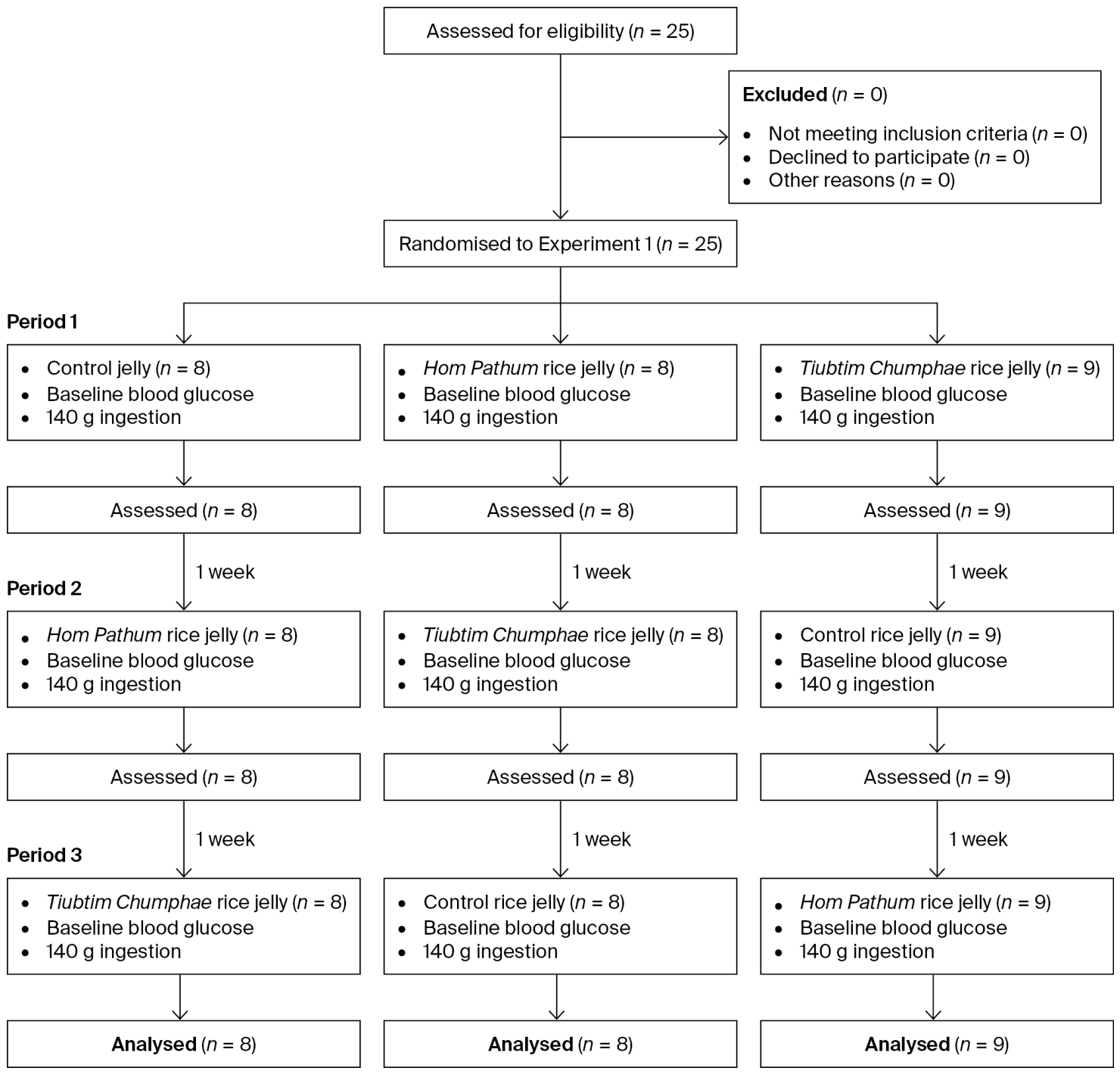
As illustrated in Figure 1, participants consumed 140 g of either the control jelly, Hom Pathum rice jelly, or Tubtim Chumphae rice jelly in a randomized crossover sequence. Following each intervention, BG, insulin concentrations, HOMA indices, and cardiac autonomic responses were evaluated over a 120 min postprandial period.
BG concentrations were measured at baseline (0 min) and at 30, 60, 90, and 120 min following jelly ingestion, and the AUC for BG was subsequently calculated. Insulin concentrations were assessed at baseline and 120 min, and HOMA indices were derived accordingly. Cardiac autonomic nervous system activity was evaluated using heart rate variability (HRV), which was recorded for 10 min before jelly consumption (baseline) and continuously monitored throughout the 120 min post-ingestion period.
A 1-week washout period was implemented between intervention conditions to minimize potential carryover effects. Following each washout period, participants crossed over to the subsequent intervention and completed the same experimental procedures.

2.6. Protocols of Experiment 2

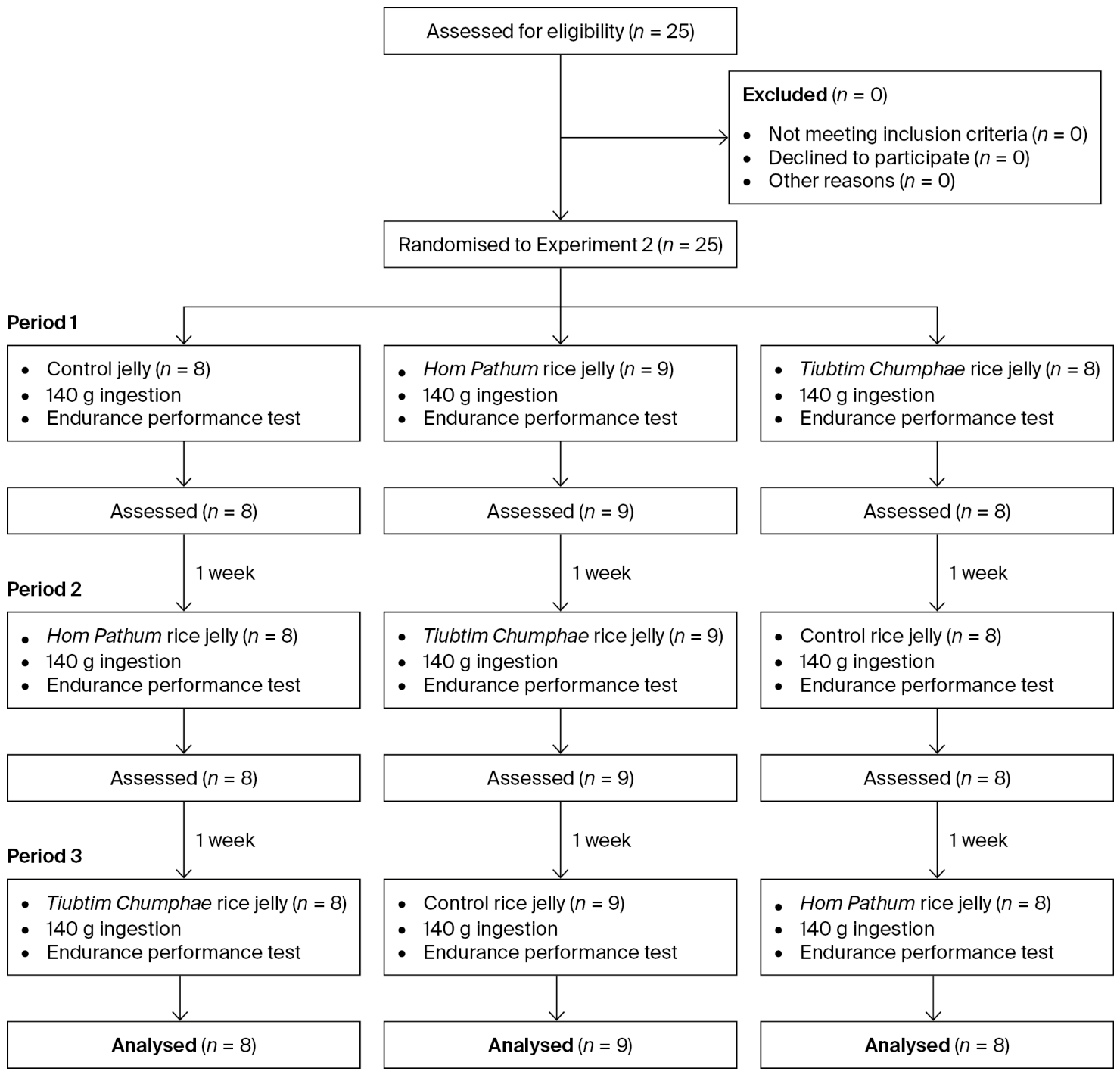
As illustrated in Figure 2, participants consumed 140 g of either the control jelly, Hom Pathum rice jelly, or Tubtim Chumphae rice jelly according to a randomized crossover sequence. Thirty minutes following jelly ingestion, endurance performance was evaluated using a treadmill running test performed at 60% of each participant’s peak oxygen consumption (VO2peak) until volitional exhaustion.
HR, dyspnea, and leg fatigue scores were recorded at the point of exhaustion. Immediately following completion of the endurance test, venous blood samples were collected for the determination of oxidative stress biomarkers.
Consistent with Experiment 1, a 1-week washout period was implemented between intervention conditions to minimize potential carryover effects. Following each washout period, participants crossed over to the subsequent intervention and completed the same experimental procedures.
All participants completed both Experiments 1 and 2 within the same study period under comparable environmental conditions, including controlled room temperature and relative humidity. Throughout the study, participants were instructed to maintain their habitual lifestyle behaviors, particularly with respect to dietary intake and physical activity, to minimize potential confounding influences on study outcomes.

2.7. Primary and Secondary Outcomes and Measurements

2.7.1. Glycemic Control and HOMA Indices Measurements

In Experiment 1, BG concentrations (mg/dL) were measured at baseline (0 min) and at 30, 60, 90, and 120 min post-ingestion using the Accu-Chek® Guide BG monitoring system (Roche Diabetes Care Inc., Indianapolis, IN, USA), following procedures described in our previous study [19]. The AUC for BG was calculated over the 120 min period.
Approximately 3 mL of venous blood was collected into clot activator tubes for the analysis of insulin concentrations (µU/mL). Insulin levels were determined using the ARCHITECT Insulin assay (Abbott Laboratories, Abbott Park, IL, USA) and analyzed by RIA Laboratory Co., Ltd. (Chonburi, Thailand).
HOMA indices were calculated using standard equations [21,22,23].
HOMA-IR was calculated as follows: fasting glucose (mg/dL) × fasting insulin (µU/mL)/405.
HOMA-B was calculated as follows: 20 × fasting insulin (µU/mL)/[fasting glucose (mg/dL) − 63].
HOMA-%S was calculated as follows: (1/HOMA-IR) × 100.
QUICKI was calculated as follows: 1/[log(fasting insulin (µU/mL)) + log(fasting glucose (mg/dL))].

2.7.2. Cardiac Autonomic Nervous System Measurement

Cardiac autonomic nervous system activity was assessed using HRV analysis. Electrocardiographic signals were recorded using a lead II configuration (PowerLab 4/30, AD Instruments, Bella Vista, NSW, Australia) and analyzed with the HRV module of LabChart® Pro software Version 7 (AD Instruments, Bella Vista, NSW, Australia).
HRV indices included time-domain parameters, namely the standard deviation of normal-to-normal intervals (SDNN) and the root mean square of successive R–R interval differences (RMSSD), as well as frequency-domain parameters, including low-frequency (LF) power (0.04–0.15 Hz), high-frequency (HF) power (0.15–0.40 Hz), and the LF/HF ratio. LF power is generally considered to reflect predominantly sympathetic modulation, whereas HF power is associated with parasympathetic (vagal) activity. The LF/HF ratio is commonly interpreted as an index of sympathovagal balance [24].

2.7.3. Blood Pressure Measurement

Blood pressure (BP) and HR were measured under resting conditions before and after jelly ingestion using an automated digital BP monitor (HEM-7121, Omron Healthcare Co., Ltd., Kyoto, Japan). The cuff was placed on the upper arm, with the lower edge positioned approximately 2–3 cm above the antecubital crease.
Two consecutive measurements were obtained at 1 min intervals, and the average of the two readings was used to determine systolic BP (SBP) and diastolic BP (DBP). Pulse pressure (PP), mean arterial pressure (MAP), and rate–pressure product (RPP) were subsequently calculated using standard equations: PP = SBP − DBP; MAP = DBP + PP/3; RPP = HR × SBP.

2.7.4. VO2peak and Endurance Performance Assessments

Participants underwent a submaximal exercise test using the Bruce protocol to estimate VO2peak and determine the workload corresponding to 60% VO2peak. To assess VO2peak, participants completed a continuous incremental exercise test to voluntary exhaustion on a calibrated treadmill ergometer (Lode Valiant; Lode BV, Groningen, The Netherlands) using MetaSoft Studio Version 5.13.0 SR2 (MetaMax 3B, Cortex, Leipzig, Germany).
Briefly, the test began at a speed of 2.7 km·h−1 with a 10% incline for 3 min. Workload (speed and grade) was subsequently increased every 3 min in a stepwise manner until volitional exhaustion was reached [25]. Exhaustion was defined as the onset of maximal dyspnea and fatigue or the inability to maintain the required exercise intensity.
At a separate visit, conducted 1 week after the VO2peak assessment, endurance performance was evaluated as time to exhaustion during treadmill running exercise at 60% VO2peak. HR, dyspnea, and leg fatigue were recorded at the point of exhaustion. Perceptual responses were assessed using the Borg rating of perceived exertion (RPE; 6–20 scale) for leg fatigue and the modified Borg rating of perceived dyspnea (RPD; 0–10 scale) for breathlessness.

2.7.5. Oxidative Stress Biomarker Assay

Approximately 1 mL of venous blood was collected into ethylenediaminetetraacetic acid (EDTA) tubes to assess lipid peroxidation as an indicator of oxidative stress. Plasma malondialdehyde (MDA) levels were determined using the thiobarbituric acid reactive substances (TBARS) assay. Briefly, 150 μL of plasma was mixed with trichloroacetic acid (10%), EDTA (5 mM), sodium dodecyl sulfate (8%), and butylated hydroxytoluene (0.5 μg/mL), followed by the addition of TBA (0.6%). The mixture was incubated in boiling water for 30 min. After incubation, samples were centrifuged at 10,000 rpm for 5 min at room temperature (Eppendorf Centrifuge 5810R, Hamburg, Germany), and the absorbance of the supernatant was measured at 532 nm using a UV/Vis Basic BioSpectrometer (Eppendorf, Hamburg, Germany). A standard curve was generated using 1,1,3,3-tetraethoxypropane (0.1–10 μmol/L) to quantify MDA levels [26].

2.8. Statistical Analyses

Data were assessed for normality using the Shapiro–Wilk test, homogeneity of variance using Levene’s test, and sphericity using Mauchly’s test.
In Experiment 1, changes in BG concentrations and HRV over time (0, 30, 60, 90, and 120 min) within and between ingestion conditions (control, Hom Pathum rice jelly, and Tubtim Chumphae rice jelly) were analyzed using repeated-measures analysis of covariance (ANCOVA), with the baseline value (0 min) included as a covariate. In addition, differences in insulin concentrations and HOMA indices among interventions were analyzed using one-way analysis of variance (ANOVA) followed by Tukey’s post hoc test. Pairwise comparisons were further examined using paired t-tests.
In Experiment 2, differences in outcome variables (endurance performance and oxidative stress biomarkers) among interventions were analyzed using one-way ANOVA with Tukey’s post hoc test.
All statistical analyses were conducted using IBM SPSS Statistics for Windows (Version 25, IBM Corp., Armonk, NY, USA). Data are presented as mean ± standard deviation (SD), and statistical significance was set at p < 0.05.

3. Results

3.1. Experiment 1

Twenty-five participants were enrolled, and they all (100%) completed the study. Therefore, data from all participants were included in the final analysis. The sex distribution was comparable (p = 0.841), with 12 (48%) male and 13 (52%) female participants.

3.1.1. Baseline Physical and Physiological Characteristics of Participants in Experiment 1

The baseline physical and physiological characteristics of the participants are presented in Table 2. Physical characteristics included age, body weight, BMI, body fat percentage, subcutaneous fat percentage, muscle percentage, visceral fat level, and basal metabolic rate. Physiological characteristics included HR, SBP, and DBP.

3.1.2. Blood Glucose Control Response

Baseline insulin, HOMA-B, HOMA-%S, and QUICKI were comparable among the three interventions, whereas baseline BG and HOMA-IR differed significantly (p < 0.05). Therefore, time-dependent responses were analyzed using two-way ANCOVA with baseline adjustment.
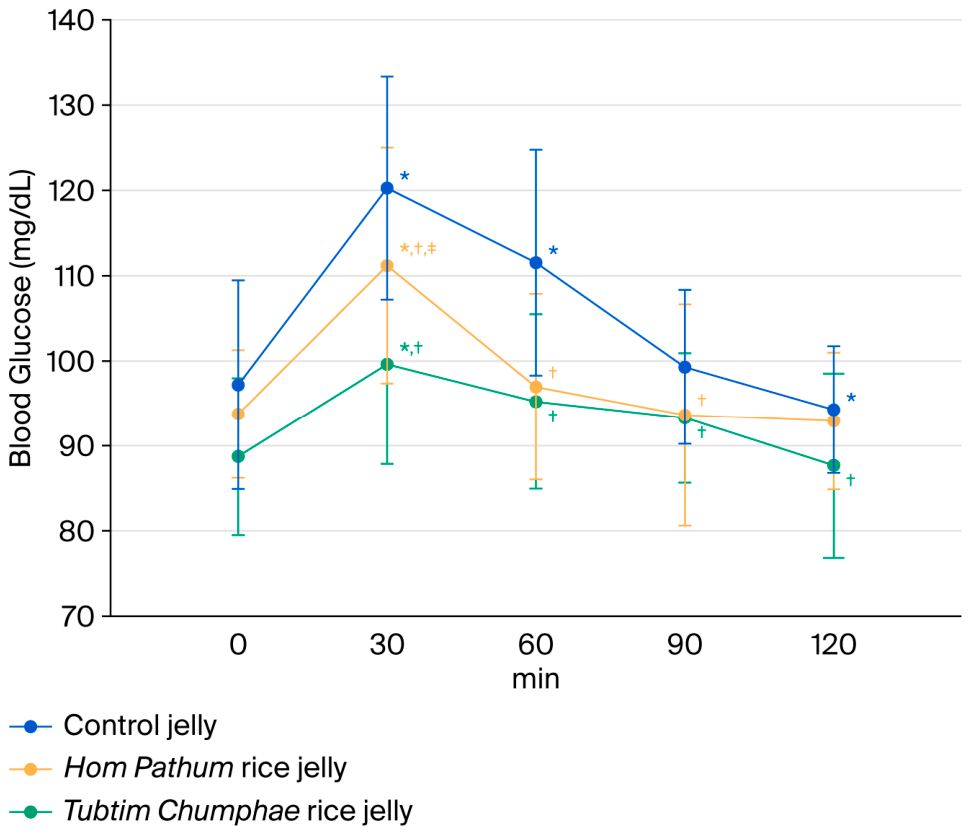
No significant between-intervention differences were observed for insulin, HOMA-IR, HOMA-B, HOMA-%S, or QUICKI (all p > 0.05). In contrast, BG differed significantly among interventions. At 30 min, BG was lower following Hom Pathum and Tubtim Chumphae rice jellies compared with the control (p < 0.001 and p = 0.002, respectively) and was higher in the Hom Pathum than in the Tubtim Chumphae intervention (p = 0.016). At 60 min, BG remained lower in both rice jelly interventions than in the control (both p < 0.001). Similarly, at 90 min, BG was reduced in the Hom Pathum and Tubtim Chumphae interventions compared with the control (p = 0.011 and p = 0.039, respectively). By 120 min, BG remained significantly lower only in the Tubtim Chumphae intervention compared with the control (p = 0.043) (Figure 3; Table 3).
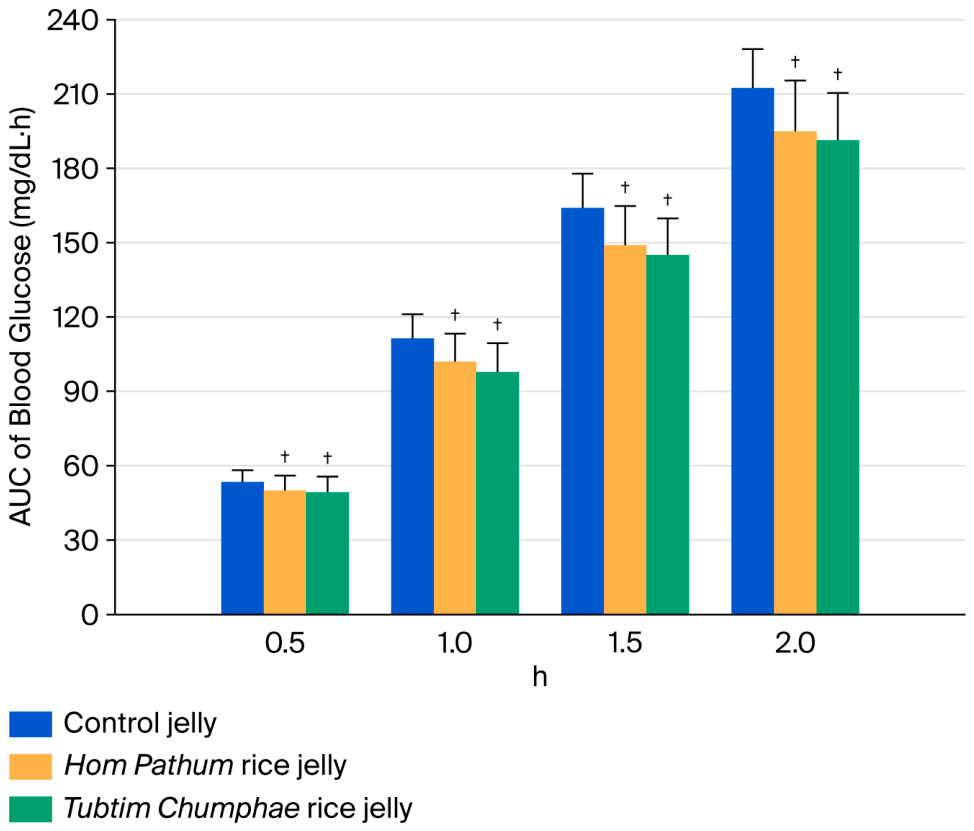
BG AUC analysis confirmed these findings. Control jelly showed consistently higher AUC values across all time intervals (0–0.5, 0–1.0, 0–1.5, and 0–2.0 h) compared with both the Hom Pathum rice (p = 0.005 to p < 0.001) and Tubtim Chumphae rice interventions (p = 0.019 to p = 0.001) (Figure 4; Table 3).
Within-group analyses indicated that BG peaked at 30 min in all interventions. In the control intervention, BG at 30 and 60 min was higher than at baseline (p < 0.001 and p = 0.013), and 30 min values were higher than at all other time points (all p < 0.001). In the Hom Pathum intervention, BG at 30 and 60 min exceeded baseline (both p < 0.001), with the 30 min values being higher than those at 90 and 120 min (both p < 0.001). In the Tubtim Chumphae intervention, BG at 30 min was higher than that at baseline and at 60–120 min (p = 0.008–0.001).
At 120 min, insulin and HOMA-IR decreased significantly, and HOMA-B increased significantly from baseline in the Hom Pathum (p = 0.013, p = 0.016, and p = 0.026, respectively) and Tubtim Chumphae interventions (p = 0.006, p = 0.009, and p = 0.030, respectively), whereas HOMA-%S increased in the Tubtim Chumphae intervention (p = 0.038). In the control intervention, only insulin decreased significantly at 120 min (p = 0.032).

3.1.3. Heart Rate Variability Response

Baseline HRV indices did not differ among interventions (all p > 0.05). Similarly, no significant between-intervention differences were observed in HRV indices at 30, 60, 90, or 120 min following ingestion (all p > 0.05) (Table 4).
Within-group analyses revealed time-dependent changes in specific HRV parameters. In the control jelly intervention, HF power (normalized units) was higher at 30 min compared with baseline (p = 0.001). No significant changes were observed in SDNN, RMSSD, LF power, HF power (absolute), or the LF/HF ratio over time (all p > 0.05).
In the Hom Pathum rice jelly intervention, SDNN at 60, 90, and 120 min was significantly higher than at baseline (p = 0.003, p < 0.001, and p = 0.001, respectively). Additionally, SDNN at 30 min was lower than at 90 min (p = 0.032). HF power increased at 30 min compared with baseline (p = 0.018), whereas RMSSD, LF power, and the LF/HF ratio remained unchanged (all p > 0.05).
In the Tubtim Chumphae rice jelly intervention, LF power at 60 min was lower than at baseline (p = 0.030). HF power (normalized units) increased at 30, 60, and 90 min compared with baseline (p = 0.020, p = 0.003, and p = 0.015, respectively), while the LF/HF ratio decreased at 30 and 60 min (p = 0.032 and p = 0.007, respectively). No significant changes were observed in SDNN, RMSSD, LF power (other time points), or HF power (absolute) (all p > 0.05).

3.1.4. Cardiovascular Dynamic Response

Baseline cardiovascular parameters did not differ among interventions (all p > 0.05). Likewise, no significant between-intervention differences were observed in BP indices at 30, 60, 90, or 120 min following ingestion (all p > 0.05) (Table 5).
Within-group analyses showed no significant changes in SBP, DBP, PP, or MAP over time in any intervention (all p > 0.05). In the control jelly intervention, SBP, DBP, PP, and MAP remained unchanged (all p > 0.05). HR was lower at 30 and 90 min compared with baseline (p = 0.001 and p = 0.040, respectively), and RPP was reduced at 30 min (p = 0.011).
Similarly, in the Hom Pathum rice jelly intervention, HR and RPP at 30, 60, 90, and 120 min were significantly lower than at baseline (all p < 0.01).
In the Tubtim Chumphae rice jelly intervention, SBP, DBP, PP, and MAP also showed no significant changes over time (all p > 0.05). HR decreased at 30, 60, and 90 min compared with baseline (p < 0.001, p < 0.001, and p = 0.011, respectively), and was lower at 30 min than at 120 min (p = 0.047). RPP was reduced at 30, 60, and 90 min compared with baseline (p < 0.001, p < 0.001, and p = 0.025, respectively), with lower values at 30 min than at 120 min (p = 0.011).

3.2. Experiment 2

Similarly to Experiment 1, 25 participants were enrolled, and all (100%) completed the study. Therefore, data from all participants were included in the final analysis. However, the number of male participants (n = 6; 24%) was significantly lower than that of female participants (n = 19; 76%) (p = 0.009).

3.2.1. Baseline Physical and Physiological Characteristics of Participants in Experiment 2

The baseline physical and physiological characteristics of the participants are presented in Table 6. Physical characteristics included age, height, body weight, BMI, body fat percentage, fat-free mass, muscle mass, protein mass, mineral mass, total body water, waist–hip ratio, visceral fat level, basal metabolic rate, and fitness score. Physiological characteristics included HR, SBP, DBP, resting VO2, and VO2peak.

3.2.2. Endurance Performance

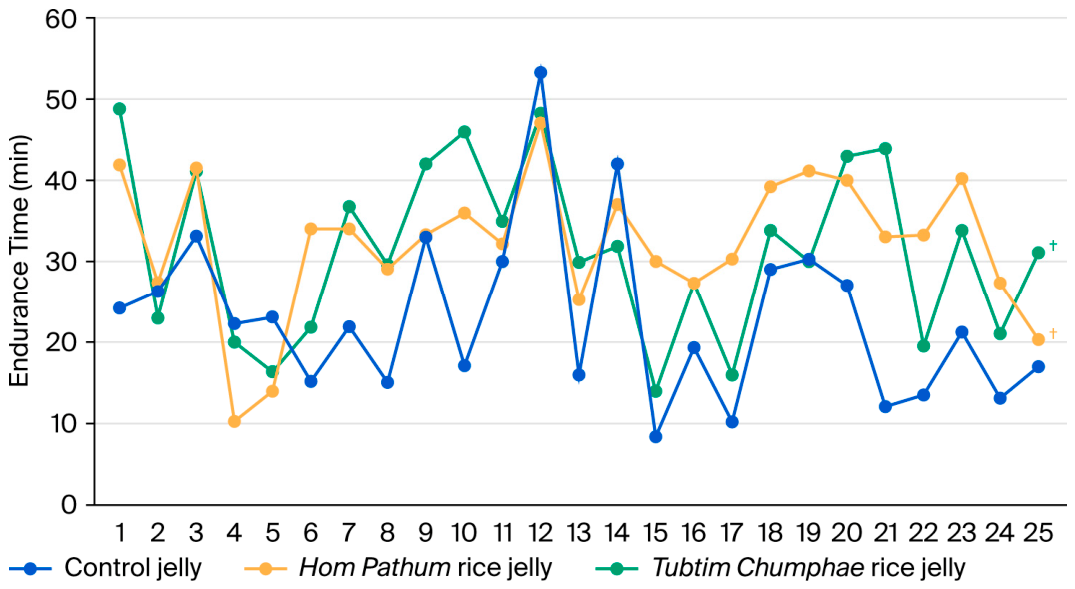
Endurance time was significantly higher following Hom Pathum rice jelly (p = 0.004) and Tubtim Chumphae rice jelly (p = 0.001) compared with the control jelly. No significant difference was observed between the Hom Pathum and Tubtim Chumphae rice jellies (p = 0.772) (Figure 5; Table 7).
No significant differences were observed among interventions for HR, RPE, RPD, speed, or incline (all p > 0.05).

3.2.3. Oxidative Stress Response to Endurance Exercise

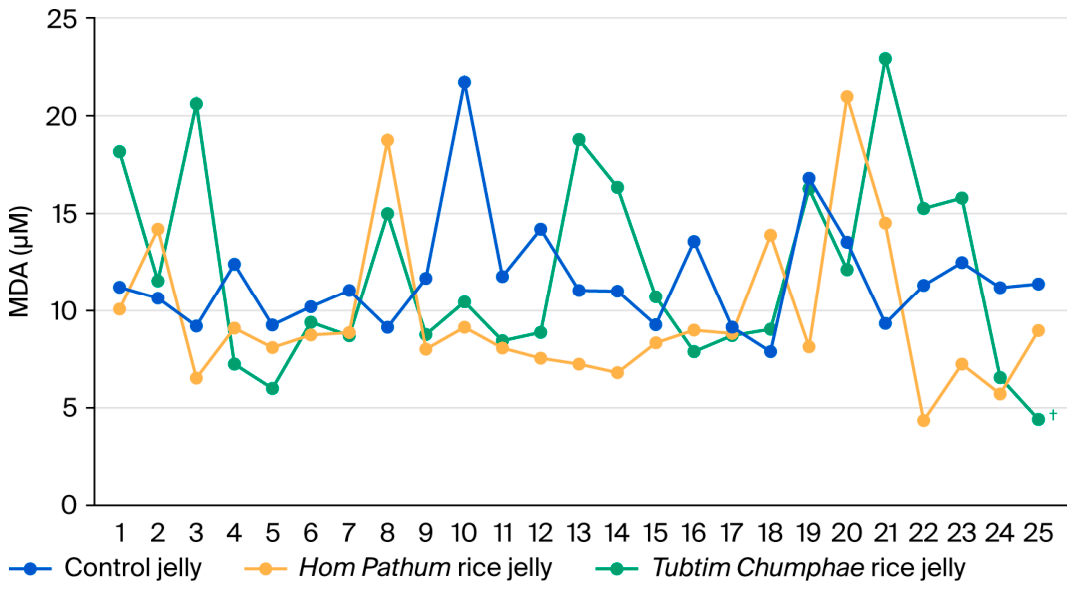
MDA levels were significantly lower following Tubtim Chumphae rice jelly compared with the control jelly (p = 0.049). Hom Pathum rice jelly also showed a trend toward lower MDA levels compared with the control, although this did not reach statistical significance (p = 0.087) (Figure 6; Table 7). No significant difference was observed between the Hom Pathum and Tubtim Chumphae rice jellies (p = 0.089).

3.3. Chemical Constituents of Hom Pathum and Tubtim Chumphae Rice Grains and Rice Jellies

GC–MS analysis identified 12 and 16 compounds in Hom Pathum and Tubtim Chumphae rice grains, respectively. In Hom Pathum rice grains, propanoic acid, 3,3′-thiobis-, didodecyl ester (20.86% of the total peak area) and oleic acid (20.35%) were the predominant compounds, followed by hexadecanoic acid (16.75%), linoleic acid (16.00%), and dodecyl acrylate (12.59%). In contrast, Tubtim Chumphae rice grains were characterized by higher proportions of oleic acid (23.29%), linoleic acid (23.19%), and hexadecanoic acid (20.50%), with propanoic acid, 3,3′-thiobis-, didodecyl ester comprising 13.69% of the total peak area (Table 8).
Following jelly preparation, the chemical profiles of both rice varieties exhibited a similar pattern. Propanoic acid, 3,3′-thiobis-, didodecyl ester became the predominant constituent in Hom Pathum and Tubtim Chumphae rice jellies, accounting for 34.05% and 41.48% of the total peak area, respectively. Dodecyl acrylate, β-D-glucopyranose, 1,6-anhydro-, and 1-dodecanol were also detected as major constituents in both jelly formulations (Table 8).

4. Discussion

In this study, the acute effects of two Thai rice varieties, Hom Pathum and Tubtim Chumphae, on glycemic response, cardiovascular regulation, endurance performance, and oxidative stress in healthy adults were investigated. The principal findings were that both rice jellies attenuated postprandial BG responses and improved endurance performance compared with the glucose-based control, whereas Tubtim Chumphae rice additionally demonstrated potential to attenuate exercise-induced oxidative stress. These effects occurred without significant between-intervention differences in insulin concentrations, HOMA-derived indices, cardiac autonomic function, or BP, suggesting that physiological responses may involve mechanisms beyond acute insulin-mediated regulation.
Although these findings indicate potentially favorable acute physiological effects of Hom Pathum and Tubtim Chumphae rice jellies, they should be interpreted cautiously. In this study, short-term responses were evaluated in a relatively small cohort of healthy adults, but no long-term clinical outcomes or disease-related endpoints were assessed. Furthermore, detailed mechanistic characterization, including physicochemical and phytochemical determinants potentially underlying the observed responses, was beyond the scope of the present investigation. Accordingly, the present findings should be regarded as preliminary evidence supporting further investigation rather than definitive confirmation of functional or clinical efficacy.
The attenuation of postprandial BG concentrations and reduction in BG AUC following both rice interventions provide important insight into the potential metabolic relevance of Thai rice varieties. Despite their comparable caloric content and broadly similar sugar composition, both rice jellies elicited a more favorable glycemic profile than the glucose-based control [18]. These findings suggest that postprandial physiological responses depend not only on carbohydrate quantity but also on carbohydrate quality and food matrix characteristics [27]. Such effects may reflect differences in starch structure and physicochemical properties that influence digestion and glucose absorption kinetics [28], together with the presence of rice-derived phytochemicals, including phenolic and flavonoid compounds [29].
Notably, Tubtim Chumphae rice produced greater glycemic attenuation at selected postprandial time points. This observation may be partially associated with the phytochemical characteristics of pigmented rice varieties, particularly their anthocyanin content [30]. Anthocyanins have been reported to inhibit carbohydrate-digesting enzymes and modulate glucose transport pathways [31], thereby contributing to reduced postprandial glycemic excursions [32]. However, these proposed mechanisms should be interpreted cautiously. Although GC–MS analysis identified multiple chemical constituents in both rice grains and final jelly preparations, this study did not directly quantify total polyphenol or anthocyanin contents, evaluate enzyme inhibition, or assess phytochemical degradation during processing. Consequently, the observed glycemic effects cannot be attributed specifically to anthocyanins or polyphenols alone.
The lower postprandial glycemic responses observed following Hom Pathum and Tubtim Chumphae rice ingestion likely reflect the combined influence of rice variety, starch characteristics, processing conditions, and food matrix properties. Thermal processing represents an additional factor warranting consideration. Hom Pathum rice required boiling for 15 min, whereas Tubtim Chumphae rice required 30 min to achieve adequate cooking and rice milk extraction, reflecting inherent varietal differences in grain characteristics. Thermal processing influences starch gelatinization, granule disruption, food matrix organization, and the stability of heat-sensitive phytochemicals, including anthocyanins and phenolic compounds [33]. Such processing-induced modifications may subsequently alter starch digestibility and postprandial glycemic responses [27,28]. Therefore, the greater glycemic attenuation observed following Tubtim Chumphae rice consumption may reflect not only intrinsic compositional differences but also physicochemical changes induced during preparation.
Importantly, the present findings should also be interpreted within the context of comparator selection and food matrix characteristics. The glucose-based control jelly was designed to match caloric content and sugar composition while excluding rice-derived constituents, thereby permitting evaluation of physiological responses beyond carbohydrate intake alone. In addition, Hom Pathum rice jelly was intentionally included as a commonly consumed non-pigmented Thai rice comparator to provide a practical reference condition against which Tubtim Chumphae rice could be evaluated. Although this design enabled the assessment of both rice-derived and pigmentation-related characteristics, Hom Pathum rice also contains bioactive compounds and therefore does not represent an inert or low-bioactive comparator. Consequently, differences between the rice jellies should be interpreted as reflecting relative varietal and compositional differences rather than effects attributable exclusively to pigmented rice constituents.
Beyond compositional factors, physicochemical and rheological properties of the jellies may also have influenced the observed metabolic responses. Although all interventions were prepared using the same carrageenan-based formulation and standardized procedures, inherent differences in rice composition may have affected gel structure, texture, and disintegration behavior. Such characteristics influence gastric breakdown, nutrient release kinetics, and subsequent postprandial glycemic and hormonal responses. Because gel strength, viscosity, and other rheological parameters were not evaluated, their contribution cannot be excluded. Accordingly, the present findings should be interpreted as reflecting the combined effects of rice composition, food matrix characteristics, and processing conditions rather than the isolated actions of specific bioactive compounds alone.
Despite the observed differences in BG responses, no significant between-intervention effects were identified for insulin concentrations or HOMA-derived indices. These findings suggest that improved glycemic responses were more likely mediated through reduced glucose absorption [34] or altered carbohydrate handling [35] rather than enhanced insulin secretion or sensitivity during the acute postprandial period. Such observations are consistent with previous studies demonstrating that polyphenol-rich foods may modulate postprandial glycemia independently of measurable changes in insulin dynamics [36,37,38,39,40].
Similarly, no significant between-intervention differences were observed in HRV or BP indices, indicating that acute rice jelly consumption did not markedly influence autonomic cardiovascular regulation in healthy individuals. Although modest within-condition increases in parasympathetic activity were observed, particularly following Tubtim Chumphae rice ingestion, these changes were insufficient to produce statistically significant between-condition effects. Previous investigations have reported improvements in autonomic cardiovascular regulation following consumption of polyphenol-rich foods through the modulation of parasympathetic and sympathetic activity [41,42,43]. However, discrepancies between studies may reflect differences in participant characteristics, intervention duration, and the type and dose of bioactive compounds administered.
Despite the absence of significant autonomic or cardiovascular effects, both rice interventions significantly improved endurance performance. Time to exhaustion increased following both Hom Pathum and Tubtim Chumphae rice consumption compared with under the control condition (+8.46 min and +9.25 min, respectively), despite comparable HR, perceived dyspnea, leg fatigue, and exercise workload across interventions. This pattern suggests that the observed performance enhancement was unlikely to be mediated primarily through cardiovascular or perceptual mechanisms and may instead reflect alterations in metabolic efficiency or substrate availability [41].
One plausible explanation is that attenuation of postprandial glycemic fluctuations following rice jelly ingestion provided a more stable and sustained energy supply during exercise [44], thereby delaying fatigue onset and prolonging endurance capacity. Differences in starch digestibility and glucose release kinetics may have contributed to this effect, particularly given the more favorable postprandial glycemic profiles observed following both rice interventions relative to the glucose-based control. In addition, rice-derived phytochemicals may support cellular energy metabolism [45] or attenuate exercise-associated oxidative perturbations [46], although these mechanisms were not directly evaluated in this study. Consistent with the current findings, previous studies have reported that polyphenol-rich foods may enhance physical performance, including endurance capacity [47,48,49]. Nevertheless, because substrate metabolism and energy utilization were not assessed, the precise physiological mechanisms underlying the observed performance benefits remain uncertain.
The reduction in post-exercise MDA concentration following Tubtim Chumphae rice ingestion provides further insight into the potential functional relevance of pigmented rice consumption. MDA is a commonly used marker of lipid peroxidation and oxidative stress that typically increases following endurance exercise [50]. The attenuation observed in this study suggests that Tubtim Chumphae rice may exert acute antioxidant effects and thereby mitigate exercise-induced oxidative stress. Such effects may be associated with the greater abundance of anthocyanins and related polyphenolic compounds commonly present in pigmented rice varieties [51]. Previous investigations have similarly demonstrated that polyphenol-rich foods, particularly those containing pigmented phytochemicals such as anthocyanins, may attenuate exercise-induced oxidative stress and support redox balance [52,53,54].
However, interpretation of the antioxidant findings requires caution. Although Hom Pathum rice demonstrated a comparable directional trend, the reduction in MDA did not achieve statistical significance. This difference may reflect variation in phytochemical composition between rice varieties [55], inter-individual variability in oxidative stress responses [56], or limited statistical power for oxidative stress outcomes. Moreover, mechanistic biomarkers related to antioxidant capacity, inflammatory regulation, muscle damage, and substrate metabolism were not evaluated. Consequently, the biological pathways underlying the observed reduction in oxidative stress cannot be fully elucidated from the present findings alone.
Several strengths of the present study should be acknowledged. Its randomized crossover design minimized inter-individual variability and strengthened internal validity, while the inclusion of both metabolic and exercise-related outcomes permitted broader evaluation of the acute physiological effects of rice-based interventions. Furthermore, the incorporation of both a glucose-based control and a commonly consumed non-pigmented Thai rice comparator enabled the assessment of physiological responses attributable to rice consumption and facilitated contextual interpretation of pigmentation-related characteristics. Nevertheless, several limitations warrant consideration. First, Experiment 2 did not include BG, insulin, or oxidative stress assessments immediately prior to endurance exercise. Consequently, within-condition changes and exercise-related alterations in glycemic regulation and oxidative stress could not be comprehensively characterized. Second, although the proximate composition, caloric content, and major chemical constituents of the rice jellies were evaluated, several potentially relevant compositional and physicochemical properties were not determined. Specifically, resistant starch content, the amylose-to-amylopectin ratio, dietary fiber content, glycemic index characterization, rheological properties, and the comprehensive polyphenol and anthocyanin profiles of the final jelly products were not assessed. These characteristics may substantially influence gel structure, gastric disintegration, starch digestibility, glucose release kinetics, and antioxidant activity and may have therefore contributed to the physiological responses observed in this study. Third, targeted mechanistic assessments were not performed. Biomarkers related to antioxidant capacity, inflammatory cytokines, muscle damage, and substrate metabolism were not measured, thereby limiting mechanistic interpretation of the observed metabolic and endurance-related responses. Fourth, this study examined only acute physiological responses, and therefore, the long-term effects and clinical relevance of habitual rice jelly consumption remain unknown. Additionally, participants were young and healthy, which may limit generalizability to populations with impaired glucose regulation or chronic metabolic disease. Finally, the sex distribution of participants in Experiment 2 was also uneven, with female participants comprising 76% of the cohort. Given recognized sex-related differences in metabolic regulation, substrate utilization, hormonal responses, and exercise performance, this imbalance may limit generalizability across sexes. Furthermore, the relatively small number of male participants precluded adequately powered sex-stratified analyses. Accordingly, the present findings should be interpreted with appropriate caution.
Future research incorporating targeted phytochemical characterization and mechanistic investigation is warranted to clarify the pathways underlying the observed physiological responses. In particular, direct assessment of phytochemical stability, starch gelatinization, and digestibility under standardized processing conditions is needed to distinguish the relative contributions of rice variety and thermal processing to glycemic responses. More comprehensive characterization of final jelly products, including resistant starch content, the amylose-to-amylopectin ratio, rheological properties, and detailed polyphenol and anthocyanin profiling, would strengthen mechanistic interpretation and improve reproducibility of rice-based nutritional interventions. Future studies should additionally incorporate biomarkers related to oxidative stress, inflammation, antioxidant capacity, muscle damage, and substrate metabolism to better elucidate biological mechanisms. Longer-term investigations are also required to determine whether the acute physiological responses observed in this study translate into clinically meaningful outcomes. Such research should include more diverse and metabolically relevant populations, including individuals with insulin resistance or type 2 diabetes, and incorporate adequately powered sex-specific analyses to clarify potential sex-dependent responses to rice-based interventions and endurance exercise.

5. Conclusions

The present findings suggest that Hom Pathum and Tubtim Chumphae rice jellies may differentially affect acute glycemic responses and endurance performance in healthy adults, with Tubtim Chumphae rice additionally demonstrating potential to attenuate exercise-induced oxidative stress. However, these observations reflect short-term physiological responses under controlled experimental conditions and should not be interpreted as evidence of established long-term clinical benefit, health promotion, or disease-preventive effects. Further studies involving larger and more diverse populations, longer intervention durations, and detailed mechanistic characterization are warranted to confirm and better understand these observed physiological responses.

Author Contributions

Conceptualization, P.P.; methodology, P.P.; software, P.P.; validation, O.B.; formal analysis, P.P. and T.R.; investigation, O.B., P.P., U.B. and P.C.; resources, P.P., O.B. and P.A.; data curation, O.B.; writing—original draft preparation, P.P. and O.B.; writing—review and editing, P.P.; visualization, P.P.; supervision, P.P. and O.B.; project administration, P.P.; funding acquisition, P.P. and O.B. All authors have read and agreed to the published version of the manuscript.

Funding

This research was funded by Burapha University (BUU), Thailand Science Research and Innovation (TSRI), and the National Science Research and Innovation Fund (NSRF) (Fundamental Fund 2024), grant number 27/2567.

Institutional Review Board Statement

This study was conducted in accordance with the Declaration of Helsinki and approved by the Human Research Ethics Committee of Burapha University (Approval No. IRB1-047/2567; approval date: 2 May 2024). This trial was registered with ClinicalTrials.gov (Identifier: NCT06475222; registration date: 7 February 2025).

Informed Consent Statement

Informed consent was obtained from all subjects involved in this study.

Data Availability Statement

The data are available upon request from the corresponding author. Restrictions apply to the availability of these data due to privacy and ethical considerations.

Conflicts of Interest

The authors declare no conflicts of interest.

Abbreviations

The following abbreviations are used in this manuscript:
ANCOVAAnalysis of covariance
ANOVAAnalysis of variance
AUCArea under the curve
BGBlood glucose
BMIBody mass index
BPBlood pressure
DBPDiastolic blood pressure
EDTAEthylenediaminetetraacetic acid
HFHigh frequency
HOMAHomeostatic model assessment
HOMA-BHomeostasis model assessment of beta-cell function
HOMA-IRHomeostatic model assessment of insulin resistance
HOMA-%SHomeostatic model assessment for insulin sensitivity
HRHeart rate
HRVHeart rate variability
LFLow frequency
MAPMean arterial pressure
MDAMalondialdehyde
PPPulse pressure
QUICKIQuantitative insulin sensitivity check index
RMSSDRoot mean square of successive R–R interval differences
RPDRating of perceived dyspnea
RPERating of perceived exertion
RPPRate–pressure product
SBPSystolic blood pressure
SDStandard deviation
SDNNStandard deviation of normal-to-normal intervals
TBAThiobarbituric acid
TBARThiobarbituric acid reactive substances
VO2peakPeak oxygen consumption

References

  1. Fukagawa, N.K.; Ziska, L.H. Rice: Importance for global nutrition. J. Nutr. Sci. Vitaminol. 2019, 65, S2–S3. [Google Scholar] [CrossRef] [PubMed]
  2. Kammapana, L. Physical characteristics, phytochemical contents and antioxidant activity of ten organic-pigmented rice varieties from Surin province. Trends Sci. 2023, 20, 4566. [Google Scholar] [CrossRef]
  3. Khoo, H.E.; Azlan, A.; Tang, S.T.; Lim, S.M. Anthocyanidins and anthocyanins: Colored pigments as food, pharmaceutical ingredients, and the potential health benefits. Food Nutr. Res. 2017, 61, 1361779. [Google Scholar] [CrossRef] [PubMed]
  4. Blaak, E.E.; Antoine, J.M.; Benton, D.; Björck, I.; Bozzetto, L.; Brouns, F.; Diamant, M.; Dye, L.; Hulshof, T.; Holst, J.J.; et al. Impact of postprandial glycaemia on health and prevention of disease. Obes. Rev. 2012, 13, 923–984. [Google Scholar] [CrossRef]
  5. Standl, E.; Schnell, O.; Ceriello, A. Postprandial hyperglycemia and glycemic variability: Should we care? Diabetes Care 2011, 34, S120–S127. [Google Scholar] [CrossRef]
  6. Dickinson, S.; Brand-Miller, J. Glycemic index, postprandial glycemia and cardiovascular disease. Curr. Opin. Lipidol. 2005, 16, 69–75. [Google Scholar] [CrossRef]
  7. Weber, K.S.; Schlesinger, S.; Goletzke, J.; Straßburger, K.; Zaharia, O.P.; Trenkamp, S.; Wagner, R.; Lieb, W.; Buyken, A.E.; Roden, M.; et al. Associations of carbohydrate quality and cardiovascular risk factors vary among diabetes subtypes. Cardiovasc. Diabetol. 2025, 24, 53. [Google Scholar] [CrossRef]
  8. Kanter, M. High-quality carbohydrates and physical performance: Expert panel report. Nutr. Today 2018, 53, 35–39. [Google Scholar] [CrossRef]
  9. Tan, B.L.; Norhaizan, M.E.; Liew, W.P. Nutrients and oxidative stress: Friend or foe? Oxid. Med. Cell. Longev. 2018, 2018, 9719584. [Google Scholar] [CrossRef] [PubMed]
  10. Naderi, A.; Gobbi, N.; Ali, A.; Berjisian, E.; Hamidvand, A.; Forbes, S.C.; Koozehchian, M.S.; Karayigit, R.; Saunders, B. Carbohydrates and endurance exercise: A narrative review of a food first approach. Nutrients 2023, 15, 1367. [Google Scholar] [CrossRef]
  11. Tkaczenko, H.; Kurhaluk, N. Antioxidant-rich functional foods and exercise: Unlocking metabolic health through NRF2 and related pathways. Int. J. Mol. Sci. 2025, 26, 1098. [Google Scholar] [CrossRef]
  12. Mason, S.A.; Trewin, A.J.; Parker, L.; Wadley, G.D. Antioxidant supplements and endurance exercise: Current evidence and mechanistic insights. Redox Biol. 2020, 35, 101471. [Google Scholar] [CrossRef]
  13. Mbanjo, E.G.N.; Kretzschmar, T.; Jones, H.; Ereful, N.; Blanchard, C.; Boyd, L.A.; Sreenivasulu, N. The genetic basis and nutritional benefits of pigmented rice grain. Front. Genet. 2020, 11, 229. [Google Scholar] [CrossRef] [PubMed]
  14. Das, S.; Kumari, T.; Babu, S.; C, N.; Kumar, S.; Deka, S.C. Bioactive compounds, functional properties, health benefits, and food applications of black rice: A comprehensive review. Food Chem. Adv. 2025, 7, 101028. [Google Scholar] [CrossRef]
  15. Tena, N.; Martín, J.; Asuero, A.G. State of the art of anthocyanins: Antioxidant activity, sources, bioavailability, and therapeutic effect in human health. Antioxidants 2020, 9, 451. [Google Scholar] [CrossRef]
  16. Pereira, C.; Lourenço, V.M.; Menezes, R.; Brites, C. Rice compounds with impact on diabetes control. Foods 2021, 10, 1992. [Google Scholar] [CrossRef] [PubMed]
  17. Wang, F.; Du, M.; Cui, G.; Zheng, S.; Wen, Y.; Li, H.; Wang, J.; Sun, B. Rice bran peptides with α-glucosidase inhibition activity delay the in vitro starch digestion of different rice foods. Int. J. Biol. Macromol. 2025, 310, 143428. [Google Scholar] [CrossRef]
  18. Farooq, M.A.; Yu, J. Starches in Rice: Effects of rice variety and processing/cooking methods on their glycemic index. Foods 2025, 14, 2022. [Google Scholar] [CrossRef]
  19. Prasertsri, P.; Booranasuksakul, U.; Naravoratham, K.; Trongtosak, P. Acute effects of passion fruit juice supplementation on cardiac autonomic function and blood glucose in healthy subjects. Prev. Nutr. Food Sci. 2019, 24, 245–253. [Google Scholar] [CrossRef] [PubMed]
  20. Boonla, O.; Chancharoen, P.; Padkao, T.; Teethaisong, Y.; Tangwattanachuleeporn, M.; Koowattanatianchai, S.; Prasertsri, P. Acute ingestion of snake fruit jelly improves glycemic response, enhances endurance performance and antioxidant defense, and reduces inflammatory markers in healthy adults. J. Int. Soc. Sports Nutr. 2025, 22, 2579029. [Google Scholar] [CrossRef]
  21. Yoon, H.; Jeon, D.J.; Park, C.E.; You, H.S.; Moon, A.E. Relationship between homeostasis model assessment of insulin resistance and beta cell function and serum 25-hydroxyvitamin D in non-diabetic Korean adults. J. Clin. Biochem. Nutr. 2016, 59, 139–144. [Google Scholar] [CrossRef]
  22. Mahjabeen, S.; Rahman, A.; Hossain, M.; Mustari, M.; Abedin, M.; Mahmood, T.; Chowdhury, T.; Islam, T.; Hossain, R. Insulin sensitivity and insulin secretion estimated by homeostatic model assessment (HOMA) in gestational diabetes mellitus. J. Biosci. Med. 2020, 8, 44–54. [Google Scholar] [CrossRef]
  23. Mirzaalian, Y.; Nourian, M.; Gholamalizadeh, M.; Doaei, S.; Hatami, M.; Hassanzadeh, A.; Askari, G.; Farahi, R. The association of quantitative insulin sensitivity indices (HOMA-IR and QUICKI) with anthropometric and cardiometabolic indicators in adolescents. Arch. Med. Sci. Atheroscler. Dis. 2019, 4, e32–e37. [Google Scholar] [CrossRef]
  24. Shaffer, F.; Ginsberg, J.P. An overview of heart rate variability metrics and norms. Front. Public Health 2017, 5, 258. [Google Scholar] [CrossRef] [PubMed]
  25. Hamlin, M.J.; Draper, N.; Blackwell, G.; Shearman, J.P.; Kimber, N.E. Determination of maximal oxygen uptake using the bruce or a novel athlete-led protocol in a mixed population. J. Hum. Kinet. 2012, 31, 97–104. [Google Scholar] [CrossRef]
  26. Prasertsri, P.; Padkao, T.; Boonla, O.; Buddhisa, S.; Prakobkaew, N.; Sripinyowanich, S.; Phoemsapthawee, J. Synergistic effects of high-intensity interval training and Asparagus officinalis L. Root extract supplementation on metabolic regulation, oxidative stress, and inflammation in overweight and obese adults. Int. J. Mol. Sci. 2025, 26, 12054. [Google Scholar] [CrossRef]
  27. Fontanelli, M.M.; Batista, L.D.; Martinez-Arroyo, A.; Mozaffarian, D.; Micha, R.; Rogero, M.M.; Fisberg, R.M.; Sarti, F.M. Pragmatic carbohydrate quality metrics in relation to glycemic index, glycemic load, and front-of-pack warning labels in grain foods. Foods 2024, 13, 1299. [Google Scholar] [CrossRef]
  28. Gu, X.; Wang, P.; Huang, J.; Chen, S.; Li, D.; Pu, S.; Li, J.; Wen, J. Structural and physicochemical properties of rice starch from a variety with high resistant starch and low amylose content. Front. Nutr. 2024, 11, 1413923. [Google Scholar] [CrossRef]
  29. Cañas, S.; Rebollo-Hernanz, M.; Aguilera, Y.; Braojos, C.; Benítez, V.; Gil-Ramírez, A.; Dueñas, M.; Arribas, S.M.; Martín-Cabrejas, M.A. Gastrointestinal digestion and absorption of antioxidant phenolic compounds and caffeine from the coffee pulp under simulated conditions. Biol. Life Sci. Forum 2022, 12, 1. [Google Scholar] [CrossRef]
  30. Ayvaz, H.; Cabaroglu, T.; Akyildiz, A.; Pala, C.U.; Temizkan, R.; Ağçam, E.; Ayvaz, Z.; Durazzo, A.; Lucarini, M.; Direito, R.; et al. Anthocyanins: Metabolic digestion, bioavailability, therapeutic effects, current pharmaceutical/industrial use, and innovation potential. Antioxidants 2022, 12, 48. [Google Scholar] [CrossRef] [PubMed]
  31. Oliveira, H.; Fernandes, A.F.; Brás, N.; Mateus, N.; de Freitas, V.; Fernandes, I. Anthocyanins as antidiabetic agents—In vitro and in silico approaches of preventive and therapeutic effects. Molecules 2020, 25, 3813. [Google Scholar] [CrossRef]
  32. Franco-San Sebastián, D.; Alaniz-Monreal, S.; Rabadán-Chávez, G.; Vázquez-Manjarrez, N.; Hernández-Ortega, M.; Gutiérrez-Salmeán, G. Anthocyanins: Potential therapeutic approaches towards obesity and diabetes mellitus type 2. Molecules 2023, 28, 1237. [Google Scholar] [CrossRef]
  33. Wu, Y.; Liu, Y.; Jia, Y.; Ren, F.; Zhou, S. Effect of different thermal treatments on starch digestion of Tsamba (Highland barley products): Insights from starch structural properties and enzyme activity. Food Chem. 2025, 473, 143054. [Google Scholar] [CrossRef]
  34. Goff, H.D.; Repin, N.; Fabek, H.; Khoury, D.E.; Gidley, M.J. Dietary fibre for glycaemia control: Towards a mechanistic understanding. Bioact. Carbohydr. Diet. Fibre 2017, 14, 39–53. [Google Scholar] [CrossRef]
  35. Lan, J.; Chen, M.; Zhang, X.; Yang, J. Effect of dietary carbohydrate intake on glycaemic control and insulin resistance in type 2 diabetes: A systematic review and meta-analysis. Asia Pac. J. Clin. Nutr. 2025, 34, 282–297. [Google Scholar]
  36. Almoosawi, S.; Fyfe, L.; Ho, C.; Al-Dujaili, E. The effect of polyphenol-rich dark chocolate on fasting capillary whole blood glucose, total cholesterol, blood pressure and glucocorticoids in healthy overweight and obese subjects. Br. J. Nutr. 2010, 103, 842–850. [Google Scholar] [CrossRef]
  37. Dall’Asta, M.; Bayle, M.; Neasta, J.; Scazzina, F.; Bruni, R.; Cros, G.; Del Rio, D.; Oiry, C. Protection of pancreatic β-cell function by dietary polyphenols. Phytochem. Rev. 2015, 14, 933–959. [Google Scholar] [CrossRef]
  38. Naz, R.; Saqib, F.; Awadallah, S.; Wahid, M.; Latif, M.F.; Iqbal, I.; Mubarak, M.S. Food polyphenols and type II diabetes mellitus: Pharmacology and mechanisms. Molecules 2023, 28, 3996. [Google Scholar] [CrossRef] [PubMed]
  39. Williamson, G. Possible effects of dietary polyphenols on sugar absorption and digestion. Mol. Nutr. Food Res. 2013, 57, 48–57. [Google Scholar] [CrossRef]
  40. Akkarachiyasit, S.; Charoenlertkul, P.; Yibchok-Anun, S.; Adisakwattana, S. Inhibitory activities of cyanidin and its glycosides and synergistic effect with acarbose against intestinal α-glucosidase and pancreatic α-amylase. Int. J. Mol. Sci. 2010, 11, 3387–3396. [Google Scholar] [CrossRef]
  41. Khurana, S.; Venkataraman, K.; Hollingsworth, A.; Piche, M.; Tai, T.C. Polyphenols: Benefits to the cardiovascular system in health and in aging. Nutrients 2013, 5, 3779–3827. [Google Scholar] [CrossRef] [PubMed]
  42. Hedayati, N.; Yaghoobi, A.; Salami, M.; Gholinezhad, Y.; Aghadavood, F.; Eshraghi, R.; Aarabi, M.H.; Homayoonfal, M.; Asemi, Z.; Mirzaei, H.; et al. Impact of polyphenols on heart failure and cardiac hypertrophy: Clinical effects and molecular mechanisms. Front. Cardiovasc. Med. 2023, 10, 1174816. [Google Scholar] [CrossRef]
  43. Stankovic, S.; Mutavdzin Krneta, S.; Djuric, D.; Milosevic, V.; Milenkovic, D. Plant polyphenols as heart’s best friends: From health properties, to cellular effects, to molecular mechanisms of action. Int. J. Mol. Sci. 2025, 26, 915. [Google Scholar] [CrossRef]
  44. Colberg, S.R.; Sigal, R.J.; Yardley, J.E.; Riddell, M.C.; Dunstan, D.W.; Dempsey, P.C.; Horton, E.S.; Castorino, K.; Tate, D.F. Physical activity/exercise and diabetes: A position statement of the American Diabetes Association. Diabetes Care 2016, 39, 2065–2079. [Google Scholar] [CrossRef]
  45. Kodape, A.; Kodape, A.; Kodape, A.; Kodape, A.; Desai, R. Rice bran: Nutritional value, health benefits, and global implications for aflatoxin mitigation, cancer, diabetes, and diarrhea prevention. Food Chem. 2024, 464, 141749. [Google Scholar] [CrossRef] [PubMed]
  46. Bhat, F.M.; Sommano, S.R.; Riar, C.S.; Seesuriyachan, P.; Chaiyaso, T.; Prom-u-Thai, C. Status of bioactive compounds from bran of pigmented traditional rice varieties and their scope in production of medicinal food with nutraceutical importance. Agronomy 2020, 10, 1817. [Google Scholar] [CrossRef]
  47. Cao, G.; Zuo, J.; Wu, B.; Wu, Y. Polyphenol supplementation boosts aerobic endurance in athletes: Systematic review. Front. Physiol. 2024, 15, 1369174. [Google Scholar] [CrossRef]
  48. Myburgh, K.H. Polyphenol supplementation: Benefits for exercise performance or oxidative stress? Sports Med. 2014, 44, S57–S70. [Google Scholar] [CrossRef]
  49. Somerville, V.; Bringans, C.; Braakhuis, A. Polyphenols and performance: A systematic review and meta-analysis. Sports Med. 2017, 47, 1589–1599. [Google Scholar] [CrossRef] [PubMed]
  50. Bilici, Ö.F.; Erkan, D.; Alexe, D.I.; Tohănean, D.I.; Demir, C.; Alexe, C.I.; Voiculescu, V.E.; Bilici, M.F.; Fuentes-Barria, H.; Yildirim, U.C. Biochemical effects of long-term exercise on oxidative stress and antioxidant markers in adolescent female athletes. Children 2025, 12, 809. [Google Scholar] [CrossRef]
  51. Chaijan, M.; Panpipat, W. Nutritional composition and bioactivity of germinated Thai indigenous rice extracts: A feasibility study. PLoS ONE 2020, 15, e0237844. [Google Scholar] [CrossRef]
  52. Cook, M.D.; Willems, M.E.T. Dietary anthocyanins: A review of the exercise performance effects and related physiological responses. Int. J. Sport. Nutr. Exerc. Metab. 2019, 29, 322–330. [Google Scholar] [CrossRef]
  53. Gassner, M.; Bragagna, L.; Dasht Bayaz, H.H.; Stumpf-Knaus, C.; Schlosser, L.; Lemberg, J.; Brem, J.; Pignitter, M.; Strauss, M.; Wagner, K.H.; et al. Acute impact of polyphenol-rich vs. carbohydrate-rich foods and beverages on exercise-induced ROS and FRAP in healthy sedentary female adults-a randomized controlled trial. Antioxidants 2025, 14, 1481. [Google Scholar] [CrossRef] [PubMed]
  54. Sánchez Díaz, M.; Martín-Castellanos, A.; Fernández-Elías, V.E.; López Torres, O.; Lorenzo Calvo, J. Effects of polyphenol consumption on recovery in team sport athletes of both sexes: A systematic review. Nutrients 2022, 14, 4085. [Google Scholar] [CrossRef]
  55. Vargas-Mendoza, N.; Morales-González, Á.; Madrigal-Santillán, E.O.; Angeles-Valencia, M.; Anguiano-Robledo, L.; González-López, L.L.; Sosa-Gómez, A.; Fregoso-Aguilar, T.; Esquivel-Chirino, C.; Ruiz-Velazco-Benítez, Y.A.; et al. Phytochemicals and modulation of exercise-induced oxidative stress: A novel overview of antioxidants. Am. J. Transl. Res. 2022, 14, 8292–8314. [Google Scholar]
  56. Muscolo, A.; Mariateresa, O.; Giulio, T.; Mariateresa, R. Oxidative stress: The role of antioxidant phytochemicals in the prevention and treatment of diseases. Int. J. Mol. Sci. 2024, 25, 3264. [Google Scholar] [CrossRef] [PubMed]
Figure 1. CONSORT flow diagram of participant recruitment, randomization, crossover allocation, and analysis for Experiment 1 (glycemic and cardiovascular assessments). Twenty-five healthy adults consumed control jelly, Hom Pathum rice jelly, and Tubtim Chumphae rice jelly in randomized order with a 1-week washout between conditions. Blood glucose, insulin, HOMA indices, and cardiac autonomic responses were assessed following each intervention.
Foods 15 02122 g001
Figure 2. CONSORT flow diagram of participant recruitment, randomization, crossover allocation, and analysis for Experiment 2 (endurance and oxidative stress assessments). Twenty-five healthy adults consumed control jelly, Hom Pathum rice jelly, and Tubtim Chumphae rice jelly in randomized order with a 1-week washout between conditions. Endurance performance and oxidative stress biomarkers were evaluated following each intervention.
Foods 15 02122 g002
Figure 3. Blood glucose concentrations measured at baseline and 30, 60, 90, and 120 min following ingestion of control jelly, Hom Pathum rice jelly, or Tubtim Chumphae rice jelly. Data are presented as mean ± SD (n = 25). Statistical comparisons were performed using repeated-measures ANCOVA with baseline adjustment. * p < 0.05 vs. baseline; p < 0.05 vs. control jelly;  p < 0.05 vs. Tubtim Chumphae rice jelly.
Foods 15 02122 g003
Figure 4. Area under the blood glucose curve (AUC) during the 2 h postprandial period following ingestion of control jelly, Hom Pathum rice jelly, or Tubtim Chumphae rice jelly. Data are presented as mean ± SD (n = 25). Statistical analyses were performed using repeated-measures ANCOVA with baseline adjustment.  p < 0.05 vs. control jelly.
Foods 15 02122 g004
Figure 5. Endurance time to exhaustion during treadmill exercise performed at 60% VO2peak following ingestion of control jelly, Hom Pathum rice jelly, or Tubtim Chumphae rice jelly. Each data point represents an individual participant (n = 25). p < 0.05 vs. control jelly.
Foods 15 02122 g005
Figure 6. Post-exercise plasma malondialdehyde (MDA) concentrations following ingestion of control jelly, Hom Pathum rice jelly, or Tubtim Chumphae rice jelly. Each data point represents an individual participant (n = 25). MDA was measured immediately after the endurance test as an indicator of lipid peroxidation and oxidative stress. p < 0.05 vs. control jelly.
Foods 15 02122 g006
Table 1. Nutritional composition of control jelly, Hom Pathum rice jelly, and Tubtim Chumphae rice jelly used in the intervention studies.
CompositionControl JellyHom Pathum
Rice Jelly
Tubtim Chumphae Rice Jelly
Total carbohydrate (g/100 g)10.609.979.62
Total protein (g/100 g)ND0.620.87
Total fat (g/100 g)ND0.020.03
Total sugars (g/100 g)10.007.817.96
Moisture (g/100 g)98.5496.2295.55
Ash (g/100 g)ND0.030.15
Sodium (mg/100 g)2.302.823.40
Potassium (mg/100 g)ND16.0177.20
Energy (kcal/100 g)40.0039.9039.60
Nutritional composition was analyzed by the National Food Institute, Thailand. Ash, moisture, and total fat contents were determined using AOAC methods. Total protein, total sugars, sodium, and potassium were determined using validated in-house AOAC-based methods. Total carbohydrate and energy contents were calculated. Values are expressed as g/100 g, mg/100 g, or kcal/100 g, as indicated. ND, not detected.
Table 2. Baseline demographic, anthropometric, and cardiovascular characteristics of participants in Experiment 1.
CharacteristicMean ± SDMinimumMaximum
Sex (n, %)   
Male12 (48)--
Female13 (52)--
Age (years)20.76 ± 1.201824
Body weight (kg)59.33 ± 9.7241.178.7
Body mass index (kg/m2)21.00 ± 2.6916.727
Body fat (%)23.38 ± 8.3410.244.8
Subcutaneous fat (%)20.00 ± 7.317.136.8
Muscle (%)30.72 ± 4.252438.6
Visceral fat level3.92 ± 2.810.510.5
Basal metabolic rate (kcal)1359.12 ± 218.5710091827
HR (/min)76.54  ± 10.4752101
SBP (mmHg)105.69 ± 10.6778138
DBP (mmHg)65.78 ± 6.314880
Data are presented as mean ± standard deviation (SD), frequencies, or percentages as appropriate (n = 25). Body composition and physiological variables were assessed prior to intervention. DBP, diastolic blood pressure; HR, heart rate; SBP, systolic blood pressure.
Table 3. Blood glucose concentrations, glucose area under the curve (AUC), insulin concentrations, and HOMA indices before and after ingestion of control jelly, Hom Pathum rice jelly, and Tubtim Chumphae rice jelly.
Control JellyHom Pathum Rice JellyTubtim Chumphae Rice JellyTwo-Way ANOVA (p Value)
InterventionTimeInteraction
Glucose (mg/dL)      
0 min97.24 ± 12.1993.75 ± 7.4788.76 ± 9.19<0.05<0.05<0.05
30 min120.33 ± 13.03 *111.24 ± 13.81 *,†,‡99.68 ± 11.73 *,†
60 min111.54 ± 13.19 *96.96 ± 10.88 95.24 ± 10.22
90 min99.29 ± 8.9993.64 ± 12.98 93.32 ± 7.60
120 min94.29 ± 7.39 *92.96 ± 8.0287.68 ± 10.79
AUC of glucose (mg/dL·h)      
0–0.5 h53.52 ± 4.3950.00 ± 5.22 49.23 ± 5.68 <0.001<0.001<0.001
0–1.0 h111.49 ± 9.56102.05 ± 10.39 97.96 ± 10.81
0–1.5 h164.20 ± 13.06149.70 ± 15.06 145.10 ± 14.91
0–2.0 h212.59 ± 15.03195.03 ± 19.59 191.67 ± 18.15
Insulin (µU/mL)      
0 min10.53 ± 24.5110.50 ± 9.099.55 ± 9.17>0.050.0020.069
120 min8.58 ± 9.34 *7.59 ± 6.71 *6.27 ± 3.71 *
HOMA-IR      
0 min2.52 ± 6.002.40 ± 2.002.21 ± 2.46>0.050.0030.058
120 min1.93 ± 1.901.76 ± 1.78 *1.46 ± 0.85 *   
HOMA-B      
0 min4.24 ± 2.965.29 ± 5.546.65 ± 9.97>0.050.0070.933
120 min7.97 ± 10.1210.30 ± 18.9112.08 ± 19.97
HOMA-%S       
0 min63.93 ± 50.9866.15 ± 42.1684.44 ± 77.92>0.050.0440.334
120 min82.63 ± 67.49111.62 ± 89.69153.24 ± 286.14 *   
QUICKI      
0 min3.19 ± 0.543.21 ± 0.464.08 ± 4.60>0.050.5320.392
120 min3.54 ± 1.533.69 ± 1.234.22 ± 4.74   
Data are presented as mean ± SD (n = 25). Time-dependent responses and intervention effects were analyzed using repeated-measures two-way ANOVA/ANCOVA as indicated. AUC was calculated for postprandial blood glucose responses over the 2 h observation period. HOMA-B, homeostatic model assessment of beta-cell function; HOMA-IR, homeostatic model assessment of insulin resistance; HOMA-%S, homeostatic model assessment of insulin sensitivity; QUICKI, quantitative insulin sensitivity check index. * p < 0.05 vs. baseline; p < 0.05 vs. control jelly;  p < 0.05 vs. Tubtim Chumphae rice jelly.
Table 4. Heart rate variability (HRV) responses following ingestion of control jelly, Hom Pathum rice jelly, and Tubtim Chumphae rice jelly during the 120 min postprandial period.
Control JellyHom Pathum Rice JellyTubtim Chumphae Rice JellyTwo-Way ANOVA (p Value)
InterventionTimeInteraction
SDNN (ms)      
0 min86.01 ± 53.7568.25 ± 28.7879.32 ± 32.12>0.05>0.050.046
30 min83.56 ± 39.4676.26 ± 28.6280.99 ± 30.66
60 min87.54 ± 56.8085.18 ± 30.14 *79.80 ± 31.07
90 min86.48 ± 32.9887.62 ± 27.62 *88.67 ± 36.73
120 min85.62 ± 29.5585.69 ± 26.14 *95.37 ± 37.90
RMSSD (ms)      
0 min64.07 ± 32.5682.93 ± 57.7479.24 ± 42.86>0.05>0.050.233
30 min67.99 ± 33.3483.97 ± 63.0978.07 ± 42.62
60 min71.25 ± 31.3783.94 ± 84.9781.00 ± 44.81
90 min77.52 ± 34.4474.22 ± 41.2189.95 ± 50.07
120 min68.55 ± 32.8971.53 ± 34.0183.55 ± 43.44
LF power × 10−2 (ms2)      
0 min16.19 ± 15.7522.90 ± 28.0919.10 ± 22.15>0.05>0.050.126
30 min16.14 ± 18.2815.45 ± 13.1418.11 ± 19.57
60 min15.67 ± 13.4521.57 ± 33.0614.31 ± 18.66 *
90 min20.86 ± 18.0716.16 ± 17.2119.72 ± 24.13
120 min17.22 ± 12.6415.53 ± 12.7720.50 ± 19.85
LF (n.u.)      
0 min44.25 ± 16.7045.23 ± 14.1342.53 ± 13.74<0.05<0.050.337
30 min40.90 ± 16.4237.91 ± 14.3136.10 ± 13.45
60 min40.94 ± 16.1040.82 ± 19.6532.20 ± 15.25
90 min43.46 ± 16.5545.24 ± 20.7236.32 ± 14.94
120 min48.07 ± 15.4644.20 ± 20.6843.34 ± 17.39
HF power × 10−2 (ms2)      
0 min15.77 ± 16.8220.31 ± 17.9622.54 ± 23.14>0.05>0.050.276
30 min23.28 ± 17.7433.40 ± 75.07 *28.85 ± 28.04
60 min18.10 ± 15.2230.76 ± 49.6425.46 ± 23.42
90 min19.52 ± 16.9230.25 ± 40.6432.77 ± 31.18
120 min18.59 ± 15.5522.78 ± 24.6926.37 ± 23.94
HF (n.u.)      
0 min42.71 ± 17.5540.21 ± 16.3446.89 ± 14.80<0.05<0.050.125
30 min50.81 ± 17.74 *53.52 ± 17.8255.10 ± 14.77 *
60 min48.94 ± 17.7350.54 ± 17.5559.44 ± 14.45 *
90 min49.46 ± 18.0750.47 ± 19.8856.62 ± 14.18 *
120 min44.00 ± 16.6349.58 ± 23.4848.43 ± 16.53
LF/HF ratio      
0 min1.52 ± 1.471.59 ± 1.461.07 ± 0.62>0.05<0.050.990
30 min1.16 ± 1.121.03 ± 1.140.74 ± 0.42 *
60 min1.01 ± 0.671.43 ± 2.500.65 ± 0.39 *
90 min1.17 ± 0.901.40 ± 1.720.76 ± 0.56
120 min1.55 ± 1.561.73 ± 2.211.12 ± 0.77
Data are presented as mean ± SD (n = 25). HRV parameters were assessed at baseline and throughout the postprandial period to evaluate cardiac autonomic nervous system activity. Statistical analyses were performed using repeated-measures ANOVA or ANCOVA, as appropriate, to assess time and intervention effects. HF, high-frequency power; LF, low-frequency power; LF/HF, ratio of low- to high-frequency power; RMSSD, root mean square of successive R–R interval differences; SDNN, standard deviation of normal-to-normal (NN) intervals. * p < 0.05 vs. baseline within the same intervention condition.
Table 5. Blood pressure and cardiovascular responses following ingestion of control jelly, Hom Pathum rice jelly, and Tubtim Chumphae rice jelly during the postprandial period.
Control JellyHom Pathum Rice JellyTubtim Chumphae Rice JellyTwo-Way ANOVA (p Value)
InterventionTimeInteraction
HR (/min)      
0 min76.13 ± 10.9677.72 ± 9.6875.76 ± 11.07>0.05<0.050.170
30 min66.00 ± 12.66 *65.76 ± 9.28 *63.24 ± 10.27 *
60 min69.83 ± 13.4968.00 ± 10.68 *64.16 ± 9.73 *
90 min69.00 ± 12.86 * 69.68 ± 9.09 *67.32 ± 11.96 *
120 min71.25 ± 9.5666.00 ± 9.78 *69.84 ± 8.57
SBP (mmHg)      
0 min106.04 ± 10.05105.08 ± 9.97105.92 ± 12.22>0.05>0.050.985
30 min104.40 ± 9.54104.79 ± 7.55103.60 ± 9.39
60 min104.72 ± 10.92103.71 ± 7.20102.32 ± 9.18
90 min105.76 ± 7.83104.79 ± 7.84104.92 ± 11.05
120 min105.80 ± 9.37104.42 ± 10.31105.32 ± 19.54
DBP (mmHg)      
0 min65.84 ± 7.1265.00 ± 4.3566.48 ± 7.14>0.05<0.050.536
30 min67.36 ± 5.2465.46 ± 4.8163.92 ± 5.31
60 min67.80 ± 7.0966.29 ± 4.0267.20 ± 6.56
90 min68.44 ± 6.0867.54 ± 4.3666.44 ± 5.24
120 min67.16 ± 6.0765.17 ± 8.5666.56 ± 7.88
PP (mmHg)      
0 min40.20 ± 9.2540.08 ± 9.1239.44 ± 11.27>0.05<0.050.898
30 min37.04 ± 8.7539.33 ± 7.8339.68 ± 8.99
60 min36.92 ± 7.5137.42 ± 7.0835.12 ± 10.53
90 min37.32 ± 5.8837.25 ± 8.3538.48 ± 8.85
120 min38.64 ± 9.7839.25 ± 12.2838.76 ± 18.02
MAP (mmHg)      
0 min79.24 ± 6.9678.36 ± 5.2379.63 ± 7.45>0.05<0.050.777
30 min79.71 ± 5.6278.57 ± 4.5677.15 ± 5.50
60 min80.11 ± 7.7978.76 ± 4.1178.91 ± 5.67
90 min80.88 ± 6.1279.96 ± 4.2079.27 ± 6.45
120 min80.04 ± 5.7178.25 ± 7.1379.48 ± 9.82
RPP × 10−2 (mmHg·beats/min)      
0 min79.85 ± 12.6782.38 ± 12.7380.05 ± 14.38>0.05<0.050.289
30 min69.33 ± 15.12 *68.81 ± 12.63 *65.35 ± 11.89 *
60 min72.40 ± 14.5371.22 ± 13.28 *65.70 ± 11.93 *
90 min72.49 ± 15.3173.79 ± 12.30 *70.88 ± 16.09 *
120 min74.31 ± 11.5769.93 ± 12.33 *73.75 ± 18.41
Data are presented as mean ± SD (n = 25). Cardiovascular variables were assessed at baseline and throughout the 120 min postprandial period following ingestion of the experimental jellies. Statistical analyses were performed using repeated-measures ANOVA or ANCOVA, as appropriate, to assess temporal and between-intervention effects. BP, blood pressure; SBP, systolic blood pressure; DBP, diastolic blood pressure; HR, heart rate. * p < 0.05 vs. baseline within the same intervention condition.
Table 6. Baseline demographic, anthropometric, and physiological characteristics of participants in Experiment 2.
CharacteristicMean ± SDMinimumMaximum
Sex (n, %)   
Male6 (24)--
Female19 (76)--
Age (years)20.88 ± 0.782022
Height (cm)163.64 ± 8.40153183
Body weight (kg)56.15 ± 10.4642.783
Body mass index (kg/m2)20.84 ± 2.4517.925.9
Body fat (%)27.18 ± 8.168.240.4
Fat-free mass (kg)15.26 ± 5.474.425.5
Muscle mass (kg)22.20 ± 5.4615.634.5
Protein mass (kg)8.02 ± 1.805.812.2
Mineral mass (kg)2.92 ± 0.572.154.23
Water mass (kg)29.94 ± 6.6421.744.7
Waist–hip ratio0.83 ± 0.050.760.99
Visceral fat level6.07 ± 2.94112
Basal metabolic rate (kcal)1253.16 ± 194.3810111690
Fitness score70.24 ± 3.986278
HR (/min)76.43 ± 13.3153101
SBP (mmHg)115.56 ± 9.98100136
DBP (mmHg)69.12 ± 8.344994
Resting VO2 (L/min)4.96 ± 0.8436
VO2peak (L/min)28.20 ± 5.362040
Data are presented as mean ± SD, frequencies, or percentages, as appropriate (n = 25). Body composition, cardiovascular parameters, and aerobic fitness indicators were assessed prior to intervention. DBP, diastolic blood pressure; HR, heart rate; SBP, systolic blood pressure; VO2, oxygen consumption; VO2peak, peak oxygen consumption.
Table 7. Endurance performance, oxidative stress biomarker concentrations, and cardiorespiratory responses measured following ingestion of control jelly, Hom Pathum rice jelly, and Tubtim Chumphae rice jelly during treadmill exercise performed at matched speed and incline levels.
Control JellyHom Pathum Rice JellyTubtim Chumphae Rice JellyOne-Way ANOVA
F Valuep Value
Endurance time (min)22.98 ± 10.4031.41 ± 10.5632.23 ± 8.656.682<0.05
MDA (µM)11.93 ± 4.9510.63 ± 2.879.67 ± 3.912.366>0.05
HR (bpm)153.20 ± 15.32152.20 ± 16.72152.32 ± 20.320.024>0.05
RPE score15.28 ± 2.1516.00 ± 2.2016.12 ± 2.111.113>0.05
RPD score5.28 ± 2.156.00 ± 2.206.12 ± 2.111.113>0.05
Speed (km/h)4.42 ± 0.644.37 ± 0.614.37 ± 0.610.067>0.05
Inclination (%)12.56 ± 0.9212.48 ± 0.8712.48 ± 0.870.068>0.05
Data are presented as mean ± SD (n = 25). Endurance exercise was performed at 60% VO2peak until exhaustion. Blood samples for oxidative stress assessment were collected immediately after exercise. Between-intervention differences were evaluated using one-way ANOVA. HR, heart rate; MDA, malondialdehyde; RPD, rating of perceived dyspnea; RPE, rating of perceived exertion.
Table 8. Chemical constituents in Hom Pathum and Tubtim Chumphae rice grains and corresponding rice jelly products identified via gas chromatography–mass spectrometry (GC–MS).
ConstituentHom Pathum Rice
(% Area Sum)
Tubtim Chumphae Rice
(% Area Sum)
GrainsJellyGrainsJelly
1-Dodecanol4.1910.652.7910.13
Dodecyl acrylate12.5921.256.9917.51
Tetradecanoic acid0.640.720.570.70
Hexadecanoic acid16.754.0520.504.05
Hexadecanoic acid, ethyl esterNDND0.46ND
Propanoic acid, 3-mercapto-, dodecyl ester2.894.861.634.06
Linoleic acid16.000.8623.190.72
Oleic Acid20.352.4923.293.28
Octadecanoic acid1.181.291.621.26
Butyl 9,12-octadecadienoateNDND0.19ND
Acetic acid, (butylthio)-, methyl esterNDND0.44ND
Stigmast-5-en-3-ol, oleate0.83ND0.96ND
Ergost-5-en-3-yl acetate 0.89ND0.62ND
Cholesta-6,22,24-triene, 4,4-dimethyl-NDND0.28ND
Stigmastan-3,5-diene2.83ND2.78ND
Propanoic acid, 3,3′-thiobis-, didodecyl ester20.8634.0513.6941.48
GlycerinNDNDND3.70
IsosorbideND3.07ND1.53
β-D-Glucopyranose, 1,6-anhydro-ND16.72ND11.57
Relative abundance of identified compounds is expressed as percentage peak area (% area sum). Chemical analyses were performed by the Center for Scientific and Technological Equipment (CSTE), Suranaree University of Technology, Thailand. Hom Pathum and Tubtim Chumphae samples were analyzed both before (grains) and after jelly preparation (jelly). ND, not detected.
Disclaimer/Publisher’s Note: The statements, opinions and data contained in all publications are solely those of the individual author(s) and contributor(s) and not of MDPI and/or the editor(s). MDPI and/or the editor(s) disclaim responsibility for any injury to people or property resulting from any ideas, methods, instructions or products referred to in the content.