Valorization of Food Industry By-Products for Sustainable Functional Food Production: Recent Advances and Future Perspectives

 ,
,  , , and
Abstract
1. Introduction
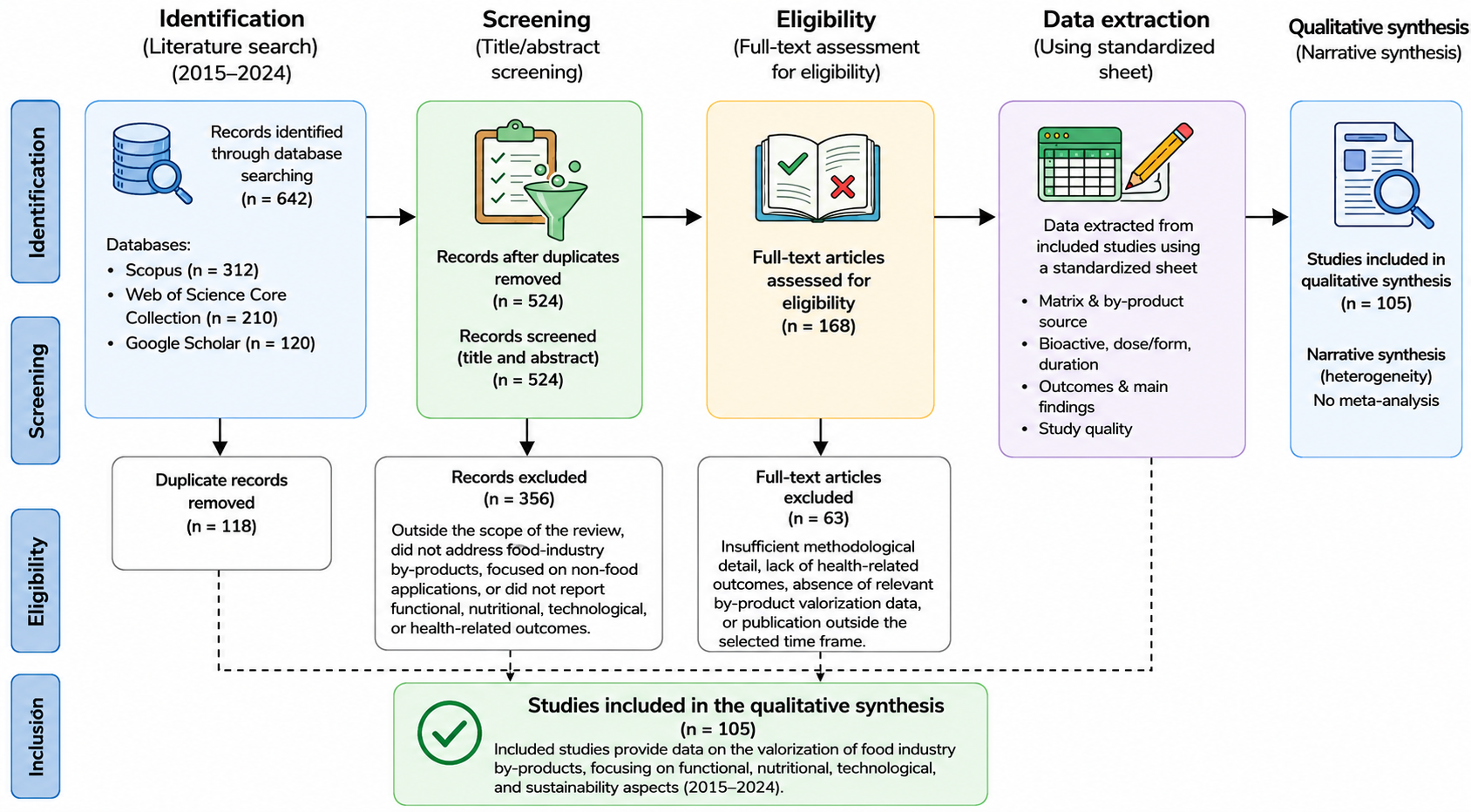
2. Materials and Methods
3. Development of New Foods from By-Products: Main By-Products and Their Nutritional Potential—Nutritional Composition
3.1. Vegetable By-Products
3.2. Dairy Industry By-Products
3.3. Valorization of Marine By-Products in the Food and Cosmetic Industries
4. Health and Nutrition
4.1. Functional Foods Against Non-Communicable Diseases
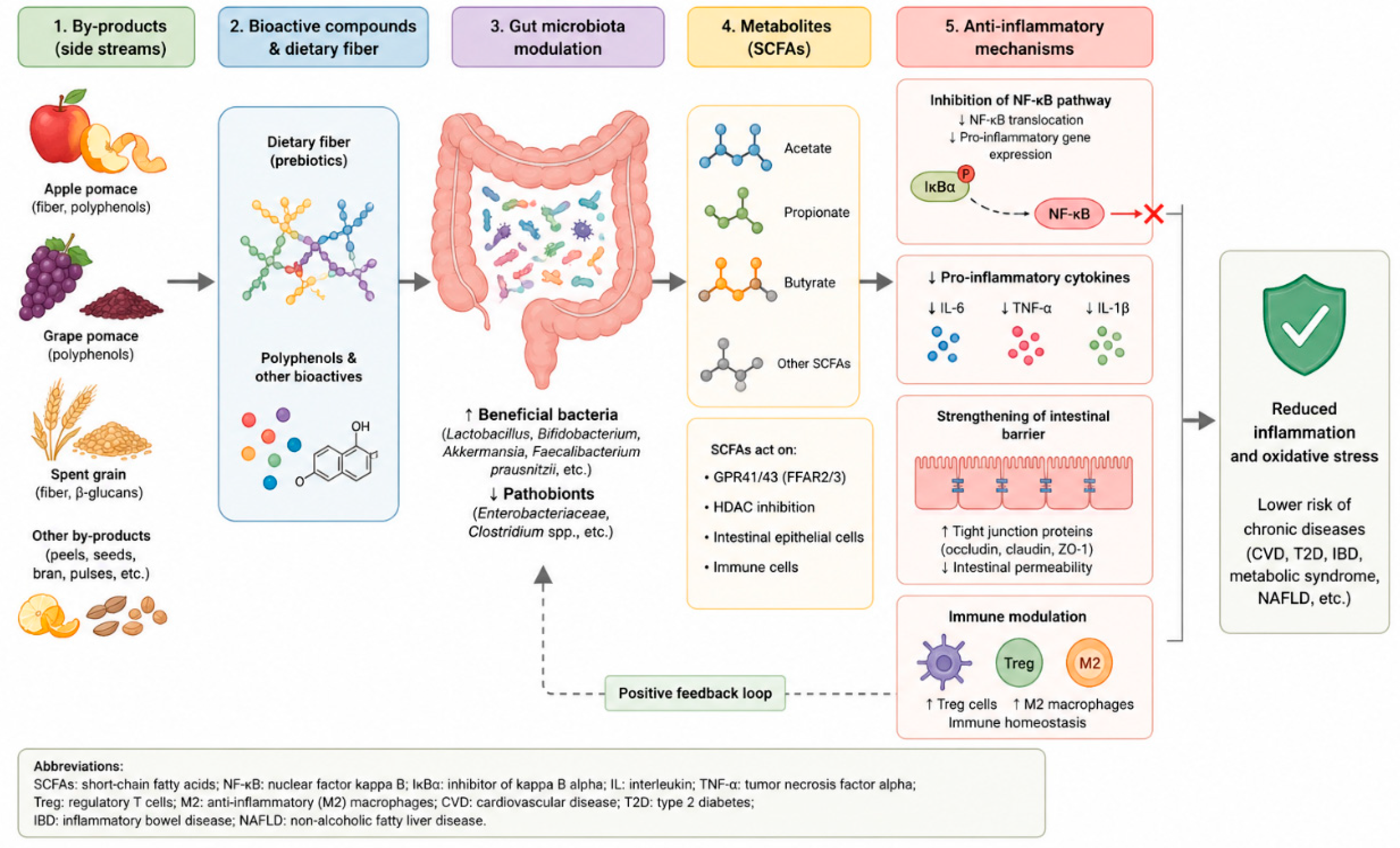
4.2. Functional Foods, the Gut Microbiome, and Side Stream Valorization
4.3. Sustainably Produced Nutraceuticals: Examples and Trends
4.4. Food By-Products Used as Prebiotics
5. Transformation Processes and Valorization Technologies
5.1. Environmental Impact
5.2. Reduction in Resource Use
5.3. Carbon Footprint Reduction
5.4. Aligning with Global Sustainability Goals
6. Standardization of Processes
Consumer Acceptance
7. Economic Viability
8. Future Perspectives
9. Conclusions
Author Contributions
Funding
Institutional Review Board Statement
Informed Consent Statement
Data Availability Statement
Acknowledgments
Conflicts of Interest
Abbreviations
| AI | Artificial Intelligence |
| CVDs | Cardiovascular Diseases |
| FAO | Food and Agriculture Organization of the United Nations |
| FOS | Fructooligosaccharides |
| FOSHU | Foods for Specified Health Uses |
| GHG | Greenhouse Gas |
| GOS | Galacto-oligosaccharides |
| HHP | High Hydrostatic Pressure |
| LAB | Lactic Acid Bacteria |
| MAE | Microwave-assisted Extraction |
| ML | Machine Learning |
| NCDs | Non-communicable Diseases |
| PAF | Platelet Activating Factor |
| PL | Polar Lipids |
| PUFAs | Polyunsaturated Fatty Acids |
| R&D | Research and Development |
| SCFAs | Short-chain Fatty Acids |
| SDGs | Sustainable Development Goals |
| SFE | Supercritical Fluid Extraction |
| SHPH | Shrimp Head Protein Hydrolysates |
| SMEs | Small and Medium Enterprises |
| UAE | Ultrasound-assisted Extraction |
| USFDA | Food and Drug Administration of the United States |
| XOS | Xylooligosaccharides |
References
- United Nations. Transforming Our World: The 2030 Agenda for Sustainable Development. Available online: https://sdgs.un.org/2030agenda (accessed on 1 April 2026).
- UNEP. Food Waste Index Report 2024. Think Eat Save: Tracking Progress to Halve Global Food Waste. 2024. Available online: https://www.unep.org/resources/publication/food-waste-index-report-2024 (accessed on 27 April 2026).
- FAO. The State of Food and Agriculture 2023—Revealing the True Cost of Food to Transform Agrifood Systems; FAO: Rome, Italy, 2023. [Google Scholar]
- Tarrah, A. Probiotics, Prebiotics, and Their Application in the Production of Functional Foods. Fermentation 2022, 8, 154. [Google Scholar] [CrossRef]
- Barbosa, C.; Machado, T.B.; Alves, M.R.; Oliveira, M.B.P.P. Fresh-Cut Bell Peppers in Modified Atmosphere Packaging: Improving Shelf Life to Answer Food Security Concerns. Molecules 2020, 25, 2323. [Google Scholar] [CrossRef]
- Grand View Research. Nutraceuticals Market Size, Share & Trends Analysis Report, 2024–2030; Grand View Research: San Francisco, CA, USA, 2024. [Google Scholar]
- Fortune Business Insights. Nutraceuticals Market Size, Share & Industry Analysis, 2024–2032; Fortune Business Insights: Pune, India, 2024. [Google Scholar]
- Granato, D.; Zabetakis, I.; Koidis, A. Sustainability, Nutrition, and Scientific Advances of Functional Foods under the New EU and Global Legislation Initiatives. J. Funct. Foods 2023, 109, 105793. [Google Scholar] [CrossRef]
- Castro-Muñoz, R.; Díaz-Montes, E.; Gontarek-Castro, E.; Boczkaj, G.; Galanakis, C.M. A Comprehensive Review on Current and Emerging Technologies toward the Valorization of Bio-Based Wastes and by-Products from Foods. Compr. Rev. Food Sci. Food Saf. 2022, 21, 46–105. [Google Scholar] [CrossRef] [PubMed]
- Saberian, H.; Ghandehari Yazdi, A.P.; Nejatian, M.; Bazsefidpar, N.; Mohammadian, A.H.; Rahmati, M.; Assadpour, E.; Jafari, S.M. Brewers’ Spent Grain as a Functional Ingredient in Bakery, Pasta, and Cereal-Based Products. Future Foods 2024, 10, 100479. [Google Scholar] [CrossRef]
- FAO. European Union’s Farm to Fork Strategy-for a Fair, Healthy and Environmentally-Friendly Food System; FAO: Rome, Italy, 2020. [Google Scholar]
- Galanakis, C.M. The Future of Food. Foods 2024, 13, 506. [Google Scholar] [CrossRef] [PubMed]
- Baysal, S.S.; Ülkü, M.A. Food Loss and Waste. In Disruptive Technologies and Eco-Innovation for Sustainable Development; IGI Global: Hershey, PA, USA, 2022; pp. 90–108. [Google Scholar]
- FAO. Agricultural Production Statistics 2000–2021; FAO: Rome, Italy, 2022; ISBN 978-92-5-137457-3. [Google Scholar]
- Trigo, J.P.; Alexandre, E.M.C.; Saraiva, J.A.; Pintado, M.E. High Value-Added Compounds from Fruit and Vegetable by-Products-Characterization, Bioactivities, and Application in the Development of Novel Food Products. Crit. Rev. Food Sci. Nutr. 2020, 60, 1388–1416. [Google Scholar] [CrossRef]
- Rifna, E.J.; Misra, N.N.; Dwivedi, M. Recent Advances in Extraction Technologies for Recovery of Bioactive Compounds Derived from Fruit and Vegetable Waste Peels: A Review. Crit. Rev. Food Sci. Nutr. 2023, 63, 719–752. [Google Scholar] [CrossRef]
- The World Counts Wasted Food Statistics. Available online: https://www.theworldcounts.com/challenges/people-and-poverty/hunger-and-obesity/food-waste-statistics (accessed on 1 April 2026).
- Jeswani, H.K.; Figueroa-Torres, G.; Azapagic, A. The Extent of Food Waste Generation in the UK and Its Environmental Impacts. Sustain. Prod. Consum. 2021, 26, 532–547. [Google Scholar] [CrossRef]
- Zhu, Y.; Luan, Y.; Zhao, Y.; Liu, J.; Duan, Z.; Ruan, R. Current Technologies and Uses for Fruit and Vegetable Wastes in a Sustainable System: A Review. Foods 2023, 12, 1949. [Google Scholar] [CrossRef]
- Ben-Othman, S.; Jõudu, I.; Bhat, R. Bioactives from Agri-Food Wastes: Present Insights and Future Challenges. Molecules 2020, 25, 510. [Google Scholar] [CrossRef]
- Carpentieri, S.; Soltanipour, F.; Ferrari, G.; Pataro, G.; Donsì, F. Emerging green techniques for the extraction of antioxidants from agri-food by-products as promising ingredients for the food industry. Antioxidants 2021, 10, 1417. [Google Scholar] [CrossRef] [PubMed]
- Rao, M.; Bast, A.; De Boer, A. Valorized food processing by-products in the EU: Finding the balance between safety, nutrition, and sustainability. Sustainability 2021, 13, 4428. [Google Scholar] [CrossRef]
- Pescuma, M.; de Valdez, G.F.; Mozzi, F. Whey-derived valuable products obtained by microbial fermentation. Appl. Microbiol. Biotechnol. 2015, 99, 6183–6196. [Google Scholar] [CrossRef]
- Smithers, G.W. Whey and whey proteins—From ‘gutter-to-gold’. Int. Dairy J. 2008, 18, 695–704. [Google Scholar] [CrossRef]
- Prazeres, A.R.; Carvalho, F.; Rivas, J. Cheese whey management: A review. J. Environ. Manag. 2012, 110, 48–68. [Google Scholar] [CrossRef]
- Nayak, A.; Bhushan, B. An Overview of the Recent Trends on the Waste Valorization Techniques for Food Wastes. J. Environ. Manag. 2019, 233, 352–370. [Google Scholar] [CrossRef]
- Mano, M.C.R.; Paulino, B.N.; Pastore, G.M. Whey Permeate as the Raw Material in Galacto-Oligosaccharide Synthesis Using Commercial Enzymes. Food Res. Int. 2019, 124, 78–85. [Google Scholar] [CrossRef]
- Londero, A.; Iraporda, C.; Garrote, G.L.; Abraham, A.G. Cheese Whey Fermented with Kefir Micro-organisms: Antagonism against Salmonella and Immunomodulatory Capacity. Int. J. Dairy Technol. 2015, 68, 118–126. [Google Scholar] [CrossRef]
- Alrosan, M.; Tan, T.-C.; Easa, A.M.; Gammoh, S.; Alu’datt, M.H.; Kubow, S.; Almajwal, A.M.; Al-Qaisi, A. Enhanced Functionality of Fermented Whey Protein Using Water Kefir. Int. J. Food Prop. 2023, 26, 1663–1677. [Google Scholar] [CrossRef]
- Luz, C.; Izzo, L.; Ritieni, A.; Mañes, J.; Meca, G. Antifungal and Antimycotoxigenic Activity of Hydrolyzed Goat Whey on Penicillium Spp: An Application as Biopreservation Agent in Pita Bread. LWT 2020, 118, 108717. [Google Scholar] [CrossRef]
- Tacias-Pascacio, V.G.; Morellon-Sterling, R.; Siar, E.H.; Tavano, O.; Berenguer-Murcia, Á.; Fernandez-Lafuente, R. Use of Alcalase in the Production of Bioactive Peptides: A Review. Int. J. Biol. Macromol. 2020, 165, 2143–2196. [Google Scholar] [CrossRef]
- Alfano, A.; Corsuto, L.; Finamore, R.; Savarese, M.; Ferrara, F.; Falco, S.; Santabarbara, G.; De Rosa, M.; Schiraldi, C. Valorization of Olive Mill Wastewater by Membrane Processes to Recover Natural Antioxidant Compounds for Cosmeceutical and Nutraceutical Applications or Functional Foods. Antioxidants 2018, 7, 72. [Google Scholar] [CrossRef]
- Atef, M.; Mahdi Ojagh, S. Health Benefits and Food Applications of Bioactive Compounds from Fish Byproducts: A Review. J. Funct. Foods 2017, 35, 673–681. [Google Scholar] [CrossRef]
- Ali, A.; Wei, S.; Liu, Z.; Fan, X.; Sun, Q.; Xia, Q.; Liu, S.; Hao, J.; Deng, C. Non-Thermal Processing Technologies for the Recovery of Bioactive Compounds from Marine by-Products. LWT 2021, 147, 111549. [Google Scholar] [CrossRef]
- Meyers, S.P. Utilization of Shrimp Processing Waste. In INFOFISH Marketing Digest; INFOFISH: Kuala Lumpur, Malaysia, 1983; Volume 4, pp. 18–19. [Google Scholar]
- Ruttanapornvareesakul, Y.; Ikeda, M.; Hara, K.; Osako, K.; Kongpun, O.; Nozaki, Y. Effect of Shrimp Head Protein Hydrolysates on the State of Water and Denaturation of Fish Myofibrils during Dehydration. Fish. Sci. 2005, 71, 220–228. [Google Scholar] [CrossRef]
- Tremblay, A.; Corcuff, R.; Goulet, C.; Godefroy, S.B.; Doyen, A.; Beaulieu, L. Valorization of Snow Crab (Chionoecetes opilio) Cooking Effluents for Food Applications. J. Sci. Food Agric. 2020, 100, 384–393. [Google Scholar] [CrossRef]
- Ilyasoglu, H.; El, S.N. Nanoencapsulation of EPA/DHA with Sodium Caseinate-Gum Arabic Complex and Its Usage in the Enrichment of Fruit Juice. LWT-Food Sci. Technol. 2014, 56, 461–468. [Google Scholar] [CrossRef]
- Mandeville, S.; Yaylayan, V.; Simpson, B.K. Proximate Analysis, Isolation and Identification of Amino Acids and Sugars from Raw and Cooked Commercial Shrimp Waste. Food Biotechnol. 1992, 6, 51–64. [Google Scholar] [CrossRef]
- Tsoupras, A.; Lordan, R.; Zabetakis, I. Inflammation, Not Cholesterol, Is a Cause of Chronic Disease. Nutrients 2018, 10, 604. [Google Scholar] [CrossRef]
- Zabetakis, I.; Lordan, R.; Tsoupras, A.; Ramji, D. (Eds.) Functional Foods and Their Implications for Health Promotion; Academic Press: Cambridge, MA, USA, 2023. [Google Scholar]
- Araújo, C.M.; Sampaio, K.B.; da Silva, J.Y.P.; de Oliveira, J.N.; de Albuquerque, T.M.R.; Lima, M.d.C.; Lima, M.d.S.; Nascimento, Y.M.D.; da Silva, E.F.; da Silva, M.S.; et al. Exploiting Tropical Fruit Processing Coproducts as Circular Resources to Promote the Growth and Maintain the Culturability and Functionality of Probiotic Lactobacilli. Food Microbiol. 2024, 123, 104596. [Google Scholar] [CrossRef] [PubMed]
- Moslemi, E.; Dehghan, P.; Khani, M. The Effect of Date Seed (Phoenix dactylifera) Supplementation on Inflammation, Oxidative Stress Biomarkers, and Performance in Active People: A Blinded Randomized Controlled Trial Protocol. Contemp. Clin. Trials Commun. 2022, 28, 100951. [Google Scholar] [CrossRef] [PubMed]
- Siciliano, R.A.; Reale, A.; Mazzeo, M.F.; Morandi, S.; Silvetti, T.; Brasca, M. Paraprobiotics: A New Perspective for Functional Foods and Nutraceuticals. Nutrients 2021, 13, 1225. [Google Scholar] [CrossRef] [PubMed]
- Dalaka, E.; Stefos, G.C.; Politis, I.; Theodorou, G. Evaluation of In Vitro Antihypertensive and Anti-Inflammatory Properties of Dairy by-Products. Appl. Sci. 2024, 14, 6885. [Google Scholar] [CrossRef]
- Zhang, Q.; Dhir, A.; Kaur, P. Circular Economy and the Food Sector: A Systematic Literature Review. Sustain. Prod. Consum. 2022, 32, 655–668. [Google Scholar] [CrossRef]
- Rinninella, E.; Tohumcu, E.; Raoul, P.; Fiorani, M.; Cintoni, M.; Mele, M.C.; Cammarota, G.; Gasbarrini, A.; Ianiro, G. The Role of Diet in Shaping Human Gut Microbiota. Best Pract. Res. Clin. Gastroenterol. 2023, 62–63, 101828. [Google Scholar] [CrossRef]
- Bhatt, S.; Gupta, M. Dietary Fiber from Fruit Waste as a Potential Source of Metabolites in Maintenance of Gut Milieu during Ulcerative Colitis: A Comprehensive Review. Food Res. Int. 2023, 164, 112329. [Google Scholar] [CrossRef]
- Pattnaik, M.; Pandey, P.; Martin, G.J.O.; Mishra, H.N.; Ashokkumar, M. Innovative Technologies for Extraction and Microencapsulation of Bioactives from Plant-Based Food Waste and Their Applications in Functional Food Development. Foods 2021, 10, 279. [Google Scholar] [CrossRef]
- Nasopoulou, C.; Lytoudi, K.; Zabetakis, I. Evaluation of Olive Pomace in the Production of Novel Broilers With Enhanced In Vitro Antithrombotic Properties. Eur. J. Lipid Sci. Technol. 2018, 120, 1700290. [Google Scholar] [CrossRef]
- Peled, S.; Livney, Y.D. The Role of Dietary Proteins and Carbohydrates in Gut Microbiome Composition and Activity: A Review. Food Hydrocoll. 2021, 120, 106911. [Google Scholar] [CrossRef]
- Sabater, C.; Calvete-Torre, I.; Villamiel, M.; Moreno, F.J.; Margolles, A.; Ruiz, L. Vegetable Waste and by-Products to Feed a Healthy Gut Microbiota: Current Evidence, Machine Learning and Computational Tools to Design Novel Microbiome-Targeted Foods. Trends Food Sci. Technol. 2021, 118, 399–417. [Google Scholar] [CrossRef]
- Shima, H.; Masuda, S.; Date, Y.; Shino, A.; Tsuboi, Y.; Kajikawa, M.; Inoue, Y.; Kanamoto, T.; Kikuchi, J. Exploring the Impact of Food on the Gut Ecosystem Based on the Combination of Machine Learning and Network Visualization. Nutrients 2017, 9, 1307. [Google Scholar] [CrossRef]
- D’Urso, F.; Broccolo, F. Applications of Artificial Intelligence in Microbiome Analysis and Probiotic Interventions—An Overview and Perspective Based on the Current State of the Art. Appl. Sci. 2024, 14, 8627. [Google Scholar] [CrossRef]
- Calcio Gaudino, E.; Colletti, A.; Grillo, G.; Tabasso, S.; Cravotto, G. Emerging Processing Technologies for the Recovery of Valuable Bioactive Compounds from Potato Peels. Foods 2020, 9, 1598. [Google Scholar] [CrossRef]
- Goff, Z.D.; Nissen, S.E. N-3 Polyunsaturated Fatty Acids for Cardiovascular Risk. Curr. Opin. Cardiol. 2022, 37, 356–363. [Google Scholar] [CrossRef]
- Tsoupras, A.; Cholidis, P.; Kranas, D.; Galouni, E.A.; Ofrydopoulou, A.; Efthymiopoulos, P.; Shiels, K.; Saha, S.K.; Kyzas, G.Z.; Anastasiadou, C. Anti-Inflammatory, Antithrombotic, and Antioxidant Properties of Amphiphilic Lipid Bioactives from Shrimp. Pharmaceuticals 2025, 18, 25. [Google Scholar] [CrossRef]
- Chiellini, C.; Serra, V.; Gammuto, L.; Ciurli, A.; Longo, V.; Gabriele, M. Evaluation of Nutraceutical Properties of Eleven Microalgal Strains Isolated from Different Freshwater Aquatic Environments: Perspectives for Their Application as Nutraceuticals. Foods 2022, 11, 654. [Google Scholar] [CrossRef]
- Mehariya, S.; Goswami, R.K.; Karthikeysan, O.P.; Verma, P. Microalgae for High-Value Products: A Way towards Green Nutraceutical and Pharmaceutical Compounds. Chemosphere 2021, 280, 130553. [Google Scholar] [CrossRef]
- Coelho, C.R.V.; Peters, G.; Zhang, J.; Hong, B.; Abdollahi, M.; Undeland, I. A Comparative Life Cycle Assessment of Cross-Processing Herring Side Streams with Fruit Pomace or Seaweed into a Stable Food Protein Ingredient. Future Foods 2022, 6, 100194. [Google Scholar] [CrossRef]
- Pérez-Ramírez, I.F.; Reynoso-Camacho, R.; Saura-Calixto, F.; Pérez-Jiménez, J. Comprehensive Characterization of Extractable and Nonextractable Phenolic Compounds by High-Performance Liquid Chromatography-Electrospray Ionization-Quadrupole Time-of-Flight of a Grape/Pomegranate Pomace Dietary Supplement. J. Agric. Food Chem. 2018, 66, 661–673. [Google Scholar] [CrossRef]
- Vazquez-Olivo, G.; Gutiérrez-Grijalva, E.P.; Heredia, J.B. Prebiotic Compounds from Agro-industrial by-products. J. Food Biochem. 2019, 43, e12711. [Google Scholar] [CrossRef]
- Gibson, G.R.; Hutkins, R.; Sanders, M.E.; Prescott, S.L.; Reimer, R.A.; Salminen, S.J.; Scott, K.; Stanton, C.; Swanson, K.S.; Cani, P.D.; et al. Expert Consensus Document: The International Scientific Association for Probiotics and Prebiotics (ISAPP) Consensus Statement on the Definition and Scope of Prebiotics. Nat. Rev. Gastroenterol. Hepatol. 2017, 14, 491–502. [Google Scholar] [CrossRef]
- Sangeetha, P.T.; Ramesh, M.N.; Prapulla, S.G. Recent Trends in the Microbial Production, Analysis and Application of Fructooligosaccharides. Trends Food Sci. Technol. 2005, 16, 442–457. [Google Scholar] [CrossRef]
- Kherade, M.; Solanke, S.; Tawar, M.; Wankhede, S. Fructooligosaccharides: A Comprehensive Review. J. Ayurvedic Herb. Med. 2021, 7, 193–200. [Google Scholar] [CrossRef]
- Granato, D.; Barba, F.J.; Bursać Kovačević, D.; Lorenzo, J.M.; Cruz, A.G.; Putnik, P. Functional Foods: Product Development, Technological Trends, Efficacy Testing, and Safety. Annu. Rev. Food Sci. Technol. 2020, 11, 93–118. [Google Scholar] [CrossRef] [PubMed]
- de Oliveira, F.L.; Arruda, T.Y.P.; Morzelle, M.C.; Pereira, A.P.A.; Casarotti, S.N. Fruit by-Products as Potential Prebiotics and Promising Functional Ingredients to Produce Fermented Milk. Food Res. Int. 2022, 161, 111841. [Google Scholar] [CrossRef]
- Naves, M.M.V.; Alves-Santos, A.M.; Sugizaki, C.S.A.; Feresin, R.G. Prebiotic Properties of Fruit by-Products and Their Metabolic Benefits. In Nutraceutics from Agri-Food by-Products; Wiley: Hoboken, NJ, USA, 2025; pp. 45–68. [Google Scholar]
- de Albuquerque, M.A.C.; Levit, R.; Beres, C.; Bedani, R.; LeBlanc, A.d.M.d.; Saad, S.M.I.; LeBlanc, J.G. Tropical Fruit by-Products Water Extracts as Sources of Soluble Fibres and Phenolic Compounds with Potential Antioxidant, Anti-Inflammatory, and Functional Properties. J. Funct. Foods 2019, 52, 724–733. [Google Scholar] [CrossRef]
- Volstatova, T.; Marsik, P.; Rada, V.; Geigerova, M.; Havlik, J. Effect of Apple Extracts and Selective Polyphenols on the Adhesion of Potential Probiotic Strains of Lactobacillus Gasseri R and Lactobacillus Casei FMP. J. Funct. Foods 2017, 35, 391–397. [Google Scholar] [CrossRef]
- Jouki, M.; Khazaei, N.; Rashidi-Alavijeh, S.; Ahmadi, S. Encapsulation of Lactobacillus Casei in Quince Seed Gum-Alginate Beads to Produce a Functional Synbiotic Drink Powder by Agro-Industrial by-Products and Freeze-Drying. Food Hydrocoll. 2021, 120, 106895. [Google Scholar] [CrossRef]
- Uerlings, J.; Schroyen, M.; Willems, E.; Tanghe, S.; Bruggeman, G.; Bindelle, J.; Everaert, N. Differential Effects of Inulin or Its Fermentation Metabolites on Gut Barrier and Immune Function of Porcine Intestinal Epithelial Cells. J. Funct. Foods 2020, 67, 103855. [Google Scholar] [CrossRef]
- Shahidi, F. Nutraceuticals and Functional Foods: Whole versus Processed Foods. Trends Food Sci. Technol. 2009, 20, 376–387. [Google Scholar] [CrossRef]
- Cruz-Casas, D.E.; Aguilar, C.N.; Ascacio-Valdés, J.A.; Rodríguez-Herrera, R.; Chávez-González, M.L.; Flores-Gallegos, A.C. Enzymatic Hydrolysis and Microbial Fermentation: The Most Favorable Biotechnological Methods for the Release of Bioactive Peptides. Food Chem. Mol. Sci. 2021, 3, 100047. [Google Scholar] [CrossRef]
- Paucar-Menacho, L.M.; Castillo-Martínez, W.E.; Simpalo-Lopez, W.D.; Verona-Ruiz, A.; Lavado-Cruz, A.; Martínez-Villaluenga, C.; Peñas, E.; Frias, J.; Schmiele, M. Performance of Thermoplastic Extrusion, Germination, Fermentation, and Hydrolysis Techniques on Phenolic Compounds in Cereals and Pseudocereals. Foods 2022, 11, 1957. [Google Scholar] [CrossRef]
- Darko, H.S.O.; Ismaiel, L.; Fanesi, B.; Pacetti, D.; Lucci, P. Current Trends in Food Processing by-Products as Sources of High Value-Added Compounds in Food Fortification. Foods 2024, 13, 2658. [Google Scholar] [CrossRef]
- Bharat Helkar, P.; Sahoo, A. Review: Food Industry by-Products Used as a Functional Food Ingredients. Int. J. Waste Resour. 2016, 6, 3. [Google Scholar] [CrossRef]
- Sorrenti, V.; Burò, I.; Consoli, V.; Vanella, L. Recent Advances in Health Benefits of Bioactive Compounds from Food Wastes and by-Products: Biochemical Aspects. Int. J. Mol. Sci. 2023, 24, 2019. [Google Scholar] [CrossRef]
- Dlamini, B.; Rampedi, I.; Ifegbesan, A. Community Resident’s Opinions and Perceptions on the Effectiveness of Waste Management and Recycling Potential in the Umkhanyakude and Zululand District Municipalities in the KwaZulu-Natal Province of South Africa. Sustainability 2017, 9, 1835. [Google Scholar] [CrossRef]
- Jang, S.; Javadov, S. Unraveling the Mechanisms of Cardiolipin Function: The Role of Oxidative Polymerization of Unsaturated Acyl Chains. Redox Biol. 2023, 64, 102774. [Google Scholar] [CrossRef]
- Râpă, M.; Darie-Niță, R.N.; Coman, G. Valorization of Fruit and Vegetable Waste into Sustainable and Value-Added Materials. Waste 2024, 2, 258–278. [Google Scholar] [CrossRef]
- Vilariño, M.V.; Franco, C.; Quarrington, C. Food Loss and Waste Reduction as an Integral Part of a Circular Economy. Front. Environ. Sci. 2017, 5, 21. [Google Scholar] [CrossRef]
- Danciu, C.-A.; Tulbure, A.; Stanciu, M.-A.; Antonie, I.; Capatana, C.; Zerbeș, M.V.; Giurea, R.; Rada, E.C. Overview of the Sustainable Valorization of Using Waste and by-Products in Grain Processing. Foods 2023, 12, 3770. [Google Scholar] [CrossRef]
- Ahmad, T.; Esposito, F.; Cirillo, T. Valorization of Agro-Food by-Products: Advancing Sustainability and Sustainable Development Goals 2030 through Functional Compounds Recovery. Food Biosci. 2024, 62, 105194. [Google Scholar] [CrossRef]
- D’Amato, D.; Droste, N.; Allen, B.; Kettunen, M.; Lähtinen, K.; Korhonen, J.; Leskinen, P.; Matthies, B.D.; Toppinen, A. Green, Circular, Bio Economy: A Comparative Analysis of Sustainability Avenues. J. Clean. Prod. 2017, 168, 716–734. [Google Scholar] [CrossRef]
- Sarangi, P.K.; Pal, P.; Singh, A.K.; Sahoo, U.K.; Prus, P. Food Waste to Food Security: Transition from Bioresources to Sustainability. Resources 2024, 13, 164. [Google Scholar] [CrossRef]
- Idrishi, R.; Aggarwal, D.; Sharma, V. Upcycling Technologies in the Food Industry. In Smart and Sustainable Food Technologies; Springer Nature: Singapore, 2022; pp. 367–392. [Google Scholar]
- Aschemann-Witzel, J.; Asioli, D.; Banovic, M.; Perito, M.A.; Peschel, A.O. Communicating Upcycled Foods: Frugality Framing Supports Acceptance of Sustainable Product Innovations. Food Qual. Prefer. 2022, 100, 104596. [Google Scholar] [CrossRef]
- Nguyen, Q.C.; Næs, T.; Le, V.V.M.; Asioli, D.; Varela, P. Consumer Preferences for Upcycled Foods: The Role of Product Attributes and Label Information. Food Qual. Prefer. 2025, 133, 105611. [Google Scholar] [CrossRef]
- Bhatt, S.; Ye, H.; Deutsch, J.; Ayaz, H.; Suri, R. Consumers’ Willingness to Pay for Upcycled Foods. Food Qual. Prefer. 2020, 86, 104035. [Google Scholar] [CrossRef]
- Ishangulyyev, R.; Kim, S.; Lee, S.H. Understanding Food Loss and Waste-Why Are We Losing and Wasting Food? Foods 2019, 8, 297. [Google Scholar] [CrossRef]
- Mitri, S.; Salameh, S.-J.; Khelfa, A.; Leonard, E.; Maroun, R.G.; Louka, N.; Koubaa, M. Valorization of Brewers’ Spent Grains: Pretreatments and Fermentation, a Review. Fermentation 2022, 8, 50. [Google Scholar] [CrossRef]
- Arnaud, S.P. Brewer’s spent grain valorisation: A case study of French brewing bioresource. Bioresour. Technol. Rep. 2026, 34, 102642. [Google Scholar] [CrossRef]
- Precedence Research. Whey Protein Market Size, Share and Trends 2025–2034; Precedence Research: Ottawa, ON, Canada, 2025. [Google Scholar]
- Fortune Business Insights: Whey Protein Market Size, Share & Industry Analysis, by Type (Isolates, Concentrates, Others), Application (Food and Beverages, Animal Feed, and Others), and Regional Forecast, 2026–2034. Available online: https://www.fortunebusinessinsights.com/whey-protein-market-106555 (accessed on 6 June 2026).
- Geissdoerfer, M.; Savaget, P.; Bocken, N.M.P.; Hultink, E.J. The Circular Economy-A New Sustainability Paradigm? J. Clean. Prod. 2017, 143, 757–768. [Google Scholar] [CrossRef]
- Ellen MacArthur Foundation. Completing the Picture: How the Circular Economy Tackles Climate Change; Ellen MacArthur Foundation: Cowes, UK, 2019. [Google Scholar]
- Wesseler, J. The EU’s farm-to-fork strategy: An assessment from the perspective of agricultural economics. Appl. Econ. Perspect. Policy 2022, 44, 1826–1843. [Google Scholar] [CrossRef]
- Dudu, O.F.; Alao, O.B.; Alonge, E.O. Alonge Developing Innovative Financial Products for Sustainable Economic Growth. Financ. Account. Res. J. 2024, 6, 2061–2092. [Google Scholar] [CrossRef]
- Teigiserova, D.A.; Hamelin, L.; Thomsen, M. Towards Transparent Valorization of Food Surplus, Waste and Loss: Clarifying Definitions, Food Waste Hierarchy, and Role in the Circular Economy. Sci. Total Environ. 2020, 706, 136033. [Google Scholar] [CrossRef]
- Tüğen, A.; Taştan Ülkü, Ö. Recent Innovations and Novel Technologies for the Upcycling of Bioactive Compounds from Food Wastes. Czech. J. Food Sci. 2025, 43, 377–397. [Google Scholar] [CrossRef]
- Sarangi, P.K.; Anand Singh, T.; Joykumar Singh, N.; Prasad Shadangi, K.; Srivastava, R.K.; Singh, A.K.; Chandel, A.K.; Pareek, N.; Vivekanand, V. Sustainable Utilization of Pineapple Wastes for Production of Bioenergy, Biochemicals and Value-Added Products: A Review. Bioresour. Technol. 2022, 351, 127085. [Google Scholar] [CrossRef]
- Velenturf, A.P.M.; Purnell, P. Principles for a Sustainable Circular Economy. Sustain. Prod. Consum. 2021, 27, 1437–1457. [Google Scholar] [CrossRef]
- Shevchenko, T.; Saidani, M.; Ranjbari, M.; Kronenberg, J.; Danko, Y.; Laitala, K. Consumer Behavior in the Circular Economy: Developing a Product-Centric Framework. J. Clean. Prod. 2023, 384, 135568. [Google Scholar] [CrossRef]
- European Parliament and Council of the European Union. Regulation (EU) 2021/695 of 28 April 2021 establishing Horizon Europe—The Framework Programme for Research and Innovation. Off. J. Eur. Union 2021, L170, 1–68. [Google Scholar]
- FAO. Towards a Waste-Free Future: Food Loss and Waste Reduction in Europe and Central Asia; FAO: Rome, Italy, 2023; Available online: https://www.fao.org/europe/news/detail/towards-a-food-waste-free-future/en (accessed on 30 March 2023).
- Mpalanzi, V.T.; Zhang, M.; Sundarsingh, A.; Mujumdar, A.S.; Rui, L. AI-driven optimization of bioactive compounds extraction from food byproducts: Research progress and application prospect. Crit. Rev. Food Sci. Nutr. 2025, 1–25. [Google Scholar] [CrossRef]
- Hussain, M.A.; Khan, M.I.H.; Karim, A. Machine Learning in Transforming the Food Industry. Foods 2026, 15, 90. [Google Scholar] [CrossRef]
- Alkalbani, N.; Shahin, L.; Benzeghiba, H.; Obaid, R.S.; Osaili, T.M.; Ismail, L.C.; Al Qasssimi, G.; Rauf, M.; Abdulrahim, K.; Almashgouni, A.; et al. Artificial intelligence in functional food innovation: Bioactive enhancement and formulation optimization: A quasi-systematic review. Food Chem. X 2026, 29, 103628. [Google Scholar] [CrossRef]
- ITU; Fraunhofer Heinrich Hertz Institute. Launch of the Global Initiative on AI for Food Systems (AI4FS). AI for Good Global Summit, Geneva, July 2025. Available online: https://www.itu.int/hub/2025/07/join-the-global-drive-to-ensure-ai-supports-food-security/ (accessed on 4 April 2022).
- Kalyanaraman, A.; Burnett, M.; Fern, A.; Khot, L.; Viers, J. Special report: AI Institute for next generation food systems (AIFS). Comput. Electron. Agric. 2022, 197, 106944. [Google Scholar] [CrossRef]



| Matrix | By-Product | Target Compound/Ingredient | Technology | Extraction Parameters | Yield (%) | Advantages | Limitations | Outcome/Application | Reference |
|---|---|---|---|---|---|---|---|---|---|
| Dairy | Whey | Galacto-oligosaccharides (GOS) | Enzymatic transgalactosylation | 40–50 °C; β-galactosidase; 2–6 h | 35–45% | High prebiotic potential | Enzyme cost | Prebiotic activity | [27] |
| Dairy | Whey | Bioactive peptides | Enzymatic hydrolysis (e.g., Alcalase) | pH 7–8; 50–55 °C | 20–30% | High antioxidant activity | Peptide instability | Antioxidant; antihypertensive | [31] |
| Dairy | Fermented whey | Bioactive metabolites/peptides | Fermentation (kefir; LAB) | 24–48 h; 30–37 °C | Variable | Improved bioavailability | Fermentation variability | Antimicrobial; immunomodulatory | [28,29] |
| Dairy | Colostrum | Lactoferrin; milk oligosaccharides | Microfiltration/isolation | Low-temperature filtration | High purity | Preserves bioactivity | High operational cost | Immunomodulatory; antioxidant | [26] |
| Vegetable/Fruit | Olive mill wastewater | Hydroxytyrosol | Membrane processes | Pressure-driven filtration | 60–80% recovery | Reduced solvent use | Membrane fouling | Preservative; functional ingredient | [32] |
| Marine | Fish skins/bones/viscera | Collagen; peptides; oils | Hydrolysis | Enzymatic; 40–60 °C | 20–50% | High-value biomolecules | Stability issues | Nutraceuticals; wound healing; functional foods | [33] |
| Marine | Shrimp shells/heads | Chitosan; astaxanthin; protein hydrolysates | Enzymatic/chemical extraction | Acid/alkaline pretreatment | 15–40% | High commercial value | Chemical waste generation | Preservatives; cosmetics | [34,35,36] |
| Marine | Crab cooking effluents | Concentrates/flavor fractions | Concentration & recovery | Thermal concentration | Variable | Reuse of industrial effluents | Flavor variability | Natural food flavorings | [37] |
| By-Product | Main Compound | Main Reported Effect | In Vitro Evidence | In Vivo Evidence | Clinical/Meta-Analysis Evidence | Main Limitation |
|---|---|---|---|---|---|---|
| Grape pomace | Polyphenols | Antioxidant and anti-inflammatory activity | ROS reduction and antioxidant activity | Reduced inflammation and oxidative stress | Limited clinical evidence | Lack of large-scale randomized trials |
| Whey peptides | Bioactive peptides | Antihypertensive effects | ACE inhibition | Blood pressure reduction in animal models | Small human intervention studies | Limited cohort size |
| Citrus peel | Pectin/flavonoids | Prebiotic and gut modulation effects | Increased probiotic growth | Gut microbiota modulation | Few clinical studies available | Standardization issues |
| Shrimp by-products | Chitosan; astaxanthin | Anti-inflammatory and antioxidant effects | Cytoprotective activity | Improved metabolic parameters | Limited translational evidence | Extraction variability |
| Olive mill wastewater | Hydroxytyrosol | Antioxidant and cardioprotective effects | Radical scavenging activity | Reduced oxidative stress markers | Preliminary meta-analytical evidence | Limited long-term clinical validation |
| Technology | Main Application | Yield Improvement | Solvent Reduction | Time Reduction | Main Advantages | Main Limitations | Industrial Scalability |
|---|---|---|---|---|---|---|---|
| Ultrasound-assisted extraction (UAE) | Recovery of polyphenols, antioxidants, proteins | +25–40% | 30–50% | ~50% | Fast extraction, lower energy consumption, preservation of thermolabile compounds | Difficult scale-up and equipment optimization | Moderate to high |
| Microwave-assisted extraction (MAE) | Polyphenols, carotenoids, bioactive compounds | +20–35% | ~40% | 50–60% | Rapid heating, reduced processing time, improved extraction efficiency | Possible thermal degradation and uneven heating | Moderate |
| Supercritical fluid extraction (SFE) | Lipids, carotenoids, essential oils | High purity extracts | Up to 80% reduction in organic solvents | Moderate | Green technology, solvent-free extracts, high selectivity | High operational and equipment costs | Moderate |
| Enzymatic hydrolysis | Protein and peptide recovery | Variable depending on substrate | Minimal solvent use | Moderate | Mild conditions, improved digestibility and bioactivity | Enzyme cost and process optimization | High |
| Fermentation technologies | Functional foods, probiotics, prebiotics | Improves bioavailability and functionality | Low solvent requirement | Long processing time | Sustainable, microbiota modulation, enhanced nutritional value | Microbial stability and contamination risks | High |
| Membrane separation technologies | Fractionation and purification of bioactive compounds | High selectivity | Reduced chemical usage | Moderate | Continuous processing, low thermal damage | Membrane fouling and maintenance costs | High |
| Hydrothermal and green technologies | Biomass pretreatment and compound recovery | Improved accessibility of bioactives | Reduced chemical consumption | Moderate | Eco-friendly processing, circular economy compatibility | Energy demand and operational optimization | Moderate to high |
Disclaimer/Publisher’s Note: The statements, opinions and data contained in all publications are solely those of the individual author(s) and contributor(s) and not of MDPI and/or the editor(s). MDPI and/or the editor(s) disclaim responsibility for any injury to people or property resulting from any ideas, methods, instructions or products referred to in the content. |
© 2026 by the authors. Licensee MDPI, Basel, Switzerland. This article is an open access article distributed under the terms and conditions of the Creative Commons Attribution (CC BY) license.
Share and Cite
Merino, L.; Teijeiro, M.; Castagnini, J.M.; Sebastià, A.; Martí-Quijal, F.J.; Bucci, P. Valorization of Food Industry By-Products for Sustainable Functional Food Production: Recent Advances and Future Perspectives. Foods 2026, 15, 2116. https://doi.org/10.3390/foods15122116
Merino L, Teijeiro M, Castagnini JM, Sebastià A, Martí-Quijal FJ, Bucci P. Valorization of Food Industry By-Products for Sustainable Functional Food Production: Recent Advances and Future Perspectives. Foods. 2026; 15(12):2116. https://doi.org/10.3390/foods15122116
Chicago/Turabian StyleMerino, Lina, Manuel Teijeiro, Juan Manuel Castagnini, Albert Sebastià, Francisco J. Martí-Quijal, and Paula Bucci. 2026. "Valorization of Food Industry By-Products for Sustainable Functional Food Production: Recent Advances and Future Perspectives" Foods 15, no. 12: 2116. https://doi.org/10.3390/foods15122116
APA StyleMerino, L., Teijeiro, M., Castagnini, J. M., Sebastià, A., Martí-Quijal, F. J., & Bucci, P. (2026). Valorization of Food Industry By-Products for Sustainable Functional Food Production: Recent Advances and Future Perspectives. Foods, 15(12), 2116. https://doi.org/10.3390/foods15122116