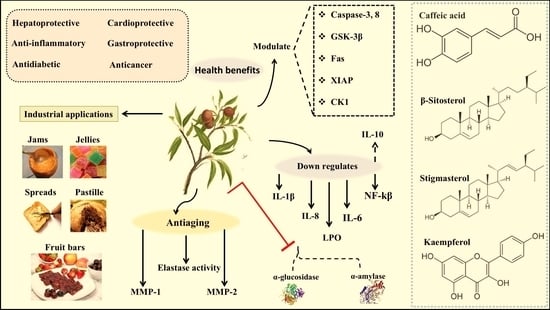
1. Introduction
Nature provides a diverse range of plants that contribute to human nutrition and overall health. Different plant parts, such as roots, leaves, stems, seeds, bark, flowers, and fruits, contain bioactive constituents with functional and properties that may help support health and reduce the risk of non-communicable diseases [
1]. Fruits are an important source of vitamins, minerals, dietary fiber, and phytochemicals such as phenolic acids, flavonoids, carotenoids, anthocyanins, tannins, saponins, and terpenoids. These compounds have been associated with antioxidant, anti-inflammatory, and metabolic regulatory activities that may contribute to the prevention and management of disorders, such as type 2 diabetes mellitus (T2DM), obesity, cardiovascular diseases, gastrointestinal disorders, hepatic diseases, and certain cancers [
2,
3]. The American Dietetic Association (ADA) recommends regular fruit consumption as a part of a balanced diet to support nutritional adequacy and overall well-being [
4]. However, rapid industrialization and urbanization have significantly altered dietary habits and lifestyles. Increased consumption of highly processed and ready-to-eat food, combined with sedentary behavior, has contributed to oxidative stress, chronic inflammation, and the growing prevalence of metabolic diseases [
5].
Consequently, interest in functional foods and nutraceuticals derived from plant-based bioactive compounds has increased considerably in recent years. These products are being investigated for their potential role in improving nutritional quality and supporting health maintenance [
6]. Several nutritionally valuable but underutilized plant species, including buckwheat, sorghum, millet, amaranth, quinoa, taro, purple yam, grass pea, chayote, and linseed, remain insufficiently explored, despite their potential food and pharmacological relevance. Limited utilization of such crops may contribute to challenges related to food security, nutritional sustainability, and dietary diversity, particularly in developing regions. One such underutilized tropical plant is
Manilkara zapota (
M. zapota), commonly known as sapodilla, sapota, chiku, naseberry, or chico sapote [
7,
8].
M. zapota is recognized for its sweet edible fruit and its diverse phytochemical composition, which has attracted attention in food, nutraceutical, and pharmacological research. Traditionally, different parts of
M. zapota have been used in folk medicine for various purposes. The seeds have been described as having diuretic and tonic properties, whereas the bark has traditionally been used for its astringent and febrifuge characteristics [
9,
10,
11,
12]. In addition, extracts obtained from the fruits and leaves have been investigated for antioxidant, anti-inflammatory, antimicrobial, antiproliferative, antipyretic, and gastroprotective activities in experimental models [
13,
14,
15,
16].
Previously published reviews on M. zapota have mainly focused on selected aspects, including nutritional composition, phytochemistry, or pharmacological activities. However, a comprehensive and updated evaluation integrating recent findings on phytochemical composition, mechanistic biological activities, safety considerations, and food industry relevance remains limited. Therefore, the present review critically summarizes studies published between 2013 and 2026 regarding the nutritional profile, phytochemical constituents, experimental biological activities, safety, and industrial applications of M. zapota. Particular emphasis is placed on the relationship between its phytochemical composition and potential food-relevant biological properties, including antioxidant, anti-inflammatory, glucose homeostasis, and gastroprotective activities. In addition, this review discusses the potential relevance of M. zopata in the development of functional foods and value-added products, including jams, spreads, beverages, fruit bars, and nutraceutical formulations. Pharmacological findings included in this review are intended to describe experimental evidence and possible biological mechanisms associated with M. zapota phytochemicals. Overall, this review aims to provide an updated and critical overview of the nutritional, phytochemical, biological, and industrial significance of M. zapota, while highlighting current research gaps and future perspectives.
2. Search Methodology
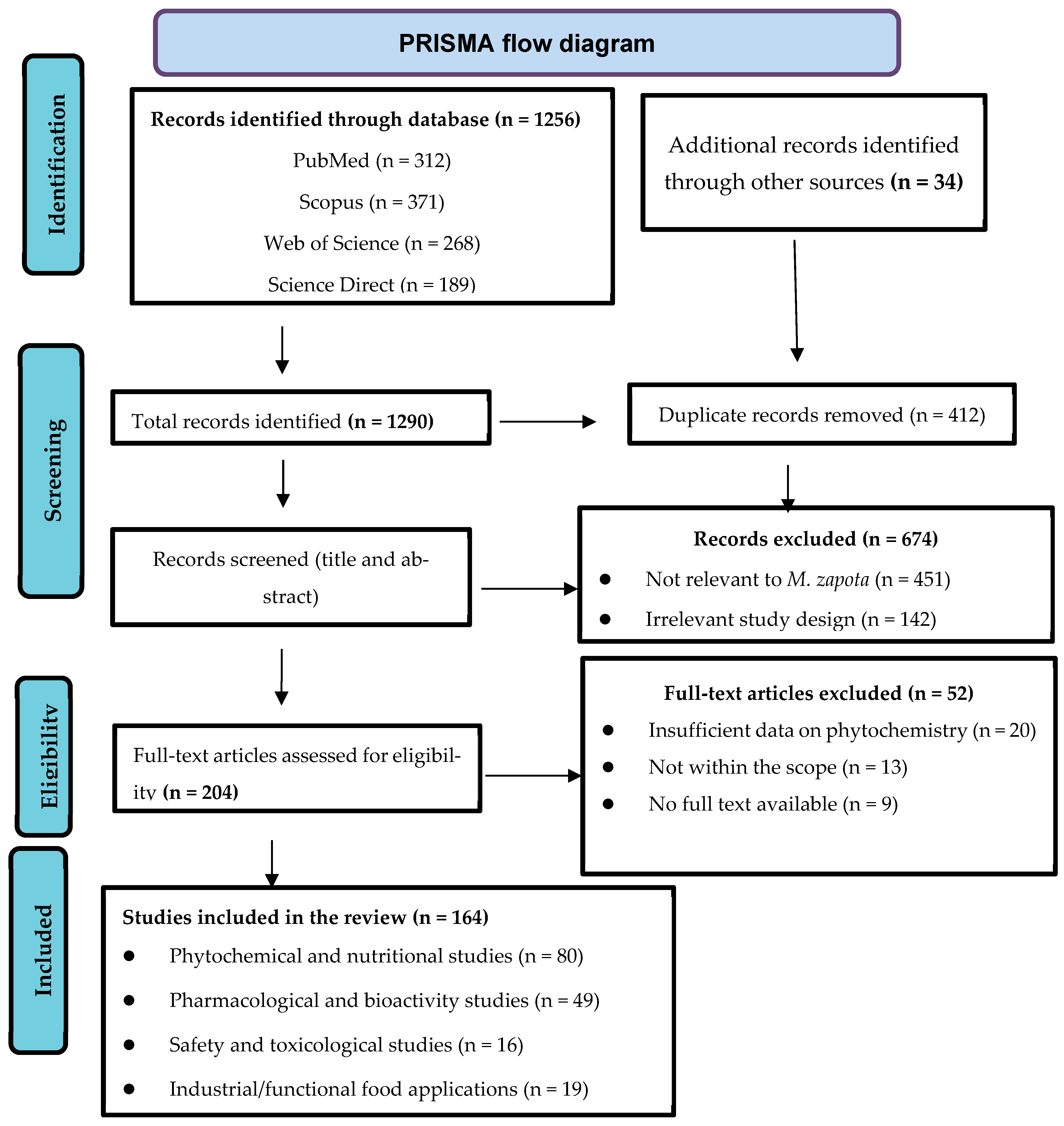
This review assembled and critically analyzed published literature on
M. zapota from Google Scholar, PubMed, Science Direct, Web of Science, Scopus, and Directory of Open Access Journals from 2013–2026, facilitating an update on the evidence regarding its phytochemistry, mechanistic pharmacology, safety, and industrial applications by using Boolean operations (and/or), MeSH terms, and keywords, such as sapodilla,
M. zapota, botanical description of
M. zapota, nutritional or proximate or micronutrient or macronutrient composition of
M. zapota, phytochemistry or phytochemical profile of
M. zapota, antioxidant potential of
M. zapota, anticancer activity and
M. zapota or sapodilla, anti-inflammatory or inflammation and
M. zapota, cardioprotection by
M. zapota, hepatoprotective or liver or liver cirrhosis or liver fibrosis and
M. zapota, diabetes or glucose metabolism-related activity and
M. zapota, aging or antiaging and
M. zapota, safety and toxicity of
M. zapota, and industrial applications of
M. zapota. The schematic diagram for study selection is shown in
Figure 1.
3. Botanical, Geographical, and Morphological Description
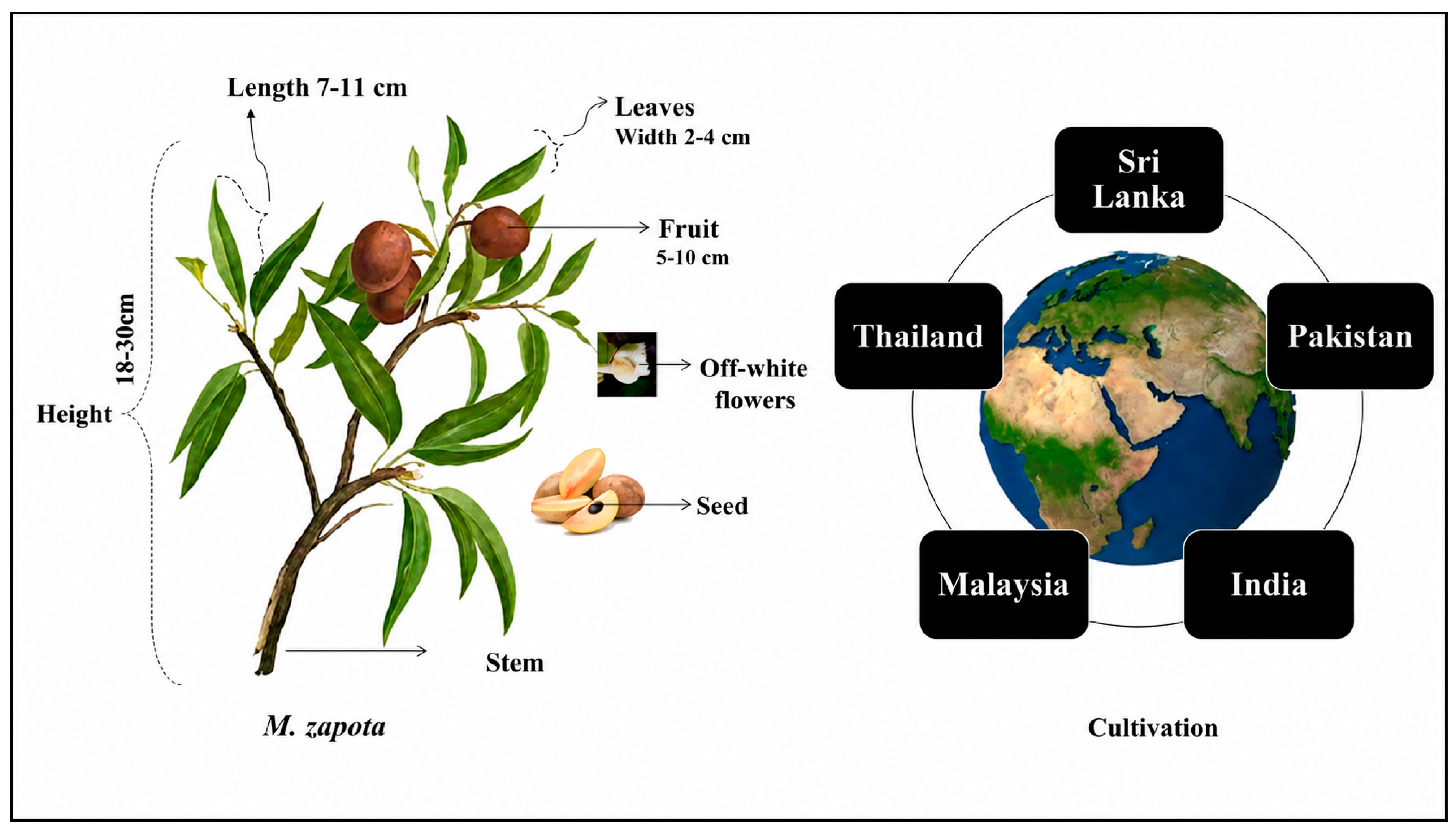
The plant is renowned for alternative nomenclatures, such as chiku, nasberry, and sapota, across different regions. Sapodilla, belonging to the
Sapotaceae family, is usually cultivated in the tropical and subtropical areas of the world (
Figure 1), particularly in Pakistan, India, Sri Lanka, Bangladesh, the Philippines, Indonesia, Malaysia, and Thailand [
17,
18]. Climatic, environmental, and irrigation fluctuations do not disturb its growth. As a result, it grows throughout the year, particularly from June to August, from October to December, and in March. However, it requires ~5–8 years to achieve maximum growth and pubescence [
9]. The young evergreen tree,
M. zapota, has a pyramidal canopy that makes it an air-resistant tree. Its milky latex “chicle” is exuded from all the parts, reaching a height of ~18–30 m [
14,
19]. The elliptic or oblong young leaves are light-green to pink, 7–11 cm length, and 2–4 cm width, and become shiny and dark green upon reaching puberty. Additionally, its leaves are alternate and spirally arranged at the tips of shoots. The off-white and greenish flowers are small, bell-like, and solitary, comprising three brown, hairy outer sepals and three inner sepals with pale-green corolla. However, the yellow, brownish fruits are round to oval with rough skin, with a diameter of 5–10 cm, while their brown and black, long, oval, and shiny seeds are 2 cm long [
14].
4. Nutritional and Phytochemical Composition
Indigenous populations consume fruits, particularly sapodilla, to meet their nutritional requirements due to the ample carbohydrates, proteins, fat, fiber, vitamins, and minerals that they contain. These nutrients play a role in preventing and managing nutrient deficiency disorders [
20]. The fruit accounts for macronutrients—~14–20% carbohydrates, 11–15% sugars, 7–9% reducing sugars, 0.52–0.76% proteins, 0.6–1.1% fats, and 60–69% moisture. Regarding micronutrients, 0.4–0.6% ash, 0.01–0.21% dietary fibers [
21], vitamin A (60 IU), vitamin C (14.7 mg), riboflavin (0.020 mg), niacin (0.200 mg), pantothenic acid (0.2528 mg), vitamin B6 (0.037 mg), folate (14 μg), iron (2 mg/100 g), potassium (193 mg/100 g), phosphorous (21 mg/100 g), calcium (96 mg/100 g), magnesium (12 mg/100 g), sodium (12 mg/100 g), selenium (0.6 μg/100 g), copper (1.7 μg/g), manganese (1.5 μg/g), and zinc (1.0 μg/g) are also present [
18,
22,
23,
24].
The therapeutic constituents (phytochemicals) extracted from plants have health-promoting and disease-ameliorating properties. Various phytochemicals have been identified and isolated from leaves, fruits, seeds, and bark of
M. zapota. The nutritional composition and bioactive compounds in different parts of
M. zapota are documented in
Table 1. Its leaves contain hydrocarbons [n-triacontane (46.5–49.5%), n-octacosane (18.3–23.8%), β-sitosterol (1.47–3.41%), and stigmasterol (1.09–2.6%)], saturated fatty acids (SFA
S) (6.8–9.9%), unsaturated fatty acids (UFAs) (27.8–32.1%), and polyunsaturated fatty acids (PUFAs) (14.5–17.8%). The most important of them are oleic (10.7–13.9%), linolenic (8.3–10.1%), linoleic (3.3–5.94%), oleanolic, palmitic, and stearic acids [
25]. Moreover, lupeol-3-acetate, myricetin-3-O-α-L-rhamnoside, caffeic acid, and apigenin-7-O-α-L-rhamnoside, alongside other flavonoids, alkaloids, saponins, tannins, triterpenes, and cardiac glycosides, were also identified from the leaf extract [
26]. The methanolic leaf extracts exhibit a total phenolic content (TPC) and a total flavonoid content (TFC) of 194.04 mg/g and 35.53 mg/g, respectively [
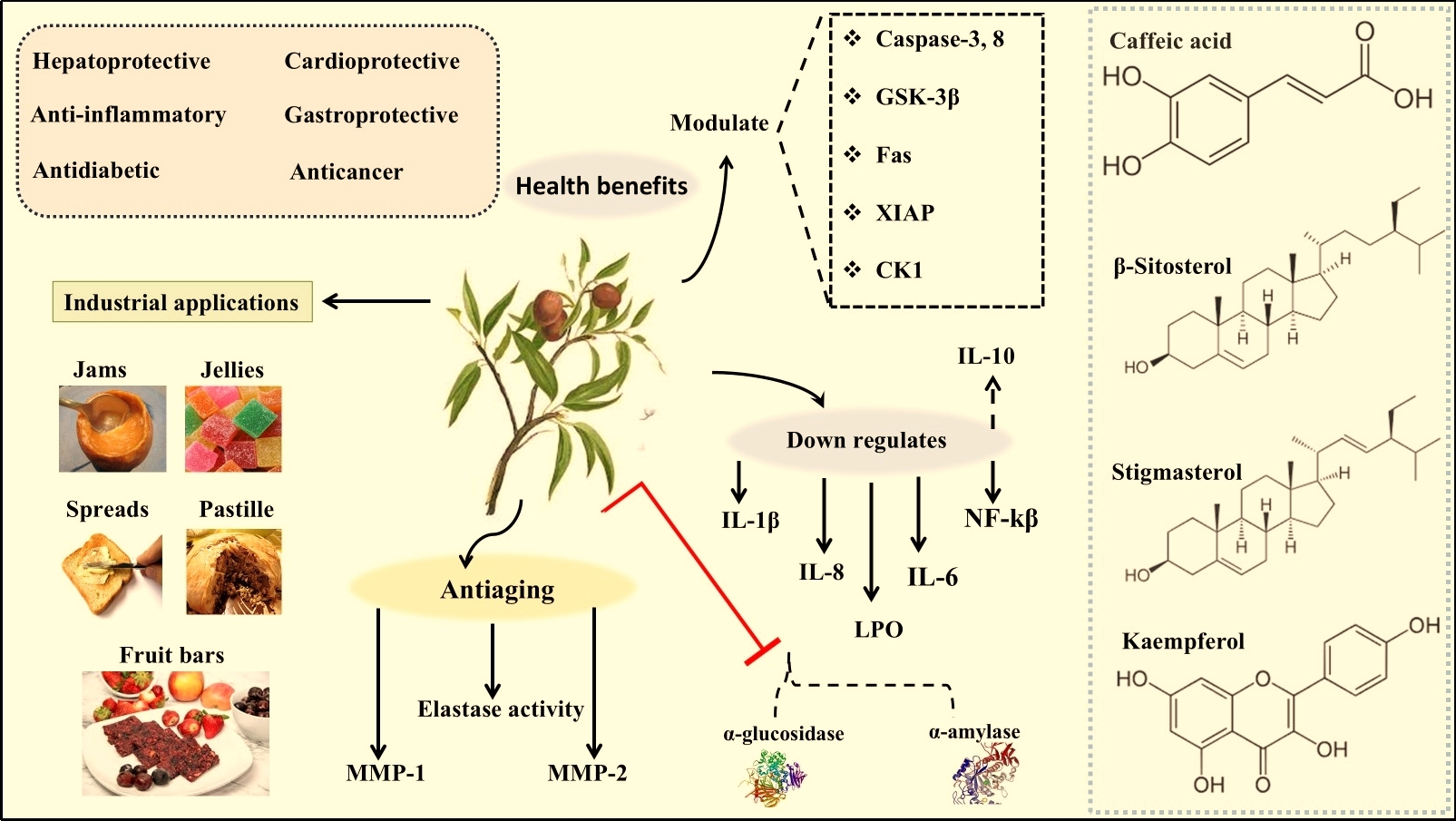
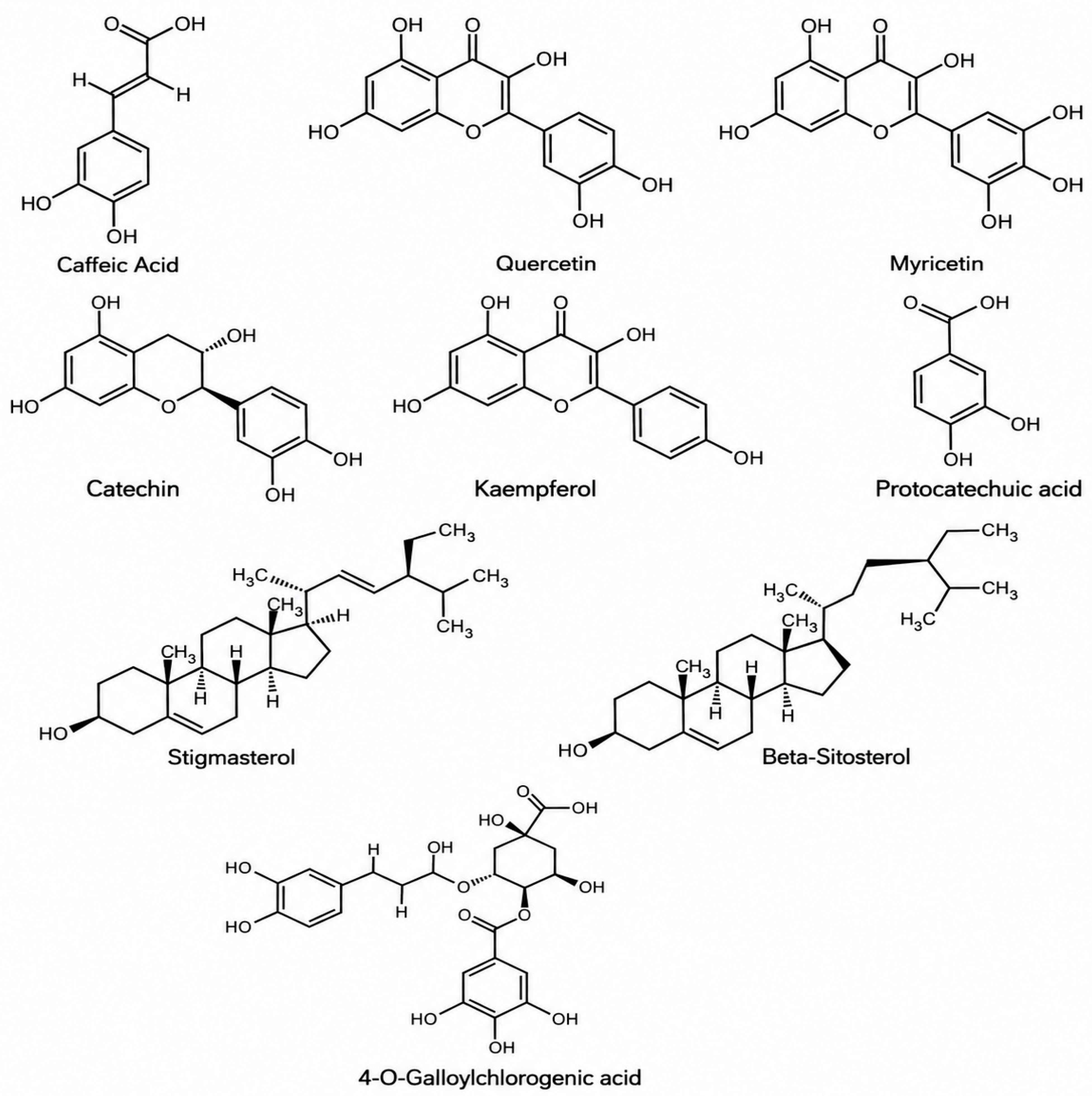
27]. Furthermore, fruit constitutes phytochemicals i.e., cyanogenic glycoside, terpenoids, methyl 4-O-galloylchlorogenate, 4-O-galloylchlorogenic acid, methyl chlorogenate, dihydromyricetin, quercetin, myricitrin, kaempferol, catechin, epicatechin, gallocatechin, gallic acid, protocatechuic acid, 4-O-galloylchlorogenic acid, and methyl-4-O-galloylcholorogenate (
Figure 2) [
13,
14,
28,
29,
30,
31]. Additionally, the seeds and bark are abundantly equipped with alkaloids, flavonoids, saponins, tannins, and phenolic compounds, including D-quercitol, saccharose, Β-amyrin, oleanolic acid, lupeol, betulinic acid, and isoprenoids [
32,
33,
34,
35,
36,
37].
M. zapota has a high medicinal value due to its phytochemical composition, which varies significantly in the fruit, seed, leaves, pulp, and juices. The fruit contains significant amounts of TPC (20–85 mg GAE/g) and TFC (34.9 mg QE/g) and has high antioxidant activity (DPPH 61.3%, FRAP 540 µmol Fe
2+/g, ABTS 65.2) [
21,
24]. The seeds are rich in oil (18–20%), such as oleic acid (40–50%), and have high antioxidant potential (DPPH 89.5%, FRAP 1385 µmol Fe
2+/g, ABTS 91.2%), with gallic acid (0.065 mg/g) [
25,
27] and epigallocatechin (0.034 mg/g) as key bioactive compounds [
29,
33]. The leaves are rich in vitamin C (20–60 mg/100 g), have strong antioxidant activity (DPPH 93.8%, FRAP 1640 µmol Fe
2+/g, ABTS 95.4%), and contain kaempferol (8.46 mg/g), S-ribosyl-L-homocysteine (RT: 0.672 min, abundance: 2.309 × 10
5) and other bioactive compounds [
27,
29]. The pulp/juice of
M. zapota contains natural sugars (14.7%), dietary fiber (5.3%), vitamin C (6–25 mg/100 g), and bioactive compounds (phenolics 2–12 mg GAE/g, flavonoids 28.6 mg QE/g). The antioxidant activity of the pulp is moderate (DPPH 52.7%, FRAP 410 µmol Fe
2+/g, ABTS 58.9%) [
18,
29,
31]. The concentration of antioxidants and bioactive compounds of the leaves and seeds is considerably higher than that of the fruit and seeds, especially flavonoids and sphingolipids. The variation in phytochemical levels among different parts of the plant suggests that its different phytochemicals may offer different benefits in various applications, ranging from antioxidant applications to therapeutic ones.
The nutritional and phytochemical profile of M. zapota shows significant variability based on the cultivar, maturation stage, geographic origin, and processing methods, factors that play a significant role in determining its use in food systems. Fully ripe fruits tend to have higher amount of reducing sugars, carotenoids, and aroma volatiles, while unripe fruits have higher levels of tannins, which impart astringency and decrease palatability. The genotype, environmental conditions, and soil composition also affect the distribution of phenolic acids, flavonoids, triterpenoids, and phytosterols among leaves, fruit pulp, peel, seeds, and bark. Phytochemical profiles have also been reported to depend on the extraction solvent and analytical method, with polar solvents optimally suited for the extraction of phenolics and nonpolar solvents for sterols and lipophilic constituents.
5. Traditional Applications
Its traditional use in the primary healthcare settings was to manage multiple prevailing disorders. The decoction of immature fruit has was used as an antidiarrheal, diuretic, febrifuge, and tonic agent. In contrast, the decoction of its leaves reduces the severity of diarrhea, cough, cold, fever, pain, hemorrhage, healing wounds, and ulcers [
38]. Moreover, the seed and bark extracts relieve kidney and bladder stones to improve renal and bladder performance, in addition to being used as astringents [
9,
39,
40]. The white, gooey chicle found in the tree’s bark was used in dental surgery, gum production, and pulmonary disease management [
9,
41].
6. Food-Relevant Bioactivity and Evidence Limitations
Plant parts, maturity, extraction solvent, dose, model, and endpoint measurement may vary between studies, thus limiting direct comparison between studies. The antioxidant, anti-inflammatory, glucose metabolism-related, lipid metabolism-related, digestive support, and antiproliferative results are then experimental data that are used food functionality research. The pharmacological evidence was summarized by plant part, extract type, experimental model, dose/concentration, endpoint, and evidence strength for clarity. This encompasses a structure that does not just store information, but allows recognition of a set of findings relevant to further development of food, formulation of nutraceuticals, and future clinical studies.
Table 2 illustrates the presence of multiple bioactive compounds and their pharmacological effects.
6.1. Antioxidant Activity
Oxidative stress induces multiple disorders by disrupting the homeostasis between free radicals and antioxidants. Factors such as higher fatty food consumption, environmental contaminants, and poor dietary and lifestyle practices promote oxidative stress and stress-induced disorders [
53]. Moreover, reduced levels of antioxidative enzymes such as superoxide dismutase (SOD), catalase (CAT), glutathione (GSH), glutathione peroxidase (GPx), and glutathione reductase in oxidative stress disorders are observed [
54]. The antioxidant potential of
M. zapota fruit extract obtained using hydroalcoholic means, petroleum ether, or distilled water was assessed by assessing ferric thiocyanate, hydrogen peroxide (H
2O
2) scavenging, and xanthine oxidase, which revealed that both fruit and leaf extracts had a dose-dependent effect on H
2O
2 scavenging (IC
50 = 42 µg/mL and IC
50 = 54 µg/mL), ferric thiocyanate (IC
50 = 76 µg/mL and IC
50 = 89 µg/mL), and xanthine oxidase (IC
50 = 70 µg/mL and IC
50 = 41 µg/mL) [
9,
55]. Moreover, the free radical-reducing potential of the leaves’ extract demonstrated DPPH (~86%) and FRAP with the highest concentration, i.e., 100 µg/mL [
49,
56]. Later, the antioxidant potential of petroleum ether, ethyl acetate, n-butanol, and water extracts of
M. zapota leaves revealed the highest antioxidant potential of ethyl acetate extracts, with IC
50 values of 0.019 mg/mL (ABTS and DPPH) and 0.5 mg/mL for the ABTS assay [
25]. Moreover, the ethanolic leaf extract revealed its antioxidant potential by showing an IC
50 of 16.4 µg/mL [
57].
The bioactive compounds found in the different parts of
M. zapota are responsible for its antioxidant potential [
14,
58]. Bioactive components from the bark of
M. zapota include 6-hydroxyflavanone, dihydrokaempferol, and 3,4-dihydroxybenzoic acid, which protect against ROS [
26]. Similarly, taraxerol methyl ether, lupeol acetate, taraxerone, taraxerol, spinasterol, 3,4-dihydroxybenzoic acid, 6-hydroxyflavanone, and (+)-dihydrokaempferol were identified and isolated from the bark, with free-radical scavenging potential determined. It has been found that spinasterol has the highest neutralizing potential, shown by DPPH (IC
50 = 93 µM) and ABTS (IC
50 = 921 µM). Moreover, (+)-dihydrokaempferol demonstrated relatively higher FRAP values (6.23 M) than other compounds [
26]. Moreover, deep eutectic solvents (DESs), such as an acetone–water mixture (AWM), glyceline, alaline, maline, maloline, oxaline, ethaline, and reline, were used to evaluate the antioxidant profile. The results showed that maloline has the highest antioxidant activity, as revealed by ABTS (68.4 µmol AAE/g DW), DPPH (84 µmol AAE/g DW), and FRAP (63 µmol AAE/g DW), as compared to other solvents [
34]. Furthermore, the antioxidant potential of the ethanolic extract of
M. zapota was revealed by exhibiting a percentage inhibitions of 27.8% (ABTS for 7 min), 31.9% (DMPD for 10 min), and 33% (DPPH for 30 min). The antioxidant potential of ripe
M. zapota was demonstrated by its ability to neutralize superoxide (O
2−), hydrogen peroxide (H
2O
2), hydroxyl (OH-), and nitric oxide (NO) [
57]. Moreover, the aqueous fruit extract of
M. zapota scavenges ROS and RNS, as revealed by DPPH assay (IC
50 = 48 µg/mL) [
58].
The bioavailability and metabolic disposition of the key phytochemicals found in
M. zapota, such as phenolic acids (gallic, caffeic, and chlorogenic acids), flavonoids (quercetin, catechin, and myricetin), and triterpenoids (lupeol and ursolic acid) vary significantly and profoundly affect the physiological activity of the compounds [
9]. More complex flavonoids are poorly absorbed in the small intestine but are extensively metabolized by gut microflora and enzymes to generate bioactive metabolites. Phenolic acids are relatively well absorbed in the small intestine. Lipophilic compounds like triterpenoids and phytosterols generally have low water solubility, but, when taken in lipid-rich food matrices, the water solubility may increase, resulting in improved bioavailability [
59,
60]. Ripening, processing, and storage conditions also influence the bioaccessibility of these compounds by changing their stability and release from plant matter. Given the various in vitro assays that show strong antioxidant and anti-inflammatory effects, the physiological relevance and bioavailability of
M. zapota should not be overlooked when investigating its use in functional foods and nutraceutical applications [
61]. A comparative study was conducted to investigate the antioxidant potential of
M. zapota fruits and leaves. The results revealed that the aqueous fruit extract has a higher free radical-scavenging potential than leaf extract due to flavonoids and phenolic compounds [
62]. Moreover, the antioxidant potency of crude and ethyl acetate extract was determined by conducting an ABTS assay, which showed that ethyl acetate extract (43 × 10
3 μM Trolox/g) has a relatively higher free radical-scavenging potential as compared to crude extract (22 × 10
3 μM Trolox/g) [
63]. Afterwards, the free radical-scavenging potential of the peel was assessed by preparing extracts in different solvents, e.g., ethanol, acetone, n-hexane, chloroform, and water, via DPPH and H
2O
2 assays. The results revealed that the ethanolic extract has higher H
2O
2 (65% inhibition at 50 µg/mL with IC
50 = 32.6) and DPPH (88% inhibition at 1 µg/mL with IC
50 = 0.34) scavenging potential than other extracts [
64]. The antioxidant activity modulates the fundamental pharmacological attributes, such as anticancer, anti-inflammatory, and cardioprotective properties. Although many studies validated the antioxidant potential, the available evidence is mostly obtained from in vitro assays, such as DPPH, ABTS, and FRAP. Doubtless, these assays aid in the preliminary screening, but they do not completely indicate the biological antioxidant activity. Therefore, standardized protocols and further in vivo studies are required to prove the antioxidant properties and therapeutic potential of
M. zapota.
6.2. Anticancer Activity
Cancer, the metastasis of abnormal and affected cells, is the leading cause of mortality, with ~20 million global incidences [
65]. Multiple factors, such as poor dietary choices, reduced physical activity, environmental contaminants, compromised immune system, elevated exposure to infections, and genetic mutations, promote the propagation of cancerous cells [
66,
67]. Genes, i.e., RAS, MYC, BCL-2, HER2/neu, SRC, and BCR-ABL, promote the metastasis of affected cells, compromising life quality [
68]. Natural therapeutic candidates are being researched as a novel and effective alternate to chemotherapeutic drugs.
Medicinal plants and fruits, specifically
M. zapota, exhibit natural antiproliferative properties [
69]. Hence, the hydroalcoholic extract of
M. zapota protected against the propagation of a skin cancer (A431) cell line, with the highest cytotoxic effect at 346.5 µg/mL [
54]. Phytochemicals such as taraxerol methyl ether, lupeol acetate, taraxerone, taraxerol, spinasterol, 3,4-dihydroxybenzoic acid, 6-hydroxyflavanone, and (+)-dihydrokaempferol, derived from the bark, showed cytotoxic potential against breast (BT474), lung (Chango-K1), liver (HepG2), gastric (KATO-III), colon (SW620), and human diploid lung fibroblastic (WI-38) cell lines. Spinasterol has the highest cytotoxic potential against BT474, HepG2, KATO-III, SW620, and WI-38, with respective IC
50 values of 9 µM, 10.8 µM, 13.7 µM, 33 µM, and 9.8 µM, while higher cytotoxicity (IC
50 = 12.3 µM) was exhibited by (+)-dihydrokaempferol against the Chago-K1 cell line [
26]. The antimetastatic activity and underlying mechanism of aqueous leaf extract (ALE) were evaluated against human colorectal cancer (HT-29) cells via MTT assay. The results revealed that administering ALE (21, 42, and 84 µg/mL) for 3 days profoundly decreased cell viability and inhibited the Wnt/β-catenin pathway. Moreover, it modulated the apoptotic pathway, caspase-3, caspase-8, catalase, GSK-3β (glycogen synthase kinase 3β), AXIN1, adenomatous polyposis coli (APC), and casein kinase 1 (CK1) expression levels to induce cytotoxicity against the HT-29 cell line [
70]. Additionally, the antiproliferative potential of hexane, methanol, and ethyl acetate extracts from leaves was investigated by conducting an MTT assay with human lung adenocarcinoma cells, which revealed that the ethyl acetate extract exerted the maximum growth inhibition (~45%) [
71].
Podder et al. [
72] conducted an in vivo study to evaluate the antimutagenic potential of
M. zapota seed lectin against Ehrlich ascites carcinoma and human breast cancer (MCF-7) cell lines in Swiss albino rats. MTT assay revealed dose-dependent cell death, with the highest levels of growth inhibition (21.6% and 51.2%, respectively) at the 80 µg/mL concentration. Nanotechnology, including nanoemulsions and nanoparticles, has emerged as an effective management approach in multiple disorders, i.e., cancers, due to the targeted delivery of the drug, which promotes the absorption of the drug or supplement. The anticancer activity of copper nanoparticles of leaf extract was assessed in MCF-7 and Vero cells, which revealed that copper nanoparticles attenuated cancer cell proliferation with IC
50 values of 53.8 µg/µL and 883 µg/µL, respectively [
73]. Similarly, silver nanoparticles prepared from the leaf extract were effective against the HCT116, HeLa, and A549 cell lines. The nanoparticles suppressed tumor growth by inducing apoptosis, elevating ROS production, and modulating the expression of apoptotic genes, such as caspase-3, caspase-8, caspase-9, and Bax [
74]. The anticancer potential of plants and compounds is improved when two or more plants and compounds are applied in combination. A study conducted by [
75] demonstrated that the cytotoxic potential of
M. zapota increased when supplemented with
Curcuma longa. Similarly, durian and
M. zapota synergistically modulated chemotherapeutic-induced cytotoxicity by downregulating caspase-3, caspase-9, Fas, and XIAP expression [
76]. Conclusively, the results of
M. zapota extracts and their derived compounds showed cytotoxicity against different cancer cell lines in in vitro studies. Furthermore, these studies are different in terms of extraction methods, concentrations, and experimental conditions, resulting in difficulty in identifying standard effective doses. These gaps should be filled by directing future research towards mechanistic research, pharmacokinetics, and disease-specific in vivo models to explore the anticancer properties.
Therapeutic studies of
M. zapota must be interpreted with caution, as there is significant inter-study variability, and some of these studies have poorly designed experiments, as well as heterogeneous extraction procedures, dose levels, durations of treatment, and biological models. Differences in cultivar, plant part, solvent system, and analytical methods can cause the phytochemical composition and biological response to vary. To enhance the interpretation, this manuscript clearly distinguishes exploratory findings from evidence that has a stronger translational relevance and clearly discusses dose normalization, study limitations, and consistency of outcomes. The presentation of
M. zapota extracts in the form of nanoparticles is not the same as conventional food applications and cannot be directly extrapolated to use in functional foods without targeted safety, bioavailability, and regulatory studies [
57].
6.3. Anti-Inflammatory Activity
Inflammation, the immune response to injury, infections, and toxins, is triggered by pathogens, harmful foreign particles, allergic reactions, and autoimmune disorders. While acute inflammation has a protective effect, chronic and persistent inflammation leads to the development of complications like cardiovascular, metabolic, and autoimmune disorders. Inflammation modulates inflammatory cytokines, such as IL-6, TNF-α, IL-1β, IL-8, IL-10, NF-κB, CRP, LPO, and COX-2, consequently elevating the prevalence of inflammatory disorders. This has encouraged the exploration of medicinal plants for reducing such complicated ailments. Experimental studies have demonstrated that
M. zapota possesses significant anti-inflammatory potential. Phytochemicals, such as flavonoids, tannins, and phenolics, are responsible for its anti-inflammatory activity [
77,
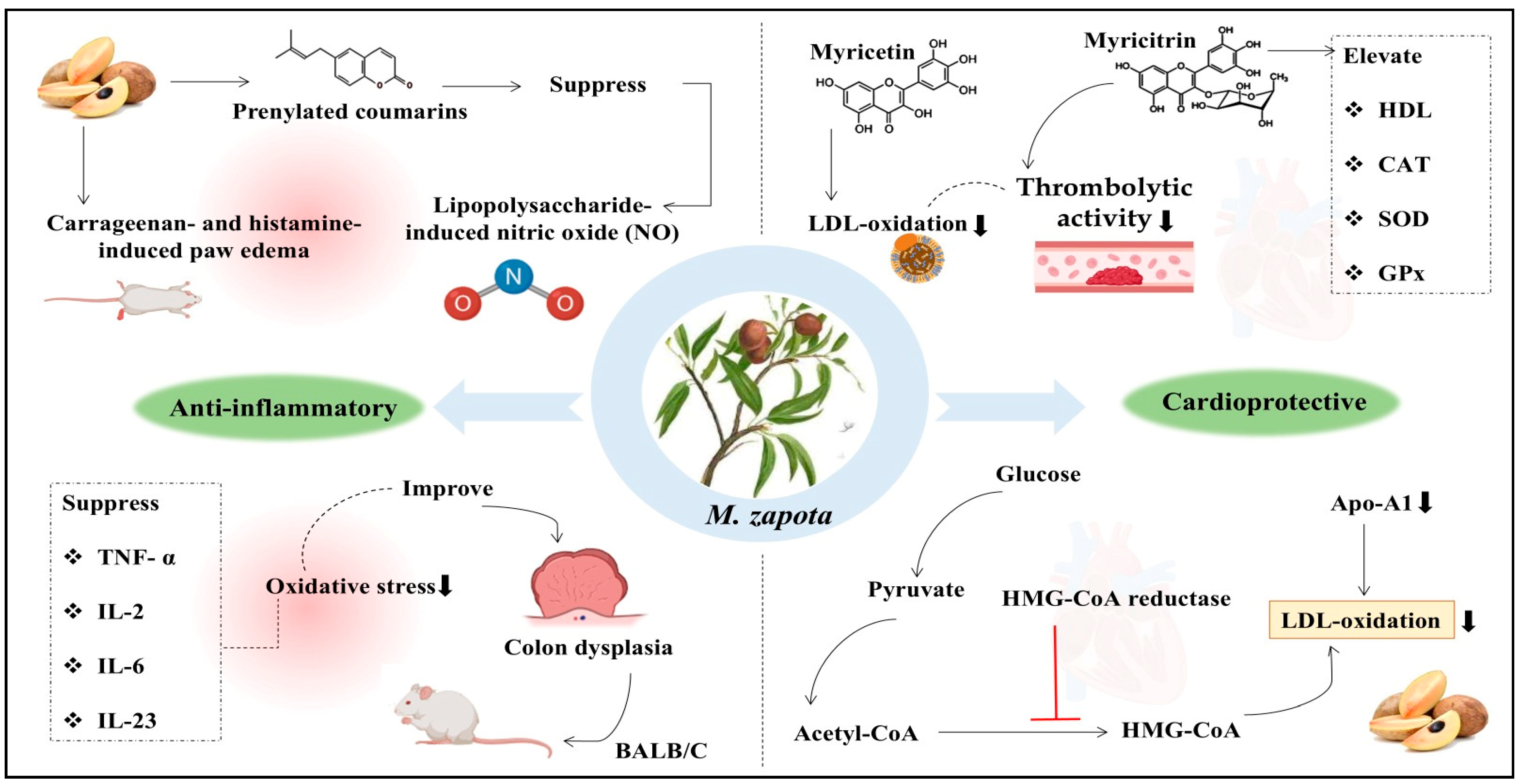
78]. Prenylated coumarins extracted from the fruit attenuated inflammation by suppressing lipopolysaccharide-induced nitric oxide (NO) production [
79]. Furthermore, the anti-inflammatory activity of the methanolic bark extract (200 and 400 mg/kg) was investigated against carrageenan- and histamine-induced paw edema in rats. A significant reduction in paw edema was observed in the extract-treated groups [
14,
80]. Similarly, leaves (25–100 µg/mL) inhibited carrageenan-induced paw edema in rats (
Figure 3). The ethyl acetate and ethanolic extracts (~300 mg/kg) reduced inflammation by 91.9% and 92.4%, respectively [
16,
81].
Another study evaluated the anti-inflammatory effect of leaves in aqueous, ethanolic, and hydroalcoholic extracts in 12-O-tetradecanoylphorbol-13-acetate-induced ear edema via a murine model. It has been shown that the ethanolic extract (5 mg) had more anti-inflammatory potential than the other extracts [
58,
82]. Similarly, aqueous leaf extract reduced ROS production and proinflammatory cytokines, such as TNF-α and IL-6, thereby improving colon dysplasia in BALB/C mice [
83]. The antioxidant compounds in
M. zapota play a crucial role in its anti-inflammatory and metabolic regulatory properties, as oxidative stress is closely associated with inflammatory signaling pathways. The majority of experimental in vivo and in vitro studies have shown the anti-inflammatory potential of
M. zapota; however, the exact molecular pathways of these anti-inflammatory activities need further elucidation. Thus, future mechanistic and clinical studies are needed to establish the clinical significance in managing inflammatory diseases.
6.4. Cardioprotective Potential
Cardiovascular disorders (CVD
S), such as hypertension, cardiac arrest, and myocardial infarction, are continuously increasing, contributing to an increased mortality rate worldwide. Dyslipidemia, oxidative stress, and chronic inflammation are the major contributors to the development of CVDs, which are caused by a high-fat diet, limited intake of fruits and vegetables, reduced physical activity, and medications [
84]. Certain medications, i.e., statins, ezetimibe, PCSK9 inhibitors, and bile acid sequestrants, are available to improve the lipid profile, but their adverse effects highlight an urgent need for food-derived candidates, which require further validation [
85,
86]. Medicinal plants like
M. zapota have revealed hypolipidemic effects by improving HDL-cholesterol levels and suppressing LDL-cholesterol, triglycerides (TG), total cholesterol (TC), and proinflammatory cytokines, ultimately modulating biomarkers associated with cardiovascular risk in experimental models [
58,
87]. The leaf extract has shown hypolipidemic activity in hyperlipidemic rats. Recent studies reported that treatment with leaves and fruits leads to significant reductions in cholesterol and triglycerides and increases HDL (high-density lipoprotein)-cholesterol levels [
88].
The cardiovascular marker-related properties of
M. zapota are associated with its antioxidant activity and enzymatic pathway regulation. Ethanolic leaf extract (100 and 300 mg/kg) significantly improved lipid profile, i.e., increased HDL-cholesterol levels and decreased LDL-cholesterol and Apo-A1. It is also observed that flavonoids prevented LDL-oxidation and cholesterol synthesis by inhibiting HMG-CoA reductase activity [
89]. Furthermore,
M. zapota leaves modulated cholesterol levels by suppressing pancreatic cholesterol esterase activity [
89]. Angioprotective properties and proteasome activities were demonstrated in rabbits with cholesterol-induced atherosclerosis. Myricetin lowered LDL-oxidation and reduced the incidence of CVDs [
90]. Furthermore, ref. [
91] evaluated the antiatherosclerotic potential of myricitrin in hypercholesterolemic rats by treating them with myricitrin (100 µM) for 45 consecutive days. The results showed reduced levels of LDL-cholesterol, TC, TG, reactive oxygen species (ROS), and lipid peroxidation. Moreover, myricitrin elevated HDL-cholesterol, catalase (CAT), superoxide dismutase (SOD), and glutathione peroxidase (GPx) levels (
Figure 4). The aortic wall surface area was also lowered by about 2%, 4%, and 27% by administration of 1, 10, and 100 µM myricitrin, respectively. Additionally, the in vitro thrombolytic activity of the hydroethanolic leaf extract was investigated. The results revealed that ~100 µg/mL extract attenuated blood clotting by about 23.9%, which was mainly due to the presence of phytoconstituents such as glycosides, tannins, terpenoids, and flavonoids [
92]. Hence, the cardioprotective properties are largely substantiated by in vivo and in vitro experimental evidence, which has revealed improvements in lipid profiles and antioxidant defense mechanisms; more long-term in vivo clinical trials are encouraged to confirm this cardioprotective effect. The anti-inflammatory and cardioprotective mechanisms of
M. zapota are summarized in
Figure 4.
6.5. Hepatoprotective and Osteoprotective Potential
The liver is a vital organ of the body that is involved in metabolizing nutrients and drugs, synthesizing enzymes and hormones, producing bile, and detoxifying harmful chemicals and substances. These functions are disturbed by unhealthy eating patterns, a sedentary lifestyle, and exposure to environmental contaminants, which in turn trigger the propagation of hepatocellular disorders. Medicinal plants are gaining importance in healthcare sectors in supporting research on liver-related biomarkers [
93].
M. zapota, one such medicinal plant, has shown liver marker-modulating effects in animal models, as evidenced by various studies. The hepatoprotective potential of 250 and 500 mg/kg fruit extract was evaluated in CCL
4-intoxicated and hepatic-injured rats. The results revealed significant reductions in serum bilirubin and liver enzyme markers in treated animals, such as alanine aminotransferase, alkaline phosphatase, and aspartate transaminase. Moreover, free radical production and lipid peroxidation were also reduced [
94,
95]. Furthermore, it has been observed that the hepatoprotective potential is due to its phytoconstituents, such as polyphenols (methyl 4-O-galloylchlorogenate), which exhibit potent antioxidant attributes [
18].
Similarly, bones are the fundamental elements of the skeleton, which grows rapidly during the second decade of life [
96]. Environmental, genetic, dietary, and lifestyle factors directly or indirectly influence the development and breakdown of bones [
97,
98,
99]. Studies have reported that high protein consumption modulates acid production and renal acid excretion, thereby regulating bone resorption and urinary calcium excretion [
100,
101]. Calcium modifications and circulating parathyroid hormone concentration also influence bone balance and the bone remodeling rate. Moreover, lower caloric intake is associated with reduced bone density and bone formation [
102,
103]. These factors ultimately weaken bone strength and aggravate the risk of osteoporosis and imbalanced stature. Multiple medications, such as calcium, phosphorus, and vitamin D supplements, are commonly used for strengthening bones, with variable success, but rural communities cannot afford these drugs and supplements due to inflation and high costs [
104,
105]. Therefore, scientists and healthcare professionals are trying to develop less expensive, natural, and effective substitutes to treat osteoporosis and other health disorders. Medicinal plants like
M. zapota have shown antiarthritic-related activity in experimental models, which we will now describe in detail. An in vitro study was conducted using a protein denaturation model to evaluate the effect of
M. zapota on rheumatoid arthritis (RA). Treatment with an ethanolic extract (100 and 250 μg/mL) can be used to reduce protein denaturation by 58.8% and 75.8%, respectively [
13]. In another study, aqueous leaf extract (400 mg/kg) reduced paw edema, while gold nanoparticles had a relatively greater influence in sub-acute arthritis, with an inhibition rate of 83.4%. Moreover, enzymatic activity, such as alanine transaminase (ALT), aspartate transaminase (AST), and alkaline phosphatase (ALP), was also decreased under sub-acute arthritic conditions by the gold nanoparticles [
38]. Although experimental rodent models and preclinical research have shown the hepatoprotective and osteoprotective potential, the clinical significance is still questionable. Therefore, further mechanistic and clinical human trials using standardized extracts are required to support the biological relevance and clinical applicability. There is preliminary evidence of hepatoprotection and osteoprotection, as most of the findings are from animal arthritis models, protein denaturation assays, and chemically induced liver injury models. Such models are valid for screening purposes but cannot be used to confirm clinical efficacy. There are also various studies using extracts or nanoparticles that are not comparable with the usual dietary consumption of sapodilla. These effects should thus be reported as observations from experiments and need to be standardized using extracts and be tested for dose–response effects and clinically validated.
6.6. Antidiabetic Activity
Diabetes mellitus (DM) is a rapidly progressive disorder characterized by the prolonged elevation of blood glucose levels due to inadequate insulin production or impaired body response to insulin. Approximately 25% of the world population is influenced by DM [
106]. Sedentary lifestyle, genetic mutation, environmental variants, autoimmune disorders, and hormonal changes are involved in the pathogenesis of DM. Diabetes mellitus leads to the progression of hypertension, cancer, osteoporosis, stroke, hyperlipidemia, cardiac arrest, and gastroesophageal reflux disorders (GERDs). The elevated global prevalence of DM has intensified the development of food-derived bioactive compounds, specifically derived from medicinal plants, with minimal adverse consequences. Several studies have reported glucose-lowering effects in experimental models of
M. zapota extracts using rodent modeling. Overall, these studies showed that extracts derived from the fruits, leaves, and seeds have glucose metabolism-related effects in preclinical models. The hypoglycemic effect is attributed to the bioactive compounds that are present [
89,
107]. Moreover, refs. [
9,
89] evaluated the hypoglycemic effect of fruit, pulp, and leaves using rat models. The extracts significantly reduced blood glucose, TC, and TG, lowering the incidence of weight gain and its associated health consequences. Moreover, a comparative study was conducted to evaluate the antidiabetic potential of the ethanolic and aqueous extract of seeds. The results showed that the ethanolic extract has more blood glucose-lowering potential than the aqueous seed extract [
108].
Drugs such as alloxan, streptozotocin, nicotinamide + streptozotocin, and dexamethasone induce DM in rats. Ref. [
109] conducted a study to investigate the hypoglycemic effect of leaves, fruit, and pulp in streptozotocin-induced diabetic rats. The leaf extract and pulp extract lowered glucose, TC, and TG levels. Similarly, the aqueous and alcoholic leaf and fruit extracts lowered glucose levels in alloxan-induced diabetic rats [
110]. Moreover, the antidiabetic potential of
M. zapota is largely associated with its ability to inhibit digestive enzymes, particularly α-amylase and α-glucosidase, that are involved in carbohydrate metabolism.
M. zapota leaves have demonstrated their potential in suppressing the activity of α-amylase, which hydrolyzes complex polysaccharides into oligosaccharides and simple carbohydrates [
111]. Furthermore, polyherbal tablets prepared from leaf extracts also exhibited hypoglycemic effect in alloxan- and streptozotocin-induced DM in rats [
112,
113,
114]. Overall, the antidiabetic potential appears to involve multiple mechanisms, such as carbohydrate-digesting enzyme inhibition, antioxidant protection, and modulation of metabolic pathways. Further, the hypoglycemic potential is described in
Table 3. Rodent and in vitro studies have demonstrated the hypoglycemic potential, in that it inhibits the activity of α-amylase and α-glucosidase and enhances lipid metabolism. However, differences in extraction techniques and dose regimens across studies make it difficult to interpret outcomes, as clinical trials are limited. Thus, effective clinical trials should be performed to evaluate the effectiveness, safety, and standard dosage of
M. zapota for DM management. The antidiabetic evidence is based on analyses of carbohydrate-digesting enzymes and diabetic rodent models [
115]. Some studies have shown α-amylase and α-glucosidase inhibition, while others have shown reduction of blood glucose and an improvement in the lipid profile in alloxan- or streptozotocin-induced models. However, the studies vary in their plant parts, solvent extracts, doses, models, and intervention durations. The differences make it difficult to find an effective dietary dose or standardized extract. In this case,
M. zapota must be viewed as having possible glucose metabolism-supporting properties and not as being an antidiabetic treatment [
116].
6.7. Gastroprotective Potential
Gastric health has a significant association with harmonizing the normal health of individuals, as the gastrointestinal tract is involved in food digestion, nutrient absorption, microbial balance, hormonal regulation, immune function, enzyme secretion, and waste elimination [
117,
118]. Any disturbance by drugs, autoimmune and genetic disorders, contaminants, poor dietary practices, and allergies leads to serious gastrointestinal complications, such as gastritis, gastroesophageal reflux disorders (GERDs), peptic ulcers, irritable bowel syndrome (IBS), foodborne infections, diverticulitis, small intestinal bacterial overgrowth (SIBO), and fatty liver disorders (FLDs) [
119,
120,
121]. Increasing interest has been directed towards plant-based therapies due to their health promotion with limited adverse effects. Several studies revealed that
M. zapota has digestive support-related effects in experimental models because of its phytoconstituents. Experimental studies have shown that extracts suppress gastrointestinal disturbances. Diarrhea is a serious gastrointestinal complication, leading to dehydration and micronutrient deficiencies [
122]. It has been observed that
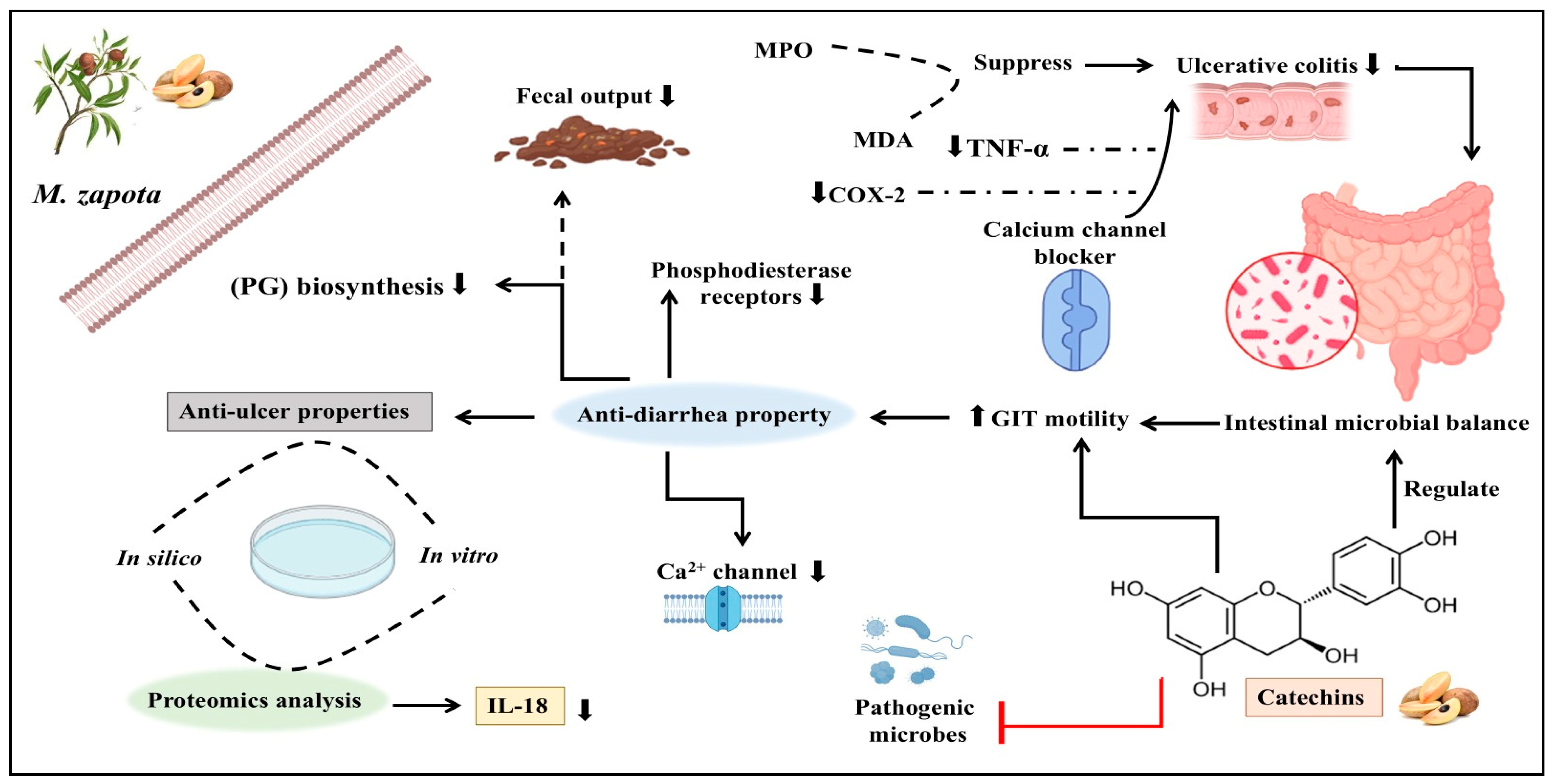
M. zapota leaves have diarrhea-reducing properties, which is particularly attributed to the inhibition of prostaglandin (PG) biosynthesis in the intestinal mucosa. Moreover, they are also involved in the suppression of phosphodiesterase receptors and Ca
2+ channels, ultimately inducing laxative effects [
123]. Moreover, the antidiarrheal effect of ethanolic bark extract was evaluated in a castor oil-induced diarrhea model in rats by administering 200 and 400 mg/kg of bark extract. It has been found that the ethanol extracts (200 mg/kg and 400 mg/kg) notably reduced defecation by 53.5% and 60.7%, respectively, while loperamide reduced defecation by 71.43% [
9]. These findings suggest that
M. zapota improves digestive stability by regulating fluid secretions and intestinal contractions.
The gastroprotective effects are also associated with antiulcer activities, as studies have shown that extracts attenuate ulcer formation and gastric mucosal damage. For instance, ref. [
124] conducted an in vitro, proteomic, and in silico study to evaluate the anti-motility and ulcer index-related effects in animal or in vitro models of aqueous and chloroform extracts of fruits. It has been observed that both extracts dose-dependently protected against ethanol-induced ulcer formation and gut hyperactivity. Furthermore, proteomic analysis revealed a significant reduction in IL-18 levels, and the in silico study showed similar results as those observed in the in vitro study. Later, the antidiarrheal potential of ethanolic bark extract (250 and 500 mg/kg) was evaluated. The results showed a reduction in fecal output, i.e., 29.31% and 41.37% by 250 mg/kg BW and 500 mg/kg BW dosage, respectively [
13]. Another critical aspect of gastrointestinal health is microbial dysbiosis. It is obvious that bioactive compounds, such as catechins, help in regulating intestinal microbial homeostasis by promoting metabolite synthesis. It has been revealed that catechins act as prebiotics, which support the growth of beneficial bacteria and inhibit pathogenic bacteria, thereby improving gut health [
125].
M. zapota fruit is effective against gastrointestinal disorders, such as gastritis, constipation, IBD, and diarrhea. The in vitro and in silico effects on gastric disorders were assessed. For instance, ref. [
126] investigated the effect of ethanolic bark extract in managing ulcerative colitis (UC). The results revealed its potential in alleviating the severity of UC by suppressing myeloperoxidase (MPO) activity and colonic malondialdehyde (MDA) levels. Moreover, the gastroprotective property of methanol bark extract was assessed in Wistar rat pylorus ligation–, indomethacin-, and ethanol-induced ulcer models. The results showed that ~300 mg/kg of methanol extract may alleviate free acidity, the ulcer index, and gastric volume as part of its antiulcer characteristics [
127]. Furthermore, leaf extracts are used to formulate a mouth ulcer gel formulation, which was evaluated for ulcer-related outcomes, and it has been found that it could alleviate ulcers within the body, specifically mouth ulcers [
128]. Another study demonstrated that reduced gastrointestinal tract (GIT) motility increases the retention of substances in the small intestine, thereby enhancing water absorption and intestinal functionality. Moreover, the calcium channel blocker action of
M. zapota suggested possible activity in the tested model in reducing the progression and severity of ulcers. Additionally, the antioxidant effect and nitric oxide (NO) free radical scavenging capability further modulates antiulcer activity by ameliorating oxidative stress in GI tissue. Similarly, rats treated with fruit extract showed comparatively lower TNF-α and COX-2 expression levels compared to those receiving omeprazole treatment, demonstrating the anti-inflammatory profile of the extract. Likewise, the administration of 5 g/kg
M. zapota did not cause any toxicity or mortality in treated rats [
124].
Figure 5 depicts the mechanism of events that promote gut health. Numerous in vivo and in vitro studies have demonstrated the gastroprotective effects via antioxidant and anti-inflammatory activities. However, the direct potential effect on human gastrointestinal disorders is still ambiguous; as a result, additional clinical studies and dosage testing should be conducted to confirm these effects. The gastroprotective evidence includes antidiarrheal, antiulcer, and gut motility outcomes, particularly in animals and in vitro studies. However, these models have different endpoints, such as fecal output, ulcer index, intestinal motility, inflammatory mediators, and mucosal protection. Extract types and doses are also inconsistent. Therefore, these findings suggest possible digestive support properties, but they do not justify clinical claims for treating diarrhea, ulcers, and other gastrointestinal diseases.
6.8. Antiaging Mechanisms
Aging is a complex and integrated process characterized by a time-dependent decline in functional ability and quality of life [
129]. Modernization and industrialization have advanced early aging and reduced the life span. As a result, maladies such as cancer and cardiovascular, musculoskeletal, immune system, and neurodegenerative disorders are rapidly prevailing among communities [
130]. Sedentary lifestyles and poor eating patterns trigger the aging process by producing free radicals, reducing antioxidants, disrupting mitochondrial performance, and promoting minimal caloric consumption [
131]. Moreover, epigenetic modifications such as RNA regulation, RNA modification, DNA methylation, and chromatin remodeling further aggravate the aging process [
132]. Healthcare sectors are also developing strategies to promote healthy aging with advancement and digitalization [
133]. Herbal plants and their compounds, such as
M. zapota, have been explored to find their association with ameliorating or delaying the aging process among individuals.
M. zapota has delayed aging owing to its free radical-scavenging potential, and relevant studies are explained here comprehensively. It has been found that extrinsic and intrinsic factors, like ultraviolet (UV) exposure and time, have a significant impact on skin aging, as they stimulate oxidative damage, ROS production, and metalloproteinase (elastase and collagenase) activity [
134]. Depletion of collagen and elastin, essential proteins for preserving skin structure, promotes wrinkles and other aging problems, mostly linked to cognitive performance.
A comparative study performed to investigate the antiaging potential of
M. zapota by analyzing its antielastase property, anticollagenase activity (of MMP-1 and MMP-2), and in vitro antioxidant capacity was conducted, which revealed strong inhibitory action against MMP-1, MMP-2, and elastases with IC
50 values of 89.6, 86.5, and 35.7 mg/mL, respectively [
135]. Similar results were observed by the administration of 60% ethanolic and 95% ethanolic fresh pulp extract at a 140 µg/mL concentration, which suppressed collagenase and elastase activities by about 66.4% and 64.7%, respectively [
136]. Furthermore, a natural emulgel sunscreen was prepared using fruit extract to evaluate its free radical-scavenging potential under UV radiation conditions. The formulation was reported as nonirritating, as well as exhibiting UV-related protective activity. Moreover, leaves demonstrated a potent elastase-inhibitory effect compared to fruits [
137].
Table 4 describes the overall pharmaceutical and nutraceutical attributes of different parts and extracts of
M. zapota. Briefly, studies have implicated the antioxidant properties and anticollagenase/antielastase activities of
M. zapota in its anti-aging effects. Nevertheless, the existing literature is mostly based on in vitro and in vivo studies, and the lack of clinical studies limits the ability to clarify the biological relevance and consumer/product applicability of
M. zapota in modulating aging-related enzyme markers. Future research will involve examining the bioavailability, safety, and long-term effectiveness of
M. zapota in dermatological and antiaging processes. Only enzyme inhibition, antioxidant activity, and some formulation-based studies have been used to support the antiaging property. The data are useful for product development, cosmetics, and functional ingredients, but do not support antiaging properties in humans. Long-term safety, penetration of the skin, formulation stability, and clinical acceptability should be studied further.
6.9. Integrated Mechanistic Insights
The therapeutic potential of M. zapota is particularly linked to various overlapping molecular pathways. Its bioactive compounds, especially flavonoids, phenolic acids, and triterpenoids, serve as antioxidants by scavenging reactive oxygen species (ROS) and reactive nitrogen species (RNS) and enhancing endogenous antioxidant enzymes, such as superoxide dismutase (SOD), catalase (CAT), glutathione (GSH), glutathione peroxidase (GPx), and inducible nitric acid synthase (iNOS). Subsequently, the decrease in oxidative stress inhibits proinflammatory signaling pathways, such as NF-Kβ, IL-6, TNF-α, and COX-2, thereby suppressing prolonged inflammation. As oxidative stress and inflammation are the common factors in the pathogenesis of metabolic and degenerative disorders, the regulation of these processes promotes anticancer, antidiabetic, cardioprotective, and gastroprotective properties. Moreover, phytochemicals, including myricetin, kaempferol, and caffeic acid, modulate caspase-3 and -8, Wnt/β-catenin, and GSK-3β signaling pathways and inhibit tumor growth. Furthermore, the suppression of metabolic enzymes, such as alpha-amylase, alpha-glucosidase, and HMG-CoA reductase, is equally important in enhancing glucose and lipid metabolism. Collectively, these processes emphasize that the therapeutic potential of M. zapota is mediated by an integrated network of antioxidant defense, anti-inflammatory regulation, apoptosis induction, and modulation of enzymes involved in metabolism. Consequently, the pharmacological potential cannot be considered as independent, but rather interdependent on the biological actions of oxidative stress, inflammatory signaling, and modulation of cellular apoptosis pathways.
7. Safety and Toxicity
The safety of plants is a significant concern for consumers and healthcare professionals when using them regularly. Local inhabitants and traditional healthcare professionals have limited knowledge about safe and toxic doses, leading to unintentional accidental deaths in the past [
142]. National and international regulatory authorities, such as the World Health Organization (WHO), the International Council for Harmonization of Technical Requirements for Pharmaceuticals for Human Use (ICH), the Food and Drug Administration (FDA), the National Institutes of Health (NIH), the European Medicines Agency (EMA), the European Food Safety Authority (EFSA), the Medicines and Healthcare products Regulatory Agency (MHRA), the Natural and Non-prescription Health Products Directorate (NNHPD), the National Medical Products Administration (NMPA), the Pharmaceuticals and Medical Devices Agency (PMDA), and the Drug Regulatory Authority of Pakistan (DRAP), are working to declare the safety and toxicity of a particular plant [
143,
144,
145]. Moreover, in vitro, in vivo, and clinical trials are conducted to evaluate the effective dosage of plants for facilitating their therapeutic attributes. Several experimental studies have involved acute toxicity trials in animal models and demonstrated the toxicity of
M. zapota. Acute toxicity studies have reported that extracts are safe within a broad dosage range. For instance, ref. [
14] evaluated the acute toxicity of methanol and chloroform leaf extracts in mice. The results revealed that the extracts did not cause any toxicity or mortality up to a dose of 2000 mg/kg body weight, demonstrating the lethal dose (LD
50) for both extracts to be above 2000 mg/kg body weight. Similarly, the ethanolic fruit extract was orally administered to rats at 200, 400, 800, 1600, and 3200 mg/kg body weight to evaluate its toxic effect on rat health. No significant changes were observed in behavior, respiration, skin effects, sensory nervous system responses, and gastrointestinal functions during the observation period, demonstrating that the lethal dose is higher than 3200 mg/kg body weight (BW) under the experimental conditions [
16]. These studies indicated that extracts are considerably safe when administered at a controlled and optimum dosage. However, it has been observed that the toxicity data were evaluated only in short-term acute toxicity studies; therefore, long-term studies of toxicity, pharmacokinetics, and clinical safety in humans should be conducted to validate the safety of
M. zapota for pharmaceutical and nutraceutical applications. Another limitation of the existing evidence is that there are no comprehensive pharmacokinetic and metabolic investigations on the absorption, distribution, metabolism, and excretion of the phytochemicals; without these, predicting possible bioaccumulation, metabolic interactions, or long-term toxicity risks of routine ingestion of concentrated extracts is difficult to determine. The existing safety data for
M. zapota are not comprehensive or fully explored. Ripe fruit pulp is traditionally used for nutrition; but extracts, seeds, bark, leaves, latex, peel concentrates, and nanoparticle formulations need a separate safety assessment. Moreover, high-dose acute animal studies indicating no mortality cannot prove chronic safety, NOAEL, LOAEL, ADI, reproductive safety, genotoxic safety, or human tolerability. Furthermore, cyanogenic glycosides have been reported, and exposure to cyanide should be measured in raw and processed products and compared to established toxicological reference values. Future work should be conducted according to OECD repeated dose toxicity guidelines, EFSA botanical safety guidelines, and FDA guidelines for the safety of foods as ingredients. Until this type of evidence is available, only precautionary statements regarding traditional use of fruits and initial acute toxicity data should be made.
M. zapota is underutilized compared with other fruits, but its potential in the food industry is notable.
M. zapota has significant potential as a source of value-added food products; however, its industrial application should be defined in terms of shelf life, processing conditions, quality indicators, sensory acceptability, and commercialization.
8. Applications in Food Systems
M. zapota is underutilized compared to other fruits; however, its potential in the food industry is considerable. It shows significant promise as a source of value-added food products, although its industrial applications must be evaluated in terms of shelf life, processing conditions, quality indicators, sensory acceptability, and commercialization potential. Fresh fruits are highly perishable, with a shelf life of 6–9 days under optimal storage conditions. Storage at 12–16 °C and 85–90% relative humidity (RH) can extend shelf life up to 3 weeks, whereas storage beyond 10 days at 4 °C may lead to chilling injury. Therefore, post-harvest losses can be minimized, and industrial utilization can be enhanced by processing the fruit into jams, spreads, fruit bars, slices, pastilles, juices, and ready-to-serve (RTS) beverages [
18]. Different parts of the plant, including fruits, seeds, and leaves are utilized in the beverage, dairy, confectionery, baking, and cosmetic industries.
8.1. Confectionery Industry
The high carbohydrate content (14–20%), sugars (11–15%), and reducing sugars (7–9%) in the fruit make it a strong candidate for the confectionery industry. Fruit pulp and pectin have been used to prepare antimicrobial jams, where high-pressure processing (300–600 MPa) for 0–30 min at 25–65 °C aids in peroxidase inactivation. Furthermore, the enzyme inactivation rate was more sensitive to temperature and pressure under combined high-pressure and high-temperature conditions [
21]. Optimization studies on spreads formulated using pulp, grape juice, pectin, and citric acid have also been conducted. The optimized formulation consisted of an
M. zapota-to-grape ratio of 1.14, 0.58 g/100 g pectin, 0.21 g/100 g citric acid, 29 °Brix total soluble solids (TSSs), 65% moisture, 11.44 mg GAE/g phenolics, antioxidant capacity of 83.2 mg GAE/kg, and firmness of 47.3 N. The formulation with the highest sensory acceptability was identified using fuzzy logic analysis [
146]. However, moisture, firmness, pH, sugar content, and sensory balance require careful control during scale-up to support the development of reduced-calorie and antioxidant-rich sapodilla spreads.
Dried
M. zapota products such as fruit bars and refractance window-dried bars are promising due to their reduced water activity and improved portability. The hardness, springiness, cohesiveness, adhesiveness, and chewiness of pectin-based fruit bars improved with reduced moisture content and water activity. The optimized refractance window drying conditions were 91 °C drying temperature, 5 mm pulp thickness, 2% pectin, and 146 min drying time, resulting in bars containing approximately 16 g H
2O/100 g moisture and 10.7 mg/100 g ascorbic acid [
147]. Refractance window drying can reduce drying time, temperature, cost, energy consumption, and nutrient loss while preserving color, aroma, antioxidant compounds, and overall nutritional quality. Nevertheless, further research is required to scale up the technology for commercial applications.
Reduced-calorie, high pressure-processed jam was developed using sapodilla pulp containing 45% TSS, 4.5% pectin, and 0.5% citric acid. The jam demonstrated desirable rehological, textural, sensory, and storage properties after processing at 400 MPa for 10 min at 27 ± 1.5 °C [
21]. These findings suggest that sapodilla jam has potential as a reduced-calorie functional food product; however, challenges related to enzyme inactivation, equipment cost, process validation, and product positioning remain to be addressed. Another value-added confectionery product developed from
M. zapota is pastilles. Six purée formulations (10%, 15%, 20%, 25%, 30%, and 40%) were evaluated. The 12% purée formulation showed the highest overall sensory acceptability, with 62.7 °Brix, pH 4.3, and water activity of 0.54, whereas the 20% purée formulation exhibited higher moisture, ash, and fiber contents and higher antioxidant activity. The product retained desirable texture and color after 2 months of chilled storage, indicating commercial potential without the use of synthetic preservatives or artificial coloring agents [
148]. In another study, pectin extracted from sapodilla peel was used to prepare pudding with superior quality compared to puddings prepared using pectin extracted from banana and mango peels. Puddings prepared with extracted and commercial pectin showed similar characteristics and no significant differences in texture [
149].
8.2. Beverage Industry
The highest hedonic acceptability for formulated juice was achieved with 50% pure juice, 25 °Brix, and 0.40% titratable acidity. The formulated juice had a pH of 3.35 and exhibited superior microbial stability compared to pure juice. No microbial colony formation was observed after 1 week of storage at 28 °C, whereas pure juice showed 169,318.18 CFU/mL after the same storage period [
150]. In addition, sonicated and microwave-processed RTS beverages were evaluated over 90 days of storage. The treated beverages exhibited superior color, flavor, taste, and overall sensory attributes, while also retaining higher flavonoid and antioxidant contents than untreated controls [
151]. The findings suggest that industrial-scale production of
M. zapota beverages requires acidification, mild/non-thermal processing, hygienic filling, and proper storage validation.
M. zapota bars and juices prepared from fresh fruit demonstrated strong antioxidant activity (DPPH and FRAP assays), total phenolic content (TPC), total flavonoid content (TFC), and tannin content in 70% acetone extracts compared to water and ethanol extracts. Moreover, the 70% acetone extracts exhibited strong antibacterial activity against
Escherichia coli,
Staphylococcus aureus,
Bacillus subtilis, and
Salmonella spp. [
152]. Furthermore, the addition of maltodextrin and gum arabic has been shown to preserve juice quality, antioxidants, and phytochemicals by preventing oxidation [
153]. Probiotic
M. zapota juice was prepared using
Lactobacillus plantarum, Lactobacillus bulgaricus, Lactobacillus acidophilus, and
Lactobacillus casei, followed by incubation at 30 °C and 37 °C for 3 days. The resulting product exhibited lower pH and titratable acidity, increased TPC, and no significant changes in sensory attributes [
154].
8.3. Dairy Industry
The dairy industry plays an important role in maintaining health by providing proteins, carbohydrates, fats, vitamins, and minerals. Daily consumption of two to three servings of dairy products is generally recommended to meet nutritional requirements. Drinking yogurt has been developed using different proportions of fruit powders, including
M. zapota, Cynometra cauliflora,
Flacourtia indica, and
Elaeocarpus serratus. The addition of these fruit powders increased titratable acidity, reduced pH, improved nutritional composition, and extended shelf life by reducing yeast, mold, coliform and total plate counts [
155]. Interestingly, incorporation of 5% ripened
M. zapota pulp into milk yogurt significantly reduced pH (4.0–4.2), improved protein content (5.58–5.73%) and total solids (29.34–29.64%), enhanced consumer acceptability, and reduced product cost (
p < 0.05) during 15 days of refrigerated storage [
156]. Due to the perishable nature of
M. zapota, food technologists have also developed RTS beverages using processing techniques such as sonication and microwave treatment. The physiochemical characteristics, including acidity, pH, TSS, antioxidant activity, and sensory attributes, were evaluated. The results indicated no significant adverse effects on nutrients, phytochemicals, juice color, or bioactive compounds [
151].
8.4. Tea Industry
Tea is widely consumed beverage and an important source of bioactive compounds that are beneficial against various diseases. Infused dried
M. zapota powder has been incorporated into different milk teas, including fat-free cow milk, soy milk, almond milk, and lactose-free cow milk. These milk teas exhibited lower glycemic indices, retained antioxidant activity, and achieved higher consumer acceptability scores (7.6) compared to commercial milk tea [
157]. Similarly, herbal tea prepared using
M. zapota fruit powder was evaluated using an electronic tongue (e-tongue) system for sensory attributes such as aftertaste, astringency, sourness, and bitterness. The herbal tea demonstrated good quality and consumer acceptance [
158].
8.5. Baking Industry
The bakery industry plays an important role in the food sector and serves as a medium for fortification of products with minerals, vitamins, dietary fiber, proteins, carbohydrates, fats, and bioactive compounds. It produces bread, cakes, pastries, and cookies that serve as staple foods in many diets worldwide. Cookies prepared with sapota fiber powder (7%) and beetroot leaf powder (4.5%) were evaluated for storage stability over 15 months. Cookies containing 7% sapota fiber powder maintained lower moisture content, peroxide value, free fatty acids, and microbial growth while exhibiting superior preservation compared to reference cookies. Moreover, sapota fiber powder cookies demonstrated greater consumer acceptability than beetroot leaf powder cookies, indicating their potential for enhanced shelf life and quality [
159]. Fiber-rich biscuits incorporating dehydrated chiku powder and dry fruit fillings (figs and dates) have also been developed as dietetic bakery products with enhanced nutritional value. Figs contributed higher ash and protein contents, whereas dates provided dietary fiber along with significant amounts of chlorogenic acid and protocatechuic acid. Incorporation of chiku powder reduced dough properties such as water absorption and extensibility; however, biscuits with higher °Brix fruit fillings exhibited improved baking stability and breaking strength. The use of sodium alginate further stabilized the fillings and enhanced their sensory and functional properties, while increasing dietary fiber and phenolic acid content [
160]. Fortified buns with varying levels of pearl millet flour (PMF) and sapota powder were evaluated for shelf life and sensory attributes over 6 days. The optimized formulation containing 22% pearl millet flour and 12% sapota powder received the highest acceptability scores on a nine-point hedonic scale. However, by the sixth day of storage, reductions in carbohydrate, protein, ash, energy, and total flavonoid contents were observed, along with the growth of yeast and molds in both optimized and control buns [
161]. Therefore, further research is needed to optimize processing conditions and dosage levels to improve the utilization of
M. zapota in the baking industry.
9. Cosmetic Industry
The cosmetic industry is growing day by day. The use of bio-green sources is gaining attention to make effective cosmetic products. Hydro-alcoholic extract of
M. zapota as a sunscreen was evaluated and did not undergo any photodegradation when exposed to UV, and the growth of
Candida albicans was not affected. The spectral analysis revealed no considerable change in absorption between 250–320 nm, while the linoleic acid peroxidation test indicated negligible peroxide formation, suggesting higher photostability of the extract than the standard sunscreens [
162].
The emulgel containing
M. zapota fruit extract (MZFE) was tested to assess the efficacy of this extract in terms of sun protective factor (SPF) and physical retention on the facial skin. The formulation proved to be most stable physically and chemically and also demonstrated good in vitro (14.215 ± 0.140) and in vivo (SPF 14.215 ± 0.3) photoprotective properties, which lasted for about 120 min. The MZFE-loaded emulgel formulation proved to be effective in providing UV filtering properties, and hence it could be used as a possible material in sun protection products [
137]. The effects of sapodilla leaf extract cream on PDGF and IL-10 levels were tested in UVB-exposed Wistar rats. The group treated with the 50% sapodilla leaf extract cream showed the highest level of PDGF, and the difference was found to be significant among the various treatment groups (
p = 0.024). The levels of IL-10 were similar in both groups (
p = 0.240), indicating that the cream could have a greater impact on the production of PDGF, but not on the production of IL-10. The results indicate that sapodilla leaf extract has the capability to heal UVB-induced skin damage [
163].
10. Pharmaceutical Industry
M. zapota has numerous pharmaceutical and nutraceutical applications due to its wide range of phytochemicals, such as flavonoids, phenolic acids, triterpenoids, and glycosides. These constituents are responsible for their antioxidant, anti-inflammatory, anticancer, and antidiabetic potential, making them an ideal source of natural therapeutic agents in the pharmaceutical industry. Moreover, it can also be used in novel drug delivery systems, as recent studies have used its extracts in metal nanoparticle synthesis. Furthermore, it can be used in the preparation of functional foods, dietary supplements, and nutraceuticals due to its nutrient and bioactive compound bioavailability. However, international regulatory agencies like the WHO, FDA, and EFSA require comprehensive toxicological and quality assessments prior to the incorporation of plant-based ingredients in the development of commercial products. An edible gel produced from M.
zapota fruit pulp and the probiotic bacterium
Lactobacillus fermentum A15 was developed by microencapsulation using a spray-drying process. The bioactive compounds and viability of the probiotic (1 × 10
7 CFU/mL) were preserved by using this method, positioning it as a promising product for lactose-intolerant consumers and catering to the growing functional food market [
164].
11. Limitations and Future Perspectives
In food applications, additional efforts are needed to prove industrial shelf life, storage stability, enzyme browning control, cost, packaging, consumer acceptance, and commercial scale-up. The antioxidant activity level of evidence is moderate to low. The free radical-scavenging activity has been reported by various studies with DPPH, ABTS, FRAP, and H2O2 scavenging assays; however, these assays primarily measure antioxidant activity, but cannot necessarily verify the biological antioxidant activity in humans. Furthermore, the antioxidant properties are difficult to compare, as the plant parts used for the extraction, solvents, concentrations used, standards used, and assay conditions are diverse.
In conclusion, the major industrial constraints for M. zapota products are the short shelf life of the fresh fruits, bruising, enzymatic browning, handling problems with the latex, seasonal availability, absence of standardized maturity indexes, lack of consumer awareness outside of tropical markets, and high cost of advanced processing technologies. It has been reported that maturity grading, gentle handling, pre-cooling, pulp freezing, acidification, pectin optimization, water activity control, sensory-led formulation, and staged commercialization can be used to reduce these challenges. Fruit bars, pastilles, dehydrated fruit slices, spreads, and beverages could be lower cost products that could be commercialized sooner, whereas HPP-based jams and higher-value refrigerated products might be more suitable for higher-value markets.
Anti-inflammatory, antidiabetic, gastroprotective, cardioprotective, hepatoprotective, osteoprotective, anticancer, and antiaging activities are also low to moderate, depending upon the endpoint. The majority of findings are from in vitro, cell culture, in silico, and animal models, which provide interesting mechanistic insights, including proposed modulation of oxidative stress, inflammatory cytokines, carbohydrate-digesting enzymes, lipid metabolism, markers of apoptosis, and enzyme inhibition. However, there is insufficient evidence to support the therapeutic efficacy in humans. Moreover, a number of extracts and isolated substances derived from M. zapota have been reported to have cytotoxic properties in cancer cell lines; however, cell line inhibition cannot be directly equated with clinical anticancer activity. There are variations in extract types, dosages, cell lines, exposure times, and mechanistic endpoints across the available studies. Furthermore, the selectivity, bioavailability, pharmacokinetics, safe dosage, and efficacy have not been well established. Thus, anticancer properties can only be reported as initial laboratory results.
Likewise, the antidiabetic and cardioprotective results are encouraging but inconclusive. Some studies reported that α-amylase and α-glucosidase inhibition was observed along with decreased blood glucose levels, a better lipid profile, and a decrease in oxidative stress markers. Comparisons are difficult due to variations in the diabetic induction models, preparation of the extracts, doses administered, durations of treatment, and measured endpoints. Clinical trials involving humans are required to confirm the use of extracts in diabetes and cardiovascular management.
Careful and cautious statements should also be made about safety. The available safety data for the extracts are limited, but some studies indicate that they are not particularly acutely toxic at the tested doses. Safety in vulnerable populations, herb–drug interactions, genotoxicity, reproductive toxicity, chronic toxicity, and organ-specific toxicity are not fully explored. Thus, there is insufficient evidence to guarantee complete safety of therapeutic or high-dose nutraceutical use.
12. Conclusions
M. zapota is a tropical fruit, rich in nutrients, containing a wide range of phytochemicals, such as phenolics, flavonoids, tannins, terpenoids, sterols, and alkaloids, which have been reported to have antioxidant, anti-inflammatory, metabolic, gastroprotective, cardioprotective, hepatoprotective, antiaging, and industrial attributes. However, there is varying evidence supporting these properties; therefore, assessment of the biological activity should be carried out to validate its effectiveness for clinical use. The available literature suggest that the nutritional composition and development of food products are moderate, since some nutritional studies have been performed to assess the proximate composition, phytochemical content, product formulation, physicochemical quality, and sensory acceptability of the products. In conclusion, M. zapota is a good source of nutrients, phytochemicals, and value-added food ingredients. It has so far the most promising practical applications in the food sector (jams, spreads, fruit bars, pastilles, dehydrated foods, and beverages). It has biological plausibility and is largely in the preclinical stages. Standardizing extract preparation, active compound identification, dose response, bioavailability, pharmacokinetic, chronic toxicity, and well-designed human clinical trials should be considered as future research areas.
Author Contributions
Conceptualization, A.S. and A.A. (Adnan Amjad); methodology, Z.M., S.Z. and M.I.; software, S.Z. and S.K.Z.K.; validation, A.A. (Asad Abbas) and J.G.K.; formal analysis, N.A. and M.K.A.; investigation, A.A. (Asad Abbas), A.S., N.A., and M.I.; resources, M.K.A.; data curation, S.K.Z.K., A.A. (Asad Abbas), N.A., A.A. (Adnan Amjad), and Z.M.; writing—original draft preparation, A.S., A.A. (Adnan Amjad), Z.M., M.M., M.I., S.Z., S.K.Z.K., M.K.A. and N.A.; writing—review and editing, A.A. (Asad Abbas), M.K.A., M.I. and J.G.K.; visualization, M.K.A.; supervision, A.A. (Adnan Amjad); project administration, M.K.A. All authors have read and agreed to the published version of the manuscript.
Funding
This research received no external funding.
Institutional Review Board Statement
Not applicable.
Informed Consent Statement
Not applicable.
Data Availability Statement
No new data were created or analyzed in this study.
Acknowledgments
During the preparation of this work, the authors used ChatGPT, powered by OpenAI’s GPT-4.0 technology, to revise the English in the manuscript to improve readability and language. After using this tool, the authors reviewed and edited the content as needed and take full responsibility for the content of the publication.
Conflicts of Interest
The authors declare that they have no known competing financial interests.
Abbreviations
| T2DM | Type 2 diabetes mellitus |
| MeSH | Medical subject heading |
| SOD | Superoxide dismutase |
| CAT | Catalase |
| GSH | Glutathione |
| GPx | Glutathione peroxidase |
| O2– | Superoxide |
| H2O2 | Hydrogen peroxide |
| OH° | Hydroxyl |
| NO | Nitric oxide |
| GSK-3β | Glycogen synthase kinase 3β |
| CK1 | Casein kinase 1 |
| IL | Interleukin |
| LPO | Lipid peroxidation |
| COX-2 | Cyclooxygenase-2 |
| TNF-α | Tumor necrosis factor-α |
| TC | Total cholesterol |
| TGs | Triglycerides |
| LDL | Low-density lipoprotein |
| CVDs | Cardiovascular disorders |
| ROS | Reactive oxygen species |
| RNS | Reactive nitrogen species |
| GERD | Gastroesophageal reflux disorder |
| BW | Body weight |
| SIBO | Small intestinal bacterial overgrowth |
| PG | Prostaglandin |
| IBD | Inflammatory bowel disease |
| UC | Ulcerative colitis |
| MPO | Myeloperoxidase |
| MDA | Malondialdehyde |
| GIT | Gastrointestinal tract |
| RA | Rheumatoid arthritis |
| ALT | Alanine transaminase |
| AST | Aspartate transaminase |
| ALP | Alkaline phosphatase |
| UV | Ultraviolet |
| WHO | World Health Organization |
| ICH | International Council for Harmonization of Technical Requirements for Pharmaceuticals for Human Use |
| FDA | Food and Drug Administration |
| NIH | National Institutes of Health |
| EMA | European Medicines Agency |
| EFSA | European Food Safety Authority |
| MHRA | Medicines and Healthcare products Regulatory Agency |
| NNHPD | Natural and Non-prescription Health Products Directorate |
| NMPA | National Medical Products Administration |
| PMDA | Pharmaceuticals and Medical Devices Agency |
| DRAP | Drug Regulatory Authority of Pakistan |
| LD | Lethal dose |
| RTS | Ready-to-serve |
References
- Javaid, N.; Amjad, A.; Weiskirchen, R.; Abbas, A.; Zafar, S.; Shah, M.; Javed, M.S.; Afzal, K.; Zafar, U.; Israr, M. Sea Buckthorn (Hippophae rhamnoides L.): Nutritional Significance, Phytochemistry, Molecular Mechanisms, Therapeutic Potential, and Emerging Applications in Food Systems. Foods 2026, 15, 1389. [Google Scholar] [CrossRef] [PubMed]
- Netshiluvhi, T.R. An exploratory review of commonly used plants in South Africa with promising pharmacological effects on human coronaviruses and other viral infections. Nat. Prod. Commun. 2025, 20, 1934578X251313924. [Google Scholar] [CrossRef]
- Tufail, T.; Fatima, S.; Bader Ul Ain, H.; Ikram, A.; Noreen, S.; Rebezov, M.; Al-Farga, A.; Saleh, R.; Shariati, M.A. Role of phytonutrients in the prevention and treatment of chronic diseases: A concrete review. ACS Omega 2025, 10, 12724–12755. [Google Scholar] [CrossRef]
- Barros, J.; Abraão, A.; Gouvinhas, I.; Granato, D.; Barros, A.N. Advances in leaf plant bioactive compounds: Modulation of chronic inflammation related to obesity. Int. J. Mol. Sci. 2025, 26, 3358. [Google Scholar] [CrossRef] [PubMed]
- Pratiwi, E. Abstract Book: 2nd International Conference on Emerging Trends in Management, Technology, Social and Health Sciences (ICETMTSHS 2025); Lincoln University College: Petaling Jaya, Malaysia, 2025. [Google Scholar]
- Süfer, Ö. Introduction: The evolution of functional foods and novel bioactives. In Unleashing the Power of Functional Foods and Novel Bioactives; Academic Press: Cambridge, MA, USA, 2025; pp. 1–12. [Google Scholar]
- Kamran, F.; Rahman, R.; Ashraf, S.; Ashraf, B. Introduction to minor fruits. In Minor Fruits; Apple Academic Press: Palm Bay, FL, USA, 2025; pp. 1–26. [Google Scholar]
- Alamgir, S.B.; Khatun, A.; Nijhu, R.S. A Review on the Traditional Uses, Phytochemistry and Pharmacology of M. zapota Linn. Int. J. Res. Anal. Rev. 2024, 11, 14. [Google Scholar]
- Gam, S.; Ahmed, R.; Kashyap, B.; Sarma, H.; Sahariah, B.J.; Bora, N.S.; Dutta, K.N. A systematic review on traditional use, phytochemistry and pharmacological activities of Manilkara zapota. Pharmacol. Res.–Nat. Prod. 2024, 4, 100062. [Google Scholar] [CrossRef]
- Khan, A.K.; Rashid, R.; Fatima, N.; Mahmood, S.; Mir, S.; Khan, S.; Murtaza, G. Pharmacological activities of protocatechuic acid. Acta Pol. Pharm. 2015, 72, 643–650. [Google Scholar]
- Toze, F.; Fomani, M.; Nouga, A.; Chouna, J.; Waffo, A.; Wansi, J. Taraxastane and lupane triterpenoids from the bark of Manilkara zapota. Int. Res. J. Pure Appl. Chem. 2015, 7, 157–164. [Google Scholar] [CrossRef]
- Nannar, A.R. Application of Achras sapota Linn in Traditional Medicine. Recent Pat. Biotechnol. 2025, 19, 263–275. [Google Scholar] [CrossRef]
- Rivas-Gastelum, M.F.; García-Amezquita, L.E.; García-Varela, R.; Sánchez-López, A.L. Manilkara zapota “chicozapote” as a fruit source of health-beneficial bioactive compounds and its effects on chronic degenerative and infectious diseases: A review. Front. Nutr. 2023, 10, 1194283. [Google Scholar] [CrossRef]
- Yong, K.Y.; Shukkoor, M.S.A. Manilkara zapota: A phytochemical and pharmacological review. Mater. Today Proc. 2020, 29, 30–33. [Google Scholar] [CrossRef]
- Kamalakararao, K.; Rao, D.G.; Muthulingam, M.; Gopalakrishnan, V.K.; Hagos, Z.; Dogulas, P.J.; Chaithanya, K.K. Effect of isolated bioactive flavonoid apigenin-7-O-β-D-glucuronide methyl ester on cyclooxygenase-2 gene expression in breast cancer MCF-7 cell lines. Drug Invent. Today 2018, 10, 3552–3555. [Google Scholar]
- Ganguly, A.; Al Mahmud, Z.; Saha, S.K.; Rahman, S.M.A. Evaluation of antinociceptive and antidiarrhoeal properties of Manilkara zapota leaves in Swiss albino mice. Pharm. Biol. 2016, 54, 1413–1419. [Google Scholar] [CrossRef] [PubMed]
- Jayachandran, A.; Meghwal, M.L.; Jain, S. Advances in production technology of sapota. In A Textbook on Advances in Production Technology of Tropical and Subtropical Fruits; Kumar, A., Ed.; New Vishal Publication: New Delhi, India, 2023; pp. 169–192. [Google Scholar]
- Bangar, S.P.; Sharma, N.; Kaur, H.; Kaur, M.; Sandhu, K.S.; Maqsood, S.; Ozogul, F. A review of sapodilla (Manilkara zapota) in human nutrition, health, and industrial applications. Trends Food Sci. Technol. 2022, 127, 319–334. [Google Scholar] [CrossRef]
- Bano, M.; Ahmed, B. Manilkara zapota (L.) P. Royen (sapodilla): A review. Int. J. Adv. Res. Ideas Innov. Technol. 2017, 3, 1364–1371. [Google Scholar]
- Murthy, H.N.; Bapat, V.A. (Eds.) Bioactive Compounds in Underutilized Fruits and Nuts; Springer International Publishing: Cham, Switzerland, 2020; pp. 3–19. [Google Scholar]
- Shinwari, K.J.; Rao, P.S. Development of a reduced-calorie high-pressure processed sapodilla (Manilkara zapota L.) jam based on rheological, textural, and sensory properties. J. Food Sci. 2020, 85, 2699–2710. [Google Scholar] [CrossRef] [PubMed]
- Madani, B.; Mirshekari, A.; Yahia, E.; Golding, J.B. Sapota (Manilkara achras Forb.): Factors influencing fresh and processed fruit quality. Hortic. Rev. 2018, 45, 105–142. [Google Scholar]
- Hamza, S.; Naseem, S.; Bashir, E.; Rizwani, G.H.; Hina, B. Trace element geochemistry of Manilkara zapota (L.) P. Royen fruit from Winder, Balochistan, Pakistan in perspective of medical geology. Pak. J. Pharm. Sci. 2013, 26, 805–811. [Google Scholar]
- Farag, M.A.; Ragab, N.A.; Maamoun, M.A.I. Metabolites Profiling of Sapota Fruit Pulp via a Multiplex Approach of Gas and Ultra-Performance Liquid Chromatography/Mass Spectroscopy in Relation to Its Lipase Inhibition Effect. PeerJ 2024, 12, e17914. [Google Scholar] [CrossRef]
- Tamsir, N.M.; Esa, N.M.; Omar, S.N.C.; Shafie, N.H. Manilkara zapota (L.) P. Royen: Potential source of natural antioxidants. Malays. J. Med. Health Sci. 2020, 16, 6. [Google Scholar]
- Chunhakant, S.; Chaicharoenpong, C. Phytochemical Composition, Antioxidant and Antityrosinase Activities, and Quantification of (+)-Dihydrokaempferol of Different Parts of Manilkara zapota. Indian J. Pharm. Sci. 2021, 83, 1207–1216. [Google Scholar] [CrossRef]
- Fayek, N.M.; Monem, A.R.A.; Mossa, M.Y.; Meselhy, M.R.; Shazly, A.H. Chemical and biological study of Manilkara zapota (L.) Van Royen leaves (Sapotaceae) cultivated in Egypt. Pharmacogn. Res. 2012, 4, 85. [Google Scholar] [CrossRef] [PubMed]
- Jain, P.K.; Soni, P.; Upmanyu, N.; Shivhare, Y. Evaluation of analgesic activity of Manilkara zapota (leaves). Eur. J. Exp. Biol. 2011, 1, 14–17. [Google Scholar]
- Kaneria, M.; Baravalia, Y.; Vaghasiya, Y.; Chanda, S. Determination of antibacterial and antioxidant potential of some medicinal plants from Saurashtra region, India. Indian J. Pharm. Sci. 2009, 71, 406. [Google Scholar]
- Russo, C.; Valle, M.S.; D’Angeli, F.; Surdo, S.; Giunta, S.; Barbera, A.C.; Malaguarnera, L. Beneficial effects of Manilkara zapota-derived bioactive compounds in the epigenetic program of neurodevelopment. Nutrients 2024, 16, 2225. [Google Scholar] [CrossRef]
- Bashir, S. Pharmacological importance of Manilkara zapota and its bioactive constituents. Boletín Latinoam. Caribe Plantas Med. Aromáticas 2019, 18, 4. [Google Scholar]
- Pravin, P.K.; Shashikant, C.D. Manilkara zapota (L.) Royen fruit peel: A phytochemical and pharmacological review. Syst. Rev. Pharm. 2019, 10, 1. [Google Scholar] [CrossRef]
- Akhtar, Z.; Ismail, M. Phytochemical and antioxidant properties of Manilkara zapota (L.) P. Royen fruit extracts and its formulation for cosmeceutical application. Asian J. Plant Sci. Res. 2017, 7, 29–41. [Google Scholar]
- Shahraki, S.H.; Javar, F.M.; Rahimi, M. Quantitative and qualitative phytochemical analysis of Manilkara zapota (sapodilla) extract and its antibacterial activity on some Gram-positive and Gram-negative bacteria. Scientifica 2023, 2023, 5967638. [Google Scholar] [CrossRef]
- Putri, K.F.; Solichatun, S.; Pitoyo, A. Gallic acid content in sapodilla fruit and seed (Manilkara zapota) and the correlation with germination control in recalcitrant seed. Cell Biol. Dev. 2021, 5, 1. [Google Scholar] [CrossRef]
- Saha, S.K.; Chakraborty, R. Effect of deep eutectic solvent’s characteristics on extraction and bioactivity of polyphenols from sapodilla pulp. Chem. Pap. 2021, 75, 691–702. [Google Scholar] [CrossRef]
- Nautiyal, R.; Uliana, S.; Raj, I.; Shah, B.; Rathore, K.; Singh, A. Decentralized treatment of grey water by natural coagulants in the presence of coagulation aid. In Proceedings of the 2nd World Congress on Civil, Structural, and Environmental Engineering (CSEE’17); Avestia Publishing: Barcelona, Spain, 2017. [Google Scholar]
- Ijaz, M.; Fatima, M.; Anwar, R.; Uroos, M. Green synthesis of gold nanoparticles from Manilkara zapota L. extract and the evaluation of its intrinsic in vivo antiarthritic potential. RSC Adv. 2021, 11, 27092–27106. [Google Scholar] [CrossRef]
- Priyanka, S.; Aakash, D.; Harish, K.; Nitin, B.; Sanjiv, K.; Davinder, K. Pharmacological potential of Manilkara zapota (L.) P. Royen (sapodilla): A narrative review. J. Tradit. Chin. Med. 2024, 44, 403. [Google Scholar]
- Baky, M.H.; Elsaid, M.B.; Farag, M.A. Phytochemical and biological diversity of triterpenoid saponins from family Sapotaceae: A comprehensive review. Phytochemistry 2022, 202, 113345. [Google Scholar] [CrossRef]
- Kaur, J.; Singh, A.; Singh, B.; Sharma, S. Sapota. In Antioxidants in Fruits: Properties and Health Benefits; Springer: Singapore, 2020; pp. 181–199. [Google Scholar]
- Mondal, S.; Das, D.; Roy, S.K.; Islam, S.S. Isolation, purification and structural characterization of an acetylated heteroglycan from the unripe fruits of Manilkara zapota L. Carbohydr. Res. 2012, 354, 74–78. [Google Scholar] [CrossRef]
- Chen, S.; Zhao, X.; Wan, J.; Ran, L.; Qin, Y.; Wang, X.; Mi, M. Dihydromyricetin improves glucose and lipid metabolism and exerts anti-inflammatory effects in nonalcoholic fatty liver disease: A randomized controlled trial. Pharmacol. Res. 2015, 99, 74–81. [Google Scholar] [CrossRef] [PubMed]
- Dehghan, G.; Mehdipour, M.; Hosseinpour Feizi, M.A.; Tarasi, R.; Khoobi, M.; Dastmalchi, S. Spectroscopic investigation on the interaction of DNA with superparamagnetic iron oxide nanoparticles doped with chromene via dopamine as cross-linker. Nanomed. J. 2018, 5, 36–45. [Google Scholar]
- Almeida, M.M.B.; de Sousa, P.H.M.; Arriaga, Â.M.C.; do Prado, G.M.; de Carvalho Magalhães, C.E.; Maia, G.A.; de Lemos, T.L.G. Bioactive compounds and antioxidant activity of fresh exotic fruits from northeastern Brazil. Food Res. Int. 2011, 44, 2155–2159. [Google Scholar] [CrossRef]
- Sharma, P.; Joshi, T.; Chandra, S.; Tamta, S. In silico screening of potential antidiabetic phytochemicals from Phyllanthus emblica against therapeutic targets of type 2 diabetes. J. Ethnopharmacol. 2020, 248, 112268. [Google Scholar] [CrossRef]
- George, T.K.; Joy, A.; Divya, K.; Jisha, M.S. In vitro and in silico docking studies of antibacterial compounds derived from endophytic Penicillium setosum. Microb. Pathog. 2019, 131, 87–97. [Google Scholar] [CrossRef]
- Wang, H.; Liu, T.; Song, L.; Huang, D. Profiles and α-amylase inhibition activity of proanthocyanidins in unripe Manilkara zapota (chiku). J. Agric. Food Chem. 2012, 60, 3098–3104. [Google Scholar] [CrossRef]
- Islam, S.; Alam, M.B.; Ann, H.J.; Park, J.H.; Lee, S.H.; Kim, S. Metabolite profiling of Manilkara zapota L. leaves by high-resolution mass spectrometry coupled with ESI and APCI and in vitro antioxidant activity, α-glucosidase, and elastase inhibition assays. Int. J. Mol. Sci. 2020, 22, 132. [Google Scholar] [CrossRef]
- Domitrović, R.; Rashed, K.; Cvijanović, O.; Vladimir-Knežević, S.; Škoda, M.; Višnić, A. Myricitrin exhibits antioxidant, anti-inflammatory and antifibrotic activity in carbon tetrachloride-intoxicated mice. Chem.-Biol. Interact. 2015, 230, 21–29. [Google Scholar] [CrossRef] [PubMed]
- Akbar, S.; Subhan, F.; Akbar, A.; Habib, F.; Shahbaz, N.; Ahmad, A.; Salman, S. Targeting anti-inflammatory pathways to treat diabetes-induced neuropathy by 6-hydroxyflavanone. Nutrients 2023, 15, 2552. [Google Scholar] [CrossRef] [PubMed]
- Huang, H.; Wei, S.; Wu, X.; Zhang, M.; Zhou, B.; Huang, D.; Dong, W. Dihydrokaempferol attenuates CCl4-induced hepatic fibrosis by inhibiting PARP-1 to affect multiple downstream pathways and cytokines. Toxicol. Appl. Pharmacol. 2023, 464, 116438. [Google Scholar] [CrossRef] [PubMed]
- Pooja, G.; Shweta, S.; Patel, P. Oxidative stress and free radicals in disease pathogenesis: A review. Discov. Med. 2025, 2, 104. [Google Scholar] [CrossRef]
- Rao, M.J.; Duan, M.; Zhou, C.; Jiao, J.; Cheng, P.; Yang, L.; Zheng, B. Antioxidant defense system in plants: Reactive oxygen species production, signaling, and scavenging during abiotic stress-induced oxidative damage. Horticulturae 2025, 11, 477. [Google Scholar] [CrossRef]
- Rani, A.; Gupta, T.; Kangra, K.; Garg, V.; Dutt, R. Evaluation of antioxidant, antibacterial and anticancer activity of fruit and leaf extracts of Manilkara zapota against A431 skin cancer cell lines. S. Afr. J. Bot. 2023, 153, 219–226. [Google Scholar] [CrossRef]
- Fei-yue, M.; Ming, M.; Ya, L. Antioxidant and antibacterial activities of different polar parts from Manilkara zapota leaves. Food Mach. 2021, 37, 144–148. [Google Scholar]
- Sharma, P.; Deep, A.; Kumar, H.; Chaudhary, D.; Thakur, N.; Batra, S. Qualitative analysis and antioxidant potential of ethanolic extract of Manilkara zapota (L.) P. Royen leaves. Appl. Drug Res. Clin. Trials Regul. Aff. 2024, 10, E290124226462. [Google Scholar] [CrossRef]
- Leelarungrayub, J.; Sriboonreung, T.; Pothasak, Y.; Kaju, J.; Puntumetakul, R. Antioxidant and anti-inflammatory activities of Manilkara zapota (sapodilla) in vitro and efficiency in healthy elderly persons. Biomed. J. Sci. Tech. Res. 2019, 15, 11294. [Google Scholar]
- Shahidi, F.; Peng, H. Bioaccessibility and Bioavailability of Phenolic Compounds. J. Food Bioact. 2018, 4, 11–68. [Google Scholar] [CrossRef]
- Wang, T.; Ma, C.; Hu, Y.; Guo, S.; Bai, G.; Yang, G.; Yang, R. Effects of Food Formulation on Bioavailability of Phytosterols: Phytosterol Structures, Delivery Carriers, and Food Matrices. Food Funct. 2023, 14, 5465–5477. [Google Scholar] [CrossRef]
- Cortes, N.R.; Ortega, T.D.J.A.; Muñoz, R.C. Phytochemical content and antioxidant potential of tropical sapodilla fruit (Manilkara zapota). Fruits 2022, 77, 1–6. [Google Scholar] [CrossRef]
- El-Din, M.M.E. Comparative studies on antioxidant and anticancer activities of leaves and fruits of Manilkara zapota (L.). J. Specif. Educ. Res. Stud. 2025, 11, 355–369. [Google Scholar]
- da Silva, M.M.R.; da Costa, N.B.; Castro, A.; do Rosário, C.J.R.M.; Mouchrek, A.N.; Teles, A.M. Application of microemulsion in extract of the stalk of Manilkara zapota (L.) P. Van Royen plant and evaluation of antioxidant activity. Obs. Econ. Latinoam. 2024, 22, e3820. [Google Scholar] [CrossRef]
- Karle, P.P.; Dhawale, S.C.; Navghare, V.V.; Shivpuje, S.S. Optimization of extraction conditions and evaluation of Manilkara zapota (L.) P. Royen fruit peel extract for in vitro α-glucosidase enzyme inhibition and free radical scavenging potential. Future J. Pharm. Sci. 2021, 7, 151. [Google Scholar] [CrossRef]
- Maaz, M.; Sultan, M.T.; Noman, A.M.; Zafar, S.; Tariq, N.; Hussain, M.; Al Abdulmonem, W. Anthocyanins: From natural colorants to potent anticancer agents. Food Sci. Nutr. 2025, 13, e70232. [Google Scholar] [CrossRef]
- Chaudhry, M.; Riaz, S.; Mazhar, B.; Ali, N.M.; Safi, M.K. Impact of physical activity and associated factors on breast cancer: A comprehensive review. Preprint 2025. [Google Scholar] [CrossRef]
- Bertonnier-Brouty, L.; Achanta, K.; Andersson, J.; Bsharat, S.; Singh, T.; Kaprio, T.; Artner, I. HOXB6 and HOXB8 control immune-cancer cell interactions in pancreatic cancer. bioRxiv 2024. [Google Scholar] [CrossRef]
- Gao, Y.; Qiao, X.; Liu, Z.; Zhang, W. The role of E2F2 in cancer progression and its value as a therapeutic target. Front. Immunol. 2024, 15, 1397303. [Google Scholar] [CrossRef] [PubMed]
- Ji, J.; Phang, H.C.; Gu, X.; Widodo, R.T.; Goh, B.H.; Kee, P.E.; Liew, K.B. A review on colorectal cancer and the role of traditional Chinese herbal medicine as complementary therapy. Prog. Microbes Mol. Biol. 2024, 7, 1. [Google Scholar] [CrossRef]
- Tan, B.L.; Norhaizan, M.E. Manilkara zapota (L.) P. Royen leaf water extract triggered apoptosis and activated caspase-dependent pathway in HT-29 human colorectal cancer cell line. Biomed. Pharmacother. 2019, 110, 748–757. [Google Scholar] [CrossRef] [PubMed]
- Ramos, A.; Alvarez, M.R.; Delica, K.; Moreno, P.G.; Abogado, R.; Grijaldo, S.J.; Nacario, R. Antioxidant and anticancer activities of Manilkara zapota and Lansium domesticum leaves coupled with metabolomics analysis using molecular networking. Vietnam J. Chem. 2022, 60, 578–588. [Google Scholar] [CrossRef]
- Podder, M.K.; Hossain, M.M.; Kabir, S.R.; Asaduzzaman, A.K.M.; Hasan, I. Antimicrobial, antioxidant and antiproliferative activities of a galactose-binding seed lectin from Manilkara zapota. Heliyon 2024, 10, e2. [Google Scholar] [CrossRef]
- Catalano, E. Nanotechnology-Based Drug Delivery of Natural Compounds and Phytochemicals for the Treatment of Cancer and Other Diseases. Stud. Nat. Prod. Chem. 2019, 62, 91–123. [Google Scholar]
- Shaniba, V.S.; Aziz, A.A.; Jayasree, P.R.; Kumar, P.M. Manilkara zapota (L.) P. Royen leaf extract-derived silver nanoparticles induce apoptosis in human colorectal carcinoma cells without affecting human lymphocytes or erythrocytes. Biol. Trace Elem. Res. 2019, 192, 160–174. [Google Scholar] [CrossRef]
- Awasthi, A.; Pingili, D.; Rahul, B.; Raju, M.B. Microwave-assisted extraction, in vitro antioxidant and anticancer activity of Curcuma longa L. and Manilkara zapota L. J. Phytonanotechnol. Pharm. Sci. 2023, 3, 1–4. [Google Scholar] [CrossRef]
- Rusda, M.; Siregar, K.B.; Muhar, A.M.; Purwanto, D.J.; Nasution, I.P.; Nafianti, S.; Al Anas, M. Durian and sapodilla extracts enhance chemotherapy sensitivity and promote apoptosis in triple negative breast cancer model in vitro: A systematic review. Acta Inform. Medica 2025, 33, 64. [Google Scholar] [PubMed]
- Vaishnav, A.; Mehta, F.T.; Patani, P. Anti-inflammatory and antioxidant effects of Manilkara zapota and Hylocereus undatus: A complete review. J. Adv. Zool. 2024, 45, 1. [Google Scholar]
- Agrawal, M.; Mitra Mazumder, P. Development and validation of a high-performance thin-layer chromatography–densitometric method and mass spectroscopy profiling for the determination of bioactive phytosterol from Manilkara zapota L. P. Royen leaves and correlating its antioxidant and anti-inflammatory potential. JPC–J. Planar Chromatogr. –Mod. TLC 2024, 37, 21–37. [Google Scholar]
- Liu, Y.P.; Yan, G.; Guo, J.M.; Liu, Y.Y.; Li, Y.J.; Zhao, Y.Y.; Fu, Y.H. Prenylated coumarins from the fruits of Manilkara zapota with potential anti-inflammatory effects and anti-HIV activities. J. Agric. Food Chem. 2019, 67, 11942–11947. [Google Scholar] [CrossRef] [PubMed]
- Hossain, M.H.; Jahan, F.; Howlader, M.S.I.; Dey, S.K.; Hira, A.; Ahmed, A.; Sarkar, R. Evaluation of anti-inflammatory activity and total flavonoids content of Manilkara zapota (Linn.) bark. Int. J. Pharm. Phytopharm. Res. 2012, 2, 35–39. [Google Scholar]
- Konuku, K.; Karri, K.C.; Gopalakrishnan, V.K.; Hagos, Z.; Kebede, H.; Naidu, T.K.; Rao Duddukuri, G.R.D. Anti-inflammatory activity of Manilkara zapota leaf extract. Int. J. Curr. Pharm. Res. 2017, 9, 130–134. [Google Scholar] [CrossRef]
- Martínez, A.T.; Fernández, J.J.A.; Pérez, N.D.C.J.; Alejo, F.A.G.; Alamilla, P.G.; Botello, M.A.E.; Lanestosa, A.C. In vitro biological evaluation and in vivo anti-inflammatory effect of chicozapote (Manilkara zapota (L.) P. Royen) leaf extracts in mice with internal atrial edema. Pharmacogn. Mag. 2025, 21, 1313–1322. [Google Scholar] [CrossRef]
- Tamsir, N.M.; Esa, N.M.; Shafie, N.H.; Hamzah, H. Manilkara zapota (L.) P. Royen leaf mitigates colitis-associated colon cancer through anti-inflammatory modulation in BALB/c mice. Adv. Pharmacol. Pharm. Sci. 2024, 2024, 1137696. [Google Scholar] [CrossRef] [PubMed]
- Qian, H.; Liu, Y.; Choi, H.; Lee, S. Exploring the causal effects of physical activity, diet, and nutrition on hypertension and hyperlipidemia: A multivariable Mendelian randomization analysis. BMC Cardiovasc. Disord. 2025, 25, 196. [Google Scholar] [CrossRef]
- Paryani, M.; Gupta, N.; Jain, S.K.; Butani, S. Lowering LDL cholesterol by PCSK9 inhibition: A new era of gene silencing, RNA, and alternative therapies. Naunyn-Schmiedeberg’s Arch. Pharmacol. 2025, 398, 6597–6615. [Google Scholar] [CrossRef]
- Gunta, S.P.; O’Keefe, J.H.; O’Keefe, E.L.; Lavie, C.J. PCSK9 Inhibitor, Ezetimibe, and Bempedoic Acid: Evidence-Based Therapies for Statin-Intolerant Patients. Prog. Cardiovasc. Dis. 2023, 79, 12–18. [Google Scholar] [CrossRef]
- Iqbal, F.; Baker, W.S.; Khan, M.I.; Thukuntla, S.; McKinney, K.H.; Abate, N.; Tuvdendorj, D. Current and future therapies for addressing the effects of inflammation on HDL cholesterol metabolism. Br. J. Pharmacol. 2017, 174, 3986–4006. [Google Scholar] [CrossRef]
- Barbalho, S.M.; Bueno, P.C.D.S.; Delazari, D.S.; Guiguer, E.L.; Coqueiro, D.P.; Araújo, A.C.; Groppo, M. Antidiabetic and antilipidemic effects of Manilkara zapota. J. Med. Food 2015, 18, 385–391. [Google Scholar] [CrossRef]
- Solikhah, T.I.; Wijaya, T.A.; Pavita, D.A.; Miftakhurrozaq, R.K.; Raharjo, H.M.; Yunita, M.N.; Fikri, F. The effect of sapodilla leaf extract (Manilkara zapota L.) on lipid profiles of alloxan-induced diabetic mice. Pharmacogn. J. 2023, 15, 2. [Google Scholar] [CrossRef]
- Zhang, S.; Li, L.; Chen, W.; Xu, S.; Feng, X.; Zhang, L. Natural products: The role and mechanism in low-density lipoprotein oxidation and atherosclerosis. Phytother. Res. 2021, 35, 2945–2967. [Google Scholar] [CrossRef]
- Gao, J.; Liu, C.; Zhang, H.; Sun, Z.; Wang, R. Myricitrin exhibits anti-atherosclerotic and anti-hyperlipidemic effects in diet-induced hypercholesterolemic rats. AMB Express 2019, 9, 204. [Google Scholar] [CrossRef]
- Barbhuiya, A.M.; Bindu, P.H.; Preethi, D.; Sri, M.R.; Sai, R. Evaluation of in vitro thrombolytic activity of Manilkara zapota leaf extract. Pharma Innov. J. 2019, 8, 253–255. [Google Scholar]
- Tanvir, L.; Afzal, K.; Abbas, A.; Amjad, A.; Iqbal, T.B.; Sarwar, N.; Naeem, R.; Furqan, A.; Pandey, B. Integrating Phytochemical Analysis and Experimental Validation of Ziziphus jujuba Seed Powder and Oil to Ameliorate CCl4-Induced Liver Fibrosis in Sprague Dawley Rats. PLoS ONE 2026, 21, e0343428. [Google Scholar] [CrossRef] [PubMed]
- Alrashood, S.T.; Al-Asmari, A.K.; Alotaibi, A.K.; Manthiri, R.A.; Rafatullah, S.; Hasanato, R.M.; Wali, A.F. Protective effect of lyophilized sapodilla (Manilkara zapota) fruit extract against CCl4-induced liver damage in rats. Saudi J. Biol. Sci. 2020, 27, 2373–2379. [Google Scholar] [CrossRef]
- Susanto, H.; Taufiq, A.; Malek, N.A.N.N.; Putra, W.E. Anti-liver fibrosis of green materials Moringa oleifera seed oils from Madura Island against hepatocellular carcinoma development. Biog. J. Ilm. Biol. 2022, 10, 1. [Google Scholar] [CrossRef]
- López, J.M. Bone development and growth. Int. J. Mol. Sci. 2024, 25, 6767. [Google Scholar] [CrossRef] [PubMed]
- Rubio-Gutiérrez, J.C.; Méndez-Hernández, P.; Guéguen, Y.; Galichon, P.; Tamayo-Ortiz, M.; Haupt, K.; Barbier, O.C. Overview of traditional and environmental factors related to bone health. Environ. Sci. Pollut. Res. 2022, 29, 31042–31058. [Google Scholar] [CrossRef]
- Wawrzyniak, A.; Balawender, K. Structural and metabolic changes in bone. Animals 2022, 12, 1946. [Google Scholar] [CrossRef]
- Singh, S.; Sarma, D.K.; Verma, V.; Nagpal, R.; Kumar, M. From cells to environment: Exploring the interplay between factors shaping bone health and disease. Medicina 2023, 59, 1546. [Google Scholar] [CrossRef]
- Salcedo-Betancourt, J.D.; Moe, O.W. The effects of acid on calcium and phosphate metabolism. Int. J. Mol. Sci. 2024, 25, 2081. [Google Scholar] [CrossRef]
- Bargagli, M.; Arena, M.; Naticchia, A.; Gambaro, G.; Mazzaferro, S.; Fuster, D.; Ferraro, P.M. The role of diet in bone and mineral metabolism and secondary hyperparathyroidism. Nutrients 2021, 13, 2328. [Google Scholar] [CrossRef]
- Prot-Bertoye, C.; Lievre, L.; Houillier, P. The importance of kidney calcium handling in the homeostasis of extracellular fluid calcium. Pflug. Arch. Eur. J. Physiol. 2022, 474, 885–900. [Google Scholar] [CrossRef]
- Wawrzyniak, N.; Suliburska, J. Nutritional and health factors affecting the bioavailability of calcium: A narrative review. Nutr. Rev. 2021, 79, 1307–1320. [Google Scholar] [CrossRef] [PubMed]
- Yeum, K.J.; Ju, S.; Choe, U. Strategies for preventing bone loss in populations with insufficient calcium and vitamin D intake. Nutr. Res. Pract. 2025, 19, 155–169. [Google Scholar] [CrossRef] [PubMed]
- Chevalley, T.; Brandi, M.L.; Cashman, K.D.; Cavalier, E.; Harvey, N.C.; Maggi, S.; Rizzoli, R. Role of vitamin D supplementation in the management of musculoskeletal diseases: Update from an European Society of Clinical and Economical Aspects of Osteoporosis, Osteoarthritis and Musculoskeletal Diseases (ESCEO) working group. Aging Clin. Exp. Res. 2022, 34, 2603–2623. [Google Scholar] [CrossRef] [PubMed]
- Noman, A.M.; Sultan, M.T.; Maaz, M.; Mazhar, A.; Tariq, N.; Imran, M.; Al Jbawi, E. Nutraceutical potential of anthocyanins: A comprehensive treatise. Food Sci. Nutr. 2025, 13, e70164. [Google Scholar] [CrossRef]
- Karle, P.P.; Dhawale, S.C.; Navghare, V.V. Amelioration of diabetes and its complications by Manilkara zapota (L.) P. Royen fruit peel extract and its fractions in alloxan- and STZ-Na-induced diabetes in Wistar rats. J. Diabetes Metab. Disord. 2022, 21, 493–510. [Google Scholar] [CrossRef]
- Zheng, T.; Shu, G.; Yang, Z.; Mo, S.; Zhao, Y.; Mei, Z. Antidiabetic effect of total saponins from Entada phaseoloides (L.) Merr. in type 2 diabetic rats. J. Ethnopharmacol. 2012, 139, 814–821. [Google Scholar] [CrossRef]
- Sarkar, T.; Salauddin, M.; Roy, A.; Sharma, N.; Sharma, A.; Yadav, S.; Simal-Gandara, J. Minor tropical fruits as a potential source of bioactive and functional foods. Crit. Rev. Food Sci. Nutr. 2023, 63, 6491–6535. [Google Scholar] [CrossRef]
- Fayek, N.M.; Monem, A.R.A.; Mossa, M.Y.; Meselhy, M.R. New triterpenoid acyl derivatives and biological study of Manilkara zapota (L.) Van Royen fruits. Pharmacogn. Res. 2013, 5, 55. [Google Scholar] [CrossRef]
- Maslikah, S.I.; Khuluq, R.A.C.; Kholifaturrohmah, I.; Rizki, L.M.; Amalia, A. Potential compounds phenolic group sawo leaves (Manilkara zapota) as an α-amylase inhibitor in type 2 diabetes mellitus by in silico. AIP Conf. Proc. 2021, 2353, 030066. [Google Scholar] [CrossRef]
- Saradha, S.; Ruckmani, A.; Chokkalingam, M.; Maignanakumar, R.; Arunkumar, R.; Madhavi, E.; Lakshmipathy Prabhu, R. Hypoglycemic activity of aqueous and ethanolic extracts of Manilkara zapota seeds in streptozotocin-induced diabetic rats. Int. J. Pharm. Pharm. Sci. 2014, 6, 434–437. [Google Scholar]
- Paul, S.R.; Hakim, M.L. In vivo hypoglycemic study of Manilkara zapota leave and seed extracts. Bangladesh J. Pharmacol. 2015, 10, 246–250. [Google Scholar] [CrossRef][Green Version]
- Rajesh, M.; Kumar, S.R. GC–MS metabolic profiling of Manilkara zapota and in vitro investigation of their anti-diabetic activity supported with molecular docking studies. Discov. Appl. Sci. 2025, 7, 400. [Google Scholar] [CrossRef]
- Ayodhya, D.; Ambala, A.; Balraj, G.; Kumar, M.P.; Shyam, P. Green synthesis of CeO2 NPs using Manilkara zapota fruit peel extract for photocatalytic treatment of pollutants, antimicrobial, and antidiabetic activities. Results Chem. 2022, 4, 100441. [Google Scholar] [CrossRef]
- Afifah, E. Pemberian ekstrak air buah sawo (Manilkara zapota L.) menurunkan kadar glukosa darah tikus (Rattus norvegicus) diabetes mellitus. J. Gizi Diet. Indones. 2015, 180–186. [Google Scholar] [CrossRef]
- Barua, R. Harmonizing body and mind: Investigating the combined impact of yoga and mindfulness meditation on depression, anxiety, stress. In Global Innovations in Physical Education and Health; IGI Global Scientific Publishing: Hershey, PA, USA, 2025; pp. 203–232. [Google Scholar]
- Camilleri, M. The role of gastric function in control of food intake (and body weight) in relation to obesity, as well as pharmacological and surgical interventions. Neurogastroenterol. Motil. 2024, 36, e14660. [Google Scholar] [CrossRef] [PubMed]
- Jin, L.X.; Fang, Y.P.; Xia, C.M.; Cai, T.W.; Li, Q.Q.; Wang, Y.Y.; Chen, X. Helicobacter pylori infection alters gastric microbiota structure and biological functions in patients with gastric ulcer or duodenal ulcer. World J. Gastroenterol. 2024, 30, 3076. [Google Scholar] [CrossRef]
- Shao, J.; Jiang, Z.; Jiang, H.; Ye, Q.; Jiang, Y.; Zhang, W.; Wang, X. Machine learning radiomics liver function model for prognostic prediction after radical resection of advanced gastric cancer: A retrospective study. Ann. Surg. Oncol. 2024, 31, 1749–1759. [Google Scholar] [CrossRef] [PubMed]
- Sun, R.; Liu, M.; Xiong, F.; Xu, K.; Huang, J.; Liu, J.; Pu, Y. Polystyrene micro- and nanoplastics induce gastric toxicity through ROS-mediated oxidative stress and P62/Keap1/Nrf2 pathway. Sci. Total Environ. 2024, 912, 169228. [Google Scholar] [CrossRef]
- Obeagu, E.I.; Obeagu, G.U. Managing gastrointestinal challenges: Diarrhea in sickle cell anemia. Medicine 2024, 103, e38075. [Google Scholar] [CrossRef]
- Riaz, M.B.; Khan, A.U.; Qazi, N.G. Pharmacological and computational evaluation of sapodilla and its constituents for therapeutic potential in hyperactive gastrointestinal disorders. Iran. J. Basic Med. Sci. 2020, 23, 224. [Google Scholar]
- Ansari, S.F.; Khan, A.U.; Qazi, N.G.; Shah, F.A.; Naeem, K. In vivo, proteomic, and in silico investigation of sapodilla for therapeutic potential in gastrointestinal disorders. BioMed Res. Int. 2019, 2019, 4921086. [Google Scholar] [CrossRef] [PubMed]
- Kim, J.M.; Heo, H.J. The roles of catechins in regulation of systemic inflammation. Food Sci. Biotechnol. 2022, 31, 957. [Google Scholar] [CrossRef]
- Kumar, A.; Sahoo, H.B. Preliminary pharmacological evaluation of stem bark extract of Manilkara zapota in ulcerative colitis in rats. Adv. Pharm. J. 2020, 5, 144–148. [Google Scholar] [CrossRef]
- Kalita, R. Gastroprotective activity of Manilkara zapota bark extract on experimentally induced peptic ulcer in rats. Indian J. Nat. Sci. 2022, 13, 46344–46353. [Google Scholar]
- Joshi, D.P.P.; Kumbhar, D.H.B.; Chaudhari, D.V.A. Dynamic formulation of mouth ulcer gel by using sapodilla leaf extract. Int. J. All Res. Writ. 2022, 4, 12–19. [Google Scholar]
- Tenchov, R.; Sasso, J.M.; Wang, X.; Zhou, Q.A. Aging hallmarks and progression and age-related diseases: A landscape view of research advancement. ACS Chem. Neurosci. 2023, 15, 1–30. [Google Scholar] [CrossRef] [PubMed]
- Guo, J.; Huang, X.; Dou, L.; Yan, M.; Shen, T.; Tang, W.; Li, J. Aging and aging-related diseases: From molecular mechanisms to interventions and treatments. Signal Transduct. Target. Ther. 2022, 7, 391. [Google Scholar] [CrossRef]
- Cai, Y.; Song, W.; Li, J.; Jing, Y.; Liang, C.; Zhang, L.; Liu, G.H. The landscape of aging. Sci. China Life Sci. 2022, 65, 2354–2454. [Google Scholar] [CrossRef]
- Wang, K.; Liu, H.; Hu, Q.; Wang, L.; Liu, J.; Zheng, Z.; Liu, G.H. Epigenetic regulation of aging: Implications for interventions of aging and diseases. Signal Transduct. Target. Ther. 2022, 7, 374. [Google Scholar] [CrossRef] [PubMed]
- Li, L. Internet use and frailty in middle-aged and older adults: Findings from developed and developing countries. Glob. Health 2024, 20, 53. [Google Scholar] [CrossRef]
- Papaccio, F.; Caputo, S.; Bellei, B. Focus on the contribution of oxidative stress in skin aging. Antioxidants 2022, 11, 1121. [Google Scholar] [CrossRef]
- Pientaweeratch, S.; Panapisal, V.; Tansirikongkol, A. Antioxidant, anti-collagenase and anti-elastase activities of Phyllanthus emblica, Manilkara zapota and silymarin: An in vitro comparative study for anti-aging applications. Pharm. Biol. 2016, 54, 1865–1872. [Google Scholar] [CrossRef]
- Tansirikongkol, A. Effects of sapota part and extracting solvent on in vitro anti-aging properties of Manilkara zapota extract. Thai J. Pharm. Sci. 2016, 40, 101–103. [Google Scholar]
- Kashif, M.; Akhtar, N. Determination of sun protection factor and physical remanence of dermocosmetic emulgels formulated with Manilkara zapota (L.) fruit extract. Trop. J. Pharm. Res. 2019, 18, 809–816. [Google Scholar] [CrossRef]
- Aguirre Crespo, F.; Pérez, E.; Valdovinos Estrella, J.; Maldonado Velazquez, M.; Ortega Morales, B.; Crecencio, P.; Estrada Soto, S. Vasorelaxant and antioxidant activity of some medicinal plants from Campeche, Mexico. Pharmacogn. Mag. 2021, 17, 23–30. [Google Scholar] [CrossRef]
- Rodríguez-García, C.M.; Ruiz-Ruiz, J.C.; Peraza-Echeverría, L.; Peraza-Sánchez, S.R.; Torres-Tapia, L.W.; Pérez-Brito, D.; Ortiz-Vázquez, E. Antioxidant, antihypertensive, anti-hyperglycemic, and antimicrobial activity of aqueous extracts from twelve native plants of the Yucatan coast. PLoS ONE 2019, 14, e0213493. [Google Scholar] [CrossRef]
- Fomani, M.; Nouga, A.B.; Toze, F.A.A.; Ndom, J.C.; Waffo, A.F.K.; Wansi, J.D. Bioactive phenylethanoids from the seeds of Manilkara zapota. J. Pharm. Res. Int. 2015, 8, 1–5. [Google Scholar] [CrossRef]
- Chao, J.; Cheng, H.-Y.; Chang, M.-L.; Huang, S.-S.; Liao, J.-W.; Cheng, Y.-C.; Peng, W.-H.; Pao, L.-H. Gallic Acid Ameliorated Impaired Lipid Homeostasis in a Mouse Model of High-Fat Diet- and Streptozotocin-Induced NAFLD and Diabetes through Improvement of β-Oxidation and Ketogenesis. Front. Pharmacol. 2021, 11, 606759. [Google Scholar] [CrossRef] [PubMed]
- Knez, M.; Ranić, M.; Gurinović, M. Underutilized plants increase biodiversity, improve food and nutrition security, reduce malnutrition, and enhance human health and well-being: Let’s put them back on the plate! Nutr. Rev. 2024, 82, 1111–1124. [Google Scholar] [CrossRef] [PubMed]
- Gatt, A.R.; Vella Bonanno, P.; Zammit, R. Ethical considerations in the regulation and use of herbal medicines in the European Union. Front. Med. Technol. 2024, 6, 1358956. [Google Scholar] [CrossRef] [PubMed]
- Picking, D. The global regulatory framework for medicinal plants. In Pharmacognosy; Academic Press: London, UK, 2024; pp. 769–782. [Google Scholar]
- Kosoe, E.A.; Achana, G.T.; Ogwu, M.C. Regulations and policies for herbal medicine and practitioners. In Herbal Medicine Phytochemistry: Applications and Trends; Springer: Cham, Switzerland, 2024; pp. 1–23. [Google Scholar]
- Shaikh, A.E.Y.; Chakraborty, S. Optimizing the formulation for reduced-calorie and antioxidant-rich sapodilla-based spread using hybrid computational techniques and fuzzy analysis of sensory data. J. Food Process Eng. 2021, 44, e13676. [Google Scholar] [CrossRef]
- Jalgaonkar, K.; Mahawar, M.K.; Vishwakarma, R.K.; Shivhare, U.S.; Nambi, V.E. Optimization of process condition for preparation of sapota bar using refractance window drying method. Dry. Technol. 2020, 38, 269–278. [Google Scholar] [CrossRef]
- Hashim, N.H.; Zamri, A.I.; Rusli, N.D.; Smedley, K.L.; Zainol, M.K. Physicochemical properties and sensory characteristics of ciku fruit (Manilkara zapota) pastilles. Food Res. 2021, 5, 164–172. [Google Scholar] [CrossRef]
- Siddiqui, M.W.; Longkumer, M.; Ahmad, M.S.; Barman, K.; Thakur, P.K.; Kabir, J. Postharvest biology and technology of sapota: A concise review. Acta Physiol. Plant. 2014, 36, 3115–3122. [Google Scholar] [CrossRef]
- Lim, W.S.; Rabeta, M.S.; Uthumporn, U. Development of Functional Beverage from Sapodilla (Manilkara zapota L.) Fruit. Food Res. 2018, 2, 163–170. [Google Scholar] [CrossRef]
- Fiaz, K.; Quddoos, M.Y.; Nadeem, M.; Yaqub, S.; Batool, S.A.; Rafique, A.; Fatima, P. Development and Quality Characterization of Sapodilla Ready-to-Serve (RTS) Drink. Discov. Food 2022, 2, 36. [Google Scholar] [CrossRef]
- Murnisyazwani, J.; Rabeta, M.S. Antioxidant and Antimicrobial Activity of Sapodilla (Manilkara zapota L.) Fresh, Juice and Bar. Food Res. 2019, 3, 400–406. [Google Scholar] [CrossRef]
- Araujo, H.C.S.; Jesus, M.S.; Leite Neta, M.T.S.; Gualberto, N.C.; Matos, C.M.S.; Rajan, M.; Rajkumar, G.; Nogueira, J.P.; Narain, N. Effect of Maltodextrin and Gum Arabic on Antioxidant Activity and Phytochemical Profiles of Spray-Dried Powders of Sapota (Manilkara zapota) Fruit Juice. Dry. Technol. 2020, 39, 392–404. [Google Scholar] [CrossRef]
- Reddy, M.R. Survivability and Population Dynamics of Lactic Acid Bacteria (LAB) in Probioticated Sapota Juice (Achras sapota L.) and Their Influence on Physicochemical Properties. Asian J. Dairy Food Res. 2021, 41, 89–95. [Google Scholar] [CrossRef]
- Wickramaarachchi, L.A.; Samarakoon, K.W.; Herath, H.M.; Kuruppu, A.I.; Jayasooriya, P.T. Development of Drinking Yoghurt from Underutilized Fruits in Sri Lanka and Evaluation of Physicochemical and Functional Properties. SSRN 2024. [Google Scholar] [CrossRef]
- Madhubhashini, R.M.S.; Mangalika, U.L.P.; Nayananjalie, W.A.D.; Weeragalle, W.A.P.P.; Kumari, M.V.I. Evaluation of Nutritional, Physio-Chemical and Sensory Properties of Sapodilla (Manilkara zapota) Pulp Incorporated Set Yoghurt. Asian J. Dairy Food Res. 2018, 37, 261–266. [Google Scholar]
- Putson, P.; Wanikorn, B.; Sudathip, S.; Poolsawat, T. Biological Activity of Dried Infused Sapodilla (Manilkara zapota) Leaf Tea Formulated with Different Milk and Sugar Contents. Food Sci. Technol. 2023, 43, e13092. [Google Scholar] [CrossRef]
- Rahimah, S.; Arbaia, R.; Andoyo, R.; Lembong, E.; Setiawati, T.A. Effect of Particle Size on Sensory Attributes of Sapodilla Tea (Manilkara zapota) Using E-Tongue. IOP Conf. Ser. Earth Environ. Sci. 2020, 443, 012101. [Google Scholar] [CrossRef]
- Asadi, S.Z.; Khan, M.A.; Zaidi, S. A Study on the Shelf Life of Cookies Incorporated with Sapota and Beetroot Leaf Powders. J. Food Sci. Technol. 2022, 59, 3848–3856. [Google Scholar] [CrossRef]
- Mahapatra, A.; Shashirekha, M.N.; Sudha, M.L. Characterization and Bake Stability of Dry Fruit Fillings in Dehydrated Chiku (Manilkara zapota L. P. Royen) Incorporated Biscuits. J. Texture Stud. 2017, 48, 231–240. [Google Scholar]
- Wilson, I.; Hasan, S.; Ahmad, S.; Sachdeva, T.; Singh, S.; Kumar, V.; Kohli, D.; Uniyal, P.; Tomar, M.S.; Kumar, S. Physicochemical Properties and Shelf-Life Study of Pearl Millet Flour and Sapota Powder Fortified Buns. Meas. Food 2024, 13, 100121. [Google Scholar] [CrossRef]
- Rebello, N.L.; Bhalerao, S.S. In Vitro Photo-Toxicity Screening of Hydroalcoholic Extract Obtained from Manilkara zapota (L.) Royen Leaves. Int. J. Pharm. Pharm. Sci. 2014, 6, 41–45. [Google Scholar]
- Maharani, S.; Sumarawati, T.; Hermansyah, D. The Effect of Administration of Sapodilla Leaf Extract Cream (Manilkara zapota (L.) P. Royen) On the Expression of PDGF and IL-10. J. Biomed. Transl. Res. 2024, 10, 85–91. [Google Scholar] [CrossRef]
- Martínez-Preciado, A.H.; Silva-Jara, J.M.; Flores-Nuño, B.A.; Michel, C.R.; Castellanos-Haro, A.; Macías-Rodríguez, M.E. Microencapsulation by Spray-Drying of Manilkara zapota Pulp and Probiotics (Lactobacillus fermentum A15): Assessment of Shelf-Life in a Food Matrix. Rev. Mex. Ing. Quím. 2021, 20, 635–648. [Google Scholar] [CrossRef]
Figure 1.
Schematic diagram for study selection.
Figure 1.
Schematic diagram for study selection.
Figure 2.
Geographical and botanical description of M. zapota. The globe is showing the major cultivating countries that produce M. zapota annually.
Figure 2.
Geographical and botanical description of M. zapota. The globe is showing the major cultivating countries that produce M. zapota annually.
Figure 3.
Chemical structures of bioactive compounds present in M. zapota.
Figure 3.
Chemical structures of bioactive compounds present in M. zapota.
Figure 4.
Anti-inflammatory and cardioprotective mechanisms of M. zapota. The bioactive constituents and their associated pharmacological actions, along with molecular mechanisms, are pictured. Prenylated coumarins exhibit anti-inflammatory activity by suppressing carrageenan- and histamine-induced paw edema and inhibiting lipopolysaccharide (LPS)-induced nitric oxide (NO) production. The extract further downregulates proinflammatory cytokines, including tumor necrosis factor-alpha (TNF-α), interleukin-2 (IL-2), interleukin-6 (IL-6), and interleukin-23 (IL-23), thereby reducing oxidative stress and improving colon dysplasia in BALB/c mice. Flavonoids such as myricetin and myricitrin contribute to cardioprotective effects by decreasing LDL oxidation and thrombolytic activity while enhancing antioxidant defense systems, including superoxide dismutase (SOD), catalase (CAT), and glutathione peroxidase (GPx). Moreover, modulation of glucose metabolism and inhibition of 3-hydroxy-3-methylglutaryl-coenzyme A (HMG-CoA) reductase reduce cholesterol biosynthesis and Apo-A1–mediated low density lipoprotein (LDL) oxidation.
Figure 4.
Anti-inflammatory and cardioprotective mechanisms of M. zapota. The bioactive constituents and their associated pharmacological actions, along with molecular mechanisms, are pictured. Prenylated coumarins exhibit anti-inflammatory activity by suppressing carrageenan- and histamine-induced paw edema and inhibiting lipopolysaccharide (LPS)-induced nitric oxide (NO) production. The extract further downregulates proinflammatory cytokines, including tumor necrosis factor-alpha (TNF-α), interleukin-2 (IL-2), interleukin-6 (IL-6), and interleukin-23 (IL-23), thereby reducing oxidative stress and improving colon dysplasia in BALB/c mice. Flavonoids such as myricetin and myricitrin contribute to cardioprotective effects by decreasing LDL oxidation and thrombolytic activity while enhancing antioxidant defense systems, including superoxide dismutase (SOD), catalase (CAT), and glutathione peroxidase (GPx). Moreover, modulation of glucose metabolism and inhibition of 3-hydroxy-3-methylglutaryl-coenzyme A (HMG-CoA) reductase reduce cholesterol biosynthesis and Apo-A1–mediated low density lipoprotein (LDL) oxidation.

Figure 5.
Mechanistic overview of the antidiarrheal and antiulcerative effects of M. zapota. The schematic diagram illustrates the multifaceted biological actions of M. zapota, highlighting its role in reducing fecal output through inhibition of PG biosynthesis and modulation of phosphodiesterase receptors. The antidiarrheal activity is mediated via suppression of Ca2+ channels, contributing to decreased gastrointestinal (GIT) motility. Additionally, catechins present in M. zapota regulate intestinal microbial balance by inhibiting pathogenic microbes. Anti-inflammatory effects are evidenced by the downregulation of myeloperoxidase (MPO), malondialdehyde (MDA), tumor necrosis factor-alpha (TNF-α), and cyclooxygenase-2 (COX-2), thereby alleviating ulcerative colitis. Proteomic analysis further supports reduced interleukin (IL-18) expression. These combined mechanisms contribute to its antiulcer and gut-protective properties, validated through in silico and in vitro approaches.
Figure 5.
Mechanistic overview of the antidiarrheal and antiulcerative effects of M. zapota. The schematic diagram illustrates the multifaceted biological actions of M. zapota, highlighting its role in reducing fecal output through inhibition of PG biosynthesis and modulation of phosphodiesterase receptors. The antidiarrheal activity is mediated via suppression of Ca2+ channels, contributing to decreased gastrointestinal (GIT) motility. Additionally, catechins present in M. zapota regulate intestinal microbial balance by inhibiting pathogenic microbes. Anti-inflammatory effects are evidenced by the downregulation of myeloperoxidase (MPO), malondialdehyde (MDA), tumor necrosis factor-alpha (TNF-α), and cyclooxygenase-2 (COX-2), thereby alleviating ulcerative colitis. Proteomic analysis further supports reduced interleukin (IL-18) expression. These combined mechanisms contribute to its antiulcer and gut-protective properties, validated through in silico and in vitro approaches.
Table 1.
Nutritional composition of, antioxidant activity of, and major bioactive compounds identified in different parts of M. zapota.
Table 1.
Nutritional composition of, antioxidant activity of, and major bioactive compounds identified in different parts of M. zapota.
| Plant Part | Nutritional Composition | Antioxidant/Phytochemical Potential | Major Bioactive Compounds | References |
|---|
| Fruits | Carbohydrates (14–20%), sugars (11–15%), proteins (0.52–0.76%), fats (0.6–1.1%), moisture (60–69%), dietary fiber, vitamins A and C, potassium, calcium, phosphorus, magnesium, iron | TPC: 20–85 mg GAE/g; TFC: 34.9 mg QE/g; DPPH: 61.3%; FRAP: 540 µmol Fe2+/g; ABTS: 65.2% | Gallic acid, chlorogenic acid, quercetin, catechin, epicatechin, myricetin, kaempferol, terpenoids, phenolic acids, flavonoids | [18,21,22,23,24,28,29,30,31] |
| Seeds | Oil (18–20%), oleic acid (40–50%), proteins, carbohydrates, dietary fiber, potassium, calcium, magnesium, phosphorus | TPC: 212.4 mg GAE/g; TFC: 97.6 mg QE/g; DPPH: 89.5%; FRAP: 1385 µmol Fe2+/g; ABTS: 91.2% | Gallic acid, epigallocatechin, catechin, vanillic acid, ethyl gallate, epigallocatechin gallate, β-carotene, flavonoids | [25,27,29,33] |
| Leaves | Unsaturated fatty acids, oleic acid, linolenic acid, vitamin C, potassium, calcium, magnesium, iron | TPC: 194.04 mg/g; TFC: 35.53 mg/g; DPPH: 93.8%; FRAP: 1640 µmol Fe2+/g; ABTS: 95.4% | Kaempferol, caffeic acid, quinic acid, β-sitosterol, stigmasterol, flavonoids, phenolic acids, triterpenes, sphingolipids | [25,26,27,28,29] |
| Pulp/Juice | Carbohydrates (19.9%), natural sugars (14.7%), dietary fiber (5.3%), vitamin C, vitamin E | TPC: 72.5 mg GAE/g; TFC: 28.6 mg QE/g; DPPH: 52.7%; FRAP: 410 µmol Fe2+/g; ABTS: 58.9% | Phenolic compounds, flavonoids, vitamin C, natural sugars | [18,24,36] |
Table 2.
Compounds isolated from M. zapota and their pharmacological activities.
Table 2.
Compounds isolated from M. zapota and their pharmacological activities.
| Parts | Bioactive Compounds | Pharmacological Activities | Experimental Model | Findings | References |
|---|
| Fruit | L-arabinose | Antidiabetic | In vitro and in vivo | ↓ Carbohydrate digestive enzymes, ↑glucose metabolism | [42] |
| Dihydromyricetin | Antioxidant, Anti-inflammatory | In vitro and cell-based | ↓ ROS (reactive oxygen species) production and inflammatory markers | [43] |
| Methyl 4-O-galloylchlorogenat | Antiulcer, Antidiarrheal, Antioxidant | In vitro and in vivo | Protects gastric mucosa,
↓ ulcer formation | [44,45] |
| Leucodephinidine | Antidiabetic, Antibacterial | In vitro | ↑ Antimicrobial activity, glucose regulatory activity | [46,47] |
| 3-O-acetyl-D-methyl galacturonate | Antiviral | In vitro | ↓ Viral replication | [42] |
| 4-O-galloylchlorogenic acid | Antioxidant | In vitro | ↑ ROS scavenging | [44,45] |
| Leaves | D-quercitol | Antioxidant, Anti-inflammatory | In vitro | ↓ Oxidative stress and inflammatory response | [48] |
| Caffeic acid | Antioxidant, Antihepatocarcinoma, Anti-inflammatory | Cell culture and in vitro | ↓ Oxidative damage and cancer cell proliferation | [49] |
| Myricetin-3-O-alpha-L-rhamnoside | Antioxidant, Anti-inflammatory | In vitro | ↑ Free radical scavenging potential and inflammatory response | [50] |
| Bark | Betulinic acid | Anti-HIV, Anticancer | In vitro | ↓ Viral replication, ↑ apoptosis | [11] |
| Oleanolic acid | Anticancer, Antidiabetic | In vitro and in vivo | ↑ Glucose metabolism,
↓ cancer cell growth | [11] |
| 6-hydroxyflavanone | Antioxidant, Anti-Inflammatory, Anticancer | In vitro | ↓ Oxidative stress,
↑ cytotoxic activity | [51] |
| (+)- dihydrokaempferol | Anticancer, Antioxidant, Anti-hepatic fibrosis | In vitro and in vivo | ↓ Oxidative stress and fibrotic pathways | [52] |
| 3,4-dihydroxybenzoic acid | Nematicidal, Antioxidant | In vitro | ↑ ROS scavenging and nematicidal activity | [26] |
Table 3.
Reported biological activities and proposed mechanisms associated with different parts of M. zapota.
Table 3.
Reported biological activities and proposed mechanisms associated with different parts of M. zapota.
| Plant Part/Extract | Reported Biological Activity | Proposed Mechanism/Key Findings | Experimental Model | References |
|---|
| Fruit extract | Antioxidant activity | Reduced oxidative stress and scavenged free radicals due to phenolic and flavonoid compounds | In vitro assays | [42,43,44,45] |
| Fruit extract | Anti-inflammatory activity | Modulated inflammatory mediators and reduced nitric oxide production | In vitro/animal studies | [46,47,48] |
| Fruit extract | Antimicrobial activity | Inhibited the growth of selected Gram-positive and Gram-negative bacteria and fungi | In vitro studies | [49,50,51] |
| Fruit extract | Gastroprotective activity | Reduced gastric lesions and oxidative damage in experimental ulcer models | Animal studies | [52,53] |
| Fruit extract | Glucose metabolism-regulating activity | Improved glucose utilization and modulated carbohydrate-metabolizing enzymes | In vitro/animal studies | [54,55,56] |
| Leaf extract | Antioxidant activity | Increased antioxidant enzyme activity and reduced lipid peroxidation | In vitro/animal studies | [57,58,59] |
| Leaf extract | Anti-inflammatory activity | Reduced inflammatory cytokines and oxidative stress markers | Animal studies | [60,61,62] |
| Leaf extract | Antiproliferative activity | Induced apoptosis and inhibited proliferation in experimental cell line studies | In vitro studies | [63,64] |
| Seed extract | Antioxidant activity | High phenolic and flavonoid content contributed to radical scavenging activity | In vitro assays | [65,66] |
| Seed extract | Antimicrobial activity | Demonstrated inhibitory effects against selected microbial strains | In vitro studies | [67,68] |
| Bark extract | Antipyretic and analgesic activity | Reduced experimentally induced fever and pain responses | Animal studies | [69,70] |
| Bark extract | Traditional medicinal relevance | Traditionally used for astringent and febrifuge properties | Ethnobotanical reports | [9,10,11,12] |
Table 4.
Pharmacological characteristics of various parts (leaves, fruits, seeds, and bark) of M. zapota.
Table 4.
Pharmacological characteristics of various parts (leaves, fruits, seeds, and bark) of M. zapota.
| Biological Activity | Source | Solvent | Models | Mechanism of Action | Reference |
|---|
| Antioxidant activity | Leaves | Ethanol | In vitro | DPPH = 72.86 ± 11.22 μg/mL with IC50 = 7.92 ± 1.41 μg/mL | [49] |
| Leaves | Methanol | In vitro | DPPH = 55.6 ± 1.6 μg/mL with EC50 = 30.6 ± 0.9 μg/mL | [138] |
| Leaves | Water | In vitro | IC50 = 6.41 μg/mL | [139] |
| Leaf, seed pulp, peel | Ethanol and water | In vitro | Aqueous and ethanol extract showed DPPH (%) values of 91.95 ± 1.21% and 78.23 ± 0.03%, respectively, for pulp; 82.02 ± 4.82% and 91.96 ± 0.73% for peel; 93.60 ± 0.56% and 92.93 ± 0.07% for leaves; 62.96 ± 0.21% and 49.35 ± 0.91% for seeds | [25] |
| Fruit peel | n-Hexane, chloroform, acetone, ethanol, and water | In vitro | DPPH showed IC50 values in ethanol (0.39 mg/mL) and water (0.33 mg/mL), while in H2O2, IC50 = 34.51 μg/mL in ethanol and 32.67 μg/mL in water | [64] |
| Seeds | H2Cl2/methanol | In vitro | IC50 = 8.51 μg/mL | [140] |
| Ripe fruit | - | In vitro | IC50 = 33.75 ± 2.23 mg (superoxide radicals); 8.21 ± 1.30 mg (hydroxyl radicals); 54.39 ± 2.40 mg (hydrogen peroxide); 22.91 ± 3.76 (nitric oxide) | [58] |
| Bark | n-hexane | In vitro | IC50 = 2.23 ± 0.75 μM (+)-dihydrokaempferol, 3.20 ± 0.71 μM (6-hydroxyflavanone), 4.71 ± 0.11 μM | [52] |
| | Lyophilized fruit juice powder | Water (250 and 500 mg/kg) | In vivo | ↓ reactive oxygen species (ROS), ↓ reactive nitrogen species (RNS) | [94] |
| Analgesic and Anti-inflammatory activity | Leaves | Chloroform (400 mg/kg) and methanol (400 mg/kg) | In vivo | Chloroform ↑ analgesic effect | [14] |
| Leaves | Water (200 and 400 mg/kg) and gold nanoparticles (4 mg/kg and 5 mg/kg) | In vivo | ↓ free radical formation, ↓ paw edema | [38] |
| Leaves | Ethyl acetate (122 μg/mL) and methanol (172.1 μg/mL) | In vitro | ↓ 5-LOX, ↓ PLA2 | [82] |
| Bark | Methanol (400 mg/kg body weight) | In vivo | ↓ histamine, ↓ serotonin, ↓ prostaglandins, ↓ paw volume | [81] |
| Fruits | Ethanol | In vivo | ↓ inflammation, ↓ NF-κβ, ↓ IL-6, ↓ IL-8, ↑ IL-10, ↑ IL-4 | [80] |
| Hypolipidemic | Leaves and pulp juice | - | In vivo | ↓ glycemic index, ↓ total cholesterol (TC), ↓ triglycerides (TGs), ↓ body weight | [90] |
| Fruit | - | In vivo | ↓ LDL-cholesterol, ↓ insulin, ↓ leptin, ↓ TC, ↓ TGs, ↓ phospholipids, ↓ body weight (BW), ↓ adipose tissue lipid deposits | [141] |
| Leaves | Ethanol | In vitro | ↓ α-glucosidase activity, ↑ insulin secretion | [49] |
| Fruit | Ethyl alcohol and aqueous extract | In vivo | ↓ blood glucose levels | [110] |
| Gastroprotective | Bark | Ethanol (200 mg/kg BW) | In vivo | ↓ MPO activity in ulcerative colitis | [126] |
| Fruit | Water and chloroform extract | In vivo | ↓ diarrhea, ↓ IL-18 | [124] |
| Anti-aging | Fruit pulp | Ethanol (140 μg/mL) | In vitro | ↓ collagenase, ↓ elastase activity↑ | [136] |
| Emulgel formulation from fruit extract | - | In vitro | ↑ photoprotection ability, ↑ quenching effect | [137] |
| Anti-arthritic | Leaf | Ethanol (400 mg/kg) | In vivo | ↓ paw edema, ↓ protein denaturation | [38] |
| Disclaimer/Publisher’s Note: The statements, opinions and data contained in all publications are solely those of the individual author(s) and contributor(s) and not of MDPI and/or the editor(s). MDPI and/or the editor(s) disclaim responsibility for any injury to people or property resulting from any ideas, methods, instructions or products referred to in the content. |






 ,
,