Article

Valorization of Bread Waste Hydrolysates and Plant-Based Nitrogen Sources for Mycoprotein Production by Pleurotus salmoneostramineus

by
Patchana Sawetchayanont
1,
Natta Laohakunjita
1,*,
Apiradee Uthairatanakij
2,
Orrapun Selamassakulc
3,
Kanok Ratanakanokchaia
1,
Phenjun Mekvichitsaengc
3 and
Punchira Vongsawasdid
4
1
Division of Biochemical Technology, School of Bioresources and Technology, King Mongkut’s University of Technology Thonburi, Bangkok 10150, Thailand
2
Division of Postharvest Technology, School of Bioresources and Technology, King Mongkut’s University of Technology Thonburi, Bangkok 10150, Thailand
3
Pilot Plant Development and Training Institute, King Mongkut’s University of Technology Thonburi, Bangkok 10150, Thailand
4
Department of Microbiology, Faculty of Science, King Mongkut’s University of Technology Thonburi, Bangkok 10140, Thailand
*
Author to whom correspondence should be addressed.
Foods 2026, 15(10), 1773; https://doi.org/10.3390/foods15101773
Submission received: 12 April 2026 / Revised: 5 May 2026 / Accepted: 12 May 2026 / Published: 17 May 2026
(This article belongs to the Section Nutraceuticals, Functional Foods, and Novel Foods)

Abstract

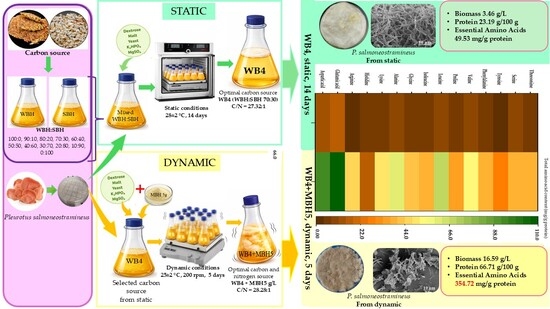
Mycoprotein production by Pleurotus salmoneostramineus was evaluated using the bread industry by-products wheat bran hydrolysate (WBH) and stale bread hydrolysate (SBH) as carbon sources, with mung bean protein hydrolysate (MBH) as a nitrogen source, within a circular bioeconomy framework. Enzymatic hydrolysis effectively converted these food industry waste streams into fermentable substrates with complementary nutritional profiles: SBH provided the highest total sugar content (57.53 g/L), while MBH contributed the highest total nitrogen (3.58 g/L) and essential amino acid content (215.05 mg/100 mL). Of 11 WBH:SBH ratio formulations evaluated under static cultivation, WB4 (WBH:SBH 70:30; C/N 27.32:1) was identified as the optimal carbon source formulation, producing the highest biomass (3.46 g/L) and protein content (23.19 g/100 g) after 14 days. Subsequent nitrogen source optimization under dynamic cultivation (200 rpm, 5 days) showed that MBH supplementation at 5 g/L produced the highest biomass (16.59 g/L), protein content (66.71 g/100 g), and absolute protein production (11.07 g/L). The amino acid profile of mycoprotein produced under optimized conditions met or exceeded the FAO/WHO-recommended essential amino acid requirements for older children, adolescents, and adults; the essential amino acid content (354.72 mg/g protein) was comparable to soy protein isolate and exceeded that of wheat gluten. Mycelial morphology shifted from filamentous networks under static conditions to fragmented clump structures under dynamic cultivation with MBH supplementation. These findings indicate the feasibility of producing nutritionally complete mycoprotein from food industry waste streams, with potential applications in plant-based food formulations.

Graphical Abstract

1. Introduction

An increasing demand for sustainable protein sources has intensified interest in alternative food ingredients with well-defined nutritional compositions. Edible mushrooms are recognized for their high-quality protein, essential amino acids, dietary fiber, and bioactive compounds, such as β-glucans and phenolics. Furthermore, their production requires fewer natural resources and generates lower greenhouse gas emissions than conventional livestock [1,2].
Mycoprotein, a fungal-derived protein produced through fermentation, represents an alternative protein source with established applications in food systems. The most widely studied example is derived from Fusarium venenatum using submerged fermentation [3,4]. However, other edible fungi, particularly species within the genus Pleurotus, have received increasing attention due to their rapid growth and favorable nutritional profiles [5,6].
Conventional production of Pleurotus spp. via solid-state cultivation is limited by long cultivation periods (30–48 days) and variability in environmental conditions, which affect compositional consistency. Submerged fermentation offers improved control of cultivation parameters and may enhance biomass composition reproducibility, making it more suitable for producing mycoprotein with defined nutritional characteristics [7,8]. Pleurotus salmoneostramineus (pink oyster mushroom; synonym, P. djamor) is of particular interest due to its reported protein (11.3–43.1%) and dietary fiber (7.3–12.2%) content and low fat levels (0.1–4.6%), as well as its micronutrient composition [9,10]. In addition, its natural chromoprotein-associated pigmentation may influence the physicochemical properties of its derived products [11,12]. Despite these characteristics, compositional data for mycoprotein derived from P. salmoneostramineus under submerged fermentation remain limited compared with other Pleurotus species, such as P. ostreatus and P. eryngii [5].
Agro-industrial by-products represent potential substrates for fermentation and may influence the nutritional composition of the resulting biomass. Bread waste and wheat bran are rich in carbohydrates and contain amino acids including glutamic acid, proline, leucine, and arginine [13]. Meanwhile, mung bean-derived materials provide complementary nitrogen sources, particularly lysine, the content of which is often limited in cereal-based substrates [14,15]. However, the use of solid substrates in fermentation systems complicates the determination of biomass composition due to the incorporation of residual substrate into the mycelial matrix [16]. When enzymatically hydrolyzed, mung bean protein isolate (MBPI) yields peptides and free amino acids that are readily assimilated during microbial growth [15,17]. Thus, enzymatic pre-hydrolysis provides a strategy for generating soluble substrates, facilitating more accurate assessment of biomass yield and composition.
Currently, there is a lack of information on the compositional characteristics of mycoprotein produced by P. salmoneostramineus when grown on combined hydrolysates derived from bread industry by-products and mung bean protein under submerged fermentation conditions. The objective of this study was therefore to investigate the effects of substrate composition and cultivation conditions on biomass production and to characterize the resulting mycoprotein in terms of protein content, amino acid profile, and microstructure.

2. Materials and Methods

2.1. Microorganism

P. salmoneostramineus was obtained from the Thailand Mushroom Collection Center (TMCC), Biotechnology Research and Development Office. Department of Agriculture, Chatuchak, Bangkok 10900, Thailand. The strain was maintained on potato dextrose agar (PDA) slants at 4 °C for long-term storage.
For inoculum preparation, mycelium was transferred from stock cultures onto PDA plates and incubated at 28 ± 2 °C for 10 days until sufficient growth was observed.
For static cultivation, three agar plugs (10 mm diameter) from actively growing cultures were aseptically transferred. For dynamic cultivation, three agar plugs were inoculated into 250 mL Erlenmeyer flasks containing 100 mL of culture broth and incubated at 150 rpm and 28 ± 2 °C for 5 days.
The resulting culture was homogenized for 2 min under sterile conditions, mixed with sterile glycerol (10%, v/v), and stored at −80 °C for subsequent use [18].

2.2. Chemicals and Reagents

Celluclast 1.5 L (≥700 U/g), Fungamyl 4000 G (4000 FAU-F/g), and Neutrase 0.8 L (≥0.8 AU/g) were obtained from Novonesis under distributor Brenntag Ingredients (Thailand) Public Company Limited 1168/98-100 Lumpini Tower 33rd Floor, Rama IV Road, Thungmahamek, Sathorn 10120, Bangkok, Thailand. Stem bromelain (≥3 U/mg protein), MBPI, and soy peptone were obtained from Longevity Thailand 50 Ramindra 14, Bangkok, Thailand. L-Methionine (MET) and glycine (GLY) were purchased from AJITRADE (THAILAND) CO., LTD. Si-Ayutthaya Building, 13th Floor, 487/1 Si Ayutthaya Road, Ratchathewi, Bangkok 10400, Thailand. Potato dextrose agar (PDA), potato dextrose broth (PDB), malt extract, and yeast extract were obtained from HiMedia Laboratories (India) under distributor M&P IMPEX LTD PART 2/8 Chao Khun Thahan Road, Lam Pla Thio, Lat Krabang, Bangkok 10520, Thailand. Glucose, K2HPO4, and MgSO4·7H2O (analytical grade) were supplied by VALUE INDUSTRIAL PRODUCTS Co., Ltd. (Thailand). 229/17 Saphansoong, Bangkok 10240, Thailand.

2.3. Preparation of Hydrolysates

2.3.1. Enzymatic Wheat Bran Hydrolysate (WBH)

Wheat bran (WB) was obtained from Monde Nissin Corporation Felix Reyes St., Barangay Balibago, Sta. Rosa City, Laguna, 4026 Philippines, with a composition of 17.94% protein, 3.22% fat, 3.80% ash, 61.01% carbohydrate, and 14.02% moisture, as determined in duplicate according to AOAC method [19]. Prior to enzymatic hydrolysis, WB was autoclaved at 121 °C for 15 min and stored at 6 ± 2 °C. The sterilized WB was then mixed with distilled water at a ratio of 1:20 (w/v) to form a suspension. Celluclast (0.4%, w/w) and Neutrase (0.4%, w/w) were added, and the pH was adjusted to 5.0 using 1 M NaOH. Enzymatic hydrolysis was performed in a 45 L shaking water bath (Memmert GmbH + Co. KG, Schwabach, Germany) at 75 °C for 6 h. The reaction was terminated by heating at 95 °C for 15 min. The hydrolysate was subsequently centrifuged at 2800× g for 20 min at 25 °C, and the supernatant was collected as substrate for analysis of total nitrogen, total sugar, and total amino acid content.

2.3.2. Enzymatic Stale Bread Hydrolysate (SBH)

Stale bread (SB), defined as bread approaching its expiration date (1 day prior to expiry), was obtained from a food company via Makro Food Service, Prachautid Branch, Bangkok, Thailand; the sample composition included 9.29% protein, 1.58% fat, 4.21% ash, 49.70% carbohydrate, and 35.22% moisture, as determined in duplicate according to AOAC method [19]. Microbiological analysis was conducted using 3M Petrifilm plates (3M Food Safety, St. Paul, MN, USA). Total plate count (TPC), coliforms, and Escherichia coli were determined according to AOAC Official Methods 990.12 and 991.14, [20,21] respectively. Yeast and mold counts were analyzed following AOAC Official Method 997.02 [22] The results showed that all microbial counts were within acceptable limits (TPC < 1 × 10⁴ CFU/g; coliforms and E. coli < 10 CFU/g; yeast and mold < 100 CFU/g). Following a modified version of the methodology from Benabda et al. [23], SB was diced, dried at 135 °C for 15 min, ground into powder, autoclaved at 121 °C for 15 min, and stored at 6 ± 2 °C. The sterilized SB powder was then mixed with distilled water at a ratio of 1:10 (w/v) and heated at 60 °C for 15 min to promote starch gelatinization. Fungamyl (0.4%, w/w) and Neutrase (0.2%, w/w) were added, and the pH was adjusted to 6.0 using 1 M NaOH. The mixture was incubated in a 45 L shaking water bath (Memmert GmbH + Co. KG, Schwabach, Germany) at 60 °C for 90 min. The reaction was terminated by heating at 95 °C for 15 min. After centrifugation (2800× g, 20 min, 25 °C), the supernatant was collected as substrate for analysis of total nitrogen, total sugar, and total amino acid content.

2.3.3. Enzymatic Mung Bean Hydrolysate (MBH)

MBPI was used as a nitrogen source. It consisted of 83.70% protein, 0.24% fat, 8.48% ash, 7.58% carbohydrate, and 0.06% moisture, as determined in duplicate according to AOAC method [19]. Following a method modified from Sonklin et al. [15], MBPI was dispersed in distilled water at a ratio of 1:5 (w/v). The pH was adjusted to 6.0, and stem bromelain (15%, w/w) was added. The mixture was incubated in a 45 L shaking water bath (Memmert GmbH + Co. KG, Schwabach, Germany) at 50 °C for 6 h. The reaction was terminated by heating at 95 °C for 15 min. After centrifugation (2800× g, 20 min, 25 °C), the supernatant was collected as substrate for analysis of total nitrogen, total sugar, and total amino acid content.

2.4. Characterization of Raw Materials

2.4.1. Chemical Composition of WB, SB, and MBPI

The chemical compositions (protein, carbohydrate, fat, ash, and moisture) of WB, SB, and MBPI were determined according to AOAC method [19]. Protein was quantified using the Kjeldahl method (N × 6.25), fat by Soxhlet extraction, moisture by oven drying at 105 °C to constant weight, and ash by furnace combustion at 550 °C to constant weight. Carbohydrate content (%) was calculated from the difference: 100% − (moisture + protein + ash + fat)%.

2.4.2. Total Nitrogen, Total Sugar, and Carbon-to-Nitrogen Ratio of Hydrolysates

The total nitrogen contents of wheat bran hydrolysate (WBH), stale bread hydrolysate (SBH), and mung bean hydrolysate (MBH) were determined using the Kjeldahl method [19], and total sugar was measured with the phenol–sulfuric acid method [24]. The carbon-to-nitrogen (C/N) ratio was calculated according to Equation (1):
C/N = Total sugar (g/L)/Total nitrogen (g/L)

2.4.3. Amino Acid Composition of WBH, SBH, and MBH

Samples were hydrolyzed with 6 N HCl at 110 °C for 24 h under a nitrogen atmosphere, followed by derivatization using the AccQ-Fluor reagent kit (Milford, MA, USA).
Amino acids were separated and quantified using high-performance liquid chromatography (Alliance 2695; Waters Corp., Milford, MA, USA) equipped with a fluorescence detector. Quantification was performed using an external standard mixture containing 15 amino acids.

2.5. Effect of Carbon Sources Under Static Conditions

Culture media containing different ratios of wheat bran hydrolysate (WBH) and stale bread hydrolysate (SBH) were prepared (w/w) as follows (WBH:SBH): WB1 (100:0), WB2 (90:10), WB3 (80:20), WB4 (70:30), WB5 (60:40), WB6 (50:50), WB7 (40:60), WB8 (30:70), WB9 (20:80), WB10 (10:90), and WB11 (0:100). PDB was used as a control. Each medium contained 73.02 g/L hydrolysate mixture supplemented with glucose (20 g/L), malt extract (5 g/L), yeast extract (0.5 g/L), K2HPO4 (1.18 g/L), and MgSO4·7H2O (0.5 g/L). The initial pH was adjusted to 5.5 using 1 M NaOH prior to sterilization at 121 °C for 15 min. Initial residual sugar was determined using the 3,5-dinitrosalicylic acid (DNS) method [25]. Three agar plugs (10 mm diameter; approximately 3 g) from 10-day-old cultures of P. salmoneostramineus were aseptically transferred into 250 mL Erlenmeyer flasks containing 100 mL medium (n = 3) and incubated under static conditions at 28 ± 2 °C. Aliquots (10 mL) were collected on days 7 and 14 and centrifuged at 1789× g for 10 min. On day 7, pH and biomass were determined. At the end of cultivation (day 14), the supernatant was analyzed for pH and residual sugar content. The harvested biomass was freeze-dried for biomass determination and protein analysis. The optimal carbon source formulation was selected for further nitrogen source experiments.

2.6. Effect of Nitrogen Sources Under Dynamic Conditions

The optimal carbon source formulation identified in Section 2.5 (73.02 g/L) was used as the basal medium and supplemented with glucose (20 g/L), malt extract (5 g/L), yeast extract (0.5 g/L), K2HPO4 (1.18 g/L), and MgSO4·7H2O (0.5 g/L). Four nitrogen sources (methionine (MET), glycine (GLY), soy peptone (PEP), and MBH) were evaluated at concentrations of 1, 3, and 5 g/L. The initial pH was adjusted to 5.5 using 1 M NaOH prior to sterilization at 121 °C for 15 min. For dynamic cultivation, 5% (v/v) inoculum from P. salmoneostramineus stock culture was transferred into 250 mL Erlenmeyer flasks containing 100 mL medium (n = 3) and incubated at 200 rpm and 25 ± 2 °C for 5 days. At the end of cultivation (day 5), aliquots (10 mL) were collected and centrifuged at 1789× g for 10 min. The supernatant was analyzed for pH and residual sugar content, and the biomass was freeze-dried for biomass and protein determination.

2.7. Characteristics of Biomass

2.7.1. pH and Residual Sugar

The pH of the culture supernatant was measured using a pH meter (Mettler-Toledo, Greifensee, Switzerland).
Residual sugar was determined using the DNS method [25]. Briefly, 0.5 mL diluted supernatant (1:25) was mixed with 0.5 mL DNS reagent, heated at 100 °C for 5 min, cooled in an ice-water bath for 5 min, diluted with 5 mL distilled water, and measured at 540 nm using a spectrophotometer (UV-1800, Shimadzu, Japan). Residual sugar concentration was calculated from a glucose standard curve. Sugar consumption was calculated using Equation (2):
Sugar consumption (g/L) = Initial sugar (g/L) − Residual sugar (g/L)

2.7.2. Biomass Determination

Mycelial biomass was collected by centrifugation at 1789× g for 10 min, washed three times with distilled water, freeze-dried, and weighed using an analytical balance (Mettler-Toledo, Greifensee, Switzerland). Biomass concentration is expressed as dry weight (g/L).

2.7.3. Protein Production

The protein content of freeze-dried biomass was determined using the Kjeldahl method (N × 6.25) and expressed as g/100 g dry weight [26]. Protein production (g/L) was calculated by multiplying biomass concentration by protein content.

2.8. Characterization of Mycoprotein

2.8.1. Amino Acid Composition

Freeze-dried biomass obtained under optimal static and dynamic conditions (based on biomass and protein content) was analyzed as described in Section 2.4.3. Results are expressed as mg/g protein.

2.8.2. Microstructure Analysis

Selected freeze-dried biomass samples were analyzed using scanning electron microscopy (SEM) (JSM-IT300, JEOL Ltd., Tokyo, Japan). Samples were mounted on aluminum stubs using double-sided carbon tape, sputter-coated with gold under vacuum, and observed at an accelerating voltage of 10 kV. Micrographs were obtained at magnifications of 20× and 1000×.

2.9. Statistical Analysis

The carbon source experiment (Section 2.5) was conducted using a completely randomized design (CRD) with three replicates per treatment. The nitrogen source experiment (Section 2.6) followed a 4 × 3 factorial design in CRD, with nitrogen source type (MET, GLY, PEP, and MBH) and concentration level (1, 3, and 5 g/L) as factors, with three replicates per treatment. All analyses were performed in triplicate. Data are expressed as mean ± standard deviation. Statistical analysis was performed using IBM SPSS Statistics (version 20; IBM Corp., Armonk, NY, USA; https://www.ibm.com/products/spss-statistics, accessed on 13 May 2026) Differences among means were evaluated using Duncan’s multiple range test at p ≤ 0.05.

3. Results and Discussion

3.1. Chemical Composition of Substrates

The proximate compositions of WB, SB, and MBPI are reported in Section 2.3.1 and Section 2.3.2. The carbohydrate content of SB (49.70%) is reflected in the greater total sugar yield of SBH 57.53 g/L following enzymatic hydrolysis compared to those of WBH (6.44 g/L) and MBH (22.89 g/L) (p ≤ 0.05, Table 1). During SBH preparation, starch gelatinization at 60 °C before enzyme addition disrupts the crystalline starch granule structure, increasing accessibility for enzymatic attack [23]. The subsequent addition of α-amylase catalyzes the hydrolysis of α-1,4-glycosidic linkages within gelatinized starch chains, generating maltodextrins and reducing sugars; simultaneously, the protease cleaves peptide bonds within gluten and other storage proteins, releasing soluble peptides and free amino acids [27]. The combined action of these two enzymes effectively converts the starch and protein fractions of SB into readily fermentable and assimilable nutrients.
In contrast, the lower sugar yield from WBH (6.44 g/L) reflects the more complex carbohydrate architectures in its composition [14]. Cellulase hydrolyzes β-1,4-glycosidic linkages within cellulose chains, releasing cellobiose and glucose monomers from the cellulosic fraction. The protease simultaneously targets the protein fraction of WB (17.94%), cleaving peptide bonds to release soluble nitrogen compounds, consistent with the higher observed total nitrogen content of WBH (2.58 g/L) relative to SBH (1.32 g/L; p ≤ 0.05, Table 1). However, despite this dual enzymatic treatment, the lower sugar yield of WBH compared with SBH may be attributed to the lignocellulosic nature of WB, which contains complex hemicellulose and lignin structures that can limit enzyme accessibility. Complete deconstruction of lignocellulosic substrates typically requires a broader enzyme system, including hemicellulases and ligninases [28].
For MBH, bromelain cleaves peptide bonds, generating a diverse mixture of peptides and free amino acids from the globulin and albumin fractions of MBPI [15,17]. This resulted in the highest total nitrogen content (3.58 g/L) among the three hydrolysates (p ≤ 0.05). The moderate total sugar content (22.89 g/L) of MBH likely originated from the carbohydrate fraction (7.58%) of MBPI, which is partially solubilized during the hydrolysis process.
Enzymatic hydrolysis increased the total amino acid content of all substrates relative to their unhydrolyzed equivalents (Table S1). The total amino acid content of WBH increased from 12.98 mg/100 mg (WB) to 449.47 mg/100 mL, that of SBH increased from 12.54 mg/100 mg (SB) to 96.64 mg/100 mL, and that of MBH from 17.46 mg/100 mg (MBPI) to 588.06 mg/100 mL. This demonstrates that enzymatic treatment effectively cleaved protein structures and released bound amino acids into soluble fractions available for fungal assimilation. WBH content was dominated by glutamic acid (136.37 mg/100 mL) and proline (47.88 mg/100 mL), reflecting the glutamine- and proline-rich composition of wheat gluten proteins [13]. Meanwhile, MBH exhibited the highest total contents of essential amino acids (EAAs; 215.05 mg/100 mL) and hydrophobic amino acids (HAA; 205.61 mg/100 mL) among the three hydrolysates; this is consistent with the well-balanced amino acid composition of mung bean protein [15].
The profiles of the three hydrolysates, including SBH as the primary carbon source, WBH as a supplementary carbon and nitrogen contributor enriched in glutamic acid, and MBH as the principal nitrogen source with a balanced EAA profile, collectively provide a nutrient-rich medium suitable as a carbon and nitrogen source for submerged fermentation.

3.2. Effect of Carbon Sources Under Static Conditions

At day 7, pH values across all formulations declined relative to the initial pH of 5.5 to values ranging from 4.36 to 5.92 (Table S2). This possibly reflects the accumulation of metabolic organic acids during active substrate utilization, as previously reported in submerged fungal cultivation studies [29]. Formulations with higher SBH proportions (WB5–WB11) showed greater acidification, with pH values ranging from 4.36 to 4.90, consistent with more rapid fermentation of the higher available sugar content. By day 14, pH values recovered toward near-neutral levels, ranging from 6.40 to 6.74 across all formulations (Table 2). This recovery may be due to the depletion of fermentable sugars, reducing acid production, combined with the possible release of ammonium ions from amino acid and protein catabolism during the later cultivation stage [8,29]. The near-neutral pH at day 14 indicates that the cultures transitioned from active sugar fermentation toward protein and amino acid catabolism as the primary metabolic activity.
Sugar consumption at day 14 was highest in WB3 (23.77 g/L), followed by WB4 (22.87 g/L) and WB2 (22.86 g/L); there were no significant differences among these three formulations (p > 0.05, Table 2). Sugar consumption decreased in WB6–WB11, ranging from 19.39 to 20.50 g/L. This pattern is consistent with carbon catabolite suppression, during which high glucose concentrations suppress the uptake of alternative carbon sources, thereby limiting the overall efficiency of substrate utilization [30].
Mycelium biomass at day 7 was highest in WB4 (2.30 g/L; Table S2), significantly exceeding all other formulations (p ≤ 0.05). The increase continued to 3.46 g/L at day 14 (Table 2), indicating that the nutritional composition of WB4 supported sustained mycelial development throughout the cultivation period. This biomass accumulation from day 7 to day 14 corresponded with the highest residual sugar consumption in WB4 (22.87 g/L), suggesting that available carbon was efficiently directed toward mycelial growth. The sustained biomass production in WB4 may be due to the C/N ratio (27.32:1) and amino acid composition of the medium. As shown in Table S3, WB4 had a total amino acid content of 561.86 mg/100 mL, dominated by glutamic acid (170.46 mg/100 mL) and proline (59.85 mg/100 mL); these acids are known to serve as key nitrogen donors in fungal transamination reactions and to support anabolic activity during mycelial growth. The comparatively lower biomass observed in formulations WB1–WB3, despite adequate nitrogen availability from WBH, may be partly attributed to the higher fat content of WB as a raw material (3.22% dry matter) relative to SB (1.58% dry matter). Lipids present in cereal-based substrates are known to form starch–lipid complexes that resist enzymatic hydrolysis, reducing the accessibility of starch to amylolytic enzymes and limiting the release of fermentable sugars [31,32]. This is consistent with the low total sugar content observed in WBH (6.44 g/L) relative to SBH (57.53 g/L, Table 1). The lower fat content of WB4 (70:30) may have improved enzymatic hydrolysis efficiency, contributing to better biomass production, alongside the favorable C/N ratio (27.32:1). In contrast, formulations with higher SBH proportions (WB6–WB11) produced lower biomass, ranging from 2.12 to 2.45 g/L at day 14. This was despite higher C/N ratios and sugar availability, indicating that reduced nitrogen from lower WBH proportions restricted fungal growth. Furthermore, as P. salmoneostramineus is an aerobic basidiomycete, static cultivation likely imposed an additional constraint, limiting oxygen transfer [33]. Oxygen supply under static conditions relies primarily on passive diffusion, potentially limiting aerobic metabolism and overall biomass formation.
Protein content at day 14 was highest in WB4 (23.19 g/100 g), significantly exceeding WB5–WB11 (p ≤ 0.05, Table 2); however, WB0 (21.79 g/100 g) and WB1 (22.30 g/100 g) were not significantly different from WB4 (p > 0.05). Protein content decreased progressively with increasing SBH proportion, ranging from 12.11 in WB11 to 14.80 g/100 g in WB7, consistent with reduced nitrogen availability as the proportion of WBH decreased. Although all formulations were supplemented with yeast extract (0.5 g/L) as a basal nitrogen source, the lower nitrogen input in the WB5–WB11 compositions is insufficient to fully support protein biosynthesis in the relatively carbon-rich conditions provided by the lower WBH:SBH ratios. The combination of the highest biomass (3.46 g/L) and protein content (23.19 g/100 g) in WB4 resulted in the highest absolute protein production (0.80 g/L). Nevertheless, the protein content achieved under carbon-source optimization alone remained low relative to the potential of P. salmoneostramineus under nitrogen-sufficient conditions. This indicates that nitrogen supplementation is the primary limiting factor for further enhancement of mycoprotein yield and protein accumulation. Based on these results, WB4 (70:30 WBH:SBH, C/N = 27.32:1) was identified as the optimal carbon source formulation and was selected for subsequent nitrogen source optimization under dynamic conditions.

3.3. Effect of Nitrogen Sources Under Dynamic Conditions

Nitrogen source type and concentration significantly influenced final pH values (p ≤ 0.05, Table 3). All tested nitrogen sources, including single amino acids (MET and GLY) and complex hydrolysates (PEP and MBH), were thoroughly dissolved in the medium prior to sterilization, ensuring their bioavailability for mycelial uptake. All nitrogen-supplemented treatments exhibited lower pH values (4.45–5.38) than the control (6.52). This decrease may be due to amino acid catabolism, in which deamination reactions generate organic acid intermediates (e.g., pyruvate and oxaloacetate) that accumulate and reduce the pH [29]. In addition, amino acids contain both carboxyl (-COOH) and amino (-NH2) groups, the ionization of which contributes to proton release under active metabolism, further promoting acidification [34]. GLY supplementation resulted in the mildest acidification (pH 5.25–5.37). This is consistent with its relatively simple metabolic role in one-carbon metabolism and purine biosynthesis, which generates fewer acidic by-products. In contrast, MET showed a variable pH response (4.67–5.38), possibly due to the catabolism of its sulfur-containing side chain, which can produce acidic intermediates. Complex nitrogen sources produced more pronounced and consistent acidification, with final pH values ranging from 4.52 to 4.67 for PEP and 4.45 to 4.71 for MBH. This likely reflects the broader amino acid spectrum they provide, which activates multiple metabolic pathways and increases the accumulation of organic acid intermediates [29]. Nevertheless, all pH values remained within the range suitable for Pleurotus growth (pH 4.2–7.5), with optimal growth typically observed between pH 5.0 and 6.5 [34].
Sugar consumption was significantly affected by the type and concentration of the nitrogen source (p ≤ 0.05, Table 3). MBH supplementation resulted in the highest sugar consumption, increasing dose-dependently (25.57, 30.36, and 35.43 g/L at 1, 3, and 5 g/L, respectively), significantly exceeding the control (22.87 g/L). This indicates that MBH effectively supported carbon utilization through its balanced amino acid composition. In contrast, MET resulted in the lowest sugar consumption (17.50, 21.31, and 20.46 g/L at 1, 3, and 5 g/L), possibly reflecting limited metabolic integration when only a single, sulfur-containing amino acid is supplied [35]. GLY and PEP showed intermediate sugar consumption (18.44–19.68 g/L) without a clear dose-dependent trend. Biomass production was significantly influenced by nitrogen source type and concentration (p ≤ 0.05, Table 3). MBH supplementation produced the highest biomass, increasing in a dose-dependent manner (10.22, 11.30, and 16.59 g/L at 1, 3, and 5 g/L, respectively), with WB4 + MBH5 (16.59 g/L) significantly exceeding all other treatments (p ≤ 0.05). PEP supplementation also increased biomass (7.65–11.51 g/L), with a positive dose–response dependency, while GLY resulted in moderate biomass (5.27–9.68 g/L). In contrast, MET produced biomass values below those of the control (1.56–2.38 g/L), suggesting a potential inhibitory effect when used as the sole nitrogen source. Furthermore, while inorganic nitrogen sources (e.g., ammonium sulfate or nitrates) are commonly used in synthetic media, in studies on P. citrinopileatus by Wu et al. [36], yeast peptone yielded the highest biomass (45.25%), whereas inorganic nitrogen sources such as NaNO3 and (NH4)2SO4 resulted in substantially lower biomass (15.95% and 5.17%, respectively). This difference can be attributed to the metabolic requirement for nitrogen assimilation. Inorganic nitrogen must first be converted into amino acids through energy-dependent pathways, whereas organic nitrogen sources provide readily assimilable amino acids and peptides, facilitating faster protein synthesis and cell growth. Previous studies using glucose-based media reported biomass production of approximately 16.75 g/L for P. ostreatus, although extended cultivation periods of up to 26 days were required [37]; inorganic nitrogen sources were excluded in this study, as they typically support significantly lower biomass and protein production in higher fungi compared to organic sources. The superior biomass observed with MBH supplementation may be related to enrichment of the amino acid profile (Table S3), particularly the increased content of lysine (from 18.74 to 83.97 mg/100 mL), glutamic acid (from 170.46 to 351.01 mg/100 mL), and total EAAs (from 187.52 to 538.56 mg/100 mL), which support efficient nitrogen assimilation and anabolic metabolism [38]. The substantial increase in biomass under dynamic conditions highlights the ability of agitation to improve oxygen transfer and mixing efficiency, thereby sustaining aerobic metabolism and enhancing substrate uptake. Adebayo et al. [39] reported biomass of 2.5 g/L after 14 days for P. ostreatus supplemented with GLY, whereas the present study achieved 16.59 g/L within 5 days under dynamic conditions with MBH. This suggests combined benefits of complex nitrogen supplementation and agitation.
Protein content was highest in WB4 + PEP5 (66.93 g/100 g) and WB4 + MBH5 (66.71 g/100 g) formulations, with no significant difference between the two (p > 0.05) and both significantly higher than the control (23.54 g/100 g; p ≤ 0.05). This improvement suggests that dynamic cultivation combined with complex nitrogen supplementation enhances protein biosynthesis, likely through improved oxygen availability and ATP generation [29]. MET supplementation resulted in moderate protein content (31.32–37.37 g/100 g) despite low biomass, suggesting preferential incorporation into cellular protein rather than biomass expansion. GLY produced the lowest protein content among the nitrogen-supplemented treatments (30.32–32.52 g/100 g), which may reflect its limited efficiency as a sole nitrogen source under submerged fermentation conditions. In contrast, glycine supplementation has been reported to enhance biomass production in other fungal species; for example, the addition of glycine (500 mg/L) increased fruiting body biomass of Cordyceps militaris by up to 77.22% in solid-state cultivation [40]. The inclusion of MET and GLY in this study served as a benchmark to evaluate the metabolic impact of single versus complex nitrogen sources. While complex sources are more industrially relevant, these single amino acids give a clear demonstration of how nitrogen source diversity influences anabolic efficiency in P. salmoneostramineus. Discrepancies may be attributed to differences in fungal species, cultivation systems, and metabolic requirements, indicating that the utilization of glycine is highly context- and species-dependent. Although PEP and MBH at 5 g/L produced comparable protein contents, the higher biomass with MBH resulted in greater protein production (11.07 g/L) than PEP (7.73 g/L). The protein content achieved under optimized conditions (66.71–66.93 g/100 g) exceeded values reported for P. ostreatus grown on PEP (37.9 g/100 g) and WB (34.5 g/100 g).
These results indicate that the use of bread industry by-product hydrolysates as combined carbon and nitrogen sources provides a more nutritionally balanced medium for protein accumulation than single nitrogen source supplementation. Based on these results, WB4 supplemented with MBH at 5 g/L under dynamic conditions was identified as the optimal formulation for P. salmoneostramineus mycoprotein production and was selected for further characterization.

3.4. Mycelium Characteristics

3.4.1. Total Amino Acid Composition

The total amino acid content of freeze-dried mycelium increased from 109.21 mg/g protein under static WB4 cultivation to 320.11 mg/g protein under the dynamic equivalent, representing a 193% increase (Table 4). A further increase of 138% was observed with 5 g/L MBH supplementation under dynamic conditions (200 rpm and 25 ± 2 °C for 5 days), reaching 762.30 mg/g protein. This progressive enrichment reflects the combined effects of agitation and nitrogen supplementation on amino acid biosynthesis and accumulation in the mycoprotein [41,42].
Total EAA content increased from 49.53 mg/g protein under static WB4 conditions to 143.17 mg/g protein under dynamic conditions, and further to 354.72 mg/g protein with 5 g/L MBH supplementation. The proportion of EAA was highest under dynamic WB4 conditions (46.53%), suggesting that agitation alone enhanced EAA biosynthesis, likely through improved oxygen transfer and respiratory activity. The comparative analysis between the MBH substrate (Table 1) and the resulting mycelium reveals a clear transformation mechanism. The abundance of specific EAAs in MBH, such as lysine (57.69 mg/100 mL) and leucine (40.99 mg/100 mL), served as a critical metabolic input. In fungi, these exogenous amino acids can be efficiently absorbed via specialized peptide transporters (PTR), bypassing energy-intensive de novo synthesis pathways [43]. This selective uptake and bioaccumulation resulted in a significantly enriched mycelial amino acid profile, particularly in terms of lysine and leucine (50.88 and 67.41 mg/g protein, respectively), meeting the FAO requirements for human nutrition. In fungi, amino acid biosynthesis is closely linked to central carbon metabolism. Glycolysis contributes to the formation of alanine, glycine, valine, and leucine, while the tricarboxylic acid cycle generates aspartic acid, glutamic acid, and lysine [44]. Under WB4 + MBH5 conditions, the external supply of amino acids from MBH likely reduced the metabolic energy required for de novo synthesis, allowing greater carbon flux to be directed toward amino acid accumulation, resulting in the highest EAA content (354.72 mg/g protein).
Beyond the primary nutritional profile, P. salmoneostramineus demonstrated a robust biosynthetic capacity for specific amino acids. Notably, the high accumulation of glutamic acid (109.18 mg/g protein) contributes to the sensory umami value [45], while the high lysine content (50.88 mg/g protein) effectively complements cereal-based diets, which are typically lysine-deficient [46]. Additionally, leucine content (67.41 mg/g protein) is nutritionally relevant due to its role in stimulating muscle protein synthesis [47]. According to comparison with FAO amino acid scoring patterns, mycoprotein produced under WB4 + MBH5 dynamic conditions met or exceeded the recommended levels of all EAAs for older children, adolescents, and adults (Table 4). Lysine was markedly increased from 5.93 to 50.88 mg/g protein (758% increase), exceeding the adult requirement (48 mg/g protein). Leucine (67.41 mg/g protein), isoleucine (39.94 mg/g protein), and valine (43.03 mg/g protein) also exceeded recommended levels (30–40 mg/g protein). The combined phenylalanine and tyrosine content (66.29 mg/g protein) satisfied FAO requirements.
The EAA content obtained under dynamic conditions (354.72 mg/g protein) is comparable to that of soy protein isolate (350–450 mg/g protein), and higher than values reported for wheat gluten (250–350 mg/g protein) [48]. These data support the potential of P. salmoneostramineus mycoprotein as a high-quality protein ingredient. In addition, the high leucine content is nutritionally relevant due to its role in stimulating muscle protein synthesis and regulating metabolic signaling pathways [47]. Glutamic acid and aspartic acid were the predominant amino acids under dynamic WB4 + MBH5 conditions, reaching 109.18 and 94.04 mg/g protein, respectively. Compared with static WB4 cultivation, glutamic acid increased by 597% and aspartic acid by 617%, indicating efficient assimilation of exogenous amino acids from MBH (Section 3.1). Glutamic acid serves as a central nitrogen donor in fungal transamination reactions, while both glutamic and aspartic acids contribute to umami taste, potentially enhancing the sensory properties of mycoprotein-based products [49].
Total HAA content increased from 45.29 mg/g protein under static WB4 conditions to 299.51 mg/g protein under dynamic WB4 + MBH5 conditions. This increase is relevant to functional protein properties, as hydrophobic amino acids play key roles in protein folding and interfacial behavior, influencing emulsification, gelation, and foaming capacity [50]. Therefore, the mycoprotein produced under dynamic conditions may exhibit favorable techno-functional properties in terms of plant-based food applications.

3.4.2. Microstructure of P. salmoneostramineus Mycelium

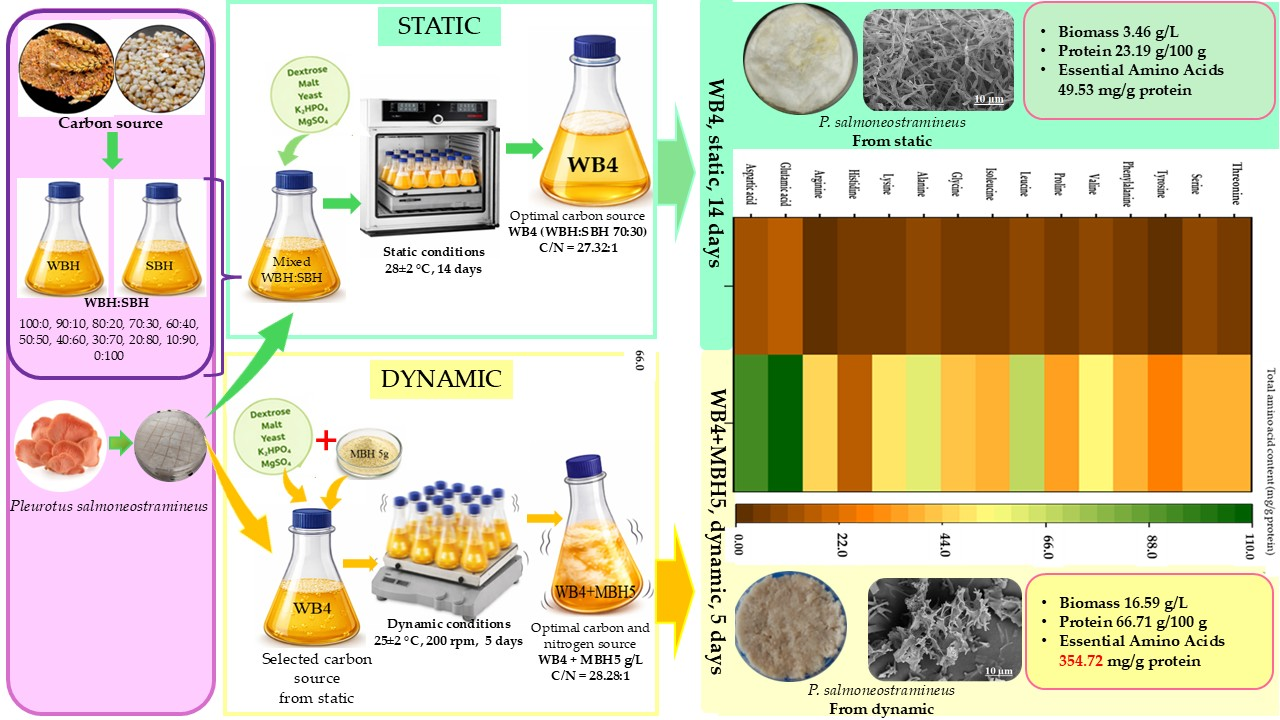
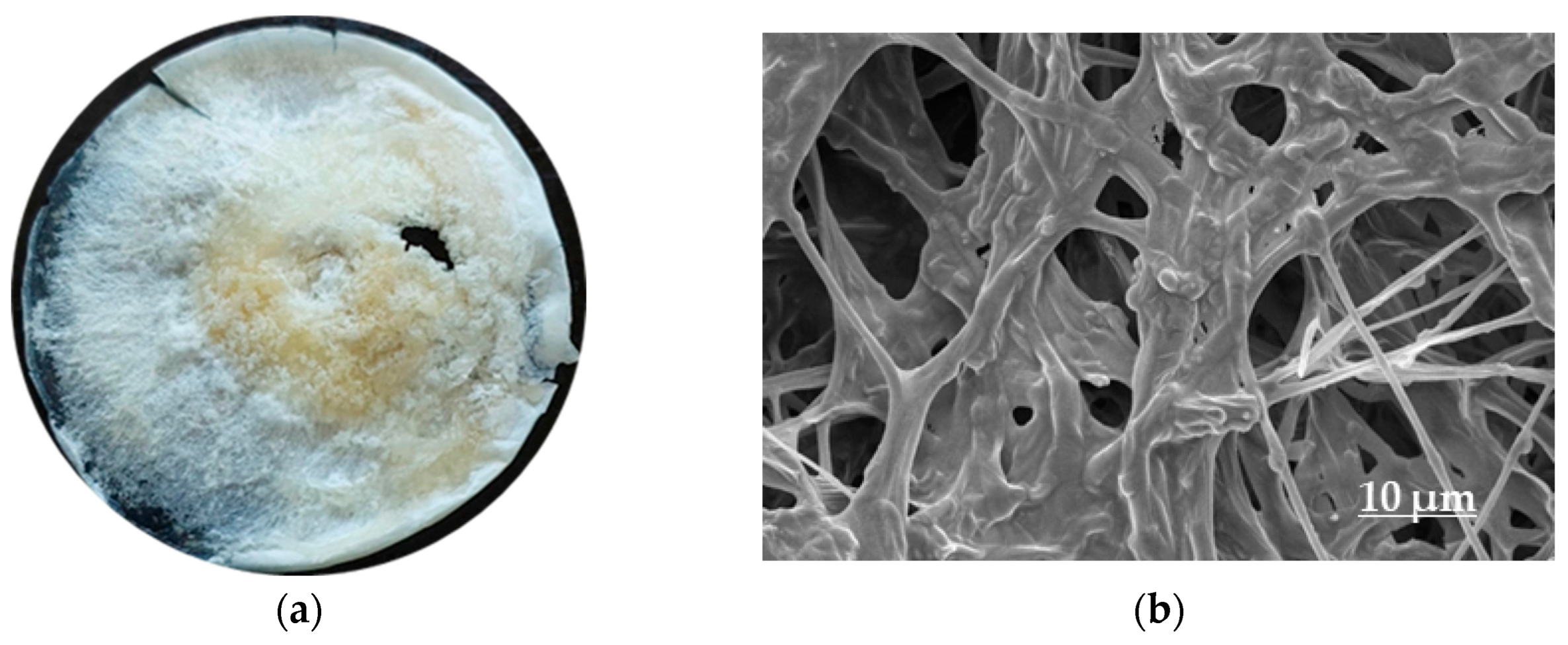
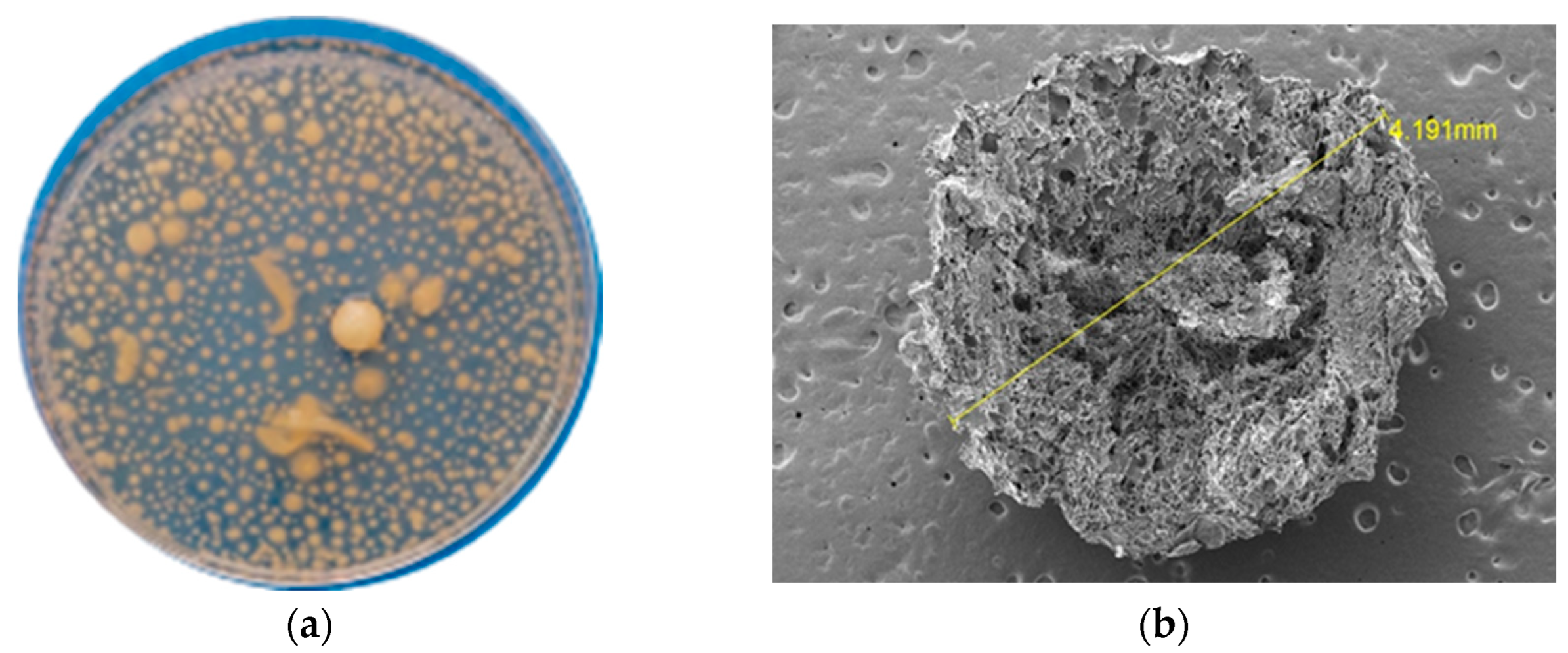
The morphology of P. salmoneostramineus mycelium under different cultivation conditions is illustrated in Figure 1, Figure 2, Figure 3 and Figure 4. Under control static cultivation in PDB (Figure 1), the mycelium exhibited a loose filamentous network with widely distributed hyphae and open pore structures at 1000× magnification, characteristic of undisturbed growth in non-agitated systems. In contrast, mycelium cultivated in WB4 under static conditions (Figure 2) showed a more compact arrangement of ribbon-like hyphae, forming a denser filamentous network than in PDB. This may reflect the influence of substrate composition on hyphal organization. Under dynamic cultivation in WB4 (Figure 3), the mycelium formed spherical pellets with an average diameter of approximately 4.19 mm (observed at 20× magnification). Pellet formation is a common response in submerged fungal cultivation, as shear forces promote hyphal aggregation into dense spherical structures [29]. The rough and porous pellet surface (Figure 3b) suggests active hyphal growth at the periphery, where oxygen and nutrient availability are the highest.
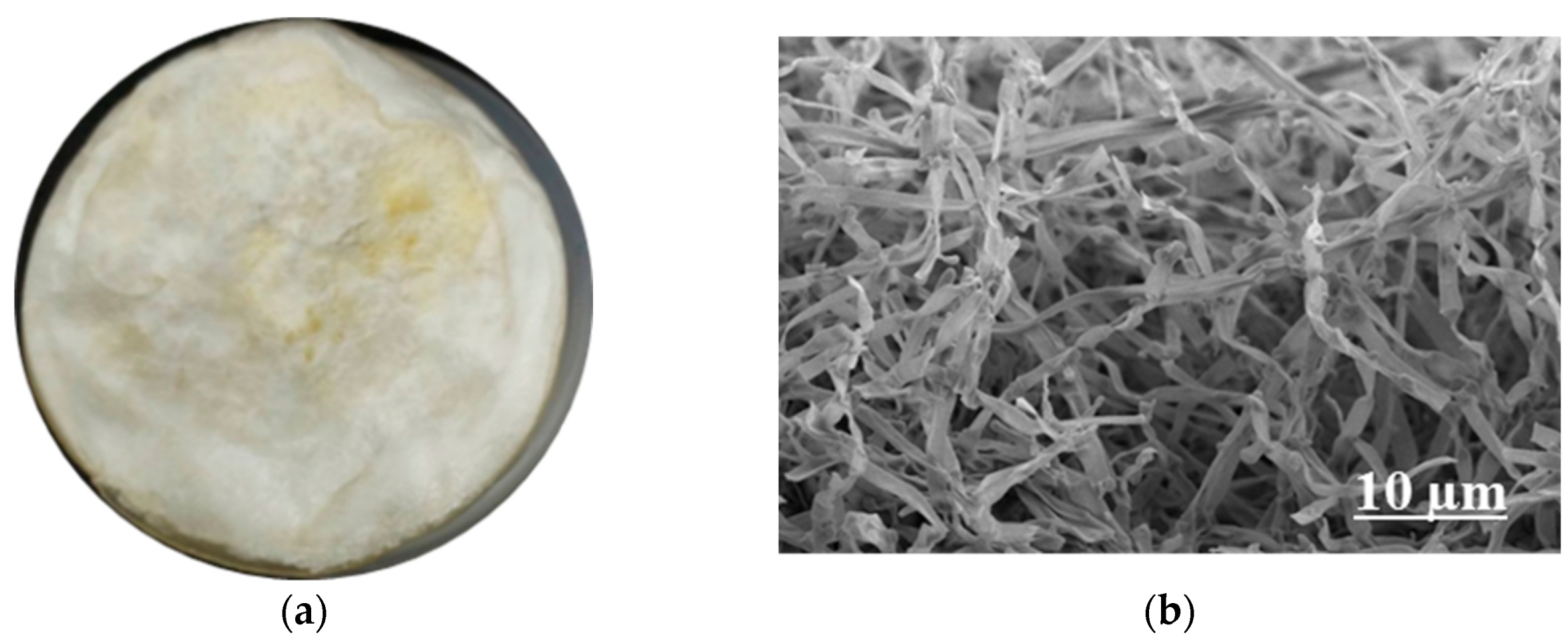
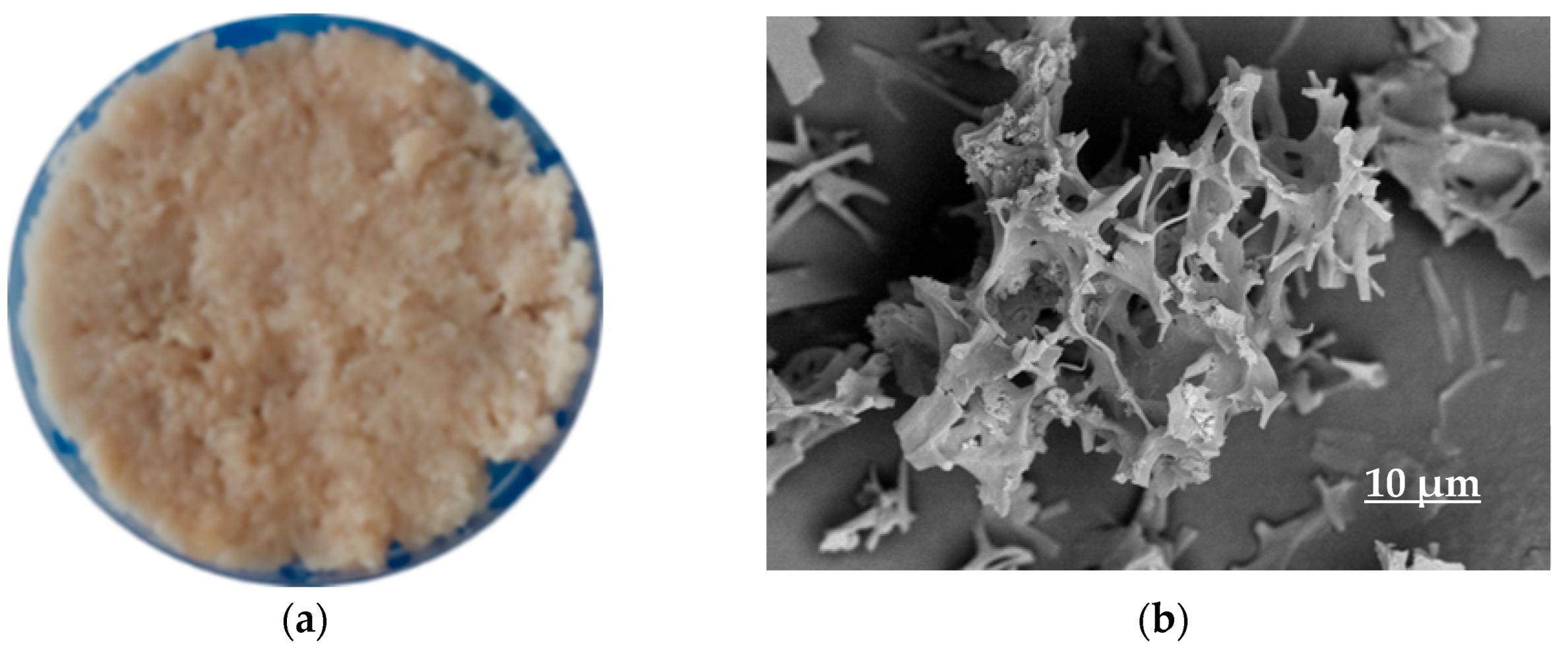
In contrast, mycelium cultivated in WB4 + MBH5 under dynamic conditions (Figure 4) exhibited irregular clumps and flake-like morphologies, rather than well-defined pellets. At 1000× magnification, the structure appeared fragmented, with sheet-like formations and rough, irregular surfaces. This morphological transition may be due to the higher nutrient availability in the MBH-supplemented medium, which promoted rapid hyphal proliferation and growth, beyond that which could maintain structural stability of the pellets, resulting in fragmentation under continuous agitation [51]. The clump-like morphology observed under dynamic WB4 + MBH5 conditions provides a larger surface area for interaction with the surrounding medium, potentially enhancing nutrient uptake and contributing to the higher biomass (16.59 g/L) and protein content (66.71 g/100 g) observed under these conditions compared with WB4 alone.
Overall, the transition from dispersed mycelial networks under static conditions to pellet or clump structures under dynamic cultivation highlights the strong influence of process parameters on fungal morphology. Morphological characteristics, including pellet density and hyphal organization, directly affect mass transfer, downstream processing, and functional properties. Dense, interwoven hyphal structures may enhance water-holding capacity and fibrous texture, which are desirable attributes for mycoprotein-based food applications [1].

4. Conclusions

This study highlights the potential of P. salmoneostramineus in mycoprotein production using bread industry by-products under submerged cultivation conditions. A balanced C/N ratio (WB4; WBH:SBH 70:30; C/N 27.32:1) supported efficient growth under static conditions, while dynamic cultivation markedly enhanced productivity. WB4 supplemented with MBH (5 g/L) under dynamic cultivation (200 rpm, 5 days) achieved 16.59 g/L biomass with 66.71 g/100 g protein, substantially higher than values obtained under static cultivation (biomass 3.46 g/L, 14 days). This formulation also yielded high total amino acid (762.30 mg/g protein) and EAA contents (354.72 mg/g protein), meeting or exceeding FAO reference patterns. In addition, the relatively short cultivation period and the use of agro-industrial by-products highlight the potential of this system as a resource-efficient approach for sustainable protein production. Therefore, P. salmoneostramineus-based mycoprotein may serve as a promising complementary protein source in the emerging alternative protein market, supporting future food systems in response to increasing global protein demand. Future development should focus on process scale-up, especially regarding potential ribonucleic acid (RNA) accumulation in high-growth or continuous fermentation systems, which may pose food safety concerns due to its conversion to uric acid in humans. Although the batch fermentation applied in this study is less likely to promote excessive RNA accumulation, down-stream RNA reduction strategies may be required to meet the WHO-recommended threshold of ≤2% nucleic acid for food applications. Further studies should also evaluate functional properties to support the development of food products.

Supplementary Materials

The following supporting information can be downloaded at: https://www.mdpi.com/article/10.3390/foods15101773/s1, Table S1: Total amino acid composition of raw materials (WB, SB, and MBPI). Table S2. Effect of carbon source formulations on pH and biomass of P. salmoneostramineus under static cultivation at day 7. Table S3. Total amino acid composition of WB4 medium and WB4 + MBH5 medium.

Author Contributions

P.S.: Conceptualization, Methodology, Investigation, Formal analysis, Data curation, Visualization, Software, Resource, Writing—original draft, Writing—review & editing, Funding acquisition. N.L.: Conceptualization, Methodology, Supervision, Project administration, Resource, Writing—review & editing. A.U.: Conceptualization, Methodology, Supervision, Validation. O.S.: Conceptualization, Methodology, Validation, Supervision. K.R.: Conceptualization, Methodology, Resources, Supervision, Validation. P.M.: Conceptualization, Methodology, Resources, Supervision, Validation. P.V.: Conceptualization, Methodology, Resources, Supervision, Validation. All authors have read and agreed to the published version of the manuscript.

Funding

This research received no external funding.

Institutional Review Board Statement

Not applicable.

Informed Consent Statement

Not applicable.

Data Availability Statement

The original contributions presented in this study are included in the article/Supplementary Material; further inquiries can be directed to the corresponding author.

Acknowledgments

The authors would like to acknowledge King Mongkut’s University of Technology Thonburi (KMUTT), Bangkok, Thailand, for providing the necessary facilities to conduct this research.

Conflicts of Interest

The authors declare that they have no known competing financial interests or personal relationships that could have appeared to influence the work reported in this paper.

References

  1. Finnigan, T.J.A.; Wall, B.T.; Wilde, P.J.; Stephens, F.B.; Taylor, S.L.; Freedman, M.R. Mycoprotein: The Future of Nutritious Nonmeat Protein, a Symposium Review. Curr. Dev. Nutr. 2019, 3, nzz021. [Google Scholar] [CrossRef]
  2. Fokunang, E.T.; Annih, M.G.; Abongwa, L.E.; Bih, M.E.; Vanessa, T.M.; Fomnboh, D.J.; Fokunang, C. Medicinal Mushroom of Potential Pharmaceutical Toxic Importance: Contribution in Phytotherapy. In Functional Food; Shiomi, N., Savitskaya, A., Eds.; IntechOpen: London, UK, 2022. [Google Scholar]
  3. Derbyshire, E.J.; Delange, J. Fungal Protein—What Is It and What Is the Health Evidence? A Systematic Review Focusing on Mycoprotein. Front. Sustain. Food Syst. 2021, 5, 581682. [Google Scholar] [CrossRef]
  4. Hashempour-Baltork, F.; Hosseini, S.M.; Assarehzadegan, M.A.; Khosravi-Darani, K.; Hosseini, H. Safety Assays and Nutritional Values of Mycoprotein Produced by Fusarium venenatum IR372C from Date Waste as Substrate. J. Sci. Food Agric. 2020, 100, 4433–4441. [Google Scholar] [CrossRef] [PubMed]
  5. Raman, J.; Jang, K.; Oh, Y.L.; Oh, M.; Im, J.H.; Lakshmanan, H.; Sabaratnamc, V. Cultivation and Nutritional Value of Prominent Pleurotus spp.: An Overview. Mycobiology 2021, 49, 1–14. [Google Scholar] [CrossRef] [PubMed]
  6. Rathore, H.; Prasad, S.; Sharma, S. Mushroom Nutraceuticals for Improved Nutrition and Better Human Health: A Review. PharmaNutrition 2017, 5, 35–46. [Google Scholar] [CrossRef]
  7. Bakratsas, G.; Polydera, A.C.; Katapodis, P.; Stamatis, H. Recent Trends in Submerged Cultivation of Mushrooms and Their Application as a Source of Nutraceuticals and Food Additives. Future Foods 2021, 4, 100086. [Google Scholar] [CrossRef]
  8. Papaspyridi, L.M.; Katapodis, P.; Gonou-Zagou, Z.; Kapsanaki-Gotsi, E.; Christakopoulos, P. Optimization of Biomass Production with Enhanced Glucan and Dietary Fibres Content by Pleurotus ostreatus ATHUM 4438 Under Submerged Culture. Biochem. Eng. J. 2010, 50, 131–138. [Google Scholar] [CrossRef]
  9. Carrasco-González, J.A.; Serna-Saldívar, S.O.; Gutiérrez-Uribe, J.A. Nutritional Composition and Nutraceutical Properties of the Pleurotus Fruiting Bodies: Potential Use as Food Ingredient. J. Food Compos. Anal. 2017, 58, 69–81. [Google Scholar] [CrossRef]
  10. Vega, A.; Franco, H. Productividad y Calidad de los Cuerpos Fructíferos de los Hongos Comestibles Pleurotus pulmonarius RN2 y P. djamor RN81 y RN82 Cultivados Sobre Sustratos Lignocelulósicos. Inf. Tecnol. 2013, 24, 69–78. [Google Scholar] [CrossRef]
  11. Ihara, M.; Tsuchida, N.; Sumida, M.; Himiyama, T.; Kitayama, T.; Shirasaka, N.; Fukuta, Y. Crystal Structure of the Native Chromoprotein from Pleurotus salmoneostramineus Provides Insights into the Pigmentation Mechanism. J. Agric. Food Chem. 2024, 72, 17626–17632. [Google Scholar] [CrossRef]
  12. Valdez-Solana, M.A.; Ventura-García, E.K.; Corral-Guerrero, I.A.; de Casa, A.G.; Avitia-Domínguez, C.; Téllez-Valencia, A.; Sierra-Campos, E. In Silico Characterization of the Physicochemical and Biological Properties of the Pink (Pleurotus djamor var. salmoneostramineus) Oyster Mushroom Chromoprotein. Bioinform. Biol. Insights 2023, 17, 11779322231154139. [Google Scholar] [CrossRef]
  13. Shewry, P.R.; Hey, S.J. The Contribution of Wheat to Human Diet and Health. Food Energy Secur. 2015, 4, 178–202. [Google Scholar] [CrossRef]
  14. Arte, E.; Rizzello, C.G.; Verni, M.; Nordlund, E.; Katina, K.; Coda, R. Impact of Enzymatic and Microbial Bioprocessing on Protein Modification and Nutritional Properties of Wheat Bran. J. Agric. Food Chem. 2015, 63, 8685–8693. [Google Scholar] [CrossRef]
  15. Sonklin, C.; Laohakunjit, N.; Kerdchoechuen, O. Assessment of Antioxidant Properties and Inhibitory Activities of Mung Bean Protein Hydrolysates. Food Chem. 2018, 243, 235–242. [Google Scholar]
  16. Svensson, S.E.; Bucuricova, L.; Ferreira, J.A.; Filho, P.F.S.; Taherzadeh, M.J.; Zamani, A. Valorization of Bread Waste to a Fiber- and Protein-Rich Fungal Biomass. Fermentation 2021, 7, 91. [Google Scholar] [CrossRef]
  17. Promjeen, C.; Sirisomboon, P.; Lapcharoensuk, R.; Nuthong, P. Optimization of Enzymatic Protein Hydrolysate from Mung Bean (Vigna radiata L.) and Its Functional Properties. Foods 2025, 14, 2459. [Google Scholar] [CrossRef]
  18. Paul, J.S.; Tiwari, K.L.; Jadhav, S.K. Long Term Preservation of Commercial Important Fungi in Glycerol at 4 °C. Int. J. Biol. Chem. 2015, 9, 79–85. [Google Scholar] [CrossRef]
  19. AOAC International. Official Method of Analysis of AOAC International, 22nd ed.; AOAC International: Gaithersburg, MD, USA, 2012. [Google Scholar]
  20. AOAC International. Official Method 990.12, Aerobic Plate Count in Foods: Dry Rehydratable Film Methods. In Official Methods of Analysis of AOAC International, 22nd ed.; AOAC International: Rockville, MD, USA, 2023. [Google Scholar]
  21. AOAC International. Official Method 991.14, Coliform and Escherichia coli Counts in Foods: Dry Rehydratable Film Methods. In Official Methods of Analysis of AOAC International, 22nd ed.; AOAC International: Rockville, MD, USA, 2023. [Google Scholar]
  22. AOAC International. Official Method 997.02, Yeast and Mold Counts in Foods: Dry Rehydratable Film Method. In Official Methods of Analysis of AOAC International, 22nd ed.; AOAC International: Rockville, MD, USA, 2023. [Google Scholar]
  23. Benabda, O.; Kasmi, M.; Kachouri, F.; Hamdi, M. Valorization of the Powdered Bread Waste Hydrolysate as Growth Medium for Baker Yeast. Food Bioprod. Process. 2018, 109, 1–8. [Google Scholar] [CrossRef]
  24. Dubois, M.; Gilles, K.A.; Hamilton, J.K.; Rebers, P.A.; Smith, F. Colorimetric Method for Determination of Sugars and Related Substances. Anal. Chem. 1956, 28, 350–356. [Google Scholar] [CrossRef]
  25. Miller, G.L. Use of Dinitrosalicylic Acid Reagent for Determination of Reducing Sugar. Anal. Chem. 1959, 31, 426–428. [Google Scholar] [CrossRef]
  26. Fujihara, S.; Sasaki, H.; Aoyagi, Y.; Sugahara, T. Nitrogen-to-Protein Conversion Factors for Some Cereal Products in Japan. J. Food Sci. 2008, 73, C204–C209. [Google Scholar] [CrossRef]
  27. Simpson, B.K.; Nollet, L.M.L.; Toldrá, F.; Benjakul, S.; Paliyath, G.; Hui, Y.H. Food Biochemistry and Food Processing, 2nd ed.; Wiley-Blackwell: Hoboken, NJ, USA, 2012. [Google Scholar]
  28. Saritha, M.; Arora, A.; Lata. Biological Pretreatment of Lignocellulosic Substrates for Enhanced Delignification and Enzymatic Digestibility. Indian J. Microbiol. 2012, 52, 122–130. [Google Scholar] [CrossRef]
  29. Papagianni, M. Fungal Morphology and Metabolite Production in Submerged Mycelial Processes. Biotechnol. Adv. 2004, 22, 189–259. [Google Scholar] [CrossRef]
  30. Adnan, M.; Zheng, W.; Islam, W.; Arif, M.; Abubakar, Y.S.; Wang, Z.; Lu, G. Carbon Catabolite Repression in Filamentous Fungi. Int. J. Mol. Sci. 2018, 19, 48. [Google Scholar] [CrossRef]
  31. Copeland, L.; Blazek, J.; Salman, H.; Tang, M.C. Form and Functionality of Starch. Food Hydrocoll. 2009, 23, 1527–1534. [Google Scholar] [CrossRef]
  32. Singh, J.; Dartois, A.; Kaur, L. Starch Digestibility in Food Matrix: A Review. Trends Food Sci. Technol. 2010, 21, 168–180. [Google Scholar] [CrossRef]
  33. Bellettini, M.B.; Fiorda, F.A.; Maieves, H.A.; Teixeira, G.L.; Ávila, S.; Hornung, P.S.; Ribania, R.H. Factors Affecting Mushroom Pleurotus spp. Saudi J. Biol. Sci. 2019, 26, 633–646. [Google Scholar] [CrossRef]
  34. Rózsa, S.; Măniuțiu, D.N.; Lazăr, V.; Gocan, T.M.; Andreica, I. The Influence of pH and the Source of Nitrogen on the Mycelial Growth of Pleurotus ostreatus Mushrooms. Lucr. Științifice Ser. Agron. 2016, 59, 243–246. [Google Scholar]
  35. Pfannmüller, A.; Boysen, J.M.; Tudzynski, B. Nitrate Assimilation in Fusarium fujikuroi Is Controlled by Multiple Levels of Regulation. Front. Microbiol. 2017, 8, 381. [Google Scholar] [CrossRef]
  36. Wu, C.-Y.; Liang, Z.-C.; Lu, C.-P.; Wu, S.-H. Effect of Carbon and Nitrogen Sources on the Production and Carbohydrate Composition of Exopolysaccharide by Submerged Culture of Pleurotus citrinopileatus. J. Food Drug Anal. 2008, 16, 61–67. [Google Scholar] [CrossRef]
  37. Argyropoulos, D.; Psallida, C.; Sitareniou, P.; Flemetakis, E.; Diamantopoulou, P. Biochemical Evaluation of Agaricus and Pleurotus Strains in Batch Cultures for Production Optimization of Valuable Metabolites. Microorganisms 2022, 10, 964. [Google Scholar] [CrossRef]
  38. Hou, D.; Yousaf, L.; Xue, Y.; Hu, J.; Wu, J.; Hu, X.; Feng, N.; Shen, Q. Mung Bean (Vigna radiata L.): Bioactive Polyphenols, Polysaccharides, Peptides, and Health Benefits. Nutrients 2019, 11, 1238. [Google Scholar] [CrossRef]
  39. Adebayo-Tayo, B.; Sola, E.B. Effect of Cultural Conditions on Exo-Biopolymer Production and Biomass Growth by Pleurotus sajor-caju (Fr.) Quel, a Nigerian Edible Mushroom. Adv. Food Nutr. Res. 2010, 32, 75–81. [Google Scholar]
  40. Singh, P.; Joshi, R.; Yadav, A.; Shehu, I.B. Glycine as Growth Supplement in Culture Medium of Cordyceps militaris Enhances Its Growth and Biomass. Asian J. Microbiol. Biotechnol. Environ. Sci. 2025, 27, 145–150. [Google Scholar] [CrossRef]
  41. Gang, J.; Liu, H.; Liu, Y. Optimization of Liquid Fermentation Conditions and Protein Nutrition Evaluation of Mycelium from the Caterpillar Medicinal Mushroom, Cordyceps militaris (Ascomycetes). Int. J. Med. Mushrooms 2016, 18, 745–752. [Google Scholar] [CrossRef] [PubMed]
  42. Pellegrino, R.M.; Blasi, F.; Angelini, P.; Ianni, F.; Alabed, H.B.R.; Emiliani, C.; Venanzoni, R.; Cossignani, L. LC/MS Q-TOF Metabolomic Investigation of Amino Acids and Dipeptides in Pleurotus ostreatus Grown on Different Substrates. J. Agric. Food Chem. 2022, 70, 10371–10382. [Google Scholar] [CrossRef]
  43. Ljungdahl, P.O.; Daignan-Fornier, B. Regulation of Amino Acid, Nucleotide, and Phosphate Metabolism in Saccharomyces cerevisiae. Genetics 2012, 190, 885–929. [Google Scholar] [CrossRef] [PubMed]
  44. Du, F.; Zou, Y.; Hu, Q.; Jing, Y.; Yang, X. Metabolic Profiling of Pleurotus tuoliensis During Mycelium Physiological Maturation and Exploration on a Potential Indicator of Mycelial Maturation. Front. Microbiol. 2019, 10, 3274. [Google Scholar] [CrossRef]
  45. Kirimura, J.; Shimizu, A.; Kimizuka, A.; Ninomiya, T.; Katsuya, N. The Contribution of Peptides and Amino Acids to the Taste of Foodstuffs. J. Agric. Food Chem. 1969, 17, 689–695. [Google Scholar] [CrossRef]
  46. Xiao, C.-W.; Hendry, A.; Kenney, L.; Bertinato, J. L-Lysine Supplementation Affects Dietary Protein Quality and Growth and Serum Amino Acid Concentrations in Rats. Sci. Rep. 2023, 13, 19943. [Google Scholar] [CrossRef]
  47. Zhang, S.; Zeng, X.; Ren, M.; Mao, X.; Qiao, S. Novel Metabolic and Physiological Functions of Branched Chain Amino Acids: A Review. J. Anim. Sci. Biotechnol. 2017, 8, 10. [Google Scholar] [CrossRef] [PubMed]
  48. Boye, J.; Zare, F.; Pletch, A. Pulse Proteins: Processing, Characterization, Functional Properties and Applications in Food and Feed. Food Res. Int. 2010, 43, 414–431. [Google Scholar] [CrossRef]
  49. Ritota, M.; Manzi, P. Edible Mushrooms: Functional Foods or Functional Ingredients? A Focus on Pleurotus spp. AIMS Agric. Food 2023, 8, 391–439. [Google Scholar]
  50. Zeng, B.; Nilsson, K.; Teixeira, P.G.; Bergenståhl, B. Study of Mycoprotein Extraction Methods and Its Functional Properties. Colloids Surf. B Biointerfaces 2023, 221, 112986. [Google Scholar] [CrossRef]
  51. Veiter, L.; Rajamanickam, V.; Herwig, C. The Filamentous Fungal Pellet-Relationship Between Morphology and Productivity. Appl. Microbiol. Biotechnol. 2018, 102, 2997–3006. [Google Scholar] [CrossRef] [PubMed]
Figure 1. P. salmoneostramineus mycelium cultivated in potato dextrose broth medium under static conditions, 14 days: (a) photo of Petri dish 1×; (b) scanning electron microscopy 1000×.
Foods 15 01773 g001
Figure 2. P. salmoneostramineus mycelium cultivated in WB4 medium under static conditions, 14 days: (a) photo of Petri dish 1×; (b) scanning electron microscopy 1000×.
Foods 15 01773 g002
Figure 3. P. salmoneostramineus mycelium cultivated in WB4 under dynamic conditions, 200 rpm, 5 days: (a) photo of Petri dish 1×; (b) scanning electron microscopy 20×.
Foods 15 01773 g003
Figure 4. P. salmoneostramineus mycelium cultivated in WB4 + MBH5 under dynamic conditions, 200 rpm, 5 days: (a) photo of Petri dish 1×; (b) scanning electron microscopy 1000×.
Foods 15 01773 g004
Table 1. Total nitrogen, total sugar, and total amino acid composition of substrates.
ParameterSubstrate
WBHSBHMBH
Total Nitrogen (g/L)2.58 ± 0.19 b1.32 ± 0.04 c3.58 ± 0.04 a
Total Sugar (g/L)6.44 ± 0.13 c57.53 ± 1.34 a22.89 ± 0.49 b
Total Amino Acid (mg/100 mL)
Acidic
Aspartic acid35.927.7272.88
Glutamic acid136.3729.32113.70
Basic
Arginine18.503.9819.80
Histidine10.082.1716.01
Lysine14.993.2257.69
Hydrophobic
Alanine19.894.2835.73
Glycine25.805.5538.23
Isoleucine15.493.3324.04
Leucine26.995.8040.99
Methionine0.010.016.44
Proline47.8810.2942.86
Cysteine0.010.002.87
Valine24.125.1923.76
Aromatic
Phenylalanine21.834.6918.91
Tyrosine8.941.9221.01
Hydrophilic
Serine24.665.3039.29
Threonine18.013.8713.85
Total AA449.4796.64588.06
Total EAA150.0232.25215.05
Total HAA160.1734.44205.61
Total EAA/% total AA a33.3733.3736.57
Total HAA/% total AA b35.6335.6434.96
Values of total nitrogen and total sugar are expressed as mean ± standard deviation (n = 3). Different superscript letters within the same row indicate significant differences (p < 0.05). WBH = wheat bran hydrolysate; SBH = stale bread hydrolysate; MBH = mung bean hydrolysate. a Total essential amino acid (EAA) values were calculated from the sum of arginine + lysine + histidine + threonine + valine + leucine + isoleucine + phenylalanine. b Total hydrophobic amino acids (HAA) were calculated from the sum of alanine + glycine + isoleucine + leucine + proline + valine.
Table 2. Effect of carbon source composition under static conditions on pH, residual sugar consumption, mycelium, and protein content at day 14.
Substrates
(WBH:SBH)
C/NpHResidual Sugar
Consumption
(g/L)
Mycelium (g/L)Protein
Content
(g/100 g)
Protein
Production (g/L)
WB0 (PDB)10:16.62 ± 0.20 a13.12 ± 0.04 g2.21 ± 0.09 c21.79 ± 0.58 b0.48 ± 0.01 c
WB1 (100:0)25.58:16.53 ± 0.18 b21.48 ± 0.09 d2.26 ± 0.21 c22.30 ± 0.40 b0.50 ± 0.01 c
WB2 (90:10)26.21:16.53 ± 0.17 b22.86 ± 0.13 b2.14 ± 0.42 c21.80 ± 0.67 b0.47 ± 0.02 d
WB3 (80:20)26.79:16.44 ± 0.31 c23.77 ± 0.08 a2.19 ± 0.05 c19.17 ± 0.39 c0.42 ± 0.04 a
WB4 (70:30)27.32:16.46 ± 0.31 c22.87 ± 0.66 b3.46 ± 0.26 a23.19 ± 0.88 a0.80 ± 0.00 cd
WB5 (60:40)27.80:16.40 ± 0.25 c22.54 ± 0.26 bc3.16 ± 0.89 ab13.98 ± 0.60 d0.44 ± 0.00 d
WB6 (50:50)28.24:16.63 ± 0.13 a20.50 ± 0.36 e2.12 ± 0.11 c18.14 ± 0.68 c0.38 ± 0.01 e
WB7 (40:60)28.65:16.69 ± 0.12 a19.99 ± 0.12 ef2.21 ± 0.06 c14.80 ± 0.08 d0.33 ± 0.01 e
WB8 (30:70)29.03:16.74 ± 0.04 a20.37 ± 0.18 e2.32 ± 0.35 bc14.14 ± 0.37 d0.33 ± 0.02 e
WB9 (20:80)29.39:16.73 ± 0.02 a20.01 ± 0.18 cd2.45 ± 0.07 b14.05 ± 0.16 d0.34 ± 0.04 e
WB10 (10:90)29.72:16.66 ± 0.10 ab19.93 ± 0.31 ef2.36 ± 0.26 bc13.46 ± 0.52 d0.32 ± 0.01 e
WB11 (0:100)30.03:16.58 ± 0.13 b19.39 ± 0.02 f2.30 ± 0.08 bc12.11 ± 0.47 d0.28 ± 0.02 c
Values are expressed as mean ± standard deviation (n = 3). Different superscript letters within the same column indicate significant differences (p < 0.05).
Table 3. Effect of nitrogen sources under dynamic conditions on pH, residual sugar consumption, mycelium, and protein content at day 5.
SubstratesDosage
(g/L)
pHResidual Sugar
Consumption
(g/L)
Mycelium
(g/L)
Protein
Content
(g/100 g)
Protein
Production
(g/L)
WB0 (PDB)10:16.52 ± 0.1122.87 ± 0.665.12 ± 0.3623.54 ± 0.121.20 ± 0.02
WB4 + MET14.85 ± 0.11 d17.50 ± 0.26 h1.56 ± 0.36 g32.03 ± 0.59 e0.51 ± 0.05 h
35.38 ± 0.15 a21.31 ± 0.25 f2.38 ± 0.32 f37.37 ± 0.15 d0.90 ± 0.09 gh
54.67 ± 0.43 de20.46 ± 0.14 g2.28 ± 0.08 f31.32 ± 0.41 e0.72 ± 0.01 h
WB4 + GLY15.37 ± 0.02 a18.44 ± 1.73 h5.27 ± 0.18 e30.32 ± 0.28 e1.59 ± 0.01 fg
35.25 ± 0.01 ab19.35 ± 0.21 g5.54 ± 0.25 d32.52 ± 0.26 e1.81 ± 0.04 f
55.26 ± 0.03 ab19.39 ± 0.26 g9.68 ± 0.30 d32.43 ± 0.57 e3.15 ± 0.02 e
WB4 + PEP14.52 ± 0.03 e19.63 ± 0.18 g7.65 ± 0.32 d57.21 ± 0.48 b4.37 ± 0.06 de
34.67 ± 0.08 de19.68 ± 0.32 gh9.43 ± 0.62 c53.52 ± 0.35 c5.06 ± 0.18 d
54.54 ± 0.12 e18.59 ± 0.20 e11.51 ± 0.73 cd66.93 ± 0.20 a7.73 ± 0.32 b
WB4 + MBH14.45 ± 0.04 e25.57 ± 0.22 e10.22 ± 0.51 cd47.22 ± 0.67 c4.83 ± 0.09 d
34.53 ± 0.05 e30.36 ± 0.30 c11.30 ± 0.54 c61.32 ± 0.90 ab6.99 ± 0.31 c
54.71 ± 0.31 cde35.43 ± 0.36 a16.59 ± 0.26 a66.71 ± 0.86 a11.07 ± 0.09 a
Values are mean ± standard deviation (n = 3). Different superscript letters within the same column indicate significant differences (p ≤ 0.05) according to Duncan’s multiple range test. MET = methionine; GLY = glycine; PEP = soy peptone; MBH = mung bean hydrolysate.
Table 4. Total amino acid composition (mg/g protein) of P. salmoneostramineus mycoprotein produced under static WB4, dynamic WB4, and dynamic WB4 + MBH5 conditions, compared with FAO/WHO reference amino acid scoring patterns.
Total Amino Acid
(mg/g Protein)
Static
WB4
Dynamic
WB4
Dynamic WB4 + MBH5Recommended Amino Acid Scoring (FAO)
(mg/g Protein)
Child (6 Months
to 3 years)
Older Child, Adolescent,
and Adult
Acidic
Aspartic acid13.1235.5794.04--
Glutamic acid15.6651.98109.18--
Basic
Arginine3.3913.1247.51--
Histidine4.238.6617.94--
Lysine5.9320.0650.885748
Hydrophobic
Alanine8.4723.2661.25--
Glycine6.7720.0643.03--
Isoleucine5.5015.5039.943230
Leucine8.4726.4567.418.56.6
Proline10.5823.2653.68--
Valine6.7720.0643.034340
Aromatic
Phenylalanine5.0816.8739.245.4739.24
Tyrosine2.547.3027.052.7427.05
Hydrophilic
Serine7.6221.4338.82
Threonine6.3519.1538.12
Total AA109.21320.11762.30
Total EAA49.53143.17354.72
Total HAA45.29125.86299.51
Total EAA/% total AA a45.3544.7146.53
Total HAA/% total AA b41.4739.3339.29--
a Total essential amino acid (EAA) values were calculated from the sum of arginine + lysine + histidine + threonine + valine + leucine + isoleucine + phenylalanine. b Total hydrophobic amino acids (HAA) were calculated from the sum of alanine + glycine + isoleucine + leucine + proline + valine.
Disclaimer/Publisher’s Note: The statements, opinions and data contained in all publications are solely those of the individual author(s) and contributor(s) and not of MDPI and/or the editor(s). MDPI and/or the editor(s) disclaim responsibility for any injury to people or property resulting from any ideas, methods, instructions or products referred to in the content.