1. Introduction
Fish is recommended as a source of protein, a balanced mix of essential amino acids, healthy fats, vitamins, and minerals important for health. Fish consumption has been widely proven to have beneficial effects on health through clinical studies [
1]. Functional foods or dietary supplements that contain bioactive molecules and have the ability to provide health benefits beyond their nutritional value are known as nutraceuticals. This term combines two words, nutrient and medicinal (pharmaceutical) component. In recent years, functional and bioactive compounds from natural sources, such as terrestrial and marine plants, animals, or even microorganisms, have become a sustainable solution that provides new molecules with strong biological activity [
2]. Fish is a rich source of bioactive compounds, such as long-chain PUFAs (EPA and DHA), omega-3 PUFAs, peptides, protein hydrolysates, amino acids, minerals, vitamins, gelatin, collagen, fish oil, and fat-soluble vitamins, making it an important source of nutraceuticals and a beneficial dietary staple [
3,
4]. Population urbanization and health awareness among people with sedentary or stressful lifestyles are the main drivers of the global nutraceutical market growth [
5]. Global public awareness of fish-based diets and their health/nutritional benefits is growing. The nutritional profile of fish includes bioactive compounds and other promising compounds with countless benefits for human health. Various reported research involving fish/marine-derived molecules reveals promising attributes, and the position of fish-derived nutrients as nutraceuticals continues to strengthen. These benefits have led several researchers to capitalize on these potentials in terms of incorporating and formulating functional foods and nutraceuticals [
6].
One of the challenges of fish-based products is lipid oxidation. This is one of the main causes of deterioration in fish meat quality, due to its high content of polyunsaturated fatty acids. This oxidation is accelerated by catalysts such as hemoglobin and lipoxygenase, and common synthetic antioxidants (BHA, BHT, TBHQ, PG) are often ineffective in complex systems such as fish muscle. Plant substances rich in phenolic compounds have attracted attention because they can delay lipid oxidation through two main mechanisms: neutralizing free radicals and chelating pro-oxidant metal ions such as iron. Thus, plant polyphenols can effectively reduce oxidative reactions in fish by forming stable complexes with iron (Fe
2+), which limits lipid degradation [
7]. Consumer acceptance of natural food additives is higher than that of synthetic additives. The perception of naturalness is primarily linked to health. Natural products, such as phytochemicals derived from plants (phenols, essential oils, carotenoids, lignins, and other molecules), which have antioxidant and antimicrobial properties, offer numerous opportunities to combat protein degradation, lipid peroxidation, and also inhibit microbial growth, thereby improving the quality and shelf life of food products [
8]. The holistic sensory experience creates a unified perception that influences consumer memory. Consumer interest in clean-label products highlights an accelerating trend toward products without artificial additives. From a sensory perspective, food appeal is significantly influenced by how additives actively participate in the organoleptic properties of the final product. The brain simultaneously processes multimodal integrated stimuli from organoleptic properties, reaching the orbitofrontal cortex and other regions involved in the neuroprocessing of the final product. The reformulation and development of meat products requires a detailed analysis of the impact of additives on sensory properties, contributing to the shaping of consumption trends [
9,
10]. Martínez et al., 2019 [
11] found that natural extracts from pomegranate, rosemary, and olive (rich in phenolic compounds like hydroxytyrosol) can act as effective antioxidants and antimicrobials, replacing synthetic additives. They have demonstrated strong activity in vitro (through DPPH, ABTS, FRAP, ORAC, and disc diffusion tests) and in vivo in fish products, where they delayed lipid oxidation and microbial growth (TVC, TCC,
E. coli,
L. monocytogenes). Their use in fish cakes extended shelf life and reduced sensory deterioration, highlighting the potential of natural extracts as preservatives in the food industry [
12]. Ethanol extracts from bitter orange albedo showed significant antioxidant activity in fish lipids, reducing lipid oxidation (peroxide value, para-anisidine, and TBARS) during storage. Concentrations of 1.0 mg g
−1 and 2.0 mg g
−1 provided the best results, maintaining lipid quality, while higher concentrations (5.0 and 10.0 mg g
−1) had negative effects on oxidation stability. Thus, choosing the optimal extract concentration is essential for preventing lipid oxidation [
13].
According to the circular economy, the utilization of
Citrus waste as a renewable biological resource is becoming increasingly important for the citrus processing industry to reduce harmful environmental impacts and recycle bioactive compounds.
Citrus peel powder can be used as a functional food ingredient to extend shelf life and provide health benefits.
Citrus peel waste is rich in extractable and non-extractable phenols, along with dietary fiber and antioxidants, which confer numerous health benefits, including antioxidant, antimicrobial, anti-inflammatory, and cardiometabolic effects. Non-extractable phenols, in particular, have sustained release and colonic metabolism that enhance bioactivity and modulate the gut microbiota. Despite promising in vitro and some in vivo data, there are limitations to in situ studies [
14].
In the context of current trends in food industry and science, this study aims to develop, characterize and validate a product based on fish fillets (Cyprinus carpio), enriched with plant-based biocomponents obtained from orange peel powder and liquid extract. The aim of the research is to assess in situ the effects of these components on the physicochemical, microbiological and sensory properties of the finished product, as well as on the antioxidant capacity and the content of bioactive compounds. The study also addresses the use of minimal technological processes and components of natural origin, in parallel with the use of agri-food byproducts as sources of bioactive compounds with technological potential in fish-based products.
2. Materials and Methods
2.1. Materials
The type of fish used (
Cyprinus carpio) was purchased from the local market and certified for quality in accordance with EU regulations on food safety and traceability of animal products, including Regulation (EC) No. 854/2004 [
15] and Regulation (EU) No. 1169/2011 [
16]. The liquid extract from orange peel (EO) was purchased from a local pharmacy, and the orange peel powder (PPO) was purchased from a local manufacturer with quality certifications. To avoid conflicts of interest, the brand names of the manufacturers were kept anonymous. These experimental plant-based biocomponents were chosen for use in the study to analyze a scenario similar to the real one, in accordance with the relevant regulations, Regulation (EC) No. 178/2002 [
17] on food safety, Regulation (EU) No. 1169/2011 [
16] on consumer information, and other regulations applied in the field of food and natural product safety.
2.2. Sample Preparation
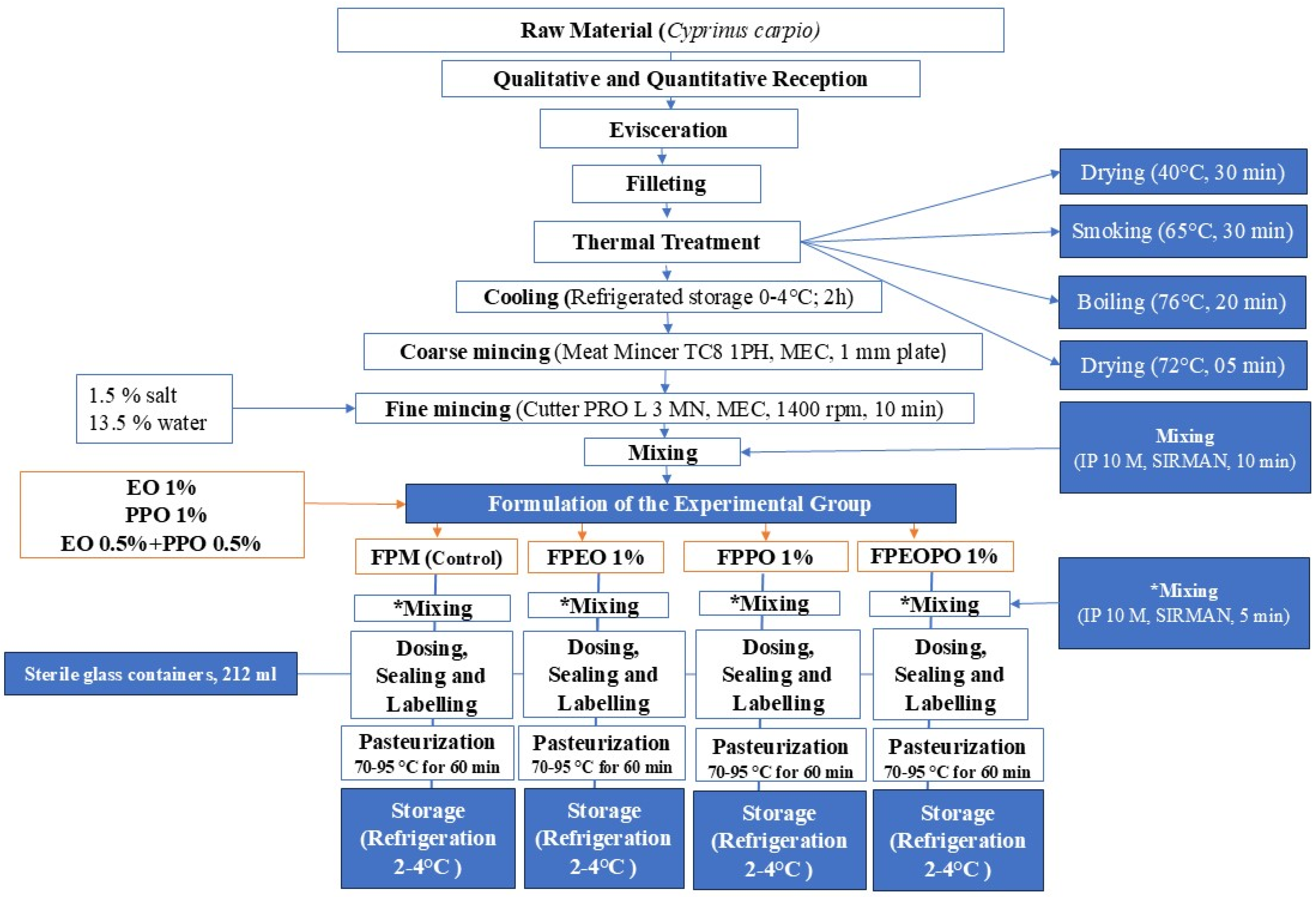
The process flow for obtaining experimental samples was designed to ensure a reproducible, controlled process adapted to the objectives of the study.
Figure 1 illustrates all stages of the technological workflow, from the receipt of raw materials and careful monitoring of the process to the production of the final product and ensuring food safety conditions in accordance with the ISO 22000 standard [
18]. Raw material processing was carried out under controlled sanitary conditions, with monitoring of critical parameters (temperature, time) to prevent the degradation of sensitive components and maintain stability. A qualitative and quantitative inspection was performed; subsequently, the fish underwent gutting and filleting operations. The filleted samples were placed in an Automatic Smoking Cell KWG1E (STAWIANY, Pszczółki, Poland), where specific heat treatments were applied.
Heat-treated fish fillets formed the basis of the samples studied. The heat treatments are presented in
Table 1.
After completing the heat treatment described in
Table 1, the fish fillets (
Cyprinus carpio) were transferred to a refrigeration room for the cooling stage, where they were held at temperatures ranging from 0 to 4 °C for 2 h. The preparation and processing of the experimental samples were carried out in a processing area with a controlled temperature of 10–20 °C, in accordance with the requirements applicable to fish and fish product processing facilities. The fillet was coarsely minced using a Meat Mincer TC8 1PH, MEC (MEC EUROPE SRL, Rimini, Italy), equipped with a 1 mm perforated screen. The resulting material was then finely minced using a PRO L 3 MN, MEC mincer (MEC EUROPE SRL, Rimini, Italy) for 10 min at a blade speed of 1400 rpm, in the presence of 1.5% salt and 13.5% water. The mixture was homogenized using SIRMAN IP 10 M (SIRMAN, Curtarolo, Italy) for 10 min, until a uniform and homogeneous consistency was achieved. The resulting mixture was weighed and divided into equal portions for the formulation of the experimental variants and the incorporation of the components used in the study, as shown in
Table 2.
Experimental samples of spreadable paste were developed, to which 1% EO and 1% PPO were added, and the last batch consisted of 0.5% EO + 0.5% PPO relative to 400 g of heat-treated fish fillet. The control sample included a spreadable paste made from fish fillets (Cyprinus carpio), obtained by applying the same technological flow as the experimental samples, but without the addition of plant-based biocomponents, being used as a reference system. The sample with orange peel liquid extract (1%) included a spreadable paste made from fish fillets (Cyprinus carpio), to which orange peel liquid extract was added, applying the same technological flow as in the control sample, to allow for a comparative evaluation of the effect of the plant biocomponent on the quality of the final product. The sample with orange peel powder (1%) included a spreadable paste made from fish fillets (Cyprinus carpio), supplemented with powder obtained from orange peel. The sample with liquid extract and orange peel powder (0.5% + 0.5%) was formulated by incorporating the liquid extract from orange peels and the corresponding powder into the protein matrix of the spreadable paste made from fish fillets, in order to evaluate the synergistic effect on the stability and quality of the final product. The percentages were established based on preliminary tests conducted before the main experiments. Each sample was homogenized using the SIRMAN IP 10 M for 5 min until a uniform and homogeneous consistency was achieved. No additional spice mixtures or aromatic additives were included in the product formulation, as the experimental approach was geared toward developing a simplified food product that would allow for the precise evaluation of the influence of bioactive extracts on the physicochemical, microbiological, and sensory characteristics of the final product. At the same time, this reformulation strategy aimed to create a clean-label product, characterized by a reduced number of ingredients and a production process adapted to responsible consumption. The filling process was performed automatically into sterile, recyclable glass containers (212 mL) using a REX RVF 327 filling machine (REX-Technologie GmbH & Co. KG, Thalgau, Austria) equipped with a 14 mm filling head. After filling and hermetic sealing, the samples underwent pasteurization at 70–95 °C for 60 min and were subsequently stored under refrigerated conditions at 2–4 °C.
2.3. Physicochemical Analysis
The samples were analyzed in triplicate for their proximate composition (moisture, protein, lipid and ash) according to AOAC standard methodology [
19]. Dry matter (DM) was determined by drying the samples in an oven at 105 °C for 4 h before weighing (930.15). Ashes were determined by incineration of the samples in a muffle at 550 °C for 4 h (942.05). Crude protein (CP, N × 6.25) was measured according to Kjeldahl method (976.05). Lipid fraction was extracted following Folch et al. (1957) [
20].
2.4. Antioxidant Activity and Bioactive Compounds
2.4.1. Extraction of Phytochemical Compounds
The extraction of bioactive compounds from plant-based powders was performed using ultrasound, using the method described by Gavril (Rațu) et al. (2024) [
21], with slight modifications. In short, 1.0 g of powder was combined with 10 mL of solvent mixture n-hexane/acetone (3:1,
v/
v) or 10 mL of 70% ethanol (only for the extraction of total polyphenols and total flavonoids, antioxidant activity by the DPPH method) and underwent an ultrasonic treatment for 40 min at 35 ± 2 °C, respectively, and the frequency was 40 kHz. After recovering the resulting extract, it was then centrifuged for 10 min at 6000 rpm and 10 °C. The supernatant was collected after separation and characterized phytochemically.
2.4.2. Phytochemical Characterization of Extracts
Determination of the Total Carotenoid Content
Extracts obtained in the extraction solvent (hexane: acetone, 3:1) were read at = 450 nm for total carotenoids, = 470 nm for = carotene and = 503 nm for lycopene [
22]. Carotenoid, ß-carotene and lycopene concentrations were calculated using Equation (1):
where
A—absorbance of the sample to be analyzed at wavelengths of = 450, 470 and 503 nm;
Mw—molecular weight;
Df—sample dilution factor;
m—mass or weight extract;
L—length of the optical path of the bowl (1 cm);
Ma—molar absorption, for total carotenoids (2500 L mol−1 cm−1), ß-caroten (2592 L mol−1 cm−1), licopen (3450 L mol−1 cm−1).
Determination of the Total Flavonoid Content
The colorimetric method described by Turturica et al., 2016 [
23] was used to determine the total flavonoid content. Over 0.25 mL diluted plant-based powder extract, 1.25 mL distilled water and 0.075 mL sodium nitrite solution 5% were added. The mixture was left at room temperature for 5 min, after which 0.15 mL 10% aluminum chloride solution was added. After a 6 min rest, 0.5 mL of sodium hydroxide 1M and distilled water up to a volume of 3 mL were added. The absorbance of the mixture was measured immediately at 510 nm. The total content of flavonoids is determined by means of the standard catechin curve, which is expressed in mg catechin equivalents/g dry matter.
Determination of Total Polyphenol Content
The total polyphenol content was determined by the Folin–Ciocalteu colorimetric method described by Turturica et al. (2016) [
23]. The method is based on the chemical reduction of Folin–Ciocalteu reagent, a mixture of tungsten and molybdenum oxides. Briefly, 200 μL of extract was diluted in distilled water (15.8 mL), over which 1 mL of Folin–Ciocalteu reagent was added. After 10′, 3 mL of 20% sodium carbonate solution was added, and after another 60′, during which the mixture was kept in the dark, the absorbance at the wavelength of 765 nm was determined. The content of phenolic compounds was expressed as mg gallic acid/g dry matter, using a standard gallic acid curve.
2.4.3. Determination of Antioxidant Activity
Method of the Radical DPPH (2,2-Diphenyl-1-Pichrylylhydrazil)
To determine the antioxidant activity, the DPPH method (2,2-diphenyl-1-picrylhydrazyl) described by Turturica et al. 2016 [
23] was used. In short, a volume of 3.9 mL of DPPH solution reacts with 100 μL of plant-based extract for 60 min, at room temperature, in the dark. The absorbency of the solution was read at 515 nm. The antioxidant activity of the extracts was expressed in μmol Trolox/g dry matter by reference to a standard curve [
24]. The percentage of inhibition of the DPPH radical was assessed against the sample using Equation (2):
where
A—Absorption read for sample control;
B—Absorption read for the sample analyzed.
2.5. Colorimetric Analysis
The color characteristics of the samples were assessed using a Chroma Meter MINOLTA, CR-410 model (Konica Minolta, Osaka, Japan), based on the CIE Lab scale. The results of the color measurements were expressed in terms of parameters L*, a* and b*, where L* represents brightness (with values from 0 for black to 100 for white), a* indicates the degree of red (−a* for green, +a* for red), and b* reflects the degree of yellow (+b*) or blue (−b*). After calibrating the equipment on a white plate, the CIELAB parameter values from three samples were collected. The angle of nuance was also calculated using the formula Hue angle = 180 + arctan (b*/a*) for dial II (−a*, +b*), thus describing the visual appearance of the color [
25]. Chroma, which represents the intensity of color, was determined according to Equation (3):
and the total color difference (ΔE) was calculated according to Equation (4):
2.6. Microbiological Analysis
The microbiological analysis of the samples was done according to Regulation (EC) No 2073/2005 [
26] for fish products. The growth of
E.coli and
S. aureus was monitored immediately after processing the fish paste (day 0), until 7 days of storage at 4 °C. Briefly, 1 g of sample was homogenized with 9 mL of buffered peptone water and serial dilutions (10
−1, 10
−2) were done. A volume of 1 mL from each dilution was inoculated on plates with selective chromogenic agars, Rapid
E. coli 2 and Rapid
Staph (Bio-Rad, Marnes-la-Coquette, France), and incubated for 24 h at 37 °C [
27]. In addition, samples were also cultured on Dichloran Rose Bengal Chloramphenicol (DRBC) medium, to evaluate the development of molds, and incubated at 25 °C for 5 days [
28]. After incubation, the presence or absence of
E.coli and
S. aureus was registered, and the molds were enumerated and expressed as logarithmic values of colony-forming units per gram of product (log CFU·g
−1). It is important to point out that the 7-day interval investigated in this study does not reflect the shelf life of the product in the sealed state, but the microbiological safety period after opening, under refrigeration conditions. This approach was chosen to simulate actual consumer conditions, in which the product becomes perishable after disposal and is used within a short period of time, thus allowing to assess the practical relevance of microbiological stability and the efficiency of the natural components used.
2.7. Sensorial Analysis
2.7.1. Consumer Sensory Evaluation
The sensory assessors were selected, trained, and monitored in accordance with ISO 8586 [
22]. The sensory panel consisted of 24 semi-trained panelists, aged between 20 and 42 years. Sensory evaluations were conducted in a standardized test room, in compliance with the requirements of ISO 8589 (ISO, 2007) [
22]. Participants were selected among healthy, non-smoking individuals who were not under medical treatment and did not suffer from chronic conditions such as hypertension or cardiovascular diseases. All participants were instructed not to have experienced cold symptoms or other conditions that could affect sensory perception for at least one week prior to the sensory evaluation and to have previous experience in the sensory evaluation of meat products. The training program of the sensory panel included the identification and description of aromas specific to meat products, as well as familiarization with the procedures for using the response scale. Sensory evaluations were carried out only after the panel demonstrated an adequate level of repeatability and consistency in sample assessment. The sensory evaluation of the products was performed over three distinct tasting sessions. Samples were coded with three-digit numerical codes and presented to the panelists in a randomized order, in order to reduce potential influences on sensory evaluation. Between samples, panelists were instructed to rinse their oral cavity with still water, to ensure taste neutralization and to minimize carry-over effects from the previous sample.
Hedonic Sensory Evaluation of the Products
Considering that the consumer hedonic tests in this study were conducted under controlled conditions, the provisions of ISO 11136 [
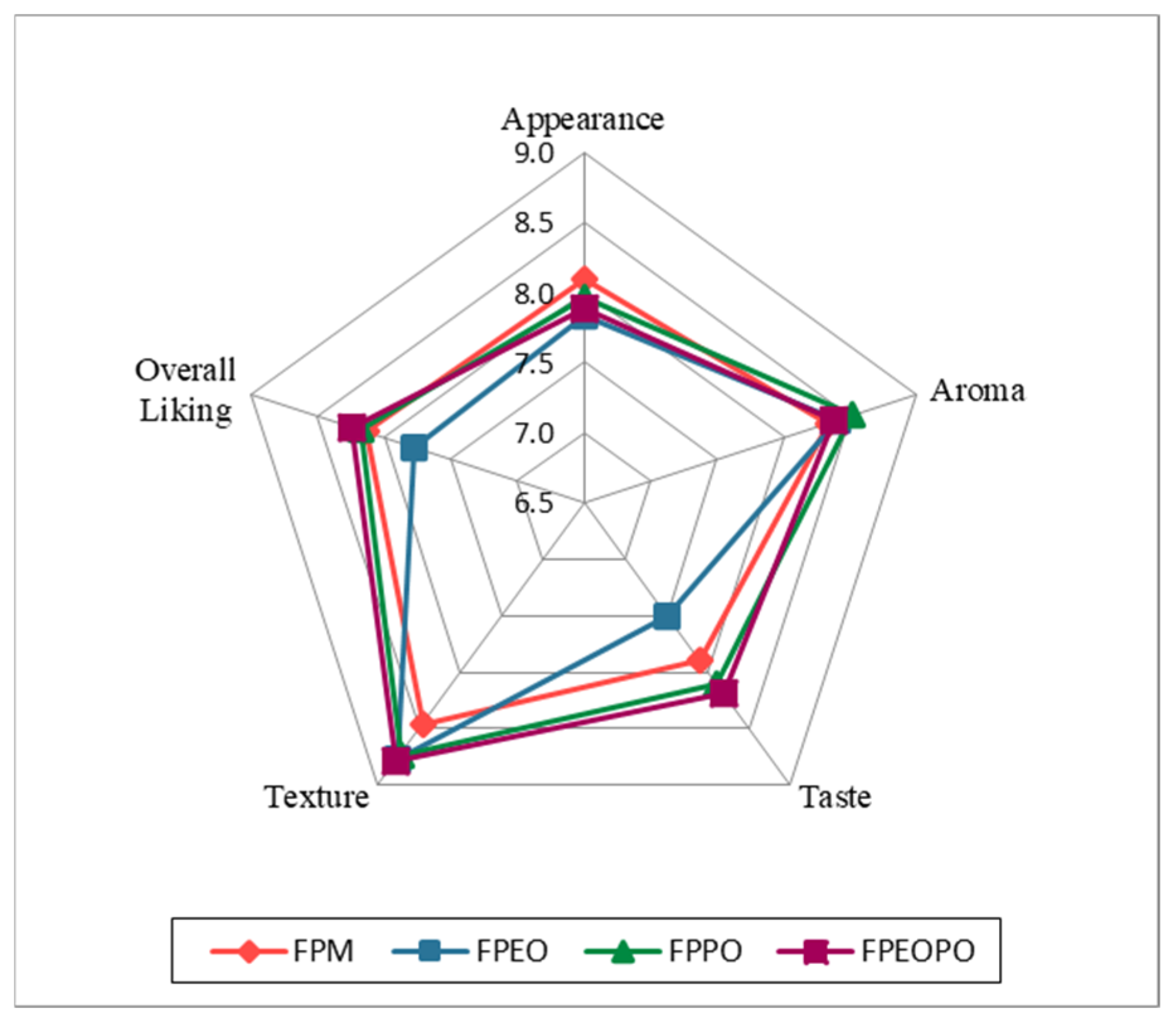
29] were complied with throughout the hedonic sensory evaluation. The acceptability of the analyzed fish products was assessed using a 9-point hedonic scale (1 = dislike extremely, 2 = dislike very much, 3 = dislike, 4 = dislike slightly, 5 = neither like nor dislike, 6 = like slightly, 7 = like, 8 = like very much, 9 = like extremely). The mean hedonic scores obtained for each sensory category (appearance, aroma, taste, texture, and overall liking) were graphically represented using a radar chart in order to facilitate the comparison of the hedonic profiles of the analyzed samples.
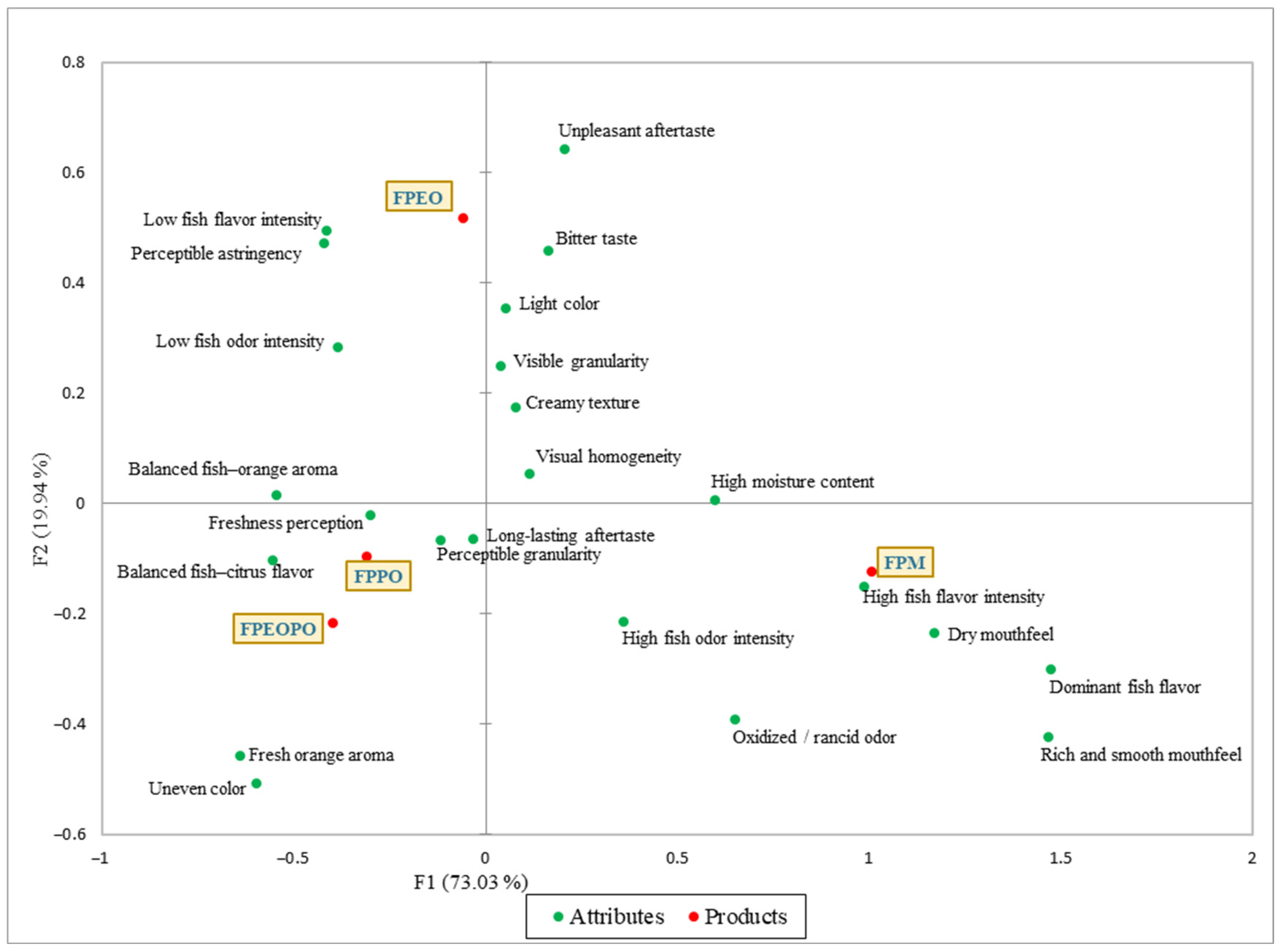
Check-All-That-Apply (CATA)
The Check-All-That-Apply (CATA) method was used to describe the sensory profile of the products based on the selection of sensory terms considered relevant by the evaluators. The relevance of extended lists of terms is related to the idiosyncratic nature of consumer perception and the way sensory sensations are expressed, as well as to the ability of this method to capture subtle similarities and differences among the analyzed samples [
30]. The use of the CATA method contributes to reducing potential sources of bias in consumer-based sensory profiling studies [
31]. In the present study, the CATA terms were established by the members of the sensory panel (
Table 3), based on their sensory perceptions expressed during the familiarization stage with the products. This approach was adopted in order to minimize effects related to attribute order and individual interpretation variability, thus ensuring a more accurate description of the sensory differences among samples. Based on the selection frequencies of the CATA terms, occurrence matrices were constructed, and Cochran’s Q test was applied to identify the sensory attributes that significantly discriminated among the analyzed samples (
p < 0.05).
Quantitative Descriptive Analysis (QDA)
Quantitative Descriptive Analysis (QDA) was conducted using a set of sensory attributes established by the authors of the study and defined prior to evaluation (
Table 4). The semi-trained sensory panel assessed the intensity of each sensory attribute using a 9-point numerical scale, where the scores reflected the perceived intensity level rather than hedonic preference, as is the case in consumer hedonic tests.
For each sensory attribute and sample, means and standard deviations were calculated. Subsequently, a two-way analysis of variance (ANOVA) was applied to evaluate the effects of the sample, sensory attributes, and their interaction. Due to the presence of a significant interaction effect, a one-way ANOVA was further performed separately for each sensory attribute.
Principal Component Analysis (PCA)
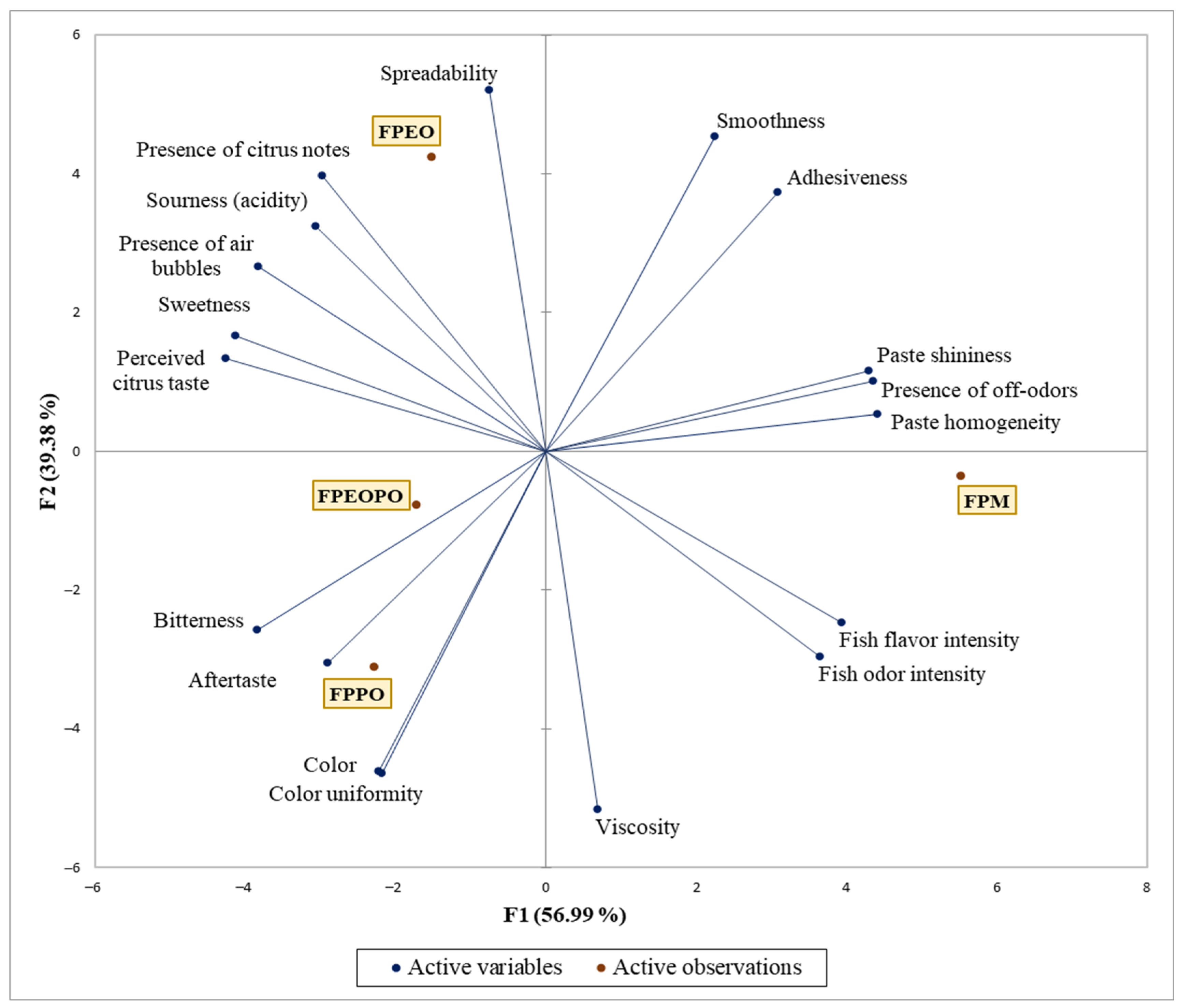
Principal component analysis (PCA) is a widely used multivariate statistical method [
32] and was applied to the data obtained from the Quantitative Descriptive Analysis (QDA) (
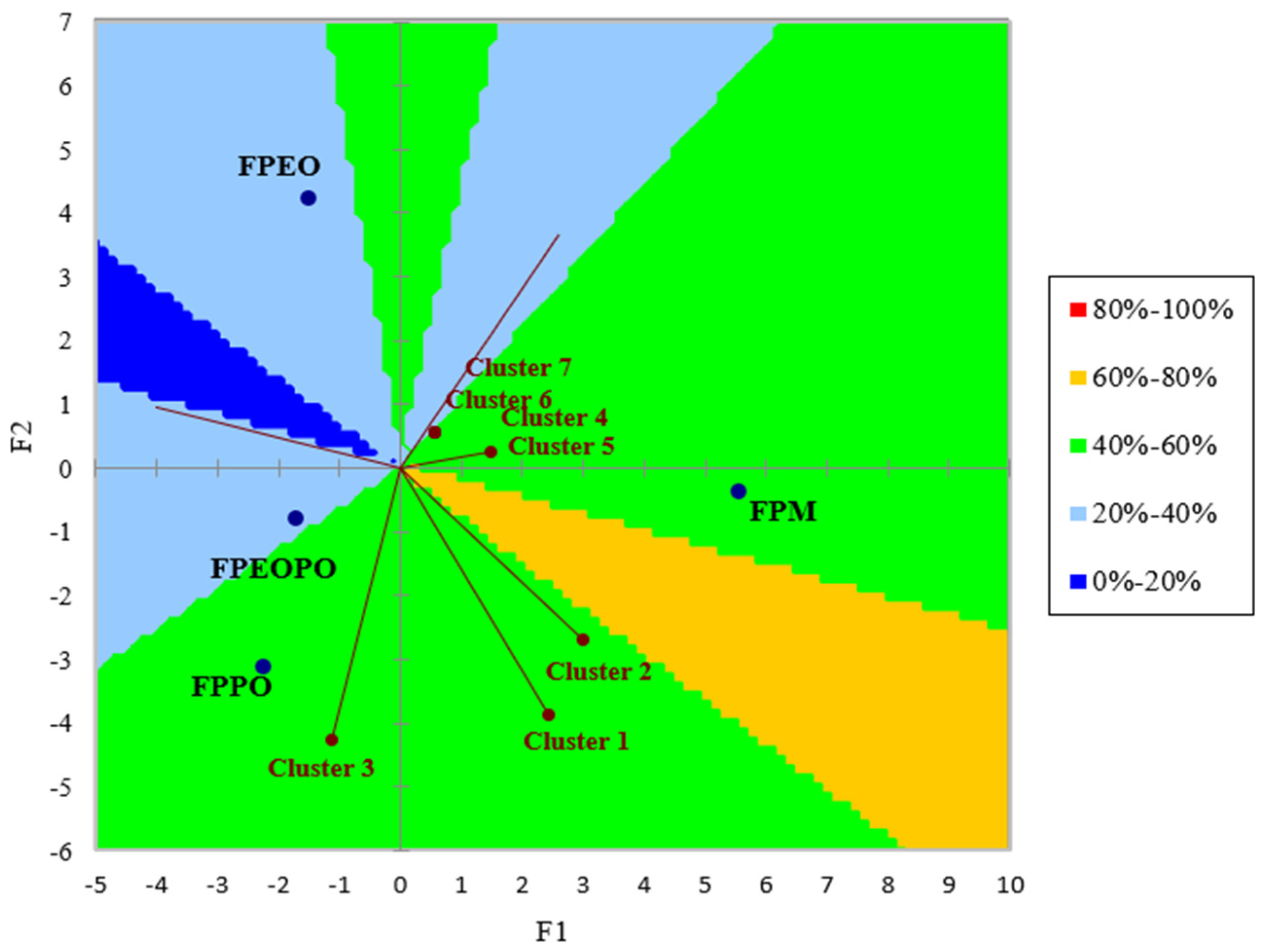
Table 4) in order to highlight the relationships between sensory attributes and fish paste samples, as well as to discriminate among the sensory profiles of the analyzed products.
External Preference Mapping (PrefMap)
Internal and external preference mapping are widely used tools for product optimization (Worch, 2013) [
33]. External preference mapping (PrefMap) was performed using the QDA values of the 18 sensory attributes together with hedonic scores, allowing for the grouping of panelists into preference clusters and the positioning of samples in the PrefMap space to describe overall consumer preferences.
2.8. Statistical Analysis
All tests were performed in triplicate (n = 3), and the results are expressed as mean ± standard deviation. The data was analyzed using unidirectional variation analysis (ANOVA), followed by Tukey’s HSD post hoc test, to test the differences between the groups. The differences were considered statistically significant, p < 0.05. Statistical analyses related to sensory evaluation were performed using XLSTAT (version 2025.27.1.2) and SPSS Statistics, version 26.
4. Conclusions
Fish-based foods are recognized for their significant role in a balanced diet and promoting good health. This study aimed to create and evaluate a product made from Cyprinus carpio fillets, enhanced with natural ingredients from orange peel. The research used simple methods and natural ingredients, following current trends. The results indicate that the incorporation of orange peel extract (OE) and orange peel powder (PPO) enhanced the bioactive profile and antioxidant activity of the product, while maintaining its overall nutritional composition. Specifically, OE + PPO was associated with increased antioxidant activity, a factor of particular relevance given the susceptibility of fish products to oxidative processes. These biocomponents also influenced the physicochemical and color parameters, helping to define a distinct sensory profile, correlated with the composition of the product. From a microbiological point of view, the absence of Escherichia coli and Staphylococcus aureus confirms the safety of the product under experimental conditions, while the dynamics of mold development suggest that complex interactions between bioactive compounds and the food matrix may influence stability during storage. E. coli and S. aureus were absent throughout the tests, and other factors than the presence of flavonoids and polyphenols may have influenced the development of molds in the fish paste where the mixture of orange peel extract and orange peel powder was used. The acceptability of fish-based products is often limited by the perception of smell, which is one of the main determinants of consumer rejection. In this context, the sensory evaluation highlighted that the citrus-enriched samples differed mainly through the perception mode of the specific sensory attributes. This formulation proposes a viable alternative to mitigate this limitation, helping to improve the sensory acceptability of the product. The combination of OE and PPO resulted in a more balanced sensory profile, supported by higher hedonic scores and an intermediate positioning in both main component analysis (PCA) and external preference mapping. Overall, the study highlights the applicative potential of the use of citrus byproducts as sources of bioactive compounds in the formulation of fish-based products, contributing to the development of products with superior nutritional value and increased relevance for both industry and consumers. At the same time, the compositional variability of the commercial extracts used remains an important aspect to be taken into account, and further investigations including a detailed characterization of bioactive compounds are needed to consolidate the results.




 ,
,