Non-Thermal Processing Technologies in Food Industries

 and
and
Abstract
1. Introduction
2. Non-Thermal Processing Technologies
2.1. High-Pressure Processing (HPP)
2.2. Pulsed Electric Field (PEF)
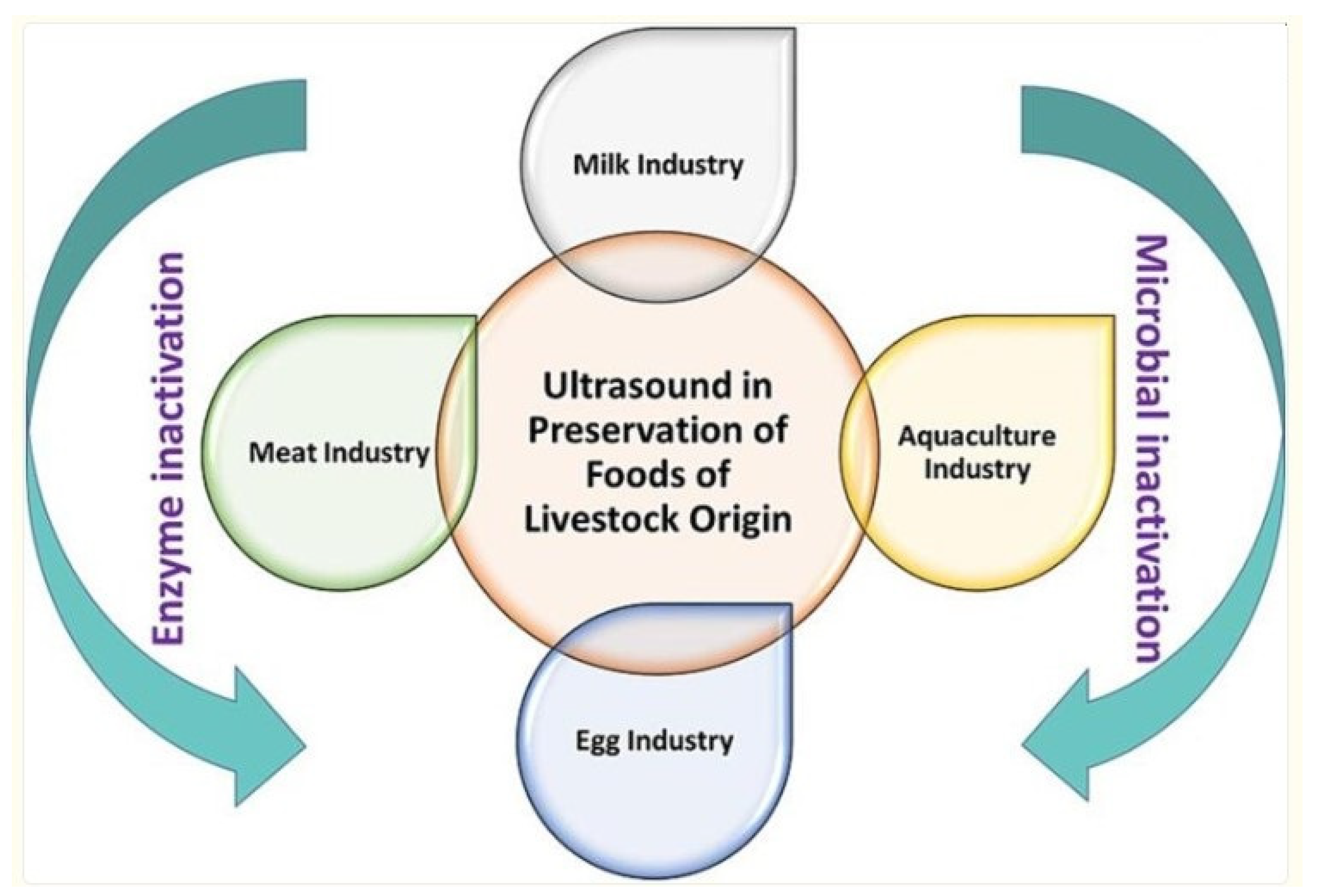
2.3. Ultrasound Technology
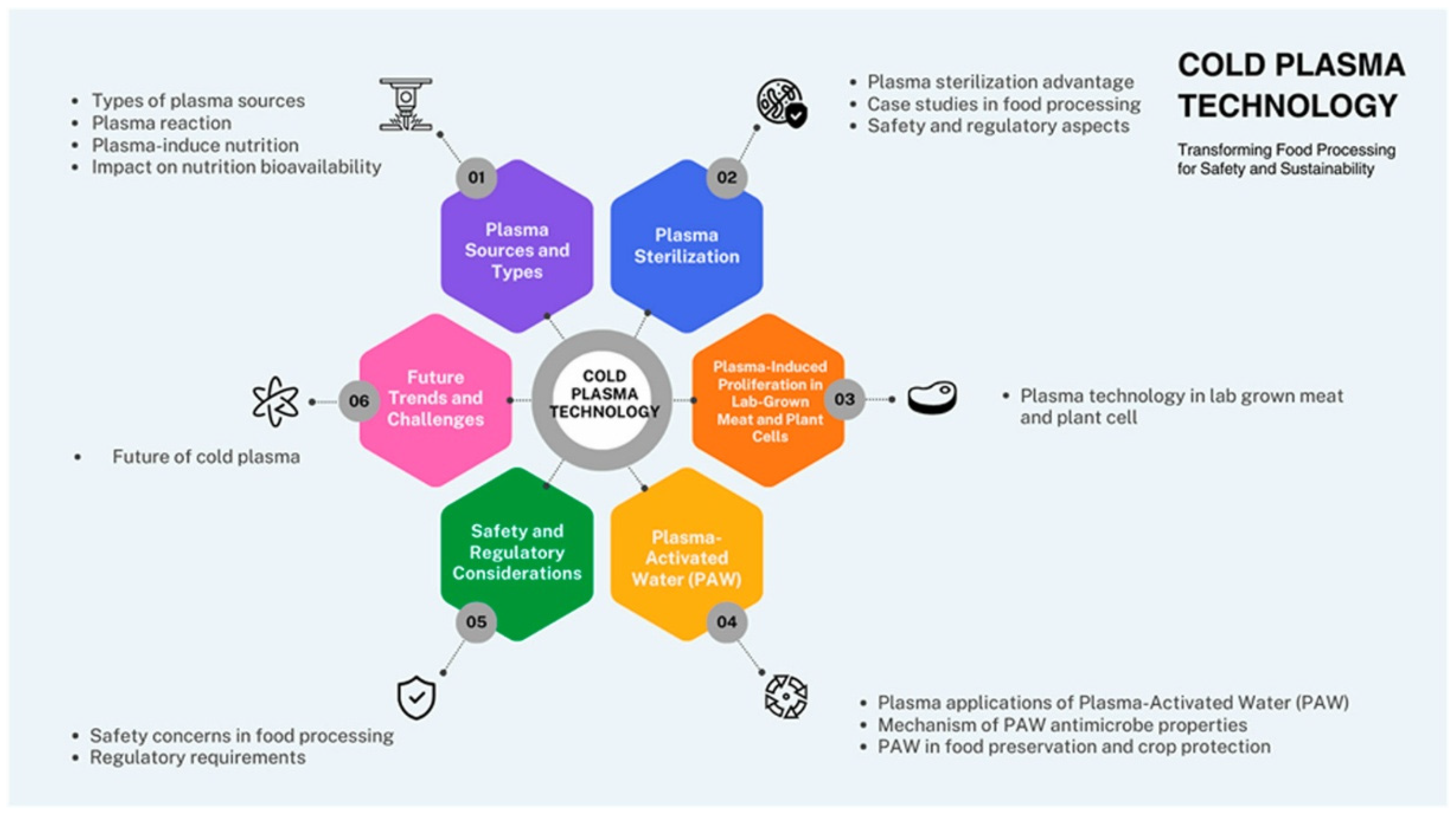
2.4. Cold Plasma Technology
3. Innovative Packaging Technologies
3.1. Microwave Technology
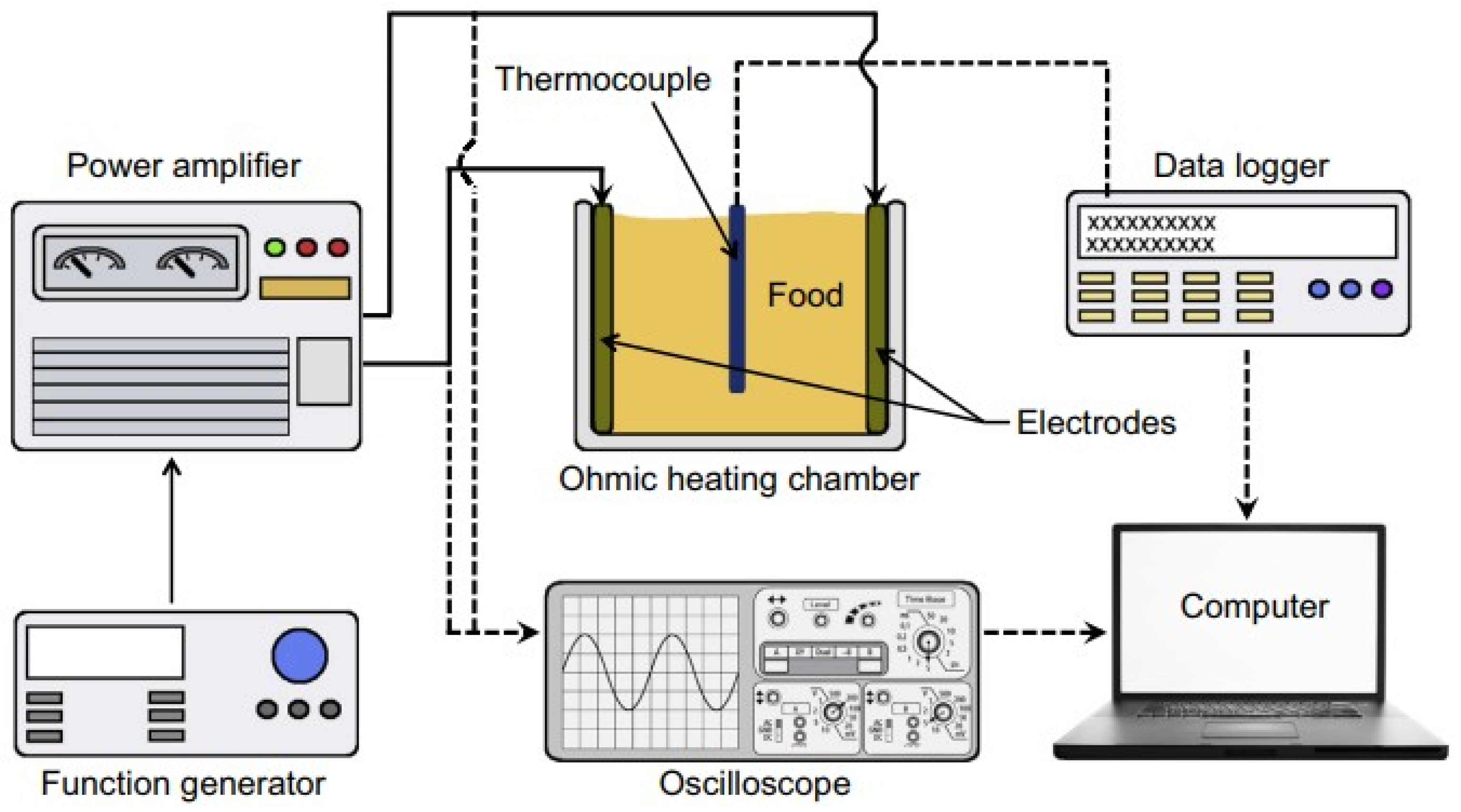
3.2. Ohmic Heating
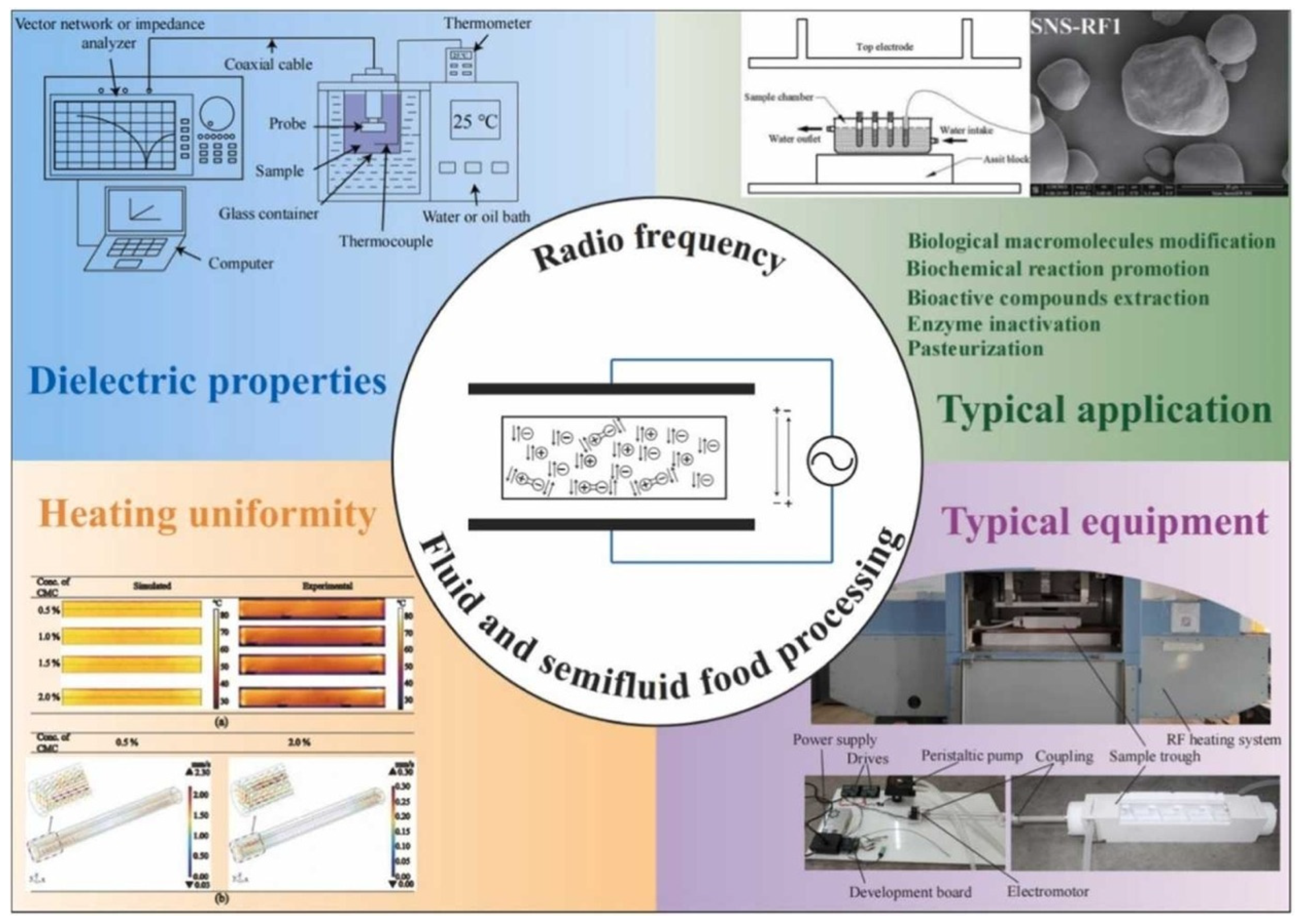
3.3. Radio Frequency Heating
4. Future Research Direction
5. Conclusions
Author Contributions
Funding
Institutional Review Board Statement
Informed Consent Statement
Data Availability Statement
Conflicts of Interest
References
- Hammad, H.M.; Nauman, H.M.F.; Abbas, F.; Jawad, R.; Farhad, W.; Shahid, M.; Bakhat, H.F.; Farooque, A.A.; Mubeen, M.; Fahad, S. Impacts of COVID-19 pandemic on environment, society, and food security. Environ. Sci. Pollut. Res. 2023, 30, 99261–99272. [Google Scholar] [CrossRef]
- Picchioni, F.; Goulao, L.F.; Roberfroid, D. The impact of COVID-19 on diet quality, food security and nutrition in low and middle income countries: A systematic review of the evidence. Clin. Nutr. 2022, 41, 2955–2964. [Google Scholar] [CrossRef] [PubMed]
- Delgado, A.; Issaoui, M.; Vieira, M.C.; Saraiva de Carvalho, I.; Fardet, A. Food composition databases: Does it matter to human health? Nutrients 2021, 13, 2816. [Google Scholar] [CrossRef]
- Zhou, Y.; Wang, D.; Zhou, S.; Duan, H.; Guo, J.; Yan, W. Nutritional composition, health benefits, and application value of edible insects: A review. Foods 2022, 11, 3961. [Google Scholar] [CrossRef] [PubMed]
- Forde, C.G.; Bolhuis, D. Interrelations between food form, texture, and matrix influence energy intake and metabolic responses. Curr. Nutr. Rep. 2022, 11, 124–132. [Google Scholar] [CrossRef]
- Garcia-Perez, P.; Cassani, L.; Garcia-Oliveira, P.; Xiao, J.; Simal-Gandara, J.; Prieto, M.A.; Lucini, L. Algal nutraceuticals: A perspective on metabolic diversity, current food applications, and prospects in the field of metabolomics. Food Chem. 2023, 409, 135295. [Google Scholar] [CrossRef]
- Giacco, R.; Costabile, G.; Riccardi, G. Metabolic effects of dietary carbohydrates: The importance of food digestion. Food Res. Int. 2016, 88, 336–341. [Google Scholar] [CrossRef]
- Sensoy, I. A review on the food digestion in the digestive tract and the used in vitro models. Curr. Res. Food Sci. 2021, 4, 308–319. [Google Scholar] [CrossRef] [PubMed]
- Ding, M.; Huang, Z.; Jin, Z.; Zhou, C.; Wu, J.; Zhao, D.; Shan, K.; Ke, W.; Zhang, M.; Nian, Y. The effect of fat content in food matrix on the structure, rheological properties and digestive properties of protein. Food Hydrocoll. 2022, 126, 107464. [Google Scholar] [CrossRef]
- Li, G.; Hu, L.; Hu, Z.; Li, Y.; Yuan, C.; Takaki, K.; Hu, Y. Nutrition and protein function, properties (structure, rheology, thermal stability) analysis of nepture volute based on proteomics and in vitro digestion/cells model. Food Biosci. 2021, 43, 101321. [Google Scholar] [CrossRef]
- Sharma, M.; Pondicherry, K.S.; Duizer, L. Understanding relations between rheology, tribology, and sensory perception of modified texture foods. J. Texture Stud. 2022, 53, 327–344. [Google Scholar] [CrossRef]
- Ribes, S.; Talens, P. Correlating instrumental measurements and sensory perceptions of foods with different textural properties for people with impaired oral and swallowing capabilities—A review. Food Res. Int. 2023, 173, 113472. [Google Scholar] [CrossRef]
- Senanayake, D.; Torley, P.J.; Chandrapala, J.; Terefe, N.S. Microbial fermentation for improving the sensory, nutritional and functional attributes of legumes. Fermentation 2023, 9, 635. [Google Scholar] [CrossRef]
- Shukla, D.; Tewari, B.N.; Trivedi, S.P.; Dwivedi, S.; Kumar, V.; Tiwari, V. Quality and functional attributes of muffins with incorporation of fruit, vegetable, and grain substitutes: A review. J. Appl. Nat. Sci. 2024, 16, 344. [Google Scholar] [CrossRef]
- Zhang, Z.-H.; Wang, L.-H.; Zeng, X.-A.; Han, Z.; Brennan, C.S. Non-thermal technologies and its current and future application in the food industry: A review. Int. J. Food Sci. Technol. 2019, 54, 1–13. [Google Scholar] [CrossRef]
- Yan, B.; Li, J.; Liang, Q.-C.; Huang, Y.; Cao, S.-L.; Wang, L.-H.; Zeng, X.-A. From laboratory to industry: The evolution and impact of pulsed electric field technology in food processing. Food Rev. Int. 2025, 41, 373–398. [Google Scholar] [CrossRef]
- Gao, X.; Wang, Z.; Sun, G.; Zhao, Y.; Tang, S.; Zhu, H.; Li, Z. Pulsed electric field (PEF) technology for preserving fruits and vegetables: Applications, benefits, and comparisons. Food Rev. Int. 2026, 42, 540–565. [Google Scholar] [CrossRef]
- Hazards, E.P.o.B.; Koutsoumanis, K.; Alvarez-Ordóñez, A.; Bolton, D.; Bover-Cid, S.; Chemaly, M.; Davies, R.; De Cesare, A.; Herman, L.; Hilbert, F. The efficacy and safety of high-pressure processing of food. EFSA J. 2022, 20, e07128. [Google Scholar]
- Chiozzi, V.; Agriopoulou, S.; Varzakas, T. Advances, applications, and comparison of thermal (pasteurization, sterilization, and aseptic packaging) against non-thermal (ultrasounds, UV radiation, ozonation, high hydrostatic pressure) technologies in food processing. Appl. Sci. 2022, 12, 2202. [Google Scholar] [CrossRef]
- Birania, S.; Attkan, A.K.; Kumar, S.; Kumar, N.; Singh, V.K. Cold plasma in food processing and preservation: A review. J. Food Process Eng. 2022, 45, e14110. [Google Scholar] [CrossRef]
- Harikrishna, S.; Anil, P.P.; Shams, R.; Dash, K.K. Cold plasma as an emerging nonthermal technology for food processing: A comprehensive review. J. Agric. Food Res. 2023, 14, 100747. [Google Scholar] [CrossRef]
- Roobab, U.; Abida, A.; Chacha, J.S.; Athar, A.; Madni, G.M.; Ranjha, M.M.A.N.; Rusu, A.V.; Zeng, X.-A.; Aadil, R.M.; Trif, M. Applications of innovative non-thermal pulsed electric field technology in developing safer and healthier fruit juices. Molecules 2022, 27, 4031. [Google Scholar] [CrossRef]
- Dalvi-Isfahan, M.; Havet, M.; Hamdami, N.; Le-Bail, A. Recent advances of high voltage electric field technology and its application in food processing: A review with a focus on corona discharge and static electric field. J. Food Eng. 2023, 353, 111551. [Google Scholar] [CrossRef]
- Barbhuiya, R.I.; Singha, P.; Singh, S.K. A comprehensive review on impact of non-thermal processing on the structural changes of food components. Food Res. Int. 2021, 149, 110647. [Google Scholar] [CrossRef] [PubMed]
- Allai, F.M.; Azad, Z.A.A.; Mir, N.A.; Gul, K. Recent advances in non-thermal processing technologies for enhancing shelf life and improving food safety. Appl. Food Res. 2023, 3, 100258. [Google Scholar] [CrossRef]
- Arya, S.S.; More, P.R.; Ladole, M.R.; Pegu, K.; Pandit, A.B. Non-thermal, energy efficient hydrodynamic cavitation for food processing, process intensification and extraction of natural bioactives: A review. Ultrason. Sonochem. 2023, 98, 106504. [Google Scholar] [CrossRef]
- Iqbal, A.; Murtaza, A.; Hu, W.; Ahmad, I.; Ahmed, A.; Xu, X. Activation and inactivation mechanisms of polyphenol oxidase during thermal and non-thermal methods of food processing. Food Bioprod. Process. 2019, 117, 170–182. [Google Scholar] [CrossRef]
- Denoya, G.I.; Colletti, A.C.; Vaudagna, S.R.; Polenta, G.A. Application of non-thermal technologies as a stress factor to increase the content of health-promoting compounds of minimally processed fruits and vegetables. Curr. Opin. Food Sci. 2021, 42, 224–236. [Google Scholar] [CrossRef]
- Liu, J.; Bi, J.; McClements, D.J.; Liu, X.; Yi, J.; Lyu, J.; Zhou, M.; Verkerk, R.; Dekker, M.; Wu, X. Impacts of thermal and non-thermal processing on structure and functionality of pectin in fruit-and vegetable-based products: A review. Carbohydr. Polym. 2020, 250, 116890. [Google Scholar] [CrossRef]
- Pereira, R.N.; Vicente, A.A. Environmental impact of novel thermal and non-thermal technologies in food processing. Food Res. Int. 2010, 43, 1936–1943. [Google Scholar] [CrossRef]
- Oz, E. Effects of smoke flavoring using different wood chips and barbecuing on the formation of polycyclic aromatic hydrocarbons and heterocyclic aromatic amines in salmon fillets. PLoS ONE 2020, 15, e0227508. [Google Scholar] [CrossRef]
- Oz, F.; Kızıl, M.; Çelık, T. Effects of different cooking methods on the formation of heterocyclic aromatic amines in goose meat. J. Food Process. Preserv. 2016, 40, 1047–1053. [Google Scholar] [CrossRef]
- Frewer, L.J.; Bergmann, K.; Brennan, M.; Lion, R.; Meertens, R.; Rowe, G.; Siegrist, M.; Vereijken, C. Consumer response to novel agri-food technologies: Implications for predicting consumer acceptance of emerging food technologies. Trends Food Sci. Technol. 2011, 22, 442–456. [Google Scholar] [CrossRef]
- Choudhary, R.; Bandla, S. Ultraviolet pasteurization for food industry. Int. J. Food Sci. Nutr. Eng. 2012, 2, 12–15. [Google Scholar] [CrossRef]
- Thirumdas, R.; Sarangapani, C.; Annapure, U.S. Cold plasma: A novel non-thermal technology for food processing. Food Biophys. 2015, 10, 1–11. [Google Scholar] [CrossRef]
- Bolumar, T.; Orlien, V.; Sikes, A.; Aganovic, K.; Bak, K.H.; Guyon, C.; Stübler, A.S.; de Lamballerie, M.; Hertel, C.; Brüggemann, D.A. High-pressure processing of meat: Molecular impacts and industrial applications. Compr. Rev. Food Sci. Food Saf. 2021, 20, 332–368. [Google Scholar] [CrossRef]
- HPP Technology. Available online: https://www.hiperbaric.com/en/hpp-technology/what-is-hpp/ (accessed on 4 May 2026).
- Boziaris, I.S.; Parlapani, F.F.; DeWitt, C.A.M. High pressure processing at ultra-low temperatures: Inactivation of foodborne bacterial pathogens and quality changes in frozen fish fillets. Innov. Food Sci. Emerg. Technol. 2021, 74, 102811. [Google Scholar] [CrossRef]
- Cap, M.; Paredes, P.F.; Fernández, D.; Mozgovoj, M.; Vaudagna, S.R.; Rodriguez, A. Effect of high hydrostatic pressure on Salmonella spp inactivation and meat-quality of frozen chicken breast. LWT 2020, 118, 108873. [Google Scholar] [CrossRef]
- Jadhav, H.B.; Annapure, U.S.; Deshmukh, R.R. Non-thermal technologies for food processing. Front. Nutr. 2021, 8, 657090. [Google Scholar] [CrossRef] [PubMed]
- Carpentieri, S.; Ferrari, G.; Donsì, F. High-Pressure homogenization for enhanced bioactive recovery from tomato processing By-Products and improved lycopene bioaccessibility during in vitro digestion. Antioxidants 2023, 12, 1855. [Google Scholar] [CrossRef] [PubMed]
- Timon, M.L.; Manzano, R.; Martin-Mateos, M.J.; Sanchez-Ordonez, M.; Godoy, B.; Ramirez-Bernabe, M.R. Reduction of polycyclic aromatic hydrocarbons in pork burgers using high-pressure processed white grape pomace. LWT 2025, 218, 117492. [Google Scholar] [CrossRef]
- Gaillard, R.; Marciniak, A.; Brisson, G.; Perreault, V.; House, J.D.; Pouliot, Y.; Doyen, A. Impact of ultra-high pressure homogenization on the structural properties of egg yolk granule. Foods 2022, 11, 512. [Google Scholar] [CrossRef]
- Nowosad, K.; Sujka, M.; Pankiewicz, U.; Kowalski, R. The application of PEF technology in food processing and human nutrition. J. Food Sci. Technol. 2021, 58, 397–411. [Google Scholar] [CrossRef]
- Gad, A.; Jayaram, S.H.; Pritzker, M. Performance of electrode materials during food processing by pulsed electric fields. IEEE Trans. Plasma Sci. 2014, 42, 3161–3166. [Google Scholar] [CrossRef]
- Zhang, C.; Lyu, X.; Arshad, R.N.; Aadil, R.M.; Tong, Y.; Zhao, W.; Yang, R. Pulsed electric field as a promising technology for solid foods processing: A review. Food Chem. 2023, 403, 134367. [Google Scholar] [CrossRef] [PubMed]
- Lasekan, O.; Ng, S.; Azeez, S.; Shittu, R.; Teoh, L.; Gholivand, S. Effect of pulsed electric field processing on flavor and color of liquid foods. J. Food Process. Preserv. 2017, 41, e12940. [Google Scholar] [CrossRef]
- Liu, Z.-W.; Zeng, X.-A.; Ngadi, M.; Han, Z. Effect of cell membrane fatty acid composition of Escherichia coli on the resistance to pulsed electric field (PEF) treatment. LWT-Food Sci. Technol. 2017, 76, 18–25. [Google Scholar] [CrossRef]
- Preetha, P.; Venugopal, A.P.; Varadharaju, N.; Kennedy, Z.J. Inactivation of Escherichia coli in tender coconut (Cocos nucifera L.) water by pulsed light treatment. Int. J. Curr. Microbiol. Appl. Sci. 2017, 6, 1453–1461. [Google Scholar] [CrossRef]
- Käferböck, A.; Smetana, S.; de Vos, R.; Schwarz, C.; Toepfl, S.; Parniakov, O. Sustainable extraction of valuable components from Spirulina assisted by pulsed electric fields technology. Algal Res. 2020, 48, 101914. [Google Scholar] [CrossRef]
- Rábago-Panduro, L.M.; Morales-de la Peña, M.; Romero-Fabregat, M.P.; Martín-Belloso, O.; Welti-Chanes, J. Effect of pulsed electric fields (PEF) on extraction yield and stability of oil obtained from dry pecan nuts (Carya illinoinensis (Wangenh. K. Koch)). Foods 2021, 10, 1541. [Google Scholar] [CrossRef]
- Chavan, P.; Sharma, P.; Sharma, S.R.; Mittal, T.C.; Jaiswal, A.K. Application of high-intensity ultrasound to improve food processing efficiency: A review. Foods 2022, 11, 122. [Google Scholar] [CrossRef] [PubMed]
- Bariya, A.R.; Rathod, N.B.; Patel, A.S.; Nayak, J.K.B.; Ranveer, R.C.; Hashem, A.; Abd_Allah, E.F.; Ozogul, F.; Jambrak, A.R.; Rocha, J.M. Recent developments in ultrasound approach for preservation of animal origin foods. Ultrason. Sonochem. 2023, 101, 106676. [Google Scholar] [CrossRef]
- Chemat, F.; Khan, M.K. Applications of ultrasound in food technology: Processing, preservation and extraction. Ultrason. Sonochem. 2011, 18, 813–835. [Google Scholar] [CrossRef]
- Gallo, M.; Ferrara, L.; Naviglio, D. Application of ultrasound in food science and technology: A perspective. Foods 2018, 7, 164. [Google Scholar] [CrossRef]
- Jadhav, H.B.; Gogate, P.; Annapure, U. Analysing the repercussions of ultrasound on triacylglycerols in food. Food Chem. Adv. 2023, 2, 100332. [Google Scholar] [CrossRef]
- Sun, Y.; Zeng, L.; Xue, Y.; Yang, T.; Cheng, Z.; Sun, P. Effects of power ultrasound on the activity and structure of β-D-glucosidase with potentially aroma-enhancing capability. Food Sci. Nutr. 2019, 7, 2043–2049. [Google Scholar] [CrossRef] [PubMed]
- De Sousa, C.B.d.C.; dos Anjos, G.L.; Nobrega, R.S.; Magaton, A.d.S.; de Miranda, F.M.; Dias, F.d.S. Greener ultrasound-assisted extraction of bioactive phenolic compounds in Croton heliotropiifolius Kunth leaves. Microchem. J. 2020, 159, 105525. [Google Scholar] [CrossRef]
- Mandal, R.; Singh, A.; Singh, A.P. Recent developments in cold plasma decontamination technology in the food industry. Trends Food Sci. Technol. 2018, 80, 93–103. [Google Scholar] [CrossRef]
- Kamalapreetha, B.; Pandiselvam, R.; Kothakota, A.; Farzana, W.; Dinesha, B.; Prithviraj, V. Novel Food Processing Technologies for Inactivation Of Food Enzymes. In Enzyme Inactivation in Food Processing; Apple Academic Press: Waretown, NJ, USA, 2023; pp. 33–49. [Google Scholar]
- Varilla, C.; Marcone, M.; Annor, G.A. Potential of cold plasma technology in ensuring the safety of foods and agricultural produce: A review. Foods 2020, 9, 1435. [Google Scholar] [CrossRef]
- Farooq, S.; Dar, A.H.; Dash, K.K.; Srivastava, S.; Pandey, V.K.; Ayoub, W.S.; Pandiselvam, R.; Manzoor, S.; Kaur, M. Cold plasma treatment advancements in food processing and impact on the physiochemical characteristics of food products. Food Sci. Biotechnol. 2023, 32, 621–638. [Google Scholar] [CrossRef]
- Perera, K.Y.; Prendeville, J.; Jaiswal, A.K.; Jaiswal, S. Cold plasma technology in food packaging. Coatings 2022, 12, 1896. [Google Scholar] [CrossRef]
- Yawut, N.; Mekwilai, T.; Vichiansan, N.; Braspaiboon, S.; Leksakul, K.; Boonyawan, D. Cold plasma technology: Transforming food processing for safety and sustainability. J. Agric. Food Res. 2024, 18, 101383. [Google Scholar] [CrossRef]
- Gavahian, M.; Chu, Y.-H.; Khaneghah, A.M.; Barba, F.J.; Misra, N. A critical analysis of the cold plasma induced lipid oxidation in foods. Trends Food Sci. Technol. 2018, 77, 32–41. [Google Scholar] [CrossRef]
- Lin, L.; Liao, X.; Li, C.; Abdel-Samie, M.A.; Cui, H. Inhibitory effect of cold nitrogen plasma on Salmonella Typhimurium biofilm and its application on poultry egg preservation. LWT 2020, 126, 109340. [Google Scholar] [CrossRef]
- Devi, Y.; Thirumdas, R.; Sarangapani, C.; Deshmukh, R.; Annapure, U. Influence of cold plasma on fungal growth and aflatoxins production on groundnuts. Food Control 2017, 77, 187–191. [Google Scholar] [CrossRef]
- Bang, I.H.; Kim, Y.E.; Min, S.C. Preservation of mandarins using a microbial decontamination system integrating calcium oxide solution washing, modified atmosphere packaging, and dielectric barrier discharge cold plasma treatment. Food Packag. Shelf Life 2021, 29, 100682. [Google Scholar] [CrossRef]
- Shah, U.; Ranieri, P.; Zhou, Y.; Schauer, C.L.; Miller, V.; Fridman, G.; Sekhon, J.K. Effects of cold plasma treatments on spot-inoculated Escherichia coli O157: H7 and quality of baby kale (Brassica oleracea) leaves. Innov. Food Sci. Emerg. Technol. 2019, 57, 102104. [Google Scholar] [CrossRef]
- Raza, A.; Abdullah, H.M.; Wasiq, M.; Butt, M.U.; Afzaal, M.; Singh, A.; Panigrahi, R.; Shah, M.A. A Comprehensive Review on Non-Thermal Technologies in Food Processing & Implementation in Different Food Industries: Limitations and Challenges. Food Sci. Nutr. 2026, 14, e71712. [Google Scholar]
- Wu, Y.; Li, X.; Ma, X.; Ren, Q.; Sun, Z.; Pan, H. The Effect of Non-Thermal Processing on the Fate of Pathogenic Bacteria and Hidden Hazardous Risks. Foods 2025, 14, 2374. [Google Scholar] [CrossRef]
- Sasikumar, R.; Mangang, I.B.; Kaviarasu, G.; Kaushik, R.; Mansingh, P.; Tomer, V.; Jaiswal, A.K. A comprehensive review on cold plasma applications in the food industry. Sustain. Food Technol. 2025, 3, 1251–1274. [Google Scholar] [CrossRef]
- Ghazali, M.H.; Saleem, F.; Bashir, L. Cold plasma and high-pressure processing in sustainable meat preservation: A review. Food Nutr. Health 2025, 2, 22. [Google Scholar] [CrossRef]
- Maldonado, Y.E.; Figueroa, J.G. Microwave-assisted extraction optimization and effect of drying temperature on catechins, procyanidins and theobromine in cocoa beans. Molecules 2023, 28, 3755. [Google Scholar] [CrossRef]
- Mothibe, K.J.; Zhang, M.; Mujumdar, A.S.; Wang, Y.C.; Cheng, X. Effects of ultrasound and microwave pretreatments of apple before spouted bed drying on rate of dehydration and physical properties. Dry. Technol. 2014, 32, 1848–1856. [Google Scholar] [CrossRef]
- Li, M.; Zhou, C.; Wang, B.; Zeng, S.; Mu, R.; Li, G.; Li, B.; Lv, W. Research progress and application of ultrasonic-and microwave-assisted food processing technology. Compr. Rev. Food Sci. Food Saf. 2023, 22, 3707–3731. [Google Scholar] [CrossRef]
- Deng, X.; Huang, H.; Huang, S.; Yang, M.; Wu, J.; Ci, Z.; He, Y.; Wu, Z.; Han, L.; Zhang, D. Insight into the incredible effects of microwave heating: Driving changes in the structure, properties and functions of macromolecular nutrients in novel food. Front. Nutr. 2022, 9, 941527. [Google Scholar] [CrossRef]
- Shah, U.; Gani, A.; Ashwar, B.A.; Shah, A.; Wani, I.A.; Masoodi, F.A. Effect of infrared and microwave radiations on properties of Indian Horse Chestnut starch. Int. J. Biol. Macromol. 2016, 84, 166–173. [Google Scholar] [CrossRef]
- Cullen, P.J.; Tiwari, B.K.; Valdramidis, V. Novel Thermal and Non-Thermal Technologies for Fluid Foods; Academic Press: Cambridge, MA, USA, 2011. [Google Scholar]
- Kumar, J.P.; Ramanathan, M.; Ranganathan, T. Ohmic heating technology in food processing—A review. Int. J. Food Eng. Res. Technol. 2014, 3, 1236–1241. [Google Scholar]
- Lascorz, D.; Torella, E.; Lyng, J.G.; Arroyo, C. The potential of ohmic heating as an alternative to steam for heat processing shrimps. Innov. Food Sci. Emerg. Technol. 2016, 37, 329–335. [Google Scholar] [CrossRef]
- Karacabey, E.; Bardakçı, M.S.; Baltacıoğlu, H. Physical pretreatments to enhance purple-fleshed potatoes drying: Effects of blanching, ohmic heating and ultrasound pretreatments on quality attributes. Potato Res. 2023, 66, 1117–1142. [Google Scholar] [CrossRef]
- Javed, T.; Oluwole-ojo, O.; Zhang, H.; Akmal, M.; Breikin, T.; O’Brien, A. System design, modelling, energy analysis, and industrial applications of ohmic heating technology. Food Bioprocess Technol. 2025, 18, 2195–2217. [Google Scholar] [CrossRef]
- Bozkurt, H.; Icier, F. Ohmic cooking of ground beef: Effects on quality. J. Food Eng. 2010, 96, 481–490. [Google Scholar] [CrossRef]
- Jun, S.; Sastry, S. Reusable pouch development for long term space missions: A 3D ohmic model for verification of sterilization efficacy. J. Food Eng. 2007, 80, 1199–1205. [Google Scholar] [CrossRef]
- Aurina, K.; Sari, A. Ohmic heating: A review and application in food industry. In Proceedings of the 2nd International Conference on Smart and Innovative Agriculture (ICoSIA 2021); Atlantis Press: Paris, France, 2022; pp. 107–113. [Google Scholar]
- Ríos-Ríos, K.L.; Gaytán-Martínez, M.; Rivera-Pastrana, D.; Morales-Sánchez, E.; Villamiel, M.; Montilla, A.; Mercado-Silva, E.; Vázquez-Barrios, M.E. Ohmic heating pretreatment accelerates black garlic processing. LWT 2021, 151, 112218. [Google Scholar] [CrossRef]
- Rodríguez, L.M.N.; Arias, R.; Soteras, T.; Sancho, A.; Pesquero, N.; Rossetti, L.; Tacca, H.; Aimaretti, N.; Cervantes, M.L.R.; Szerman, N. Comparison of the quality attributes of carrot juice pasteurized by ohmic heating and conventional heat treatment. LWT 2021, 145, 111255. [Google Scholar] [CrossRef]
- Pires, R.P.; Guimarães, J.T.; Barros, C.P.; Balthazar, C.F.; Chincha, A.I.; Freitas, M.Q.; Duarte, M.C.K.; Silva, P.H.; Pimentel, T.C.; Abud, Y.K. Ohmic heating increases inactivation and morphological changes of Salmonella sp. and the formation of bioactive compounds in infant formula. Food Microbiol. 2021, 97, 103737. [Google Scholar] [CrossRef]
- Wang, C.; Llave, Y.; Sakai, N.; Fukuoka, M. Analysis of thermal processing of liquid eggs using a high frequency ohmic heating: Experimental and computer simulation approaches. Innov. Food Sci. Emerg. Technol. 2021, 73, 102792. [Google Scholar] [CrossRef]
- Sengun, I.Y.; Turp, G.Y.; Icier, F.; Kendirci, P.; Kor, G. Effects of ohmic heating for pre-cooking of meatballs on some quality and safety attributes. LWT-Food Sci. Technol. 2014, 55, 232–239. [Google Scholar] [CrossRef]
- Koubaa, M.; Roohinejad, S.; Mungure, T.; El-Din, B.A.; Greiner, R.; Mallikarjunan, K. Effect of emerging processing technologies on Maillard reactions. In Encyclopedia of Food Chemistry; Elsevier: Amsterdam, The Netherlands, 2019; pp. 76–82. [Google Scholar]
- Sain, M.; Minz, P.; John, H.; Singh, A. Effect of Ohmic Heating on Food Products: An In-Depth Review Approach Associated with Quality Attributes. J. Food Process. Preserv. 2024, 2024, 2025937. [Google Scholar] [CrossRef]
- Guo, C.; Mujumdar, A.S.; Zhang, M. New development in radio frequency heating for fresh food processing: A review. Food Eng. Rev. 2019, 11, 29–43. [Google Scholar] [CrossRef]
- Zeng, S.; Li, M.; Li, G.; Lv, W.; Liao, X.; Wang, L. Innovative applications, limitations and prospects of energy-carrying infrared radiation, microwave and radio frequency in agricultural products processing. Trends Food Sci. Technol. 2022, 121, 76–92. [Google Scholar] [CrossRef]
- Tang, Y.; Jing, P.; Jiao, S. Application of radio frequency energy in processing of fruit and vegetable products. Compr. Rev. Food Sci. Food Saf. 2024, 23, e13425. [Google Scholar] [CrossRef]
- Ozturk, S.; Kong, F.; Singh, R.K.; Kuzy, J.D.; Li, C. Radio frequency heating of corn flour: Heating rate and uniformity. Innov. Food Sci. Emerg. Technol. 2017, 44, 191–201. [Google Scholar] [CrossRef]
- Luechapattanaporn, K.; Tang, J. 15 Radio-Frequency Pasteurization and Sterilization of Packaged Foods. In Radio-Frequency Heating in Food Processing: Principles and Applications; Awuah, G.B., Ramaswamy, H.S., Tang, J., Eds.; Electro-Technologies for Food Processing Series; CRC Press: Boca Raton, FL, USA; Taylor & Francis: Oxford, UK, 2014; p. 259. [Google Scholar]
- Zhang, H.; Zhang, Y.; Wang, S.; Ling, B. Radio frequency treatment in food processing: A review of its recent applications in fluid and semifluid foods. Food Phys. 2024, 2, 100043. [Google Scholar] [CrossRef]
- Zhou, X.; Wang, S. Recent developments in radio frequency drying of food and agricultural products: A review. Dry. Technol. 2019, 37, 271–286. [Google Scholar] [CrossRef]
- Llave, Y.; Liu, S.; Fukuoka, M.; Sakai, N. Computer simulation of radiofrequency defrosting of frozen foods. J. Food Eng. 2015, 152, 32–42. [Google Scholar] [CrossRef]
- Bermudez-Aguirre, D.; Niemira, B.A. Radio frequency treatment of food: A review on pasteurization and disinfestation. Foods 2023, 12, 3057. [Google Scholar] [CrossRef]
- Li, R.; Kou, X.; Hou, L.; Ling, B.; Wang, S. Developing and validating radio frequency pasteurisation processes for almond kernels. Biosyst. Eng. 2018, 169, 217–225. [Google Scholar] [CrossRef]
- Jiao, Y.; Tang, J.; Wang, Y.; Koral, T.L. Radio-frequency applications for food processing and safety. Annu. Rev. Food Sci. Technol. 2018, 9, 105–127. [Google Scholar] [CrossRef]
- Ling, B.; Lyng, J.G.; Wang, S. Effects of hot air-assisted radio frequency heating on enzyme inactivation, lipid stability and product quality of rice bran. LWT 2018, 91, 453–459. [Google Scholar] [CrossRef]
- Zhou, D.; Yang, G.; Luo, X.; Xu, J.; Ramaswamy, H.S.; Li, R.; Wang, S. Regulating the structure and gelling properties of maize starch by non-thermal effect of low intensity radio frequency wave. Innov. Food Sci. Emerg. Technol. 2024, 97, 103827. [Google Scholar] [CrossRef]
- Zhou, D.; Yang, G.; Tian, Y.; Kang, J.; Wang, S. Different effects of radio frequency and heat block treatments on multi-scale structure and pasting properties of maize, potato, and pea starches. Food Hydrocoll. 2023, 136, 108306. [Google Scholar] [CrossRef]
- Gao, J.; Wu, M.; Du, S.; Zhang, H.; Wang, S.; Ling, B. Recent advances in food processing by radio frequency heating techniques: A review of equipment aspects. J. Food Eng. 2023, 357, 111609. [Google Scholar] [CrossRef]
- Ling, B.; Cheng, T.; Wang, S. Recent developments in applications of radio frequency heating for improving safety and quality of food grains and their products: A review. Crit. Rev. Food Sci. Nutr. 2020, 60, 2622–2642. [Google Scholar] [CrossRef]
- Hou, L.; Wu, Y.; Kou, X.; Li, R.; Wang, S. Developing high-temperature-short-time radio frequency disinfestation treatments in coix seeds: Insect mortality, product quality and energy consumption. Biosyst. Eng. 2022, 215, 262–270. [Google Scholar] [CrossRef]
- Tonti, M.; Verheyen, D.; Kozak, D.; Skåra, T.; Van Impe, J.F. Radio frequency inactivation of Salmonella Typhimurium and Listeria monocytogenes in skimmed and whole milk powder. Int. J. Food Microbiol. 2024, 413, 110556. [Google Scholar] [CrossRef]
- Zhu, J.; Zhang, D.; Zhou, X.; Cui, Y.; Jiao, S.; Shi, X. Development of a pasteurization method based on radio frequency heating to ensure microbiological safety of liquid egg. Food Control 2021, 123, 107035. [Google Scholar] [CrossRef]
- Wang, S.; Tang, J.; Johnson, J.; Mitcham, E.; Hansen, J.; Hallman, G.; Drake, S.; Wang, Y. Dielectric properties of fruits and insect pests as related to radio frequency and microwave treatments. Biosyst. Eng. 2003, 85, 201–212. [Google Scholar] [CrossRef]
- Alfaifi, B.; Wang, S.; Tang, J.; Rasco, B.; Sablani, S.; Jiao, Y. Radio frequency disinfestation treatments for dried fruit: Dielectric properties. LWT-Food Sci. Technol. 2013, 50, 746–754. [Google Scholar] [CrossRef]
- Birla, S.; Wang, S.; Tang, J.; Tiwari, G. Characterization of radio frequency heating of fresh fruits influenced by dielectric properties. J. Food Eng. 2008, 89, 390–398. [Google Scholar] [CrossRef]
- Zhou, X.; Li, R.; Lyng, J.G.; Wang, S. Dielectric properties of kiwifruit associated with a combined radio frequency vacuum and osmotic drying. J. Food Eng. 2018, 239, 72–82. [Google Scholar] [CrossRef]
- Shen, Y.; Zheng, L.; Gou, M.; Xia, T.; Li, W.; Song, X.; Jiang, H. Characteristics of pitaya after radio frequency treating: Structure, phenolic compounds, antioxidant, and antiproliferative activity. Food Bioprocess Technol. 2020, 13, 180–186. [Google Scholar] [CrossRef]
- Xu, J.; Yang, G.; Li, R.; Xu, Y.; Lin, B.; Wang, S. Effects of radio frequency heating on microbial populations and physicochemical properties of buckwheat. Int. J. Food Microbiol. 2022, 363, 109500. [Google Scholar] [CrossRef]
- Lajnaf, R. Introductory Chapter: Novel thermal and non-thermal technologies for food processing. In Food Processing and Preservation; IntechOpen: Rijeka, Croatia, 2023. [Google Scholar]
- Antonio-Gutiérrez, O.; López-Malo, A.; Ramírez-Corona, N.; Palou, E. Enhancement of UVC-light treatment of tangerine and grapefruit juices through ultrasonic atomization. Innov. Food Sci. Emerg. Technol. 2017, 39, 7–12. [Google Scholar] [CrossRef]
- Khandpur, P.; Gogate, P.R. Evaluation of ultrasound based sterilization approaches in terms of shelf life and quality parameters of fruit and vegetable juices. Ultrason. Sonochem. 2016, 29, 337–353. [Google Scholar] [CrossRef] [PubMed]
- Gachovska, T.; Kumar, S.; Thippareddi, H.; Subbiah, J.; Williams, F. Ultraviolet and pulsed electric field treatments have additive effect on inactivation of E. coli in apple juice. J. Food Sci. 2008, 73, M412–M417. [Google Scholar] [CrossRef]
- Chacha, J.S.; Zhang, L.; Ofoedu, C.E.; Suleiman, R.A.; Dotto, J.M.; Roobab, U.; Agunbiade, A.O.; Duguma, H.T.; Mkojera, B.T.; Hossaini, S.M. Revisiting non-thermal food processing and preservation methods—Action mechanisms, pros and cons: A technological update (2016–2021). Foods 2021, 10, 1430. [Google Scholar] [CrossRef]
- Landi, G.; Benedetti, M.; Sforzini, M.; Eslami, E.; Pataro, G. Comparative analysis of cost, energy efficiency, and environmental impact of pulsed electric fields and conventional thermal treatment with integrated heat recovery for fruit juice pasteurization. Foods 2025, 14, 2239. [Google Scholar] [CrossRef]
- Ahmad, R.; Tajammal, M.; Mahfooz, A.; Abdullah, M.; Abrar, M.; Kanwal, R.; Zulfiqar, I.; Maqbool, R. Emerging Meat Processing Technologies and Their Impact on the Safety and Quality of Meat Products. J. Med. Health Sci. Rev. 2025, 2, 6899–6908. [Google Scholar]
- Barba, F.J.; Koubaa, M.; do Prado-Silva, L.; Orlien, V.; de Souza Sant’Ana, A. Mild processing applied to the inactivation of the main foodborne bacterial pathogens: A review. Trends Food Sci. Technol. 2017, 66, 20–35. [Google Scholar] [CrossRef]



| Parameter | Thermal Processing | Non-Thermal Processing |
|---|---|---|
| Primary mechanism | Application of heat | Other forms of energy like pressure, electricity and radiation |
| Heat sensitivity | Food is subject to heat | Heat-sensitive components are preserved |
| Microbial inactivation | Destroys microorganisms | Inactivates microorganisms and enzymes |
| Enzyme inactivation | Inactivates enzymes | Preserves enzymes or inactivates them |
| Sensory changes | Possibility of affecting sensory characteristics | Minimizes sensory changes and preserves nutritional value |
| Shelf life | Extended shelf life | Extended shelf life |
| Impact on nutrients | Possibility of degradation of nutrients | Minimized degradation of nutrients |
| Food quality | Possibility of change in texture, flavor, and color | Preservation of nutritional quality |
| Application | Suitable for a wide range of applications | Suitable for heat-sensitive food and those seeking fresh-like qualities |
| Parameter | High-Pressure Processing (HPP) | Pulsed Electric Field (PEF) | Cold Plasma |
|---|---|---|---|
| Microbial log reduction | Up to 5 log reduction | Typically, 3–5 log reduction in liquids, with possible regrowth during storage | Typically, 2–4 log reduction, mainly surface decontamination |
| Energy consumption (kWh/kg) | ~1.5–3 kWh/kg | Lower than HPP, energy savings up to 18% | ~0.5–2 kWh/kg (energy-efficient but variable) |
| Vitamin retention | High retention (>90% vitamin C), excellent stability during storage | High retention, sometimes slightly better immediate retention than HPP | Generally good retention due to non-thermal nature, but oxidation risks exist |
| Protein denaturation | Moderate, pressure-induced structural changes without severe degradation | Minimal denaturation, mild heating may occur | Possible surface protein oxidation/denaturation due to reactive species |
| Penetration depth | Uniform throughout the product (bulk treatment) | Effective in liquids (uniform field in flow systems) | Limited (surface treatment only) |
| Process type | Batch | Continuous | Batch/inline surface treatment |
| Industrial maturity | Highly commercialized | Emerging, limited scale-up | Emerging, limited standardization |
| Food Species | Gelatinization Temperature (°C) | ΔH (J/g) | Ref. |
|---|---|---|---|
| Maize | 10.69 | 3.1 | [9] |
| Chinese chestnut | 2.79 | 2.49 | [9] |
| Barley | 12.7 | 2.8 | [36] |
| Indian horse chestnut | 20.18 | 1.4 | [14] |
| Peanut | 11 | 2.3 | [37] |
| Millet | 7.83 | 5.78 | [25] |
| Application | Electrical Properties | Temperature (°C) | Time (min) | Overall Outcomes | Ref. |
|---|---|---|---|---|---|
| Black garlic pretreatment | 110, 120 and 130 V (Voltage); 5.38 S/m (EC); 11, 12, 13 V/cm (Electric Field Strength/EFS) | 60,70, 80 | 10, 15, 20 | A combination of 130 V at 70 °C for 10 min resulted in a higher reduction in sugar concentration (3.7 ± 0.02 mg/g) in the samples. It reduced the time required to attain the characteristic black garlic color from 30 to 12 days. | [87] |
| Carrot juice pasteurization | 60 kHz (AC); max, 120 V/cm | 15–80 | 7 | The ohmic-heated juice was preferred for color (p < 0.05) and was well accepted by consumers. | [88] |
| Inactivation kinetics (Weibull model) and morphological changes in Salmonella spp. In infant formula | 60 kHz; 6 V/cm | 50, 55, 60 | 45, 24, 5 | Combination of 130 V at 60 °C, OH showed a higher inactivation rate than conventional heating, improving nutritional value and food safety. | [89] |
| Liquid egg pasteurization (combined with concurrent external heating) | 20 kHz; 50 V | 20–63.3 | 1.5–3.5 | Ohmic heating treatment, combined with concurrent external heating, reduced process time and prevented local overheating. | [90] |
| Pre-cooking meatballs | 15.26 V/cm; 1.5–2.25 S/m | 20–75 | 1.5 | Ohmic heating increased cooking yields, reduced the total number of mesophilic aerobic bacteria, mold, yeast, and Staphylococcus aureus, and eliminated these species. | [91] |
| Product | Temperature (°C) | Moisture Content (%) | Dielectric Constant | Loss Factor | Penetration Depth (m) | Ref. | |||
|---|---|---|---|---|---|---|---|---|---|
| 27.12 MHz | 40.68 MHz | 27.12 MHz | 40.60 MHz | 27.12 MHz | 40.60 MHz | ||||
| Red delicious apple | 20 | 87 | 70.6 | 70.8 | 130.7 | 87.5 | 0.189 | - | [113] |
| 40 | 66.8 | 66.8 | 178.6 | 119.9 | - | - | |||
| 60 | 81.9 | 79.9 | 135.5 | 88.7 | - | - | |||
| Apricots (dried) | 20 | 24.6 | 33.9 | 32.3 | 11.8 | 10.6 | 0.888 | 0.649 | [114] |
| 40 | 37.4 | 35.7 | 19.9 | 16.2 | 0.563 | 0.45 | |||
| 60 | 40.8 | 38.9 | 37.4 | 28.9 | 0.328 | 0.274 | |||
| Dates | 20 | 19.7 | 27.2 | 25.5 | 10.1 | 9.0 | 0.93 | 0.682 | [114] |
| 40 | 31 | 28.9 | 15.0 | 12.2 | 0.675 | 0.539 | |||
| 60 | 35 | 32.9 | 26.9 | 20.0 | 0.414 | 0.357 | |||
| Figs (dried) | 20 | 27.3 | 37.7 | 35.7 | 14.4 | 13.1 | 0.767 | 0.555 | [114] |
| 40 | 42.3 | 40.1 | 23.8 | 19.2 | 0.50 | 0.405 | |||
| 60 | 46.5 | 44.2 | 42.2 | 32.7 | 0.31 | 0.257 | |||
| Grapefruit (pulp) | 20 | - | 99.42 | - | 245.7 | - | - | - | [115] |
| Kiwi slices (air-dried) | 20 | 60.5 70.2 | 81.49 | 74.12 | 332.14 | 235.17 | 0.771 | 0.642 | [116] |
| 80 | 90.68 | 82.98 | 777.16 | 546.03 | 0.473 | 0.389 | |||
| 20 | 97.53 | 88.62 | 407.45 | 284.32 | 0.694 | 0.583 | |||
| 80 | 96.74 | 86.06 | 808.19 | 576.96 | 0.464 | 0.378 | |||
Disclaimer/Publisher’s Note: The statements, opinions and data contained in all publications are solely those of the individual author(s) and contributor(s) and not of MDPI and/or the editor(s). MDPI and/or the editor(s) disclaim responsibility for any injury to people or property resulting from any ideas, methods, instructions or products referred to in the content. |
© 2026 by the authors. Licensee MDPI, Basel, Switzerland. This article is an open access article distributed under the terms and conditions of the Creative Commons Attribution (CC BY) license.
Share and Cite
Yuan, X.; Fang, Y.; Diao, Y.; Wu, B.; Wen, X.; Nag, A.; Liang, Y. Non-Thermal Processing Technologies in Food Industries. Foods 2026, 15, 1677. https://doi.org/10.3390/foods15101677
Yuan X, Fang Y, Diao Y, Wu B, Wen X, Nag A, Liang Y. Non-Thermal Processing Technologies in Food Industries. Foods. 2026; 15(10):1677. https://doi.org/10.3390/foods15101677
Chicago/Turabian StyleYuan, Xinyu, Yihan Fang, Yuhan Diao, Beibei Wu, Xiang Wen, Anindya Nag, and Yan Liang. 2026. "Non-Thermal Processing Technologies in Food Industries" Foods 15, no. 10: 1677. https://doi.org/10.3390/foods15101677
APA StyleYuan, X., Fang, Y., Diao, Y., Wu, B., Wen, X., Nag, A., & Liang, Y. (2026). Non-Thermal Processing Technologies in Food Industries. Foods, 15(10), 1677. https://doi.org/10.3390/foods15101677