Aroma Rather than Taste Quality Exerted a More Pronounced Response to Organic Fertilizer Substitution in a Tea Garden: A Case Study on the Yellow Tea Quality

Abstract
1. Introduction
2. Materials and Methods
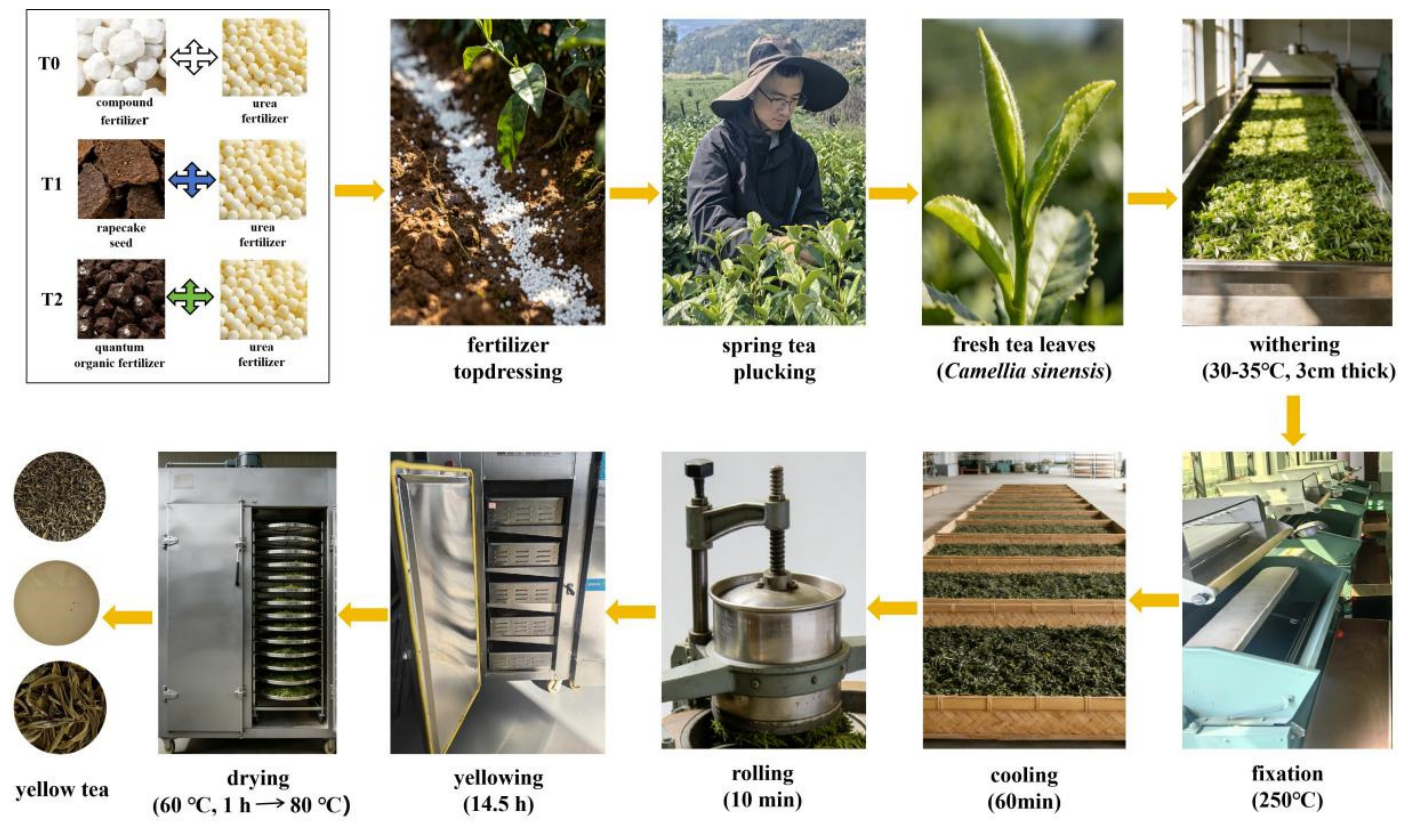
2.1. Site Description and the Field Experiment
2.2. Sample Preparation
2.3. Sensory Evaluation
2.4. Determination of Non-Volatile Compounds
2.4.1. Chemicals and Standards
2.4.2. Determination of Main Taste Quality Components
2.5. Detection of Volatiles
2.6. Data Analysis and Figure Preparation
3. Results
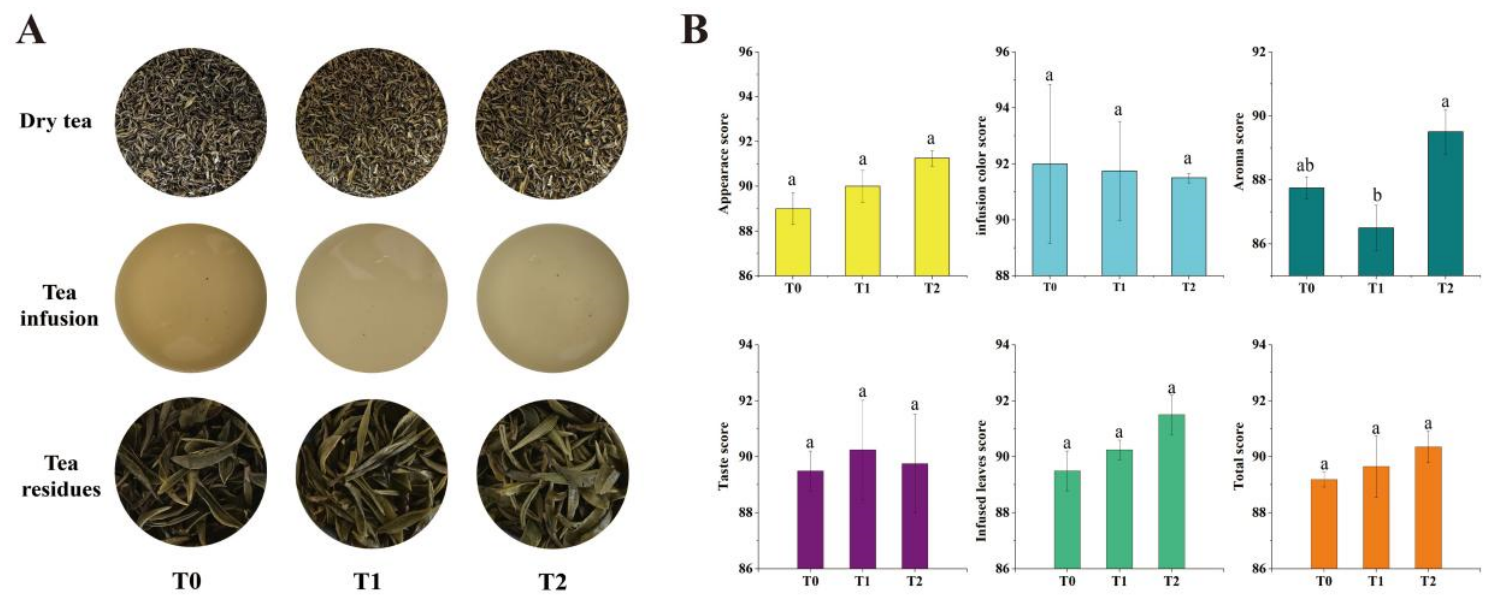
3.1. Sensory Evaluation of PYHT Tea
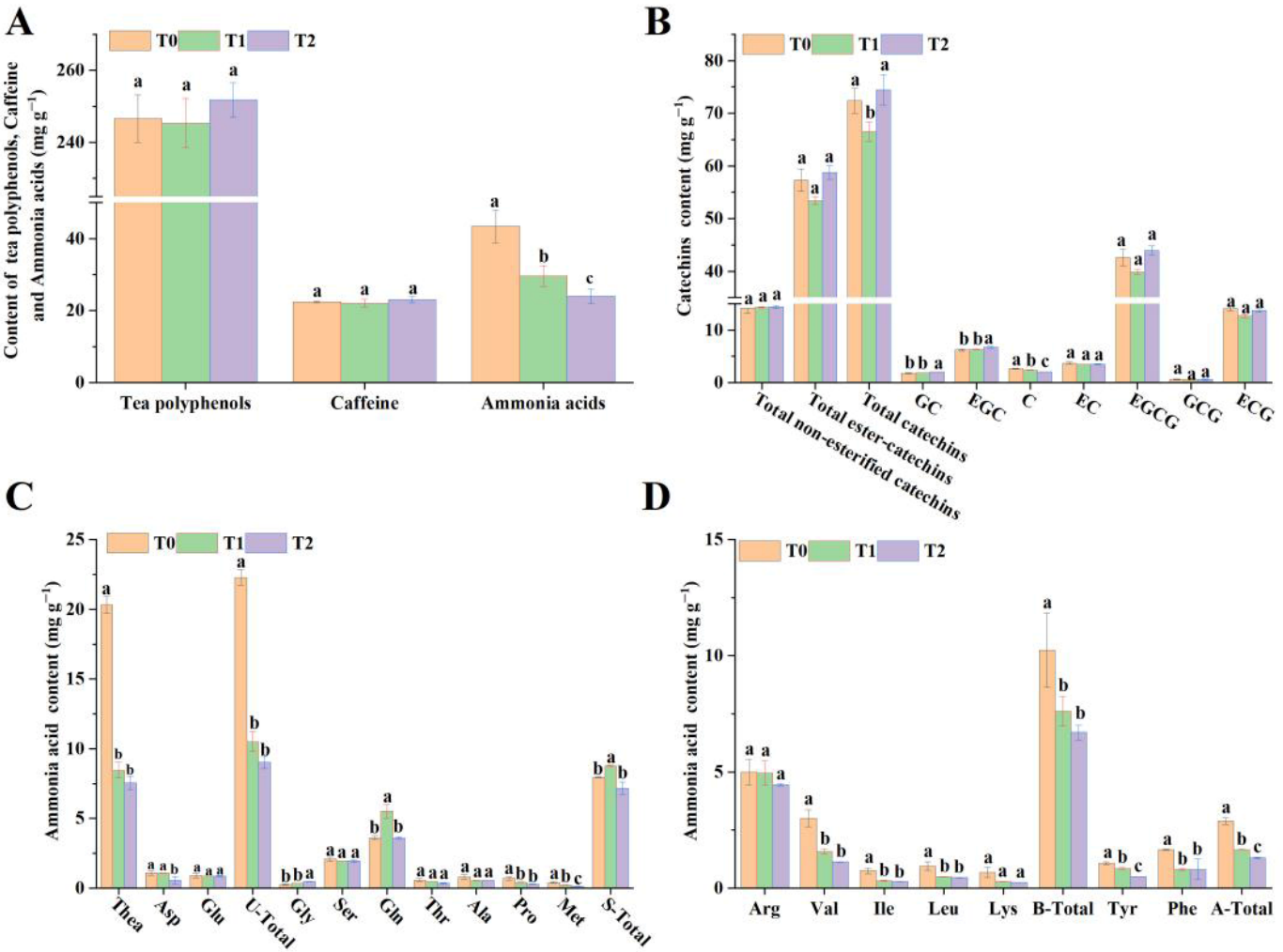
3.2. Effect of Different Fertilization Treatments on Taste-Related Components of PYHT Tea
3.3. Effect of Different Fertilization Treatments on the Volatiles of PYHT Teas
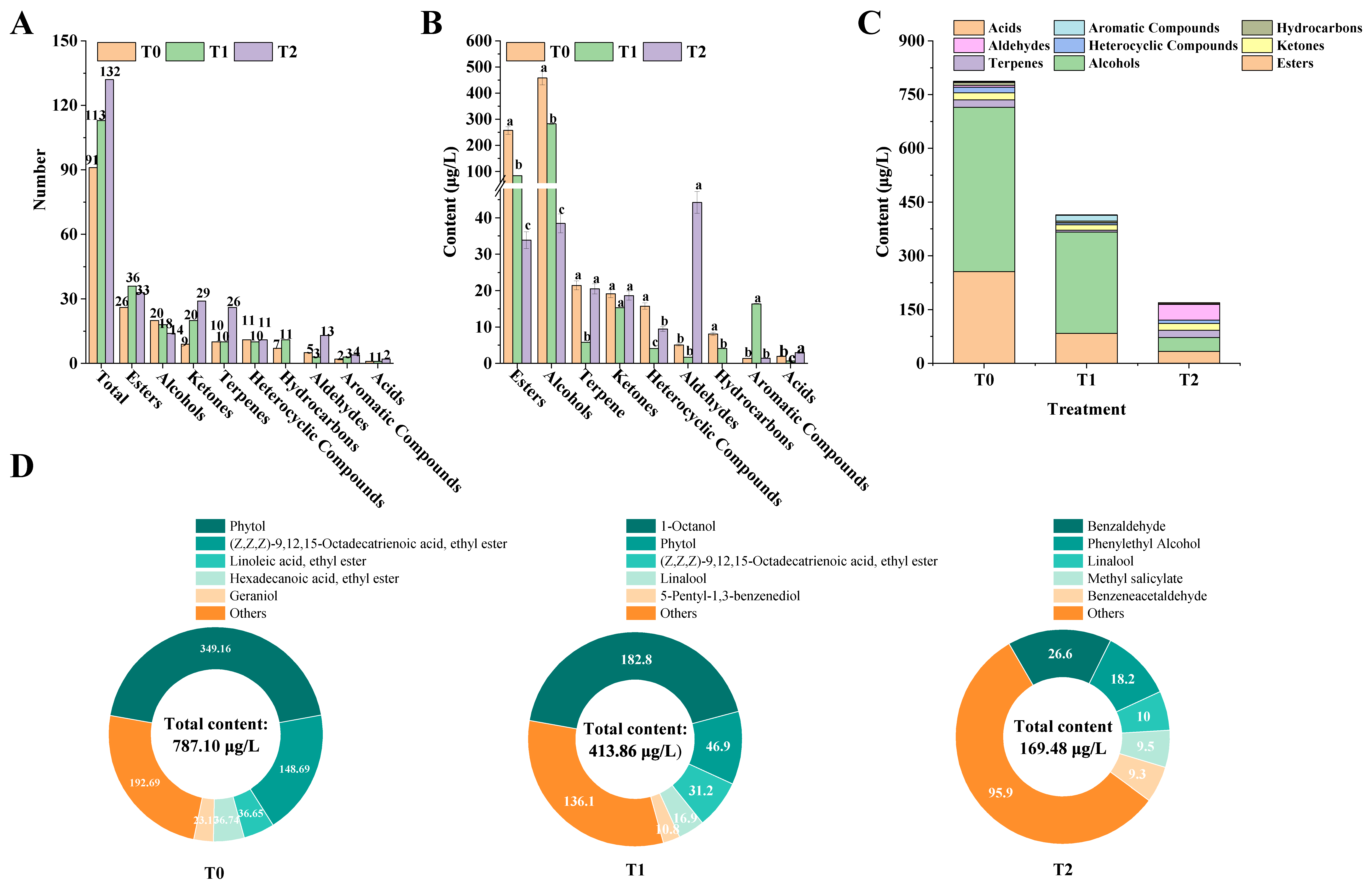
3.3.1. Identification of Volatile Compounds in PYHT Tea
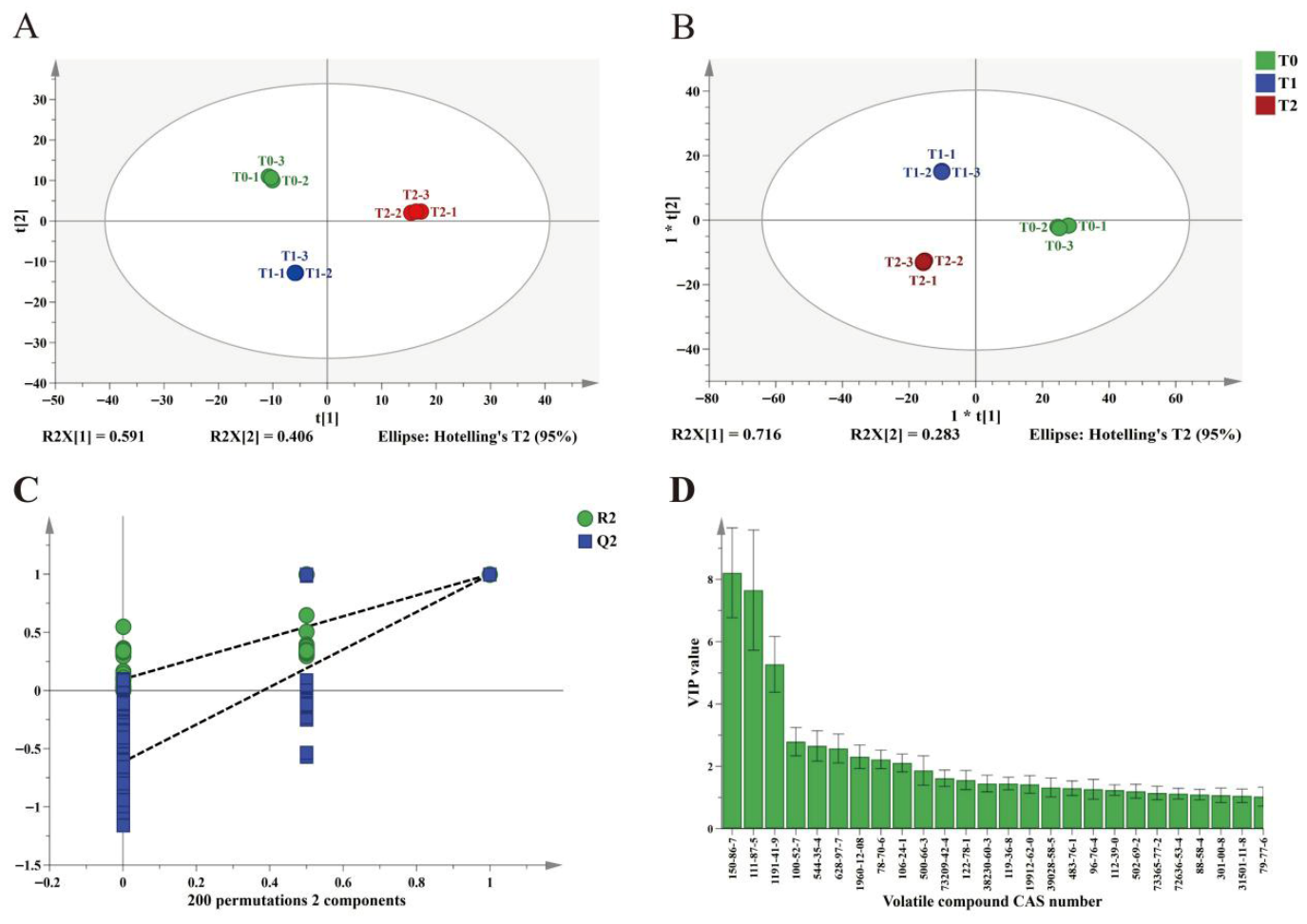
3.3.2. PCA and OPLS-DA Analysis in the Volatile Compounds
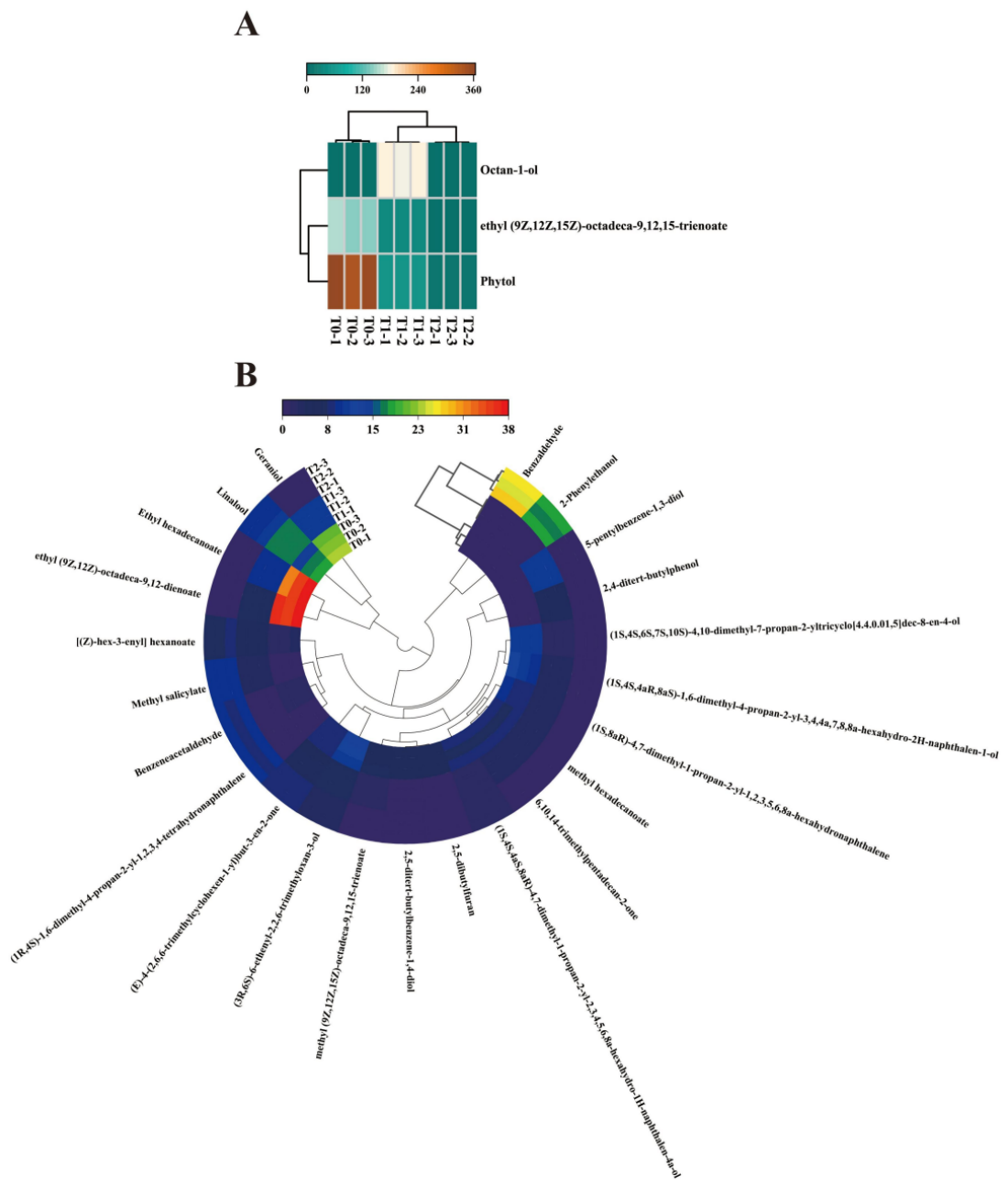
3.3.3. Analysis of Differential Volatile Compounds in PYHT Teas
3.3.4. rOAV Analysis of Volatile Compounds in PYHT Teas
4. Discussion
4.1. Impact of Organic Substitutes on the Sensory Quality of PYHT Teas
4.2. Impact of Organic Substitutes on the Taste-Related Components in PYHT Teas
4.3. Consistency Between Sensory Evaluation and the Underlying Key Aroma Compounds
4.4. Limitations
5. Conclusions
Supplementary Materials
Author Contributions
Funding
Institutional Review Board Statement
Informed Consent Statement
Data Availability Statement
Conflicts of Interest
References
- Yao, H.; Gu, Y.; Zhu, D.; Tang, D.; Chen, W.; Chen, Y.; Zhang, J.; Tan, L. Biosynthesis and Application of Catechins and Their Derivatives in Camellia sinensis. Food Sci. Nutr. 2025, 13, e71277. [Google Scholar] [CrossRef]
- Feng, Y.; Tian, D.; Wang, C.; Huang, Y.; Luo, Y.; Zhang, X.; Li, L. Aromatic Volatile Substances in Different Types of Guangnan Dixu Tea Based on HS-SPME-GC-MS Odor Activity Value. Metabolites 2025, 15, 257. [Google Scholar] [CrossRef]
- Wu, S.S.; Zhang, D.W.; Hu, S.Y.; Li, C.Y.; Dong, Z.B.; Hu, Y.R.; Fan, F.Y.; Ye, J.H.; Zheng, X.Q.; Liang, Y.R.; et al. Optimization of the sealed yellowing parameters and suitability evaluation of the different cultivars for manufacturing the Pingyang Huangtang tea. Food Chem. X 2025, 28, 102615. [Google Scholar] [CrossRef]
- Feng, X.; Yang, S.; Pan, Y.; Zhou, S.; Ma, S.; Ou, C.; Fan, F.; Gong, S.; Chen, P.; Chu, Q. Yellow tea: More than turning green leaves to yellow. Crit. Rev. Food Sci. Nutr. 2024, 64, 7836–7853. [Google Scholar] [CrossRef] [PubMed]
- Li, Y.; Li, Y.; Xiao, T.; Jia, H.; Xiao, Y.; Liu, Z.; Wang, K.; Zhu, M. Integration of non-targeted/targeted metabolomics and electronic sensor technology reveals the chemical and sensor variation in 12 representative yellow teas. Food Chem. X 2023, 21, 101093. [Google Scholar] [CrossRef]
- Wei, Y.M.; Fang, S.M.; Jin, G.; Ni, T.C.; Hou, Z.W.; Li, T.H.; Deng, W.W.; Ning, J.M. Effects of two yellowing process on colour, taste and nonvolatile compounds of bud yellow tea. Int. J. Food Sci. Technol. 2020, 55, 2931–2941. [Google Scholar] [CrossRef]
- Wei, Y.M.; Li, T.H.; Xu, S.S.; Ni, T.C.; Deng, W.W.; Ning, J.M. The profile of dynamic changes in yellow tea quality and chemical composition during yellowing process. LWT 2021, 139, 110792. [Google Scholar] [CrossRef]
- Zheng, Y.; Hu, Q.; Wu, Z.; Bi, W.; Chen, B.; Hao, Z. Volatile metabolomics and coexpression network analyses provide insight into the formation of the characteristic cultivar aroma of oolong tea (Camellia sinensis). LWT 2022, 164, 113666. [Google Scholar] [CrossRef]
- Li, Y.C.; Luo, Q.Q.; Qin, M.X.; Xu, W.L.; Wang, X.Y.; Zhou, J.T.; Ni, D.J. Study on color, aroma, and taste formation mechanism of large-leaf yellow tea during an innovative manufacturing process. Food Chem. 2024, 438, 138062. [Google Scholar] [CrossRef]
- Qin, C.Y.; Han, Z.S.; Jiang, Z.D.; Ke, J.P.; Li, W.; Zhang, L.; Li, D.X. Chemical profile and in-vitro bioactivities of three types of yellow teas processed from different tenderness of young shoots of huoshanjinjizhong (Camellia sinensis var. sinensis). Food Chem. X 2024, 24, 101809. [Google Scholar] [CrossRef] [PubMed]
- Zhou, B.; Chen, Y.; Zeng, L.; Cui, Y.; Li, J.; Tang, H.; Liu, J.; Tang, J. Soil nutrient deficiency decreases the postharvest quality-related metabolite contents of tea (Camellia sinensis (L.) Kuntze) leaves. Food Chem. 2022, 377, 132003. [Google Scholar] [CrossRef]
- Ye, J.H.; Ye, Y.; Yin, J.F.; Jin, J.; Liang, Y.R.; Liu, R.Y.; Tang, P.; Xu, Y.Q. Bitterness and astringency of tea leaves and products: Formation mechanism and reducing strategies. Trends Food Sci. Tech. 2022, 123, 130–143. [Google Scholar] [CrossRef]
- Huang, S.P.; Yu, Y.D.; Cui, J.L.; Luo, Z.W.; Luo, L.X.; Song, C.K.; Liao, H. Organic fertilizer substitution optimizes aroma metabolites in Wuyi Rock tea. Front. Plant Sci. 2025, 16, 1581120. [Google Scholar] [CrossRef] [PubMed]
- Zhang, H.; Li, C.; Wei, K.; Liu, M.; Shi, Y.; Yang, X.; Fang, L.; Ruan, J.Y.; Zhang, Q.F. The reduction of tea quality caused by irrational phosphate application is associated with anthocyanin metabolism. Beverage Plant Res. 2023, 3, 10. [Google Scholar] [CrossRef]
- Singh, A.K.; Pathak, S. Potassium in tea (Camellia sinensis (L) O. Kuntze) cultivation from soil to cup quality-A review. Agric. Rev. 2018, 38, 40–47. [Google Scholar] [CrossRef]
- Wei, K.; Liu, M.; Shi, Y.; Zhang, H.; Ruan, J.; Zhang, Q.; Cao, M. Metabolomics Reveal That the High Application of Phosphorus and Potassium in Tea Plantation Inhibited Amino-Acid Accumulation but Promoted Metabolism of Flavonoid. Agronomy 2022, 12, 1086. [Google Scholar] [CrossRef]
- Wu, Z.D.; You, Z.M.; Jiang, F.Y.; Wang, F.; Weng, B.Q. Effects of Combined Application of Organic Manure and Chemical Fertilizer on Properties of Tea Garden Soil and the Yield and Quality of Tea. Soil 2015, 47, 874–879. [Google Scholar] [CrossRef]
- Ye, J.H.; Wang, Y.H.; Kang, J.Q.; Chen, Y.L.; Hong, L.; Li, M.Z.; Jia, Y.; Wang, Y.C.; Jia, X.L.; Wu, Z.Y.; et al. Effects of Long-Term Use of Organic Fertilizer with Different Dosages on Soil Improvement, Nitrogen Transformation, Tea Yield and Quality in Acidified Tea Plantations. Plants 2023, 12, 122. [Google Scholar] [CrossRef]
- Zhou, D.; Hu, Y.F.; He, X.; Du, L.J.; Bao, L.; Zhao, M.; Shao, J.L.; Tang, Q.Y. Quality analysis and characteristic difference identification of organic tea and conventional planting tea based on ICP, HPLC and machine algorithm. Food Chem. X 2025, 26, 102299. [Google Scholar] [CrossRef]
- Ji, L.F.; Wang, N.; Li, G.F.; Ai, Z.Y.; Ye, Y.T.; Hu, Z.M.; Ni, K.; Yang, Y.Y. From soil health to tea flavour: Organic fertilisation enhances microbial communities and aroma compounds. Agric. Ecosyst. Environ. 2026, 396, 110028. [Google Scholar] [CrossRef]
- Shan, W.X.; Luo, W.; Xiao, R.L.; He, Q.H.; Chen, P.; Xu, H.Q. Effect of 5-year rapeseed cake fertilization and straw mulching on tea plantation soil ecosystem. Chin. J. Eco-Agric. 2010, 18, 472–476. [Google Scholar] [CrossRef]
- Huang, C.; Zhang, K.; Guo, W.; Huang, H.; Gou, Z.; Yang, L.; Chen, Y.; Oh, K.; Fang, C.; Luo, L. The Effects of Partial Substitution of Fertilizer Using Different Organic Materials on Soil Nutrient Condition, Aggregate Stability and Enzyme Activity in a Tea Plantation. Plants 2023, 12, 3791. [Google Scholar] [CrossRef] [PubMed]
- Manzoor; Ma, L.; Ni, K.; Ruan, J. Influence of Organic and Inorganic Fertilizers on Tea Growth and Quality and Soil Properties of Tea Orchards’ Top Rhizosphere Soil. Plants 2024, 13, 207. [Google Scholar] [CrossRef]
- Manzoor; Ma, L.; Ni, K.; Ruan, J. Effect of Integrated Use of Rapeseed Cake, Biochar and Chemical Fertilizers on Root Growth, Nutrients Use Efficiency and Productivity of Tea. Agronomy 2022, 12, 1823. [Google Scholar] [CrossRef]
- Wang, H.X.; Sheng, M.M.; Yang, X.D.; Zhao, Q.; Jiao, J.W.; Pan, H.Y.; Ye, X.X.; Chen, X.H. Overview and trends of international research on soil acidification in tea plantations. Chin. J. Eco-Agric. 2024, 32, 2107–2116. [Google Scholar]
- GZB 6-02-06-11; National Occupational Skill Standards for Tea Tasters. Ministry of Human Resources and Social Security: Beijing, China, 2019.
- GB/T 23776-2018; Methodology for Sensory Evaluation of Tea. All-China Federation of Supply and Marketing Cooperatives: Beijing, China, 2018.
- GB/T 14487-2017; Tea Vocabulary for Sensory Evaluation. General Administration of Quality Supervision, Inspection and Quarantine: Beijing, China, 2017.
- GB/T 8313-2018; Determination of Total Polyphenols and Catechins Content in Tea. All-China Federation of Supply and Marketing Cooperatives: Beijing, China, 2018.
- GB/T 8314-2013; Tea-Determination of Free Amino Acids Content. General Administration of Quality Supervision, Inspection and Quarantine: Beijing, China, 2013.
- Li, X.; Jin, J.; Sun, C.; Ye, D.; Liu, Y. Simultaneous determination of six main types of lipid-soluble pigments in green tea by visible and near-infrared spectroscopy. Food Chem. 2019, 270, 236–242. [Google Scholar] [CrossRef]
- Del Rio, D.; Stewart, A.J.; Mullen, W.; Burns, J.; Lean, M.E.; Brighenti, F.; Crozier, A. HPLC-MSn analysis of phenolic compounds and purine alkaloids in green and black tea. J. Agric. Food Chem. 2004, 52, 2807–2815. [Google Scholar] [CrossRef] [PubMed]
- Xie, J.; Wang, L.; Deng, Y.; Yuan, H.; Zhu, J.; Jiang, Y.; Yang, Y. Characterization of the key odorants in floral aroma green tea based on GC-E-Nose, GC-IMS, GC-MS and aroma recombination and investigation of the dynamic changes and aroma formation during processing. Food Chem. 2023, 427, 136641. [Google Scholar] [CrossRef]
- Hu, J.; Zhou, X.; Hou, G.; Tang, J.; Jiang, Y.; Yuan, H.; Shi, D.; Yang, Y. Spreading Degree Modulates Floral Aroma Development in Green Tea: Integrated GC-E-Nose, Metabolomics, and Molecular Docking Reveals Key Odorants and Olfactory Receptor Interactions. Foods 2026, 15, 735. [Google Scholar] [CrossRef]
- Zheng, S.; Chai, H.; Peng, C.; Huang, Q.; Xu, M.; Wen, X.; Kang, H. Aroma Characterization of Gardenia Black Tea Based on Sensory Evaluation and Headspace Solid-Phase Microextraction–Gas Chromatography–Mass Spectrometry. Foods 2025, 14, 4022. [Google Scholar] [CrossRef]
- Fang, X.; Xu, W.C.; Jiang, G.X.; Sui, M.Y.; Xiao, J.Y.; Ning, Y.Y.; Niaz, R.; Wu, D.W.; Feng, X.G.; Chen, J.H.; et al. Monitoring the dynamic changes in aroma during the whole processing of Qingzhuan tea at an industrial scale: From fresh leaves to finished tea. Food Chem. 2024, 439, 137810. [Google Scholar] [CrossRef]
- Huang, W.J.; Fang, S.M.; Wang, J.; Zhuo, C.; Luo, Y.H.; Yu, Y.L.; Li, L.Q.; Wang, Y.J.; Deng, W.W.; Ning, J.M. Sensomics analysis of the effect of the withering method on the aroma components of Keemun black tea. Food Chem. 2022, 395, 133549. [Google Scholar] [CrossRef]
- Xue, J.J.; Liu, P.P.; Yin, J.F.; Wang, W.W.; Zhang, J.Y.; Wang, W.; Le, T.; Ni, D.J.; Jiang, H.Y. Dynamic changes in volatile compounds of shaken black tea during its manufacture by GC × GC–TOFMS and multivariate data analysis. Foods 2022, 11, 1228. [Google Scholar] [CrossRef]
- Yang, L.Y.; Zhu, X.Z.; Yu, Z.M.; Hu, B.C.; Liu, P.; Zhang, F.L.; Wang, J.J.; Huang, Y.Y.; Yuan, H.B.; Hua, J.J. Agronomic characteristics, objective quantitative, metabolome and transcriptome analysis reveal the influence of fertilization treatments on fresh leaf characteristics and finished tea quality. Food Chem. 2025, 482, 144183. [Google Scholar] [CrossRef] [PubMed]
- Tanaka, T.; Yasumatsu, M.; Hirotani, M.; Matsuo, Y.; Li, N.; Zhu, H.T.; Saito, Y.; Ishimaru, K.; Zhang, Y.J. New degradation mechanism of black tea pigment theaflavin involving condensation with epigallocatechin-3-O-gallate. Food Chem. 2022, 370, 131326. [Google Scholar] [CrossRef]
- Zhang, Q.; Guo, S.H.; Wang, Y.L.; Luo, Y.X.; Liao, Y.K.; Jia, X.L.; Zhu, B.T.; Ye, J.H.; Wang, H.B. Effects of Different Fertilization Patterns on the Content of Quality Indices and the Formation of Aroma Characteristics of Tea Leaves. Foods 2025, 14, 3194. [Google Scholar] [CrossRef]
- Yu, Y.L.; Zhang, Y.F.; Yang, B.; Qian, C.; Wang, Y.Z.; Chen, T.F.; Han, X.M.; Yang, L.Z.; Xue, L.H. Nitrogen Utilization and Loss of the Tea Plantation System on Sloped Farmland: A Short-Term Response to Substitution with Organic Fertilizer. Agronomy 2024, 14, 392. [Google Scholar] [CrossRef]
- Ye, J.H.; Wang, Y.H.; Wang, Y.C.; Hong, L.; Jia, X.L.; Kang, J.Q.; Lin, S.X.; Wu, Z.Y.; Wang, H.B. Improvement of soil acidification in tea plantations by long-term use of organic fertilizers and its effect on tea yield and quality. Front. Plant Sci. 2022, 13, 1055900. [Google Scholar] [CrossRef] [PubMed]
- Lian, M.; Lv, S.D.; Wu, Y.S.; Zhou, J.S.; Wang, C.; Meng, Q.X. Analysis of aroma components of two kinds of yellow tea by headspace soild phase microextraction coupled with gas chromatography-mass spectrometry. Sci. Technol. Food Ind. 2015, 36, 281–286, (In Chinese with English abstract). [Google Scholar] [CrossRef]
- ScentVN. “δ-Cadinene Compound Profile.” ScentVN Database. 2024. Available online: https://scent.vn/en/pages/compound/delta-cadinene-50 (accessed on 4 March 2026).
- Zhao, Y.L.; Li, S.Y.; Du, X.; Xu, W.; Bian, J.L.; Chen, S.X.; He, C.L.; Xu, J.Y.; Ye, S.R.; Feng, D.J.; et al. Insights into momentous aroma dominating the characteristic flavor of jasmine tea. Food Sci. Nutr. 2023, 11, 7841–7854. [Google Scholar] [CrossRef]
- An, H.M.; Liu, J.S.; Chen, Y.; Huang, Y.W.; Chen, J.H.; Liu, Z.H.; Li, S.; Huang, J.A. Characterization of key volatile compounds in jasmine tea infusion with different amount of flowers. Food Chem. X 2023, 19, 100750. [Google Scholar] [CrossRef]
- Zeng, Q.; Wang, H.F.; Tuo, J.J.; Ding, Y.M.; Cao, H.L.; Yue, C. Volatile Organic Compounds in Teas: Identification, Extraction, Analysis, and Application of Tea Aroma. Foods 2025, 14, 2574. [Google Scholar] [CrossRef]
- Zhu, Y.; Ma, L.F.; Geng, S.P.; Ruan, J.Y. Optimization of nutrient management improves productivity, quality and sustainability of albino tea cultivar Baiye-1. Front. Plant Sci. 2024, 15, 1369015. [Google Scholar] [CrossRef]
- Sun, L.L.; Wen, S.; Zhang, S.W.; Li, Q.H.; Cao, J.X.; Chen, R.H.; Chen, Z.Z.; Zhang, Z.B.; Li, Z.G.; Li, Q.; et al. Study on flavor quality formation in green and yellow tea processing by means of UPLC-MS approach. Food Chem. X 2024, 22, 101342. [Google Scholar] [CrossRef]
- An, H.M.; Chen, Y.; Li, S.; Liu, Z.H.; Huang, J.A. Research progress on the key processes and flavor substances of six basic tea types. J. Chin. Tea Process. 2023, 4, 5–14. [Google Scholar] [CrossRef]



| NO. | Compounds | OTs a | Concentration (μg/L) | rOAV | ACI | ||||||
|---|---|---|---|---|---|---|---|---|---|---|---|
| T0 | T1 | T2 | T0 | T1 | T2 | T0 | T1 | T2 | |||
| 1 | Octan-1-ol | 22.00 | nd | 182.79 ± 0.88 | nd | nd | 8.31 ± 0.04 | nd | 0 | 56.15% | 0 |
| 2 | Linalool | 6.00 | 16.81 ± 2.26 a | 16.92 ± 0.08 a | 10.08 ± 0.49 b | 2.80 ± 0.38 a | 2.82 ± 0.01 a | 1.68 ± 0.08 b | 22.62% | 19.05% | 53.50% |
| 3 | Geraniol | 6.60 | 22.54 ± 1.45 a | 11.05 ± 0.18 b | nd | 3.41 ± 0.22 a | 1.66 ± 0.03 b | nd | 27.54% | 11.22% | 0 |
| 4 | Benzeneacetaldehyde | 6.30 | 1.53 ± 0.06 b | 0.78 ± 0.00 c | 9.17 ± 0.47 a | 0.24 ± 0.01 b | 0.12 ± 0.00 c | 1.46 ± 0.07 a | 1.94% | 0.81% | 46.50% |
| 5 | δ-cadinene | 1.5 | 8.89 ± 0.36 a | 2.84 ± 0.01 b | nd | 5.93 ± 0.24 a | 1.89 ± 0.01 b | nd | 47.90% | 12.77% | 0 |
Disclaimer/Publisher’s Note: The statements, opinions and data contained in all publications are solely those of the individual author(s) and contributor(s) and not of MDPI and/or the editor(s). MDPI and/or the editor(s) disclaim responsibility for any injury to people or property resulting from any ideas, methods, instructions or products referred to in the content. |
© 2026 by the authors. Licensee MDPI, Basel, Switzerland. This article is an open access article distributed under the terms and conditions of the Creative Commons Attribution (CC BY) license.
Share and Cite
Zheng, S.; Zhu, B.; Peng, C.; Chai, H.; Huang, Q.; Niu, Z.; Zhang, K.; Zeng, G.; Wen, X.; Kang, H. Aroma Rather than Taste Quality Exerted a More Pronounced Response to Organic Fertilizer Substitution in a Tea Garden: A Case Study on the Yellow Tea Quality. Foods 2026, 15, 1655. https://doi.org/10.3390/foods15101655
Zheng S, Zhu B, Peng C, Chai H, Huang Q, Niu Z, Zhang K, Zeng G, Wen X, Kang H. Aroma Rather than Taste Quality Exerted a More Pronounced Response to Organic Fertilizer Substitution in a Tea Garden: A Case Study on the Yellow Tea Quality. Foods. 2026; 15(10):1655. https://doi.org/10.3390/foods15101655
Chicago/Turabian StyleZheng, Shenghong, Bo Zhu, Chunju Peng, Hongling Chai, Qi Huang, Zhengwen Niu, Ke Zhang, Guanghui Zeng, Xingjun Wen, and Huajing Kang. 2026. "Aroma Rather than Taste Quality Exerted a More Pronounced Response to Organic Fertilizer Substitution in a Tea Garden: A Case Study on the Yellow Tea Quality" Foods 15, no. 10: 1655. https://doi.org/10.3390/foods15101655
APA StyleZheng, S., Zhu, B., Peng, C., Chai, H., Huang, Q., Niu, Z., Zhang, K., Zeng, G., Wen, X., & Kang, H. (2026). Aroma Rather than Taste Quality Exerted a More Pronounced Response to Organic Fertilizer Substitution in a Tea Garden: A Case Study on the Yellow Tea Quality. Foods, 15(10), 1655. https://doi.org/10.3390/foods15101655