Machine Learning in Transforming the Food Industry




Abstract
1. Introduction
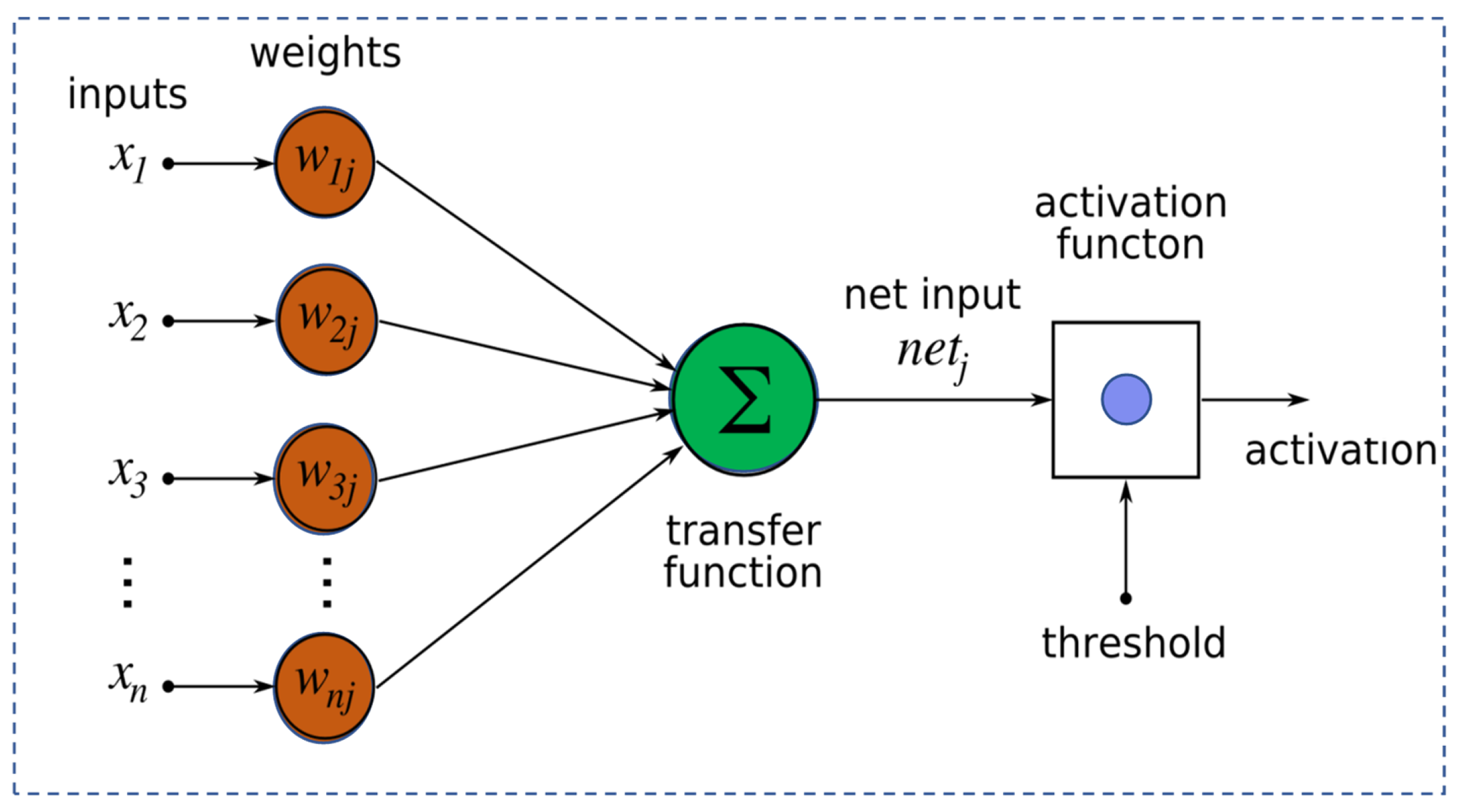
2. Machine Learning Algorithms
3. Current Machine Learning Technologies in the Food Processing Sector
3.1. ML in Food Drying Application
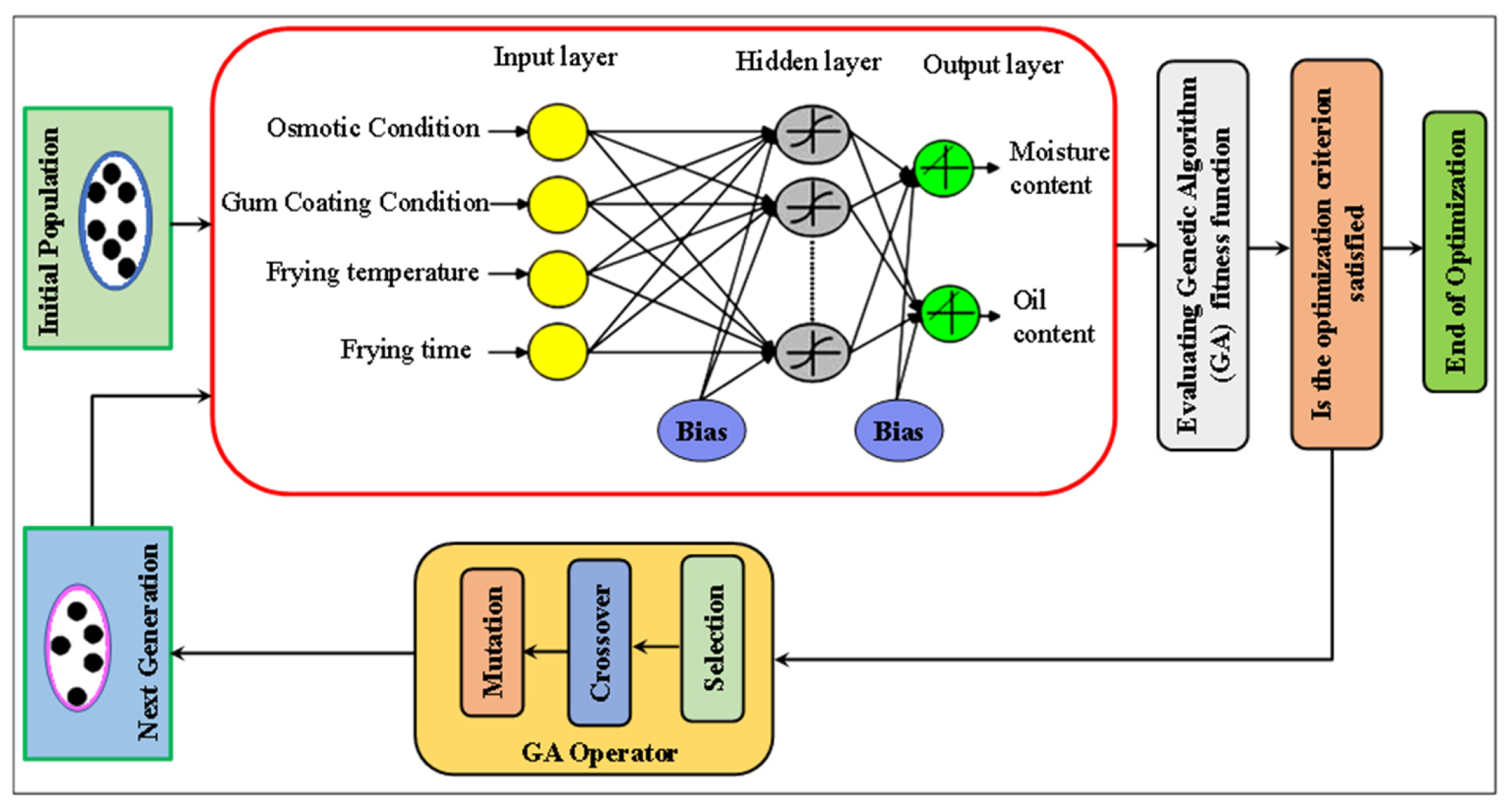
3.2. ML in Food Frying Application
3.3. ML in Food Extrusion Application
3.4. ML in Food Baking Application
3.5. ML in Food Canning Application
3.6. ML in Food Supply Chain Management
4. The Future ML Applications in the Food Industry
4.1. Limitations of Data Driven ML Approached
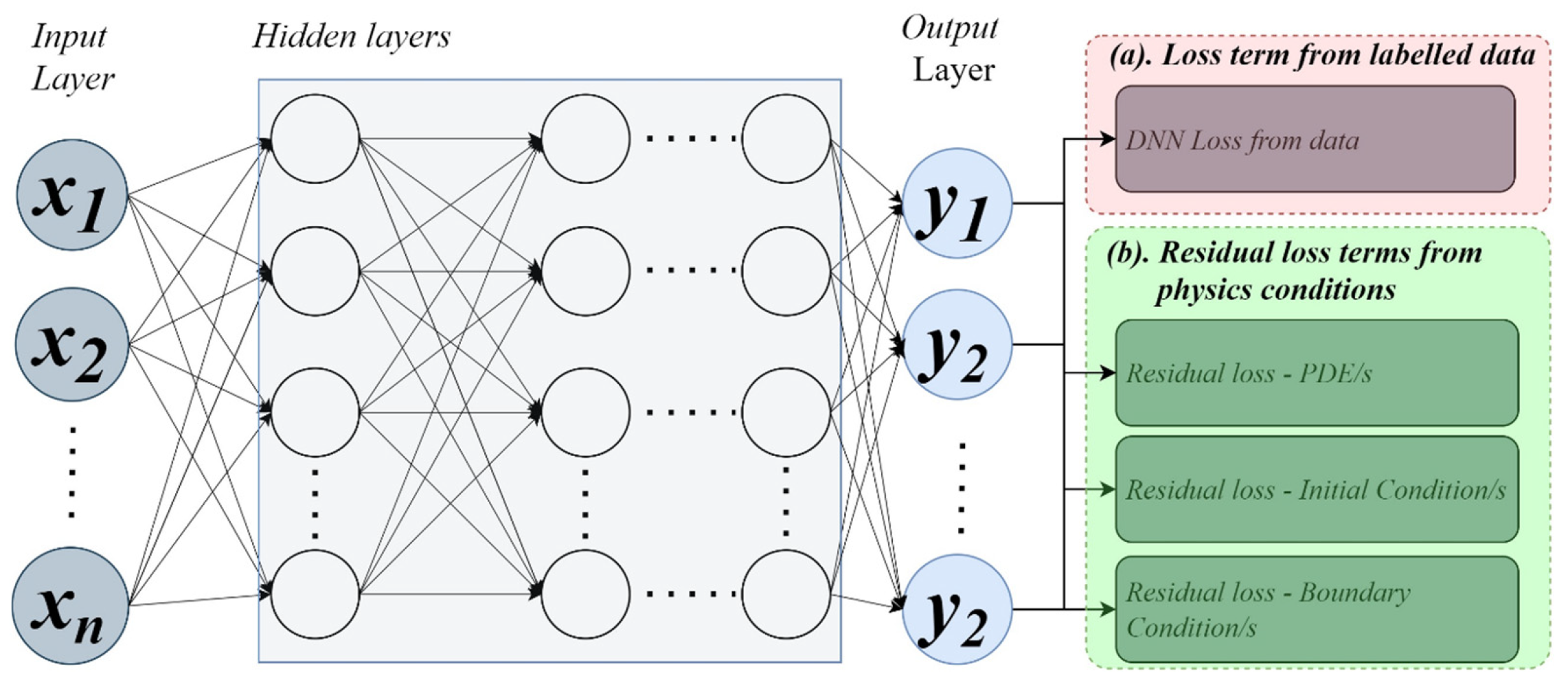
4.2. Physics Informed Machine Learning (PIML)
5. Conclusions
Author Contributions
Funding
Institutional Review Board Statement
Informed Consent Statement
Data Availability Statement
Conflicts of Interest
References
- Kumar, R.; Saha, D. Revolutionizing the food industry: How artificial intelligence is transforming food processing. Food Sci. Rep. 2023, 4, 60–64. [Google Scholar]
- Food AI: A Game Changer for Australia’s Food and Beverage Sector; McColl-Kennedy, J.R., Hine, D.C., Eds.; White paper, Innovation Pathways Program, Australia’s Food and Beverage Accelerator (FaBA); The University of Queensland: Brisbane, Australia, 2024; 84p. [Google Scholar]
- Zatsu, V.; Shine, A.E.; Tharakan, J.M.; Peter, D.; Ranganathan, T.V.; Alotaibi, S.S.; Mugabi, R.; Muhsinah, A.B.; Waseem, M.; Nayik, G.A. Revolutionizing the food industry: The transformative power of artificial intelligence—A review. Food Chem. X 2024, 24, 101867. [Google Scholar] [CrossRef] [PubMed]
- Goel, A.; Goel, A.K.; Kumar, A. The role of artificial neural network and machine learning in utilizing spatial information. Spat. Inf. Res. 2023, 31, 275–285. [Google Scholar] [CrossRef]
- Lu, N.-V.; Tansuchat, R.; Yuizono, T.; Huynh, V.-N. Incorporating active learning into machine learning techniques for sensory evaluation of food. Int. J. Comput. Intell. Syst. 2020, 13, 655. [Google Scholar] [CrossRef]
- Liu, Z.; Wang, S.; Zhang, Y.; Feng, Y.; Liu, J.; Zhu, H. Artificial intelligence in food safety: A decade review and bibliometric analysis. Foods 2023, 12, 1242. [Google Scholar] [CrossRef]
- Khan, M.I.H.; Sablani, S.S.; Joardder, M.U.H.; Karim, M. Application of machine learning-based approach in food drying: Opportunities and challenges. Dry. Technol. 2020, 40, 1051–1067. [Google Scholar] [CrossRef]
- Savaram, R. What Is Artificial Neural Network and How It Works? 2017. Available online: https://mindmajix.com/artificial-neural-network-and-how-it-works# (accessed on 10 September 2025).
- Sun, Q.; Zhang, M.; Mujumdar, A.S. Recent developments of artificial intelligence in drying of fresh food: A review. Crit. Rev. Food Sci. Nutr. 2019, 59, 2258–2275. [Google Scholar] [CrossRef] [PubMed]
- Adnan, M.M.; Sarkheyli, A.; Zain, A.M.; Haron, H. Fuzzy logic for modeling machining process: A review. Artif. Intell. Rev. 2015, 43, 345–379. [Google Scholar] [CrossRef]
- Li, J.; Xiong, Q.; Wang, K.; Shi, X.; Liang, S. A recurrent self-evolving fuzzy neural network predictive control for microwave drying process. Dry. Technol. 2016, 34, 1434–1444. [Google Scholar] [CrossRef]
- Khan, M.I.H.; Karim, M.A. Cellular water distribution, transport, and its investigation methods for plant-based food material. Food Res. Int. 2017, 99, 1–14. [Google Scholar] [CrossRef]
- Hernandez-Perez, J.; Garcıa-Alvarado, M.; Trystram, G.; Heyd, B. Neural networks for the heat and mass transfer prediction during drying of cassava and mango. Innov. Food Sci. Emerg. Technol. 2004, 5, 57–64. [Google Scholar] [CrossRef]
- Khan, M.I.H.; Sablani, S.S.; Nayak, R.; Gu, Y. Machine learning-based modeling in food processing applications: State of the art. Compr. Rev. Food Sci. Food Saf. 2022, 21, 1409–1438. [Google Scholar] [CrossRef]
- Gulati, T.; Datta, A.K.; Doona, C.J.; Ruan, R.R.; Feeherry, F.E. Modeling moisture migration in a multi-domain food system: Application to storage of a sandwich system. Food Res. Int. 2015, 76, 427–438. [Google Scholar] [CrossRef]
- Khan, M.I.H.; Welsh, Z.; Gu, Y.; Karim, M.A.; Bhandari, B. Modelling of simultaneous heat and mass transfer considering the spatial distribution of air velocity during intermittent microwave convective drying. Int. J. Heat Mass Transf. 2020, 153, 119668. [Google Scholar] [CrossRef]
- Pham, N.D.; Khan, M.I.H.; Karim, M.A. A mathematical model for predicting the transport process and quality changes during intermittent microwave convective drying. Food Chem. 2020, 325, 126932. [Google Scholar] [CrossRef]
- Islam, M.R.; Sablani, S.S.; Mujumdar, A.S. An Artificial Neural Network model for prediction of drying rates. Dry. Technol. 2003, 21, 1867–1884. [Google Scholar] [CrossRef]
- Momenzadeh, L.; Zomorodian, A.; Mowla, D. Experimental and theoretical investigation of shelled corn drying in a microwave-assisted fluidized bed dryer using Artificial Neural Network. Food Bioprod. Process. 2011, 89, 15–21. [Google Scholar] [CrossRef]
- Çakmak, G.; Yıldız, C. The prediction of seedy grape drying rate using a neural network method. Comput. Electron. Agric. 2011, 75, 132–138. [Google Scholar] [CrossRef]
- Menlik, T.; Özdemir, M.B.; Kirmaci, V. Determination of freeze-drying behaviors of apples by artificial neural network. Expert Syst. Appl. 2010, 37, 7669–7677. [Google Scholar] [CrossRef]
- Aghbashlo, M.; Kianmehr, M.H.; Nazghelichi, T.; Rafiee, S. Optimization of an artificial neural network topology for predicting drying kinetics of carrot cubes using combined response surface and genetic algorithm. Dry. Technol. 2011, 29, 770–779. [Google Scholar] [CrossRef]
- Nazghelichi, T.; Kianmehr, M.H.; Aghbashlo, M. Prediction of carrot cubes drying kinetics during fluidized bed drying by artificial neural network. J. Food Sci. Technol. 2011, 48, 542–550. [Google Scholar] [CrossRef]
- Gómez, D.; Salvador, P.; Sanz, J.; Casanova, J.L. Potato yield prediction using machine learning techniques and sentinel 2 data. Remote Sens. 2019, 11, 1745. [Google Scholar] [CrossRef]
- Li, H.; Chen, S. A neural-network-based model predictive control scheme for grain dryers. Dry. Technol. 2019, 38, 1079–1091. [Google Scholar] [CrossRef]
- Merino, A.; Alves, R.; Acebes, L.; Prada, C. Modeling and simulation of a beet pulp dryer for a training simulator. Dry. Technol. 2017, 35, 1765–1780. [Google Scholar] [CrossRef]
- Miraei Ashtiani, S.H.; Martynenko, A. Toward intelligent food drying: Integrating artificial intelligence into drying systems. Dry. Technol. 2024, 42, 1240–1269. [Google Scholar] [CrossRef]
- Nguyen, T.D.; Thai, T.Q.; Bui, H.M. Application of Machine Learning Models for Hot Air Dryer Design in Food Drying Process. J. Food Process. Preserv. 2025, 2025, 5594122. [Google Scholar] [CrossRef]
- Thibault, B.; Zeynoddin, M.; Bonakdari, H.; Ratti, C.; Khalloufi, S. Effect of model selection approach obtained by machine learning tools on predicting the volume reduction of plant-based dehydrated foods. J. Food Eng. 2025, 391, 112415. [Google Scholar] [CrossRef]
- Khan, M.I.H.; Joardder, M.U.H.; Kumar, C.; Karim, M.A. Multiphase porous media modelling: A novel approach to predicting food processing performance. Crit. Rev. Food Sci. Nutr. 2018, 58, 528–546. [Google Scholar] [CrossRef]
- Gholamibozanjani, G.; Leong, S.Y.; Oey, I.; Bremer, P.; Silcock, P.; Farid, M. Heat and mass transfer modeling to predict temperature distribution during potato frying after pre-treatment with pulsed electric field. Foods 2021, 10, 1679. [Google Scholar] [CrossRef] [PubMed]
- Mittal, G.; Zhang, J. Use of artificial neural network to predict temperature, moisture, and fat in slab-shaped foods with edible coatings during deep-fat frying. J. Food Sci. 2000, 65, 978–983. [Google Scholar] [CrossRef]
- Huang, Y.; Whittaker, A.D.; Lacey, R.E. Neural network prediction modeling for a continuous, snack food frying process. Trans. ASAE 1998, 41, 1511–1517. [Google Scholar] [CrossRef]
- Mittal, G.; Zhang, J. Artificial neural network for the prediction of temperature, moisture and fat contents in meatballs during deep-fat frying. Int. J. Food Sci. Technol. 2001, 36, 489–497. [Google Scholar] [CrossRef]
- Mohebbi, M.; Fathi, M.; Shahidi, F. Genetic algorithm–artificial neural network modeling of moisture and oil content of pretreated fried mushroom. Food Bioprocess Technol. 2011, 4, 603–609. [Google Scholar] [CrossRef]
- Marique, T.; Kharoubi, A.; Bauffe, P.; Ducattillon, C. Modeling of fried potato chips color classification using image analysis and artificial neural network. J. Food Sci. 2003, 68, 2263–2266. [Google Scholar] [CrossRef]
- Maroufpour, B.; Ziaiifar, A.M.; Ghorbani, M.; Sabbaghi, H.; Yalghi, S. Prediction of moisture and density in shrimp during hot air frying with artificial neural networks model. J. Food Sci. Technol. 2025, 22, 121–136. [Google Scholar]
- Bhagya Raj, G.V.S.; Dash, K.K. Comprehensive study on applications of artificial neural network in food process modeling. Crit. Rev. Food Sci. Nutr. 2020, 62, 2756–2783. [Google Scholar] [CrossRef]
- Shihani, N.; Kumbhar, B.; Kulshreshtha, M. Modeling of extrusion process using response surface methodology and artificial neural networks. J. Eng. Sci. Technol. 2006, 1, 31–40. [Google Scholar]
- Fan, F.H.; Ma, Q.; Ge, J.; Peng, Q.Y.; Riley, W.W.; Tang, S.Z. Prediction of texture characteristics from extrusion food surface images using a computer vision system and artificial neural networks. J. Food Eng. 2013, 118, 426–433. [Google Scholar] [CrossRef]
- Outrequin, T.C.R.; Gamonpilas, C.; Sreearunothai, P.; Deepaisarn, S.; Siriwatwechakul, W. Machine learning assisted evaluation of the filament spreading during extrusion-based 3D food printing: Impact of the rheological and printing parameters. J. Food Eng. 2024, 381, 112166. [Google Scholar] [CrossRef]
- Beura, M.; Salman, C.M.; Rahaman, S.; Bollinedi, H.; Singh, A.; Ray, S.; Yeasin, M.; Kaur, R.; Krishnan, V. From data to digestibility: Prediction of resistant starch using machine learning for functional food development. Int. J. Adv. Eng. Sci. Appl. Math. 2025, 17, 341–355. [Google Scholar] [CrossRef]
- Mondal, A.; Datta, A. Bread baking–A review. J. Food Eng. 2008, 86, 465–474. [Google Scholar] [CrossRef]
- Ferreira, M.D.P.K.; Ribeiro, V.A.D.G.; Barros, J.H.T.; Steel, C.J. Strategies to improve the quality of wheat flour in baking: A review. Braz. J. Food Technol. 2025, 28, e2024046. [Google Scholar] [CrossRef]
- Bredariol, P.; Vanin, F.M. Bread baking review: Insight into technological aspects in order to preserve nutrition. Food Rev. Int. 2022, 38, 651–668. [Google Scholar] [CrossRef]
- Purlis, E.; Salvadori, V.O. Bread baking as a moving boundary problem. Part 1: Mathematical modelling. J. Food Eng. 2009, 91, 428–433. [Google Scholar] [CrossRef]
- Feyissa, A.H.; Gernaey, K.V.; Ashokkumar, S.; Adler-Nissen, J. Modelling of coupled heat and mass transfer during a contact baking process. J. Food Eng. 2011, 106, 228–235. [Google Scholar] [CrossRef]
- Sadeghi, F.; Hamdami, N.; Shahedi, M.; Rafe, A. Numerical modeling of heat and mass transfer during contact baking of flat bread. J. Food Process Eng. 2016, 39, 345–356. [Google Scholar] [CrossRef]
- Broyart, B.; Trystram, G. Modelling of heat and mass transfer phenomena and quality changes during continuous biscuit baking using both deductive and inductive (neural network) modelling principles. Food Bioprod. Process. 2003, 81, 316–326. [Google Scholar] [CrossRef]
- Isleroglu, H.; Beyhan, S. Prediction of baking quality using machine learning based intelligent models. Heat Mass Transf. 2020, 56, 2045–2055. [Google Scholar] [CrossRef]
- Olawoye, B.; Gbadamosi, S.O.; Otemuyiwa, I.O.; Akanbi, C.T. Gluten-free cookies with low glycemic index and glycemic load: Optimization of the process variables via response surface methodology and artificial neural network. Heliyon 2020, 6, e05117. [Google Scholar] [CrossRef]
- Emerald, F.M.E.; Pushpadass, H.A.; Manjunatha, M.; Manimala, K.; Dejey, D.; Salish, K.; Nath, B.S. Modelling approaches for predicting moisture transfer during baking of chhana podo (milk cake) incorporated with tikhur (Curcuma angustifolia) starch. J. Food Meas. Charact. 2020, 14, 2981–2997. [Google Scholar] [CrossRef]
- Banooni, S.; Hosseinalipour, S.; Mujumdar, A.; Taherkhani, P.; Bahiraei, M. Baking of flat bread in an impingement oven: Modeling and optimization. Dry. Technol. 2009, 27, 103–112. [Google Scholar] [CrossRef]
- Sablani, S.S.; Baik, O.-D.; Marcotte, M. Neural networks for predicting thermal conductivity of bakery products. J. Food Eng. 2002, 52, 299–304. [Google Scholar] [CrossRef]
- Goyal, S.; Goyal, G.K. Simulated neural network intelligent computing models for predicting shelf life of soft cakes. Glob. J. Comput. Sci. Technol. 2011, 11, 29–33. [Google Scholar]
- Lee, J.; Kim, Y.; Kim, S. The study of an adaptive bread maker using machine learning. Foods 2023, 12, 4160. [Google Scholar] [CrossRef]
- Raj, A.S.; Badgujar, C.M.; Lollato, R.; Prasad, P.V.; Siliveru, K. Predicting rheological properties of wheat dough from flour properties using NIR coupled with artificial neural network. J. ASABE 2024, 67, 1023–1035. [Google Scholar]
- Zaiets, N.; Lutska, N.; Vlasenko, L. Integrated Machine Learning Models for Bakery Product Defect Prediction. In Proceedings of the International Conference on Applied Innovation in IT 2025, Koethen, Germany, 26 July 2025; 13, pp. 193–201. [Google Scholar] [CrossRef]
- Kseibat, D.; Mittal, G.; Basir, O. Predicting safety and quality of thermally processed canned foods using a neural network. Trans. Inst. Meas. Control. 2004, 26, 55–68. [Google Scholar] [CrossRef]
- Du, L.; Wang, S.; Chen, Y.; Zhu, Z.; Sun, H.X.; Chiu, T.Y. Machine learning-based prediction of volatile compounds profiles in Saccharomyces cerevisiae fermentation simulating canned meat. npj Sci. Food 2025, 9, 92. [Google Scholar] [CrossRef] [PubMed]
- Agbai, C.-M. Application of artificial intelligence (AI) in food industry. GSC Biol. Pharm. Sci. 2020, 13, 171–178. [Google Scholar] [CrossRef]
- Sydoruk, A. Artificial Intelligence (AI) in Retail & Ecommerce: Use Cases with Examples. 2023. Available online: https://smarttek.solutions/blog/ai-in-retail-ecommerce/ (accessed on 1 October 2025).
- Cain, S. AI Is Touching Your Food—Maybe Most of It—By Solving the Food Industry’s Unique Supply-Chain Challenges. 2024. Available online: https://fortune.com/2024/06/24/ai-is-touching-your-food-maybe-most-of-it-by-solving-the-food-industrys-unique-supply-chain-challenges/ (accessed on 1 October 2025).
- Zhu, L.; Spachos, P.; Pensini, E.; Plataniotis, K.N. Deep learning and machine vision for food processing: A survey. Curr. Res. Food Sci. 2021, 4, 233–249. [Google Scholar] [CrossRef] [PubMed]
- Padala, V.S.; Gandhi, K.; Pushpalatha, D.V. Machine learning: The new language for applications. IAES Int. J. Artif. Intell. 2019, 8, 411–421. [Google Scholar] [CrossRef]
- Himanen, L.; Geurts, A.; Foster, A.S.; Rinke, P. Data-driven materials science: Status, challenges, and perspectives. Adv. Sci. 2019, 6, 1900808. [Google Scholar] [CrossRef] [PubMed]
- Martynenko, A.; Misra, N.N. Machine learning in drying. Dry. Technol. 2020, 38, 596–609. [Google Scholar] [CrossRef]
- Karniadakis, G.E.; Kevrekidis, I.G.; Lu, L.; Perdikaris, P.; Wang, S.; Yang, L. Physics-informed machine learning. Nat. Rev. Phys. 2021, 3, 422–440. [Google Scholar] [CrossRef]
- Batuwatta-Gamage, C.P.; Rathnayaka, C.; Karunasena, H.C.P.; Jeong, H.; Karim, A.; Gu, Y.T. A novel physics-informed neural networks approach (PINN-MT) to solve mass transfer in plant cells during drying. Biosyst. Eng. 2023, 230, 219–241. [Google Scholar] [CrossRef]



| Application | Description | User | Reference |
|---|---|---|---|
| Assessing consumer purchasing patterns | AI-driven algorithms are used by Amazon Fresh service to assess customer purchasing patterns, seasonality, and market trends. | Amazon | [3] |
| Forecasting inventory and staffing | Deep Brew program (uses weather, local events, and historical data) to forecast inventory needs and staffing levels. | Starbucks | [62] |
| Detection of food safety hazards | AI-driven sensors employed to detect potential food safety hazards. | Amazon | [3] |
| Inspection of food products | AI-powered image recognition systems and machine vision technologies to inspect food products for defects. | Amazon Web Services (AWS) | [3] |
| Food waste reduction | AI software employed for reduction in food waste per grocery store. | Trax, Shelf Engine | [63] |
Disclaimer/Publisher’s Note: The statements, opinions and data contained in all publications are solely those of the individual author(s) and contributor(s) and not of MDPI and/or the editor(s). MDPI and/or the editor(s) disclaim responsibility for any injury to people or property resulting from any ideas, methods, instructions or products referred to in the content. |
© 2025 by the authors. Licensee MDPI, Basel, Switzerland. This article is an open access article distributed under the terms and conditions of the Creative Commons Attribution (CC BY) license.
Share and Cite
Hussain, M.A.; Khan, M.I.H.; Karim, A. Machine Learning in Transforming the Food Industry. Foods 2026, 15, 90. https://doi.org/10.3390/foods15010090
Hussain MA, Khan MIH, Karim A. Machine Learning in Transforming the Food Industry. Foods. 2026; 15(1):90. https://doi.org/10.3390/foods15010090
Chicago/Turabian StyleHussain, Malik A., Md Imran H. Khan, and Azharul Karim. 2026. "Machine Learning in Transforming the Food Industry" Foods 15, no. 1: 90. https://doi.org/10.3390/foods15010090
APA StyleHussain, M. A., Khan, M. I. H., & Karim, A. (2026). Machine Learning in Transforming the Food Industry. Foods, 15(1), 90. https://doi.org/10.3390/foods15010090