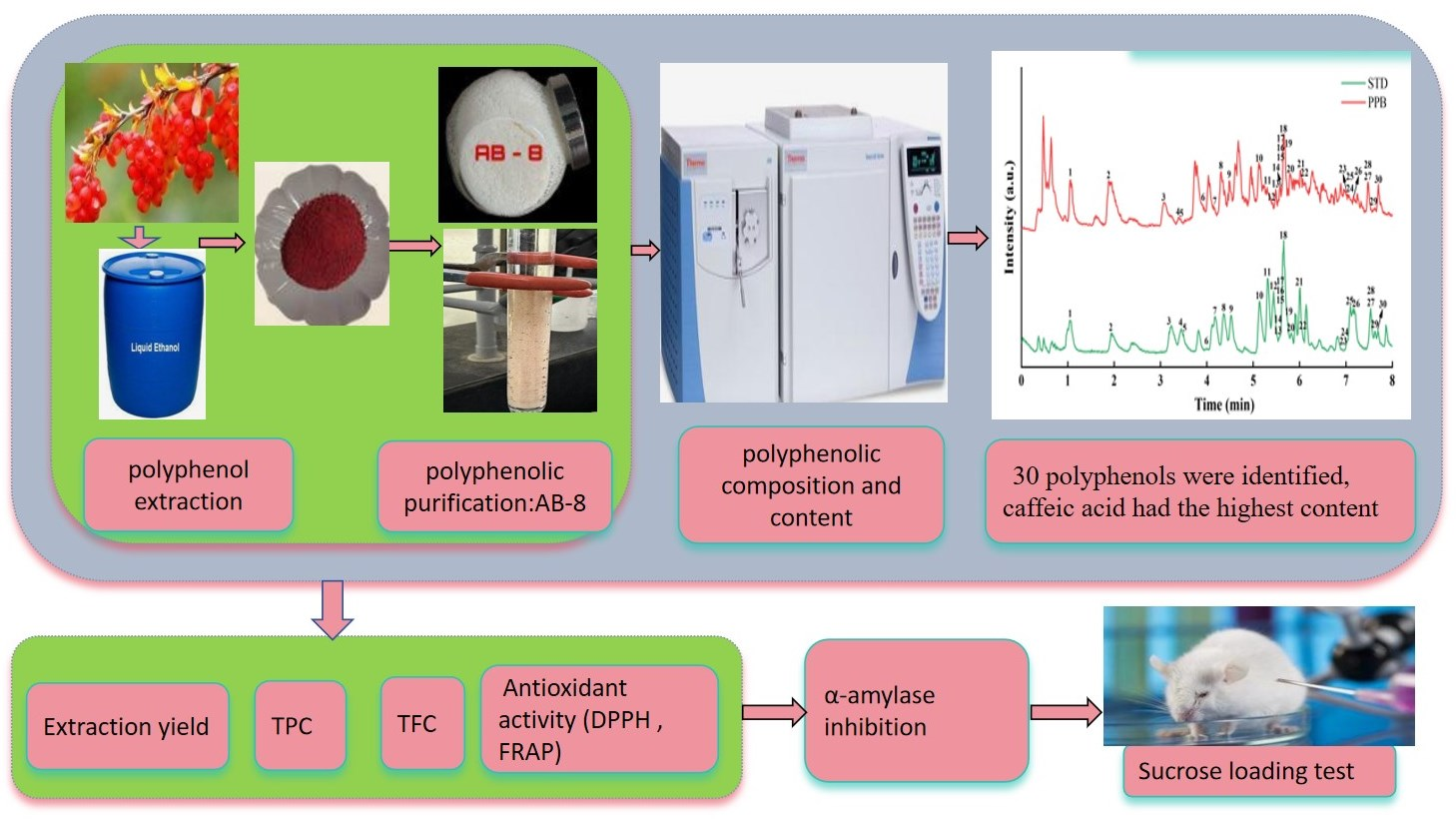

Bioactive Profiling and Anti-Hyperglycemic Potential of Berberis nummularia Bunge: Role of Polyphenols and α-Amylase Inhibition

 ,
,
Abstract
1. Introduction
2. Materials and Methods
2.1. Materials and Chemicals
2.2. Moisture Content (MC)
2.3. Extraction Yield of Polyphenol by Different Solvents
2.4. Determination of Polyphenol Purification Process
2.5. Purification of CPB by Dynamic Adsorption and Desorption on AB-8 Macroporous Resin
2.6. Component Analysis
2.6.1. Preparation of Fruit Samples and Polyphenol Extraction
2.6.2. UPLC Conditions
2.6.3. MS Analysis
2.7. The TPC, TFC and the Antioxidant Activity
- (1)
- TPC
- (2)
- TFC
- (3)
- DPPH radical scavenging assay
- (4)
- Ferric reducing antioxidant power (FRAP) assay
2.8. Inhibition Assays of α-Amylase
2.9. In Vivo α-Amylase Inhibition Assay
2.9.1. Experimental Animals
2.9.2. Sucrose Loading Test
2.10. Statistical Analysis
3. Results
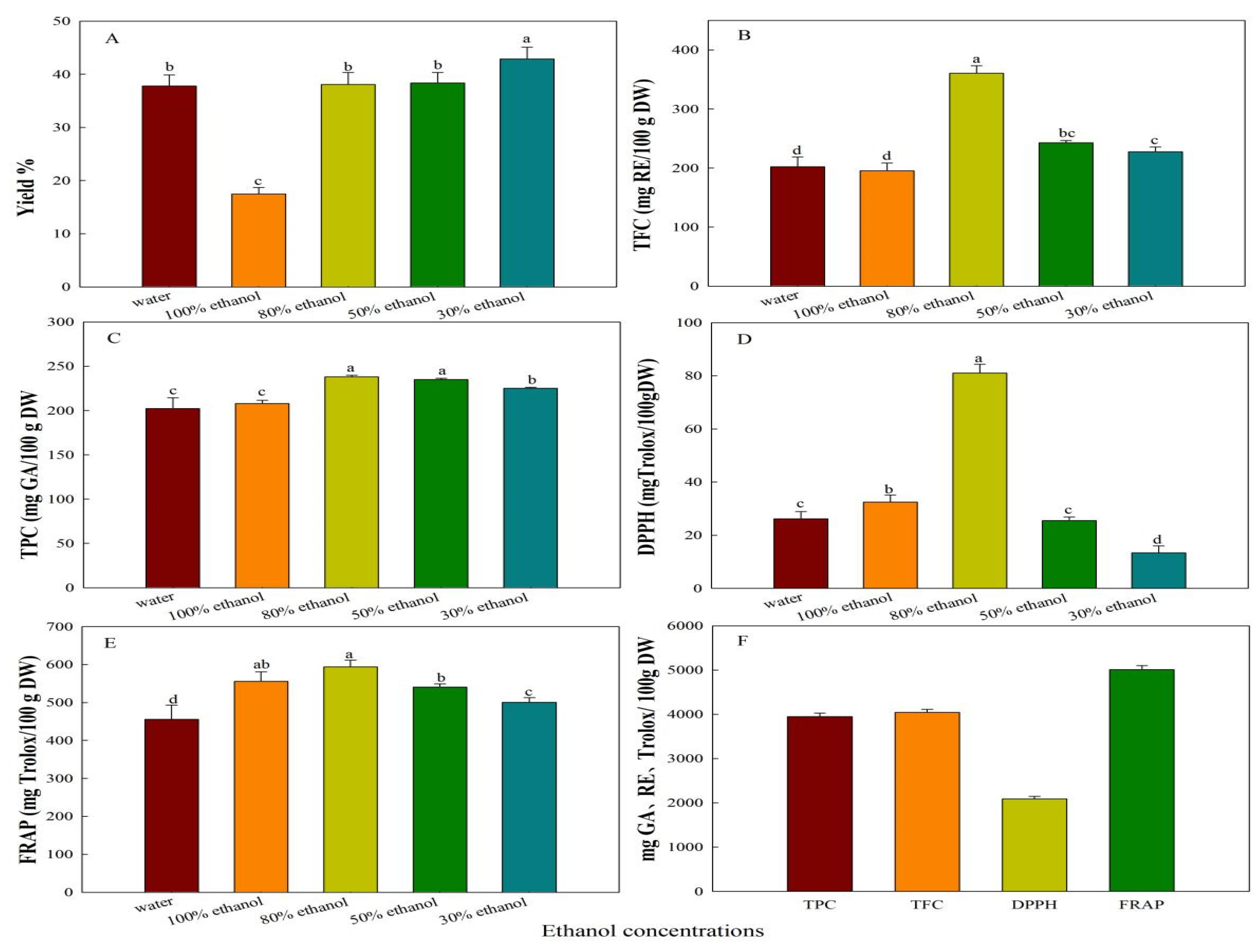
3.1. Effects of Ethanol Solutions at Varying Concentrations on the Extraction Yield
3.2. Effect of Ethanol Concentration on TPC
3.3. Effects of Solvents on TFC of B. nummularia Fruit
3.4. Antioxidant Activity of B. nummularia Fruit Extracts
3.4.1. Free Radical Scavenging Assay (DPPH)
3.4.2. Ferric Reducing Antioxidant Power
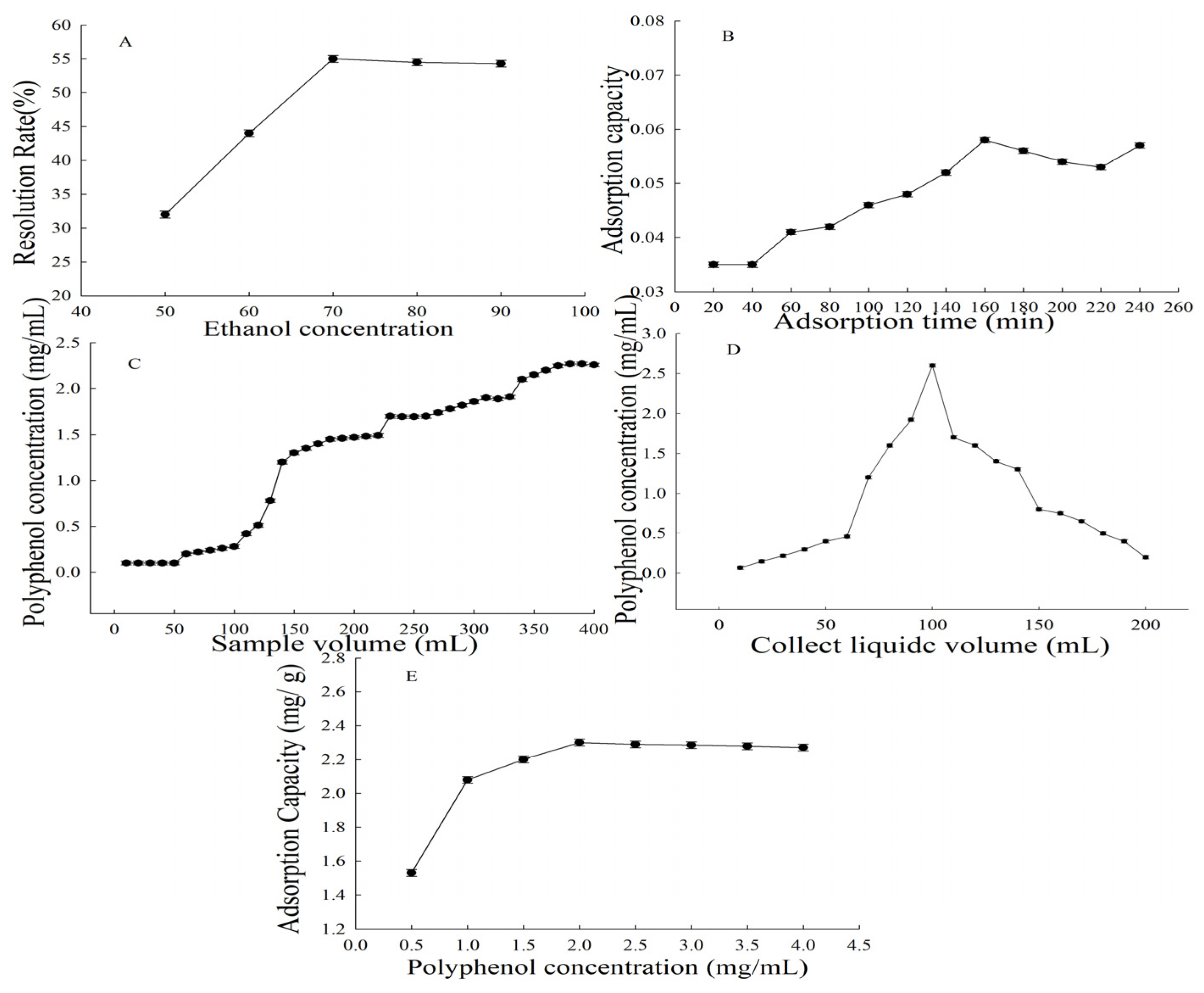
3.5. Dynamic Adsorption and Desorption
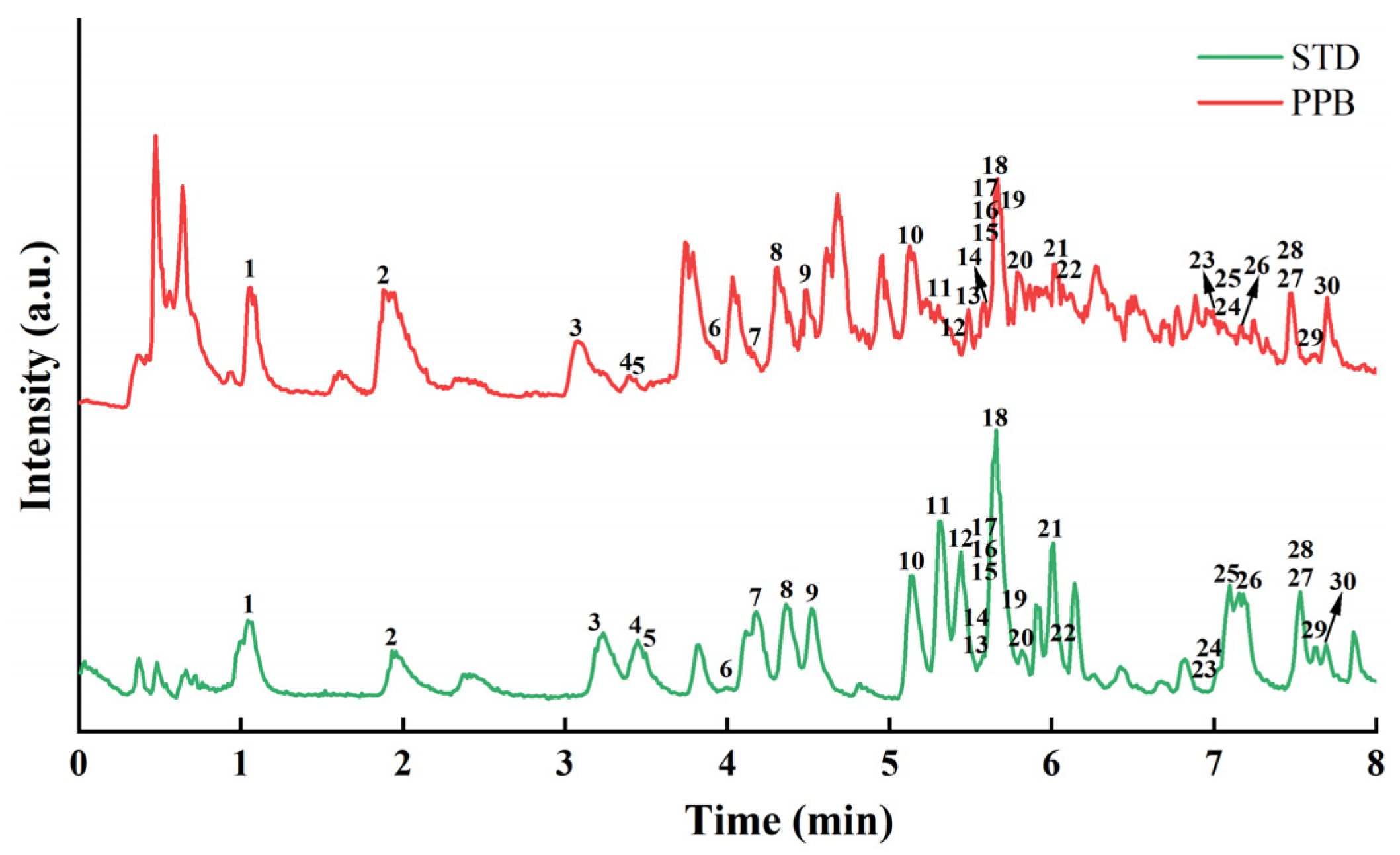
3.6. Identification of Phytochemicals in B. nummularia Fruits
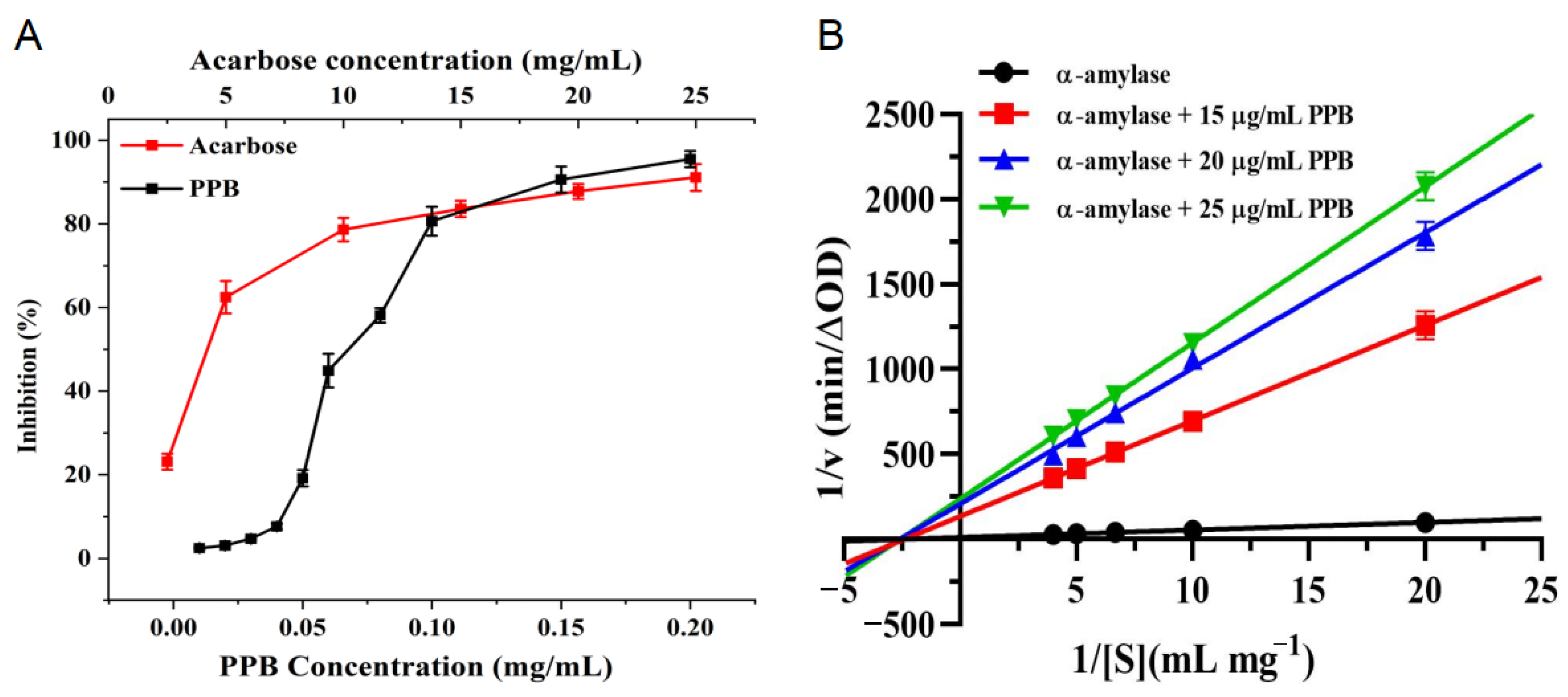
3.7. Inhibition Effect of PPB Against α-Amylase
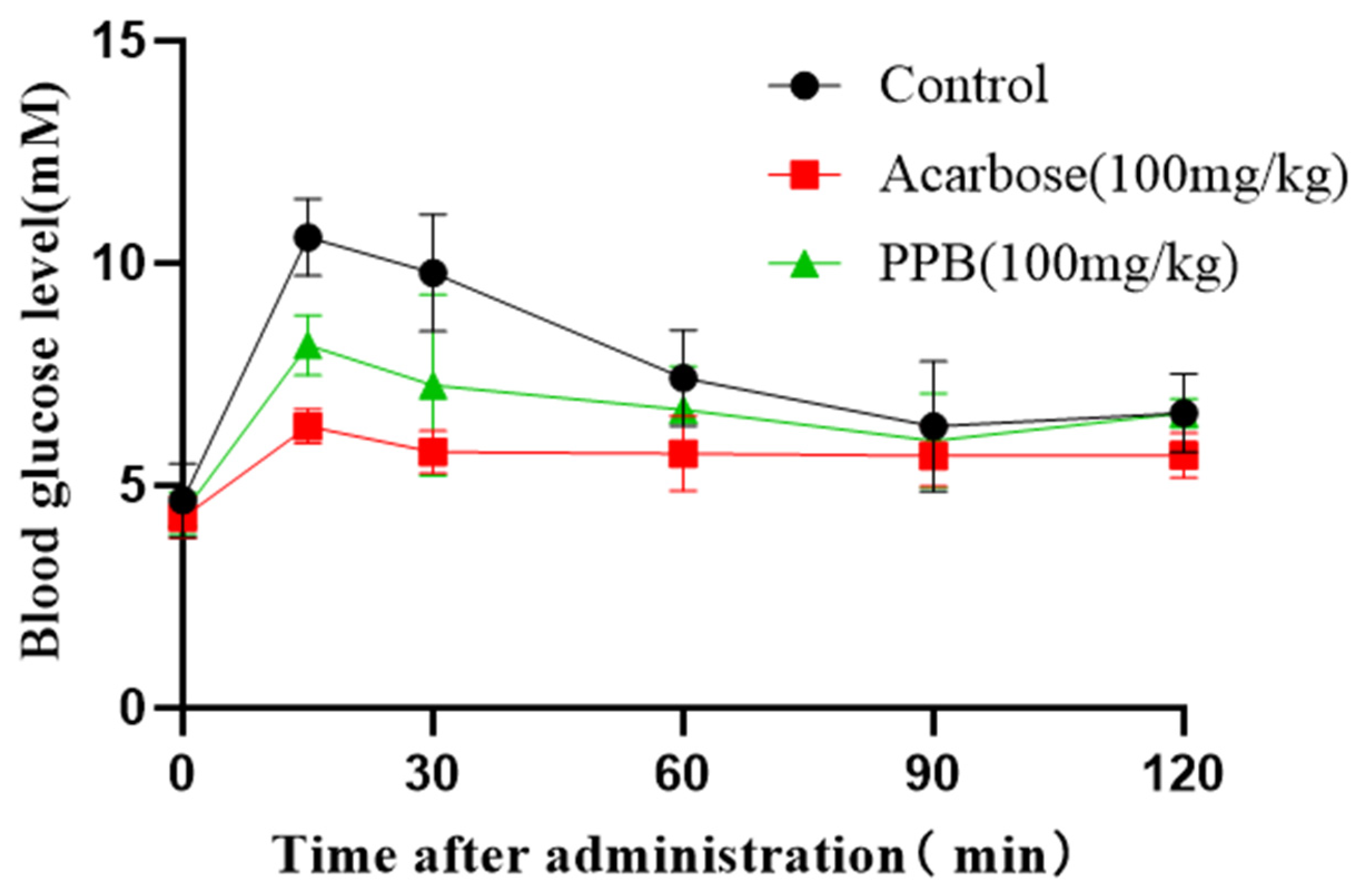
3.8. Regulation of Postprandial Hyperglycemia by Acute Intake of PPB in Normal ICR Mice
4. Conclusions
Author Contributions
Funding
Institutional Review Board Statement
Informed Consent Statement
Data Availability Statement
Conflicts of Interest
References
- Magliano, D.J.; Boyko, E.J. IDF Diabetes Atlas, 10th ed.; International Diabetes Federation: Brussels, Belgium, 2021. Available online: https://www.ncbi.nlm.nih.gov/books/NBK581934/ (accessed on 6 December 2021).
- Xie, J.; Zhang, L.; Bai, Y.; Wang, W.; Hu, X.; Li, S.; Tian, Y. Isolation and purification of polyphenols, hypoglycemic and hypolipidemic and active constituent analysis of walnut septum polyphenols. Food Chem. 2025, 467, 142287. [Google Scholar] [CrossRef]
- Figueiredogonz’alez, M.; Grosso, C.; Valentao, P.; Andrade, P.B. α-Glucosidase and α-amylase inhibitors from Myrcia spp.: A stronger alternative to acarbose? J. Pharm. Biomed. Anal. 2015, 118, 322–327. [Google Scholar] [CrossRef]
- Shahwan, M.; Alhumaydhi, F.; Ashraf, G.M.; Hasan, P.M.Z.; Shamsi, A. Role of polyphenols in combating type 2 diabetes and insulin resistance. Int. J. Biol. Macromol. 2022, 206, 567–579. [Google Scholar] [CrossRef]
- Qin, Y.; Guo, J.; Lin, Y.; You, Y.; Huang, W.; Zhan, J. Evaluation of hypoglycemic polyphenolic compounds in blueberry extract: Functional effects and mechanisms. Antioxidants 2024, 13, 1490. [Google Scholar] [CrossRef]
- Liu, X.; Shi, J.; Yi, J.; Zhang, X.; Ma, Q.; Cai, S. The effect of in vitro simulated gastrointestinal digestion on phenolic bioaccessibility and bioactivities of Prinsepia utilis Royle fruits. LWT 2021, 138, 110782. [Google Scholar] [CrossRef]
- Chen, X.; Xu, Y.; Du, X.; Li, Z.; Yang, Y.; Jiang, Z.; Ni, H.; Li, Q. Effect of Porphyra haitanensis polyphenols from different harvest periods on hypoglycaemic activity based on in vitro digestion and widely targeted metabolomic analysis. Food Chem. 2024, 437, 137793. [Google Scholar] [CrossRef]
- Hu, X.; Xie, J.; Bai, Y.; Hong, Z.; Zhang, L.; Gong, W.; Pan, Y.; Wang, W.; Su, M.; Sheng, J.; et al. Extraction, in vitro hypoglycaemic activity and active ingredient analysis of polyphenols from walnut green husk. J. Funct. Foods 2024, 122, 106508. [Google Scholar] [CrossRef]
- Xu, H.; Wang, C.; Gong, L. Hypoglycemic activity in vivo and in vitro of the Lotus (Nelumbo nucifera Gaertn.) seed skin (testa) phenolic-rich extracts. Food Chem. X 2024, 22, 101282. [Google Scholar] [CrossRef] [PubMed]
- Ismail, B.B.; Pu, Y.F.; Guo, M.; Ma, X.; Liu, D. LC-MS/QTOF identification of phytochemicals and the effects of solvents on phenolic constituents and antioxidant activity of baobab (Adansonia digitata) fruit pulp. Food Chem. 2019, 277, 279–288. [Google Scholar] [CrossRef]
- Asomadu, R.O.; Ezeorba, T.P.C.; Ezike, T.C.; Uzoechina, J.O. Exploring the antioxidant potential of endophytic fungi: A review on methods for extraction and quantification of total antioxidant capacity (TAC). 3 Biotech 2024, 14, 127. [Google Scholar] [CrossRef]
- Chaabani, E.; Vian, M.A.; Rebey, I.B.; Bourgou, S.; Kalai, F.Z.; Chemat, F.; Ksouri, R. Ethanol–water binary solvent affects phenolic composition and antioxidant ability of Pistacia lentiscus L. fruit extracts: A theoretical versus experimental solubility study. J. Food Meas. Charact. 2023, 17, 4705–4714. [Google Scholar] [CrossRef]
- Nguyen, T.H.D. Phenolics and bioactivities of Symplocos cochinchinensis leaf extracts obtained by conventional solvent, enzyme and ultrasound assisted extractions. J. Res. Innov. Food Sci. Technol. 2024, 13, 89–94. [Google Scholar] [CrossRef]
- Li, X.N.; Sun, J.; Shi, H.; Yu, L.; Ridge, C.D.; Mazzola, E.P.; Okunji, C.; Iwu, M.M.; Michel, T.K.; Chen, P. Profiling hydroxycinnamic acid glycosides, iridoid glycosides, and phenylethanoid glycosides in baobab fruit pulp (Adansonia digitata). Food Res. Int. 2017, 99, 755–761. [Google Scholar] [CrossRef]
- Abudureheman, B.; Zhou, X.; Shu, X.; Chai, Z.; Xu, Y.; Li, S.; Hu, J.; Pan, H.; Ye, X. Evaluation of biochemical properties, antioxidant activities and phenolic content of two wild-grown berberis fruits: Berberis nummularia and Berberis atrocarpa. Foods 2022, 11, 2569. [Google Scholar] [CrossRef]
- Chen, L.; Abudureheman, B.; Anwar, O.; Abdugini, E.; Zhang, J.; Tang, R.; Gao, Z.; Pan, H.; Ye, X. Extraction, Purification, Component Analysis and Bioactivity of Polyphenols from Artemisia dracunculus L. Foods 2025, 14, 1823. [Google Scholar] [CrossRef]
- Yang, Y.; Liang, Q.; Zhang, B.; Zhang, J.; Fan, L.; Kang, J.; Lin, Y.; Huang, Y.; Tan, T.; Ho, L. Adsorption and desorption characteristics of flavonoids from white tea using macroporous adsorption resin. J. Chromatogr. A 2024, 1715, 464621. [Google Scholar] [CrossRef] [PubMed]
- Che Zain, M.S.; Lee, S.; Teo, C.; Teo, C.; Shaari, K. Adsorption and desorption properties of total flavonoids from oil palm (Elaeis guineensis Jacq.) mature leaf on macroporous adsorption resins. Molecules 2020, 25, 778. [Google Scholar] [CrossRef] [PubMed]
- Chen, Y.; Zhang, W.; Zhao, T.; Li, F.; Zhang, M.; Li, J.; Zou, Y.; Wang, W.; Cobbina, S.J.; Wu, X.; et al. Adsorption properties of macroporous adsorbent resins for separation of anthocyanins from mulberry. Food Chem. 2016, 194, 712–722. [Google Scholar] [CrossRef]
- Zhou, J.; Wu, Y.; Long, P.; Ho, C.; Wang, Y.; Kan, Z.; Cao, L.; Zhang, L.; Wan, X. LC-MS-based metabolomics reveals the chemical changes of polyphenols during high-temperature roasting of large-leaf yellow tea. J. Agric. Food Chem. 2018, 67, 5405–5412. [Google Scholar] [CrossRef]
- Zhang, L.; Li, Y.; Liang, Y.; Liang, K.; Zhang, F.; Xu, T.; Wang, M.; Song, H.; Liu, X.; Lu, B. Determination of phenolic acid profiles by HPLC-MS in vegetables commonly consumed in China. Food Chem. 2019, 276, 538–554. [Google Scholar] [CrossRef]
- Glauser, G.; Grund, B.; Gassner, A.; Menin, L.; Henry, H.; Bromirski, M.; Schütz, F.; McMullen, J.; Rochat, B. Validation of the mass-extraction-window for quantitative methods using liquid chromatography high resolution mass spectrometry. Anal. Chem. 2016, 88, 3264–3271. [Google Scholar] [CrossRef]
- De, S.M.T.; Almeida, C.T.S.; Nascimento, T.P.; Abreu, J.P.; Souza, V.R.; Kalili, D.C.; Teodoro, A.J.; Cameron, L.C.; Koblitz, M.G.; Ferreira, M.S.L. Food service kitchen scraps as a source of bioactive phytochemicals: Disposal survey, optimized extraction, metabolomic screening and chemometric evaluation. Metabolites 2023, 13, 386. [Google Scholar] [CrossRef]
- Yang, M.; Wang, S.; Zhou, R.; Zhao, Y.; He, Y.; Zheng, Y.; Gong, H.; Wang, W. Optimization and component identification ofultrasound-assisted extraction of functional compounds from waste blackberry (Rubus fruticosus Pollich) seeds. J. Sci. Food Agric. 2024, 104, 9169–9179. [Google Scholar] [CrossRef]
- Tian, J.; Chen, J.; Lv, F.; Chen, S.; Chen, J.; Liu, D.; Ye, X. Domestic cooking methods affect the phytochemical composition and antioxidant activity of purplefleshed potatoes. Food Chem. 2016, 197, 1264–1270. [Google Scholar] [CrossRef]
- Wang, L.M.; Zhang, Y.S.; Johnpaul, I.A.; Hong, K.; Song, Y.; Yang, X.; Lv, C.; Ma, C. Exploring two types of prenylated bitter compounds from hop plant (Humulus lupulus L.) against α-glucosidase in vitro and in silico. Food Chem. 2022, 370, 130979. [Google Scholar] [CrossRef]
- Wu, Z.; Sun, H.; Lei, X.; Guo, J.; Yang, W. Key points of operation and management after the implementation of Laboratory Animal Environment and Facilities (GB 14925-2023). In Proceedings of the 11th National Toxicology Congress of the Chinese Society of Toxicology; Chinese Society of Toxicology: Beijing, China, 2024; pp. 148–149. [Google Scholar] [CrossRef]
- Fu, Z.; Tu, Z.; Zhang, L.; Wang, H.; Wen, Q.; Huang, T. Antioxidant activities and polyphenols of sweet potato (Ipomoea batatas L.) leaves extracted with solvents of various polarities. Food Biosci. 2016, 15, 11–18. [Google Scholar] [CrossRef]
- Podloucká, P.; Polišenská, I.; Jirsa, O. Effect of the extraction solvent and method on the determination of the total polyphenol content in different common buckwheat (Fagopyrum esculentum Moench) varieties. Food Nutr. Res. 2025, 69, 9384. [Google Scholar] [CrossRef]
- Umego, E.C.; Barry-Rya, C. Optimisation of polyphenol extraction for the valorisation of spent gin botanicals. LWT 2024, 199, 116114. [Google Scholar] [CrossRef]
- Emily, P.V.; Carlos, Á.; Nigel, P.B.; Rai, D.K. Optimizing polyphenol extraction and UPLC-MS/MS analysis from red clover (Trifolium pratense L.) species using response surface methodology. Food Chem. Adv. 2024, 5, 100828. [Google Scholar] [CrossRef]
- Allaoui, S.; Bennani, M.N.; Ziyat, H.; Qabaqous, O.; Tijani, N.; Ittobane, N.; Barbouchi, M.; Bouymajan, A.; Filali, F.R. Antioxidant and antimicrobial activity of polyphenols extracted after adsorption onto natural clay “Ghassoul”. J. Chem. 2020, 1, 8736721. [Google Scholar] [CrossRef]
- Lv, J.J.; Li, L.; Zhang, N. Research progress on the release and functional activity of bound polyphenols in plant foods. Sci. Technol. Food Ind. 2025, 46, 404–413. [Google Scholar] [CrossRef]
- Wang, R.Y.; Lu, L.B.; Chen, J.; Kou, J.; Hui, J.; Guo, L. Combining experiment and density functional theory to study the mechanism of thermochemical sulfate reduction by hydrogen in supercritical water. J. Mol. Liq. 2021, 330, 115654. [Google Scholar] [CrossRef]
- Szymczyk, K.; Taraba, A. Thermodynamic study of quercetin and rutin mixtures with alcohols. Chem. Phys. 2018, 505, 6–11. [Google Scholar] [CrossRef]
- Bouhzam, I.; Cantero, R.; Margallo, M.; Aldaco, R.; Bala, A.; Fullana-i-Palmer, P.; Puig, R. Extraction of bioactive compounds from spent coffee grounds using ethanol and acetone aqueous solutions. Foods 2023, 12, 4400. [Google Scholar] [CrossRef]
- Olguín-Rojas, J.A.; Vázquez-León, L.A.; Palma, M.; Fernández-Ponce, M.T.; Casas, L.; Barbero, G.F.; Rodríguez-Jimenes, G.C. Re-valorization of red habanero Chili pepper (Capsicum chinense Jacq.) waste by recovery of bioactive compounds: Effects of different extraction processes. Agronomy 2024, 14, 660. [Google Scholar] [CrossRef]
- Wu, S.; Wang, Y.; Gong, G.; Li, F.; Ren, H.; Liu, Y. Adsorption and desorption properties of macroporous resins for flavonoids from the extract of Chinese wolfberry (Lycium barbarum L.). Food Bioprod. Process. 2015, 93, 148–155. [Google Scholar] [CrossRef]
- Ren, Y.; Makhele, M.; Zhou, J.; Sun, P. Extraction, purification, component analysis and bioactivity of polyphenols from wampee. Process Biochem. 2025, 150, 318–327. [Google Scholar] [CrossRef]
- Huang, X.S.; Fu, C.X.; Chen, P.P.; Xu, K.; Hui, A.; Wu, Z.; Zhang, W. Study on separation and purification of Scopolamine from Hindu Datura by D151 macroporous resin adsorption. Chem. Eng. Technol. 2019, 9, 147–152. [Google Scholar] [CrossRef]
- Tajner-Czopek, A.; Gertchen, M.; Rytel, E. Study of antioxidant activity of some medicinal plants having high content of caffeic acid derivatives. Antioxidants 2020, 9, 412. [Google Scholar] [CrossRef]
- Farha, A.K.; Gan, R.Y.; Li, H.B.; Wu, D.T.; Atanasov, A.G.; Gul, K.; Zhang, J.R.; Yang, Q.Q.; Corke, H. The anticancer potential of the dietary polyphenol rutin: Current status, challenges, and perspectives. Crit. Rev. Food Sci. Nutr. 2022, 62, 832–859. [Google Scholar] [CrossRef]
- Pavlíková, N. Caffeic acid and diseases-Mechanisms of action. Int. J. Mol. Sci. 2022, 24, 588. [Google Scholar] [CrossRef] [PubMed]
- Chen, J.; Li, G.; Sun, C.; Peng, F.; Yu, L.; Chen, Y.; Tan, Y.; Cao, X.; Tang, Y.; Xie, X.; et al. Chemistry, pharmacokinetics, pharmacological activities, and toxicity of Quercitrin. Phytother. Res. 2022, 36, 1545–1575. [Google Scholar] [CrossRef]
- Oboh, G.; Isaac, A.T.; Akinyemi, A.J.; Ajani, R.A. Inhibition of key enzymes linked to type 2 diabetes and sodium nitroprusside-induced lipid peroxidation in rat pancreas by phenolic extracts of avocado pear leaves and fruit. Int. J. Biomed. Sci. 2015, 11, 39–46. [Google Scholar] [PubMed Central]
- Shi, H.; Yu, Y.; Lin, D.; Zheng, P.; Zhang, P.; Hu, M.; Wang, Q.; Pan, W.; Yang, X.; Hu, T.; et al. β-glucan attenuates cognitive impairment via the gut-brain axis in diet-induced obese mice. Microbiome 2020, 8, 143. [Google Scholar] [CrossRef]
- Karim, Z.; Holmes, M.; Orfila, C. Inhibitory effect of chlorogenic acid on digestion of potato starch. Food Chem. 2017, 217, 498–504. [Google Scholar] [CrossRef]
- Zeng, L.; Zhang, G.; Lin, S.; Guo, D. Inhibitory mechanism of apigenin on α-amylase and synergistic effect with acarbose. J. Agric. Food Chem. 2016, 64, 6939–6949. [Google Scholar] [CrossRef]
- Ni, M.; Hu, X.; Gong, D.; Zhang, G. Inhibitory mechanism of vitexin on α-glucosidase and its synergy with acarbose. Food Hydrocoll. 2020, 108, 106051. [Google Scholar] [CrossRef]
- Wang, Y.; Zhang, L.; Wu, J.; Yu, C.; Ye, X.; Pan, H.; Chen, S. Edible prodelphinidins that improve postprandial hyperglycemia were discovered in Chinese bayberry (Myrica rubra Sieb. et Zucc.) fruits. Food Sci. Hum. Wellness 2025, 14, 9250065. [Google Scholar] [CrossRef]



| Classification | No. | Name | RT (min) | MM | MZ | MS/MS | Contentng/mg | |
|---|---|---|---|---|---|---|---|---|
| phenolic acids | benzoic acid derivatives | 1 | Gallic acid | 0.98 | 170.13 | 169.01 | 69.03/79.01/107.01/125.02 | 2.13 ± 0.11 |
| 2 | 3,4-Dihydroxybenzoic acid | 1.86 | 154.13 | 153.02 | 81.03/91.02/108.02/109.03 | 52.67 ± 0.03 | ||
| 4 | 4-Hydroxybenzoic acid | 3.41 | 138.13 | 137.02 | 65.04/92.03/93.03 | 27.93 ± 0.15 | ||
| 7 | Vanillic acid | 4.16 | 168.16 | 167.03 | 95.01/108.02/123.01152.01 | 1.04 ± 0.07 | ||
| 9 | Syringic acid | 4.49 | 198.19 | 197.05 | 125.02/138.03/153.02/182.02 | 2.45 ± 0.16 | ||
| 18 | Salicylic acid | 5.69 | 138.13 | 137.02 | 65.04/92.02/93.03 | 2.38 ± 0.01 | ||
| 21 | Benzoic acid | 5.99 | 122.13 | 121.03 | 65.04/77.04/93.03 | 6.47 ± 0.03 | ||
| cinnamic acid derivatives | 8 | Caffeic acid | 4.34 | 180.17 | 179.03 | 93.03/107.01/134.04/135.05 | 426.20 ± 0.18 | |
| 11 | Hydroxycinnamic Acid | 5.30 | 164.17 | 163.04 | 65.04/93.03/19.05 | 7.33 ± 0.05 | ||
| 15 | Trans-Ferulic acid | 5.63 | 194.20 | 193.05 | 117.03/134.04/149.02/178.03 | 1.04 ± 0.04 | ||
| 16 | Sinapic Acid | 5.65 | 224.23 | 223.06 | 149.02/164.01/179.04/208.04 | 0.22 ± 0.02 | ||
| 25 | Hydrocinnamic acid | 7.10 | 150.19 | 149.06 | 77.04//91.05/105.03 | 2.65 ± 0.00 | ||
| 26 | Trans-Cinnamic acid | 7.19 | 148.17 | 147.04 | 77.04/102.05/103.05 | 37.30 ± 0.01 | ||
| flavonoids | flavones | 23 | Luteolin | 7.01 | 286.25 | 285.04 | 151.00/175.04/199.04/217.05 | 1.76 ± 0.43 |
| 27 | Apigenin | 7.53 | 270.25 | 269.05 | 117.03/151.00/201.06/225.06 | 0.27 ± 0.10 | ||
| flavonols | 24 | Quercetin | 7.05 | 302.25 | 313.03 | 107.01/151.00/229.05/257.05/273.04 | 5.40 ± 0.19 | |
| 29 | Kaempferol | 7.63 | 286.25 | 285.04 | 107.01/151.00/227.04/255.03 | 0.16 ± 0.67 | ||
| 30 | Isorhamnetin | 7.68 | 316.28 | 315.05 | 151.00/255.03/271.03/300.03 | 2.60 ± 0.48 | ||
| flavanone | 28 | Naringenin | 7.54 | 272.27 | 271.06 | 107.01/119.05/177.06/151.00 | 0.83 ± 0.09 | |
| flavan-3-ols | 6 | Catechin | 3.98 | 290.29 | 289.07 | 125.02/179.03/203.07/245.08 | 0.06 ± 0.15 | |
| 20 | (+)-Dihydroquercetin | 5.89 | 304.27 | 303.05 | 125.02/217.05/257.05/285.04 | 0.12 ± 0.37 | ||
| flavonoid glycosides | 13 | Rutin | 5.55 | 610.57 | 609.15 | 255.03/271.03/300.03/301.04 | 223.86 ± 0.21 | |
| 14 | Vitexin | 5.61 | 432.41 | 431.10 | 161.02/269.05/283.06/311.06 | 1.29 ± 0.06 | ||
| 17 | Quercetin 3-β-D-glucoside | 5.69 | 464.41 | 463.09 | 255.03/271.04/301.04/300.03 | 200.31 ± 0.33 | ||
| 19 | Luteoloside | 5.72 | 448.41 | 447.09 | 151.00/257.05/284.03/285.04 | 0.56 ± 0.26 | ||
| 22 | Kaempferol-3-O-glucoside | 6.01 | 448.41 | 447.09 | 227.04/255.03/284.03/285.04 | 0.30 ± 0.27 | ||
| benzaldehyde derivatives | 3 | Protocatechualdehyde | 3.16 | 138.13 | 137.02 | 64.02/81.03/92.03/108.02 | 127.75 ± 0.03 | |
| 10 | Vanillin | 5.12 | 152.16 | 151.04 | 81.03/92.03/108.02/136.02 | 2.88 ± 0.12 | ||
| 12 | Syringaldehyde | 5.44 | 182.19 | 181.05 | 108.02/137.02/151.04/166.03 | 1.06 ± 0.10 | ||
| aromatic acid | 5 | Phthalic acid | 3.49 | 166.14 | 165.02 | 76.02/93.03/121.03 | 1.00 ± 0.31 | |
Disclaimer/Publisher’s Note: The statements, opinions and data contained in all publications are solely those of the individual author(s) and contributor(s) and not of MDPI and/or the editor(s). MDPI and/or the editor(s) disclaim responsibility for any injury to people or property resulting from any ideas, methods, instructions or products referred to in the content. |
© 2025 by the authors. Licensee MDPI, Basel, Switzerland. This article is an open access article distributed under the terms and conditions of the Creative Commons Attribution (CC BY) license (https://creativecommons.org/licenses/by/4.0/).
Share and Cite
Abudureheman, B.; Chen, L.; Zhang, J.; Zhu, S.; Wang, J.; Huang, J.; Xie, C.; Pan, H.; Ye, X. Bioactive Profiling and Anti-Hyperglycemic Potential of Berberis nummularia Bunge: Role of Polyphenols and α-Amylase Inhibition. Foods 2025, 14, 4180. https://doi.org/10.3390/foods14244180
Abudureheman B, Chen L, Zhang J, Zhu S, Wang J, Huang J, Xie C, Pan H, Ye X. Bioactive Profiling and Anti-Hyperglycemic Potential of Berberis nummularia Bunge: Role of Polyphenols and α-Amylase Inhibition. Foods. 2025; 14(24):4180. https://doi.org/10.3390/foods14244180
Chicago/Turabian StyleAbudureheman, Buhailiqiemu, Lin Chen, Jianlin Zhang, Shuai Zhu, Jinjuan Wang, Junli Huang, Chaoying Xie, Haibo Pan, and Xingqian Ye. 2025. "Bioactive Profiling and Anti-Hyperglycemic Potential of Berberis nummularia Bunge: Role of Polyphenols and α-Amylase Inhibition" Foods 14, no. 24: 4180. https://doi.org/10.3390/foods14244180
APA StyleAbudureheman, B., Chen, L., Zhang, J., Zhu, S., Wang, J., Huang, J., Xie, C., Pan, H., & Ye, X. (2025). Bioactive Profiling and Anti-Hyperglycemic Potential of Berberis nummularia Bunge: Role of Polyphenols and α-Amylase Inhibition. Foods, 14(24), 4180. https://doi.org/10.3390/foods14244180